暑假作业Grade8 to 9(综合训练)30 Days (2)2026-2027学年 沪教版英语九年级上册
2026-07-11
|
6页
|
179人阅读
|
3人下载
摘要:
**基本信息**
以“水”主题为核心,融合词汇默写、语法提炼、词性转换、写作句型及阅读训练,构建“词汇-语法-语用-语篇”闭环,强化语言能力与环保文化意识。
**综合设计**
|模块|题量/典例|方法提炼|知识逻辑|
|----|-----------|----------|----------|
|单词+短语默写|20单词+15短语|核心词标★突出重点|围绕“水”主题积累基础词汇|
|语法巩固|3结构10题|总结enough to/too...to/it is adj. for/of sb to do用法及转换|语法点服务环保表达,如“save water”句型应用|
|词性转换|10题|词形变化规则(如pollute→pollution)|衔接词汇与语法,强化词形-词性-语境关联|
|作文句型|8题|环保主题句型(如turn off, instead of)|直接输出语言能力,呼应阅读主题|
|阅读搭配|2篇(5题+5选5)|改编中考真题,六选五训练逻辑连贯|语篇理解深化环保认知,提升思维品质|
内容正文:
Grade 8→9 Summer Homework | Day 2
八年级升初三 · 英语暑假作业
Day 2 | U2 Water
Part 1: 单词 + 短语默写
一、单词默写
English
Chinese
English
Chinese
★pollute
污染
pollution
污染;污染物
protect
保护
★environment
环境
★recycle
回收利用
★reduce
减少;缩小
★reuse
再次使用;重复使用
damage
损害;毁坏
★harmful
有害的
drop
滴;落下
remain
剩余;遗留
waste
浪费;废弃物
★precious
宝贵的;珍贵的
★shortage
短缺;不足
convenient
方便的;便利的
continue
继续;持续
instead
代替;反而
thorough
彻底的;详尽的
★vanish
消失;消散
★freeze
结冰;凝固
liquid
液体;液态的
solid
固体;固态的
gas
气体;煤气
drain
排水;消耗
pump
泵;抽水
★reservoir
水库;蓄水池
treatment
处理;治疗
plant
工厂;植物
pipe
管子;管道
★purify
净化;使纯净
process
过程;流程
wander
漫步;游荡
★impatient
不耐烦的;急躁的
nod
点头
speech
演讲;讲话
★impress
给...留下深刻印象
二、短语默写
English
Chinese
English
Chinese
turn off
关闭(水龙头等)
add to
增加;添加
★instead of
代替;而不是
throw away
扔掉;浪费
be made of/from
由...制成
★run out of
用完;耗尽
★drop by drop
一滴一滴地
★be harmful to
对...有害
come from
来自
★take in
吸收;摄入
look after
照顾
carry out
执行;实施
on earth
在地球上;究竟
as a result
结果
deal with
处理;应对
be careful with
小心使用
save up
节约;攒起来
Part 2: 语法巩固
【enough to do】
① adj./adv. + enough (+ for sb) + to do sth,表示“足够...以至于能做某事”。
② enough 修饰形容词/副词时放在其后,修饰名词时可前可后。
【too...to do】
① too + adj./adv. + to do sth,表示“太...以至于不能做某事”,本身含否定意义。
② too...to 可与 so...that...not... 或 not...enough to 互换。
【it is + adj. + for/of sb to do sth】
① for sb:形容词描述事情的性质(important, necessary, hard, easy等)。
② of sb:形容词描述人的品质(kind, nice, generous, careless等)。
练习题
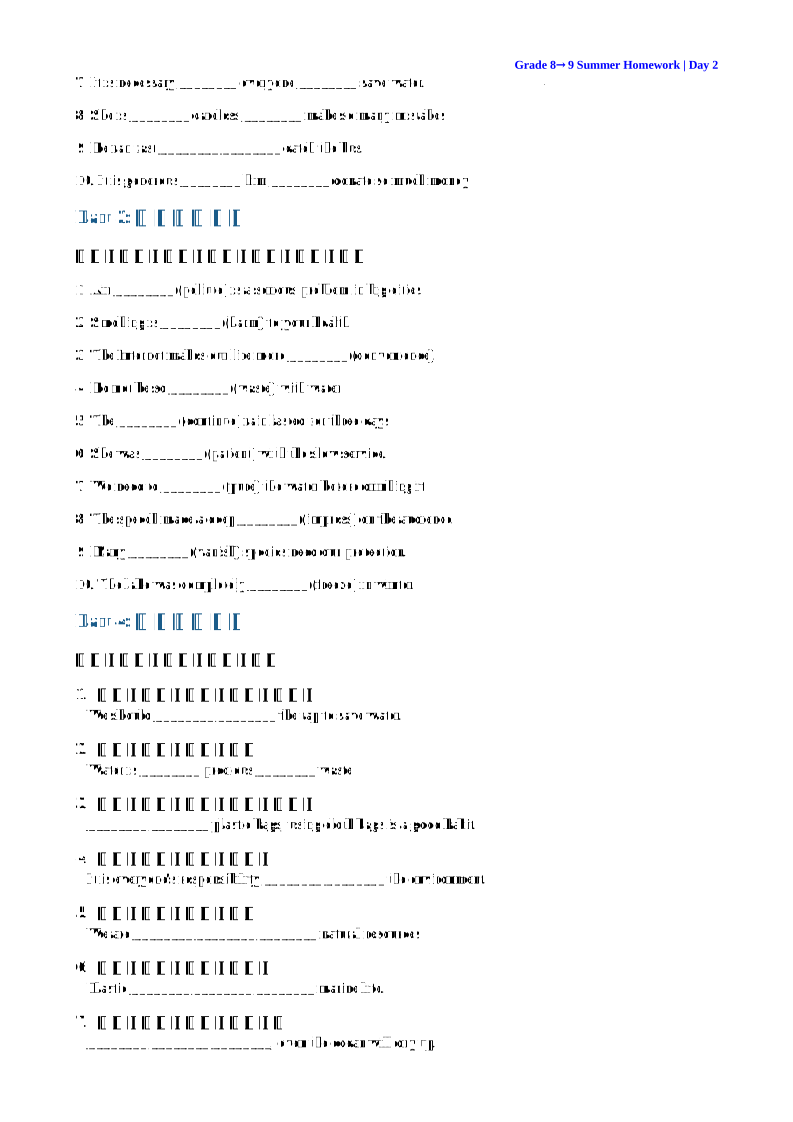
1. The water is clean ________ ________ drink.
2. The box is ________ heavy for the old man ________ carry.
3. It is important ________ us ________ protect the environment.
4. It is kind ________ you ________ help the disabled.
5. The boy is old ________ ________ go to school.
6. The river is too polluted for fish ________ ________ in.
7. It is necessary ________ everyone ________ save water.
8. She is ________ careless ________ make so many mistakes.
9. He ran fast ________ ________ catch the bus.
10. It is generous ________ him ________ donate so much money.
Part 3: 词性转换填空
根据句意,用括号中所给词的正确形式填空。
1. Air ________ (pollute) is a serious problem in big cities.
2. Smoking is ________ (harm) to your health.
3. The Internet makes our life more ________ (convenience).
4. Do not be so ________ (waste) with water.
5. The ________ (continue) rain lasted for three days.
6. She was ________ (patient) with the slow service.
7. We need to ________ (pure) the water before drinking it.
8. The speech made a deep ________ (impress) on the audience.
9. Many ________ (vanish) species need our protection.
10. The lake was completely ________ (freeze) in winter.
Part 4: 作文句型默写
根据中文提示,补全英文句子。
1. 我们应该关掉水龙头来节约用水。
We should ________ ________ the tap to save water.
2. 水太珍贵了,不能浪费。
Water is ________ precious ________ waste.
3. 用环保袋代替塑料袋是个好习惯。
________ ________ plastic bags, using cloth bags is a good habit.
4. 每个人都有责任保护环境。
It is everyone's responsibility ________ ________ the environment.
5. 我们正在耗尽自然资源。
We are ________ ________ ________ natural resources.
6. 塑料对海洋生物是有害的。
Plastic ________ ________ ________ marine life.
7. 一滴一滴地,大海也会干涸。
________ ________ ________, even the ocean will dry up.
8. 回收利用有助于减少废物。
Recycling helps ________ ________ waste.
Part 5: 阅读搭配
I. 阅读理解(改编自2024广东中考阅读B篇)
阅读下面短文,从每题所给的A、B、C、D四个选项中选出最佳选项。
Water is one of the most precious resources on Earth. Although about 70% of the Earth's surface is covered with water, only about 2.5% of it is fresh water, and even less is available for human use. With the growing population and increasing pollution, water shortage has become a serious problem in many parts of the world.
In China, more than 400 cities face water shortages. In some areas, people have to walk several kilometers just to get drinking water. Meanwhile, a lot of water is being wasted every day. Many people leave the tap running while brushing their teeth, and some factories pour dirty water directly into rivers without treatment.
To solve this problem, both the government and individuals need to take action. The government has built reservoirs and water treatment plants to provide clean water. It has also passed laws to punish factories that pollute water. On the other hand, everyone can do their part by following simple steps: turn off the tap when not in use, take shorter showers, fix leaking pipes, and recycle water where possible.
Schools are also playing an important role in water education. Many schools have started programs to teach students about water conservation. Students learn about the water cycle, the importance of clean water, and ways to reduce water waste. Some schools even have "water-saving competitions" to encourage students to use less water.
Remember, every drop counts. If each of us saves just one liter of water per day, we could save billions of liters every year. Let's work together to protect our most valuable resource.
1. How much of the Earth's water is fresh water?
A. About 70% B. About 2.5% C. About 50% D. About 97.5%
2. How many cities in China face water shortages?
A. Over 400 B. About 200 C. Less than 100 D. Nearly 500
3. Which of the following is NOT mentioned as a way to save water?
A. Turning off the tap B. Taking shorter showers C. Drinking less water D. Fixing leaking pipes
4. What do students learn in water education programs?
A. How to swim B. The water cycle and water conservation C. How to build reservoirs D. The history of water treatment
5. What is the main purpose of the passage?
A. To explain the water cycle B. To describe China's water treatment system C. To call on people to save and protect water D. To compare water use in different countries
II. 六选五(原创·对标八年级六选五)
阅读下面短文,从方框中的六个选项中选出五个能填入空白处的最佳选项。
How to Be an Eco-Friendly Student
Being eco-friendly means living in a way that is not harmful to the environment. As students, we can also do our part to protect the planet. ____1____
First, reduce, reuse, and recycle. These three words are the key to living a green life. ____2____ For example, use both sides of paper, bring a reusable bag when shopping, and sort your rubbish for recycling.
Second, save energy at home and at school. Turn off lights when you leave a room. ____3____ Using less energy helps reduce the amount of carbon dioxide released into the air.
Third, choose green transportation. Instead of asking your parents to drive you to school, try walking, riding a bike, or taking public transport. ____4____ This simple change can make a big difference over time.
Finally, spread the message. Talk to your friends and family about the importance of protecting the environment. ____5____ The more people know about environmental problems, the more action they will take.
A. Unplug electronic devices when they are not being used.
B. Buying new clothes every month is also harmful to the environment.
C. Here are some simple steps you can follow to live a greener life.
D. This can help reduce air pollution caused by cars.
E. Reducing means using less, reusing means using things again, and recycling means turning old things into new ones.
F. You can also join or start an environmental club at your school.
参考答案
Part 2 语法巩固
1. enough; to
2. too; to
3. for; to
4. of; to
5. enough; to
6. to; live
7. for; to
8. too; to
9. enough; to
10. of; to
Part 3 词性转换填空
1. pollution
2. harmful
3. convenient
4. wasteful
5. continuous
6. impatient
7. purify
8. impression
9. vanishing
10. frozen
Part 4 作文句型默写
1. turn; off
2. too; to
3. Instead; of
4. to; protect
5. running; out; of
6. is; harmful; to
7. Drop; by; drop
8. cut; down
Part 5 阅读搭配
阅读理解:1–5 BACBC
六选五:1–5 CEADF
学科网(北京)股份有限公司
$
资源预览图

1

2
3

相关资源
示范课
由于学科网是一个信息分享及获取的平台,不确保部分用户上传资料的 来源及知识产权归属。如您发现相关资料侵犯您的合法权益,请联系学科网,我们核实后将及时进行处理。