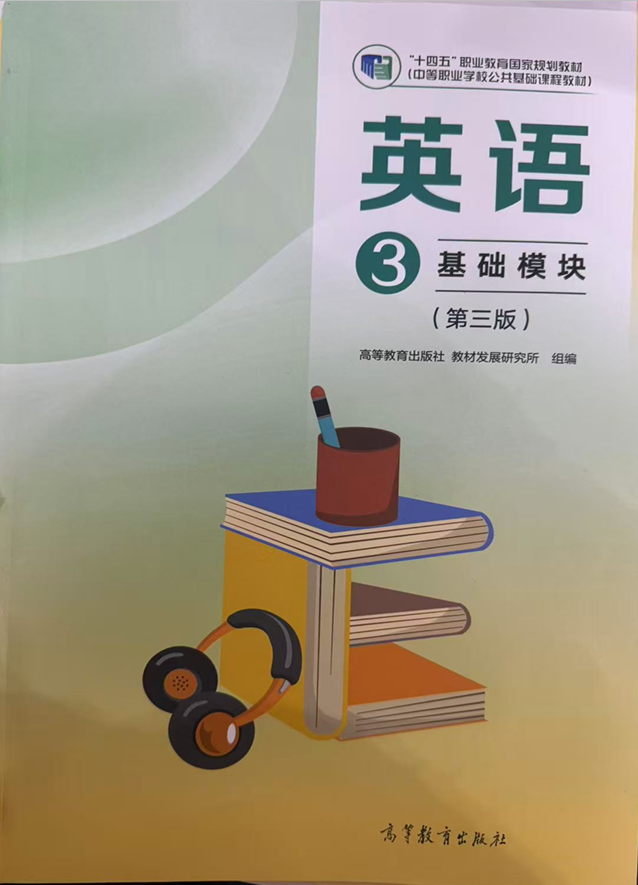
Unit 7 Natural Disasters(A卷·基础巩固)《英语 基础模块3》(高教版第三版)单元过关卷(原卷版+解析版)
2026-07-08
|
2份
|
21页
|
30人阅读
|
0人下载
摘要:
**基本信息**
紧扣《英语 基础模块3》Unit 7“自然灾害”主题,A卷基础巩固卷通过语音、语法、阅读等题型精准覆盖核心考点,融合安全情境与语言训练,适配单元复习需求。
**题型特征**
|题型|题量/分值|知识覆盖|命题特色|
|----|-----------|----------|----------|
|语音辨析|5题/5分|字母发音规则|基础语音辨识,巩固发音基础|
|单项选择|15题/15分|名词性从句、时态语态等|聚焦核心语法,结合灾害情境设题|
|完形填空|10题/10分|介词、代词、上下文理解|以洪水安全实践为情境,考查语篇理解|
|补全对话|5题/10分|日常交际用语|围绕沙尘暴延误话题,训练情境对话能力|
|阅读理解|15题/30分|细节理解、推理判断|选取安全周活动、旅行延误等真实语篇,提升信息获取与思维能力|
|句子改错|10题/10分|语法错误辨析|针对从句、时态等高频错误,强化语法应用|
|短语填空|10题/20分|固定搭配与词汇运用|结合环保、安全短语,巩固词汇在语境中的应用|
内容正文:
编写说明:本套试卷紧扣《英语 基础模块3》(高教版第三版)教材,以教材单元为基准精准覆盖核心考点。
每个单元设置AB卷,A卷为基础巩固卷,侧重基础考点训练,帮助学生扎实掌握知识要点;B卷为能力提升卷,注重知识整合与全面检测,引导学生构建知识网络。全书设计4份综合测试卷,模拟实战情境,聚焦解题能力突破,全面提升应试能力与知识应用水平。
《英语 基础模块3》(高教版第三版)《单元过关卷》
Unit 7 Natural Disasters
A卷·基础巩固
考试时间:120分钟 满分:100分
班级 姓名 学号 成绩
Ⅰ.语音辨析。 (共5小题;每小题1分,满分5分)
读下列单词,从每题所给的 A、B、C 和 D 四个选项中,选出画线部分发音不同的一项。
1.A.blow B.know C.snow D.now
2.A.great B.clean C.heat D.lead
3.A.bus B.cup C.urban D.under
4.A.change B.chemical C.child D.choose
5.A.safe B.soil C.sugar D.smog
Ⅱ.单项选择(共15小题;每小题1分,满分15分)
阅读下列句子,从每题所给的 A、B、C 和 D 四个选项中,选出最佳选项。
6.It is necessary ______ every family should prepare an emergency bag before storm season.
A.what B.that
C.whether D.how
7.The question is ______ the rescue team can reach the village before dark.
A.what B.that
C.whether D.who
8.______ worries the driver most is the thick smog on the highway.
A.What B.That
C.Which D.Where
9.It is widely believed ______ planting more trees can help reduce sandstorms.
A.if B.where
C.whether D.that
10.The most important thing is ______ we can get more people to save water.
A.how B.that
C.when D.whose
11.Many flights ______ because of the heavy typhoon yesterday afternoon.
A.cancel B.are canceled
C.were canceled D.will cancel
12.The volunteer asked us ______ near the broken wall after the earthquake.
A.not stand B.not to stand
C.do not stand D.not standing
13.If everyone ______ together, the village will become safer during flood season.
A.worked B.will work
C.is working D.works
14.There ______ more discussions about green energy in our community recently.
A.have been B.has
C.is D.was
15.The road was closed ______ the river rose quickly after two days of rain.
A.so B.but
C.because D.although
16.This is the village ______ many families moved to safe places last night.
A.what B.who
C.when D.where
17.The notice tells us ______ to do first when a fire starts.
A.why B.what
C.that D.whose
18.The weather report says the sandstorm ______ before noon tomorrow.
A.arrives B.arrived
C.will arrive D.has arrived
19.The students made posters to call on people ______ the environment.
A.to protect B.protect
C.protecting D.protected
20.Let’s take public transportation to reduce pollution, ______?
A.do we B.will you
C.shall we D.don’t we
Ⅲ.完形填空(共10小题;每小题1分,满分10分)
阅读下面短文,从短文后各题所给的 A、B、C 和 D 四个选项中,选出可以填入空白处的最佳选项。
Last Saturday morning, our class joined a flood safety practice in a small community near the river. The sky was clear, but our teacher reminded us that disasters often came when people were not ready. At the gate, a volunteer guide welcomed us and told us to listen carefully. She said that preparation was not only for adults; students could also help families stay calm and safe.
First, we took part ____21____ a short meeting. The guide showed us ____22____ map of the community and asked ____23____ to find the school, the clinic, the high ground and the narrow bridge. We worked in groups and quickly ____24____ the safest road. Then we visited a house that had suffered water ____25____ last summer. The owner told us that he moved important papers upstairs and turned off the electricity before leaving. His simple actions helped his family remain ____26____.
In the afternoon, we learned to make an emergency card, ____27____ phone networks may not work well during a flood. We also marked the old bridge, ____28____ was lower than the main road, as a dangerous place. At the end of the activity, our teacher asked us ____29____ we had learned from the practice. I wrote that small preparations could protect lives. A disaster may come suddenly, but a prepared mind is always ____30____ than a frightened one. Before we left, the guide asked each group to explain one rule to the class and check whether the rule was easy to follow. My group talked about keeping a small radio, a bottle of water and a list of phone numbers at home. We also promised to share the route map with our parents that evening.
21.A.on B.for C.in D.at
22.A.a B.an C.the D./
23.A.we B.our C.ours D.us
24.A.changed B.checked C.polluted D.delayed
25.A.force B.soil C.damage D.discussion
26.A.safe B.loose C.global D.frequent
27.A.until B.though C.unless D.because
28.A.who B.which C.where D.when
29.A.what B.why C.where D.whose
30.A.busier B.noisier C.stronger D.cheaper
Ⅳ.补全对话(共5小题;每小题2分,满分10分)
根据对话内容,从对话后所给的七个选项中,选出能填入空白处的最佳选项。(选项中有两项是多余的)
A:Hello, Li Ming. I heard your train to Hohhot was delayed yesterday. ____31____
B:Because a sandstorm hit the area near the station. The wind was too strong, so the train had to wait.
A:That sounds serious. ____32____
B:Yes. Many passengers wore masks, and the workers kept checking the information screen.
A:What did you do while waiting?
B:____33____ I also called my parents to tell them I was safe.
A:Good idea. Do you think sandstorms are becoming more frequent?
B:____34____ Some of them are connected with human activities, such as cutting too many trees.
A:Then what can we students do?
B:____35____ Small actions can make our city cleaner and safer.
A.Yes, I think so.
B.Why was it delayed?
C.Was everyone at the station calm?
D.We can plant trees and take public transportation more often.
E.I read the safety notice and stayed away from the open door.
F.How long have you lived in Hohhot?
G.The train ticket was much cheaper than before.
Ⅴ.阅读理解(共15小题;每小题2分,满分30分)
阅读下面短文A,判断36~40小题是否正确。若正确,把选项T涂黑;若错误,把选项F涂黑。阅读短文B和C,从每小题所给的A、B、C和D四个选项中选出最佳选项。
A
Our school held a Disaster Safety Week at the beginning of March. The activity was not a show, but a useful lesson for every student. On Monday, the teachers put up posters about typhoons, floods, earthquakes, heat waves and sandstorms in the hall. Each poster explained the possible danger and gave two or three clear tips. For example, students were told not to stand under old trees during a strong wind and not to use elevators during an earthquake.
On Wednesday afternoon, all classes joined a fire and earthquake drill. When the alarm rang, students quickly protected their heads with books and moved to the playground through the nearest safe stairs. No one ran or pushed. The whole drill took six minutes, which was two minutes faster than last year. After that, a nurse taught students how to clean a small cut and how to call for help clearly.
The most popular part came on Friday. A local weather officer gave a talk about why some disasters happen more often. He said heavy industry, too many vehicles and careless use of energy could make pollution worse. He also explained that people could reduce risks by saving electricity, using buses and planting trees. At the end, each class made a poster with the words “Protect Our Earth, Start From Today.” Students said the week helped them realize that safety is not only about knowing rules, but also about making changes in daily life. Several students also interviewed their grandparents about past floods and wrote down useful family experience. The school library collected these notes and planned to turn them into a simple booklet for new students next term.
36.The Disaster Safety Week was held at the beginning of March.
37.Students were told to use elevators quickly during an earthquake.
38.The drill this year took less time than the drill last year.
39.The weather officer said human activities could make some risks worse.
40.Each class made a poster before the local weather officer gave the talk.
B
A Delayed Trip
Chen Yu had planned to visit his grandparents in Baotou on Friday evening. He packed a small bag, printed his ticket and arrived at the railway station one hour early. However, the information board suddenly showed that his train would be delayed because of a strong sandstorm outside the city. Some passengers became worried, but the station workers asked everyone to stay inside and wait for further notice.
Chen Yu first felt disappointed because his grandfather had prepared a family dinner for him. Then he remembered the safety lessons he had learned at school. He put on a mask, moved away from the glass doors and helped an old man read the notice on the screen. The notice said that the wind force was high and loose soil had made the air dangerous for trains. It also advised passengers to keep their phones charged and listen to station announcements.
After two hours, the wind became weaker, but the train was still not ready to leave. Chen Yu called his grandparents and explained the situation. His grandmother said, “Safety is more important than dinner. We can wait.” Her words made him calm. He used the waiting time to design a small poster on his phone. The poster told people to plant trees, reduce waste and take public transportation. When the train finally left, Chen Yu was tired but proud. He understood that a delayed trip could also become a lesson about responsibility. Later, his grandfather told him that arriving late was not a failure when the choice protected people from danger. Chen Yu decided to improve the poster after the visit and share it with his classmates during the next safety lesson.
41.What can we learn about Chen Yu’s trip from the passage?
A.He missed the train because he arrived late. B.He planned to visit his grandparents by train.
C.He went to Baotou to attend a school meeting. D.He bought a ticket after the sandstorm stopped.
42.Why did the station ask passengers to wait inside?
A.The dinner time had already passed. B.The glass doors needed cleaning.
C.The strong wind made travel unsafe. D.The old man lost his train ticket.
43.Which information about the notice is mentioned?
A.It asked passengers to change all tickets. B.It advised passengers to keep phones charged.
C.It promised trains would leave in ten minutes. D.It told passengers to wait outside the station.
44.What does the underlined word “responsibility” in Paragraph 3 mean?
A.责任 B.速度
C.价格 D.方向
45.What is the best title for the passage?
A.A Family Dinner in Baotou B.An Old Man at the Station
C.A Poster About Train Tickets D.A Delayed Trip with a Lesson
C
Old Wisdom and New Technology
China has long tried to live with water in a wise way. Dujiangyan, an ancient irrigation project in Sichuan, is a famous example. It was built more than two thousand years ago, but it still helps control floods and bring water to farms. The builders did not simply block the river. Instead, they used the natural force of water, divided the flow and guided it through channels. This old wisdom shows that people can reduce disasters when they respect nature.
Today, modern technology is also helping cities face natural disasters. In many places, weather stations collect information about rain, wind and temperature. Satellites and the BeiDou system help send warnings quickly to villages, schools and drivers. Some cities are building “sponge city” areas. These areas use grass, ponds and special roads to hold rainwater, so streets will not flood as easily during heavy rain. Such designs are not only useful but also friendly to the environment.
However, technology alone is not enough. If people waste energy, pollute rivers or cut trees carelessly, disasters may become more serious. A safe future depends on both smart tools and responsible actions. Students can help by saving water, sorting waste, using public transportation and sharing correct safety information. From Dujiangyan to BeiDou, the message is clear: when human wisdom works together with environmental protection, communities become stronger before the next storm arrives. This idea can also guide ordinary neighborhoods. A clean river, a clear drain and a timely warning may look simple, but together they give families more time to act safely.
46.What can we learn about Dujiangyan from the passage?
A.It works by blocking the whole river. B.It is used only as a tourist place today.
C.It guides water by following natural force. D.It was built with modern satellite tools.
47.What does the underlined word “channels” in Paragraph 1 probably mean?
A.水渠 B.车辆
C.工厂 D.海报
48.How do sponge city areas help during heavy rain?
A.They make rain stop before it reaches cities. B.They hold rainwater with green designs.
C.They move all people to high mountains. D.They replace weather stations completely.
49.Which of the following actions is mentioned as a student’s help?
A.Building satellites after class. B.Cutting trees for wider roads.
C.Driving private cars every day. D.Sharing correct safety information.
50.What is the main idea of the passage?
A.Ancient projects are less useful than phones. B.Floods can be stopped by one single tool.
C.Wisdom, technology and responsibility reduce risks. D.Students should only learn about old buildings.
Ⅵ.句子改错(共10小题;每小题1分,满分10分)
下列各句均有一处错误,请找出并改正。
51.It is clear what protecting the environment is everyone’s duty.(单句改错)
52.The problem is that can we reduce the damage before the storm comes.(单句改错)
53.What he needs are a flashlight and some clean water.(单句改错)
54.The flood destroyed many house near the river last summer.(单句改错)
55.The rescue workers arrived on time because the road was dangerous.(单句改错)
56.Students should avoid to run in the hallway during an emergency.(单句改错)
57.The weather report says there will have heavy rain tonight.(单句改错)
58.This poster is much clear than that one.(单句改错)
59.We should prevent children to playing near the broken bridge.(单句改错)
60.Neither the teacher nor the students was late for the safety meeting.(单句改错)
Ⅶ.短语适当形式填空(共10小题;每小题2分,满分20分)
用方框中所给短语的适当形式填空。每个短语限用一次。
make a change
public transportation
due to
protect...from
sustainable development
cause damage to
prevent...from
pay attention to
electric car
green energy
61.The football match was put off ________ the sudden storm.
62.More families choose to drive an ________ because it creates less pollution.
63.We must ________ children ________ playing near the river after heavy rain.
64.The earthquake ________ many old buildings in the town last year.
65.If we want cleaner air, each of us should ________ in daily life.
66.Trees can ________ the soil ________ being washed away by floods.
67.The speaker asked students to ________ the warning signs during a drill.
68.Taking ________ is a simple way to reduce vehicle pollution.
69.Wind and solar power are two common kinds of ________.
70.People are discussing how to achieve ________ while developing cities.
原创精品资源学科网独家享有版权,侵权必究!
学科网(北京)股份有限公司
$
编写说明:本套试卷紧扣《英语 基础模块3》(高教版第三版)教材,以教材单元为基准精准覆盖核心考点。
每个单元设置AB卷,A卷为基础巩固卷,侧重基础考点训练,帮助学生扎实掌握知识要点;B卷为能力提升卷,注重知识整合与全面检测,引导学生构建知识网络。全书设计4份综合测试卷,模拟实战情境,聚焦解题能力突破,全面提升应试能力与知识应用水平。
《英语 基础模块3》(高教版第三版)《单元过关卷》
Unit 7 Natural Disasters
A卷·基础巩固
考试时间:120分钟 满分:100分
班级 姓名 学号 成绩
Ⅰ.语音辨析。 (共5小题;每小题1分,满分5分)
读下列单词,从每题所给的 A、B、C 和 D 四个选项中,选出画线部分发音不同的一项。
1.A.blow B.know C.snow D.now
2.A.great B.clean C.heat D.lead
3.A.bus B.cup C.urban D.under
4.A.change B.chemical C.child D.choose
5.A.safe B.soil C.sugar D.smog
【答案】1.D 2.A 3.C 4.B 5.C
【解析】1.A. blow /bləʊ/;B. know /nəʊ/;C. snow /snəʊ/;D. now /naʊ/。D项划线部分发音为/aʊ/,其余为/əʊ/,故选D。
2.A. great /ɡreɪt/;B. clean /kliːn/;C. heat /hiːt/;D. lead /liːd/。A项划线部分发音为/eɪ/,其余为/iː/,故选A。
3.A. bus /bʌs/;B. cup /kʌp/;C. urban /ˈɜːbən/;D. under /ˈʌndə(r)/。C项划线部分发音为/ɜː/,其余为/ʌ/,故选C。
4.A. change /tʃeɪndʒ/;B. chemical /ˈkemɪkl/;C. child /tʃaɪld/;D. choose /tʃuːz/。B项划线部分发音为/k/,其余为/tʃ/,故选B。
5.A. safe /seɪf/;B. soil /sɔɪl/;C. sugar /ˈʃʊɡə(r)/;D. smog /smɒɡ/。C项划线部分发音为/ʃ/,其余为/s/,故选C。
Ⅱ.单项选择(共15小题;每小题1分,满分15分)
阅读下列句子,从每题所给的 A、B、C 和 D 四个选项中,选出最佳选项。
6.It is necessary ______ every family should prepare an emergency bag before storm season.
A.what B.that
C.whether D.how
【答案】B
【解析】句中It作形式主语,真正主语是that引导的从句,表示“每个家庭准备应急包是必要的”。
7.The question is ______ the rescue team can reach the village before dark.
A.what B.that
C.whether D.who
【答案】C
【解析】空处引导表语从句,句意为“问题是救援队能否在天黑前到达村庄”,whether表示“是否”。
8.______ worries the driver most is the thick smog on the highway.
A.What B.That
C.Which D.Where
【答案】A
【解析】空处引导主语从句,并在从句中作主语,表示“让司机最担心的事情”,应用What。
9.It is widely believed ______ planting more trees can help reduce sandstorms.
A.if B.where
C.whether D.that
【答案】D
【解析】It is widely believed that...为常见句式,that引导真正主语从句,说明被广泛相信的内容。
10.The most important thing is ______ we can get more people to save water.
A.how B.that
C.when D.whose
【答案】A
【解析】空处引导表语从句,结合句意“怎样让更多人节约用水”可知,用how表示方式。
11.Many flights ______ because of the heavy typhoon yesterday afternoon.
A.cancel B.are canceled
C.were canceled D.will cancel
【答案】C
【解析】主语Many flights与cancel之间是被动关系,yesterday afternoon提示一般过去时,应用were canceled。
12.The volunteer asked us ______ near the broken wall after the earthquake.
A.not stand B.not to stand
C.do not stand D.not standing
【答案】B
【解析】ask sb. not to do sth.表示“要求某人不要做某事”,故选not to stand。
13.If everyone ______ together, the village will become safer during flood season.
A.worked B.will work
C.is working D.works
【答案】D
【解析】if引导条件状语从句,遵循“主将从现”,从句主语everyone为单数,谓语用works。
14.There ______ more discussions about green energy in our community recently.
A.have been B.has
C.is D.was
【答案】A
【解析】There be句型与recently连用,表示近来已有多次讨论;主语discussions为复数,应用have been。
15.The road was closed ______ the river rose quickly after two days of rain.
A.so B.but
C.because D.although
【答案】C
【解析】前后为因果关系,道路关闭的原因是河水上涨,应用because引导原因状语从句。
16.This is the village ______ many families moved to safe places last night.
A.what B.who
C.when D.where
【答案】D
【解析】先行词village表示地点,关系词在从句中作地点状语,应用where。
17.The notice tells us ______ to do first when a fire starts.
A.why B.what
C.that D.whose
【答案】B
【解析】空处与to do构成“疑问词+不定式”结构,在句中作tells的宾语,表示“先做什么”。
18.The weather report says the sandstorm ______ before noon tomorrow.
A.arrives B.arrived
C.will arrive D.has arrived
【答案】C
【解析】tomorrow提示一般将来时,主语the sandstorm为单数,谓语用will arrive。
19.The students made posters to call on people ______ the environment.
A.to protect B.protect
C.protecting D.protected
【答案】A
【解析】call on sb. to do sth.表示“号召某人做某事”,应用to protect。
20.Let’s take public transportation to reduce pollution, ______?
A.do we B.will you
C.shall we D.don’t we
【答案】C
【解析】Let’s开头的祈使句,其反意疑问部分常用shall we。
Ⅲ.完形填空(共10小题;每小题1分,满分10分)
阅读下面短文,从短文后各题所给的 A、B、C 和 D 四个选项中,选出可以填入空白处的最佳选项。
Last Saturday morning, our class joined a flood safety practice in a small community near the river. The sky was clear, but our teacher reminded us that disasters often came when people were not ready. At the gate, a volunteer guide welcomed us and told us to listen carefully. She said that preparation was not only for adults; students could also help families stay calm and safe.
First, we took part ____21____ a short meeting. The guide showed us ____22____ map of the community and asked ____23____ to find the school, the clinic, the high ground and the narrow bridge. We worked in groups and quickly ____24____ the safest road. Then we visited a house that had suffered water ____25____ last summer. The owner told us that he moved important papers upstairs and turned off the electricity before leaving. His simple actions helped his family remain ____26____.
In the afternoon, we learned to make an emergency card, ____27____ phone networks may not work well during a flood. We also marked the old bridge, ____28____ was lower than the main road, as a dangerous place. At the end of the activity, our teacher asked us ____29____ we had learned from the practice. I wrote that small preparations could protect lives. A disaster may come suddenly, but a prepared mind is always ____30____ than a frightened one. Before we left, the guide asked each group to explain one rule to the class and check whether the rule was easy to follow. My group talked about keeping a small radio, a bottle of water and a list of phone numbers at home. We also promised to share the route map with our parents that evening.
21.A.on B.for C.in D.at
22.A.a B.an C.the D./
23.A.we B.our C.ours D.us
24.A.changed B.checked C.polluted D.delayed
25.A.force B.soil C.damage D.discussion
26.A.safe B.loose C.global D.frequent
27.A.until B.though C.unless D.because
28.A.who B.which C.where D.when
29.A.what B.why C.where D.whose
30.A.busier B.noisier C.stronger D.cheaper
【答案】21.C 22.A 23.D 24.B 25.C 26.A 27.D 28.B 29.A 30.C
【导语】本文是一篇记叙文。文章讲述了学生参加社区防洪安全实践的经历,重点描写了识别安全路线、了解受灾家庭经验、制作应急卡等活动,并说明提前准备能帮助人们在灾害中保持冷静、保护生命。
【详解】21.考查介词。take part in表示“参加”,句意为“我们参加了一次短会”,故选C。
22.考查冠词。map为可数名词单数,首次提到且发音以辅音音素开头,应用a,故选A。
23.考查代词。ask后接宾格作宾语,指“要求我们找出……”,应用us,故选D。
24.考查动词词义辨析。根据“find the school, the clinic...”和“the safest road”可知,是核查安全路线,checked符合语境,故选B。
25.考查名词词义辨析。根据“suffered water...”和“last summer”可知,房屋遭受水灾损坏,damage表示“损坏”,故选C。
26.考查形容词词义辨析。根据“moved important papers upstairs and turned off the electricity”可知,这些行动使家人保持安全,safe符合语境,故选A。
27.考查连词。后句说明制作应急卡的原因,即洪灾中电话网络可能不好用,应用because,故选D。
28.考查定语从句。先行词the old bridge指物,关系词在非限制性定语从句中作主语,应用which,故选B。
29.考查宾语从句连接词。空处在从句中作learned的宾语,表示“学到了什么”,应用what,故选A。
30.考查形容词比较级。根据“prepared mind”和“frightened one”对比可知,有准备的心态更强大,stronger符合语境,故选C。
Ⅳ.补全对话(共5小题;每小题2分,满分10分)
根据对话内容,从对话后所给的七个选项中,选出能填入空白处的最佳选项。(选项中有两项是多余的)
A:Hello, Li Ming. I heard your train to Hohhot was delayed yesterday. ____31____
B:Because a sandstorm hit the area near the station. The wind was too strong, so the train had to wait.
A:That sounds serious. ____32____
B:Yes. Many passengers wore masks, and the workers kept checking the information screen.
A:What did you do while waiting?
B:____33____ I also called my parents to tell them I was safe.
A:Good idea. Do you think sandstorms are becoming more frequent?
B:____34____ Some of them are connected with human activities, such as cutting too many trees.
A:Then what can we students do?
B:____35____ Small actions can make our city cleaner and safer.
A.Yes, I think so.
B.Why was it delayed?
C.Was everyone at the station calm?
D.We can plant trees and take public transportation more often.
E.I read the safety notice and stayed away from the open door.
F.How long have you lived in Hohhot?
G.The train ticket was much cheaper than before.
【答案】31.B 32.C 33.E 34.A 35.D
【导语】本文是一段关于沙尘暴导致列车延误的对话。两人谈到候车安全、自然灾害与人类活动的关系,并提出学生可以通过植树和绿色出行保护环境。
【详解】31.根据答语“Because a sandstorm hit the area near the station.”可知,上句询问列车延误的原因,B项符合。
32.根据答语“Yes. Many passengers wore masks...”可知,上句应为一般疑问句,询问车站里的人是否冷静,C项符合。
33.根据上文“What did you do while waiting?”可知,此处回答等待时做了什么,E项“读安全通知并远离敞开的门”符合。
34.根据上文“Do you think sandstorms are becoming more frequent?”和下句解释可知,此处表示认同,A项符合。
35.根据上文“what can we students do?”可知,此处应回答学生能采取的行动,D项符合。
Ⅴ.阅读理解(共15小题;每小题2分,满分30分)
阅读下面短文A,判断36~40小题是否正确。若正确,把选项T涂黑;若错误,把选项F涂黑。阅读短文B和C,从每小题所给的A、B、C和D四个选项中选出最佳选项。
A
Our school held a Disaster Safety Week at the beginning of March. The activity was not a show, but a useful lesson for every student. On Monday, the teachers put up posters about typhoons, floods, earthquakes, heat waves and sandstorms in the hall. Each poster explained the possible danger and gave two or three clear tips. For example, students were told not to stand under old trees during a strong wind and not to use elevators during an earthquake.
On Wednesday afternoon, all classes joined a fire and earthquake drill. When the alarm rang, students quickly protected their heads with books and moved to the playground through the nearest safe stairs. No one ran or pushed. The whole drill took six minutes, which was two minutes faster than last year. After that, a nurse taught students how to clean a small cut and how to call for help clearly.
The most popular part came on Friday. A local weather officer gave a talk about why some disasters happen more often. He said heavy industry, too many vehicles and careless use of energy could make pollution worse. He also explained that people could reduce risks by saving electricity, using buses and planting trees. At the end, each class made a poster with the words “Protect Our Earth, Start From Today.” Students said the week helped them realize that safety is not only about knowing rules, but also about making changes in daily life. Several students also interviewed their grandparents about past floods and wrote down useful family experience. The school library collected these notes and planned to turn them into a simple booklet for new students next term.
36.The Disaster Safety Week was held at the beginning of March.
37.Students were told to use elevators quickly during an earthquake.
38.The drill this year took less time than the drill last year.
39.The weather officer said human activities could make some risks worse.
40.Each class made a poster before the local weather officer gave the talk.
【答案】36.T 37.F 38.T 39.T 40.F
【导语】本文是一篇说明文。文章介绍了一所学校开展灾害安全周的过程,包括张贴安全海报、组织逃生演练、学习急救知识和聆听天气讲座,强调安全意识与日常环保行动之间的联系。
【详解】36.细节理解题。根据第一段“Our school held a Disaster Safety Week at the beginning of March.”可知,活动在三月初举行,表述正确。
37.细节理解题。根据第一段“not to use elevators during an earthquake”可知,地震时不要使用电梯,题干说法相反,表述错误。
38.细节理解题。根据第二段“The whole drill took six minutes, which was two minutes faster than last year.”可知,今年演练用时比去年少,表述正确。
39.细节理解题。根据第三段“He said heavy industry, too many vehicles and careless use of energy could make pollution worse.”可知,人类活动可能加重风险,表述正确。
40.细节理解题。根据第三段“At the end, each class made a poster...”可知,海报是在讲座结束时制作的,不是在讲座前,表述错误。
B
A Delayed Trip
Chen Yu had planned to visit his grandparents in Baotou on Friday evening. He packed a small bag, printed his ticket and arrived at the railway station one hour early. However, the information board suddenly showed that his train would be delayed because of a strong sandstorm outside the city. Some passengers became worried, but the station workers asked everyone to stay inside and wait for further notice.
Chen Yu first felt disappointed because his grandfather had prepared a family dinner for him. Then he remembered the safety lessons he had learned at school. He put on a mask, moved away from the glass doors and helped an old man read the notice on the screen. The notice said that the wind force was high and loose soil had made the air dangerous for trains. It also advised passengers to keep their phones charged and listen to station announcements.
After two hours, the wind became weaker, but the train was still not ready to leave. Chen Yu called his grandparents and explained the situation. His grandmother said, “Safety is more important than dinner. We can wait.” Her words made him calm. He used the waiting time to design a small poster on his phone. The poster told people to plant trees, reduce waste and take public transportation. When the train finally left, Chen Yu was tired but proud. He understood that a delayed trip could also become a lesson about responsibility. Later, his grandfather told him that arriving late was not a failure when the choice protected people from danger. Chen Yu decided to improve the poster after the visit and share it with his classmates during the next safety lesson.
41.What can we learn about Chen Yu’s trip from the passage?
A.He missed the train because he arrived late. B.He planned to visit his grandparents by train.
C.He went to Baotou to attend a school meeting. D.He bought a ticket after the sandstorm stopped.
42.Why did the station ask passengers to wait inside?
A.The dinner time had already passed. B.The glass doors needed cleaning.
C.The strong wind made travel unsafe. D.The old man lost his train ticket.
43.Which information about the notice is mentioned?
A.It asked passengers to change all tickets. B.It advised passengers to keep phones charged.
C.It promised trains would leave in ten minutes. D.It told passengers to wait outside the station.
44.What does the underlined word “responsibility” in Paragraph 3 mean?
A.责任 B.速度
C.价格 D.方向
45.What is the best title for the passage?
A.A Family Dinner in Baotou B.An Old Man at the Station
C.A Poster About Train Tickets D.A Delayed Trip with a Lesson
【答案】41.B 42.C 43.B 44.A 45.D
【导语】本文是一篇记叙文。文章讲述陈宇因沙尘暴导致列车延误,从最初失望到冷静应对,并在等待期间帮助他人、制作环保海报,最终认识到安全与责任的重要性。
【详解】41.细节理解题。根据第一段“planned to visit his grandparents in Baotou”和“railway station”可知,他计划乘火车去看望祖父母,故选B。
42.细节理解题。根据第一段“because of a strong sandstorm”和第二段“the wind force was high...”可知,强风使出行不安全,故选C。
43.细节理解题。根据第二段“It also advised passengers to keep their phones charged...”可知,通知建议乘客保持手机有电,故选B。
44.词义猜测题。根据第三段他帮助他人并制作环保海报可知,他从延误中理解了对安全和环境应承担的“责任”,故选A。
45.最佳标题题。文章围绕一次因沙尘暴延误的旅程展开,并突出其中获得的安全与环保启示,D项概括最准确。
C
Old Wisdom and New Technology
China has long tried to live with water in a wise way. Dujiangyan, an ancient irrigation project in Sichuan, is a famous example. It was built more than two thousand years ago, but it still helps control floods and bring water to farms. The builders did not simply block the river. Instead, they used the natural force of water, divided the flow and guided it through channels. This old wisdom shows that people can reduce disasters when they respect nature.
Today, modern technology is also helping cities face natural disasters. In many places, weather stations collect information about rain, wind and temperature. Satellites and the BeiDou system help send warnings quickly to villages, schools and drivers. Some cities are building “sponge city” areas. These areas use grass, ponds and special roads to hold rainwater, so streets will not flood as easily during heavy rain. Such designs are not only useful but also friendly to the environment.
However, technology alone is not enough. If people waste energy, pollute rivers or cut trees carelessly, disasters may become more serious. A safe future depends on both smart tools and responsible actions. Students can help by saving water, sorting waste, using public transportation and sharing correct safety information. From Dujiangyan to BeiDou, the message is clear: when human wisdom works together with environmental protection, communities become stronger before the next storm arrives. This idea can also guide ordinary neighborhoods. A clean river, a clear drain and a timely warning may look simple, but together they give families more time to act safely.
46.What can we learn about Dujiangyan from the passage?
A.It works by blocking the whole river. B.It is used only as a tourist place today.
C.It guides water by following natural force. D.It was built with modern satellite tools.
47.What does the underlined word “channels” in Paragraph 1 probably mean?
A.水渠 B.车辆
C.工厂 D.海报
48.How do sponge city areas help during heavy rain?
A.They make rain stop before it reaches cities. B.They hold rainwater with green designs.
C.They move all people to high mountains. D.They replace weather stations completely.
49.Which of the following actions is mentioned as a student’s help?
A.Building satellites after class. B.Cutting trees for wider roads.
C.Driving private cars every day. D.Sharing correct safety information.
50.What is the main idea of the passage?
A.Ancient projects are less useful than phones. B.Floods can be stopped by one single tool.
C.Wisdom, technology and responsibility reduce risks. D.Students should only learn about old buildings.
【答案】46.C 47.A 48.B 49.D 50.C
【导语】本文是一篇说明文。文章以都江堰、北斗系统和海绵城市为例,说明古代治水智慧与现代科技都能帮助人们减少灾害风险,同时强调个人环保行动和责任意识同样重要。
【详解】46.细节理解题。根据第一段“used the natural force of water, divided the flow and guided it through channels”可知,都江堰顺应水的自然力量来引导水流,故选C。
47.词义猜测题。根据“divided the flow and guided it through channels”可知,channels是引导水流通过的通道,应指“水渠”,故选A。
48.细节理解题。根据第二段“These areas use grass, ponds and special roads to hold rainwater”可知,海绵城市区域通过绿色设计蓄住雨水,故选B。
49.细节理解题。根据第三段“Students can help by...sharing correct safety information.”可知,学生可以分享正确的安全信息,故选D。
50.主旨大意题。全文从古代智慧、现代科技和负责任行动三方面说明如何降低灾害风险,C项概括准确。
Ⅵ.句子改错(共10小题;每小题1分,满分10分)
下列各句均有一处错误,请找出并改正。
51.It is clear what protecting the environment is everyone’s duty.(单句改错)
【答案】what→that
【解析】It is clear that...表示“很明显……”,that引导真正主语从句,不在从句中作成分。
52.The problem is that can we reduce the damage before the storm comes.(单句改错)
【答案】that→how
【解析】结合句意“问题是我们如何减少损失”可知,表语从句缺少方式状语,应使用how。
53.What he needs are a flashlight and some clean water.(单句改错)
【答案】are→is
【解析】主语从句What he needs表示一件事,谓语动词通常用单数is。
54.The flood destroyed many house near the river last summer.(单句改错)
【答案】house→houses
【解析】many后接可数名词复数,house应改为houses。
55.The rescue workers arrived on time because the road was dangerous.(单句改错)
【答案】because→although/though
【解析】句意应为“虽然道路危险,救援人员仍准时到达”,前后为让步关系,应改为although或though。
56.Students should avoid to run in the hallway during an emergency.(单句改错)
【答案】to run→running
【解析】avoid后接动名词作宾语,表示“避免做某事”。
57.The weather report says there will have heavy rain tonight.(单句改错)
【答案】have→be
【解析】there be句型的一般将来时为there will be,表示“将会有”。
58.This poster is much clear than that one.(单句改错)
【答案】clear→clearer
【解析】than提示比较级,clear应改为clearer。
59.We should prevent children to playing near the broken bridge.(单句改错)
【答案】to playing→from playing
【解析】prevent sb. from doing sth.表示“阻止某人做某事”。
60.Neither the teacher nor the students was late for the safety meeting.(单句改错)
【答案】was→were
【解析】neither...nor...连接主语时遵循就近原则,离谓语近的students为复数,应用were。
Ⅶ.短语适当形式填空(共10小题;每小题2分,满分20分)
用方框中所给短语的适当形式填空。每个短语限用一次。
make a change
public transportation
due to
protect...from
sustainable development
cause damage to
prevent...from
pay attention to
electric car
green energy
61.The football match was put off ________ the sudden storm.
62.More families choose to drive an ________ because it creates less pollution.
63.We must ________ children ________ playing near the river after heavy rain.
64.The earthquake ________ many old buildings in the town last year.
65.If we want cleaner air, each of us should ________ in daily life.
66.Trees can ________ the soil ________ being washed away by floods.
67.The speaker asked students to ________ the warning signs during a drill.
68.Taking ________ is a simple way to reduce vehicle pollution.
69.Wind and solar power are two common kinds of ________.
70.People are discussing how to achieve ________ while developing cities.
【答案】61.due to 62.electric car 63.prevent; from 64.caused damage to 65.make a change 66.protect; from 67.pay attention to 68.public transportation 69.green energy 70.sustainable development
【解析】61.due to:由于;后接名词短语the sudden storm,说明比赛推迟的原因。
62.electric car:电动汽车;冠词an后接以元音音素开头的单数名词短语,表示选择驾驶一辆电动汽车。
63.prevent...from:阻止……做某事;must后接动词原形,from后接动名词playing。
64.cause damage to:对……造成损害;last year提示一般过去时,cause变为caused。
65.make a change:作出改变;should后接动词原形,表示日常生活中应作出改变。
66.protect...from:保护……免受;can后接动词原形,from后接being washed away表示被冲走。
67.pay attention to:注意;ask sb. to do sth.后接动词原形短语,表示注意警示标志。
68.public transportation:公共交通;Taking后接名词短语作主语,表示乘坐公共交通。
69.green energy:绿色能源;two common kinds of后接名词短语,表示风能和太阳能。
70.sustainable development:可持续发展;achieve后接名词短语作宾语,表示实现可持续发展。
原创精品资源学科网独家享有版权,侵权必究!
学科网(北京)股份有限公司
$
资源预览图

1

2

3
由于学科网是一个信息分享及获取的平台,不确保部分用户上传资料的 来源及知识产权归属。如您发现相关资料侵犯您的合法权益,请联系学科网,我们核实后将及时进行处理。