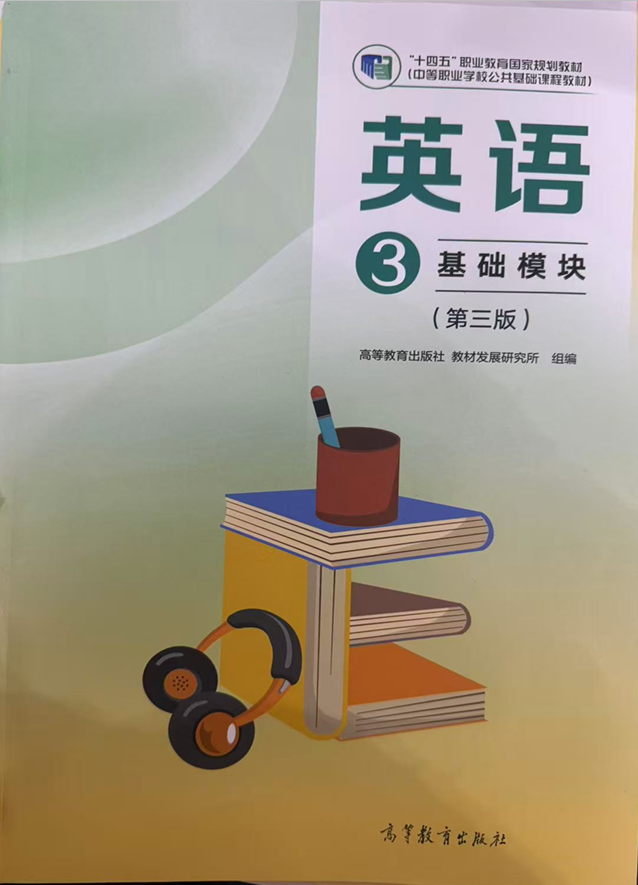
Unit 6 Living History of Culture(A卷·基础巩固)《英语 基础模块3》(高教版第三版)单元过关卷(原卷版+解析版)
2026-07-08
|
2份
|
20页
|
47人阅读
|
0人下载
内容正文:
编写说明:本套试卷紧扣《英语 基础模块3》(高教版第三版)教材,以教材单元为基准精准覆盖核心考点。
每个单元设置AB卷,A卷为基础巩固卷,侧重基础考点训练,帮助学生扎实掌握知识要点;B卷为能力提升卷,注重知识整合与全面检测,引导学生构建知识网络。全书设计4份综合测试卷,模拟实战情境,聚焦解题能力突破,全面提升应试能力与知识应用水平。
《英语 基础模块3》(高教版第三版)《单元过关卷》
Unit 6 Living History of Culture
A卷·基础巩固
考试时间:120分钟 满分:100分
班级__________姓名__________学号__________成绩__________
Ⅰ.语音辨析。 (共5小题;每小题1分,满分5分)
读下列单词,从每题所给的 A、 B、 C 和 D 四个选项中,选出画线部分发音不同的一项。
1.A.ancient B.amazing C.attractive D.along
2.A.home B.stone C.nose D.wonder
3.A.China B.chair C.school D.choose
4.A.great B.break C.bread D.steak
5.A.looked B.visited C.worked D.asked
【答案】1.A 2.D 3.C 4.C 5.B
【解析】1.A. ancient /ˈeɪnʃənt/;B. amazing /əˈmeɪzɪŋ/;C. attractive /əˈtræktɪv/;D. along /əˈlɒŋ/。A项画线字母发/eɪ/,其余三项发/ə/。故选A。
【解析】2.A. home /həʊm/;B. stone /stəʊn/;C. nose /nəʊz/;D. wonder /ˈwʌndə(r)/。D项画线字母发/ʌ/,其余三项发/əʊ/。故选D。
【解析】3.A. China /ˈtʃaɪnə/;B. chair /tʃeə(r)/;C. school /skuːl/;D. choose /tʃuːz/。C项画线字母组合发/k/,其余三项发/tʃ/。故选C。
【解析】4.A. great /ɡreɪt/;B. break /breɪk/;C. bread /bred/;D. steak /steɪk/。C项画线字母组合发/e/,其余三项发/eɪ/。故选C。
【解析】5.A. looked /lʊkt/;B. visited /ˈvɪzɪtɪd/;C. worked /wɜːkt/;D. asked /ɑːskt/。B项画线字母组合发/ɪd/,其余三项发/t/。故选B。
Ⅱ. 单项选择(共 15 小题;每小题 1 分,满分 15 分)
阅读下列句子,从每题所给的 A、B、C 和 D 四个选项中,选出最佳选项。
6. This is the museum ______ we saw many life-sized figures last Saturday.
A. where B. when C. why D. what
【答案】A
【解析】先行词the museum表示地点,空处在从句中作地点状语,应用where引导定语从句。故选A。
7. I still remember the day ______ our class visited the old city wall.
A. which B. where C. when D. who
【答案】C
【解析】先行词the day表示时间,空处在从句中作时间状语,应用when。故选C。
8. Could you tell me the reason ______ you are so interested in ancient buildings?
A. where B. when C. which D. why
【答案】D
【解析】先行词the reason表示原因,空处在从句中作原因状语,应用why。故选D。
9. The city ______ my parents plan to visit has more than 2,000 years of history.
A. where B. which C. why D. when
【答案】B
【解析】先行词the city在从句中作visit的宾语,应用which或that。故选B。
10. Winter is the season ______ the old streets look especially quiet and beautiful.
A. when B. where C. why D. which
【答案】A
【解析】先行词the season表示时间,空处在从句中作时间状语,应用when。故选A。
11. The new exhibition hall ______ by local workers last year.
A. builds B. built C. is built D. was built
【答案】D
【解析】主语The new exhibition hall与build之间是被动关系,last year提示一般过去时,应用was built。故选D。
12. My sister ______ photos of the ancient tower every time she visits the town.
A. take B. takes C. took D. taking
【答案】B
【解析】every time表示经常性动作,主语My sister为第三人称单数,谓语动词用takes。故选B。
13. We ______ a guide map before we entered the museum yesterday.
A. bought B. buy C. have bought D. will buy
【答案】A
【解析】yesterday提示一般过去时,谓语动词应用过去式bought。故选A。
14. There ______ many stone blocks on both sides of the old road.
A. is B. are C. was D. be
【答案】B
【解析】There be句型遵循就近原则,many stone blocks为复数,描述现在客观情况用are。故选B。
15. The guide spoke slowly ______ every visitor could follow him clearly.
A. because B. although C. if D. so that
【答案】D
【解析】句意为“导游说得很慢,以便每位游客都能听清楚”。so that引导目的状语从句。故选D。
16. The old bridge is not only strong ______ beautiful.
A. and B. or C. but also D. so
【答案】C
【解析】not only...but also...为固定结构,意为“不但……而且……”。故选C。
17. The Terracotta figures look ______ because each face has a different expression.
A. quietly B. life-sized C. exactly D. regularly
【答案】B
【解析】look后接形容词作表语,结合“每张脸都有不同表情”可知此处表示“真人大小的、逼真的”。故选B。
18. ______ amazing the underground kingdom looks in the museum!
A. How B. What C. What an D. How an
【答案】A
【解析】感叹句结构为How + 形容词 + 主语 + 谓语,amazing为形容词,应用How。故选A。
19. The sight of the old photo ______ me of my first trip to Xi'an.
A. remembered B. forgot C. invited D. reminded
【答案】D
【解析】remind sb. of sth.意为“使某人想起某事”,符合句意。故选D。
20. The tower is ______ the edge of the lake, so visitors can see its reflection in water.
A. from B. with C. on D. by
【答案】C
【解析】on the edge of为固定短语,意为“在……的边缘”。故选C。
Ⅲ. 完形填空(共 10 小题;每小题 1 分,满分 10 分)
阅读下面短文,从短文后各题所给的 A、B、C 和 D 四个选项中,选出可以填入空白处的最佳选项。
Last Friday, our class joined a volunteer program at a small history museum near the old city wall. At first, I thought the work would simply be about standing at the gate and saying hello to visitors. However, after the curator showed us the exhibition rooms, I realized that every object carried a quiet story. We were asked to prepare a short introduction for foreign guests, and I felt nervous because I had never spoken about historical sites in English before.
The first task was to describe ________21 map of the Silk Road. Our teacher told us to focus ________22 clear information instead of difficult words. I chose to ________23 the starting point, the long trade routes and the cultural exchanges along the way. Then I moved to a corner where several gray stone blocks were displayed. They looked ordinary, but the note beside them said they were part of an ancient gate. That small detail helped me understand why a museum can ________24 the past to life. When a family from Canada came in, I smiled and began my introduction. I spoke slowly, but I could see that they were listening with real ________25.
Later, we introduced a group of painted figures. No two faces were exactly the same, and the different expressions made the figures seem almost alive. A little boy asked ________26 the colors had become so light. I explained that time, air and soil had changed them. His question pushed me to think more deeply, and I added that protecting cultural relics is a way to respect people who lived before us. By the end of the afternoon, my voice was tired, ________27 my heart was full. I understood that history is not only about years and names. It is also about the people ________28 built, protected and passed on culture. If we introduce these stories carefully, more visitors will know ________29 culture still matters today. That day, I learned to speak with confidence and to look at old things ________30.
21.A. an B. a C. the D. /
22.A. at B. by C. with D. on
23.A. hide B. forget C. explain D. sell
24.A. bring B. push C. throw D. stop
25.A. trouble B. interest C. danger D. noise
26.A. where B. when C. why D. which
27.A. so B. because C. or D. but
28.A. who B. where C. when D. why
29.A. how B. where C. why D. what
30.A. in a hurry B. in a new way C. by mistake D. at first
【答案】21.B 22.D 23.C 24.A 25.B 26.C 27.D 28.A 29.C 30.B
【导语】本文是一篇记叙文。文章讲述了作者在历史博物馆参加志愿讲解活动,从紧张到自信,并逐渐理解文化遗存价值的经历。
【详解】21.考查冠词。句意:第一个任务是描述一张丝绸之路地图。map为可数名词单数,第一次提到,且short发音以辅音音素开头,应用a。故选B。
22.考查介词。句意:老师告诉我们要专注于清楚的信息,而不是难词。focus on为固定搭配,意为“专注于”。故选D。
23.考查动词词义辨析。句意:我选择解释起点、漫长的贸易路线和沿途的文化交流。hide隐藏;forget忘记;explain解释;sell出售。根据前文prepare a short introduction可知应为解释信息。故选C。
24.考查动词词义辨析。句意:这个小细节帮助我理解为什么博物馆能让过去鲜活起来。bring...to life意为“使……鲜活起来”。故选A。
25.考查名词词义辨析。句意:我能看出他们正带着真正的兴趣在听。interest兴趣符合听讲解的语境。故选B。
26.考查宾语从句连接词。句意:一个小男孩问为什么颜色变得这么浅。根据后文解释time, air and soil had changed them可知询问原因。故选C。
27.考查连词。句意:我的声音很累,但是我的内心很充实。前后为转折关系,应用but。故选D。
28.考查定语从句。句意:它也关于那些建设、保护并传承文化的人。先行词people指人,且在从句中作主语,应用who。故选A。
29.考查宾语从句连接词。句意:更多游客会知道为什么文化今天仍然重要。根据culture still matters today可知强调原因,应用why。故选C。
30.考查短语辨析。句意:那天,我学会了自信地表达,也学会了用新的方式看待旧物。in a new way符合作者认识变化的语境。故选B。
Ⅳ.补全对话(共5小题;每小题2分,满分10分)
根据对话内容,从对话后所给的七个选项中,选出能填入空白处的最佳选项。(选项中有两项是多余的)
A: Hi, David. I heard you went to Xi'an during the holiday. ____31____
B: It was wonderful. The city is like a living history book.
A: ____32____
B: I visited the city wall, a history museum and the Terracotta Army.
A: The Terracotta Army? ____33____
B: I think the faces of the figures are the most amazing. No two are exactly the same.
A: That sounds fantastic. ____34____
B: Yes. A guide told us many stories, and I took notes carefully.
A: ____35____
B: Sure. I can show you my photos after class.
A.What impressed you most there?
B.How was your trip?
C.Could you share more with us tomorrow?
D.Which places did you visit?
E.I don't like visiting museums.
F.Did you learn anything from the guide?
G.You should finish your homework first.
【答案】31.B 32.D 33.A 34.F 35.C
【导语】本文是一段关于西安旅行经历的对话,双方围绕参观地点、印象最深内容和分享照片展开交流。
【详解】31.根据答语“It was wonderful.”可知,上文询问旅行怎么样,B项符合语境。故选B。
【详解】32.根据答语“I visited the city wall, a history museum and the Terracotta Army.”可知,上文询问参观了哪些地方,D项符合语境。故选D。
【详解】33.根据答语“I think the faces of the figures are the most amazing.”可知,上文询问印象最深的内容,A项符合语境。故选A。
【详解】34.根据答语“Yes. A guide told us many stories...”可知,上文是一般疑问句,询问是否从导游那里学到内容,F项符合语境。故选F。
【详解】35.根据答语“Sure. I can show you my photos after class.”可知,上文提出分享请求,C项符合语境。故选C。
Ⅴ.阅读理解(共15小题;每小题2分,满分30分)
阅读下面短文A,判断36~40小题是否正确。若正确,把选项T涂黑;若错误,把选项F涂黑。阅读短文B和C,从每小题所给的A、B、C和D四个选项中选出最佳选项。
A
A city museum is not only a place for old objects. It can also be a classroom where young people learn how culture grows through time. Last month, a local museum started a program called “One Relic, One Story”. Students aged from 15 to 18 could work as weekend helpers. Before meeting visitors, they had to take three training lessons. In the first lesson, they learned how to read information cards carefully. In the second lesson, they practiced introducing objects in simple English. In the third lesson, they learned how to answer questions politely when they were not sure about the answer.
The program focused on three exhibition areas. The first area showed ancient trade routes and maps. Students explained why old roads were important for business and cultural exchange. The second area displayed life-sized figures and stone blocks. Visitors could compare different expressions on the figures and guess what jobs the people might have done. The third area showed traditional handicrafts, such as paper-cutting and embroidery. Instead of only looking at finished works, visitors could watch short videos about how they were made.
Many students said the work was not easy. They had to stand for hours and repeat some information many times. However, they also found the work meaningful. A helper named Zhao Rui said, “When I introduced a gray stone block to a child, I suddenly understood that a small object may carry a long history.” The museum plans to keep the program every weekend. It also hopes families will visit together, because parents and children can discuss the stories behind the exhibits and learn to protect cultural heritage in daily life.
36.The museum program allowed students aged from 15 to 18 to be weekend helpers.
37.Students could meet visitors directly without any training lessons.
38.The second exhibition area included life-sized figures and stone blocks.
39.Visitors could watch videos about the making process of some traditional handicrafts.
40.Zhao Rui thought a gray stone block had no connection with history.
【答案】36.T 37.F 38.T 39.T 40.F
【导语】本文是一篇说明文,介绍了某城市博物馆面向学生开展的周末志愿讲解项目,包括培训内容、展区安排以及学生的收获。
【详解】36.细节理解题。根据第一段“Students aged from 15 to 18 could work as weekend helpers.”可知,15至18岁的学生可以做周末助手。故答案为T。
【详解】37.细节理解题。根据第一段“Before meeting visitors, they had to take three training lessons.”可知,学生见游客前必须参加三节培训课,并非无需培训。故答案为F。
【详解】38.细节理解题。根据第二段“The second area displayed life-sized figures and stone blocks.”可知,第二展区展示真人大小的俑像和石块。故答案为T。
【详解】39.细节理解题。根据第二段“visitors could watch short videos about how they were made”可知,游客可以观看传统手工艺制作过程的视频。故答案为T。
【详解】40.细节理解题。根据第三段“a small object may carry a long history”可知,Zhao Rui认为小物件可能承载悠久历史,题干说法相反。故答案为F。
B
Dear Li Ming,
I am writing to tell you about my first visit to the Ancient City Wall yesterday. You know I used to think that old walls were just stones standing quietly in a city. After the trip, I changed my mind. The wall we visited stretches around the old town, and some parts are wide enough for people to walk side by side. Our guide said the wall was repaired many times, not because people wanted to make it look new, but because they wanted to keep its original shape and protect its historical value.
We arrived at 8:30 in the morning and spent almost three hours there. First, we climbed to the top from the south gate. From there, I could see modern buildings outside the wall and old streets inside it. The contrast was impressive. Then we visited a small exhibition room. It showed old bricks, tools and pictures of workers repairing the wall. One picture especially attracted me: a young worker was checking every brick carefully before putting it back. It reminded me that cultural protection is often done through patient daily work.
The most interesting part was the student guide activity. Each group had to introduce one point in English. My group chose the watchtower. I said it was a place where people once watched the road and protected the city. I was nervous, but my classmates helped me with key words. When a foreign visitor nodded and smiled, I felt proud. Now I understand why you enjoy visiting historical places. They do not only show the past; they also help us think about how to live with culture today.
Yours,
Wang Tao
41.What did Wang Tao think of old walls before the visit?
A.They were useful classrooms for students.
B.They were colorful works of modern art.
C.They were only quiet stones in a city.
D.They were new buildings for visitors.
42.How long did Wang Tao stay at the Ancient City Wall?
A.About one hour. B.About three hours. C.About five hours. D.About eight hours.
43.What impressed Wang Tao in the exhibition room?
A.A guide drawing a new map.
B.A visitor buying old tools.
C.A student climbing the south gate.
D.A worker checking bricks carefully.
44.What does the underlined word “contrast” in Paragraph 2 mean?
A.明显差异 B.共同来源 C.固定路线 D.安全距离
45.What can we infer from the student guide activity?
A.Foreign visitors could not understand English.
B.Wang Tao finished the task without help.
C.The activity helped Wang Tao gain confidence.
D.The watchtower was used for selling tickets.
【答案】41.C 42.B 43.D 44.A 45.C
【导语】本文是一封书信。作者讲述了自己参观古城墙的经历,包括游览路线、展览室见闻和英文讲解活动,并表达了对文化保护的新理解。
【详解】41.细节理解题。根据第一段“I used to think that old walls were just stones standing quietly in a city.”可知,作者过去认为老城墙只是城中静静立着的石头。故选C。
【详解】42.细节理解题。根据第二段“We arrived at 8:30 in the morning and spent almost three hours there.”可知,作者在那里待了将近三小时。故选B。
【详解】43.细节理解题。根据第二段“One picture especially attracted me: a young worker was checking every brick carefully...”可知,让作者印象深刻的是工人仔细检查砖块的图片。故选D。
【详解】44.词义猜测题。根据前句“modern buildings outside the wall and old streets inside it”可知,墙外现代建筑与墙内老街形成明显差异,因此contrast意为“明显差异”。故选A。
【详解】45.推理判断题。根据第三段“I was nervous...When a foreign visitor nodded and smiled, I felt proud.”可推断,讲解活动帮助作者获得了自信。故选C。
C
Fujian Tulou, a group of large earthen buildings in southeast China, is a brilliant example of how people can build homes that are both practical and beautiful. Some Tulou were constructed hundreds of years ago. From the outside, many of them look like huge round castles. Their thick walls were made of earth, stone, bamboo and wood. These materials helped keep rooms cool in summer and warm in winter. They also protected families from danger in the past.
A Tulou was more than a building. It was a small community. Dozens of families could live in one Tulou, and rooms were usually arranged in regular rows around an open courtyard. People cooked, worked, celebrated festivals and discussed family matters together. The design showed an old idea of living: people should help each other while keeping order in daily life. Even today, visitors can still see how public space and private rooms are carefully balanced.
In recent years, new technology has helped protect Tulou. Local workers use digital cameras and 3D scanning to record details of walls, doors and wooden stairs. If a part is damaged by rain or time, the digital record can guide repairs more exactly. Some schools also use virtual tours to introduce Tulou to students who live far away. They can look at the round layout, compare different buildings and understand why these homes were listed as important cultural heritage.
However, protection is not only a job for experts. Visitors should follow rules, avoid touching old walls and respect the life of local families. When tourism brings money, it should also bring responsibility. Tulou reminds us that cultural heritage is not a silent picture. It is living history, connecting ancient wisdom with modern life.
46.What can we learn about the materials of Tulou?
A.They were chosen only for decoration.
B.They helped control temperature indoors.
C.They were all made by modern machines.
D.They made every room look the same.
47.What does Paragraph 2 mainly describe?
A.The food sold near Tulou.
B.The problems caused by tourism.
C.The colors painted on Tulou walls.
D.The community life inside Tulou.
48.How can digital records help protect Tulou?
A.They can guide more exact repairs.
B.They can stop all rain from falling.
C.They can replace local workers fully.
D.They can turn Tulou into new hotels.
49.Which behavior is proper for visitors according to the passage?
A.Writing names on old walls.
B.Touching wooden stairs freely.
C.Following rules during the visit.
D.Entering private rooms at any time.
50.Which is the best title for the passage?
A.Digital Cameras in Modern Schools
B.Fujian Tulou: Living History in Earthen Homes
C.Family Meals in Southeast China
D.How to Build a New Round Castle
【答案】46.B 47.D 48.A 49.C 50.B
【导语】本文是一篇说明文,介绍了福建土楼的建筑材料、社区生活、数字化保护方式以及游客应承担的文化保护责任。
【详解】46.细节理解题。根据第一段“These materials helped keep rooms cool in summer and warm in winter.”可知,土楼材料有助于调节室内温度。故选B。
【详解】47.段落主旨题。第二段围绕“A Tulou was more than a building. It was a small community.”展开,主要介绍土楼内部的社区生活。故选D。
【详解】48.细节理解题。根据第三段“If a part is damaged by rain or time, the digital record can guide repairs more exactly.”可知,数字记录可以指导更精准的修复。故选A。
【详解】49.细节理解题。根据第四段“Visitors should follow rules...”可知,游客应遵守参观规则。故选C。
【详解】50.最佳标题题。全文介绍福建土楼作为生活化历史遗产的建筑、生活与保护价值,B项概括最全面。故选B。
Ⅵ. 句子单句改错(共10小题;每小题1分,满分10分)
每句只有一处错误,请找出并改正。
51. I will never forget the day where we visited the history museum.(单句改错)
【答案】where → when
【解析】先行词the day表示时间,定语从句中缺少时间状语,关系副词应用when。
52. This is the place when the old city wall begins.(单句改错)
【答案】when → where
【解析】先行词the place表示地点,定语从句中缺少地点状语,关系副词应用where。
53. Could you tell me the reason which he loves ancient buildings?(单句改错)
【答案】which → why
【解析】先行词the reason表示原因,定语从句中缺少原因状语,应用why。
54. The guide give us a clear introduction yesterday.(单句改错)
【答案】give → gave
【解析】yesterday提示一般过去时,谓语动词give应改为过去式gave。
55. There are a stone bridge near the old street.(单句改错)
【答案】are → is
【解析】There be句型中主语a stone bridge为单数,be动词应用is。
56. The figures were original painted in bright colors.(单句改错)
【答案】original → originally
【解析】修饰动词painted应用副词,original应改为originally。
57. These block are part of an ancient gate.(单句改错)
【答案】block → blocks
【解析】these后接可数名词复数,block应改为blocks。
58. The tower is one of the most attractive place in the city.(单句改错)
【答案】place → places
【解析】one of后接可数名词复数,表示“……之一”。
59. We are interested at the stories behind the relics.(单句改错)
【答案】at → in
【解析】be interested in为固定搭配,意为“对……感兴趣”。
60. The museum is a good place learn about history.(单句改错)
【答案】learn前加to
【解析】place后常用不定式作后置定语,a good place to learn about history表示“学习历史的好地方”。
Ⅶ. 短语适当形式填空(共10小题;每小题2分,满分20分)
根据语境,从方框中选择恰当短语并用其适当形式填空。
date back to
be interested in
be located in
remind...of
be made of
on the edge of
be listed as
stretch out
be constructed in
the starting point of
61. The old tower __________ the center of the town, so it is easy to find.
62. Some traditional buildings in this village __________ the Ming Dynasty.
63. The photo of the city wall __________ my grandfather __________ his young days.
64. The bridge __________ 1890 and is still used by local people.
65. The ancient garden __________ an important cultural site last year.
66. Many students __________ stories about the Silk Road after the talk.
67. The long wall __________ across the mountains like a stone dragon.
68. The small model __________ wood and paper.
69. Xi'an was once __________ the Silk Road.
70. A quiet tea house stands __________ the lake.
【答案】61. is located in 62. date back to 63. reminds; of 64. was constructed in 65. was listed as 66. were interested in 67. stretches out 68. is made of 69. the starting point of 70. on the edge of
【解析】61. be located in:位于;主语The old tower为单数,描述客观位置用一般现在时,故填is located in。
【解析】62. date back to:追溯到;主语buildings为复数,描述客观事实用一般现在时,动词用原形。
【解析】63. remind...of:使……想起;主语The photo为单数,一般现在时谓语用reminds,of后接回忆内容。
【解析】64. be constructed in:建造于;主语bridge与construct为被动关系,1890为过去时间,故填was constructed in。
【解析】65. be listed as:被列为;last year提示一般过去时,主语garden为单数,故填was listed as。
【解析】66. be interested in:对……感兴趣;after the talk表示过去语境,主语students为复数,故填were interested in。
【解析】67. stretch out:延伸;主语wall为单数,描述客观形态用一般现在时,故填stretches out。
【解析】68. be made of:由……制成;主语model为单数,描述材料用is made of。
【解析】69. the starting point of:……的起点;空处作表语,说明Xi'an与Silk Road的关系,短语无需变形。
【解析】70. on the edge of:在……的边缘;介词短语作地点状语,修饰stands。
原创精品资源学科网独家享有版权,侵权必究!
学科网(北京)股份有限公司
$
编写说明:本套试卷紧扣《英语 基础模块3》(高教版第三版)教材,以教材单元为基准精准覆盖核心考点。
每个单元设置AB卷,A卷为基础巩固卷,侧重基础考点训练,帮助学生扎实掌握知识要点;B卷为能力提升卷,注重知识整合与全面检测,引导学生构建知识网络。全书设计4份综合测试卷,模拟实战情境,聚焦解题能力突破,全面提升应试能力与知识应用水平。
《英语 基础模块3》(高教版第三版)《单元过关卷》
Unit 6 Living History of Culture
A卷·基础巩固
考试时间:120分钟 满分:100分
班级__________姓名__________学号__________成绩__________
Ⅰ.语音辨析。 (共5小题;每小题1分,满分5分)
读下列单词,从每题所给的 A、 B、 C 和 D 四个选项中,选出画线部分发音不同的一项。
1.A.ancient B.amazing C.attractive D.along
2.A.home B.stone C.nose D.wonder
3.A.China B.chair C.school D.choose
4.A.great B.break C.bread D.steak
5.A.looked B.visited C.worked D.asked
Ⅱ. 单项选择(共 15 小题;每小题 1 分,满分 15 分)
阅读下列句子,从每题所给的 A、B、C 和 D 四个选项中,选出最佳选项。
6. This is the museum ______ we saw many life-sized figures last Saturday.
A. where B. when C. why D. what
7. I still remember the day ______ our class visited the old city wall.
A. which B. where C. when D. who
8. Could you tell me the reason ______ you are so interested in ancient buildings?
A. where B. when C. which D. why
9. The city ______ my parents plan to visit has more than 2,000 years of history.
A. where B. which C. why D. when
10. Winter is the season ______ the old streets look especially quiet and beautiful.
A. when B. where C. why D. which
11. The new exhibition hall ______ by local workers last year.
A. builds B. built C. is built D. was built
12. My sister ______ photos of the ancient tower every time she visits the town.
A. take B. takes C. took D. taking
13. We ______ a guide map before we entered the museum yesterday.
A. bought B. buy C. have bought D. will buy
14. There ______ many stone blocks on both sides of the old road.
A. is B. are C. was D. be
15. The guide spoke slowly ______ every visitor could follow him clearly.
A. because B. although C. if D. so that
16. The old bridge is not only strong ______ beautiful.
A. and B. or C. but also D. so
17. The Terracotta figures look ______ because each face has a different expression.
A. quietly B. life-sized C. exactly D. regularly
18. ______ amazing the underground kingdom looks in the museum!
A. How B. What C. What an D. How an
19. The sight of the old photo ______ me of my first trip to Xi'an.
A. remembered B. forgot C. invited D. reminded
20. The tower is ______ the edge of the lake, so visitors can see its reflection in water.
A. from B. with C. on D. by
Ⅲ. 完形填空(共 10 小题;每小题 1 分,满分 10 分)
阅读下面短文,从短文后各题所给的 A、B、C 和 D 四个选项中,选出可以填入空白处的最佳选项。
Last Friday, our class joined a volunteer program at a small history museum near the old city wall. At first, I thought the work would simply be about standing at the gate and saying hello to visitors. However, after the curator showed us the exhibition rooms, I realized that every object carried a quiet story. We were asked to prepare a short introduction for foreign guests, and I felt nervous because I had never spoken about historical sites in English before.
The first task was to describe ________21 map of the Silk Road. Our teacher told us to focus ________22 clear information instead of difficult words. I chose to ________23 the starting point, the long trade routes and the cultural exchanges along the way. Then I moved to a corner where several gray stone blocks were displayed. They looked ordinary, but the note beside them said they were part of an ancient gate. That small detail helped me understand why a museum can ________24 the past to life. When a family from Canada came in, I smiled and began my introduction. I spoke slowly, but I could see that they were listening with real ________25.
Later, we introduced a group of painted figures. No two faces were exactly the same, and the different expressions made the figures seem almost alive. A little boy asked ________26 the colors had become so light. I explained that time, air and soil had changed them. His question pushed me to think more deeply, and I added that protecting cultural relics is a way to respect people who lived before us. By the end of the afternoon, my voice was tired, ________27 my heart was full. I understood that history is not only about years and names. It is also about the people ________28 built, protected and passed on culture. If we introduce these stories carefully, more visitors will know ________29 culture still matters today. That day, I learned to speak with confidence and to look at old things ________30.
21.A. an B. a C. the D. /
22.A. at B. by C. with D. on
23.A. hide B. forget C. explain D. sell
24.A. bring B. push C. throw D. stop
25.A. trouble B. interest C. danger D. noise
26.A. where B. when C. why D. which
27.A. so B. because C. or D. but
28.A. who B. where C. when D. why
29.A. how B. where C. why D. what
30.A. in a hurry B. in a new way C. by mistake D. at first
Ⅳ.补全对话(共5小题;每小题2分,满分10分)
根据对话内容,从对话后所给的七个选项中,选出能填入空白处的最佳选项。(选项中有两项是多余的)
A: Hi, David. I heard you went to Xi'an during the holiday. ____31____
B: It was wonderful. The city is like a living history book.
A: ____32____
B: I visited the city wall, a history museum and the Terracotta Army.
A: The Terracotta Army? ____33____
B: I think the faces of the figures are the most amazing. No two are exactly the same.
A: That sounds fantastic. ____34____
B: Yes. A guide told us many stories, and I took notes carefully.
A: ____35____
B: Sure. I can show you my photos after class.
A.What impressed you most there?
B.How was your trip?
C.Could you share more with us tomorrow?
D.Which places did you visit?
E.I don't like visiting museums.
F.Did you learn anything from the guide?
G.You should finish your homework first.
Ⅴ.阅读理解(共15小题;每小题2分,满分30分)
阅读下面短文A,判断36~40小题是否正确。若正确,把选项T涂黑;若错误,把选项F涂黑。阅读短文B和C,从每小题所给的A、B、C和D四个选项中选出最佳选项。
A
A city museum is not only a place for old objects. It can also be a classroom where young people learn how culture grows through time. Last month, a local museum started a program called “One Relic, One Story”. Students aged from 15 to 18 could work as weekend helpers. Before meeting visitors, they had to take three training lessons. In the first lesson, they learned how to read information cards carefully. In the second lesson, they practiced introducing objects in simple English. In the third lesson, they learned how to answer questions politely when they were not sure about the answer.
The program focused on three exhibition areas. The first area showed ancient trade routes and maps. Students explained why old roads were important for business and cultural exchange. The second area displayed life-sized figures and stone blocks. Visitors could compare different expressions on the figures and guess what jobs the people might have done. The third area showed traditional handicrafts, such as paper-cutting and embroidery. Instead of only looking at finished works, visitors could watch short videos about how they were made.
Many students said the work was not easy. They had to stand for hours and repeat some information many times. However, they also found the work meaningful. A helper named Zhao Rui said, “When I introduced a gray stone block to a child, I suddenly understood that a small object may carry a long history.” The museum plans to keep the program every weekend. It also hopes families will visit together, because parents and children can discuss the stories behind the exhibits and learn to protect cultural heritage in daily life.
36.The museum program allowed students aged from 15 to 18 to be weekend helpers.
37.Students could meet visitors directly without any training lessons.
38.The second exhibition area included life-sized figures and stone blocks.
39.Visitors could watch videos about the making process of some traditional handicrafts.
40.Zhao Rui thought a gray stone block had no connection with history.
B
Dear Li Ming,
I am writing to tell you about my first visit to the Ancient City Wall yesterday. You know I used to think that old walls were just stones standing quietly in a city. After the trip, I changed my mind. The wall we visited stretches around the old town, and some parts are wide enough for people to walk side by side. Our guide said the wall was repaired many times, not because people wanted to make it look new, but because they wanted to keep its original shape and protect its historical value.
We arrived at 8:30 in the morning and spent almost three hours there. First, we climbed to the top from the south gate. From there, I could see modern buildings outside the wall and old streets inside it. The contrast was impressive. Then we visited a small exhibition room. It showed old bricks, tools and pictures of workers repairing the wall. One picture especially attracted me: a young worker was checking every brick carefully before putting it back. It reminded me that cultural protection is often done through patient daily work.
The most interesting part was the student guide activity. Each group had to introduce one point in English. My group chose the watchtower. I said it was a place where people once watched the road and protected the city. I was nervous, but my classmates helped me with key words. When a foreign visitor nodded and smiled, I felt proud. Now I understand why you enjoy visiting historical places. They do not only show the past; they also help us think about how to live with culture today.
Yours,
Wang Tao
41.What did Wang Tao think of old walls before the visit?
A.They were useful classrooms for students.
B.They were colorful works of modern art.
C.They were only quiet stones in a city.
D.They were new buildings for visitors.
42.How long did Wang Tao stay at the Ancient City Wall?
A.About one hour. B.About three hours. C.About five hours. D.About eight hours.
43.What impressed Wang Tao in the exhibition room?
A.A guide drawing a new map.
B.A visitor buying old tools.
C.A student climbing the south gate.
D.A worker checking bricks carefully.
44.What does the underlined word “contrast” in Paragraph 2 mean?
A.明显差异 B.共同来源 C.固定路线 D.安全距离
45.What can we infer from the student guide activity?
A.Foreign visitors could not understand English.
B.Wang Tao finished the task without help.
C.The activity helped Wang Tao gain confidence.
D.The watchtower was used for selling tickets.
C
Fujian Tulou, a group of large earthen buildings in southeast China, is a brilliant example of how people can build homes that are both practical and beautiful. Some Tulou were constructed hundreds of years ago. From the outside, many of them look like huge round castles. Their thick walls were made of earth, stone, bamboo and wood. These materials helped keep rooms cool in summer and warm in winter. They also protected families from danger in the past.
A Tulou was more than a building. It was a small community. Dozens of families could live in one Tulou, and rooms were usually arranged in regular rows around an open courtyard. People cooked, worked, celebrated festivals and discussed family matters together. The design showed an old idea of living: people should help each other while keeping order in daily life. Even today, visitors can still see how public space and private rooms are carefully balanced.
In recent years, new technology has helped protect Tulou. Local workers use digital cameras and 3D scanning to record details of walls, doors and wooden stairs. If a part is damaged by rain or time, the digital record can guide repairs more exactly. Some schools also use virtual tours to introduce Tulou to students who live far away. They can look at the round layout, compare different buildings and understand why these homes were listed as important cultural heritage.
However, protection is not only a job for experts. Visitors should follow rules, avoid touching old walls and respect the life of local families. When tourism brings money, it should also bring responsibility. Tulou reminds us that cultural heritage is not a silent picture. It is living history, connecting ancient wisdom with modern life.
46.What can we learn about the materials of Tulou?
A.They were chosen only for decoration.
B.They helped control temperature indoors.
C.They were all made by modern machines.
D.They made every room look the same.
47.What does Paragraph 2 mainly describe?
A.The food sold near Tulou.
B.The problems caused by tourism.
C.The colors painted on Tulou walls.
D.The community life inside Tulou.
48.How can digital records help protect Tulou?
A.They can guide more exact repairs.
B.They can stop all rain from falling.
C.They can replace local workers fully.
D.They can turn Tulou into new hotels.
49.Which behavior is proper for visitors according to the passage?
A.Writing names on old walls.
B.Touching wooden stairs freely.
C.Following rules during the visit.
D.Entering private rooms at any time.
50.Which is the best title for the passage?
A.Digital Cameras in Modern Schools
B.Fujian Tulou: Living History in Earthen Homes
C.Family Meals in Southeast China
D.How to Build a New Round Castle
Ⅵ. 句子单句改错(共10小题;每小题1分,满分10分)
每句只有一处错误,请找出并改正。
51. I will never forget the day where we visited the history museum.(单句改错)
52. This is the place when the old city wall begins.(单句改错)
53. Could you tell me the reason which he loves ancient buildings?(单句改错)
54. The guide give us a clear introduction yesterday.(单句改错)
55. There are a stone bridge near the old street.(单句改错)
56. The figures were original painted in bright colors.(单句改错)
57. These block are part of an ancient gate.(单句改错)
58. The tower is one of the most attractive place in the city.(单句改错)
59. We are interested at the stories behind the relics.(单句改错)
60. The museum is a good place learn about history.(单句改错)
Ⅶ. 短语适当形式填空(共10小题;每小题2分,满分20分)
根据语境,从方框中选择恰当短语并用其适当形式填空。
date back to
be interested in
be located in
remind...of
be made of
on the edge of
be listed as
stretch out
be constructed in
the starting point of
61. The old tower __________ the center of the town, so it is easy to find.
62. Some traditional buildings in this village __________ the Ming Dynasty.
63. The photo of the city wall __________ my grandfather __________ his young days.
64. The bridge __________ 1890 and is still used by local people.
65. The ancient garden __________ an important cultural site last year.
66. Many students __________ stories about the Silk Road after the talk.
67. The long wall __________ across the mountains like a stone dragon.
68. The small model __________ wood and paper.
69. Xi'an was once __________ the Silk Road.
70. A quiet tea house stands __________ the lake.
原创精品资源学科网独家享有版权,侵权必究!
学科网(北京)股份有限公司
$
资源预览图

1

2

3
由于学科网是一个信息分享及获取的平台,不确保部分用户上传资料的 来源及知识产权归属。如您发现相关资料侵犯您的合法权益,请联系学科网,我们核实后将及时进行处理。