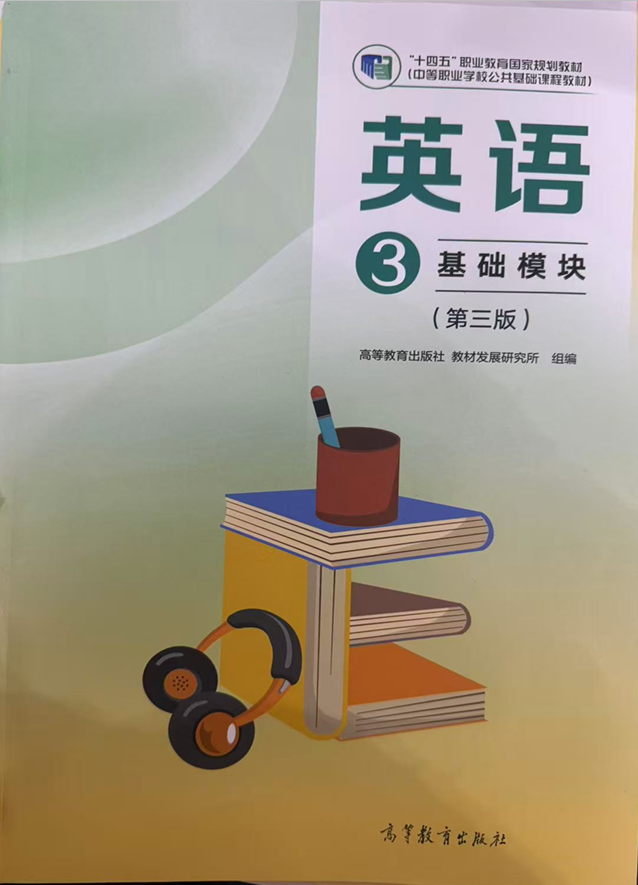
Unit 3 Artificial Intelligence(A卷·基础巩固)《英语 基础模块3》(高教版第三版)单元过关卷(原卷版+解析版)
2026-07-08
|
2份
|
21页
|
45人阅读
|
0人下载
内容正文:
编写说明:本套试卷紧扣《英语 基础模块3》(高教版第三版)教材,以教材单元为基准精准覆盖核心考点。
每个单元设置AB卷,A卷为基础巩固卷,侧重基础考点训练,帮助学生扎实掌握知识要点;B卷为能力提升卷,注重知识整合与全面检测,引导学生构建知识网络。全书设计4份综合测试卷,模拟实战情境,聚焦解题能力突破,全面提升应试能力与知识应用水平。
《英语 基础模块3》(高教版第三版)《单元过关卷》
Unit 3 Artificial Intelligence
A卷·基础巩固
考试时间:120分钟 满分:100分
班级_____姓名_____学号_____成绩_____
Ⅰ.语音辨析。 (共5小题;每小题1分,满分5分)
读下列单词,从每题所给的 A、B、C 和 D 四个选项中,选出画线部分发音不同的一项。
1.A.serve B.person C.prefer D.term
2.A.cost B.robot C.hot D.job
3.A.face B.payment C.dangerous D.smart
4.A.machine B.chair C.teach D.child
5.A.risk B.system C.field D.benefit
【答案】1.C 2.B 3.D 4.A 5.C
【解析】1.A、B、D项画线部分均发/ɜː/,C项画线部分发/ə/,故选C。
【解析】2.A、C、D项画线部分均发/ɒ/,B项画线部分发/əʊ/,故选B。
【解析】3.A、B、C项画线部分均发/eɪ/,D项画线部分发/ɑː/,故选D。
【解析】4.A项画线部分发/k/,B、C、D项画线部分均发/tʃ/,故选A。
【解析】5.A、B、D项画线部分均发/ɪ/,C项画线部分发/iː/,故选C。
Ⅱ. 单项选择(共15小题;每小题1分,满分15分)
阅读下列句子,从每题所给的 A、B、C 和 D 四个选项中,选出最佳选项。
6.There is a robot guide ______ near the entrance of the smart restaurant.
A. work B. worked
C. working D. works
【答案】C
【解析】guide与work之间是主动关系,working near the entrance作后置定语,故选C。
7.The dishes ______ by robot chefs tasted as good as those made by people.
A. cooking B. cooked
C. cook D. to cook
【答案】B
【解析】dishes与cook之间是被动关系,过去分词cooked作后置定语,故选B。
8.The first thing ______ before using AI is to protect personal information.
A. to do B. doing
C. does D. did
【答案】A
【解析】名词thing前有序数词first修饰时,常用动词不定式作后置定语,故选A。
9.We have enjoyed the benefits ______ by mobile payment in daily life.
A. bring B. bringing
C. to bring D. brought
【答案】D
【解析】benefits与bring之间是被动关系,应用过去分词brought作后置定语,故选D。
10.Do you want a workplace ______ completely by machines?
A. control B. controlled
C. controlling D. controls
【答案】B
【解析】workplace与control之间是被动关系,controlled completely by machines作后置定语,故选B。
11.The robot waiter ______ the customers patiently yesterday evening.
A. serve B. serves
C. serving D. served
【答案】D
【解析】yesterday evening提示一般过去时,谓语动词应用served,故选D。
12.AI has been ______ to many fields, such as education and medical practice.
A. applied B. apply
C. applying D. applies
【答案】A
【解析】has been applied为现在完成时的被动语态,表示“已经被应用”,故选A。
13.The teacher told us ______ AI could not replace human thinking completely.
A. if B. when
C. that D. where
【答案】C
【解析】宾语从句结构完整,表达陈述事实,用that引导,故选C。
14.______ robots can improve efficiency, humans still need to control them wisely.
A. Although B. Because
C. Until D. If
【答案】A
【解析】前后构成让步关系,表示“虽然机器人能提高效率,但人类仍需明智控制”,故选A。
15.It is important for students ______ with others when using new technology.
A. communicate B. to communicate
C. communicating D. communicated
【答案】B
【解析】It is important for sb. to do sth.为固定结构,故选B。
16.This is the factory ______ robots put car parts together on the assembly line.
A. which B. that
C. where D. whose
【答案】C
【解析】先行词factory表示地点,空处在从句中作地点状语,用where,故选C。
17.I wonder ______ will happen if people become too dependent on machines.
A. who B. which
C. when D. what
【答案】D
【解析】宾语从句缺少主语,表示“什么会发生”,用what,故选D。
18.Robots are useful ______ they can perform some dangerous tasks for humans.
A. because B. unless
C. though D. until
【答案】A
【解析】后句解释机器人有用的原因,应用because,故选A。
19.Mobile payment makes shopping much ______ than before.
A. easy B. easily
C. easier D. easiest
【答案】C
【解析】than before提示比较级,much修饰比较级easier,故选C。
20.Please do not take the ______ of downloading unknown apps.
A. benefit B. attitude
C. efficiency D. risk
【答案】D
【解析】take the risk of doing sth.表示“冒险做某事”,符合语境,故选D。
Ⅲ. 完形填空(共10小题;每小题1分,满分10分)
阅读下面短文,从短文后各题所给的 A、B、C 和 D 四个选项中,选出可以填入空白处的最佳选项。
Last month, our school opened a small smart learning room for students who wanted to learn about artificial intelligence after class.
At first, many students thought AI was only ____21____ tool for scientists and engineers. When I walked into the room ____22____ my classmates, I found a robot guide standing near the door. It told ____23____ how to choose a task and how to protect our personal information. Our teacher asked us to use the system ____24____, because a powerful tool may cause problems if users are careless. Then we tried a writing program. It could process data, check spelling and give suggestions, but it could not replace our own thinking. We needed to compare its advice with our purpose.
Later, we visited a screen factory online through a virtual tour. Robots were working on an assembly line and putting tiny parts together. The guide said these robots helped workers ____25____ costs and improve efficiency. They could also perform dangerous tasks in hot or noisy places. However, the guide did not say AI was perfect. It reminded us that people might become too dependent on machines if they stopped asking questions. A classmate asked ____26____ workers would lose their jobs. The teacher answered that people should learn new skills and control machines wisely.
At the end of the activity, each group made a poster about the pros and cons of AI. Our group wrote that AI brings obvious benefits, such as convenient mobile payment and smart homes, ____27____ it also increases the risk of fake information. I finally understood ____28____ technology itself is neither good nor bad. The real point is whether humans use it properly. After the lesson, I felt more confident. I no longer ____29____ AI as something far away; instead, I saw it as a helpful partner. If we keep learning and stay responsible, AI can make our future life safer, easier and more ____30____.
21.A.an B.a C.the D./
22.A.for B.by C.about D.with
23.A.us B.him C.them D.it
24.A.loudly B.quickly C.properly D.sadly
25.A.raise B.lower C.forget D.waste
26.A.why B.where C.when D.whether
27.A.but B.so C.or D.because
28.A.where B.who C.that D.which
29.A.served B.paid C.lost D.regarded
30.A.enjoyable B.harmful C.careless D.noisy
【答案】21.B 22.D 23.A 24.C 25.B 26.D 27.A 28.C 29.D 30.A
【导语】本文是一篇记叙文。文章讲述学生在智能学习室体验人工智能工具、参观虚拟工厂并讨论人工智能利弊的经历,说明技术的价值取决于人们是否恰当使用。
【详解】21.考查冠词。tool为可数名词单数,此处泛指“一个工具”,且tool以辅音音素开头,用a,故选B。
【详解】22.考查介词。walked into the room with my classmates表示“和同学们走进房间”,with符合语境,故选D。
【详解】23.考查代词。前文提到“I...my classmates”,机器人告诉“我们”如何选择任务,us符合语境,故选A。
【详解】24.考查副词。后文提到如果用户粗心会出问题,因此应“正确地、恰当地”使用系统,properly符合语境,故选C。
【详解】25.考查动词。lower costs and improve efficiency表示“降低成本、提高效率”,为语义搭配,故选B。
【详解】26.考查宾语从句连接词。句意为同学询问工人是否会失去工作,whether表示“是否”,故选D。
【详解】27.考查连词。前面说明AI的好处,后面说明风险,前后为转折关系,用but,故选A。
【详解】28.考查宾语从句连接词。从句“technology itself is neither good nor bad”结构完整,用that引导,故选C。
【详解】29.考查动词。regard...as...表示“把……看作……”,符合“我不再把AI看成遥远的东西”的语境,故选D。
【详解】30.考查形容词。前文“safer, easier”均为积极意义,enjoyable表示“愉快的”,符合结尾正向表达,故选A。
Ⅳ.补全对话(共5小题;每小题2分,满分10分)
根据对话内容,从对话后所给的七个选项中,选出能填入空白处的最佳选项。(选项中有两项是多余的)
A: Welcome to our smart restaurant. ____31____
B: Yes. I have never ordered food with a robot before.
A: Don't worry. ____32____ You can also read the menu on the screen.
B: Great. Are the dishes cooked by robot chefs?
A: Some of them are. ____33____
B: That sounds efficient, but is my payment information safe?
A: Of course. ____34____
B: Good. To be honest, I still like talking with human waiters.
A: I understand. Technology helps us, but warm service is also important. ____35____
A.They prepare dishes according to a pre-designed system.
B.Do you need any help?
C.We are on the same page.
D.The robot guide will show you the steps.
E.Robots can replace all human service.
F.We protect customers' personal information carefully.
G.You must use face recognition for every meal.
【答案】31.B 32.D 33.A 34.F 35.C
【解析】31.根据答语“Yes”和后文需要帮助的语境可知,B项“你需要帮助吗?”符合。
【解析】32.根据前文不会用机器人点餐和后文可看屏幕菜单可知,D项说明机器人会展示步骤,符合语境。
【解析】33.根据前文“部分菜由机器人厨师做”可知,A项说明其烹饪方式,符合语境。
【解析】34.根据上文询问支付信息是否安全可知,F项“我们认真保护顾客个人信息”符合。
【解析】35.根据前文双方都认为技术和温暖服务重要可知,C项“我们意见一致”符合。
Ⅴ.阅读理解(共15小题;每小题2分,满分30分)
阅读下面短文A,判断36~40小题是否正确。若正确,把选项T涂黑;若错误,把选项F涂黑。阅读短文B和C,从每小题所给的A、B、C和D四个选项中选出最佳选项。
A
Smart restaurants are becoming more common in some cities. When customers walk into one, they may first meet a robot receptionist. The robot can welcome them, ask how many people are in the group and lead them to a table. On the table, customers can scan a code to read the menu and pay by mobile payment after the meal. In the kitchen, some dishes are cooked by robot chefs according to a pre-designed system. The process is controlled by computers, so the flavor and quality of the dishes can be kept stable.
These smart services bring clear advantages. Robot waiters do not get tired easily, and they can serve dishes again and again during busy hours. They help lower costs and improve efficiency. For some simple jobs, robots can also reduce mistakes. For example, a robot may send the right dish to the right table by following the table number in the system. Customers who are in a hurry may enjoy this fast service very much.
However, smart restaurants also have problems. Some elderly customers may not know how to order on a screen, and some people still prefer traditional restaurants because they like to communicate with human waiters. If a system stops working, the restaurant may become slow and confusing. More importantly, restaurants should protect customers' personal information when they use face recognition or online payment. Therefore, a good smart restaurant needs both useful technology and careful human management. Whether it is a good choice depends on how well people use and control the technology.
36.Robot receptionists can welcome customers and lead them to tables in some smart restaurants.
37.Robot waiters get tired more easily than human waiters during busy hours.
38.Some elderly customers may have difficulty ordering food on a screen.
39.If a restaurant uses face recognition, it does not need to protect customer information.
40.The passage suggests that smart restaurants need both technology and human management.
【答案】36.T 37.F 38.T 39.F 40.T
【导语】本文是一篇说明文。文章介绍智慧餐厅中机器人接待、扫码点餐、机器人厨师和移动支付等服务,分析其提高效率、降低成本的优点,也指出老年顾客使用困难、系统故障和隐私保护等问题。
【详解】36.细节判断题。根据第一段“a robot receptionist...welcome them...lead them to a table”可知说法正确。
【详解】37.细节判断题。根据第二段“Robot waiters do not get tired easily”可知机器人服务员不容易疲惫,题干表述相反,故错误。
【详解】38.细节判断题。根据第三段“Some elderly customers may not know how to order on a screen”可知说法正确。
【详解】39.细节判断题。根据第三段“restaurants should protect customers' personal information”可知使用人脸识别或线上支付时仍需保护信息,故错误。
【详解】40.细节判断题。根据第三段“a good smart restaurant needs both useful technology and careful human management”可知说法正确。
B
Zhang Lei is a first-year student in a vocational school. He used to think artificial intelligence was only a word in the news, not something in his daily life. That idea changed after his class visited a modern car factory last Friday. The factory manager first showed them a video about the production process. In the video, robot arms picked up heavy metal pieces, put car parts together and checked whether the doors could close properly. Zhang Lei was surprised because the robots worked quickly and almost never stopped.
Then the students walked beside a safe glass wall and watched the real assembly line. Workers were not standing in the most dangerous places. Instead, they sat in a control room and watched data on large screens. If a robot arm moved too slowly or a part was not in the right position, the system would send a warning. A young engineer told the students that robots did not take away all human work. They changed the way people worked. Workers needed to understand machines, read data and solve problems.
After the visit, Zhang Lei talked with the engineer for ten minutes. He learned that the engineer once studied in a vocational school and kept improving his skills after graduation. On the bus back to school, Zhang Lei wrote in his notebook, "AI can free people from heavy labor, but it also asks people to learn more." He decided to take computer lessons more seriously. He also planned to join the school robot club, not because robots looked cool, but because he wanted to prepare for future workplaces.
41.What changed Zhang Lei's idea about artificial intelligence?
A.A news report about future schools.
B.A visit to a modern car factory.
C.A robot club competition in his city.
D.A talk with his parents at home.
42.Which information about the robots on the assembly line is mentioned?
A.They checked whether car doors could close properly.
B.They taught students how to drive new cars safely.
C.They sold cars to visitors from other cities.
D.They designed new lessons for vocational schools.
43.Why were workers sitting in a control room?
A.They were resting after heavy labor.
B.They were avoiding all kinds of learning.
C.They were watching data and solving problems.
D.They were waiting to leave the factory early.
44.What did Zhang Lei decide to do after the visit?
A.Stop learning computer skills.
B.Work on the assembly line at once.
C.Buy a robot for his family.
D.Join the school robot club.
45.What does the writer want to tell us through Zhang Lei's experience?
A.AI makes vocational learning unnecessary.
B.Factories should use no human workers.
C.People should learn new skills for future workplaces.
D.Students should only study from videos.
【答案】41.B 42.A 43.C 44.D 45.C
【导语】本文是一篇记叙文。文章讲述张磊参观现代汽车工厂后,认识到人工智能和机器人既能减轻重体力劳动,也要求人们学习数据读取、机器控制和问题解决等新技能。
【详解】41.细节理解题。根据第一段“That idea changed after his class visited a modern car factory”可知改变想法的是参观现代汽车工厂,故选B。
【详解】42.细节理解题。根据第一段“checked whether the doors could close properly”可知机器人会检查车门能否正常关闭,故选A。
【详解】43.细节理解题。根据第二段“watched data on large screens”和“solve problems”相关内容可知工人在控制室看数据并处理问题,故选C。
【详解】44.细节理解题。根据第三段“He also planned to join the school robot club”可知他计划加入机器人社团,故选D。
【详解】45.主旨推理题。文章通过张磊的经历说明AI让工作方式改变,人们应学习新技能适应未来工作场景,故选C。
C
In Hohhot, a community health center has started to use an AI service desk to support doctors and residents. The desk is not a doctor, and it cannot make final medical decisions. Its job is to collect basic information, remind residents of common health rules and help doctors work more efficiently. When a resident arrives, the screen asks simple questions, such as age, symptoms and medicine history. Then it prints a short note for the nurse. This saves time, especially on busy mornings.
The service desk also helps elderly people in a careful way. Some older residents cannot type quickly, so volunteers stand nearby and guide them. If a person does not want to use the screen, he or she can still talk with a nurse directly. The center manager says technology should serve people, not force people. For this reason, the center keeps both digital service and face-to-face service. It also teaches residents not to share private information with unknown apps.
The AI desk brings several benefits. It can remind people to drink enough water, exercise regularly and take medicine on time. It can also introduce nearby services, such as the clinic schedule and health lectures. However, it has limits. It may misunderstand unclear answers, and it cannot comfort a worried patient like a kind nurse can. Doctors still need to check the information and make professional judgments. The center's experience shows that AI works best when it is used as a helpful assistant. With proper control, it can improve efficiency without taking away human care.
46.What is the main job of the AI service desk in the health center?
A.To make final medical decisions for doctors.
B.To collect basic information and save time.
C.To replace all nurses during busy mornings.
D.To sell medicine to residents online.
47.What does the underlined word “symptoms” in Paragraph 1 mean?
A.症状 B.价格
C.职业 D.路线
48.How does the center help older residents use the AI desk?
A.It asks them to type quickly alone.
B.It closes face-to-face service for them.
C.It lets volunteers guide them nearby.
D.It makes them download unknown apps.
49.Which of the following statements is TRUE?
A.The AI desk can comfort patients better than nurses.
B.Residents must share private information with unknown apps.
C.The AI desk never misunderstands unclear answers.
D.Doctors still need to check information and judge professionally.
50.Which is the best title for the text?
A.A Machine That Replaces Every Doctor
B.A Busy Morning Without Any Nurse
C.AI as a Helpful Health Assistant
D.The Risk of Closing Health Centers
【答案】46.B 47.A 48.C 49.D 50.C
【导语】本文是一篇说明文。文章介绍社区健康中心使用AI服务台收集基础信息、提醒健康规则并辅助医生提高效率,同时强调保留面对面服务、保护隐私以及医生专业判断的重要性。
【详解】46.细节理解题。根据第一段“Its job is to collect basic information”和“This saves time”可知AI服务台主要收集基础信息并节省时间,故选B。
【详解】47.词义猜测题。根据“age, symptoms and medicine history”及健康中心场景可知,symptoms指身体“症状”,故选A。
【详解】48.细节理解题。根据第二段“volunteers stand nearby and guide them”可知志愿者会在旁边指导老人使用,故选C。
【详解】49.细节理解题。根据第三段“Doctors still need to check the information and make professional judgments”可知医生仍需核查信息并作专业判断,故选D。
【详解】50.标题归纳题。全文强调AI服务台作为健康中心的辅助工具提高效率但不能替代人,C项最能概括主旨,故选C。
VI.句子改错 (共10小题;每小题1分,满分10分)
每个句子只有一处错误,每处错误仅涉及一个单词的增加、删除或修改。不允许改变原句的意思。
51.There is a robot worked near the door. (单句改错)
【答案】worked→working
【解析】robot与work之间是主动关系,应用现在分词working作后置定语。
52.The dishes cooking by robots are delicious. (单句改错)
【答案】cooking→cooked
【解析】dishes与cook之间是被动关系,应用过去分词cooked作后置定语。
53.I have many tasks to finish them today. (单句改错)
【答案】删除them
【解析】to finish作后置定语修饰tasks,finish的宾语已由tasks承担,不再加them。
54.Robots can improve efficient in factories. (单句改错)
【答案】efficient→efficiency
【解析】improve后接名词作宾语,efficiency表示“效率”。
55.People should not depend machines too much. (单句改错)
【答案】depend后加on
【解析】depend on表示“依靠”,介词on不可省略。
56.The waiter served for the customers quickly. (单句改错)
【答案】删除for
【解析】serve作“服务、接待”讲时可直接接宾语customers。
57.AI has been apply to education. (单句改错)
【答案】apply→applied
【解析】has been applied为现在完成时被动语态,动词应用过去分词。
58.There are no one working on the assembly line. (单句改错)
【答案】are→is
【解析】no one作主语时视为单数,there be结构中be动词用is。
59.We are on same page about the plan. (单句改错)
【答案】same前加the
【解析】on the same page为固定表达,表示“意见一致”。
60.Using AI careless may cause problems. (单句改错)
【答案】careless→carelessly
【解析】修饰动词Using应用副词carelessly,表示“粗心地使用”。
Ⅶ. 短语适当形式填空(共10小题;每小题2分,满分20分)
根据句子内容选择正确短语并用其适当形式填空。
improve efficiency;on the same page;mobile payment;be dependent on;assembly line
thanks to;perform dangerous tasks;apply to;pros and cons;take the risk of
61. In many factories, robots work on the _____ to put car parts together.
62. _____ face recognition, passengers can enter the station more quickly.
63. We should think about the _____ of AI before using it in our daily life.
64. Do not _____ downloading unknown apps from strange websites.
65. The two students are _____ about protecting personal information.
66. The new system helps workers _____ and finish repeated work faster.
67. AI has been _____ many fields, including education and medical practice.
68. Some robots can _____ for humans in hot or noisy places.
69. Young people often use _____ because it is fast and convenient.
70. We should not _____ machines completely when making important decisions.
【答案】61. assembly line 62. Thanks to 63. pros and cons 64. take the risk of 65. on the same page 66. improve efficiency 67. applied to 68. perform dangerous tasks 69. mobile payment 70. be dependent on
【解析】61. assembly line:生产线;put car parts together提示机器人在生产线上组装汽车部件。
【解析】62. thanks to:多亏;位于句首首字母大写,说明人脸识别带来的便利。
【解析】63. pros and cons:利弊;before using it提示使用前应考虑优点和缺点。
【解析】64. take the risk of:冒……的风险;Do not后接动词原形,of后接动名词downloading。
【解析】65. on the same page:意见一致;be动词后直接使用该固定短语作表语。
【解析】66. improve efficiency:提高效率;helps sb. do sth.后接动词原形。
【解析】67. apply to:应用于;has been后接过去分词,故用applied to。
【解析】68. perform dangerous tasks:执行危险任务;情态动词can后接动词原形。
【解析】69. mobile payment:移动支付;use后接名词短语作宾语。
【解析】70. be dependent on:依赖;should not后接动词原形be。
原创精品资源学科网独家享有版权,侵权必究!
学科网(北京)股份有限公司
$
编写说明:本套试卷紧扣《英语 基础模块3》(高教版第三版)教材,以教材单元为基准精准覆盖核心考点。
每个单元设置AB卷,A卷为基础巩固卷,侧重基础考点训练,帮助学生扎实掌握知识要点;B卷为能力提升卷,注重知识整合与全面检测,引导学生构建知识网络。全书设计4份综合测试卷,模拟实战情境,聚焦解题能力突破,全面提升应试能力与知识应用水平。
《英语 基础模块3》(高教版第三版)《单元过关卷》
Unit 3 Artificial Intelligence
A卷·基础巩固
考试时间:120分钟 满分:100分
班级_____姓名_____学号_____成绩_____
Ⅰ.语音辨析。 (共5小题;每小题1分,满分5分)
读下列单词,从每题所给的 A、B、C 和 D 四个选项中,选出画线部分发音不同的一项。
1.A.serve B.person C.prefer D.term
2.A.cost B.robot C.hot D.job
3.A.face B.payment C.dangerous D.smart
4.A.machine B.chair C.teach D.child
5.A.risk B.system C.field D.benefit
Ⅱ. 单项选择(共15小题;每小题1分,满分15分)
阅读下列句子,从每题所给的 A、B、C 和 D 四个选项中,选出最佳选项。
6.There is a robot guide ______ near the entrance of the smart restaurant.
A. work B. worked
C. working D. works
7.The dishes ______ by robot chefs tasted as good as those made by people.
A. cooking B. cooked
C. cook D. to cook
8.The first thing ______ before using AI is to protect personal information.
A. to do B. doing
C. does D. did
9.We have enjoyed the benefits ______ by mobile payment in daily life.
A. bring B. bringing
C. to bring D. brought
10.Do you want a workplace ______ completely by machines?
A. control B. controlled
C. controlling D. controls
11.The robot waiter ______ the customers patiently yesterday evening.
A. serve B. serves
C. serving D. served
12.AI has been ______ to many fields, such as education and medical practice.
A. applied B. apply
C. applying D. applies
13.The teacher told us ______ AI could not replace human thinking completely.
A. if B. when
C. that D. where
14.______ robots can improve efficiency, humans still need to control them wisely.
A. Although B. Because
C. Until D. If
15.It is important for students ______ with others when using new technology.
A. communicate B. to communicate
C. communicating D. communicated
16.This is the factory ______ robots put car parts together on the assembly line.
A. which B. that
C. where D. whose
17.I wonder ______ will happen if people become too dependent on machines.
A. who B. which
C. when D. what
18.Robots are useful ______ they can perform some dangerous tasks for humans.
A. because B. unless
C. though D. until
19.Mobile payment makes shopping much ______ than before.
A. easy B. easily
C. easier D. easiest
20.Please do not take the ______ of downloading unknown apps.
A. benefit B. attitude
C. efficiency D. risk
Ⅲ. 完形填空(共10小题;每小题1分,满分10分)
阅读下面短文,从短文后各题所给的 A、B、C 和 D 四个选项中,选出可以填入空白处的最佳选项。
Last month, our school opened a small smart learning room for students who wanted to learn about artificial intelligence after class.
At first, many students thought AI was only ____21____ tool for scientists and engineers. When I walked into the room ____22____ my classmates, I found a robot guide standing near the door. It told ____23____ how to choose a task and how to protect our personal information. Our teacher asked us to use the system ____24____, because a powerful tool may cause problems if users are careless. Then we tried a writing program. It could process data, check spelling and give suggestions, but it could not replace our own thinking. We needed to compare its advice with our purpose.
Later, we visited a screen factory online through a virtual tour. Robots were working on an assembly line and putting tiny parts together. The guide said these robots helped workers ____25____ costs and improve efficiency. They could also perform dangerous tasks in hot or noisy places. However, the guide did not say AI was perfect. It reminded us that people might become too dependent on machines if they stopped asking questions. A classmate asked ____26____ workers would lose their jobs. The teacher answered that people should learn new skills and control machines wisely.
At the end of the activity, each group made a poster about the pros and cons of AI. Our group wrote that AI brings obvious benefits, such as convenient mobile payment and smart homes, ____27____ it also increases the risk of fake information. I finally understood ____28____ technology itself is neither good nor bad. The real point is whether humans use it properly. After the lesson, I felt more confident. I no longer ____29____ AI as something far away; instead, I saw it as a helpful partner. If we keep learning and stay responsible, AI can make our future life safer, easier and more ____30____.
21.A.an B.a C.the D./
22.A.for B.by C.about D.with
23.A.us B.him C.them D.it
24.A.loudly B.quickly C.properly D.sadly
25.A.raise B.lower C.forget D.waste
26.A.why B.where C.when D.whether
27.A.but B.so C.or D.because
28.A.where B.who C.that D.which
29.A.served B.paid C.lost D.regarded
30.A.enjoyable B.harmful C.careless D.noisy
Ⅳ.补全对话(共5小题;每小题2分,满分10分)
根据对话内容,从对话后所给的七个选项中,选出能填入空白处的最佳选项。(选项中有两项是多余的)
A: Welcome to our smart restaurant. ____31____
B: Yes. I have never ordered food with a robot before.
A: Don't worry. ____32____ You can also read the menu on the screen.
B: Great. Are the dishes cooked by robot chefs?
A: Some of them are. ____33____
B: That sounds efficient, but is my payment information safe?
A: Of course. ____34____
B: Good. To be honest, I still like talking with human waiters.
A: I understand. Technology helps us, but warm service is also important. ____35____
A.They prepare dishes according to a pre-designed system.
B.Do you need any help?
C.We are on the same page.
D.The robot guide will show you the steps.
E.Robots can replace all human service.
F.We protect customers' personal information carefully.
G.You must use face recognition for every meal.
Ⅴ.阅读理解(共15小题;每小题2分,满分30分)
阅读下面短文A,判断36~40小题是否正确。若正确,把选项T涂黑;若错误,把选项F涂黑。阅读短文B和C,从每小题所给的A、B、C和D四个选项中选出最佳选项。
A
Smart restaurants are becoming more common in some cities. When customers walk into one, they may first meet a robot receptionist. The robot can welcome them, ask how many people are in the group and lead them to a table. On the table, customers can scan a code to read the menu and pay by mobile payment after the meal. In the kitchen, some dishes are cooked by robot chefs according to a pre-designed system. The process is controlled by computers, so the flavor and quality of the dishes can be kept stable.
These smart services bring clear advantages. Robot waiters do not get tired easily, and they can serve dishes again and again during busy hours. They help lower costs and improve efficiency. For some simple jobs, robots can also reduce mistakes. For example, a robot may send the right dish to the right table by following the table number in the system. Customers who are in a hurry may enjoy this fast service very much.
However, smart restaurants also have problems. Some elderly customers may not know how to order on a screen, and some people still prefer traditional restaurants because they like to communicate with human waiters. If a system stops working, the restaurant may become slow and confusing. More importantly, restaurants should protect customers' personal information when they use face recognition or online payment. Therefore, a good smart restaurant needs both useful technology and careful human management. Whether it is a good choice depends on how well people use and control the technology.
36.Robot receptionists can welcome customers and lead them to tables in some smart restaurants.
37.Robot waiters get tired more easily than human waiters during busy hours.
38.Some elderly customers may have difficulty ordering food on a screen.
39.If a restaurant uses face recognition, it does not need to protect customer information.
40.The passage suggests that smart restaurants need both technology and human management.
B
Zhang Lei is a first-year student in a vocational school. He used to think artificial intelligence was only a word in the news, not something in his daily life. That idea changed after his class visited a modern car factory last Friday. The factory manager first showed them a video about the production process. In the video, robot arms picked up heavy metal pieces, put car parts together and checked whether the doors could close properly. Zhang Lei was surprised because the robots worked quickly and almost never stopped.
Then the students walked beside a safe glass wall and watched the real assembly line. Workers were not standing in the most dangerous places. Instead, they sat in a control room and watched data on large screens. If a robot arm moved too slowly or a part was not in the right position, the system would send a warning. A young engineer told the students that robots did not take away all human work. They changed the way people worked. Workers needed to understand machines, read data and solve problems.
After the visit, Zhang Lei talked with the engineer for ten minutes. He learned that the engineer once studied in a vocational school and kept improving his skills after graduation. On the bus back to school, Zhang Lei wrote in his notebook, "AI can free people from heavy labor, but it also asks people to learn more." He decided to take computer lessons more seriously. He also planned to join the school robot club, not because robots looked cool, but because he wanted to prepare for future workplaces.
41.What changed Zhang Lei's idea about artificial intelligence?
A.A news report about future schools.
B.A visit to a modern car factory.
C.A robot club competition in his city.
D.A talk with his parents at home.
42.Which information about the robots on the assembly line is mentioned?
A.They checked whether car doors could close properly.
B.They taught students how to drive new cars safely.
C.They sold cars to visitors from other cities.
D.They designed new lessons for vocational schools.
43.Why were workers sitting in a control room?
A.They were resting after heavy labor.
B.They were avoiding all kinds of learning.
C.They were watching data and solving problems.
D.They were waiting to leave the factory early.
44.What did Zhang Lei decide to do after the visit?
A.Stop learning computer skills.
B.Work on the assembly line at once.
C.Buy a robot for his family.
D.Join the school robot club.
45.What does the writer want to tell us through Zhang Lei's experience?
A.AI makes vocational learning unnecessary.
B.Factories should use no human workers.
C.People should learn new skills for future workplaces.
D.Students should only study from videos.
C
In Hohhot, a community health center has started to use an AI service desk to support doctors and residents. The desk is not a doctor, and it cannot make final medical decisions. Its job is to collect basic information, remind residents of common health rules and help doctors work more efficiently. When a resident arrives, the screen asks simple questions, such as age, symptoms and medicine history. Then it prints a short note for the nurse. This saves time, especially on busy mornings.
The service desk also helps elderly people in a careful way. Some older residents cannot type quickly, so volunteers stand nearby and guide them. If a person does not want to use the screen, he or she can still talk with a nurse directly. The center manager says technology should serve people, not force people. For this reason, the center keeps both digital service and face-to-face service. It also teaches residents not to share private information with unknown apps.
The AI desk brings several benefits. It can remind people to drink enough water, exercise regularly and take medicine on time. It can also introduce nearby services, such as the clinic schedule and health lectures. However, it has limits. It may misunderstand unclear answers, and it cannot comfort a worried patient like a kind nurse can. Doctors still need to check the information and make professional judgments. The center's experience shows that AI works best when it is used as a helpful assistant. With proper control, it can improve efficiency without taking away human care.
46.What is the main job of the AI service desk in the health center?
A.To make final medical decisions for doctors.
B.To collect basic information and save time.
C.To replace all nurses during busy mornings.
D.To sell medicine to residents online.
47.What does the underlined word “symptoms” in Paragraph 1 mean?
A.症状 B.价格
C.职业 D.路线
48.How does the center help older residents use the AI desk?
A.It asks them to type quickly alone.
B.It closes face-to-face service for them.
C.It lets volunteers guide them nearby.
D.It makes them download unknown apps.
49.Which of the following statements is TRUE?
A.The AI desk can comfort patients better than nurses.
B.Residents must share private information with unknown apps.
C.The AI desk never misunderstands unclear answers.
D.Doctors still need to check information and judge professionally.
50.Which is the best title for the text?
A.A Machine That Replaces Every Doctor
B.A Busy Morning Without Any Nurse
C.AI as a Helpful Health Assistant
D.The Risk of Closing Health Centers
VI.句子改错 (共10小题;每小题1分,满分10分)
每个句子只有一处错误,每处错误仅涉及一个单词的增加、删除或修改。不允许改变原句的意思。
51.There is a robot worked near the door. (单句改错)
52.The dishes cooking by robots are delicious. (单句改错)
53.I have many tasks to finish them today. (单句改错)
54.Robots can improve efficient in factories. (单句改错)
55.People should not depend machines too much. (单句改错)
56.The waiter served for the customers quickly. (单句改错)
57.AI has been apply to education. (单句改错)
58.There are no one working on the assembly line. (单句改错)
59.We are on same page about the plan. (单句改错)
60.Using AI careless may cause problems. (单句改错)
Ⅶ. 短语适当形式填空(共10小题;每小题2分,满分20分)
根据句子内容选择正确短语并用其适当形式填空。
improve efficiency;on the same page;mobile payment;be dependent on;assembly line
thanks to;perform dangerous tasks;apply to;pros and cons;take the risk of
61. In many factories, robots work on the _____ to put car parts together.
62. _____ face recognition, passengers can enter the station more quickly.
63. We should think about the _____ of AI before using it in our daily life.
64. Do not _____ downloading unknown apps from strange websites.
65. The two students are _____ about protecting personal information.
66. The new system helps workers _____ and finish repeated work faster.
67. AI has been _____ many fields, including education and medical practice.
68. Some robots can _____ for humans in hot or noisy places.
69. Young people often use _____ because it is fast and convenient.
70. We should not _____ machines completely when making important decisions.
原创精品资源学科网独家享有版权,侵权必究!
学科网(北京)股份有限公司
$
资源预览图

1

2

3
由于学科网是一个信息分享及获取的平台,不确保部分用户上传资料的 来源及知识产权归属。如您发现相关资料侵犯您的合法权益,请联系学科网,我们核实后将及时进行处理。