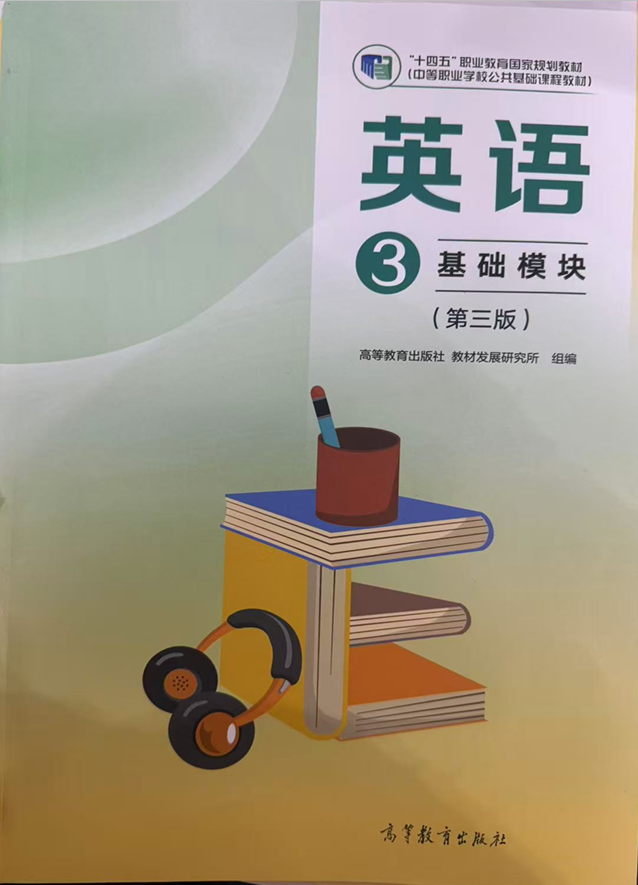
Unit 1 Festivals Around the World(A卷·基础巩固)《英语 基础模块3》(高教版第三版)单元过关卷(原卷版+解析版)
2026-07-08
|
2份
|
18页
|
72人阅读
|
0人下载
内容正文:
编写说明:本套试卷紧扣《英语 基础模块3》(高教版第三版)教材,以教材单元为基准精准覆盖核心考点。
每个单元设置AB卷,A卷为基础巩固卷,侧重基础考点训练,帮助学生扎实掌握知识要点;B卷为能力提升卷,注重知识整合与全面检测,引导学生构建知识网络。全书设计4份综合测试卷,模拟实战情境,聚焦解题能力突破,全面提升应试能力与知识应用水平。
《英语 基础模块3》(高教版第三版)《单元过关卷》
Unit 1 Festivals Around the World
A卷·基础巩固
考试时间:120分钟 满分:100分
班级_____姓名_____学号_____成绩_____
Ⅰ.语音辨析。(共5小题;每小题1分,满分5分)
读下列单词,从每题所给的 A、B、C 和 D 四个选项中,选出画线部分发音不同的一项。
1.A.festival B.decorate C.receive D.temple
2.A.calendar B.snack C.handicraft D.gala
3.A.invite B.time C.like D.similar
4.A.thanksgiving B.this C.that D.those
5.A.moon B.food C.good D.room
Ⅱ. 单项选择(共15小题;每小题1分,满分15分)
阅读下列句子,从每题所给的 A、B、C 和 D 四个选项中,选出最佳选项。
6. Li Fei plans _________ her grandparents during the Spring Festival.
A. visit B. to visit C. visiting D. visited
7. Many children enjoy _________ lantern riddles on the festival night.
A. solve B. to solve C. solving D. solved
8. Robert wants _________ more about Chinese festival customs.
A. to learn B. learns C. learning D. learned
9. People in the village prefer _________ lion dances in the square.
A. watch B. watched C. to watching D. watching
10. The students expect _________ the celebration before six o'clock.
A. finished B. to finish C. finishing D. finish
11. The full moon _________ bright in the clear night sky yesterday.
A. looked B. looks C. is looking D. will look
12. There _________ many colorful lanterns in the park this evening.
A. was B. be C. are D. is
13. The invitation email _________ by Robert after class tomorrow.
A. writes B. wrote C. was written D. will be written
14. If it _________ tomorrow, we will hold the activity in the dining room.
A. rains B. rained C. will rain D. is raining
15. My classmates _________ the classroom with paper flowers now.
A. decorate B. are decorating C. decorated D. will decorate
16. This is the student _________ introduced Thanksgiving Day in English.
A. which B. where C. who D. when
17. I don't know _________ Robert can come to the party on time.
A. what B. where C. why D. whether
18. We shared moon cakes _________ we enjoyed the bright moon.
A. while B. because C. unless D. before
19. Thanksgiving Day is _________ to the Mid-Autumn Festival in some ways.
A. similar B. careful C. useful D. helpful
20. _________ beautiful the lanterns are tonight!
A. What B. What a C. How D. How a
Ⅲ. 完形填空(共10小题;每小题1分,满分10分)
阅读下面短文,从短文后各题所给的 A、B、C 和 D 四个选项中,选出可以填入空白处的最佳选项。
The Mid-Autumn Festival was coming, and our class decided to hold a small celebration for foreign students. On Monday morning, our teacher asked us to prepare an activity that could show both festival customs and warm friendship. I was a little nervous because I had never introduced a traditional festival in English before. However, my partner Lin Tao smiled and said that every good plan begins with a ____21____ purpose. We first made a list of useful words, such as reunion, harvest, symbol and moon cake. Then we decided ____22____ Robert, a new student from Canada, to join our evening party.
After school, we decorated the classroom with paper ____23____ and bright cards. Some classmates began to write short notes about the festival, while others preferred ____24____ small moon cakes with the cooking teacher. Robert arrived early and helped us put the chairs in a circle. When he asked why the full moon was ____25____, I explained that it often means family ____26____ in Chinese culture. He listened carefully and said Thanksgiving in his country ____27____ gave people a chance to express thanks.
____28____ the party, each group shared one story or one custom. Although my voice shook at first, I became more ____29____ when my friends nodded. Robert told us that he received not only an invitation but also a lesson about respect. That night, I understood that festivals are not ____30____ dates on the calendar. They are bridges that help people appreciate different cultures and send good wishes to one another.
21.A. careless B. clear C. strange D. silent
22.A. invited B. inviting C. invite D. to invite
23.A. lanterns B. calendars C. snacks D. symbols
24.A. make B. made C. to make D. making
25.A. playful B. important C. foreign D. round
26.A. meal B. harvest C. reunion D. performance
27.A. also B. only C. never D. soon
28.A. On B. At C. For D. By
29.A. confident B. similar C. thankful D. typical
30.A. hardly B. even C. only D. still
Ⅳ.补全对话(共5小题;每小题2分,满分10分)
根据对话内容,从对话后所给的七个选项中,选出能填入空白处的最佳选项。(选项中有两项是多余的)
A: Hi, Robert. The Mid-Autumn Festival is coming. ____31____
B: Yes, I'd love to. What do people usually do on that day?
A: ____32____ We also eat moon cakes and enjoy the bright moon.
B: Sounds wonderful. Is the full moon special in Chinese culture?
A: ____33____ It is a symbol of family reunion.
B: I see. What time should I arrive at your home?
A: ____34____ My parents will prepare a reunion dinner.
B: Great. Should I bring anything?
A: ____35____ Just come and enjoy the evening with us.
B: Thank you for your invitation. I am looking forward to it.
A. Please arrive at about six o'clock.
B. Would you like to celebrate it with my family?
C. No, you don't have to bring anything.
D. Yes, it is very meaningful to us.
E. Families usually get together for a big dinner.
F. I went to a temple fair last winter.
G. The weather will be cold tomorrow.
Ⅴ. 阅读理解(共15小题;每小题2分,满分30分)
阅读下列短文,根据要求完成各题。
A
Many schools now hold festival culture weeks to help students understand the meaning of celebration. At Green River Vocational School, the festival culture week begins on Monday and lasts five days. Each class chooses one festival and prepares a small exhibition. The purpose is not only to show beautiful pictures, but also to explain why people celebrate the festival and how the celebration connects with daily life.
Class One introduces the Mid-Autumn Festival. Students put round paper moons on the wall and write short notes about family reunion, harvest and moon cakes. They also prepare a listening corner, where visitors can hear a short English introduction made by the students. Class Two chooses the Water-Splashing Festival. Their exhibition explains that people splash water at one another in a playful manner to wash away bad luck and wish for a new year of happiness. Class Three focuses on Thanksgiving Day. The students invite visitors to write down one thing they are thankful for and place the note on a paper tree.
The school asks every visitor to finish a learning card. Students must find at least three similarities and three differences among the festivals. Teachers believe this task can stop students from only looking at decorations. When students compare the celebrations carefully, they can see that festivals may have different dates, foods and activities, but they often share similar wishes: reunion, gratitude, good luck and respect. The activity ends with a short speech contest on Friday afternoon, and the best speakers will share how festivals help people understand different cultures.
36.The festival culture week at Green River Vocational School lasts five days.
37.Class One asks visitors to write thankful notes on a paper tree.
38.The Water-Splashing Festival exhibition explains a wish for good luck.
39.Students only need to look at decorations to finish the learning card.
40.The activity helps students compare different festivals and understand shared wishes.
B
Robert Jones had studied in China for only two months when Li Fei invited him to spend the Mid-Autumn Festival with her family. At first, Robert worried that he might not know the right way to behave at a family celebration. Li Fei noticed his worry and told him that being polite and willing to learn was more important than doing everything perfectly.
On the festival afternoon, Robert arrived at Li Fei's home with a small box of fruit. Li Fei's grandmother welcomed him warmly and showed him how to make moon cakes. The dough was soft, and Robert had trouble keeping the round shape. Everyone laughed kindly, and his nervousness slowly disappeared. Before dinner, Li Fei's father explained that the festival was a time for family members to get together. The full moon, he said, was a symbol of reunion and bright wishes.
During dinner, Robert tried several local snacks and listened to stories about the Chinese calendar. He also talked about Thanksgiving Day in his country. He said that families usually had a big meal and expressed thanks for love, health and friendship. Li Fei's mother found the two festivals similar because both gave people time to think about family and gratitude. After dinner, they went outside to appreciate the moon. Robert took a photo, but he soon put down his phone. He wanted to remember the quiet moment with his eyes and heart. Later he wrote in his diary that the most valuable gift of the evening was not the moon cake, but the feeling of being accepted by a Chinese family.
41. What can we learn about Robert before he visited Li Fei's family?
A. He was afraid of eating local snacks. B. He worried about behaving properly.
C. He had celebrated the festival many times. D. He wanted to teach Li Fei Thanksgiving songs.
42. Which activity helped Robert become less nervous?
A. Making moon cakes with Li Fei's grandmother. B. Writing a diary before the dinner began.
C. Buying fruit with Li Fei's father. D. Watching a cooking show on his phone.
43. What similarity between the two festivals is mentioned?
A. Both require people to make lanterns. B. Both are celebrated on the same date.
C. Both give people time to value family and thanks. D. Both ask children to put stockings near beds.
44. Why did Robert put down his phone after dinner?
A. He needed to answer Li Fei's question. B. He found that his phone had no power.
C. He wanted to help clean the table first. D. He hoped to feel the quiet moment directly.
45. Which is the best title for the text?
A. A Lesson from a Family Festival B. The History of Thanksgiving Day
C. A Difficult Way to Make Moon Cakes D. The Rules for Visiting Foreign Friends
C
Lantern making is one of the most popular handicrafts during the Lantern Festival. In many places of China, people hang colorful lanterns in streets, parks and homes on the fifteenth day of the first Chinese calendar month. The festival marks the end of the Chinese New Year celebration, and the first full moon of the year makes the night bright and lively. A lantern is not only a decoration. It can also carry wishes for happiness, safety and family unity.
Traditional lanterns were often made of bamboo, paper and silk. Craftsmen first made a light frame, then covered it with paper or cloth. Some lanterns looked like flowers, birds or fish, while others were painted with stories from history. People walked around to appreciate the lanterns and solve lantern riddles. A riddle might be short, but it required careful thinking. When a person found the answer, the moment brought joy to both the visitor and the maker.
Nowadays, lantern culture has developed in new ways. In Zigong, Sichuan, large lantern shows use modern lights to create dragons, buildings and even moving scenes. Some vocational schools also organize lantern workshops. Students learn to design patterns on computers, cut materials safely and introduce their works in English. This practice connects traditional culture with modern skills. More importantly, it helps young people understand that a festival can stay alive when each generation adds its own creativity. The lantern may be small, but the culture behind it is bright enough to travel far and inspire young visitors.
46. Which information about the Lantern Festival is mentioned?
A. It is on the first day of the first month. B. It marks the end of the Chinese New Year celebration.
C. It was first celebrated in Sichuan by students. D. It asks every family to make fish-shaped lanterns.
47. What does the underlined word “It” in Paragraph 1 refer to?
A. A lantern B. A street
C. A wish D. A park
48. What did craftsmen usually do after making a light frame?
A. They solved riddles with visitors. B. They painted computers with flowers.
C. They covered it with paper or cloth. D. They moved lanterns to modern buildings.
49. How do vocational school workshops connect tradition with modern skills?
A. By asking students to sell lanterns online. B. By replacing all handmade lanterns with machines.
C. By teaching students only ancient stories. D. By using computer design and English introductions.
50. What does the writer mainly want to tell us?
A. Lantern culture can stay lively through creativity. B. Lantern riddles are easier than all other games.
C. Modern lights are less useful than bamboo frames. D. Young people should avoid changing old customs.
Ⅵ. 句子单句改错(共10小题;每小题1分,满分10分)
下列每个句子中均有一处错误,请找出并改正。
51. Robert decided visiting Li Fei's family during the festival.(单句改错)
52. Many children enjoy to solve lantern riddles after dinner.(单句改错)
53. My sister expects joining the celebration this evening.(单句改错)
54. There are a moon cake on the table.(单句改错)
55. The full moon is a symbol for family reunion.(单句改错)
56. Thanksgiving Day is similar with the Mid-Autumn Festival in some ways.(单句改错)
57. The students decorated the room by colorful cards.(单句改错)
58. What bright the lanterns are in the street!(单句改错)
59. Li Fei received a invitation from her classmate.(单句改错)
60. People gives best wishes to each other at festivals.(单句改错)
Ⅶ. 短语适当形式填空(共10小题;每小题2分,满分20分)
根据语境,从方框中选择恰当短语并用其适当形式填空。
be similar to
get together
decorate...with
be thankful for
mark the beginning of
receive an invitation
be a symbol of
look forward to
go to temple fairs
wash away
61. Robert ________ from Li Fei and felt very excited.
62. Many families ________ to enjoy a reunion dinner on festival nights.
63. People use water during Songkran because they hope to ________ bad luck.
64. The full moon ________ family reunion in Chinese culture.
65. Children are ________ the lantern show this Friday.
66. The Spring Festival ________ the Chinese New Year.
67. We ________ our classroom ________ red paper-cuts yesterday.
68. Thanksgiving Day ________ the Mid-Autumn Festival in the meaning of family love.
69. Local people usually ________ to buy handicrafts and taste snacks.
70. We should ________ the help from our family and friends.
原创精品资源学科网独家享有版权,侵权必究!
学科网(北京)股份有限公司
$
编写说明:本套试卷紧扣《英语 基础模块3》(高教版第三版)教材,以教材单元为基准精准覆盖核心考点。
每个单元设置AB卷,A卷为基础巩固卷,侧重基础考点训练,帮助学生扎实掌握知识要点;B卷为能力提升卷,注重知识整合与全面检测,引导学生构建知识网络。全书设计4份综合测试卷,模拟实战情境,聚焦解题能力突破,全面提升应试能力与知识应用水平。
《英语 基础模块3》(高教版第三版)《单元过关卷》
Unit 1 Festivals Around the World
A卷·基础巩固
考试时间:120分钟 满分:100分
班级_____姓名_____学号_____成绩_____
Ⅰ.语音辨析。(共5小题;每小题1分,满分5分)
读下列单词,从每题所给的 A、B、C 和 D 四个选项中,选出画线部分发音不同的一项。
1.A.festival B.decorate C.receive D.temple
2.A.calendar B.snack C.handicraft D.gala
3.A.invite B.time C.like D.similar
4.A.thanksgiving B.this C.that D.those
5.A.moon B.food C.good D.room
【答案】1.C 2.D 3.D 4.A 5.C
【解析】1.C项画线部分读/iː/,其余读/e/。
2.D项画线部分读/ɑː/,其余读/æ/。
3.D项画线部分读/ɪ/,其余读/aɪ/。
4.A项th读/θ/,其余读/ð/。5
.C项oo读/ʊ/,其余读/uː/。
Ⅱ. 单项选择(共15小题;每小题1分,满分15分)
阅读下列句子,从每题所给的 A、B、C 和 D 四个选项中,选出最佳选项。
6. Li Fei plans _________ her grandparents during the Spring Festival.
A. visit B. to visit C. visiting D. visited
【答案】B
【解析】固定搭配 plan to do sth.,意为计划做某事。
7. Many children enjoy _________ lantern riddles on the festival night.
A. solve B. to solve C. solving D. solved
【答案】C
【解析】固定搭配 enjoy doing sth.,意为喜欢做某事。
8. Robert wants _________ more about Chinese festival customs.
A. to learn B. learns C. learning D. learned
【答案】A
【解析】固定搭配 want to do sth.,意为想要做某事。
9. People in the village prefer _________ lion dances in the square.
A. watch B. watched C. to watching D. watching
【答案】D
【解析】固定搭配 prefer doing sth.,意为更喜欢做某事。
10. The students expect _________ the celebration before six o'clock.
A. finished B. to finish C. finishing D. finish
【答案】B
【解析】固定搭配 expect to do sth.,意为期待做某事。
11. The full moon _________ bright in the clear night sky yesterday.
A. looked B. looks C. is looking D. will look
【答案】A
【解析】时间标志 yesterday 为一般过去时,look 使用过去式 looked。
12. There _________ many colorful lanterns in the park this evening.
A. was B. be C. are D. is
【答案】C
【解析】there be 句型遵循就近原则,主语 many colorful lanterns 是复数,因此用 are。
13. The invitation email _________ by Robert after class tomorrow.
A. writes B. wrote C. was written D. will be written
【答案】D
【解析】tomorrow 表示将来,email 和 write 是被动关系,一般将来时被动语态结构为 will be written。
14. If it _________ tomorrow, we will hold the activity in the dining room.
A. rains B. rained C. will rain D. is raining
【答案】A
【解析】if 引导条件状语从句,遵循 “主将从现”,主句将来时,从句用一般现在时,主语 it 为三单,动词用 rains。
15. My classmates _________ the classroom with paper flowers now.
A. decorate B. are decorating C. decorated D. will decorate
【答案】B
【解析】now 是现在进行时标志,结构为 be+doing,主语 classmates 为复数,用 are decorating。
16. This is the student _________ introduced Thanksgiving Day in English.
A. which B. where C. who D. when
【答案】C
【解析】先行词 the student 指人,关系代词在从句中作主语,用 who。
17. I don't know _________ Robert can come to the party on time.
A. what B. where C. why D. whether
【答案】D
【解析】句意:我不知道 Robert 能否准时参加派对,表达 “是否” 用 whether 引导宾语从句。
18. We shared moon cakes _________ we enjoyed the bright moon.
A. while B. because C. unless D. before
【答案】A
【解析】while 引导时间状语从句,表示两个动作同时进行,一边赏月一边分月饼。
19. Thanksgiving Day is _________ to the Mid-Autumn Festival in some ways.
A. similar B. careful C. useful D. helpful
【答案】A
【解析】固定短语 be similar to,意为与…… 相似。
20. _________ beautiful the lanterns are tonight!
A. What B. What a C. How D. How a
【答案】C
【解析】感叹句中心词是形容词 beautiful,用 How 引导,结构:How + 形容词 + 主语 + 谓语!
Ⅲ. 完形填空(共10小题;每小题1分,满分10分)
阅读下面短文,从短文后各题所给的 A、B、C 和 D 四个选项中,选出可以填入空白处的最佳选项。
The Mid-Autumn Festival was coming, and our class decided to hold a small celebration for foreign students. On Monday morning, our teacher asked us to prepare an activity that could show both festival customs and warm friendship. I was a little nervous because I had never introduced a traditional festival in English before. However, my partner Lin Tao smiled and said that every good plan begins with a ____21____ purpose. We first made a list of useful words, such as reunion, harvest, symbol and moon cake. Then we decided ____22____ Robert, a new student from Canada, to join our evening party.
After school, we decorated the classroom with paper ____23____ and bright cards. Some classmates began to write short notes about the festival, while others preferred ____24____ small moon cakes with the cooking teacher. Robert arrived early and helped us put the chairs in a circle. When he asked why the full moon was ____25____, I explained that it often means family ____26____ in Chinese culture. He listened carefully and said Thanksgiving in his country ____27____ gave people a chance to express thanks.
____28____ the party, each group shared one story or one custom. Although my voice shook at first, I became more ____29____ when my friends nodded. Robert told us that he received not only an invitation but also a lesson about respect. That night, I understood that festivals are not ____30____ dates on the calendar. They are bridges that help people appreciate different cultures and send good wishes to one another.
21.A. careless B. clear C. strange D. silent
22.A. invited B. inviting C. invite D. to invite
23.A. lanterns B. calendars C. snacks D. symbols
24.A. make B. made C. to make D. making
25.A. playful B. important C. foreign D. round
26.A. meal B. harvest C. reunion D. performance
27.A. also B. only C. never D. soon
28.A. On B. At C. For D. By
29.A. confident B. similar C. thankful D. typical
30.A. hardly B. even C. only D. still
【答案】21.B 22.D 23.A 24.D 25.B 26.C 27.A 28.B 29.A 30.C
【导语】本文是一篇记叙文。短文讲述了学生为外国同学准备中秋庆祝活动的过程,展现了邀请、装饰、介绍节日意义和跨文化交流的完整情境。
【详解】21.根据“every good plan begins with”可知好计划始于清晰目的,clear符合语境。
22.decide to do sth.为固定搭配。
23.根据“decorated the classroom”可知用paper lanterns装饰教室。
24.prefer doing sth.表示“更喜欢做某事”。
25.后文解释满月象征意义,说明Robert询问它为什么重要。
26.前文提到full moon,结合语境可知象征family reunion。
27.also表示“也”,说明Thanksgiving同样提供表达感谢的机会。
28.at the party表示“在聚会上”。
29.朋友点头后说话者更自信,confident符合情绪变化。
30.not only...but also...为固定结构。
Ⅳ.补全对话(共5小题;每小题2分,满分10分)
根据对话内容,从对话后所给的七个选项中,选出能填入空白处的最佳选项。(选项中有两项是多余的)
A: Hi, Robert. The Mid-Autumn Festival is coming. ____31____
B: Yes, I'd love to. What do people usually do on that day?
A: ____32____ We also eat moon cakes and enjoy the bright moon.
B: Sounds wonderful. Is the full moon special in Chinese culture?
A: ____33____ It is a symbol of family reunion.
B: I see. What time should I arrive at your home?
A: ____34____ My parents will prepare a reunion dinner.
B: Great. Should I bring anything?
A: ____35____ Just come and enjoy the evening with us.
B: Thank you for your invitation. I am looking forward to it.
A. Please arrive at about six o'clock.
B. Would you like to celebrate it with my family?
C. No, you don't have to bring anything.
D. Yes, it is very meaningful to us.
E. Families usually get together for a big dinner.
F. I went to a temple fair last winter.
G. The weather will be cold tomorrow.
【答案】31.B 32.E 33.D 34.A 35.C
【解析】31.下文回答“Yes, I'd love to.”,空处应为邀请句。
32.上文询问节日活动,E项说明家人团聚吃饭,符合问答。
33.上文询问满月是否特殊,D项先肯定再衔接后文意义。
34.上文询问到达时间,A项给出具体时间。
35.上文询问是否需要带东西,C项作否定回答并与后文“Just come”一致。
Ⅴ. 阅读理解(共15小题;每小题2分,满分30分)
阅读下列短文,根据要求完成各题。
A
Many schools now hold festival culture weeks to help students understand the meaning of celebration. At Green River Vocational School, the festival culture week begins on Monday and lasts five days. Each class chooses one festival and prepares a small exhibition. The purpose is not only to show beautiful pictures, but also to explain why people celebrate the festival and how the celebration connects with daily life.
Class One introduces the Mid-Autumn Festival. Students put round paper moons on the wall and write short notes about family reunion, harvest and moon cakes. They also prepare a listening corner, where visitors can hear a short English introduction made by the students. Class Two chooses the Water-Splashing Festival. Their exhibition explains that people splash water at one another in a playful manner to wash away bad luck and wish for a new year of happiness. Class Three focuses on Thanksgiving Day. The students invite visitors to write down one thing they are thankful for and place the note on a paper tree.
The school asks every visitor to finish a learning card. Students must find at least three similarities and three differences among the festivals. Teachers believe this task can stop students from only looking at decorations. When students compare the celebrations carefully, they can see that festivals may have different dates, foods and activities, but they often share similar wishes: reunion, gratitude, good luck and respect. The activity ends with a short speech contest on Friday afternoon, and the best speakers will share how festivals help people understand different cultures.
36.The festival culture week at Green River Vocational School lasts five days.
37.Class One asks visitors to write thankful notes on a paper tree.
38.The Water-Splashing Festival exhibition explains a wish for good luck.
39.Students only need to look at decorations to finish the learning card.
40.The activity helps students compare different festivals and understand shared wishes.
【答案】36.T 37.F 38.T 39.F 40.T
【导语】本文是一篇说明文,介绍一所职业学校开展节日文化周的安排、各班展示内容以及活动目的。
【详解】36.细节判断题。根据“begins on Monday and lasts five days”可知活动持续五天。
37.细节判断题。写感谢便条的是Class Three的Thanksgiving Day展示,不是Class One。
38.细节判断题。根据“wash away bad luck and wish for a new year of happiness”可知该展示说明了祈求好运。
39.细节判断题。根据“stop students from only looking at decorations”可知不能只看装饰。
40.细节判断题。最后一段说明学生通过比较看到不同节日共同包含团圆、感恩、好运和尊重等愿望。
B
Robert Jones had studied in China for only two months when Li Fei invited him to spend the Mid-Autumn Festival with her family. At first, Robert worried that he might not know the right way to behave at a family celebration. Li Fei noticed his worry and told him that being polite and willing to learn was more important than doing everything perfectly.
On the festival afternoon, Robert arrived at Li Fei's home with a small box of fruit. Li Fei's grandmother welcomed him warmly and showed him how to make moon cakes. The dough was soft, and Robert had trouble keeping the round shape. Everyone laughed kindly, and his nervousness slowly disappeared. Before dinner, Li Fei's father explained that the festival was a time for family members to get together. The full moon, he said, was a symbol of reunion and bright wishes.
During dinner, Robert tried several local snacks and listened to stories about the Chinese calendar. He also talked about Thanksgiving Day in his country. He said that families usually had a big meal and expressed thanks for love, health and friendship. Li Fei's mother found the two festivals similar because both gave people time to think about family and gratitude. After dinner, they went outside to appreciate the moon. Robert took a photo, but he soon put down his phone. He wanted to remember the quiet moment with his eyes and heart. Later he wrote in his diary that the most valuable gift of the evening was not the moon cake, but the feeling of being accepted by a Chinese family.
41. What can we learn about Robert before he visited Li Fei's family?
A. He was afraid of eating local snacks. B. He worried about behaving properly.
C. He had celebrated the festival many times. D. He wanted to teach Li Fei Thanksgiving songs.
42. Which activity helped Robert become less nervous?
A. Making moon cakes with Li Fei's grandmother. B. Writing a diary before the dinner began.
C. Buying fruit with Li Fei's father. D. Watching a cooking show on his phone.
43. What similarity between the two festivals is mentioned?
A. Both require people to make lanterns. B. Both are celebrated on the same date.
C. Both give people time to value family and thanks. D. Both ask children to put stockings near beds.
44. Why did Robert put down his phone after dinner?
A. He needed to answer Li Fei's question. B. He found that his phone had no power.
C. He wanted to help clean the table first. D. He hoped to feel the quiet moment directly.
45. Which is the best title for the text?
A. A Lesson from a Family Festival B. The History of Thanksgiving Day
C. A Difficult Way to Make Moon Cakes D. The Rules for Visiting Foreign Friends
【答案】41.B 42.A 43.C 44.D 45.A
【导语】本文是一篇记叙文,讲述Robert受邀到Li Fei家过中秋节,在家庭活动中理解团圆、感恩与接纳的故事。
【详解】41.细节理解题。根据第一段“At first, Robert worried...”可知他担心自己举止不合适。
42.细节理解题。根据第二段祖母教他做月饼、大家善意地笑、紧张感消失可知答案。
43.细节理解题。根据第三段“both gave people time to think about family and gratitude”可知二者都强调家庭和感恩。
44.推理判断题。根据“He wanted to remember the quiet moment with his eyes and heart.”可知他想直接感受当下。
45.标题归纳题。全文围绕一次家庭节日经历带来的文化理解展开,A项最全面。
C
Lantern making is one of the most popular handicrafts during the Lantern Festival. In many places of China, people hang colorful lanterns in streets, parks and homes on the fifteenth day of the first Chinese calendar month. The festival marks the end of the Chinese New Year celebration, and the first full moon of the year makes the night bright and lively. A lantern is not only a decoration. It can also carry wishes for happiness, safety and family unity.
Traditional lanterns were often made of bamboo, paper and silk. Craftsmen first made a light frame, then covered it with paper or cloth. Some lanterns looked like flowers, birds or fish, while others were painted with stories from history. People walked around to appreciate the lanterns and solve lantern riddles. A riddle might be short, but it required careful thinking. When a person found the answer, the moment brought joy to both the visitor and the maker.
Nowadays, lantern culture has developed in new ways. In Zigong, Sichuan, large lantern shows use modern lights to create dragons, buildings and even moving scenes. Some vocational schools also organize lantern workshops. Students learn to design patterns on computers, cut materials safely and introduce their works in English. This practice connects traditional culture with modern skills. More importantly, it helps young people understand that a festival can stay alive when each generation adds its own creativity. The lantern may be small, but the culture behind it is bright enough to travel far and inspire young visitors.
46. Which information about the Lantern Festival is mentioned?
A. It is on the first day of the first month. B. It marks the end of the Chinese New Year celebration.
C. It was first celebrated in Sichuan by students. D. It asks every family to make fish-shaped lanterns.
47. What does the underlined word “It” in Paragraph 1 refer to?
A. A lantern B. A street
C. A wish D. A park
48. What did craftsmen usually do after making a light frame?
A. They solved riddles with visitors. B. They painted computers with flowers.
C. They covered it with paper or cloth. D. They moved lanterns to modern buildings.
49. How do vocational school workshops connect tradition with modern skills?
A. By asking students to sell lanterns online. B. By replacing all handmade lanterns with machines.
C. By teaching students only ancient stories. D. By using computer design and English introductions.
50. What does the writer mainly want to tell us?
A. Lantern culture can stay lively through creativity. B. Lantern riddles are easier than all other games.
C. Modern lights are less useful than bamboo frames. D. Young people should avoid changing old customs.
【答案】46.B 47.A 48.C 49.D 50.A
【导语】本文是一篇说明文,介绍灯笼制作、元宵节习俗以及现代技能如何帮助传统灯笼文化继续发展。
【详解】46.细节理解题。根据第一段“The festival marks the end...”可知元宵节标志着春节庆祝的结束。
47.词义指代题。根据前句“A lantern is not only a decoration.”可知It指a lantern。
48.流程细节题。根据第二段“first made a light frame, then covered it with paper or cloth”可知答案。
49.细节理解题。根据第三段“design patterns on computers... introduce their works in English”可知答案。
50.主旨大意题。末段强调每代人加入创造力,灯笼文化便能保持活力,A项概括准确。
Ⅵ. 句子单句改错(共10小题;每小题1分,满分10分)
下列每个句子中均有一处错误,请找出并改正。
51. Robert decided visiting Li Fei's family during the festival.(单句改错)
【答案】visiting→to visit
【解析】decide to do sth.表示“决定做某事”。
52. Many children enjoy to solve lantern riddles after dinner.(单句改错)
【答案】to solve→solving
【解析】enjoy doing sth.表示“喜欢做某事”。
53. My sister expects joining the celebration this evening.(单句改错)
【答案】joining→to join
【解析】expect to do sth.表示“期待做某事”。
54. There are a moon cake on the table.(单句改错)
【答案】are→is
【解析】there be句型中主语a moon cake为单数,be动词用is。
55. The full moon is a symbol for family reunion.(单句改错)
【答案】for→of
【解析】a symbol of表示“……的象征”。
56. Thanksgiving Day is similar with the Mid-Autumn Festival in some ways.(单句改错)
【答案】with→to
【解析】be similar to表示“与……相似”。
57. The students decorated the room by colorful cards.(单句改错)
【答案】by→with
【解析】decorate...with...表示“用……装饰……”。
58. What bright the lanterns are in the street!(单句改错)
【答案】What→How
【解析】感叹句修饰形容词bright,用How。
59. Li Fei received a invitation from her classmate.(单句改错)
【答案】a→an
【解析】invitation以元音音素开头,前面用an。
60. People gives best wishes to each other at festivals.(单句改错)
【答案】gives→give
【解析】主语People为复数,谓语动词用原形give。
Ⅶ. 短语适当形式填空(共10小题;每小题2分,满分20分)
根据语境,从方框中选择恰当短语并用其适当形式填空。
be similar to
get together
decorate...with
be thankful for
mark the beginning of
receive an invitation
be a symbol of
look forward to
go to temple fairs
wash away
61. Robert ________ from Li Fei and felt very excited.
62. Many families ________ to enjoy a reunion dinner on festival nights.
63. People use water during Songkran because they hope to ________ bad luck.
64. The full moon ________ family reunion in Chinese culture.
65. Children are ________ the lantern show this Friday.
66. The Spring Festival ________ the Chinese New Year.
67. We ________ our classroom ________ red paper-cuts yesterday.
68. Thanksgiving Day ________ the Mid-Autumn Festival in the meaning of family love.
69. Local people usually ________ to buy handicrafts and taste snacks.
70. We should ________ the help from our family and friends.
【答案】61.received an invitation 62.get together 63.wash away 64.is a symbol of 65.looking forward to 66.marks the beginning of 67.decorated; with 68.is similar to 69.go to temple fairs 70.be thankful for
【解析】61.receive an invitation意为“收到邀请”,根据felt可知用一般过去时received。
62.get together意为“聚在一起”,描述一般习俗用一般现在时,主语families为复数。
63.wash away意为“冲走”,hope to后接动词原形。
64.be a symbol of意为“是……的象征”,主语moon为单数,用is。
65.look forward to意为“期待”,空前有are,构成现在进行时are looking forward to。
66.mark the beginning of意为“标志着……的开始”,主语The Spring Festival为单数,用marks。
67.decorate...with...意为“用……装饰……”,yesterday提示一般过去时。
68.be similar to意为“与……相似”,主语Thanksgiving Day为单数,用is。
69.go to temple fairs意为“去庙会”,描述通常行为用一般现在时。
70.be thankful for意为“对……心存感激”,情态动词should后接动词原形。
原创精品资源学科网独家享有版权,侵权必究!
学科网(北京)股份有限公司
$
资源预览图

1

2

3
由于学科网是一个信息分享及获取的平台,不确保部分用户上传资料的 来源及知识产权归属。如您发现相关资料侵犯您的合法权益,请联系学科网,我们核实后将及时进行处理。