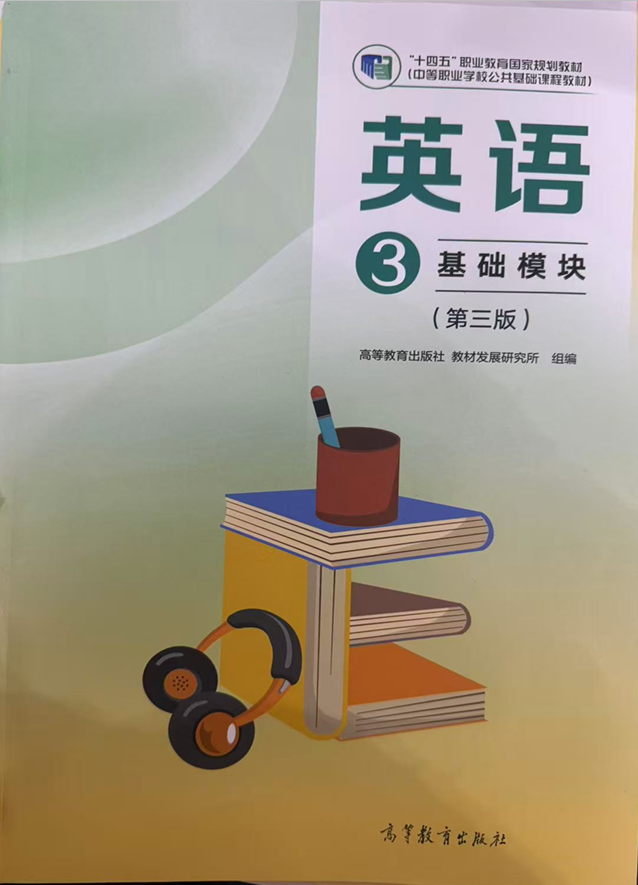
Unit 1 Festivals Around the World(B卷·能力提升)《英语 基础模块3》(高教版第三版)单元过关卷(原卷版+解析版)
2026-07-08
|
2份
|
18页
|
54人阅读
|
0人下载
内容正文:
编写说明:本套试卷紧扣《英语 基础模块3》(高教版第三版)教材,以教材单元为基准精准覆盖核心考点。
每个单元设置AB卷,A卷为基础巩固卷,侧重基础考点训练,帮助学生扎实掌握知识要点;B卷为能力提升卷,注重知识整合与全面检测,引导学生构建知识网络。全书设计4份综合测试卷,模拟实战情境,聚焦解题能力突破,全面提升应试能力与知识应用水平。
《英语 基础模块3》(高教版第三版)《单元过关卷》
Unit 1 Festivals Around the World
B卷·能力提升
考试时间:120分钟 满分:100分
班级_____姓名_____学号_____成绩_____
Ⅰ.语音辨析。(共5小题;每小题1分,满分5分)
读下列单词,从每题所给的 A、B、C 和 D 四个选项中,选出画线部分发音不同的一项。
1.A.family B.water C.handicraft D.thankful
2.A.form B.morning C.story D.word
3.A.meal B.season C.mean D.bread
4.A.much B.watch C.school D.teach
5.A.custom B.past C.best D.listen
Ⅱ. 单项选择(共15小题;每小题1分,满分15分)
阅读下列句子,从每题所给的 A、B、C 和 D 四个选项中,选出最佳选项。
6. The guide offered _________the visitors around the festival fair.
A. show B. showing C. to show D. showed
7. Some students practiced _________the Lantern Festival in English.
A. introduce B. introducing C. to introduce D. introduced
8. Mina hopes _________the deeper meaning of Songkran clearly.
A. explained B. explains C. explaining D. to explain
9. Would you mind _________the invitation email once more?
A. checking B. to check C. check D. checked
10. The teacher advised us _________facts before giving a speech.
A. checking B. to check C. checked D. check
11. Neither the date nor the activities _________difficult to understand.
A. is B. am C. are D. be
12. The leaflet must _________before it is given to visitors.
A. checks B. checking C. checked D. be checked
13. The students had finished the poster before the fair ________.
A. began B. begins C. will begin D. has begun
14. This is the festival _________Mina introduced in her speech.
A. who B. which C. where D. when
15. I wonder _________the visitor center will need more student guides.
A. that B. where C. whether D. what
16. The program is helpful _________it gives students real service experience.
A. unless B. though C. because D. until
17. The _________you explain a custom, the easier visitors can understand it.
A. clearly B. clearer C. clearest D. more clearly
18. _________useful advice the teacher gave us before the fair!
A. What B. What an C. How D. How a
19. Please arrive _________thirty minutes earlier so that we can prepare name cards.
A. at B. for C. in D. /
20. The festival fair opened a door _________cultural understanding.
A. from B. with C. to D. on
Ⅲ. 完形填空(共10小题;每小题1分,满分10分)
阅读下面短文,从短文后各题所给的 A、B、C 和 D 四个选项中,选出可以填入空白处的最佳选项。
When our school planned an international festival fair, I volunteered ____21____ a guide for visitors. The fair was different from an ordinary ____22____ because each booth had to introduce a festival through clear information, real activities and polite communication. My group chose the Spring Festival, but we also compared it with Christmas and Songkran so that visitors could understand both differences and shared ____23____.
The preparation was harder than I expected. We had to decide what information should appear first on the poster. Chen Ming suggested beginning with the ____24____ on the Chinese calendar, while I wanted to begin with family____25____. Finally, our teacher asked us to think like visitors who knew little ____26____ Chinese culture. We put the date and meaning at the top, added typical activities in the middle, and wrote a short invitation at the bottom. To make the booth more ____27____, we prepared paper-cuts, pictures of temple fairs and a short video of a reunion dinner.
On the fair day, a group of exchange students ____28____ at our booth. One student asked why people in different provinces celebrated the same festival in different ways. I answered that local food and customs might change, but people's wishes for a happy new year were ____29____. Another student compared the reunion dinner with Christmas Eve dinner in her country. Her comment reminded me that festival learning should not be one-way. We introduce our culture, and we also listen to others. By the end of the day, I felt tired but proud. A successful festival fair does more than decorate a hall; it opens a ____30____ to understanding.
22.A. lesson B. meeting C. party D. poster
23.A. feelings B. tickets C. prices D. mistakes
24.A. calendar B. screen C. kitchen D. menu
25.A. trouble B. reunion C. address D. training
26.A. against B. without C. about D. across
27.A. careful B. interactive C. silent D. private
28.A. looked B. arrived C. stopped D. laughed
29.A. similar B. open C. late D. ready
30.A. card B. window C. box D. door
Ⅳ.补全对话(共5小题;每小题2分,满分10分)
根据对话内容,从对话后所给的七个选项中,选出能填入空白处的最佳选项。(选项中有两项是多余的)
A: Hello, Mina. Your presentation about Songkran was impressive. ____31____
B: It is from April 13 to 15 every year.
A: People often splash water at one another, right?
B: Yes, but ____32____ It also means washing away bad luck.
A: That's deeper than I thought. What did families do in older customs?
B: ____33____ They also visited temples and showed respect to elders.
A: I want to introduce this festival in our English club. ____34____
B: You can compare it with other festivals, but remember to explain the values behind the activities.
A: Good idea. Could you check my speech later?
B: ____35____ Send it to me when you finish it.
A. What advice can you give me?
B. When is the festival held?
C. Of course, I'd be glad to help.
D. it is not just a water game.
E. Families cleaned their homes before the new year.
F. I bought a new calendar yesterday.
G. The speech contest was canceled last week.
Ⅴ. 阅读理解(共15小题;每小题2分,满分30分)
阅读下列短文,根据要求完成各题。
A
A city youth center is going to organize a program called “Festival Guides for Visitors”. The program invites vocational school students to help foreign visitors learn about local festivals during winter vacation. Students who join the program will not only introduce festival customs but also practice service skills in real situations.
The program has three parts. First, students attend two training sessions. In the first session, teachers explain how to introduce the Spring Festival, the Lantern Festival and other celebrations in simple English. In the second session, students practice answering common questions, such as why people eat certain foods or what a festival symbol means. Second, students work in small teams at the visitor center. Each team prepares a leaflet, a short speech and a small activity. For example, one team may teach visitors to solve lantern riddles, while another may show how paper-cuts are used as decorations. Third, students write a reflection after the program. They need to describe one problem they met and how they solved it.
To make the program safe and useful, the center has several rules. Students must be at least sixteen years old and should be able to communicate politely in English. They should arrive thirty minutes before their service time and wear name cards. If they are unsure about a cultural fact, they should not invent an answer. Instead, they can ask the teacher on duty or guide visitors to the information board. The center hopes students will learn that good cultural communication means accuracy, respect and patience.
36.The program asks students to help foreign visitors learn about local festivals.
37.Students only need to attend one training session before serving visitors.
38.Each team prepares a leaflet, a short speech and a small activity.
39.Students may invent an answer if they are unsure about a cultural fact.
40.The center values accuracy, respect and patience in cultural communication.
B
Mina was born in Thailand, but she studied cooking at a vocational school in Hohhot. When Songkran came in April, her classmates asked her to introduce the festival. Mina was excited, yet she also felt a little pressure. She did not want her classmates to think Songkran was only about splashing water. In her eyes, the festival carried family love, respect for elders and wishes for a clean beginning.
She prepared her presentation carefully. First, she showed the date, April 13 to 15, and explained that Songkran was the traditional New Year's celebration in Thailand. Then she talked about old customs. Families cleaned their homes, visited temples and gave thanks to older family members. Water was used in a respectful way to show good wishes. Later, the celebration became more playful in many cities, and people enjoyed splashing water at one another in the streets.
After the presentation, Mina invited her classmates to design a “water of wishes” card. Each student wrote one bad habit they hoped to wash away and one good habit they wanted to build. Zhang Rui wrote that he would stop being late and start helping his parents prepare dinner. Another student wrote that she would spend less time on her phone and appreciate family conversations more. Mina was touched because her classmates had understood the deeper meaning of the festival.
At the end, the teacher said that learning about festivals should go beyond exciting activities. A celebration becomes meaningful when people understand the values behind it. Mina smiled, feeling that she had shared a true part of her culture.
41. Why did Mina feel pressure before introducing Songkran?
A. She could not remember the festival date. B. She wanted to avoid a shallow understanding.
C. She had never splashed water before. D. She needed to cook Thai food alone.
42. Which information about Songkran is mentioned in Mina's presentation?
A. It is held from April 13 to 15. B. It is mainly a lantern festival.
C. It requires students to make moon cakes. D. It started in a vocational school.
43. What did Zhang Rui write on his card?
A. He would visit temples every week. B. He would learn Thai cooking online.
C. He would stop being late and help at home. D. He would organize a water game in class.
44. What can we infer from the teacher's words?
A. Exciting activities are the only part of festivals. B. Festival learning should include values behind customs.
C. Students should avoid comparing different cultures. D. Presentations are less useful than water games.
45. What is the writer's attitude towards Mina's sharing?
A. Doubtful B. Unclear
C. Critical D. Supportive
C
Digital technology is changing the way people celebrate and learn about festivals. In the past, festival knowledge was mainly passed on through family stories, local activities and books. These ways are still important, but new tools can help more people appreciate traditional culture, especially when they live far from their hometowns.
During the Spring Festival, many museums create online exhibitions about paper-cuts, temple fairs and reunion dinners. Visitors can click on a picture and read the story behind it. Some exhibitions also include short videos made by craftsmen. A student in Inner Mongolia can watch a lantern maker in Sichuan shape a dragon lantern, while a foreign visitor can learn why the full moon is a symbol of reunion. This kind of learning is convenient, but it also requires careful checking. If an online post gives wrong information, the mistake may spread quickly.
Some vocational schools are using digital skills to protect festival culture. Students design festival leaflets with computer software, record English introductions and make short videos for community centers. In one project, students interviewed older people about local New Year customs and then built a digital map. Each point on the map showed a food, a performance or a family tradition. The project did not replace real celebrations; instead, it encouraged students to visit families and listen carefully.
Technology should never turn festivals into empty online shows. Its best role is to make accurate knowledge easier to reach and to invite young people to take part. When digital tools meet real respect, traditional festivals can be shared with a wider world.
46. What change in festival learning is mainly discussed in the passage?
A. Digital tools are helping people learn festival culture. B. Families no longer tell stories about festivals.
C. Books have become the only source of customs. D. Museums have stopped holding online exhibitions.
47. Why does the writer mention the student in Inner Mongolia?
A. To show that online exhibitions can cross distance. B. To prove that lanterns were invented there.
C. To explain why paper-cuts are difficult to make. D. To compare two different school timetables.
48. What risk of online festival information is mentioned?
A. Videos are always too short to watch. B. Wrong information may spread quickly.
C. Students cannot use computers safely. D. Visitors may refuse to read any story.
49. Which activity belongs to the digital map project?
A. Replacing interviews with online games. B. Selling festival food through the map.
C. Interviewing older people about local customs. D. Canceling real family celebrations.
50. Which is the best title for the text?
A. Online Shows and Empty Festivals B. Digital Tools Meet Festival Culture
C. The Fastest Way to Build a Museum D. Why Young People Leave Hometowns
Ⅵ. 句子单句改错(共10小题;每小题1分,满分10分)
下列每个句子中均有一处错误,请找出并改正。
51. The guide offered showing us around the festival fair.(单句改错)
52. Students practiced to introduce local customs in English.(单句改错)
53. Would you mind to check my festival leaflet?(单句改错)
54. The leaflet must check before the activity.(单句改错)
55. Neither the teacher nor the students was late for the fair.(单句改错)
56. This is the booth who shows traditional handicrafts.(单句改错)
57. I wonder that the visitors can understand the speech.(单句改错)
58. The more carefully you listen, the much you will learn.(单句改错)
59. What an useful leaflet it is!(单句改错)
60. The project opened a door of cultural understanding.(单句改错)
Ⅶ. 短语适当形式填空(共10小题;每小题2分,满分20分)
根据语境,从方框中选择恰当短语并用其适当形式填空。
take place
show respect to
go beyond
in a playful manner
give thanks to
be willing to
on the Chinese calendar
build relationships
be known as
look forward to
61. Songkran usually ________ from April 13 to 15 every year.
62. Children should ________ older family members during important celebrations.
63. A good introduction should ________ exciting activities and explain values.
64. During Songkran, people splash water ________.
65. We should ________ those who help us in daily life.
66. Good volunteers ________ answer visitors' questions patiently.
67. The Lantern Festival falls on the fifteenth day of the first month ________.
68. Festival activities can help neighbors ________ with one another.
69. Holi ________ the Festival of Colors in India.
70. The exchange students are ________ visiting the festival fair next week.
原创精品资源学科网独家享有版权,侵权必究!
学科网(北京)股份有限公司
$
编写说明:本套试卷紧扣《英语 基础模块3》(高教版第三版)教材,以教材单元为基准精准覆盖核心考点。
每个单元设置AB卷,A卷为基础巩固卷,侧重基础考点训练,帮助学生扎实掌握知识要点;B卷为能力提升卷,注重知识整合与全面检测,引导学生构建知识网络。全书设计4份综合测试卷,模拟实战情境,聚焦解题能力突破,全面提升应试能力与知识应用水平。
《英语 基础模块3》(高教版第三版)《单元过关卷》
Unit 1 Festivals Around the World
B卷·能力提升
考试时间:120分钟 满分:100分
班级_____姓名_____学号_____成绩_____
Ⅰ.语音辨析。(共5小题;每小题1分,满分5分)
读下列单词,从每题所给的 A、B、C 和 D 四个选项中,选出画线部分发音不同的一项。
1.A.family B.water C.handicraft D.thankful
2.A.form B.morning C.story D.word
3.A.meal B.season C.mean D.bread
4.A.much B.watch C.school D.teach
5.A.custom B.past C.best D.listen
【答案】1.B 2.D 3.D 4.C 5.D
【解析】1.B项a读/ɔː/,其余读/æ/。2.D项or读/ɜː/,其余读/ɔː/。3.D项ea读/e/,其余读/iː/。4.C项ch读/k/,其余读/tʃ/。5.D项st后接不发音en形成/ˈlɪsn/,其余st读/st/。
Ⅱ. 单项选择(共15小题;每小题1分,满分15分)
阅读下列句子,从每题所给的 A、B、C 和 D 四个选项中,选出最佳选项。
6. The guide offered _________the visitors around the festival fair.
A. show B. showing C. to show D. showed
【答案】C
【解析】固定搭配 offer to do sth.,意为主动提出做某事。
7. Some students practiced _________the Lantern Festival in English.
A. introduce B. introducing C. to introduce D. introduced
【答案】B
【解析】固定搭配 practice doing sth.,意为练习做某事。
8. Mina hopes _________the deeper meaning of Songkran clearly.
A. explained B. explains C. explaining D. to explain
【答案】D
【解析】固定搭配 hope to do sth.,意为希望做某事。
9. Would you mind _________the invitation email once more?
A. checking B. to check C. check D. checked
【答案】A
【解析】固定搭配 mind doing sth.,意为介意做某事。
10. The teacher advised us _________facts before giving a speech.
A. checking B. to check C. checked D. check
【答案】B
【解析】固定搭配 advise sb. to do sth.,意为建议某人做某事。
11. Neither the date nor the activities _________difficult to understand.
A. is B. am C. are D. be
【答案】C
【解析】neither...nor... 遵循就近一致原则,靠近谓语的主语 activities 是复数,故用 are。
12. The leaflet must _________before it is given to visitors.
A. checks B. checking C. checked D. be checked
【答案】D
【解析】主语 leaflet 和 check 是被动关系;情态动词 must 后接动词原形,被动形式为 be checked。
13. The students had finished the poster before the fair ________.
A. began B. begins C. will begin D. has begun
【答案】A
【解析】主句为过去完成时,展会开始是过去的动作,从句使用一般过去时 began。
14. This is the festival _________Mina introduced in her speech.
A. who B. which C. where D. when
【答案】B
【解析】先行词 festival 指事物,关系代词在从句中作 introduced 的宾语,用 which。
15. I wonder _________the visitor center will need more student guides.
A. that B. where C. whether D. what
【答案】C
【解析】wonder 后宾语从句表达 “是否” 含义,用 whether 引导。
16. The program is helpful _________it gives students real service experience.
A. unless B. though C. because D. until
【答案】C
【解析】前后句是因果逻辑,后句说明这个项目有用的原因,用 because 引导原因状语从句。
17. The _________you explain a custom, the easier visitors can understand it.
A. clearly B. clearer C. clearest D. more clearly
【答案】D
【解析】固定结构 the + 比较级,the + 比较级;修饰动词 explain 要用副词比较级 more clearly。
18. _________useful advice the teacher gave us before the fair!
A. What B. What an C. How D. How a
【答案】A
【解析】advice 是不可数名词,感叹句中心词为名词短语,用 What 引导,不加冠词 a/an。
19. Please arrive _________thirty minutes earlier so that we can prepare name cards.
A. at B. for C. in D. /
【答案】D
【解析】thirty minutes earlier(提前三十分钟)作副词短语修饰 arrive,前面不需要加介词。
20. The festival fair opened a door _________cultural understanding.
A. from B. with C. to D. on
【答案】C
【解析】固定搭配 a door to…,表示通向…… 的大门。
Ⅲ. 完形填空(共10小题;每小题1分,满分10分)
阅读下面短文,从短文后各题所给的 A、B、C 和 D 四个选项中,选出可以填入空白处的最佳选项。
When our school planned an international festival fair, I volunteered ____21____ a guide for visitors. The fair was different from an ordinary ____22____ because each booth had to introduce a festival through clear information, real activities and polite communication. My group chose the Spring Festival, but we also compared it with Christmas and Songkran so that visitors could understand both differences and shared ____23____.
The preparation was harder than I expected. We had to decide what information should appear first on the poster. Chen Ming suggested beginning with the ____24____ on the Chinese calendar, while I wanted to begin with family____25____. Finally, our teacher asked us to think like visitors who knew little ____26____ Chinese culture. We put the date and meaning at the top, added typical activities in the middle, and wrote a short invitation at the bottom. To make the booth more ____27____, we prepared paper-cuts, pictures of temple fairs and a short video of a reunion dinner.
On the fair day, a group of exchange students ____28____ at our booth. One student asked why people in different provinces celebrated the same festival in different ways. I answered that local food and customs might change, but people's wishes for a happy new year were ____29____. Another student compared the reunion dinner with Christmas Eve dinner in her country. Her comment reminded me that festival learning should not be one-way. We introduce our culture, and we also listen to others. By the end of the day, I felt tired but proud. A successful festival fair does more than decorate a hall; it opens a ____30____ to understanding.
22.A. lesson B. meeting C. party D. poster
【答案】C
【解析】结合语境,本次国际节日展会不同于普通的派对,lesson(课程)、meeting(会议)、poster(海报)均不符合展会场景对比,故选C。
23.A. feelings B. tickets C. prices D. mistakes
【答案】A
【解析】文章对比不同节日,目的是让游客了解节日的差异与共通的情感,tickets(门票)、prices(价格)、mistakes(错误)均不符合文意,故选A。
24.A. calendar B. screen C. kitchen D. menu
【答案】A
【解析】固定搭配 Chinese calendar(农历),指春节在农历上的日期,其余词汇与节日介绍无关,故选A。
25.A. trouble B. reunion C. address D. training
【答案】B
【解析】family reunion 为固定搭配,意为“家庭团圆”,是春节的核心主题,符合语境,故选B。
26.A. against B. without C. about D. across
【答案】C
【解析】固定搭配 know little about sth.(对某物了解甚少),此处指不了解中国文化的游客,故选C。
27.A. careful B. interactive C. silent D. private
【答案】B
【解析】后文提到准备剪纸、庙会图片、团圆饭视频,这些都是互动展示形式,让展位更具互动性,interactive(互动的)符合语境,故选B。
28.A. looked B. arrived C. stopped D. laughed
【答案】C
【解析】stop at 表示“停留在……前”,指交换生驻足参观展位;arrive 后需接介词in/at,look、laugh不符合语境,故选C。
29.A. similar B. open C. late D. ready
【答案】A
【解析】前文提到不同省份过年方式不同,but 表转折,说明人们新年的美好期许是相似的,similar(相似的)符合转折逻辑,故选A。
30.A. card B. window C. box D. door
【答案】D
【解析】固定搭配 open a door to understanding(打开沟通理解的大门),是常用比喻句式,故选D。
Ⅳ.补全对话(共5小题;每小题2分,满分10分)
根据对话内容,从对话后所给的七个选项中,选出能填入空白处的最佳选项。(选项中有两项是多余的)
A: Hello, Mina. Your presentation about Songkran was impressive. ____31____
B: It is from April 13 to 15 every year.
A: People often splash water at one another, right?
B: Yes, but ____32____ It also means washing away bad luck.
A: That's deeper than I thought. What did families do in older customs?
B: ____33____ They also visited temples and showed respect to elders.
A: I want to introduce this festival in our English club. ____34____
B: You can compare it with other festivals, but remember to explain the values behind the activities.
A: Good idea. Could you check my speech later?
B: ____35____ Send it to me when you finish it.
A. What advice can you give me?
B. When is the festival held?
C. Of course, I'd be glad to help.
D. it is not just a water game.
E. Families cleaned their homes before the new year.
F. I bought a new calendar yesterday.
G. The speech contest was canceled last week.
【答案】31.B 32.D 33.E 34.A 35.C
【解析】31.下文回答具体日期,空处应询问节日时间。
32.前文提到泼水,后文说明深层含义,D项形成转折。
33.上文询问过去家庭习俗,E项说明家庭清洁房屋。
34.下文给出建议,空处应询问建议。
35.上文请求检查演讲稿,C项表示愿意帮忙。
Ⅴ. 阅读理解(共15小题;每小题2分,满分30分)
阅读下列短文,根据要求完成各题。
A
A city youth center is going to organize a program called “Festival Guides for Visitors”. The program invites vocational school students to help foreign visitors learn about local festivals during winter vacation. Students who join the program will not only introduce festival customs but also practice service skills in real situations.
The program has three parts. First, students attend two training sessions. In the first session, teachers explain how to introduce the Spring Festival, the Lantern Festival and other celebrations in simple English. In the second session, students practice answering common questions, such as why people eat certain foods or what a festival symbol means. Second, students work in small teams at the visitor center. Each team prepares a leaflet, a short speech and a small activity. For example, one team may teach visitors to solve lantern riddles, while another may show how paper-cuts are used as decorations. Third, students write a reflection after the program. They need to describe one problem they met and how they solved it.
To make the program safe and useful, the center has several rules. Students must be at least sixteen years old and should be able to communicate politely in English. They should arrive thirty minutes before their service time and wear name cards. If they are unsure about a cultural fact, they should not invent an answer. Instead, they can ask the teacher on duty or guide visitors to the information board. The center hopes students will learn that good cultural communication means accuracy, respect and patience.
36.The program asks students to help foreign visitors learn about local festivals.
37.Students only need to attend one training session before serving visitors.
38.Each team prepares a leaflet, a short speech and a small activity.
39.Students may invent an answer if they are unsure about a cultural fact.
40.The center values accuracy, respect and patience in cultural communication.
【答案】36.T 37.F 38.T 39.F 40.T
【导语】本文是一篇说明文,介绍“游客节日讲解员”项目的内容、培训流程、服务要求和文化沟通原则。
【详解】36.细节判断题。根据第一段“help foreign visitors learn about local festivals”可知表述正确。
37.细节判断题。第二段说明学生参加two training sessions,并非一次。
38.细节判断题。根据“Each team prepares a leaflet, a short speech and a small activity.”可知正确。
39.细节判断题。根据“If they are unsure... they should not invent an answer.”可知不能编造答案。
40.细节判断题。末句直接指出good cultural communication means accuracy, respect and patience。
B
Mina was born in Thailand, but she studied cooking at a vocational school in Hohhot. When Songkran came in April, her classmates asked her to introduce the festival. Mina was excited, yet she also felt a little pressure. She did not want her classmates to think Songkran was only about splashing water. In her eyes, the festival carried family love, respect for elders and wishes for a clean beginning.
She prepared her presentation carefully. First, she showed the date, April 13 to 15, and explained that Songkran was the traditional New Year's celebration in Thailand. Then she talked about old customs. Families cleaned their homes, visited temples and gave thanks to older family members. Water was used in a respectful way to show good wishes. Later, the celebration became more playful in many cities, and people enjoyed splashing water at one another in the streets.
After the presentation, Mina invited her classmates to design a “water of wishes” card. Each student wrote one bad habit they hoped to wash away and one good habit they wanted to build. Zhang Rui wrote that he would stop being late and start helping his parents prepare dinner. Another student wrote that she would spend less time on her phone and appreciate family conversations more. Mina was touched because her classmates had understood the deeper meaning of the festival.
At the end, the teacher said that learning about festivals should go beyond exciting activities. A celebration becomes meaningful when people understand the values behind it. Mina smiled, feeling that she had shared a true part of her culture.
41. Why did Mina feel pressure before introducing Songkran?
A. She could not remember the festival date. B. She wanted to avoid a shallow understanding.
C. She had never splashed water before. D. She needed to cook Thai food alone.
42. Which information about Songkran is mentioned in Mina's presentation?
A. It is held from April 13 to 15. B. It is mainly a lantern festival.
C. It requires students to make moon cakes. D. It started in a vocational school.
43. What did Zhang Rui write on his card?
A. He would visit temples every week. B. He would learn Thai cooking online.
C. He would stop being late and help at home. D. He would organize a water game in class.
44. What can we infer from the teacher's words?
A. Exciting activities are the only part of festivals. B. Festival learning should include values behind customs.
C. Students should avoid comparing different cultures. D. Presentations are less useful than water games.
45. What is the writer's attitude towards Mina's sharing?
A. Doubtful B. Unclear
C. Critical D. Supportive
【答案】41.B 42.A 43.C 44.B 45.D
【导语】本文是一篇记叙文,讲述来自泰国的Mina向同学介绍Songkran,并引导大家理解节日背后的家庭、尊重和自我更新意义。
【详解】41.细节理解题。根据“She did not want... only about splashing water”可知她担心同学理解过浅。
42.细节理解题。第二段明确提到日期April 13 to 15。
43.细节理解题。根据Zhang Rui wrote...可知他写下不再迟到并帮助父母准备晚餐。
44.推理判断题。老师强调learning... beyond exciting activities和values behind it,说明要理解活动背后的价值。
45.观点态度题。文章用positive描述Mina的准备和分享,结尾她感到分享了真实文化,作者态度支持。
C
Digital technology is changing the way people celebrate and learn about festivals. In the past, festival knowledge was mainly passed on through family stories, local activities and books. These ways are still important, but new tools can help more people appreciate traditional culture, especially when they live far from their hometowns.
During the Spring Festival, many museums create online exhibitions about paper-cuts, temple fairs and reunion dinners. Visitors can click on a picture and read the story behind it. Some exhibitions also include short videos made by craftsmen. A student in Inner Mongolia can watch a lantern maker in Sichuan shape a dragon lantern, while a foreign visitor can learn why the full moon is a symbol of reunion. This kind of learning is convenient, but it also requires careful checking. If an online post gives wrong information, the mistake may spread quickly.
Some vocational schools are using digital skills to protect festival culture. Students design festival leaflets with computer software, record English introductions and make short videos for community centers. In one project, students interviewed older people about local New Year customs and then built a digital map. Each point on the map showed a food, a performance or a family tradition. The project did not replace real celebrations; instead, it encouraged students to visit families and listen carefully.
Technology should never turn festivals into empty online shows. Its best role is to make accurate knowledge easier to reach and to invite young people to take part. When digital tools meet real respect, traditional festivals can be shared with a wider world.
46. What change in festival learning is mainly discussed in the passage?
A. Digital tools are helping people learn festival culture. B. Families no longer tell stories about festivals.
C. Books have become the only source of customs. D. Museums have stopped holding online exhibitions.
47. Why does the writer mention the student in Inner Mongolia?
A. To show that online exhibitions can cross distance. B. To prove that lanterns were invented there.
C. To explain why paper-cuts are difficult to make. D. To compare two different school timetables.
48. What risk of online festival information is mentioned?
A. Videos are always too short to watch. B. Wrong information may spread quickly.
C. Students cannot use computers safely. D. Visitors may refuse to read any story.
49. Which activity belongs to the digital map project?
A. Replacing interviews with online games. B. Selling festival food through the map.
C. Interviewing older people about local customs. D. Canceling real family celebrations.
50. Which is the best title for the text?
A. Online Shows and Empty Festivals B. Digital Tools Meet Festival Culture
C. The Fastest Way to Build a Museum D. Why Young People Leave Hometowns
【答案】46.A 47.A 48.B 49.C 50.B
【导语】本文是一篇说明文,介绍数字技术如何帮助人们学习、记录和传播节日文化,同时提醒在线信息需要准确核验。
【详解】46.主旨细节题。首句“Digital technology is changing...”点明数字工具改变节日学习方式。
47.推理判断题。内蒙古学生观看四川灯笼艺人,说明在线展览突破距离限制。
48.细节理解题。第二段指出错误信息可能快速传播。
49.细节理解题。第三段提到students interviewed older people about local New Year customs。
50.标题归纳题。全文围绕数字工具与节日文化结合展开,B项最准确。
Ⅵ. 句子单句改错(共10小题;每小题1分,满分10分)
下列每个句子中均有一处错误,请找出并改正。
51. The guide offered showing us around the festival fair.(单句改错)
【答案】showing→to show
【解析】offer to do sth.表示“主动提出做某事”。
52. Students practiced to introduce local customs in English.(单句改错)
【答案】to introduce→introducing
【解析】practice doing sth.表示“练习做某事”。
53. Would you mind to check my festival leaflet?(单句改错)
【答案】to check→checking
【解析】mind doing sth.表示“介意做某事”。
54. The leaflet must check before the activity.(单句改错)
【答案】check→be checked
【解析】leaflet与check为被动关系,must后用be checked。
55. Neither the teacher nor the students was late for the fair.(单句改错)
【答案】was→were
【解析】neither...nor连接主语时遵循就近原则,students为复数,用were。
56. This is the booth who shows traditional handicrafts.(单句改错)
【答案】who→which/that
【解析】先行词booth指物,关系代词用which或that。
57. I wonder that the visitors can understand the speech.(单句改错)
【答案】that→whether/if
【解析】wonder后表示“是否”,用whether或if。
58. The more carefully you listen, the much you will learn.(单句改错)
【答案】much→more
【解析】“the+比较级,the+比较级”结构中应用more。
59. What an useful leaflet it is!(单句改错)
【答案】an→a
【解析】useful以辅音音素开头,前面用a。
60. The project opened a door of cultural understanding.(单句改错)
【答案】of→to
【解析】a door to表示“通向……的一扇门”。
Ⅶ. 短语适当形式填空(共10小题;每小题2分,满分20分)
根据语境,从方框中选择恰当短语并用其适当形式填空。
take place
show respect to
go beyond
in a playful manner
give thanks to
be willing to
on the Chinese calendar
build relationships
be known as
look forward to
61. Songkran usually ________ from April 13 to 15 every year.
62. Children should ________ older family members during important celebrations.
63. A good introduction should ________ exciting activities and explain values.
64. During Songkran, people splash water ________.
65. We should ________ those who help us in daily life.
66. Good volunteers ________ answer visitors' questions patiently.
67. The Lantern Festival falls on the fifteenth day of the first month ________.
68. Festival activities can help neighbors ________ with one another.
69. Holi ________ the Festival of Colors in India.
70. The exchange students are ________ visiting the festival fair next week.
【答案】61.takes place 62.show respect to 63.go beyond 64.in a playful manner 65.give thanks to 66.are willing to 67.on the Chinese calendar 68.build relationships 69.is known as 70.looking forward to
【解析】61.take place意为“举行”,主语Songkran为单数,描述习俗用一般现在时takes。
62.show respect to意为“向……表示尊重”,情态动词should后接原形。
63.go beyond意为“超越”,should后接动词原形。
64.in a playful manner意为“以嬉戏的方式”,作方式状语。
65.give thanks to意为“向……表达感谢”,should后接原形。
66.be willing to意为“愿意”,主语volunteers为复数,用are。
67.on the Chinese calendar意为“按照农历”,介词短语作时间说明。
68.build relationships意为“建立关系”,help sb. do sth.后接动词原形。
69.be known as意为“被称为”,主语Holi为单数,用is。
70.look forward to意为“期待”,空前有are,构成are looking forward to。
原创精品资源学科网独家享有版权,侵权必究!
学科网(北京)股份有限公司
$
资源预览图

1

2

3
由于学科网是一个信息分享及获取的平台,不确保部分用户上传资料的 来源及知识产权归属。如您发现相关资料侵犯您的合法权益,请联系学科网,我们核实后将及时进行处理。