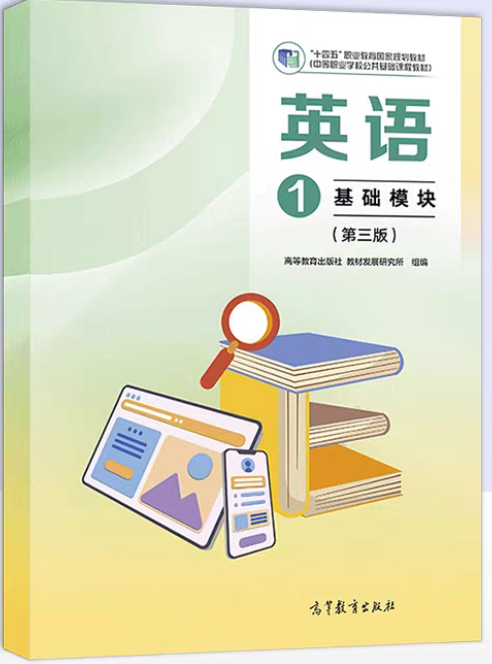
Unit 1——Unit 4阶段测试卷(A卷·基础巩固)《英语 基础模块1》(高教版第三版)单元过关卷(原卷版+解析版)
2026-07-07
|
2份
|
28页
|
68人阅读
|
0人下载
摘要:
**基本信息**
本试卷为《英语 基础模块1》(高教版第三版)Unit1-Unit4阶段测试A卷,聚焦基础巩固,覆盖语音、语法、阅读等核心考点,通过生活化情境(如家庭活动、职业学校生活)培养语言能力与思维品质,适配单元复习需求。
**题型特征**
|题型|题量/分值|知识覆盖|命题特色|
|----|-----------|----------|----------|
|语音辨析|5题/5分|字母及字母组合发音|基础辨音,强化语音感知|
|单项选择|15题/15分|时态、比较级等语法点|情境化设题,如日常行为描述|
|完形填空|10题/10分|上下文理解与词汇运用|以“家庭周六活动”为情境,渗透情感教育|
|阅读理解|15题/30分|信息获取与推理判断|选材贴近生活,如职业学校生活、智能公交站,培养信息素养|
|单句改错/短语填空|20题/30分|语法纠错与词汇应用|针对性强化易错点,如时态、介词搭配|
内容正文:
编写说明:本套试卷紧扣《英语 基础模块1》(高教版第三版)教材,以教材单元为基准精准覆盖核心考点。每个单元设置AB卷,A卷为基础巩固卷,侧重基础考点训练,帮助学生扎实掌握知识要点;B卷为能力提升卷,注重知识整合与全面检测,引导学生构建知识网络。全书设计4份综合测试卷,模拟实战情境,聚焦解题能力突破,全面提升应试能力与知识应用水平。
《英语 基础模块1》(高教版第三版)《单元过关卷》
Unit 1——Unit 4阶段测试卷
A卷·基础巩固
考试时间:120分钟 满分:100分
班级_____姓名_____学号_____成绩_____
Ⅰ. 语音辨析(1—5,每题1分,共5分)
1. 选出划线字母发音不同的一项。
A. family B. manager
C. name D. happy
2. 选出划线字母发音不同的一项。
A. gift B. visit
C. silk D. polite
3. 选出划线字母发音不同的一项。
A. job B. alone
C. stop D. cotton
4. 选出划线字母组合发音不同的一项。
A. great B. sweater
C. ready D. weather
5. 选出划线字母发音不同的一项。
A. subway B. subject
C. useful D. rush
Ⅱ. 单项选择(6—20,每题1分,共15分)
6. My brother usually ________ breakfast at 7:00 on school days.
A. have B. having
C. to have D. has
7. ________ late for the club meeting. It begins in five minutes.
A. Don't be B. Not be
C. Doesn't be D. No be
8. This cotton shirt is ________ than that silk one.
A. cheap B. cheapest
C. cheaper D. the cheaper
9. We ________ a skill training class tomorrow morning.
A. have B. are going to have
C. had D. were having
10. The bus station is on your left. ________ left at the next crossing.
A. Turn B. Turns
C. Turning D. To turn
11. Anna ________ her grandmother every weekend and cooks dinner for her.
A. visit B. visited
C. is visiting D. visits
12. There ________ a meeting in the hall at 4:00 this afternoon.
A. was B. will be
C. has D. have
13. We can pay ________ cash or with a payment code.
A. on B. in
C. at D. for
14. The dictionary ________ many example sentences for young learners.
A. provide B. providing
C. provides D. to provide
15. —How long will the English Corner last? —It ________ over by 5:30.
A. is B. was
C. be D. will be
16. The girl ________ is talking with the visitor is our monitor.
A. who B. which
C. where D. when
17. I don't know ________ the new shopping mall opens on Sunday.
A. what B. whether
C. where D. who
18. You'd better take the subway ________ it is rush hour now.
A. but B. or
C. so D. because
19. This pair of jeans ________ me well. I'll take it.
A. fit B. fitting
C. fits D. to fit
20. ________ exciting the basketball game sounds!
A. How B. What
C. What an D. How an
Ⅲ. 完形填空(21—30,每题1分,共10分)
(A Saturday With My Family,原文词数:308词)
Last Saturday, I spent a warm day with my family.
My parents are usually busy on weekdays, so we made ____21____ small plan for the weekend.
In the morning, I got up early and helped my father cook noodles ____22____ breakfast.
My younger sister set the table, and my mother smiled because everyone was working together.
After breakfast, we walked to my grandparents' home, which is near a small park.
My grandmother was waiting for ____23____ at the door with a basket of fruit.
She said that a family does not need expensive gifts; it needs time, care, and kind words.
At noon, my father ____24____ a chair while my mother and I prepared lunch.
I was not good at cooking, but my grandmother showed me how to cut vegetables safely.
My sister read a story to my grandfather, and he laughed at the ____25____ parts.
In the afternoon, we visited the park.
My parents talked about their work, but they also listened carefully to our school stories.
I felt proud when my father said I ____26____ my time better this month.
Before we left, I took a photo of everyone under an old tree.
On the way home, I understood ____27____ family love is often hidden in simple actions: cooking a meal, asking a question, or waiting at the door with a smile.
____28____ we were tired, we all felt happy.
The day taught me that being together is more important ____29____ buying something costly.
I will remember this Saturday because it made me ____30____ what a family really means. In the evening, I wrote a short message to my grandparents and promised to visit them again next weekend. My mother said that small promises make family members feel safe. My father also asked us to plan our study time before Sunday night, so our warm family day would not stop us from doing our schoolwork well.
21. A. the B. an C. a D. /
22. A. for B. at C. on D. by
23. A. they B. their C. we D. us
24. A. bought B. repaired C. washed D. opened
25. A. funny B. strict C. nearby D. alone
26. A. lost B. changed C. managed D. forgot
27. A. where B. when C. which D. that
28. A. If B. Although C. Until D. Because
29. A. with B. to C. than D. as
30. A. hide B. miss C. ask D. understand
Ⅳ. 补全对话(31—35,每题2分,共10分)
根据对话内容,从方框内七个选项中选出五个能填入空白处的最佳选项。
(对话词数:213词)
Visitor: Excuse me. I need to get to the city library before 10:30. It is already 9:40, and my map app is not working.
Student: Don't worry. The library is not far from here, but the streets are busy at this time. ____31____
Visitor: I can walk a little, but I am carrying a heavy bag. Is there a bus stop nearby?
Student: Yes. Walk straight for about two minutes and turn right at the bank. The bus stop is on your left. ____32____
Visitor: How long will it take by bus?
Student: About twenty minutes if the traffic is smooth. But this is rush hour, so it may take longer.
Visitor: Then should I take a taxi instead?
Student: A taxi is comfortable, but it may move slowly on the main road. ____33____
Visitor: That sounds better. Where is the subway station?
Student: Go along this street and cross at the second traffic light. You will see Exit A of the station. Take Line 2 and get off at Culture Square Station.
Visitor: Do I need to change lines?
Student: No, you don't. ____34____ After you get out from Exit C, walk past the bookstore. The library is behind it.
Visitor: Thank you for explaining it so clearly.
Student: You're welcome. ____35____ It helps you check the station names quickly.
A. You can take the subway to save time.
B. Remember to keep your ticket or phone ready.
C. Which way do you prefer, walking or public transportation?
D. You can get there directly on Line 2.
E. The library closes at 5:00 p.m. every day.
F. Bus No. 18 stops there every ten minutes.
G. I bought a new dictionary online yesterday.
Ⅴ. 阅读理解(36—50,每题2分,共30分)
A
(语篇词数:286词)
A group of students at North Star Vocational School started a Responsible Shopping Week in their class.
Their plan was simple, but it changed the way many classmates bought things.
On Monday, they put a small notice beside the classroom door.
It asked students to write down one thing they wanted to buy and one reason for buying it.
Some students wrote snacks, new pens, or phone cases.
When they read their reasons again, several students found that they wanted to buy things only because the colors looked popular.
On Wednesday, the group held a thirty-minute sharing meeting after school.
Li Mei brought two cotton T-shirts.
One was cheap but became loose after three washes.
The other was more expensive, but it fit well and lasted longer.
She explained that a lower price is not always a better choice.
Zhang Hao compared two online stores.
One offered a big discount, but the customer reviews mentioned slow delivery and poor material.
The other store had a smaller discount but clearer size information and better service.
On Friday, the class made a poster with three questions: Do I really need it? Can I compare it with another product? Will it still be useful next month? The poster did not ask students to stop shopping.
It reminded them to think before paying.
By the end of the week, many students said they would check size, material, price, and reviews more carefully. During the week, the group also placed an empty box beside the poster. Students could put shopping problems into it, such as wrong sizes, repeated snacks, or things bought only because of advertisements. These notes made the final discussion more practical and helped quieter students share their ideas.
36. The activity asked students to think about why they wanted to buy something. (T/F)
37. Li Mei believed the cheapest T-shirt was always the best choice. (T/F)
38. Zhang Hao chose the store with the biggest discount because its service was better. (T/F)
39. The class poster used three questions to guide students before paying. (T/F)
40. The activity encouraged students to compare product information carefully. (T/F)
B
(语篇词数:295词)
When first-year students arrived at Bright Future Vocational School, many of them thought school life would be almost the same as junior high school.
However, the first month gave them a different answer.
Besides basic subjects such as Chinese, math, English, and history, they had special subjects related to their majors.
Students in the smart manufacturing class learned how to read simple machine drawings.
Students in the hotel service class practiced greeting guests and arranging rooms.
Students in the computer class spent two afternoons each week in the training center.
The school also paid attention to time plans.
Every Monday morning, students wrote a weekly plan in their notebooks.
They needed to list classes, club activities, homework, and rest time.
Their head teacher checked the plans, not to make students nervous, but to help them manage time better.
One student, Wang Rui, used to forget important tasks.
After using the plan for three weeks, he could finish his work report before Friday and still join the basketball team practice.
School life was not only about training.
There were reading competitions, English Corner, school trips, and volunteer services.
Ella, an exchange student, said the most impressive part was that students learned by doing.
In her group, classmates prepared a small product show.
They wrote an introduction, made a flyer, practiced speaking, and answered visitors' questions.
By the end of the month, the new students understood that vocational school prepared them for the future through both knowledge and hands-on experience. The school invited two senior students to share their experience as well. They told the new students that a good plan should leave space for rest and unexpected tasks. This advice made the notebooks more useful because students learned to arrange study, training, activities, and health together.
41. What can we learn about the first-year students from Paragraph 1?
A. They only studied special subjects. B. They found school life different from what they had expected.
C. They had no basic subjects in the first month. D. They spent every afternoon in the training center.
42. Why did the head teacher check the weekly plans?
A. To choose students for a competition. B. To stop students from joining clubs.
C. To compare different majors. D. To help students manage their time.
43. Which activity helped Wang Rui finish tasks and still practice basketball?
A. Writing and using a weekly plan. B. Reading machine drawings every day.
C. Working in the hotel service class. D. Answering visitors' questions.
44. What does the underlined expression “hands-on experience” mean in the passage?
A. Experience from reading alone. B. Experience from watching others.
C. Experience from doing practical work. D. Experience from taking written tests.
45. Which is the best title for the text?
A. A Difficult Basketball Practice B. Learning for the Future at Vocational School
C. How to Choose a Shopping Mall D. A Trip to a Famous Training Center
C
(语篇词数:285词)
In Hohhot, some bus stops near schools and hospitals have become smarter than before.
A smart stop looks like an ordinary bus stop, but it can provide more useful information for passengers.
On the screen, people can see the bus line, the next bus, and the waiting time.
This helps students and workers decide whether to wait, walk, or take the subway instead.
For elderly passengers, the larger words and clear voice notices make travel easier.
Some stops also show a simple city map.
If a visitor wants to go to a museum or a hotel, he can check the direction before getting on the bus.
The smart stop is also connected with green transportation ideas.
When people know the exact waiting time, they may choose public transportation instead of calling a taxi for a short trip.
This can reduce traffic pressure during rush hour.
However, technology is not the only answer.
A passenger still needs to read signs carefully, get on the right bus, and get off at the correct stop.
If the screen does not work because of bad weather or a power problem, asking a person politely is still helpful.
Smart stops do not replace people's thinking; they support it.
In the future, more stops may include information about shared bikes, subway exits, and barrier-free routes for people who need extra help.
A small stop can make a city more convenient when technology and good travel habits work together. At one stop near a vocational school, volunteers taught new passengers how to read the screen and match the bus line with the map. The short service was especially useful for visitors who were not familiar with local street names or subway exits.
46. Which information about smart bus stops is mentioned in Paragraph 1?
A. They sell subway tickets. B. They show waiting time for buses.
C. They repair passengers' phones. D. They close during rush hour.
47. What does the underlined word “reduce” in Paragraph 2 mean?
A. make less B. look for
C. turn into D. pay for
48. What should passengers do if the screen stops working?
A. Wait for a taxi without checking anything. B. Leave the station at once.
C. Ask someone politely for help. D. Get on the first bus they see.
49. Which statement is TRUE according to the passage?
A. Smart stops replace all city maps. B. Smart stops are useful only for young students.
C. Passengers still need to read signs and choose correctly. D. Every smart stop already shows shared bike information.
50. What is the writer's main purpose?
A. To ask people never to take taxis. B. To introduce how smart stops support convenient travel.
C. To compare hotels near bus stations. D. To explain why maps are no longer needed.
Ⅵ. 句子单句改错(51—60,每题1分,共10分)
51. He go jogging with his father every morning.(单句改错)
52. Don't to worry about the traffic. We have enough time.(单句改错)
53. This sweater is more cheap than that one.(单句改错)
54. There are a meeting in the hall this afternoon.(单句改错)
55. My sister is good at cook dinner for the family.(单句改错)
56. The visitor got off on the wrong stop.(单句改错)
57. I have two dictionary on my desk.(单句改错)
58. Although the bag is small, but it is useful.(单句改错)
59. She will prepares for the speech competition tonight.(单句改错)
60. How a kind teacher she is!(单句改错)
Ⅶ. 短语适当形式填空(61—70,每题2分,共20分)
从方框中选择合适的短语,并用其适当形式完成句子。
take care of;get off;on sale;prepare for;be strict with
pay with;go straight;sound like;take part in;compare with
61. The shop assistant says the blue jeans are ____ today, so they are cheaper than before.
62. Please ____ at the next stop and walk to the museum from Exit B.
63. My parents ____ me about my homework, but they also help me a lot.
64. Before buying a phone, you should ____ this model ____ that one carefully.
65. The students are going to ____ the English speech competition after class.
66. Lin Tao often helps his grandmother and ____ her pet cat on weekends.
67. You can ____ the T-shirt ____ cash or by using a payment code.
68. The new training plan ____ a good way to improve our skills.
69. ____ along this road, and you will see the subway station on your right.
70. More than thirty students will ____ the school volunteer activity this Friday.
原创精品资源学科网独家享有版权,侵权必究!
学科网(北京)股份有限公司
$
编写说明:本套试卷紧扣《英语 基础模块1》(高教版第三版)教材,以教材单元为基准精准覆盖核心考点。每个单元设置AB卷,A卷为基础巩固卷,侧重基础考点训练,帮助学生扎实掌握知识要点;B卷为能力提升卷,注重知识整合与全面检测,引导学生构建知识网络。全书设计4份综合测试卷,模拟实战情境,聚焦解题能力突破,全面提升应试能力与知识应用水平。
《英语 基础模块1》(高教版第三版)《单元过关卷》
Unit 1——Unit 4阶段测试卷
A卷·基础巩固
考试时间:120分钟 满分:100分
班级_____姓名_____学号_____成绩_____
Ⅰ. 语音辨析(1—5,每题1分,共5分)
1. 选出划线字母发音不同的一项。
A. family B. manager
C. name D. happy
2. 选出划线字母发音不同的一项。
A. gift B. visit
C. silk D. polite
3. 选出划线字母发音不同的一项。
A. job B. alone
C. stop D. cotton
4. 选出划线字母组合发音不同的一项。
A. great B. sweater
C. ready D. weather
5. 选出划线字母发音不同的一项。
A. subway B. subject
C. useful D. rush
【答案】1.C 2.D 3.B 4.A 5.C
【详解】
1.A、B、D项划线字母a发/æ/,C项name中a发/eɪ/,发音不同。
2.A、B、C项划线字母i发/ɪ/,D项polite中i发/aɪ/,发音不同。
3.A、C、D项划线字母o发/ɒ/,B项alone中o发/əʊ/,发音不同。
4.B、C、D项划线字母组合ea发/e/,A项great中ea发/eɪ/,发音不同。
5.A、B、D项划线字母u发/ʌ/,C项useful中u发/juː/,发音不同。
Ⅱ. 单项选择(6—20,每题1分,共15分)
6. My brother usually ________ breakfast at 7:00 on school days.
A. have B. having
C. to have D. has
7. ________ late for the club meeting. It begins in five minutes.
A. Don't be B. Not be
C. Doesn't be D. No be
8. This cotton shirt is ________ than that silk one.
A. cheap B. cheapest
C. cheaper D. the cheaper
9. We ________ a skill training class tomorrow morning.
A. have B. are going to have
C. had D. were having
10. The bus station is on your left. ________ left at the next crossing.
A. Turn B. Turns
C. Turning D. To turn
11. Anna ________ her grandmother every weekend and cooks dinner for her.
A. visit B. visited
C. is visiting D. visits
12. There ________ a meeting in the hall at 4:00 this afternoon.
A. was B. will be
C. has D. have
13. We can pay ________ cash or with a payment code.
A. on B. in
C. at D. for
14. The dictionary ________ many example sentences for young learners.
A. provide B. providing
C. provides D. to provide
15. —How long will the English Corner last? —It ________ over by 5:30.
A. is B. was
C. be D. will be
16. The girl ________ is talking with the visitor is our monitor.
A. who B. which
C. where D. when
17. I don't know ________ the new shopping mall opens on Sunday.
A. what B. whether
C. where D. who
18. You'd better take the subway ________ it is rush hour now.
A. but B. or
C. so D. because
19. This pair of jeans ________ me well. I'll take it.
A. fit B. fitting
C. fits D. to fit
20. ________ exciting the basketball game sounds!
A. How B. What
C. What an D. How an
【答案】6.D 7.A 8.C 9.B 10.A 11.D 12.B 13.B 14.C 15.D 16.A 17.B 18.D 19.C 20.A
【详解】
6.主语My brother为第三人称单数,usually提示一般现在时,谓语动词用has。
7.否定祈使句用“Don't + 动词原形”,be动词保持原形。
8.than提示两者比较,形容词cheap用比较级cheaper。
9.tomorrow morning表示将来时间,be going to do可表示计划安排。
10.祈使句以动词原形开头,表示指路建议。
11.every weekend提示经常性动作,主语Anna为第三人称单数,谓语用visits。
12.this afternoon指将来时间,there be结构的将来形式为there will be。
13.in cash为固定搭配,意为“用现金”。
14.主语The dictionary为第三人称单数,陈述一般事实,用provides。
15.问句使用will,答语表达将来结束时间,用will be。
16.先行词The girl指人,且关系词在从句中作主语,应用who。
17.空后是完整陈述结构,结合don't know表示“不知道是否”,用whether。
18.后半句说明建议乘地铁的原因,because引导原因状语从句。
19.This pair作主语时谓语动词用单数形式,句意为“这条牛仔裤很合身”。
20.中心词exciting为形容词,感叹句结构为“How + 形容词 + 主语 + 谓语”。
Ⅲ. 完形填空(21—30,每题1分,共10分)
(A Saturday With My Family,原文词数:308词)
Last Saturday, I spent a warm day with my family.
My parents are usually busy on weekdays, so we made ____21____ small plan for the weekend.
In the morning, I got up early and helped my father cook noodles ____22____ breakfast.
My younger sister set the table, and my mother smiled because everyone was working together.
After breakfast, we walked to my grandparents' home, which is near a small park.
My grandmother was waiting for ____23____ at the door with a basket of fruit.
She said that a family does not need expensive gifts; it needs time, care, and kind words.
At noon, my father ____24____ a chair while my mother and I prepared lunch.
I was not good at cooking, but my grandmother showed me how to cut vegetables safely.
My sister read a story to my grandfather, and he laughed at the ____25____ parts.
In the afternoon, we visited the park.
My parents talked about their work, but they also listened carefully to our school stories.
I felt proud when my father said I ____26____ my time better this month.
Before we left, I took a photo of everyone under an old tree.
On the way home, I understood ____27____ family love is often hidden in simple actions: cooking a meal, asking a question, or waiting at the door with a smile.
____28____ we were tired, we all felt happy.
The day taught me that being together is more important ____29____ buying something costly.
I will remember this Saturday because it made me ____30____ what a family really means. In the evening, I wrote a short message to my grandparents and promised to visit them again next weekend. My mother said that small promises make family members feel safe. My father also asked us to plan our study time before Sunday night, so our warm family day would not stop us from doing our schoolwork well.
21. A. the B. an C. a D. /
22. A. for B. at C. on D. by
23. A. they B. their C. we D. us
24. A. bought B. repaired C. washed D. opened
25. A. funny B. strict C. nearby D. alone
26. A. lost B. changed C. managed D. forgot
27. A. where B. when C. which D. that
28. A. If B. Although C. Until D. Because
29. A. with B. to C. than D. as
30. A. hide B. miss C. ask D. understand
【答案】21.C 22.A 23.D 24.B 25.A 26.C 27.D 28.B 29.C 30.D
【导语】本文是一篇记叙文。文章围绕真实生活情境展开,通过人物在具体事件中的选择和感受,表现合理安排、关爱他人和理性判断的重要性。情节完整,线索清楚,空格均可依据上下文语义、固定搭配或句法结构判断。
【详解】
21.考查冠词。small plan为可数名词单数,且small以辅音音素开头,用a。
22.考查介词。cook noodles for breakfast意为“做面条当早餐”,for符合语义。
23.考查代词。介词for后接宾格,指“我们”,用us。
24.考查动词词义。后文chair提示动作应为“修理椅子”,repaired符合语境。
25.考查形容词词义。后文he laughed提示故事中有“有趣的”部分。
26.考查动词词义。manage one's time表示“管理时间”,与better this month搭配自然。
27.考查宾语从句连接词。空后句子结构完整,that引导宾语从句。
28.考查逻辑连词。前后形成让步关系:虽然累,但开心。
29.考查比较结构。more important than表示“比……更重要”。
30.考查动词词义。前文经历带来感悟,understand符合“明白家庭意义”的语境。
Ⅳ. 补全对话(31—35,每题2分,共10分)
根据对话内容,从方框内七个选项中选出五个能填入空白处的最佳选项。
(对话词数:213词)
Visitor: Excuse me. I need to get to the city library before 10:30. It is already 9:40, and my map app is not working.
Student: Don't worry. The library is not far from here, but the streets are busy at this time. ____31____
Visitor: I can walk a little, but I am carrying a heavy bag. Is there a bus stop nearby?
Student: Yes. Walk straight for about two minutes and turn right at the bank. The bus stop is on your left. ____32____
Visitor: How long will it take by bus?
Student: About twenty minutes if the traffic is smooth. But this is rush hour, so it may take longer.
Visitor: Then should I take a taxi instead?
Student: A taxi is comfortable, but it may move slowly on the main road. ____33____
Visitor: That sounds better. Where is the subway station?
Student: Go along this street and cross at the second traffic light. You will see Exit A of the station. Take Line 2 and get off at Culture Square Station.
Visitor: Do I need to change lines?
Student: No, you don't. ____34____ After you get out from Exit C, walk past the bookstore. The library is behind it.
Visitor: Thank you for explaining it so clearly.
Student: You're welcome. ____35____ It helps you check the station names quickly.
A. You can take the subway to save time.
B. Remember to keep your ticket or phone ready.
C. Which way do you prefer, walking or public transportation?
D. You can get there directly on Line 2.
E. The library closes at 5:00 p.m. every day.
F. Bus No. 18 stops there every ten minutes.
G. I bought a new dictionary online yesterday.
【答案】31.C 32.F 33.A 34.D 35.B
【详解】
31.下文回答“I can walk a little...”是在选择出行方式,C项询问更喜欢步行还是公共交通,衔接自然。
32.上文提到bus stop,F项说明18路公交在此停靠,信息对应。
33.前文说出租车可能慢,后文That sounds better指向更省时方案,A项“乘地铁节省时间”符合逻辑。
34.上文问是否需要换乘,D项说明2号线直达,直接回答问题。
35.后句说明便于核对站名,B项提醒准备好车票或手机,与乘车场景一致。
Ⅴ. 阅读理解(36—50,每题2分,共30分)
A
(语篇词数:286词)
A group of students at North Star Vocational School started a Responsible Shopping Week in their class.
Their plan was simple, but it changed the way many classmates bought things.
On Monday, they put a small notice beside the classroom door.
It asked students to write down one thing they wanted to buy and one reason for buying it.
Some students wrote snacks, new pens, or phone cases.
When they read their reasons again, several students found that they wanted to buy things only because the colors looked popular.
On Wednesday, the group held a thirty-minute sharing meeting after school.
Li Mei brought two cotton T-shirts.
One was cheap but became loose after three washes.
The other was more expensive, but it fit well and lasted longer.
She explained that a lower price is not always a better choice.
Zhang Hao compared two online stores.
One offered a big discount, but the customer reviews mentioned slow delivery and poor material.
The other store had a smaller discount but clearer size information and better service.
On Friday, the class made a poster with three questions: Do I really need it? Can I compare it with another product? Will it still be useful next month? The poster did not ask students to stop shopping.
It reminded them to think before paying.
By the end of the week, many students said they would check size, material, price, and reviews more carefully. During the week, the group also placed an empty box beside the poster. Students could put shopping problems into it, such as wrong sizes, repeated snacks, or things bought only because of advertisements. These notes made the final discussion more practical and helped quieter students share their ideas.
36. The activity asked students to think about why they wanted to buy something. (T/F)
37. Li Mei believed the cheapest T-shirt was always the best choice. (T/F)
38. Zhang Hao chose the store with the biggest discount because its service was better. (T/F)
39. The class poster used three questions to guide students before paying. (T/F)
40. The activity encouraged students to compare product information carefully. (T/F)
【答案】36.T 37.F 38.F 39.T 40.T
【导语】本文是一篇校园活动说明,围绕理性购物展开。文章介绍了学生通过记录购买理由、比较衣物质量、查看网店评价和制作提示海报等方式,学习在付款前综合考虑需求、价格、材质、尺码和服务。文章强调购物不是越便宜越好,也不是越流行越值得买,而应结合真实需求和商品信息作出判断。
【详解】
36.根据第一段“It asked students to write down one thing they wanted to buy and one reason for buying it.”可知,活动要求写下购买理由,判断为T。
37.根据第二段“a lower price is not always a better choice”可知,低价并不总是最佳选择,判断为F。
38.文中说大折扣店存在配送慢、材料差的问题,服务更好的是另一家店,判断为F。
39.根据最后一段海报上的三个问题可知,它用于提醒学生付款前思考,判断为T。
40.末句提到学生会更仔细检查size, material, price, and reviews,判断为T。
B
(语篇词数:295词)
When first-year students arrived at Bright Future Vocational School, many of them thought school life would be almost the same as junior high school.
However, the first month gave them a different answer.
Besides basic subjects such as Chinese, math, English, and history, they had special subjects related to their majors.
Students in the smart manufacturing class learned how to read simple machine drawings.
Students in the hotel service class practiced greeting guests and arranging rooms.
Students in the computer class spent two afternoons each week in the training center.
The school also paid attention to time plans.
Every Monday morning, students wrote a weekly plan in their notebooks.
They needed to list classes, club activities, homework, and rest time.
Their head teacher checked the plans, not to make students nervous, but to help them manage time better.
One student, Wang Rui, used to forget important tasks.
After using the plan for three weeks, he could finish his work report before Friday and still join the basketball team practice.
School life was not only about training.
There were reading competitions, English Corner, school trips, and volunteer services.
Ella, an exchange student, said the most impressive part was that students learned by doing.
In her group, classmates prepared a small product show.
They wrote an introduction, made a flyer, practiced speaking, and answered visitors' questions.
By the end of the month, the new students understood that vocational school prepared them for the future through both knowledge and hands-on experience. The school invited two senior students to share their experience as well. They told the new students that a good plan should leave space for rest and unexpected tasks. This advice made the notebooks more useful because students learned to arrange study, training, activities, and health together.
41. What can we learn about the first-year students from Paragraph 1?
A. They only studied special subjects. B. They found school life different from what they had expected.
C. They had no basic subjects in the first month. D. They spent every afternoon in the training center.
42. Why did the head teacher check the weekly plans?
A. To choose students for a competition. B. To stop students from joining clubs.
C. To compare different majors. D. To help students manage their time.
43. Which activity helped Wang Rui finish tasks and still practice basketball?
A. Writing and using a weekly plan. B. Reading machine drawings every day.
C. Working in the hotel service class. D. Answering visitors' questions.
44. What does the underlined expression “hands-on experience” mean in the passage?
A. Experience from reading alone. B. Experience from watching others.
C. Experience from doing practical work. D. Experience from taking written tests.
45. Which is the best title for the text?
A. A Difficult Basketball Practice B. Learning for the Future at Vocational School
C. How to Choose a Shopping Mall D. A Trip to a Famous Training Center
【答案】41.B 42.D 43.A 44.C 45.B
【导语】本文是一篇校园生活类记叙文,介绍新生进入职业学校后的学习体验。文章从基础课程、专业课程、周计划、社团活动和实践展示等方面说明学生如何适应新的学习节奏,并通过知识学习与动手实践提升能力。文章重点突出时间管理和实践体验对成长的重要作用。
【详解】
41.第一段提到学生原以为与初中相似,但第一个月给出不同答案,说明实际体验与预期不同。
42.第二段明确说检查计划不是制造紧张,而是帮助学生更好地管理时间。
43.文中说Wang Rui使用计划三周后能按时完成报告并参加篮球训练,A项概括准确。
44.前文列举训练中心、产品展示、制作传单和回答问题等实践活动,可推断该表达指实际操作经验。
45.全文围绕职业学校如何通过课程、计划、活动和实践帮助学生面向未来,B项概括最全面。
C
(语篇词数:285词)
In Hohhot, some bus stops near schools and hospitals have become smarter than before.
A smart stop looks like an ordinary bus stop, but it can provide more useful information for passengers.
On the screen, people can see the bus line, the next bus, and the waiting time.
This helps students and workers decide whether to wait, walk, or take the subway instead.
For elderly passengers, the larger words and clear voice notices make travel easier.
Some stops also show a simple city map.
If a visitor wants to go to a museum or a hotel, he can check the direction before getting on the bus.
The smart stop is also connected with green transportation ideas.
When people know the exact waiting time, they may choose public transportation instead of calling a taxi for a short trip.
This can reduce traffic pressure during rush hour.
However, technology is not the only answer.
A passenger still needs to read signs carefully, get on the right bus, and get off at the correct stop.
If the screen does not work because of bad weather or a power problem, asking a person politely is still helpful.
Smart stops do not replace people's thinking; they support it.
In the future, more stops may include information about shared bikes, subway exits, and barrier-free routes for people who need extra help.
A small stop can make a city more convenient when technology and good travel habits work together. At one stop near a vocational school, volunteers taught new passengers how to read the screen and match the bus line with the map. The short service was especially useful for visitors who were not familiar with local street names or subway exits.
46. Which information about smart bus stops is mentioned in Paragraph 1?
A. They sell subway tickets. B. They show waiting time for buses.
C. They repair passengers' phones. D. They close during rush hour.
47. What does the underlined word “reduce” in Paragraph 2 mean?
A. make less B. look for
C. turn into D. pay for
48. What should passengers do if the screen stops working?
A. Wait for a taxi without checking anything. B. Leave the station at once.
C. Ask someone politely for help. D. Get on the first bus they see.
49. Which statement is TRUE according to the passage?
A. Smart stops replace all city maps. B. Smart stops are useful only for young students.
C. Passengers still need to read signs and choose correctly. D. Every smart stop already shows shared bike information.
50. What is the writer's main purpose?
A. To ask people never to take taxis. B. To introduce how smart stops support convenient travel.
C. To compare hotels near bus stations. D. To explain why maps are no longer needed.
【答案】46.B 47.A 48.C 49.C 50.B
【导语】本文是一篇科技生活类说明文,介绍呼和浩特部分智能公交站的功能和意义。文章说明智能站牌可显示线路、到站时间和地图信息,帮助乘客选择更合适的出行方式,同时也提醒人们不能完全依赖技术,仍需认真识别标志并保持良好出行习惯。
【详解】
46.第一段提到屏幕显示公交线路、下一班车和等待时间,B项符合原文信息。
47.结合前文选择公共交通而非短途打车可知,交通压力会变小,reduce意为“减少”。
48.第三段提到如果屏幕因天气或电力问题不能工作,礼貌地向他人求助仍然有用。
49.第三段明确指出乘客仍需认真读标志、上对车并在正确站点下车。
50.全文介绍智能公交站提供信息、支持绿色出行并提醒配合良好习惯,B项概括写作目的。
Ⅵ. 句子单句改错(51—60,每题1分,共10分)
51. He go jogging with his father every morning.(单句改错)
52. Don't to worry about the traffic. We have enough time.(单句改错)
53. This sweater is more cheap than that one.(单句改错)
54. There are a meeting in the hall this afternoon.(单句改错)
55. My sister is good at cook dinner for the family.(单句改错)
56. The visitor got off on the wrong stop.(单句改错)
57. I have two dictionary on my desk.(单句改错)
58. Although the bag is small, but it is useful.(单句改错)
59. She will prepares for the speech competition tonight.(单句改错)
60. How a kind teacher she is!(单句改错)
【答案】51.go→goes 52.删去to 53.more cheap→cheaper 54.are→is 55.cook→cooking 56.on→at 57.dictionary→dictionaries 58.删去but 59.prepares→prepare 60.How→What
【详解】
51.主语He为第三人称单数,一般现在时谓语动词用goes。
52.否定祈使句结构为Don't + 动词原形,worry前不加to。
53.cheap的比较级为cheaper,不能与more连用。
54.主语a meeting为单数,there be结构中be动词用is。
55.介词at后接动名词,cook应改为cooking。
56.表示“在某站下车”用get off at the stop。
57.two后接可数名词复数,dictionary变为dictionaries。
58.although引导让步状语从句时,不能再与but连用。
59.will后接动词原形。
60.中心词teacher为可数名词单数,感叹句用What a/an + 形容词 + 名词。
Ⅶ. 短语适当形式填空(61—70,每题2分,共20分)
从方框中选择合适的短语,并用其适当形式完成句子。
take care of;get off;on sale;prepare for;be strict with
pay with;go straight;sound like;take part in;compare with
61. The shop assistant says the blue jeans are ____ today, so they are cheaper than before.
62. Please ____ at the next stop and walk to the museum from Exit B.
63. My parents ____ me about my homework, but they also help me a lot.
64. Before buying a phone, you should ____ this model ____ that one carefully.
65. The students are going to ____ the English speech competition after class.
66. Lin Tao often helps his grandmother and ____ her pet cat on weekends.
67. You can ____ the T-shirt ____ cash or by using a payment code.
68. The new training plan ____ a good way to improve our skills.
69. ____ along this road, and you will see the subway station on your right.
70. More than thirty students will ____ the school volunteer activity this Friday.
【答案】61.on sale 62.get off 63.are strict with 64.compare; with 65.prepare for 66.takes care of 67.pay for; with 68.sounds like 69.Go straight 70.take part in
【详解】
61.on sale意为“打折销售”。句中are后用介词短语作表语,无需变形。
62.get off意为“下车”。Please后接动词原形,故用get off。
63.be strict with意为“对某人严格”。主语My parents为复数,一般现在时be动词用are。
64.compare...with...意为“把……和……比较”。should后接动词原形。
65.prepare for意为“为……做准备”。be going to后接动词原形。
66.take care of意为“照顾”。主语Lin Tao为第三人称单数,and连接helps与takes。
67.pay with意为“用……支付”。此处句意为“用现金支付T恤”,需表达pay for the T-shirt with cash。
68.sound like意为“听起来像”。主语The new training plan为单数,谓语用sounds。
69.go straight意为“直走”。祈使句用动词原形,句首首字母大写。
70.take part in意为“参加”。will后接动词原形。
原创精品资源学科网独家享有版权,侵权必究!
学科网(北京)股份有限公司
$
资源预览图

1

2

3
由于学科网是一个信息分享及获取的平台,不确保部分用户上传资料的 来源及知识产权归属。如您发现相关资料侵犯您的合法权益,请联系学科网,我们核实后将及时进行处理。