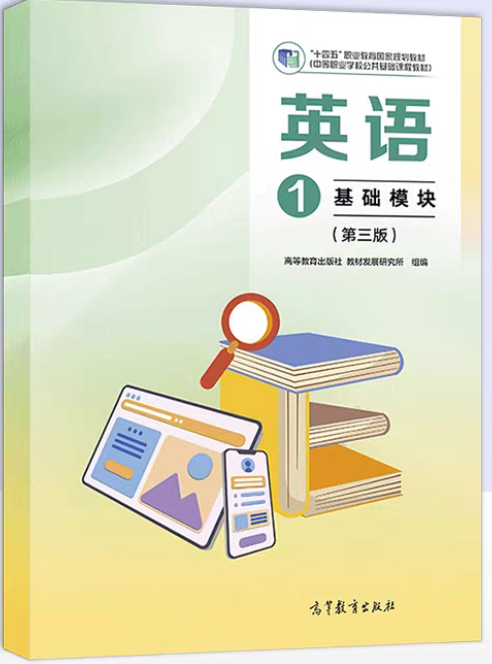
Unit 8 People and Events(B卷·能力提升)《英语 基础模块1》(高教版第三版)单元过关卷(原卷版+解析版)
2026-07-07
|
2份
|
18页
|
28人阅读
|
0人下载
摘要:
**基本信息**
紧扣《英语 基础模块1》Unit 8核心考点,设AB卷分层训练,B卷通过真实情境(如护士事迹、铁路发展)整合语言知识与思维能力,适配单元复习需求,助力学生构建知识网络。
**题型特征**
|题型|题量/分值|知识覆盖|命题特色|
|----|-----------|----------|----------|
|语音辨析|5/5|字母组合发音|基础辨音,巩固语音知识|
|单项选择|15/15|情态动词、时态、从句|梯度考查语法应用,体现语言能力|
|完形填空|10/10|词汇运用、语篇理解|以护士故事为情境,考查逻辑思维与文化意识|
|阅读理解|15/30|人物事迹、科技发展|通过铁路文化等真实素材,提升信息获取与思维品质|
|单句改错/短语填空|20/30|语法规则、固定搭配|结合"make a contribution to"等短语,强化语言准确性与学习能力|
内容正文:
编写说明:本套试卷紧扣《英语 基础模块1》(高教版第三版)教材,以教材单元为基准精准覆盖核心考点。
每个单元设置AB卷,A卷为基础巩固卷,侧重基础考点训练,帮助学生扎实掌握知识要点;B卷为能力提升卷,注重知识整合与全面检测,引导学生构建知识网络。全书设计4份综合测试卷,模拟实战情境,聚焦解题能力突破,全面提升应试能力与知识应用水平。
《英语 基础模块1》(高教版第三版)《单元过关卷》
Unit 8 People and Events
B卷·能力提升
考试时间:120分钟 满分:100分
班级_____姓名_____学号_____成绩_____
Ⅰ. 语音辨析。(共5小题;每小题1分,满分5分)
读下列单词,从每题所给的 A、B、C 和 D 四个选项中,选出画线部分发音不同的一项。
1. A. food B. good C. moon D. school
2. A. bulb B. public C. use D. bus
3. A. work B. born C. short D. morning
4. A. think B. through C. these D. method
5. A. designed B. completed C. improved D. returned
【答案】1. B 2. C 3. A 4. C 5. B
【解析】1. good /ɡʊd/ 中 oo 发 /ʊ/,其余三项发 /uː/。
2. use /juːz/ 中 u 发 /juː/,其余三项发 /ʌ/。
3. work /wɜːk/ 中 or 发 /ɜː/,其余三项发 /ɔː/。
4. these /ðiːz/ 中 th 发 /ð/,其余三项发 /θ/。
5. completed /kəmˈpliːtɪd/ 中 ed 发 /ɪd/,其余三项发 /d/。
Ⅱ. 单项选择(共15小题;每小题1分,满分15分)
阅读下列句子,从每题所给的 A、B、C 和 D 四个选项中,选出最佳选项。
6. —Must we hand in the invention report this afternoon? —No, you ______. Tomorrow morning is OK.
A. mustn’t B. needn’t
C. can’t D. may not
【答案】B
【解析】以 Must 开头的一般疑问句,否定回答用 needn’t 或 don’t have to,表示“不必”。
7. The light is still on in the lab. Mr. Zhao ______ be working there.
A. can’t B. shouldn’t
C. may not D. must
【答案】D
【解析】根据“The light is still on”可作肯定推测,must 表示“必定”。
8. When my grandfather was young, he ______ repair simple radios by himself.
A. could B. must
C. may D. has to
【答案】A
【解析】When my grandfather was young 表示过去时间,过去具备的能力用 could。
9. Students ______ run near the machines in the training room because it is dangerous.
A. could B. may
C. mustn’t D. needn’t
【答案】C
【解析】because it is dangerous 表明禁止在机器旁奔跑,mustn’t 表示“禁止”。
10. If you want to introduce a great person clearly, you ______ collect key facts first.
A. can’t B. should
C. wouldn’t D. might not
【答案】B
【解析】句意为“应先收集关键事实”,should 表示建议。
11. The engineer ______ the railway plan twice before the meeting yesterday.
A. checks B. checking
C. check D. checked
【答案】D
【解析】yesterday 表示过去时间,谓语用 checked。
12. These modern machines ______ workers complete the task more safely.
A. help B. helps
C. helped D. helping
【答案】A
【解析】主语 machines 为复数,描述一般情况用动词原形 help。
13. The young nurse ______ many lives during the difficult months.
A. save B. saves
C. saved D. saving
【答案】C
【解析】during the difficult months 表示过去阶段,谓语用 saved。
14. The method of online learning ______ knowledge easier to get.
A. make B. makes
C. made D. making
【答案】B
【解析】主语 The method 为单数,描述客观作用用 makes。
15. The class ______ the poster ahead of schedule last Friday.
A. complete B. completes
C. completing D. completed
【答案】D
【解析】last Friday 表示过去时间,谓语用 completed。
16. The woman ______ created modern nursing is still remembered by many people.
A. where B. when
C. which D. who
【答案】D
【解析】先行词 woman 指人,关系词在从句中作主语,用 who。
17. We are discussing ______ the new app can help old people use phones easily.
A. whether B. which
C. where D. who
【答案】A
【解析】discuss 后接宾语从句,句意为“是否能帮助老人”,用 whether。
18. The students kept testing the model ______ they found the real problem.
A. if B. because
C. although D. until
【答案】D
【解析】句意为“学生们一直测试模型,直到发现真正的问题”,until 符合语境。
19. Neither the designer nor the workers ______ afraid of difficulties.
A. is B. are
C. was D. be
【答案】B
【解析】neither...nor 连接主语时遵循就近原则,workers 为复数,be 动词用 are。
20. There ______ a railway museum and two invention boards in the school hall.
A. is B. are
C. were D. be
【答案】A
【解析】there be 结构遵循就近原则,a railway museum 为单数,be 动词用 is。
Ⅲ. 完形填空(共10小题;每小题1分,满分10分)
阅读下面短文,从短文后各题所给的 A、B、C 和 D 四个选项中,选出可以填入空白处的最佳选项。
During the school career week, our class met Ms. Liu, a nurse who had worked in a mountain clinic for fifteen years. She did not speak loudly, but her story made the room very quiet. She brought several old notebooks with her, and each notebook recorded names, dates, weather and simple medical advice. These small details helped us understand that service work also needs order and careful thinking.
Ms. Liu said she first became interested in nursing after reading about Florence Nightingale. At that time, she was only ____21____ student in a small town. The story gave her the courage to make a ____22____: she would learn useful skills and serve people who needed help. After graduation, she ____23____ to a clinic far from the city. The road was not easy, but she believed every patient was important.
In the clinic, Ms. Liu had to ____24____ many difficulties. Sometimes there was heavy snow, and sometimes medicine arrived late. She recorded each patient’s condition ____25____ and designed simple cards to remind villagers to take medicine on time. She also taught young parents ____26____ they could protect children from common illnesses. Her work was not famous, ____27____ it changed many families’ lives.
Before leaving, Ms. Liu looked at us and said, “You may not invent a machine or build a railway, but you can still make life better by doing your job well.” I suddenly understood that the real ____28____ of a great person is not only in books. It can be found in patient service, careful methods and daily kindness. Since then, I have become more ____29____ to learn practical skills, because I know ordinary work can also become a meaningful ____30____.
21. A. an B. the C. a D. /
22. A. decision B. noise C. ticket D. mistake
23. A. left B. moved C. listened D. returned
24. A. hide B. overcome C. refuse D. forget
25. A. angrily B. slowly C. carefully D. loudly
26. A. where B. when C. which D. how
27. A. but B. so C. or D. because
28. A. price B. meaning C. color D. speed
29. A. afraid B. tired C. eager D. sorry
30. A. achievement B. accident C. problem D. season
【答案】21. C 22. A 23. D 24. B 25. C 26. D 27. A 28. B 29. C 30. A
【导语】本文是一篇记叙文。文章讲述了一名山区诊所护士在职业周分享自己的经历,学生由此理解普通岗位也能通过专业技能和认真服务创造价值。
【详解】21. 考查冠词。student 为以辅音音素开头的可数名词单数,表示“一名学生”,用 a。
【详解】22. 考查名词辨析。make a decision 表示“做决定”,与后文“she would learn useful skills”对应。
【详解】23. 考查动词辨析。根据“serve people who needed help”和“a clinic far from the city”可知,她毕业后返回/前往需要她的诊所工作,returned 符合语境。
【详解】24. 考查动词辨析。后文列举大雪、药品迟到等困难,overcome difficulties 表示“克服困难”。
【详解】25. 考查副词辨析。记录病人情况需要认真仔细,carefully 修饰 recorded。
【详解】26. 考查宾语从句连接词。句意为“教年轻父母怎样保护孩子”,how 符合语境。
【详解】27. 考查连词。前句说她的工作并不出名,后句说改变很多家庭,前后为转折关系,用 but。
【详解】28. 考查名词辨析。根据“not only in books”可知,此处谈“伟大人物的真正意义”,meaning 符合语境。
【详解】29. 考查形容词辨析。be eager to do sth 表示“渴望做某事”,与学习实用技能搭配。
【详解】30. 考查名词辨析。ordinary work can also become a meaningful achievement 表示“普通工作也能成为有意义的成就”。
Ⅳ. 补全对话(共5小题;每小题2分,满分10分)
根据对话内容,从对话后所给的七个选项中,选出能填入空白处的最佳选项。(选项中有两项是多余的)
A: Our group needs to prepare an infographic for technology week. ____31____
B: I think we can compare the old railway with the high-speed railway.
A: Good idea. ____32____
B: We should include length, speed, power and opening time.
A: ____33____
B: Yes. It will make the information clearer.
A: Who will collect facts about the old railway?
B: I can do that. ____34____
A: I will search for information about the high-speed railway.
B: Great. ____35____
A: Let’s finish it by Thursday so we can check it on Friday.
A. Shall we use pictures and a table?
B. What topic shall we choose?
C. Which facts should we put in it?
D. When should we complete the work?
E. What about you?
F. Why do you dislike trains?
G. Can you play basketball after school?
【答案】31. B 32. C 33. A 34. E 35. D
【解析】31. 根据答语“I think we can compare...”可知此处询问选择什么主题,选 B。32. 根据答语“We should include...”可知此处询问应放入哪些事实,选 C。33. 根据答语“Yes. It will make the information clearer.”可知此处是关于是否使用图片和表格的一般疑问句,选 A。34. 前句说“I can do that.”,后文回答“I will search...”可知此处询问对方分工,选 E。35. 根据答语“Let’s finish it by Thursday...”可知此处询问完成时间,选 D。
Ⅴ. 阅读理解(共15小题;每小题2分,满分30分)
阅读下面短文A,判断36—40小题是否正确。若正确,填 T;若错误,填 F。阅读短文B和C,从每小题所给的 A、B、C 和 D 四个选项中选出最佳选项。
A
Young Inventors Day was held in a vocational school last Tuesday. It was not a competition for expensive products. The purpose was to encourage students to notice problems around them and improve daily life with simple methods. Every team had to introduce one small invention, explain who might use it and show how it worked.
One team designed a “quiet reminder” for the library. It used a small light instead of a loud sound. When the noise level became too high, the light turned yellow first and then red. Another team made a cup holder for wheelchairs, so people could carry water more safely. A third team created a note board for workshops. Students could record tool problems on cards, and the monitor could check them before class.
Teachers paid attention to the process, not only the result. They asked students where the idea came from, what difficulty they had overcome and how they improved the design. Some teams failed several times before their models worked well. However, they learned to test, discuss and change step by step. Visitors were also invited to leave suggestions on small pieces of paper.
At the end of the day, the school gave a special prize to the team that helped wheelchair users. The head teacher said that a useful invention did not have to be large or famous. If it reduced trouble for people and made life safer, it was already valuable. Many students left the hall with new ideas for the next project.
36. Young Inventors Day encouraged students to solve daily problems with simple methods.
37. The quiet reminder used a loud bell to stop library noise.
38. The wheelchair cup holder helped people carry water more safely.
39. Teachers cared only about whether the final model looked expensive.
40. The special prize went to the team that helped wheelchair users.
【答案】36. T 37. F 38. T 39. F 40. T
【导语】本文是一篇说明文。文章介绍了一所职业学校举办的青年发明日活动,展示学生如何用小发明解决身边问题。
【详解】36. 细节理解题。根据第一段“improve daily life with simple methods”可知,活动鼓励学生用简单方法改善生活。
【详解】37. 细节理解题。根据第二段“It used a small light instead of a loud sound.”可知,图书馆提醒器使用灯光而不是响铃。
【详解】38. 细节理解题。根据第二段“so people could carry water more safely”可知,轮椅杯架帮助人们更安全地带水。
【详解】39. 细节理解题。根据第三段“Teachers paid attention to the process, not only the result.”可知,老师关注过程而不只是结果。
【详解】40. 细节理解题。根据最后一段“gave a special prize to the team that helped wheelchair users”可知,特别奖给了帮助轮椅使用者的团队。
B
At Zhangjiakou Railway Culture Center, sixteen-year-old Han Rui worked as a student volunteer during the winter holiday. His job was to guide visitors through a small exhibition about two railways between Beijing and Zhangjiakou. Before the center opened each morning, he checked the posters, cleaned the model trains and made sure the video screen worked.
Many visitors were surprised that the old railway was about 200 kilometers long and opened in 1909. Han Rui explained that it was built through difficult mountain areas. At that time, some people did not believe Chinese engineers could complete such a project. The chief engineer and his team studied the land carefully, designed special routes and finished the work ahead of schedule. When Han Rui talked about this part, he always slowed down because he wanted children to understand how courage and knowledge worked together.
In another part of the hall, visitors could compare the old railway with the high-speed railway. The new trains run much faster and use electricity instead of coal. Smart systems help control speed and safety. However, Han Rui did not describe the new line as a simple replacement for the old one. He said the two railways belonged to different times, but both showed people’s wish to connect cities and make travel better.
After two weeks of service, Han Rui wrote a short summary for his teacher. He said volunteering was not just repeating facts. It helped him learn how to organize information, answer unexpected questions and respect the people behind important events.
41. What did Han Rui do before the center opened each morning?
A. He sold train tickets to visitors. B. He checked posters and model trains.
C. He drove high-speed trains. D. He wrote newspaper reports.
42. Why did Han Rui slow down when talking about the old railway project?
A. Because he forgot the dates. B. Because the video screen stopped working.
C. Because he wanted children to understand the value behind the work. D. Because visitors asked him to speak less.
43. Which information about the old railway is mentioned?
A. It opened in 1909 and passed through difficult mountain areas. B. It used electricity and smart control systems.
C. It was shorter than ten kilometers. D. It was completed by Han Rui’s classmates.
44. How did Han Rui compare the two railways?
A. He thought the old railway was useless. B. He said only the new railway showed skill.
C. He believed both railways connected cities and improved travel. D. He refused to talk about the high-speed railway.
45. What can we infer from the last paragraph?
A. Volunteering helped Han Rui develop communication and thinking skills. B. Han Rui disliked answering visitors’ questions.
C. The teacher asked Han Rui to build a model train. D. The culture center closed after two weeks.
【答案】41. B 42. C 43. A 44. C 45. A
【导语】本文是一篇记叙文。文章讲述了学生志愿者韩睿在铁路文化中心讲解两条铁路的经历及收获。
【详解】41. 细节理解题。根据第一段“checked the posters, cleaned the model trains...”可知,他开馆前检查海报、清理模型列车并确认屏幕。
【详解】42. 细节理解题。根据第二段“wanted children to understand how courage and knowledge worked together”可知,他想让孩子理解工程背后的勇气与知识。
【详解】43. 细节理解题。根据第二段“about 200 kilometers long and opened in 1909”以及“through difficult mountain areas”可知,A项正确。
【详解】44. 细节理解题。根据第三段“both showed people’s wish to connect cities and make travel better”可知,他认为两条铁路都连接城市、改善出行。
【详解】45. 推理判断题。根据最后一句“organize information, answer unexpected questions and respect...”可推断,志愿服务提升了他的表达与思考能力。
C
From ancient paper-making to modern smart devices, inventions have helped people record, share and use knowledge. Paper made writing lighter and cheaper, so ideas could travel farther. Later, printing allowed the same text to reach many readers. Today, tablets and online platforms make it possible for students to read, draw, take notes and discuss with classmates even when they are not in the same room.
However, a useful invention is never only a new object. It is also a method of solving a real problem. For example, when students use a tablet in class, the value is not the screen itself. The value appears when they use it to collect facts, compare information and create a clear report. If they only play games, the same device may waste time instead of improving learning. This is why teachers often ask students to explain both the tool and the purpose.
The development of technology also needs people from different jobs. Designers think about shape and function. Engineers test safety. Workers complete parts carefully. Service staff teach users how to use the product. When these people work together, an idea can turn into something helpful. If one step is ignored, the final product may fail.
For young learners, the most important lesson is to stay curious and responsible. They may begin with a small question: How can we reduce waste in the classroom? How can we help older people read messages more easily? Such questions may not sound great at first, but they can lead to meaningful inventions when students keep improving their methods.
46. What does Paragraph 1 mainly show?
A. Old inventions are no longer useful. B. Different inventions help knowledge spread and be used.
C. Students should stop using online platforms. D. Printing made ideas travel more slowly.
47. According to Paragraph 2, when does a tablet show its real value in class?
A. When it has the newest screen. B. When students use it only for games.
C. When it replaces every teacher. D. When students use it to collect and organize information for learning.
48. Which group is NOT mentioned as part of technology development?
A. Farmers selling vegetables in markets. B. Designers thinking about shape and function.
C. Engineers testing safety. D. Service staff teaching users.
49. What can we infer from Paragraph 3?
A. Teamwork is necessary for an idea to become a useful product. B. Only engineers are important in making inventions.
C. A final product never fails if it looks modern. D. Service staff do not need to understand users.
50. Which is the best title for the text?
A. How to Play Games on Tablets B. Inventions: Tools, Purposes and Teamwork
C. Why Paper Should Be Thrown Away D. The Fastest Train in the World
【答案】46. B 47. D 48. A 49. A 50. B
【导语】本文是一篇说明文。文章从纸张、印刷和平板设备谈到发明的真正价值,强调工具要服务真实目的,技术成果也离不开团队合作。
【详解】46. 段落大意题。第一段依次介绍纸、印刷、平板和网络平台如何帮助记录、传播和使用知识,B项概括准确。
【详解】47. 细节理解题。根据第二段“collect facts, compare information and create a clear report”可知,平板用于收集和整理学习信息时才体现价值。
【详解】48. 细节理解题。第三段提到 Designers、Engineers、Workers 和 Service staff,没有提到市场卖菜的农民。
【详解】49. 推理判断题。根据第三段“When these people work together...”可知,一个想法变成有用产品需要团队合作。
【详解】50. 最佳标题题。全文围绕发明工具、使用目的和团队合作展开,B项最全面。
Ⅵ. 句子单句改错(共10小题;每小题1分,满分10分)
下列各句均有一处错误,请写出修改方法。
51. You should to check the data before you design the poster.
【答案】删除 to
【解析】情态动词 should 后接动词原形 check。
52. May I borrowing your tablet for ten minutes?
【答案】borrowing → borrow
【解析】May I 后接动词原形 borrow。
53. He mustn’t be tired after working all night, so let him rest.
【答案】mustn’t → must
【解析】根据“working all night”和“let him rest”可知是肯定推测,应使用 must。
54. Neither Tom nor his classmates was afraid of the hard task.
【答案】was → were
【解析】neither...nor 连接主语遵循就近原则,classmates 为复数,用 were。
55. The girl who design the model is from Class One.
【答案】design → designs
【解析】定语从句主语 who 指代 The girl,为第三人称单数,谓语用 designs。
56. We discussed that should introduce the invention first.
【答案】that → who
【解析】句意为“讨论谁应先介绍发明”,连接词应为 who。
57. The workers kept trying although they solved the problem.
【答案】although → until
【解析】句意应为“一直尝试直到解决问题”,用 until。
58. There are a light bulb and two old radios on the table.
【答案】are → is
【解析】there be 结构遵循就近原则,a light bulb 为单数,用 is。
59. This invention makes our life much convenient.
【答案】much 后加 more
【解析】convenient 为多音节形容词,比较级用 more convenient,much 修饰比较级。
60. The students succeeded in complete the science report.
【答案】complete → completing
【解析】succeed in doing sth 中 in 后接动名词 completing。
Ⅶ. 短语适当形式填空(共10小题;每小题2分,满分20分)
选择方框内短语并用其适当形式填空。
make a contribution to;be proud of;take part in;give up;not only;care about;as a result;millions of;pass away;set an example
61. Yuan Longping _____ the world by developing hybrid rice.
62. We all _____ the heroes who protected our country.
63. Many young people _____ volunteer activities to help others.
64. Even when facing difficulties, a hero never _____.
65. Tu Youyou is _____ a great scientist.
66. A true hero always _____ other people's feelings.
67. He worked very hard, _____ he achieved great success.
68. _____ people around the world benefited from his discovery.
69. The great scientist _____ at the age of 91.
70. Our teacher always _____ for us with her hard work and dedication.
【答案】61.made a contribution to 62.are proud of 63.take part in 64.gives up 65.not only 66.cares about 67.as a result 68.Millions of 69.passed away 70.sets an example
【解析】61. make a contribution to:为……做出贡献;袁隆平的事迹发生在过去,句子用一般过去时。
【解析】62. be proud of:为……感到自豪;主语We为复数,一般现在时中be动词用are。
【解析】63. take part in:参加(活动);主语Many young people为复数,谓语动词用原形。
【解析】64. give up:放弃;主语a hero为单数,一般现在时谓语动词用三单形式。
【解析】65. not only:不仅;此处用于修饰名词,贴合屠呦呦不仅是伟大科学家的语境。
【解析】66. care about:关心、在意;主语A true hero为单数,一般现在时谓语动词用三单形式。
【解析】67. as a result:因此、结果;用于衔接前后因果关系,为固定短语。
【解析】68. millions of:数百万的;修饰可数名词复数,句首单词首字母需大写。
【解析】69. pass away:去世;科学家离世是过去发生的动作,用一般过去时。
【解析】70. set an example:树立榜样;主语Our teacher为单数,一般现在时谓语动词用三单形式。
原创精品资源学科网独家享有版权,侵权必究!
学科网(北京)股份有限公司
$
编写说明:本套试卷紧扣《英语 基础模块1》(高教版第三版)教材,以教材单元为基准精准覆盖核心考点。
每个单元设置AB卷,A卷为基础巩固卷,侧重基础考点训练,帮助学生扎实掌握知识要点;B卷为能力提升卷,注重知识整合与全面检测,引导学生构建知识网络。全书设计4份综合测试卷,模拟实战情境,聚焦解题能力突破,全面提升应试能力与知识应用水平。
《英语 基础模块1》(高教版第三版)《单元过关卷》
Unit 8 People and Events
B卷·能力提升
考试时间:120分钟 满分:100分
班级_____姓名_____学号_____成绩_____
Ⅰ. 语音辨析。(共5小题;每小题1分,满分5分)
读下列单词,从每题所给的 A、B、C 和 D 四个选项中,选出画线部分发音不同的一项。
1. A. food B. good C. moon D. school
2. A. bulb B. public C. use D. bus
3. A. work B. born C. short D. morning
4. A. think B. through C. these D. method
5. A. designed B. completed C. improved D. returned
Ⅱ. 单项选择(共15小题;每小题1分,满分15分)
阅读下列句子,从每题所给的 A、B、C 和 D 四个选项中,选出最佳选项。
6. —Must we hand in the invention report this afternoon? —No, you ______. Tomorrow morning is OK.
A. mustn’t B. needn’t
C. can’t D. may not
7. The light is still on in the lab. Mr. Zhao ______ be working there.
A. can’t B. shouldn’t
C. may not D. must
8. When my grandfather was young, he ______ repair simple radios by himself.
A. could B. must
C. may D. has to
9. Students ______ run near the machines in the training room because it is dangerous.
A. could B. may
C. mustn’t D. needn’t
10. If you want to introduce a great person clearly, you ______ collect key facts first.
A. can’t B. should
C. wouldn’t D. might not
11. The engineer ______ the railway plan twice before the meeting yesterday.
A. checks B. checking
C. check D. checked
12. These modern machines ______ workers complete the task more safely.
A. help B. helps
C. helped D. helping
13. The young nurse ______ many lives during the difficult months.
A. save B. saves
C. saved D. saving
14. The method of online learning ______ knowledge easier to get.
A. make B. makes
C. made D. making
15. The class ______ the poster ahead of schedule last Friday.
A. complete B. completes
C. completing D. completed
16. The woman ______ created modern nursing is still remembered by many people.
A. where B. when
C. which D. who
17. We are discussing ______ the new app can help old people use phones easily.
A. whether B. which
C. where D. who
18. The students kept testing the model ______ they found the real problem.
A. if B. because
C. although D. until
19. Neither the designer nor the workers ______ afraid of difficulties.
A. is B. are
C. was D. be
20. There ______ a railway museum and two invention boards in the school hall.
A. is B. are
C. were D. be
Ⅲ. 完形填空(共10小题;每小题1分,满分10分)
阅读下面短文,从短文后各题所给的 A、B、C 和 D 四个选项中,选出可以填入空白处的最佳选项。
During the school career week, our class met Ms. Liu, a nurse who had worked in a mountain clinic for fifteen years. She did not speak loudly, but her story made the room very quiet. She brought several old notebooks with her, and each notebook recorded names, dates, weather and simple medical advice. These small details helped us understand that service work also needs order and careful thinking.
Ms. Liu said she first became interested in nursing after reading about Florence Nightingale. At that time, she was only ____21____ student in a small town. The story gave her the courage to make a ____22____: she would learn useful skills and serve people who needed help. After graduation, she ____23____ to a clinic far from the city. The road was not easy, but she believed every patient was important.
In the clinic, Ms. Liu had to ____24____ many difficulties. Sometimes there was heavy snow, and sometimes medicine arrived late. She recorded each patient’s condition ____25____ and designed simple cards to remind villagers to take medicine on time. She also taught young parents ____26____ they could protect children from common illnesses. Her work was not famous, ____27____ it changed many families’ lives.
Before leaving, Ms. Liu looked at us and said, “You may not invent a machine or build a railway, but you can still make life better by doing your job well.” I suddenly understood that the real ____28____ of a great person is not only in books. It can be found in patient service, careful methods and daily kindness. Since then, I have become more ____29____ to learn practical skills, because I know ordinary work can also become a meaningful ____30____.
21. A. an B. the C. a D. /
22. A. decision B. noise C. ticket D. mistake
23. A. left B. moved C. listened D. returned
24. A. hide B. overcome C. refuse D. forget
25. A. angrily B. slowly C. carefully D. loudly
26. A. where B. when C. which D. how
27. A. but B. so C. or D. because
28. A. price B. meaning C. color D. speed
29. A. afraid B. tired C. eager D. sorry
30. A. achievement B. accident C. problem D. season
Ⅳ. 补全对话(共5小题;每小题2分,满分10分)
根据对话内容,从对话后所给的七个选项中,选出能填入空白处的最佳选项。(选项中有两项是多余的)
A: Our group needs to prepare an infographic for technology week. ____31____
B: I think we can compare the old railway with the high-speed railway.
A: Good idea. ____32____
B: We should include length, speed, power and opening time.
A: ____33____
B: Yes. It will make the information clearer.
A: Who will collect facts about the old railway?
B: I can do that. ____34____
A: I will search for information about the high-speed railway.
B: Great. ____35____
A: Let’s finish it by Thursday so we can check it on Friday.
A. Shall we use pictures and a table?
B. What topic shall we choose?
C. Which facts should we put in it?
D. When should we complete the work?
E. What about you?
F. Why do you dislike trains?
G. Can you play basketball after school?
Ⅴ. 阅读理解(共15小题;每小题2分,满分30分)
阅读下面短文A,判断36—40小题是否正确。若正确,填 T;若错误,填 F。阅读短文B和C,从每小题所给的 A、B、C 和 D 四个选项中选出最佳选项。
A
Young Inventors Day was held in a vocational school last Tuesday. It was not a competition for expensive products. The purpose was to encourage students to notice problems around them and improve daily life with simple methods. Every team had to introduce one small invention, explain who might use it and show how it worked.
One team designed a “quiet reminder” for the library. It used a small light instead of a loud sound. When the noise level became too high, the light turned yellow first and then red. Another team made a cup holder for wheelchairs, so people could carry water more safely. A third team created a note board for workshops. Students could record tool problems on cards, and the monitor could check them before class.
Teachers paid attention to the process, not only the result. They asked students where the idea came from, what difficulty they had overcome and how they improved the design. Some teams failed several times before their models worked well. However, they learned to test, discuss and change step by step. Visitors were also invited to leave suggestions on small pieces of paper.
At the end of the day, the school gave a special prize to the team that helped wheelchair users. The head teacher said that a useful invention did not have to be large or famous. If it reduced trouble for people and made life safer, it was already valuable. Many students left the hall with new ideas for the next project.
36. Young Inventors Day encouraged students to solve daily problems with simple methods.
37. The quiet reminder used a loud bell to stop library noise.
38. The wheelchair cup holder helped people carry water more safely.
39. Teachers cared only about whether the final model looked expensive.
40. The special prize went to the team that helped wheelchair users.
B
At Zhangjiakou Railway Culture Center, sixteen-year-old Han Rui worked as a student volunteer during the winter holiday. His job was to guide visitors through a small exhibition about two railways between Beijing and Zhangjiakou. Before the center opened each morning, he checked the posters, cleaned the model trains and made sure the video screen worked.
Many visitors were surprised that the old railway was about 200 kilometers long and opened in 1909. Han Rui explained that it was built through difficult mountain areas. At that time, some people did not believe Chinese engineers could complete such a project. The chief engineer and his team studied the land carefully, designed special routes and finished the work ahead of schedule. When Han Rui talked about this part, he always slowed down because he wanted children to understand how courage and knowledge worked together.
In another part of the hall, visitors could compare the old railway with the high-speed railway. The new trains run much faster and use electricity instead of coal. Smart systems help control speed and safety. However, Han Rui did not describe the new line as a simple replacement for the old one. He said the two railways belonged to different times, but both showed people’s wish to connect cities and make travel better.
After two weeks of service, Han Rui wrote a short summary for his teacher. He said volunteering was not just repeating facts. It helped him learn how to organize information, answer unexpected questions and respect the people behind important events.
41. What did Han Rui do before the center opened each morning?
A. He sold train tickets to visitors. B. He checked posters and model trains.
C. He drove high-speed trains. D. He wrote newspaper reports.
42. Why did Han Rui slow down when talking about the old railway project?
A. Because he forgot the dates. B. Because the video screen stopped working.
C. Because he wanted children to understand the value behind the work. D. Because visitors asked him to speak less.
43. Which information about the old railway is mentioned?
A. It opened in 1909 and passed through difficult mountain areas. B. It used electricity and smart control systems.
C. It was shorter than ten kilometers. D. It was completed by Han Rui’s classmates.
44. How did Han Rui compare the two railways?
A. He thought the old railway was useless. B. He said only the new railway showed skill.
C. He believed both railways connected cities and improved travel. D. He refused to talk about the high-speed railway.
45. What can we infer from the last paragraph?
A. Volunteering helped Han Rui develop communication and thinking skills. B. Han Rui disliked answering visitors’ questions.
C. The teacher asked Han Rui to build a model train. D. The culture center closed after two weeks.
C
From ancient paper-making to modern smart devices, inventions have helped people record, share and use knowledge. Paper made writing lighter and cheaper, so ideas could travel farther. Later, printing allowed the same text to reach many readers. Today, tablets and online platforms make it possible for students to read, draw, take notes and discuss with classmates even when they are not in the same room.
However, a useful invention is never only a new object. It is also a method of solving a real problem. For example, when students use a tablet in class, the value is not the screen itself. The value appears when they use it to collect facts, compare information and create a clear report. If they only play games, the same device may waste time instead of improving learning. This is why teachers often ask students to explain both the tool and the purpose.
The development of technology also needs people from different jobs. Designers think about shape and function. Engineers test safety. Workers complete parts carefully. Service staff teach users how to use the product. When these people work together, an idea can turn into something helpful. If one step is ignored, the final product may fail.
For young learners, the most important lesson is to stay curious and responsible. They may begin with a small question: How can we reduce waste in the classroom? How can we help older people read messages more easily? Such questions may not sound great at first, but they can lead to meaningful inventions when students keep improving their methods.
46. What does Paragraph 1 mainly show?
A. Old inventions are no longer useful. B. Different inventions help knowledge spread and be used.
C. Students should stop using online platforms. D. Printing made ideas travel more slowly.
47. According to Paragraph 2, when does a tablet show its real value in class?
A. When it has the newest screen. B. When students use it only for games.
C. When it replaces every teacher. D. When students use it to collect and organize information for learning.
48. Which group is NOT mentioned as part of technology development?
A. Farmers selling vegetables in markets. B. Designers thinking about shape and function.
C. Engineers testing safety. D. Service staff teaching users.
49. What can we infer from Paragraph 3?
A. Teamwork is necessary for an idea to become a useful product. B. Only engineers are important in making inventions.
C. A final product never fails if it looks modern. D. Service staff do not need to understand users.
50. Which is the best title for the text?
A. How to Play Games on Tablets B. Inventions: Tools, Purposes and Teamwork
C. Why Paper Should Be Thrown Away D. The Fastest Train in the World
Ⅵ. 句子单句改错(共10小题;每小题1分,满分10分)
下列各句均有一处错误,请写出修改方法。
51. You should to check the data before you design the poster.
52. May I borrowing your tablet for ten minutes?
53. He mustn’t be tired after working all night, so let him rest.
54. Neither Tom nor his classmates was afraid of the hard task.
55. The girl who design the model is from Class One.
56. We discussed that should introduce the invention first.
57. The workers kept trying although they solved the problem.
58. There are a light bulb and two old radios on the table.
59. This invention makes our life much convenient.
60. The students succeeded in complete the science report.
Ⅶ. 短语适当形式填空(共10小题;每小题2分,满分20分)
选择方框内短语并用其适当形式填空。
make a contribution to;be proud of;take part in;give up;not only;care about;as a result;millions of;pass away;set an example
61. Yuan Longping _____ the world by developing hybrid rice.
62. We all _____ the heroes who protected our country.
63. Many young people _____ volunteer activities to help others.
64. Even when facing difficulties, a hero never _____.
65. Tu Youyou is _____ a great scientist.
66. A true hero always _____ other people's feelings.
67. He worked very hard, _____ he achieved great success.
68. _____ people around the world benefited from his discovery.
69. The great scientist _____ at the age of 91.
70. Our teacher always _____ for us with her hard work and dedication.
原创精品资源学科网独家享有版权,侵权必究!
学科网(北京)股份有限公司
$
资源预览图

1

2

3
由于学科网是一个信息分享及获取的平台,不确保部分用户上传资料的 来源及知识产权归属。如您发现相关资料侵犯您的合法权益,请联系学科网,我们核实后将及时进行处理。