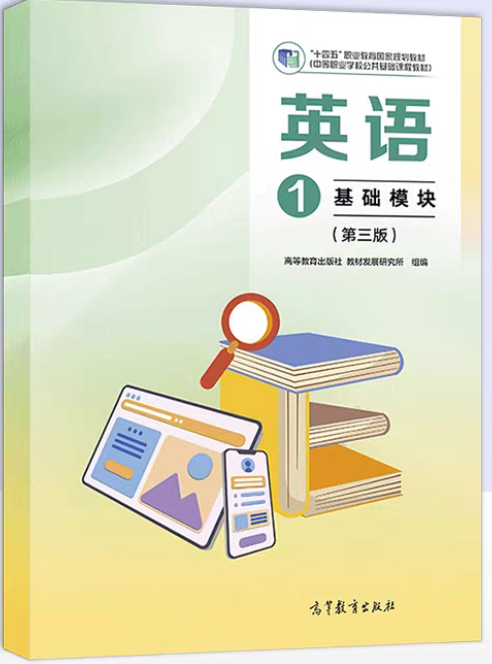
Unit 8 People and Events(A卷·基础巩固)《英语 基础模块1》(高教版第三版)单元过关卷(原卷版+解析版)
2026-07-07
|
2份
|
18页
|
39人阅读
|
0人下载
摘要:
**基本信息**
紧扣《英语 基础模块1》Unit 8,A卷基础巩固,覆盖语音、语法、阅读等核心考点,情境融合科技(铁路)与人物(詹天佑),适配单元复习,提升语言能力与文化意识。
**题型特征**
|题型|题量/分值|知识覆盖|命题特色|
|----|-----------|----------|----------|
|语音辨析|5/5|元音辅音发音|基础辨音,巩固语音知识|
|单项选择|15/15|情态动词(6-10题)、时态(11-14题)|语法基础,梯度清晰|
|完形填空|10/10|人物事件(詹天佑)、连接词|情境真实,培养语篇理解|
|补全对话|5/10|发明讨论|交际应用,提升语言能力|
|阅读理解|15/30|科技(铁路)、文化传承(造纸)|信息获取,强化思维品质|
|单句改错|10/10|语法纠错(情态动词、介词)|基础巩固,规范语言表达|
|短语填空|10/20|固定搭配(ahead of, take notes)|词汇应用,衔接教材知识点|
内容正文:
编写说明:本套试卷紧扣《英语 基础模块1》(高教版第三版)教材,以教材单元为基准精准覆盖核心考点。
每个单元设置AB卷,A卷为基础巩固卷,侧重基础考点训练,帮助学生扎实掌握知识要点;B卷为能力提升卷,注重知识整合与全面检测,引导学生构建知识网络。全书设计4份综合测试卷,模拟实战情境,聚焦解题能力突破,全面提升应试能力与知识应用水平。
《英语 基础模块1》(高教版第三版)《单元过关卷》
Unit 8 People and Events
A卷·基础巩固
考试时间:120分钟 满分:100分
班级_____姓名_____学号_____成绩_____
Ⅰ. 语音辨析。(共5小题;每小题1分,满分5分)
读下列单词,从每题所给的 A、B、C 和 D 四个选项中,选出画线部分发音不同的一项。
1. A. paper B. tablet C. later D. maker
2. A. not B. job C. hot D. go
3. A. great B. teacher C. speak D. read
4. A. chief B. China C. school D. choose
5. A. invention B. design C. improve D. history
Ⅱ. 单项选择(共15小题;每小题1分,满分15分)
阅读下列句子,从每题所给的 A、B、C 和 D 四个选项中,选出最佳选项。
6. —May I use your tablet to take notes? —Yes, you ______.
A. must B. should
C. may D. need
7. That man ______ be Mr. Wang. He has returned to his hometown for a meeting.
A. can’t B. must
C. may D. should
8. We ______ respect people who work hard to improve our life.
A. can B. may
C. would D. should
9. Li Mei ______ record short English videos when she was ten.
A. can B. could
C. must D. may
10. You ______ finish the poster today. We can complete it tomorrow.
A. don’t have to B. mustn’t
C. can’t D. couldn’t
11. The students ______ the story of the great engineer yesterday.
A. discuss B. discusses
C. discussed D. discussing
12. A good invention usually ______ people’s daily life easier.
A. make B. made
C. making D. makes
13. The young worker ______ an interest in modern machines now.
A. show B. shows
C. showed D. showing
14. Many visitors ______ the old railway museum last weekend.
A. visited B. visit
C. visits D. visiting
15. The new method can help us ______ waste in the workshop.
A. reduces B. reduced
C. reduce D. reducing
16. This is the engineer ______ designed the bridge across the valley.
A. which B. where
C. when D. who
17. I believe ______ small ideas can sometimes change the world.
A. what B. that
C. which D. where
18. We stayed in the classroom ______ the rain stopped.
A. if B. because
C. until D. although
19. The team finished the task two months ______ schedule.
A. ahead of B. full of
C. far from D. next to
20. ______ brilliant the young inventor’s idea is!
A. What B. What a
C. How a D. How
Ⅲ. 完形填空(共10小题;每小题1分,满分10分)
阅读下面短文,从短文后各题所给的 A、B、C 和 D 四个选项中,选出可以填入空白处的最佳选项。
Our class prepared a small exhibition called “People Who Made Life Better” last Friday. It was not a big event, but everyone wanted to make it clear and useful for younger students. Our teacher reminded us that visitors would not remember a long list of names unless we could show how those names were connected with daily life, study and travel.
At first, we needed ____21____ plan for the exhibition. The answer ____22____ our first problem came from a group discussion. Chen Hao said that we should ____23____ key facts before choosing pictures, so we read short articles about Cai Lun, Florence Nightingale, Thomas Edison and Zhan Tianyou. After that, our display looked more ____24____ because every photo had a simple timeline and a short note beside it.
We ____25____ invited students from Grade Seven to visit. Many of them stopped at the railway board. They noticed the ____26____ between old trains and today’s high-speed trains, and they wanted to learn ____27____ about the engineer ____28____ overcame difficulties in the mountains. Some students asked why these people kept working when others doubted them. I said that ____29____ the work was hard, they believed a useful idea could serve many people.
At the end of the day, our teacher asked us to write one sentence about the exhibition. I wrote, “A great achievement often begins with a useful ____30____ and many days of hard work.” The sentence was simple, but it helped me understand why we remember those names. I also learned that careful preparation can turn old stories into useful lessons for young learners.
21. A. an B. a C. the D. /
22. A. for B. in C. at D. to
23. A. record B. repair C. hide D. throw
24. A. quiet B. weak C. modern D. angry
25. A. also B. too C. either D. never
26. A. mind B. difference C. hobby D. event
27. A. few B. little C. many D. more
28. A. which B. where C. who D. when
29. A. Although B. Unless C. If D. Before
30. A. ticket B. notice C. mistake D. method
Ⅳ. 补全对话(共5小题;每小题2分,满分10分)
根据对话内容,从对话后所给的七个选项中,选出能填入空白处的最佳选项。(选项中有两项是多余的)
A: Hi, Lin Tao. You look busy. ____31____
B: I am preparing a short talk about useful inventions.
A: Sounds interesting. ____32____
B: I like the smartphone best. It helps me stay connected with my family.
A: I agree. ____33____
B: Yes, but we should use it wisely. I also want to mention paper.
A: Paper? ____34____
B: Because it helps people record and share ideas. Without it, learning would be much harder.
A: Good point. ____35____
B: I will talk about Zhan Tianyou. He overcame many difficulties to build a railway.
A. Can it make learning easier?
B. What are you doing?
C. Who invented the smartphone?
D. Which great person will you introduce?
E. What is your favorite invention?
F. When will the talk begin?
G. Why do you think paper is important?
Ⅴ. 阅读理解(共15小题;每小题2分,满分30分)
阅读下面短文A,判断36—40小题是否正确。若正确,填 T;若错误,填 F。阅读短文B和C,从每小题所给的 A、B、C 和 D 四个选项中选出最佳选项。
A
Last month, students in Class Two visited a local paper-making museum before they went to the old railway station nearby. The trip was planned for the school technology week, and the teacher asked every group to study a different person or event that had changed daily life. At the museum, the guide showed how early paper was made from plant fibers. Students touched a piece of thin handmade paper and found that it was strong enough to hold ink. The guide explained that paper was not only used for paintings. It also helped people record rules, write letters, keep medical notes and share new ideas across long distances.
After lunch, the class visited the old railway station. There, a volunteer introduced the story of an engineer who worked with his team in the mountains. The students learned that building a railway through hills was difficult because workers had to measure the land carefully and solve many problems step by step. Several students used tablets to take notes and draw a simple map. Their teacher did not ask all groups to copy the same invention. Instead, each group chose one topic, such as paper-making, the light bulb, modern nursing or railways.
On the bus home, students talked about what they had learned. Some said great people were always born clever, but the teacher reminded them that careful study, useful methods and courage were also important. By the end of the trip, everyone understood that even a small improvement could change many people’s lives when it was used in the right way.
36. The students visited a paper-making museum before going to the old railway station.
37. The guide said paper was only used for paintings in the past.
38. Some students used tablets to take notes and draw a simple map.
39. The teacher asked every group to copy the same invention.
40. The trip helped students understand that small improvements can change lives.
B
Mei Fang was chosen to give a three-minute speech at the school morning meeting. The topic was “A Person I Admire”. At first, she wanted to talk about a famous singer because the singer had many fans. However, her grandfather suggested a different name: Zhan Tianyou. He told Mei Fang that admiration should not only come from popularity, but also from what a person has done for others. This advice made Mei Fang rethink the purpose of her speech. She wanted her classmates to see that a useful life could be built through study, courage and service.
Mei Fang began to collect information after school. She learned that Zhan showed an interest in machines when he was young and later studied engineering abroad. After graduation, he returned to China and worked on a difficult railway project. The railway had to pass through hills and mountains. Some people believed the work was impossible, but Zhan and his team did not give up. They studied the land, improved their methods and completed the project ahead of schedule.
The night before the speech, Mei Fang still felt nervous. Her grandfather listened to her practice and asked one question, “What do you want your classmates to remember?” Mei Fang thought for a while and changed the ending. The next morning, she did not simply list dates. She said that a great person was not someone far away from students. A great person could be anyone who used knowledge to solve real problems and serve people. Her classmates gave her warm applause, and Mei Fang finally understood the meaning of the word “achievement” and decided to work more carefully in her own study.
41. Why did Mei Fang’s grandfather suggest Zhan Tianyou instead of a singer?
A. Because the singer was not famous. B. Because Mei Fang disliked music.
C. Because Zhan’s work brought value to others. D. Because the speech had to be about railways.
42. What can we learn about Zhan Tianyou from Paragraph 2?
A. He studied engineering and returned to work for his country. B. He finished the railway without any difficulty.
C. He became famous mainly because of his singing. D. He asked others to complete the railway for him.
43. Which information about the railway project is mentioned?
A. It was built beside the sea. B. It was completed later than planned.
C. It was designed only by foreign workers. D. It had to go through hills and mountains.
44. What did Mei Fang change before giving the speech?
A. The name of the morning meeting. B. The ending of her speech.
C. The place of the project. D. The number of classmates.
45. What does the writer want to tell us?
A. Popular people always make the greatest achievements. B. A speech should include as many dates as possible.
C. Knowledge becomes valuable when it solves real problems. D. Students should never talk about engineers.
C
In many cities, people can see high-speed trains running across long bridges and through mountains. These trains are not only fast; they also show how modern engineering improves daily travel. A trip that once took a whole day may now take only a few hours. For students who live far from their hometowns, this means more chances to return home during holidays and more time to stay with family.
A high-speed railway is the result of many connected systems. Engineers must design safe tracks, powerful trains and clear signals. Workers need to complete each step carefully because a small mistake may affect the whole line. Before a new line opens, testing teams run trains again and again under different weather conditions. They record data, check the wheels, improve the timetable and make sure passengers can travel safely.
The story of railways also connects the past with the present. Early railways used steam and moved slowly, but they opened people’s eyes to a new way of travel. Today’s trains use electricity and advanced control systems. Some stations even use smart screens to guide passengers. However, the spirit behind railway development has not changed. People still need patience, teamwork and courage to overcome difficulties.
For vocational students, railways are more than a topic in a magazine. They show that useful skills can serve society. A student who learns design, repair, computer control or service work may one day help build a better journey for thousands of passengers. When students look at a train, they can also see many ordinary workers behind it. Their careful work keeps every journey safe, warm and on time.
46. What can high-speed trains bring to students living far from home?
A. More homework during holidays. B. More chances to spend time with family.
C. Fewer ways to visit their hometowns. D. Longer travel time than before.
47. What does the underlined word “connected” in Paragraph 2 mean?
A. Expensive. B. Separate.
C. Traditional. D. Linked together.
48. What do testing teams do before a new railway line opens?
A. They run trains many times and record data. B. They ask passengers to choose the train color.
C. They stop checking the wheels in bad weather. D. They build stations without signals.
49. Which information about railways is TRUE according to the passage?
A. Early railways were faster than today’s trains. B. Smart screens are never used in stations.
C. Teamwork is still important in railway development. D. High-speed trains do not need clear signals.
50. Which is the best title for the text?
A. Steam Trains in Foreign Countries B. Railways: Skills, Safety and Better Travel
C. How to Buy a Train Ticket Online D. Why Students Should Avoid Long Trips
Ⅵ. 句子单句改错(共10小题;每小题1分,满分10分)
下列各句均有一处错误,请写出修改方法。
51. You must to finish the safety poster before Friday.
52. May I uses your pen to complete the form?
53. The man can’t is our teacher because he is in Beijing now.
54. The new app helps students record ideas easier.
55. The inventor was born on 1861 in a small town.
56. This method is useful for make paper by hand.
57. The young team succeeded building the model bridge.
58. There are much information on the notice board.
59. The smartphone keeps us connect with our friends.
60. They completed the work two year ahead of schedule.
Ⅶ. 短语适当形式填空(共10小题;每小题2分,满分20分)
选择方框内短语并用其适当形式填空。
ahead of
take notes
return to
succeed in
be born
show an interest in
go through
all kinds of
complete
reduce
61. Hua Luogeng ________ math when he was very young.
62. Florence Nightingale ________ in 1820 and later became famous for modern nursing.
63. Many graduates hope to ________ their hometown and serve local people.
64. Please ________ carefully while the guide is introducing the invention.
65. The workers finished the new bridge one month ________ schedule.
66. The railway had to ________ an area of hills and mountains.
67. After many tests, the students ________ making a useful model train.
68. Great people often meet ________ difficulties before they make achievements.
69. We should design better methods to ________ waste in daily life.
70. Our group ________ the infographic before the technology show began.
原创精品资源学科网独家享有版权,侵权必究!
学科网(北京)股份有限公司
$
编写说明:本套试卷紧扣《英语 基础模块1》(高教版第三版)教材,以教材单元为基准精准覆盖核心考点。
每个单元设置AB卷,A卷为基础巩固卷,侧重基础考点训练,帮助学生扎实掌握知识要点;B卷为能力提升卷,注重知识整合与全面检测,引导学生构建知识网络。全书设计4份综合测试卷,模拟实战情境,聚焦解题能力突破,全面提升应试能力与知识应用水平。
《英语 基础模块1》(高教版第三版)《单元过关卷》
Unit 8 People and Events
A卷·基础巩固
考试时间:120分钟 满分:100分
班级_____姓名_____学号_____成绩_____
Ⅰ. 语音辨析。(共5小题;每小题1分,满分5分)
读下列单词,从每题所给的 A、B、C 和 D 四个选项中,选出画线部分发音不同的一项。
1. A. paper B. tablet C. later D. maker
2. A. not B. job C. hot D. go
3. A. great B. teacher C. speak D. read
4. A. chief B. China C. school D. choose
5. A. invention B. design C. improve D. history
【答案】1. B 2. D 3. A 4. C 5. B
【解析】1. paper /ˈpeɪpə(r)/、later /ˈleɪtə(r)/、maker /ˈmeɪkə(r)/ 中画线字母 a 发 /eɪ/,tablet /ˈtæblət/ 中画线字母 a 发 /æ/。
2. not /nɒt/、job /dʒɒb/、hot /hɒt/ 中画线字母 o 发 /ɒ/,go /ɡəʊ/ 中画线字母 o 发 /əʊ/。
3. great /ɡreɪt/ 中画线字母组合 ea 发 /eɪ/,其余三项发 /iː/。
4. school /skuːl/ 中画线字母组合 ch 发 /k/,其余三项发 /tʃ/。
5. design /dɪˈzaɪn/ 中画线字母 i 发 /aɪ/,其余三项发 /ɪ/。
Ⅱ. 单项选择(共15小题;每小题1分,满分15分)
阅读下列句子,从每题所给的 A、B、C 和 D 四个选项中,选出最佳选项。
6. —May I use your tablet to take notes? —Yes, you ______.
A. must B. should
C. may D. need
【答案】C
【解析】问句用 May I... 表示请求许可,肯定回答可用 may,表示“可以”。
7. That man ______ be Mr. Wang. He has returned to his hometown for a meeting.
A. can’t B. must
C. may D. should
【答案】A
【解析】后句说明王先生已经回家乡开会,因此眼前那个人不可能是他,表示否定推测用 can’t。
8. We ______ respect people who work hard to improve our life.
A. can B. may
C. would D. should
【答案】D
【解析】句意为“我们应该尊重努力改善生活的人”,should 表示建议或责任。
9. Li Mei ______ record short English videos when she was ten.
A. can B. could
C. must D. may
【答案】B
【解析】when she was ten 表示过去时间,表示过去的能力用 could。
10. You ______ finish the poster today. We can complete it tomorrow.
A. don’t have to B. mustn’t
C. can’t D. couldn’t
【答案】A
【解析】后句说明明天可以完成,因此今天“不必”完成,don’t have to 表示没有必要。
11. The students ______ the story of the great engineer yesterday.
A. discuss B. discusses
C. discussed D. discussing
【答案】C
【解析】yesterday 是一般过去时标志,谓语动词用 discussed。
12. A good invention usually ______ people’s daily life easier.
A. make B. made
C. making D. makes
【答案】D
【解析】主语 A good invention 为单数,描述通常情况用一般现在时,谓语用第三人称单数 makes。
13. The young worker ______ an interest in modern machines now.
A. show B. shows
C. showed D. showing
【答案】B
【解析】主语 The young worker 为单数,now 表示现在情况,谓语用 shows。
14. Many visitors ______ the old railway museum last weekend.
A. visited B. visit
C. visits D. visiting
【答案】A
【解析】last weekend 表示过去时间,谓语动词用过去式 visited。
15. The new method can help us ______ waste in the workshop.
A. reduces B. reduced
C. reduce D. reducing
【答案】C
【解析】help sb do sth 表示“帮助某人做某事”,动词用原形 reduce。
16. This is the engineer ______ designed the bridge across the valley.
A. which B. where
C. when D. who
【答案】D
【解析】先行词 engineer 指人,关系词在从句中作主语,用 who。
17. I believe ______ small ideas can sometimes change the world.
A. what B. that
C. which D. where
【答案】B
【解析】believe 后接宾语从句,从句意义完整,用 that 引导。
18. We stayed in the classroom ______ the rain stopped.
A. if B. because
C. until D. although
【答案】C
【解析】句意为“我们一直待在教室里直到雨停”,until 表示“直到”。
19. The team finished the task two months ______ schedule.
A. ahead of B. full of
C. far from D. next to
【答案】A
【解析】ahead of schedule 为固定搭配,意为“提前”。
20. ______ brilliant the young inventor’s idea is!
A. What B. What a
C. How a D. How
【答案】D
【解析】感叹句结构为 How + 形容词 + 主语 + 谓语,brilliant 是形容词。
Ⅲ. 完形填空(共10小题;每小题1分,满分10分)
阅读下面短文,从短文后各题所给的 A、B、C 和 D 四个选项中,选出可以填入空白处的最佳选项。
Our class prepared a small exhibition called “People Who Made Life Better” last Friday. It was not a big event, but everyone wanted to make it clear and useful for younger students. Our teacher reminded us that visitors would not remember a long list of names unless we could show how those names were connected with daily life, study and travel.
At first, we needed ____21____ plan for the exhibition. The answer ____22____ our first problem came from a group discussion. Chen Hao said that we should ____23____ key facts before choosing pictures, so we read short articles about Cai Lun, Florence Nightingale, Thomas Edison and Zhan Tianyou. After that, our display looked more ____24____ because every photo had a simple timeline and a short note beside it.
We ____25____ invited students from Grade Seven to visit. Many of them stopped at the railway board. They noticed the ____26____ between old trains and today’s high-speed trains, and they wanted to learn ____27____ about the engineer ____28____ overcame difficulties in the mountains. Some students asked why these people kept working when others doubted them. I said that ____29____ the work was hard, they believed a useful idea could serve many people.
At the end of the day, our teacher asked us to write one sentence about the exhibition. I wrote, “A great achievement often begins with a useful ____30____ and many days of hard work.” The sentence was simple, but it helped me understand why we remember those names. I also learned that careful preparation can turn old stories into useful lessons for young learners.
21. A. an B. a C. the D. /
22. A. for B. in C. at D. to
23. A. record B. repair C. hide D. throw
24. A. quiet B. weak C. modern D. angry
25. A. also B. too C. either D. never
26. A. mind B. difference C. hobby D. event
27. A. few B. little C. many D. more
28. A. which B. where C. who D. when
29. A. Although B. Unless C. If D. Before
30. A. ticket B. notice C. mistake D. method
【答案】21. B 22. D 23. A 24. C 25. A 26. B 27. D 28. C 29. A 30. D
【导语】本文是一篇记叙文。文章讲述了一个班级筹备人物与发明主题展览的过程,学生们通过查找资料、设计展板和讲解内容,理解了伟大成就往往来自有用的方法和长期努力。
【详解】21. 考查冠词。plan 为以辅音音素开头的可数名词单数,表示“一个计划”,用 a。
【详解】22. 考查介词搭配。the answer to the problem 表示“问题的答案”,介词用 to。
【详解】23. 考查动词辨析。根据后文“key facts”可知,应先记录关键信息,record 符合语境。
【详解】24. 考查形容词辨析。展板加入时间线和说明后更有现代感、更清晰,modern 符合语境。
【详解】25. 考查副词。前文写准备展览,后文写邀请低年级学生参观,also 表示“也、还”。
【详解】26. 考查名词辨析。between old trains and today’s high-speed trains 表明比较两者差异,difference 符合语境。
【详解】27. 考查比较级。learn more about 表示“更多了解”,more 与语境匹配。
【详解】28. 考查定语从句。先行词 engineer 指人,关系词在从句中作主语,用 who。
【详解】29. 考查状语从句连词。前后是让步关系,表示“尽管工作艰难,他们仍然相信……”,用 Although。
【详解】30. 考查名词辨析。前文反复强调方法、记录和改进,method 表示“方法”,符合总结句。
Ⅳ. 补全对话(共5小题;每小题2分,满分10分)
根据对话内容,从对话后所给的七个选项中,选出能填入空白处的最佳选项。(选项中有两项是多余的)
A: Hi, Lin Tao. You look busy. ____31____
B: I am preparing a short talk about useful inventions.
A: Sounds interesting. ____32____
B: I like the smartphone best. It helps me stay connected with my family.
A: I agree. ____33____
B: Yes, but we should use it wisely. I also want to mention paper.
A: Paper? ____34____
B: Because it helps people record and share ideas. Without it, learning would be much harder.
A: Good point. ____35____
B: I will talk about Zhan Tianyou. He overcame many difficulties to build a railway.
A. Can it make learning easier?
B. What are you doing?
C. Who invented the smartphone?
D. Which great person will you introduce?
E. What is your favorite invention?
F. When will the talk begin?
G. Why do you think paper is important?
【答案】31. B 32. E 33. A 34. G 35. D
【解析】31. 根据答语“I am preparing...”可知此处询问对方正在做什么,选 B。
32. 根据答语“I like the smartphone best.”可知此处询问最喜欢的发明,选 E。
33. 根据答语“Yes, but we should use it wisely.”可知此处为一般疑问句,且谈论智能手机对学习的作用,选 A。
34. 根据答语“Because it helps people record and share ideas.”可知此处询问纸重要的原因,选 G。
35. 根据答语“I will talk about Zhan Tianyou.”可知此处询问将介绍哪位伟大人物,选 D。
Ⅴ. 阅读理解(共15小题;每小题2分,满分30分)
阅读下面短文A,判断36—40小题是否正确。若正确,填 T;若错误,填 F。阅读短文B和C,从每小题所给的 A、B、C 和 D 四个选项中选出最佳选项。
A
Last month, students in Class Two visited a local paper-making museum before they went to the old railway station nearby. The trip was planned for the school technology week, and the teacher asked every group to study a different person or event that had changed daily life. At the museum, the guide showed how early paper was made from plant fibers. Students touched a piece of thin handmade paper and found that it was strong enough to hold ink. The guide explained that paper was not only used for paintings. It also helped people record rules, write letters, keep medical notes and share new ideas across long distances.
After lunch, the class visited the old railway station. There, a volunteer introduced the story of an engineer who worked with his team in the mountains. The students learned that building a railway through hills was difficult because workers had to measure the land carefully and solve many problems step by step. Several students used tablets to take notes and draw a simple map. Their teacher did not ask all groups to copy the same invention. Instead, each group chose one topic, such as paper-making, the light bulb, modern nursing or railways.
On the bus home, students talked about what they had learned. Some said great people were always born clever, but the teacher reminded them that careful study, useful methods and courage were also important. By the end of the trip, everyone understood that even a small improvement could change many people’s lives when it was used in the right way.
36. The students visited a paper-making museum before going to the old railway station.
37. The guide said paper was only used for paintings in the past.
38. Some students used tablets to take notes and draw a simple map.
39. The teacher asked every group to copy the same invention.
40. The trip helped students understand that small improvements can change lives.
【答案】36. T 37. F 38. T 39. F 40. T
【导语】本文是一篇记叙文。文章介绍了学生参观造纸博物馆和旧火车站的学习活动,展示了纸张、铁路等发明和事件对生活的影响。
【详解】36. 细节理解题。根据第一段“visited a local paper-making museum before they went to the old railway station nearby”可知,学生先参观造纸博物馆,再去旧火车站。
【详解】37. 细节理解题。根据第一段“paper was not only used for paintings”可知,纸不只用于绘画,该句说法错误。
【详解】38. 细节理解题。根据第二段“Several students used tablets to take notes and draw a simple map.”可知,学生用平板记笔记并画地图。
【详解】39. 细节理解题。根据第二段“Their teacher did not ask all groups to copy the same invention.”可知,老师没有要求各组复制同一发明。
【详解】40. 细节理解题。根据最后一句“even a small improvement could change many people’s lives”可知,小改进也能改变生活。
B
Mei Fang was chosen to give a three-minute speech at the school morning meeting. The topic was “A Person I Admire”. At first, she wanted to talk about a famous singer because the singer had many fans. However, her grandfather suggested a different name: Zhan Tianyou. He told Mei Fang that admiration should not only come from popularity, but also from what a person has done for others. This advice made Mei Fang rethink the purpose of her speech. She wanted her classmates to see that a useful life could be built through study, courage and service.
Mei Fang began to collect information after school. She learned that Zhan showed an interest in machines when he was young and later studied engineering abroad. After graduation, he returned to China and worked on a difficult railway project. The railway had to pass through hills and mountains. Some people believed the work was impossible, but Zhan and his team did not give up. They studied the land, improved their methods and completed the project ahead of schedule.
The night before the speech, Mei Fang still felt nervous. Her grandfather listened to her practice and asked one question, “What do you want your classmates to remember?” Mei Fang thought for a while and changed the ending. The next morning, she did not simply list dates. She said that a great person was not someone far away from students. A great person could be anyone who used knowledge to solve real problems and serve people. Her classmates gave her warm applause, and Mei Fang finally understood the meaning of the word “achievement” and decided to work more carefully in her own study.
41. Why did Mei Fang’s grandfather suggest Zhan Tianyou instead of a singer?
A. Because the singer was not famous. B. Because Mei Fang disliked music.
C. Because Zhan’s work brought value to others. D. Because the speech had to be about railways.
42. What can we learn about Zhan Tianyou from Paragraph 2?
A. He studied engineering and returned to work for his country. B. He finished the railway without any difficulty.
C. He became famous mainly because of his singing. D. He asked others to complete the railway for him.
43. Which information about the railway project is mentioned?
A. It was built beside the sea. B. It was completed later than planned.
C. It was designed only by foreign workers. D. It had to go through hills and mountains.
44. What did Mei Fang change before giving the speech?
A. The name of the morning meeting. B. The ending of her speech.
C. The place of the project. D. The number of classmates.
45. What does the writer want to tell us?
A. Popular people always make the greatest achievements. B. A speech should include as many dates as possible.
C. Knowledge becomes valuable when it solves real problems. D. Students should never talk about engineers.
【答案】41. C 42. A 43. D 44. B 45. C
【导语】本文是一篇记叙文。文章讲述了梅芳准备晨会演讲时,从选择人物到理解“成就”含义的过程。
【详解】41. 细节理解题。根据第一段“admiration should not only come from popularity, but also from what a person has done for others”可知,祖父强调人物对他人的贡献。
【详解】42. 细节理解题。根据第二段“studied engineering abroad”和“returned to China”可知,他学习工程并回国工作。
【详解】43. 细节理解题。根据第二段“The railway had to pass through hills and mountains.”可知,铁路需要穿过丘陵和山地。
【详解】44. 细节理解题。根据第三段“changed the ending”可知,梅芳修改了演讲结尾。
【详解】45. 主旨大意题。根据最后一段“used knowledge to solve real problems and serve people”可知,文章强调知识用于解决实际问题才有价值。
C
In many cities, people can see high-speed trains running across long bridges and through mountains. These trains are not only fast; they also show how modern engineering improves daily travel. A trip that once took a whole day may now take only a few hours. For students who live far from their hometowns, this means more chances to return home during holidays and more time to stay with family.
A high-speed railway is the result of many connected systems. Engineers must design safe tracks, powerful trains and clear signals. Workers need to complete each step carefully because a small mistake may affect the whole line. Before a new line opens, testing teams run trains again and again under different weather conditions. They record data, check the wheels, improve the timetable and make sure passengers can travel safely.
The story of railways also connects the past with the present. Early railways used steam and moved slowly, but they opened people’s eyes to a new way of travel. Today’s trains use electricity and advanced control systems. Some stations even use smart screens to guide passengers. However, the spirit behind railway development has not changed. People still need patience, teamwork and courage to overcome difficulties.
For vocational students, railways are more than a topic in a magazine. They show that useful skills can serve society. A student who learns design, repair, computer control or service work may one day help build a better journey for thousands of passengers. When students look at a train, they can also see many ordinary workers behind it. Their careful work keeps every journey safe, warm and on time.
46. What can high-speed trains bring to students living far from home?
A. More homework during holidays. B. More chances to spend time with family.
C. Fewer ways to visit their hometowns. D. Longer travel time than before.
47. What does the underlined word “connected” in Paragraph 2 mean?
A. Expensive. B. Separate.
C. Traditional. D. Linked together.
48. What do testing teams do before a new railway line opens?
A. They run trains many times and record data. B. They ask passengers to choose the train color.
C. They stop checking the wheels in bad weather. D. They build stations without signals.
49. Which information about railways is TRUE according to the passage?
A. Early railways were faster than today’s trains. B. Smart screens are never used in stations.
C. Teamwork is still important in railway development. D. High-speed trains do not need clear signals.
50. Which is the best title for the text?
A. Steam Trains in Foreign Countries B. Railways: Skills, Safety and Better Travel
C. How to Buy a Train Ticket Online D. Why Students Should Avoid Long Trips
【答案】46. B 47. D 48. A 49. C 50. B
【导语】本文是一篇说明文。文章介绍了高铁给出行带来的便利、铁路系统的安全建设流程,以及铁路发展体现的技能价值和团队精神。
【详解】46. 细节理解题。根据第一段“more chances to return home during holidays and more time to stay with family”可知,高铁让远离家乡的学生有更多时间陪伴家人。
【详解】47. 词义猜测题。根据后文“tracks, powerful trains and clear signals”可知,高铁由多个互相关联的系统构成,connected 意为“相互连接的”。
【详解】48. 细节理解题。根据第二段“testing teams run trains again and again... They record data”可知,测试团队会反复运行列车并记录数据。
【详解】49. 细节理解题。根据第三段“People still need patience, teamwork and courage”可知,团队合作仍然重要。
【详解】50. 最佳标题题。全文围绕铁路带来的便利、安全建设和技能服务社会展开,B项概括最准确。
Ⅵ. 句子单句改错(共10小题;每小题1分,满分10分)
下列各句均有一处错误,请写出修改方法。
51. You must to finish the safety poster before Friday.
【答案】删除 to
【解析】情态动词 must 后接动词原形 finish,不加不定式符号 to。
52. May I uses your pen to complete the form?
【答案】uses → use
【解析】May I 后接动词原形,uses 应改为 use。
53. The man can’t is our teacher because he is in Beijing now.
【答案】is → be
【解析】情态动词 can’t 后接动词原形 be。
54. The new app helps students record ideas easier.
【答案】easier → easily
【解析】修饰动词 record 应用副词 easily。
55. The inventor was born on 1861 in a small town.
【答案】on → in
【解析】年份前用介词 in。
56. This method is useful for make paper by hand.
【答案】make → making
【解析】介词 for 后接动名词 making。
57. The young team succeeded building the model bridge.
【答案】succeeded 后加 in
【解析】succeed in doing sth 表示“成功做成某事”。
58. There are much information on the notice board.
【答案】are → is
【解析】information 为不可数名词,there be 结构中 be 动词用 is。
59. The smartphone keeps us connect with our friends.
【答案】connect → connected
【解析】keep sb connected 表示“使某人保持联系状态”,用过去分词作宾补。
60. They completed the work two year ahead of schedule.
【答案】year → years
【解析】two 后接可数名词复数,year 应改为 years。
Ⅶ. 短语适当形式填空(共10小题;每小题2分,满分20分)
选择方框内短语并用其适当形式填空。
ahead of
take notes
return to
succeed in
be born
show an interest in
go through
all kinds of
complete
reduce
61. Hua Luogeng ________ math when he was very young.
62. Florence Nightingale ________ in 1820 and later became famous for modern nursing.
63. Many graduates hope to ________ their hometown and serve local people.
64. Please ________ carefully while the guide is introducing the invention.
65. The workers finished the new bridge one month ________ schedule.
66. The railway had to ________ an area of hills and mountains.
67. After many tests, the students ________ making a useful model train.
68. Great people often meet ________ difficulties before they make achievements.
69. We should design better methods to ________ waste in daily life.
70. Our group ________ the infographic before the technology show began.
【答案】61. showed an interest in 62. was born 63. return to 64. take notes 65. ahead of 66. go through 67. succeeded in 68. all kinds of 69. reduce 70. completed
【解析】61. show an interest in 意为“对……感兴趣”;根据 when he was very young 可知用一般过去时 showed。
【解析】62. be born 意为“出生”;主语为 Florence Nightingale,时间为 1820,用 was born。
【解析】63. return to 意为“返回”;hope to do sth 后接动词原形,所以用 return to。
【解析】64. take notes 意为“做笔记”;祈使句用动词原形。
【解析】65. ahead of 意为“早于、提前”;ahead of schedule 为固定搭配。
【解析】66. go through 意为“穿过、经历”;had to 后接动词原形。
【解析】67. succeed in 意为“成功做成”;根据语境为过去发生的动作,用 succeeded in。
【解析】68. all kinds of 意为“各种各样的”;后接复数名词 difficulties。
【解析】69. reduce 意为“减少”;to 后接动词原形。
【解析】70. complete 意为“完成”;before 从句提示主句动作发生在过去,用 completed。
原创精品资源学科网独家享有版权,侵权必究!
学科网(北京)股份有限公司
$
资源预览图

1

2

3
由于学科网是一个信息分享及获取的平台,不确保部分用户上传资料的 来源及知识产权归属。如您发现相关资料侵犯您的合法权益,请联系学科网,我们核实后将及时进行处理。