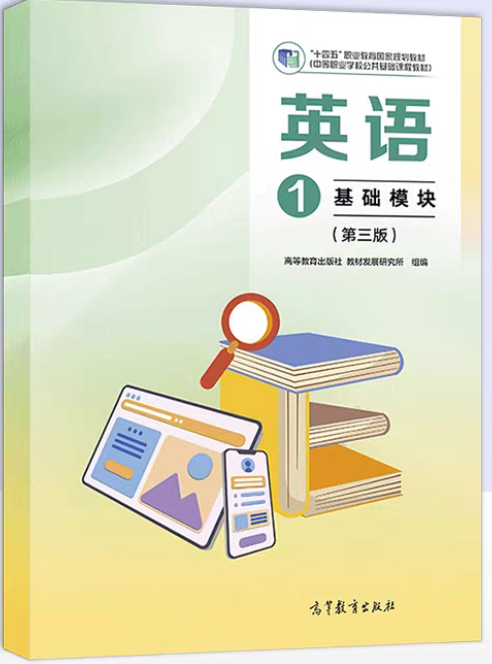
Unit 6 Food and Drinks(A卷·基础巩固)《英语 基础模块1》(高教版第三版)单元过关卷(原卷版+解析版)
2026-07-07
|
2份
|
21页
|
35人阅读
|
0人下载
摘要:
**基本信息**
紧扣《英语 基础模块1》Unit 6核心考点,A卷通过餐厅点餐、健康饮食等真实情境设计,融合语音、语法、阅读等基础训练,适配单元复习,提升语言应用能力与逻辑思维。
**题型特征**
|题型|题量/分值|知识覆盖|命题特色|
|----|-----------|----------|----------|
|语音辨析|5/5|字母发音规则|基础语音辨识,巩固发音基础|
|单项选择|15/15|there be、冠词、时态等|梯度设计,从语法到语境应用|
|完形填空|10/10|健康饮食活动描述|情境化语篇,培养逻辑思维|
|补全对话|5/10|餐厅交际用语|模拟真实场景,提升语言能力|
|阅读理解|15/30|餐厅选择、饺子文化等|融合文化传承与生活实践,强化信息获取|
|句子改错|10/10|语法词汇纠错|针对性巩固易错点|
|短语填空|10/20|主题固定搭配|结合单元主题,提升词汇运用|
内容正文:
编写说明:本套试卷紧扣《英语 基础模块1》(高教版第三版)教材,以教材单元为基准精准覆盖核心考点。
每个单元设置AB卷,A卷为基础巩固卷,侧重基础考点训练,帮助学生扎实掌握知识要点;B卷为能力提升卷,注重知识整合与全面检测,引导学生构建知识网络。全书设计4份综合测试卷,模拟实战情境,聚焦解题能力突破,全面提升应试能力与知识应用水平。
《英语 基础模块1》(高教版第三版)《单元过关卷》
Unit 6 Food and Drinks
A卷·基础巩固
考试时间:120分钟 满分:100分
班级_____姓名_____学号_____成绩_____
Ⅰ.语音辨析。 (共5小题;每小题1分,满分5分)
读下列单词,从每题所给的 A、B、C 和 D 四个选项中,选出画线部分发音不同的一项。
1.A.bread B.steak C.great D.break
2.A.food B.spoon C.cook D.room
3.A.school B.chicken C.cheese D.choose
4.A.hot B.box C.shop D.home
5.A.order B.worker C.fork D.morning
【答案】1.A 2.C 3.A 4.D 5.B
【解析】1.A项划线部分读/e/,B、C、D项划线部分均读/eɪ/,故选A。
【解析】2.A、B、D项划线部分读/uː/,C项划线部分读/ʊ/,故选C。
【解析】3.A项划线部分读/k/,B、C、D项划线部分均读/tʃ/,故选A。
【解析】4.A、B、C项划线部分读/ɒ/,D项划线部分读/əʊ/,故选D。
【解析】5.A、C、D项划线部分读/ɔː/,B项划线部分读/ɜː/,故选B。
Ⅱ. 单项选择(共15小题;每小题1分,满分15分)
阅读下列句子,从每题所给的 A、B、C 和 D 四个选项中,选出最佳选项。
6.There ______ some bread and two apples on the table.
A.are B.is
C.be D.were
【答案】B
【解析】there be句型遵循就近原则,离be动词最近的bread为不可数名词,描述现在情况用is。
7.Would you like ______ orange juice after dinner?
A.a B.an
C.many D.some
【答案】D
【解析】orange juice为不可数名词,表示希望得到肯定回答的委婉请求时常用some。
8.I need ______ egg and a glass of milk for breakfast.
A.an B.a
C.some D.much
【答案】A
【解析】egg以元音音素开头,表示“一个鸡蛋”应用不定冠词an。
9.How ______ salt do you want to add to the soup?
A.many B.often
C.much D.long
【答案】C
【解析】salt为不可数名词,询问数量应用how much。
10.The noodles taste too ______. Please give me some water.
A.sweet B.spicy
C.quiet D.cheap
【答案】B
【解析】后句说“请给我一些水”,说明面条味道太辣,spicy符合语境。
11.My mother ______ tomato soup for us every Sunday.
A.makes B.make
C.made D.making
【答案】A
【解析】主语My mother为第三人称单数,every Sunday提示一般现在时,谓语用makes。
12.They ______ a table near the window yesterday evening.
A.book B.books
C.booked D.booking
【答案】C
【解析】yesterday evening提示一般过去时,动词book应用过去式booked。
13.The waiter ______ our order carefully now.
A.takes B.took
C.taken D.is taking
【答案】D
【解析】now提示动作正在进行,主语为单数,应用is taking。
14.This is the restaurant ______ gives us good service.
A.where B.which
C.when D.what
【答案】B
【解析】先行词restaurant指物,关系词在从句中作主语,应用which。
15.I don't know ______ the prices are reasonable.
A.whether B.what
C.who D.where
【答案】A
【解析】句意为“我不知道价格是否合理”,whether引导宾语从句,符合语义。
16.We will choose this place ______ the environment is cozy.
A.so B.but
C.because D.or
【答案】C
【解析】前后为因果关系,选择该地点的原因是环境舒适,because符合语境。
17.The girl ______ is taking our order is very polite.
A.who B.which
C.where D.when
【答案】A
【解析】先行词girl指人,关系词在从句中作主语,应用who。
18.Please tell me ______ you would like to drink.
A.where B.when
C.how D.what
【答案】D
【解析】drink后缺少宾语,表示“喝什么”,应用what引导宾语从句。
19.Apart ______ the price, we should also think about the service.
A.of B.from
C.with D.at
【答案】B
【解析】apart from为固定短语,意为“除了……之外”。
20.It is unwise ______ too much money on one meal.
A.spend B.spending
C.to spend D.spent
【答案】C
【解析】It is + 形容词 + to do sth.为固定句型,表示“做某事是……的”。
Ⅲ. 完形填空(共10小题;每小题1分,满分10分)
阅读下面短文,从短文后各题所给的 A、B、C 和 D 四个选项中,选出可以填入空白处的最佳选项。
Last Friday, our class had a healthy lunch activity in the cooking room. Our teacher put some tomatoes, potatoes, mushrooms, eggs and bread on the long table. Before we started, she reminded us that a good meal should be clean, balanced and not too expensive. We first washed ________ vegetables carefully, and then each group prepared food ________ its own lunch box. When the vegetables were clean, we cut ________ into small pieces and kept the knives in safe places.
My group wanted to make tomato soup and a vegetable salad. At first, Li Ming tried to add too much salt because he thought salty food tasted better. I stopped him and asked him to taste the soup first. He smiled and said the soup already had a fresh ________. Then our monitor ________ roast chicken for the main course, but we decided to choose eggs and mushrooms because their price was more ________. We also wrote down why we made that choice: good food quality, simple cooking style and less waste.
When lunchtime came, every group shared its meal. Although our dishes were not as beautiful as those in a restaurant, they made us proud. The teacher asked us to explain the factors ________ helped us choose the food. We talked about health, taste, price and service. In the end, I understood that a pleasant dining ________ does not always come from expensive food. If we pay attention to food safety, consider others' needs and avoid waste, we can enjoy each meal ________. That small activity taught us ________ to order and choose food wisely in daily life.
21.A.many B.some C.an D.much
22.A.at B.by C.with D.for
23.A.it B.him C.them D.her
24.A.price B.order C.flavor D.service
25.A.changed B.recommended C.washed D.collected
26.A.reasonable B.crowded C.noisy D.bitter
27.A.where B.when C.who D.that
28.A.habit B.mistake C.experience D.question
29.A.wisely B.loudly C.sadly D.slowly
30.A.where B.when C.who D.how
【答案】21.B 22.D 23.C 24.C 25.B 26.A 27.D 28.C 29.A 30.D
【导语】本文是一篇记叙文,讲述学生在一次健康午餐活动中学习选择食材、控制价格、关注食品安全和减少浪费的过程。
【详解】21.vegetables为复数名词,且句意表示“一些蔬菜”,some符合语境。
【详解】22.prepare food for...表示“为……准备食物”,介词for符合搭配。
【详解】23.前文指tomatoes, potatoes and mushrooms,复数名词作宾语应用them指代。
【详解】24.根据taste the soup可知,此处说汤已有新鲜味道,flavor符合语境。
【详解】25.monitor提出主菜建议,recommend意为“推荐”,符合后文决定是否采纳的情境。
【详解】26.根据because后的价格考虑可知,鸡蛋和蘑菇价格更合理,reasonable符合语境。
【详解】27.先行词factors指物,关系词在从句中作主语,that符合用法。
【详解】28.dining experience表示“用餐体验”,与后文expensive food形成语义照应。
【详解】29.句意表示“明智地享受每顿饭”,wisely符合全文主旨。
【详解】30.teach sb. how to do sth.表示“教某人如何做某事”,how符合结构和语义。
Ⅳ.补全对话(共5小题;每小题2分,满分10分)
根据对话内容,从对话后所给的七个选项中,选出能填入空白处的最佳选项。(选项中有两项是多余的)
A:Good evening. Welcome to Green House Restaurant. ____31____
B:Yes, please. We'd like a table for three.
A:This way, please. Here is the menu.
B:Thank you. The tomato soup looks nice. ____32____
A:Yes, it is. Many customers like it.
B:Great. My son doesn't eat spicy food. ____33____
A:I recommend roast chicken and vegetable salad. They are mild.
B:OK. We'll have those dishes. ____34____
A:Would you like some orange juice or tea?
B:Three glasses of orange juice, please.
A:No problem. ____35____
B:No, thanks. That's all.
A.Can I help you?
B.Is it your specialty?
C.What would you like to drink?
D.Do you need any dessert?
E.How much is the table?
F.What do you recommend?
G.It is too far from here.
【答案】31.A 32.B 33.F 34.C 35.D
【导语】本文是一段餐馆点餐对话,顾客询问特色菜、请服务员推荐菜品并选择饮品。
【详解】31.下文回答“Yes, please. We'd like a table for three.”,说明服务员先询问是否需要帮助,A项符合。
【详解】32.下文回答“Yes, it is.”并说很多顾客喜欢,说明上文为一般疑问句,询问番茄汤是否为特色,B项符合。
【详解】33.下文服务员推荐roast chicken and vegetable salad,说明顾客询问“你推荐什么”,F项符合。
【详解】34.下文询问orange juice or tea,说明此处应问喝什么,C项符合。
【详解】35.下文“No, thanks. That's all.”说明服务员询问是否还需要甜点,D项符合。
Ⅴ.阅读理解(共15小题;每小题2分,满分30分)
阅读下面短文A,判断36~40小题是否正确。若正确,把选项T涂黑;若错误,把选项F涂黑。阅读短文B和C,从每小题所给的A、B、C和D四个选项中选出最佳选项。
A
People choose restaurants for many different reasons. Some care most about the star rating on an app, while others look first at the distance from home or school. For students, a restaurant near the bus stop may be better on weekdays because they do not have much time after class. During weekends, they may go farther to try a different cooking style with family or friends.
Food quality is always an important factor. A restaurant may have beautiful photos online, but customers still need to read comments about freshness, food safety and taste. A good restaurant offers various dishes and clearly tells customers what is in the food. This is helpful for people who cannot eat too much salt, sugar or spicy food. It is also wise to check whether the restaurant uses clean tables, fresh vegetables and safe cooking methods.
Price is another factor. More money does not always mean a better meal. A small restaurant may provide simple dishes at reasonable prices and give customers a comfortable feeling. Service quality also changes the dining experience. Polite waiters, quick answers and careful order taking can make people relaxed. Bad service may ruin a meal even when the food tastes good.
The dining environment should not be ignored. Some places are cozy and quiet, so they are suitable for talking. Some are crowded and noisy, which may be fine for young people but not for an important family dinner. In short, a smart choice comes from comparing distance, food, price, service and environment together.
36.Students may prefer nearby restaurants on weekdays because time is limited after class.
37.Beautiful photos online always mean the food quality is good.
38.A restaurant with polite waiters and quick answers can improve the dining experience.
39.The passage says young people should never eat in crowded restaurants.
40.The writer advises people to compare several factors before choosing a restaurant.
【答案】36.T 37.F 38.T 39.F 40.T
【导语】本文是一篇说明文,围绕选择餐馆这一话题,介绍距离、食物质量、价格、服务和环境等因素对用餐选择的影响。
【详解】36.细节理解题。根据第一段“For students, a restaurant near the bus stop may be better on weekdays because they do not have much time after class.”可知,学生工作日可能因课后时间有限而选择近处餐馆。
【详解】37.细节理解题。根据第二段“A restaurant may have beautiful photos online, but customers still need to read comments about freshness, food safety and taste.”可知,漂亮照片并不一定代表食物质量好。
【详解】38.细节理解题。根据第三段“Polite waiters, quick answers and careful order taking can make people relaxed.”可知,礼貌服务和快速回应能改善用餐体验。
【详解】39.细节理解题。根据第四段“Some are crowded and noisy, which may be fine for young people...”可知,文章没有说年轻人绝不能去拥挤餐馆。
【详解】40.主旨理解题。根据最后一句“a smart choice comes from comparing distance, food, price, service and environment together”可知,作者建议综合比较多个因素。
B
Last Sunday, our class visited a community cooking center near our school. The center holds a food practice activity every month. Students can learn how to choose fresh food, place an order, cook simple dishes and share meals politely. Our teacher divided us into four groups and gave each group sixty yuan. We had to buy food for four people, so price and food quality both mattered.
My group first went to a vegetable stand. The tomatoes were bright red, but some mushrooms did not look fresh. We bought tomatoes, potatoes and eggs. Then we stopped at a small shop for bread and orange juice. Li Hua wanted to buy a large chocolate cake because it looked delicious. However, we only had fifteen yuan left, and our teacher reminded us that dessert was not the main part of lunch. After a short discussion, we chose two apples instead. They were cheaper and healthier.
Back at the center, we made tomato and egg soup, fried potatoes and fruit salad. A volunteer showed us how to use less oil and salt. He also told us to keep raw food away from cooked food. When we finished, every group introduced its meal. Our dishes were simple, but they tasted fresh and warm. The teacher praised us because we explained our reasons clearly: the food was safe, the price was reasonable, and there was little waste.
That activity helped me understand that ordering food is more than saying what we like. We need to think about health, money, service and other people's needs. A small meal can teach real life skills.
41.What can we learn about the community cooking activity?
A.It was held every week for parents.
B.It taught students to choose and cook food.
C.It asked students to sell dishes after class.
D.It allowed each student to spend sixty yuan.
42.Why did the group choose apples instead of a chocolate cake?
A.The apples looked more expensive.
B.The cake was not sold in the shop.
C.They had limited money and wanted healthier food.
D.Their teacher asked them to buy only fruit.
43.Which information about the volunteer is mentioned?
A.He ordered food from a restaurant.
B.He taught students to use less oil and salt.
C.He gave every group more money.
D.He cooked all dishes by himself.
44.Which of the following statements is TRUE?
A.The mushrooms at the stand all looked fresh.
B.The group spent most money on dessert.
C.The teacher praised the group for clear reasons.
D.Li Hua refused to discuss with classmates.
45.What does the writer want to tell us?
A.Students should buy the most beautiful food.
B.Ordering food needs health and real-life thinking.
C.Dessert is always the most important part of lunch.
D.Community centers should stop cooking activities.
【答案】41.B 42.C 43.B 44.C 45.B
【导语】本文是一篇记叙文,讲述学生参加社区烹饪活动,在有限预算下选择食材、制作午餐并学习健康点餐观念的经历。
【详解】41.细节理解题。根据第一段“Students can learn how to choose fresh food, place an order, cook simple dishes and share meals politely.”可知,该活动教学生选择和烹饪食物。
【详解】42.细节理解题。根据第二段“we only had fifteen yuan left”和“we chose two apples instead. They were cheaper and healthier.”可知,选择苹果是因为预算有限且苹果更健康。
【详解】43.细节理解题。根据第三段“A volunteer showed us how to use less oil and salt.”可知,志愿者教学生少用油盐。
【详解】44.细节理解题。根据第三段“The teacher praised us because we explained our reasons clearly”可知,老师表扬他们理由清楚。
【详解】45.主旨大意题。根据最后一段“ordering food is more than saying what we like. We need to think about health, money, service and other people's needs.”可知,作者强调点餐需要健康意识和生活思考。
C
Dumplings are loved in many parts of China, and they are also becoming popular in school food culture activities. A dumpling may look small, but it carries rich traditions. In many families, people make dumplings together before an important meal. Grandparents prepare the fillings, parents roll the dough, and children learn to fold the edges. While their hands are busy, family members talk, laugh and share stories.
There are various dumpling fillings. In northern China, people often use vegetables, meat or seafood. Some families prefer salty fillings, while others add a little sweet taste in special local snacks. Cooking methods are also different. Dumplings can be boiled, steamed or fried. Each method changes the flavor. Boiled dumplings taste soft and warm; steamed ones keep more of the original taste; fried dumplings become crisp outside and tender inside.
Today, technology is helping this traditional food reach more people. In some smart canteens, domestic ordering systems allow students to choose fillings on a screen. The system can also show the price, waiting time and basic nutrition information. Workers then prepare orders more quickly and reduce food waste. Some restaurants even use delivery robots to send dishes to tables, which makes service more efficient.
However, the heart of dumplings has not changed. Whether they are made by hand at home or ordered through a smart system, they remind people of sharing and care. A good food culture should connect tradition with modern life. When students learn about dumplings, they learn not only a dish, but also respect for family, work and food.
46.What can we learn about dumplings from Paragraph 1?
A.They are only made by children.
B.They carry family traditions and stories.
C.They must be eaten without fillings.
D.They are no longer popular in schools.
47.What does the underlined word “tender” in Paragraph 2 mean?
A.Soft.
B.Cold.
C.Dry.
D.Expensive.
48.Which process can domestic ordering systems help with in smart canteens?
A.Choosing fillings and showing waiting time.
B.Teaching grandparents to roll dough at home.
C.Stopping workers from preparing dishes.
D.Changing every dumpling into a dessert.
49.Which information about cooking methods is mentioned?
A.Fried dumplings keep more original taste than steamed ones.
B.Boiled dumplings become crisp outside and tender inside.
C.Dumplings can be boiled, steamed or fried.
D.All dumplings should be cooked in the same way.
50.Which is the best title for the text?
A.A Small Food with Old and New Meanings
B.The Fastest Robot in a School Canteen
C.How to Open a Dumpling Restaurant
D.The Cheapest Food for Every Family
【答案】46.B 47.A 48.A 49.C 50.A
【导语】本文是一篇说明文,介绍饺子的家庭传统、不同馅料和烹饪方式,并说明现代点餐系统如何帮助传统食物融入校园生活。
【详解】46.细节理解题。根据第一段“it carries rich traditions”和“family members talk, laugh and share stories”可知,饺子承载家庭传统和故事。
【详解】47.词义猜测题。根据“crisp outside and tender inside”可知,外脆内软形成对比,tender在此处意为“柔软的”。
【详解】48.细节理解题。根据第三段“domestic ordering systems allow students to choose fillings on a screen. The system can also show the price, waiting time...”可知,系统可帮助选择馅料并显示等待时间。
【详解】49.细节理解题。根据第二段“Dumplings can be boiled, steamed or fried.”可知,饺子可以煮、蒸或煎。
【详解】50.最佳标题题。全文既讲饺子的传统意义,也讲现代技术下的新形式,A项概括最全面。
VI.句子改错 (共10小题;每小题1分,满分10分)
每个句子只有一处错误,每处错误仅涉及一个单词的增加、删除或修改。不允许改变原句的意思。
51.There are some bread on the plate. (单句改错)
【答案】are→is
【详解】bread为不可数名词,there be句型中be动词应用is。
52.Would you like a orange after lunch? (单句改错)
【答案】a→an
【详解】orange以元音音素开头,表示“一个橙子”应用an。
53.How many milk do you need for the soup? (单句改错)
【答案】many→much
【详解】milk为不可数名词,询问数量应用how much。
54.My sister have fruit salad every morning. (单句改错)
【答案】have→has
【详解】主语My sister为第三人称单数,一般现在时谓语动词应用has。
55.The restaurant is famous as its roast chicken. (单句改错)
【答案】as→for
【详解】be famous for表示“因……而出名”,介词应用for。
56.He spent too many money on the dinner. (单句改错)
【答案】many→much
【详解】money为不可数名词,修饰不可数名词应用much。
57.The waiter asked we to wait for five minutes. (单句改错)
【答案】we→us
【详解】asked后接人称代词宾格作宾语,应将we改为us。
58.This soup tastes well and smells nice. (单句改错)
【答案】well→good
【详解】taste为感官系动词,后接形容词作表语,应用good。
59.I don't know where is the nearest restaurant. (单句改错)
【答案】is→the nearest restaurant后
【详解】宾语从句应用陈述语序,应为where the nearest restaurant is。
60.Although the food was simple, but we enjoyed it. (单句改错)
【答案】去掉but
【详解】although引导让步状语从句时,不能与but连用。
Ⅶ. 短语填空(共10小题;每小题2分,满分20分)
根据句子内容选择正确短语并用其适当形式填空。
apart from;be a fan of;take one's order;pay attention to;reasonable price;have a great dining experience;tend to;be famous for;place an order;food quality
61.The waiter came to our table and ______ politely.
62.______ the star rating, we should also check the comments.
63.My brother ______ Sichuan food because he loves spicy dishes.
64.This small restaurant offers fresh noodles at ______.
65.Good service can help customers ______.
66.Please ______ food safety when you cook at home.
67.Many people ______ choose nearby restaurants on weekdays.
68.Inner Mongolia ______ its milk tea and local food culture.
69.We need to ______ before six o'clock if we want dinner on time.
70.Customers care about taste, price and ______.
【答案】61.took our order 62.Apart from 63.is a fan of 64.reasonable prices 65.have a great dining experience 66.pay attention to 67.tend to 68.is famous for 69.place an order 70.food quality
【解析】61.take one's order表示“点菜;记录点单”,根据came可知用一般过去时took,one's随语境变为our。
【解析】62.apart from表示“除了……之外”,句首首字母大写。
【解析】63.be a fan of表示“是……的爱好者”,主语My brother为第三人称单数,用is。
【解析】64.reasonable price表示“合理价格”,此处表示泛指价格,price用复数形式prices。
【解析】65.have a great dining experience表示“拥有很好的用餐体验”,help sb. do sth.后接动词原形。
【解析】66.pay attention to表示“注意”,情态意义的Please后接动词原形。
【解析】67.tend to表示“往往会”,主语Many people为复数,一般现在时用原形。
【解析】68.be famous for表示“因……而出名”,主语Inner Mongolia为单数,用is。
【解析】69.place an order表示“下订单;点餐”,need to后接动词原形。
【解析】70.food quality表示“食物质量”,与taste、price并列作care about的宾语。
原创精品资源学科网独家享有版权,侵权必究!
学科网(北京)股份有限公司
$
编写说明:本套试卷紧扣《英语 基础模块1》(高教版第三版)教材,以教材单元为基准精准覆盖核心考点。
每个单元设置AB卷,A卷为基础巩固卷,侧重基础考点训练,帮助学生扎实掌握知识要点;B卷为能力提升卷,注重知识整合与全面检测,引导学生构建知识网络。全书设计4份综合测试卷,模拟实战情境,聚焦解题能力突破,全面提升应试能力与知识应用水平。
《英语 基础模块1》(高教版第三版)《单元过关卷》
Unit 6 Food and Drinks
A卷·基础巩固
考试时间:120分钟 满分:100分
班级_____姓名_____学号_____成绩_____
Ⅰ.语音辨析。 (共5小题;每小题1分,满分5分)
读下列单词,从每题所给的 A、B、C 和 D 四个选项中,选出画线部分发音不同的一项。
1.A.bread B.steak C.great D.break
2.A.food B.spoon C.cook D.room
3.A.school B.chicken C.cheese D.choose
4.A.hot B.box C.shop D.home
5.A.order B.worker C.fork D.morning
Ⅱ. 单项选择(共15小题;每小题1分,满分15分)
阅读下列句子,从每题所给的 A、B、C 和 D 四个选项中,选出最佳选项。
6.There ______ some bread and two apples on the table.
A.are B.is
C.be D.were
7.Would you like ______ orange juice after dinner?
A.a B.an
C.many D.some
8.I need ______ egg and a glass of milk for breakfast.
A.an B.a
C.some D.much
9.How ______ salt do you want to add to the soup?
A.many B.often
C.much D.long
10.The noodles taste too ______. Please give me some water.
A.sweet B.spicy
C.quiet D.cheap
11.My mother ______ tomato soup for us every Sunday.
A.makes B.make
C.made D.making
12.They ______ a table near the window yesterday evening.
A.book B.books
C.booked D.booking
13.The waiter ______ our order carefully now.
A.takes B.took
C.taken D.is taking
14.This is the restaurant ______ gives us good service.
A.where B.which
C.when D.what
15.I don't know ______ the prices are reasonable.
A.whether B.what
C.who D.where
16.We will choose this place ______ the environment is cozy.
A.so B.but
C.because D.or
17.The girl ______ is taking our order is very polite.
A.who B.which
C.where D.when
18.Please tell me ______ you would like to drink.
A.where B.when
C.how D.what
19.Apart ______ the price, we should also think about the service.
A.of B.from
C.with D.at
20.It is unwise ______ too much money on one meal.
A.spend B.spending
C.to spend D.spent
Ⅲ. 完形填空(共10小题;每小题1分,满分10分)
阅读下面短文,从短文后各题所给的 A、B、C 和 D 四个选项中,选出可以填入空白处的最佳选项。
Last Friday, our class had a healthy lunch activity in the cooking room. Our teacher put some tomatoes, potatoes, mushrooms, eggs and bread on the long table. Before we started, she reminded us that a good meal should be clean, balanced and not too expensive. We first washed ________ vegetables carefully, and then each group prepared food ________ its own lunch box. When the vegetables were clean, we cut ________ into small pieces and kept the knives in safe places.
My group wanted to make tomato soup and a vegetable salad. At first, Li Ming tried to add too much salt because he thought salty food tasted better. I stopped him and asked him to taste the soup first. He smiled and said the soup already had a fresh ________. Then our monitor ________ roast chicken for the main course, but we decided to choose eggs and mushrooms because their price was more ________. We also wrote down why we made that choice: good food quality, simple cooking style and less waste.
When lunchtime came, every group shared its meal. Although our dishes were not as beautiful as those in a restaurant, they made us proud. The teacher asked us to explain the factors ________ helped us choose the food. We talked about health, taste, price and service. In the end, I understood that a pleasant dining ________ does not always come from expensive food. If we pay attention to food safety, consider others' needs and avoid waste, we can enjoy each meal ________. That small activity taught us ________ to order and choose food wisely in daily life.
21.A.many B.some C.an D.much
22.A.at B.by C.with D.for
23.A.it B.him C.them D.her
24.A.price B.order C.flavor D.service
25.A.changed B.recommended C.washed D.collected
26.A.reasonable B.crowded C.noisy D.bitter
27.A.where B.when C.who D.that
28.A.habit B.mistake C.experience D.question
29.A.wisely B.loudly C.sadly D.slowly
30.A.where B.when C.who D.how
Ⅳ.补全对话(共5小题;每小题2分,满分10分)
根据对话内容,从对话后所给的七个选项中,选出能填入空白处的最佳选项。(选项中有两项是多余的)
A:Good evening. Welcome to Green House Restaurant. ____31____
B:Yes, please. We'd like a table for three.
A:This way, please. Here is the menu.
B:Thank you. The tomato soup looks nice. ____32____
A:Yes, it is. Many customers like it.
B:Great. My son doesn't eat spicy food. ____33____
A:I recommend roast chicken and vegetable salad. They are mild.
B:OK. We'll have those dishes. ____34____
A:Would you like some orange juice or tea?
B:Three glasses of orange juice, please.
A:No problem. ____35____
B:No, thanks. That's all.
A.Can I help you?
B.Is it your specialty?
C.What would you like to drink?
D.Do you need any dessert?
E.How much is the table?
F.What do you recommend?
G.It is too far from here.
Ⅴ.阅读理解(共15小题;每小题2分,满分30分)
阅读下面短文A,判断36~40小题是否正确。若正确,把选项T涂黑;若错误,把选项F涂黑。阅读短文B和C,从每小题所给的A、B、C和D四个选项中选出最佳选项。
A
People choose restaurants for many different reasons. Some care most about the star rating on an app, while others look first at the distance from home or school. For students, a restaurant near the bus stop may be better on weekdays because they do not have much time after class. During weekends, they may go farther to try a different cooking style with family or friends.
Food quality is always an important factor. A restaurant may have beautiful photos online, but customers still need to read comments about freshness, food safety and taste. A good restaurant offers various dishes and clearly tells customers what is in the food. This is helpful for people who cannot eat too much salt, sugar or spicy food. It is also wise to check whether the restaurant uses clean tables, fresh vegetables and safe cooking methods.
Price is another factor. More money does not always mean a better meal. A small restaurant may provide simple dishes at reasonable prices and give customers a comfortable feeling. Service quality also changes the dining experience. Polite waiters, quick answers and careful order taking can make people relaxed. Bad service may ruin a meal even when the food tastes good.
The dining environment should not be ignored. Some places are cozy and quiet, so they are suitable for talking. Some are crowded and noisy, which may be fine for young people but not for an important family dinner. In short, a smart choice comes from comparing distance, food, price, service and environment together.
36.Students may prefer nearby restaurants on weekdays because time is limited after class.
37.Beautiful photos online always mean the food quality is good.
38.A restaurant with polite waiters and quick answers can improve the dining experience.
39.The passage says young people should never eat in crowded restaurants.
40.The writer advises people to compare several factors before choosing a restaurant.
B
Last Sunday, our class visited a community cooking center near our school. The center holds a food practice activity every month. Students can learn how to choose fresh food, place an order, cook simple dishes and share meals politely. Our teacher divided us into four groups and gave each group sixty yuan. We had to buy food for four people, so price and food quality both mattered.
My group first went to a vegetable stand. The tomatoes were bright red, but some mushrooms did not look fresh. We bought tomatoes, potatoes and eggs. Then we stopped at a small shop for bread and orange juice. Li Hua wanted to buy a large chocolate cake because it looked delicious. However, we only had fifteen yuan left, and our teacher reminded us that dessert was not the main part of lunch. After a short discussion, we chose two apples instead. They were cheaper and healthier.
Back at the center, we made tomato and egg soup, fried potatoes and fruit salad. A volunteer showed us how to use less oil and salt. He also told us to keep raw food away from cooked food. When we finished, every group introduced its meal. Our dishes were simple, but they tasted fresh and warm. The teacher praised us because we explained our reasons clearly: the food was safe, the price was reasonable, and there was little waste.
That activity helped me understand that ordering food is more than saying what we like. We need to think about health, money, service and other people's needs. A small meal can teach real life skills.
41.What can we learn about the community cooking activity?
A.It was held every week for parents.
B.It taught students to choose and cook food.
C.It asked students to sell dishes after class.
D.It allowed each student to spend sixty yuan.
42.Why did the group choose apples instead of a chocolate cake?
A.The apples looked more expensive.
B.The cake was not sold in the shop.
C.They had limited money and wanted healthier food.
D.Their teacher asked them to buy only fruit.
43.Which information about the volunteer is mentioned?
A.He ordered food from a restaurant.
B.He taught students to use less oil and salt.
C.He gave every group more money.
D.He cooked all dishes by himself.
44.Which of the following statements is TRUE?
A.The mushrooms at the stand all looked fresh.
B.The group spent most money on dessert.
C.The teacher praised the group for clear reasons.
D.Li Hua refused to discuss with classmates.
45.What does the writer want to tell us?
A.Students should buy the most beautiful food.
B.Ordering food needs health and real-life thinking.
C.Dessert is always the most important part of lunch.
D.Community centers should stop cooking activities.
C
Dumplings are loved in many parts of China, and they are also becoming popular in school food culture activities. A dumpling may look small, but it carries rich traditions. In many families, people make dumplings together before an important meal. Grandparents prepare the fillings, parents roll the dough, and children learn to fold the edges. While their hands are busy, family members talk, laugh and share stories.
There are various dumpling fillings. In northern China, people often use vegetables, meat or seafood. Some families prefer salty fillings, while others add a little sweet taste in special local snacks. Cooking methods are also different. Dumplings can be boiled, steamed or fried. Each method changes the flavor. Boiled dumplings taste soft and warm; steamed ones keep more of the original taste; fried dumplings become crisp outside and tender inside.
Today, technology is helping this traditional food reach more people. In some smart canteens, domestic ordering systems allow students to choose fillings on a screen. The system can also show the price, waiting time and basic nutrition information. Workers then prepare orders more quickly and reduce food waste. Some restaurants even use delivery robots to send dishes to tables, which makes service more efficient.
However, the heart of dumplings has not changed. Whether they are made by hand at home or ordered through a smart system, they remind people of sharing and care. A good food culture should connect tradition with modern life. When students learn about dumplings, they learn not only a dish, but also respect for family, work and food.
46.What can we learn about dumplings from Paragraph 1?
A.They are only made by children.
B.They carry family traditions and stories.
C.They must be eaten without fillings.
D.They are no longer popular in schools.
47.What does the underlined word “tender” in Paragraph 2 mean?
A.Soft.
B.Cold.
C.Dry.
D.Expensive.
48.Which process can domestic ordering systems help with in smart canteens?
A.Choosing fillings and showing waiting time.
B.Teaching grandparents to roll dough at home.
C.Stopping workers from preparing dishes.
D.Changing every dumpling into a dessert.
49.Which information about cooking methods is mentioned?
A.Fried dumplings keep more original taste than steamed ones.
B.Boiled dumplings become crisp outside and tender inside.
C.Dumplings can be boiled, steamed or fried.
D.All dumplings should be cooked in the same way.
50.Which is the best title for the text?
A.A Small Food with Old and New Meanings
B.The Fastest Robot in a School Canteen
C.How to Open a Dumpling Restaurant
D.The Cheapest Food for Every Family
VI.句子改错 (共10小题;每小题1分,满分10分)
每个句子只有一处错误,每处错误仅涉及一个单词的增加、删除或修改。不允许改变原句的意思。
51.There are some bread on the plate. (单句改错)
52.Would you like a orange after lunch? (单句改错)
53.How many milk do you need for the soup? (单句改错)
54.My sister have fruit salad every morning. (单句改错)
55.The restaurant is famous as its roast chicken. (单句改错)
56.He spent too many money on the dinner. (单句改错)
57.The waiter asked we to wait for five minutes. (单句改错)
58.This soup tastes well and smells nice. (单句改错)
59.I don't know where is the nearest restaurant. (单句改错)
60.Although the food was simple, but we enjoyed it. (单句改错)
Ⅶ. 短语填空(共10小题;每小题2分,满分20分)
根据句子内容选择正确短语并用其适当形式填空。
apart from;be a fan of;take one's order;pay attention to;reasonable price;have a great dining experience;tend to;be famous for;place an order;food quality
61.The waiter came to our table and ______ politely.
62.______ the star rating, we should also check the comments.
63.My brother ______ Sichuan food because he loves spicy dishes.
64.This small restaurant offers fresh noodles at ______.
65.Good service can help customers ______.
66.Please ______ food safety when you cook at home.
67.Many people ______ choose nearby restaurants on weekdays.
68.Inner Mongolia ______ its milk tea and local food culture.
69.We need to ______ before six o'clock if we want dinner on time.
70.Customers care about taste, price and ______.
原创精品资源学科网独家享有版权,侵权必究!
学科网(北京)股份有限公司
$
资源预览图

1

2

3
由于学科网是一个信息分享及获取的平台,不确保部分用户上传资料的 来源及知识产权归属。如您发现相关资料侵犯您的合法权益,请联系学科网,我们核实后将及时进行处理。