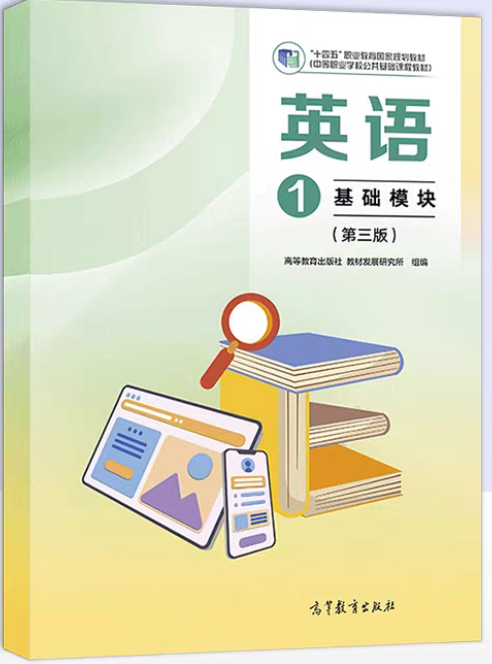
Unit 1 Personal and Family Life(A卷·基础巩固)《英语 基础模块1》(高教版第三版)单元过关卷(原卷版+解析版)
2026-07-07
|
2份
|
27页
|
89人阅读
|
1人下载
摘要:
**基本信息**
紧扣《英语 基础模块1》Unit 1核心考点,A卷聚焦基础巩固,通过家庭生活情境系统训练语音、语法及语用能力,适配单元复习,提升语言能力与文化意识。
**题型特征**
|题型|题量/分值|知识覆盖|命题特色|
|----|-----------|----------|----------|
|语音辨析|5/5|元音、辅音发音规则|基础辨音,夯实语音基础|
|单项选择|15/15|be动词、时态、代词等|聚焦语法基础,贴近生活语境|
|完形填空|10/10|冠词、动词、连词等|以家庭故事为情境,考查语篇理解|
|补全对话|5/10|日常交际用语|模拟真实交流,提升语用能力|
|阅读理解|15/30|家庭生活、文化差异|融入文化传承素材,培养思维品质|
|句子改错|10/10|语法纠错(如主谓一致)|针对性巩固易错点|
|短语填空|10/20|固定搭配(如take care of)|结合单元词汇,强化应用能力|
内容正文:
编写说明:本套试卷紧扣《英语 基础模块1》(高教版第三版)教材,以教材单元为基准精准覆盖核心考点。
每个单元设置AB卷,A卷为基础巩固卷,侧重基础考点训练,帮助学生扎实掌握知识要点;B卷为能力提升卷,注重知识整合与全面检测,引导学生构建知识网络。全书设计4份综合测试卷,模拟实战情境,聚焦解题能力突破,全面提升应试能力与知识应用水平。
《英语 基础模块1》(高教版第三版)《单元过关卷》
Unit 1 Personal and Family Life
A卷·基础巩固
考试时间:120分钟 满分:100分
班级_____姓名_____学号_____成绩_____
Ⅰ.语音辨析。 (共5小题;每小题1分,满分5分)
读下列单词,从每题所给的 A、B、C 和 D 四个选项中,选出画线部分发音不同的一项。
1.A.name B.take C.family D.make
2.A.teacher B.please C.bread D.mean
3.A.photo B.home C.go D.job
4.A.cook B.good C.school D.look
5.A.three B.father C.mother D.brother
Ⅱ. 单项选择(共15小题;每小题1分,满分15分)
阅读下列句子,从每题所给的 A、B、C 和 D 四个选项中,选出最佳选项。
6.My sister ______ a vocational school student and she likes her new class.
A. am B. is
C. are D. be
7.Tom and his twin brother ______ with their parents near the school.
A. lives B. living
C. live D. lived
8.Every morning, my father ______ jogging before he goes to work.
A. goes B. go
C. going D. went
9.______ your grandparents live nearby?
A. Are B. Is
C. Does D. Do
10.The manager ______ cars, but he manages a sales department.
A. sell B. sells
C. selling D. sold
11.My mother ______ dinner for the family every evening.
A. cook B. cooked
C. cooks D. cooking
12.They ______ their grandmother last weekend and gave her a handmade gift.
A. visited B. visit
C. visits D. visiting
13.There ______ a photo of my family on the wall.
A. are B. be
C. were D. is
14.My parents are strict ______ my brother about his homework.
A. in B. with
C. for D. to
15.The girl ______ from Inner Mongolia and studies in a vocational high school.
A. come B. coming
C. comes D. came
16.I don’t know ______ the new student comes from.
A. when B. why
C. where D. how often
17.The woman ______ is talking with Mr. Li is our English teacher.
A. who B. which
C. where D. when
18.We will cook a big meal ______ the Chongyang Festival comes.
A. because B. unless
C. when D. although
19.This is my ______ room. It is clean and bright.
A. parents B. parents'
C. parent D. parent's
20.______ energetic the firefighter looks in the photo!
A. What B. What an
C. How D. How an
Ⅲ. 完形填空(共10小题;每小题1分,满分10分)
阅读下面短文,从短文后各题所给的 A、B、C 和 D 四个选项中,选出可以填入空白处的最佳选项。
Li Na is a first-year student at a vocational high school. On Monday morning, her teacher asked every student to bring ____21____ old family photo and tell a story about it. Li Na felt a little nervous, because she did not often speak in front of the class. She usually sat quietly near the window and listened to others. This time, however, she wanted to try her best and make her family proud.
After school, she sat with her grandmother and looked ____22____ a black-and-white photo. In the photo, her grandparents were young and worked hard in a small workshop. Her grandmother said, “Your grandfather was a technician. He ____23____ machines every day, and he always came home with dirty hands but a warm smile.” She also said that the family ate dinner together and talked about the day, even when life was not easy. Li Na listened carefully and began to ____24____ more about her family history.
The next day, Li Na stood in front of her classmates. She introduced her family members one by one. She said her father ____25____ as a delivery person and her mother was a nurse. They were busy, but they always ____26____ care of the family. When she showed the old photo, the classroom became quiet. Everyone could see love and hard work in the picture. Li Na felt ____27____ than before.
At the end of her talk, she said, “A family is not only people living together, ____28____ people helping each other.” Her classmates gave her warm hands. She understood ____29____ her teacher wanted them to share family stories. From that day on, she planned to spend more time with her family and learn from ____30____ love.
21.A.a B.an C.the D./
22.A.for B.after C.into D.at
23.A.built B.builds C.building D.to build
24.A.forget B.hide C.know D.miss
25.A.played B.worked C.looked D.studied
26.A.made B.sent C.gave D.took
27.A.confident B.quiet C.strict D.alone
28.A.if B.or C.but D.although
29.A.when B.why C.where D.what
30.A.my B.your C.his D.their
Ⅳ.补全对话(共5小题;每小题2分,满分10分)
根据对话内容,从对话后所给的七个选项中,选出能填入空白处的最佳选项。(选项中有两项是多余的)
A:Good morning! You are new here, aren’t you?
B:Yes. My name is Meng Yu. ____31____
A:Nice to meet you, Meng Yu. I’m Wang Lei. Where are you from?
B:____32____ My hometown is beautiful.
A:Could you tell me something about your family?
B:Sure. ____33____ My parents work in a hospital.
A:What do they do?
B:My father is a doctor, and my mother is a nurse. ____34____
A:That sounds busy but meaningful. Do you live with your grandparents?
B:No, they live nearby. ____35____
A:What a warm family!
A.There are four people in my family.
B.I’m glad to meet you.
C.We visit them every weekend.
D.What is your family name?
E.I’m from Hohhot, Inner Mongolia.
F.Do you have a handmade gift?
G.They take care of patients every day.
Ⅴ.阅读理解(共15小题;每小题2分,满分30分)
阅读下面短文A,判断36~40小题是否正确。若正确,把选项T涂黑;若错误,把选项F涂黑。阅读短文B和C,从每小题所给的A、B、C和D四个选项中选出最佳选项。
A
Many students live with their parents and grandparents in Inner Mongolia. In some families, grandparents help cook dinner and tell children old stories. Parents work hard during the day, but they still care about their children’s studies after work. Children often help with small housework, such as cleaning the table or watering flowers.
Family rules are also common. Some parents are strict with study time, but they also listen to children’s ideas. At weekends, family members may visit relatives, go jogging in the park, or cook a big meal together. These activities help them understand each other better.
A warm family does not mean everyone is always free. It means family members know how to support one another. When children learn to say thanks and help at home, family life becomes happier.
36.In some families, grandparents may cook dinner and tell stories.
37.Parents never care about children’s studies after work.
38.Children can help family life by doing small housework.
39.Family rules mean children cannot share their own ideas.
40.The passage mainly shows support and love in family life.
B
A New Student in Class Two
Ella Baker came to a vocational high school in Baotou on a cool September morning. She was from Liverpool, and it was her first week in China. At the school gate, Zhang Yuchen smiled and said, “Good morning! I’m Zhang Yuchen. Zhang is my family name.” Ella quickly answered, “Nice to meet you. My family name is Baker.”
During the first class meeting, every student introduced himself or herself. Yuchen said his father was a manager in a sales department and his mother was a teacher. He also talked about his younger sister, who liked drawing family photos. Ella said her parents worked in a small restaurant. They were busy every day, but they always called her after dinner.
After class, Yuchen showed Ella an old photo of his family. Ella asked, “Could you tell me something about your family?” Yuchen explained each person in the photo patiently. Ella found that Chinese names usually put the family name first, while English names often put the given name first. She wrote this difference in her notebook because she wanted to address people correctly.
On Friday afternoon, Ella visited Yuchen’s home. His grandparents lived nearby and came for dinner. Everyone talked, cooked and laughed together. Ella felt a little homesick, but the warm meal made her feel like part of the family.
41.What can we learn about Ella from the first paragraph?
A.She came from Liverpool. B.She worked at the gate.
C.She knew every student well. D.She taught English in Baotou.
42.Which information about Yuchen’s father is mentioned?
A.He draws family photos. B.He works in a restaurant.
C.He teaches at school. D.He manages a department.
43.Why did Ella write the name difference in her notebook?
A.To use names in the right way. B.To change her own family name.
C.To remember Yuchen’s birthday. D.To introduce a restaurant menu.
44.Which of the following statements is TRUE?
A.Ella’s parents lived nearby. B.Yuchen’s sister liked jogging.
C.Yuchen showed Ella a family photo. D.Ella’s grandparents cooked dinner.
45.What can we infer from the last paragraph?
A.Ella forgot her own family. B.Ella disliked Chinese dinner.
C.Ella felt warmth from Yuchen’s family. D.Ella wanted to leave the school soon.
C
Family Names on a Smart Screen
In a culture museum in Inner Mongolia, a new smart screen helps visitors learn about Chinese family names. The screen is made by a Chinese technology company and can show the history of more than five hundred common family names. Visitors type a family name, and the screen gives short stories, old characters and maps of different places. It is not a full family tree for every visitor, but it is a simple way to understand how names carry memories.
The first part of the screen explains that many Chinese people put the family name before the given name. This order shows respect for family and reminds people that they are connected with older generations. The screen also gives examples such as Li, Zhang and Wang. For young visitors, this is easier than reading a long book. They can touch pictures, listen to recordings and compare different names.
The second part introduces family traditions. Some families choose given names with meanings of brightness, health or kindness. Others use one same character for people of the same generation. The smart screen uses color lines to show these relations. A guide says the tool is popular because it combines traditional culture with modern technology. It does not replace family talks; instead, it encourages children to ask parents and grandparents more questions.
At the end of the visit, students can print a small card with their family name and one sentence about its meaning. Many students write the card into their family notebook. In this way, technology becomes a bridge. It helps young people look back at family history and look forward to a better family life.
46.What can visitors do with the smart screen?
A.Buy old family photos. B.Find every person in a family tree.
C.Type a given name to make a map. D.Learn short stories about family names.
47.What does the underlined word “generations” in Paragraph 2 mean?
A.职业 B.世代
C.部门 D.性格
48.Which information about Chinese given names is mentioned?
A.They must copy famous people’s names. B.They are always chosen by smart screens.
C.Some names carry meanings like kindness. D.Every family uses only one given name.
49.What is the guide’s attitude towards the smart screen?
A.It helps connect culture and technology. B.It stops children from talking with family.
C.It is useful only for older visitors. D.It should replace traditional family stories.
50.Which is the best title for the text?
A.How to Build a Smart Museum B.Why Students Print Name Cards
C.A Technology Company in Inner Mongolia D.A Smart Way to Learn Family Names
VI.句子改错 (共10小题;每小题1分,满分10分)
每个句子只有一处错误,每处错误仅涉及一个单词的增加、删除或修改。不允许改变原句的意思。
增加:在缺词处加一个漏词符号 (∧),并在后面横线上写出该加的词。
删除:在多余的词下画一横线,并在后面横线上写出该词,用 ( ) 划掉。
修改:在错的词下画一横线,并在后面横线上写出修改后的词。
51.My sister live with my parents and me. (单句改错)
52.Does your grandparents go jogging every evening? (单句改错)
53.There are a photo on the desk. (单句改错)
54.My mother is strict about me. (单句改错)
55.He work as a firefighter in the town. (单句改错)
56.I am from Hohhot and she are from Baotou. (单句改错)
57.The children visits their grandmother on Sundays. (单句改错)
58.This is my father car. (单句改错)
59.My brother likes play basketball after school. (单句改错)
60.She doesn’t has a pet puppy. (单句改错)
Ⅶ. 短语适当形式填空(共10小题;每小题2分,满分20分)
根据句子内容选择正确短语并用其适当形式填空。
be strict about;given name;take care of;be strict with;go jogging;work as;live nearby;plan to;by the way;family name;
61. My ______ is Wang, and my given name is Lei.
62. Ella is my ______, and Baker is her family name.
63. Mr. Zhao ______ a manager in a sales department.
64. Nurses ______ patients carefully in the hospital.
65. My parents ______ me, especially about my studies.
66. Our teacher ______ homework quality, so we must write carefully.
67. Anna’s parents ______ every evening to keep healthy.
68. My grandparents ______, so we often have dinner together.
69. We ______ visit our grandmother next Sunday.
70. ______, could you tell me something about your family?
原创精品资源学科网独家享有版权,侵权必究!
学科网(北京)股份有限公司
$
编写说明:本套试卷紧扣《英语 基础模块1》(高教版第三版)教材,以教材单元为基准精准覆盖核心考点。
每个单元设置AB卷,A卷为基础巩固卷,侧重基础考点训练,帮助学生扎实掌握知识要点;B卷为能力提升卷,注重知识整合与全面检测,引导学生构建知识网络。全书设计4份综合测试卷,模拟实战情境,聚焦解题能力突破,全面提升应试能力与知识应用水平。
《英语 基础模块1》(高教版第三版)《单元过关卷》
Unit 1 Personal and Family Life
A卷·基础巩固
考试时间:120分钟 满分:100分
班级_____姓名_____学号_____成绩_____
Ⅰ.语音辨析。 (共5小题;每小题1分,满分5分)
读下列单词,从每题所给的 A、B、C 和 D 四个选项中,选出画线部分发音不同的一项。
1.A.name B.take C.family D.make
2.A.teacher B.please C.bread D.mean
3.A.photo B.home C.go D.job
4.A.cook B.good C.school D.look
5.A.three B.father C.mother D.brother
【答案】1.C 2.C 3.D 4.C 5.A
【解析】1.A. name /neɪm/;B. take /teɪk/;C. family /'fæməli/;D. make /meɪk/。C项画线字母读/æ/,其余读/eɪ/。故选C。
【解析】2.A. teacher /'tiːtʃə(r)/;B. please /pliːz/;C. bread /bred/;D. mean /miːn/。C项画线字母组合读/e/,其余读/iː/。故选C。
【解析】3.A. photo /'fəʊtəʊ/;B. home /həʊm/;C. go /ɡəʊ/;D. job /dʒɒb/。D项画线字母读/ɒ/,其余读/əʊ/。故选D。
【解析】4.A. cook /kʊk/;B. good /ɡʊd/;C. school /skuːl/;D. look /lʊk/。C项画线字母组合读/uː/,其余读/ʊ/。故选C。
【解析】5.A. three /θriː/;B. father /'fɑːðə(r)/;C. mother /'mʌðə(r)/;D. brother /'brʌðə(r)/。A项画线字母组合读/θ/,其余读/ð/。故选A。
Ⅱ. 单项选择(共15小题;每小题1分,满分15分)
阅读下列句子,从每题所给的 A、B、C 和 D 四个选项中,选出最佳选项。
6.My sister ______ a vocational school student and she likes her new class.
A. am B. is
C. are D. be
【答案】B
【解析】主语My sister为第三人称单数,描述当前身份用一般现在时,be动词用is。
7.Tom and his twin brother ______ with their parents near the school.
A. lives B. living
C. live D. lived
【答案】C
【解析】主语Tom and his twin brother为复数,表示现在的居住情况,谓语动词用原形live。
8.Every morning, my father ______ jogging before he goes to work.
A. goes B. go
C. going D. went
【答案】A
【解析】Every morning提示一般现在时,主语my father为第三人称单数,go应变为goes。
9.______ your grandparents live nearby?
A. Are B. Is
C. Does D. Do
【答案】D
【解析】主语your grandparents为复数,句中live为实义动词,一般现在时疑问句用助动词Do。
10.The manager ______ cars, but he manages a sales department.
A. sell B. sells
C. selling D. sold
【答案】B
【解析】主语The manager为单数,陈述现在的工作内容时,实义动词sell用第三人称单数sells。
11.My mother ______ dinner for the family every evening.
A. cook B. cooked
C. cooks D. cooking
【答案】C
【解析】every evening提示经常性动作,主语My mother为第三人称单数,谓语用cooks。
12.They ______ their grandmother last weekend and gave her a handmade gift.
A. visited B. visit
C. visits D. visiting
【答案】A
【解析】last weekend提示一般过去时,谓语动词visit应使用过去式visited。
13.There ______ a photo of my family on the wall.
A. are B. be
C. were D. is
【答案】D
【解析】there be句型遵循就近原则,a photo为单数,描述现在情况用is。
14.My parents are strict ______ my brother about his homework.
A. in B. with
C. for D. to
【答案】B
【解析】be strict with sb.表示“对某人严格”,with符合句意和搭配。
15.The girl ______ from Inner Mongolia and studies in a vocational high school.
A. come B. coming
C. comes D. came
【答案】C
【解析】主语The girl为第三人称单数,描述现在情况时come用comes。
16.I don’t know ______ the new student comes from.
A. when B. why
C. where D. how often
【答案】C
【解析】根据comes from可知询问地点,宾语从句中用where引导。
17.The woman ______ is talking with Mr. Li is our English teacher.
A. who B. which
C. where D. when
【答案】A
【解析】先行词The woman指人,关系词在从句中作主语,应用who。
18.We will cook a big meal ______ the Chongyang Festival comes.
A. because B. unless
C. when D. although
【答案】C
【解析】句意为“当重阳节到来时,我们会做一顿大餐”,when引导时间状语从句。
19.This is my ______ room. It is clean and bright.
A. parents B. parents'
C. parent D. parent's
【答案】B
【解析】room属于父母共同所有,my parents后加所有格parents'。
20.______ energetic the firefighter looks in the photo!
A. What B. What an
C. How D. How an
【答案】C
【解析】energetic为形容词,感叹句结构为How + adj. + 主语 + 谓语。
Ⅲ. 完形填空(共10小题;每小题1分,满分10分)
阅读下面短文,从短文后各题所给的 A、B、C 和 D 四个选项中,选出可以填入空白处的最佳选项。
Li Na is a first-year student at a vocational high school. On Monday morning, her teacher asked every student to bring ____21____ old family photo and tell a story about it. Li Na felt a little nervous, because she did not often speak in front of the class. She usually sat quietly near the window and listened to others. This time, however, she wanted to try her best and make her family proud.
After school, she sat with her grandmother and looked ____22____ a black-and-white photo. In the photo, her grandparents were young and worked hard in a small workshop. Her grandmother said, “Your grandfather was a technician. He ____23____ machines every day, and he always came home with dirty hands but a warm smile.” She also said that the family ate dinner together and talked about the day, even when life was not easy. Li Na listened carefully and began to ____24____ more about her family history.
The next day, Li Na stood in front of her classmates. She introduced her family members one by one. She said her father ____25____ as a delivery person and her mother was a nurse. They were busy, but they always ____26____ care of the family. When she showed the old photo, the classroom became quiet. Everyone could see love and hard work in the picture. Li Na felt ____27____ than before.
At the end of her talk, she said, “A family is not only people living together, ____28____ people helping each other.” Her classmates gave her warm hands. She understood ____29____ her teacher wanted them to share family stories. From that day on, she planned to spend more time with her family and learn from ____30____ love.
21.A.a B.an C.the D./
22.A.for B.after C.into D.at
23.A.built B.builds C.building D.to build
24.A.forget B.hide C.know D.miss
25.A.played B.worked C.looked D.studied
26.A.made B.sent C.gave D.took
27.A.confident B.quiet C.strict D.alone
28.A.if B.or C.but D.although
29.A.when B.why C.where D.what
30.A.my B.your C.his D.their
【答案】21.B 22.D 23.A 24.C 25.B 26.D 27.A 28.C 29.B 30.D
【导语】本文是一篇记叙文,讲述了李娜通过一张老家庭照片了解祖父职业、父母工作与家庭责任,并在课堂分享中变得更加自信的故事。文章突出家庭成员之间的关爱、劳动和支持。
【详解】21.考查冠词。句意为“带一张旧家庭照片”,old以元音音素开头,泛指“一张”,用an。故选B。
【详解】22.考查介词。look at表示“看”,后接a black-and-white photo,符合语境。故选D。
【详解】23.考查动词词义辨析。根据前句“technician”和后文“machines”可知,他每天制造机器,built符合过去叙述。故选A。
【详解】24.考查动词词义辨析。听了祖母的话后,Li Na开始更多地了解家庭历史,know符合上下文。故选C。
【详解】25.考查动词短语。work as表示“从事……工作”,后接a delivery person,符合句意。故选B。
【详解】26.考查固定搭配。take care of表示“照顾”,句中为过去的一般叙述,took care of the family符合语境。故选D。
【详解】27.考查形容词词义辨析。前文说她nervous,展示照片后得到关注,变得更自信,confident符合情感变化。故选A。
【详解】28.考查连词。not only...but...表示“不仅……而且……”,此处连接两个并列成分。故选C。
【详解】29.考查宾语从句连接词。句意为“她明白了老师为什么让他们分享家庭故事”,why符合逻辑。故选B。
【详解】30.考查代词。根据前文family可知,此处指“从他们的爱中学习”,their符合语境。故选D。
Ⅳ.补全对话(共5小题;每小题2分,满分10分)
根据对话内容,从对话后所给的七个选项中,选出能填入空白处的最佳选项。(选项中有两项是多余的)
A:Good morning! You are new here, aren’t you?
B:Yes. My name is Meng Yu. ____31____
A:Nice to meet you, Meng Yu. I’m Wang Lei. Where are you from?
B:____32____ My hometown is beautiful.
A:Could you tell me something about your family?
B:Sure. ____33____ My parents work in a hospital.
A:What do they do?
B:My father is a doctor, and my mother is a nurse. ____34____
A:That sounds busy but meaningful. Do you live with your grandparents?
B:No, they live nearby. ____35____
A:What a warm family!
A.There are four people in my family.
B.I’m glad to meet you.
C.We visit them every weekend.
D.What is your family name?
E.I’m from Hohhot, Inner Mongolia.
F.Do you have a handmade gift?
G.They take care of patients every day.
【答案】31.B 32.E 33.A 34.G 35.C
【导语】本文是一段新同学之间的校园对话。两人围绕自我介绍、籍贯、家庭成员、父母职业和祖父母居住情况展开交流,体现了问候、介绍与询问家庭信息的常见交际功能。
【详解】31.根据上文“I’m new here”和空前自报姓名可知,此处应表达初次见面的礼貌话语,B项符合。
【详解】32.上文询问“Where are you from?”,E项直接回答来自呼和浩特,符合问答关系。
【详解】33.后文介绍父母工作,说明此处先说明家庭成员数量,A项符合信息展开顺序。
【详解】34.前文说明父母职业是医生和护士,G项“他们每天照顾病人”承接职业内容。
【详解】35.前文说祖父母住在附近,C项“我们每周末看望他们”与nearby形成自然衔接。
Ⅴ.阅读理解(共15小题;每小题2分,满分30分)
阅读下面短文A,判断36~40小题是否正确。若正确,把选项T涂黑;若错误,把选项F涂黑。阅读短文B和C,从每小题所给的A、B、C和D四个选项中选出最佳选项。
A
Many students live with their parents and grandparents in Inner Mongolia. In some families, grandparents help cook dinner and tell children old stories. Parents work hard during the day, but they still care about their children’s studies after work. Children often help with small housework, such as cleaning the table or watering flowers.
Family rules are also common. Some parents are strict with study time, but they also listen to children’s ideas. At weekends, family members may visit relatives, go jogging in the park, or cook a big meal together. These activities help them understand each other better.
A warm family does not mean everyone is always free. It means family members know how to support one another. When children learn to say thanks and help at home, family life becomes happier.
36.In some families, grandparents may cook dinner and tell stories.
37.Parents never care about children’s studies after work.
38.Children can help family life by doing small housework.
39.Family rules mean children cannot share their own ideas.
40.The passage mainly shows support and love in family life.
【答案】36.T 37.F 38.T 39.F 40.T
【导语】本文是一篇说明文,围绕家庭生活话题,介绍了家庭成员在日常生活中的分工、家庭规则和相互支持。文章通过做饭、学习、周末活动等具体情境,说明温暖的家庭不仅需要陪伴,也需要理解、感谢和实际帮助。
【详解】36.细节理解题。根据第一段“In some families, grandparents help cook dinner and tell children old stories.”可知,祖父母可能做晚饭并讲故事,表述正确。
【详解】37.细节理解题。根据第一段“they still care about their children’s studies after work”可知,父母下班后仍关心孩子学习,题干中的never与原文相反。
【详解】38.细节理解题。根据第一段“Children often help with small housework”可知,孩子做小家务能帮助家庭生活,表述正确。
【详解】39.细节理解题。根据第二段“but they also listen to children’s ideas”可知,父母也会听孩子想法,题干说不能分享想法,表述错误。
【详解】40.主旨大意题。全文多次提到care about, support one another和help at home,核心是家庭成员之间的支持与爱,表述正确。
B
A New Student in Class Two
Ella Baker came to a vocational high school in Baotou on a cool September morning. She was from Liverpool, and it was her first week in China. At the school gate, Zhang Yuchen smiled and said, “Good morning! I’m Zhang Yuchen. Zhang is my family name.” Ella quickly answered, “Nice to meet you. My family name is Baker.”
During the first class meeting, every student introduced himself or herself. Yuchen said his father was a manager in a sales department and his mother was a teacher. He also talked about his younger sister, who liked drawing family photos. Ella said her parents worked in a small restaurant. They were busy every day, but they always called her after dinner.
After class, Yuchen showed Ella an old photo of his family. Ella asked, “Could you tell me something about your family?” Yuchen explained each person in the photo patiently. Ella found that Chinese names usually put the family name first, while English names often put the given name first. She wrote this difference in her notebook because she wanted to address people correctly.
On Friday afternoon, Ella visited Yuchen’s home. His grandparents lived nearby and came for dinner. Everyone talked, cooked and laughed together. Ella felt a little homesick, but the warm meal made her feel like part of the family.
41.What can we learn about Ella from the first paragraph?
A.She came from Liverpool. B.She worked at the gate.
C.She knew every student well. D.She taught English in Baotou.
42.Which information about Yuchen’s father is mentioned?
A.He draws family photos. B.He works in a restaurant.
C.He teaches at school. D.He manages a department.
43.Why did Ella write the name difference in her notebook?
A.To use names in the right way. B.To change her own family name.
C.To remember Yuchen’s birthday. D.To introduce a restaurant menu.
44.Which of the following statements is TRUE?
A.Ella’s parents lived nearby. B.Yuchen’s sister liked jogging.
C.Yuchen showed Ella a family photo. D.Ella’s grandparents cooked dinner.
45.What can we infer from the last paragraph?
A.Ella forgot her own family. B.Ella disliked Chinese dinner.
C.Ella felt warmth from Yuchen’s family. D.Ella wanted to leave the school soon.
【答案】41.A 42.D 43.A 44.C 45.C
【导语】本文是一篇记叙文,围绕新同学自我介绍和家庭交流展开。文章讲述了来自利物浦的Ella在包头一所职业高中结识张宇辰,通过介绍姓名、职业和家庭照片,了解中英文姓名顺序差异,并在朋友家感受到温暖家庭氛围的故事。
【详解】41.细节理解题。根据第一段“She was from Liverpool”可知,Ella来自Liverpool,A项为同义表达。
【详解】42.细节理解题。根据第二段“his father was a manager in a sales department”可知,宇辰的父亲管理一个部门,D项符合。
【详解】43.细节理解题。根据第三段“because she wanted to address people correctly”可知,她记录姓名差异是为了正确称呼他人,A项符合。
【详解】44.细节理解题。根据第三段“Yuchen showed Ella an old photo of his family”可知,宇辰给Ella看了家庭照片,C项正确。
【详解】45.推理判断题。根据最后一句“the warm meal made her feel like part of the family”可推知,Ella从宇辰家感受到温暖,C项符合。
C
Family Names on a Smart Screen
In a culture museum in Inner Mongolia, a new smart screen helps visitors learn about Chinese family names. The screen is made by a Chinese technology company and can show the history of more than five hundred common family names. Visitors type a family name, and the screen gives short stories, old characters and maps of different places. It is not a full family tree for every visitor, but it is a simple way to understand how names carry memories.
The first part of the screen explains that many Chinese people put the family name before the given name. This order shows respect for family and reminds people that they are connected with older generations. The screen also gives examples such as Li, Zhang and Wang. For young visitors, this is easier than reading a long book. They can touch pictures, listen to recordings and compare different names.
The second part introduces family traditions. Some families choose given names with meanings of brightness, health or kindness. Others use one same character for people of the same generation. The smart screen uses color lines to show these relations. A guide says the tool is popular because it combines traditional culture with modern technology. It does not replace family talks; instead, it encourages children to ask parents and grandparents more questions.
At the end of the visit, students can print a small card with their family name and one sentence about its meaning. Many students write the card into their family notebook. In this way, technology becomes a bridge. It helps young people look back at family history and look forward to a better family life.
46.What can visitors do with the smart screen?
A.Buy old family photos. B.Find every person in a family tree.
C.Type a given name to make a map. D.Learn short stories about family names.
47.What does the underlined word “generations” in Paragraph 2 mean?
A.职业 B.世代
C.部门 D.性格
48.Which information about Chinese given names is mentioned?
A.They must copy famous people’s names. B.They are always chosen by smart screens.
C.Some names carry meanings like kindness. D.Every family uses only one given name.
49.What is the guide’s attitude towards the smart screen?
A.It helps connect culture and technology. B.It stops children from talking with family.
C.It is useful only for older visitors. D.It should replace traditional family stories.
50.Which is the best title for the text?
A.How to Build a Smart Museum B.Why Students Print Name Cards
C.A Technology Company in Inner Mongolia D.A Smart Way to Learn Family Names
【答案】46.D 47.B 48.C 49.A 50.D
【导语】本文是一篇说明文,围绕家庭姓名文化与国产科技应用展开。文章介绍了内蒙古一家文化博物馆中的智能屏如何展示中国姓氏故事、姓名顺序、取名传统和家庭关系,引导学生通过现代技术理解家庭文化,并主动与父母、祖辈交流。
【详解】46.细节理解题。根据第一段“can show the history... Visitors type a family name, and the screen gives short stories”可知,访客可了解姓氏短故事,D项符合。
【详解】47.词义猜测题。根据第二段“older generations”和前文“respect for family”可知,该词指家庭中较早的一代人,即“世代”。故选B。
【详解】48.细节理解题。根据第三段“Some families choose given names with meanings of brightness, health or kindness.”可知,一些名字含有善良等含义,C项符合。
【详解】49.推理判断题。根据第三段“it combines traditional culture with modern technology”以及“不替代家庭谈话,而是鼓励提问”可知,导游认为它能连接文化与科技,A项符合。
【详解】50.最佳标题题。全文围绕智能屏帮助学生学习中国姓氏文化展开,D项“A Smart Way to Learn Family Names”概括最准确。
VI.句子改错 (共10小题;每小题1分,满分10分)
每个句子只有一处错误,每处错误仅涉及一个单词的增加、删除或修改。不允许改变原句的意思。
增加:在缺词处加一个漏词符号 (∧),并在后面横线上写出该加的词。
删除:在多余的词下画一横线,并在后面横线上写出该词,用 ( ) 划掉。
修改:在错的词下画一横线,并在后面横线上写出修改后的词。
51.My sister live with my parents and me. (单句改错)
【答案】live→lives
【详解】主语My sister为第三人称单数,描述现在情况时,谓语动词live应用第三人称单数形式lives。
52.Does your grandparents go jogging every evening? (单句改错)
【答案】Does→Do
【详解】主语your grandparents为复数,实义动词一般现在时疑问句应用助动词Do。
53.There are a photo on the desk. (单句改错)
【答案】are→is
【详解】there be句型遵循就近原则,a photo为单数,be动词应用is。
54.My mother is strict about me. (单句改错)
【答案】about→with
【详解】be strict with sb.表示“对某人严格”,be strict about sth.表示“对某事严格”。
55.He work as a firefighter in the town. (单句改错)
【答案】work→works
【详解】主语He为第三人称单数,一般现在时谓语动词work应加-s。
56.I am from Hohhot and she are from Baotou. (单句改错)
【答案】are→is
【详解】she为第三人称单数,be动词应用is。
57.The children visits their grandmother on Sundays. (单句改错)
【答案】visits→visit
【详解】主语The children为复数,一般现在时谓语动词应用原形visit。
58.This is my father car. (单句改错)
【答案】father→father's
【详解】表示“我父亲的车”应用名词所有格father's。
59.My brother likes play basketball after school. (单句改错)
【答案】play→playing
【详解】like doing sth.表示“喜欢做某事”,play应改为playing。
60.She doesn’t has a pet puppy. (单句改错)
【答案】has→have
【详解】助动词doesn’t后接动词原形,has应改为have。
Ⅶ. 短语适当形式填空(共10小题;每小题2分,满分20分)
根据句子内容选择正确短语并用其适当形式填空。
be strict about;given name;take care of;be strict with;go jogging;work as;live nearby;plan to;by the way;family name;
61. My ______ is Wang, and my given name is Lei.
62. Ella is my ______, and Baker is her family name.
63. Mr. Zhao ______ a manager in a sales department.
64. Nurses ______ patients carefully in the hospital.
65. My parents ______ me, especially about my studies.
66. Our teacher ______ homework quality, so we must write carefully.
67. Anna’s parents ______ every evening to keep healthy.
68. My grandparents ______, so we often have dinner together.
69. We ______ visit our grandmother next Sunday.
70. ______, could you tell me something about your family?
【答案】61. family name 62. given name 63. works as 64. take care of 65. are strict with 66. is strict about 67. go jogging 68. live nearby 69. plan to 70. By the way
【解析】61. family name:姓;句中Wang是姓,直接使用短语原形。
【解析】62. given name:名;Ella是名,作表语使用短语原形。
【解析】63. work as:从事……工作;主语Mr. Zhao为第三人称单数,一般现在时用works as。
【解析】64. take care of:照顾;主语Nurses为复数,一般现在时用动词原形。
【解析】65. be strict with:对某人严格;主语My parents为复数,be动词用are。
【解析】66. be strict about:对某事严格;主语Our teacher为单数,be动词用is。
【解析】67. go jogging:慢跑;主语Anna’s parents为复数,一般现在时用go jogging。
【解析】68. live nearby:住在附近;主语My grandparents为复数,谓语用原形live。
【解析】69. plan to:计划做;主语We为复数,一般现在时用plan to,后接动词原形visit。
【解析】70. by the way:顺便问一下;置于句首作插入语,首字母大写。
原创精品资源学科网独家享有版权,侵权必究!
学科网(北京)股份有限公司
$
资源预览图

1

2

3
由于学科网是一个信息分享及获取的平台,不确保部分用户上传资料的 来源及知识产权归属。如您发现相关资料侵犯您的合法权益,请联系学科网,我们核实后将及时进行处理。