Unit 5 New Technologies in Everyday Life(B卷·能力提升)单元过关卷(原卷版+解析版)
2026-07-01
|
2份
|
33页
|
15人阅读
|
0人下载
内容正文:
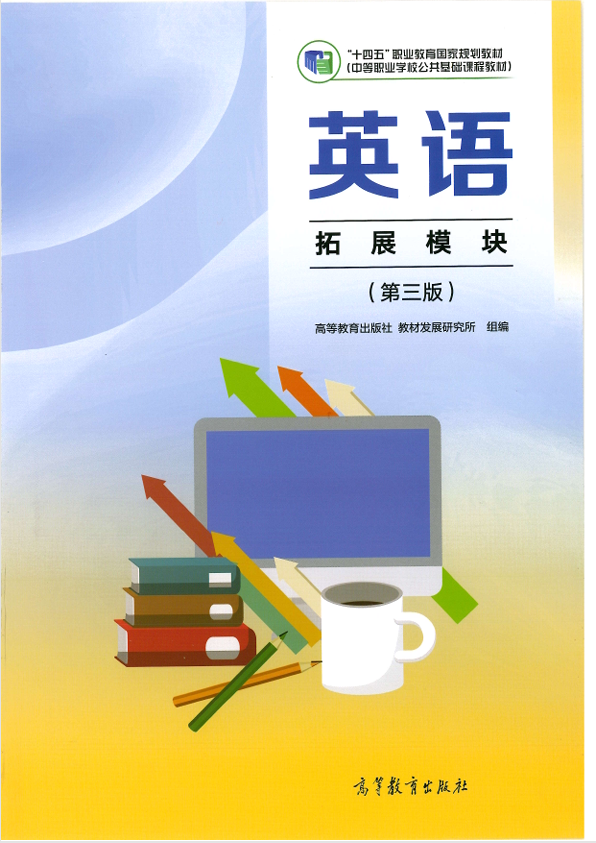
编写说明:本套试卷紧扣《英语 拓展模块》(高教版第三版)教材,以教材单元为基准精准覆盖核心考点。每个单元设置AB卷,A卷为基础巩固卷,侧重基础考点训练,帮助学生扎实掌握知识要点;B卷为能力提升卷,注重知识整合与全面检测,引导学生构建知识网络。全书设计4份综合测试卷,模拟实战情境,聚焦解题能力突破,全面提升应试能力与知识应用水平。
《英语 拓展模块》(高教版第三版)《单元过关卷》
Unit 5 New Technologies in Everyday Life
B卷·能力提升
考试时间:120分钟 满分:100分
班级_____姓名_____学号_____成绩_____
一、情景交际(共15小题;满分20分)
第一节 读下列10个短对话,从题后所给的 A、B、C、D 四个选项中选出可以填入空白处的最佳选项。(共10小题,每小题1分,满分10分)
1. —Our company has decided to replace all paper records with a digital management system. I'm not sure if the older employees can adapt to it.
—_______. We can organize training sessions and provide step-by-step guides to help them.
A. It's not as difficult as it sounds. B. They should learn it by themselves.
C. Maybe we should keep the paper system. D. Digital systems are always complicated.
【答案】A
【详解】考查安抚与提出解决方案。对方担心老员工不适应数字系统,A项安抚情绪并暗示培训可以解决,符合语境。干扰项B和C均违背积极解决问题的态度。
2. —I just read that some drones can now deliver packages directly to your doorstep. Would you trust a drone with your online order?
—_______. Technology is improving quickly, but I still prefer a real delivery person who can handle problems.
A. Absolutely! Drones are always reliable. B. I'm not completely comfortable with that yet.
C. All deliveries should be done by drones. D. I don't shop online at all.
【答案】B
【详解】考查表达保留态度。对方询问是否信任无人机配送,B项表达不完全放心并说明理由,语境真实。干扰项A过于绝对,D项偏离话题。
3. —The AI writing assistant helped me finish my English composition in just ten minutes. It even corrected all my grammar mistakes!
—_______. But don't you think relying too much on AI might weaken your own writing skills?
A. That's really impressive. B. AI should write everything for us.
C. Your English must be terrible. D. Technology never makes mistakes.
【答案】A
【详解】考查先肯定再委婉质疑。对方兴奋分享AI帮助,B卷答案先肯定"impressive"再引出辩证思考,体现交际深度。
4. —I need to attend an online job interview tomorrow, but my home Wi-Fi has been unstable lately. What should I do?
—_______. You could also go to a library or a quiet café with reliable Internet.
A. You should cancel the interview. B. Why not test your connection in advance?
C. Online interviews are not important. D. Just hope the Wi-Fi works tomorrow.
【答案】B
【详解】考查提出实用建议。对方担心网络不稳定影响面试,B项建议提前测试并提供备选方案,体现解决问题的能力。
5. —Have you seen the 3D-printed house that was built in just 24 hours? It's on the news everywhere!
—_______. But I wonder how safe and durable such houses really are in the long run.
A. I saw it too. It's truly amazing. B. 3D printing is useless for construction.
C. Traditional houses are much better. D. I don't watch the news.
【答案】A
【详解】考查回应科技新闻并表达理性思考。先表达惊叹再提出对安全性的思考,A项符合交际中的"肯定+质疑"模式。
6. —My grandmother finally agreed to use a smart speaker at home. Now she asks it to play old songs and tell her the weather every morning.
—_______. It's wonderful when technology can bring joy to older people's lives.
A. She should learn more advanced functions. B. That's so heartwarming to hear.
C. Smart speakers are not for old people. D. Old songs are better on the radio.
【答案】B
【详解】考查对温馨故事的共情回应。对方分享祖母使用智能音箱的温馨画面,B项用"heartwarming"表达情感共鸣。
7. —The government just announced a plan to build a new high-speed railway line connecting our city to Shanghai. The trip will be shortened to just 45 minutes!
—_______. This will definitely boost our local economy and tourism.
A. That's exciting news for our city. B. High-speed trains are too noisy.
C. I prefer driving to Shanghai. D. The project will probably be delayed.
【答案】A
【详解】考查对发展消息的积极回应。对方分享高铁建设的好消息,A项表达兴奋并分析经济影响,展现思考深度。
8. —I'm thinking about studying big data analysis at a vocational college, but my parents think traditional jobs like accounting are safer.
—_______. The demand for data analysts is growing rapidly in almost every industry.
A. Your parents are probably right. B. You should follow your parents' advice.
C. Both fields have their value, but data skills are very promising. D. Accounting will disappear soon.
【答案】C
【详解】考查平衡不同观点的回应。对方在传统职业和新兴领域间犹豫,C项承认双方价值同时提供新视角,不偏激。
9. —The self-service checkout machines at the supermarket keep making mistakes. I spent ten minutes trying to scan a bag of apples.
—_______. Technology should make life easier, not more frustrating.
A. I know what you mean. It happens to me too. B. You should learn to use the machine.
C. Self-service is always perfect. D. Just don't buy apples anymore.
【答案】A
【详解】考查共情回应。对方抱怨自助结账机不好用,A项表达同感并附和对科技的合理期待,体现情感共鸣。
10. —The company I applied to requires all applicants to have basic coding skills, even for sales positions. I feel a bit behind.
—_______. There are many free online courses that can help you catch up quickly.
A. Coding is only for programmers. B. You should give up on that company.
C. Don't let that discourage you. D. Sales jobs don't need any skills.
【答案】C
【详解】考查鼓励与提供解决方案。对方因技能要求感到落后,C项先安抚再指出学习途径,体现支持性沟通。
第二节 读下面一段对话,从方框中所给的 A、B、C、D、E、F 和 G 七个选项中选出可以填入空白处的最佳选项。(共5小题,每小题2分,满分10分)
A. How do you see yourself using technology in your future career?
B. The Smart Office System can handle all of that automatically.
C. I think the key is to stay curious and keep learning.
D. What kind of digital tools do you use at your company?
E. It can also analyze sales data and suggest better strategies.
F. I'm a bit worried that technology might replace some of our jobs.
G. We've been using it for about two years now.
Interviewer: Welcome to our Career Talk program. Today we have Mr. Liu, an IT manager at a logistics company. Mr. Liu, _______ 11 _______
Mr. Liu: Thank you. We use quite a few. Our warehouse uses an automated sorting system, and our delivery team relies on a real-time tracking app.
Interviewer: That sounds very advanced. How long have you been using these technologies?
Mr. Liu: 12 The tracking app was introduced just last year, and it has already improved our delivery efficiency by 30%.
Interviewer: Impressive! Some students here might be thinking, _______ 13 _______
Mr. Liu: That's a natural concern. But in my experience, technology doesn't replace people—it changes the nature of work. For example, our sorting workers now operate machines instead of carrying boxes by hand. They need new skills, but their jobs haven't disappeared.
Interviewer: That's a reassuring perspective. So, _______ 14 _______
Mr. Liu: I believe data analysis and digital communication skills will be essential in almost every field. Even in logistics, we now need people who can read data reports and make smart decisions. Vocational students should start building these skills early.
Interviewer: _______ 15 _______
Mr. Liu: Exactly. Technology changes fast, but the willingness to learn is a skill that never becomes outdated.
11._________ 12._________ 13._________ 14._________ 15._________
【答案】11.D 12.G 13.F 14.A 15.C
【导语】这是一段职业访谈对话,IT经理刘先生分享物流公司如何应用数字技术,并讨论技术对就业的影响和未来职业所需的技能。
【详解】
11. 采访者询问公司使用的数字工具,刘先生随后列举自动化分拣系统和实时追踪app,D项"What kind of digital tools do you use at your company?"符合语境。
12. 采访者问使用多久,刘先生回答"两年",G项"We've been using it for about two years now."直接回应时间问题。
13. 采访者引出学生的担忧——技术可能取代工作,F项"I'm a bit worried that technology might replace some of our jobs."符合语境。
14. 刘先生回答数据分析等技能在几乎所有领域都很重要,对应采访者询问未来职业所需技能,A项"How do you see yourself using technology in your future career?"符合。
15. 刘先生回应"Exactly",说明采访者的话与他的观点一致,C项"I think the key is to stay curious and keep learning."总结核心观点。
二、阅读理解(共20小题;每小题2分,满分40分)
阅读下列短文,从每题所给的 A、B、C、D 四个选项中选出最佳选项。
A
Activity Name
Details
National Youth Tech Innovation Contest
Dates: Registration by April 10, 2026; Finals on June 5—6, 2026
Location: Beijing National Convention Center
Pricing: Free for registered teams (2—4 members per team)Categories: Smart device design, app development, drone programming
Why attend: Winners receive internship offers from top tech companies and ¥10,000 in prize money
Digital Skills Summer Camp
Dates: July 15 — August 5, 2026 (three weeks)
Location: Nanjing Vocational Education Park
Pricing: ¥800 (includes meals and accommodation)Key Focus: Coding basics, data analysis, digital marketing
Why attend: Earn a certificate recognized by 30+ partner companies; hands-on projects with industry mentors
5G Application Workshop
Dates: May 20, 2026 (one-day workshop)
Location: Nanjing Tech University
Pricing: ¥60 for students; ¥150 for professionals
Key Focus: How 5G technology is transforming manufacturing, healthcare, and transportation
Why attend: Live demonstrations of 5G-powered robots and self-driving vehicles
E-Commerce Start-Up Bootcamp
Dates: August 10 — 24, 2026 (two weeks, online)
Location: Online (Tencent Meeting)
Pricing: ¥350 per person
Key Focus: Building an online store, social media marketing, customer service skills
Why attend: Create your own online store as a course project; guidance from successful e-commerce entrepreneurs
16. Which activity requires participants to work in a team?
A. National Youth Tech Innovation Contest B. Digital Skills Summer Camp
C. 5G Application Workshop D. E-Commerce Start-Up Bootcamp
17. If a student wants to gain hands-on experience with industry professionals, which program should they choose?
A. 5G Application Workshop B. National Youth Tech Innovation Contest
C. Digital Skills Summer Camp D. E-Commerce Start-Up Bootcamp
18. What makes the E-Commerce Start-Up Bootcamp different from the other three activities?
A. It is the most expensive option. B. It takes place entirely online.
C. It focuses on technology development. D. It offers prize money to winners.
19. A student interested in how technology is changing traditional industries should attend _______.
A. Digital Skills Summer Camp B. E-Commerce Start-Up Bootcamp
C. 5G Application Workshop D. National Youth Tech Innovation Contest
20. What do the four activities have in common?
A. They all provide certificates upon completion.
B. They all take place in Nanjing.
C. They are all designed to develop technology-related skills.
D. They are all free for students.
【答案】16.A 17.C 18.B 19.C 20.C
【导语】本文是一篇表格应用文,介绍四项面向青少年的科技创新活动,包括创新大赛、数字技能夏令营、5G工作坊和电商创业训练营。
【详解】
16. 本题为细节理解题。根据Contest中"2—4 members per team"可知,该活动要求团队参赛,A项正确。
17. 本题为细节理解题。根据Summer Camp中"hands-on projects with industry mentors"可知,C项正确。
18. 本题为推理判断题。Bootcamp的Location为"Online (Tencent Meeting)",其他三项均为线下活动,B项正确。
19. 本题为细节理解题。根据5G Workshop的Key Focus"transforming manufacturing, healthcare, and transportation"可知,该活动关注技术如何改变传统行业,C项正确。
20. 本题为主旨大意题。四项活动分别涉及创新设计、数字技能、5G和电商,均与技术技能发展相关,C项正确。
B
Zhou Min never expected to become a technology entrepreneur. She grew up in a small town in Jiangsu and studied accounting at a vocational school. After graduation, she worked as a bookkeeper at a local factory, spending her days recording numbers and checking receipts. The work was stable, but Zhou Min felt that something was missing.
The turning point came when the factory introduced a new inventory management system. None of the older workers knew how to operate it, and the manager was about to hire an expensive outside consultant. Zhou Min volunteered. "I didn't know much about the system either," she recalled, "but I was not afraid to learn." She spent evenings watching online tutorials and reading the system manual. Within two weeks, she had not only mastered the software but also trained fifteen colleagues to use it. Her manager was impressed and promoted her to the operations team.
That experience planted a seed. Zhou Min realized that many small and medium-sized factories in her region faced the same problem: they needed digital tools but lacked people who understood both technology and daily operations. In 2024, she took a bold step and started her own consulting company, "BridgeTech." The name reflected her mission—to build a bridge between traditional businesses and modern technology. Her first client was a furniture factory that wanted to use data to predict customer demand. Zhou Min and her small team designed a simple but effective system that reduced the factory's waste by 25% in the first six months.
Today, BridgeTech serves more than twenty factories across Jiangsu. Zhou Min often visits vocational schools to share her story with students. "People think technology is about coding and machines," she tells them. "But the most important skill is understanding people's real needs and finding practical solutions. A vocational school background is not a disadvantage—it means you already understand how real workplaces operate." Her message is clear: the digital age does not only need programmers and engineers. It also needs people who can connect technology with everyday work, and that is a skill anyone can develop with curiosity and hard work.
21. What was Zhou Min's first job after graduating from vocational school?
A. A technology consultant B. A bookkeeper at a factory
C. A software engineer D. A vocational school teacher
22. Why did Zhou Min volunteer to learn the inventory management system?
A. She wanted to get a higher salary immediately.
B. The manager forced her to do it.
C. She was willing to learn and help solve a problem.
D. She already knew the system very well.
23. What does the name "BridgeTech" suggest about Zhou Min's company?
A. It only serves technology companies.
B. It builds physical bridges for factories.
C. It connects traditional businesses with modern technology.
D. It is located near a famous bridge.
24. What result did Zhou Min's first consulting project achieve?
A. The factory doubled its number of workers. B. The factory's waste was reduced by 25%.
C. The factory moved to a larger city. D. The factory stopped using all technology.
25. What is the main message Zhou Min wants to share with vocational students?
A. Only programmers can succeed in the digital age.
B. Vocational school graduates cannot start businesses.
C. Understanding real workplace needs is a valuable skill in technology fields.
D. Technology will eventually replace all traditional jobs.
【答案】21.B 22.C 23.C 24.B 25.C
【导语】本文是一篇人物访谈类记叙文,讲述职校毕业生周敏从会计到科技企业家的转型,强调理解实际需求是科技领域的重要能力。
【详解】
21. 本题为细节理解题。根据第1段"worked as a bookkeeper at a local factory"可知,B项正确。
22. 本题为推理判断题。根据第2段"I was not afraid to learn"和上下文,她主动学习是为了解决问题,C项正确。
23. 本题为推理判断题。根据第3段"to build a bridge between traditional businesses and modern technology"可知,C项正确。
24. 本题为细节理解题。根据第3段"reduced the factory's waste by 25%"可知,B项正确。
25. 本题为主旨大意题。根据第4段"understanding people's real needs and finding practical solutions"可知,C项正确。
C
When Wang Xiaobo first told his classmates that he wanted to build a smart farming system for his family's vegetable greenhouse, most of them laughed. "You're a vocational student studying e-commerce, not an engineer," one classmate said. But Xiaobo had grown up watching his parents work from sunrise to sunset, manually watering plants and checking temperatures with old thermometers. He believed there had to be a better way.
Xiaobo began researching during his free time. He watched dozens of online videos about sensor technology and automated irrigation. The concepts were difficult at first—words like "humidity sensor" and "microcontroller" felt like a foreign language. But he persisted, taking notes and asking questions on technology forums. His e-commerce teacher, Ms. Chen, noticed his interest and lent him a basic sensor kit from the school's science lab. "Don't try to learn everything at once," she advised. "Start with one small problem and solve it completely."
Xiaobo followed her advice. His first project was simple: a sensor that measured soil moisture and sent an alert to his father's phone when the plants needed water. It took him three months to build, and it failed several times before working properly. But when his father received the first alert while having lunch at home, he could not stop smiling. "I used to check the soil by hand every two hours," his father said. "Now the phone tells me." That small success gave Xiaobo the confidence to continue.
Over the next year, Xiaobo added more features: automatic window openers that responded to temperature changes, a camera that allowed his parents to check the greenhouse remotely, and a data log that recorded conditions over time. The system was not perfect, and Xiaobo was the first to admit it. Some sensors broke during heavy rain, and the Wi-Fi connection was sometimes unreliable. But the greenhouse's productivity increased by nearly 30%, and his parents could finally take a proper day off. "Technology is not about being perfect," Xiaobo said at a school innovation fair where he presented his project. "It's about making small improvements that matter to real people. Anyone with patience and a willingness to learn can do that."
26. Why did Xiaobo's classmates laugh at his idea at first?
A. They thought his idea was too simple.
B. They believed only engineers could build such systems.
C. They did not like farming.
D. They wanted to build the system themselves.
27. What was Ms. Chen's advice to Xiaobo?
A. To give up and focus on e-commerce. B. To learn everything about technology first.
C. To start with one small problem and solve it. D. To buy expensive equipment immediately.
28. How did Xiaobo's father react to the first soil moisture alert?
A. He was worried about the technology failing.
B. He was happy and impressed by the convenience.
C. He did not believe the sensor was accurate.
D. He asked Xiaobo to remove the system.
29. What challenge did Xiaobo face with his smart farming system?
A. His parents refused to use any technology. B. The system was too expensive to maintain.
C. Some sensors broke during bad weather. D. His teacher stopped supporting the project.
30. What does Xiaobo believe is the most important quality for using technology?
A. Having a university degree in engineering. B. Patience and a willingness to learn.
C. Owning the most advanced equipment. D. Working in a large technology company.
【答案】26.B 27.C 28.B 29.C 30.B
【导语】本文是一篇人文叙事记叙文,讲述职校学生王晓波利用自学技术为家中蔬菜大棚建造智能农业系统,改善父母工作条件的故事。
【详解】
26. 本题为细节理解题。根据第1段"not an engineer"可知,同学认为只有工程师才能做,B项正确。
27. 本题为细节理解题。根据第2段"Start with one small problem and solve it completely"可知,C项正确。
28. 本题为细节理解题。根据第3段"he could not stop smiling"可知,父亲非常高兴,B项正确。
29. 本题为细节理解题。根据第4段"Some sensors broke during heavy rain"可知,C项正确。
30. 本题为主旨大意题。根据第4段"Anyone with patience and a willingness to learn can do that"可知,B项正确。
D
Artificial intelligence, or AI, is no longer a concept found only in science fiction movies. It is already part of our daily lives, from the voice assistants on our phones to the recommendation systems that suggest what videos we should watch next. But as AI becomes more powerful, an important question arises: how can we make sure that AI serves human needs rather than replacing human judgment?
One of the most promising applications of AI is in healthcare. AI systems can now analyze medical images—such as X-rays and CT scans—faster and sometimes more accurately than human doctors. In some hospitals, AI helps doctors identify early signs of diseases that might otherwise be missed. However, experts warn that AI should be seen as a tool to support doctors, not replace them. A machine can spot a pattern, but it cannot understand a patient's fears, explain a difficult diagnosis with warmth, or make ethical decisions about treatment. These tasks require human empathy and wisdom.
In the workplace, AI is changing the nature of many jobs. Routine tasks such as data entry, basic customer service, and simple report writing are increasingly handled by AI systems. This has caused anxiety among workers who fear losing their jobs. However, research suggests that while AI may eliminate some positions, it also creates new ones. For example, companies now need AI trainers, data ethicists, and human-AI interaction designers—jobs that did not exist ten years ago. The challenge for vocational education is to prepare students not just for the jobs of today, but for careers that will be shaped by AI.
Perhaps the most important skill in an AI-driven world is critical thinking. When AI systems make recommendations—whether about medical treatment, job applications, or financial decisions—humans must be able to evaluate those recommendations thoughtfully. Blindly trusting AI is as dangerous as blindly rejecting it. As one educator put it, "We should teach students not just how to use AI tools, but how to question them." This means understanding the limitations of AI, recognizing when its suggestions may be biased, and knowing when human judgment must take priority.
31. What is the main purpose of the first paragraph?
A. To introduce the topic and raise a central question.
B. To describe how AI works technically.
C. To argue that AI is more harmful than helpful.
D. To list all the applications of AI in daily life.
32. According to the passage, why should AI not replace doctors?
A. AI systems are too expensive for hospitals.
B. AI cannot provide warmth or make ethical decisions.
C. AI makes more mistakes than human doctors.
D. AI can only analyze X-rays, not CT scans.
33. What does the passage suggest about AI and employment?
A. AI will destroy all existing jobs.
B. AI eliminates some jobs but also creates new types of work.
C. AI has no effect on the job market.
D. Only technology companies will hire workers in the future.
34. What does the word "biased" most nearly mean in the last paragraph?
A. Fair and balanced B. Unfairly favoring one side
C. Technically advanced D. Difficult to understand
35. What is the passage's main message about AI?
A. AI should be completely banned to protect human jobs.
B. Only scientists and engineers need to understand AI.
C. AI will soon be able to do everything better than humans.
D. Humans should use AI as a tool while maintaining critical judgment.
【答案】31.A 32.B 33.B 34.B 35.D
【导语】本文是一篇社科科普说理文,探讨人工智能在医疗和工作领域的应用,强调人类需要保持批判性思维和判断力。
【详解】
31. 本题为推理判断题。第1段引出"How can we make sure that AI serves human needs?"这个核心问题,A项正确。
32. 本题为细节理解题。根据第2段"cannot understand a patient's fears, explain a difficult diagnosis with warmth, or make ethical decisions"可知,B项正确。
33. 本题为细节理解题。根据第3段"AI may eliminate some positions, it also creates new ones"可知,B项正确。
34. 本题为词义猜测题。根据上下文"recognizing when its suggestions may be biased",biased意为"有偏见的、不公平的",B项正确。
35. 本题为主旨大意题。全文强调AI应作为工具辅助人类,同时保持批判性思维,D项概括最准确。
三、完形填空(共10小题;每小题1分,满分10分)
阅读下列短文,从短文后各题所给的 A、B、C、D 四个选项中,选出可以填入空白处的最佳选项。
When Zhang Yue started her internship at a digital marketing company, she felt completely out of place. Her classmates had told her that vocational school graduates rarely got such opportunities, and for the first week, she almost believed them. The office was filled with people _______ 36 _______ seemed to understand every new app and platform effortlessly, _______ 37 _______ Zhang Yue struggled to follow even the basic training sessions.
Her supervisor, Ms. Lin, noticed her difficulty and decided to take a different _______ 38 _______. Instead of giving Zhang Yue more written instructions, she paired her with a senior colleague who explained things through real examples. "Theory is important," Ms. Lin said, "_______ 39 _______ practice builds real confidence." Slowly, Zhang Yue began to improve. She discovered that her vocational training had given her something _______ 40 _______—the ability to learn by doing. She might not understand every technical term, but once she _______ 41 _______ a task, she could complete it efficiently.
The real test came when a client needed a data report within three hours, and the usual analyst was sick. Zhang Yue _______ 42 _______ to take on the task, even though she had never done it independently before. She used the company's data tools, referred to past reports, and asked brief questions when necessary. The report was not perfect, _______ 43 _______ it was complete and accurate enough for the client's needs. Ms. Lin was so impressed that she offered Zhang Yue a full-time position _______ 44 _______ her internship ended.
Looking back, Zhang Yue realized that her biggest _______ 45 _______ had not been her lack of technical knowledge, but her own self-doubt. "Vocational students sometimes underestimate themselves," she said. "But the workplace values people who are willing to try, to learn from mistakes, and to grow. That has nothing to do with which school you came from."
36. A. which B. who C. whom D. what
37. A. while B. because C. unless D. although
38. A. approach B. direction C. position D. suggestion
39. A. so B. or C. but D. for
40. A. valuable B. common C. ordinary D. similar
41. A. was given B. gave C. has given D. was giving
42. A. offered B. refused C. hesitated D. failed
43. A. and B. but C. so D. or
44. A. before B. after C. until D. since
45. A. advantage B. achievement C. challenge D. opportunity
【答案】36.B 37.A 38.A 39.C 40.A 41.A 42.A 43.B 44.B 45.C
【导语】本文是一篇职业成长类完形填空,讲述职校实习生张月克服自我怀疑,在数字营销公司获得认可并拿到全职offer的故事。难度提升体现在定语从句、对比连词、抽象名词辨析和被动语态上。
【详解】
36. 定语从句修饰people,关系代词用who。
37. while表示对比"而",前文说同事轻松理解,而张月很吃力,形成对照。
38. take a different approach表示"采取不同的方法",approach符合语境。
39. "理论重要,但实践建立真正的信心",前后转折用but。
40. 职教培训给了她"宝贵的"东西——边做边学的能力,valuable符合语境。
41. "一旦她被分配任务"用被动语态was given,与主句she could complete对应。
42. offered to do sth.表示"主动提出做某事",符合她勇敢承担任务的语境。
43. "报告不完美,但足够完整准确",前后转折用but。
44. 实习结束后给了全职offer,after符合时间逻辑。
45. 她最大的"挑战"不是技术不足而是自我怀疑,challenge符合语境。advantage(优势)和achievement(成就)均不合逻辑。
四、语法填空(共10小题;每小题1分,满分10分)
阅读下列短文,在空白处填入一个适当的词,或填入括号中所给单词的正确形式,并将答案写在对应处。
Last year, our school introduced a Smart Learning Platform that _______ 46 _______ (design) to help students study more effectively. At first, many students, _______ 47 _______ (include) me, were not sure whether it would be useful. However, after _______ 48 _______ (use) it for several months, I have changed my mind completely.
The platform allows us _______ 49 _______ (watch) recorded lessons at any time, which is _______ 50 _______ (especial) helpful when we miss a class. It also provides practice exercises that _______ 51 _______ (check) automatically, so we can see our mistakes immediately. My English teacher says that students _______ 52 _______ take advantage of such tools tend to make _______ 53 _______ (fast) progress than those who don't.
Last month, I _______ 54 _______ (choose) to represent my class in an online English competition. Thanks to the platform, I was able to prepare thoroughly and won second place. Now I believe that technology, when _______ 55 _______ (use) wisely, can truly make a difference in our learning.
46._________ 47._________ 48._________ 49._________ 50._________
51._________ 52._________ 53._________ 54._________ 55._________
【答案】46.was designed 47.including 48.using 49.to watch 50.especially 51.are checked 52.who/that 53.faster 54.was chosen 55.used
【导语】本文为智能学习平台体验主题的语法填空,B卷考查被动语态、介词转换、动名词、不定式、副词转换、定语从句关系代词、比较级和过去分词。
【详解】
46. 主语platform与design为被动关系,时间状语last year提示一般过去时,故填was designed。
47. including作介词,表示"包括……在内",后接代词me。
48. after为介词,后接动名词using。
49. allow sb. to do sth. 固定搭配。
50. 修饰形容词helpful,用副词especially。
51. 主语exercises与check为被动关系,一般现在时复数,填are checked。
52. 定语从句修饰students,关系代词who或that均可。
53. 根据than可知用比较级faster。
54. 主语I与choose为被动关系,last month提示一般过去时,填was chosen。
55. when used wisely = when it is used wisely,省略了it is,填过去分词used。
五、书面表达(满分20分)
假设你是李华,你所在的职业学校将举办"科技创新与职业发展"英语演讲比赛。请你根据以下提示,写一篇英文演讲稿。
内容包括:
(1) 介绍一项你认为对职业发展最有帮助的科技(如人工智能、大数据、5G等);
(2) 说明这项科技如何改变相关行业的工作方式;
(3) 谈谈你为适应科技发展所做的准备。
写作要求:
(1) 词数不少于80;
(2) 必须包括要点,可以适当扩充,但不能逐词翻译;
(3) 文中不要提及真实校名和姓名。
提示:artificial intelligence, big data, digital skills, improve efficiency, adapt to, keep learning, career development, practical
_______________________________________________________________________________
_______________________________________________________________________________
_______________________________________________________________________________
_______________________________________________________________________________
_______________________________________________________________________________
_______________________________________________________________________________
______________________________________________________________________________________________________________________________________________________________
【参考范文】
Good morning, dear teachers and fellow students. Today, I want to talk about how artificial intelligence is shaping our future careers.
AI is no longer a distant idea. It is already being used in many industries. In healthcare, AI helps doctors analyze medical images faster. In manufacturing, smart robots work alongside humans to improve production efficiency. Even in sales and customer service, AI tools can analyze customer data and suggest better communication strategies.
For vocational students like us, this means both opportunities and challenges. Some routine jobs may be replaced, but new positions are also being created—AI trainers, data analysts, and digital marketing specialists. To prepare for this future, I have started learning basic data analysis skills through online courses. I also pay close attention to how technology is changing the industries I am interested in.
In conclusion, I believe that technology is not something to fear. The key is to stay curious, keep learning, and always be ready to adapt. As a saying goes, "The best way to predict the future is to create it." Thank you.
【词汇积累】artificial intelligence 人工智能;manufacturing 制造业;efficiency 效率;routine 常规的;digital marketing 数字营销;adapt to 适应;keep learning 持续学习;predict 预测。
【句式拓展】1. AI is no longer a distant idea. It is already being used in many industries. 可合并为:AI, which is no longer a distant idea, is already being used in many industries. 2. Some routine jobs may be replaced, but new positions are also being created. 该句使用转折结构和被动语态,先承认风险再指出机遇,观点辩证。
【点睛】范文为演讲稿格式,开头有问候和主题引入;主体部分分三段介绍AI应用、机遇挑战和个人准备;结尾引用名言升华主题。语言以一般现在时和现在进行时为主,运用 AI, efficiency, adapt to, digital skills 等核心词汇,结构严谨。
原创精品资源学科网独家享有版权,侵权必究!
学科网(北京)股份有限公司
$
编写说明:本套试卷紧扣《英语 拓展模块》(高教版第三版)教材,以教材单元为基准精准覆盖核心考点。每个单元设置AB卷,A卷为基础巩固卷,侧重基础考点训练,帮助学生扎实掌握知识要点;B卷为能力提升卷,注重知识整合与全面检测,引导学生构建知识网络。全书设计4份综合测试卷,模拟实战情境,聚焦解题能力突破,全面提升应试能力与知识应用水平。
《英语 拓展模块》(高教版第三版)《单元过关卷》
Unit 5 New Technologies in Everyday Life
B卷·能力提升
考试时间:120分钟 满分:100分
班级_____姓名_____学号_____成绩_____
一、情景交际(共15小题;满分20分)
第一节 读下列10个短对话,从题后所给的 A、B、C、D 四个选项中选出可以填入空白处的最佳选项。(共10小题,每小题1分,满分10分)
1. —Our company has decided to replace all paper records with a digital management system. I'm not sure if the older employees can adapt to it.
—_______. We can organize training sessions and provide step-by-step guides to help them.
A. It's not as difficult as it sounds. B. They should learn it by themselves.
C. Maybe we should keep the paper system. D. Digital systems are always complicated.
2. —I just read that some drones can now deliver packages directly to your doorstep. Would you trust a drone with your online order?
—_______. Technology is improving quickly, but I still prefer a real delivery person who can handle problems.
A. Absolutely! Drones are always reliable. B. I'm not completely comfortable with that yet.
C. All deliveries should be done by drones. D. I don't shop online at all.
3. —The AI writing assistant helped me finish my English composition in just ten minutes. It even corrected all my grammar mistakes!
—_______. But don't you think relying too much on AI might weaken your own writing skills?
A. That's really impressive. B. AI should write everything for us.
C. Your English must be terrible. D. Technology never makes mistakes.
4. —I need to attend an online job interview tomorrow, but my home Wi-Fi has been unstable lately. What should I do?
—_______. You could also go to a library or a quiet café with reliable Internet.
A. You should cancel the interview. B. Why not test your connection in advance?
C. Online interviews are not important. D. Just hope the Wi-Fi works tomorrow.
5. —Have you seen the 3D-printed house that was built in just 24 hours? It's on the news everywhere!
—_______. But I wonder how safe and durable such houses really are in the long run.
A. I saw it too. It's truly amazing. B. 3D printing is useless for construction.
C. Traditional houses are much better. D. I don't watch the news.
6. —My grandmother finally agreed to use a smart speaker at home. Now she asks it to play old songs and tell her the weather every morning.
—_______. It's wonderful when technology can bring joy to older people's lives.
A. She should learn more advanced functions. B. That's so heartwarming to hear.
C. Smart speakers are not for old people. D. Old songs are better on the radio.
7. —The government just announced a plan to build a new high-speed railway line connecting our city to Shanghai. The trip will be shortened to just 45 minutes!
—_______. This will definitely boost our local economy and tourism.
A. That's exciting news for our city. B. High-speed trains are too noisy.
C. I prefer driving to Shanghai. D. The project will probably be delayed.
8. —I'm thinking about studying big data analysis at a vocational college, but my parents think traditional jobs like accounting are safer.
—_______. The demand for data analysts is growing rapidly in almost every industry.
A. Your parents are probably right. B. You should follow your parents' advice.
C. Both fields have their value, but data skills are very promising. D. Accounting will disappear soon.
9. —The self-service checkout machines at the supermarket keep making mistakes. I spent ten minutes trying to scan a bag of apples.
—_______. Technology should make life easier, not more frustrating.
A. I know what you mean. It happens to me too. B. You should learn to use the machine.
C. Self-service is always perfect. D. Just don't buy apples anymore.
10. —The company I applied to requires all applicants to have basic coding skills, even for sales positions. I feel a bit behind.
—_______. There are many free online courses that can help you catch up quickly.
A. Coding is only for programmers. B. You should give up on that company.
C. Don't let that discourage you. D. Sales jobs don't need any skills.
第二节 读下面一段对话,从方框中所给的 A、B、C、D、E、F 和 G 七个选项中选出可以填入空白处的最佳选项。(共5小题,每小题2分,满分10分)
A. How do you see yourself using technology in your future career?
B. The Smart Office System can handle all of that automatically.
C. I think the key is to stay curious and keep learning.
D. What kind of digital tools do you use at your company?
E. It can also analyze sales data and suggest better strategies.
F. I'm a bit worried that technology might replace some of our jobs.
G. We've been using it for about two years now.
Interviewer: Welcome to our Career Talk program. Today we have Mr. Liu, an IT manager at a logistics company. Mr. Liu, _______ 11 _______
Mr. Liu: Thank you. We use quite a few. Our warehouse uses an automated sorting system, and our delivery team relies on a real-time tracking app.
Interviewer: That sounds very advanced. How long have you been using these technologies?
Mr. Liu: 12 The tracking app was introduced just last year, and it has already improved our delivery efficiency by 30%.
Interviewer: Impressive! Some students here might be thinking, _______ 13 _______
Mr. Liu: That's a natural concern. But in my experience, technology doesn't replace people—it changes the nature of work. For example, our sorting workers now operate machines instead of carrying boxes by hand. They need new skills, but their jobs haven't disappeared.
Interviewer: That's a reassuring perspective. So, _______ 14 _______
Mr. Liu: I believe data analysis and digital communication skills will be essential in almost every field. Even in logistics, we now need people who can read data reports and make smart decisions. Vocational students should start building these skills early.
Interviewer: _______ 15 _______
Mr. Liu: Exactly. Technology changes fast, but the willingness to learn is a skill that never becomes outdated.
11._________ 12._________ 13._________ 14._________ 15._________
二、阅读理解(共20小题;每小题2分,满分40分)
阅读下列短文,从每题所给的 A、B、C、D 四个选项中选出最佳选项。
A
Activity Name
Details
National Youth Tech Innovation Contest
Dates: Registration by April 10, 2026; Finals on June 5—6, 2026
Location: Beijing National Convention Center
Pricing: Free for registered teams (2—4 members per team)Categories: Smart device design, app development, drone programming
Why attend: Winners receive internship offers from top tech companies and ¥10,000 in prize money
Digital Skills Summer Camp
Dates: July 15 — August 5, 2026 (three weeks)
Location: Nanjing Vocational Education Park
Pricing: ¥800 (includes meals and accommodation)Key Focus: Coding basics, data analysis, digital marketing
Why attend: Earn a certificate recognized by 30+ partner companies; hands-on projects with industry mentors
5G Application Workshop
Dates: May 20, 2026 (one-day workshop)
Location: Nanjing Tech University
Pricing: ¥60 for students; ¥150 for professionals
Key Focus: How 5G technology is transforming manufacturing, healthcare, and transportation
Why attend: Live demonstrations of 5G-powered robots and self-driving vehicles
E-Commerce Start-Up Bootcamp
Dates: August 10 — 24, 2026 (two weeks, online)
Location: Online (Tencent Meeting)
Pricing: ¥350 per person
Key Focus: Building an online store, social media marketing, customer service skills
Why attend: Create your own online store as a course project; guidance from successful e-commerce entrepreneurs
16. Which activity requires participants to work in a team?
A. National Youth Tech Innovation Contest B. Digital Skills Summer Camp
C. 5G Application Workshop D. E-Commerce Start-Up Bootcamp
17. If a student wants to gain hands-on experience with industry professionals, which program should they choose?
A. 5G Application Workshop B. National Youth Tech Innovation Contest
C. Digital Skills Summer Camp D. E-Commerce Start-Up Bootcamp
18. What makes the E-Commerce Start-Up Bootcamp different from the other three activities?
A. It is the most expensive option. B. It takes place entirely online.
C. It focuses on technology development. D. It offers prize money to winners.
19. A student interested in how technology is changing traditional industries should attend _______.
A. Digital Skills Summer Camp B. E-Commerce Start-Up Bootcamp
C. 5G Application Workshop D. National Youth Tech Innovation Contest
20. What do the four activities have in common?
A. They all provide certificates upon completion.
B. They all take place in Nanjing.
C. They are all designed to develop technology-related skills.
D. They are all free for students.
B
Zhou Min never expected to become a technology entrepreneur. She grew up in a small town in Jiangsu and studied accounting at a vocational school. After graduation, she worked as a bookkeeper at a local factory, spending her days recording numbers and checking receipts. The work was stable, but Zhou Min felt that something was missing.
The turning point came when the factory introduced a new inventory management system. None of the older workers knew how to operate it, and the manager was about to hire an expensive outside consultant. Zhou Min volunteered. "I didn't know much about the system either," she recalled, "but I was not afraid to learn." She spent evenings watching online tutorials and reading the system manual. Within two weeks, she had not only mastered the software but also trained fifteen colleagues to use it. Her manager was impressed and promoted her to the operations team.
That experience planted a seed. Zhou Min realized that many small and medium-sized factories in her region faced the same problem: they needed digital tools but lacked people who understood both technology and daily operations. In 2024, she took a bold step and started her own consulting company, "BridgeTech." The name reflected her mission—to build a bridge between traditional businesses and modern technology. Her first client was a furniture factory that wanted to use data to predict customer demand. Zhou Min and her small team designed a simple but effective system that reduced the factory's waste by 25% in the first six months.
Today, BridgeTech serves more than twenty factories across Jiangsu. Zhou Min often visits vocational schools to share her story with students. "People think technology is about coding and machines," she tells them. "But the most important skill is understanding people's real needs and finding practical solutions. A vocational school background is not a disadvantage—it means you already understand how real workplaces operate." Her message is clear: the digital age does not only need programmers and engineers. It also needs people who can connect technology with everyday work, and that is a skill anyone can develop with curiosity and hard work.
21. What was Zhou Min's first job after graduating from vocational school?
A. A technology consultant B. A bookkeeper at a factory
C. A software engineer D. A vocational school teacher
22. Why did Zhou Min volunteer to learn the inventory management system?
A. She wanted to get a higher salary immediately.
B. The manager forced her to do it.
C. She was willing to learn and help solve a problem.
D. She already knew the system very well.
23. What does the name "BridgeTech" suggest about Zhou Min's company?
A. It only serves technology companies.
B. It builds physical bridges for factories.
C. It connects traditional businesses with modern technology.
D. It is located near a famous bridge.
24. What result did Zhou Min's first consulting project achieve?
A. The factory doubled its number of workers. B. The factory's waste was reduced by 25%.
C. The factory moved to a larger city. D. The factory stopped using all technology.
25. What is the main message Zhou Min wants to share with vocational students?
A. Only programmers can succeed in the digital age.
B. Vocational school graduates cannot start businesses.
C. Understanding real workplace needs is a valuable skill in technology fields.
D. Technology will eventually replace all traditional jobs.
C
When Wang Xiaobo first told his classmates that he wanted to build a smart farming system for his family's vegetable greenhouse, most of them laughed. "You're a vocational student studying e-commerce, not an engineer," one classmate said. But Xiaobo had grown up watching his parents work from sunrise to sunset, manually watering plants and checking temperatures with old thermometers. He believed there had to be a better way.
Xiaobo began researching during his free time. He watched dozens of online videos about sensor technology and automated irrigation. The concepts were difficult at first—words like "humidity sensor" and "microcontroller" felt like a foreign language. But he persisted, taking notes and asking questions on technology forums. His e-commerce teacher, Ms. Chen, noticed his interest and lent him a basic sensor kit from the school's science lab. "Don't try to learn everything at once," she advised. "Start with one small problem and solve it completely."
Xiaobo followed her advice. His first project was simple: a sensor that measured soil moisture and sent an alert to his father's phone when the plants needed water. It took him three months to build, and it failed several times before working properly. But when his father received the first alert while having lunch at home, he could not stop smiling. "I used to check the soil by hand every two hours," his father said. "Now the phone tells me." That small success gave Xiaobo the confidence to continue.
Over the next year, Xiaobo added more features: automatic window openers that responded to temperature changes, a camera that allowed his parents to check the greenhouse remotely, and a data log that recorded conditions over time. The system was not perfect, and Xiaobo was the first to admit it. Some sensors broke during heavy rain, and the Wi-Fi connection was sometimes unreliable. But the greenhouse's productivity increased by nearly 30%, and his parents could finally take a proper day off. "Technology is not about being perfect," Xiaobo said at a school innovation fair where he presented his project. "It's about making small improvements that matter to real people. Anyone with patience and a willingness to learn can do that."
26. Why did Xiaobo's classmates laugh at his idea at first?
A. They thought his idea was too simple.
B. They believed only engineers could build such systems.
C. They did not like farming.
D. They wanted to build the system themselves.
27. What was Ms. Chen's advice to Xiaobo?
A. To give up and focus on e-commerce. B. To learn everything about technology first.
C. To start with one small problem and solve it. D. To buy expensive equipment immediately.
28. How did Xiaobo's father react to the first soil moisture alert?
A. He was worried about the technology failing.
B. He was happy and impressed by the convenience.
C. He did not believe the sensor was accurate.
D. He asked Xiaobo to remove the system.
29. What challenge did Xiaobo face with his smart farming system?
A. His parents refused to use any technology. B. The system was too expensive to maintain.
C. Some sensors broke during bad weather. D. His teacher stopped supporting the project.
30. What does Xiaobo believe is the most important quality for using technology?
A. Having a university degree in engineering. B. Patience and a willingness to learn.
C. Owning the most advanced equipment. D. Working in a large technology company.
D
Artificial intelligence, or AI, is no longer a concept found only in science fiction movies. It is already part of our daily lives, from the voice assistants on our phones to the recommendation systems that suggest what videos we should watch next. But as AI becomes more powerful, an important question arises: how can we make sure that AI serves human needs rather than replacing human judgment?
One of the most promising applications of AI is in healthcare. AI systems can now analyze medical images—such as X-rays and CT scans—faster and sometimes more accurately than human doctors. In some hospitals, AI helps doctors identify early signs of diseases that might otherwise be missed. However, experts warn that AI should be seen as a tool to support doctors, not replace them. A machine can spot a pattern, but it cannot understand a patient's fears, explain a difficult diagnosis with warmth, or make ethical decisions about treatment. These tasks require human empathy and wisdom.
In the workplace, AI is changing the nature of many jobs. Routine tasks such as data entry, basic customer service, and simple report writing are increasingly handled by AI systems. This has caused anxiety among workers who fear losing their jobs. However, research suggests that while AI may eliminate some positions, it also creates new ones. For example, companies now need AI trainers, data ethicists, and human-AI interaction designers—jobs that did not exist ten years ago. The challenge for vocational education is to prepare students not just for the jobs of today, but for careers that will be shaped by AI.
Perhaps the most important skill in an AI-driven world is critical thinking. When AI systems make recommendations—whether about medical treatment, job applications, or financial decisions—humans must be able to evaluate those recommendations thoughtfully. Blindly trusting AI is as dangerous as blindly rejecting it. As one educator put it, "We should teach students not just how to use AI tools, but how to question them." This means understanding the limitations of AI, recognizing when its suggestions may be biased, and knowing when human judgment must take priority.
31. What is the main purpose of the first paragraph?
A. To introduce the topic and raise a central question.
B. To describe how AI works technically.
C. To argue that AI is more harmful than helpful.
D. To list all the applications of AI in daily life.
32. According to the passage, why should AI not replace doctors?
A. AI systems are too expensive for hospitals.
B. AI cannot provide warmth or make ethical decisions.
C. AI makes more mistakes than human doctors.
D. AI can only analyze X-rays, not CT scans.
33. What does the passage suggest about AI and employment?
A. AI will destroy all existing jobs.
B. AI eliminates some jobs but also creates new types of work.
C. AI has no effect on the job market.
D. Only technology companies will hire workers in the future.
34. What does the word "biased" most nearly mean in the last paragraph?
A. Fair and balanced B. Unfairly favoring one side
C. Technically advanced D. Difficult to understand
35. What is the passage's main message about AI?
A. AI should be completely banned to protect human jobs.
B. Only scientists and engineers need to understand AI.
C. AI will soon be able to do everything better than humans.
D. Humans should use AI as a tool while maintaining critical judgment.
三、完形填空(共10小题;每小题1分,满分10分)
阅读下列短文,从短文后各题所给的 A、B、C、D 四个选项中,选出可以填入空白处的最佳选项。
When Zhang Yue started her internship at a digital marketing company, she felt completely out of place. Her classmates had told her that vocational school graduates rarely got such opportunities, and for the first week, she almost believed them. The office was filled with people _______ 36 _______ seemed to understand every new app and platform effortlessly, _______ 37 _______ Zhang Yue struggled to follow even the basic training sessions.
Her supervisor, Ms. Lin, noticed her difficulty and decided to take a different _______ 38 _______. Instead of giving Zhang Yue more written instructions, she paired her with a senior colleague who explained things through real examples. "Theory is important," Ms. Lin said, "_______ 39 _______ practice builds real confidence." Slowly, Zhang Yue began to improve. She discovered that her vocational training had given her something _______ 40 _______—the ability to learn by doing. She might not understand every technical term, but once she _______ 41 _______ a task, she could complete it efficiently.
The real test came when a client needed a data report within three hours, and the usual analyst was sick. Zhang Yue _______ 42 _______ to take on the task, even though she had never done it independently before. She used the company's data tools, referred to past reports, and asked brief questions when necessary. The report was not perfect, _______ 43 _______ it was complete and accurate enough for the client's needs. Ms. Lin was so impressed that she offered Zhang Yue a full-time position _______ 44 _______ her internship ended.
Looking back, Zhang Yue realized that her biggest _______ 45 _______ had not been her lack of technical knowledge, but her own self-doubt. "Vocational students sometimes underestimate themselves," she said. "But the workplace values people who are willing to try, to learn from mistakes, and to grow. That has nothing to do with which school you came from."
36. A. which B. who C. whom D. what
37. A. while B. because C. unless D. although
38. A. approach B. direction C. position D. suggestion
39. A. so B. or C. but D. for
40. A. valuable B. common C. ordinary D. similar
41. A. was given B. gave C. has given D. was giving
42. A. offered B. refused C. hesitated D. failed
43. A. and B. but C. so D. or
44. A. before B. after C. until D. since
45. A. advantage B. achievement C. challenge D. opportunity
四、语法填空(共10小题;每小题1分,满分10分)
阅读下列短文,在空白处填入一个适当的词,或填入括号中所给单词的正确形式,并将答案写在对应处。
Last year, our school introduced a Smart Learning Platform that _______ 46 _______ (design) to help students study more effectively. At first, many students, _______ 47 _______ (include) me, were not sure whether it would be useful. However, after _______ 48 _______ (use) it for several months, I have changed my mind completely.
The platform allows us _______ 49 _______ (watch) recorded lessons at any time, which is _______ 50 _______ (especial) helpful when we miss a class. It also provides practice exercises that _______ 51 _______ (check) automatically, so we can see our mistakes immediately. My English teacher says that students _______ 52 _______ take advantage of such tools tend to make _______ 53 _______ (fast) progress than those who don't.
Last month, I _______ 54 _______ (choose) to represent my class in an online English competition. Thanks to the platform, I was able to prepare thoroughly and won second place. Now I believe that technology, when _______ 55 _______ (use) wisely, can truly make a difference in our learning.
46._________ 47._________ 48._________ 49._________ 50._________
51._________ 52._________ 53._________ 54._________ 55._________
五、书面表达(满分20分)
假设你是李华,你所在的职业学校将举办"科技创新与职业发展"英语演讲比赛。请你根据以下提示,写一篇英文演讲稿。
内容包括:
(1) 介绍一项你认为对职业发展最有帮助的科技(如人工智能、大数据、5G等);
(2) 说明这项科技如何改变相关行业的工作方式;
(3) 谈谈你为适应科技发展所做的准备。
写作要求:
(1) 词数不少于80;
(2) 必须包括要点,可以适当扩充,但不能逐词翻译;
(3) 文中不要提及真实校名和姓名。
提示:artificial intelligence, big data, digital skills, improve efficiency, adapt to, keep learning, career development, practical
_______________________________________________________________________________
_______________________________________________________________________________
_______________________________________________________________________________
_______________________________________________________________________________
_______________________________________________________________________________
_______________________________________________________________________________
______________________________________________________________________________________________________________________________________________________________
原创精品资源学科网独家享有版权,侵权必究!
学科网(北京)股份有限公司
$
资源预览图

1

2

3
由于学科网是一个信息分享及获取的平台,不确保部分用户上传资料的 来源及知识产权归属。如您发现相关资料侵犯您的合法权益,请联系学科网,我们核实后将及时进行处理。