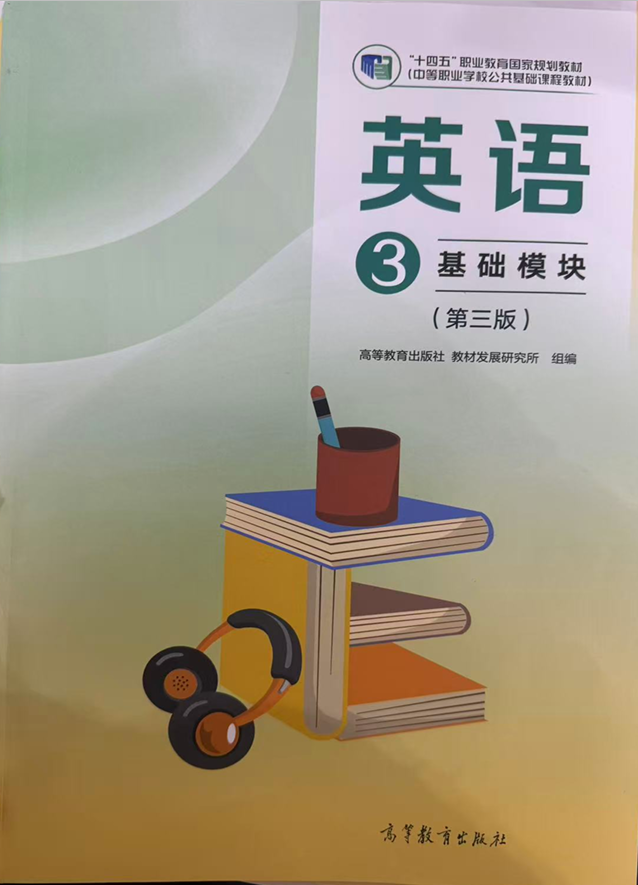
8.3 Role Models of the Times-Language Practice(教案)-《英语 基础模块3》(高教版第三版) 【上好课】
2026-06-30
|
7页
|
142人阅读
|
1人下载
精品
内容正文:
课 题
《英语 基础模块 3》(高教版 第三版)
Unit 8 Role Models of the Times
(Language Practice )
课 型
新授课
课 时
2
授课班级
授课时间
90 mins
授课教师
教材分析
本课教学内容选自教材《英语3基础模块(第三版)》 中Unit 8 Role Models of the Times的Language Practice和Vocabulary板块。本版块,核心语法点为非谓语动词作状语,配套词汇围绕 “时代楷模” 人物描写展开。本部分本课时遵循“呈现—操练—应用”三段式语言训练逻辑设计教学流程。导入呈现环节,一方面复现单元听、读板块已接触的非谓语基础句式,另一方面系统拓展不定式、现在分词、过去分词作状语的完整语法体系,帮助学生搭建条理清晰的语法知识框架;词汇模块聚焦描写榜样人物的高频词、固定搭配,依托袁隆平、屠呦呦等楷模真实语境开展分层练习,引导学生跳出机械记词,实现词汇内化与真实场景交际运用,同步落实语言综合运用能力的培养要求。
学情分析
1. 知识基础
经过之前的学习,学生对非谓语动词(如作主语、宾语)有基本了解,但对非谓语动词作状语的用法较为陌生,且难以根据谓语动词准确选择恰当的非谓语形式作状语;学生已完成单元阅读,熟悉袁隆平、屠呦呦人物素材,便于代入例句理解。
2.认知能力
学生已具备初步的句子成分分析能力,能识别句子中的非谓语动词和状语。但大部分学生对语法学习存在畏难情绪,缺乏自主归纳、辨析语法规则的能力,独立梳理知识体系、自主探究的学习习惯仍需培养。
3.学习特点
学生偏好例句示范、填空实操类练习,抵触枯燥抽象的纯理论讲解;做题多依赖死记硬背,面对长难复合句容易产生退缩情绪,主动整理语法思维导图、自主总结词汇规律的积极性不足。
学习目标
知识目标:
掌握非谓语动词作状语的结构、时态与语态变化规则,并能在给定语境中准确运用。
能力目标:
能判断选用非谓语、完成填空、改写句式,并读懂语段分析非谓语结构。
情感目标:
通过学习非谓语句式,感知中英文句式逻辑、思维表达的差异,提升英语语感。
在词汇、语篇学习中感悟时代楷模的奉献精神,树立正向价值观,增强文化自信。
学习重难点
教学重点:掌握非谓语动词作状语的基本形式及用法,并对其进行实际运用。
教学难点:能在具体语境中准确运用非谓语动词作状语。
教学方法
小组讨论法、任务教学法、情境教学法
课前准备
PPT课件
教学媒体
PPT课件、多媒体设备
教学过程
教学环节
教师活动设计
学生活动设计
设计意图
Step 1:
Lead in
1.Show students example sentences to introduce the grammar---Non-finite verbs as adverbials.
2.Ask them to think about the definition of Non-finite verbs and adverbials.
1.Read the given example sentences carefully and figure out what grammar rule these sentences reflect.
2.Recall and review the definitions of non-finite verbs and adverbials, and share your ideas with partners.
通过展示例句,激活学生已有的语法知识,为后续系统学习非谓语动词作状语做好准备。
帮助学生复习非谓语动词作状语的含义和功能,为下一步的学习做好准备。
Step 2:
Grammar
Explain the basic rules of the Non-finite verbs as adverbials.
Ⅰ. Forms of Tenses and Voices of Non-finite Verbs.
Ⅱ. Explain the basic rules of the Non-finite verbs as adverbials.
① The Infinitive (to do) used as Adverbials and finish the following exercise.
② Explain the use of Present Participle (doing) Used as Adverbials.
③Past Participle Used (done) as Adverbials
1.Analyze sample sentences to learn the basic rules of non-finite verbs as adverbials and distinguish the three different forms.
2.Take key notes about the distinctive usage of infinitives, present participles and past participles.
3. Finish the supporting practice exercises to consolidate the basic usage.
通过系统的讲解来帮助学生系统学习非谓语动词作状语的常见用法,以此来帮助学生进一步系统学习此语法知识,有助于学生形成系统的语法认知体系, 同时提高学生语法知识的理解能力和运用能力。
Step 3:
Grammar Practice
1.Read and group (处理教材活动15)
(1) Ask students to try to summarize the basic usages of the three forms of non-finite verbs used as adverbials.
Then, classify the sentences in Activity 15 according to the three forms of non-finite verbs used as adverbials in the box.
Then checks the answers and summarize the basic usages in the examples.
2. Read and complete. (处理教材活动16)
1) Ask students to determine the form of the non-finite verb given in brackets and figure out its basic meaning at first.
2) Then , guide students to read and understand the sentences, then discuss and complete them.
3) Group mutual checking and fun reading.
3.Read and complete. (处理教材活动17)
(1) Lead students to skim the text quickly and get the general idea of the passage.
(2). Combine the context to figure out the meaning of each blank, analyze and fill in the correct forms.
(3) Check their answers and provides feedback.
(4) Ask them to read the complete passage.
1.Read the sentences in the grammar box of the textbook, observe and discuss the non-finite verb parts.
Mark the non-finite verbs in the six sentences of Activity 15 and group the sentences into three different types by verb forms.
2.Judge the proper form of each non-finite verb in brackets and work out its core meaning at first glance.
Read and comprehend each sentence, discuss with partners and complete the blanks.
Check answers within groups and read the full sentences aloud together..
3.Skim the short passage about Yuan Longping to get the general idea rapidly.
Analyze each blank combining context, work out the right non-finite verb forms and complete the text.
Check answers with the whole class, then read the complete passage fluently.
本活动通过观察例句、归纳总结和辨识练习,引导学生系统了解非谓语动词作状语的不同结构形式及功能,为后续的准确运用奠定基础。
本活动要求学生根据上下文语境,正确运用所给动词的非谓语形式补全介绍袁隆平的短文,巩固其在具体语篇中应用语法知识的能力。
Step 4:
Vocabulary
1.Read and complete.(处理教材活动18)
(1) Lead students to review the words in Activity 18 of the textbook. and then sort out the core vocabulary used to introduce role models of the times in this unit, and categorize them by parts of speech.
(2)Ask them to make a preliminary judgment on the parts of speech of the filled words.
(3) Ask them to select the above words based on the analysis to fill in the sentences in the mind map.
Invite 2 to 3 groups to share their work.
2.Read and complete.(处理教材活动19)
(1) Lead students to preview core vocabulary and fill in their parts of speech, basic meanings and common usages.
(2) Ask the whole class to read the sentences, understand the context, discuss and choose proper words to complete the text with their correct forms.
*(3) Check answers together and Choose some students to translate the sentences according to the key vocabulary.
(4) Lead them to read the sentences loudly.
3.Read and complete (处理教材活动20)
(1) Lead students to look through the passage in groups and predict the words needed for the blanks based on the context.
(2) Ask each group to send a representative to the platform to present their predictions and explain the reasons.
*(3) Check answers together and lead them to ask students to recite or retell the text to strengthen memorization.
1.*Review the word list of Activity 18, sort out core vocabulary for describing role models of the times, and categorize all words by their parts of speech.
*Make a preliminary judgment on the part of speech of each word to be filled in the mind map.
Select matching words according to word rules and context, finish the classification task on the mind map, then prepare for group sharing.
*Listen to other groups’ presentations and supplement or correct their classification results..
2. *Preview the core vocabulary independently, record each word’s part of speech, basic definition and common usage in notebooks.
*Read each sentence individually, analyze the context, discuss word choices with partners and fill in blanks with proper word forms.
*Check answers as a class, volunteer to translate the sentences relying on key words.
*Read all finished sentences aloud together to strengthen oral sense.
3.·Read the passage in groups, infer the missing words of each blank according to context clues.
·Discuss the group’s predicted answers, sort out supporting reasons, and choose a group representative to give an on-stage presentation.
·Check the standard answers with the teacher, then recite or retell the full passage about role models to memorize vocabulary and grammar.
本活动首先通过词汇复习与匹配练习,检测并巩固学生对本单元重点词汇的掌握情况。继而通过句子创编任务,引导学生有意识地运用目标词汇与逻辑结构,推动语言知识从“识别理解”向“迁移运用”转化,在紧扣单元主题的语境中深化综合语用能力。
本活动要求学生在具体语境中,根据词义和词性,选用目标词汇的适当形式完成填空,以巩固其对核心词汇的准确运用能力。
本环节本活动是一项综合性语言运用任务,要求学生在理解完整语篇的基础上,从单元核心词汇中筛选并运用正确形式补全短文,以锻炼其在语篇中准确、连贯表达思想的能力。
Step 5:
Summary
Step 6:
Homework
1.结合本节课内容,复习非谓语动词作状语的教学内容,绘制关于非谓语动词作状语的思维导图归纳其不同形式(不定式、动词ing形式、过去分词)的核心功能、结构及典型例句。
2. 熟练背诵或脱稿复述教材活动20中关于介绍时代楷模的完整短文,注意词汇的准确发音和语句的流畅性。
板书设计
同总结部分。
教学反思
(留白)
精品资源学科网独家享有版权,侵权必究!
学科网(北京)股份有限公司
学科网(北京)股份有限公司
学科网(北京)股份有限公司
$
资源预览图

1

2

3
由于学科网是一个信息分享及获取的平台,不确保部分用户上传资料的 来源及知识产权归属。如您发现相关资料侵犯您的合法权益,请联系学科网,我们核实后将及时进行处理。