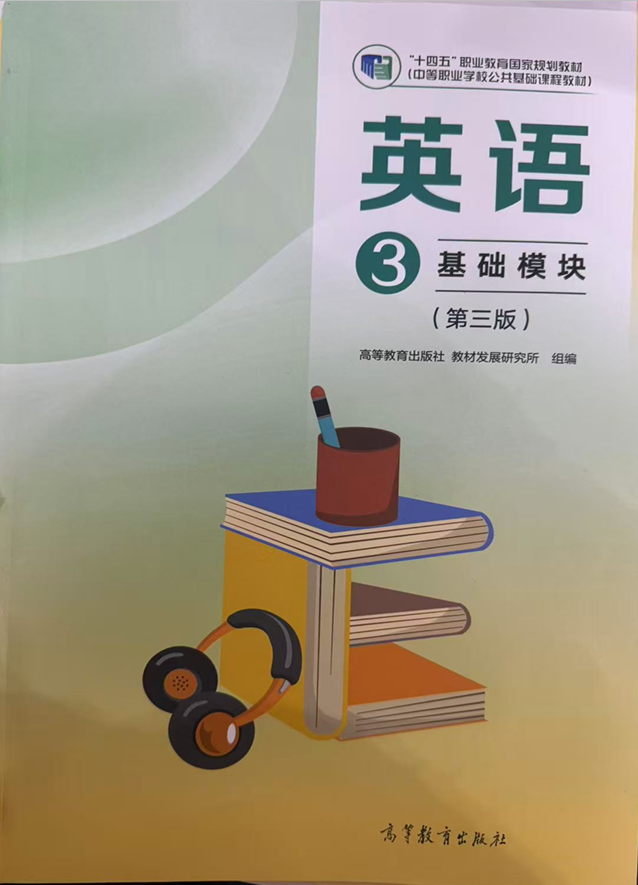
Unit 8 Role Models of the Times(B卷·能力提升)《英语 基础模块3》(高教版第三版)单元过关卷(原卷版+解析版)
2026-06-30
|
2份
|
20页
|
42人阅读
|
0人下载
内容正文:
编写说明:本套试卷紧扣《英语 基础模块3》(高教版第三版)教材,以教材单元为基准精准覆盖核心考点。
每个单元设置AB卷,A卷为基础巩固卷,侧重基础考点训练,帮助学生扎实掌握知识要点;B卷为能力提升卷,注重知识整合与全面检测,引导学生构建知识网络。全书设计4份综合测试卷,模拟实战情境,聚焦解题能力突破,全面提升应试能力与知识应用水平。
《英语 基础模块3》(高教版第三版)《单元过关卷》
Unit 8 Role Models of the Times
B卷·能力提升
考试时间:120分钟 满分:100分
班级_____姓名_____学号_____成绩_____
一、情景交际(共15小题;满分20分)
第一节 读下列10个短对话,从题后所给的 A、B、C、D 四个选项中选出可以填入空白处的最佳选项。(共10小题,每小题1分,满分10分)
1. —Our group wants to interview a skilled worker as a role model. What should we ask first?
—_______. It helps listeners understand his experience.
A. Ask how much his shoes cost. B. Ask whether he likes cartoons.
C. Ask him to sing a song. D. Ask about his job and achievements.
【答案】D
【详解】考查采访开场。采访榜样应先了解职业与成就,D项符合真实任务。
2. —The scientist failed many times before the experiment succeeded.
—_______. That is why I admire her.
A. She never gave up. B. She disliked teamwork.
C. She forgot her goal. D. She wasted time.
【答案】A
【详解】考查概括品质。多次失败后成功体现never give up,故选A。
3. —Why do you look up to your elder sister?
—_______. She studies nursing and often volunteers in the community.
A. Because she buys gifts. B. Because she is taller than me.
C. Because she serves people with care. D. Because she lives far away.
【答案】C
【详解】考查说明敬佩原因。护理学习和社区志愿服务体现关爱服务,故选C。
4. —Having finished the poster, should we add our own feelings?
—_______. A good poster should show both facts and feelings.
A. No, feelings are useless. B. Yes, that will make it more meaningful.
C. Only write numbers. D. Never mention the person.
【答案】B
【详解】考查提出建议。主题海报既需事实也需情感,B项符合语境。
5. —The story of the firefighter is moving, but I do not know how to connect it with my study.
—_______. Start by training carefully and helping classmates.
A. Forget the story. B. Choose a different major at once.
C. Wait until you become famous. D. Turn admiration into action.
【答案】D
【详解】考查把敬佩转化为行动。后文给出具体行动,D项为核心建议。
6. —What does “devote oneself to” mean in this sentence?
—_______. For example, she devoted herself to medical research.
A. It means give time and energy to something. B. It means leave something quickly.
C. It means buy something cheaply. D. It means hide one's ideas.
【答案】A
【详解】考查短语释义。devote oneself to意为“致力于,把时间精力投入……”。
7. —Our report has too many prizes but few details.
—_______. Details can show why the person is respectable.
A. Let's add one real story. B. Let's delete the title.
C. Let's make every word red. D. Let's stop the report.
【答案】A
【详解】考查补充细节。题干指出缺少细节,A项提出加入真实故事。
8. —I want to be like my role model, but I am still weak in skills.
—_______. Improvement begins with daily practice.
A. You should give up now. B. Make a plan and practise step by step.
C. Skills are not important. D. Only admire famous people.
【答案】B
【详解】考查学习建议。技能薄弱时应制定计划逐步练习,故选B。
9. —The team finally won the championship after years of hard training.
—_______. Their teamwork and spirit are worth learning.
A. What a respectable team! B. They should stop training.
C. It is just a small mistake. D. Nobody cares about teamwork.
【答案】A
【详解】考查表达赞叹。团队长期训练后夺冠,A项赞叹其值得尊敬。
10. —Could you help me polish this paragraph about my role model?
—_______. Let's make the example clearer.
A. No, I never read. B. Of course.
C. It is not your paragraph. D. The printer is broken.
【答案】B
【详解】考查请求帮助。对方请求润色段落,B项表示愿意帮助。
第二节 读下面一段对话,从方框中所给的 A、B、C、D、E、F 和 G 七个选项中选出可以填入空白处的最佳选项。(共5小题,每小题2分,满分10分)
Reporter: Good afternoon. I am making a short video about role models in our school.
Student: Great. _______ 11 _______
Reporter: I plan to interview Mr. Zhao, the training teacher in the workshop.
Student: Why did you choose him?
Reporter: _______ 12 _______ He checks every detail before students use the machines.
Student: That sounds responsible. What question will you ask?
Reporter: _______ 13 _______
Student: You may also ask how he deals with mistakes in training.
Reporter: Good idea. _______ 14 _______
Student: Yes. It can help us understand that skills need patience and safety awareness.
Reporter: _______ 15 _______
A. Because he teaches skills carefully and keeps students safe.
B. Thanks for your useful advice.
C. That will make the video deeper.
D. Who are you going to interview?
E. I will ask about his daily work and achievements.
F. Should I include students' feelings in the video?
G. I do not want to talk about role models.
【答案】11. D 12. A 13. E 14. F 15. B
【详解】
11. 根据下文“I plan to interview...”可知,此处询问采访对象,D项符合。
12. 上文问why,A项用Because说明选择赵老师的原因。
13. 上文问将提什么问题,E项说明要询问日常工作和成就。
14. 下文“Yes.”并说明视频中加入感受的意义,F项为一般疑问句,衔接自然。
15. 对方给出建议后,B项表示感谢,符合交际礼貌。
二、阅读理解(共20小题;每小题2分,满分40分)
阅读下列短文,从每题所给的 A、B、C、D 四个选项中选出最佳选项。
A
In many vocational schools, role model education is becoming more practical. Instead of only asking students to read famous stories, teachers now guide them to observe people around them. In one school, students from different majors joined a project called One Week with a Role Model. Each group chose a person related to its major, such as a nurse, a cook, a mechanic or a community volunteer. The aim was to understand how ordinary work can show valuable spirit.
During the project, students had to complete three tasks. First, they interviewed the person and wrote down basic information, including job, daily duties and important achievements. Second, they observed one working process carefully. For example, cooking students watched how a chef checked food safety before preparing dishes, while machinery students noticed how a technician cleaned tools after use. Third, they discussed what quality was most worth learning and how it could be used in their own training.
The teachers found that students changed their understanding of success. Before the project, some students thought success meant becoming famous or winning big prizes. After the project, many of them wrote that patience, responsibility and service were also signs of success. A student said, “My role model is not on TV, but he makes people's lives easier every day.”
The project also improved students' English learning. When they prepared interview questions and reports, they used expressions such as make contributions, devote oneself to, be responsible for and look up to. More importantly, they learned to connect language with real work and personal growth. The school plans to keep the project because it makes English useful and values education visible.
16. What was the project called?
A. A Day at the Airport. B. One Week with a Role Model.
C. A Trip to the Museum. D. English Songs for Workers.
17. What did students do first in the project?
A. Cooked dishes for teachers. B. Cleaned all school rooms.
C. Interviewed the person they chose. D. Bought prizes for role models.
18. What did cooking students observe?
A. How a chef checked food safety. B. How a driver repaired a bus.
C. How a nurse wrote a poem. D. How a volunteer sold machines.
19. How did many students' understanding of success change?
A. They thought only fame mattered. B. They believed prizes were useless.
C. They stopped respecting workers. D. They saw patience and responsibility as signs of success.
20. What did the project help students connect English with?
A. Expensive travel. B. Online games.
C. Real work and personal growth. D. Silent reading only.
【答案】16. B 17. C 18. A 19. D 20. C
【导语】本文介绍职业学校开展“One Week with a Role Model”项目,引导学生观察身边榜样并把英语学习与真实工作相结合。
【详解】
16. 本题为细节理解题。根据第1段“a project called One Week with a Role Model”可知,故选B。
17. 本题为细节理解题。根据第2段“First, they interviewed the person...”可知,故选C。
18. 本题为细节理解题。根据第2段“cooking students watched how a chef checked food safety”可知,故选A。
19. 本题为推理判断题。根据第3段“patience, responsibility and service were also signs of success”可知,故选D。
20. 本题为细节理解题。根据末段“connect language with real work and personal growth”可知,故选C。
B
When Chen Rui entered vocational school, he chose the automotive service major because he liked cars. However, he soon discovered that interest alone was not enough. In the workshop, every tool had to be put in the correct place, every step had to follow safety rules, and every small sound from an engine might show a problem. Chen Rui often felt impatient and wanted quick results. He enjoyed starting a machine, but he did not enjoy checking details.
His training teacher, Mr. Zhao, became an important role model for him. Mr. Zhao had worked as a technician for many years before becoming a teacher. He never started a lesson by showing off difficult skills. Instead, he asked students to clean the workbench, check tools and read the repair form carefully. “A good technician respects details,” he often said. Some students thought this was slow, but Mr. Zhao explained that safety and quality always came before speed.
One day, Chen Rui repaired a training car but forgot to tighten a small part. The engine ran, but there was an unusual noise. Chen Rui felt embarrassed. Mr. Zhao did not scold him. He asked the class to listen, find the source of the noise and explain the possible danger. Then he told Chen Rui, “Mistakes are useful only when you learn from them. Hiding a mistake is more dangerous than making one.”
After that, Chen Rui kept a notebook of mistakes. He wrote down the cause, the correct step and a reminder for next time. At the end of the term, he won second prize in a school skills competition. More importantly, he understood that real skill comes from responsibility. Mr. Zhao's influence helped him turn interest into careful practice, and Chen Rui began to look up to workers who completed ordinary tasks with professional spirit.
21. Why did Chen Rui choose the automotive service major?
A. Because his teacher forced him. B. Because he liked cars.
C. Because it needed no practice. D. Because he disliked all other students.
22. What did Mr. Zhao ask students to do before difficult skills?
A. Clean the workbench and check tools. B. Watch TV in the classroom.
C. Buy a new car. D. Leave the repair form blank.
23. What happened when Chen Rui forgot to tighten a small part?
A. The teacher ended the course. B. The engine made an unusual noise.
C. The car disappeared. D. He won first prize at once.
24. What did Chen Rui keep after that experience?
A. A travel diary. B. A list of songs.
C. A notebook of mistakes. D. A box of prizes.
25. What is the main lesson of the story?
A. Real skill comes from responsibility and careful practice. B. Interest is useless for every student.
C. Mistakes should always be hidden. D. Competitions are more important than safety.
【答案】21. B 22. A 23. B 24. C 25. A
【导语】本文讲述汽修专业学生陈瑞在赵老师影响下认识到细节、安全和责任的重要性,并把兴趣转化为认真练习。
【详解】
21. 本题为细节理解题。根据第1段“because he liked cars”可知,故选B。
22. 本题为细节理解题。根据第2段“clean the workbench, check tools and read the repair form carefully”可知,故选A。
23. 本题为细节理解题。根据第3段“there was an unusual noise”可知,故选B。
24. 本题为细节理解题。根据第4段“Chen Rui kept a notebook of mistakes”可知,故选C。
25. 本题为主旨大意题。末段点明real skill comes from responsibility,故选A。
C
When students introduce a role model in English, they often begin with achievements. This is useful, but it is not enough. A good introduction should answer three deeper questions: What problem did the person face? What choice did he or she make? What can we learn from that choice? These questions can make a speech clearer and more powerful. They also help listeners remember the person, not just the prizes.
First, describing a problem helps listeners understand the difficulty. If a scientist spends years doing experiments, listeners need to know why the research matters. If a nurse works in a busy community, listeners should understand what needs the patients have. Without a real problem, achievements may sound like empty numbers. A problem gives the story a clear beginning and shows why the role model's work is meaningful.
Second, the person's choice shows his or her quality. Some people choose to stay with a difficult task. Some choose to help others before thinking about themselves. Some choose to correct mistakes instead of hiding them. These choices show patience, courage, responsibility or kindness better than a long list of prizes. When students explain a choice, they can use phrases such as devote oneself to, make contributions and never give up.
Third, students should connect the story with their own action. Saying “I admire her” is only a beginning. A stronger ending can be “I will check every detail in my training, just as she did in her work” or “I will volunteer in my community to learn how to serve people.” In this way, a role model speech becomes a plan for growth, not just a report about someone famous.
26. What do students often begin with when introducing a role model?
A. Achievements. B. Weather.
C. Prices. D. Phone numbers.
27. Why should a speech describe the problem first?
A. To make achievements sound like empty numbers. B. To avoid talking about the person.
C. To copy others' speeches. D. To help listeners understand the difficulty.
28. What can show a role model's quality better than many prizes?
A. The person's clothes. B. The person's address.
C. The person's choice. D. The person's birthday.
29. Which ending is stronger according to the passage?
A. I admire her very much and that is all. B. I will check every detail in my training.
C. She is famous on TV. D. Her prize is big.
30. What is the passage mainly about?
A. How to buy English books. B. How to become famous quickly.
C. How to list as many prizes as possible. D. How to introduce a role model meaningfully.
【答案】26. A 27. D 28. C 29. B 30. D
【导语】本文说明英文介绍榜样时不能只罗列成就,还应呈现问题、选择与自我行动,使表达更有深度。
【详解】
26. 本题为细节理解题。根据第1段“they often begin with achievements”可知,故选A。
27. 本题为细节理解题。根据第2段“describing a problem helps listeners understand the difficulty”可知,故选D。
28. 本题为细节理解题。根据第3段“the person's choice shows his or her quality”可知,故选C。
29. 本题为细节理解题。根据末段举例“I will check every detail...”可知,把敬佩转化为行动的结尾更有力,故选B。
30. 本题为主旨大意题。全文围绕如何有意义地介绍榜样展开,故选D。
D
At a skills festival, four students were asked to speak about their role models. Their answers were different. Mei chose a doctor who visited mountain villages every month. Zhang Hao chose a young engineer who improved a machine in a factory. Lin Jie chose his grandmother, a retired cook who still taught neighbors how to prepare healthy meals. Sara chose a classmate who helped her practise English after school. The variety of answers made the audience curious.
At first, some listeners wondered whether all these people could be called role models. The doctor and engineer seemed easy to understand because their achievements were clear. But a grandmother and a classmate looked too ordinary. Then the students explained their reasons. The grandmother had served people through food for forty years and never stopped learning new ways to keep meals healthy. The classmate spent her own time helping others and never laughed at mistakes.
The discussion made everyone think again about the meaning of “greatness”. Greatness is not always measured by medals or news reports. It can also be found in steady service, careful improvement and warm support. A person becomes a role model when his or her actions give others courage to do better. From this point of view, ordinary people can also have extraordinary influence.
After the festival, the school started a “Role Models Around Us” board. Students put photos, interviews and short reflections on it. The board soon became popular because it showed that everyone could learn from someone nearby. It also reminded students that they themselves might encourage others if they worked responsibly and kindly every day. Many students wrote that they would no longer wait for a perfect hero, but would begin with one small action.
31. Who chose a doctor as a role model?
A. Mei. B. Zhang Hao.
C. Lin Jie. D. Sara.
32. Why did some listeners question the grandmother and classmate at first?
A. They spoke no English. B. They were too young.
C. Their achievements looked less obvious. D. They refused to help others.
33. What had Lin Jie's grandmother done for many years?
A. Repaired machines. B. Played volleyball.
C. Sold newspapers. D. Served people through food.
34. What does the passage say greatness can be found in?
A. Only medals. B. Steady service and warm support.
C. Expensive gifts. D. Loud speeches only.
35. Why did the school start the board?
A. To sell photos. B. To make students stop interviews.
C. To compare families. D. To show role models around students.
【答案】31. A 32. C 33. D 34. B 35. D
【导语】本文通过技能节上学生分享不同榜样的故事,引导学生理解伟大也存在于平凡服务、持续改进和温暖支持中。
【详解】
31. 本题为细节理解题。根据第1段“Mei chose a doctor”可知,故选A。
32. 本题为推理判断题。根据第2段“looked too ordinary”可知,听众起初认为祖母和同学的成就不够明显,故选C。
33. 本题为细节理解题。根据第2段“The grandmother had served people through food for forty years”可知,故选D。
34. 本题为细节理解题。根据第3段“steady service, careful improvement and warm support”可知,故选B。
35. 本题为主旨理解题。末段说明展板展示身边榜样,提醒学生向附近的人学习,故选D。
三、完形填空(共10小题;每小题1分,满分10分)
阅读下面短文,从每题所给的 A、B、C、D 四个选项中选出可以填入空白处的最佳选项。
During the school Role Model Week, students from different majors worked together to make short videos. At first, they wanted to choose only famous people. Their teacher advised them to look closer and find people who made _______ 36 _______ in ordinary jobs. After discussion, Li Nan's group chose Aunt Wang, a cleaner in their community.
Aunt Wang began work before most people got up. She cleaned the streets _______ 37 _______ and greeted people with a smile. One rainy morning, Li Nan saw her move a fallen branch away from the road. It was not part of her duty, _______ 38 _______ she did it to keep others safe. When the group interviewed her, she said, “If everyone does a little more, our community will be better.”
The students were _______ 39 _______ by her words. They realized that responsibility was not an empty idea. It could be shown in small actions. In their video, they did not use many difficult words. Instead, they recorded real scenes and explained how Aunt Wang _______ 40 _______ herself to serving the community. The video showed her valuable _______ 41 _______ and won praise _______ 42 _______ it was true and warm. Li Nan felt _______ 43 _______ of the work and decided to _______ 44 _______ admiration into action. He wrote a new plan for personal _______ 45 _______.
36. A. mistakes B. contributions C. excuses D. noises
37. A. angrily B. carefully C. suddenly D. cheaply
38. A. and B. or C. but D. because
39. A. moved B. hidden C. lost D. closed
40. A. borrowed B. forgot C. changed D. devoted
41. A. price B. weather C. quality D. ticket
42. A. although B. if C. until D. because
43. A. late B. empty C. strict D. proud
44. A. copy B. turn C. throw D. lock
45. A. traffic B. breakfast C. silence D. growth
【答案】36. B 37. B 38. C 39. A 40. D 41. C 42. D 43. D 44. B 45. D
【导语】本文是一篇记叙文。文章讲述学生在“榜样周”拍摄短视频时,从社区清洁工王阿姨身上理解了平凡岗位中的责任与奉献。
【详解】
36. 考查名词。make contributions表示“作贡献”,普通岗位也能作贡献,故选B。
37. 考查副词。清洁街道应是认真仔细地做,carefully符合语境,故选B。
38. 考查连词。移开树枝不是职责范围,但她为了安全去做,前后为转折关系,故选C。
39. 考查形容词/过去分词。学生被她的话感动,be moved by表示“被……感动”,故选A。
40. 考查动词。devote oneself to表示“致力于”,符合服务社区语境,故选D。
41. 考查名词。responsibility是一种quality“品质”,故选C。
42. 考查连词。because引导原因状语从句,说明视频受欢迎的原因,故选D。
43. 考查形容词。be proud of表示“为……自豪”,故选D。
44. 考查动词。turn admiration into action表示“把敬佩转化为行动”,符合单元主题,故选B。
45. 考查名词。a plan for growth表示“成长计划”,与榜样教育目的一致,故选D。
四、语法填空(共10小题;每小题1分,满分10分)
阅读下面短文,在空白处填入1个适当的单词或括号内单词的正确形式。
Having _______ 46 _______ (finish) the interview, our group began to write a report about a community doctor. She has worked there _______ 47 _______ more than ten years. Every day, she listens to patients _______ 48 _______ (patient) and explains health advice in simple words. Many old people trust her because they _______ 49 _______ (help) by her many times.
In our report, we described one experience. Last winter, the doctor walked to an old man's home after _______ 50 _______ (hear) that he could not go to the clinic. She checked his temperature and reminded him _______ 51 _______ (take) medicine on time. Tired as she was, she still smiled warmly.
Our teacher said the report was meaningful _______ 52 _______ it connected facts with feelings. She also advised us _______ 53 _______ (add) what we would do in the future. From this role model, we have learned that small acts of care can make society _______ 54 _______ (warm). We will keep practising our skills and try _______ 55 _______ best to serve others.
【答案】46. finished 47. for 48. patiently 49. have been helped 50. hearing 51. to take 52. because 53. to add 54. warmer 55. our
【详解】
46. 考查非谓语动词。Having done表示动作先于主句动作完成,故填finished。
47. 考查介词。for more than ten years表示持续十多年,常与现在完成时连用。
48. 考查词性转换。修饰动词listens用副词patiently。
49. 考查现在完成时的被动语态。主语they与help为被动关系,many times提示完成意义,故填have been helped。
50. 考查动名词。after作介词时后接动名词,故填hearing。
51. 考查非谓语动词。remind sb. to do sth.表示“提醒某人做某事”。
52. 考查状语从句。后文说明报告有意义的原因,用because。
53. 考查非谓语动词。advise sb. to do sth.表示“建议某人做某事”。
54. 考查形容词比较级。make society warmer表示“让社会更温暖”,含比较变化意义。
55. 考查代词。try one's best表示“尽某人最大努力”,主语we对应our。
五、书面表达(满分20分)
假定你是职业学校学生李华。你校英文网站正在征集“Role Models Around Us”短文。请你写一篇英语短文,介绍一位身边的榜样,并说明你准备如何向他/她学习。
要点:1. 介绍这位身边榜样的身份;2. 描述一个体现其品质的具体事例;3. 说明你的学习行动计划。
注意:1. 词数80词左右;2. 内容真实合理,条理清楚;3. 文中不得出现真实姓名、校名和地名。
________________________________________________________________________________________________________________________________________________
【参考范文】
My role model around me is Mr. Chen, a training teacher in our school workshop. He is strict but kind. Before every class, he checks each tool carefully and reminds us to follow safety rules. Once, I made a mistake in practice and felt nervous. Instead of blaming me, he asked me to find the cause and write it in my notebook.
From him, I have learned that real skill comes from responsibility and careful practice. In the future, I will check details before doing tasks, record my mistakes and practise step by step. I hope I can become a skilled and responsible worker like him.
【词汇积累】workshop车间;safety rules安全规则;instead of而不是;find the cause找出原因;step by step逐步地;responsible负责任的。
【句式拓展】原句:He checks each tool. 拓展:Before every class, he checks each tool carefully and reminds us to follow safety rules.
【点睛】范文围绕“身边榜样—具体事例—行动计划”展开,突出职业教育语境中的安全意识、责任感和技能训练,符合B卷能力提升要求。
原创精品资源学科网独家享有版权,侵权必究!
学科网(北京)股份有限公司
$
编写说明:本套试卷紧扣《英语 基础模块3》(高教版第三版)教材,以教材单元为基准精准覆盖核心考点。
每个单元设置AB卷,A卷为基础巩固卷,侧重基础考点训练,帮助学生扎实掌握知识要点;B卷为能力提升卷,注重知识整合与全面检测,引导学生构建知识网络。全书设计4份综合测试卷,模拟实战情境,聚焦解题能力突破,全面提升应试能力与知识应用水平。
《英语 基础模块3》(高教版第三版)《单元过关卷》
Unit 8 Role Models of the Times
B卷·能力提升
考试时间:120分钟 满分:100分
班级_____姓名_____学号_____成绩_____
一、情景交际(共15小题;满分20分)
第一节 读下列10个短对话,从题后所给的 A、B、C、D 四个选项中选出可以填入空白处的最佳选项。(共10小题,每小题1分,满分10分)
1. —Our group wants to interview a skilled worker as a role model. What should we ask first?
—_______. It helps listeners understand his experience.
A. Ask how much his shoes cost. B. Ask whether he likes cartoons.
C. Ask him to sing a song. D. Ask about his job and achievements.
2. —The scientist failed many times before the experiment succeeded.
—_______. That is why I admire her.
A. She never gave up. B. She disliked teamwork.
C. She forgot her goal. D. She wasted time.
3. —Why do you look up to your elder sister?
—_______. She studies nursing and often volunteers in the community.
A. Because she buys gifts. B. Because she is taller than me.
C. Because she serves people with care. D. Because she lives far away.
4. —Having finished the poster, should we add our own feelings?
—_______. A good poster should show both facts and feelings.
A. No, feelings are useless. B. Yes, that will make it more meaningful.
C. Only write numbers. D. Never mention the person.
5. —The story of the firefighter is moving, but I do not know how to connect it with my study.
—_______. Start by training carefully and helping classmates.
A. Forget the story. B. Choose a different major at once.
C. Wait until you become famous. D. Turn admiration into action.
6. —What does “devote oneself to” mean in this sentence?
—_______. For example, she devoted herself to medical research.
A. It means give time and energy to something. B. It means leave something quickly.
C. It means buy something cheaply. D. It means hide one's ideas.
7. —Our report has too many prizes but few details.
—_______. Details can show why the person is respectable.
A. Let's add one real story. B. Let's delete the title.
C. Let's make every word red. D. Let's stop the report.
8. —I want to be like my role model, but I am still weak in skills.
—_______. Improvement begins with daily practice.
A. You should give up now. B. Make a plan and practise step by step.
C. Skills are not important. D. Only admire famous people.
9. —The team finally won the championship after years of hard training.
—_______. Their teamwork and spirit are worth learning.
A. What a respectable team! B. They should stop training.
C. It is just a small mistake. D. Nobody cares about teamwork.
10. —Could you help me polish this paragraph about my role model?
—_______. Let's make the example clearer.
A. No, I never read. B. Of course.
C. It is not your paragraph. D. The printer is broken.
第二节 读下面一段对话,从方框中所给的 A、B、C、D、E、F 和 G 七个选项中选出可以填入空白处的最佳选项。(共5小题,每小题2分,满分10分)
Reporter: Good afternoon. I am making a short video about role models in our school.
Student: Great. _______ 11 _______
Reporter: I plan to interview Mr. Zhao, the training teacher in the workshop.
Student: Why did you choose him?
Reporter: _______ 12 _______ He checks every detail before students use the machines.
Student: That sounds responsible. What question will you ask?
Reporter: _______ 13 _______
Student: You may also ask how he deals with mistakes in training.
Reporter: Good idea. _______ 14 _______
Student: Yes. It can help us understand that skills need patience and safety awareness.
Reporter: _______ 15 _______
A. Because he teaches skills carefully and keeps students safe.
B. Thanks for your useful advice.
C. That will make the video deeper.
D. Who are you going to interview?
E. I will ask about his daily work and achievements.
F. Should I include students' feelings in the video?
G. I do not want to talk about role models.
二、阅读理解(共20小题;每小题2分,满分40分)
阅读下列短文,从每题所给的 A、B、C、D 四个选项中选出最佳选项。
A
In many vocational schools, role model education is becoming more practical. Instead of only asking students to read famous stories, teachers now guide them to observe people around them. In one school, students from different majors joined a project called One Week with a Role Model. Each group chose a person related to its major, such as a nurse, a cook, a mechanic or a community volunteer. The aim was to understand how ordinary work can show valuable spirit.
During the project, students had to complete three tasks. First, they interviewed the person and wrote down basic information, including job, daily duties and important achievements. Second, they observed one working process carefully. For example, cooking students watched how a chef checked food safety before preparing dishes, while machinery students noticed how a technician cleaned tools after use. Third, they discussed what quality was most worth learning and how it could be used in their own training.
The teachers found that students changed their understanding of success. Before the project, some students thought success meant becoming famous or winning big prizes. After the project, many of them wrote that patience, responsibility and service were also signs of success. A student said, “My role model is not on TV, but he makes people's lives easier every day.”
The project also improved students' English learning. When they prepared interview questions and reports, they used expressions such as make contributions, devote oneself to, be responsible for and look up to. More importantly, they learned to connect language with real work and personal growth. The school plans to keep the project because it makes English useful and values education visible.
16. What was the project called?
A. A Day at the Airport. B. One Week with a Role Model.
C. A Trip to the Museum. D. English Songs for Workers.
17. What did students do first in the project?
A. Cooked dishes for teachers. B. Cleaned all school rooms.
C. Interviewed the person they chose. D. Bought prizes for role models.
18. What did cooking students observe?
A. How a chef checked food safety. B. How a driver repaired a bus.
C. How a nurse wrote a poem. D. How a volunteer sold machines.
19. How did many students' understanding of success change?
A. They thought only fame mattered. B. They believed prizes were useless.
C. They stopped respecting workers. D. They saw patience and responsibility as signs of success.
20. What did the project help students connect English with?
A. Expensive travel. B. Online games.
C. Real work and personal growth. D. Silent reading only.
B
When Chen Rui entered vocational school, he chose the automotive service major because he liked cars. However, he soon discovered that interest alone was not enough. In the workshop, every tool had to be put in the correct place, every step had to follow safety rules, and every small sound from an engine might show a problem. Chen Rui often felt impatient and wanted quick results. He enjoyed starting a machine, but he did not enjoy checking details.
His training teacher, Mr. Zhao, became an important role model for him. Mr. Zhao had worked as a technician for many years before becoming a teacher. He never started a lesson by showing off difficult skills. Instead, he asked students to clean the workbench, check tools and read the repair form carefully. “A good technician respects details,” he often said. Some students thought this was slow, but Mr. Zhao explained that safety and quality always came before speed.
One day, Chen Rui repaired a training car but forgot to tighten a small part. The engine ran, but there was an unusual noise. Chen Rui felt embarrassed. Mr. Zhao did not scold him. He asked the class to listen, find the source of the noise and explain the possible danger. Then he told Chen Rui, “Mistakes are useful only when you learn from them. Hiding a mistake is more dangerous than making one.”
After that, Chen Rui kept a notebook of mistakes. He wrote down the cause, the correct step and a reminder for next time. At the end of the term, he won second prize in a school skills competition. More importantly, he understood that real skill comes from responsibility. Mr. Zhao's influence helped him turn interest into careful practice, and Chen Rui began to look up to workers who completed ordinary tasks with professional spirit.
21. Why did Chen Rui choose the automotive service major?
A. Because his teacher forced him. B. Because he liked cars.
C. Because it needed no practice. D. Because he disliked all other students.
22. What did Mr. Zhao ask students to do before difficult skills?
A. Clean the workbench and check tools. B. Watch TV in the classroom.
C. Buy a new car. D. Leave the repair form blank.
23. What happened when Chen Rui forgot to tighten a small part?
A. The teacher ended the course. B. The engine made an unusual noise.
C. The car disappeared. D. He won first prize at once.
24. What did Chen Rui keep after that experience?
A. A travel diary. B. A list of songs.
C. A notebook of mistakes. D. A box of prizes.
25. What is the main lesson of the story?
A. Real skill comes from responsibility and careful practice. B. Interest is useless for every student.
C. Mistakes should always be hidden. D. Competitions are more important than safety.
C
When students introduce a role model in English, they often begin with achievements. This is useful, but it is not enough. A good introduction should answer three deeper questions: What problem did the person face? What choice did he or she make? What can we learn from that choice? These questions can make a speech clearer and more powerful. They also help listeners remember the person, not just the prizes.
First, describing a problem helps listeners understand the difficulty. If a scientist spends years doing experiments, listeners need to know why the research matters. If a nurse works in a busy community, listeners should understand what needs the patients have. Without a real problem, achievements may sound like empty numbers. A problem gives the story a clear beginning and shows why the role model's work is meaningful.
Second, the person's choice shows his or her quality. Some people choose to stay with a difficult task. Some choose to help others before thinking about themselves. Some choose to correct mistakes instead of hiding them. These choices show patience, courage, responsibility or kindness better than a long list of prizes. When students explain a choice, they can use phrases such as devote oneself to, make contributions and never give up.
Third, students should connect the story with their own action. Saying “I admire her” is only a beginning. A stronger ending can be “I will check every detail in my training, just as she did in her work” or “I will volunteer in my community to learn how to serve people.” In this way, a role model speech becomes a plan for growth, not just a report about someone famous.
26. What do students often begin with when introducing a role model?
A. Achievements. B. Weather.
C. Prices. D. Phone numbers.
27. Why should a speech describe the problem first?
A. To make achievements sound like empty numbers. B. To avoid talking about the person.
C. To copy others' speeches. D. To help listeners understand the difficulty.
28. What can show a role model's quality better than many prizes?
A. The person's clothes. B. The person's address.
C. The person's choice. D. The person's birthday.
29. Which ending is stronger according to the passage?
A. I admire her very much and that is all. B. I will check every detail in my training.
C. She is famous on TV. D. Her prize is big.
30. What is the passage mainly about?
A. How to buy English books. B. How to become famous quickly.
C. How to list as many prizes as possible. D. How to introduce a role model meaningfully.
D
At a skills festival, four students were asked to speak about their role models. Their answers were different. Mei chose a doctor who visited mountain villages every month. Zhang Hao chose a young engineer who improved a machine in a factory. Lin Jie chose his grandmother, a retired cook who still taught neighbors how to prepare healthy meals. Sara chose a classmate who helped her practise English after school. The variety of answers made the audience curious.
At first, some listeners wondered whether all these people could be called role models. The doctor and engineer seemed easy to understand because their achievements were clear. But a grandmother and a classmate looked too ordinary. Then the students explained their reasons. The grandmother had served people through food for forty years and never stopped learning new ways to keep meals healthy. The classmate spent her own time helping others and never laughed at mistakes.
The discussion made everyone think again about the meaning of “greatness”. Greatness is not always measured by medals or news reports. It can also be found in steady service, careful improvement and warm support. A person becomes a role model when his or her actions give others courage to do better. From this point of view, ordinary people can also have extraordinary influence.
After the festival, the school started a “Role Models Around Us” board. Students put photos, interviews and short reflections on it. The board soon became popular because it showed that everyone could learn from someone nearby. It also reminded students that they themselves might encourage others if they worked responsibly and kindly every day. Many students wrote that they would no longer wait for a perfect hero, but would begin with one small action.
31. Who chose a doctor as a role model?
A. Mei. B. Zhang Hao.
C. Lin Jie. D. Sara.
32. Why did some listeners question the grandmother and classmate at first?
A. They spoke no English. B. They were too young.
C. Their achievements looked less obvious. D. They refused to help others.
33. What had Lin Jie's grandmother done for many years?
A. Repaired machines. B. Played volleyball.
C. Sold newspapers. D. Served people through food.
34. What does the passage say greatness can be found in?
A. Only medals. B. Steady service and warm support.
C. Expensive gifts. D. Loud speeches only.
35. Why did the school start the board?
A. To sell photos. B. To make students stop interviews.
C. To compare families. D. To show role models around students.
三、完形填空(共10小题;每小题1分,满分10分)
阅读下面短文,从每题所给的 A、B、C、D 四个选项中选出可以填入空白处的最佳选项。
During the school Role Model Week, students from different majors worked together to make short videos. At first, they wanted to choose only famous people. Their teacher advised them to look closer and find people who made _______ 36 _______ in ordinary jobs. After discussion, Li Nan's group chose Aunt Wang, a cleaner in their community.
Aunt Wang began work before most people got up. She cleaned the streets _______ 37 _______ and greeted people with a smile. One rainy morning, Li Nan saw her move a fallen branch away from the road. It was not part of her duty, _______ 38 _______ she did it to keep others safe. When the group interviewed her, she said, “If everyone does a little more, our community will be better.”
The students were _______ 39 _______ by her words. They realized that responsibility was not an empty idea. It could be shown in small actions. In their video, they did not use many difficult words. Instead, they recorded real scenes and explained how Aunt Wang _______ 40 _______ herself to serving the community. The video showed her valuable _______ 41 _______ and won praise _______ 42 _______ it was true and warm. Li Nan felt _______ 43 _______ of the work and decided to _______ 44 _______ admiration into action. He wrote a new plan for personal _______ 45 _______.
36. A. mistakes B. contributions C. excuses D. noises
37. A. angrily B. carefully C. suddenly D. cheaply
38. A. and B. or C. but D. because
39. A. moved B. hidden C. lost D. closed
40. A. borrowed B. forgot C. changed D. devoted
41. A. price B. weather C. quality D. ticket
42. A. although B. if C. until D. because
43. A. late B. empty C. strict D. proud
44. A. copy B. turn C. throw D. lock
45. A. traffic B. breakfast C. silence D. growth
四、语法填空(共10小题;每小题1分,满分10分)
阅读下面短文,在空白处填入1个适当的单词或括号内单词的正确形式。
Having _______ 46 _______ (finish) the interview, our group began to write a report about a community doctor. She has worked there _______ 47 _______ more than ten years. Every day, she listens to patients _______ 48 _______ (patient) and explains health advice in simple words. Many old people trust her because they _______ 49 _______ (help) by her many times.
In our report, we described one experience. Last winter, the doctor walked to an old man's home after _______ 50 _______ (hear) that he could not go to the clinic. She checked his temperature and reminded him _______ 51 _______ (take) medicine on time. Tired as she was, she still smiled warmly.
Our teacher said the report was meaningful _______ 52 _______ it connected facts with feelings. She also advised us _______ 53 _______ (add) what we would do in the future. From this role model, we have learned that small acts of care can make society _______ 54 _______ (warm). We will keep practising our skills and try _______ 55 _______ best to serve others.
五、书面表达(满分20分)
假定你是职业学校学生李华。你校英文网站正在征集“Role Models Around Us”短文。请你写一篇英语短文,介绍一位身边的榜样,并说明你准备如何向他/她学习。
要点:1. 介绍这位身边榜样的身份;2. 描述一个体现其品质的具体事例;3. 说明你的学习行动计划。
注意:1. 词数80词左右;2. 内容真实合理,条理清楚;3. 文中不得出现真实姓名、校名和地名。
________________________________________________________________________________________________________________________________________________
原创精品资源学科网独家享有版权,侵权必究!
学科网(北京)股份有限公司
$
资源预览图

1

2

3
由于学科网是一个信息分享及获取的平台,不确保部分用户上传资料的 来源及知识产权归属。如您发现相关资料侵犯您的合法权益,请联系学科网,我们核实后将及时进行处理。