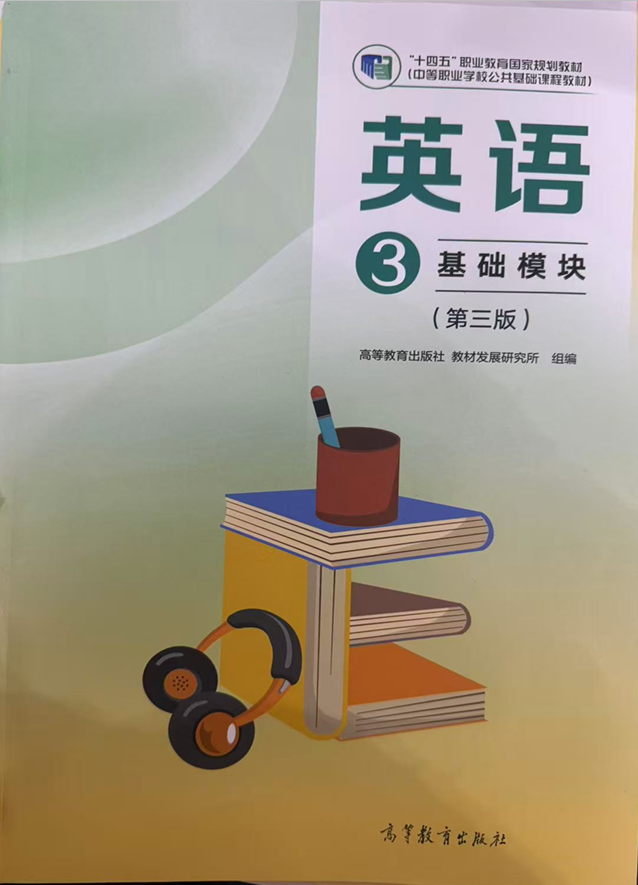
Unit 5——Unit 8 阶段测试卷(B卷·能力提升)《英语 基础模块3》(高教版第三版)单元过关卷(原卷版+解析版)
2026-06-30
|
2份
|
27页
|
45人阅读
|
0人下载
摘要:
**基本信息**
高教版中职英语《基础模块3》Unit5-8阶段测试B卷,聚焦能力提升,紧扣教材核心考点,通过真实情境任务整合语言运用与核心素养,适配单元复习需求。
**题型特征**
|题型|题量/分值|知识覆盖|命题特色|
|----|-----------|----------|----------|
|情景交际|15题/20分|日常对话、文化表达|创设旅游咨询、社区服务等真实情境,考查语言理解与回应能力|
|阅读理解|20题/40分|自然奇观、文化传承、环境保护、榜样事迹|选取技能活动设计、灾害教育项目等社会热点素材,培养信息筛选与批判性思维|
|完形填空|10题/10分|篇章逻辑、词汇运用|围绕城市服务路线设计,融入环保与责任意识,考查语篇连贯能力|
|语法填空|10题/10分|语法规则、语境应用|结合城市介绍主题,检测时态、从句等语法在真实语境中的运用|
|书面表达|1题/20分|榜样介绍、行动规划|要求介绍身边榜样并阐述学习行动,融合文化意识与责任担当,提升语言输出与思维品质|
内容正文:
编写说明:本套试卷紧扣《英语 基础模块3》(高教版第三版)教材,以教材单元为基准精准覆盖核心考点。
每个单元设置AB卷,A卷为基础巩固卷,侧重基础考点训练,帮助学生扎实掌握知识要点;B卷为能力提升卷,注重知识整合与全面检测,引导学生构建知识网络。全书设计4份综合测试卷,模拟实战情境,聚焦解题能力突破,全面提升应试能力与知识应用水平。
《英语 基础模块3》(高教版第三版)《单元过关卷》
Unit 5——Unit 8阶段测试卷
B卷·能力提升
考试时间:120分钟 满分:100分
班级_____姓名_____学号_____成绩_____
一、情景交际(共15小题;满分20分)
第一节 读下列10个短对话,从题后所给的 A、B、C、D 四个选项中选出可以填入空白处的最佳选项。(共10小题,每小题1分,满分10分)
1. —Our travel agency must choose one wonder for a photographer who loves powerful water views.
—_______. It will meet his need best.
A. Iguazu Falls should be recommended. B. The Potala Palace sells tickets.
C. A quiet library is enough. D. He should stay at home.
2. —The visitor asks why the old city wall is worth visiting.
—_______. It shows the city's long history and ancient construction skills.
A. It is closed every day. B. Because it has cultural value.
C. Because floods are frequent. D. It is made of paper.
3. —It seems that smog is only a weather problem.
—_______. Heavy industry and vehicles can partly cause it.
A. I agree completely. B. That is about paper-cutting.
C. I don't think so. D. It is the best role model.
4. —Why do you admire the young engineer?
—_______. He devoted his weekends to repairing equipment for the community.
A. He dislikes service work. B. He forgot every promise.
C. He copied others' reports. D. Because he used his skills to help others.
5. —Which sentence can help introduce a natural wonder's size?
—_______. It gives clear information about length.
A. The valley stretches for thousands of kilometers. B. I like reading novels.
C. The train is delayed. D. The doctor won a prize.
6. —The workshop lets visitors make paper-cuttings by themselves.
—_______. They can understand culture through practice.
A. That is a waste of time. B. That is a meaningful design.
C. It causes acid rain. D. It has no connection with culture.
7. —The flood warning was broadcast early, so people moved to safe places.
—_______. Good preparation can reduce damage.
A. No one should listen to warnings. B. It was only about history.
C. Exactly. D. The warning created the storm.
8. —Having finished nearly two hundred tests, the team finally improved the medicine.
—_______. Their patience is worth learning.
A. They should stop studying. B. The medicine is a waterfall.
C. No one respects hard work. D. What a respectable team!
9. —How can we make the poster more convincing?
—_______. Facts can support our opinion.
A. Add data about pollution and clear actions. B. Use only empty slogans.
C. Make the words as small as possible. D. Avoid all examples.
10. —Could you tell me where the Terracotta Army is?
—_______. It is one of the must-see places for visitors interested in history.
A. It is under the sea. B. It is in Xi'an.
C. It is a type of storm. D. It is a modern app.
第二节 读下面一段对话,从方框中所给的 A、B、C、D、E、F 和 G 七个选项中选出可以填入空白处的最佳选项。(共5小题,每小题2分,满分10分)
Reporter: I hear your class has finished a project called From Wonders to Heroes. What did you do first?
Student: We first collected information about a natural wonder. _______ 11 _______
Reporter: Did you only focus on scenery?
Student: No. We also studied a historical site. _______ 12 _______
Reporter: How did you include Unit 7?
Student: We discussed disasters and human activities. _______ 13 _______
Reporter: That sounds serious. What helped you make the project warmer?
Student: We interviewed workers and volunteers around us. _______ 14 _______
Reporter: What have you learned from the project?
Student: _______ 15 _______ English can help us describe the world and express responsibility.
A. We should not care about environmental problems.
B. We learned that a city needs both beautiful places and responsible people.
C. Their stories showed that ordinary jobs can also be great.
D. Then we wrote about its location, size and special features.
E. We found that culture can be understood through buildings and handicrafts.
F. We suggested saving energy and preparing for extreme weather.
G. We copied all the answers from a guidebook.
二、阅读理解(共20小题;每小题2分,满分40分)
阅读下列短文,从每题所给的 A、B、C、D 四个选项中选出最佳选项。
A
A vocational school in Nanjing invited students to design an English audio guide for an international skills event. The guide needed to introduce a one-day cultural route, but the students were not allowed to simply list famous places. They had to explain why each place mattered and how visitors could experience culture in a respectful way. After discussion, they chose three stops: an ancient city wall, a small museum of traditional tools, and a workshop for local handicrafts.
At the city wall, the guide would explain that old constructions are more than stones and bricks. They remind people of how a city protected itself and how people organized life in the past. At the museum, visitors could compare ancient tools with modern machines used in vocational training. This part helped students connect history with their own majors. At the handicraft workshop, visitors would not only watch a demonstration but also try a simple step themselves. The students believed that doing something by hand could make culture easier to understand.
The teacher asked each group to revise the guide several times. Some students first used expressions like “very old” and “very good” too often. The teacher encouraged them to use more exact words, such as originally, construct, regular, brilliant and cultural significance. She also reminded them to avoid exaggerated claims. A good guide should be clear, accurate and warm. In the final presentation, the students added tips about keeping quiet in museums, protecting old walls and respecting local customs. Their guide won praise because it balanced language learning, cultural confidence and service skills. To make the guide more useful, the students recorded several versions and invited classmates to listen as visitors. Some listeners said the first version sounded like a textbook, so the group added short questions and friendly reminders. For example, they asked visitors to look for repeated patterns on windows and to think about why craftsmen cared about balance. They also prepared simple explanations for difficult words. This revision made the guide easier to follow and closer to real communication. It also trained students to think from the listener's point of view, which is an important ability in tourism and service work.
16. What were students asked to design?
A. An English audio guide. B. A new city wall.
C. A train timetable. D. A weather report.
17. Why did students include the museum of traditional tools?
A. To sell all tools to visitors. B. To connect history with vocational majors.
C. To avoid talking about culture. D. To replace all modern machines.
18. What does the underlined word “demonstration” probably mean?
A. A show of how to do something. B. A serious natural disaster.
C. A hidden exam answer. D. A public transportation card.
19. What problem did some students have at first?
A. They used too many exact figures. B. They refused to revise anything.
C. They repeated simple words like very old and very good. D. They forgot to choose any stop.
20. Why did the guide win praise?
A. Because it was the longest guide. B. Because it included no service tips.
C. Because it copied museum notices. D. Because it balanced language, culture and service skills.
B
When people talk about natural disasters, they often think of sudden events such as typhoons, floods or earthquakes. However, a disaster education program at a vocational school tried to show a more complex picture. The program began with a question: If a storm is natural, why do some communities suffer more serious damage than others? Students were asked to study maps, interviews and photos instead of memorizing slogans.
One group studied a low area near a river. They found that floods were more serious after some green spaces had been covered by roads. Another group focused on heat waves. They compared two streets on the same afternoon. The street with many trees was several degrees cooler than the street full of concrete. A third group interviewed delivery workers and bus drivers. They learned that extreme weather could delay work, increase safety risks and make service jobs more difficult.
The program also required students to propose realistic actions. Their suggestions included planting trees, keeping emergency exits clear, checking weather warnings, using public transportation and reducing waste. More importantly, they learned to separate facts from opinions. For example, “The temperature reached 39 degrees yesterday” is a fact, while “The weather is becoming unbearable” is an opinion that needs supporting evidence. In the final class, the teacher said, “Environmental protection is not only a topic in a textbook. It is a way of thinking before we build, travel, buy or throw things away.” The program helped students understand both the causes of damage and their own responsibility. The teacher also asked students to compare their findings with news reports about other cities. They noticed that the same amount of rain may lead to different results depending on drainage systems, green spaces and public awareness. This helped them avoid simple judgments. Instead of saying that disasters are only natural or only man-made, they learned to analyze several causes together and then choose actions within their ability.
21. What question did the program begin with?
A. Which sport is the most popular? B. Why do some communities suffer more serious damage?
C. How can students memorize more words? D. Where can people buy concrete?
22. What made floods more serious in the low area?
A. Green spaces were covered by roads. B. The river became a museum.
C. Students planted too many trees. D. Drivers stopped working.
23. What did students learn from delivery workers and bus drivers?
A. Extreme weather can influence service work. B. All jobs can be done at home.
C. Weather warnings are useless. D. Concrete streets are always cooler.
24. Which sentence is a fact according to the passage?
A. The weather is unbearable. B. The city is the best place to live.
C. The temperature reached 39 degrees yesterday. D. Everyone dislikes rainy days.
25. What is the main purpose of the program?
A. To help students understand disaster damage and responsibility. B. To ask students to stop all travel.
C. To teach students to ignore facts. D. To make students memorize slogans only.
C
In a small town, there is a repair shop called Light Again. The owner, Ms. Gao, fixes household machines and trains young apprentices. Many people see repair work as ordinary, but the local vocational school invited her to give a talk on role models. Ms. Gao did not begin with awards. Instead, she showed a broken electric fan and asked students, “If you can repair it, what else can you save?” Students first answered, “Money.” She smiled and added, “Resources, trust and sometimes a person's confidence.”
Ms. Gao grew up in a family that valued practical skills. After finishing vocational school, she worked in a factory and learned to repair different machines. When she opened her own shop, she decided to offer free repair lessons once a month. Some elderly people brought broken radios. Some students brought desk lamps. Ms. Gao taught them to check safely, identify small problems and avoid throwing things away too quickly. She believed that repair work was connected with environmental protection because it reduced waste.
Her talk changed the way many students looked at success. One student, Zhou Lan, had felt shy about choosing a technical major. After hearing Ms. Gao's story, she wrote, “A role model does not have to stand far above us. Sometimes she works beside us, showing how skills can serve others.” Zhou Lan later joined a school volunteer team that repaired small appliances for the community. Having learned basic repair skills, she also became more patient in study. Ms. Gao's example proved that contribution can begin with a simple tool, a careful hand and a responsible heart. At the end of the talk, Ms. Gao asked students to look at the repaired fan again. It was not new, but it worked quietly and safely. She said this was also a kind of beauty: making things useful again. Several students stayed after class to ask about tools and safety rules, hoping to join her next free lesson.
26. What does Ms. Gao do?
A. She owns a repair shop and trains apprentices. B. She sells travel tickets.
C. She guides tourists in a desert. D. She writes weather warnings only.
27. What did Ms. Gao say repair work could save besides money?
A. Only old tickets. B. Storms and floods directly.
C. Museum walls. D. Resources, trust and confidence.
28. Why is repair work connected with environmental protection?
A. It makes people buy more machines. B. It reduces waste by avoiding quick throwing-away.
C. It stops students from learning English. D. It has nothing to do with daily life.
29. What did Zhou Lan realize about role models?
A. They must always be famous scientists. B. They should never work with tools.
C. They can be people nearby who serve others with skills. D. They only appear in books.
30. What is the best title for the passage?
A. How to Travel Around a City B. The Tallest Natural Wonder
C. A History of Ancient Walls D. A Simple Tool, A Responsible Heart
D
A team of students prepared an exhibition booth for the school open day. Their booth was named One World, Four Windows. The first window showed photos of natural wonders, including mountains, waterfalls and salt lakes. The second displayed cultural objects made by students, such as paper-cuttings and models of old buildings. The third presented charts about pollution, green energy and public transportation. The fourth told stories of workers, nurses, firefighters and volunteers who had helped the community.
The challenge was to make the four windows connected. At first, each group worked separately, so the booth looked like four unrelated corners. The teacher asked them to think about one question: What kind of future do we want to build? After a long discussion, the students found a shared idea. Beautiful scenery needs protection; living culture needs respect; environmental problems need action; and role models show us how to act. They changed the booth layout and added a central board with the sentence: “To love the world is to understand it and take responsibility for it.”
On the open day, visitors were invited to choose a card and complete a task. One card asked them to recommend a natural wonder to a family. Another asked them to explain why a cultural product should be protected. A third asked them to tell whether a sentence was a fact or an opinion about pollution. The last asked them to write the name of someone they looked up to and the reason. Many visitors stayed longer than expected because the booth was interactive. The students finally understood that learning English is not simply remembering words. It is a way to organize information, communicate values and connect classroom learning with real life. Before the event, the students had tested the task cards with younger schoolmates and revised unclear instructions. They added examples for each task and prepared simple English expressions for volunteers. As a result, visitors of different ages could take part without feeling nervous or confused.
31. What was the name of the exhibition booth?
A. One World, Four Windows. B. A Trip Without Maps.
C. Only Natural Wonders. D. The Fastest Train.
32. What problem did the booth have at first?
A. It had no students at all. B. It looked like four unrelated corners.
C. It showed only one picture. D. It copied a whole guidebook.
33. Which shared idea did students find?
A. Scenery, culture, environment and role models are connected by responsibility. B. English learning should avoid real life.
C. Visitors should not ask questions. D. Cultural products are not important.
34. What did the pollution card ask visitors to do?
A. Choose a role model's birthday. B. Buy a model building.
C. Tell whether a sentence was a fact or an opinion. D. Measure a mountain's exact height.
35. What does the passage suggest about English learning?
A. It is only about spelling tests. B. It should never include values.
C. It is useless outside classrooms. D. It can connect information, values and real life.
三、完形填空(共10小题;每小题1分,满分10分)
阅读下面短文,从每题所给的 A、B、C、D 四个选项中选出可以填入空白处的最佳选项。
A student team from a vocational school joined a city service competition. Their task was to design a visitor route that could show natural beauty, cultural history and green ideas. At the beginning, the team wanted to choose the most famous places only. Their teacher reminded them that a good plan should match visitors' _______ 36 _______ and local conditions.
They first chose a wetland park because it was a peaceful _______ 37 _______ for birds. Then they added an old workshop where visitors could learn how traditional tools were _______ 38 _______. The last stop was a community center. There, volunteers taught people to sort waste and save energy. The team explained that environmental protection was not a(n) _______ 39 _______ idea; it could be practiced in every family.
During the preparation, they met several problems. One student wrote that the wetland could prevent all floods. Another student immediately pointed out that this was not _______ 40 _______. Wetlands can reduce damage, but they cannot stop every disaster. The group revised the sentence and added data from the local office. They also interviewed a cleaner who had worked in the park for ten years. Having _______ 41 _______ his story, they understood that role models may be people who work quietly every day. On the competition day, their presentation was clear and warm. It did not use difficult words to show off. Instead, it used accurate information, practical suggestions and real stories. The judges said the plan _______ 42 _______ tourism with responsibility. The students were proud because they had learned how to _______ 43 _______ facts, respect culture, protect nature and admire ordinary workers. The experience also _______ 44 _______ them to use English more confidently in future service work. They believed that small actions could make a _______ 45 _______ difference.
36. A. needs B. mistakes C. secrets D. excuses
37. A. factory B. habitat C. airport D. screen
38. A. canceled B. polluted C. delayed D. constructed
39. A. practical B. empty C. local D. useful
40. A. accurate B. popular C. regular D. brilliant
41. A. forgotten B. changed C. heard D. hidden
42. A. compared B. covered C. replaced D. connected
43. A. check B. waste C. guess D. damage
44. A. prevented B. encouraged C. ordered D. warned
45. A. responsible B. negative C. meaningful D. careless
四、语法填空(共10小题;每小题1分,满分10分)
阅读下面短文,在空白处填入1个适当的单词或括号内单词的正确形式。
Last Friday, our class held a discussion about how to introduce our city to visitors. The first question was _______ 46 _______ we should show them natural scenery or cultural sites first. After comparing different plans, we decided _______ 47 _______ (start) with a river park, because it shows the relationship between people and nature.
At the park, we saw volunteers _______ 48 _______ (pick) up rubbish and explaining wetland protection to children. One volunteer told us that some floods were made worse by careless building. It is known _______ 49 _______ green spaces can help hold rainwater. Then we visited an old street, _______ 50 _______ traditional workshops are still open. The guide said some buildings had been _______ 51 _______ (original) used by local craftsmen.
In the afternoon, we interviewed Ms. Lin, a nurse in the community. _______ 52 _______ (work) for many years, she has helped countless elderly people. She said that a role model is someone _______ 53 _______ does ordinary work with love and responsibility. We were deeply moved by her words. The discussion made us realize that city introduction should include not only beautiful views, but also people _______ 54 _______ protect and improve the city. That is _______ 55 _______ we chose People and Places as our final topic.
五、书面表达(满分20分)
假定你是李华,你校将举行“Role Models and Responsible Actions”英语演讲活动。请你根据以下要点写一篇演讲稿,介绍一位身边的榜样,并说明你准备如何向他/她学习。
要点:1. 简要介绍这位榜样的身份或事迹;2. 说明你敬佩他/她的原因;3. 写出你在学习、环保或服务他人方面的具体行动。
注意:1. 词数80词左右;2. 行文连贯,条理清楚;3. 文中不得出现真实姓名、校名和地名。
______________________________________________________________________________________________________________________________________________________________________________________________________________________________________________________
原创精品资源学科网独家享有版权,侵权必究!
学科网(北京)股份有限公司
$
编写说明:本套试卷紧扣《英语 基础模块3》(高教版第三版)教材,以教材单元为基准精准覆盖核心考点。
每个单元设置AB卷,A卷为基础巩固卷,侧重基础考点训练,帮助学生扎实掌握知识要点;B卷为能力提升卷,注重知识整合与全面检测,引导学生构建知识网络。全书设计4份综合测试卷,模拟实战情境,聚焦解题能力突破,全面提升应试能力与知识应用水平。
《英语 基础模块3》(高教版第三版)《单元过关卷》
Unit 5——Unit 8阶段测试卷
B卷·能力提升
考试时间:120分钟 满分:100分
班级_____姓名_____学号_____成绩_____
一、情景交际(共15小题;满分20分)
第一节 读下列10个短对话,从题后所给的 A、B、C、D 四个选项中选出可以填入空白处的最佳选项。(共10小题,每小题1分,满分10分)
1. —Our travel agency must choose one wonder for a photographer who loves powerful water views.
—_______. It will meet his need best.
A. Iguazu Falls should be recommended. B. The Potala Palace sells tickets.
C. A quiet library is enough. D. He should stay at home.
【答案】A
【详解】考查根据游客需求推荐景点。摄影师喜欢壮观水景,Iguazu Falls符合语境。
2. —The visitor asks why the old city wall is worth visiting.
—_______. It shows the city's long history and ancient construction skills.
A. It is closed every day. B. Because it has cultural value.
C. Because floods are frequent. D. It is made of paper.
【答案】B
【详解】考查历史古迹介绍。古城墙体现历史与建造技艺,具有文化价值。
3. —It seems that smog is only a weather problem.
—_______. Heavy industry and vehicles can partly cause it.
A. I agree completely. B. That is about paper-cutting.
C. I don't think so. D. It is the best role model.
【答案】C
【详解】考查表达不同意见。雾霾不只是天气问题,也与人类活动有关。
4. —Why do you admire the young engineer?
—_______. He devoted his weekends to repairing equipment for the community.
A. He dislikes service work. B. He forgot every promise.
C. He copied others' reports. D. Because he used his skills to help others.
【答案】D
【详解】考查解释敬佩原因。工程师利用技能服务社区,体现榜样精神。
5. —Which sentence can help introduce a natural wonder's size?
—_______. It gives clear information about length.
A. The valley stretches for thousands of kilometers. B. I like reading novels.
C. The train is delayed. D. The doctor won a prize.
【答案】A
【详解】考查描述自然景观。stretch for...可说明长度和规模。
6. —The workshop lets visitors make paper-cuttings by themselves.
—_______. They can understand culture through practice.
A. That is a waste of time. B. That is a meaningful design.
C. It causes acid rain. D. It has no connection with culture.
【答案】B
【详解】考查文化体验评价。通过亲手制作理解文化,是有意义的活动设计。
7. —The flood warning was broadcast early, so people moved to safe places.
—_______. Good preparation can reduce damage.
A. No one should listen to warnings. B. It was only about history.
C. Exactly. D. The warning created the storm.
【答案】C
【详解】考查赞同观点。预警有效说明准备可以降低损害,Exactly符合语境。
8. —Having finished nearly two hundred tests, the team finally improved the medicine.
—_______. Their patience is worth learning.
A. They should stop studying. B. The medicine is a waterfall.
C. No one respects hard work. D. What a respectable team!
【答案】D
【详解】考查表达敬佩。团队坚持实验改进药物,值得尊敬。
9. —How can we make the poster more convincing?
—_______. Facts can support our opinion.
A. Add data about pollution and clear actions. B. Use only empty slogans.
C. Make the words as small as possible. D. Avoid all examples.
【答案】A
【详解】考查观点支撑。海报要有数据和行动建议,增强说服力。
10. —Could you tell me where the Terracotta Army is?
—_______. It is one of the must-see places for visitors interested in history.
A. It is under the sea. B. It is in Xi'an.
C. It is a type of storm. D. It is a modern app.
【答案】B
【详解】考查历史文化信息。兵马俑位于西安,是历史文化景点。
第二节 读下面一段对话,从方框中所给的 A、B、C、D、E、F 和 G 七个选项中选出可以填入空白处的最佳选项。(共5小题,每小题2分,满分10分)
Reporter: I hear your class has finished a project called From Wonders to Heroes. What did you do first?
Student: We first collected information about a natural wonder. _______ 11 _______
Reporter: Did you only focus on scenery?
Student: No. We also studied a historical site. _______ 12 _______
Reporter: How did you include Unit 7?
Student: We discussed disasters and human activities. _______ 13 _______
Reporter: That sounds serious. What helped you make the project warmer?
Student: We interviewed workers and volunteers around us. _______ 14 _______
Reporter: What have you learned from the project?
Student: _______ 15 _______ English can help us describe the world and express responsibility.
A. We should not care about environmental problems.
B. We learned that a city needs both beautiful places and responsible people.
C. Their stories showed that ordinary jobs can also be great.
D. Then we wrote about its location, size and special features.
E. We found that culture can be understood through buildings and handicrafts.
F. We suggested saving energy and preparing for extreme weather.
G. We copied all the answers from a guidebook.
【答案】11. D 12. E 13. F 14. C 15. B
【详解】
11. 上文说收集自然奇观信息,D项说明写位置、规模和特色。
12. 上文提到历史古迹,E项概括文化可通过建筑和手工艺理解。
13. 上文讨论灾害与人类活动,F项提出节能与应对极端天气。
14. 上文采访身边工作者和志愿者,C项说明平凡岗位也可伟大。
15. 末句总结英语表达世界与责任,B项为项目收获。
二、阅读理解(共20小题;每小题2分,满分40分)
阅读下列短文,从每题所给的 A、B、C、D 四个选项中选出最佳选项。
A
A vocational school in Nanjing invited students to design an English audio guide for an international skills event. The guide needed to introduce a one-day cultural route, but the students were not allowed to simply list famous places. They had to explain why each place mattered and how visitors could experience culture in a respectful way. After discussion, they chose three stops: an ancient city wall, a small museum of traditional tools, and a workshop for local handicrafts.
At the city wall, the guide would explain that old constructions are more than stones and bricks. They remind people of how a city protected itself and how people organized life in the past. At the museum, visitors could compare ancient tools with modern machines used in vocational training. This part helped students connect history with their own majors. At the handicraft workshop, visitors would not only watch a demonstration but also try a simple step themselves. The students believed that doing something by hand could make culture easier to understand.
The teacher asked each group to revise the guide several times. Some students first used expressions like “very old” and “very good” too often. The teacher encouraged them to use more exact words, such as originally, construct, regular, brilliant and cultural significance. She also reminded them to avoid exaggerated claims. A good guide should be clear, accurate and warm. In the final presentation, the students added tips about keeping quiet in museums, protecting old walls and respecting local customs. Their guide won praise because it balanced language learning, cultural confidence and service skills. To make the guide more useful, the students recorded several versions and invited classmates to listen as visitors. Some listeners said the first version sounded like a textbook, so the group added short questions and friendly reminders. For example, they asked visitors to look for repeated patterns on windows and to think about why craftsmen cared about balance. They also prepared simple explanations for difficult words. This revision made the guide easier to follow and closer to real communication. It also trained students to think from the listener's point of view, which is an important ability in tourism and service work.
16. What were students asked to design?
A. An English audio guide. B. A new city wall.
C. A train timetable. D. A weather report.
17. Why did students include the museum of traditional tools?
A. To sell all tools to visitors. B. To connect history with vocational majors.
C. To avoid talking about culture. D. To replace all modern machines.
18. What does the underlined word “demonstration” probably mean?
A. A show of how to do something. B. A serious natural disaster.
C. A hidden exam answer. D. A public transportation card.
19. What problem did some students have at first?
A. They used too many exact figures. B. They refused to revise anything.
C. They repeated simple words like very old and very good. D. They forgot to choose any stop.
20. Why did the guide win praise?
A. Because it was the longest guide. B. Because it included no service tips.
C. Because it copied museum notices. D. Because it balanced language, culture and service skills.
【答案】A B A C D
【导语】本文介绍中职学生为国际技能活动设计英文文化导览,强调准确表达、文化理解和服务意识。
【详解】
16. 本题为细节理解题。根据第1段的“design an English audio guide”可知,故选A。
17. 本题为细节理解题。根据第2段的“connect history with their own majors”可知,故选B。
18. 本题为词义猜测题。工作坊中游客先观看再尝试,demonstration指示范展示,故选A。
19. 本题为细节理解题。根据第3段的“used expressions like ‘very old’ and ‘very good’ too often”可知,故选C。
20. 本题为主旨理解题。末句指出导览平衡语言学习、文化自信和服务技能,故选D。
B
When people talk about natural disasters, they often think of sudden events such as typhoons, floods or earthquakes. However, a disaster education program at a vocational school tried to show a more complex picture. The program began with a question: If a storm is natural, why do some communities suffer more serious damage than others? Students were asked to study maps, interviews and photos instead of memorizing slogans.
One group studied a low area near a river. They found that floods were more serious after some green spaces had been covered by roads. Another group focused on heat waves. They compared two streets on the same afternoon. The street with many trees was several degrees cooler than the street full of concrete. A third group interviewed delivery workers and bus drivers. They learned that extreme weather could delay work, increase safety risks and make service jobs more difficult.
The program also required students to propose realistic actions. Their suggestions included planting trees, keeping emergency exits clear, checking weather warnings, using public transportation and reducing waste. More importantly, they learned to separate facts from opinions. For example, “The temperature reached 39 degrees yesterday” is a fact, while “The weather is becoming unbearable” is an opinion that needs supporting evidence. In the final class, the teacher said, “Environmental protection is not only a topic in a textbook. It is a way of thinking before we build, travel, buy or throw things away.” The program helped students understand both the causes of damage and their own responsibility. The teacher also asked students to compare their findings with news reports about other cities. They noticed that the same amount of rain may lead to different results depending on drainage systems, green spaces and public awareness. This helped them avoid simple judgments. Instead of saying that disasters are only natural or only man-made, they learned to analyze several causes together and then choose actions within their ability.
21. What question did the program begin with?
A. Which sport is the most popular? B. Why do some communities suffer more serious damage?
C. How can students memorize more words? D. Where can people buy concrete?
22. What made floods more serious in the low area?
A. Green spaces were covered by roads. B. The river became a museum.
C. Students planted too many trees. D. Drivers stopped working.
23. What did students learn from delivery workers and bus drivers?
A. Extreme weather can influence service work. B. All jobs can be done at home.
C. Weather warnings are useless. D. Concrete streets are always cooler.
24. Which sentence is a fact according to the passage?
A. The weather is unbearable. B. The city is the best place to live.
C. The temperature reached 39 degrees yesterday. D. Everyone dislikes rainy days.
25. What is the main purpose of the program?
A. To help students understand disaster damage and responsibility. B. To ask students to stop all travel.
C. To teach students to ignore facts. D. To make students memorize slogans only.
【答案】B A A C A
【导语】本文介绍灾害教育项目,引导学生基于事实分析灾害影响并提出真实可行的环保行动。
【详解】
21. 本题为细节理解题。根据第1段提出的问题可知,项目探究为何不同社区受灾程度不同,故选B。
22. 本题为细节理解题。根据第2段的“green spaces had been covered by roads”可知,故选A。
23. 本题为推理判断题。采访配送员和公交司机后,学生了解到极端天气会影响服务工作,故选A。
24. 本题为细节理解题。第3段明确将“The temperature reached 39 degrees yesterday”作为事实例子,故选C。
25. 本题为主旨大意题。全文强调理解灾害损害原因和自身责任,故选A。
C
In a small town, there is a repair shop called Light Again. The owner, Ms. Gao, fixes household machines and trains young apprentices. Many people see repair work as ordinary, but the local vocational school invited her to give a talk on role models. Ms. Gao did not begin with awards. Instead, she showed a broken electric fan and asked students, “If you can repair it, what else can you save?” Students first answered, “Money.” She smiled and added, “Resources, trust and sometimes a person's confidence.”
Ms. Gao grew up in a family that valued practical skills. After finishing vocational school, she worked in a factory and learned to repair different machines. When she opened her own shop, she decided to offer free repair lessons once a month. Some elderly people brought broken radios. Some students brought desk lamps. Ms. Gao taught them to check safely, identify small problems and avoid throwing things away too quickly. She believed that repair work was connected with environmental protection because it reduced waste.
Her talk changed the way many students looked at success. One student, Zhou Lan, had felt shy about choosing a technical major. After hearing Ms. Gao's story, she wrote, “A role model does not have to stand far above us. Sometimes she works beside us, showing how skills can serve others.” Zhou Lan later joined a school volunteer team that repaired small appliances for the community. Having learned basic repair skills, she also became more patient in study. Ms. Gao's example proved that contribution can begin with a simple tool, a careful hand and a responsible heart. At the end of the talk, Ms. Gao asked students to look at the repaired fan again. It was not new, but it worked quietly and safely. She said this was also a kind of beauty: making things useful again. Several students stayed after class to ask about tools and safety rules, hoping to join her next free lesson.
26. What does Ms. Gao do?
A. She owns a repair shop and trains apprentices. B. She sells travel tickets.
C. She guides tourists in a desert. D. She writes weather warnings only.
27. What did Ms. Gao say repair work could save besides money?
A. Only old tickets. B. Storms and floods directly.
C. Museum walls. D. Resources, trust and confidence.
28. Why is repair work connected with environmental protection?
A. It makes people buy more machines. B. It reduces waste by avoiding quick throwing-away.
C. It stops students from learning English. D. It has nothing to do with daily life.
29. What did Zhou Lan realize about role models?
A. They must always be famous scientists. B. They should never work with tools.
C. They can be people nearby who serve others with skills. D. They only appear in books.
30. What is the best title for the passage?
A. How to Travel Around a City B. The Tallest Natural Wonder
C. A History of Ancient Walls D. A Simple Tool, A Responsible Heart
【答案】A D B C D
【导语】本文通过维修师傅高女士的故事说明技术技能、环保意识和服务精神都可以构成榜样力量。
【详解】
26. 本题为细节理解题。根据第1段的“The owner...fixes household machines and trains young apprentices”可知,故选A。
27. 本题为细节理解题。根据第1段的“Resources, trust and sometimes a person's confidence”可知,故选D。
28. 本题为细节理解题。根据第2段的“reduced waste”可知,维修减少废弃物,故选B。
29. 本题为推理判断题。Zhou Lan认为榜样可以就在身边,用技能服务他人,故选C。
30. 本题为标题归纳题。全文围绕普通维修工具背后的责任与贡献展开,故选D。
D
A team of students prepared an exhibition booth for the school open day. Their booth was named One World, Four Windows. The first window showed photos of natural wonders, including mountains, waterfalls and salt lakes. The second displayed cultural objects made by students, such as paper-cuttings and models of old buildings. The third presented charts about pollution, green energy and public transportation. The fourth told stories of workers, nurses, firefighters and volunteers who had helped the community.
The challenge was to make the four windows connected. At first, each group worked separately, so the booth looked like four unrelated corners. The teacher asked them to think about one question: What kind of future do we want to build? After a long discussion, the students found a shared idea. Beautiful scenery needs protection; living culture needs respect; environmental problems need action; and role models show us how to act. They changed the booth layout and added a central board with the sentence: “To love the world is to understand it and take responsibility for it.”
On the open day, visitors were invited to choose a card and complete a task. One card asked them to recommend a natural wonder to a family. Another asked them to explain why a cultural product should be protected. A third asked them to tell whether a sentence was a fact or an opinion about pollution. The last asked them to write the name of someone they looked up to and the reason. Many visitors stayed longer than expected because the booth was interactive. The students finally understood that learning English is not simply remembering words. It is a way to organize information, communicate values and connect classroom learning with real life. Before the event, the students had tested the task cards with younger schoolmates and revised unclear instructions. They added examples for each task and prepared simple English expressions for volunteers. As a result, visitors of different ages could take part without feeling nervous or confused.
31. What was the name of the exhibition booth?
A. One World, Four Windows. B. A Trip Without Maps.
C. Only Natural Wonders. D. The Fastest Train.
32. What problem did the booth have at first?
A. It had no students at all. B. It looked like four unrelated corners.
C. It showed only one picture. D. It copied a whole guidebook.
33. Which shared idea did students find?
A. Scenery, culture, environment and role models are connected by responsibility. B. English learning should avoid real life.
C. Visitors should not ask questions. D. Cultural products are not important.
34. What did the pollution card ask visitors to do?
A. Choose a role model's birthday. B. Buy a model building.
C. Tell whether a sentence was a fact or an opinion. D. Measure a mountain's exact height.
35. What does the passage suggest about English learning?
A. It is only about spelling tests. B. It should never include values.
C. It is useless outside classrooms. D. It can connect information, values and real life.
【答案】A B A C D
【导语】本文介绍学生将Unit 5—8主题整合为开放日展台,体现英语学习的信息组织、价值表达和真实应用。
【详解】
31. 本题为细节理解题。根据第1段的“Their booth was named One World, Four Windows”可知,故选A。
32. 本题为细节理解题。根据第2段的“looked like four unrelated corners”可知,故选B。
33. 本题为推理判断题。学生将景观、文化、环保和榜样统一到责任意识上,故选A。
34. 本题为细节理解题。根据第3段的“tell whether a sentence was a fact or an opinion about pollution”可知,故选C。
35. 本题为主旨理解题。末句说明英语能组织信息、交流价值并联系现实生活,故选D。
三、完形填空(共10小题;每小题1分,满分10分)
阅读下面短文,从每题所给的 A、B、C、D 四个选项中选出可以填入空白处的最佳选项。
A student team from a vocational school joined a city service competition. Their task was to design a visitor route that could show natural beauty, cultural history and green ideas. At the beginning, the team wanted to choose the most famous places only. Their teacher reminded them that a good plan should match visitors' _______ 36 _______ and local conditions.
They first chose a wetland park because it was a peaceful _______ 37 _______ for birds. Then they added an old workshop where visitors could learn how traditional tools were _______ 38 _______. The last stop was a community center. There, volunteers taught people to sort waste and save energy. The team explained that environmental protection was not a(n) _______ 39 _______ idea; it could be practiced in every family.
During the preparation, they met several problems. One student wrote that the wetland could prevent all floods. Another student immediately pointed out that this was not _______ 40 _______. Wetlands can reduce damage, but they cannot stop every disaster. The group revised the sentence and added data from the local office. They also interviewed a cleaner who had worked in the park for ten years. Having _______ 41 _______ his story, they understood that role models may be people who work quietly every day. On the competition day, their presentation was clear and warm. It did not use difficult words to show off. Instead, it used accurate information, practical suggestions and real stories. The judges said the plan _______ 42 _______ tourism with responsibility. The students were proud because they had learned how to _______ 43 _______ facts, respect culture, protect nature and admire ordinary workers. The experience also _______ 44 _______ them to use English more confidently in future service work. They believed that small actions could make a _______ 45 _______ difference.
36. A. needs B. mistakes C. secrets D. excuses
37. A. factory B. habitat C. airport D. screen
38. A. canceled B. polluted C. delayed D. constructed
39. A. practical B. empty C. local D. useful
40. A. accurate B. popular C. regular D. brilliant
41. A. forgotten B. changed C. heard D. hidden
42. A. compared B. covered C. replaced D. connected
43. A. check B. waste C. guess D. damage
44. A. prevented B. encouraged C. ordered D. warned
45. A. responsible B. negative C. meaningful D. careless
【答案】36. A 37. B 38. D 39. B 40. A 41. C 42. D 43. A 44. B 45. C
【详解】
36. A. visitors' needs表示“游客需求”,与后文local conditions并列。
37. B. habitat表示“栖息地”,湿地公园是鸟类栖息地。
38. D. traditional tools were constructed表示传统工具如何被制作/建造,符合文化体验语境。
39. B. empty idea表示“空洞的想法”。后文说明环保可在家庭中实践,故不是空洞口号。
40. A. accurate表示“准确的”。“湿地能阻止所有洪水”表述不准确。
41. C. Having heard his story表示“听了他的故事之后”。
42. D. connect...with...表示“把……与……连接起来”,方案把旅游和责任联系起来。
43. A. check facts表示“核查事实”,符合前文修订不准确表述。
44. B. encourage sb. to do sth.表示“鼓励某人做某事”。
45. C. make a meaningful difference表示“产生有意义的影响”。
四、语法填空(共10小题;每小题1分,满分10分)
阅读下面短文,在空白处填入1个适当的单词或括号内单词的正确形式。
Last Friday, our class held a discussion about how to introduce our city to visitors. The first question was _______ 46 _______ we should show them natural scenery or cultural sites first. After comparing different plans, we decided _______ 47 _______ (start) with a river park, because it shows the relationship between people and nature.
At the park, we saw volunteers _______ 48 _______ (pick) up rubbish and explaining wetland protection to children. One volunteer told us that some floods were made worse by careless building. It is known _______ 49 _______ green spaces can help hold rainwater. Then we visited an old street, _______ 50 _______ traditional workshops are still open. The guide said some buildings had been _______ 51 _______ (original) used by local craftsmen.
In the afternoon, we interviewed Ms. Lin, a nurse in the community. _______ 52 _______ (work) for many years, she has helped countless elderly people. She said that a role model is someone _______ 53 _______ does ordinary work with love and responsibility. We were deeply moved by her words. The discussion made us realize that city introduction should include not only beautiful views, but also people _______ 54 _______ protect and improve the city. That is _______ 55 _______ we chose People and Places as our final topic.
【答案】46. whether 47. to start 48. picking 49. that 50. where 51. originally 52. Having worked 53. who/that 54. who/that 55. why
【详解】
46. 考查表语从句。whether...or...表示“是……还是……”。
47. 考查非谓语动词。decide to do sth.为固定搭配。
48. 考查非谓语动词。see sb. doing sth.表示看到某人正在做某事。
49. 考查主语从句。It is known that...为固定句型。
50. 考查定语从句。先行词old street表示地点,空处作地点状语,用where。
51. 考查副词。修饰动词used应用副词originally。
52. 考查非谓语动词。Having worked表示动作发生在谓语动作之前。
53. 考查定语从句。先行词someone指人,空处作主语,可用who或that。
54. 考查定语从句。先行词people指人,空处作主语,可用who或that。
55. 考查表语从句。句意为“这就是我们选择……作为最终主题的原因”,用why。
五、书面表达(满分20分)
假定你是李华,你校将举行“Role Models and Responsible Actions”英语演讲活动。请你根据以下要点写一篇演讲稿,介绍一位身边的榜样,并说明你准备如何向他/她学习。
要点:1. 简要介绍这位榜样的身份或事迹;2. 说明你敬佩他/她的原因;3. 写出你在学习、环保或服务他人方面的具体行动。
注意:1. 词数80词左右;2. 行文连贯,条理清楚;3. 文中不得出现真实姓名、校名和地名。
______________________________________________________________________________________________________________________________________________________________________________________________________________________________________________________
【参考范文】
Good morning, everyone. My role model is a community volunteer near my home. He is an ordinary worker, but he spends much of his free time cleaning the river, planting trees and guiding children to learn about environmental protection. During heavy rain, he also helps older people move to safer places.
I look up to him because he does not just talk about responsibility. He takes action and serves others quietly. From him, I have learned that a young student can also make a contribution. I will save energy at school, reduce waste in daily life and join volunteer activities when I am free. I will also study harder to improve my skills, so that I can help more people in the future.
【词汇积累】community volunteer社区志愿者;environmental protection环境保护;responsibility责任;take action采取行动;make a contribution作贡献。
【句式拓展】原句:He takes action. 拓展:I look up to him because he does not just talk about responsibility but takes action and serves others quietly.
【点睛】范文紧扣榜样介绍、敬佩原因和具体行动,使用because引导原因状语从句及so that目的状语从句。
原创精品资源学科网独家享有版权,侵权必究!
学科网(北京)股份有限公司
$
资源预览图

1

2

3
由于学科网是一个信息分享及获取的平台,不确保部分用户上传资料的 来源及知识产权归属。如您发现相关资料侵犯您的合法权益,请联系学科网,我们核实后将及时进行处理。