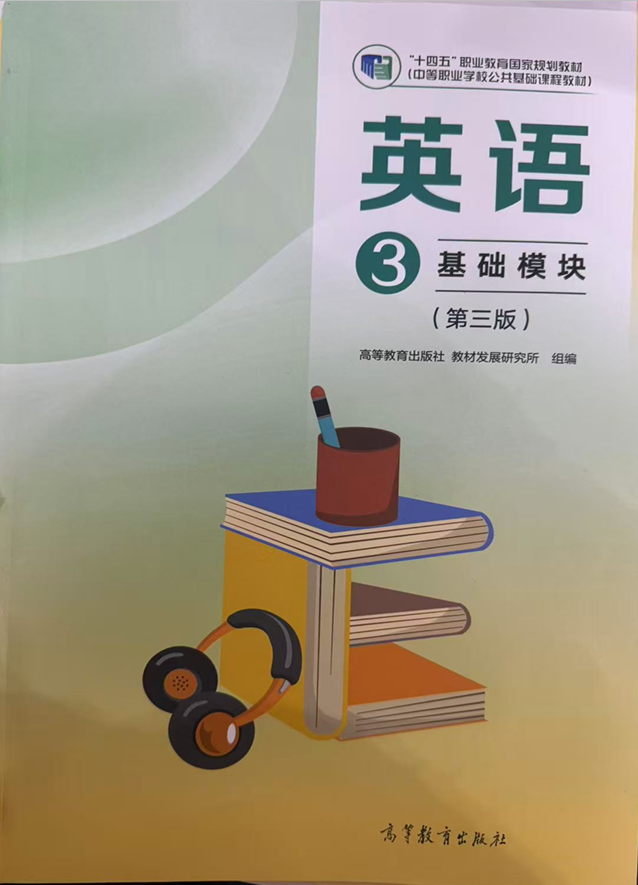
Unit 1——Unit 4 阶段测试卷(B卷·能力提升)《英语 基础模块3》(高教版第三版)单元过关卷(原卷版+解析版)
2026-06-30
|
2份
|
22页
|
45人阅读
|
0人下载
摘要:
**基本信息**
本试卷为《英语 基础模块3》(高教版第三版)Unit 1-Unit 4阶段测试B卷,聚焦能力提升,通过真实情境整合核心考点,适配单元复习,助力学生构建知识网络与提升综合应用能力。
**题型特征**
|题型|题量/分值|知识覆盖|命题特色|
|----|-----------|----------|----------|
|情景交际|15题/20分|节日文化、社区服务、AI应用|对话贴近生活,如第8题考查节日文化魅力,培养跨文化沟通能力|
|阅读理解|20题/40分|文化活动设计、社区推荐、AI使用规范、客户投诉处理|素材具时代性,如C篇探讨AI在餐厅的应用,引导理性看待技术|
|完形填空|10题/10分|服务场景词汇(如symbol, meet needs, refund)|语境融合单元主题,考查知识迁移能力|
|语法填空|10题/10分|时态、从句、核心词汇(festival, facility)|依托项目活动语境,强化语法实用应用|
|书面表达|1题/20分|客服投诉回复(道歉、解决方案)|模拟职业场景,提升问题解决与书面沟通能力,体现职业素养|
内容正文:
编写说明:本套试卷紧扣《英语 基础模块3》(高教版第三版)教材,以教材单元为基准精准覆盖核心考点。
每个单元设置AB卷,A卷为基础巩固卷,侧重基础考点训练,帮助学生扎实掌握知识要点;B卷为能力提升卷,注重知识整合与全面检测,引导学生构建知识网络。全书设计4份综合测试卷,模拟实战情境,聚焦解题能力突破,全面提升应试能力与知识应用水平。
《英语 基础模块3》(高教版第三版)《单元过关卷》
Unit 1——Unit 4阶段测试卷
B卷·能力提升
考试时间:120分钟 满分:100分
班级_____姓名_____学号_____成绩_____
一、情景交际(共15小题;满分20分)
第一节 读下列10个短对话,从题后所给的 A、B、C、D 四个选项中选出可以填入空白处的最佳选项。(共10小题,每小题1分,满分10分)
1. —We need to introduce the Water-Splashing Festival to visitors, but they know little about it.
—_______. Explain the activity and the wish for good luck together.
A. Just tell them the date B. Give them only a receipt
C. Focus on both custom and meaning D. Ask them to compare apartments
【答案】C
【详解】考查节日介绍逻辑。介绍节日不能只列日期,应说明活动和文化含义,C项符合语境。
2. —This community is attractive, but the clinic is far from Building 9. My mother cannot walk long.
—_______. You should check another building near the clinic.
A. That may not suit her needs B. AI can write poems
C. The festival is similar D. The battery is full
【答案】A
【详解】考查需求匹配。老人行动不便,远离诊所不符合需求,应考虑诊所附近楼栋。
3. —AI helped me finish the whole report in one minute. I will hand it in directly.
—_______. You need to check and rewrite it in your own words.
A. That is a temple fair B. I don't think it is a good idea
C. The package was delayed D. The garden is quiet
【答案】B
【详解】考查表达不同意见。直接提交AI生成报告不恰当,B项明确表示不赞同并提出建议。
4. —The customer is angry because the wrong size was delivered twice.
—_______. A sincere apology and a clear exchange plan are necessary.
A. We can ignore it B. It is a reunion time
C. We should deal with it carefully D. Robots decorate trees
【答案】C
【详解】考查投诉处理。错发两次需谨慎处理并提出换货方案,C项符合职业服务要求。
5. —Why should we compare communities in person instead of only reading online lists?
—_______. Some problems, like noise, are easier to notice on site.
A. Because on-site checking gives real information B. Because all lists are festivals
C. Because refunds are impossible D. Because AI has no risk
【答案】A
【详解】考查社区选择。亲自考察能获得真实信息,尤其是噪音等在线信息难以判断的问题。
6. —I worry that robots will replace some workers in the future.
—_______. But we can improve our skills and use technology wisely.
A. It is a paper lantern B. Please exchange it
C. The clinic closes D. You have a point
【答案】D
【详解】考查观点回应。对方表达合理担忧,You have a point表示“你说得有道理”。
7. —Could you arrange a refund if the customer does not want another watch?
—_______. I will follow the guarantee rules.
A. No one celebrates it B. Yes, I can
C. The subway is crowded D. It depends on the harvest
【答案】B
【详解】考查服务承诺。对方询问能否安排退款,B项作肯定回应并承接保修规定。
8. —The Lantern Festival includes tangyuan, riddles and dragon dances. What do these activities show?
—_______.
A. They show community prices B. They show AI applications
C. They show cultural charm D. They show delivery records
【答案】C
【详解】考查文化理解。元宵节活动体现传统节日的文化魅力,C项准确。
9. —Our AI poster lists only benefits. Is that enough?
—_______. A balanced poster should include possible risks too.
A. Not really B. My pleasure
C. Good luck D. No complaint
【答案】A
【详解】考查观点补充。只列优点不够全面,应同时呈现风险。Not really符合语境。
10. —The guest wants a quiet community and easy transportation. Which factor should we ignore?
—_______. All these needs should be considered.
A. Location B. Noise level
C. Facilities D. None of them
【答案】D
【详解】考查综合判断。安静、交通和设施均与需求相关,不能忽视,故选D。
第二节 读下面一段对话,从方框中所给的 A、B、C、D、E、F 和 G 七个选项中选出可以填入空白处的最佳选项。(共5小题,每小题2分,满分10分)
Mandy: Our project asks us to recommend a community to three different buyers.
Zhou Kai: Right. The young worker wants quick transport. _______ 11 _______
Mandy: The family with a child cares about safety and after-school activities.
Zhou Kai: _______ 12 _______ Buildings near the garden may be better.
Mandy: The elderly couple need a clinic and a convenience store nearby.
Zhou Kai: Yes. _______ 13 _______
Mandy: Should we use AI to make the report?
Zhou Kai: We can use it to organize ideas. _______ 14 _______
Mandy: Agreed. We also need to explain our reasons clearly.
Zhou Kai: _______ 15 _______ A good recommendation should match each buyer's real needs.
A. We still have to check facts by ourselves.
B. I am on the same page.
C. So an apartment near the subway may suit him.
D. They should choose lower floors near those facilities.
E. Then we should consider the activity room.
F. Everyone should buy the same apartment.
G. A festival invitation is enough for the report.
【答案】11. C 12. E 13. D 14. A 15. B
【详解】
11. 年轻上班族重视交通,C项“靠近地铁”与quick transport对应。
12. 有孩子的家庭关注安全和课后活动,E项提到活动室,衔接自然。
13. 老年夫妇需要诊所和便利店,D项建议选择靠近设施的低楼层。
14. 上文谈用AI写报告,A项提醒仍需自行核查事实,符合合理使用AI。
15. 下文总结推荐应匹配真实需求,B项表示赞同。
二、阅读理解(共20小题;每小题2分,满分40分)
阅读下列短文,从每题所给的 A、B、C、D 四个选项中选出最佳选项。
A
When the International Culture Club planned its yearly activity, some students wanted to hold a food fair, while others preferred a festival talk. Finally, they designed an activity called “One Festival, One Story”. Each group had to introduce a festival from three parts: when it is celebrated, what people usually do and why it matters to them. The teacher reminded students that a festival introduction should not become a list of strange facts. It should help listeners see the people and values behind the customs.
Li Mei's group chose the Spring Festival. They did not spend much time on the exact date because foreign visitors might not understand the Chinese calendar at once. Instead, they started with the idea of reunion. They showed a picture of a family dinner, then explained why many people travel long distances to return home. They also introduced temple fairs and the Spring Festival Gala, but they made clear that customs can vary in different areas.
Another group introduced Songkran in Thailand. They explained that people splash water in a playful manner and wish for good luck. To avoid misunderstanding, they added that visitors should respect local rules and people's feelings during celebrations. A third group compared Thanksgiving Day with the Mid-Autumn Festival. They found that both festivals connect food with thanks and family love, although their histories are different.
After the activity, students wrote reflections. Many said they had learned to introduce culture with respect. A good introduction uses clear language, gives typical examples and avoids laughing at unfamiliar customs. More importantly, it helps people understand that festivals are flowers of civilization, not simple shows for tourists.
This activity was also connected with the students’ daily learning. Before writing the introduction, they searched for useful words, compared several examples and practised speaking in pairs. Their teacher asked them to avoid copying long materials and to choose information that a visitor could really understand. In the final display, each student had a clear role, such as explaining, asking questions or giving a short summary.
16. What were students required to include in each festival introduction?
A. Price, traffic and weather. B. Time, activities and meaning.
C. Robots, apps and reports. D. Receipts, refunds and guarantees.
17. Why did Li Mei's group start with the idea of reunion?
A. Because it was easier to show the value behind the festival. B. Because they forgot all festival activities.
C. Because foreign visitors disliked pictures. D. Because the Spring Festival has no date.
18. What did students say visitors should do during Songkran?
A. Ignore local rules. B. Splash water at anyone at any time.
C. Respect local rules and people's feelings. D. Avoid learning about its meaning.
19. What common point did the third group find between Thanksgiving Day and the Mid-Autumn Festival?
A. They have the same history. B. They are both in Thailand.
C. They have no special food. D. They connect food with thanks and family love.
20. What does the writer mainly want to tell us?
A. Culture should be introduced clearly and respectfully. B. Festival activities are only for tourists.
C. The Chinese calendar is not useful. D. Students should avoid comparing festivals.
【答案】16. B 17. A 18. C 19. D 20. A
【导语】本文是一篇说明文。文章介绍国际文化社团开展“One Festival, One Story”活动,引导学生从时间、活动和文化意义三个角度介绍节日。
【详解】
16. 本题为细节理解题。根据第1段“when... what... why it matters”可知,介绍需包含时间、活动和意义。故选B。
17. 本题为推理判断题。根据第2段不重点讲日期而从reunion切入可知,这样更便于理解春节价值。故选A。
18. 本题为细节理解题。根据第3段“respect local rules and people's feelings”可知答案。故选C。
19. 本题为细节理解题。根据第3段“both festivals connect food with thanks and family love”可知答案。故选D。
20. 本题为主旨大意题。全文强调用清楚语言、典型例子和尊重态度介绍节日文化,故选A。
B
A housing company asked three vocational school students to help improve its community recommendation service. The company used to show every customer the same popular community, Green River Garden. It had a gym, a clinic, two convenience stores and a beautiful central garden. Many customers liked the pictures online, but some were not satisfied after visiting in person. The company realized that attractive facilities did not always mean the community suited everyone.
The students first interviewed different buyers. A young nurse worked night shifts and needed a quiet building during the day. A shop owner cared most about delivery access because he often received goods. A retired couple wanted lower floors, short walking distance to the clinic and friendly neighbors. These needs were quite different, so the students made a checklist with four parts: location, facilities, environment and lifestyle.
Then they compared three communities. Green River Garden had the best facilities but was close to a busy road. South Hill Community was quiet and green, but the nearest subway station was twenty minutes away. New Star Community had fewer trees, but it was close to both a clinic and a bus stop. Instead of deciding which community was generally the best, the students matched each community with a certain kind of buyer.
Their report suggested a new service rule: before recommending a community, the salesperson should ask customers to list must-haves and nice-to-haves. A must-have is a need that cannot be given up, such as a clinic for an elderly buyer. A nice-to-have is something good but less necessary, such as a larger garden. The company accepted the advice because it made the service more professional and reduced complaints.
The recommendation work also taught students to think from the customer’s point of view. They learned that a beautiful community may still be unsuitable if it does not match a family schedule, health condition or budget. Therefore, they used a checklist, visited the area in person and compared advantages with possible problems before giving advice.
21. Why were some customers not satisfied with Green River Garden?
A. It had no facilities at all. B. Its pictures were all black.
C. Attractive facilities did not always suit their needs. D. The company refused to show it online.
22. What did the retired couple care about?
A. Night-shift work. B. Lower floors and a nearby clinic.
C. Delivery access for goods. D. A busy road outside.
23. Which community was quiet but far from the subway station?
A. South Hill Community. B. Green River Garden.
C. New Star Community. D. Every community.
24. What is a “nice-to-have” according to the passage?
A. A need that must not be given up. B. A serious service complaint.
C. Something good but less necessary. D. A rule for using AI.
25. What is the new service rule mainly about?
A. Recommending the cheapest community to everyone. B. Asking customers' needs before giving advice.
C. Showing only online pictures. D. Avoiding all community visits.
【答案】21. C 22. B 23. A 24. C 25. B
【导语】本文是一篇应用说明文。文章讲述学生帮助住房公司改进社区推荐服务,强调根据不同客户需求匹配社区。
【详解】
21. 本题为细节理解题。根据第1段“attractive facilities did not always mean... suited everyone”可知,设施吸引人不等于适合所有人。故选C。
22. 本题为细节理解题。根据第2段“A retired couple wanted lower floors... clinic”可知答案。故选B。
23. 本题为细节理解题。根据第3段“South Hill Community was quiet... subway station was twenty minutes away”可知答案。故选A。
24. 本题为词义理解题。根据第4段“A nice-to-have is something good but less necessary”可知答案。故选C。
25. 本题为主旨概括题。新规则要求销售员先询问must-haves和nice-to-haves,再推荐社区,故选B。
C
In a modern training restaurant at a vocational school, AI is used in several ways. A service robot carries dishes to the right table after scanning a code. A small program studies customer comments and tells students which service problems appear most often. Another application helps students practise English dialogues with virtual guests. These tools make training more enjoyable and efficient, and students can repeat the practice many times without feeling embarrassed.
Yet the restaurant teacher, Ms. Wu, does not allow students to depend on AI completely. She once found that a group used AI to write a customer survey report, but they did not check whether the suggestions matched the real comments. The report looked neat, but one suggestion was impossible because the school restaurant did not sell the product mentioned by AI. Ms. Wu used this example to show that AI can be fluent and wrong at the same time.
Ms. Wu designed a “human check” rule. When AI gives a suggestion, students must ask three questions. Is the information true in our situation? Does it meet customers' real needs? Could it cause any risk or misunderstanding? Only after answering these questions can students put the suggestion into their final report. This rule slows students down a little, but it improves the quality of their thinking.
By the end of the term, most students had a balanced attitude toward AI. They did not fear it, because it helped them communicate, scan information and improve efficiency. They did not worship it either, because they knew professional service still needed patience, responsibility and careful judgment. In their words, AI is a helpful assistant, not the person in charge.
The discussion became more meaningful when students connected technology with real study and work. They found that AI could save time, but it could not replace careful reading, honest writing or face-to-face communication. A responsible user should ask why an answer is correct, check the source and make changes according to the real situation.
26. How does the service robot know the right table?
A. By reading a festival card. B. By asking a doctor.
C. By checking a receipt only. D. By scanning a code.
27. What was wrong with the AI-written survey report?
A. It was too short to read. B. It included an impossible suggestion.
C. It had no English words. D. It refused to mention customers.
28. What is NOT one of the three questions in the “human check” rule?
A. Is the information true? B. Is it the fastest way to finish homework?
C. Does it meet real needs? D. Could it cause any risk?
29. What does the underlined word “worship” in Paragraph 4 probably mean?
A. Use something with no thought. B. Explain something clearly.
C. Repair something carefully. D. Compare something in person.
30. Which statement would the students probably agree with?
A. AI should replace all service workers. B. AI reports never need checking.
C. AI should be feared in every class. D. AI is a helpful assistant, not the person in charge.
【答案】26. D 27. B 28. B 29. A 30. D
【导语】本文是一篇议论文。文章通过职业学校实训餐厅的例子,说明AI能提升效率,但仍需人工核查和职业判断。
【详解】
26. 本题为细节理解题。根据第1段“after scanning a code”可知,机器人通过扫码识别桌号。故选D。
27. 本题为细节理解题。根据第2段“one suggestion was impossible”可知,报告包含不符合实际的建议。故选B。
28. 本题为细节排除题。第3段三问包括真实、需求和风险,不包括“是否最快完成作业”。故选B。
29. 本题为词义猜测题。根据“They did not fear it... They did not worship it either”以及后文AI不是负责人可知,worship指盲目崇拜、无思考地使用。故选A。
30. 本题为观点态度题。根据最后一句“AI is a helpful assistant, not the person in charge”可知答案。故选D。
D
A small company printed 5,000 leaflets for a community health event. The leaflets should have been delivered to Sunshine Community by Friday morning, because volunteers needed to put them into mailboxes before the weekend. However, the package was sent to Sunlight Community, a place with a similar name on the other side of the city. When the event organizer, Ms. Gao, found the mistake, she called the printing company and made a complaint.
The customer service worker, Eric, listened without interrupting. He repeated the key information: the number of leaflets, the correct community, the wrong delivery place and the deadline. Then he apologized for the inconvenience and promised to check the delivery record within ten minutes. He soon found that a new worker had copied the address from an old order sheet without checking the final email.
Eric offered two solutions. The company could reprint the leaflets at once and deliver them by express service that night, or it could send workers to collect the wrong package and take it to the correct community. Ms. Gao chose the first solution because time was more important than cost. Eric also reduced the price by 30 percent and sent a written apology to the organizer.
After the case, the company changed its work process. Every order sheet had to be checked by two people, and similar community names were marked in red. The manager told workers that professional ethics meant more than saying sorry after a mistake. It meant arranging work carefully before a problem happened and taking responsibility when it did happen.
The case was later used as training material for new workers. They discussed what the customer needed most, why the mistake happened and how the company could reduce similar risks. They agreed that good service should include listening, checking, apologizing and taking action. A clear process can turn a complaint into a chance to improve.
31. Where should the leaflets have been delivered?
A. Sunlight Community. B. Sunshine Community.
C. A school restaurant. D. The printing company.
32. What did Eric do before checking the delivery record?
A. He repeated the key information and apologized. B. He blamed Ms. Gao for the mistake.
C. He asked volunteers to print leaflets. D. He refused to listen to the complaint.
33. Why did Ms. Gao choose reprinting and express delivery?
A. The old package was empty. B. Time was more important than cost.
C. She disliked written apologies. D. The company had no workers.
34. How did the company mark similar community names later?
A. In blue. B. With pictures.
C. In red. D. With numbers only.
35. What does the passage mainly show about professional ethics?
A. It means careful work and responsibility. B. It means lowering every price.
C. It means avoiding all written records. D. It means hiding mistakes from customers.
【答案】31. B 32. A 33. B 34. C 35. A
【导语】本文是一篇记叙文。文章讲述印刷公司因地址核对失误导致传单送错,并通过专业客服补救和改进流程。
【详解】
31. 本题为细节理解题。根据第1段“should have been delivered to Sunshine Community”可知,传单应送到Sunshine Community。故选B。
32. 本题为细节理解题。根据第2段可知,Eric先复述关键信息并道歉,然后承诺核查配送记录。故选A。
33. 本题为细节理解题。根据第3段“because time was more important than cost”可知答案。故选B。
34. 本题为细节理解题。根据第4段“similar community names were marked in red”可知,相似社区名用红色标出。故选C。
35. 本题为主旨大意题。最后一段指出职业道德不仅是道歉,更是事前认真安排和事后承担责任。故选A。
三、完形填空(共10小题;每小题1分,满分10分)
阅读下面短文,从短文后各题所给的 A、B、C、D 四个选项中,选出可以填入空白处的最佳选项。
A vocational school set up a student service desk during its open day. The desk had to answer questions about festival activities, community facilities, AI learning tools and product complaints. At first, the students felt _______ 36 _______ because the questions covered many topics. Their teacher told them to listen carefully and find the real need behind each question.
The first visitor asked about a Chinese festival show. A student did not simply name the activities. She explained that lantern riddles and tangyuan were _______ 37 _______ of family unity and happiness. The second visitor wanted to choose a community for his parents. Another student asked about their lifestyle, then recommended a flat near the clinic because it would _______ 38 _______ their needs better.
Later, a student introduced an AI reading tool. He mentioned its _______ 39 _______, such as improving efficiency, but he also warned that users should check information properly. In the afternoon, a customer complained that an order was delayed. The student at the desk checked the receipt, gave a sincere apology and arranged a _______ 40 _______. By the end of the day, the students understood that good English service depends on knowledge, patience and _______ 41 _______. It also requires them to compare choices, explain reasons, reduce _______ 42 _______ and avoid careless promises. They were tired, but they felt the practice was _______ 43 _______. More importantly, they learned to communicate with different people in a _______ 44 _______ and professional way. The experience became a _______ 45 _______ for their future work.
36. A. nervous B. bright C. local D. blank
37. A. risks B. symbols C. receipts D. districts
38. A. cause B. fear C. meet D. scan
39. A. apologies B. locations C. customs D. benefits
40. A. refund B. gala C. festival D. garden
41. A. carelessness B. sincerity C. noise D. calendar
42. A. loss B. moon C. snack D. purpose
43. A. delayed B. similar C. worthwhile D. salty
44. A. responsible B. playful C. wrong D. crowded
45. A. delay B. complaint C. lesson D. battery
【答案】36.A 37.B 38.C 39.D 40.A 41.B 42.A 43.C 44.A 45.C
【导语】本文是一篇记叙文。文章讲述学生在开放日服务台综合运用四个单元知识,回应不同访客需求并提升职业沟通能力。
【详解】
36.考查形容词辨析。问题覆盖多个话题,学生起初感到紧张,nervous符合语境。故选A。
37.考查名词辨析。灯谜和汤圆象征家庭团圆幸福,symbols意为“象征”。故选B。
38.考查动词搭配。meet one's needs意为“满足某人的需求”,为教材短语。故选C。
39.考查名词辨析。后文such as improving efficiency列举AI益处,benefits符合语境。故选D。
40.考查名词辨析。投诉处理场景中核对收据、道歉并安排退款,refund符合语境。故选A。
41.考查名词辨析。优质服务依靠知识、耐心和真诚,sincerity符合语境。故选B。
42.考查名词辨析。服务中需减少损失,reduce loss符合语境。故选A。
43.考查形容词辨析。学生虽累但认为实践有价值,worthwhile意为“值得的”。故选C。
44.考查形容词辨析。职业沟通应负责且专业,responsible符合语境。故选A。
45.考查名词辨析。此次经历成为未来工作的经验教训,lesson符合语境。故选C。
四、语法填空(共10小题;每小题1分,满分10分)
阅读下面短文,在空白处填入1个适当的单词或括号内单词的正确形式。
A project called “Smart Community Service” _______ 46 _______ (hold) in our school last week. Students had to use the knowledge from four units to solve practical problems. Before the project, each group _______ 47 _______ (make) a list of key words, such as festival, facility, benefit and complaint.
During the project, one group introduced the Dragon Boat Festival to visitors _______ 48 _______ were interested in Chinese culture. Another group compared three communities and explained which one was _______ 49 _______ (suitable) for elderly people. A third group discussed how AI could improve learning _______ 50 _______ it might also bring risks if students used it carelessly.
The last group acted out a customer service scene. A customer complained about a delayed _______ 51 _______ (deliver). The worker checked the order sheet _______ 52 _______ (careful), apologized and offered to exchange the product. The teacher said the role play showed professional ethics. She also advised us _______ 53 _______ (think) more deeply about real needs. Through the project, we learned that English can be used not only for exams, _______ 54 _______ also for communication in work and life. This was one of the _______ 55 _______ (useful) activities we had this term.
【答案】46.was held 47.made 48.who/that 49.more suitable 50.but 51.delivery 52.carefully 53.to think 54.but 55.most useful
【详解】
46.考查被动语态。project与hold之间为被动关系,last week提示一般过去时,故填was held。
47.考查时态。Before the project描述过去发生的动作,应用一般过去时made。
48.考查定语从句。先行词为visitors,指人,关系词在从句中作主语,可用who或that。
49.考查比较级。三类社区进行比较并说明哪一个对老人更适合,应用比较级more suitable。
50.考查连词。前半句讲AI提升学习,后半句讲风险,前后为转折关系,用but。
51.考查词性转换。delayed后需名词,deliver的名词形式为delivery。
52.考查副词。修饰动词checked应用副词carefully。
53.考查非谓语动词。advise sb. to do sth.为固定结构,故填to think。
54.考查固定结构。not only...but also...表示“不仅……而且……”。
55.考查形容词最高级。one of the + 形容词最高级 + 名词复数,故填most useful。
五、书面表达(满分20分)
假设你是某网店客服李华,客户Tom来信投诉其订购的运动手表延迟送达且无法正常充电。请你根据以下要点写一封英文回复邮件。
要点:1. 表达歉意;2. 说明将核对订单和保修情况;3. 提供解决方案(维修、换货或退款);4. 再次表达诚意。
要求:词数不少于80;语气礼貌、处理方案清楚;不得出现真实店铺名和个人信息。
________________________________________________________________________________
________________________________________________________________________________
________________________________________________________________________________
________________________________________________________________________________
________________________________________________________________________________
【参考范文】
Dear Tom,
We are very sorry for the inconvenience caused by the delayed delivery and the battery problem of your sports watch. Thank you for telling us the details.
I will check your order number, delivery record and guarantee information at once. If the watch is still under guarantee, we can repair the battery for free or exchange it for a new one. If you do not want another watch, we can also arrange a refund according to our service rules. To avoid similar problems, we will ask our delivery team to check address sheets more carefully before sending packages.
Again, please accept our sincere apology. We will try our best to solve the problem as soon as possible.
Yours sincerely,
Li Hua
【词汇积累】inconvenience不便;delivery record配送记录;under guarantee在保修期内;exchange...for...把……换成……;refund退款。
【句式拓展】We are very sorry for...;If..., we can...;To avoid similar problems, we will...;Please accept our sincere apology.
【点睛】范文按照“道歉—核查—方案—再致歉”的投诉回复逻辑展开,语气礼貌,措施具体,贴合客户服务单元写作目标。
原创精品资源学科网独家享有版权,侵权必究!
学科网(北京)股份有限公司
$
编写说明:本套试卷紧扣《英语 基础模块3》(高教版第三版)教材,以教材单元为基准精准覆盖核心考点。
每个单元设置AB卷,A卷为基础巩固卷,侧重基础考点训练,帮助学生扎实掌握知识要点;B卷为能力提升卷,注重知识整合与全面检测,引导学生构建知识网络。全书设计4份综合测试卷,模拟实战情境,聚焦解题能力突破,全面提升应试能力与知识应用水平。
《英语 基础模块3》(高教版第三版)《单元过关卷》
Unit 1——Unit 4阶段测试卷
B卷·能力提升
考试时间:120分钟 满分:100分
班级_____姓名_____学号_____成绩_____
一、情景交际(共15小题;满分20分)
第一节 读下列10个短对话,从题后所给的 A、B、C、D 四个选项中选出可以填入空白处的最佳选项。(共10小题,每小题1分,满分10分)
1. —We need to introduce the Water-Splashing Festival to visitors, but they know little about it.
—_______. Explain the activity and the wish for good luck together.
A. Just tell them the date B. Give them only a receipt
C. Focus on both custom and meaning D. Ask them to compare apartments
2. —This community is attractive, but the clinic is far from Building 9. My mother cannot walk long.
—_______. You should check another building near the clinic.
A. That may not suit her needs B. AI can write poems
C. The festival is similar D. The battery is full
3. —AI helped me finish the whole report in one minute. I will hand it in directly.
—_______. You need to check and rewrite it in your own words.
A. That is a temple fair B. I don't think it is a good idea
C. The package was delayed D. The garden is quiet
4. —The customer is angry because the wrong size was delivered twice.
—_______. A sincere apology and a clear exchange plan are necessary.
A. We can ignore it B. It is a reunion time
C. We should deal with it carefully D. Robots decorate trees
5. —Why should we compare communities in person instead of only reading online lists?
—_______. Some problems, like noise, are easier to notice on site.
A. Because on-site checking gives real information B. Because all lists are festivals
C. Because refunds are impossible D. Because AI has no risk
6. —I worry that robots will replace some workers in the future.
—_______. But we can improve our skills and use technology wisely.
A. It is a paper lantern B. Please exchange it
C. The clinic closes D. You have a point
7. —Could you arrange a refund if the customer does not want another watch?
—_______. I will follow the guarantee rules.
A. No one celebrates it B. Yes, I can
C. The subway is crowded D. It depends on the harvest
8. —The Lantern Festival includes tangyuan, riddles and dragon dances. What do these activities show?
—_______.
A. They show community prices B. They show AI applications
C. They show cultural charm D. They show delivery records
9. —Our AI poster lists only benefits. Is that enough?
—_______. A balanced poster should include possible risks too.
A. Not really B. My pleasure
C. Good luck D. No complaint
10. —The guest wants a quiet community and easy transportation. Which factor should we ignore?
—_______. All these needs should be considered.
A. Location B. Noise level
C. Facilities D. None of them
第二节 读下面一段对话,从方框中所给的 A、B、C、D、E、F 和 G 七个选项中选出可以填入空白处的最佳选项。(共5小题,每小题2分,满分10分)
Mandy: Our project asks us to recommend a community to three different buyers.
Zhou Kai: Right. The young worker wants quick transport. _______ 11 _______
Mandy: The family with a child cares about safety and after-school activities.
Zhou Kai: _______ 12 _______ Buildings near the garden may be better.
Mandy: The elderly couple need a clinic and a convenience store nearby.
Zhou Kai: Yes. _______ 13 _______
Mandy: Should we use AI to make the report?
Zhou Kai: We can use it to organize ideas. _______ 14 _______
Mandy: Agreed. We also need to explain our reasons clearly.
Zhou Kai: _______ 15 _______ A good recommendation should match each buyer's real needs.
A. We still have to check facts by ourselves.
B. I am on the same page.
C. So an apartment near the subway may suit him.
D. They should choose lower floors near those facilities.
E. Then we should consider the activity room.
F. Everyone should buy the same apartment.
G. A festival invitation is enough for the report.
二、阅读理解(共20小题;每小题2分,满分40分)
阅读下列短文,从每题所给的 A、B、C、D 四个选项中选出最佳选项。
A
When the International Culture Club planned its yearly activity, some students wanted to hold a food fair, while others preferred a festival talk. Finally, they designed an activity called “One Festival, One Story”. Each group had to introduce a festival from three parts: when it is celebrated, what people usually do and why it matters to them. The teacher reminded students that a festival introduction should not become a list of strange facts. It should help listeners see the people and values behind the customs.
Li Mei's group chose the Spring Festival. They did not spend much time on the exact date because foreign visitors might not understand the Chinese calendar at once. Instead, they started with the idea of reunion. They showed a picture of a family dinner, then explained why many people travel long distances to return home. They also introduced temple fairs and the Spring Festival Gala, but they made clear that customs can vary in different areas.
Another group introduced Songkran in Thailand. They explained that people splash water in a playful manner and wish for good luck. To avoid misunderstanding, they added that visitors should respect local rules and people's feelings during celebrations. A third group compared Thanksgiving Day with the Mid-Autumn Festival. They found that both festivals connect food with thanks and family love, although their histories are different.
After the activity, students wrote reflections. Many said they had learned to introduce culture with respect. A good introduction uses clear language, gives typical examples and avoids laughing at unfamiliar customs. More importantly, it helps people understand that festivals are flowers of civilization, not simple shows for tourists.
This activity was also connected with the students’ daily learning. Before writing the introduction, they searched for useful words, compared several examples and practised speaking in pairs. Their teacher asked them to avoid copying long materials and to choose information that a visitor could really understand. In the final display, each student had a clear role, such as explaining, asking questions or giving a short summary.
16. What were students required to include in each festival introduction?
A. Price, traffic and weather. B. Time, activities and meaning.
C. Robots, apps and reports. D. Receipts, refunds and guarantees.
17. Why did Li Mei's group start with the idea of reunion?
A. Because it was easier to show the value behind the festival. B. Because they forgot all festival activities.
C. Because foreign visitors disliked pictures. D. Because the Spring Festival has no date.
18. What did students say visitors should do during Songkran?
A. Ignore local rules. B. Splash water at anyone at any time.
C. Respect local rules and people's feelings. D. Avoid learning about its meaning.
19. What common point did the third group find between Thanksgiving Day and the Mid-Autumn Festival?
A. They have the same history. B. They are both in Thailand.
C. They have no special food. D. They connect food with thanks and family love.
20. What does the writer mainly want to tell us?
A. Culture should be introduced clearly and respectfully. B. Festival activities are only for tourists.
C. The Chinese calendar is not useful. D. Students should avoid comparing festivals.
B
A housing company asked three vocational school students to help improve its community recommendation service. The company used to show every customer the same popular community, Green River Garden. It had a gym, a clinic, two convenience stores and a beautiful central garden. Many customers liked the pictures online, but some were not satisfied after visiting in person. The company realized that attractive facilities did not always mean the community suited everyone.
The students first interviewed different buyers. A young nurse worked night shifts and needed a quiet building during the day. A shop owner cared most about delivery access because he often received goods. A retired couple wanted lower floors, short walking distance to the clinic and friendly neighbors. These needs were quite different, so the students made a checklist with four parts: location, facilities, environment and lifestyle.
Then they compared three communities. Green River Garden had the best facilities but was close to a busy road. South Hill Community was quiet and green, but the nearest subway station was twenty minutes away. New Star Community had fewer trees, but it was close to both a clinic and a bus stop. Instead of deciding which community was generally the best, the students matched each community with a certain kind of buyer.
Their report suggested a new service rule: before recommending a community, the salesperson should ask customers to list must-haves and nice-to-haves. A must-have is a need that cannot be given up, such as a clinic for an elderly buyer. A nice-to-have is something good but less necessary, such as a larger garden. The company accepted the advice because it made the service more professional and reduced complaints.
The recommendation work also taught students to think from the customer’s point of view. They learned that a beautiful community may still be unsuitable if it does not match a family schedule, health condition or budget. Therefore, they used a checklist, visited the area in person and compared advantages with possible problems before giving advice.
21. Why were some customers not satisfied with Green River Garden?
A. It had no facilities at all. B. Its pictures were all black.
C. Attractive facilities did not always suit their needs. D. The company refused to show it online.
22. What did the retired couple care about?
A. Night-shift work. B. Lower floors and a nearby clinic.
C. Delivery access for goods. D. A busy road outside.
23. Which community was quiet but far from the subway station?
A. South Hill Community. B. Green River Garden.
C. New Star Community. D. Every community.
24. What is a “nice-to-have” according to the passage?
A. A need that must not be given up. B. A serious service complaint.
C. Something good but less necessary. D. A rule for using AI.
25. What is the new service rule mainly about?
A. Recommending the cheapest community to everyone. B. Asking customers' needs before giving advice.
C. Showing only online pictures. D. Avoiding all community visits.
C
In a modern training restaurant at a vocational school, AI is used in several ways. A service robot carries dishes to the right table after scanning a code. A small program studies customer comments and tells students which service problems appear most often. Another application helps students practise English dialogues with virtual guests. These tools make training more enjoyable and efficient, and students can repeat the practice many times without feeling embarrassed.
Yet the restaurant teacher, Ms. Wu, does not allow students to depend on AI completely. She once found that a group used AI to write a customer survey report, but they did not check whether the suggestions matched the real comments. The report looked neat, but one suggestion was impossible because the school restaurant did not sell the product mentioned by AI. Ms. Wu used this example to show that AI can be fluent and wrong at the same time.
Ms. Wu designed a “human check” rule. When AI gives a suggestion, students must ask three questions. Is the information true in our situation? Does it meet customers' real needs? Could it cause any risk or misunderstanding? Only after answering these questions can students put the suggestion into their final report. This rule slows students down a little, but it improves the quality of their thinking.
By the end of the term, most students had a balanced attitude toward AI. They did not fear it, because it helped them communicate, scan information and improve efficiency. They did not worship it either, because they knew professional service still needed patience, responsibility and careful judgment. In their words, AI is a helpful assistant, not the person in charge.
The discussion became more meaningful when students connected technology with real study and work. They found that AI could save time, but it could not replace careful reading, honest writing or face-to-face communication. A responsible user should ask why an answer is correct, check the source and make changes according to the real situation.
26. How does the service robot know the right table?
A. By reading a festival card. B. By asking a doctor.
C. By checking a receipt only. D. By scanning a code.
27. What was wrong with the AI-written survey report?
A. It was too short to read. B. It included an impossible suggestion.
C. It had no English words. D. It refused to mention customers.
28. What is NOT one of the three questions in the “human check” rule?
A. Is the information true? B. Is it the fastest way to finish homework?
C. Does it meet real needs? D. Could it cause any risk?
29. What does the underlined word “worship” in Paragraph 4 probably mean?
A. Use something with no thought. B. Explain something clearly.
C. Repair something carefully. D. Compare something in person.
30. Which statement would the students probably agree with?
A. AI should replace all service workers. B. AI reports never need checking.
C. AI should be feared in every class. D. AI is a helpful assistant, not the person in charge.
D
A small company printed 5,000 leaflets for a community health event. The leaflets should have been delivered to Sunshine Community by Friday morning, because volunteers needed to put them into mailboxes before the weekend. However, the package was sent to Sunlight Community, a place with a similar name on the other side of the city. When the event organizer, Ms. Gao, found the mistake, she called the printing company and made a complaint.
The customer service worker, Eric, listened without interrupting. He repeated the key information: the number of leaflets, the correct community, the wrong delivery place and the deadline. Then he apologized for the inconvenience and promised to check the delivery record within ten minutes. He soon found that a new worker had copied the address from an old order sheet without checking the final email.
Eric offered two solutions. The company could reprint the leaflets at once and deliver them by express service that night, or it could send workers to collect the wrong package and take it to the correct community. Ms. Gao chose the first solution because time was more important than cost. Eric also reduced the price by 30 percent and sent a written apology to the organizer.
After the case, the company changed its work process. Every order sheet had to be checked by two people, and similar community names were marked in red. The manager told workers that professional ethics meant more than saying sorry after a mistake. It meant arranging work carefully before a problem happened and taking responsibility when it did happen.
The case was later used as training material for new workers. They discussed what the customer needed most, why the mistake happened and how the company could reduce similar risks. They agreed that good service should include listening, checking, apologizing and taking action. A clear process can turn a complaint into a chance to improve.
31. Where should the leaflets have been delivered?
A. Sunlight Community. B. Sunshine Community.
C. A school restaurant. D. The printing company.
32. What did Eric do before checking the delivery record?
A. He repeated the key information and apologized. B. He blamed Ms. Gao for the mistake.
C. He asked volunteers to print leaflets. D. He refused to listen to the complaint.
33. Why did Ms. Gao choose reprinting and express delivery?
A. The old package was empty. B. Time was more important than cost.
C. She disliked written apologies. D. The company had no workers.
34. How did the company mark similar community names later?
A. In blue. B. With pictures.
C. In red. D. With numbers only.
35. What does the passage mainly show about professional ethics?
A. It means careful work and responsibility. B. It means lowering every price.
C. It means avoiding all written records. D. It means hiding mistakes from customers.
三、完形填空(共10小题;每小题1分,满分10分)
阅读下面短文,从短文后各题所给的 A、B、C、D 四个选项中,选出可以填入空白处的最佳选项。
A vocational school set up a student service desk during its open day. The desk had to answer questions about festival activities, community facilities, AI learning tools and product complaints. At first, the students felt _______ 36 _______ because the questions covered many topics. Their teacher told them to listen carefully and find the real need behind each question.
The first visitor asked about a Chinese festival show. A student did not simply name the activities. She explained that lantern riddles and tangyuan were _______ 37 _______ of family unity and happiness. The second visitor wanted to choose a community for his parents. Another student asked about their lifestyle, then recommended a flat near the clinic because it would _______ 38 _______ their needs better.
Later, a student introduced an AI reading tool. He mentioned its _______ 39 _______, such as improving efficiency, but he also warned that users should check information properly. In the afternoon, a customer complained that an order was delayed. The student at the desk checked the receipt, gave a sincere apology and arranged a _______ 40 _______. By the end of the day, the students understood that good English service depends on knowledge, patience and _______ 41 _______. It also requires them to compare choices, explain reasons, reduce _______ 42 _______ and avoid careless promises. They were tired, but they felt the practice was _______ 43 _______. More importantly, they learned to communicate with different people in a _______ 44 _______ and professional way. The experience became a _______ 45 _______ for their future work.
36. A. nervous B. bright C. local D. blank
37. A. risks B. symbols C. receipts D. districts
38. A. cause B. fear C. meet D. scan
39. A. apologies B. locations C. customs D. benefits
40. A. refund B. gala C. festival D. garden
41. A. carelessness B. sincerity C. noise D. calendar
42. A. loss B. moon C. snack D. purpose
43. A. delayed B. similar C. worthwhile D. salty
44. A. responsible B. playful C. wrong D. crowded
45. A. delay B. complaint C. lesson D. battery
四、语法填空(共10小题;每小题1分,满分10分)
阅读下面短文,在空白处填入1个适当的单词或括号内单词的正确形式。
A project called “Smart Community Service” _______ 46 _______ (hold) in our school last week. Students had to use the knowledge from four units to solve practical problems. Before the project, each group _______ 47 _______ (make) a list of key words, such as festival, facility, benefit and complaint.
During the project, one group introduced the Dragon Boat Festival to visitors _______ 48 _______ were interested in Chinese culture. Another group compared three communities and explained which one was _______ 49 _______ (suitable) for elderly people. A third group discussed how AI could improve learning _______ 50 _______ it might also bring risks if students used it carelessly.
The last group acted out a customer service scene. A customer complained about a delayed _______ 51 _______ (deliver). The worker checked the order sheet _______ 52 _______ (careful), apologized and offered to exchange the product. The teacher said the role play showed professional ethics. She also advised us _______ 53 _______ (think) more deeply about real needs. Through the project, we learned that English can be used not only for exams, _______ 54 _______ also for communication in work and life. This was one of the _______ 55 _______ (useful) activities we had this term.
五、书面表达(满分20分)
假设你是某网店客服李华,客户Tom来信投诉其订购的运动手表延迟送达且无法正常充电。请你根据以下要点写一封英文回复邮件。
要点:1. 表达歉意;2. 说明将核对订单和保修情况;3. 提供解决方案(维修、换货或退款);4. 再次表达诚意。
要求:词数不少于80;语气礼貌、处理方案清楚;不得出现真实店铺名和个人信息。
________________________________________________________________________________
________________________________________________________________________________
________________________________________________________________________________
________________________________________________________________________________
________________________________________________________________________________
原创精品资源学科网独家享有版权,侵权必究!
学科网(北京)股份有限公司
$
资源预览图

1

2

3
由于学科网是一个信息分享及获取的平台,不确保部分用户上传资料的 来源及知识产权归属。如您发现相关资料侵犯您的合法权益,请联系学科网,我们核实后将及时进行处理。