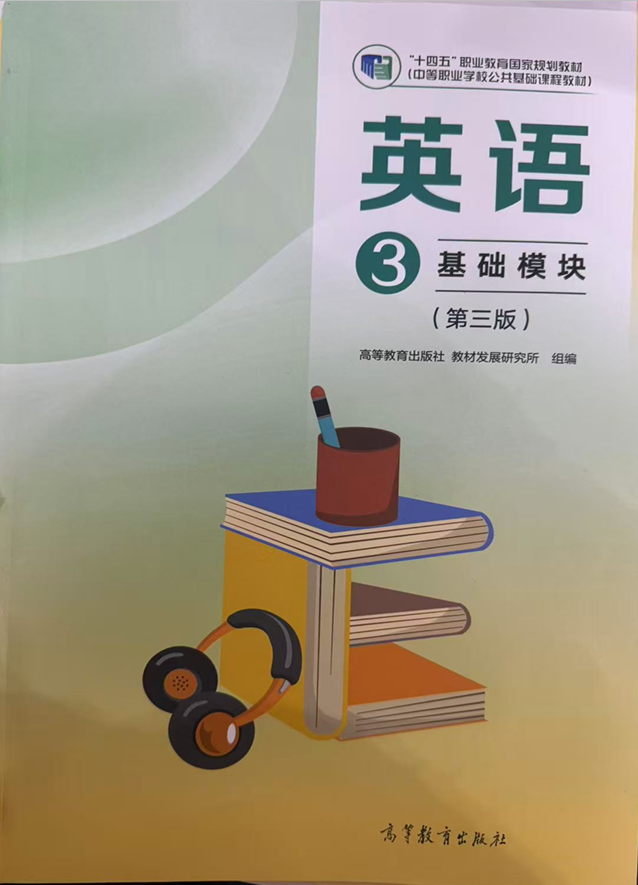
Unit 1 Festivals Around the World(A卷·基础巩固)《英语 基础模块3》(高教版第三版)单元过关卷(原卷版+解析版)
2026-06-30
|
2份
|
21页
|
115人阅读
|
3人下载
摘要:
**基本信息**
紧扣《英语 基础模块3》Unit 1“Festivals Around the World”核心考点,A卷通过情景交际、阅读等基础题型巩固节日文化表达,适配单元复习,助力学生扎实掌握知识要点。
**题型特征**
|题型|题量/分值|知识覆盖|命题特色|
|----|-----------|----------|----------|
|情景交际|15题/20分|节日问候与习俗问答|创设真实对话情境,如邀请庆祝中秋节,提升语言运用能力|
|阅读理解|20题/40分|节日活动策划与文化内涵|通过社团活动文本考查信息提取与文化理解,培养思维品质|
|书面表达|1题/20分|节日邀请邮件写作|整合节日介绍与交际功能,体现学习能力,强化跨文化沟通意识|
内容正文:
编写说明:本套试卷紧扣《英语 基础模块3》(高教版第三版)教材,以教材单元为基准精准覆盖核心考点。
每个单元设置AB卷,A卷为基础巩固卷,侧重基础考点训练,帮助学生扎实掌握知识要点;B卷为能力提升卷,注重知识整合与全面检测,引导学生构建知识网络。全书设计4份综合测试卷,模拟实战情境,聚焦解题能力突破,全面提升应试能力与知识应用水平。
《英语 基础模块3》(高教版第三版)《单元过关卷》
Unit 1 Festivals Around the World
A卷·基础巩固
考试时间:120分钟 满分:100分
班级_____姓名_____学号_____成绩_____
一、情景交际(共15小题;满分20分)
第一节 读下列10个短对话,从题后所给的 A、B、C、D 四个选项中选出可以填入空白处的最佳选项。(共10小题,每小题1分,满分10分)
1. —Robert, the Mid-Autumn Festival is coming. Would you like to celebrate it with my family this Saturday evening?
—_______. I have always wanted to learn more about Chinese festivals.
A. Yes, I do not like moon cakes. B. I would love to.
C. It is not my calendar. D. You should celebrate it alone.
【答案】B
【详解】考查邀请与回应。Would you like to...? 表示邀请,答语应礼貌接受,B项符合语境。
2. —What do Chinese people usually do during the Mid-Autumn Festival?
—_______. The full moon is a symbol of family reunion.
A. They usually splash water at each other. B. They usually hang stockings near the fireplace.
C. They usually get together and have moon cakes. D. They usually send emails only.
【答案】C
【详解】考查节日活动。教材指出中秋节是家人团聚、吃月饼的时刻,故选C。
3. —I plan to introduce the Spring Festival in our English class, but I do not know how to begin.
—_______. You can first say when it falls and then introduce typical activities.
A. I think you can organize your ideas step by step. B. You should only talk about foreign festivals.
C. You had better avoid the topic. D. You can write without examples.
【答案】A
【详解】考查提出建议。对方需要组织介绍思路,A项给出具体可行的建议。
4. —The streets are decorated with colorful lanterns tonight. What festival are we celebrating?
—_______. People also solve lantern riddles and eat tangyuan.
A. The Dragon Boat Festival. B. Thanksgiving Day.
C. Songkran. D. The Lantern Festival.
【答案】D
【详解】考查节日识别。lanterns, lantern riddles 和 tangyuan 指向元宵节。
5. —Why do people give best wishes to each other during the Spring Festival?
—_______. It marks the beginning of the Chinese New Year.
A. Because it is a time to express hopes for a happy year. B. Because people must buy expensive gifts.
C. Because every family leaves home. D. Because it is only for children.
【答案】A
【详解】考查节日意义。春节表达新年祝福,A项与教材“express good wishes”对应。
6. —Which activity is typical of Songkran in Thailand?
—_______. People believe bad luck can be washed away.
A. Watching dragon boat races. B. Decorating Christmas trees.
C. Splashing water at each other. D. Eating moon cakes with family.
【答案】C
【详解】考查跨文化节日活动。教材说明宋干节人们相互泼水,寓意洗去坏运。
7. —My foreign friend is coming to our Spring Festival dinner. What should I tell him first?
—_______. It will help him respect our customs.
A. You should explain the meaning of reunion dinner. B. You should ask him not to speak.
C. You should give him a test first. D. You should tell him festivals are all the same.
【答案】A
【详解】考查跨文化沟通。接待外国朋友参加中国节日庆祝活动时,应介绍文化含义。
8. —I received your invitation email for the Christmas party. Should I reply soon?
—_______. The host needs to know whether you can come.
A. No, invitations never need replies. B. Only reply after the party.
C. You can delete the email. D. Yes, please reply as soon as possible.
【答案】D
【详解】考查邀请函回应。收到邀请后应及时回复,D项符合礼貌交际。
9. —What does 'traditional' mean in 'traditional food'?
—_______. Jiaozi is a traditional food for many families during the Spring Festival.
A. It means very new and modern. B. It means related to long-held customs.
C. It means difficult to cook. D. It means only from other countries.
【答案】B
【详解】考查词义理解。traditional 意为“传统的”,与 long-held customs 对应。
10. —The class will make a leaflet to introduce a Chinese festival. Shall we choose the Lantern Festival?
—_______. We can write about its history, lanterns and tangyuan.
A. That sounds like a good idea. B. I do not know any Chinese festival.
C. It is too late to learn English. D. We should copy a leaflet online.
【答案】A
【详解】考查建议回应。后文补充可写内容,说明赞同该建议。
第二节 读下面一段对话,从方框中所给的 A、B、C、D、E、F 和 G 七个选项中选出可以填入空白处的最佳选项。(共5小题,每小题2分,满分10分)
Li Fei: Hi, Robert. Our class is preparing a festival sharing activity. Have you chosen a topic?
Robert: Yes. _______ 11 _______
Li Fei: Great! What will you introduce first?
Robert: _______ 12 _______ It helps classmates understand why family members get together.
Li Fei: Will you compare it with a festival in your country?
Robert: Of course. _______ 13 _______
Li Fei: That sounds clear. What activity will you invite classmates to try?
Robert: _______ 14 _______
Li Fei: Good idea. Do you need any pictures?
Robert: _______ 15 _______ They will make the leaflet more attractive.
A. I will compare it with Thanksgiving Day.
B. I will ask them to design a moon-cake box.
C. I will explain the meaning of family reunion.
D. Yes, some pictures of the full moon and moon cakes would be helpful.
E. I only want to talk about Christmas gifts.
F. I think all festivals are difficult to introduce.
G. I want to introduce the Mid-Autumn Festival.
【答案】11.G 12.C 13.A 14.B 15.D
【导语】这段对话围绕节日分享活动展开,涉及中秋节介绍、节日比较、活动设计和材料准备。
【详解】
11. 上文问是否选好主题,G项直接说明要介绍中秋节。
12. 后文提到 family members get together,C项“解释团圆意义”衔接最紧密。
13. 上文问是否与本国节日比较,A项用 Thanksgiving Day 作比较。
14. 上文问邀请同学尝试什么活动,B项“设计月饼盒”符合中秋节主题。
15. 上文问是否需要图片,D项说明需要月亮和月饼图片。
二、阅读理解(共20小题;每小题2分,满分40分)
阅读下列短文,从题后所给的 A、B、C、D 四个选项中选出最佳答案。
A
The English Club at Sunshine Vocational School is planning a Mid-Autumn Festival Evening for foreign teachers and first-year students. The activity will be held in the school dining hall from 6:30 p.m. to 8:30 p.m. next Friday. It is not only a party with food, but also a small class about Chinese culture. Before the evening, each group must prepare a short introduction in English. The introduction should include the date of the festival, the meaning of the full moon, and one typical activity.
The teacher reminds students not to translate every Chinese word directly. They should use clear sentences, such as 'The full moon is a symbol of family reunion' and 'People share moon cakes to express good wishes.' During the activity, students will invite foreign teachers to taste moon cakes, learn a simple festival song and write wishes on small cards. A student named Li Fei is responsible for welcoming guests.
Li Fei plans to explain that different fillings of moon cakes may have different flavors, but the feeling behind them is similar: people miss their families and hope for a bright future. The teacher hopes the evening will help students practise English in a real situation. More importantly, she wants them to understand that introducing a festival is not just listing activities. A good introduction should show the culture behind the activities and help guests feel respected and included.
16. What is the main purpose of the Mid-Autumn Festival Evening?
A. To sell moon cakes to foreign teachers. B. To hold a singing competition only.
C. To introduce Chinese festival culture in English. D. To ask students to translate a textbook.
17. What must each group include in its introduction?
A. The price of moon cakes. B. The date, meaning and a typical activity of the festival.
C. The names of all foreign teachers. D. The history of the school dining hall.
18. Why should students avoid translating every Chinese word directly?
A. Because foreign teachers dislike Chinese culture.
B. Because direct translation is always shorter.
C. Because the activity does not allow Chinese words.
D. Because clear English expressions help communication.
19. What can be inferred from Li Fei's explanation of moon cakes?
A. Festival food can carry feelings and wishes. B. All moon cakes have the same filling.
C. Students should eat moon cakes before guests arrive. D. Foreign teachers cannot understand Chinese food.
20. Which sentence best summarizes the teacher's idea?
A. Festival activities should be kept secret. B. A good introduction should only list dates.
C. Festival introduction should show culture and respect. D. English practice is less important than eating.
【答案】16.C 17.B 18.D 19.A 20.C
【导语】本文是一篇校园活动说明文,介绍学校中秋节英语活动的目的、准备要求、活动安排和文化意义。
【详解】
16. 本题为细节理解题。根据第1段“It is not only a party with food, but also a small class about Chinese culture.”可知,活动主要是用英语介绍中国节日文化。
17. 本题为细节理解题。根据第1段“include the date of the festival, the meaning of the full moon, and one typical activity”可知,B项正确。
18. 本题为推理判断题。根据第2段教师提醒学生使用清楚句子可知,避免直译是为了更有效地沟通。
19. 本题为推理判断题。根据第3段“the feeling behind them is similar”可知,月饼承载思念和祝福。
20. 本题为主旨大意题。根据末段“A good introduction should show the culture behind the activities”可知,C项概括准确。
B
Every year before the Spring Festival, the students in Class 2 visit a local community center. They do not go there only to perform songs. Their main task is to help the center prepare an exhibition called 'New Year Customs in My Hometown'. The exhibition shows how families in different parts of China celebrate the same festival in different ways. This year, the class is divided into four teams.
Team One collects pictures of reunion dinners. They learn that some families in northern China enjoy jiaozi, while some families in southern China prepare fish, rice cakes or local snacks. Team Two writes short English notes for visitors. They use expressions from their textbook, such as decorate homes, express good wishes and family reunion. Team Three interviews older residents about temple fairs, lion dances and flower fairs. Team Four designs a small corner where children can learn to say 'Happy Chinese New Year' in English.
At first, several students thought the work was easy. However, when they began to write English notes, they found it difficult to explain customs clearly. For example, 'ya sui qian' should not be simply written as 'money for pressing age'. The teacher advised them to explain its meaning: money given to children as a wish for safety and growth in the new year. The students then understood that a good cultural introduction should be accurate and friendly.
21. What is the main task of Class 2 at the community center?
A. To sell local snacks before the festival. B. To help prepare an exhibition about Spring Festival customs.
C. To teach older residents to sing English songs. D. To invite foreign visitors to a restaurant.
22. Which team needs to use textbook expressions most directly?
A. Team One. B. Team Three.
C. Team Two. D. Team Four.
23. Why does the teacher mention 'ya sui qian'?
A. To show cultural words need clear explanations.
B. To ask students to avoid all Chinese customs.
C. To prove literal translation is always correct.
D. To tell students not to write English notes.
24. What does the exhibition mainly show?
A. Only one way of celebrating the Spring Festival.
B. Different local customs for the same festival.
C. The school history of Class 2.
D. Foreign visitors' family stories.
25. What do the students learn from writing notes?
A. Copying Chinese words is enough. B. Accurate and friendly explanation matters.
C. Visitors do not read English notes. D. Local customs should not be introduced.
【答案】21.B 22.C 23.A 24.B 25.B
【导语】本文是一篇校园实践类记叙文,讲述学生用英语介绍春节习俗,理解准确表达和跨文化沟通的重要性。
【详解】
21. 本题为细节理解题。根据第1段“Their main task is to help the center prepare an exhibition”可知,主要任务是准备春节习俗展。
22. 本题为细节理解题。根据第2段“Team Two writes short English notes... use expressions from their textbook”可知,Team Two 最直接使用教材表达。
23. 本题为推理判断题。根据第3段教师建议解释压岁钱含义可知,文化词不能机械直译,需要清楚解释。
24. 本题为细节理解题。根据第1段“different parts of China celebrate the same festival in different ways”可知,展览呈现不同地方习俗。
25. 本题为主旨大意题。根据末段“accurate and friendly”可知,学生理解了准确友好解释的重要性。
C
Festivals are often remembered through food, music and colorful decorations, but they also teach people how to understand one another. When we learn about a festival from another culture, we should first ask what the festival means to the people who celebrate it. Without this question, we may only notice the most exciting activities and miss the deeper value.
Take Songkran in Thailand as an example. Many visitors first remember the playful water splashing in the streets. It looks like a big water game. However, Songkran is the traditional New Year's celebration in Thailand. The water is connected with washing away bad luck and welcoming a new life of good luck. If visitors only call it a water fight, they may sound careless.
The same idea works when foreigners learn about Chinese festivals. The Spring Festival is not just fireworks, red decorations or a long holiday. It is a time for family reunion and best wishes. The Lantern Festival is not just beautiful lights. Lantern riddles, tangyuan and family unity all carry cultural meanings. When students introduce these festivals in English, they should choose simple but accurate words.
26. What should people first ask when learning about another culture's festival?
A. How much money the festival costs. B. Which activity is the loudest.
C. Whether the festival is better than theirs. D. What the festival means to local people.
27. Why may calling Songkran simply a 'water fight' sound careless?
A. It misses the meaning of washing away bad luck. B. It is not held in Thailand.
C. It has no playful activities. D. It is only a Chinese festival.
28. Which expression is recommended for introducing tangyuan?
A. Tangyuan is only a sweet snack. B. Tangyuan means a difficult English word.
C. Tangyuan is a symbol of family unity. D. Tangyuan is eaten because lanterns are bright.
29. What does the word 'accurate' most nearly mean in the passage?
A. Long and difficult. B. Correct and clear.
C. Funny and modern. D. Short but careless.
30. What is the best title for the passage?
A. Festival Games Around the World. B. How to Make Festival Food.
C. Why Students Need Long Holidays. D. Understanding the Meanings Behind Festivals.
【答案】26.D 27.A 28.C 29.B 30.D
【导语】本文是一篇文化说明文,强调学习和介绍节日时不能只看活动表面,还要理解其文化意义。
【详解】
26. 本题为细节理解题。根据第1段“ask what the festival means to the people who celebrate it”可知,应先了解节日意义。
27. 本题为推理判断题。根据第2段“washing away bad luck and welcoming a new life”可知,只说 water fight 会忽视文化意义。
28. 本题为细节理解题。根据第3段 tangyuan and family unity 可知,C项正确。
29. 本题为词义猜测题。根据语境“simple but accurate words”和避免奇怪直译可知,accurate 意为“准确清楚的”。
30. 本题为标题归纳题。全文围绕理解节日背后的意义展开,D项最恰当。
D
Robert Jones is a foreign student at a Chinese vocational school. When he first came to China, he knew only a few Chinese festivals from pictures: red lanterns, dragon boats and moon cakes. He thought festivals were mainly about special food and exciting activities. After spending one year with his Chinese classmates, his idea changed.
His first experience was the Mid-Autumn Festival. Li Fei invited him to her home for dinner. Before the meal, Li Fei's grandfather told him that the round moon and round moon cakes both reminded people of reunion. Robert did not understand every Chinese word, but he understood the warm feeling when all family members sat around the table.
During the Spring Festival, Robert joined a class activity in which students introduced local customs. Some students talked about temple fairs and handicrafts; others described lion dances, flower fairs and reunion dinners. Robert noticed that customs were different from place to place, but the wishes were similar. People hoped for health, happiness and a good beginning. At the end of the school year, Robert prepared an invitation email for a Christmas party and explained why decorating a Christmas tree was meaningful to his family.
31. What was Robert's first idea about festivals?
A. They were difficult school subjects. B. They were mainly about food and activities.
C. They were only for older people. D. They were the same in every country.
32. What does Robert learn from the Mid-Autumn dinner?
A. The meaning of reunion in the festival. B. How to make every kind of moon cake.
C. Why Chinese words are easy to translate. D. That family members should speak English.
33. What similarity does Robert notice during the Spring Festival activity?
A. All places celebrate with the same custom. B. Every family goes to a flower fair.
C. Different customs can carry similar good wishes. D. Temple fairs are more important than dinners.
34. Why does Robert explain the Christmas tree in his email?
A. To copy the textbook exactly. B. To ask classmates to bring gifts.
C. To avoid Christmas customs. D. To share cultural meaning with classmates.
35. What does Robert finally understand about sharing festivals?
A. People should share their traditions and respect others' traditions. B. Students should write two invitation emails.
C. Foreign students should only learn Chinese festivals. D. Friends should celebrate festivals twice a year.
【答案】31.B 32.A 33.C 34.D 35.A
【导语】本文是一篇跨文化经历类记叙文,讲述外国学生Robert通过参与中国节日活动学会介绍和尊重不同文化。
【详解】
31. 本题为细节理解题。根据第1段“festivals were mainly about special food and exciting activities”可知,B项正确。
32. 本题为细节理解题。根据第2段“round moon and round moon cakes... reunion”可知,他理解了中秋团圆意义。
33. 本题为推理判断题。根据第3段“customs were different... but the wishes were similar”可知,不同习俗承载相似祝福。
34. 本题为推理判断题。Robert解释圣诞树意义,是为了像介绍中国节日一样分享自己的文化。
35. 本题为主旨大意题。全文说明分享节日应介绍自身传统并尊重他人传统。
三、完形填空(共10小题;每小题1分,满分10分)
阅读下列短文,从短文后各题所给的 A、B、C、D 四个选项中,选出可以填入空白处的最佳选项。
Last Friday, our class held a festival sharing meeting. I chose to introduce the Lantern Festival because it is an important Chinese festival. At first, I only planned _______ 36 _______ some beautiful lantern pictures. My teacher reminded me that a good introduction should include the history, activities and _______ 37 _______ of the festival.
I began to collect information. The Lantern Festival _______ 38 _______ on the fifteenth day of the first Chinese calendar month. It marks the end of the Spring Festival celebration. During this festival, people enjoy colorful lanterns, solve lantern riddles and eat tangyuan. Tangyuan is _______ 39 _______ symbol of family unity and happiness. In some places, people also watch lion and dragon dances. These activities make the streets bright and _______ 40 _______.
When I wrote my English notes, I found it was not easy to explain culture. I wanted to translate every word directly, _______ 41 _______ some expressions sounded strange. Then I used simple sentences instead. My classmates could understand it _______ 42 _______. During the meeting, I invited them _______ 43 _______ a small lantern card. Many students said the activity helped them appreciate Chinese traditions. I felt that introducing festivals in English can _______ 44 _______ people from different cultures and make our own culture better understood. From this experience, I learned that language is not only a tool for words, but also a bridge for _______ 45 _______.
36. A. show B. showing C. to show D. showed
37. A. subject B. meaning C. weather D. price
38. A. falls B. keeps C. receives D. decorates
39. A. a B. an C. the D. /
40. A. quiet B. nervous C. empty D. lively
41. A. because B. but C. so D. or
42. A. carefully B. recently C. clearly D. probably
43. A. make B. making C. made D. to make
44. A. protect B. connect C. expect D. repeat
45. A. communication B. decoration C. performance D. calendar
【答案】36.C 37.B 38.A 39.A 40.D 41.B 42.C 43.D 44.B 45.A
【导语】本文是一篇学习经历类短文,讲述学生介绍元宵节时从“展示图片”走向“解释文化意义”的过程。
【详解】
36. plan to do sth. 表示“计划做某事”,故选C。
37. 根据 history, activities 并结合文化介绍可知,还应包括节日 meaning。
38. 表示节日“适逢某日”用 fall on,主语为单数,故选A。
39. a symbol of... 表示“……的象征”,symbol 为辅音音素开头。
40. 根据 bright 和节日街景可知,应是 lively“热闹的”。
41. 前句说想直译,后句说表达奇怪,构成转折。
42. 使用简单句后同学能“清楚地”理解,clearly 符合。
43. invite sb. to do sth. 固定搭配。
44. 介绍节日能连接不同文化的人,connect 符合语境。
45. 语言是沟通的桥梁,communication 符合主旨。
四、语法填空(共10小题;每小题1分,满分10分)
阅读下列短文,在空白处填入一个适当的词,或填入括号中所给单词的正确形式,并将答案写在对应处。
The Spring Festival is one of the most important festivals in China. It usually _______ 46 _______ (fall) in January or February. Before the festival, people begin _______ 47 _______ (decorate) their homes and prepare traditional food. Many families prefer _______ 48 _______ (have) a reunion dinner on Chinese New Year's Eve. During the dinner, family members express good wishes _______ 49 _______ each other. Children often receive lucky money, which is a symbol _______ 50 _______ love and hope. In northern China, people enjoy _______ 51 _______ (make) jiaozi together. Although customs are different, the meaning _______ 52 _______ (be) similar. This year, Robert plans _______ 53 _______ (join) Li Fei's family celebration. He is excited because he wants _______ 54 _______ (learn) more about Chinese culture. Li Fei also expects him _______ 55 _______ (share) a festival from his country.
46._________ 47._________ 48._________ 49._________ 50._________
51._________ 52._________ 53._________ 54._________ 55._________
【答案】46.falls 47.to decorate/decorating 48.having 49.to 50.of 51.making 52.is 53.to join 54.to learn 55.to share
【导语】本文以春节庆祝活动为语境,考查一般现在时、非谓语动词、固定搭配和介词用法。
【详解】
46. 主语 It 指 The Spring Festival,为第三人称单数,一般现在时用 falls。
47. begin 后可接 to do 或 doing,故填 to decorate/decorating。
48. prefer doing sth. 表示“更喜欢做某事”。
49. express good wishes to sb. 表示“向某人表达祝福”。
50. a symbol of... 为固定表达。
51. enjoy doing sth. 固定搭配。
52. 主语 the meaning 为单数,be动词用 is。
53. plan to do sth. 表示“计划做某事”。
54. want to do sth. 表示“想要做某事”。
55. expect sb. to do sth. 表示“期待某人做某事”。
五、书面表达(满分20分)
请你根据以下提示,写一封英文邀请邮件,邀请一位外国同学参加你家的中秋节庆祝活动。
内容包括:
(1) 发出邀请并说明时间、地点;
(2) 介绍中秋节的一项典型活动及其意义;
(3) 说明你希望对方提前回复;
(4) 表达期待。
写作要求:
(1) 词数不少于80;
(2) 必须包括要点,可以适当扩充,但不能逐词翻译;
(3) 文中不要提及真实校名和姓名。
提示:invite, celebrate, the Mid-Autumn Festival, family reunion, moon cake, reply
________________________________________________________________________________
________________________________________________________________________________
________________________________________________________________________________
【参考范文】
Dear Robert,
How are you? I am writing to invite you to my home to celebrate the Mid-Autumn Festival with my family this Saturday evening. The dinner will begin at 6:30 p.m. My home is near our school, so it will be easy for you to come.
The Mid-Autumn Festival is an important traditional festival in China. On this day, family members usually get together, enjoy the bright full moon and share moon cakes. The round moon and moon cakes are symbols of family reunion and good wishes. I think you will learn more about Chinese culture from the celebration.
I hope you can make it. Please reply to me before Friday so that my family can prepare dinner for you. I am looking forward to seeing you.
Yours,
Li Fei
【词汇积累】invite 邀请;celebrate 庆祝;traditional festival 传统节日;family reunion 家庭团圆;symbol 象征;express good wishes 表达美好祝愿;reply 回复;look forward to 期待。
【句式拓展】1. I am writing to invite you to... 可用于邀请邮件开头。 2. The round moon and moon cakes are symbols of family reunion and good wishes. 该句用 symbols of... 解释节日文化意义。
【点睛】范文符合邀请邮件格式,包含时间、地点、节日活动、文化意义和回复要求;语言围绕教材中“邀请外国朋友参加中国节日庆祝”和“介绍节日意义”的目标展开。
原创精品资源学科网独家享有版权,侵权必究!
学科网(北京)股份有限公司
$
编写说明:本套试卷紧扣《英语 基础模块3》(高教版第三版)教材,以教材单元为基准精准覆盖核心考点。
每个单元设置AB卷,A卷为基础巩固卷,侧重基础考点训练,帮助学生扎实掌握知识要点;B卷为能力提升卷,注重知识整合与全面检测,引导学生构建知识网络。全书设计4份综合测试卷,模拟实战情境,聚焦解题能力突破,全面提升应试能力与知识应用水平。
《英语 基础模块3》(高教版第三版)《单元过关卷》
Unit 1 Festivals Around the World
A卷·基础巩固
考试时间:120分钟 满分:100分
班级_____姓名_____学号_____成绩_____
一、情景交际(共15小题;满分20分)
第一节 读下列10个短对话,从题后所给的 A、B、C、D 四个选项中选出可以填入空白处的最佳选项。(共10小题,每小题1分,满分10分)
1. —Robert, the Mid-Autumn Festival is coming. Would you like to celebrate it with my family this Saturday evening?
—_______. I have always wanted to learn more about Chinese festivals.
A. Yes, I do not like moon cakes. B. I would love to.
C. It is not my calendar. D. You should celebrate it alone.
2. —What do Chinese people usually do during the Mid-Autumn Festival?
—_______. The full moon is a symbol of family reunion.
A. They usually splash water at each other. B. They usually hang stockings near the fireplace.
C. They usually get together and have moon cakes. D. They usually send emails only.
3. —I plan to introduce the Spring Festival in our English class, but I do not know how to begin.
—_______. You can first say when it falls and then introduce typical activities.
A. I think you can organize your ideas step by step. B. You should only talk about foreign festivals.
C. You had better avoid the topic. D. You can write without examples.
4. —The streets are decorated with colorful lanterns tonight. What festival are we celebrating?
—_______. People also solve lantern riddles and eat tangyuan.
A. The Dragon Boat Festival. B. Thanksgiving Day.
C. Songkran. D. The Lantern Festival.
5. —Why do people give best wishes to each other during the Spring Festival?
—_______. It marks the beginning of the Chinese New Year.
A. Because it is a time to express hopes for a happy year. B. Because people must buy expensive gifts.
C. Because every family leaves home. D. Because it is only for children.
6. —Which activity is typical of Songkran in Thailand?
—_______. People believe bad luck can be washed away.
A. Watching dragon boat races. B. Decorating Christmas trees.
C. Splashing water at each other. D. Eating moon cakes with family.
7. —My foreign friend is coming to our Spring Festival dinner. What should I tell him first?
—_______. It will help him respect our customs.
A. You should explain the meaning of reunion dinner. B. You should ask him not to speak.
C. You should give him a test first. D. You should tell him festivals are all the same.
8. —I received your invitation email for the Christmas party. Should I reply soon?
—_______. The host needs to know whether you can come.
A. No, invitations never need replies. B. Only reply after the party.
C. You can delete the email. D. Yes, please reply as soon as possible.
9. —What does 'traditional' mean in 'traditional food'?
—_______. Jiaozi is a traditional food for many families during the Spring Festival.
A. It means very new and modern. B. It means related to long-held customs.
C. It means difficult to cook. D. It means only from other countries.
10. —The class will make a leaflet to introduce a Chinese festival. Shall we choose the Lantern Festival?
—_______. We can write about its history, lanterns and tangyuan.
A. That sounds like a good idea. B. I do not know any Chinese festival.
C. It is too late to learn English. D. We should copy a leaflet online.
第二节 读下面一段对话,从方框中所给的 A、B、C、D、E、F 和 G 七个选项中选出可以填入空白处的最佳选项。(共5小题,每小题2分,满分10分)
Li Fei: Hi, Robert. Our class is preparing a festival sharing activity. Have you chosen a topic?
Robert: Yes. _______ 11 _______
Li Fei: Great! What will you introduce first?
Robert: _______ 12 _______ It helps classmates understand why family members get together.
Li Fei: Will you compare it with a festival in your country?
Robert: Of course. _______ 13 _______
Li Fei: That sounds clear. What activity will you invite classmates to try?
Robert: _______ 14 _______
Li Fei: Good idea. Do you need any pictures?
Robert: _______ 15 _______ They will make the leaflet more attractive.
A. I will compare it with Thanksgiving Day.
B. I will ask them to design a moon-cake box.
C. I will explain the meaning of family reunion.
D. Yes, some pictures of the full moon and moon cakes would be helpful.
E. I only want to talk about Christmas gifts.
F. I think all festivals are difficult to introduce.
G. I want to introduce the Mid-Autumn Festival.
二、阅读理解(共20小题;每小题2分,满分40分)
阅读下列短文,从题后所给的 A、B、C、D 四个选项中选出最佳答案。
A
The English Club at Sunshine Vocational School is planning a Mid-Autumn Festival Evening for foreign teachers and first-year students. The activity will be held in the school dining hall from 6:30 p.m. to 8:30 p.m. next Friday. It is not only a party with food, but also a small class about Chinese culture. Before the evening, each group must prepare a short introduction in English. The introduction should include the date of the festival, the meaning of the full moon, and one typical activity.
The teacher reminds students not to translate every Chinese word directly. They should use clear sentences, such as 'The full moon is a symbol of family reunion' and 'People share moon cakes to express good wishes.' During the activity, students will invite foreign teachers to taste moon cakes, learn a simple festival song and write wishes on small cards. A student named Li Fei is responsible for welcoming guests.
Li Fei plans to explain that different fillings of moon cakes may have different flavors, but the feeling behind them is similar: people miss their families and hope for a bright future. The teacher hopes the evening will help students practise English in a real situation. More importantly, she wants them to understand that introducing a festival is not just listing activities. A good introduction should show the culture behind the activities and help guests feel respected and included.
16. What is the main purpose of the Mid-Autumn Festival Evening?
A. To sell moon cakes to foreign teachers. B. To hold a singing competition only.
C. To introduce Chinese festival culture in English. D. To ask students to translate a textbook.
17. What must each group include in its introduction?
A. The price of moon cakes. B. The date, meaning and a typical activity of the festival.
C. The names of all foreign teachers. D. The history of the school dining hall.
18. Why should students avoid translating every Chinese word directly?
A. Because foreign teachers dislike Chinese culture.
B. Because direct translation is always shorter.
C. Because the activity does not allow Chinese words.
D. Because clear English expressions help communication.
19. What can be inferred from Li Fei's explanation of moon cakes?
A. Festival food can carry feelings and wishes. B. All moon cakes have the same filling.
C. Students should eat moon cakes before guests arrive. D. Foreign teachers cannot understand Chinese food.
20. Which sentence best summarizes the teacher's idea?
A. Festival activities should be kept secret. B. A good introduction should only list dates.
C. Festival introduction should show culture and respect. D. English practice is less important than eating.
B
Every year before the Spring Festival, the students in Class 2 visit a local community center. They do not go there only to perform songs. Their main task is to help the center prepare an exhibition called 'New Year Customs in My Hometown'. The exhibition shows how families in different parts of China celebrate the same festival in different ways. This year, the class is divided into four teams.
Team One collects pictures of reunion dinners. They learn that some families in northern China enjoy jiaozi, while some families in southern China prepare fish, rice cakes or local snacks. Team Two writes short English notes for visitors. They use expressions from their textbook, such as decorate homes, express good wishes and family reunion. Team Three interviews older residents about temple fairs, lion dances and flower fairs. Team Four designs a small corner where children can learn to say 'Happy Chinese New Year' in English.
At first, several students thought the work was easy. However, when they began to write English notes, they found it difficult to explain customs clearly. For example, 'ya sui qian' should not be simply written as 'money for pressing age'. The teacher advised them to explain its meaning: money given to children as a wish for safety and growth in the new year. The students then understood that a good cultural introduction should be accurate and friendly.
21. What is the main task of Class 2 at the community center?
A. To sell local snacks before the festival. B. To help prepare an exhibition about Spring Festival customs.
C. To teach older residents to sing English songs. D. To invite foreign visitors to a restaurant.
22. Which team needs to use textbook expressions most directly?
A. Team One. B. Team Three.
C. Team Two. D. Team Four.
23. Why does the teacher mention 'ya sui qian'?
A. To show cultural words need clear explanations.
B. To ask students to avoid all Chinese customs.
C. To prove literal translation is always correct.
D. To tell students not to write English notes.
24. What does the exhibition mainly show?
A. Only one way of celebrating the Spring Festival.
B. Different local customs for the same festival.
C. The school history of Class 2.
D. Foreign visitors' family stories.
25. What do the students learn from writing notes?
A. Copying Chinese words is enough. B. Accurate and friendly explanation matters.
C. Visitors do not read English notes. D. Local customs should not be introduced.
C
Festivals are often remembered through food, music and colorful decorations, but they also teach people how to understand one another. When we learn about a festival from another culture, we should first ask what the festival means to the people who celebrate it. Without this question, we may only notice the most exciting activities and miss the deeper value.
Take Songkran in Thailand as an example. Many visitors first remember the playful water splashing in the streets. It looks like a big water game. However, Songkran is the traditional New Year's celebration in Thailand. The water is connected with washing away bad luck and welcoming a new life of good luck. If visitors only call it a water fight, they may sound careless.
The same idea works when foreigners learn about Chinese festivals. The Spring Festival is not just fireworks, red decorations or a long holiday. It is a time for family reunion and best wishes. The Lantern Festival is not just beautiful lights. Lantern riddles, tangyuan and family unity all carry cultural meanings. When students introduce these festivals in English, they should choose simple but accurate words.
26. What should people first ask when learning about another culture's festival?
A. How much money the festival costs. B. Which activity is the loudest.
C. Whether the festival is better than theirs. D. What the festival means to local people.
27. Why may calling Songkran simply a 'water fight' sound careless?
A. It misses the meaning of washing away bad luck. B. It is not held in Thailand.
C. It has no playful activities. D. It is only a Chinese festival.
28. Which expression is recommended for introducing tangyuan?
A. Tangyuan is only a sweet snack. B. Tangyuan means a difficult English word.
C. Tangyuan is a symbol of family unity. D. Tangyuan is eaten because lanterns are bright.
29. What does the word 'accurate' most nearly mean in the passage?
A. Long and difficult. B. Correct and clear.
C. Funny and modern. D. Short but careless.
30. What is the best title for the passage?
A. Festival Games Around the World. B. How to Make Festival Food.
C. Why Students Need Long Holidays. D. Understanding the Meanings Behind Festivals.
D
Robert Jones is a foreign student at a Chinese vocational school. When he first came to China, he knew only a few Chinese festivals from pictures: red lanterns, dragon boats and moon cakes. He thought festivals were mainly about special food and exciting activities. After spending one year with his Chinese classmates, his idea changed.
His first experience was the Mid-Autumn Festival. Li Fei invited him to her home for dinner. Before the meal, Li Fei's grandfather told him that the round moon and round moon cakes both reminded people of reunion. Robert did not understand every Chinese word, but he understood the warm feeling when all family members sat around the table.
During the Spring Festival, Robert joined a class activity in which students introduced local customs. Some students talked about temple fairs and handicrafts; others described lion dances, flower fairs and reunion dinners. Robert noticed that customs were different from place to place, but the wishes were similar. People hoped for health, happiness and a good beginning. At the end of the school year, Robert prepared an invitation email for a Christmas party and explained why decorating a Christmas tree was meaningful to his family.
31. What was Robert's first idea about festivals?
A. They were difficult school subjects. B. They were mainly about food and activities.
C. They were only for older people. D. They were the same in every country.
32. What does Robert learn from the Mid-Autumn dinner?
A. The meaning of reunion in the festival. B. How to make every kind of moon cake.
C. Why Chinese words are easy to translate. D. That family members should speak English.
33. What similarity does Robert notice during the Spring Festival activity?
A. All places celebrate with the same custom. B. Every family goes to a flower fair.
C. Different customs can carry similar good wishes. D. Temple fairs are more important than dinners.
34. Why does Robert explain the Christmas tree in his email?
A. To copy the textbook exactly. B. To ask classmates to bring gifts.
C. To avoid Christmas customs. D. To share cultural meaning with classmates.
35. What does Robert finally understand about sharing festivals?
A. People should share their traditions and respect others' traditions. B. Students should write two invitation emails.
C. Foreign students should only learn Chinese festivals. D. Friends should celebrate festivals twice a year.
三、完形填空(共10小题;每小题1分,满分10分)
阅读下列短文,从短文后各题所给的 A、B、C、D 四个选项中,选出可以填入空白处的最佳选项。
Last Friday, our class held a festival sharing meeting. I chose to introduce the Lantern Festival because it is an important Chinese festival. At first, I only planned _______ 36 _______ some beautiful lantern pictures. My teacher reminded me that a good introduction should include the history, activities and _______ 37 _______ of the festival.
I began to collect information. The Lantern Festival _______ 38 _______ on the fifteenth day of the first Chinese calendar month. It marks the end of the Spring Festival celebration. During this festival, people enjoy colorful lanterns, solve lantern riddles and eat tangyuan. Tangyuan is _______ 39 _______ symbol of family unity and happiness. In some places, people also watch lion and dragon dances. These activities make the streets bright and _______ 40 _______.
When I wrote my English notes, I found it was not easy to explain culture. I wanted to translate every word directly, _______ 41 _______ some expressions sounded strange. Then I used simple sentences instead. My classmates could understand it _______ 42 _______. During the meeting, I invited them _______ 43 _______ a small lantern card. Many students said the activity helped them appreciate Chinese traditions. I felt that introducing festivals in English can _______ 44 _______ people from different cultures and make our own culture better understood. From this experience, I learned that language is not only a tool for words, but also a bridge for _______ 45 _______.
36. A. show B. showing C. to show D. showed
37. A. subject B. meaning C. weather D. price
38. A. falls B. keeps C. receives D. decorates
39. A. a B. an C. the D. /
40. A. quiet B. nervous C. empty D. lively
41. A. because B. but C. so D. or
42. A. carefully B. recently C. clearly D. probably
43. A. make B. making C. made D. to make
44. A. protect B. connect C. expect D. repeat
45. A. communication B. decoration C. performance D. calendar
四、语法填空(共10小题;每小题1分,满分10分)
阅读下列短文,在空白处填入一个适当的词,或填入括号中所给单词的正确形式,并将答案写在对应处。
The Spring Festival is one of the most important festivals in China. It usually _______ 46 _______ (fall) in January or February. Before the festival, people begin _______ 47 _______ (decorate) their homes and prepare traditional food. Many families prefer _______ 48 _______ (have) a reunion dinner on Chinese New Year's Eve. During the dinner, family members express good wishes _______ 49 _______ each other. Children often receive lucky money, which is a symbol _______ 50 _______ love and hope. In northern China, people enjoy _______ 51 _______ (make) jiaozi together. Although customs are different, the meaning _______ 52 _______ (be) similar. This year, Robert plans _______ 53 _______ (join) Li Fei's family celebration. He is excited because he wants _______ 54 _______ (learn) more about Chinese culture. Li Fei also expects him _______ 55 _______ (share) a festival from his country.
46._________ 47._________ 48._________ 49._________ 50._________
51._________ 52._________ 53._________ 54._________ 55._________
五、书面表达(满分20分)
请你根据以下提示,写一封英文邀请邮件,邀请一位外国同学参加你家的中秋节庆祝活动。
内容包括:
(1) 发出邀请并说明时间、地点;
(2) 介绍中秋节的一项典型活动及其意义;
(3) 说明你希望对方提前回复;
(4) 表达期待。
写作要求:
(1) 词数不少于80;
(2) 必须包括要点,可以适当扩充,但不能逐词翻译;
(3) 文中不要提及真实校名和姓名。
提示:invite, celebrate, the Mid-Autumn Festival, family reunion, moon cake, reply
________________________________________________________________________________
________________________________________________________________________________
________________________________________________________________________________
原创精品资源学科网独家享有版权,侵权必究!
学科网(北京)股份有限公司
$
资源预览图

1

2

3
由于学科网是一个信息分享及获取的平台,不确保部分用户上传资料的 来源及知识产权归属。如您发现相关资料侵犯您的合法权益,请联系学科网,我们核实后将及时进行处理。