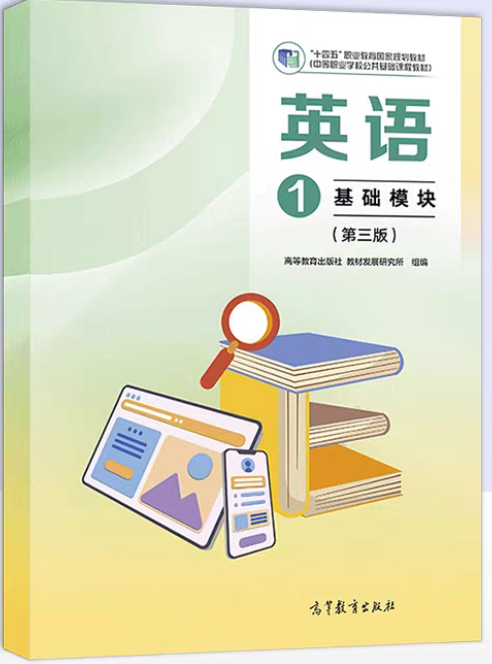
Unit 1——Unit 4 阶段测试卷(B卷·能力提升)《英语 基础模块1》(高教版第三版)单元过关卷(原卷版+解析版)
2026-06-29
|
2份
|
26页
|
60人阅读
|
1人下载
摘要:
**基本信息**
紧扣《英语 基础模块1》Unit1-4核心考点,B卷以真实情境(如访客接待、交通选择、产品比较)设计试题,强化语言能力与思维品质,适配单元复习中知识整合与能力提升需求。
**题型特征**
|题型|题量/分值|知识覆盖|命题特色|
|----|-----------|----------|----------|
|情景交际|15题/20分|日常交流策略、问题解决|对话贴近生活(如介绍访客、交通建议),提升语言运用能力|
|阅读理解|20题/40分|信息筛选、推理判断|主题围绕职业教育、购物决策,培养比较分析等思维品质|
|完形填空|10题/10分|词汇运用、篇章逻辑|整合单元知识(姓名文化、交通方式),体现学习策略运用|
|语法填空|10题/10分|时态、比较级等语法规则|结合项目实践(如采访、计划),强化语言准确性|
|书面表达|1题/20分|应用文写作|撰写欢迎发言稿,融合接待安排与礼貌用语,提升综合语言能力与文化意识|
内容正文:
编写说明:本套试卷紧扣《英语 基础模块1》(高教版第三版)教材,以教材单元为基准精准覆盖核心考点。
每个单元设置AB卷,A卷为基础巩固卷,侧重基础考点训练,帮助学生扎实掌握知识要点;B卷为能力提升卷,注重知识整合与全面检测,引导学生构建知识网络。全书设计4份综合测试卷,模拟实战情境,聚焦解题能力突破,全面提升应试能力与知识应用水平。
《英语 基础模块1》(高教版第三版)《单元过关卷》
Unit 1——Unit 4 阶段测试卷
B卷·能力提升
考试时间:120分钟 满分:100分
班级_____姓名_____学号_____成绩_____
一、情景交际(共15小题;满分20分)
第一节 读下列10个短对话,从题后所给的 A、B、C、D 四个选项中选出可以填入空白处的最佳选项。(共10小题,每小题1分,满分10分)
1. —I need to introduce Ms. Green to our training group. She is a visiting teacher from another school.
—_______. It is polite and clear.
A. You can say, “This is Ms. Green, our visiting teacher.”
B. You can ask her to buy a dictionary first.
C. You should only write her given name.
D. You must tell her the bus line.
2. —The subway is fast, but I have to change lines twice. The bus is slower but goes directly to the hotel. Which should I choose?
—_______. You have enough time and heavy bags.
A. Take no transport and wait at the station.
B. Choose the shared bike because it is free.
C. Walk there because it is thirty kilometers away.
D. Choose the bus because it is direct and easier.
3. —This online dictionary has more pictures, free word exercises and a 25% discount.
—_______. It seems useful for English learners.
A. It has no customer reviews.
B. Its features sound attractive.
C. It must be the smallest edition.
D. It cannot explain words.
4. —The practical training class is from 8:30 to 10:30, and the meeting begins at 10:40.
—_______. We have only ten minutes to move to the meeting hall.
A. The sweater is a medium size.
B. We should plan the time carefully.
C. The family name comes first.
D. Online shopping saves money.
5. —I called the customer “Mrs. Brown”, but I am not sure whether she likes that title.
—_______.
A. You need to get off at Exit B.
B. You should compare the price again.
C. You should ask politely how she would like to be addressed.
D. You can join the basketball team.
6. —The red shoes are cheaper, but the black pair fits better and has a higher customer rating.
—_______.
A. Customer ratings are never useful.
B. You should buy both pairs at once.
C. The red shoes are the only responsible choice.
D. Then the black pair may be the wiser choice.
7. —Our teacher asks us to write a customer review, not just “I like it.”
—_______.
A. We should copy the seller’s words.
B. We should write only the product color.
C. We should include reasons such as feature, price and use.
D. We should avoid any examples.
8. —The visitor’s phone has run out of battery, and he cannot use the map app.
—_______.
A. Tell him to buy a new phone online.
B. Ask him to show the written address and ask for help politely.
C. Let him wait until tomorrow.
D. Ask him to compare three products.
9. —Some classmates think vocational education is only about skills.
—_______. It also includes basic subjects, clubs and activities.
A. I do not agree.
B. It is made of cotton.
C. The taxi costs more.
D. The fitting room is over there.
10. —I want to thank my grandparents on the Chongyang Festival, but I cannot visit them that day.
—_______.
A. You must cancel your English class.
B. You should take the airport express.
C. You can ask for a larger size.
D. You can send a video call and a handmade card.
第二节 读下面一段对话,从方框中所给的 A、B、C、D、E、F 和 G 七个选项中选出可以填入空白处的最佳选项。(共5小题,每小题2分,满分10分)
Manager: We need a plan for the foreign students visiting our school next Friday.
Intern: I have checked their arrival time. _______ 11 _______
Manager: Good. How will they get from the train station to our school?
Intern: _______ 12 _______ It is direct, but during rush hour the subway may be faster.
Manager: Please prepare both plans and explain the cost and time.
Intern: No problem. _______ 13 _______
Manager: After they arrive, they will visit the training center and the product show.
Intern: Then we can introduce vocational education and responsible shopping together. _______ 14 _______
Manager: Excellent. What about the welcome speech?
Intern: _______ 15 _______ It will help them understand our family and school culture.
A. I will compare the two routes in a simple table.
B. I will begin with greetings and a short self-introduction.
C. They will arrive at 8:40 a.m. at the train station.
D. We can ask students to explain product features and customer reviews.
E. They can take Bus 707 directly to the school gate.
F. The sweater is on sale for only 70 yuan.
G. My grandparents live nearby.
二、阅读理解(共20小题;每小题2分,满分40分)
阅读下列短文,从题后所给的 A、B、C、D 四个选项中选出最佳答案。
A
A group of first-year students at Star Vocational High School were asked to design a one-day visit plan for exchange students. The plan had to include a welcome speech, a transportation guide, a product show and an introduction to vocational school life. Their teacher said the task was not a simple poster. It should show whether students could use English to solve practical problems.
The group leader, Zhao Lin, first divided the work. Mei prepared the welcome speech. She decided to introduce Chinese and English name orders because the exchange students might meet many Chinese students during the visit. She also planned to ask politely, “How would you like me to address you?” if she was unsure about a visitor’s preferred name. Chen prepared the transportation guide. He compared a direct bus, the subway and a taxi from the train station to the school. The bus was cheaper and direct, but the subway was more reliable during rush hour. The taxi was convenient for heavy bags but expensive.
For the product show, two students from the marketing major chose three school products: a dictionary, a notebook and a pair of training gloves. They compared material, price, discount, customer rating and use. They agreed that the best product was not always the cheapest one. A responsible buyer should ask whether the product really fits his or her needs.
The last part was about school life. The group planned to show the training center, the English club room and the meeting hall. They wanted visitors to see that vocational education includes basic subjects, special subjects, hands-on training and colorful activities. After finishing the plan, Zhao Lin wrote in the report, “Useful English is not only in a textbook. It appears when we greet people, guide visitors, compare products and explain our learning.”
16. What was the main requirement of the visit plan?
A. It should copy a complete textbook unit.
B. It should use English to solve practical problems.
C. It should focus only on family culture.
D. It should avoid school activities.
17. Why did Mei prepare a question about address forms?
A. Visitors may prefer different ways of being addressed.
B. Visitors must all use Chinese family names.
C. Students should avoid greeting visitors.
D. Name order is not useful in communication.
18. Which transportation choice was more reliable during rush hour?
A. The direct bus.
B. The shared bike.
C. The subway.
D. The taxi.
19. What idea does the product show emphasize?
A. The cheapest product is always the best.
B. Discounts should be ignored.
C. Buyers should choose products that fit real needs.
D. Customer ratings are less useful than colors.
20. What does Zhao Lin’s final sentence suggest?
A. Product shows are more important than greetings.
B. Textbook learning is not necessary.
C. Vocational education has no basic subjects.
D. English learning should be connected with real tasks.
B
Many students enjoy online shopping festivals because discounts look exciting. However, Ms. Huang, a business English teacher at a vocational school, uses these festivals to teach responsible shopping. She asks students to study three product pages before they buy anything: a schoolbag, an English dictionary and a pair of training shoes. The students must compare original price, sale price, material, size, customer rating and after-sale service.
At first, some students only looked at the discount. A schoolbag with 40% off seemed like the best choice. But after reading carefully, they found that the bag was smaller than they needed and the material was not strong enough for heavy books. Another bag had only 20% off, but it was larger, made of better material and had many helpful reviews from vocational students. The class learned that a bigger discount does not always mean a better product.
The dictionary page gave another lesson. The newest edition included 500 more words, more pictures and free online exercises. It cost more than an older edition, but students who wanted to improve vocabulary found it useful. Ms. Huang asked, “If a product helps you learn more effectively, should price be the only standard?” Most students answered no. They began to understand the relationship between need, feature and value.
For the training shoes, the class compared comfort and safety. The cheapest pair looked fashionable, but several reviews said it was tight and not suitable for long practice. The more expensive pair fit well and had a better customer rating. In the final discussion, students wrote a shopping rule: “Before paying, compare more than price. Think about need, quality, use and waste.” Ms. Huang said that this rule was also useful in work, because careful comparison helps people make responsible decisions.
21. What does Ms. Huang ask students to compare?
A. Only product colors and pictures.
B. Price, material, size, rating and service.
C. The seller’s hometown.
D. The number of advertisements.
22. Why was the 40% off schoolbag not the best choice?
A. It had no discount.
B. It was too large for school.
C. It was smaller than needed and not strong enough.
D. It was made of the best material.
23. What made the newest dictionary valuable for some students?
A. It included more words, pictures and online exercises.
B. It was the cheapest edition.
C. It had no example sentences.
D. It was only useful for teachers.
24. Why did the class not choose the cheapest training shoes?
A. They were sold out before class.
B. They looked too simple.
C. Reviews said they were tight and unsuitable for long practice.
D. The teacher disliked fashionable shoes.
25. What is the best shopping rule from the passage?
A. Always buy the product with the biggest discount.
B. Compare need, quality, use and waste before paying.
C. Trust only the original price.
D. Buy products quickly during festivals.
C
When a community center invited students to help older residents use smartphones, Yu Xin, a first-year vocational student, joined the volunteer team. She thought the task would be easy because she used map apps, payment codes and online stores every day. On the first morning, however, she realized that knowing how to use technology was different from teaching it patiently.
An elderly woman named Grandma Qiao wanted to learn three things: how to make a video call to her grandson, how to find the bus route to the hospital, and how to avoid buying unnecessary things online. Yu Xin first explained too quickly. Grandma Qiao smiled politely but touched the wrong button again and again. Their teacher reminded Yu Xin, “A good helper should slow down and let the learner do each step.” Yu Xin changed her way. She wrote large notes: “Open the app,” “Choose the contact,” “Press the green button.” Then she asked Grandma Qiao to operate the phone by herself.
When they practised the bus route, Yu Xin connected the lesson with Unit 2. She showed how to read the station name, direction and time on the map app. She also told Grandma Qiao that if the phone ran out of battery, she could write down the hospital address and ask for directions politely. For online shopping, Yu Xin explained that a discount was not a reason to buy everything. She taught Grandma Qiao to compare price, size, use and reviews before paying.
By the end of the service, Grandma Qiao made a video call successfully and found the hospital route. Yu Xin wrote in her reflection that vocational learning should serve real life. English words such as direction, address, discount and review were not just vocabulary items. They could become tools for helping people communicate, travel and shop more safely.
26. What did Yu Xin learn on the first morning?
A. Technology is easy for every older person.
B. Teaching technology requires patience and clear steps.
C. Volunteers should operate phones for residents.
D. Smartphone lessons should avoid transportation.
27. Why did Yu Xin write large notes for Grandma Qiao?
A. To let Grandma Qiao read and operate step by step.
B. To finish the service report faster.
C. To advertise a new phone app.
D. To replace all face-to-face communication.
28. Which advice is useful when the phone has no power?
A. Wait until the phone works again.
B. Write down the address and ask politely.
C. Buy something in an online store.
D. Stop going to the hospital.
29. What shopping idea did Yu Xin teach?
A. Buy everything with a discount.
B. Avoid all online shopping.
C. Trust only colorful pictures.
D. Compare price, size, use and reviews before paying.
30. What is the main meaning of Yu Xin’s reflection?
A. Vocabulary becomes meaningful when used to serve real life.
B. Older people should not learn smartphone skills.
C. Volunteering is unrelated to vocational learning.
D. English words should be memorized without examples.
D
At the beginning of the term, Mr. Wang gave his students an unusual writing task. He asked them to write an online message to a junior high school student who was choosing between a general high school and a vocational high school. The message should explain vocational education honestly, including basic subjects, special subjects, practical training and school activities.
Zhang Hui wrote the first draft quickly. He said, “Vocational school is fun. We have clubs and sports teams. You do not need to study hard.” Mr. Wang returned the draft and asked him to think again. “A good message should be attractive, but it must also be accurate,” he said. Zhang Hui then interviewed three classmates. One liked information technology because it prepared him for future work. One enjoyed English because she could use it to greet visitors and introduce products. Another said practical training was challenging because small mistakes in a machine or a work report could cause problems.
Zhang Hui rewrote his message. He explained that vocational students study basic subjects such as Chinese, math and English, and also learn special subjects related to their majors. They practise skills in training centers and may do internships to get hands-on experience. School life is not only study and training. Students can join clubs, competitions and school trips. These activities help them relax and communicate, but they do not replace serious learning.
In the final paragraph, Zhang Hui wrote, “If you like learning by doing, vocational school may be a good choice. It is not an easy road, but it can help you become skilled, responsible and confident.” Mr. Wang praised the final version because it balanced encouragement with truth. The class learned that good communication is not about saying only nice words. It is about giving useful information in a respectful way.
31. What did Mr. Wang ask students to write?
A. A customer review of a dictionary.
B. A transportation plan to the airport.
C. An online message explaining vocational education.
D. A family story for the Chongyang Festival.
32. What was the problem with Zhang Hui’s first draft?
A. It was too honest about training.
B. It made vocational school sound too easy and inaccurate.
C. It included too many textbook words.
D. It forgot to mention clubs.
33. Why did Zhang Hui interview classmates?
A. To collect real examples before revising.
B. To choose the cheapest school product.
C. To decide which bus line to take.
D. To copy their messages directly.
34. Which statement matches the rewritten message?
A. Vocational students do not study basic subjects.
B. Clubs replace serious learning.
C. Training centers and internships offer hands-on experience.
D. Vocational school is only for students who dislike English.
35. Why did Mr. Wang praise the final version?
A. It used the most difficult words.
B. It focused only on school trips.
C. It avoided mentioning hard work.
D. It balanced encouragement with accurate information.
三、完形填空(共10小题;每小题1分,满分10分)
阅读下列短文,从短文后各题所给的 A、B、C、D 四个选项中,选出可以填入空白处的最佳选项。
Our English teacher asked us to design a guide for new students. The guide should connect the first four units and show how English can be used _______ 36 _______ real life. Our group decided to make four pages.
The first page was about names and family. We wrote that people should not judge others only by the _______ 37 _______ of a name. A polite question about how to address someone may prevent embarrassment. The second page was about transportation. We compared three ways to get to the city museum. The subway was the most _______ 38 _______ during rush hour, while the taxi was convenient but expensive. We also reminded students to write down the address _______ 39 _______ their phones ran out of battery.
The third page was about shopping. At first, I wanted to put “Buy the cheapest product” as a rule. My partner disagreed. She said a responsible shopper should compare price, feature and _______ 40 _______. I realized she was right because a cheap product may become waste if it does not fit our needs. The last page was about school life. We introduced basic subjects, special subjects and practical training. These experiences prepare students _______ 41 _______ future work.
When we presented the guide, our teacher asked why we connected the units together. I answered that daily life is not divided into separate textbook pages. A student may introduce a visitor, choose a bus line, buy a useful dictionary and attend a club activity on the same day. English becomes powerful when it helps us _______ 42 _______ problems. The teacher smiled and said our guide showed both language knowledge and practical thinking. I felt more _______ 43 _______ after hearing that. I used to memorize words silently, but now I try to use them in tasks. This change makes my learning _______ 44 _______ and more meaningful. It is also the _______ 45 _______ reason why I enjoy vocational English.
36. A. on B. in C. at D. for
37. A. discount B. station C. meaning D. subject
38. A. tight B. reliable C. handmade D. strict
39. A. although B. unless C. if D. because
40. A. direction B. hall C. crossing D. review
41. A. with B. about C. from D. for
42. A. solve B. cost C. fit D. hold
43. A. confident B. nearby C. expensive D. formal
44. A. difficult B. private C. practical D. alone
45. A. wrong B. full C. given D. main
四、语法填空(共10小题;每小题1分,满分10分)
阅读下列短文,在空白处填入一个适当的词,或填入括号中所给单词的正确形式,并将答案写在对应处。
Last week, our class _______ 46 _______ (finish) a project about useful English. We interviewed students from four groups. The first group talked about name culture. They said it was safer _______ 47 _______ (use) Ms. before a woman’s family name when we were not sure. The second group designed a transportation plan. Their plan was _______ 48 _______ (clear) than ours because it included time, cost and exits. The third group compared two dictionaries and chose the one with _______ 49 _______ (many) example sentences. They believed the dictionary would help them use words _______ 50 _______ (well). The fourth group described vocational school life. They are going _______ 51 _______ (hold) an English speech competition next month. Students _______ 52 _______ want to join it should prepare a two-minute speech. Our teacher reminded us that every example must be connected _______ 53 _______ real life. I have learned that English is useful not only for tests _______ 54 _______ also for communication. If we keep using it, we _______ 55 _______ (become) more confident.
46._________ 47._________ 48._________ 49._________ 50._________
51._________ 52._________ 53._________ 54._________ 55._________
五、书面表达(满分20分)
假设你是某中职学校学生会成员。学校将接待一批外国交流生,请你写一份英文欢迎发言稿,介绍学校一日参观安排。
内容包括:
(1) 问候并简要介绍学校;
(2) 说明交通到达、实训中心、产品展示或社团活动等安排;
(3) 提醒交流生可礼貌询问称呼、路线或商品信息;
(4) 表达欢迎与祝愿。
写作要求:
(1) 词数不少于80;
(2) 内容完整,语句连贯;
(3) 文中不要提及真实校名和姓名。
________________________________________________________________________________
________________________________________________________________________________
________________________________________________________________________________
________________________________________________________________________________
________________________________________________________________________________
________________________________________________________________________________
________________________________________________________________________________
________________________________________________________________________________
原创精品资源学科网独家享有版权,侵权必究!
学科网(北京)股份有限公司
$
编写说明:本套试卷紧扣《英语 基础模块1》(高教版第三版)教材,以教材单元为基准精准覆盖核心考点。
每个单元设置AB卷,A卷为基础巩固卷,侧重基础考点训练,帮助学生扎实掌握知识要点;B卷为能力提升卷,注重知识整合与全面检测,引导学生构建知识网络。全书设计4份综合测试卷,模拟实战情境,聚焦解题能力突破,全面提升应试能力与知识应用水平。
《英语 基础模块1》(高教版第三版)《单元过关卷》
Unit 1——Unit 4 阶段测试卷
B卷·能力提升
考试时间:120分钟 满分:100分
班级_____姓名_____学号_____成绩_____
一、情景交际(共15小题;满分20分)
第一节 读下列10个短对话,从题后所给的 A、B、C、D 四个选项中选出可以填入空白处的最佳选项。(共10小题,每小题1分,满分10分)
1. —I need to introduce Ms. Green to our training group. She is a visiting teacher from another school.
—_______. It is polite and clear.
A. You can say, “This is Ms. Green, our visiting teacher.”
B. You can ask her to buy a dictionary first.
C. You should only write her given name.
D. You must tell her the bus line.
【答案】A
【详解】考查正式介绍他人。This is...结构能准确介绍身份。
2. —The subway is fast, but I have to change lines twice. The bus is slower but goes directly to the hotel. Which should I choose?
—_______. You have enough time and heavy bags.
A. Take no transport and wait at the station.
B. Choose the shared bike because it is free.
C. Walk there because it is thirty kilometers away.
D. Choose the bus because it is direct and easier.
【答案】D
【详解】考查交通方案选择。结合时间充足和行李重,直达公交更合适。
3. —This online dictionary has more pictures, free word exercises and a 25% discount.
—_______. It seems useful for English learners.
A. It has no customer reviews.
B. Its features sound attractive.
C. It must be the smallest edition.
D. It cannot explain words.
【答案】B
【详解】考查商品特征评价。more pictures, exercises, discount 都是吸引人的特点。
4. —The practical training class is from 8:30 to 10:30, and the meeting begins at 10:40.
—_______. We have only ten minutes to move to the meeting hall.
A. The sweater is a medium size.
B. We should plan the time carefully.
C. The family name comes first.
D. Online shopping saves money.
【答案】B
【详解】考查时间安排。两个活动间隔短,需要合理规划。
5. —I called the customer “Mrs. Brown”, but I am not sure whether she likes that title.
—_______.
A. You need to get off at Exit B.
B. You should compare the price again.
C. You should ask politely how she would like to be addressed.
D. You can join the basketball team.
【答案】C
【详解】考查跨文化称呼。称呼不确定时应礼貌询问。
6. —The red shoes are cheaper, but the black pair fits better and has a higher customer rating.
—_______.
A. Customer ratings are never useful.
B. You should buy both pairs at once.
C. The red shoes are the only responsible choice.
D. Then the black pair may be the wiser choice.
【答案】D
【详解】考查理性购物。合脚和评价高比单纯便宜更有参考价值。
7. —Our teacher asks us to write a customer review, not just “I like it.”
—_______.
A. We should copy the seller’s words.
B. We should write only the product color.
C. We should include reasons such as feature, price and use.
D. We should avoid any examples.
【答案】C
【详解】考查评价写作。客户评价应说明特征、价格、用途等理由。
8. —The visitor’s phone has run out of battery, and he cannot use the map app.
—_______.
A. Tell him to buy a new phone online.
B. Ask him to show the written address and ask for help politely.
C. Let him wait until tomorrow.
D. Ask him to compare three products.
【答案】B
【详解】考查地图失效时的应对。教材文化理解强调写下地点并礼貌求助。
9. —Some classmates think vocational education is only about skills.
—_______. It also includes basic subjects, clubs and activities.
A. I do not agree.
B. It is made of cotton.
C. The taxi costs more.
D. The fitting room is over there.
【答案】A
【详解】考查表达观点。后文补充职教内涵,说明不同意该看法。
10. —I want to thank my grandparents on the Chongyang Festival, but I cannot visit them that day.
—_______.
A. You must cancel your English class.
B. You should take the airport express.
C. You can ask for a larger size.
D. You can send a video call and a handmade card.
【答案】D
【详解】考查家庭关爱表达。不能到访时可用视频电话和手工卡表达关爱。
第二节 读下面一段对话,从方框中所给的 A、B、C、D、E、F 和 G 七个选项中选出可以填入空白处的最佳选项。(共5小题,每小题2分,满分10分)
Manager: We need a plan for the foreign students visiting our school next Friday.
Intern: I have checked their arrival time. _______ 11 _______
Manager: Good. How will they get from the train station to our school?
Intern: _______ 12 _______ It is direct, but during rush hour the subway may be faster.
Manager: Please prepare both plans and explain the cost and time.
Intern: No problem. _______ 13 _______
Manager: After they arrive, they will visit the training center and the product show.
Intern: Then we can introduce vocational education and responsible shopping together. _______ 14 _______
Manager: Excellent. What about the welcome speech?
Intern: _______ 15 _______ It will help them understand our family and school culture.
A. I will compare the two routes in a simple table.
B. I will begin with greetings and a short self-introduction.
C. They will arrive at 8:40 a.m. at the train station.
D. We can ask students to explain product features and customer reviews.
E. They can take Bus 707 directly to the school gate.
F. The sweater is on sale for only 70 yuan.
G. My grandparents live nearby.
【答案】11.C 12.E 13.A 14.D 15.B
【导语】这段对话围绕阶段综合任务展开,整合姓名文化、交通方案、责任购物和学校生活等主题。
【详解】
11. 上文询问到达时间,C项给出具体时间和地点。
12. 上文询问从火车站到学校的交通方式,E项给出直达公交方案。
13. 上文要求说明费用和时间,A项说明用表格比较两条路线。
14. 上文提到产品展示和责任购物,D项说明介绍产品特征和评价。
15. 上文询问欢迎词,B项说明从问候和自我介绍开始。
二、阅读理解(共20小题;每小题2分,满分40分)
阅读下列短文,从题后所给的 A、B、C、D 四个选项中选出最佳答案。
A
A group of first-year students at Star Vocational High School were asked to design a one-day visit plan for exchange students. The plan had to include a welcome speech, a transportation guide, a product show and an introduction to vocational school life. Their teacher said the task was not a simple poster. It should show whether students could use English to solve practical problems.
The group leader, Zhao Lin, first divided the work. Mei prepared the welcome speech. She decided to introduce Chinese and English name orders because the exchange students might meet many Chinese students during the visit. She also planned to ask politely, “How would you like me to address you?” if she was unsure about a visitor’s preferred name. Chen prepared the transportation guide. He compared a direct bus, the subway and a taxi from the train station to the school. The bus was cheaper and direct, but the subway was more reliable during rush hour. The taxi was convenient for heavy bags but expensive.
For the product show, two students from the marketing major chose three school products: a dictionary, a notebook and a pair of training gloves. They compared material, price, discount, customer rating and use. They agreed that the best product was not always the cheapest one. A responsible buyer should ask whether the product really fits his or her needs.
The last part was about school life. The group planned to show the training center, the English club room and the meeting hall. They wanted visitors to see that vocational education includes basic subjects, special subjects, hands-on training and colorful activities. After finishing the plan, Zhao Lin wrote in the report, “Useful English is not only in a textbook. It appears when we greet people, guide visitors, compare products and explain our learning.”
16. What was the main requirement of the visit plan?
A. It should copy a complete textbook unit.
B. It should use English to solve practical problems.
C. It should focus only on family culture.
D. It should avoid school activities.
17. Why did Mei prepare a question about address forms?
A. Visitors may prefer different ways of being addressed.
B. Visitors must all use Chinese family names.
C. Students should avoid greeting visitors.
D. Name order is not useful in communication.
18. Which transportation choice was more reliable during rush hour?
A. The direct bus.
B. The shared bike.
C. The subway.
D. The taxi.
19. What idea does the product show emphasize?
A. The cheapest product is always the best.
B. Discounts should be ignored.
C. Buyers should choose products that fit real needs.
D. Customer ratings are less useful than colors.
20. What does Zhao Lin’s final sentence suggest?
A. Product shows are more important than greetings.
B. Textbook learning is not necessary.
C. Vocational education has no basic subjects.
D. English learning should be connected with real tasks.
【答案】16.B 17.A 18.C 19.C 20.D
【导语】本文是一篇校园访问计划说明文,介绍学生如何综合运用前四个单元知识完成接待方案。
【详解】
16. 本题为细节理解题。根据第1段“use English to solve practical problems”可知,访问计划要体现用英语解决实际问题,故选B。
17. 本题为推理判断题。根据第2段“if she was unsure about a visitor’s preferred name”可知,不同来访者可能偏好不同称呼方式,故选A。
18. 本题为细节理解题。根据第2段“the subway was more reliable during rush hour”可知,高峰期地铁更可靠,故选C。
19. 本题为主旨大意题。根据第3段“not always the cheapest one”和“fits his or her needs”可知,产品展示强调按实际需要理性选择,故选C。
20. 本题为推理判断题。末句列举问候、指路、比较商品、解释学习,说明英语学习应联系真实任务,故选D。
B
Many students enjoy online shopping festivals because discounts look exciting. However, Ms. Huang, a business English teacher at a vocational school, uses these festivals to teach responsible shopping. She asks students to study three product pages before they buy anything: a schoolbag, an English dictionary and a pair of training shoes. The students must compare original price, sale price, material, size, customer rating and after-sale service.
At first, some students only looked at the discount. A schoolbag with 40% off seemed like the best choice. But after reading carefully, they found that the bag was smaller than they needed and the material was not strong enough for heavy books. Another bag had only 20% off, but it was larger, made of better material and had many helpful reviews from vocational students. The class learned that a bigger discount does not always mean a better product.
The dictionary page gave another lesson. The newest edition included 500 more words, more pictures and free online exercises. It cost more than an older edition, but students who wanted to improve vocabulary found it useful. Ms. Huang asked, “If a product helps you learn more effectively, should price be the only standard?” Most students answered no. They began to understand the relationship between need, feature and value.
For the training shoes, the class compared comfort and safety. The cheapest pair looked fashionable, but several reviews said it was tight and not suitable for long practice. The more expensive pair fit well and had a better customer rating. In the final discussion, students wrote a shopping rule: “Before paying, compare more than price. Think about need, quality, use and waste.” Ms. Huang said that this rule was also useful in work, because careful comparison helps people make responsible decisions.
21. What does Ms. Huang ask students to compare?
A. Only product colors and pictures.
B. Price, material, size, rating and service.
C. The seller’s hometown.
D. The number of advertisements.
22. Why was the 40% off schoolbag not the best choice?
A. It had no discount.
B. It was too large for school.
C. It was smaller than needed and not strong enough.
D. It was made of the best material.
23. What made the newest dictionary valuable for some students?
A. It included more words, pictures and online exercises.
B. It was the cheapest edition.
C. It had no example sentences.
D. It was only useful for teachers.
24. Why did the class not choose the cheapest training shoes?
A. They were sold out before class.
B. They looked too simple.
C. Reviews said they were tight and unsuitable for long practice.
D. The teacher disliked fashionable shoes.
25. What is the best shopping rule from the passage?
A. Always buy the product with the biggest discount.
B. Compare need, quality, use and waste before paying.
C. Trust only the original price.
D. Buy products quickly during festivals.
【答案】21.B 22.C 23.A 24.C 25.B
【导语】本文是一篇责任购物说明文,通过三类商品比较说明购物不能只看折扣,还要关注需求、质量、用途和浪费。
【详解】
21. 本题为细节理解题。根据第1段“compare original price, sale price, material, size, customer rating and after-sale service”可知,比较内容包括价格、材质、尺码、评分和服务,故选B。
22. 本题为细节理解题。根据第2段“smaller than they needed”和“material was not strong enough”可知,该书包不合适,故选C。
23. 本题为细节理解题。根据第3段“included 500 more words, more pictures and free online exercises”可知,新版词典的价值在于内容和练习,故选A。
24. 本题为细节理解题。根据第4段“tight and not suitable for long practice”可知,便宜鞋不适合长时间训练,故选C。
25. 本题为主旨大意题。根据末段规则“Think about need, quality, use and waste”可知,购物前应多维比较,故选B。
C
When a community center invited students to help older residents use smartphones, Yu Xin, a first-year vocational student, joined the volunteer team. She thought the task would be easy because she used map apps, payment codes and online stores every day. On the first morning, however, she realized that knowing how to use technology was different from teaching it patiently.
An elderly woman named Grandma Qiao wanted to learn three things: how to make a video call to her grandson, how to find the bus route to the hospital, and how to avoid buying unnecessary things online. Yu Xin first explained too quickly. Grandma Qiao smiled politely but touched the wrong button again and again. Their teacher reminded Yu Xin, “A good helper should slow down and let the learner do each step.” Yu Xin changed her way. She wrote large notes: “Open the app,” “Choose the contact,” “Press the green button.” Then she asked Grandma Qiao to operate the phone by herself.
When they practised the bus route, Yu Xin connected the lesson with Unit 2. She showed how to read the station name, direction and time on the map app. She also told Grandma Qiao that if the phone ran out of battery, she could write down the hospital address and ask for directions politely. For online shopping, Yu Xin explained that a discount was not a reason to buy everything. She taught Grandma Qiao to compare price, size, use and reviews before paying.
By the end of the service, Grandma Qiao made a video call successfully and found the hospital route. Yu Xin wrote in her reflection that vocational learning should serve real life. English words such as direction, address, discount and review were not just vocabulary items. They could become tools for helping people communicate, travel and shop more safely.
26. What did Yu Xin learn on the first morning?
A. Technology is easy for every older person.
B. Teaching technology requires patience and clear steps.
C. Volunteers should operate phones for residents.
D. Smartphone lessons should avoid transportation.
27. Why did Yu Xin write large notes for Grandma Qiao?
A. To let Grandma Qiao read and operate step by step.
B. To finish the service report faster.
C. To advertise a new phone app.
D. To replace all face-to-face communication.
28. Which advice is useful when the phone has no power?
A. Wait until the phone works again.
B. Write down the address and ask politely.
C. Buy something in an online store.
D. Stop going to the hospital.
29. What shopping idea did Yu Xin teach?
A. Buy everything with a discount.
B. Avoid all online shopping.
C. Trust only colorful pictures.
D. Compare price, size, use and reviews before paying.
30. What is the main meaning of Yu Xin’s reflection?
A. Vocabulary becomes meaningful when used to serve real life.
B. Older people should not learn smartphone skills.
C. Volunteering is unrelated to vocational learning.
D. English words should be memorized without examples.
【答案】26.B 27.A 28.B 29.D 30.A
【导语】本文是一篇志愿服务类记叙文,讲述职校学生在教老人使用手机过程中理解耐心指导和实用英语的价值。
【详解】
26. 本题为推理判断题。根据第1段“knowing how to use technology was different from teaching it patiently”可知,教学需要耐心和清晰步骤,故选B。
27. 本题为细节理解题。根据第2段大字便条和“operate the phone by herself”可知,写便条是为了让老人按步骤自己操作,故选A。
28. 本题为细节理解题。根据第3段“if the phone ran out of battery... write down the hospital address and ask for directions politely”可知,手机没电时应写地址并礼貌问路,故选B。
29. 本题为细节理解题。根据第3段“compare price, size, use and reviews before paying”可知,付款前要多维比较,故选D。
30. 本题为主旨大意题。根据末段“could become tools for helping people communicate, travel and shop more safely”可知,词汇用于服务生活才更有意义,故选A。
D
At the beginning of the term, Mr. Wang gave his students an unusual writing task. He asked them to write an online message to a junior high school student who was choosing between a general high school and a vocational high school. The message should explain vocational education honestly, including basic subjects, special subjects, practical training and school activities.
Zhang Hui wrote the first draft quickly. He said, “Vocational school is fun. We have clubs and sports teams. You do not need to study hard.” Mr. Wang returned the draft and asked him to think again. “A good message should be attractive, but it must also be accurate,” he said. Zhang Hui then interviewed three classmates. One liked information technology because it prepared him for future work. One enjoyed English because she could use it to greet visitors and introduce products. Another said practical training was challenging because small mistakes in a machine or a work report could cause problems.
Zhang Hui rewrote his message. He explained that vocational students study basic subjects such as Chinese, math and English, and also learn special subjects related to their majors. They practise skills in training centers and may do internships to get hands-on experience. School life is not only study and training. Students can join clubs, competitions and school trips. These activities help them relax and communicate, but they do not replace serious learning.
In the final paragraph, Zhang Hui wrote, “If you like learning by doing, vocational school may be a good choice. It is not an easy road, but it can help you become skilled, responsible and confident.” Mr. Wang praised the final version because it balanced encouragement with truth. The class learned that good communication is not about saying only nice words. It is about giving useful information in a respectful way.
31. What did Mr. Wang ask students to write?
A. A customer review of a dictionary.
B. A transportation plan to the airport.
C. An online message explaining vocational education.
D. A family story for the Chongyang Festival.
32. What was the problem with Zhang Hui’s first draft?
A. It was too honest about training.
B. It made vocational school sound too easy and inaccurate.
C. It included too many textbook words.
D. It forgot to mention clubs.
33. Why did Zhang Hui interview classmates?
A. To collect real examples before revising.
B. To choose the cheapest school product.
C. To decide which bus line to take.
D. To copy their messages directly.
34. Which statement matches the rewritten message?
A. Vocational students do not study basic subjects.
B. Clubs replace serious learning.
C. Training centers and internships offer hands-on experience.
D. Vocational school is only for students who dislike English.
35. Why did Mr. Wang praise the final version?
A. It used the most difficult words.
B. It focused only on school trips.
C. It avoided mentioning hard work.
D. It balanced encouragement with accurate information.
【答案】31.C 32.B 33.A 34.C 35.D
【导语】本文是一篇写作指导类记叙文,讲述学生修改关于职业教育的在线信息,学习准确、真诚、尊重地沟通。
【详解】
31. 本题为细节理解题。根据第1段“write an online message... explain vocational education honestly”可知,任务是写一则介绍职教的在线信息,故选C。
32. 本题为推理判断题。根据第2段“You do not need to study hard”和教师批注“accurate”可知,初稿把职校说得过于轻松且不准确,故选B。
33. 本题为推理判断题。根据第2段采访三位同学后重写可知,采访是为了收集真实例子修改文章,故选A。
34. 本题为细节理解题。根据第3段“training centers”和“internships to get hands-on experience”可知,C项符合改写后的内容,故选C。
35. 本题为细节理解题。根据末段“balanced encouragement with truth”可知,教师表扬其鼓励性与真实性平衡,故选D。
三、完形填空(共10小题;每小题1分,满分10分)
阅读下列短文,从短文后各题所给的 A、B、C、D 四个选项中,选出可以填入空白处的最佳选项。
Our English teacher asked us to design a guide for new students. The guide should connect the first four units and show how English can be used _______ 36 _______ real life. Our group decided to make four pages.
The first page was about names and family. We wrote that people should not judge others only by the _______ 37 _______ of a name. A polite question about how to address someone may prevent embarrassment. The second page was about transportation. We compared three ways to get to the city museum. The subway was the most _______ 38 _______ during rush hour, while the taxi was convenient but expensive. We also reminded students to write down the address _______ 39 _______ their phones ran out of battery.
The third page was about shopping. At first, I wanted to put “Buy the cheapest product” as a rule. My partner disagreed. She said a responsible shopper should compare price, feature and _______ 40 _______. I realized she was right because a cheap product may become waste if it does not fit our needs. The last page was about school life. We introduced basic subjects, special subjects and practical training. These experiences prepare students _______ 41 _______ future work.
When we presented the guide, our teacher asked why we connected the units together. I answered that daily life is not divided into separate textbook pages. A student may introduce a visitor, choose a bus line, buy a useful dictionary and attend a club activity on the same day. English becomes powerful when it helps us _______ 42 _______ problems. The teacher smiled and said our guide showed both language knowledge and practical thinking. I felt more _______ 43 _______ after hearing that. I used to memorize words silently, but now I try to use them in tasks. This change makes my learning _______ 44 _______ and more meaningful. It is also the _______ 45 _______ reason why I enjoy vocational English.
36. A. on B. in C. at D. for
37. A. discount B. station C. meaning D. subject
38. A. tight B. reliable C. handmade D. strict
39. A. although B. unless C. if D. because
40. A. direction B. hall C. crossing D. review
41. A. with B. about C. from D. for
42. A. solve B. cost C. fit D. hold
43. A. confident B. nearby C. expensive D. formal
44. A. difficult B. private C. practical D. alone
45. A. wrong B. full C. given D. main
【答案】36.B 37.C 38.B 39.C 40.D 41.D 42.A 43.A 44.C 45.D
【导语】本文是一篇阶段综合学习类完形填空,考查Unit 1—Unit 4核心词汇、固定搭配、逻辑关系和语篇衔接。
【详解】
36. 考查介词搭配。in real life 表示“在现实生活中”,故选B。
37. 考查名词词义辨析。根据“judge others only by...”可知不能只凭名字含义判断人,故选C。
38. 考查形容词词义辨析。高峰期地铁更可靠,reliable 符合语境,故选B。
39. 考查连词。句意为“如果手机没电”,用 if 引导条件状语从句,故选C。
40. 考查购物词汇。price, feature and review 为购物比较要素,故选D。
41. 考查固定搭配。prepare students for future work 表示“使学生为未来工作做准备”,故选D。
42. 考查动词搭配。solve problems 表示“解决问题”,故选A。
43. 考查形容词。受到教师肯定后更自信,confident 符合语境,故选A。
44. 考查形容词。用词完成任务使学习更实用,practical 符合,故选C。
45. 考查形容词。the main reason 表示“主要原因”,故选D。
四、语法填空(共10小题;每小题1分,满分10分)
阅读下列短文,在空白处填入一个适当的词,或填入括号中所给单词的正确形式,并将答案写在对应处。
Last week, our class _______ 46 _______ (finish) a project about useful English. We interviewed students from four groups. The first group talked about name culture. They said it was safer _______ 47 _______ (use) Ms. before a woman’s family name when we were not sure. The second group designed a transportation plan. Their plan was _______ 48 _______ (clear) than ours because it included time, cost and exits. The third group compared two dictionaries and chose the one with _______ 49 _______ (many) example sentences. They believed the dictionary would help them use words _______ 50 _______ (well). The fourth group described vocational school life. They are going _______ 51 _______ (hold) an English speech competition next month. Students _______ 52 _______ want to join it should prepare a two-minute speech. Our teacher reminded us that every example must be connected _______ 53 _______ real life. I have learned that English is useful not only for tests _______ 54 _______ also for communication. If we keep using it, we _______ 55 _______ (become) more confident.
46._________ 47._________ 48._________ 49._________ 50._________
51._________ 52._________ 53._________ 54._________ 55._________
【答案】46.finished 47.to use 48.clearer 49.more 50.better 51.to hold 52.who/that 53.with/to 54.but 55.will become
【导语】本文围绕阶段综合英语活动展开,考查时态、非谓语、比较级、词性转换、从句和固定搭配等内容。
【详解】
46. Last week 表示过去时间,谓语用 finished。
47. It is + adj. + to do sth. 为固定句型,填 to use。
48. than 提示使用比较级 clearer。
49. example sentences 为可数复数,且与另一词典比较,填 more。
50. 修饰动词 use 用副词 well 的比较级 better。
51. be going to do sth. 表示计划做某事,填 to hold。
52. 先行词 Students 指人,定语从句缺主语,可填 who 或 that。
53. be connected with/to 表示“与……相关”。
54. not only...but also... 为固定结构。
55. if 条件句遵循“主将从现”,主句用 will become。
五、书面表达(满分20分)
假设你是某中职学校学生会成员。学校将接待一批外国交流生,请你写一份英文欢迎发言稿,介绍学校一日参观安排。
内容包括:
(1) 问候并简要介绍学校;
(2) 说明交通到达、实训中心、产品展示或社团活动等安排;
(3) 提醒交流生可礼貌询问称呼、路线或商品信息;
(4) 表达欢迎与祝愿。
写作要求:
(1) 词数不少于80;
(2) 内容完整,语句连贯;
(3) 文中不要提及真实校名和姓名。
________________________________________________________________________________
________________________________________________________________________________
________________________________________________________________________________
________________________________________________________________________________
________________________________________________________________________________
________________________________________________________________________________
________________________________________________________________________________
________________________________________________________________________________
【参考范文】
Good morning, everyone! Welcome to our vocational high school. We are glad to meet you today. Our school helps students study basic subjects and practise useful skills, so we often say that we learn by doing.
First, please take the school bus from the station to our front gate. If you need help, you can show the written address and ask politely. After you arrive, we will visit the training center. You can see how students practise their skills. Then we will go to a small product show. Our students will introduce product features, prices and customer reviews in English. In the afternoon, you can join our English club activity in the meeting hall.
If you are not sure how to address someone, just ask, “How would you like me to address you?” If you need directions or product information, our students will be happy to help. We hope you will enjoy the visit and learn more about our school life. Thank you!
【词汇积累】vocational high school 职业高中;learn by doing 做中学;front gate 前门;training center 实训中心;product feature 商品特点;customer review 顾客评价;meeting hall 会议厅;address someone 称呼某人。
【句式拓展】1. If you need help, you can show the written address and ask politely. 使用条件句给出建议。2. Our students will introduce product features, prices and customer reviews in English. 使用并列名词覆盖介绍要点。
【点睛】范文融合Unit 1称呼礼仪、Unit 2交通到达、Unit 3产品展示和Unit 4学校生活,符合阶段测试卷综合应用要求。
原创精品资源学科网独家享有版权,侵权必究!
学科网(北京)股份有限公司
$
资源预览图

1

2

3
由于学科网是一个信息分享及获取的平台,不确保部分用户上传资料的 来源及知识产权归属。如您发现相关资料侵犯您的合法权益,请联系学科网,我们核实后将及时进行处理。