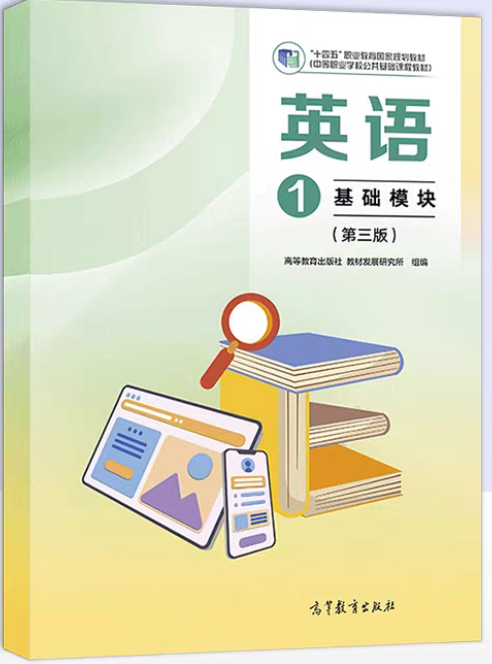
Unit 8 People and Events(B卷·能力提升)《英语 基础模块1》(高教版第三版)单元过关卷(原卷版+解析版)
2026-06-29
|
2份
|
24页
|
64人阅读
|
0人下载
内容正文:
编写说明:本套试卷紧扣《英语 基础模块1》(高教版第三版)教材,以教材单元为基准精准覆盖核心考点。
每个单元设置AB卷,A卷为基础巩固卷,侧重基础考点训练,帮助学生扎实掌握知识要点;B卷为能力提升卷,注重知识整合与全面检测,引导学生构建知识网络。全书设计4份综合测试卷,模拟实战情境,聚焦解题能力突破,全面提升应试能力与知识应用水平。
《英语 基础模块1》(高教版第三版)《单元过关卷》
Unit 8 People and Events
B卷·能力提升
考试时间:120分钟 满分:100分
班级_____姓名_____学号_____成绩_____
一、情景交际(共15小题;满分20分)
第一节 读下列10个短对话,从题后所给的 A、B、C、D 四个选项中选出可以填入空白处的最佳选项。(共10小题,每小题1分,满分10分)
1. —Our major is railway service. Which person should we introduce to show the spirit of careful engineering?
—_______. His work on the Jingzhang Railway is a good example.
A. Cai Lun B. Florence Nightingale
C. Zhan Tianyou D. Thomas Edison
2. —The article says Cai Lun improved the method of paper-making. Does “improved” mean he made it better?
—_______. The new method helped people record ideas more easily.
A. No, it means he forgot it B. Yes, that's right
C. No, it means he reduced paper D. Yes, but paper became useless
3. —May I add a short comparison between the old railway and today's high-speed railway to our poster?
—_______. It will make the development clearer.
A. You must not compare them B. You don't have to use facts
C. It is impossible to present D. Good idea
4. —I can't find enough facts about the Jingzhang High-Speed Railway before the group discussion.
—_______. We can search for reliable information together.
A. Don't worry B. You must copy any website
C. That's not a group task D. You should give up the topic
5. —Why should an invention be connected with real needs?
—_______. Otherwise, it may look interesting but help few people.
A. Because every invention must be expensive B. Because real needs are not important
C. Because useful inventions solve problems D. Because old inventions cannot be useful
6. —Must our presentation include every detail of Zhan Tianyou's life?
—_______. We should choose key facts and explain their meaning.
A. Yes, every detail is necessary B. No, you don't have to
C. No, you must not mention him D. Yes, you can ignore meaning
7. —What can we learn from Florence Nightingale's work in nursing?
—_______. Her work shows how professional service can save lives.
A. Nursing is only about writing notes B. Modern nursing has no history
C. Only doctors can help patients D. Professional care matters
8. —The old train used steam, while modern high-speed trains use electricity and advanced technology.
—_______. The change shows how transportation has improved.
A. That's true B. It is not a change
C. Steam is faster than electricity D. Transportation should not improve
9. —Could you check whether my summary includes time, place, difficulty and achievement?
—_______. These four parts can make your summary complete.
A. Sure B. Never mind
C. Sorry to hear that D. I can't believe the railway
10. —The smartphone keeps us connected, but some students spend too much time on it.
—_______. A useful invention should be used wisely.
A. I don't know what a smartphone is B. I agree
C. It cannot connect people D. It should be used all day
第二节 读下面一段对话,从方框中所给的 A、B、C、D、E、F 和 G 七个选项中选出可以填入空白处的最佳选项。(共5小题,每小题2分,满分10分)
A: We need to design an infographic comparing the Jingzhang Railway and the Jingzhang High-Speed Railway.
B: Yes. _______ 11 _______
A: Good. We should also explain the common difficulty.
B: _______ 12 _______ But the two railways solved it in different ways.
A: What key facts should we put in the first part?
B: _______ 13 _______
A: And the second part can show speed, power and passenger experience of the high-speed railway.
B: Right. _______ 14 _______
A: How should we end the presentation?
B: _______ 15 _______ That will connect history with our future work.
A. We can list the time, length and chief engineer of the old railway.
B. I don't think railways are connected with our life.
C. The tablet is my favorite invention.
D. I have found some pictures and a simple map.
E. Then the comparison will show both change and progress.
F. Both lines had to deal with mountains near Beijing and Zhangjiakou.
G. We can say careful work and courage are still important for young workers.
二、阅读理解(共20小题;每小题2分,满分40分)
阅读下列短文,从题后所给的 A、B、C、D 四个选项中选出最佳答案。
A
The Technology Club wanted to choose one object for the school activity named A Small Object, A Big Change. Some students immediately suggested smartphones and tablets because these tools were familiar and popular. However, their teacher asked a different question: If an object is not new, can it still be important? The question led the class to a discussion about paper.
At first, several students thought paper was too ordinary for a technology activity. Then they began to collect facts. They found that paper supported education, government, business and art for many centuries. It helped people keep records, send messages and pass knowledge to the next generation. One student said that a tablet could store thousands of books, but paper made the idea of a book common long before electronic screens appeared. Another student added that paper was easy to carry, write on and share, so it reduced the difficulty of learning in earlier times.
The discussion became deeper when the teacher asked students to compare invention with improvement. The class learned that Cai Lun was remembered not simply because paper existed, but because the method of paper-making was improved and became more useful. This point changed the way students looked at technology. They realized that progress often comes from improving a method, making a tool cheaper, or helping more people use it. A brilliant change is not always a new machine with shining lights.
For the final display, the club put a piece of handmade paper beside a tablet. Under the paper, they wrote, 'It recorded ideas.' Under the tablet, they wrote, 'It connects ideas.' Between the two objects, they wrote, 'Good tools help knowledge travel.' Visitors liked the display because it avoided a simple old-versus-new argument. It showed that technology develops when people keep asking how a tool can serve real needs better.
16. What question starts the class discussion about paper?
A. Whether only new objects can be important B. Whether students should stop using tablets
C. Whether paper is more colorful than screens D. Whether smartphones are allowed at school
17. Why did students change their first opinion about paper?
A. They learned paper was more expensive than tablets B. They found paper supported many areas of life for centuries
C. They were told tablets could not store books D. They decided ordinary objects should not be discussed
18. What does the passage suggest about Cai Lun's importance?
A. He stopped people from writing on paper B. He invented electronic screens
C. He made a useful method better and easier to spread D. He used paper only for art
19. Why was the final display successful?
A. It avoided mentioning the history of paper B. It proved tablets were useless in modern study
C. It used many shining lights to attract visitors D. It showed old and new tools could both help knowledge travel
20. Which sentence best expresses the passage's idea of technology?
A. A popular tool is always better than an ordinary one
B. Technology is important only when it is expensive
C. Old tools should always be replaced at once
D. Technology should serve real needs through invention or improvement
B
A group of vocational students were asked to compare two railways between Beijing and Zhangjiakou. At first, they planned to make a simple table with dates and numbers. Their teacher accepted the table but encouraged them to go further. 'A comparison should not only show what is different,' she said. 'It should also explain why the differences matter.'
The students first studied the Jingzhang Railway. They wrote that it opened in 1909, was about 200 kilometers long, and was built under the leadership of Zhan Tianyou. The most difficult part was not only the distance but also the mountains. The railway proved that Chinese engineers could design and complete a challenging project with confidence and careful work. For its time, the railway was a brilliant achievement.
Then the students searched for information about the Jingzhang High-Speed Railway. They learned that modern trains use advanced power and technology, run much faster, and provide more comfortable service for passengers. But speed was not the only point. The high-speed railway also supported winter sports, tourism and city development. It showed how transportation could connect economic activity, daily life and national progress.
When the students put the two railways side by side, they discovered both change and continuity. The tools, speed and passenger experience had changed greatly. Yet the basic task was similar: engineers had to overcome natural difficulties and connect people through safe transportation. The students ended their infographic with one sentence: 'From steam to high speed, the railway story is also a story of problem solving.' The teacher praised the sentence because it moved beyond facts and explained meaning.
After the project, several students said they understood their own major better. Whether they became drivers, service workers, technicians or station assistants, they would need the same spirit: respect facts, check details and serve passengers responsibly.
21. What did the teacher want the comparison to explain?
A. Why differences between the two railways matter
B. Why students should avoid tables
C. Why dates are more important than meaning
D. Why one railway should replace the other in history
22. What did the Jingzhang Railway prove at that time?
A. High-speed trains were already common
B. Chinese engineers could complete a challenging project
C. Railways did not need careful design
D. Mountains were not a real difficulty
23. Besides speed, what influence of the high-speed railway is mentioned?
A. It reduced the need for passengers B. It made old railways disappear
C. It supported sports, tourism and city development D. It stopped economic activity
24. What does “change and continuity” refer to?
A. Different facts that cannot be compared
B. Different cities and no common purpose
C. Different workers and no need for safety
D. Different technology but a similar problem-solving task
25. What lesson do students connect with their future major?
A. They can ignore passenger experience
B. They only need to remember dates
C. They should choose famous jobs instead of ordinary ones
D. They should respect facts, check details and serve responsibly
C
People often remember great persons by their most famous achievements, but a life story becomes more useful when we also notice choices. Zhan Tianyou is remembered as the chief engineer of the Jingzhang Railway, yet the meaning of his story is not limited to one job title. His choices before and during the project show how knowledge, responsibility and confidence can work together.
Zhan was born in 1861 in Guangdong Province and showed an interest in machines at an early age. After studying in the United States and graduating from Yale University, he returned to China. This choice mattered. He could use what he had learned to serve his country at a time when modern engineering was badly needed. Later, when he began the Jingzhang Railway project, the challenge was clear. The railway had to pass through hills and mountains, and many people believed no one could build it successfully under such conditions.
A weaker leader might have been frightened by doubt, but Zhan treated doubt as a problem to solve. He did not simply give speeches about confidence. He organized the work, studied the land carefully and led his team through difficulties. The railway was completed in 1909, two years ahead of schedule. The result made people see that confidence should be supported by skills and hard work.
This story is useful for vocational students because they are also preparing to solve practical problems. In a workshop, a small design mistake may influence safety. In a service center, a careless answer may make a customer more worried. In a nursing room, a slow response may affect a patient. Students may not all become famous engineers, but they can learn how to connect knowledge with responsible action. A great person's life is not only something to admire from a distance. It can become a mirror that helps young people check their own study habits, work attitude and courage when facing difficulty.
26. What does the writer suggest we should notice in a great person's life?
A. Only the job title B. Only the birthplace
C. Choices as well as achievements D. Stories that sound easy
27. Why was Zhan's return to China important?
A. He wanted to avoid engineering work B. He could use his knowledge to serve the country
C. He had finished all railway projects abroad D. He no longer cared about machines
28. What does the passage say about confidence?
A. It means ignoring all doubts B. It can replace careful study
C. It should be supported by skills and hard work D. It is useful only in speeches
29. Why does the writer mention a workshop, service center and nursing room?
A. To suggest students should change majors often
B. To prove engineering is easier than service work
C. To list places where Zhan Tianyou worked
D. To show different jobs also require responsible action
30. What does the phrase “a mirror” mean in the last paragraph?
A. A way to memorize dates quickly B. A picture of a famous railway
C. A tool for checking one's own attitude and habits D. A sign that history is far away
D
During a career education lesson, Ms. Chen asked her students to discuss one sentence from their textbook: 'Good inventions make life better.' Most students agreed quickly, but Ms. Chen pushed them to think more deeply. 'If an invention can make life better,' she asked, 'what kind of user can make an invention better for life?'
The question changed the discussion. One student talked about the smartphone. It helps him stay connected with classmates, read notices and take photos of machine parts during practice. But he admitted that the same phone could disturb study if he used it without self-control. Another student talked about the tablet. It made drawing and note-taking easier, especially for design tasks. However, she said that a tablet could not replace thinking. If students only copied pictures and never explained ideas in their own words, the tool would not improve learning.
Ms. Chen then shared a story about a restaurant cook named Feng Lan. Feng Lan did not invent a famous machine, but she improved small work methods every week. She arranged tools in a safer order, reduced food waste and completed orders more carefully when the restaurant was busy. Her improvements were not reported in the news, but they made customers happier and helped new workers learn faster. The class realized that improvement could happen in ordinary jobs.
At the end of the lesson, students wrote three rules for using and improving tools. First, understand the real problem before choosing a tool. Second, use the tool responsibly, because convenience without control may create new problems. Third, look for small improvements in daily work. Ms. Chen said these rules were close to the spirit of Unit 8: people and events become meaningful when they show how human effort changes life. The students left the classroom with a new idea. A good invention is important, but a thoughtful user can extend its value.
A. How users can make inventions serve life better
B. Which invention is the most expensive
C. Why smartphones should be banned
D. Whether students can remember textbook sentences
32. What problem of smartphones is mentioned?
A. They are useful only in restaurants B. They cannot help people stay connected
C. They may disturb study without self-control D. They cannot take photos
33. Why is Feng Lan's story included?
A. To explain why tablets replace cooking tools B. To prove cooks must invent machines
C. To compare restaurants with railway stations D. To show small improvements in ordinary jobs also matter
34. Which rule best matches the idea of responsible tool use?
A. Convenience needs self-control B. Copy pictures instead of explaining ideas
C. Choose a tool before knowing the problem D. Use every tool as often as possible
35. What is the best title for the passage?
A. Why Restaurant Work Is Easier Than Study B. The History of Smartphones and Tablets
C. A Thoughtful User Extends an Invention's Value D. Three Famous Inventors in Unit 8
三、完形填空(共10小题;每小题1分,满分10分)
阅读下列短文,从短文后各题所给的 A、B、C、D 四个选项中,选出可以填入空白处的最佳选项。
When our teacher asked us to describe a great person, I first planned to write only a short paragraph about Zhan Tianyou. I knew he was the chief engineer of the Jingzhang Railway, but I did not understand why his story still mattered. My teacher said, 'A name and a title are only the _______ 36 _______. You should explain the choices and difficulties behind them.'
I began to read more carefully. Zhan was born in Guangdong Province and showed an interest _______ 37 _______ machines at an early age. After graduation from Yale University, he returned to China. Later, he was asked to design and build a railway through hills and mountains. Many people doubted whether Chinese engineers could _______ 38 _______ such a difficult task. Instead of being afraid, Zhan led his team to study the land and solve problems step by step. The railway was completed two years ahead of _______ 39 _______.
While writing the report, I realized that courage does not mean doing things _______ 40 _______. It means making careful plans even when others do not believe in you. I also compared his story with my own major. As a future technician, I may have to check machines, record problems and remind others _______ 41 _______ safely. These things may look common, _______ 42 _______ they also need responsibility. Finally, I organized my report around three words: knowledge, courage and service. My classmates said the report helped them connect a historical event _______ 43 _______ future work. I felt proud because I did not simply praise a famous person. I explained how his achievement could _______ 44 _______ young people today. Good stories from history should not stay in books; they should guide our actions and make us _______ 45 _______ when we face difficulties.
36. A. excuse B. beginning C. answer D. address
37. A. at B. by C. for D. in
38. A. complete B. reduce C. record D. invent
39. A. class B. report C. schedule D. method
40. A. carelessly B. politely C. bravely D. slowly
41. A. to work B. work C. working D. worked
42. A. so B. but C. because D. or
43. A. on B. at C. with D. from
44. A. encourage B. describe C. compare D. refuse
45. A. quieter B. stronger C. newer D. cheaper
四、语法填空(共10小题;每小题1分,满分10分)
阅读下列短文,在空白处填入一个适当的词,或填入括号中所给单词的正确形式,并将答案写在对应处。
Our class is creating an infographic to compare the Jingzhang Railway with the Jingzhang High-Speed Railway. The old railway _______ 46 _______ (complete) in 1909. Zhan Tianyou, the chief engineer, led his team _______ 47 _______ (overcome) many difficulties. The railway had to go through an area of hills and mountains, _______ 48 _______ many people doubted the project at first. However, the team succeeded in _______ 49 _______ (finish) it ahead of schedule.
Today, China's high-speed railways _______ 50 _______ (connect) many cities and make travel more convenient. Modern trains are much _______ 51 _______ (fast) than early steam trains. In our infographic, we should not only list numbers but also explain _______ 52 _______ the changes matter. My partner says we _______ 53 _______ (must) copy full paragraphs from websites. We need to choose key facts and write them in our own words. If we use a map and a timeline, our classmates can understand the comparison _______ 54 _______ (clear). This task teaches us that history and modern technology are both _______ 55 _______ (value).
46._________ 47._________ 48._________ 49._________ 50._________
51._________ 52._________ 53._________ 54._________ 55._________
五、书面表达(满分20分)
校园科技周将举办英文展示活动,请你根据以下提示,写一篇英文发言稿,比较京张铁路与现代高铁,并谈谈你的启示。
内容包括:
(1) 简要介绍京张铁路的一个关键事实;
(2) 简要介绍现代高铁的一个变化或优势;
(3) 说明两者共同体现的精神;
(4) 联系自己的学习或未来职业谈启示。
写作要求:
(1) 词数不少于80;
(2) 必须包括要点,可以适当扩充,但不能逐词翻译;
(3) 文中不要提及真实校名和姓名。
提示:chief engineer, complete, ahead of schedule, high-speed railway, overcome difficulties, responsible
_______________________________________________________________
_______________________________________________________________
_______________________________________________________________
原创精品资源学科网独家享有版权,侵权必究!
学科网(北京)股份有限公司
$
编写说明:本套试卷紧扣《英语 基础模块1》(高教版第三版)教材,以教材单元为基准精准覆盖核心考点。
每个单元设置AB卷,A卷为基础巩固卷,侧重基础考点训练,帮助学生扎实掌握知识要点;B卷为能力提升卷,注重知识整合与全面检测,引导学生构建知识网络。全书设计4份综合测试卷,模拟实战情境,聚焦解题能力突破,全面提升应试能力与知识应用水平。
《英语 基础模块1》(高教版第三版)《单元过关卷》
Unit 8 People and Events
B卷·能力提升
考试时间:120分钟 满分:100分
班级_____姓名_____学号_____成绩_____
一、情景交际(共15小题;满分20分)
第一节 读下列10个短对话,从题后所给的 A、B、C、D 四个选项中选出可以填入空白处的最佳选项。(共10小题,每小题1分,满分10分)
1. —Our major is railway service. Which person should we introduce to show the spirit of careful engineering?
—_______. His work on the Jingzhang Railway is a good example.
A. Cai Lun B. Florence Nightingale
C. Zhan Tianyou D. Thomas Edison
【答案】C
【详解】考查人物与职业精神匹配。railway service 和 Jingzhang Railway 指向詹天佑。
2. —The article says Cai Lun improved the method of paper-making. Does “improved” mean he made it better?
—_______. The new method helped people record ideas more easily.
A. No, it means he forgot it B. Yes, that's right
C. No, it means he reduced paper D. Yes, but paper became useless
【答案】B
【详解】考查词义确认。improve 表示“改进,使更好”,B项确认正确。
3. —May I add a short comparison between the old railway and today's high-speed railway to our poster?
—_______. It will make the development clearer.
A. You must not compare them B. You don't have to use facts
C. It is impossible to present D. Good idea
【答案】D
【详解】考查提出建议与回应。后句说明比较能使发展更清楚,因此赞同。
4. —I can't find enough facts about the Jingzhang High-Speed Railway before the group discussion.
—_______. We can search for reliable information together.
A. Don't worry B. You must copy any website
C. That's not a group task D. You should give up the topic
【答案】A
【详解】考查安慰与帮助。对方遇到资料困难,Don't worry 并提出一起查找最合适。
5. —Why should an invention be connected with real needs?
—_______. Otherwise, it may look interesting but help few people.
A. Because every invention must be expensive B. Because real needs are not important
C. Because useful inventions solve problems D. Because old inventions cannot be useful
【答案】C
【详解】考查原因说明。真实需求与 solve problems 对应,C项符合。
6. —Must our presentation include every detail of Zhan Tianyou's life?
—_______. We should choose key facts and explain their meaning.
A. Yes, every detail is necessary B. No, you don't have to
C. No, you must not mention him D. Yes, you can ignore meaning
【答案】B
【详解】考查 must 问句否定回答。无需包含每个细节,应选择关键事实。
7. —What can we learn from Florence Nightingale's work in nursing?
—_______. Her work shows how professional service can save lives.
A. Nursing is only about writing notes B. Modern nursing has no history
C. Only doctors can help patients D. Professional care matters
【答案】D
【详解】考查人物贡献理解。Florence Nightingale 与 modern nursing 相关,说明专业护理重要。
8. —The old train used steam, while modern high-speed trains use electricity and advanced technology.
—_______. The change shows how transportation has improved.
A. That's true B. It is not a change
C. Steam is faster than electricity D. Transportation should not improve
【答案】A
【详解】考查同意观点。对方比较动力和技术变化,A项自然回应并承接。
9. —Could you check whether my summary includes time, place, difficulty and achievement?
—_______. These four parts can make your summary complete.
A. Sure B. Never mind
C. Sorry to hear that D. I can't believe the railway
【答案】A
【详解】考查请求帮助。Could you check...? 用 Sure 回应,并说明摘要要素。
10. —The smartphone keeps us connected, but some students spend too much time on it.
—_______. A useful invention should be used wisely.
A. I don't know what a smartphone is B. I agree
C. It cannot connect people D. It should be used all day
【答案】B
【详解】考查表达同意和观点。后句与前句共同强调合理使用发明,B项符合。
第二节 读下面一段对话,从方框中所给的 A、B、C、D、E、F 和 G 七个选项中选出可以填入空白处的最佳选项。(共5小题,每小题2分,满分10分)
A: We need to design an infographic comparing the Jingzhang Railway and the Jingzhang High-Speed Railway.
B: Yes. _______ 11 _______
A: Good. We should also explain the common difficulty.
B: _______ 12 _______ But the two railways solved it in different ways.
A: What key facts should we put in the first part?
B: _______ 13 _______
A: And the second part can show speed, power and passenger experience of the high-speed railway.
B: Right. _______ 14 _______
A: How should we end the presentation?
B: _______ 15 _______ That will connect history with our future work.
A. We can list the time, length and chief engineer of the old railway.
B. I don't think railways are connected with our life.
C. The tablet is my favorite invention.
D. I have found some pictures and a simple map.
E. Then the comparison will show both change and progress.
F. Both lines had to deal with mountains near Beijing and Zhangjiakou.
G. We can say careful work and courage are still important for young workers.
【答案】11.D 12.F 13.A 14.E 15.G
【导语】这段对话围绕制作京张铁路与京张高铁对比信息图展开,强调关键事实、共同困难、发展变化和职业启示。
【详解】
11. 上文说要设计对比信息图,D项提到已找到图片和地图,符合准备展示的语境。
12. 上文提到 common difficulty,F项说明两条线路都要应对山区困难,衔接紧密。
13. 上文问第一部分放哪些关键事实,A项列出时间、长度和总工程师,符合要求。
14. 上文介绍高铁速度、动力和乘客体验,E项总结比较能呈现变化与进步。
15. 上文问结尾方式,G项将历史精神与青年工人未来岗位相联系。
二、阅读理解(共20小题;每小题2分,满分40分)
阅读下列短文,从题后所给的 A、B、C、D 四个选项中选出最佳答案。
A
The Technology Club wanted to choose one object for the school activity named A Small Object, A Big Change. Some students immediately suggested smartphones and tablets because these tools were familiar and popular. However, their teacher asked a different question: If an object is not new, can it still be important? The question led the class to a discussion about paper.
At first, several students thought paper was too ordinary for a technology activity. Then they began to collect facts. They found that paper supported education, government, business and art for many centuries. It helped people keep records, send messages and pass knowledge to the next generation. One student said that a tablet could store thousands of books, but paper made the idea of a book common long before electronic screens appeared. Another student added that paper was easy to carry, write on and share, so it reduced the difficulty of learning in earlier times.
The discussion became deeper when the teacher asked students to compare invention with improvement. The class learned that Cai Lun was remembered not simply because paper existed, but because the method of paper-making was improved and became more useful. This point changed the way students looked at technology. They realized that progress often comes from improving a method, making a tool cheaper, or helping more people use it. A brilliant change is not always a new machine with shining lights.
For the final display, the club put a piece of handmade paper beside a tablet. Under the paper, they wrote, 'It recorded ideas.' Under the tablet, they wrote, 'It connects ideas.' Between the two objects, they wrote, 'Good tools help knowledge travel.' Visitors liked the display because it avoided a simple old-versus-new argument. It showed that technology develops when people keep asking how a tool can serve real needs better.
16. What question starts the class discussion about paper?
A. Whether only new objects can be important B. Whether students should stop using tablets
C. Whether paper is more colorful than screens D. Whether smartphones are allowed at school
17. Why did students change their first opinion about paper?
A. They learned paper was more expensive than tablets B. They found paper supported many areas of life for centuries
C. They were told tablets could not store books D. They decided ordinary objects should not be discussed
18. What does the passage suggest about Cai Lun's importance?
A. He stopped people from writing on paper B. He invented electronic screens
C. He made a useful method better and easier to spread D. He used paper only for art
19. Why was the final display successful?
A. It avoided mentioning the history of paper B. It proved tablets were useless in modern study
C. It used many shining lights to attract visitors D. It showed old and new tools could both help knowledge travel
20. Which sentence best expresses the passage's idea of technology?
A. A popular tool is always better than an ordinary one
B. Technology is important only when it is expensive
C. Old tools should always be replaced at once
D. Technology should serve real needs through invention or improvement
【答案】16.A 17.B 18.C 19.D 20.D
【导语】本文是一篇议论性说明文,通过校园科技展示讨论纸与平板电脑,强调技术价值来自解决真实需求和持续改进。
【详解】
16. 本题为细节理解题。根据第1段“If an object is not new, can it still be important?”可知,问题是非新事物是否仍重要,故选A。
17. 本题为推理判断题。根据第2段“paper supported education, government, business and art for many centuries”可知,学生因发现纸长期支持多个领域而改变看法,故选B。
18. 本题为细节理解题。根据第3段“the method of paper-making was improved and became more useful”可知,蔡伦的重要性体现在改进方法,故选C。
19. 本题为推理判断题。根据末段“Good tools help knowledge travel”和“avoided a simple old-versus-new argument”可知,展示说明新旧工具都能帮助知识传播,故选D。
20. 本题为主旨大意题。根据末段“serve real needs better”可知,技术应通过发明或改进服务真实需要,故选D。
B
A group of vocational students were asked to compare two railways between Beijing and Zhangjiakou. At first, they planned to make a simple table with dates and numbers. Their teacher accepted the table but encouraged them to go further. 'A comparison should not only show what is different,' she said. 'It should also explain why the differences matter.'
The students first studied the Jingzhang Railway. They wrote that it opened in 1909, was about 200 kilometers long, and was built under the leadership of Zhan Tianyou. The most difficult part was not only the distance but also the mountains. The railway proved that Chinese engineers could design and complete a challenging project with confidence and careful work. For its time, the railway was a brilliant achievement.
Then the students searched for information about the Jingzhang High-Speed Railway. They learned that modern trains use advanced power and technology, run much faster, and provide more comfortable service for passengers. But speed was not the only point. The high-speed railway also supported winter sports, tourism and city development. It showed how transportation could connect economic activity, daily life and national progress.
When the students put the two railways side by side, they discovered both change and continuity. The tools, speed and passenger experience had changed greatly. Yet the basic task was similar: engineers had to overcome natural difficulties and connect people through safe transportation. The students ended their infographic with one sentence: 'From steam to high speed, the railway story is also a story of problem solving.' The teacher praised the sentence because it moved beyond facts and explained meaning.
After the project, several students said they understood their own major better. Whether they became drivers, service workers, technicians or station assistants, they would need the same spirit: respect facts, check details and serve passengers responsibly.
21. What did the teacher want the comparison to explain?
A. Why differences between the two railways matter
B. Why students should avoid tables
C. Why dates are more important than meaning
D. Why one railway should replace the other in history
22. What did the Jingzhang Railway prove at that time?
A. High-speed trains were already common
B. Chinese engineers could complete a challenging project
C. Railways did not need careful design
D. Mountains were not a real difficulty
23. Besides speed, what influence of the high-speed railway is mentioned?
A. It reduced the need for passengers B. It made old railways disappear
C. It supported sports, tourism and city development D. It stopped economic activity
24. What does “change and continuity” refer to?
A. Different facts that cannot be compared
B. Different cities and no common purpose
C. Different workers and no need for safety
D. Different technology but a similar problem-solving task
25. What lesson do students connect with their future major?
A. They can ignore passenger experience
B. They only need to remember dates
C. They should choose famous jobs instead of ordinary ones
D. They should respect facts, check details and serve responsibly
【答案】21.A 22.B 23.C 24.D 25.D
【导语】本文是一篇项目学习类说明文,通过对比京张铁路与京张高铁,引导学生理解交通成就背后的问题解决能力和职业责任。
【详解】
21. 本题为细节理解题。根据第1段“explain why the differences matter”可知,教师要求解释差异为何重要,故选A。
22. 本题为细节理解题。根据第2段“proved that Chinese engineers could design and complete a challenging project”可知,京张铁路证明中国工程师能完成挑战性工程,故选B。
23. 本题为细节理解题。根据第3段“supported winter sports, tourism and city development”可知,高铁还促进体育、旅游和城市发展,故选C。
24. 本题为推理判断题。根据第4段工具速度体验变化,但基本任务仍是克服困难、连接人们,可知A项正确。
25. 本题为细节理解题。根据末段“respect facts, check details and serve passengers responsibly”可知,学生联系到未来专业的责任要求,故选D。
C
People often remember great persons by their most famous achievements, but a life story becomes more useful when we also notice choices. Zhan Tianyou is remembered as the chief engineer of the Jingzhang Railway, yet the meaning of his story is not limited to one job title. His choices before and during the project show how knowledge, responsibility and confidence can work together.
Zhan was born in 1861 in Guangdong Province and showed an interest in machines at an early age. After studying in the United States and graduating from Yale University, he returned to China. This choice mattered. He could use what he had learned to serve his country at a time when modern engineering was badly needed. Later, when he began the Jingzhang Railway project, the challenge was clear. The railway had to pass through hills and mountains, and many people believed no one could build it successfully under such conditions.
A weaker leader might have been frightened by doubt, but Zhan treated doubt as a problem to solve. He did not simply give speeches about confidence. He organized the work, studied the land carefully and led his team through difficulties. The railway was completed in 1909, two years ahead of schedule. The result made people see that confidence should be supported by skills and hard work.
This story is useful for vocational students because they are also preparing to solve practical problems. In a workshop, a small design mistake may influence safety. In a service center, a careless answer may make a customer more worried. In a nursing room, a slow response may affect a patient. Students may not all become famous engineers, but they can learn how to connect knowledge with responsible action. A great person's life is not only something to admire from a distance. It can become a mirror that helps young people check their own study habits, work attitude and courage when facing difficulty.
26. What does the writer suggest we should notice in a great person's life?
A. Only the job title B. Only the birthplace
C. Choices as well as achievements D. Stories that sound easy
27. Why was Zhan's return to China important?
A. He wanted to avoid engineering work B. He could use his knowledge to serve the country
C. He had finished all railway projects abroad D. He no longer cared about machines
28. What does the passage say about confidence?
A. It means ignoring all doubts B. It can replace careful study
C. It should be supported by skills and hard work D. It is useful only in speeches
29. Why does the writer mention a workshop, service center and nursing room?
A. To suggest students should change majors often
B. To prove engineering is easier than service work
C. To list places where Zhan Tianyou worked
D. To show different jobs also require responsible action
30. What does the phrase “a mirror” mean in the last paragraph?
A. A way to memorize dates quickly B. A picture of a famous railway
C. A tool for checking one's own attitude and habits D. A sign that history is far away
【答案】26.A 27.B 28.C 29.D 30.C
【导语】本文是一篇人物精神类议论文,从詹天佑的人生选择和京张铁路建设中提炼知识、责任与信心对职校学生的启示。
【详解】
26. 本题为细节理解题。根据第1段“we also notice choices”可知,除了成就还要关注选择,故选A。
27. 本题为推理判断题。根据第2段“use what he had learned to serve his country”可知,回国的重要性在于用所学服务国家,故选B。
28. 本题为细节理解题。根据第3段“confidence should be supported by skills and hard work”可知,信心应由技能和努力支撑,故选C。
29. 本题为推理判断题。末段列举车间、服务中心和护理室,是为了说明不同岗位都需要负责任的行动,故选D。
30. 本题为词义猜测题。根据“helps young people check their own study habits...”可知,mirror 指帮助反观自身态度和习惯的参照,故选C。
D
During a career education lesson, Ms. Chen asked her students to discuss one sentence from their textbook: 'Good inventions make life better.' Most students agreed quickly, but Ms. Chen pushed them to think more deeply. 'If an invention can make life better,' she asked, 'what kind of user can make an invention better for life?'
The question changed the discussion. One student talked about the smartphone. It helps him stay connected with classmates, read notices and take photos of machine parts during practice. But he admitted that the same phone could disturb study if he used it without self-control. Another student talked about the tablet. It made drawing and note-taking easier, especially for design tasks. However, she said that a tablet could not replace thinking. If students only copied pictures and never explained ideas in their own words, the tool would not improve learning.
Ms. Chen then shared a story about a restaurant cook named Feng Lan. Feng Lan did not invent a famous machine, but she improved small work methods every week. She arranged tools in a safer order, reduced food waste and completed orders more carefully when the restaurant was busy. Her improvements were not reported in the news, but they made customers happier and helped new workers learn faster. The class realized that improvement could happen in ordinary jobs.
At the end of the lesson, students wrote three rules for using and improving tools. First, understand the real problem before choosing a tool. Second, use the tool responsibly, because convenience without control may create new problems. Third, look for small improvements in daily work. Ms. Chen said these rules were close to the spirit of Unit 8: people and events become meaningful when they show how human effort changes life. The students left the classroom with a new idea. A good invention is important, but a thoughtful user can extend its value.
31. What deeper question does Ms. Chen ask students to think about?
A. How users can make inventions serve life better
B. Which invention is the most expensive
C. Why smartphones should be banned
D. Whether students can remember textbook sentences
32. What problem of smartphones is mentioned?
A. They are useful only in restaurants B. They cannot help people stay connected
C. They may disturb study without self-control D. They cannot take photos
33. Why is Feng Lan's story included?
A. To explain why tablets replace cooking tools B. To prove cooks must invent machines
C. To compare restaurants with railway stations D. To show small improvements in ordinary jobs also matter
34. Which rule best matches the idea of responsible tool use?
A. Convenience needs self-control B. Copy pictures instead of explaining ideas
C. Choose a tool before knowing the problem D. Use every tool as often as possible
35. What is the best title for the passage?
A. Why Restaurant Work Is Easier Than Study B. The History of Smartphones and Tablets
C. A Thoughtful User Extends an Invention's Value D. Three Famous Inventors in Unit 8
【答案】31.B 32.C 33.D 34.D 35.C
【导语】本文是一篇课堂讨论类议论文,通过智能手机、平板电脑和普通岗位改进说明使用者的责任与思考能延伸发明价值。
【详解】
31. 本题为细节理解题。根据第1段“what kind of user can make an invention better for life”可知,教师引导学生思考使用者如何让发明更好服务生活,故选B。
32. 本题为细节理解题。根据第2段“could disturb study if he used it without self-control”可知,手机缺乏自控会干扰学习,故选C。
33. 本题为推理判断题。根据第3段“improvement could happen in ordinary jobs”可知,Feng Lan的故事说明普通岗位的小改进也重要,故选D。
34. 本题为推理判断题。根据第4段“convenience without control may create new problems”可知,便利需要自控,故选D。
35. 本题为标题归纳题。末句“A thoughtful user can extend its value”概括全文,故选C。
三、完形填空(共10小题;每小题1分,满分10分)
阅读下列短文,从短文后各题所给的 A、B、C、D 四个选项中,选出可以填入空白处的最佳选项。
When our teacher asked us to describe a great person, I first planned to write only a short paragraph about Zhan Tianyou. I knew he was the chief engineer of the Jingzhang Railway, but I did not understand why his story still mattered. My teacher said, 'A name and a title are only the _______ 36 _______. You should explain the choices and difficulties behind them.'
I began to read more carefully. Zhan was born in Guangdong Province and showed an interest _______ 37 _______ machines at an early age. After graduation from Yale University, he returned to China. Later, he was asked to design and build a railway through hills and mountains. Many people doubted whether Chinese engineers could _______ 38 _______ such a difficult task. Instead of being afraid, Zhan led his team to study the land and solve problems step by step. The railway was completed two years ahead of _______ 39 _______.
While writing the report, I realized that courage does not mean doing things _______ 40 _______. It means making careful plans even when others do not believe in you. I also compared his story with my own major. As a future technician, I may have to check machines, record problems and remind others _______ 41 _______ safely. These things may look common, _______ 42 _______ they also need responsibility. Finally, I organized my report around three words: knowledge, courage and service. My classmates said the report helped them connect a historical event _______ 43 _______ future work. I felt proud because I did not simply praise a famous person. I explained how his achievement could _______ 44 _______ young people today. Good stories from history should not stay in books; they should guide our actions and make us _______ 45 _______ when we face difficulties.
36. A. excuse B. beginning C. answer D. address
37. A. at B. by C. for D. in
38. A. complete B. reduce C. record D. invent
39. A. class B. report C. schedule D. method
40. A. carelessly B. politely C. bravely D. slowly
41. A. to work B. work C. working D. worked
42. A. so B. but C. because D. or
43. A. on B. at C. with D. from
44. A. encourage B. describe C. compare D. refuse
45. A. quieter B. stronger C. newer D. cheaper
【答案】36.B 37.D 38.A 39.C 40.A 41.A 42.B 43.C 44.A 45.B
【导语】本文是一篇报告写作类完形填空,讲述学生通过深入理解詹天佑事迹,将历史人物精神与未来技术岗位责任联系起来。
【详解】
36. 考查名词。老师强调姓名和头衔只是“开始”,还要解释选择和困难,beginning 符合,故选B。
37. 考查介词。show an interest in 表示“对……感兴趣”,故选D。
38. 考查动词。complete such a difficult task 表示完成如此困难的任务,故选A。
39. 考查短语。ahead of schedule 表示提前,教材核心短语,故选C。
40. 考查副词。根据后文 careful plans 可知,勇气不是做事草率,carelessly 符合,故选A。
41. 考查非谓语。remind sb. to do sth. 表示提醒某人做某事,故选A。
42. 考查连词。前句说事情普通,后句说也需要责任,前后转折用 but,故选B。
43. 考查介词。connect...with... 表示“把……与……联系起来”,故选C。
44. 考查动词。句意:解释他的成就如何鼓励今天的年轻人,encourage 符合,故选A。
45. 考查形容词比较级。历史故事能指导行动,使我们面对困难时更坚强,stronger 符合,故选B。
四、语法填空(共10小题;每小题1分,满分10分)
阅读下列短文,在空白处填入一个适当的词,或填入括号中所给单词的正确形式,并将答案写在对应处。
Our class is creating an infographic to compare the Jingzhang Railway with the Jingzhang High-Speed Railway. The old railway _______ 46 _______ (complete) in 1909. Zhan Tianyou, the chief engineer, led his team _______ 47 _______ (overcome) many difficulties. The railway had to go through an area of hills and mountains, _______ 48 _______ many people doubted the project at first. However, the team succeeded in _______ 49 _______ (finish) it ahead of schedule.
Today, China's high-speed railways _______ 50 _______ (connect) many cities and make travel more convenient. Modern trains are much _______ 51 _______ (fast) than early steam trains. In our infographic, we should not only list numbers but also explain _______ 52 _______ the changes matter. My partner says we _______ 53 _______ (must) copy full paragraphs from websites. We need to choose key facts and write them in our own words. If we use a map and a timeline, our classmates can understand the comparison _______ 54 _______ (clear). This task teaches us that history and modern technology are both _______ 55 _______ (value).
46._________ 47._________ 48._________ 49._________ 50._________
51._________ 52._________ 53._________ 54._________ 55._________
【答案】46.was completed 47.to overcome 48.so 49.finishing 50.connect 51.faster 52.why 53.mustn't 54.clearly 55.valuable
【导语】本文以制作京张铁路与京张高铁对比信息图为语境,考查被动语态、不定式、连词、动名词、比较级、副词和词形转换。
【详解】
46. 主语 The old railway 与 complete 构成被动关系,且时间为1909年,故填 was completed。
47. lead sb. to do sth. 表示“带领某人做某事”,故填 to overcome。
48. 前句说明铁路穿越山区,后句说明很多人怀疑,前后为因果关系,故填 so。
49. succeed in doing sth. 表示“成功做成某事”,故填 finishing。
50. 主语 high-speed railways 为复数,一般现在时用 connect。
51. 根据 than 可知用比较级 faster。
52. explain why the changes matter 表示解释变化为什么重要,故填 why。
53. 根据后文“choose key facts and write them in our own words”可知,不能复制整段网页文字,故填 mustn't。
54. 修饰动词 understand,用副词 clearly。
55. be 动词后作表语,用 value 的形容词 valuable。
五、书面表达(满分20分)
校园科技周将举办英文展示活动,请你根据以下提示,写一篇英文发言稿,比较京张铁路与现代高铁,并谈谈你的启示。
内容包括:
(1) 简要介绍京张铁路的一个关键事实;
(2) 简要介绍现代高铁的一个变化或优势;
(3) 说明两者共同体现的精神;
(4) 联系自己的学习或未来职业谈启示。
写作要求:
(1) 词数不少于80;
(2) 必须包括要点,可以适当扩充,但不能逐词翻译;
(3) 文中不要提及真实校名和姓名。
提示:chief engineer, complete, ahead of schedule, high-speed railway, overcome difficulties, responsible
_______________________________________________________________
_______________________________________________________________
_______________________________________________________________
【参考范文】
Good morning, everyone. I would like to compare the Jingzhang Railway with modern high-speed railways. The Jingzhang Railway was completed in 1909. Zhan Tianyou was its chief engineer. The railway had to go through hills and mountains, but his team overcame many difficulties and finished it ahead of schedule.
Today, high-speed railways in China are much faster and more comfortable. They connect many cities and make travel easier for people. Although the technology has changed greatly, the spirit behind the railways is still similar. Engineers and workers must study carefully, solve problems and check every detail.
As a vocational student, I learn that great achievements come from knowledge and responsibility. In my future work, I may not build a famous railway, but I should be careful, patient and responsible in every task.
【词汇积累】chief engineer 总工程师;complete 完成;ahead of schedule 提前;high-speed railway 高速铁路;overcome difficulties 克服困难;connect cities 连接城市;be responsible 负责任。
【句式拓展】1. Although the technology has changed greatly, the spirit behind the railways is still similar. 该句用 although 引导让步状语从句,突出技术变化与精神传承。2. I may not build a famous railway, but I should be careful... 该句用 may 和 should 表达可能性与责任。
【点睛】范文以发言稿形式完成铁路对比任务,包含关键事实、现代变化、共同精神和个人职业启示。
原创精品资源学科网独家享有版权,侵权必究!
学科网(北京)股份有限公司
$
资源预览图

1

2

3
由于学科网是一个信息分享及获取的平台,不确保部分用户上传资料的 来源及知识产权归属。如您发现相关资料侵犯您的合法权益,请联系学科网,我们核实后将及时进行处理。