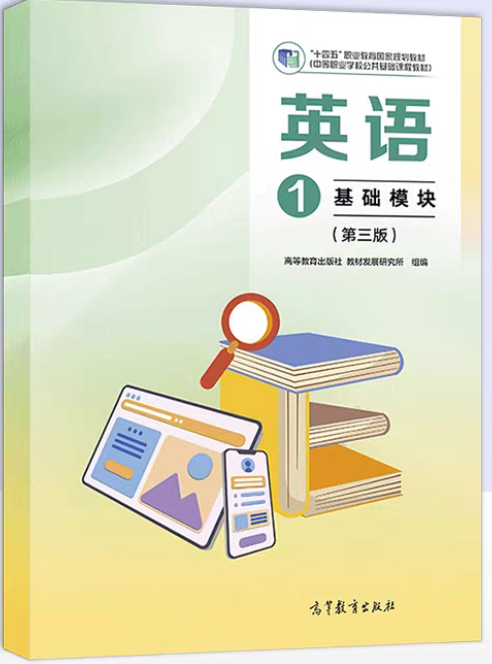
Unit 7 The Smartphone and the Internet(B卷·能力提升)《英语 基础模块1》(高教版第三版)单元过关卷(原卷版+解析版)
2026-06-29
|
2份
|
33页
|
60人阅读
|
0人下载
摘要:
**基本信息**
本试卷为《英语 基础模块1》(高教版第三版)Unit 7 B卷能力提升卷,紧扣单元核心考点,通过智能手机使用、网络安全等真实情境,融合语言能力与思维品质,适配中职英语单元复习,助力知识整合与应用能力提升。
**题型特征**
|题型|题量/分值|知识覆盖|命题特色|
|----|-----------|----------|----------|
|情景交际|15小题/20分|日常对话、网络习惯表达|设置调查、安全提醒等情境,考查语言理解与表达能力|
|阅读理解|20小题/40分|智能手机使用案例、网络素养|选取教老人用手机、学生屏幕时间分析等素材,培养文化意识与问题解决思维|
|完形填空|10小题/10分|语法应用、词汇辨析|以志愿者教手机技能为线索,渗透耐心沟通等价值观|
|语法填空|10小题/10分|时态、非谓语等语法点|围绕智能手机使用报告主题,强化语法在真实语境中的运用|
|书面表达|1题/20分|数字生活描述与改进|要求结合便利、问题及措施,提升逻辑表达与学习能力|
内容正文:
编写说明:本套试卷紧扣《英语 基础模块1》(高教版第三版)教材,以教材单元为基准精准覆盖核心考点。
每个单元设置AB卷,A卷为基础巩固卷,侧重基础考点训练,帮助学生扎实掌握知识要点;B卷为能力提升卷,注重知识整合与全面检测,引导学生构建知识网络。全书设计4份综合测试卷,模拟实战情境,聚焦解题能力突破,全面提升应试能力与知识应用水平。
《英语 基础模块1》(高教版第三版)《单元过关卷》
Unit 7 The Smartphone and the Internet
B卷·能力提升
考试时间:120分钟 满分:100分
班级_____姓名_____学号_____成绩_____
一、情景交际(共15小题;满分20分)
第一节 读下列10个短对话,从题后所给的 A、B、C、D 四个选项中选出可以填入空白处的最佳选项。(共10小题,每小题1分,满分10分)
1. —Our student union is doing a survey about online habits. Could you spare a few minutes after class?
—_______. I have just finished my homework.
A. The network is slow today. B. No, you must buy a phone first.
C. Sure, I would be glad to help. D. I often order takeout online.
2. —You have checked your phone five times during this reading task.
—_______. I will put it away and focus on the passage.
A. The screen is large enough. B. The phone shop is nearby.
C. I need more storage. D. You are right.
3. —Which feature matters most if I often take online classes on my phone?
—_______. A slow connection may interrupt your lesson.
A. A fashionable color matters most. B. A small screen is always better.
C. A fast network is very important. D. A game app is necessary.
4. —My little brother uses the phone while riding a bike. I am worried about him.
—_______. It is dangerous and he should stop at once.
A. He can listen to music loudly. B. He should unlock the phone first.
C. That helps him find the road faster. D. You are right to worry.
5. —How long do you usually spend reading news online every day?
—_______. I do not want it to take too much study time.
A. About twenty minutes. B. On a news app.
C. Because news is fresh. D. With my classmates.
6. —The old man wants to make a video call, but he forgets the steps again.
—_______. Patient guidance is more helpful than doing it for him.
A. We should laugh at the mistake. B. We can explain the steps slowly.
C. He should stop using smartphones. D. The payment code is on the wall.
7. —Why did Ms. Chen ask us to record our online activities for a day?
—_______. Then we can see whether we use our time wisely.
A. To choose the largest storage. B. To sell more study apps.
C. To understand our habits clearly. D. To learn how to order takeout.
8. —I clicked an unknown link in a message asking for my payment password.
—_______. Never give your password to others.
A. That is a useful app. B. You can share it with classmates.
C. It will improve your network. D. That is very unsafe.
9. —What are you doing now? You look busy with the phone.
—_______. I am preparing questions for an interview about online gaming.
A. I am doing a survey. B. I played games yesterday.
C. I often study online. D. I will buy a new phone.
10. —Do you think smartphones always make students lazy?
—_______. It depends on how we use them.
A. I am afraid the battery is low. B. I do not think so.
C. The screen size is excellent. D. The app opens quickly.
第二节 读下面一段对话,从方框中所给的 A、B、C、D、E、F 和 G 七个选项中选出可以填入空白处的最佳选项。(共5小题,每小题2分,满分10分)
Wang Min: Our class will write tips for using smartphones wisely. Have you chosen your topic?
Zhou Hao: Yes. _______ 11 _______
Wang Min: That is useful. Many students use phones before sleep.
Zhou Hao: I know. _______ 12 _______
Wang Min: What examples will you include?
Zhou Hao: I will write about a student who stayed up late watching videos and could not focus in class.
Wang Min: Good. Will you also mention positive uses of smartphones?
Zhou Hao: Of course. _______ 13 _______
Wang Min: How will you make the tips practical?
Zhou Hao: _______ 14 _______
Wang Min: Nice. Could I check your English sentences later?
Zhou Hao: _______ 15 _______ We can improve our work together.
A. I will give dos and don'ts, not just general ideas.
B. I want to write about phone use and sleep.
C. Yes, please help me.
D. Too much screen time may affect our health.
E. Phones can help us take online classes and send homework.
F. The phone has a long battery life.
G. I ordered takeout with an app.
二、阅读理解(共20小题;每小题2分,满分40分)
阅读下列短文,从题后所给的 A、B、C、D 四个选项中选出最佳答案。
A
A youth center in Jiangsu started a program called Smart Help last winter. Every Saturday, vocational students taught older residents how to use smartphones for daily tasks. At the beginning, some students believed the program would be easy because they used phones every day. However, they soon learned that knowing how to use an app was different from teaching another person patiently. The program therefore became a small but meaningful test of communication skills.
Before each lesson, the students prepared large-print handouts. The first lesson was about video calls. Many older residents wanted to see their children and grandchildren more often, but they were afraid of pressing the wrong button. Student volunteers did not take the phones away and finish the steps quickly. Instead, they guided each learner to unlock the phone, choose a contact and press the green button. When one grandmother finally saw her grandson on the screen, she was so excited that several students felt their eyes become wet.
The second lesson was about mobile payment. The teacher reminded students that safety came first. They explained payment codes, passwords and unknown links. They also told residents not to show private information to strangers. A student named Guo Rui wrote a short sentence on the board: 'Ask before you tap.' The sentence became popular because it was simple and useful.
The program changed students as well. After helping strangers, many students called their own grandparents and asked what phone problems they had. Some discovered that their grandparents had saved many family photos but did not know how to send them. Others realized that older people sometimes kept silent because they did not want to trouble young people. The students finally understood that technology should not widen the distance between generations. With patience and respect, it can become a bridge.
16. What did students learn soon after the program began?
A. Using a phone is the same as teaching it. B. Large-print handouts were unnecessary.
C. Older residents disliked smartphones. D. Teaching phone skills requires patience.
17. Why did many older residents want to learn video calls?
A. To watch online classes. B. To buy new smartphones.
C. To play online games. D. To contact family members more often.
18. What does 'Ask before you tap' mainly remind people to do?
A. Be careful before operating unfamiliar payment steps.
B. Tap the screen faster in every lesson.
C. Ask students to finish all steps.
D. Avoid making any video calls.
19. What broader influence did the program have on students?
A. They began to sell phones in the community.
B. They stopped using smartphones at home.
C. They started to care about their own grandparents' phone needs.
D. They found family photos useless.
20. Which is the best title for the passage?
A. A Bridge Made by Patient Digital Help B. Why Older People Should Buy New Phones
C. The Fastest Way to Pay Online D. A Saturday Game Program for Students
B
Many students say they cannot live without smartphones. The statement may sound exaggerated, but phones are truly connected with many parts of student life. They remind students of online classes, help them send homework, provide dictionaries and allow quick communication with teachers and classmates. The real problem is not whether students should use smartphones, but whether they can use them with purpose and self-control.
Purposeful use begins before a student unlocks the screen. If a student opens a phone without a clear purpose, he may easily move from a study app to a video app and then to an online game. Ten minutes can become an hour. However, if he says to himself, 'I am going to review twenty words,' the phone becomes a learning tool. A clear purpose works like a small road sign. It tells the user where to go.
Self-control is equally important. Some apps are designed to keep users watching or playing. They send messages, show colorful pictures and suggest one more video. Students should understand these designs instead of blaming only themselves. Practical rules can help. For example, they can keep the phone away during homework, turn off unnecessary messages, set a time limit for entertainment and avoid screens before sleep. These rules are not punishments. They protect attention and health.
Schools and families also have roles to play. Teachers can guide students to use phones for projects, interviews and online learning. Parents can discuss rules with children instead of simply taking phones away. Students, in turn, should be honest about their habits. They can keep a short record of screen time and compare it with their study plan each week. A smartphone is powerful because it connects us with information and people. But power needs direction. When students use phones with purpose, self-control and responsibility, digital life can support growth rather than steal time.
21. What does the writer think is the real problem about student smartphone use?
A. Whether phones have enough storage.
B. Whether students can use phones purposefully and with self-control.
C. Whether every student owns a new phone.
D. Whether teachers allow phones in every class.
22. What does the 'small road sign' in paragraph 2 refer to?
A. A clear purpose before using the phone. B. A colorful video message.
C. A map app for shared bikes. D. A warning from parents.
23. Why does the writer mention app designs in paragraph 3?
A. To show students should understand why apps attract attention.
B. To prove entertainment apps are always illegal.
C. To advise students to design better games.
D. To explain why phones cannot support learning.
24. Which rule is suggested in the passage?
A. Use screens longer before sleep. B. Turn on all app messages.
C. Keep the phone away during homework. D. Open a phone without a plan.
25. What is the writer's attitude toward smartphones?
A. Completely negative. B. Balanced and practical.
C. Unclear and doubtful. D. Only excited about entertainment.
C
When students shop for a smartphone, advertisements may make every model sound perfect. One phone has an excellent camera, another has a large screen, and a third promises fast network speed. However, a wise buyer should not begin with advertisements. He should begin with his real needs.
A student who often has online classes may need a clear screen, stable network connection and long battery life. A student who stores many learning videos may care more about storage. Someone who likes taking photos for school projects may need a better camera. Price range also matters. Buying the newest phone may feel exciting, but it is not wise if the buyer only uses a few basic functions. The best phone is not always the most expensive one; it is the one that suits the user.
Service workers in phone shops need to understand this idea. A good salesperson asks questions before recommending a model: What do you mainly use the phone for? What price range are you considering? Do you need large storage? Are you worried about battery life? These questions show respect because they put the customer's needs first. In vocational education, such communication is valuable. Students may work in sales departments, service centers or hotels in the future. They need language skills, product knowledge and professional attitude at the same time.
There is another point: wise buying is also part of wise Internet life. Some students change phones frequently because they compare themselves with others online. This can lead to unnecessary spending. Teachers and parents should help students understand that technology is a tool for learning, communication and problem solving. If a cheaper phone can meet real needs, it is already a smart choice. Students can also learn to read product information carefully instead of trusting every online comment. A responsible digital user not only uses apps wisely, but also chooses digital products wisely.
26. According to the passage, what should a wise buyer consider first?
A. Advertisements. B. Real needs.
C. Phone color. D. Classmates' choices.
27. Which student may care most about storage?
A. A student who reads paper books. B. A student who only makes phone calls.
C. A student who keeps many learning videos. D. A student who never uses apps.
28. Why should a salesperson ask questions before recommending a phone?
A. To make the customer speak more English. B. To show that the newest model is best.
C. To understand and respect the customer's needs. D. To avoid explaining phone features.
29. What does the passage imply about changing phones frequently?
A. It may cause unnecessary spending if based on comparison.
B. It is always necessary for online classes.
C. It proves a student uses the Internet wisely.
D. It helps students focus on homework.
30. What is the main idea of the passage?
A. Smartphones should be chosen according to needs and responsibility.
B. Advertisements are the safest guide for students.
C. Every vocational student should become a phone salesperson.
D. A large screen is more important than all other features.
D
During the holiday, Class 2 made a chart of students' online activities. The chart divided activities into three groups: studying, having fun and reading news. At first, students only wanted to know who spent the most time online. Their teacher, Ms. Wu, asked them to look deeper. 'Hours are numbers,' she said, 'but habits are stories behind numbers.'
The class found three typical patterns. Type A students spent many hours studying online and reading news, but only a short time on entertainment. They often used vocabulary apps, watched skill videos and joined online classes. Type B students spent most online time playing games, watching videos or chatting. Some of them stayed up late and felt sleepy in the morning. Type C students used the Internet for different purposes in a balanced way, but they sometimes changed activities too quickly and lost focus.
Ms. Wu did not ask everyone to become Type A. She explained that a balanced life needed both study and rest. The key was whether students could control time and purpose. A student might spend two hours online for a useful project, while another might waste twenty minutes moving between apps without learning or relaxing well. Therefore, the class decided to write personal action plans instead of simply comparing totals.
One plan impressed Ms. Wu. A student wrote, 'I will check messages after finishing homework, not before. I will use a timer when watching videos. I will read news from trusted sources and discuss one article with my parents every week. I will not use my phone while walking or riding a bike.' The plan was specific, safe and realistic. Through the activity, students learned that data becomes meaningful only when it leads to better choices. Their online habits did not have to be perfect, but they had to become more conscious.
31. What did Ms. Wu want students to do with the chart?
A. Stop all online entertainment. B. Find the student with the newest phone.
C. Look beyond hours and understand habits. D. Use only vocabulary apps.
32. What problem may Type B students have?
A. They never chat with friends. B. They may stay up late because of entertainment.
C. They read too much news from trusted sources. D. They spend no time online.
33. Why did Ms. Wu not ask everyone to become Type A?
A. Because online study is never useful.
B. Because Type A students cannot use phones wisely.
C. Because a balanced life needs both study and rest.
D. Because Type B is always the best pattern.
34. Which action in the student plan shows safety awareness?
A. Checking messages before homework.
B. Discussing one article with parents.
C. Using a timer for videos.
D. Not using the phone while walking or riding a bike.
35. What does the passage teach about data?
A. Data is meaningful when it helps people make better choices.
B. Data should be used only to compare students.
C. Data can replace personal action plans.
D. Data always proves who studies hardest.
三、完形填空(共10小题;每小题1分,满分10分)
阅读下列短文,从短文后各题所给的 A、B、C、D 四个选项中,选出可以填入空白处的最佳选项。
When I volunteered to teach smartphone skills at the community center, I thought the work would be _______ 36 _______. I used my phone every day, so I believed I could teach others quickly. But the first lesson changed my mind.
An old man wanted to make a video call to his daughter. I showed him the steps once, but he forgot them soon. At first, I felt a little _______ 37 _______. My teacher noticed it and said, 'A good helper does not only have fast hands; he also needs a slow heart.' I then slowed down and asked the old man _______ 38 _______ each button himself. I explained why we chose the contact and why we pressed the green button.
In the next lesson, we taught mobile payment. Safety was the most important part. We reminded everyone not _______ 39 _______ unknown links or show payment passwords. Some residents were nervous, because they were afraid of _______ 40 _______ money by touching the wrong button. We wrote large notes and practised several times. Gradually, they became more confident.
After the program, I called my grandmother. She told me that she had many old photos in her phone, _______ 41 _______ she did not know how to send them. I used to think technology mainly meant apps and speed. Now I understand it also means _______ 42 _______, respect and communication. If young people are willing to teach step by step, smartphones can _______ 43 _______ families closer. The experience also made me reflect on my own phone use. I should not spend hours _______ 44 _______ videos without purpose. Instead, I should use technology to learn, help and _______ 45 _______ with people I care about.
36. A. boring B. strange C. easy D. dangerous
37. A. patient B. careful C. excellent D. impatient
38. A. touch B. to touch C. touching D. touched
39. A. click B. clicks C. to click D. clicking
40. A. lose B. losing C. lost D. to lose
41. A. and B. so C. but D. because
42. A. price B. patience C. storage D. network
43. A. bring B. take C. leave D. push
44. A. watch B. to watch C. watched D. watching
45. A. connect B. compare C. order D. unlock
四、语法填空(共10小题;每小题1分,满分10分)
阅读下列短文,在空白处填入一个适当的词,或填入括号中所给单词的正确形式,并将答案写在对应处。
These days, our group _______ 46 _______ (prepare) a report on wise smartphone use. We interviewed thirty students and found that many of them _______ 47 _______ (spend) too much time on short videos last month. Now several students _______ 48 _______ (try) to change their habits. Li Hua sets an alarm _______ 49 _______ (remind) himself to stop games after thirty minutes. Chen Jie keeps the phone away while she _______ 50 _______ (do) homework.
Our teacher says smartphones can be helpful if they _______ 51 _______ (use) properly. For example, we can log in to online classes, send homework by email and look up words _______ 52 _______ (quick). However, we should avoid _______ 53 _______ (click) unknown links. We should also take breaks from screens, _______ 54 _______ our eyes need rest. In our final report, we plan _______ 55 _______ (write) five practical tips for the whole class.
46._________ 47._________ 48._________ 49._________ 50._________
51._________ 52._________ 53._________ 54._________ 55._________
五、书面表达(满分20分)
校园英语社正在征集题为“My Digital Life”的英文发言稿。请你根据以下提示,写一篇发言稿,介绍你的数字生活并提出改进计划。
内容包括:
(1) 说明智能手机和互联网给你的学习或生活带来的便利;
(2) 分析一种不合理使用手机的表现及影响;
(3) 介绍你准备采取的具体改进措施;
(4) 呼吁同学们安全、理性、负责地使用数字工具。
写作要求:
(1) 词数不少于80;
(2) 必须包括要点,可以适当扩充,但不能逐词翻译;
(3) 文中不要提及真实校名和姓名。
提示:digital life, online learning, communicate, affect, self-control, time limit, trusted sources, responsible
________________________________________________________________________________
________________________________________________________________________________
原创精品资源学科网独家享有版权,侵权必究!
学科网(北京)股份有限公司
$
编写说明:本套试卷紧扣《英语 基础模块1》(高教版第三版)教材,以教材单元为基准精准覆盖核心考点。
每个单元设置AB卷,A卷为基础巩固卷,侧重基础考点训练,帮助学生扎实掌握知识要点;B卷为能力提升卷,注重知识整合与全面检测,引导学生构建知识网络。全书设计4份综合测试卷,模拟实战情境,聚焦解题能力突破,全面提升应试能力与知识应用水平。
《英语 基础模块1》(高教版第三版)《单元过关卷》
Unit 7 The Smartphone and the Internet
B卷·能力提升
考试时间:120分钟 满分:100分
班级_____姓名_____学号_____成绩_____
一、情景交际(共15小题;满分20分)
第一节 读下列10个短对话,从题后所给的 A、B、C、D 四个选项中选出可以填入空白处的最佳选项。(共10小题,每小题1分,满分10分)
1. —Our student union is doing a survey about online habits. Could you spare a few minutes after class?
—_______. I have just finished my homework.
A. The network is slow today. B. No, you must buy a phone first.
C. Sure, I would be glad to help. D. I often order takeout online.
【答案】C
【详解】考查调研访谈开场。Could you spare...? 表示请求,C项礼貌接受。
2. —You have checked your phone five times during this reading task.
—_______. I will put it away and focus on the passage.
A. The screen is large enough. B. The phone shop is nearby.
C. I need more storage. D. You are right.
【答案】D
【详解】考查接受提醒并改正。后文说会收起手机并专注阅读,D项符合。
3. —Which feature matters most if I often take online classes on my phone?
—_______. A slow connection may interrupt your lesson.
A. A fashionable color matters most. B. A small screen is always better.
C. A fast network is very important. D. A game app is necessary.
【答案】C
【详解】考查手机功能判断。网课需要稳定快速网络,C项符合。
4. —My little brother uses the phone while riding a bike. I am worried about him.
—_______. It is dangerous and he should stop at once.
A. He can listen to music loudly. B. He should unlock the phone first.
C. That helps him find the road faster. D. You are right to worry.
【答案】D
【详解】考查安全提醒。骑车看手机危险,D项回应担忧并引出劝阻。
5. —How long do you usually spend reading news online every day?
—_______. I do not want it to take too much study time.
A. About twenty minutes. B. On a news app.
C. Because news is fresh. D. With my classmates.
【答案】A
【详解】考查时长问答。How long询问时间长度,A项恰当。
6. —The old man wants to make a video call, but he forgets the steps again.
—_______. Patient guidance is more helpful than doing it for him.
A. We should laugh at the mistake. B. We can explain the steps slowly.
C. He should stop using smartphones. D. The payment code is on the wall.
【答案】B
【详解】考查志愿服务语境。老人忘记步骤,应耐心指导,B项符合。
7. —Why did Ms. Chen ask us to record our online activities for a day?
—_______. Then we can see whether we use our time wisely.
A. To choose the largest storage. B. To sell more study apps.
C. To understand our habits clearly. D. To learn how to order takeout.
【答案】C
【详解】考查目的理解。记录上网活动是为了了解习惯和时间管理,C项准确。
8. —I clicked an unknown link in a message asking for my payment password.
—_______. Never give your password to others.
A. That is a useful app. B. You can share it with classmates.
C. It will improve your network. D. That is very unsafe.
【答案】D
【详解】考查网络安全。索要支付密码的陌生链接危险,D项符合。
9. —What are you doing now? You look busy with the phone.
—_______. I am preparing questions for an interview about online gaming.
A. I am doing a survey. B. I played games yesterday.
C. I often study online. D. I will buy a new phone.
【答案】A
【详解】考查现在进行时和访谈语境。What are you doing now? 应回答正在做调查。
10. —Do you think smartphones always make students lazy?
—_______. It depends on how we use them.
A. I am afraid the battery is low. B. I do not think so.
C. The screen size is excellent. D. The app opens quickly.
【答案】B
【详解】考查表达不同观点。后文说取决于使用方式,B项否定绝对判断。
第二节 读下面一段对话,从方框中所给的 A、B、C、D、E、F 和 G 七个选项中选出可以填入空白处的最佳选项。(共5小题,每小题2分,满分10分)
Wang Min: Our class will write tips for using smartphones wisely. Have you chosen your topic?
Zhou Hao: Yes. _______ 11 _______
Wang Min: That is useful. Many students use phones before sleep.
Zhou Hao: I know. _______ 12 _______
Wang Min: What examples will you include?
Zhou Hao: I will write about a student who stayed up late watching videos and could not focus in class.
Wang Min: Good. Will you also mention positive uses of smartphones?
Zhou Hao: Of course. _______ 13 _______
Wang Min: How will you make the tips practical?
Zhou Hao: _______ 14 _______
Wang Min: Nice. Could I check your English sentences later?
Zhou Hao: _______ 15 _______ We can improve our work together.
A. I will give dos and don'ts, not just general ideas.
B. I want to write about phone use and sleep.
C. Yes, please help me.
D. Too much screen time may affect our health.
E. Phones can help us take online classes and send homework.
F. The phone has a long battery life.
G. I ordered takeout with an app.
【答案】11.B 12.D 13.E 14.A 15.C
【导语】这段对话围绕撰写“合理使用智能手机”建议展开,体现正反两方面例证和同伴协作。
【详解】11. 上文问选定的话题,B项说明话题是手机使用与睡眠。
12. 前文说许多学生睡前用手机,D项指出过多屏幕时间可能影响健康。
13. 上文问是否写积极用途,E项列举网课和邮件交作业。
14. 上文问如何让建议实用,A项说明写dos and don’ts而非泛泛而谈。
15. 上文请求检查英文句子,C项“Yes, please help me.”自然回应。
二、阅读理解(共20小题;每小题2分,满分40分)
阅读下列短文,从题后所给的 A、B、C、D 四个选项中选出最佳答案。
A
A youth center in Jiangsu started a program called Smart Help last winter. Every Saturday, vocational students taught older residents how to use smartphones for daily tasks. At the beginning, some students believed the program would be easy because they used phones every day. However, they soon learned that knowing how to use an app was different from teaching another person patiently. The program therefore became a small but meaningful test of communication skills.
Before each lesson, the students prepared large-print handouts. The first lesson was about video calls. Many older residents wanted to see their children and grandchildren more often, but they were afraid of pressing the wrong button. Student volunteers did not take the phones away and finish the steps quickly. Instead, they guided each learner to unlock the phone, choose a contact and press the green button. When one grandmother finally saw her grandson on the screen, she was so excited that several students felt their eyes become wet.
The second lesson was about mobile payment. The teacher reminded students that safety came first. They explained payment codes, passwords and unknown links. They also told residents not to show private information to strangers. A student named Guo Rui wrote a short sentence on the board: 'Ask before you tap.' The sentence became popular because it was simple and useful.
The program changed students as well. After helping strangers, many students called their own grandparents and asked what phone problems they had. Some discovered that their grandparents had saved many family photos but did not know how to send them. Others realized that older people sometimes kept silent because they did not want to trouble young people. The students finally understood that technology should not widen the distance between generations. With patience and respect, it can become a bridge.
16. What did students learn soon after the program began?
A. Using a phone is the same as teaching it. B. Large-print handouts were unnecessary.
C. Older residents disliked smartphones. D. Teaching phone skills requires patience.
17. Why did many older residents want to learn video calls?
A. To watch online classes. B. To buy new smartphones.
C. To play online games. D. To contact family members more often.
18. What does 'Ask before you tap' mainly remind people to do?
A. Be careful before operating unfamiliar payment steps.
B. Tap the screen faster in every lesson.
C. Ask students to finish all steps.
D. Avoid making any video calls.
19. What broader influence did the program have on students?
A. They began to sell phones in the community.
B. They stopped using smartphones at home.
C. They started to care about their own grandparents' phone needs.
D. They found family photos useless.
20. Which is the best title for the passage?
A. A Bridge Made by Patient Digital Help B. Why Older People Should Buy New Phones
C. The Fastest Way to Pay Online D. A Saturday Game Program for Students
【答案】16.D 17.D 18.A 19.C 20.A
【导语】本文是一篇社区服务类记叙文,讲述职校学生教老人使用智能手机,在技术服务中理解耐心、安全和代际沟通。
【详解】16. 本题为细节理解题。根据短文相关段落的关键信息可知,Teaching phone skills requires patience.与原文内容或段落主旨一致,故选D。
17. 本题为细节理解题。根据短文相关段落的关键信息可知,To contact family members more often.与原文内容或段落主旨一致,故选D。
18. 本题为推理判断题。根据短文相关段落的关键信息可知,Be careful before operating unfamiliar payment steps.与原文内容或段落主旨一致,故选A。
19. 本题为推理判断题。根据短文相关段落的关键信息可知,They started to care about their own grandparents' phone needs.与原文内容或段落主旨一致,故选C。
20. 本题为主旨大意题。根据短文相关段落的关键信息可知,A Bridge Made by Patient Digital Help与原文内容或段落主旨一致,故选A。
B
Many students say they cannot live without smartphones. The statement may sound exaggerated, but phones are truly connected with many parts of student life. They remind students of online classes, help them send homework, provide dictionaries and allow quick communication with teachers and classmates. The real problem is not whether students should use smartphones, but whether they can use them with purpose and self-control.
Purposeful use begins before a student unlocks the screen. If a student opens a phone without a clear purpose, he may easily move from a study app to a video app and then to an online game. Ten minutes can become an hour. However, if he says to himself, 'I am going to review twenty words,' the phone becomes a learning tool. A clear purpose works like a small road sign. It tells the user where to go.
Self-control is equally important. Some apps are designed to keep users watching or playing. They send messages, show colorful pictures and suggest one more video. Students should understand these designs instead of blaming only themselves. Practical rules can help. For example, they can keep the phone away during homework, turn off unnecessary messages, set a time limit for entertainment and avoid screens before sleep. These rules are not punishments. They protect attention and health.
Schools and families also have roles to play. Teachers can guide students to use phones for projects, interviews and online learning. Parents can discuss rules with children instead of simply taking phones away. Students, in turn, should be honest about their habits. They can keep a short record of screen time and compare it with their study plan each week. A smartphone is powerful because it connects us with information and people. But power needs direction. When students use phones with purpose, self-control and responsibility, digital life can support growth rather than steal time.
21. What does the writer think is the real problem about student smartphone use?
A. Whether phones have enough storage.
B. Whether students can use phones purposefully and with self-control.
C. Whether every student owns a new phone.
D. Whether teachers allow phones in every class.
22. What does the 'small road sign' in paragraph 2 refer to?
A. A clear purpose before using the phone. B. A colorful video message.
C. A map app for shared bikes. D. A warning from parents.
23. Why does the writer mention app designs in paragraph 3?
A. To show students should understand why apps attract attention.
B. To prove entertainment apps are always illegal.
C. To advise students to design better games.
D. To explain why phones cannot support learning.
24. Which rule is suggested in the passage?
A. Use screens longer before sleep. B. Turn on all app messages.
C. Keep the phone away during homework. D. Open a phone without a plan.
25. What is the writer's attitude toward smartphones?
A. Completely negative. B. Balanced and practical.
C. Unclear and doubtful. D. Only excited about entertainment.
【答案】21.B 22.A 23.A 24.C 25.B
【导语】本文是一篇议论文,围绕学生手机使用提出“目标明确”和“自我控制”两项核心原则,并分析学校与家庭的引导作用。
【详解】21. 本题为细节理解题。根据短文相关段落的关键信息可知,Whether students can use phones purposefully and with self-control.与原文内容或段落主旨一致,故选B。
22. 本题为细节理解题。根据短文相关段落的关键信息可知,A clear purpose before using the phone.与原文内容或段落主旨一致,故选A。
23. 本题为推理判断题。根据短文相关段落的关键信息可知,To show students should understand why apps attract attention.与原文内容或段落主旨一致,故选A。
24. 本题为推理判断题。根据短文相关段落的关键信息可知,Keep the phone away during homework.与原文内容或段落主旨一致,故选C。
25. 本题为主旨大意题。根据短文相关段落的关键信息可知,Balanced and practical.与原文内容或段落主旨一致,故选B。
C
When students shop for a smartphone, advertisements may make every model sound perfect. One phone has an excellent camera, another has a large screen, and a third promises fast network speed. However, a wise buyer should not begin with advertisements. He should begin with his real needs.
A student who often has online classes may need a clear screen, stable network connection and long battery life. A student who stores many learning videos may care more about storage. Someone who likes taking photos for school projects may need a better camera. Price range also matters. Buying the newest phone may feel exciting, but it is not wise if the buyer only uses a few basic functions. The best phone is not always the most expensive one; it is the one that suits the user.
Service workers in phone shops need to understand this idea. A good salesperson asks questions before recommending a model: What do you mainly use the phone for? What price range are you considering? Do you need large storage? Are you worried about battery life? These questions show respect because they put the customer's needs first. In vocational education, such communication is valuable. Students may work in sales departments, service centers or hotels in the future. They need language skills, product knowledge and professional attitude at the same time.
There is another point: wise buying is also part of wise Internet life. Some students change phones frequently because they compare themselves with others online. This can lead to unnecessary spending. Teachers and parents should help students understand that technology is a tool for learning, communication and problem solving. If a cheaper phone can meet real needs, it is already a smart choice. Students can also learn to read product information carefully instead of trusting every online comment. A responsible digital user not only uses apps wisely, but also chooses digital products wisely.
26. According to the passage, what should a wise buyer consider first?
A. Advertisements. B. Real needs.
C. Phone color. D. Classmates' choices.
27. Which student may care most about storage?
A. A student who reads paper books. B. A student who only makes phone calls.
C. A student who keeps many learning videos. D. A student who never uses apps.
28. Why should a salesperson ask questions before recommending a phone?
A. To make the customer speak more English. B. To show that the newest model is best.
C. To understand and respect the customer's needs. D. To avoid explaining phone features.
29. What does the passage imply about changing phones frequently?
A. It may cause unnecessary spending if based on comparison.
B. It is always necessary for online classes.
C. It proves a student uses the Internet wisely.
D. It helps students focus on homework.
30. What is the main idea of the passage?
A. Smartphones should be chosen according to needs and responsibility.
B. Advertisements are the safest guide for students.
C. Every vocational student should become a phone salesperson.
D. A large screen is more important than all other features.
【答案】26.B 27.C 28.C 29.A 30.A
【导语】本文是一篇消费与职业沟通说明文,讨论如何根据真实需求选择智能手机,并引导学生形成理性数字消费观。
【详解】26. 本题为细节理解题。根据短文相关段落的关键信息可知,Real needs.与原文内容或段落主旨一致,故选B。
27. 本题为细节理解题。根据短文相关段落的关键信息可知,A student who keeps many learning videos.与原文内容或段落主旨一致,故选C。
28. 本题为推理判断题。根据短文相关段落的关键信息可知,To understand and respect the customer's needs.与原文内容或段落主旨一致,故选C。
29. 本题为推理判断题。根据短文相关段落的关键信息可知,It may cause unnecessary spending if based on comparison.与原文内容或段落主旨一致,故选A。
30. 本题为主旨大意题。根据短文相关段落的关键信息可知,Smartphones should be chosen according to needs and responsibility.与原文内容或段落主旨一致,故选A。
D
During the holiday, Class 2 made a chart of students' online activities. The chart divided activities into three groups: studying, having fun and reading news. At first, students only wanted to know who spent the most time online. Their teacher, Ms. Wu, asked them to look deeper. 'Hours are numbers,' she said, 'but habits are stories behind numbers.'
The class found three typical patterns. Type A students spent many hours studying online and reading news, but only a short time on entertainment. They often used vocabulary apps, watched skill videos and joined online classes. Type B students spent most online time playing games, watching videos or chatting. Some of them stayed up late and felt sleepy in the morning. Type C students used the Internet for different purposes in a balanced way, but they sometimes changed activities too quickly and lost focus.
Ms. Wu did not ask everyone to become Type A. She explained that a balanced life needed both study and rest. The key was whether students could control time and purpose. A student might spend two hours online for a useful project, while another might waste twenty minutes moving between apps without learning or relaxing well. Therefore, the class decided to write personal action plans instead of simply comparing totals.
One plan impressed Ms. Wu. A student wrote, 'I will check messages after finishing homework, not before. I will use a timer when watching videos. I will read news from trusted sources and discuss one article with my parents every week. I will not use my phone while walking or riding a bike.' The plan was specific, safe and realistic. Through the activity, students learned that data becomes meaningful only when it leads to better choices. Their online habits did not have to be perfect, but they had to become more conscious.
31. What did Ms. Wu want students to do with the chart?
A. Stop all online entertainment. B. Find the student with the newest phone.
C. Look beyond hours and understand habits. D. Use only vocabulary apps.
32. What problem may Type B students have?
A. They never chat with friends. B. They may stay up late because of entertainment.
C. They read too much news from trusted sources. D. They spend no time online.
33. Why did Ms. Wu not ask everyone to become Type A?
A. Because online study is never useful.
B. Because Type A students cannot use phones wisely.
C. Because a balanced life needs both study and rest.
D. Because Type B is always the best pattern.
34. Which action in the student plan shows safety awareness?
A. Checking messages before homework.
B. Discussing one article with parents.
C. Using a timer for videos.
D. Not using the phone while walking or riding a bike.
35. What does the passage teach about data?
A. Data is meaningful when it helps people make better choices.
B. Data should be used only to compare students.
C. Data can replace personal action plans.
D. Data always proves who studies hardest.
【答案】31.C 32.B 33.C 34.D 35.A
【导语】本文是一篇班级调查分析类语篇,通过网络活动数据分类,引导学生从时间统计走向习惯反思和行动改进。
【详解】31. 本题为细节理解题。根据短文相关段落的关键信息可知,Look beyond hours and understand habits.与原文内容或段落主旨一致,故选C。
32. 本题为细节理解题。根据短文相关段落的关键信息可知,They may stay up late because of entertainment.与原文内容或段落主旨一致,故选B。
33. 本题为推理判断题。根据短文相关段落的关键信息可知,Because a balanced life needs both study and rest.与原文内容或段落主旨一致,故选C。
34. 本题为推理判断题。根据短文相关段落的关键信息可知,Not using the phone while walking or riding a bike.与原文内容或段落主旨一致,故选D。
35. 本题为主旨大意题。根据短文相关段落的关键信息可知,Data is meaningful when it helps people make better choices.与原文内容或段落主旨一致,故选A。
三、完形填空(共10小题;每小题1分,满分10分)
阅读下列短文,从短文后各题所给的 A、B、C、D 四个选项中,选出可以填入空白处的最佳选项。
When I volunteered to teach smartphone skills at the community center, I thought the work would be _______ 36 _______. I used my phone every day, so I believed I could teach others quickly. But the first lesson changed my mind.
An old man wanted to make a video call to his daughter. I showed him the steps once, but he forgot them soon. At first, I felt a little _______ 37 _______. My teacher noticed it and said, 'A good helper does not only have fast hands; he also needs a slow heart.' I then slowed down and asked the old man _______ 38 _______ each button himself. I explained why we chose the contact and why we pressed the green button.
In the next lesson, we taught mobile payment. Safety was the most important part. We reminded everyone not _______ 39 _______ unknown links or show payment passwords. Some residents were nervous, because they were afraid of _______ 40 _______ money by touching the wrong button. We wrote large notes and practised several times. Gradually, they became more confident.
After the program, I called my grandmother. She told me that she had many old photos in her phone, _______ 41 _______ she did not know how to send them. I used to think technology mainly meant apps and speed. Now I understand it also means _______ 42 _______, respect and communication. If young people are willing to teach step by step, smartphones can _______ 43 _______ families closer. The experience also made me reflect on my own phone use. I should not spend hours _______ 44 _______ videos without purpose. Instead, I should use technology to learn, help and _______ 45 _______ with people I care about.
36. A. boring B. strange C. easy D. dangerous
37. A. patient B. careful C. excellent D. impatient
38. A. touch B. to touch C. touching D. touched
39. A. click B. clicks C. to click D. clicking
40. A. lose B. losing C. lost D. to lose
41. A. and B. so C. but D. because
42. A. price B. patience C. storage D. network
43. A. bring B. take C. leave D. push
44. A. watch B. to watch C. watched D. watching
45. A. connect B. compare C. order D. unlock
【答案】
36.C 37.D 38.B 39.C 40.B 41.C 42.B 43.A 44.D 45.A
【导语】
本文是一篇记叙文,讲述作者在社区志愿教老人使用智能手机的经历与感悟。文章围绕手机教学、移动支付安全展开,传递耐心助人、合理使用科技、拉近亲情的主旨,侧重考查语境推理、固定短语搭配、非谓语动词等核心考点。
【详解】36. 答案:C. easy
语境推理题。根据后文“I used my phone every day, so I believed I could teach others quickly”(我每天都用手机,以为能很快教会别人)可知,作者起初认为这份志愿工作很简单。A无聊的、B陌生的、D危险的,均不符合语境。
37. 答案:D. impatient
语境推理题。前文提到作者只演示一遍,老人很快就忘记操作步骤,结合后文老师开导作者要有耐心可知,作者一开始有点不耐烦。A耐心的、B仔细的、C优秀的,均与句意相反。
38. 答案:B. to touch
语法搭配题。固定句型 ask sb. to do sth.(要求/让某人做某事),此处需要用动词不定式,句意:我放慢速度,让老人自己点击每一个按键。
39. 答案:C. to click
语法搭配题。固定用法 remind sb. not to do sth.(提醒某人不要做某事),句意:我们提醒大家不要点击未知链接、不要泄露支付密码。
40. 答案:B. losing
语法搭配题。固定短语 be afraid of doing sth.(害怕做某事),of 是介词,后接动名词形式。句意:居民们害怕按错按钮弄丢钱。
41. 答案:C. but
连词逻辑题。前半句“奶奶手机里有很多老照片”,后半句“她不知道怎么发送”,前后构成转折关系。A并列、B结果、D原因,均不符合逻辑。
42. 答案:B. patience
语境推理题。前文老师教导作者要有耐心,作者从这次志愿经历中明白,科技不仅代表便捷,更代表耐心、尊重与沟通。A价格、C储存、D网络,均与文章主旨不符。
43. 答案:A. bring
固定搭配题。固定短语 bring...closer(拉近……的距离),句意:智能手机可以拉近家人之间的距离。
44. 答案:D. watching
语法搭配题。固定句型 spend time (in) doing sth.(花费时间做某事),句意:我不应该毫无目的地花大量时间刷视频。
45. 答案:A. connect
语境词义题。结合全文主旨,作者领悟到应该利用科技学习、助人、联系在乎的人。connect with sb. 表示“与某人联系”;B对比、C订购、D解锁,均不符合语境。
四、语法填空(共10小题;每小题1分,满分10分)
阅读下列短文,在空白处填入一个适当的词,或填入括号中所给单词的正确形式,并将答案写在对应处。
These days, our group _______ 46 _______ (prepare) a report on wise smartphone use. We interviewed thirty students and found that many of them _______ 47 _______ (spend) too much time on short videos last month. Now several students _______ 48 _______ (try) to change their habits. Li Hua sets an alarm _______ 49 _______ (remind) himself to stop games after thirty minutes. Chen Jie keeps the phone away while she _______ 50 _______ (do) homework.
Our teacher says smartphones can be helpful if they _______ 51 _______ (use) properly. For example, we can log in to online classes, send homework by email and look up words _______ 52 _______ (quick). However, we should avoid _______ 53 _______ (click) unknown links. We should also take breaks from screens, _______ 54 _______ our eyes need rest. In our final report, we plan _______ 55 _______ (write) five practical tips for the whole class.
46._________ 47._________ 48._________ 49._________ 50._________
51._________ 52._________ 53._________ 54._________ 55._________
【答案】46.are preparing 47.spent 48.are trying 49.to remind 50.is doing 51.are used 52.quickly 53.clicking 54.because 55.to write
【导语】本文围绕“合理使用智能手机”展开,结合校园生活场景,全面考查中职核心语法:时态(现在进行时、一般过去时)、被动语态、非谓语动词、副词变形、连词用法及固定搭配,语法点覆盖面广、难度贴合统考要求。
【详解】46. are preparing
时态考查。时间标志词 These days(如今、现阶段)为现在进行时标志,表现阶段持续进行的动作。主语 our group 视作复数,故填 are preparing。
47. spent
时态考查。时间状语 last month(上个月)是一般过去时标志,spend 的过去式为不规则变化 spent。
48. are trying
时态考查。时间标志词 Now 提示现在进行时,表当下正在发生的动作;主语 several students 为复数,故填 are trying。
49. to remind
非谓语动词固定搭配。set sth. to do sth. 用不定式表目的,“设置闹钟来提醒自己”,故填 to remind。
50. is doing
时态考查。while 引导时间状语从句,常搭配进行时态,强调“正在做作业时”的状态;主语 she 为单数,故填 is doing。
51. are used
被动语态考查。句意:手机如果被合理使用就很有用。主语 they(指代 smartphones)与动词 use 是被动关系,情态动词后被动结构为 be + 过去分词,主语复数,故填 are used。
52. quickly
词性转换考查。修饰动词短语 look up words 需要用副词,形容词 quick 的副词形式为 quickly。
53. clicking
固定搭配考查。avoid doing sth. 为固定用法,表示“避免做某事”,后接动名词,故填 clicking。
54. because
连词考查。前半句“我们需要远离屏幕休息”,后半句“我们的眼睛需要休息”,后半句是前半句的原因,用原因连词 because。
55. to write
固定搭配考查。plan to do sth.(计划做某事)为固定短语,后接动词不定式,故填 to write。
五、书面表达(满分20分)
校园英语社正在征集题为“My Digital Life”的英文发言稿。请你根据以下提示,写一篇发言稿,介绍你的数字生活并提出改进计划。
内容包括:
(1) 说明智能手机和互联网给你的学习或生活带来的便利;
(2) 分析一种不合理使用手机的表现及影响;
(3) 介绍你准备采取的具体改进措施;
(4) 呼吁同学们安全、理性、负责地使用数字工具。
写作要求:
(1) 词数不少于80;
(2) 必须包括要点,可以适当扩充,但不能逐词翻译;
(3) 文中不要提及真实校名和姓名。
提示:digital life, online learning, communicate, affect, self-control, time limit, trusted sources, responsible
________________________________________________________________________________
________________________________________________________________________________
【参考范文】Good morning, everyone. I would like to share my ideas about my digital life. Smartphones and the Internet bring me a lot of convenience. I can log in to online classes, look up new words quickly, send homework by email and communicate with classmates after school.
However, digital life also brings challenges. Sometimes I watch short videos one after another and forget the time. It affects my sleep and makes it hard for me to focus on lessons the next day. I realize that the problem is not the smartphone itself, but my lack of self-control.
To improve my digital life, I will make three changes. First, I will set a clear purpose before unlocking my phone. Second, I will use a timer when I watch videos or play games. Third, I will read news from trusted sources and never click unknown links. I believe digital tools should help us learn, communicate and solve problems. Let us use them safely, wisely and responsibly.
【词汇积累】digital life 数字生活;online learning 在线学习;communicate with 与……交流;affect 影响;self-control 自我控制;time limit 时间限制;trusted sources 可信来源;responsible 负责任的。
【句式拓展】1. Smartphones and the Internet bring me a lot of convenience. 可拓展为:Smartphones and the Internet bring me a lot of convenience, especially in online learning. 2. The problem is not the smartphone itself, but my lack of self-control. 该句使用not...but...结构,突出问题本质。
【点睛】范文采用发言稿格式,先问候并点题,再从便利、问题、措施和呼吁四个方面展开。文章能体现B卷能力提升要求,观点明确,措施具体,语言难度适中。
原创精品资源学科网独家享有版权,侵权必究!
学科网(北京)股份有限公司
$
资源预览图

1

2

3
由于学科网是一个信息分享及获取的平台,不确保部分用户上传资料的 来源及知识产权归属。如您发现相关资料侵犯您的合法权益,请联系学科网,我们核实后将及时进行处理。