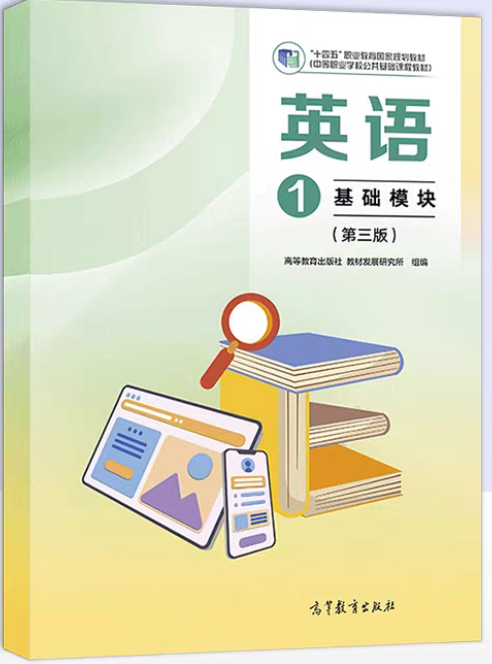
Unit 7 The Smartphone and the Internet(A卷·基础巩固)《英语 基础模块1》(高教版第三版)单元过关卷(原卷版+解析版)
2026-06-29
|
2份
|
31页
|
56人阅读
|
1人下载
摘要:
**基本信息**
本试卷为《英语 基础模块1》(高教版第三版)Unit 7 A卷基础巩固卷,紧扣教材核心考点,通过真实情境训练提升语言应用能力,适配单元复习场景。
**题型特征**
|题型|题量/分值|知识覆盖|命题特色|
|----|-----------|----------|----------|
|情景交际|15小题/20分|日常对话、礼貌表达|以手机使用问题(如存储清理、在线学习)创设情境,考查语言理解与表达能力|
|阅读理解|20小题/40分|数字生活、手机管理|选取校园活动、个人习惯等真实素材,培养信息获取与思维辨析能力|
|完形填空|10小题/10分|语法词汇、篇章理解|围绕手机使用调查,融合动词、介词等基础语法,提升语篇逻辑思维|
|语法填空|10小题/10分|时态、非谓语等|以在线活动调查为语境,考查语法应用,强化语言知识运用|
|书面表达|1题/20分|综合语言输出|结合个人经历与建议,考查信息整合与书面表达能力,体现学习能力培养|
内容正文:
编写说明:本套试卷紧扣《英语 基础模块1》(高教版第三版)教材,以教材单元为基准精准覆盖核心考点。
每个单元设置AB卷,A卷为基础巩固卷,侧重基础考点训练,帮助学生扎实掌握知识要点;B卷为能力提升卷,注重知识整合与全面检测,引导学生构建知识网络。全书设计4份综合测试卷,模拟实战情境,聚焦解题能力突破,全面提升应试能力与知识应用水平。
《英语 基础模块1》(高教版第三版)《单元过关卷》
Unit 7 The Smartphone and the Internet
A卷·基础巩固
考试时间:120分钟 满分:100分
班级_____姓名_____学号_____成绩_____
一、情景交际(共15小题;满分20分)
第一节 读下列10个短对话,从题后所给的 A、B、C、D 四个选项中选出可以填入空白处的最佳选项。(共10小题,每小题1分,满分10分)
1. —My phone is becoming slow, and I cannot open the online classroom quickly.
—_______. It may help you get more storage.
A. The screen size is not important at all. B. You can stay up late to repair it.
C. You should delete some useless apps and files. D. Online classes always need a new phone.
2. —Excuse me. I am looking for a new smartphone for online study. What price range are you considering?
—_______. I do not want anything too expensive.
A. I often chat with friends online. B. The camera looks excellent.
C. The network is fast in our classroom. D. I am considering about 2,000 yuan.
3. —Could you spare a few minutes to answer my survey about online activities?
—_______. What would you like to know first?
A. I am doing my homework now. B. The survey is about storage.
C. Sure, I would be happy to help. D. You should focus on your studies.
4. —How often do you play online games after school?
—_______. I usually use my phone to review lessons instead.
A. For about an hour. B. At home.
C. Because they are relaxing. D. Hardly ever.
5. —The phone alarm is ringing, but Li Ming is still sleeping.
—_______. He has an online class at nine.
A. Please remind him to get up. B. Please order takeout for him.
C. Please unlock the classroom. D. Please play games with him.
6. —I spent three hours watching short videos last night and could not focus on my homework.
—_______. You should use the Internet wisely.
A. That sounds like a good habit. B. That may affect your study.
C. You need a larger screen. D. You can watch more tonight.
7. —What do you usually do with your smartphone on weekends?
—_______. It helps me prepare for Monday's English lesson.
A. I change the battery every day.
B. I compare phone prices online.
C. I go over the lessons and send homework by email.
D. I keep the phone in the box all day.
8. —Would you like to stop playing games for so long and do more sports instead?
—_______. I know staying up late is bad for me.
A. The screen is very clear. B. I can order takeout now.
C. The storage is enough. D. Yes, I would like to change that.
9. —My grandmother wants to try mobile payment, but she is afraid of making mistakes.
—_______. You can teach her step by step.
A. Do not worry. B. She must buy a new bike.
C. The app is always slow. D. She should stop using cash at once.
10. —I cannot find the nearest shared bike on the map app.
—_______. Then the app can show bikes around you.
A. You should close the network. B. You need to turn on location service.
C. You had better watch videos first. D. You may delete your email app.
第二节 读下面一段对话,从方框中所给的 A、B、C、D、E、F 和 G 七个选项中选出可以填入空白处的最佳选项。(共5小题,每小题2分,满分10分)
Li Zixuan: Hello, John. I am doing a survey about students' online activities. _______ 11 _______
John: Sure. I can answer your questions now.
Li Zixuan: Thank you. How often do you play online games?
John: _______ 12 _______ Sometimes I play after finishing homework.
Li Zixuan: How long do you play each time?
John: About thirty minutes. But last month I often played for two hours.
Li Zixuan: Did it affect your study or daily life?
John: _______ 13 _______ I stayed up late and felt tired in class.
Li Zixuan: Would you like to change that?
John: Yes. _______ 14 _______
Li Zixuan: Good idea. Smartphones can help us if we use them wisely.
John: I agree. _______ 15 _______
A. I plan to play basketball and go over lessons instead.
B. Could you spare a few minutes?
C. I usually play once or twice a week.
D. They are useful, but we should not spend all our time on them.
E. Yes, it did.
F. My phone has a large storage.
G. I am buying a new smartphone.
二、阅读理解(共20小题;每小题2分,满分40分)
阅读下列短文,从题后所给的 A、B、C、D 四个选项中选出最佳答案。
A
Star Vocational High School is holding a Digital Life Week. The activity is not designed to praise smartphones blindly. It asks students to think about how phones and the Internet can support study, communication and daily life when they are used wisely.
On Monday, each class will make a poster about useful phone functions. Students may introduce online classes, email, music apps, food delivery apps and bike-sharing apps. They should also explain at least one safety tip, such as protecting private information or checking payment codes carefully. On Tuesday, students will take part in a short interview. They will ask classmates how often they chat with friends, watch videos, play games, read news and review lessons online. The teacher reminds them to ask politely, for example, 'Could you spare a few minutes?'
On Wednesday afternoon, the school will invite a phone shop worker to explain basic features of smartphones, including screen size, storage, network speed, camera quality and battery life. Students will learn how to choose a phone according to real needs instead of simply following advertisements. On Friday, every group will write five tips for using smartphones wisely. The tips should include both dos and don'ts. For example, students can use study apps when necessary, but they should not use phones for too long before sleep.
The English teacher hopes the week will help students connect language learning with real life. Students will practise words such as survey, affect, remind and focus on. The class will also discuss examples from their own homes and future workplaces, so the activity will not stay at the level of slogans. More importantly, they will learn that technology itself is neither good nor bad. The key is whether users can manage their time, protect themselves and keep a balanced life. This is also a useful lesson for future work and community service.
16. What is the main purpose of Digital Life Week?
A. To ask students to buy newer smartphones.
B. To teach students how to repair phone batteries.
C. To stop students from using the Internet at school.
D. To help students think about wise smartphone use.
17. What should students include in their posters?
A. Only pictures of expensive phones. B. At least one safety tip about phone use.
C. The real phone numbers of classmates. D. A list of all online games they know.
18. Why does the teacher give the sentence 'Could you spare a few minutes?'
A. To show how to begin an interview politely. B. To explain how to make a payment code.
C. To compare different phone screens. D. To remind students to take an online class.
19. Which phone feature is NOT mentioned in the passage?
A. Storage. B. Network speed.
C. Battery life. D. Keyboard color.
20. What can be inferred from the last paragraph?
A. Technology should be avoided by students.
B. Language learning can be connected with daily digital life.
C. Advertisements always show students real needs.
D. Playing games is the best way to learn English.
B
On a typical Saturday, Chen Rui used to unlock his smartphone as soon as he opened his eyes. At 8:00 a.m., the alarm rang, but he often turned it off and stayed in bed to watch short videos. After breakfast, he chatted with friends and played online games. By noon, he had spent almost four hours on the phone, but he had not reviewed any lessons.
Things changed after his English class studied a unit about smartphones and the Internet. The teacher asked students to keep a one-day record of their online activities. Chen Rui was surprised when he saw his own chart. Watching videos and playing games took most of his time. Studying and reading news took less than one hour. He also found that staying up late made it difficult for him to focus on class the next morning.
Chen Rui decided to make a new plan. He still used his phone, but he used it for clearer purposes. In the morning, he logged in to a vocabulary app and reviewed new words for twenty minutes. Before lunch, he sent homework to his teacher by email. In the afternoon, he rode a shared bike to the park and listened to English songs on the way. In the evening, he chatted with his grandparents by video call for ten minutes. After nine o'clock, he put the phone on the desk and read a paper book.
The plan was not perfect at first. Sometimes Chen Rui still wanted to tap on a game app. However, he reminded himself that a smartphone was a tool, not a master. After two weeks, he felt more energetic and his homework became neater. He realized that using a phone wisely did not mean using it less in every situation. It meant using it at the right time, for the right purpose and with self-control.
21. What was Chen Rui's main problem before he changed his habit?
A. He could not unlock his phone. B. He spent too much time on entertainment apps.
C. He had no online class on weekends. D. He disliked chatting with friends.
22. What made Chen Rui notice his problem clearly?
A. A phone shop worker's advice. B. A new shared bike app.
C. A one-day record of online activities. D. A message from his grandparents.
23. Which activity shows Chen Rui used his phone for study?
A. He logged in to a vocabulary app. B. He watched short videos in bed.
C. He tapped on a game app. D. He turned off the alarm.
24. What does the sentence 'a smartphone was a tool, not a master' mean?
A. A phone can control all daily activities.
B. A phone should be repaired by its owner.
C. A phone is useful only for schoolwork.
D. A user should control the phone instead of being controlled by it.
25. What is the best title for the passage?
A. A New Phone with Excellent Storage B. How to Choose a Shared Bike App
C. The Fastest Way to Watch Videos D. From Phone User to Wise Phone Manager
C
Mobile payment has become common in many Chinese cities. People can buy breakfast, pay for a bus ride, order takeout or borrow a shared bike with a smartphone. For vocational students, learning about mobile payment is not only useful for daily life, but also helpful for future work in service positions.
To use mobile payment safely, a user usually needs three steps. First, download a trusted payment app, such as Alipay, WeChat Pay or UnionPay. Second, make an account with a phone number and log in to the app. Third, add a bank card or another safe payment method. After that, the user can scan a store's payment code, or the store can scan the user's code. Although the steps sound simple, each step should be done carefully. A user should never show the payment password to others or click unknown links in messages.
Last month, students in Class 3 helped older residents in a community center learn mobile payment. The students prepared large-print handouts and explained each step slowly. Some older people were nervous because they were afraid of losing money by touching the wrong button. Instead of taking the phones and doing everything themselves, the students guided them to tap each button and explained why. One grandmother said, 'Now I can pay for vegetables without troubling my daughter every time.'
The activity taught students an important lesson. Technology is not just about apps and codes. It is also about patience, safety and communication. When young people teach others how to use digital tools, they should speak clearly, protect personal information and respect different learning speeds. They should check whether learners really understand the steps instead of only asking whether the task is finished. This habit can also help them in future service jobs. In this way, a small phone screen can become a bridge between generations.
26. Why is mobile payment learning useful for vocational students according to the passage?
A. It is connected with daily life and future service work.
B. It helps them design new bank cards.
C. It makes them stop using cash completely.
D. It teaches them to build payment apps.
27. Which is the correct order of using a payment app in the passage?
A. Add a card, download an app, make an account.
B. Download an app, make an account, add a payment method.
C. Scan a code, click unknown links, add a card.
D. Make an account, show the password, scan a code.
28. What safety advice is given in the passage?
A. Use the same password as classmates. B. Show the payment code to everyone.
C. Never show the payment password to others. D. Click every payment message quickly.
29. How did students help older residents learn better?
A. They finished all operations for them. B. They asked them to buy newer phones.
C. They told them mobile payment was very easy. D. They guided them to tap buttons step by step.
30. What does the passage mainly suggest about technology?
A. It is only useful for young people.
B. It is too difficult for community service.
C. It should replace family communication.
D. It can connect people when used with patience and safety.
D
Li Na works part-time at a small phone shop near her vocational school on weekends. At first, she thought selling smartphones was mainly about remembering prices. After several weeks, she found that good service required listening carefully to customers' real needs.
One Saturday morning, a student came in and said his old phone was too slow for online classes. Li Na did not immediately recommend the most expensive phone. She asked what price range he was considering, how much storage he needed and whether he often used video lessons. Then she introduced a model with enough storage, a clear screen and a long battery life. The student bought it and thanked her for saving money.
In the afternoon, an elderly man wanted a phone with a very large screen. He said he liked reading news and making video calls with his son. Li Na showed him how to make the letters larger and how to put the video call app on the first screen. She also wrote down two simple steps on a note. The man smiled and said that the note was more useful than a long speech.
Li Na keeps a small notebook for work. She writes down words such as screen, storage, network, battery and customer. She also records useful sentences: 'What price range are you considering?' and 'Would you like to try this function?' These sentences help her communicate more politely. When she meets a difficult question, she first checks the product information and then asks a senior worker for help. She understands that a salesperson should not push customers to buy the newest product. A responsible salesperson helps people choose what suits them. Through the part-time job, Li Na has learned that English, technology and service can work together in real life. She now feels more confident when speaking to different customers.
31. What did Li Na first think selling smartphones mainly required?
A. Repairing screens. B. Writing English reports.
C. Remembering prices. D. Taking online classes.
32. Why did Li Na ask the student several questions before recommending a phone?
A. To test his English level. B. To understand his real needs and budget.
C. To make him buy the most expensive model. D. To compare him with other customers.
33. What phone feature did the elderly man care about most at first?
A. A low price. B. A fast game app.
C. A colorful case. D. A large screen.
34. What can Li Na's notebook help her improve?
A. Her polite job-related communication. B. Her ability to play online games.
C. Her memory of every customer's address. D. Her skill in designing payment codes.
35. Which sentence best summarizes Li Na's service idea?
A. Newest phones are always the best choice.
B. Customers should learn all functions alone.
C. Good service means matching products with real needs.
D. A salesperson only needs to speak English well.
三、完形填空(共10小题;每小题1分,满分10分)
阅读下列短文,从短文后各题所给的 A、B、C、D 四个选项中,选出可以填入空白处的最佳选项。
Last week, our class did a survey about smartphone use. Before the survey, I thought most students used phones only for games. However, the answers gave me a different _______ 36 _______. Many classmates used study apps to review words, sent homework by email and read news online.
During the interview, I asked Wang Lei how often he played games. He said he played twice a week, but he used to play almost every day. Playing for too long once _______ 37 _______ his sleep, and he could not focus _______ 38 _______ lessons the next morning. His parents did not simply take his phone away. Instead, they helped him make a plan. He set an alarm to remind _______ 39 _______ to stop after thirty minutes.
Another student, Liu Mei, said her phone helped her take online classes when she was ill at home. She could log in _______ 40 _______ the classroom, answer questions and discuss with classmates on the screen. But she also knew that phones should be used _______ 41 _______. She never showed her payment password to others, and she took breaks from the screen to protect her eyes.
After the survey, I realized that a smartphone can be a useful _______ 42 _______, but only if we manage it well. We should use it to learn, communicate and solve problems, _______ 43 _______ not let it control our time. Our group plans _______ 44 _______ five tips for the class wall. The first tip is simple: think about your purpose before you _______ 45 _______ on an app.
36. A. picture B. screen C. network D. price
37. A. protected B. affected C. ordered D. unlocked
38. A. at B. for C. on D. with
39. A. himself B. herself C. myself D. yourself
40. A. of B. to C. with D. for
41. A. loudly B. slowly C. wisely D. nearly
42. A. tool B. trouble C. habit D. button
43. A. so B. or C. but D. because
44. A. write B. writing C. wrote D. to write
45. A. tap B. ring C. spare D. imagine
四、语法填空(共10小题;每小题1分,满分10分)
阅读下列短文,在空白处填入一个适当的词,或填入括号中所给单词的正确形式,并将答案写在对应处。
Right now, our class _______ 46 _______ (do) a survey about online activities. Li Zixuan _______ 47 _______ (ask) classmates questions one by one. She wants to know how students use _______ 48 _______ (they) smartphones every day. Some students often use study apps _______ 49 _______ (review) English words. Others enjoy _______ 50 _______ (watch) videos after school. John says online games sometimes make him _______ 51 _______ (stay) up late, so he is trying to change.
At this moment, our English teacher _______ 52 _______ (write) several tips on the blackboard. She reminds us _______ 53 _______ (focus) on study first and take breaks from screens. Smartphones are useful, _______ 54 _______ we should not spend all our time on them. If we use the Internet _______ 55 _______ (wise), it can help us learn and communicate better.
46._________ 47._________ 48._________ 49._________ 50._________
51._________ 52._________ 53._________ 54._________ 55._________
五、书面表达(满分20分)
请你根据以下提示,写一篇英文短文,介绍你日常使用智能手机的情况,并说明如何做到合理使用。
内容包括:
(1) 介绍你常用智能手机做的两三件事;
(2) 说明一次手机使用影响学习或生活的经历;
(3) 提出至少两条合理使用智能手机的建议;
(4) 表达你对智能手机和互联网的看法。
写作要求:
(1) 词数不少于80;
(2) 必须包括要点,可以适当扩充,但不能逐词翻译;
(3) 文中不要提及真实校名和姓名。
提示:smartphone, online class, go over lessons, affect, focus on, stay up late, take breaks, wisely
________________________________________________________________________________
________________________________________________________________________________
原创精品资源学科网独家享有版权,侵权必究!
学科网(北京)股份有限公司
$
编写说明:本套试卷紧扣《英语 基础模块1》(高教版第三版)教材,以教材单元为基准精准覆盖核心考点。
每个单元设置AB卷,A卷为基础巩固卷,侧重基础考点训练,帮助学生扎实掌握知识要点;B卷为能力提升卷,注重知识整合与全面检测,引导学生构建知识网络。全书设计4份综合测试卷,模拟实战情境,聚焦解题能力突破,全面提升应试能力与知识应用水平。
《英语 基础模块1》(高教版第三版)《单元过关卷》
Unit 7 The Smartphone and the Internet
A卷·基础巩固
考试时间:120分钟 满分:100分
班级_____姓名_____学号_____成绩_____
一、情景交际(共15小题;满分20分)
第一节 读下列10个短对话,从题后所给的 A、B、C、D 四个选项中选出可以填入空白处的最佳选项。(共10小题,每小题1分,满分10分)
1. —My phone is becoming slow, and I cannot open the online classroom quickly.
—_______. It may help you get more storage.
A. The screen size is not important at all. B. You can stay up late to repair it.
C. You should delete some useless apps and files. D. Online classes always need a new phone.
【答案】C
【详解】考查提出建议。对方手机变慢且影响登录网课,C 项“删除无用应用和文件”与storage相关,符合语境。
2. —Excuse me. I am looking for a new smartphone for online study. What price range are you considering?
—_______. I do not want anything too expensive.
A. I often chat with friends online. B. The camera looks excellent.
C. The network is fast in our classroom. D. I am considering about 2,000 yuan.
【答案】D
【详解】考查购物语境中的价格回答。What price range询问价格范围,D项直接回答预算。
3. —Could you spare a few minutes to answer my survey about online activities?
—_______. What would you like to know first?
A. I am doing my homework now. B. The survey is about storage.
C. Sure, I would be happy to help. D. You should focus on your studies.
【答案】C
【详解】考查请求回应。Could you spare...? 表示请求,C项礼貌接受并衔接后文。
4. —How often do you play online games after school?
—_______. I usually use my phone to review lessons instead.
A. For about an hour. B. At home.
C. Because they are relaxing. D. Hardly ever.
【答案】D
【详解】考查频率问答。How often询问频率,Hardly ever表示“几乎不”。
5. —The phone alarm is ringing, but Li Ming is still sleeping.
—_______. He has an online class at nine.
A. Please remind him to get up. B. Please order takeout for him.
C. Please unlock the classroom. D. Please play games with him.
【答案】A
【详解】考查remind用法。闹铃响且九点有网课,应提醒他起床。
6. —I spent three hours watching short videos last night and could not focus on my homework.
—_______. You should use the Internet wisely.
A. That sounds like a good habit. B. That may affect your study.
C. You need a larger screen. D. You can watch more tonight.
【答案】B
【详解】考查劝告与影响表达。长时间刷视频影响作业,B项符合教材词affect和focus on语境。
7. —What do you usually do with your smartphone on weekends?
—_______. It helps me prepare for Monday's English lesson.
A. I change the battery every day.
B. I compare phone prices online.
C. I go over the lessons and send homework by email.
D. I keep the phone in the box all day.
【答案】C
【详解】考查手机用途表达。go over lessons和send homework by email均来自教材阅读语境。
8. —Would you like to stop playing games for so long and do more sports instead?
—_______. I know staying up late is bad for me.
A. The screen is very clear. B. I can order takeout now.
C. The storage is enough. D. Yes, I would like to change that.
【答案】D
【详解】考查访谈中回应建议。Would you like to...? 后应表明愿意改变,D项最自然。
9. —My grandmother wants to try mobile payment, but she is afraid of making mistakes.
—_______. You can teach her step by step.
A. Do not worry. B. She must buy a new bike.
C. The app is always slow. D. She should stop using cash at once.
【答案】A
【详解】考查安慰与建议。老人担心手机支付出错,应先安慰并建议逐步教学。
10. —I cannot find the nearest shared bike on the map app.
—_______. Then the app can show bikes around you.
A. You should close the network. B. You need to turn on location service.
C. You had better watch videos first. D. You may delete your email app.
【答案】B
【详解】考查手机功能与应用场景。找共享单车需定位服务,B项符合逻辑。
第二节 读下面一段对话,从方框中所给的 A、B、C、D、E、F 和 G 七个选项中选出可以填入空白处的最佳选项。(共5小题,每小题2分,满分10分)
Li Zixuan: Hello, John. I am doing a survey about students' online activities. _______ 11 _______
John: Sure. I can answer your questions now.
Li Zixuan: Thank you. How often do you play online games?
John: _______ 12 _______ Sometimes I play after finishing homework.
Li Zixuan: How long do you play each time?
John: About thirty minutes. But last month I often played for two hours.
Li Zixuan: Did it affect your study or daily life?
John: _______ 13 _______ I stayed up late and felt tired in class.
Li Zixuan: Would you like to change that?
John: Yes. _______ 14 _______
Li Zixuan: Good idea. Smartphones can help us if we use them wisely.
John: I agree. _______ 15 _______
A. I plan to play basketball and go over lessons instead.
B. Could you spare a few minutes?
C. I usually play once or twice a week.
D. They are useful, but we should not spend all our time on them.
E. Yes, it did.
F. My phone has a large storage.
G. I am buying a new smartphone.
【答案】11.B 12.C 13.E 14.A 15.D
【导语】这段对话围绕学生网络活动调查展开,涉及询问频率、影响以及合理使用智能手机的建议。
【详解】11. 上文是调查开场,下文John同意回答,B项“能抽出几分钟吗”符合请求语境。
12. 上文问How often,C项用once or twice a week回答频率。
13. 上文问是否影响学习或生活,下文说明熬夜和课堂疲惫,E项“Yes, it did.”衔接自然。
14. 上文问是否愿意改变,A项说明具体改变方式:打篮球和复习功课。
15. 前文总结手机有帮助但要明智使用,D项进一步表达同一观点。
二、阅读理解(共20小题;每小题2分,满分40分)
阅读下列短文,从题后所给的 A、B、C、D 四个选项中选出最佳答案。
A
Star Vocational High School is holding a Digital Life Week. The activity is not designed to praise smartphones blindly. It asks students to think about how phones and the Internet can support study, communication and daily life when they are used wisely.
On Monday, each class will make a poster about useful phone functions. Students may introduce online classes, email, music apps, food delivery apps and bike-sharing apps. They should also explain at least one safety tip, such as protecting private information or checking payment codes carefully. On Tuesday, students will take part in a short interview. They will ask classmates how often they chat with friends, watch videos, play games, read news and review lessons online. The teacher reminds them to ask politely, for example, 'Could you spare a few minutes?'
On Wednesday afternoon, the school will invite a phone shop worker to explain basic features of smartphones, including screen size, storage, network speed, camera quality and battery life. Students will learn how to choose a phone according to real needs instead of simply following advertisements. On Friday, every group will write five tips for using smartphones wisely. The tips should include both dos and don'ts. For example, students can use study apps when necessary, but they should not use phones for too long before sleep.
The English teacher hopes the week will help students connect language learning with real life. Students will practise words such as survey, affect, remind and focus on. The class will also discuss examples from their own homes and future workplaces, so the activity will not stay at the level of slogans. More importantly, they will learn that technology itself is neither good nor bad. The key is whether users can manage their time, protect themselves and keep a balanced life. This is also a useful lesson for future work and community service.
16. What is the main purpose of Digital Life Week?
A. To ask students to buy newer smartphones.
B. To teach students how to repair phone batteries.
C. To stop students from using the Internet at school.
D. To help students think about wise smartphone use.
17. What should students include in their posters?
A. Only pictures of expensive phones. B. At least one safety tip about phone use.
C. The real phone numbers of classmates. D. A list of all online games they know.
18. Why does the teacher give the sentence 'Could you spare a few minutes?'
A. To show how to begin an interview politely. B. To explain how to make a payment code.
C. To compare different phone screens. D. To remind students to take an online class.
19. Which phone feature is NOT mentioned in the passage?
A. Storage. B. Network speed.
C. Battery life. D. Keyboard color.
20. What can be inferred from the last paragraph?
A. Technology should be avoided by students.
B. Language learning can be connected with daily digital life.
C. Advertisements always show students real needs.
D. Playing games is the best way to learn English.
【答案】16.D 17.B 18.A 19.D 20.B
【导语】本文是一篇校园活动说明文,介绍“数字生活周”的活动安排与合理使用智能手机的育人目标。
【详解】16. 本题为细节理解题。根据短文相关段落的关键信息可知,To help students think about wise smartphone use.与原文内容或段落主旨一致,故选D。
17. 本题为细节理解题。根据短文相关段落的关键信息可知,At least one safety tip about phone use.与原文内容或段落主旨一致,故选B。
18. 本题为推理判断题。根据短文相关段落的关键信息可知,To show how to begin an interview politely.与原文内容或段落主旨一致,故选A。
19. 本题为推理判断题。根据短文相关段落的关键信息可知,Keyboard color.与原文内容或段落主旨一致,故选D。
20. 本题为主旨大意题。根据短文相关段落的关键信息可知,Language learning can be connected with daily digital life.与原文内容或段落主旨一致,故选B。
B
On a typical Saturday, Chen Rui used to unlock his smartphone as soon as he opened his eyes. At 8:00 a.m., the alarm rang, but he often turned it off and stayed in bed to watch short videos. After breakfast, he chatted with friends and played online games. By noon, he had spent almost four hours on the phone, but he had not reviewed any lessons.
Things changed after his English class studied a unit about smartphones and the Internet. The teacher asked students to keep a one-day record of their online activities. Chen Rui was surprised when he saw his own chart. Watching videos and playing games took most of his time. Studying and reading news took less than one hour. He also found that staying up late made it difficult for him to focus on class the next morning.
Chen Rui decided to make a new plan. He still used his phone, but he used it for clearer purposes. In the morning, he logged in to a vocabulary app and reviewed new words for twenty minutes. Before lunch, he sent homework to his teacher by email. In the afternoon, he rode a shared bike to the park and listened to English songs on the way. In the evening, he chatted with his grandparents by video call for ten minutes. After nine o'clock, he put the phone on the desk and read a paper book.
The plan was not perfect at first. Sometimes Chen Rui still wanted to tap on a game app. However, he reminded himself that a smartphone was a tool, not a master. After two weeks, he felt more energetic and his homework became neater. He realized that using a phone wisely did not mean using it less in every situation. It meant using it at the right time, for the right purpose and with self-control.
21. What was Chen Rui's main problem before he changed his habit?
A. He could not unlock his phone. B. He spent too much time on entertainment apps.
C. He had no online class on weekends. D. He disliked chatting with friends.
22. What made Chen Rui notice his problem clearly?
A. A phone shop worker's advice. B. A new shared bike app.
C. A one-day record of online activities. D. A message from his grandparents.
23. Which activity shows Chen Rui used his phone for study?
A. He logged in to a vocabulary app. B. He watched short videos in bed.
C. He tapped on a game app. D. He turned off the alarm.
24. What does the sentence 'a smartphone was a tool, not a master' mean?
A. A phone can control all daily activities.
B. A phone should be repaired by its owner.
C. A phone is useful only for schoolwork.
D. A user should control the phone instead of being controlled by it.
25. What is the best title for the passage?
A. A New Phone with Excellent Storage B. How to Choose a Shared Bike App
C. The Fastest Way to Watch Videos D. From Phone User to Wise Phone Manager
【答案】21.B 22.C 23.A 24.D 25.D
【导语】本文是一篇个人成长类记叙文,讲述陈睿通过记录网络活动调整手机使用习惯,学会自我管理。
【详解】21. 本题为细节理解题。根据短文相关段落的关键信息可知,He spent too much time on entertainment apps.与原文内容或段落主旨一致,故选B。
22. 本题为细节理解题。根据短文相关段落的关键信息可知,A one-day record of online activities.与原文内容或段落主旨一致,故选C。
23. 本题为推理判断题。根据短文相关段落的关键信息可知,He logged in to a vocabulary app.与原文内容或段落主旨一致,故选A。
24. 本题为推理判断题。根据短文相关段落的关键信息可知,A user should control the phone instead of being controlled by it.与原文内容或段落主旨一致,故选D。
25. 本题为主旨大意题。根据短文相关段落的关键信息可知,From Phone User to Wise Phone Manager与原文内容或段落主旨一致,故选D。
C
Mobile payment has become common in many Chinese cities. People can buy breakfast, pay for a bus ride, order takeout or borrow a shared bike with a smartphone. For vocational students, learning about mobile payment is not only useful for daily life, but also helpful for future work in service positions.
To use mobile payment safely, a user usually needs three steps. First, download a trusted payment app, such as Alipay, WeChat Pay or UnionPay. Second, make an account with a phone number and log in to the app. Third, add a bank card or another safe payment method. After that, the user can scan a store's payment code, or the store can scan the user's code. Although the steps sound simple, each step should be done carefully. A user should never show the payment password to others or click unknown links in messages.
Last month, students in Class 3 helped older residents in a community center learn mobile payment. The students prepared large-print handouts and explained each step slowly. Some older people were nervous because they were afraid of losing money by touching the wrong button. Instead of taking the phones and doing everything themselves, the students guided them to tap each button and explained why. One grandmother said, 'Now I can pay for vegetables without troubling my daughter every time.'
The activity taught students an important lesson. Technology is not just about apps and codes. It is also about patience, safety and communication. When young people teach others how to use digital tools, they should speak clearly, protect personal information and respect different learning speeds. They should check whether learners really understand the steps instead of only asking whether the task is finished. This habit can also help them in future service jobs. In this way, a small phone screen can become a bridge between generations.
26. Why is mobile payment learning useful for vocational students according to the passage?
A. It is connected with daily life and future service work.
B. It helps them design new bank cards.
C. It makes them stop using cash completely.
D. It teaches them to build payment apps.
27. Which is the correct order of using a payment app in the passage?
A. Add a card, download an app, make an account.
B. Download an app, make an account, add a payment method.
C. Scan a code, click unknown links, add a card.
D. Make an account, show the password, scan a code.
28. What safety advice is given in the passage?
A. Use the same password as classmates. B. Show the payment code to everyone.
C. Never show the payment password to others. D. Click every payment message quickly.
29. How did students help older residents learn better?
A. They finished all operations for them. B. They asked them to buy newer phones.
C. They told them mobile payment was very easy. D. They guided them to tap buttons step by step.
30. What does the passage mainly suggest about technology?
A. It is only useful for young people.
B. It is too difficult for community service.
C. It should replace family communication.
D. It can connect people when used with patience and safety.
【答案】26.A 27.B 28.C 29.D 30.D
【导语】本文是一篇说明兼叙事文,介绍移动支付步骤、安全提醒以及学生帮助老人学习手机支付的社区服务。
【详解】26. 本题为细节理解题。根据短文相关段落的关键信息可知,It is connected with daily life and future service work.与原文内容或段落主旨一致,故选A。
27. 本题为细节理解题。根据短文相关段落的关键信息可知,Download an app, make an account, add a payment method.与原文内容或段落主旨一致,故选B。
28. 本题为推理判断题。根据短文相关段落的关键信息可知,Never show the payment password to others.与原文内容或段落主旨一致,故选C。
29. 本题为推理判断题。根据短文相关段落的关键信息可知,They guided them to tap buttons step by step.与原文内容或段落主旨一致,故选D。
30. 本题为主旨大意题。根据短文相关段落的关键信息可知,It can connect people when used with patience and safety.与原文内容或段落主旨一致,故选D。
D
Li Na works part-time at a small phone shop near her vocational school on weekends. At first, she thought selling smartphones was mainly about remembering prices. After several weeks, she found that good service required listening carefully to customers' real needs.
One Saturday morning, a student came in and said his old phone was too slow for online classes. Li Na did not immediately recommend the most expensive phone. She asked what price range he was considering, how much storage he needed and whether he often used video lessons. Then she introduced a model with enough storage, a clear screen and a long battery life. The student bought it and thanked her for saving money.
In the afternoon, an elderly man wanted a phone with a very large screen. He said he liked reading news and making video calls with his son. Li Na showed him how to make the letters larger and how to put the video call app on the first screen. She also wrote down two simple steps on a note. The man smiled and said that the note was more useful than a long speech.
Li Na keeps a small notebook for work. She writes down words such as screen, storage, network, battery and customer. She also records useful sentences: 'What price range are you considering?' and 'Would you like to try this function?' These sentences help her communicate more politely. When she meets a difficult question, she first checks the product information and then asks a senior worker for help. She understands that a salesperson should not push customers to buy the newest product. A responsible salesperson helps people choose what suits them. Through the part-time job, Li Na has learned that English, technology and service can work together in real life. She now feels more confident when speaking to different customers.
31. What did Li Na first think selling smartphones mainly required?
A. Repairing screens. B. Writing English reports.
C. Remembering prices. D. Taking online classes.
32. Why did Li Na ask the student several questions before recommending a phone?
A. To test his English level. B. To understand his real needs and budget.
C. To make him buy the most expensive model. D. To compare him with other customers.
33. What phone feature did the elderly man care about most at first?
A. A low price. B. A fast game app.
C. A colorful case. D. A large screen.
34. What can Li Na's notebook help her improve?
A. Her polite job-related communication. B. Her ability to play online games.
C. Her memory of every customer's address. D. Her skill in designing payment codes.
35. Which sentence best summarizes Li Na's service idea?
A. Newest phones are always the best choice.
B. Customers should learn all functions alone.
C. Good service means matching products with real needs.
D. A salesperson only needs to speak English well.
【答案】31.C 32.B 33.D 34.A 35.C
【导语】本文是一篇职业体验类记叙文,讲述职校学生在手机店兼职中理解倾听需求、礼貌沟通和责任服务。
【详解】31. 本题为细节理解题。根据短文相关段落的关键信息可知,Remembering prices.与原文内容或段落主旨一致,故选C。
32. 本题为细节理解题。根据短文相关段落的关键信息可知,To understand his real needs and budget.与原文内容或段落主旨一致,故选B。
33. 本题为推理判断题。根据短文相关段落的关键信息可知,A large screen.与原文内容或段落主旨一致,故选D。
34. 本题为推理判断题。根据短文相关段落的关键信息可知,Her polite job-related communication.与原文内容或段落主旨一致,故选A。
35. 本题为主旨大意题。根据短文相关段落的关键信息可知,Good service means matching products with real needs.与原文内容或段落主旨一致,故选C。
三、完形填空(共10小题;每小题1分,满分10分)
阅读下列短文,从短文后各题所给的 A、B、C、D 四个选项中,选出可以填入空白处的最佳选项。
Last week, our class did a survey about smartphone use. Before the survey, I thought most students used phones only for games. However, the answers gave me a different _______ 36 _______. Many classmates used study apps to review words, sent homework by email and read news online.
During the interview, I asked Wang Lei how often he played games. He said he played twice a week, but he used to play almost every day. Playing for too long once _______ 37 _______ his sleep, and he could not focus _______ 38 _______ lessons the next morning. His parents did not simply take his phone away. Instead, they helped him make a plan. He set an alarm to remind _______ 39 _______ to stop after thirty minutes.
Another student, Liu Mei, said her phone helped her take online classes when she was ill at home. She could log in _______ 40 _______ the classroom, answer questions and discuss with classmates on the screen. But she also knew that phones should be used _______ 41 _______. She never showed her payment password to others, and she took breaks from the screen to protect her eyes.
After the survey, I realized that a smartphone can be a useful _______ 42 _______, but only if we manage it well. We should use it to learn, communicate and solve problems, _______ 43 _______ not let it control our time. Our group plans _______ 44 _______ five tips for the class wall. The first tip is simple: think about your purpose before you _______ 45 _______ on an app.
36. A. picture B. screen C. network D. price
37. A. protected B. affected C. ordered D. unlocked
38. A. at B. for C. on D. with
39. A. himself B. herself C. myself D. yourself
40. A. of B. to C. with D. for
41. A. loudly B. slowly C. wisely D. nearly
42. A. tool B. trouble C. habit D. button
43. A. so B. or C. but D. because
44. A. write B. writing C. wrote D. to write
45. A. tap B. ring C. spare D. imagine
【答案】36.A 37.B 38.C 39.A 40.B 41.C 42.A 43.C 44.D 45.A
【导语】本文是一篇校园调查类记叙文,围绕学生智能手机使用现状展开,讲述作者通过调查改变了对手机的片面认知,明白了手机合理使用的价值。文章侧重考查语境词义辨析、固定短语、代词用法及连词逻辑,贴合中职英语常考题型。
【详解】36. 答案:A. picture
语境固定搭配题。give a different picture 为固定表达,表示“呈现出不一样的情况、改观认知”。作者原本以为学生只用手机打游戏,调查结果刷新了他的认知。B屏幕、C网络、D价格,均不符合句意。
37. 答案:B. affected
词义辨析题。根据后文“第二天上课无法集中注意力”可知,长时间玩手机会影响睡眠。affect 意为“影响”;A保护、C订购、D解锁,均与语境相反。
38. 答案:C. on
固定搭配题。focus on 是固定短语,意为“集中注意力于……”,为考试高频搭配。句意:第二天早上无法专注听课。
39. 答案:A. himself
反身代词题。主语为 He(Wang Lei),对应的反身代词为 himself。句意:他设置闹钟提醒自己三十分钟后停止游戏。
40. 答案:B. to
固定搭配题。log in to... 为固定搭配,意为“登录(线上平台、教室、系统)”,是网络常用短语。
41. 答案:C. wisely
语境副词辨析题。后文列举了不泄露支付密码、护眼休息等合理用机行为,说明要明智地使用手机。A大声地、B缓慢地、D几乎,均不符合语境。
42. 答案:A. tool
名词辨析题。结合全文主旨,合理使用时手机就是有用的工具。B麻烦、C习惯、D按键,均不符合文意。
43. 答案:C. but
连词逻辑题。前半句:我们要用手机学习、交流、解决问题;后半句:不要让它掌控我们的时间。前后语义转折,用 but。
44. 答案:D. to write
固定搭配题。plan to do sth. 为高频固定用法,意为“计划做某事”,因此用不定式 to write。
45. 答案:A. tap
语境词义题。tap 表示“轻点、点击(手机屏幕)”。句意:点开应用之前先想好使用目的。B响铃、C抽出、D想象,均不符合手机使用场景。
四、语法填空(共10小题;每小题1分,满分10分)
阅读下列短文,在空白处填入一个适当的词,或填入括号中所给单词的正确形式,并将答案写在对应处。
Right now, our class _______ 46 _______ (do) a survey about online activities. Li Zixuan _______ 47 _______ (ask) classmates questions one by one. She wants to know how students use _______ 48 _______ (they) smartphones every day. Some students often use study apps _______ 49 _______ (review) English words. Others enjoy _______ 50 _______ (watch) videos after school. John says online games sometimes make him _______ 51 _______ (stay) up late, so he is trying to change.
At this moment, our English teacher _______ 52 _______ (write) several tips on the blackboard. She reminds us _______ 53 _______ (focus) on study first and take breaks from screens. Smartphones are useful, _______ 54 _______ we should not spend all our time on them. If we use the Internet _______ 55 _______ (wise), it can help us learn and communicate better.
46._________ 47._________ 48._________ 49._________ 50._________
51._________ 52._________ 53._________ 54._________ 55._________
【答案】46.is doing 47.is asking 48.their 49.to review 50.watching 51.stay 52.is writing 53.to focus 54.but 55.wisely
【导语】本文以班级开展线上活动调查为场景,围绕学生使用手机、网络的话题设题,覆盖中职核心语法考点:现在进行时、形容词性物主代词、不定式表目的、固定非谓语搭配、使役动词用法、转折连词、副词变形。
【详解】46. 时态考点。时间标志词 Right now(此刻,现在)是现在进行时的典型提示词,结构为 am/is/are + doing;主语 our class 此处视作单数整体,故填 is doing。
47. 时态考点。全文描述当下正在开展的调查活动,使用现在进行时;主语 Li Zixuan 是第三人称单数,因此填 is asking。
48. 代词变形考点。空格后有名词 smartphones,需要形容词性物主代词修饰名词,人称代词 they 对应的形容词性物主代词为 their,意为 “他们的智能手机”。
49. 非谓语动词考点。不定式 to do 在此处表目的,句意:一些学生使用学习软件来复习英语单词。
50. 固定搭配考点。enjoy doing sth. 是固定短语,表示 “喜欢做某事”,enjoy 后必须接动名词,因此 watch 变为 watching。
51. 使役动词固定用法。make sb. do sth.(让某人做某事),make 后接不带 to 的动词原形,所以填 stay。
52. 时态考点。At this moment(此时此刻)为现在进行时标志;主语 our English teacher 为单数,故填 is writing。
53. 固定搭配考点。remind sb. to do sth. 意为 “提醒某人做某事”,不定式作宾语补足语。
54. 连词逻辑考点。前半句 “手机很有用”,后半句 “我们不应该把所有时间都花在手机上”,前后存在转折关系,用转折连词 but。
55. 词性转换考点。空格修饰动词 use,修饰动词需用副词;形容词 wise 的副词形式是 wisely,意为 “明智地使用网络”。
五、书面表达(满分20分)
请你根据以下提示,写一篇英文短文,介绍你日常使用智能手机的情况,并说明如何做到合理使用。
内容包括:
(1) 介绍你常用智能手机做的两三件事;
(2) 说明一次手机使用影响学习或生活的经历;
(3) 提出至少两条合理使用智能手机的建议;
(4) 表达你对智能手机和互联网的看法。
写作要求:
(1) 词数不少于80;
(2) 必须包括要点,可以适当扩充,但不能逐词翻译;
(3) 文中不要提及真实校名和姓名。
提示:smartphone, online class, go over lessons, affect, focus on, stay up late, take breaks, wisely
________________________________________________________________________________
________________________________________________________________________________
【参考范文】Smartphones are very useful in my daily life. I often use my phone to have online classes, go over English words and send homework to my teacher by email. Sometimes I also listen to music or chat with my friends after school.
However, I once spent too much time watching short videos at night. I stayed up late and could not focus on my lessons the next morning. From that experience, I learned that a phone should be a helpful tool, not a master of my time.
To use smartphones wisely, I think we should make a clear plan before using them. We should use study apps when necessary, but we should not play games or watch videos for too long. We also need to take breaks from screens to protect our eyes. If we can control our time, smartphones and the Internet will make our study and life better.
【词汇积累】smartphone 智能手机;online class 网课;go over lessons 复习功课;send homework by email 通过电子邮件提交作业;affect 影响;focus on 专注于;stay up late 熬夜;take breaks 休息;wisely 明智地。
【句式拓展】1. I often use my phone to have online classes. 可拓展为:I often use my phone to have online classes, which helps me learn anywhere. 2. We should make a clear plan before using smartphones. 可替换为:Before using smartphones, we should make a clear plan.
【点睛】范文围绕“智能手机与互联网”主题,先写手机用途,再写过度使用带来的影响,最后提出合理使用建议。语言以一般现在时为主,适当使用should提出建议,结构清楚,适合中职学生仿写。
原创精品资源学科网独家享有版权,侵权必究!
学科网(北京)股份有限公司
$
资源预览图

1

2

3
由于学科网是一个信息分享及获取的平台,不确保部分用户上传资料的 来源及知识产权归属。如您发现相关资料侵犯您的合法权益,请联系学科网,我们核实后将及时进行处理。