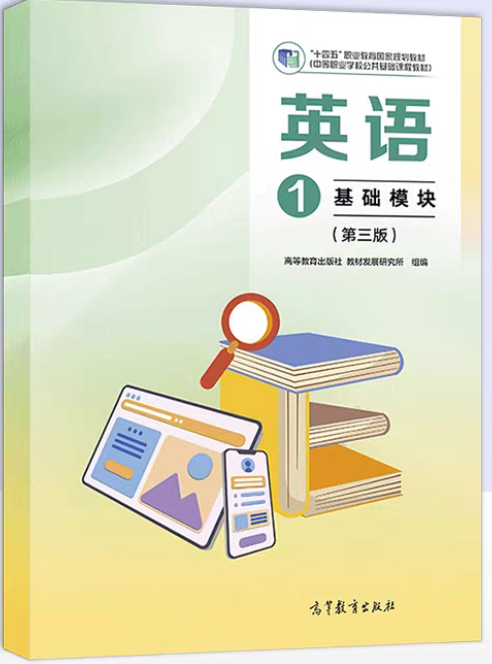
Unit 6 Food and Drinks(A卷·基础巩固)《英语 基础模块1》(高教版第三版)单元过关卷(原卷版+解析版)
2026-06-29
|
2份
|
23页
|
66人阅读
|
1人下载
摘要:
**基本信息**
本试卷为《英语 基础模块1》(高教版第三版)Unit 6 Food and Drinks A卷·基础巩固,紧扣教材核心考点,通过真实生活情境设计,强化语言能力与知识应用,适配单元复习需求。
**题型特征**
|题型|题量/分值|知识覆盖|命题特色|
|----|-----------|----------|----------|
|情景交际|15小题/20分|点餐、推荐、回应等日常交际用语|创设餐厅对话情境,考查语言理解与表达能力|
|阅读理解|20小题/40分|校园美食活动、家庭聚餐选择、中国菜系等|融合文化意识,引导分析合理选择与避免浪费|
|完形填空|10小题/10分|restaurant, reasonable, specialty等核心词汇|通过班级聚餐场景,强化知识整合与思维品质|
|语法填空|10小题/10分|时态、介词、名词复数等语法点|结合餐馆选择过程,巩固基础语法应用能力|
|书面表达|1题/20分|推荐餐馆的名称、特色、理由及文明点餐|综合考查语言输出与学习能力,贴近生活实际|
内容正文:
编写说明:本套试卷紧扣《英语 基础模块1》(高教版第三版)教材,以教材单元为基准精准覆盖核心考点。
每个单元设置AB卷,A卷为基础巩固卷,侧重基础考点训练,帮助学生扎实掌握知识要点;B卷为能力提升卷,注重知识整合与全面检测,引导学生构建知识网络。全书设计4份综合测试卷,模拟实战情境,聚焦解题能力突破,全面提升应试能力与知识应用水平。
《英语 基础模块1》(高教版第三版)《单元过关卷》
Unit 6 Food and Drinks
A卷·基础巩固
考试时间:120分钟 满分:100分
班级_____姓名_____学号_____成绩_____
一、情景交际(共15小题;满分20分)
第一节 读下列10个短对话,从题后所给的 A、B、C、D 四个选项中选出可以填入空白处的最佳选项。(共10小题,每小题1分,满分10分)
1. —I do not like coffee because it tastes bitter. Could you recommend something sweet for me?
—_______. It is fresh and not too cold.
A. You should order coffee again. B. I am not a fan of sweet food.
C. The restaurant is near our school. D. How about a glass of orange juice?
2. —Excuse me. Can I take your order now?
—_______. I'd like the tomato soup and the roast chicken.
A. Yes, please. B. You are welcome.
C. No, I do not mind. D. That is all right.
3. —How would you like your steak, rare, medium, or well-done?
—_______. I do not want it too raw or too hard.
A. A glass of water, please. B. The steak is our specialty.
C. Medium, please. D. No dessert, thanks.
4. —These noodles are too spicy for me. I cannot finish them.
—_______. You may try the tomato and egg soup instead.
A. I like spicy noodles best. B. I'm sorry to hear that.
C. They are famous around the world. D. The price is reasonable.
5. —What should we pay attention to when choosing a restaurant for our class dinner?
—_______. Good food and good service both matter.
A. We should consider the food quality and service. B. We should order as many dishes as possible.
C. We should choose the farthest restaurant. D. We should eat out every weekday.
6. —The restaurant is a bit crowded and noisy. Do you mind sitting near the window?
—_______. It may be quieter there.
A. Yes, I like noisy places. B. I have already paid the bill.
C. The food is salty. D. Not at all.
7. —The app shows this restaurant has a four-star rating and reasonable prices. Shall we go there?
—_______. It is also only one kilometer from school.
A. I do not know how to order. B. That sounds like a good choice.
C. We should spend more money. D. The dessert is too sweet.
8. —Would you like some dessert after the meal? We have apple pie and ice cream today.
—_______. I am already full.
A. Apple pie is made of fruit. B. I like ice cream very much.
C. No, thanks. D. Please take my order.
9. —What do you recommend as the specialty of this restaurant?
—_______. Many customers order it with vegetable salad.
A. The roast chicken is our specialty. B. The restaurant is crowded at noon.
C. You can look for your glasses. D. The environment contributes to dining experience.
10. —I am sorry. I put too much salt in the soup.
—_______. We can add some water and vegetables to make it lighter.
A. You should never cook again. B. The soup is sweet enough.
C. Never mind. D. It is a famous cuisine.
第二节 读下面一段对话,从方框中所给的 A、B、C、D、E、F 和 G 七个选项中选出可以填入空白处的最佳选项。(共5小题,每小题2分,满分10分)
Li Hua: Hi, Amy. Our group needs to choose a restaurant for the Food and Drinks project. Have you found any good place?
Amy: Yes. _______ 11 _______ It offers noodles, dumplings and several simple soups.
Li Hua: Is it far from our school? We only have one hour for lunch.
Amy: _______ 12 _______ We can walk there in about ten minutes.
Li Hua: Good. What about the prices? Some classmates do not want to spend too much.
Amy: _______ 13 _______ Most dishes are about twenty yuan for each person.
Li Hua: That sounds reasonable. Is the environment OK?
Amy: _______ 14 _______ It is clean and cozy, but it may be crowded at noon.
Li Hua: Then we should go a little earlier. Could you call the restaurant and ask whether they have enough seats?
Amy: _______ 15 _______ I will call them after class.
A. The prices are quite reasonable.
B. I am not a fan of coffee.
C. It is near our school.
D. No problem.
E. The restaurant is closed on weekdays.
F. I found a small Chinese restaurant on Wenhua Road.
G. The dining environment is comfortable.
二、阅读理解(共20小题;每小题2分,满分40分)
阅读下列短文,从题后所给的 A、B、C、D 四个选项中选出最佳答案。
A
Star Vocational High School is holding a Food and Drinks Corner next Friday. The activity is not only about tasting food. Each class will prepare one small stand, introduce two kinds of food or drinks in English, and explain what customers should pay attention to when they order. The English teacher wants students to use real restaurant language, such as 'Can I take your order now?' and 'What would you like to drink?'
Class 1 decides to make a simple menu. It includes tomato soup, mushroom soup, fried fish, roast chicken, fruit salad, vegetable salad, apple pie, ice cream, tea and orange juice. Students must write prices clearly because reasonable prices are important for visitors. They also need to mark the tastes of the dishes. For example, the tomato soup is sour and sweet, the fried fish is salty, and the roast chicken is mild. Any food that may be spicy should be marked in red on the menu.
Before the activity, students practise in pairs. One student plays the waiter, and the other plays the customer. The waiter should recommend the specialty politely, but should not push customers to order too much. The customer should order complete meals and say no to food waste. The teacher reminds them that good service is as important as good food. A clean table, a friendly smile and clear English can all contribute to a better dining experience.
At the end of the activity, visitors will vote for the best stand. The score will include food quality, English communication, service and environmental care. The teacher hopes students can learn that eating well is not just about taste. It is also about health, culture, respect and wise choices. Students who serve at the stand must also explain why they choose each dish and how they avoid waste. In this way, a short food activity becomes a lesson about language, life skills and responsibility.
16. What is the main purpose of the Food and Drinks Corner?
A. To sell expensive food to visitors. B. To practise food-related English in a real situation.
C. To compare all school restaurants. D. To teach students how to cook every dish.
17. Why should spicy food be marked in red on the menu?
A. Because red food is always healthier. B. Because it is the color of the class stand.
C. Because spicy dishes are cheaper. D. Because customers need clear information before ordering.
18. Which action is against the teacher's advice?
A. Pushing customers to order too much food. B. Recommending a specialty politely.
C. Keeping the table clean. D. Speaking to visitors clearly in English.
19. What does the underlined word 'it' in the last paragraph refer to?
A. The best stand. B. Environmental care.
C. Eating well. D. The school activity.
20. Which of the following is included in the final score?
A. The number of dishes on the table. B. English communication and service.
C. The distance from the school gate. D. The star rating on an app.
B
Last Saturday, Wang Min's family wanted to eat out to celebrate her father's birthday. At first, Wang Min chose the restaurant with the highest star rating on an app. It looked popular and had many beautiful photos. However, her mother asked her to read more information before making the final decision. 'A high rating is useful,' she said, 'but it is not the only factor.'
Wang Min compared three restaurants carefully. The first one offered Sichuan Cuisine. The dishes were famous for being hot, spicy and mouth-numbing. Wang Min loved spicy food, but her little brother could not eat it. The second restaurant offered Huaiyang Cuisine. The food was light, mild and a little sweet, and it was only two kilometers from home. Its prices were reasonable, about sixty yuan for each person. The third restaurant served Western food. It had a quiet environment, but it was far away and the service charge was high.
After discussion, the family chose the Huaiyang restaurant. Wang Min called to book a table by the window. When they arrived, the waiter greeted them politely and took their order. Her father ordered steamed fish and vegetable soup. Her mother ordered a cold dish and a small bowl of noodles. Wang Min wanted to order five desserts, but her father reminded her that more food did not mean a better meal. They finally ordered one fruit plate to share.
The dinner was simple but pleasant. The restaurant was clean, the service was warm, and the dishes were suitable for everyone. On the way home, Wang Min wrote a short note for her English homework. She wrote that choosing a restaurant should include distance, cooking style, food quality, prices, service and environment. She also added one more point: people should order wisely and avoid waste. Her teacher later wrote, 'Good choice, clear reasons and useful life lesson' on her homework. Wang Min felt proud because she did not simply copy information from the app. She compared real needs, listened to her family members and made a decision that everyone could accept. The birthday dinner became a practical lesson in choosing wisely.
21. Why did Wang Min's mother ask her to read more information?
A. Because the app could not show any photos. B. Because the family disliked popular restaurants.
C. Because a star rating should not be the only factor. D. Because Wang Min did not know the restaurant names.
22. Which restaurant did the family finally choose?
A. The Huaiyang restaurant. B. The Sichuan restaurant.
C. The Western restaurant. D. The restaurant with the highest service charge.
23. Why was the Sichuan restaurant not the best choice for this family?
A. It was too close to home. B. It had no birthday tables.
C. Its prices were unreasonable. D. Its spicy food was not suitable for the little brother.
24. What can be inferred from the father's words about desserts?
A. Desserts are never healthy for children. B. Ordering wisely is better than ordering too much.
C. Fruit plates are more expensive than cakes. D. Birthday dinners should not include sweet food.
25. What did Wang Min add as one more point in her homework?
A. Restaurants should have beautiful photos. B. People should avoid food waste.
C. Western food is better for birthdays. D. A window table is always necessary.
C
Chinese cuisines show the rich food culture of different places. When people introduce Chinese food to foreign friends, they often begin with the Eight Great Cuisines. Each cuisine has its own cooking style, flavor and local story. Learning about them can help students describe food more clearly instead of only saying that a dish is 'good' or 'delicious'.
For example, Sichuan Cuisine is well known for spicy and mouth-numbing flavors. It uses pepper and chili in many dishes, so it may be exciting for people who enjoy strong tastes. Huaiyang Cuisine, which is popular in Jiangsu, is usually light, mild and a little sweet. Cooks pay attention to the original taste of food and the beautiful look of dishes. Guangdong Cuisine is fresh and natural. Many Chinese restaurants abroad offer Guangdong dishes because they are often easier for foreign customers to accept.
Food words can also help people communicate politely at a restaurant. If a customer cannot eat spicy food, he may say, 'Could you make it less spicy?' If he wants to try a local dish, he may ask, 'What do you recommend?' A waiter can answer, 'Our specialty is roast chicken,' or 'This soup is light and fresh.' Such expressions are simple, but they make ordering clearer and more comfortable.
However, introducing cuisines should not become a competition about which food is the best. Different people have different needs. Some care about flavor, some care about health, and some care about price or service. A wise person respects these differences. When students learn to talk about food in English, they are also learning to understand culture, make choices and show respect at the table. For vocational students, this ability may be useful in hotels, restaurants or business meetings. A clear and polite food introduction can help guests feel safe, interested and respected.
26. What does the passage mainly help students do?
A. Describe Chinese food and culture more clearly. B. Remember every dish in the Eight Great Cuisines.
C. Choose only spicy food for foreign friends. D. Prove one cuisine is better than others.
27. Which description best matches Huaiyang Cuisine?
A. Hot and mouth-numbing. B. Cheap and crowded.
C. Light, mild and a little sweet. D. Bitter and hard to accept.
28. Why are Guangdong dishes common in many Chinese restaurants abroad?
A. They are always the cheapest dishes. B. They are often fresh, natural and easy to accept.
C. They use the most chili and pepper. D. They can only be cooked by foreign cooks.
29. Which expression is used to ask for a restaurant specialty?
A. Could you make it less spicy? B. I am not a fan of coffee.
C. Would you like some dessert? D. What do you recommend?
30. What attitude does the writer suggest in the last paragraph?
A. Respect different food needs and choices. B. Order the most famous dish every time.
C. Care only about food flavor. D. Avoid talking about local food culture.
D
During the school service week, Chen Rui worked as a volunteer at a community restaurant for older people. The restaurant was not large, but it was clean and cozy. Many older people came there because the prices were reasonable and the dishes were not too salty or too spicy. Chen Rui's job was to help write simple English signs and guide visitors from a nearby training center.
On the first day, he thought restaurant service was easy. He only needed to smile and say 'Welcome'. Soon he found that real service required careful work. The menu had to show whether a dish contained seafood, mushrooms or much salt. Some visitors wanted hot tea instead of soda. Some older people needed softer food. Chen Rui learned to listen first and then recommend. When he was not sure, he asked the cook or the manager for help.
One noon, a visitor asked for a light meal without seafood. Chen Rui recommended vegetable soup and fried rice with egg. Before sending the order to the kitchen, he checked it again and noticed that he had written 'seafood soup' by mistake. He corrected the note quickly. The manager praised him for checking carefully. 'A small word on an order can change a customer's whole meal,' she said.
After three days, Chen Rui wrote a reflection in his English notebook. He used new words from Unit 6, such as order, recommend, reasonable, service, environment and wisely. More importantly, he understood that food service connects language with responsibility. A good meal is not only cooked by the kitchen. It is also created by clear information, patient listening and respect for different needs. Chen Rui used to remember food words only for tests, but now he could connect them with real people. He decided to keep learning restaurant English because it might help him serve customers better in the future.
31. Why did many older people like the community restaurant?
A. It had the highest star rating in the city. B. It served only foreign food.
C. It was far from noisy streets. D. Its prices and tastes were suitable for them.
32. What did Chen Rui learn about real service?
A. It only means smiling to every visitor.
B. It requires listening carefully and giving clear information.
C. It is easier than writing English signs.
D. It should avoid asking managers for help.
33. Why did the manager praise Chen Rui?
A. He cooked vegetable soup for visitors. B. He made the menu more colorful.
C. He found and corrected a wrong order note. D. He asked all visitors to drink tea.
34. What does the underlined word 'reflection' probably mean?
A. A written thought after an experience. B. A list of prices for dishes.
C. A restaurant sign in English. D. A new way of cooking food.
35. Which sentence best summarizes the passage?
A. Community restaurants should offer only soft food.
B. Food prices are more important than service.
C. English signs can replace careful listening.
D. Restaurant service needs language, care and responsibility.
三、完形填空(共10小题;每小题1分,满分10分)
阅读下列短文,从短文后各题所给的 A、B、C、D 四个选项中,选出可以填入空白处的最佳选项。
Our class planned to eat out after the Food and Drinks show. At first, everyone had a different idea. Some students wanted a restaurant with a high star _______ 36 _______, while others cared more about the distance. Our teacher asked us to make a wise choice and explain our reasons in English.
We searched on an app and found a small restaurant _______ 37 _______ our school. It offered several kinds of Chinese food. The prices were _______ 38 _______, so most students could afford the meal. The menu also showed different flavors clearly. Students who liked spicy food could choose mapo tofu, and students who preferred light food could order vegetable soup. This made the restaurant _______ 39 _______ for our group.
Before leaving, our monitor called the restaurant to _______ 40 _______ a table. The waiter was polite and asked how many people would come. When we arrived, he took our _______ 41 _______ carefully. He also recommended fruit salad because it was the restaurant's _______ 42 _______. We did not order too much food. Instead, we shared dishes and finished almost everything. The meal helped us practise restaurant English and understand that good choices are not made only by taste. They also depend on price, service, environment and the habit of ordering _______ 43 _______. After the meal, we wrote a short report. I learned that food can connect language with real life, and a simple class dinner can become a useful learning _______ 44 _______ if we pay attention to details and respect others' _______ 45 _______.
36. A. price B. rating C. service D. dish
37. A. near B. far C. over D. under
38. A. dangerous B. crowded C. reasonable D. bitter
39. A. suitable B. strict C. private D. noisy
40. A. cancel B. draw C. forget D. book
41. A. order B. address C. homework D. photo
42. A. culture B. specialty C. factor D. environment
43. A. wisely B. loudly C. heavily D. nearly
44. A. mistake B. experience C. problem D. rule
45. A. needs B. menus C. prices D. ratings
四、语法填空(共10小题;每小题1分,满分10分)
阅读下列短文,在空白处填入一个适当的词,或填入括号中所给单词的正确形式,并将答案写在对应处。
Last Friday, our English teacher asked us to choose a restaurant for a class dinner. We first _______ 46 _______ (look) for information on an app. The restaurant near our school _______ 47 _______ (have) a four-star rating and many good comments. It offered tomato soup, roast chicken and several kinds of _______ 48 _______ (salad). The prices were reasonable, about thirty yuan for each person.
Before we made the final choice, we considered _______ 49 _______ food quality, service and environment. Li Ming said he was not a fan _______ 50 _______ spicy food, so we ordered light dishes for him. Our monitor called the restaurant _______ 51 _______ (book) two tables. When we arrived, a waiter welcomed _______ 52 _______ (we) politely and took our order. We shared the dishes and finished all the food. The dinner _______ 53 _______ (teach) us to order wisely. Now I understand that choosing a restaurant is _______ 54 _______ (easy) when we list the important factors first. It is also important _______ 55 _______ (respect) different tastes.
46._________ 47._________ 48._________ 49._________ 50._________
51._________ 52._________ 53._________ 54._________ 55._________
五、书面表达(满分20分)
请你根据以下提示,写一封英文电子邮件,向班主任推荐一家适合班级聚餐的餐馆。
内容包括:
(1) 说明餐馆名称和距离;
(2) 介绍食物种类、口味或特色菜;
(3) 说明价格、服务或环境等选择理由;
(4) 表达你对文明点餐、避免浪费的看法。
写作要求:
(1) 词数不少于80;
(2) 必须包括所有要点,可以适当发挥;
(3) 文中不要提及真实校名和姓名。
提示:recommend, reasonable, specialty, service, environment, order wisely
______________________________________________________________________________________________________________________________________________________________________________________________________________________________________________________
原创精品资源学科网独家享有版权,侵权必究!
学科网(北京)股份有限公司
$
编写说明:本套试卷紧扣《英语 基础模块1》(高教版第三版)教材,以教材单元为基准精准覆盖核心考点。
每个单元设置AB卷,A卷为基础巩固卷,侧重基础考点训练,帮助学生扎实掌握知识要点;B卷为能力提升卷,注重知识整合与全面检测,引导学生构建知识网络。全书设计4份综合测试卷,模拟实战情境,聚焦解题能力突破,全面提升应试能力与知识应用水平。
《英语 基础模块1》(高教版第三版)《单元过关卷》
Unit 6 Food and Drinks
A卷·基础巩固
考试时间:120分钟 满分:100分
班级_____姓名_____学号_____成绩_____
一、情景交际(共15小题;满分20分)
第一节 读下列10个短对话,从题后所给的 A、B、C、D 四个选项中选出可以填入空白处的最佳选项。(共10小题,每小题1分,满分10分)
1. —I do not like coffee because it tastes bitter. Could you recommend something sweet for me?
—_______. It is fresh and not too cold.
A. You should order coffee again. B. I am not a fan of sweet food.
C. The restaurant is near our school. D. How about a glass of orange juice?
【答案】D
【详解】考查推荐饮品。对方说明不喜欢苦味咖啡并想要甜饮品,How about...? 用于提出建议,orange juice 符合语境。
2. —Excuse me. Can I take your order now?
—_______. I'd like the tomato soup and the roast chicken.
A. Yes, please. B. You are welcome.
C. No, I do not mind. D. That is all right.
【答案】A
【详解】考查餐馆点餐。服务员询问是否可以点餐,顾客应先确认,再说明所点菜品,Yes, please 符合。
3. —How would you like your steak, rare, medium, or well-done?
—_______. I do not want it too raw or too hard.
A. A glass of water, please. B. The steak is our specialty.
C. Medium, please. D. No dessert, thanks.
【答案】C
【详解】考查牛排熟度表达。题干给出 rare, medium, well-done 三种选择,后句说明不要太生也不要太老,应选 medium。
4. —These noodles are too spicy for me. I cannot finish them.
—_______. You may try the tomato and egg soup instead.
A. I like spicy noodles best. B. I'm sorry to hear that.
C. They are famous around the world. D. The price is reasonable.
【答案】B
【详解】考查同情与建议。对方因食物过辣无法吃完,回应应表示理解并给出替代建议。
5. —What should we pay attention to when choosing a restaurant for our class dinner?
—_______. Good food and good service both matter.
A. We should consider the food quality and service. B. We should order as many dishes as possible.
C. We should choose the farthest restaurant. D. We should eat out every weekday.
【答案】A
【详解】考查选择餐馆因素。教材强调 food quality 和 service,A项与后句一致。
6. —The restaurant is a bit crowded and noisy. Do you mind sitting near the window?
—_______. It may be quieter there.
A. Yes, I like noisy places. B. I have already paid the bill.
C. The food is salty. D. Not at all.
【答案】D
【详解】考查回应请求。Do you mind...? 询问是否介意,后句表示窗口位置更安静,说明不介意,选 Not at all。
7. —The app shows this restaurant has a four-star rating and reasonable prices. Shall we go there?
—_______. It is also only one kilometer from school.
A. I do not know how to order. B. That sounds like a good choice.
C. We should spend more money. D. The dessert is too sweet.
【答案】B
【详解】考查回应建议。题干给出星级、价格和距离优势,B项表示赞同。
8. —Would you like some dessert after the meal? We have apple pie and ice cream today.
—_______. I am already full.
A. Apple pie is made of fruit. B. I like ice cream very much.
C. No, thanks. D. Please take my order.
【答案】C
【详解】考查婉拒。对方询问是否要甜点,后句说明已吃饱,应礼貌拒绝。
9. —What do you recommend as the specialty of this restaurant?
—_______. Many customers order it with vegetable salad.
A. The roast chicken is our specialty. B. The restaurant is crowded at noon.
C. You can look for your glasses. D. The environment contributes to dining experience.
【答案】A
【详解】考查特色菜推荐。询问 specialty,回答应直接推荐特色菜,roast chicken 符合教材点餐场景。
10. —I am sorry. I put too much salt in the soup.
—_______. We can add some water and vegetables to make it lighter.
A. You should never cook again. B. The soup is sweet enough.
C. Never mind. D. It is a famous cuisine.
【答案】C
【详解】考查回应道歉。对方为汤太咸道歉,Never mind 表示“没关系”,并能自然衔接解决办法。
第二节 读下面一段对话,从方框中所给的 A、B、C、D、E、F 和 G 七个选项中选出可以填入空白处的最佳选项。(共5小题,每小题2分,满分10分)
Li Hua: Hi, Amy. Our group needs to choose a restaurant for the Food and Drinks project. Have you found any good place?
Amy: Yes. _______ 11 _______ It offers noodles, dumplings and several simple soups.
Li Hua: Is it far from our school? We only have one hour for lunch.
Amy: _______ 12 _______ We can walk there in about ten minutes.
Li Hua: Good. What about the prices? Some classmates do not want to spend too much.
Amy: _______ 13 _______ Most dishes are about twenty yuan for each person.
Li Hua: That sounds reasonable. Is the environment OK?
Amy: _______ 14 _______ It is clean and cozy, but it may be crowded at noon.
Li Hua: Then we should go a little earlier. Could you call the restaurant and ask whether they have enough seats?
Amy: _______ 15 _______ I will call them after class.
A. The prices are quite reasonable.
B. I am not a fan of coffee.
C. It is near our school.
D. No problem.
E. The restaurant is closed on weekdays.
F. I found a small Chinese restaurant on Wenhua Road.
G. The dining environment is comfortable.
【答案】11.F 12.C 13.A 14.G 15.D
【导语】这段对话围绕为小组项目选择餐馆展开,涉及距离、价格、环境和预订座位等教材核心交际内容。
【详解】
11. 上文问是否找到好餐馆,F项直接说明找到的餐馆及位置。
12. 上文询问距离,C项说明离学校近,并与后文十分钟步行相衔接。
13. 上文询问价格,A项说明价格合理,符合后文人均二十元。
14. 上文询问环境,G项回答用餐环境舒适,并与后文 clean and cozy 对应。
15. 上文请求打电话询问座位,D项 No problem 表示愿意帮忙。
二、阅读理解(共20小题;每小题2分,满分40分)
阅读下列短文,从题后所给的 A、B、C、D 四个选项中选出最佳答案。
A
Star Vocational High School is holding a Food and Drinks Corner next Friday. The activity is not only about tasting food. Each class will prepare one small stand, introduce two kinds of food or drinks in English, and explain what customers should pay attention to when they order. The English teacher wants students to use real restaurant language, such as 'Can I take your order now?' and 'What would you like to drink?'
Class 1 decides to make a simple menu. It includes tomato soup, mushroom soup, fried fish, roast chicken, fruit salad, vegetable salad, apple pie, ice cream, tea and orange juice. Students must write prices clearly because reasonable prices are important for visitors. They also need to mark the tastes of the dishes. For example, the tomato soup is sour and sweet, the fried fish is salty, and the roast chicken is mild. Any food that may be spicy should be marked in red on the menu.
Before the activity, students practise in pairs. One student plays the waiter, and the other plays the customer. The waiter should recommend the specialty politely, but should not push customers to order too much. The customer should order complete meals and say no to food waste. The teacher reminds them that good service is as important as good food. A clean table, a friendly smile and clear English can all contribute to a better dining experience.
At the end of the activity, visitors will vote for the best stand. The score will include food quality, English communication, service and environmental care. The teacher hopes students can learn that eating well is not just about taste. It is also about health, culture, respect and wise choices. Students who serve at the stand must also explain why they choose each dish and how they avoid waste. In this way, a short food activity becomes a lesson about language, life skills and responsibility.
16. What is the main purpose of the Food and Drinks Corner?
A. To sell expensive food to visitors. B. To practise food-related English in a real situation.
C. To compare all school restaurants. D. To teach students how to cook every dish.
17. Why should spicy food be marked in red on the menu?
A. Because red food is always healthier. B. Because it is the color of the class stand.
C. Because spicy dishes are cheaper. D. Because customers need clear information before ordering.
18. Which action is against the teacher's advice?
A. Pushing customers to order too much food. B. Recommending a specialty politely.
C. Keeping the table clean. D. Speaking to visitors clearly in English.
19. What does the underlined word 'it' in the last paragraph refer to?
A. The best stand. B. Environmental care.
C. Eating well. D. The school activity.
20. Which of the following is included in the final score?
A. The number of dishes on the table. B. English communication and service.
C. The distance from the school gate. D. The star rating on an app.
【答案】16.B 17.D 18.A 19.C 20.B
【导语】本文是一篇校园活动说明,介绍学校美食英语角的任务、菜单设计、点餐训练和评价标准。
【详解】
16. 本题为主旨大意题。根据第1段的“introduce two kinds of food or drinks in English”和“use real restaurant language”可知,活动主要用于在真实情境中练习餐饮英语。
17. 本题为细节理解题。根据第2段的“Any food that may be spicy should be marked in red on the menu.”可知,标红是为了让顾客点餐前清楚了解口味。
18. 本题为细节理解题。根据第3段的“should not push customers to order too much”可知,强推顾客多点菜违反建议。
19. 本题为词义指代题。根据最后一段“eating well is not just about taste. It is also about...”可知,it 指 Eating well。
20. 本题为细节理解题。根据最后一段“The score will include food quality, English communication, service and environmental care.”可知,英语沟通和服务都计入评分。
B
Last Saturday, Wang Min's family wanted to eat out to celebrate her father's birthday. At first, Wang Min chose the restaurant with the highest star rating on an app. It looked popular and had many beautiful photos. However, her mother asked her to read more information before making the final decision. 'A high rating is useful,' she said, 'but it is not the only factor.'
Wang Min compared three restaurants carefully. The first one offered Sichuan Cuisine. The dishes were famous for being hot, spicy and mouth-numbing. Wang Min loved spicy food, but her little brother could not eat it. The second restaurant offered Huaiyang Cuisine. The food was light, mild and a little sweet, and it was only two kilometers from home. Its prices were reasonable, about sixty yuan for each person. The third restaurant served Western food. It had a quiet environment, but it was far away and the service charge was high.
After discussion, the family chose the Huaiyang restaurant. Wang Min called to book a table by the window. When they arrived, the waiter greeted them politely and took their order. Her father ordered steamed fish and vegetable soup. Her mother ordered a cold dish and a small bowl of noodles. Wang Min wanted to order five desserts, but her father reminded her that more food did not mean a better meal. They finally ordered one fruit plate to share.
The dinner was simple but pleasant. The restaurant was clean, the service was warm, and the dishes were suitable for everyone. On the way home, Wang Min wrote a short note for her English homework. She wrote that choosing a restaurant should include distance, cooking style, food quality, prices, service and environment. She also added one more point: people should order wisely and avoid waste. Her teacher later wrote, 'Good choice, clear reasons and useful life lesson' on her homework. Wang Min felt proud because she did not simply copy information from the app. She compared real needs, listened to her family members and made a decision that everyone could accept. The birthday dinner became a practical lesson in choosing wisely.
21. Why did Wang Min's mother ask her to read more information?
A. Because the app could not show any photos. B. Because the family disliked popular restaurants.
C. Because a star rating should not be the only factor. D. Because Wang Min did not know the restaurant names.
22. Which restaurant did the family finally choose?
A. The Huaiyang restaurant. B. The Sichuan restaurant.
C. The Western restaurant. D. The restaurant with the highest service charge.
23. Why was the Sichuan restaurant not the best choice for this family?
A. It was too close to home. B. It had no birthday tables.
C. Its prices were unreasonable. D. Its spicy food was not suitable for the little brother.
24. What can be inferred from the father's words about desserts?
A. Desserts are never healthy for children. B. Ordering wisely is better than ordering too much.
C. Fruit plates are more expensive than cakes. D. Birthday dinners should not include sweet food.
25. What did Wang Min add as one more point in her homework?
A. Restaurants should have beautiful photos. B. People should avoid food waste.
C. Western food is better for birthdays. D. A window table is always necessary.
【答案】21.C 22.A 23.D 24.B 25.B
【导语】本文是一篇家庭生活类记叙文,讲述王敏一家根据多种因素选择餐馆并形成节约意识的过程。(语篇词数:356词)
【详解】
21. 本题为细节理解题。根据第1段的“A high rating is useful, but it is not the only factor.”可知,母亲提醒她不能只看星级。
22. 本题为细节理解题。根据第3段的“the family chose the Huaiyang restaurant”可知,他们最终选择了淮扬菜餐馆。
23. 本题为细节理解题。根据第2段的“her little brother could not eat it”可知,四川菜过辣,不适合弟弟。
24. 本题为推理判断题。根据第3段的“more food did not mean a better meal”可推断,点餐应明智适量。
25. 本题为细节理解题。根据最后一段“She also added one more point: people should order wisely and avoid waste.”可知,她补充的是避免浪费。
C
Chinese cuisines show the rich food culture of different places. When people introduce Chinese food to foreign friends, they often begin with the Eight Great Cuisines. Each cuisine has its own cooking style, flavor and local story. Learning about them can help students describe food more clearly instead of only saying that a dish is 'good' or 'delicious'.
For example, Sichuan Cuisine is well known for spicy and mouth-numbing flavors. It uses pepper and chili in many dishes, so it may be exciting for people who enjoy strong tastes. Huaiyang Cuisine, which is popular in Jiangsu, is usually light, mild and a little sweet. Cooks pay attention to the original taste of food and the beautiful look of dishes. Guangdong Cuisine is fresh and natural. Many Chinese restaurants abroad offer Guangdong dishes because they are often easier for foreign customers to accept.
Food words can also help people communicate politely at a restaurant. If a customer cannot eat spicy food, he may say, 'Could you make it less spicy?' If he wants to try a local dish, he may ask, 'What do you recommend?' A waiter can answer, 'Our specialty is roast chicken,' or 'This soup is light and fresh.' Such expressions are simple, but they make ordering clearer and more comfortable.
However, introducing cuisines should not become a competition about which food is the best. Different people have different needs. Some care about flavor, some care about health, and some care about price or service. A wise person respects these differences. When students learn to talk about food in English, they are also learning to understand culture, make choices and show respect at the table. For vocational students, this ability may be useful in hotels, restaurants or business meetings. A clear and polite food introduction can help guests feel safe, interested and respected.
26. What does the passage mainly help students do?
A. Describe Chinese food and culture more clearly. B. Remember every dish in the Eight Great Cuisines.
C. Choose only spicy food for foreign friends. D. Prove one cuisine is better than others.
27. Which description best matches Huaiyang Cuisine?
A. Hot and mouth-numbing. B. Cheap and crowded.
C. Light, mild and a little sweet. D. Bitter and hard to accept.
28. Why are Guangdong dishes common in many Chinese restaurants abroad?
A. They are always the cheapest dishes. B. They are often fresh, natural and easy to accept.
C. They use the most chili and pepper. D. They can only be cooked by foreign cooks.
29. Which expression is used to ask for a restaurant specialty?
A. Could you make it less spicy? B. I am not a fan of coffee.
C. Would you like some dessert? D. What do you recommend?
30. What attitude does the writer suggest in the last paragraph?
A. Respect different food needs and choices. B. Order the most famous dish every time.
C. Care only about food flavor. D. Avoid talking about local food culture.
【答案】26.A 27.C 28.B 29.D 30.A
【导语】本文是一篇文化说明文,介绍中国菜系的口味特点、餐馆英语表达以及尊重饮食差异的意识。(语篇词数:305词)
【详解】
26. 本题为主旨大意题。根据第1段“describe food more clearly”及全文内容可知,文章帮助学生更清楚地介绍中国食物和文化。
27. 本题为细节理解题。根据第2段的“Huaiyang Cuisine... is usually light, mild and a little sweet”可知答案。
28. 本题为细节理解题。根据第2段“Guangdong Cuisine is fresh and natural... easier for foreign customers to accept”可知,粤菜较易被接受。
29. 本题为细节理解题。根据第3段“If he wants to try a local dish, he may ask, 'What do you recommend?'”可知答案。
30. 本题为推理判断题。根据最后一段“A wise person respects these differences.”可知,作者主张尊重不同饮食需求。
D
During the school service week, Chen Rui worked as a volunteer at a community restaurant for older people. The restaurant was not large, but it was clean and cozy. Many older people came there because the prices were reasonable and the dishes were not too salty or too spicy. Chen Rui's job was to help write simple English signs and guide visitors from a nearby training center.
On the first day, he thought restaurant service was easy. He only needed to smile and say 'Welcome'. Soon he found that real service required careful work. The menu had to show whether a dish contained seafood, mushrooms or much salt. Some visitors wanted hot tea instead of soda. Some older people needed softer food. Chen Rui learned to listen first and then recommend. When he was not sure, he asked the cook or the manager for help.
One noon, a visitor asked for a light meal without seafood. Chen Rui recommended vegetable soup and fried rice with egg. Before sending the order to the kitchen, he checked it again and noticed that he had written 'seafood soup' by mistake. He corrected the note quickly. The manager praised him for checking carefully. 'A small word on an order can change a customer's whole meal,' she said.
After three days, Chen Rui wrote a reflection in his English notebook. He used new words from Unit 6, such as order, recommend, reasonable, service, environment and wisely. More importantly, he understood that food service connects language with responsibility. A good meal is not only cooked by the kitchen. It is also created by clear information, patient listening and respect for different needs. Chen Rui used to remember food words only for tests, but now he could connect them with real people. He decided to keep learning restaurant English because it might help him serve customers better in the future.
31. Why did many older people like the community restaurant?
A. It had the highest star rating in the city. B. It served only foreign food.
C. It was far from noisy streets. D. Its prices and tastes were suitable for them.
32. What did Chen Rui learn about real service?
A. It only means smiling to every visitor.
B. It requires listening carefully and giving clear information.
C. It is easier than writing English signs.
D. It should avoid asking managers for help.
33. Why did the manager praise Chen Rui?
A. He cooked vegetable soup for visitors. B. He made the menu more colorful.
C. He found and corrected a wrong order note. D. He asked all visitors to drink tea.
34. What does the underlined word 'reflection' probably mean?
A. A written thought after an experience. B. A list of prices for dishes.
C. A restaurant sign in English. D. A new way of cooking food.
35. Which sentence best summarizes the passage?
A. Community restaurants should offer only soft food.
B. Food prices are more important than service.
C. English signs can replace careful listening.
D. Restaurant service needs language, care and responsibility.
【答案】31.D 32.B 33.C 34.A 35.D
【导语】本文是一篇职业体验类记叙文,讲述学生在社区餐馆志愿服务中学习餐饮英语和责任意识。(语篇词数:312词)
【详解】
31. 本题为细节理解题。根据第1段的“prices were reasonable”和“not too salty or too spicy”可知,价格与口味适合老年人。
32. 本题为推理判断题。根据第2段“real service required careful work”和“learned to listen first and then recommend”可知,服务需要倾听和清晰信息。
33. 本题为细节理解题。根据第3段“He corrected the note quickly. The manager praised him...”可知,他及时发现并改正订单错误。
34. 本题为词义猜测题。根据最后一段“wrote a reflection in his English notebook”及后文总结收获可知,reflection 指经历后的思考或反思。
35. 本题为主旨大意题。全文通过志愿服务说明餐饮服务需要语言、细心和责任,D项概括准确。
三、完形填空(共10小题;每小题1分,满分10分)
阅读下列短文,从短文后各题所给的 A、B、C、D 四个选项中,选出可以填入空白处的最佳选项。
Our class planned to eat out after the Food and Drinks show. At first, everyone had a different idea. Some students wanted a restaurant with a high star _______ 36 _______, while others cared more about the distance. Our teacher asked us to make a wise choice and explain our reasons in English.
We searched on an app and found a small restaurant _______ 37 _______ our school. It offered several kinds of Chinese food. The prices were _______ 38 _______, so most students could afford the meal. The menu also showed different flavors clearly. Students who liked spicy food could choose mapo tofu, and students who preferred light food could order vegetable soup. This made the restaurant _______ 39 _______ for our group.
Before leaving, our monitor called the restaurant to _______ 40 _______ a table. The waiter was polite and asked how many people would come. When we arrived, he took our _______ 41 _______ carefully. He also recommended fruit salad because it was the restaurant's _______ 42 _______. We did not order too much food. Instead, we shared dishes and finished almost everything. The meal helped us practise restaurant English and understand that good choices are not made only by taste. They also depend on price, service, environment and the habit of ordering _______ 43 _______. After the meal, we wrote a short report. I learned that food can connect language with real life, and a simple class dinner can become a useful learning _______ 44 _______ if we pay attention to details and respect others' _______ 45 _______.
36. A. price B. rating C. service D. dish
37. A. near B. far C. over D. under
38. A. dangerous B. crowded C. reasonable D. bitter
39. A. suitable B. strict C. private D. noisy
40. A. cancel B. draw C. forget D. book
41. A. order B. address C. homework D. photo
42. A. culture B. specialty C. factor D. environment
43. A. wisely B. loudly C. heavily D. nearly
44. A. mistake B. experience C. problem D. rule
45. A. needs B. menus C. prices D. ratings
【答案】36.B 37.A 38.C 39.A 40.D 41.A 42.B 43.A 44.B 45.A
【导语】本文围绕班级外出就餐展开,考查餐馆选择因素、点餐场景词汇、固定搭配和语篇逻辑。
【详解】
36. star rating 为固定表达,意为“星级评分”。
37. 根据后文班级外出就餐并强调距离,应为 near our school。
38. 后文“most students could afford the meal”说明价格合理,reasonable 符合。
39. 菜单兼顾不同口味,说明这家餐馆适合班级群体,suitable 符合。
40. book a table 表示“预订餐桌”。
41. take one's order 表示“为某人点餐”。
42. specialty 表示“特色菜;特色”,与 recommend 对应。
43. order wisely 表示“明智点餐”,符合避免浪费的语境。
44. useful learning experience 表示“有用的学习经历”。
45. respect others' needs 表示“尊重他人的需求”,与不同饮食需求相呼应。
四、语法填空(共10小题;每小题1分,满分10分)
阅读下列短文,在空白处填入一个适当的词,或填入括号中所给单词的正确形式,并将答案写在对应处。
Last Friday, our English teacher asked us to choose a restaurant for a class dinner. We first _______ 46 _______ (look) for information on an app. The restaurant near our school _______ 47 _______ (have) a four-star rating and many good comments. It offered tomato soup, roast chicken and several kinds of _______ 48 _______ (salad). The prices were reasonable, about thirty yuan for each person.
Before we made the final choice, we considered _______ 49 _______ food quality, service and environment. Li Ming said he was not a fan _______ 50 _______ spicy food, so we ordered light dishes for him. Our monitor called the restaurant _______ 51 _______ (book) two tables. When we arrived, a waiter welcomed _______ 52 _______ (we) politely and took our order. We shared the dishes and finished all the food. The dinner _______ 53 _______ (teach) us to order wisely. Now I understand that choosing a restaurant is _______ 54 _______ (easy) when we list the important factors first. It is also important _______ 55 _______ (respect) different tastes.
46._________ 47._________ 48._________ 49._________ 50._________
51._________ 52._________ 53._________ 54._________ 55._________
【答案】46.looked 47.had 48.salads 49.the 50.of 51.to book 52.us 53.taught 54.easier 55.to respect
【导语】本文为班级选择餐馆的经历,考查一般过去时、名词复数、冠词、介词搭配、动词不定式、代词宾格和形容词比较级。
【详解】
46. 根据 Last Friday 可知用一般过去时 looked。
47. 叙述过去选择餐馆的信息,谓语用 had。
48. several kinds of 后接可数名词复数,salad 作种类讲可用 salads。
49. food quality 前特指餐馆的食物质量,用定冠词 the。
50. be a fan of 为固定搭配。
51. call sb./a place to do sth. 表示打电话去做某事,此处用不定式 to book 表目的。
52. welcomed 后接代词宾格,we 的宾格为 us。
53. 叙述过去晚餐带来的启发,用 taught。
54. 根据语境“先列因素会更容易”,用比较级 easier。
55. It is important to do sth. 为固定句型。
五、书面表达(满分20分)
请你根据以下提示,写一封英文电子邮件,向班主任推荐一家适合班级聚餐的餐馆。
内容包括:
(1) 说明餐馆名称和距离;
(2) 介绍食物种类、口味或特色菜;
(3) 说明价格、服务或环境等选择理由;
(4) 表达你对文明点餐、避免浪费的看法。
写作要求:
(1) 词数不少于80;
(2) 必须包括所有要点,可以适当发挥;
(3) 文中不要提及真实校名和姓名。
提示:recommend, reasonable, specialty, service, environment, order wisely
______________________________________________________________________________________________________________________________________________________________________________________________________________________________________________________
【参考范文】
Dear Mr. Chen,
I would like to recommend Green Garden Restaurant for our class dinner. It is only one kilometer from our school, so we can get there on foot. The restaurant offers Chinese food, such as tomato soup, roast chicken, fried rice with egg and fruit salad. Its specialty is roast chicken, and the taste is mild and fresh.
I think it is a good choice for three reasons. First, the prices are reasonable. Each person may spend about thirty yuan. Second, the service is friendly and the waiters can help us order clearly. Third, the environment is clean and cozy. We should order wisely and avoid wasting food. I hope this restaurant will give us a good dining experience.
Sincerely,
Li Hua
【词汇积累】recommend 推荐;reasonable 合理的;specialty 特色菜;service 服务;environment 环境;mild 温和的;fresh 新鲜的;order wisely 明智点餐;avoid wasting food 避免浪费食物。
【句式拓展】1. It is only one kilometer from our school, so we can get there on foot. 可替换为:Since it is near our school, we can walk there. 2. We should order wisely and avoid wasting food. 可拓展为:When we eat out, ordering wisely is as important as enjoying delicious food.
【点睛】范文紧扣推荐餐馆任务,按距离、菜品、价格服务环境和文明点餐组织内容,使用 recommend, reasonable, specialty, service, environment 等本单元核心词汇,结构完整,适合中职学生仿写。
原创精品资源学科网独家享有版权,侵权必究!
学科网(北京)股份有限公司
$
资源预览图

1

2

3
由于学科网是一个信息分享及获取的平台,不确保部分用户上传资料的 来源及知识产权归属。如您发现相关资料侵犯您的合法权益,请联系学科网,我们核实后将及时进行处理。