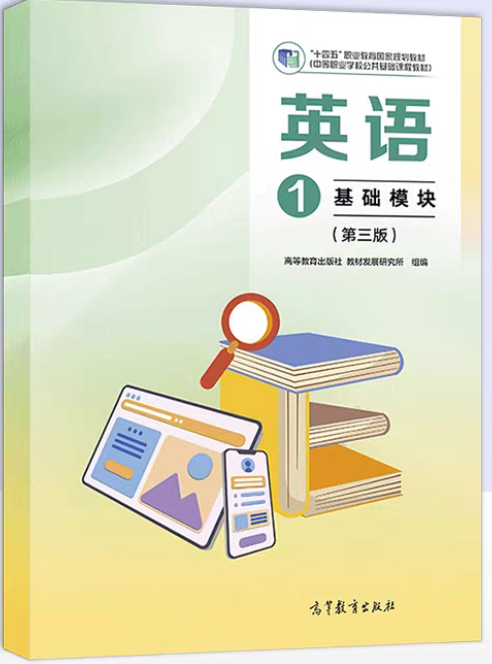
Unit 2 Transportation(A卷·基础巩固)《英语 基础模块1》(高教版第三版)单元过关卷(原卷版+解析版)
2026-06-29
|
2份
|
20页
|
92人阅读
|
3人下载
内容正文:
编写说明:本套试卷紧扣《英语 基础模块1》(高教版第三版)教材,以教材单元为基准精准覆盖核心考点。
每个单元设置AB卷,A卷为基础巩固卷,侧重基础考点训练,帮助学生扎实掌握知识要点;B卷为能力提升卷,注重知识整合与全面检测,引导学生构建知识网络。全书设计4份综合测试卷,模拟实战情境,聚焦解题能力突破,全面提升应试能力与知识应用水平。
《英语 基础模块1》(高教版第三版)《单元过关卷》
Unit 2 Transportation
A卷·基础巩固
考试时间:120分钟 满分:100分
班级_____姓名_____学号_____成绩_____
一、情景交际(共15小题;满分20分)
第一节 读下列10个短对话,从题后所给的 A、B、C、D 四个选项中选出可以填入空白处的最佳选项。(共10小题,每小题1分,满分10分)
1. —Excuse me, could you tell me the way to the school library? I am new here and the map app does not work.
—_______. Go straight and turn left at the first crossroads.
A. You are welcome. B. Sure, I can help you.
C. It is a green way. D. I do not like maps.
【答案】B
【详解】考查问路回应。对方请求指路,B项先表示愿意帮助,再给出路线,符合语境。
2. —The visitor is going to the Summer Palace, but he is on the right bus line in the wrong direction.
—_______. He should get off at the next stop.
A. That is a pity. B. That sounds expensive.
C. You are right. D. He can stay on the bus.
【答案】C
【详解】考查交通方向判断。题干已说明方向错误,下文提出下站下车,C项确认判断。
3. —How long does it take from the hotel to the airport by subway?
—_______. It is faster than taking a taxi during rush hour.
A. About forty minutes. B. At Terminal 2.
C. Line 6 is crowded. D. It costs too much.
【答案】A
【详解】考查询问时间。How long does it take 询问花费时间,A项直接回答时长。
4. —I want to take a taxi to the train station, but it is rush hour now.
—_______. The subway may be a better choice.
A. Take a taxi at once. B. You'd better take the subway.
C. The train station is closed. D. You should buy a bus card.
【答案】B
【详解】考查提出建议。高峰期出租车可能慢,建议乘地铁更合适。
5. —The hotel says guests can take the shuttle bus for free.
—_______. It will help us save money.
A. That sounds good. B. Never mind.
C. I am sorry to hear that. D. Please turn right.
【答案】A
【详解】考查评价回应。免费班车有利于省钱,A项表示认可。
6. —Which is greener, driving a private car or riding a shared bike for a short trip?
—_______. It is also good exercise.
A. Driving a car is greener. B. Taking a taxi is faster.
C. Riding a shared bike is greener. D. Waiting is necessary.
【答案】C
【详解】考查绿色出行。短途骑共享单车更环保且能锻炼身体。
7. —My phone has run out of battery, and I cannot use the map app.
—_______. Let's ask a police officer for directions politely.
A. Don't worry about it. B. You should charge more money.
C. The app is always right. D. You must walk alone.
【答案】A
【详解】考查安慰与解决问题。手机没电时可礼貌问路,A项自然承接。
8. —Where should I get off if I take Subway Line 2 to Zhonghua Hotel?
—_______. Then take Exit B.
A. Get on at the airport. B. Get off at Zhonghua Square Station.
C. Change to a taxi station. D. Walk for two hours.
【答案】B
【详解】考查乘车指令。问where should I get off,B项给出下车站点并与Exit B衔接。
9. —Thank you for telling me the way to the gym.
—_______. Have a nice day!
A. It doesn't matter. B. I hope not.
C. My pleasure. D. No, thanks.
【答案】C
【详解】考查回应感谢。My pleasure 用于回答感谢,符合问路场景。
10. —Shall we walk to the museum? It is only one kilometer away.
—_______. Walking is healthy and green.
A. Good idea. B. I disagree with the address.
C. It takes a plane. D. The terminal is far.
【答案】A
【详解】考查回应建议。Shall we...? 提出建议,后文说明赞同步行。
第二节 读下面一段对话,从方框中所给的 A、B、C、D、E、F 和 G 七个选项中选出可以填入空白处的最佳选项。(共5小题,每小题2分,满分10分)
Ella: Excuse me, Lin Yang. I need to go to Wenhua Grand Hotel from the train station, but I am not sure which way to choose.
Lin Yang: Don't worry. _______ 11 _______
Ella: Is it far from here?
Lin Yang: Not very far, but the roads are busy now. _______ 12 _______
Ella: Which subway line should I take?
Lin Yang: Take Line 2 and get off at Zhonghua Square Station. _______ 13 _______
Ella: What if my phone map does not work?
Lin Yang: _______ 14 _______ People here are usually glad to help.
Ella: Thank you so much. I will take the subway then.
Lin Yang: _______ 15 _______ Enjoy your stay in our city!
A. You can ask someone for directions politely.
B. It is on Yingchuan Road.
C. The subway is more convenient during rush hour.
D. My pleasure.
E. Take Exit B and walk for five minutes.
F. You should drive a private car.
G. The hotel is not in this city.
【答案】11. B 12. C 13. E 14. A 15. D
【详解】
11. 上文询问去酒店,B项给出酒店位置,承接自然。
12. 后文询问乘哪条地铁,说明此处建议高峰期乘地铁,故选C。
13. 上文到站,后文继续到酒店,E项符合路线链。
14. 上文问手机地图失效怎么办,A项礼貌问路符合教材策略。
15. 对方表示感谢,D项My pleasure回应感谢。
二、阅读理解(共20小题;每小题2分,满分40分)
阅读下列短文,从每题所给的 A、B、C、D 四个选项中选出最佳选项。
A
Welcome to Hulan City. If you stay at Wenhua Grand Hotel, you have several ways to get here from the airport. The hotel is at 30 Yingchuan Road, Wenhua District. It is not far from Zhonghua Square, so public transportation is often convenient. If your flight arrives between 6:00 a.m. and 9:00 p.m., you can take Shuttle Bus Line 6. Get on outside Gate 1 and get off at Zhonghua Hotel Station. The bus goes directly to the hotel area, and it costs 15 yuan.
Another choice is the subway. Take the Airport Express from Terminal 1 Station and change to Subway Line 2 at Zhuquemen Station. Then get off at Zhonghua Square Station and take Exit B. Walk along Yingchuan Road for about five minutes, and you will see the hotel on your left. The subway usually takes about forty minutes. It is a good choice during rush hour because it is not influenced by road traffic.
You can also take a taxi outside Gate 1. It takes about one hour in normal traffic and costs about 90 yuan. However, it may take longer during rush hour. If you arrive late at night with heavy bags, a taxi may still be the most comfortable choice. For more help, please call the hotel front desk.
16. Where is Wenhua Grand Hotel?
A. At Gate 1 of the airport. B. At 30 Yingchuan Road.
C. At Terminal 1 Station. D. At Zhuquemen Station.
17. When can travelers take Shuttle Bus Line 6?
A. From 6:00 a.m. to 9:00 p.m. B. Only after 9:00 p.m.
C. From midnight to 6:00 a.m. D. Only during rush hour.
18. Where should subway travelers change to Line 2?
A. At Zhonghua Square Station. B. At Zhonghua Hotel Station.
C. At Zhuquemen Station. D. At Yingchuan Road Station.
19. Why is the subway a good choice during rush hour?
A. It is free for hotel guests. B. It carries heavy bags for travelers.
C. It stops outside Gate 1. D. It is not influenced by road traffic.
20. Which traveler may prefer taking a taxi according to the passage?
A. A traveler arriving late at night with heavy bags. B. A traveler who wants the cheapest way.
C. A traveler who arrives at noon without bags. D. A traveler who likes changing subway lines.
【答案】BACDA
【导语】本文是一则酒店交通指南,介绍从机场到酒店的班车、地铁和出租车三种方案。
【详解】
16. 本题为细节理解题。根据第1段的“The hotel is at 30 Yingchuan Road”可知,酒店地址为Yingchuan Road 30号,故选B。
17. 本题为细节理解题。根据第1段的“between 6:00 a.m. and 9:00 p.m.”可知班车运行时间,故选A。
18. 本题为细节理解题。根据第2段的“change to Subway Line 2 at Zhuquemen Station”可知换乘站,故选C。
19. 本题为细节理解题。根据第2段的“not influenced by road traffic”可知地铁不受道路拥堵影响,故选D。
20. 本题为推理判断题。根据第3段的“If you arrive late at night with heavy bags...”可推知夜间携带重行李者适合打车,故选A。
B
Green transportation is becoming a daily choice for many vocational school students. In Jiangsu, many cities have built more bus lines, subway lines and bike lanes near schools. Students can choose a way according to distance, time, cost and convenience. For students living within two kilometers of school, walking or riding a shared bike is often enough. It saves money and helps them exercise before classes.
For students who live farther away, buses and subways are common choices. A bus may be cheap, but it can be slow when the roads are busy. A subway may cost a little more, but it is usually faster during rush hour. Some students also combine different ways. For example, they ride a shared bike to the subway station and then take the subway to school. This plan is flexible and green.
However, green travel needs good habits. Students should follow traffic rules, wear helmets when riding e-bikes, and never look at phones while crossing the road. They should also check the weather before leaving home. On rainy days, a bus or subway may be safer than a bike. Green transportation is not only about protecting the environment; it is also about making wise and safe choices.
A school survey showed that most students were willing to travel in a greener way if the route was clear and the cost was acceptable. Therefore, the school plans to put up route maps near the gate and invite students to share their own green travel plans.
21. What should students consider when choosing transportation?
A. Distance, time, cost and convenience. B. Only the color of the vehicle.
C. The name of their classroom. D. Only their friends' choices.
22. What does the underlined word “flexible” in Paragraph 2 probably mean?
A. Dangerous. B. Changeable and useful.
C. Very expensive. D. Difficult to understand.
23. Which is safer on rainy days according to the passage?
A. Riding a shared bike quickly. B. Looking at the phone while walking.
C. Taking a bus or subway. D. Riding an e-bike without a helmet.
24. Why will the school put up route maps?
A. To sell bus cards to students. B. To make the route clear for green travel.
C. To stop students from taking subways. D. To ask every student to walk to school.
25. What is the best title for the passage?
A. A Trip to Hulan City B. How to Use a Hotel Map
C. Students and Green Transportation D. The History of Shared Bikes
【答案】ABCBC
【导语】本文围绕学生绿色出行展开,说明选择交通方式应兼顾环保、便利与安全。
【详解】
21. 本题为细节理解题。根据第1段的“according to distance, time, cost and convenience”可知,故选A。
22. 本题为词义猜测题。前文介绍共享单车加地铁的组合方式,可按情况调整,flexible意为“灵活的”,故选B。
23. 本题为细节理解题。根据第3段的“On rainy days, a bus or subway may be safer”可知,故选C。
24. 本题为推理判断题。根据第4段的“if the route was clear”和“put up route maps”可推知是为了明确路线,故选B。
25. 本题为主旨大意题。全文围绕学生绿色交通选择、习惯和校园倡议展开,故选C。
C
Li Zixuan, a first-year vocational school student, was taking a bus home when a foreign visitor asked him for help. The visitor wanted to go to the Summer Palace. He showed Li a small paper with the place name on it and asked, “Is this the right bus?” Li looked at the bus number carefully and found that the visitor had chosen the right bus line but was going in the wrong direction.
Li did not laugh at the visitor. Instead, he spoke slowly and clearly. “Don't worry about it. Please get off at the next stop. There is a subway station nearby. You can take the subway there.” The visitor asked if a taxi would be easier. Li explained that it was rush hour and a taxi might take too long. The subway would take about half an hour and was more convenient.
At the next stop, Li got off with the visitor and pointed to the subway entrance. He also wrote down the station name and the line number for him. Before leaving, the visitor said, “Thank you for your patience. You helped me feel welcome in this city.” Li smiled and answered, “My pleasure. Enjoy your visit!”
This small experience made Li understand that language learning is not only about words and grammar. It can help people solve real problems. It can also show kindness to people from different cultures. Since then, Li has paid more attention to English signs and route information in daily life.
26. Where did the visitor want to go?
A. To the train station. B. To Zhonghua Hotel.
C. To the Summer Palace. D. To Li Zixuan's school.
27. What was wrong with the visitor's bus trip?
A. He took the wrong bus line. B. He was going in the wrong direction.
C. He lost his ticket. D. He got off too early.
28. Why did Li suggest taking the subway?
A. Because the subway was free. B. Because the visitor liked trains.
C. Because taxis were not allowed. D. Because it was rush hour and the subway was faster.
29. What did Li write down for the visitor?
A. His homework and phone number. B. The station name and line number.
C. The hotel price and address. D. The bus driver's name.
30. What did Li learn from the experience?
A. English can help solve real problems. B. Grammar is less important than buses.
C. Visitors should not ask students for help. D. Taxis are always better than subways.
【答案】CBDBA
【导语】本文讲述中职学生用英语帮助外国游客指路的经历,体现语言学习的实际价值。
【详解】
26. 本题为细节理解题。根据第1段的“wanted to go to the Summer Palace”可知,故选C。
27. 本题为细节理解题。根据第1段的“right bus line but ... wrong direction”可知,故选B。
28. 本题为细节理解题。根据第2段可知,高峰期出租车可能太慢,地铁更方便,故选D。
29. 本题为细节理解题。根据第3段的“wrote down the station name and the line number”可知,故选B。
30. 本题为主旨理解题。根据第4段的“help people solve real problems”可知,故选A。
D
When people travel in another country, finding the way can be a real challenge. A map app is useful because it shows different routes and tells users what to do step by step. But a smart traveler should not depend on the phone all the time. The phone may run out of battery, the Internet may not work, or the app may give a route that is not suitable for walking at night.
There are several simple ways to prepare for such situations. First, write down the name and address of the place before you leave. If the local language is different from yours, keep the address in both English and the local language. Second, remember one or two landmarks near your destination, such as a library, a hotel or a subway station. Landmarks can make directions easier to understand.
Third, learn a few polite expressions for asking directions. A smile and words like “Excuse me” and “Thank you” can make communication smoother. If you do not understand the answer, ask the person to point on a map or write down the station name. Do not pretend to understand and then walk in the wrong direction.
Finally, safety comes first. Ask help from people working in public places, such as station staff, hotel clerks or police officers. Avoid showing a lot of money or personal information to strangers. With careful preparation and polite communication, finding the way can become much easier.
31. Why should travelers not depend on phones all the time?
A. Phones are never useful. B. Phones may run out of battery or have no Internet.
C. Map apps cannot show routes. D. Travelers should only take taxis.
32. What does the passage suggest writing down before leaving?
A. The name and address of the place. B. The price of every bus ticket.
C. The names of all strangers. D. The weather of next week.
33. What does the underlined word “landmarks” mean?
A. Difficult grammar rules. B. Famous or clear places used for finding the way.
C. Expensive travel plans. D. Private information.
34. Who is safer to ask for help according to the passage?
A. A stranger asking for money. B. A station staff member.
C. A person in a dark street. D. A seller of fake tickets.
35. What is the writer's main purpose?
A. To introduce a hotel. B. To compare bus and subway prices.
C. To teach safe and polite ways to find directions. D. To tell travelers not to use English.
【答案】BABBC
【导语】本文是一篇说明文,介绍在陌生环境中安全、礼貌问路的准备与方法。
【详解】
31. 本题为细节理解题。根据第1段提到手机没电、网络不可用等情况可知,故选B。
32. 本题为细节理解题。根据第2段的“write down the name and address”可知,故选A。
33. 本题为词义猜测题。后文举library, hotel, subway station等例子,landmarks指地标性地点,故选B。
34. 本题为细节理解题。根据第4段的“station staff, hotel clerks or police officers”可知,故选B。
35. 本题为写作目的题。全文说明如何安全礼貌地问路,故选C。
三、完形填空(共10小题;每小题1分,满分10分)
阅读下面短文,从每题所给的 A、B、C、D 四个选项中选出可以填入空白处的最佳选项。
Last Saturday, our class visited the city museum. Before the trip, our teacher asked us to make a transportation plan. The museum was not very far, but the roads near it were often crowded. We first thought about taking a taxi, but it would 36._______ too much money for the whole class. Then Li Hua suggested taking the subway because it was fast and 37._______. Everyone agreed.
At 8:00 a.m., we met at the school gate. Our monitor reminded us to check our bags before 38._______ on the subway. At Central Park Station, we needed to 39._______ to Line 3. A few students were worried about getting lost, so our teacher told us, “Don't 40._______ about it. Follow the signs step by step.”
When we arrived at the museum, a foreign visitor asked us for 41._______. He wanted to find the nearest bus stop. Wang Mei answered him in English and 42._______ to the blue sign across the street. The visitor thanked her warmly. We felt proud because English helped us solve a real 43._______. After the visit, we walked back to the subway station instead of taking a taxi. It was a little tiring, 44._______ it was green and healthy. We all learned that a good travel plan should be safe, convenient and 45._______.
36. A. take B. spend C. pay D. cost
37. A. convenient B. difficult C. careless D. noisy
38. A. turning B. looking C. writing D. getting
39. A. stop B. change C. leave D. share
40. A. talk B. think C. worry D. learn
41. A. money B. directions C. tickets D. phones
42. A. listened B. agreed C. drove D. pointed
43. A. problem B. lesson C. station D. district
44. A. or B. so C. but D. because
45. A. late B. private C. wrong D. green
【答案】36. D 37. A 38. D 39. B 40. C 41. B 42. D 43. A 44. C 45. D
【详解】
36. 本题结合上下文考查词义、搭配或逻辑关系,答案与交通计划、问路和绿色出行语境一致。
37. 本题结合上下文考查词义、搭配或逻辑关系,答案与交通计划、问路和绿色出行语境一致。
38. 本题结合上下文考查词义、搭配或逻辑关系,答案与交通计划、问路和绿色出行语境一致。
39. 本题结合上下文考查词义、搭配或逻辑关系,答案与交通计划、问路和绿色出行语境一致。
40. 本题结合上下文考查词义、搭配或逻辑关系,答案与交通计划、问路和绿色出行语境一致。
41. 本题结合上下文考查词义、搭配或逻辑关系,答案与交通计划、问路和绿色出行语境一致。
42. 本题结合上下文考查词义、搭配或逻辑关系,答案与交通计划、问路和绿色出行语境一致。
43. 本题结合上下文考查词义、搭配或逻辑关系,答案与交通计划、问路和绿色出行语境一致。
44. 本题结合上下文考查词义、搭配或逻辑关系,答案与交通计划、问路和绿色出行语境一致。
45. 本题结合上下文考查词义、搭配或逻辑关系,答案与交通计划、问路和绿色出行语境一致。
四、语法填空(共10小题;每小题1分,满分10分)
阅读下面短文,在空白处填入1个适当的单词或括号内单词的正确形式。
Dear guests, welcome to Wenhua City. We encourage you 46._______ (choose) green transportation during your stay. There 47._______ (be) two bus stops near our hotel, and the subway station is only five minutes away on foot. If you go to the museum, 48._______ (take) Subway Line 2 and get off at Central Park Station. Shared bikes are also 49._______ (convenience) for short trips. Please do not ride too fast when the road 50._______ (be) crowded.
Yesterday, a visitor 51._______ (ask) us how to get to the airport. We advised him to take the airport express instead of 52._______ (drive) there, because it was rush hour. He followed our advice and arrived there 53._______ time. Green travel can make the city cleaner 54._______ help you know local life better. We hope everyone can make 55._______ (wise) transportation plans.
【答案】46. to choose 47. are 48. take 49. convenient 50. is 51. asked 52. driving 53. on 54. and 55. wise
【详解】
46. 考查非谓语动词。encourage sb. to do sth.为固定搭配。
47. 考查There be句型。主语two bus stops为复数,用are。
48. 考查祈使句。句首用动词原形take。
49. 考查词性转换。be动词后用形容词convenient作表语。
50. 考查主谓一致。主语the road为单数,一般现在时用is。
51. 考查动词时态。Yesterday提示一般过去时,用asked。
52. 考查非谓语动词。instead of后接动名词driving。
53. 考查介词。on time意为“准时”。
54. 考查连词。make the city cleaner与help you...为并列结构,用and。
55. 考查形容词比较/原级。修饰名词plans用形容词wise,表示明智的交通计划。
五、书面表达(满分20分)
假定你是李华,你校英语社正在开展“绿色出行进校园”活动。请你根据以下要点写一篇英语短文,介绍你日常上学的交通方式并提出绿色出行建议。
要点:1. 你通常怎样上学及原因;2. 绿色出行的好处;3. 给同学们提出两条建议。
注意:1. 词数80词左右;2. 可适当增加细节,使行文连贯;3. 文中不得出现真实姓名、校名和地名。
______________________________________________________________________________________________________________________________________________________________________________________________________________________________________________________
【参考范文】
I usually go to school by subway. My home is a little far from school, and the subway is fast and convenient, especially during rush hour. Sometimes I walk from the subway station to school. It helps me get some exercise before classes.
Green transportation is good for both people and the city. It can save money, reduce pollution and make the roads less crowded. I think every student can do something simple. If we live nearby, we can walk or ride a shared bike. If we live far away, we can take the bus or subway instead of private cars. Let's choose greener ways and make our city cleaner.
【词汇积累】green transportation 绿色出行;rush hour 高峰期;shared bike 共享单车;instead of 代替;reduce pollution 减少污染。
【句式拓展】原句:I usually go to school by subway. 拓展:I usually go to school by subway because it is fast and convenient, especially during rush hour.
【点睛】范文围绕个人出行方式、绿色出行意义和具体建议展开,使用if条件句和祈使句,符合单元主题。
原创精品资源学科网独家享有版权,侵权必究!
学科网(北京)股份有限公司
$
编写说明:本套试卷紧扣《英语 基础模块1》(高教版第三版)教材,以教材单元为基准精准覆盖核心考点。
每个单元设置AB卷,A卷为基础巩固卷,侧重基础考点训练,帮助学生扎实掌握知识要点;B卷为能力提升卷,注重知识整合与全面检测,引导学生构建知识网络。全书设计4份综合测试卷,模拟实战情境,聚焦解题能力突破,全面提升应试能力与知识应用水平。
《英语 基础模块1》(高教版第三版)《单元过关卷》
Unit 2 Transportation
A卷·基础巩固
考试时间:120分钟 满分:100分
班级_____姓名_____学号_____成绩_____
一、情景交际(共15小题;满分20分)
第一节 读下列10个短对话,从题后所给的 A、B、C、D 四个选项中选出可以填入空白处的最佳选项。(共10小题,每小题1分,满分10分)
1. —Excuse me, could you tell me the way to the school library? I am new here and the map app does not work.
—_______. Go straight and turn left at the first crossroads.
A. You are welcome. B. Sure, I can help you.
C. It is a green way. D. I do not like maps.
2. —The visitor is going to the Summer Palace, but he is on the right bus line in the wrong direction.
—_______. He should get off at the next stop.
A. That is a pity. B. That sounds expensive.
C. You are right. D. He can stay on the bus.
3. —How long does it take from the hotel to the airport by subway?
—_______. It is faster than taking a taxi during rush hour.
A. About forty minutes. B. At Terminal 2.
C. Line 6 is crowded. D. It costs too much.
4. —I want to take a taxi to the train station, but it is rush hour now.
—_______. The subway may be a better choice.
A. Take a taxi at once. B. You'd better take the subway.
C. The train station is closed. D. You should buy a bus card.
5. —The hotel says guests can take the shuttle bus for free.
—_______. It will help us save money.
A. That sounds good. B. Never mind.
C. I am sorry to hear that. D. Please turn right.
6. —Which is greener, driving a private car or riding a shared bike for a short trip?
—_______. It is also good exercise.
A. Driving a car is greener. B. Taking a taxi is faster.
C. Riding a shared bike is greener. D. Waiting is necessary.
7. —My phone has run out of battery, and I cannot use the map app.
—_______. Let's ask a police officer for directions politely.
A. Don't worry about it. B. You should charge more money.
C. The app is always right. D. You must walk alone.
8. —Where should I get off if I take Subway Line 2 to Zhonghua Hotel?
—_______. Then take Exit B.
A. Get on at the airport. B. Get off at Zhonghua Square Station.
C. Change to a taxi station. D. Walk for two hours.
9. —Thank you for telling me the way to the gym.
—_______. Have a nice day!
A. It doesn't matter. B. I hope not.
C. My pleasure. D. No, thanks.
10. —Shall we walk to the museum? It is only one kilometer away.
—_______. Walking is healthy and green.
A. Good idea. B. I disagree with the address.
C. It takes a plane. D. The terminal is far.
第二节 读下面一段对话,从方框中所给的 A、B、C、D、E、F 和 G 七个选项中选出可以填入空白处的最佳选项。(共5小题,每小题2分,满分10分)
Ella: Excuse me, Lin Yang. I need to go to Wenhua Grand Hotel from the train station, but I am not sure which way to choose.
Lin Yang: Don't worry. _______ 11 _______
Ella: Is it far from here?
Lin Yang: Not very far, but the roads are busy now. _______ 12 _______
Ella: Which subway line should I take?
Lin Yang: Take Line 2 and get off at Zhonghua Square Station. _______ 13 _______
Ella: What if my phone map does not work?
Lin Yang: _______ 14 _______ People here are usually glad to help.
Ella: Thank you so much. I will take the subway then.
Lin Yang: _______ 15 _______ Enjoy your stay in our city!
A. You can ask someone for directions politely.
B. It is on Yingchuan Road.
C. The subway is more convenient during rush hour.
D. My pleasure.
E. Take Exit B and walk for five minutes.
F. You should drive a private car.
G. The hotel is not in this city.
二、阅读理解(共20小题;每小题2分,满分40分)
阅读下列短文,从每题所给的 A、B、C、D 四个选项中选出最佳选项。
A
Welcome to Hulan City. If you stay at Wenhua Grand Hotel, you have several ways to get here from the airport. The hotel is at 30 Yingchuan Road, Wenhua District. It is not far from Zhonghua Square, so public transportation is often convenient. If your flight arrives between 6:00 a.m. and 9:00 p.m., you can take Shuttle Bus Line 6. Get on outside Gate 1 and get off at Zhonghua Hotel Station. The bus goes directly to the hotel area, and it costs 15 yuan.
Another choice is the subway. Take the Airport Express from Terminal 1 Station and change to Subway Line 2 at Zhuquemen Station. Then get off at Zhonghua Square Station and take Exit B. Walk along Yingchuan Road for about five minutes, and you will see the hotel on your left. The subway usually takes about forty minutes. It is a good choice during rush hour because it is not influenced by road traffic.
You can also take a taxi outside Gate 1. It takes about one hour in normal traffic and costs about 90 yuan. However, it may take longer during rush hour. If you arrive late at night with heavy bags, a taxi may still be the most comfortable choice. For more help, please call the hotel front desk.
16. Where is Wenhua Grand Hotel?
A. At Gate 1 of the airport. B. At 30 Yingchuan Road.
C. At Terminal 1 Station. D. At Zhuquemen Station.
17. When can travelers take Shuttle Bus Line 6?
A. From 6:00 a.m. to 9:00 p.m. B. Only after 9:00 p.m.
C. From midnight to 6:00 a.m. D. Only during rush hour.
18. Where should subway travelers change to Line 2?
A. At Zhonghua Square Station. B. At Zhonghua Hotel Station.
C. At Zhuquemen Station. D. At Yingchuan Road Station.
19. Why is the subway a good choice during rush hour?
A. It is free for hotel guests. B. It carries heavy bags for travelers.
C. It stops outside Gate 1. D. It is not influenced by road traffic.
20. Which traveler may prefer taking a taxi according to the passage?
A. A traveler arriving late at night with heavy bags. B. A traveler who wants the cheapest way.
C. A traveler who arrives at noon without bags. D. A traveler who likes changing subway lines.
B
Green transportation is becoming a daily choice for many vocational school students. In Jiangsu, many cities have built more bus lines, subway lines and bike lanes near schools. Students can choose a way according to distance, time, cost and convenience. For students living within two kilometers of school, walking or riding a shared bike is often enough. It saves money and helps them exercise before classes.
For students who live farther away, buses and subways are common choices. A bus may be cheap, but it can be slow when the roads are busy. A subway may cost a little more, but it is usually faster during rush hour. Some students also combine different ways. For example, they ride a shared bike to the subway station and then take the subway to school. This plan is flexible and green.
However, green travel needs good habits. Students should follow traffic rules, wear helmets when riding e-bikes, and never look at phones while crossing the road. They should also check the weather before leaving home. On rainy days, a bus or subway may be safer than a bike. Green transportation is not only about protecting the environment; it is also about making wise and safe choices.
A school survey showed that most students were willing to travel in a greener way if the route was clear and the cost was acceptable. Therefore, the school plans to put up route maps near the gate and invite students to share their own green travel plans.
21. What should students consider when choosing transportation?
A. Distance, time, cost and convenience. B. Only the color of the vehicle.
C. The name of their classroom. D. Only their friends' choices.
22. What does the underlined word “flexible” in Paragraph 2 probably mean?
A. Dangerous. B. Changeable and useful.
C. Very expensive. D. Difficult to understand.
23. Which is safer on rainy days according to the passage?
A. Riding a shared bike quickly. B. Looking at the phone while walking.
C. Taking a bus or subway. D. Riding an e-bike without a helmet.
24. Why will the school put up route maps?
A. To sell bus cards to students. B. To make the route clear for green travel.
C. To stop students from taking subways. D. To ask every student to walk to school.
25. What is the best title for the passage?
A. A Trip to Hulan City B. How to Use a Hotel Map
C. Students and Green Transportation D. The History of Shared Bikes
C
Li Zixuan, a first-year vocational school student, was taking a bus home when a foreign visitor asked him for help. The visitor wanted to go to the Summer Palace. He showed Li a small paper with the place name on it and asked, “Is this the right bus?” Li looked at the bus number carefully and found that the visitor had chosen the right bus line but was going in the wrong direction.
Li did not laugh at the visitor. Instead, he spoke slowly and clearly. “Don't worry about it. Please get off at the next stop. There is a subway station nearby. You can take the subway there.” The visitor asked if a taxi would be easier. Li explained that it was rush hour and a taxi might take too long. The subway would take about half an hour and was more convenient.
At the next stop, Li got off with the visitor and pointed to the subway entrance. He also wrote down the station name and the line number for him. Before leaving, the visitor said, “Thank you for your patience. You helped me feel welcome in this city.” Li smiled and answered, “My pleasure. Enjoy your visit!”
This small experience made Li understand that language learning is not only about words and grammar. It can help people solve real problems. It can also show kindness to people from different cultures. Since then, Li has paid more attention to English signs and route information in daily life.
26. Where did the visitor want to go?
A. To the train station. B. To Zhonghua Hotel.
C. To the Summer Palace. D. To Li Zixuan's school.
27. What was wrong with the visitor's bus trip?
A. He took the wrong bus line. B. He was going in the wrong direction.
C. He lost his ticket. D. He got off too early.
28. Why did Li suggest taking the subway?
A. Because the subway was free. B. Because the visitor liked trains.
C. Because taxis were not allowed. D. Because it was rush hour and the subway was faster.
29. What did Li write down for the visitor?
A. His homework and phone number. B. The station name and line number.
C. The hotel price and address. D. The bus driver's name.
30. What did Li learn from the experience?
A. English can help solve real problems. B. Grammar is less important than buses.
C. Visitors should not ask students for help. D. Taxis are always better than subways.
D
When people travel in another country, finding the way can be a real challenge. A map app is useful because it shows different routes and tells users what to do step by step. But a smart traveler should not depend on the phone all the time. The phone may run out of battery, the Internet may not work, or the app may give a route that is not suitable for walking at night.
There are several simple ways to prepare for such situations. First, write down the name and address of the place before you leave. If the local language is different from yours, keep the address in both English and the local language. Second, remember one or two landmarks near your destination, such as a library, a hotel or a subway station. Landmarks can make directions easier to understand.
Third, learn a few polite expressions for asking directions. A smile and words like “Excuse me” and “Thank you” can make communication smoother. If you do not understand the answer, ask the person to point on a map or write down the station name. Do not pretend to understand and then walk in the wrong direction.
Finally, safety comes first. Ask help from people working in public places, such as station staff, hotel clerks or police officers. Avoid showing a lot of money or personal information to strangers. With careful preparation and polite communication, finding the way can become much easier.
31. Why should travelers not depend on phones all the time?
A. Phones are never useful. B. Phones may run out of battery or have no Internet.
C. Map apps cannot show routes. D. Travelers should only take taxis.
32. What does the passage suggest writing down before leaving?
A. The name and address of the place. B. The price of every bus ticket.
C. The names of all strangers. D. The weather of next week.
33. What does the underlined word “landmarks” mean?
A. Difficult grammar rules. B. Famous or clear places used for finding the way.
C. Expensive travel plans. D. Private information.
34. Who is safer to ask for help according to the passage?
A. A stranger asking for money. B. A station staff member.
C. A person in a dark street. D. A seller of fake tickets.
35. What is the writer's main purpose?
A. To introduce a hotel. B. To compare bus and subway prices.
C. To teach safe and polite ways to find directions. D. To tell travelers not to use English.
三、完形填空(共10小题;每小题1分,满分10分)
阅读下面短文,从每题所给的 A、B、C、D 四个选项中选出可以填入空白处的最佳选项。
Last Saturday, our class visited the city museum. Before the trip, our teacher asked us to make a transportation plan. The museum was not very far, but the roads near it were often crowded. We first thought about taking a taxi, but it would 36._______ too much money for the whole class. Then Li Hua suggested taking the subway because it was fast and 37._______. Everyone agreed.
At 8:00 a.m., we met at the school gate. Our monitor reminded us to check our bags before 38._______ on the subway. At Central Park Station, we needed to 39._______ to Line 3. A few students were worried about getting lost, so our teacher told us, “Don't 40._______ about it. Follow the signs step by step.”
When we arrived at the museum, a foreign visitor asked us for 41._______. He wanted to find the nearest bus stop. Wang Mei answered him in English and 42._______ to the blue sign across the street. The visitor thanked her warmly. We felt proud because English helped us solve a real 43._______. After the visit, we walked back to the subway station instead of taking a taxi. It was a little tiring, 44._______ it was green and healthy. We all learned that a good travel plan should be safe, convenient and 45._______.
36. A. take B. spend C. pay D. cost
37. A. convenient B. difficult C. careless D. noisy
38. A. turning B. looking C. writing D. getting
39. A. stop B. change C. leave D. share
40. A. talk B. think C. worry D. learn
41. A. money B. directions C. tickets D. phones
42. A. listened B. agreed C. drove D. pointed
43. A. problem B. lesson C. station D. district
44. A. or B. so C. but D. because
45. A. late B. private C. wrong D. green
四、语法填空(共10小题;每小题1分,满分10分)
阅读下面短文,在空白处填入1个适当的单词或括号内单词的正确形式。
Dear guests, welcome to Wenhua City. We encourage you 46._______ (choose) green transportation during your stay. There 47._______ (be) two bus stops near our hotel, and the subway station is only five minutes away on foot. If you go to the museum, 48._______ (take) Subway Line 2 and get off at Central Park Station. Shared bikes are also 49._______ (convenience) for short trips. Please do not ride too fast when the road 50._______ (be) crowded.
Yesterday, a visitor 51._______ (ask) us how to get to the airport. We advised him to take the airport express instead of 52._______ (drive) there, because it was rush hour. He followed our advice and arrived there 53._______ time. Green travel can make the city cleaner 54._______ help you know local life better. We hope everyone can make 55._______ (wise) transportation plans.
五、书面表达(满分20分)
假定你是李华,你校英语社正在开展“绿色出行进校园”活动。请你根据以下要点写一篇英语短文,介绍你日常上学的交通方式并提出绿色出行建议。
要点:1. 你通常怎样上学及原因;2. 绿色出行的好处;3. 给同学们提出两条建议。
注意:1. 词数80词左右;2. 可适当增加细节,使行文连贯;3. 文中不得出现真实姓名、校名和地名。
______________________________________________________________________________________________________________________________________________________________________________________________________________________________________________________
原创精品资源学科网独家享有版权,侵权必究!
学科网(北京)股份有限公司
$
资源预览图

1

2

3
由于学科网是一个信息分享及获取的平台,不确保部分用户上传资料的 来源及知识产权归属。如您发现相关资料侵犯您的合法权益,请联系学科网,我们核实后将及时进行处理。