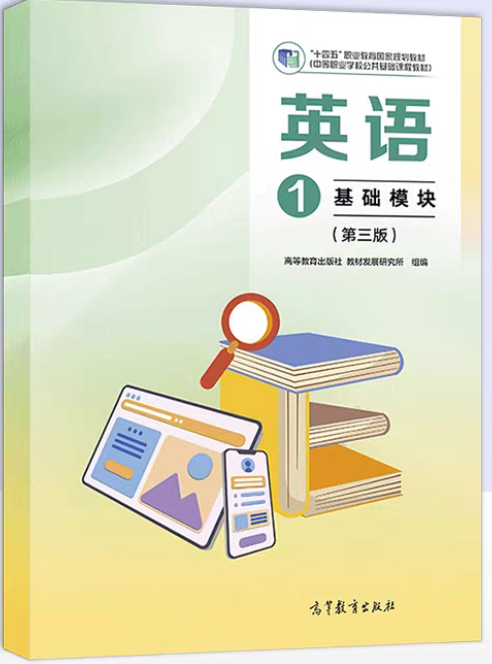
Unit 1 Personal and Family Life(B卷·能力提升)《英语 基础模块1》(高教版第三版)单元过关卷(原卷版+解析版)
2026-06-29
|
2份
|
30页
|
98人阅读
|
3人下载
摘要:
**基本信息**
紧扣《英语 基础模块1》Unit 1核心考点,A/B卷分层设计,B卷通过家庭文化、日常交际等真实情境整合知识,提升语言运用与跨文化沟通能力,适配单元复习。
**题型特征**
|题型|题量/分值|知识覆盖|命题特色|
|----|-----------|----------|----------|
|情景交际|15题/20分|日常对话、文化礼仪|结合姓名含义、节日活动创设真实交际情境,考查语言理解与表达能力|
|阅读理解|20题/40分|家庭故事、跨文化交际|选取“One Name, One Story”项目等素材,引导分析责任与文化价值,提升思维品质|
|完形填空|10题/10分|语法词汇、篇章理解|以酒店经理访谈为情境,融合语法与文化细节,强化知识应用|
|语法填空|10题/10分|动词时态、固定搭配|围绕家庭生活描述,考查语法规则在真实语境中的运用|
|书面表达|1题/20分|姓名文化、家庭价值|要求介绍姓名含义、家庭成员及关爱长辈做法,综合语言能力与文化意识|
内容正文:
编写说明:本套试卷紧扣《英语 基础模块1》(高教版第三版)教材,以教材单元为基准精准覆盖核心考点。
每个单元设置AB卷,A卷为基础巩固卷,侧重基础考点训练,帮助学生扎实掌握知识要点;B卷为能力提升卷,注重知识整合与全面检测,引导学生构建知识网络。全书设计4份综合测试卷,模拟实战情境,聚焦解题能力突破,全面提升应试能力与知识应用水平。
《英语 基础模块1》(高教版第三版)《单元过关卷》
Unit 1 Personal and Family Life
B卷·能力提升
考试时间:120分钟 满分:100分
班级_____姓名_____学号_____成绩_____
一、情景交际(共15小题;满分20分)
第一节 读下列10个短对话,从题后所给的 A、B、C、D 四个选项中选出可以填入空白处的最佳选项。(共10小题,每小题1分,满分10分)
1. —I'd like you to meet Lisa Smith, our new English teacher. She will help us prepare a short report about names and family culture this term.
—_______. Welcome to our class, Ms. Smith.
A. I am glad you will join our report project. B. I have heard about name culture.
C. Nice to meet you. D. Thank you for helping us with reports.
【答案】C
【详解】考查介绍他人后的礼貌回应。被介绍认识新老师,应选 Nice to meet you.
2. —Your given name “Ming” means brightness, doesn't it? I guess your parents chose it because they hoped you would be a positive person.
—_______. They also hoped I could bring warmth to people around me.
A. I think Ming is my family name.
B. That is right.
C. My parents chose it only because it is short.
D. It is usually written before my family name in Chinese.
【答案】B
【详解】考查确认信息。后文补充父母期望,说明对方理解正确,选B。
3. —Could you tell me how often you visit your grandmother now that she lives alone in the old community near our school?
—_______. I also call her if I cannot go there.
A. I visit her after finishing my homework. B. I visit her with my parents.
C. I visit her because she lives nearby. D. I visit her every week.
【答案】D
【详解】考查频率表达。How often 询问频率,every week 符合。
4. —My father is a firefighter. Sometimes he misses family dinner because he has to help people in danger.
—_______. You must be proud of him.
A. That is really great.
B. That must make family dinners difficult sometimes.
C. His job sounds connected with safety.
D. That job must require careful training.
【答案】A
【详解】考查评价与回应。对方父亲职业辛苦而勇敢,应积极评价。
5. —Why does your sister go jogging every morning before reading English aloud for twenty minutes?
—_______.
A. She wants to make a careful study plan.
B. She wants to improve her English pronunciation.
C. She wants to stay healthy and energetic.
D. She wants to prepare for the school sports meeting.
【答案】C
【详解】考查语境理解。慢跑与保持健康、精力充沛一致。
6. —Do you mind helping me make a poster about family names after school? I need someone to check whether I have explained the Chinese and English name orders clearly.
—_______. I like learning about name culture.
A. I can check the Chinese part first. B. Not at all. I can help you.
C. You should explain only English names. D. I finished my own poster yesterday.
【答案】B
【详解】考查 Do you mind...? 的回答。后文说喜欢姓名文化,说明不介意帮忙。
7. —My parents are strict with me, especially about my study plan, but they also listen to my ideas when I explain them clearly.
—_______. Good plans and good communication can both help you.
A. You may need a clearer study plan. B. They seem to care about your progress.
C. Good communication is important at home. D. I see what you mean.
【答案】D
【详解】考查理解与回应。对方说明父母既严格又愿意沟通,D项表示理解。
8. —The English corner needs a short speech about respecting the old. What are you going to do for the Chongyang Festival this year?
—_______. I will also tell my classmates why the festival is meaningful.
A. I will write a speech about my family name.
B. I will cook a simple meal for my grandparents.
C. I will introduce why the festival is traditional.
D. I will make a poster about respecting the old.
【答案】B
【详解】考查节日活动表达。题干问重阳节做什么,B项符合尊老主题。
9. —I am sorry that I called you by the wrong family name in front of the visiting teacher. I should have checked the name list first.
—_______. My name is a little hard to remember.
A. Never mind.
B. Please remember Zhang is my family name.
C. You can check the name list next time.
D. I was nervous in front of the teacher too.
【答案】A
【详解】考查回应道歉。对方为叫错姓氏道歉,应选 Never mind.
10. —What does the word “department” mean in the sentence “Ms. Fisher manages the Sales Department”? I want to explain it correctly in my report.
—_______. A manager usually works with several people in it.
A. It means a group of workers in the same family.
B. It means a given name chosen by parents.
C. It means a place where managers live.
D. It means a part of a company or an organization.
【答案】D
【详解】考查词义理解。department 意为“部门”,D项为完整句且符合语境。
第二节 读下面一段对话,从方框中所给的 A、B、C、D、E、F 和 G 七个选项中选出可以填入空白处的最佳选项。(共5小题,每小题2分,满分10分)
M: Our class will make English posters for Family Culture Week. The teacher said the poster should not only be beautiful but also meaningful. Have you chosen a topic?
W: Yes. _______ 11 _______
M: Sounds interesting. What will you put on the poster to make the idea clear?
W: _______ 12 _______ It helps others understand Chinese naming culture.
M: Will you compare Chinese names with English names so that international students can understand the difference?
W: Of course. _______ 13 _______
M: Good. Anything about your family life or a festival activity?
W: Yes. _______ 14 _______ It shows how we care for the old.
M: Do you need any help before you hand in the poster?
W: _______ 15 _______ Could you check the English sentences for me?
A. I will introduce the meaning of my given name.
B. In English, the given name usually comes first.
C. I want to make a poster about names and family values.
D. I have not decided how to design the title.
E. I will also write about visiting my grandparents on the Chongyang Festival.
F. Yes, please.
G. My brother works as a technician and values responsibility.
【答案】11.C 12.A 13.B 14.E 15.F
【导语】这段对话围绕“家庭文化周”英文海报展开,融合姓名文化、中英文姓名差异、重阳节敬老和同伴协作等单元内容。
【详解】
11. 上文问是否选定主题,C项直接说明主题是“names and family values”。
12. 上文问海报内容,A项介绍“given name的含义”,与后文“理解中国姓名文化”一致。
13. 上文问是否比较中英文姓名,B项说明英文姓名中 given name 通常在前。
14. 上文问是否涉及家庭生活,E项写重阳节看望祖父母,贴合家庭生活与敬老主题。
15. 上文问是否需要帮助,后文请求检查英文句子,F项“Yes, please.”衔接自然。
二、阅读理解(共20小题;每小题2分,满分40分)
阅读下列短文,从题后所给的 A、B、C、D 四个选项中选出最佳答案。
A
The Student Development Center of Star Vocational High School has designed a project called 'One Name, One Story'. The project asks students to interview a family member and then give an English report about names, jobs, and family values.
The report should not be a list of facts. It should explain how a name or a job influences the way a person understands responsibility. Students are encouraged to ask questions such as: Who chose your name? What does it mean? Did your job change your personality? What family habit do you want younger people to keep?
Before the project begins, the teacher shows two sample reports. The first report is about a grandmother whose given name means 'quiet'. She worked as a nurse for thirty years. Although her name sounds gentle, her work made her brave and quick-minded. During emergencies, she stayed calm and helped patients' families understand what was happening. The second report is about a father who is a technician. He often says that a good technician must be both careful and honest, because a tiny mistake in a machine may become a big danger later.
The project has several rules. Students must use English, but they may include one Chinese word if they explain it clearly. They should protect private information and avoid writing real addresses or phone numbers. Each report should include at least one comparison between Chinese and English naming habits, one description of a family member's job, and one reflection on family love. The best reports will be recorded and shared with international students visiting the school next month. According to the teacher, the purpose is not to make every family sound perfect. Instead, the project should help students discover meaning in ordinary life. When students learn to tell a small family story accurately and respectfully, they also learn how to introduce Chinese family culture to the wider world.
16. What makes the project different from a simple self-introduction?
A. It asks students to use more difficult grammar in every sentence.
B. It asks students to connect names, jobs and responsibility.
C. It requires students to introduce only one family member.
D. It asks students to collect facts without personal reflection.
17. What can be inferred from the nurse sample report?
A. A quiet name can still be connected with brave actions.
B. Nurses should use family stories to explain every emergency.
C. Name meanings are more important than job experiences.
D. A person's job experiences may add new qualities to a name story.
18. Why is the technician father's example effective?
A. It links a concrete job habit with the abstract idea of responsibility.
B. It shows that technical work is harder than service work.
C. It proves that family interviews should focus on fathers.
D. It explains why students should avoid small mistakes in speeches.
19. Which report would best meet the project rules?
A. A report listing a name meaning, a phone number and a home address.
B. A report introducing a parent's job without interviewing the family.
C. A report comparing name orders, describing a parent's job and reflecting on family love.
D. A report mainly describing a famous person's successful family story.
20. What does the teacher probably value most in the project?
A. Long speeches with many impressive job words.
B. Accurate, respectful storytelling about ordinary family life.
C. Perfect pronunciation even if the content is copied.
D. Surprising stories that make a family sound special.
【答案】16.B 17.D 18.A 19.C 20.B
【导语】本文是一篇项目说明文,介绍学校英文家庭采访项目的任务要求、样例、规则和育人目的。
【详解】
16. 本题为细节理解题。根据第1段的“The Student Development Center of Star Vocational High School has designed a project called 'One Name, One Story'.”可知,第一段指出报告不能只是事实清单,而要解释姓名或职业如何影响责任理解。
17. 本题为推理判断题。根据第2段的“It should explain how a name or a job influences the way a person understands responsibility.”可知,祖母名字意为 quiet,但护士经历使她勇敢、冷静,说明职业经历丰富了名字故事。
18. 本题为细节理解题。根据第2段的“It should explain how a name or a job influences the way a person understands responsibility.”可知,技术员父亲通过“机器小错误可能变成大危险”把具体岗位习惯与责任意识联系起来。
19. 本题为推理判断题。根据第3段的“The first report is about a grandmother whose given name means 'quiet'.”可知,第三段规定报告需包含姓名习惯比较、家庭成员职业描述和家庭爱的反思,C项符合。
20. 本题为主旨大意题。根据第4段的“Each report should include at least one comparison between Chinese and English naming habits, one description of a family member's job, and one reflection on family love.”可知,末段强调 accurately and respectfully 讲述小家庭故事,说明教师重视真实、准确、尊重的表达。
B
When Liu Xinting entered vocational high school, she was surprised that the first English assignment was not a grammar test. Instead, the teacher asked each student to prepare a self-introduction that included a family story. Xinting did not know what to say.
Her family seemed ordinary. Her father worked in a delivery station, her mother was a salesperson in a small supermarket, and her grandmother lived with them. Nobody in the family spoke much English. However, the teacher reminded the class that ordinary lives often contain the clearest examples of responsibility.
That evening, Xinting watched her family more carefully. Her father returned late because a customer had written the wrong building number on a package. Instead of leaving the package at the gate, he called the customer, checked the address, and delivered it to the right door. Her mother came home with tired feet but still counted the money and checked the goods list before dinner. Grandmother prepared warm soup for everyone, although she said she only did a 'small thing'. Xinting wrote these details in her notebook. She realized that responsibility was not always a big heroic act; it was often a habit repeated every day.
In class the next morning, Xinting introduced her name first. 'Liu is my family name, and Xinting is my given name. Xin means trust, and Ting can mean graceful. My parents hoped I would become a person others could trust.' Then she talked about the package, the goods list, and the soup. She used simple English, but her classmates listened carefully because the details were real. After the speech, Ella Baker said, 'Now I understand your name better. Trust is not only in the meaning of a word; it is in the way your family works and cares.' Xinting felt nervous no longer. She had learned that a good self-introduction should not only tell who she was, but also show what kind of values shaped her.
The teacher later used Xinting's speech as an example, not because it used difficult words, but because every detail served the main idea. The package, the goods list and the soup all pointed to the same value: trust grows from responsible daily actions.
21. Why does the teacher's reminder change Xinting's view of her family?
A. It encourages her to turn ordinary work into a dramatic story.
B. It proves that famous families give better speech examples.
C. It helps her notice responsibility in ordinary daily details.
D. It asks her to choose difficult words before real examples.
22. Which detail best shows the father's sense of responsibility?
A. He checks the wrong address instead of leaving the package carelessly.
B. He returns home late after finishing his delivery work.
C. He keeps a goods list for the supermarket customers.
D. He explains his work experience to Xinting patiently.
23. What is the role of Grandmother's soup in the passage?
A. It shows that older family members still work hard every day.
B. It connects family care with Xinting's speech practice.
C. It is compared with the father's package work.
D. It is a small daily act that also carries family care.
24. What does Ella mean by saying trust is in “the way your family works and cares”?
A. A name becomes less important than a job.
B. Name meaning becomes clearer through family actions.
C. Xinting should describe more jobs in her speech.
D. Family care is easier to explain than name culture.
25. What writing lesson can students learn from Xinting's speech?
A. A simple topic needs several difficult expressions.
B. Ordinary people should be described like famous examples.
C. Specific real details can make a simple topic meaningful.
D. A good speech should explain the dictionary meaning first.
【答案】21.C 22.A 23.D 24.B 25.C
【导语】本文是一篇成长类记叙文,讲述刘欣婷通过观察家人日常责任感完成英文自我介绍并理解姓名价值。
【详解】
21. 本题为细节理解题。根据第1段的“Instead, the teacher asked each student to prepare a self-introduction that included a family story.”可知,教师提醒 ordinary lives contain examples of responsibility,使欣婷开始观察家庭日常细节。
22. 本题为推理判断题。根据第2段的“However, the teacher reminded the class that ordinary lives often contain the clearest examples of responsibility.”可知,父亲没有随意放下包裹,而是核对地址并送到正确门口,最能体现责任感。
23. 本题为细节理解题。根据第2段的“Her family seemed ordinary. Her father worked in a delivery station, her mother was a salesperson in a small supermarket, and her grandmother lived with them. Nobody in the family ...”可知,奶奶的汤看似小事,却与父母工作细节并列,体现日常关爱。
24. 本题为推理判断题。根据第3段的“In class the next morning, Xinting introduced her name first.”可知,Ella 把 trust 的词义与家人的实际行动联系起来,说明名字含义通过行动变得可感。
25. 本题为主旨大意题。根据第5段的“The teacher later used Xinting's speech as an example, not because it used difficult words, but because every detail served the main idea. The package, the goods list and the soup ...”可知,末段指出教师看重她用真实细节服务主旨,这说明具体细节能让简单主题有意义。
C
In many classes, students learn that Chinese family names usually come before given names, while English family names usually come after given names. This rule is useful, but cross-cultural communication is more complicated than a single rule. People may use different names in different settings.
A student named Zhang Ming may introduce himself as Zhang Ming in China, but he may also use the English name Mark when working with foreign customers. An English teacher named Helen Green may ask students to call her Ms. Green in class, but her close friends may simply call her Helen.
The problem is not which custom is better. The real question is how to show respect when we are not sure. In a formal email, it is usually polite to use a title and a family name at the beginning, such as Dear Mr. Li or Dear Ms. Green. In a friendly conversation, using a given name may make the talk warmer, but only when the relationship allows it. Some people prefer to be addressed by their professional title, such as Doctor, Manager, or Teacher. Others may prefer a shorter name because it is easier for international partners to pronounce. A careful speaker observes the situation before choosing a form of address.
Misunderstandings can happen when people assume too quickly. For example, calling a teacher by her given name may sound friendly in one culture but too casual in another. Using Mrs. for every woman may also be inappropriate because it guesses a person's marital status. Ms. is often safer when the speaker is not sure. The best solution is simple but powerful: ask politely. A question like 'How would you like me to address you?' can prevent embarrassment and begin a respectful relationship. For vocational students who may work in hotels, sales departments, workshops, or service centers, this small skill is practical. It helps them greet customers, introduce managers, write emails, and communicate with people from different backgrounds.
26. What is the main point of the first paragraph?
A. Name-order rules are useful starting points, but real communication needs context.
B. English name order is easier to use in service work.
C. Chinese names and English names can be addressed in the same way.
D. Students should use titles before learning name orders.
27. In which situation is “Dear Ms. Green” most likely appropriate?
A. When greeting a close classmate after school.
B. When speaking to a customer whose title is unknown.
C. At the beginning of a formal email.
D. When avoiding all professional titles.
28. What does the passage imply about using professional titles?
A. They sound too formal in most service situations.
B. Some people may prefer them because roles and settings matter.
C. They should be used only when family names are hard to pronounce.
D. They are safer than Mr./Ms. in every English email.
29. What does the word “casual” most nearly mean in the passage?
A. Friendly but still polite. B. Simple and easy to remember.
C. Careful and official enough. D. Too informal for the situation.
30. Why is asking “How would you like me to address you?” described as powerful?
A. It prevents guessing and starts respectful communication.
B. It helps people choose a new English name.
C. It lets the speaker avoid learning name orders.
D. It is the fastest way to begin a hotel conversation.
【答案】26.A 27.C 28.B 29.D 30.A
【导语】本文是一篇跨文化交际说明文,围绕称呼方式在不同语境中的选择,强调观察、尊重和礼貌询问。
【详解】
26. 本题为细节理解题。根据第1段的“In many classes, students learn that Chinese family names usually come before given names, while English family names usually come after given names.”可知,第一段先承认姓名顺序规则有用,再指出跨文化交际比单一规则更复杂。
27. 本题为推理判断题。根据第2段的“A student named Zhang Ming may introduce himself as Zhang Ming in China, but he may also use the English name Mark when working with foreign customers.”可知,第二段明确 formal email 开头可用 Dear Mr./Ms. + family name。
28. 本题为细节理解题。根据第2段的“Some people prefer to be addressed by their professional title, such as Doctor, Manager, or Teacher.”可知,第二段提到有人偏好 Doctor, Manager, Teacher 等职业头衔,说明角色和语境会影响称呼。
29. 本题为推理判断题。根据第3段的“In a formal email, it is usually polite to use a title and a family name at the beginning, such as Dear Mr.”可知,结合语境可知 casual 指过于随便、不正式。
30. 本题为主旨大意题。根据第3段的“A question like 'How would you like me to address you?' can prevent embarrassment and begin a respectful relationship.”可知,第三段说该问题可以 prevent embarrassment and begin a respectful relationship。
D
At Green Valley Community Center, a group of vocational students volunteer every month to teach older residents how to use smartphones. The program began as a simple service activity, but it soon became a lesson about patience, family, and communication.
Many older residents live near their children but do not want to trouble them too often. They hope to learn how to send photos, make video calls, read bus information, and pay small bills safely. The students prepare large-print handouts and practice polite English and Chinese expressions before each class.
Yu Xinling, one of the volunteers, used to think she was energetic enough for any task. On her first day, however, she became impatient when an old man forgot the same step three times. Her teacher quietly reminded her, 'Fast hands are not enough. A good helper also needs a slow heart.' Xinling changed her way. Instead of taking the phone and doing everything herself, she asked the old man to touch each button while she explained the reason. She also wrote short notes: 'Open the app,' 'Choose the contact,' and 'Press the green button.' By the end of the lesson, the old man successfully made a video call to his daughter. His smile made Xinling understand the value of patient guidance.
The program also changed how students looked at their own families. After helping strangers, several students called their grandparents and asked whether they needed help with phones. Some students discovered that their grandparents had saved many old family photos but did not know how to send them. Others learned that older people sometimes felt embarrassed to ask basic questions. In the final reflection, Xinling wrote that technology was not only about machines; it was about connecting people. She also wrote that respecting the old did not only happen during the Chongyang Festival. It could happen on an ordinary Saturday morning, through a repeated explanation, a clear note, or a warm video call.
31. What need of older residents is shown in the first paragraph?
A. They need new phones with larger screens.
B. They hope students can contact their children for them.
C. They prefer printed handouts to face-to-face help.
D. They want practical digital skills without troubling their children too often.
32. Why is the teacher's sentence “Fast hands are not enough” important?
A. It reminds Xinling to finish the service task quickly.
B. It changes Xinling's idea of what helpful service requires.
C. It suggests older people should practise more before asking.
D. It asks students to explain less and demonstrate more.
33. What is the key difference between Xinling's first way and later way of helping?
A. Later she guided the old man to operate by himself.
B. Later she wrote every step in larger letters.
C. Later she asked another volunteer to repeat the steps.
D. Later she used simpler words but still finished it for him.
34. What broader influence does the program have on students?
A. It makes them compare volunteering with family duties.
B. It teaches them to use technology more carefully.
C. It makes them rethink how to support their own grandparents.
D. It shows them that festival care is more important than daily care.
35. Which statement best captures the passage's theme?
A. Older residents should learn smartphones step by step.
B. Respecting the old needs both festivals and daily practice.
C. A good volunteer should balance speed with clear notes.
D. Patient service can turn technology into a bridge between generations.
【答案】31.D 32.B 33.A 34.C 35.D
【导语】本文是一篇社会服务类记叙文,讲述职校学生在社区志愿服务中理解耐心、敬老和技术连接人的价值。
【详解】
31. 本题为细节理解题。根据第1段的“At Green Valley Community Center, a group of vocational students volunteer every month to teach older residents how to use smartphones. The program began as a simple service activi...”可知,第一段说老人希望学习实用手机技能,同时不想总麻烦子女。
32. 本题为推理判断题。根据第2段的“The program began as a simple service activity, but it soon became a lesson about patience, family, and communication.”可知,老师的话让欣玲从“手快”转向理解服务还需要耐心。
33. 本题为细节理解题。根据第2段的“Many older residents live near their children but do not want to trouble them too often. They hope to learn how to send photos, make video calls, read bus information, and pay smal...”可知,后来她让老人自己点每个按钮并解释原因,而不是替他完成。
34. 本题为推理判断题。根据第3段的“After helping strangers, several students called their grandparents and asked whether they needed help with phones.”可知,第三段写学生帮助陌生老人后给祖父母打电话,询问是否需要手机帮助。
35. 本题为主旨大意题。根据第4段的“In the final reflection, Xinling wrote that technology was not only about machines; it was about connecting people.”可知,全文强调技术不只是机器,而是在耐心和尊重中连接人。
三、完形填空(共10小题;每小题1分,满分10分)
阅读下列短文,从短文后各题所给的 A、B、C、D 四个选项中,选出可以填入空白处的最佳选项。
For the Family Culture Week, Luo Wen decided to interview his father, a hotel manager who often worked with people from different backgrounds. Before the interview, Luo Wen believed that introducing a family member mainly meant giving his name, age and job. His father smiled and said, “Those facts are only the _______ 36 _______. A good introduction should show what kind of person he is.”
Luo Wen first asked about names. His father explained that Luo was their family name and Wen was his _______ 37 _______ name. Then he told Luo Wen that address forms mattered in service work. When meeting a guest for the first time, a worker should not be too _______ 38 _______. It is safer to use Mr., Ms. or a professional title until the guest suggests another form. “Politeness is not a small thing,” his father said. “It helps people feel respected _______ 39 _______ they are far from home.”
The interview became more meaningful when Luo Wen asked about difficulties at work. His father remembered a foreign guest whose name was similar to another guest's. A careless worker almost gave him the wrong room card. Since then, his father has been strict _______ 40 _______ checking names and room numbers. He also encourages young workers _______ 41 _______ key information before solving a problem. “Speed is useful,” he said, “_______ 42 _______ accuracy comes first.”
After the interview, Luo Wen understood that a job could shape a person's habits and values. He planned _______ 43 _______ his report around three ideas: name, work and responsibility. He hoped his classmates would see that family stories were not simply private memories. They could also _______ 44 _______ people from different cultures and help students understand the deeper _______ 45 _______ of ordinary work.
36. A. beginning B. background C. example D. topic
37. A. given B. family C. English D. full
38. A. casual B. common C. friendly D. natural
39. A. even when B. as long as C. so that D. now that
40. A. about B. with C. for D. on
41. A. confirm B. confirming C. confirmed D. to confirm
42. A. and B. but C. so D. because
43. A. organize B. organizing C. organized D. to organize
44. A. connect B. compare C. introduce D. describe
45. A. meaning B. value C. message D. lesson
【答案】36.A 37.A 38.A 39.A 40.A 41.D 42.B 43.D 44.A 45.A
【导语】本文是一篇采访类完形填空,融合姓名文化、正式称呼、职业责任和跨文化服务语境,难度较前版提升在抽象名词、上下文推断和连接词辨析上。
【详解】
36. 父亲认为姓名、年龄、职业只是介绍的“开始”,后文还要说明人的品质,beginning 符合语境。
37. Wen 是名,given name 符合姓名文化。
38. 初次见客人不应过于随便,casual 与后文使用 Mr./Ms./title 呼应。
39. 句意为“即使远离家乡,也能感到被尊重”,even when 引导让步时间语境。
40. be strict about doing/sth. 表示“对……严格”,此处指严格核对姓名和房号。
41. encourage sb. to do sth. 固定搭配。
42. “速度有用,但准确第一”,前后转折用 but。
43. plan to do sth. 固定搭配。
44. 家庭故事可以连接不同文化的人,connect 符合单元跨文化主题。
45. deeper meaning of ordinary work 表示普通工作的深层意义。
四、语法填空(共10小题;每小题1分,满分10分)
阅读下列短文,在空白处填入一个适当的词,或填入括号中所给单词的正确形式,并将答案写在对应处。
Ella is preparing a poster with Li Zixuan for Family Culture Week. Her partner's name _______ 46 _______ (be) Li Zixuan. Li is the family name, while Zixuan is the _______ 47 _______ (give) name. Zixuan is an _______ 48 _______ (energy) student who goes _______ 49 _______ (jog) every morning before class. She lives _______ 50 _______ her parents and grandmother. Her father _______ 51 _______ (work) as a manager in a sales department, where careful communication is important.
At home, Zixuan's parents are strict _______ 52 _______ her learning habits, but they also take care _______ 53 _______ her feelings. This weekend, she and Ella plan _______ 54 _______ (design) a poster comparing Chinese and English name orders. They also want to add a short paragraph about the Chongyang Festival, because caring for grandparents is part of family culture. Ella believes that if students learn these details, they can _______ 55 _______ (communicate) more politely with people from different backgrounds.
46._________ 47._________ 48._________ 49._________ 50._________
51._________ 52._________ 53._________ 54._________ 55._________
【答案】46.is 47.given 48.energetic 49.jogging 50.with 51.works 52.about 53.of 54.to design 55.communicate
【导语】本文以家庭文化周海报准备为语境,考查姓名文化、词形转换、固定搭配、一般现在时和情态动词后动词原形。
【详解】
46. 主语 Her partner's name 为单数,be动词用 is。
47. given name 为固定表达,表示“名”。
48. 修饰名词 student,用 energy 的形容词 energetic。
49. go jogging 为固定表达。
50. live with sb. 表示“和某人住在一起”。
51. 主语 Her father 为第三人称单数,一般现在时用 works。
52. be strict about sth. 表示“对某事严格”。
53. take care of 为固定短语。
54. plan to do sth. 表示“计划做某事”。
55. 情态动词 can 后接动词原形 communicate。
五、书面表达(满分20分)
校园英语角将举办“Family Culture Week”活动。请你根据以下提示,写一篇英文发言稿,介绍你的姓名含义和家庭生活,并向国际交换生展示中国家庭文化。
内容包括:
(1) 介绍你的 family name 和 given name,并说明名字含义;
(2) 介绍一位家庭成员的职业或性格;
(3) 描述你家关爱长辈的一项做法;
(4) 表达你对家庭文化的理解。
写作要求:
(1) 词数不少于80;
(2) 必须包括要点,可以适当扩充,但不能逐词翻译;
(3) 文中不要提及真实校名和姓名。
提示:meaning, family value, live nearby, take care of, be strict about, Chongyang Festival, handmade gift
________________________________________________________________________________
________________________________________________________________________________
________________________________________________________________________________
________________________________________________________________________________
________________________________________________________________________________
________________________________________________________________________________
________________________________________________________________________________
________________________________________________________________________________
【参考范文】
Good afternoon, everyone. I am glad to share something about my name and family life. My name is Wang An. Wang is my family name and An is my given name. “An” means peace, so my parents hope I can live a peaceful and useful life.
My father is a manager in a small company. He is confident at work and strict about my study, but he always listens to me patiently. My grandparents live nearby. We visit them every weekend and help them clean the house. On the Chongyang Festival, we usually cook a big meal and prepare handmade gifts for them.
In my eyes, family culture is about love, respect and responsibility. Different families may live in different ways, but caring for each other is always important. I hope my introduction can help you understand Chinese family life better.
【词汇积累】meaning 含义;peaceful 平和的;family value 家庭价值观;live nearby 住在附近;take care of 照顾;be strict about 对……严格;Chongyang Festival 重阳节;handmade gift 手工礼物;responsibility 责任。
【句式拓展】1. My grandparents live nearby. We visit them every weekend. 可合并为:Because my grandparents live nearby, we visit them every weekend. 2. Different families may live in different ways, but caring for each other is always important. 该句使用转折结构,先承认文化差异,再突出共同价值。
【点睛】本文为发言稿,开头有问候和主题引入;主体部分介绍姓名含义、家庭成员和敬老做法;结尾概括家庭文化内涵。语言以一般现在时为主,符合介绍个人与家庭生活的任务要求。
原创精品资源学科网独家享有版权,侵权必究!
学科网(北京)股份有限公司
$
编写说明:本套试卷紧扣《英语 基础模块1》(高教版第三版)教材,以教材单元为基准精准覆盖核心考点。
每个单元设置AB卷,A卷为基础巩固卷,侧重基础考点训练,帮助学生扎实掌握知识要点;B卷为能力提升卷,注重知识整合与全面检测,引导学生构建知识网络。全书设计4份综合测试卷,模拟实战情境,聚焦解题能力突破,全面提升应试能力与知识应用水平。
《英语 基础模块1》(高教版第三版)《单元过关卷》
Unit 1 Personal and Family Life
B卷·能力提升
考试时间:120分钟 满分:100分
班级_____姓名_____学号_____成绩_____
一、情景交际(共15小题;满分20分)
第一节 读下列10个短对话,从题后所给的 A、B、C、D 四个选项中选出可以填入空白处的最佳选项。(共10小题,每小题1分,满分10分)
1. —I'd like you to meet Lisa Smith, our new English teacher. She will help us prepare a short report about names and family culture this term.
—_______. Welcome to our class, Ms. Smith.
A. I am glad you will join our report project. B. I have heard about name culture.
C. Nice to meet you. D. Thank you for helping us with reports.
2. —Your given name “Ming” means brightness, doesn't it? I guess your parents chose it because they hoped you would be a positive person.
—_______. They also hoped I could bring warmth to people around me.
A. I think Ming is my family name.
B. That is right.
C. My parents chose it only because it is short.
D. It is usually written before my family name in Chinese.
3. —Could you tell me how often you visit your grandmother now that she lives alone in the old community near our school?
—_______. I also call her if I cannot go there.
A. I visit her after finishing my homework. B. I visit her with my parents.
C. I visit her because she lives nearby. D. I visit her every week.
4. —My father is a firefighter. Sometimes he misses family dinner because he has to help people in danger.
—_______. You must be proud of him.
A. That is really great.
B. That must make family dinners difficult sometimes.
C. His job sounds connected with safety.
D. That job must require careful training.
5. —Why does your sister go jogging every morning before reading English aloud for twenty minutes?
—_______.
A. She wants to make a careful study plan.
B. She wants to improve her English pronunciation.
C. She wants to stay healthy and energetic.
D. She wants to prepare for the school sports meeting.
6. —Do you mind helping me make a poster about family names after school? I need someone to check whether I have explained the Chinese and English name orders clearly.
—_______. I like learning about name culture.
A. I can check the Chinese part first. B. Not at all. I can help you.
C. You should explain only English names. D. I finished my own poster yesterday.
7. —My parents are strict with me, especially about my study plan, but they also listen to my ideas when I explain them clearly.
—_______. Good plans and good communication can both help you.
A. You may need a clearer study plan. B. They seem to care about your progress.
C. Good communication is important at home. D. I see what you mean.
8. —The English corner needs a short speech about respecting the old. What are you going to do for the Chongyang Festival this year?
—_______. I will also tell my classmates why the festival is meaningful.
A. I will write a speech about my family name.
B. I will cook a simple meal for my grandparents.
C. I will introduce why the festival is traditional.
D. I will make a poster about respecting the old.
9. —I am sorry that I called you by the wrong family name in front of the visiting teacher. I should have checked the name list first.
—_______. My name is a little hard to remember.
A. Never mind.
B. Please remember Zhang is my family name.
C. You can check the name list next time.
D. I was nervous in front of the teacher too.
10. —What does the word “department” mean in the sentence “Ms. Fisher manages the Sales Department”? I want to explain it correctly in my report.
—_______. A manager usually works with several people in it.
A. It means a group of workers in the same family.
B. It means a given name chosen by parents.
C. It means a place where managers live.
D. It means a part of a company or an organization.
第二节 读下面一段对话,从方框中所给的 A、B、C、D、E、F 和 G 七个选项中选出可以填入空白处的最佳选项。(共5小题,每小题2分,满分10分)
M: Our class will make English posters for Family Culture Week. The teacher said the poster should not only be beautiful but also meaningful. Have you chosen a topic?
W: Yes. _______ 11 _______
M: Sounds interesting. What will you put on the poster to make the idea clear?
W: _______ 12 _______ It helps others understand Chinese naming culture.
M: Will you compare Chinese names with English names so that international students can understand the difference?
W: Of course. _______ 13 _______
M: Good. Anything about your family life or a festival activity?
W: Yes. _______ 14 _______ It shows how we care for the old.
M: Do you need any help before you hand in the poster?
W: _______ 15 _______ Could you check the English sentences for me?
A. I will introduce the meaning of my given name.
B. In English, the given name usually comes first.
C. I want to make a poster about names and family values.
D. I have not decided how to design the title.
E. I will also write about visiting my grandparents on the Chongyang Festival.
F. Yes, please.
G. My brother works as a technician and values responsibility.
二、阅读理解(共20小题;每小题2分,满分40分)
阅读下列短文,从题后所给的 A、B、C、D 四个选项中选出最佳答案。
A
The Student Development Center of Star Vocational High School has designed a project called 'One Name, One Story'. The project asks students to interview a family member and then give an English report about names, jobs, and family values.
The report should not be a list of facts. It should explain how a name or a job influences the way a person understands responsibility. Students are encouraged to ask questions such as: Who chose your name? What does it mean? Did your job change your personality? What family habit do you want younger people to keep?
Before the project begins, the teacher shows two sample reports. The first report is about a grandmother whose given name means 'quiet'. She worked as a nurse for thirty years. Although her name sounds gentle, her work made her brave and quick-minded. During emergencies, she stayed calm and helped patients' families understand what was happening. The second report is about a father who is a technician. He often says that a good technician must be both careful and honest, because a tiny mistake in a machine may become a big danger later.
The project has several rules. Students must use English, but they may include one Chinese word if they explain it clearly. They should protect private information and avoid writing real addresses or phone numbers. Each report should include at least one comparison between Chinese and English naming habits, one description of a family member's job, and one reflection on family love. The best reports will be recorded and shared with international students visiting the school next month. According to the teacher, the purpose is not to make every family sound perfect. Instead, the project should help students discover meaning in ordinary life. When students learn to tell a small family story accurately and respectfully, they also learn how to introduce Chinese family culture to the wider world.
16. What makes the project different from a simple self-introduction?
A. It asks students to use more difficult grammar in every sentence.
B. It asks students to connect names, jobs and responsibility.
C. It requires students to introduce only one family member.
D. It asks students to collect facts without personal reflection.
17. What can be inferred from the nurse sample report?
A. A quiet name can still be connected with brave actions.
B. Nurses should use family stories to explain every emergency.
C. Name meanings are more important than job experiences.
D. A person's job experiences may add new qualities to a name story.
18. Why is the technician father's example effective?
A. It links a concrete job habit with the abstract idea of responsibility.
B. It shows that technical work is harder than service work.
C. It proves that family interviews should focus on fathers.
D. It explains why students should avoid small mistakes in speeches.
19. Which report would best meet the project rules?
A. A report listing a name meaning, a phone number and a home address.
B. A report introducing a parent's job without interviewing the family.
C. A report comparing name orders, describing a parent's job and reflecting on family love.
D. A report mainly describing a famous person's successful family story.
20. What does the teacher probably value most in the project?
A. Long speeches with many impressive job words.
B. Accurate, respectful storytelling about ordinary family life.
C. Perfect pronunciation even if the content is copied.
D. Surprising stories that make a family sound special.
B
When Liu Xinting entered vocational high school, she was surprised that the first English assignment was not a grammar test. Instead, the teacher asked each student to prepare a self-introduction that included a family story. Xinting did not know what to say.
Her family seemed ordinary. Her father worked in a delivery station, her mother was a salesperson in a small supermarket, and her grandmother lived with them. Nobody in the family spoke much English. However, the teacher reminded the class that ordinary lives often contain the clearest examples of responsibility.
That evening, Xinting watched her family more carefully. Her father returned late because a customer had written the wrong building number on a package. Instead of leaving the package at the gate, he called the customer, checked the address, and delivered it to the right door. Her mother came home with tired feet but still counted the money and checked the goods list before dinner. Grandmother prepared warm soup for everyone, although she said she only did a 'small thing'. Xinting wrote these details in her notebook. She realized that responsibility was not always a big heroic act; it was often a habit repeated every day.
In class the next morning, Xinting introduced her name first. 'Liu is my family name, and Xinting is my given name. Xin means trust, and Ting can mean graceful. My parents hoped I would become a person others could trust.' Then she talked about the package, the goods list, and the soup. She used simple English, but her classmates listened carefully because the details were real. After the speech, Ella Baker said, 'Now I understand your name better. Trust is not only in the meaning of a word; it is in the way your family works and cares.' Xinting felt nervous no longer. She had learned that a good self-introduction should not only tell who she was, but also show what kind of values shaped her.
The teacher later used Xinting's speech as an example, not because it used difficult words, but because every detail served the main idea. The package, the goods list and the soup all pointed to the same value: trust grows from responsible daily actions.
21. Why does the teacher's reminder change Xinting's view of her family?
A. It encourages her to turn ordinary work into a dramatic story.
B. It proves that famous families give better speech examples.
C. It helps her notice responsibility in ordinary daily details.
D. It asks her to choose difficult words before real examples.
22. Which detail best shows the father's sense of responsibility?
A. He checks the wrong address instead of leaving the package carelessly.
B. He returns home late after finishing his delivery work.
C. He keeps a goods list for the supermarket customers.
D. He explains his work experience to Xinting patiently.
23. What is the role of Grandmother's soup in the passage?
A. It shows that older family members still work hard every day.
B. It connects family care with Xinting's speech practice.
C. It is compared with the father's package work.
D. It is a small daily act that also carries family care.
24. What does Ella mean by saying trust is in “the way your family works and cares”?
A. A name becomes less important than a job.
B. Name meaning becomes clearer through family actions.
C. Xinting should describe more jobs in her speech.
D. Family care is easier to explain than name culture.
25. What writing lesson can students learn from Xinting's speech?
A. A simple topic needs several difficult expressions.
B. Ordinary people should be described like famous examples.
C. Specific real details can make a simple topic meaningful.
D. A good speech should explain the dictionary meaning first.
C
In many classes, students learn that Chinese family names usually come before given names, while English family names usually come after given names. This rule is useful, but cross-cultural communication is more complicated than a single rule. People may use different names in different settings.
A student named Zhang Ming may introduce himself as Zhang Ming in China, but he may also use the English name Mark when working with foreign customers. An English teacher named Helen Green may ask students to call her Ms. Green in class, but her close friends may simply call her Helen.
The problem is not which custom is better. The real question is how to show respect when we are not sure. In a formal email, it is usually polite to use a title and a family name at the beginning, such as Dear Mr. Li or Dear Ms. Green. In a friendly conversation, using a given name may make the talk warmer, but only when the relationship allows it. Some people prefer to be addressed by their professional title, such as Doctor, Manager, or Teacher. Others may prefer a shorter name because it is easier for international partners to pronounce. A careful speaker observes the situation before choosing a form of address.
Misunderstandings can happen when people assume too quickly. For example, calling a teacher by her given name may sound friendly in one culture but too casual in another. Using Mrs. for every woman may also be inappropriate because it guesses a person's marital status. Ms. is often safer when the speaker is not sure. The best solution is simple but powerful: ask politely. A question like 'How would you like me to address you?' can prevent embarrassment and begin a respectful relationship. For vocational students who may work in hotels, sales departments, workshops, or service centers, this small skill is practical. It helps them greet customers, introduce managers, write emails, and communicate with people from different backgrounds.
26. What is the main point of the first paragraph?
A. Name-order rules are useful starting points, but real communication needs context.
B. English name order is easier to use in service work.
C. Chinese names and English names can be addressed in the same way.
D. Students should use titles before learning name orders.
27. In which situation is “Dear Ms. Green” most likely appropriate?
A. When greeting a close classmate after school.
B. When speaking to a customer whose title is unknown.
C. At the beginning of a formal email.
D. When avoiding all professional titles.
28. What does the passage imply about using professional titles?
A. They sound too formal in most service situations.
B. Some people may prefer them because roles and settings matter.
C. They should be used only when family names are hard to pronounce.
D. They are safer than Mr./Ms. in every English email.
29. What does the word “casual” most nearly mean in the passage?
A. Friendly but still polite. B. Simple and easy to remember.
C. Careful and official enough. D. Too informal for the situation.
30. Why is asking “How would you like me to address you?” described as powerful?
A. It prevents guessing and starts respectful communication.
B. It helps people choose a new English name.
C. It lets the speaker avoid learning name orders.
D. It is the fastest way to begin a hotel conversation.
D
At Green Valley Community Center, a group of vocational students volunteer every month to teach older residents how to use smartphones. The program began as a simple service activity, but it soon became a lesson about patience, family, and communication.
Many older residents live near their children but do not want to trouble them too often. They hope to learn how to send photos, make video calls, read bus information, and pay small bills safely. The students prepare large-print handouts and practice polite English and Chinese expressions before each class.
Yu Xinling, one of the volunteers, used to think she was energetic enough for any task. On her first day, however, she became impatient when an old man forgot the same step three times. Her teacher quietly reminded her, 'Fast hands are not enough. A good helper also needs a slow heart.' Xinling changed her way. Instead of taking the phone and doing everything herself, she asked the old man to touch each button while she explained the reason. She also wrote short notes: 'Open the app,' 'Choose the contact,' and 'Press the green button.' By the end of the lesson, the old man successfully made a video call to his daughter. His smile made Xinling understand the value of patient guidance.
The program also changed how students looked at their own families. After helping strangers, several students called their grandparents and asked whether they needed help with phones. Some students discovered that their grandparents had saved many old family photos but did not know how to send them. Others learned that older people sometimes felt embarrassed to ask basic questions. In the final reflection, Xinling wrote that technology was not only about machines; it was about connecting people. She also wrote that respecting the old did not only happen during the Chongyang Festival. It could happen on an ordinary Saturday morning, through a repeated explanation, a clear note, or a warm video call.
31. What need of older residents is shown in the first paragraph?
A. They need new phones with larger screens.
B. They hope students can contact their children for them.
C. They prefer printed handouts to face-to-face help.
D. They want practical digital skills without troubling their children too often.
32. Why is the teacher's sentence “Fast hands are not enough” important?
A. It reminds Xinling to finish the service task quickly.
B. It changes Xinling's idea of what helpful service requires.
C. It suggests older people should practise more before asking.
D. It asks students to explain less and demonstrate more.
33. What is the key difference between Xinling's first way and later way of helping?
A. Later she guided the old man to operate by himself.
B. Later she wrote every step in larger letters.
C. Later she asked another volunteer to repeat the steps.
D. Later she used simpler words but still finished it for him.
34. What broader influence does the program have on students?
A. It makes them compare volunteering with family duties.
B. It teaches them to use technology more carefully.
C. It makes them rethink how to support their own grandparents.
D. It shows them that festival care is more important than daily care.
35. Which statement best captures the passage's theme?
A. Older residents should learn smartphones step by step.
B. Respecting the old needs both festivals and daily practice.
C. A good volunteer should balance speed with clear notes.
D. Patient service can turn technology into a bridge between generations.
三、完形填空(共10小题;每小题1分,满分10分)
阅读下列短文,从短文后各题所给的 A、B、C、D 四个选项中,选出可以填入空白处的最佳选项。
For the Family Culture Week, Luo Wen decided to interview his father, a hotel manager who often worked with people from different backgrounds. Before the interview, Luo Wen believed that introducing a family member mainly meant giving his name, age and job. His father smiled and said, “Those facts are only the _______ 36 _______. A good introduction should show what kind of person he is.”
Luo Wen first asked about names. His father explained that Luo was their family name and Wen was his _______ 37 _______ name. Then he told Luo Wen that address forms mattered in service work. When meeting a guest for the first time, a worker should not be too _______ 38 _______. It is safer to use Mr., Ms. or a professional title until the guest suggests another form. “Politeness is not a small thing,” his father said. “It helps people feel respected _______ 39 _______ they are far from home.”
The interview became more meaningful when Luo Wen asked about difficulties at work. His father remembered a foreign guest whose name was similar to another guest's. A careless worker almost gave him the wrong room card. Since then, his father has been strict _______ 40 _______ checking names and room numbers. He also encourages young workers _______ 41 _______ key information before solving a problem. “Speed is useful,” he said, “_______ 42 _______ accuracy comes first.”
After the interview, Luo Wen understood that a job could shape a person's habits and values. He planned _______ 43 _______ his report around three ideas: name, work and responsibility. He hoped his classmates would see that family stories were not simply private memories. They could also _______ 44 _______ people from different cultures and help students understand the deeper _______ 45 _______ of ordinary work.
36. A. beginning B. background C. example D. topic
37. A. given B. family C. English D. full
38. A. casual B. common C. friendly D. natural
39. A. even when B. as long as C. so that D. now that
40. A. about B. with C. for D. on
41. A. confirm B. confirming C. confirmed D. to confirm
42. A. and B. but C. so D. because
43. A. organize B. organizing C. organized D. to organize
44. A. connect B. compare C. introduce D. describe
45. A. meaning B. value C. message D. lesson
四、语法填空(共10小题;每小题1分,满分10分)
阅读下列短文,在空白处填入一个适当的词,或填入括号中所给单词的正确形式,并将答案写在对应处。
Ella is preparing a poster with Li Zixuan for Family Culture Week. Her partner's name _______ 46 _______ (be) Li Zixuan. Li is the family name, while Zixuan is the _______ 47 _______ (give) name. Zixuan is an _______ 48 _______ (energy) student who goes _______ 49 _______ (jog) every morning before class. She lives _______ 50 _______ her parents and grandmother. Her father _______ 51 _______ (work) as a manager in a sales department, where careful communication is important.
At home, Zixuan's parents are strict _______ 52 _______ her learning habits, but they also take care _______ 53 _______ her feelings. This weekend, she and Ella plan _______ 54 _______ (design) a poster comparing Chinese and English name orders. They also want to add a short paragraph about the Chongyang Festival, because caring for grandparents is part of family culture. Ella believes that if students learn these details, they can _______ 55 _______ (communicate) more politely with people from different backgrounds.
46._________ 47._________ 48._________ 49._________ 50._________
51._________ 52._________ 53._________ 54._________ 55._________
五、书面表达(满分20分)
校园英语角将举办“Family Culture Week”活动。请你根据以下提示,写一篇英文发言稿,介绍你的姓名含义和家庭生活,并向国际交换生展示中国家庭文化。
内容包括:
(1) 介绍你的 family name 和 given name,并说明名字含义;
(2) 介绍一位家庭成员的职业或性格;
(3) 描述你家关爱长辈的一项做法;
(4) 表达你对家庭文化的理解。
写作要求:
(1) 词数不少于80;
(2) 必须包括要点,可以适当扩充,但不能逐词翻译;
(3) 文中不要提及真实校名和姓名。
提示:meaning, family value, live nearby, take care of, be strict about, Chongyang Festival, handmade gift
________________________________________________________________________________
________________________________________________________________________________
________________________________________________________________________________
________________________________________________________________________________
________________________________________________________________________________
________________________________________________________________________________
________________________________________________________________________________
________________________________________________________________________________
原创精品资源学科网独家享有版权,侵权必究!
学科网(北京)股份有限公司
$
资源预览图

1

2

3
由于学科网是一个信息分享及获取的平台,不确保部分用户上传资料的 来源及知识产权归属。如您发现相关资料侵犯您的合法权益,请联系学科网,我们核实后将及时进行处理。