期末总复习:Unit 5-Unit 6 重点词汇语境循环练2025-2026学年人教版八年级英语下册
2026-06-26
|
7页
|
112人阅读
|
2人下载
资源信息
| 学段 | 初中 |
|---|---|
| 学科 | 英语 |
| 教材版本 | 初中英语人教版八年级下册 |
| 年级 | 八年级 |
| 章节 | Unit 5 Nature's Temper,Unit 6 Crossing Cultures |
| 类型 | 题集-专项训练 |
| 知识点 | - |
| 使用场景 | 同步教学-期末 |
| 学年 | 2026-2027 |
| 地区(省份) | 全国 |
| 地区(市) | - |
| 地区(区县) | - |
| 文件格式 | DOCX |
| 文件大小 | 39 KB |
| 发布时间 | 2026-06-26 |
| 更新时间 | 2026-06-26 |
| 作者 | LOVE 永恒 |
| 品牌系列 | - |
| 审核时间 | 2026-06-26 |
| 下载链接 | https://m.zxxk.com/soft/58505244.html |
| 价格 | 1.00储值(1储值=1元) |
| 来源 | 学科网 |
摘要:
**基本信息**
以Unit5-Unit6重点词汇为核心,通过多题型语境循环训练,构建“词汇-语法-语篇”递进逻辑,强化语言运用能力与文化理解。
**专项设计**
|模块|题量/典例|题型特征|知识逻辑|
|----|-----------|----------|----------|
|词汇拼写|10题|汉译英填空|基础词汇语境化认知|
|词形变化|10题|词性转换/时态|语法规则在语境中应用|
|短文填空|2篇(12题)|篇章词汇运用|词汇链与语篇逻辑构建|
|语法填空|1篇(10题)|语法综合填空|语法知识语篇化迁移|
|完形阅读|2篇(15题)|灾害主题理解|文化意识与思维品质培养|
|写作|1篇|餐桌礼仪介绍|语言输出与跨文化表达|
内容正文:
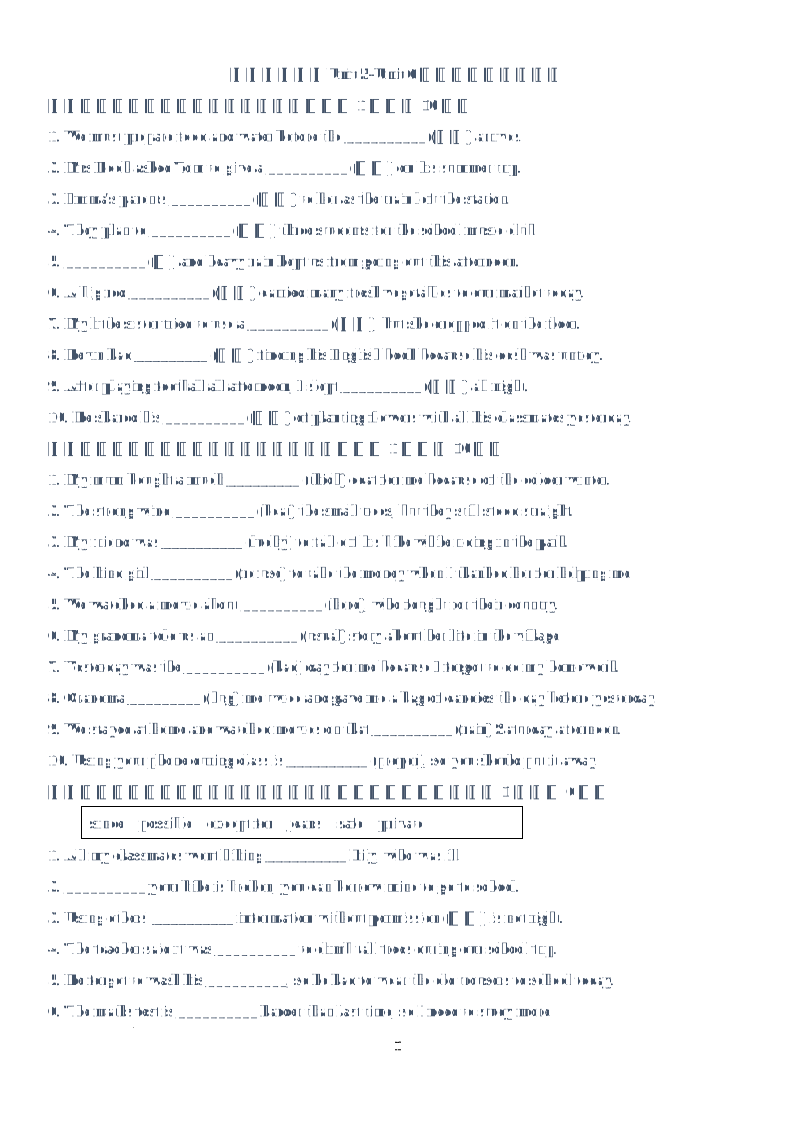
期末总复习:Unit 5-Unit 6重点词汇语境循环练
一、根据句意及汉语注释完成单词(每小题1分,共10分)
1. We must prepare food and water before the __________ (洪水) arrives.
2. Mrs Hook asked Tom to give a __________ (汇报) on his summer trip.
3. Emma's parents __________ (挥手) to her as the train left the station.
4. They plan to __________ (采访) three students for the school music club.
5. __________ (雷) and heavy rain kept us from going out this afternoon.
6. A big red __________ (卡车) carried many fresh vegetables to our market today.
7. My little sister tried to use a __________ (叉子), but she dropped it on the floor.
8. Kevin had _________ (苦恼) finding his English book because his desk was untidy.
9. After playing football all afternoon, I slept __________ (酣畅) all night.
10. He shared his __________ (知识) of planting flowers with all his classmates yesterday.
二、用括号中所给单词的适当形式填空(每小题1分,共10分)
1. My mum bought a much _________ (thick) coat for me because of the colder winter.
2. The strong wind __________ (beat) the small trees, but they still stood straight.
3. My friend was __________ (lucky) to fall off his bike while riding in the park.
4. The kind girl __________ (refuse) to take the money when I thanked her for helping me.
5. We watched a movie about __________ (hero), who fought for their country.
6. My grandma told us an __________ (usual) story about her life in the village.
7. Yesterday was the __________ (bad) day for me because I forgot to do my homework.
8. Grandma _________ (hug) me twice and gave me a bag of candies the day before yesterday.
9. We stayed at home and watched movies on that __________ (rain) Saturday afternoon.
10. Using your phone during class is __________ (proper), so you should put it away.
三、用方框中所给词语的适当形式填空,每词仅用一次(每小题1分,共6分)
since possible except for jeans safe private
1. All my classmates went hiking __________ Lily, who was ill.
2. __________ your bike is broken, you can borrow mine to go to school.
3. Using others' __________ information without permission (许可) is not right.
4. The teacher said it was __________ to climb tall trees during our school trip.
5. He forgot to wash his __________, so he had to wear the old trousers to school today.
6. The maths test is __________ harder than last time, so I need to study more.
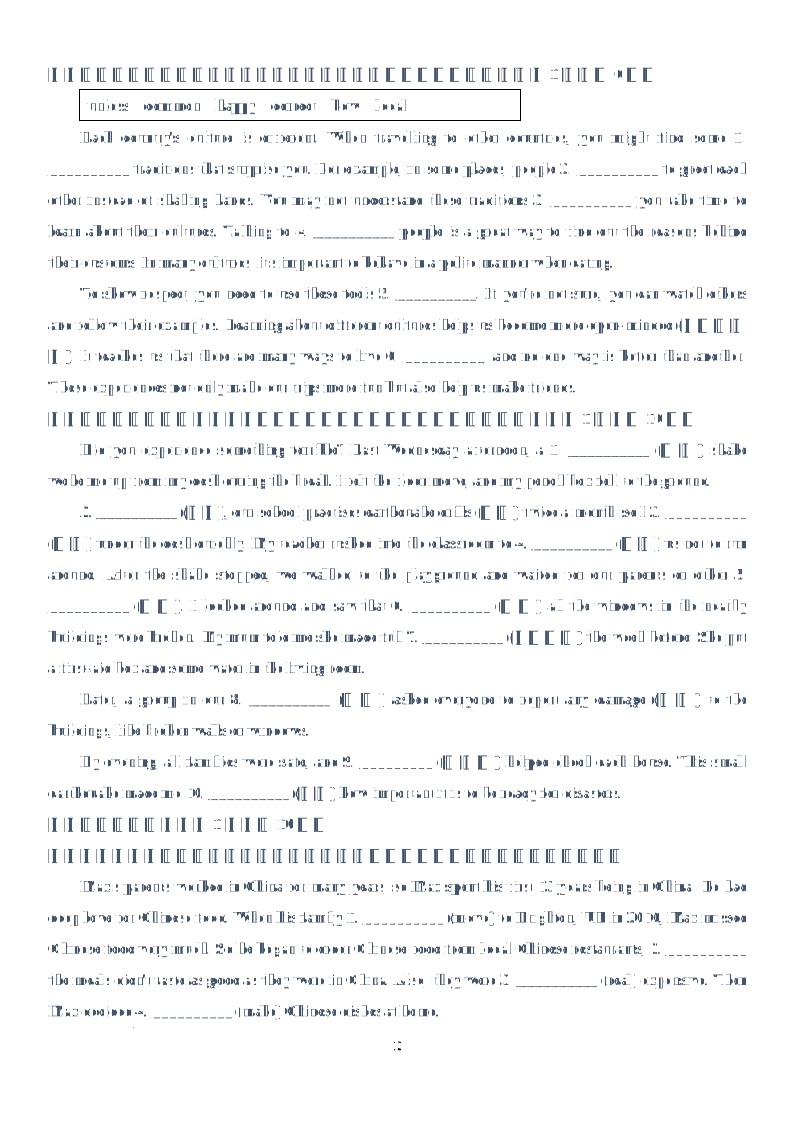
四、将方框中所给单词的适当形式填入短文中,每词仅用一次(每小题1分,共6分)
unless common happy correct bow local
Each country's culture is different. When travelling to other countries, you might find some 1. __________ traditions that surprise you. For example, in some places, people 2. __________ to greet each other instead of shaking hands. You may not understand these traditions 3. __________ you take time to learn about their cultures. Talking to 4. __________ people is a great way to find out the reasons behind their customs. In many cultures, it's important to behave in a polite manner when eating.
To show respect, you need to use these tools 5. __________. If you're not sure, you can watch others and follow their examples. Learning about different cultures helps us become more open-minded (思想开明的). It teaches us that there are many ways to live 6. __________, and no one way is better than another. These experiences not only make our trips more fun but also help us make friends.
五、阅读下面短文,根据括号内所给汉语注释写出单词的正确形式(每小题1分,共10分)
Did you experience something terrible? Last Wednesday afternoon, a 1. __________ (突然) shake woke me up from my desk during the break. I felt the floor move, and my pencil box fell to the ground.
2. __________ (幸亏), our school practises earthquake drills (演习) twice a month, so I 3. __________ (躲藏) under the desk quickly. My teacher rushed into the classroom to 4. __________ (警告) us not to run around. After the shake stopped, we walked to the playground and waited for our parents or other 5. __________ (亲戚). I looked around and saw that 6. __________ (几乎) all the windows in the nearby buildings were broken. My mum told me she made full 7. __________ (准备工作) the week before: She put a first-aid box and some water in the living room.
Later, a group in our 8. __________ (街区) asked everyone to report any damage (损失) to the buildings, like broken walls or windows.
By evening, all families were safe, and 9. _________ (志愿者) helped check each house. This small earthquake made me 10. __________ (理解) how important it is to be ready for disasters.
六、语法填空(每小题1分,共10分)
阅读下面短文,在空白处填入一个适当的词,或填入括号中所给单词的正确形式。
Max's parents worked in China for many years, so Max spent his first 13 years being in China. He had deep love for Chinese food. When his family 1. __________ (move) to Brighton, UK in 2016, Max missed Chinese food very much. So he began to order Chinese food from local Chinese restaurants, 2. __________ the meals didn't taste as good as they were in China. Also, they were 3. __________ (real) expensive. Then Max decided 4. __________ (make) Chinese dishes at home.
Max found that many of his 5. __________ (friend) didn't know much about the real Chinese food. He wanted to do something 6. __________ (help) to change it. Then he made videos of making Chinese food and put 7. __________ (they) online. In his videos, Max shares the ways of cooking the real Chinese food at home. The stories behind the dishes are interesting. The videos are helping him win millions of fans (数百万粉丝) all over 8. __________ world.
"When Western people ask me where I'm from, I find it hard to answer because I grew up in China and now I am 9. __________ (live) in the UK," he says. "I'm just trying to share Chinese culture and British (英国的) culture 10. __________ Chinese and British people, and build a cultural bridge between them."
七、完形填空。主题:人与自然——自然灾害·灾害认知
Water is one of the most useful things on earth. We drink it, wash with it and cook with it. However, it can also cause a 1 ______ .
This was something that happened to me a few months ago. It started as a normal school day. It was summer and the 2 ______ was really hot. We were studying 3 ______ our tests when a storm came. The sky went dark and the rain started to beat 4 ______ against the windows. The storm went on and on. Then, the rain started to come through the 5 ______ and fall on the desks in the classroom. Our books were getting wet. Suddenly there was a loud noise. We didn't 6 ______ what it was at first. Then, water came across the floor of our classroom. The school was flooded. We all felt very 7 ______ and some of the girls started to cry.
Miss Miller was calm. She told us all to hold hands. We slowly walked out of the 8 ______ in a line of people and came to a safe place. We didn't leave there 9 ______ the water was gone. Our school was in a mess. Together we 10 ______ every classroom. Everyone felt tired but lucky!
( )1. A. flood B. drought C. wave D. wildfire
( )2. A. food B. weather C. roof D. neighbourhood
( )3. A. for B. in C. with D . of
( )4. A. probably B. lonely C. heavily D. nearly
( )5. A. roof B. window C. wave D. board
( )6. A. report B. know C. interview D. warn
( )7. A. proud B. excited C. afraid D. sorry
( )8. A. window B. museum C. classroom D. ground
( )9. A. if B. although C. until D. while
( )10. A. lifted up B. looked up C. set up D. cleaned up
八、阅读理解。
Natural disasters are sudden events that cause great damage to people and the environment. Earthquakes, for example, can shake the ground violently and destroy buildings. They happen when the earth's plates move suddenly. Hurricanes are powerful storms that bring strong winds and heavy rain. They form over warm ocean waters and can cause floods when they hit land. Floods happen when too much rain falls and rivers overflow. They can wash away homes and crops. Droughts are long periods without rain. They can dry up rivers and lakes, making it hard for plants and animals to survive. Volcanic eruptions are when a volcano explodes, spewing out lava and ash. This can cover large areas and harm people and wildlife. It's important for us to be prepared for these disasters and to help those who are affected.
( )1. What is an earthquake caused by?
A. Strong winds. B. Heavy rain. C. The movement of the earth's plates. D. Lava from a volcano.
( )2. Which natural disaster is formed over warm ocean waters?
A. Earthquake. B. Hurricane. C. Flood. D. Drought.
( )3. What can cause floods?
A. Too much rain. B. Drought. C. Volcanic eruptions. D. Earthquakes.
( )4. What is a drought?
A. A powerful storm. B. A long period without rain. C. A sudden earthquake. D. A volcanic explosion.
( )5. What can volcanic eruptions spew out?
A. Water. B. Lava and ash. C. Wind. D. Rain.
九、阅读表达(共5小题,计5分)阅读下面短文,并根据短文内容回答问题。
When it comes to preparing for exams, different countries have their own ways. What do you usually do before exams? Are there any special traditions in your country?
In China, we have some interesting traditions for some important exams. We often eat zongzi and the word "zong" sounds like "success" in Chinese, which means getting high scores. Additionally (另外), some students prefer to wear red clothes or socks because the colour red is the symbol of joy and good luck in Chinese culture. In recent years, it has become popular for mothers to wear qipao (a traditional Chinese dress) to wish their children to get victory in the exam, as its name carries the meaning “qi kai de sheng”.
Xie Guoliang, 15, Jiangsu
In South Korea, we give our friends sticky rice (糯米) cakes and candies before exams. This is because the word “stick” sounds like “pass” in Korean. People believe that eating sticky food helps students “stick” to success and pass their tests. I remember when my best friend had a big test, I bought his favourite sticky rice cakes to cheer him up. This tradition makes us feel warm and confident during stressful exam time.
Chulkyu Lee, 18, South Korea
In the US, we have different habits before exams. Some wear “lucky” clothes, like special socks or underwear (内衣) for good luck. Others do simple things, like doing exercise or eating snacks that they think are lucky. I always use the same special pencil for exams. I feel it helps me do better. These small traditions help me feel calm and focused.
Ivana Nicole Moreno, 17, US
1. What do students in China often eat before exams?
______________________________________________________________________
2. What colours of clothes do Chinese students prefer to wear before exams?
______________________________________________________________________
3. Why do students in South Korea eat sticky food?
______________________________________________________________________
4. List two of the traditions before exams in the US.
______________________________________________________________________
5. What do you usually do for important exams? Why? Write 30 words or more.
______________________________________________________________________
第二节 写作(共1小题,计20分)
假设你是李华,这学期你们班来了几位外国同学,他们对中国的餐桌礼仪及饮食文化很感兴趣。请你根据以下表格提示内容,用英语写一篇短文,向他们介绍相关情况。
Information about Chinese food culture
How many:
3 meals a day
How to eat:
with chopsticks
For breakfast:
baozi, noodles...
For lunch and dinner:
rice, meat, vegetables...
Good table manners:
let the old people eat first;
...
要求:1. 参考提示内容,可适当发挥; 2. 语句通顺,意思连贯,书写工整; 3. 文中不得出现任何真实信息(姓名、校名和地名等); 4. 词数不少于80。(开头已给出,但不计入总词数)
Meals in China are different from the ones in the West. ______________________________________
_______________________________________________________________________________________
参考答案:
一、根据句意及汉语注释完成单词
1. flood 2. report 3. waved 4. interview 5. Thunder 6. truck 7. fork 8. trouble 9. soundly 10. knowledge
二、用括号中所给单词的适当形式填空
1. thicker 2. beat 3. unlucky 4. refused 5. heroes 6. unusual 7. worst 8. hugged 9. rainy 10. improper
三、用方框中所给词语的适当形式填空
1. except for 2. Since 3. private 4. unsafe 5. jeans 6. possibly
四、短文填空
1. common 2. bow 3. unless 4. local 5. correctly 6. happily
五、根据汉语注释写出单词的正确形式
1. sudden 2. Luckily 3. hid 4. warn 5. relatives 6. almost 7. preparations 8. neighbourhood 9. volunteers 10. understand
六、语法填空
1. moved 2. but 3. really 4. to make 5. friends 6. helpful 7. them 8. the 9. living 10. between
七、完形填空1.A 2.B 3.A 4.C 5.A 6.B 7.C 8.C 9.C 10.D
八、阅读理解1.C 2.B 3.A 4.B 5.B
九、阅读表达
1. They often eat zongzi.
2. Red.
3. Because they believe eating sticky food helps them stick to success and pass tests.
4. Wear lucky clothes; use the same special pencil / do exercise / eat lucky snacks(任选两项)
5. 示例:I usually review lessons carefully and listen to light music before exams. It helps me get ready for tests and keep relaxed.
书面表达 参考范文
Meals in China are different from the ones in the West. We usually have three meals a day. We mainly use chopsticks to eat food.
For breakfast, we often have baozi, noodles or porridge. Rice, meat and different kinds of vegetables are common for lunch and dinner. As for table manners, we have some rules. We should let the elderly start eating first. It's also polite not to speak loudly while eating.
Chinese food culture is great. I hope you can enjoy it and have a good time in China.
1
学科网(北京)股份有限公司
$
资源预览图
1
2

3
相关资源
由于学科网是一个信息分享及获取的平台,不确保部分用户上传资料的 来源及知识产权归属。如您发现相关资料侵犯您的合法权益,请联系学科网,我们核实后将及时进行处理。