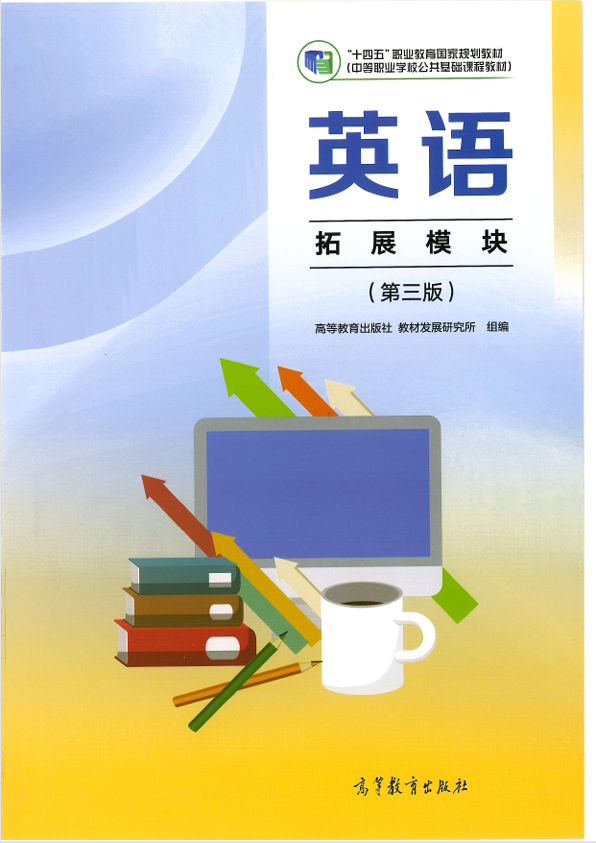
1.3 Taking a Training Course(Culture Understanding)-《英语 拓展模块》(高教版第三版)《一课一练》(原卷版+解析版)
2026-06-19
|
2份
|
10页
|
48人阅读
|
0人下载
摘要:
**基本信息**
聚焦中职英语课前预习与课堂检测分层设计,通过词汇-短语-句型-语篇递进路径巩固语言能力,适配江苏对口升学考法,培养学习能力与思维品质。
**分层设计**
|层次|知识覆盖|设计特色|
|----|----------|----------|
|课前预习|核心词汇(8词)、重点短语(10组)、基础句型(3句翻译)|以填空形式检测单一知识点,夯实语言基础,助力课前自主学习|
|课堂检测|语篇理解(5题阅读)、语境应用(10空完形)|通过AI教育主题阅读考查信息获取与推理,完形填空结合培训课程情境深化综合语言运用,衔接日常教学与升学考法|
内容正文:
编写说明:基于中职学生英语基础薄弱、学习内驱力不足的学情特点,为提升学习效率,落实课前、课中、课后教学闭环,本专辑依据最新《中等职业学校英语课程标准》,打造江苏专用《英语 拓展模块》(高教版第三版)《一课一练》,专辑共 32 练,完全对接江苏对口升学考法。
本卷为《英语 拓展模块》(高教版第三版)Unit 1 Taking a Training Course(Culture Understanding)的课前预习与课堂检测。
Unit 1 Taking a Training Course
Culture Understanding
【课前预习】
一、核心词汇检测
1. n. 讲座;演讲______
2. n. 雇员______
3. adj. 初级的______
4. adj. 中级的______
5. n. 手势;姿势______
6. v. 报名;注册______
7. n. 录取;准入______
8. n. 实习期______
二、课文重点短语
1. 终身学习______
2. 职业规划______
3. 保持竞争力______
4. 满足需求______
5. 报名参与______
6. 实践经验______
7. 技能提升______
8. 入学考试______
9. 在线学习______
10. 职业发展______
三、课文难句翻译
1.Anyone who stops learning is old.
2.Students are going to work on language skills related to academic research.
3.I hope to get a job after graduation and work at a company in the field of artificial intelligence.
【课堂检测】
一、阅读理解
Artificial intelligence (AI) is rapidly changing the way people learn and work, and vocational education is no exception. Many vocational schools have started to use AI-powered platforms to improve teaching quality and help students learn more effectively.
One of the most useful applications of AI in education is personalized learning. Traditional classrooms often follow the same teaching plan for all students, which means some students may find the lessons too easy while others may struggle to keep up. AI platforms can analyze each student's learning habits, speed, and areas of weakness. Based on this information, they create individual learning plans that match each student's needs. This way, students can study at their own pace and focus on what they really need to improve.
Another benefit of AI in education is instant feedback. In a traditional classroom, students usually have to wait for the teacher to check their homework. With AI tools, students can get immediate responses to their answers. For example, when a student practices English speaking with an AI partner, the system can correct pronunciation mistakes right away and suggest better ways to express ideas.
AI also helps bridge the gap between urban and rural education. Students in remote areas can now access high-quality learning materials and personalized guidance through AI platforms, just like students in big cities. This makes education more equal and gives everyone a better chance to succeed.
As AI technology continues to develop, it will play an even more important role in shaping the future of vocational education.
1. How does traditional classroom teaching differ from AI-powered personalized learning?
A. Traditional classrooms give individual plans to each student.
B. AI platforms make all students study at the same speed.
C. Traditional classrooms follow the same teaching plan for all students.
D. AI platforms do not analyze students' learning habits.
2. What advantage does AI instant feedback provide for students?
A. Students can avoid doing homework altogether.
B. Students can correct mistakes immediately and improve faster.
C. Teachers no longer need to prepare lessons.
D. Students can replace human teachers completely.
3. How does AI help bridge the education gap between urban and rural areas?
A. By providing high-quality materials and personalized guidance to remote students.
B. By closing all schools in big cities.
C. By forcing rural students to move to cities.
D. By reducing the number of teachers in rural areas.
4. What does the underlined word 'struggle' in paragraph 2 probably mean?
A. Fight with other students.
B. Succeed easily in exams.
C. Enjoy learning very much.
D. Have difficulty keeping up with lessons.
5. What is the main idea of the passage?
A. AI will completely replace human teachers in the future.
B. AI is making vocational education more effective, personalized, and equal.
C. Traditional education is better than AI-powered education.
D. Only urban students can benefit from AI technology.
二、完形填空
Last month, I decided to take a training course on digital marketing. As a vocational school student, I knew that learning new skills would help me find a better job after ______1______.
On the first day of the course, I arrived at the training center early. The classroom was full of people from different ______2______. Some were young students like me, while others were working adults who wanted to improve their skills. Our teacher, Mr. Zhang, was very experienced and ______3______. He started the class with an interesting example about online shopping.
During the course, we learned how to create advertisements, manage social media accounts, and analyze customer ______4______. At first, I found it difficult to understand some of the technical ______5______. But Mr. Zhang always explained things clearly and gave us many practical examples. He also encouraged us to work in groups and ______6______ ideas with each other.
One of the most useful things I learned was how to write product descriptions that attract customers. We practiced writing short texts and received ______7______ from the teacher immediately. I was surprised to find that my writing improved ______8______ after just a few days.
At the end of the course, we took a final test. I was happy to learn that I had passed with a high score. The training center gave me a ______9______ which I believe will help me in my future job ______10______. This experience showed me that lifelong learning is the key to success.
1. A. graduation B. conference C. internship D. admission
2. A. countries B. ages C. backgrounds D. schools
3. A. boring B. strict C. patient D. careless
4. A. habits B. prices C. names D. colors
5. A. terms B. games C. sports D. clothes
6. A. fight B. compete C. share D. argue
7. A. money B. feedback C. books D. food
8. A. slowly B. hardly C. rarely D. quickly
9. A. certificate B. ticket C. passport D. license
10. A. training B. search C. interview D. exam
原创精品资源学科网独家享有版权,侵权必究!
学科网(北京)股份有限公司
$
编写说明:基于中职学生英语基础薄弱、学习内驱力不足的学情特点,为提升学习效率,落实课前、课中、课后教学闭环,本专辑依据最新《中等职业学校英语课程标准》,打造江苏专用《英语 拓展模块》(高教版第三版)《一课一练》,专辑共 32 练,完全对接江苏对口升学考法。
本卷为《英语 拓展模块》(高教版第三版)Unit 1 Taking a Training Course(Culture Understanding)的课前预习与课堂检测。
Unit 1 Taking a Training Course
Culture Understanding
【课前预习】
一、核心词汇检测
1. n. 讲座;演讲______
2. n. 雇员______
3. adj. 初级的______
4. adj. 中级的______
5. n. 手势;姿势______
6. v. 报名;注册______
7. n. 录取;准入______
8. n. 实习期______
【答案】1. lecture 2. employee 3. elementary 4. intermediate 5. gesture 6. sign up 7. admission 8. internship
二、课文重点短语
1. 终身学习______
2. 职业规划______
3. 保持竞争力______
4. 满足需求______
5. 报名参与______
6. 实践经验______
7. 技能提升______
8. 入学考试______
9. 在线学习______
10. 职业发展______
【答案】1. lifelong learning 2. career planning 3. stay competitive 4. meet the needs 5. sign up for 6. practical experience 7. skill improvement 8. entrance examination 9. online learning 10. career development
三、课文难句翻译
1.Anyone who stops learning is old.
停学则老之将至。
2.Students are going to work on language skills related to academic research.
学生们将学习与学术研究相关的语言技能。
3.I hope to get a job after graduation and work at a company in the field of artificial intelligence.
我希望毕业后能找到一份工作,在人工智能领域的公司上班。
【课堂检测】
一、阅读理解
Artificial intelligence (AI) is rapidly changing the way people learn and work, and vocational education is no exception. Many vocational schools have started to use AI-powered platforms to improve teaching quality and help students learn more effectively.
One of the most useful applications of AI in education is personalized learning. Traditional classrooms often follow the same teaching plan for all students, which means some students may find the lessons too easy while others may struggle to keep up. AI platforms can analyze each student's learning habits, speed, and areas of weakness. Based on this information, they create individual learning plans that match each student's needs. This way, students can study at their own pace and focus on what they really need to improve.
Another benefit of AI in education is instant feedback. In a traditional classroom, students usually have to wait for the teacher to check their homework. With AI tools, students can get immediate responses to their answers. For example, when a student practices English speaking with an AI partner, the system can correct pronunciation mistakes right away and suggest better ways to express ideas.
AI also helps bridge the gap between urban and rural education. Students in remote areas can now access high-quality learning materials and personalized guidance through AI platforms, just like students in big cities. This makes education more equal and gives everyone a better chance to succeed.
As AI technology continues to develop, it will play an even more important role in shaping the future of vocational education.
1. How does traditional classroom teaching differ from AI-powered personalized learning?
A. Traditional classrooms give individual plans to each student.
B. AI platforms make all students study at the same speed.
C. Traditional classrooms follow the same teaching plan for all students.
D. AI platforms do not analyze students' learning habits.
【答案】C
【解析】考点:细节理解题。定位原文第 2 段第 2 句。原文明确指出传统课堂对所有学生采用相同教学计划。故选 C。
2. What advantage does AI instant feedback provide for students?
A. Students can avoid doing homework altogether.
B. Students can correct mistakes immediately and improve faster.
C. Teachers no longer need to prepare lessons.
D. Students can replace human teachers completely.
【答案】B
【解析】考点:细节理解题。定位原文第 3 段第 3-4 句。本题易错点:选项 A、D 过于极端。原文指出 AI 工具能立即纠正错误并给出建议。故选 B。
3. How does AI help bridge the education gap between urban and rural areas?
A. By providing high-quality materials and personalized guidance to remote students.
B. By closing all schools in big cities.
C. By forcing rural students to move to cities.
D. By reducing the number of teachers in rural areas.
【答案】A
【解析】考点:细节理解题。定位原文第 4 段第 2 句。本题易错点:选项 B、C、D 均为无中生有。故选 A。
4. What does the underlined word 'struggle' in paragraph 2 probably mean?
A. Fight with other students.
B. Succeed easily in exams.
C. Enjoy learning very much.
D. Have difficulty keeping up with lessons.
【答案】D
【解析】考点:词义猜测题。定位原文第 2 段第 2 句。本题易错点:与"too easy"形成对比的应是"难以跟上"。故选 D。
5. What is the main idea of the passage?
A. AI will completely replace human teachers in the future.
B. AI is making vocational education more effective, personalized, and equal.
C. Traditional education is better than AI-powered education.
D. Only urban students can benefit from AI technology.
【答案】B
【解析】考点:主旨大意题。本题易错点:选项 A、C 绝对化表述与原文相反。全文涵盖个性化学习、即时反馈和教育公平三个方面。故选 B。
二、完形填空
Last month, I decided to take a training course on digital marketing. As a vocational school student, I knew that learning new skills would help me find a better job after ______1______.
On the first day of the course, I arrived at the training center early. The classroom was full of people from different ______2______. Some were young students like me, while others were working adults who wanted to improve their skills. Our teacher, Mr. Zhang, was very experienced and ______3______. He started the class with an interesting example about online shopping.
During the course, we learned how to create advertisements, manage social media accounts, and analyze customer ______4______. At first, I found it difficult to understand some of the technical ______5______. But Mr. Zhang always explained things clearly and gave us many practical examples. He also encouraged us to work in groups and ______6______ ideas with each other.
One of the most useful things I learned was how to write product descriptions that attract customers. We practiced writing short texts and received ______7______ from the teacher immediately. I was surprised to find that my writing improved ______8______ after just a few days.
At the end of the course, we took a final test. I was happy to learn that I had passed with a high score. The training center gave me a ______9______ which I believe will help me in my future job ______10______. This experience showed me that lifelong learning is the key to success.
1. A. graduation B. conference C. internship D. admission
【答案】A
【解析】1.考点:名词辨析。graduation 意为"毕业"。句意为"毕业后找到更好的工作"。故选 A。
2. A. countries B. ages C. backgrounds D. schools
【答案】C
【解析】2.考点:名词辨析。backgrounds 意为"背景"。结合后文可知强调背景差异。故选 C。
3. A. boring B. strict C. patient D. careless
【答案】C
【解析】3.考点:形容词辨析。patient 意为"耐心的",与下文"always explained things clearly"呼应。故选 C。
4. A. habits B. prices C. names D. colors
【答案】A
【解析】4.考点:名词辨析。habits 意为"习惯",customer habits 客户消费习惯。故选 A。
5. A. terms B. games C. sports D. clothes
【答案】A
【解析】5.考点:名词辨析。terms 意为"术语",technical terms 技术术语。故选 A。
6. A. fight B. compete C. share D. argue
【答案】C
【解析】6.考点:动词辨析。share 意为"分享",share ideas 互相分享想法。故选 C。
7. A. money B. feedback C. books D. food
【答案】B
【解析】7.考点:名词辨析。feedback 意为"反馈",receive feedback 获得反馈。故选 B。
8. A. slowly B. hardly C. rarely D. quickly
【答案】D
【解析】8.考点:副词辨析。quickly 意为"快速地",improved quickly 快速进步。故选 D。
9. A. certificate B. ticket C. passport D. license
【答案】A
【解析】9.考点:名词辨析。certificate 意为"证书",培训后获得证书。故选 A。
10. A. training B. search C. interview D. exam
【答案】B
【解析】10.考点:名词辨析。search 意为"寻找",job search 求职。故选 B。
原创精品资源学科网独家享有版权,侵权必究!
学科网(北京)股份有限公司
$
资源预览图

1

2
由于学科网是一个信息分享及获取的平台,不确保部分用户上传资料的 来源及知识产权归属。如您发现相关资料侵犯您的合法权益,请联系学科网,我们核实后将及时进行处理。