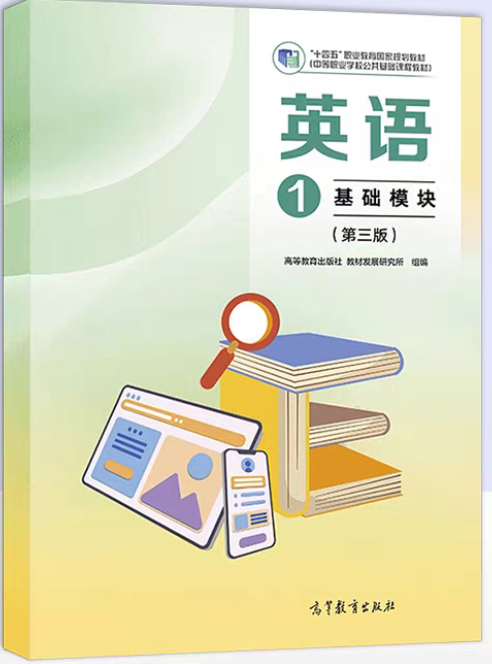
Unit 2 Transportation (A卷· 基础巩固)-《英语 基础模块1》(高教版第三版)《单元过关卷》(原卷版+解析版)
2026-06-18
|
2份
|
38页
|
62人阅读
|
0人下载
内容正文:
编写说明:本套《同步单元AB卷》紧扣《英语 基础模块1》(高教版第三版)教材,以教材单元为基准精准覆盖核心考点,每套试题完全贴合真题题型和最新考纲。A卷为基础卷,偏简单,侧重考点;B卷为能力提升卷,在基础上加深难度,但不会超纲,助力师生高效把握教学重点,与高考真题接轨。全书设计4份综合测试卷,模拟实战情境,聚焦解题能力突破,全面提升应试能力与知识应用水平。
本卷是Unit 2 Transportation 的单元测试卷,考查语音、词汇、语法、情景交际、阅读能力和书面表达能力。
《英语 基础模块1》(高教版第三版)《单元过关卷》
Unit 2 Transportation
A卷·基础巩固
考试时间:120分钟 满分:120分
班级 姓名 学号 成绩
第一部分 英语知识运用(共四节,满分 55 分)
第一节 语音辨音(共 5 小题;每小题 1 分,满分 5 分)
从下列每组单词中,选出划线部分发音与所给单词相同的一项。
1. station A. map B. gate C. cat D. bag
【答案】B
【解析】station划线a发音/eɪ/;gate /ɡeɪt/ 同为/eɪ/,ACD均为/æ/。
2. direction A. big B. pig C. line D. sit
【答案】C
【解析】direction划线i发音/aɪ/;line /laɪn/ 同为/aɪ/,ABD为/ɪ/。
3. exit A. she B. me C. pen D. these
【答案】C
【解析】exit划线e发音/e/;pen /pen/ 同为/e/,ABD为/iː/。
4. rush A. use B. cute C. student D. duck
【答案】D
【解析】rush划线u发音/ʌ/;duck /dʌk/ 同为/ʌ/,ABC为/juː/。
5. change A. hat B. page C. bag D. map
【答案】B
【解析】change划线a发音/eɪ/;page /peɪdʒ/ 同为/eɪ/,ACD为/æ/。
第二节 单项选择(共 25 小题;每小题 1 分,满分 25 分)
从 A、B、C、D 四个选项中选出可以填入空白处的最佳选项。
6. ______ along this road, and you will see the library.
A. Go B. Goes C. Going D. To go
【答案】A
【解析】肯定祈使句以动词原形开头,故选Go。
7. ______ worry about missing the bus, we have enough time.
A. Not B. Don’t C. No D. Doesn’t
【答案】B
【解析】否定祈使句结构:Don’t + 动词原形。
8. Please take Exit B, ______?
A. do you B. will you C. are you D. don’t you
【答案】B
【解析】祈使句反义疑问句统一用will you(带please也不变)。
9. Let’s go to the Summer Palace by subway, ______?
A. will you B. shall we C. won’t you D. do we
【答案】B
【解析】Let’s开头祈使句,反义疑问固定用shall we。
10. —Could you tell me the way to Terminal 1?
—______. Turn left at the crossroads.
A. Don’t worry B. Sure C. Don’t go D. No way
【答案】B
【解析】委婉请求Could you...,肯定礼貌答语用sure。
11. ______ late for the airport shuttle bus, it leaves at 6 a.m.
A. Not be B. Don’t be C. Aren’t D. Doesn’t be
【答案】B
【解析】否定祈使句Don’t be + 形容词(late)。
12. ______ your shared bike near the bus stop, don’t block the road.
A. Park B. Parks C. Parking D. To park
【答案】A
【解析】肯定祈使句动词原形park(停放)放句首。
13. —You’d better take the subway in rush hour.
—______, thank you for your advice.
A. Don’t mention B. Good idea C. Never mind D. That’s bad
【答案】B
【解析】对方给出出行建议,礼貌回应“好主意”。
14. Don’t get off the train before it stops, ______?
A. do you B. will you C. does it D. won’t it
【答案】B
【解析】否定祈使句反义疑问仍用will you。
15. ______ ask the staff for flight information if you can’t find the terminal.
A. You’d better B. You better C. You’d better not D. You not better
【答案】A
【解析】you’d better + 动词原形:你最好做某事,课文核心句型。
16. Internet makes it ______ for us to book flight tickets online.
A. convenient B. terminal C. direction D. express
【答案】A
【解析】convenient方便的,课文原句结构make it convenient for sb. to do。
17. I have poor ______, I always get lost in new stations.
A. rush hour B. sense of direction C. shuttle bus D. flight information
【答案】B
【解析】sense of direction方向感;poor sense of direction 方向感很差,完形原文短语。
18. The new airport ______ will provide more seats for passengers.
A. exit B. terminal C. bus stop D. subway line
【答案】B
【解析】terminal航站楼,机场配套建筑。
19. Take Airport Express Line and ______ Subway Line 2 at Zhuquemen Station.
A. worry about B. get to C. change for D. get off
【答案】C
【解析】change for换乘,课文指路长句原搭配。
20. It takes at least thirty minutes and ______ about 25 yuan to take a taxi here.
A. costs B. takes C. spends D. pays
【答案】A
【解析】it指代打车这件事,花费金钱用cost。
21. The bus number is right, but you are going in the wrong ______.
A. terminal B. direction C. exit D. station
【答案】B
【解析】in the wrong direction 坐反方向,课文核心句子。
22. You can ______ at Zhonghua Square Station and walk out from Exit B.
A. change for B. get off C. worry about D. take a taxi
【答案】B
【解析】get off下车,指路标准短语。
23. We will take the ______ to the Summer Palace to avoid traffic jams.
A. shared bike B. shuttle bus C. subway D. taxi
【答案】C
【解析】短文对话原文:高峰期推荐地铁出行。
24. EMS is short for Express Mail ______.
A. Station B. Service C. Direction D. Terminal
【答案】B
【解析】EMS = Express Mail Service邮政特快专递,课文词汇。
25. There is a ______ outside Gate 1 of the airport for all taxis.
A. taxi station B. bus stop C. subway station D. exit
【答案】A
【解析】taxi station出租车站,酒店FAQ原文信息。
26. We need to ______ Subway Line 2 at Zhuquemen Station.
A. get off B. change for C. worry about D. get to
【答案】B
【解析】change for 固定搭配“换乘(地铁/线路)”;get off下车,worry about担心,get to到达,均不符合“换乘2号线”句意。
27. Don’t ______ the driver while the bus is moving.
A. rush hour B. shuttle bus C. get off D. summer palace
【答案】C
【解析】get off下车;句意:车辆行驶时不要下车,其余均为名词短语,无法直接放to后。
28. It’s ______, there are too many cars on the road.
A. rush hour B. bus stop C. flight information D. shared bike
【答案】A
【解析】rush hour高峰期;路上车多说明是交通高峰期。
29. You can take the ______ from Terminal 1 to the hotel for free.
A. express B. shuttle bus C. taxi D. cashless payment
【答案】B
【解析】shuttle bus班车,机场航站楼配套免费班车为课文原短语。
30. Before taking the plane, you can check your ______ on the screen.
A. sense of direction B. flight information C. exit D. subway line
【答案】B
【解析】flight information航班信息,乘机前查询航班信息为固定搭配。
第三节 完形填空(共 10 小题;每小题 1.5 分,满分 15 分)
阅读下面短文,从每题所给的 A、B、C、D 四个选项中选出最佳选项。
Many people have a bad sense of direction, and I am one of them. I have visited the airport many times, but I may still lose my way every time I come alone. When I first came here, I was too shy to ask workers for help, so I walked around the terminals in circles.
Now I dare to ask for directions, but I still try to be polite. If you visit this airport for the first time, please follow these rules. 31 ______ your phone charged, you can use map apps to check flight information. 32 ______ run in the terminal, it’s dangerous for passengers. When you want to take the Airport Express, 33 ______ to Terminal 1 Station first. You need to change 34 ______ Subway Line 2 at Zhuquemen Station. Don’t worry 35 ______ missing your stop, the radio on the subway will tell you every station.
If you want to take a shuttle bus, find the bus stop near Exit A. It’s rush hour after 5 p.m., so you’d better 36 ______ the subway instead of a taxi. A taxi will cost more and waste your time. Once a visitor stopped me and asked how to get to Zhonghua Hotel. I told him the way clearly. “37 ______ straight for 100 meters and turn right,” I said. He thanked me a lot.
Never give people wrong directions if you are not sure. If you don’t know the way, just say “Sorry, I am new here.” 38 ______ kind to every traveler, everyone may need help when they lose their way. Taking green traffic like shared bikes, subway and shuttle buses is 39 ______ and cheap. It’s our duty to choose low-carbon transportation every time we 40 ______ out.
31. A. Keep B. Keeps C. Keeping D. To keep
32. A. Not B. Don’t C. No D. Doesn’t
33. A. go B. goes C. going D. to go
34. A. to B. for C. with D. at
35. A. to B. for C. about D. at
36. A. take B. to take C. taking D. took
37. A. Walk B. Walks C. Walking D. To walk
38. A. Be B. Is C. Are D. Being
39. A. convenient B. expensive C. hard D. slow
40. A. get B. go C. take D. change
【答案】31.A 32.B 33.A 34.B 35.C 36.A 37.A 38.A 39.A 40.B
【导语】本文讲述作者方向感差,结合机场出行场景,给出问路、乘坐机场交通的建议,大量使用祈使句、交通固定短语,贴合Unit2单元主题。
【解析】
31. 肯定祈使句,动词原形Keep放句首:保持手机有电。
32. 否定祈使句Don’t + 动词原形:不要在航站楼奔跑。
33. 祈使句,动词原形go:先前往1号航站楼站。
34. 固定搭配change for 换乘线路。
35. worry about 固定短语:担心。
36. you’d better + 动词原形take:你最好乘坐地铁。
37. 指路祈使句,动词原形Walk直行。
38. Be kind 祈使句固定表达:友善待人。
39. 绿色出行地铁班车方便便捷convenient,课文核心形容词。
40. go out 固定短语:出行,外出。
第四节 语法填空(共 5 小题;每小题 2 分,满分 10 分)
阅读下面短文,用括号内单词的适当形式填空。
When you arrive at the airport and need to find Zhonghua Hotel, here are some tips for you.
41. ______ (take) Airport Express Line from Terminal 1 Station. It runs from 5 a.m. to 11 p.m.
42. You ______ (change) for Subway Line 2 at Zhuquemen Station later. Don’t forget43. ______ (get) off at Zhonghua Square Station.
44. ______ (not take) a taxi in rush hour, it 45. ______ (cost) you much more money.
Take Exit B and walk straight for two minutes, you will see the hotel on your right.
【答案】41.Take 42.will change 43.to get 44.Don’t take 45.costs
【导语】本篇为酒店机场出行指路说明,全部依托文档内中华酒店FAQ原文素材,考查祈使句肯定/否定变形、固定搭配forget to do、一般现在时。
【解析】
41. 句首肯定祈使句,动词原形Take。
42. 后文later表示之后将要换乘,一般将来时will change。
43. forget to do sth. 固定搭配:忘记要做某事。
44. 否定祈使句Don’t + 动词原形take。
45. it指代打车这件事,一般现在时,谓语动词三单costs。
第二部分 阅读(共两节,满分 50 分)
第一节 阅读理解(共 15 小题;每小题 2.5 分,满分 37.5 分)
阅读下列短文,从每题所给的 A、B、C、D 四个选项中选出最佳选项。
A
So far, four great modern inventions from China have caught the whole world’s eyes, and they change people’s daily transportation and shopping a lot. They are high-speed trains, bike sharing, cashless payment and online shopping. All of them make our life more convenient than before.
China’s Fuxing high-speed train started its first trip from Beijing to Shanghai in September, 2017. It can run at 350 kilometers per hour, which makes it the fastest high-speed train all over the world. Now high-speed trains become China’s famous name card overseas. Every year, thousands of foreign visitors come to China to experience fast rail travel. Compared with old slow trains, high-speed trains take less time and offer clean and comfortable seats. Many travelers choose high-speed trains instead of planes for short trips between nearby cities.
Bike sharing is another great innovation for short-distance transportation. There are nearly ten million shared bikes in different Chinese cities. The biggest difference from traditional public bikes is that you don’t need to return them to fixed bus stops. You can park shared bikes near the road, subway stations or residential areas. If you only need to travel one or two kilometers, riding a shared bike is the best green choice. It costs very little money and causes no air pollution.
Cashless payment totally changes our shopping habits. You don’t need to carry paper money or bank cards anymore. No matter you buy a bottle of water on the street or shop in big malls, you just scan the QR code with your mobile phone. Even street food sellers have WeChat Pay and Alipay codes. When you take a taxi, bus or subway, you can also pay through your phone quickly.
Online shopping brings great convenience as well. We can buy clothes, food, flight tickets and train tickets on shopping platforms at home without going out. We can also choose express delivery to send goods to our friends. These four inventions are closely connected with transportation and daily life, and they show fast development of our country.
46. Which one is not China’s four great modern inventions?
A. High-speed trains B. Subway C. Shared bikes D. Online shopping
47. Why do high-speed trains become China’s overseas name card?
A. They are the fastest trains in the world B. They are cheap for all people
C. They can carry more passengers D. They were made in foreign countries
48. What does the word “scan” in Paragraph 3 mean?
A. 浏览 B. 扫描 C. 细读 D. 检查
49. Which statement is TRUE according to the passage?
A. We must park shared bikes at fixed stations
B. Cashless payment can only be used in big shopping malls
C. Fuxing train runs at 350 km/h
D. Foreigners cannot take China’s high-speed trains
【答案】46.B 47.A 48.B 49.C
导读:本篇改编自课本原文《中国四大现代发明》,属于交通科普说明文,完全贴合Unit 2 Transportation单元主题。文章围绕高铁、共享单车、无现金支付、网购四大创新展开,大量出现单元核心交通词汇:high-speed trains、shared bikes、subway、taxi、bus、shuttle bus、airport、flight tickets等。题型覆盖细节查找、词义猜测、正误判断,是中职对口升学典型阅读题型,重点考查学生定位原文句子、对比选项与原文信息、区分对错细节的能力,同时渗透绿色出行、现代交通发展的知识点。
46. 答案:B
解析:定位原文第一段第二句“They are high-speed trains, bike sharing, cashless payment and online shopping.”,明确列出四大现代发明:高铁、共享单车、移动支付、网购。Subway(地铁)不在列表内。A高铁、C共享单车、D网购均属于四大发明,直接排除,故选B。
47. 答案:A
解析:定位第二段第二句“It can run at 350 kilometers per hour, which makes it the fastest high-speed train all over the world.”,句中which引导定语从句,点明复兴号时速350公里,是全球最快高铁,因此成为中国海外名片。
B“所有人都能低价乘坐”原文无价格相关描述;C“载客量更大”文中未提及;D“国外制造”与原文“China’s Fuxing high-speed train”国产高铁完全相反,全部排除。
48. 答案:B
解析:定位第四段第三句“you just scan the QR code with your mobile phone”,QR code意为二维码,生活中搭配scan表示“扫描二维码”,scan此处词义为“扫描”。A浏览、C细读多用于阅读文字;D检查侧重查看物品故障,均不搭配二维码,故选B。
49. 答案:C
解析:细节正误判断,逐一对标原文:
A:第三段“The biggest difference from traditional public bikes is that you don’t need to return them to fixed bus stops.”说明共享单车不用停在固定站点,A错误;
B:第四段“Even street food sellers have WeChat Pay and Alipay codes.”路边小摊也支持移动支付,并非只限于大型商场,B错误;
C:第二段“It can run at 350 kilometers per hour”复兴号时速350千米,和原文完全一致,表述正确;
D:第二段“thousands of foreign visitors come to China to experience fast rail travel”大量外国游客会乘坐高铁,D错误。
综上选C。
B
Dick worked in England, and one day his boss told him he needed to fly to New York for a one-week business trip. Before he took the plane, his wife asked him to send a telegram with his hotel address after he arrived. She wanted to know where he lived so she could contact him if there was something urgent at home. Dick agreed and took the flight to New York early in the morning.
After landing, he took a taxi to the city center and found a clean and comfortable hotel. He put his suitcase and coat in the room, then walked to the post office nearby to send a telegram to his wife. He clearly wrote down the hotel’s name and exact address on the paper and sent it off. He thought everything was ready, and he could enjoy his free evening before starting work the next day.
In the evening, Dick had no work plans. He decided to watch a movie in a cinema not far from his hotel. He bought a ticket and spent two hours watching a funny film. When he walked out of the cinema at nine o’clock, he felt hungry and wanted to go back to his hotel to have dinner. He stood on the street and tried to remember the hotel’s name, but he could not get any clear idea. He forgot both the hotel name and the full address.
He stopped a taxi driver and asked if the driver knew which hotel he stayed in, but the driver had no way to help him. Dick felt worried and didn’t know what to do. He could not call his wife because he didn’t bring her phone number with him. Finally, he walked to another post office and sent a second telegram to his wife. In this message, he wrote one simple sentence: “Please send my hotel address to this post office right away.”
He waited at the post office for nearly one hour until his wife’s telegram arrived. After getting the address, he took a taxi back to the hotel at last. He learned a lesson that day: always keep your hotel address in your phone when you travel to a new city.
50. Why did Dick fly to New York?
A. For holiday travel B. For business work C. To visit friends D. To live there
51. What did Dick’s wife ask him to do?
A. Buy new clothes in New York B. Send her the hotel address by telegram
C. Bring local food back home D. Watch a movie with her
52. Where did Dick live in New York?
A. In a downtown hotel B. In his friend’s house
C. In a countryside restaurant D. In a post office
53. Who sent Dick the hotel address at last?
A. Taxi driver B. Hotel manager C. His wife D. Post office worker
【答案】50.B 51.B 52.A 53.C
导语
本篇改编课本原版小故事Dick纽约出差迷路,全文372词,记叙文,旅行交通主题。文章包含出行类高频词汇:fly、taxi、hotel、post office、telegram、cinema、address等,侧重考察人物行为、目的、地点、人物关系等细节信息,题型全部为细节理解题,难度基础,训练学生快速抓取人物动作与事件逻辑的能力,和Passage A科普文题型形成区分。
50. 答案:B
解析:定位第一段第一句“his boss told him he needed to fly to New York for a one-week business trip”,business trip固定短语,意为“商务出差”,对应B选项for business work(办公出差)。
A度假、C拜访朋友、D定居当地,原文均无对应信息,排除。
51. 答案:B
解析:定位第一段第二句“his wife asked him to send a telegram with his hotel address after he arrived”,妻子要求他抵达后发电报告知酒店地址,完全匹配B选项“Send her the hotel address by telegram”。
A买新衣、C带特产、D一起看电影,文中完全没有相关情节,排除。
52. 答案:A
解析:定位第二段第一句“he took a taxi to the city center and found a clean and comfortable hotel”,the city center = downtown市中心,他住在市中心酒店,对应A。
B朋友家、C乡村餐馆、D邮局均不是他的住宿地点,排除。
53. 答案:C
解析:定位第四段“he sent a second telegram to his wife... ‘Please send my hotel address to this post office right away.’”以及最后一段“He waited at the post office for nearly one hour until his wife’s telegram arrived.”,Dick向妻子索要地址,最终是妻子把酒店地址发给他,选C。
A出租车司机、B酒店经理、D邮局工作人员均未提供地址,排除。
C
Nowadays, more people choose green transportation when they go out, because it can cut down air pollution and save money. There are many kinds of green transportations in our daily life, such as shared bikes, e-bikes, buses, subways and shuttle buses. Taxis and private cars produce more waste gas, so we’d better avoid taking them during rush hour.
If your trip is only 1 kilometer or shorter, riding a shared bike is the best choice. It only takes 5 minutes and costs almost nothing. You can ride freely and park it beside bus stops or subway exits. Don’t ride too fast, and follow traffic rules all the time. If the distance is 1 to 3 kilometers, you can take the city bus or ride an e-bike. Buses have fixed routes and low prices, and you can see bus stop signs everywhere on the street.
For trips over 10 kilometers, subway or airport shuttle bus is more convenient. Subways never meet traffic jams in rush hour, and they run fast underground. It usually takes 10 to 30 minutes to arrive at your destination. When you go to the airport or train station, shuttle buses are free or cheap for visitors. They take you straight from stations to hotels without many stops.
Many visitors make mistakes when choosing transport. Some people take taxis in rush hour and waste lots of time on the road. Some people drive private cars for short trips and create more pollution. The text tips tell us to think about three things before going out: travel distance, time cost and money. If you follow these rules, you can pick the most suitable green way.
When you ask local people for directions, don’t forget to ask them which green transportation you can take. Most people will tell you the cheapest and fastest ways politely. Remember these simple rules, and your travel will become easy and environmentally friendly.
54. What is green transportation?
A. Private cars and taxis B. Shared bikes, subway and buses
C. Only e-bikes D. High-speed trains and planes
55. Which transport fits a 1km short trip?
A. Shared bike B. Subway C. Taxi D. Bus
56. Why is subway better in rush hour?
A. It’s more expensive B. It has no traffic jams
C. It can carry more people D. It stops at every crossing
57. What should we consider before choosing transportation?
A. Color of vehicles B. Distance, time and money
C. Number of passengers D. Weather only
【答案】54.B 55.A 56.B 57.B
导语
本篇原创说明文356词,单元核心主题「绿色出行」,全文大量单元重点词汇:shared bike、e-bike、bus、subway、shuttle bus、taxi、private car、rush hour、bus stop、subway exit、traffic jams。文章按照出行距离划分不同交通工具,给出出行选择建议,题型包含细节理解、主旨提问,侧重训练学生梳理文章分类信息、提取出行建议的能力,贴合课本绿色出行知识点。
54. 答案:B
解析:定位第一段第二句“There are many kinds of green transportations in our daily life, such as shared bikes, e-bikes, buses, subways and shuttle buses.”,绿色交通工具包含共享单车、电动车、公交、地铁、班车。
A私家车、出租车会产生废气,不属于绿色出行;C仅电动车过于片面;D高铁、飞机文中未归为绿色出行,全部排除,选B。
55. 答案:A
解析:定位第二段第一句“If your trip is only 1 kilometer or shorter, riding a shared bike is the best choice.”,1公里以内短途,最佳选择是共享单车,对应A。
B地铁适合10公里以上长途;C出租车不推荐短途;公交车适合1-3公里路程,均不符合1km短途条件。
56. 答案:B
解析:定位第三段第二句“Subways never meet traffic jams in rush hour, and they run fast underground.”,核心原因是地铁高峰期不会堵车。
A价格更贵与原文地铁性价比高相反;C载客更多、D每个路口都停车原文无对应内容,排除。
57. 答案:B
解析:定位第四段“The text tips tell us to think about three things before going out: travel distance, time cost and money.”,出行前需要考虑三个要素:路程距离、耗时、花费,对应B选项Distance, time and money。A车辆颜色、C乘客数量、D仅看天气,原文均未提及。
D
When you travel to new cities or foreign countries, you will probably lose your way and need to ask strangers for directions. Many people feel nervous to speak to strangers, but if you use polite English sentences, people will be glad to help you. This passage will teach you standard expressions for asking and giving directions, which we learn in Unit 2 Transportation.
First, you need to start your question with polite words like “Excuse me”. This is the most common opening sentence. You can say “Excuse me, could you tell me how to get to Terminal 1?” or “Excuse me, where is the nearest bus stop?” Never start your question directly without polite greetings, it will sound rude.
Second, learn useful transportation phrases. If you need to take underground transport, you can ask “Which subway line should I take? Where do I change for Line 2?” When you want to get off, you may ask “Which exit should I take to Zhonghua Hotel?” For buses and shuttle buses, you can ask “Is this bus going to the Summer Palace?” If you find you take the wrong direction, don’t worry, you can get off at the next stop and transfer.
Third, listen carefully when people give you directions. They often use祈使句 (imperative sentences) to tell you the way: “Go along this road”, “Turn right at the first turning”, “Walk straight and you can see the library on your left”. All these sentences use verbs at the beginning without subjects. If you cannot understand clearly, you can say “Pardon me, could you say it again?”
Sometimes your phone runs out of power and map apps cannot work. At this time, asking people for help becomes necessary. If you visit a country and cannot speak their language well, write the place name on paper and show it to others. After they tell you the way, remember to say “Thank you very much” to show your politeness.
Master these simple rules, and you will never be afraid of asking directions when you travel. All these sentences and phrases are important knowledge in our English textbook Unit 2.
58. What is the first polite word to use when asking directions?
A. Sorry B. Excuse me C. Hello D. Don’t worry
59. What can you do if you take the bus in wrong direction?
A. Stay on the bus all the way B. Get off at next stop and transfer
C. Take a plane instead D. Run on the road
60. What sentence structure do people usually use to show directions?
A. Imperative sentences (祈使句) B. Past tense sentences
C. Future tense sentences D. Passive sentences
【答案】58.B59.B 60.A
导语
原创说明文,紧扣单元核心考点:礼貌问路交际用语、指路祈使句、交通换乘词汇。全文反复出现课本重点句型Excuse me、change for、get off、take exit、wrong direction、imperative sentences(祈使句),是单元语法与交际融合阅读。题型包含细节查找、词义/句式判断、主旨题,重点考察祈使句识别、问路固定表达,贴合本套试卷语法核心考点。
61. 答案:B
解析:定位第二段第一句“First, you need to start your question with polite words like ‘Excuse me’. This is the most common opening sentence.”,问路标准礼貌开场用语是Excuse me。
A Sorry多用于道歉;C Hello普通打招呼,问路不适用;D Don’t worry用于安抚他人,排除。
62. 答案:B
解析:定位第三段末尾“If you find you take the wrong direction, don’t worry, you can get off at the next stop and transfer.”,如果坐反方向,可以在下一站下车换乘,transfer同义替换get off and transfer。
A全程坐到底、C换乘飞机、D在路上奔跑均是错误做法,原文不推荐。
63. 答案:A
解析:定位第四段“They often use imperative sentences (祈使句) to tell you the way: ‘Go along this road’, ‘Turn right at the first turning’... All these sentences use verbs at the beginning without subjects.”,指路句子全部使用祈使句,动词原形开头无主语。B一般过去时、C一般将来时、D被动语态均不是指路常用句式。
第二节 补全对话(共 5 小题;每小题 2.5 分,满分 12.5 分)
根据对话内容,从对话后的选项中选出能填入空白处的最佳选项。
Visitor: Excuse me, could you help me?
Li Zixuan: Sure. 61______
Visitor: I want to go to the Summer Palace. Is this bus correct?
Li Zixuan: The line is right, but you’re in wrong direction. 62______
Visitor: Oh no! Can I take a taxi instead?
Li Zixuan: 63______ It’s rush hour now, taxis move very slowly. You’d better take subway.
Visitor: How long will the subway take?
Li Zixuan: About thirty minutes, it’s fast and convenient. 64______
Visitor: Thank you so much for your advice.
Li Zixuan: 65______ Wish you a nice trip!
A. Don’t worry about it.
B. My pleasure.
C. What can I do for you?
D. You’d better not take a taxi now.
E. Get off at the next stop and take the nearby subway.
【答案】61.C 62.E 63.D 64.A 65.B
【导语】改编课本听力对话,问路交通推荐场景,考查情景交际。
【解析】
61. 对方寻求帮助,礼貌询问我能为你做什么。
62. 告知坐反方向,给出解决方案:下一站下车换乘地铁。
63. 不建议打车,高峰期出租车拥堵。
64. 安抚对方不要担心。
65. 回应感谢:不客气。
第三部分 书面表达(满分 15 分)
66.题目:My Favorite Green Transportation
要求:
1. 词数80词左右;
2. 内容包含:你最喜欢的绿色出行方式、两点优势、出行建议;
3. 用到祈使句、单元交通词汇。
参考范文:
My Favorite Green Transportation
Among all green transportations, I like shared bikes best.
First, it is very convenient for short trips. I can ride it to the bus stop or library in five minutes. Second, it produces no pollution and costs little money.
When you ride shared bikes, follow these rules. Don’t ride too fast on busy roads. Park bikes at the right place near bus stops. You’d better not ride in rush hour if you are not good at riding.
Green transport makes our city better. We should choose it as often as we can.
原创精品资源学科网独家享有版权,侵权必究!
学科网(北京)股份有限公司
学科网(北京)股份有限公司
$
编写说明:本套《同步单元AB卷》紧扣《英语 基础模块1》(高教版第三版)教材,以教材单元为基准精准覆盖核心考点,每套试题完全贴合真题题型和最新考纲。A卷为基础卷,偏简单,侧重考点;B卷为能力提升卷,在基础上加深难度,但不会超纲,助力师生高效把握教学重点,与高考真题接轨。全书设计4份综合测试卷,模拟实战情境,聚焦解题能力突破,全面提升应试能力与知识应用水平。
本卷是Unit 2 Transportation 的单元测试卷,考查语音、词汇、语法、情景交际、阅读能力和书面表达能力。
《英语 基础模块1》(高教版第三版)《单元过关卷》
Unit 2 Transportation
A卷·基础巩固
考试时间:120分钟 满分:120分
班级 姓名 学号 成绩
第一部分 英语知识运用(共四节,满分 55 分)
第一节 语音辨音(共 5 小题;每小题 1 分,满分 5 分)
从下列每组单词中,选出划线部分发音与所给单词相同的一项。
1. station A. map B. gate C. cat D. bag
【答案】B
【解析】station划线a发音/eɪ/;gate /ɡeɪt/ 同为/eɪ/,ACD均为/æ/。
2. direction A. big B. pig C. line D. sit
【答案】C
【解析】direction划线i发音/aɪ/;line /laɪn/ 同为/aɪ/,ABD为/ɪ/。
3. exit A. she B. me C. pen D. these
【答案】C
【解析】exit划线e发音/e/;pen /pen/ 同为/e/,ABD为/iː/。
4. rush A. use B. cute C. student D. duck
【答案】D
【解析】rush划线u发音/ʌ/;duck /dʌk/ 同为/ʌ/,ABC为/juː/。
5. change A. hat B. page C. bag D. map
【答案】B
【解析】change划线a发音/eɪ/;page /peɪdʒ/ 同为/eɪ/,ACD为/æ/。
第二节 单项选择(共 25 小题;每小题 1 分,满分 25 分)
从 A、B、C、D 四个选项中选出可以填入空白处的最佳选项。
6. ______ along this road, and you will see the library.
A. Go B. Goes C. Going D. To go
【答案】A
【解析】肯定祈使句以动词原形开头,故选Go。
7. ______ worry about missing the bus, we have enough time.
A. Not B. Don’t C. No D. Doesn’t
【答案】B
【解析】否定祈使句结构:Don’t + 动词原形。
8. Please take Exit B, ______?
A. do you B. will you C. are you D. don’t you
【答案】B
【解析】祈使句反义疑问句统一用will you(带please也不变)。
9. Let’s go to the Summer Palace by subway, ______?
A. will you B. shall we C. won’t you D. do we
【答案】B
【解析】Let’s开头祈使句,反义疑问固定用shall we。
10. —Could you tell me the way to Terminal 1?
—______. Turn left at the crossroads.
A. Don’t worry B. Sure C. Don’t go D. No way
【答案】B
【解析】委婉请求Could you...,肯定礼貌答语用sure。
11. ______ late for the airport shuttle bus, it leaves at 6 a.m.
A. Not be B. Don’t be C. Aren’t D. Doesn’t be
【答案】B
【解析】否定祈使句Don’t be + 形容词(late)。
12. ______ your shared bike near the bus stop, don’t block the road.
A. Park B. Parks C. Parking D. To park
【答案】A
【解析】肯定祈使句动词原形park(停放)放句首。
13. —You’d better take the subway in rush hour.
—______, thank you for your advice.
A. Don’t mention B. Good idea C. Never mind D. That’s bad
【答案】B
【解析】对方给出出行建议,礼貌回应“好主意”。
14. Don’t get off the train before it stops, ______?
A. do you B. will you C. does it D. won’t it
【答案】B
【解析】否定祈使句反义疑问仍用will you。
15. ______ ask the staff for flight information if you can’t find the terminal.
A. You’d better B. You better C. You’d better not D. You not better
【答案】A
【解析】you’d better + 动词原形:你最好做某事,课文核心句型。
16. Internet makes it ______ for us to book flight tickets online.
A. convenient B. terminal C. direction D. express
【答案】A
【解析】convenient方便的,课文原句结构make it convenient for sb. to do。
17. I have poor ______, I always get lost in new stations.
A. rush hour B. sense of direction C. shuttle bus D. flight information
【答案】B
【解析】sense of direction方向感;poor sense of direction 方向感很差,完形原文短语。
18. The new airport ______ will provide more seats for passengers.
A. exit B. terminal C. bus stop D. subway line
【答案】B
【解析】terminal航站楼,机场配套建筑。
19. Take Airport Express Line and ______ Subway Line 2 at Zhuquemen Station.
A. worry about B. get to C. change for D. get off
【答案】C
【解析】change for换乘,课文指路长句原搭配。
20. It takes at least thirty minutes and ______ about 25 yuan to take a taxi here.
A. costs B. takes C. spends D. pays
【答案】A
【解析】it指代打车这件事,花费金钱用cost。
21. The bus number is right, but you are going in the wrong ______.
A. terminal B. direction C. exit D. station
【答案】B
【解析】in the wrong direction 坐反方向,课文核心句子。
22. You can ______ at Zhonghua Square Station and walk out from Exit B.
A. change for B. get off C. worry about D. take a taxi
【答案】B
【解析】get off下车,指路标准短语。
23. We will take the ______ to the Summer Palace to avoid traffic jams.
A. shared bike B. shuttle bus C. subway D. taxi
【答案】C
【解析】短文对话原文:高峰期推荐地铁出行。
24. EMS is short for Express Mail ______.
A. Station B. Service C. Direction D. Terminal
【答案】B
【解析】EMS = Express Mail Service邮政特快专递,课文词汇。
25. There is a ______ outside Gate 1 of the airport for all taxis.
A. taxi station B. bus stop C. subway station D. exit
【答案】A
【解析】taxi station出租车站,酒店FAQ原文信息。
26. We need to ______ Subway Line 2 at Zhuquemen Station.
A. get off B. change for C. worry about D. get to
【答案】B
【解析】change for 固定搭配“换乘(地铁/线路)”;get off下车,worry about担心,get to到达,均不符合“换乘2号线”句意。
27. Don’t ______ the driver while the bus is moving.
A. rush hour B. shuttle bus C. get off D. summer palace
【答案】C
【解析】get off下车;句意:车辆行驶时不要下车,其余均为名词短语,无法直接放to后。
28. It’s ______, there are too many cars on the road.
A. rush hour B. bus stop C. flight information D. shared bike
【答案】A
【解析】rush hour高峰期;路上车多说明是交通高峰期。
29. You can take the ______ from Terminal 1 to the hotel for free.
A. express B. shuttle bus C. taxi D. cashless payment
【答案】B
【解析】shuttle bus班车,机场航站楼配套免费班车为课文原短语。
30. Before taking the plane, you can check your ______ on the screen.
A. sense of direction B. flight information C. exit D. subway line
【答案】B
【解析】flight information航班信息,乘机前查询航班信息为固定搭配。
第三节 完形填空(共 10 小题;每小题 1.5 分,满分 15 分)
阅读下面短文,从每题所给的 A、B、C、D 四个选项中选出最佳选项。
Many people have a bad sense of direction, and I am one of them. I have visited the airport many times, but I may still lose my way every time I come alone. When I first came here, I was too shy to ask workers for help, so I walked around the terminals in circles.
Now I dare to ask for directions, but I still try to be polite. If you visit this airport for the first time, please follow these rules. 31 ______ your phone charged, you can use map apps to check flight information. 32 ______ run in the terminal, it’s dangerous for passengers. When you want to take the Airport Express, 33 ______ to Terminal 1 Station first. You need to change 34 ______ Subway Line 2 at Zhuquemen Station. Don’t worry 35 ______ missing your stop, the radio on the subway will tell you every station.
If you want to take a shuttle bus, find the bus stop near Exit A. It’s rush hour after 5 p.m., so you’d better 36 ______ the subway instead of a taxi. A taxi will cost more and waste your time. Once a visitor stopped me and asked how to get to Zhonghua Hotel. I told him the way clearly. “37 ______ straight for 100 meters and turn right,” I said. He thanked me a lot.
Never give people wrong directions if you are not sure. If you don’t know the way, just say “Sorry, I am new here.” 38 ______ kind to every traveler, everyone may need help when they lose their way. Taking green traffic like shared bikes, subway and shuttle buses is 39 ______ and cheap. It’s our duty to choose low-carbon transportation every time we 40 ______ out.
31. A. Keep B. Keeps C. Keeping D. To keep
32. A. Not B. Don’t C. No D. Doesn’t
33. A. go B. goes C. going D. to go
34. A. to B. for C. with D. at
35. A. to B. for C. about D. at
36. A. take B. to take C. taking D. took
37. A. Walk B. Walks C. Walking D. To walk
38. A. Be B. Is C. Are D. Being
39. A. convenient B. expensive C. hard D. slow
40. A. get B. go C. take D. change
【答案】31.A 32.B 33.A 34.B 35.C 36.A 37.A 38.A 39.A 40.B
【导语】本文讲述作者方向感差,结合机场出行场景,给出问路、乘坐机场交通的建议,大量使用祈使句、交通固定短语,贴合Unit2单元主题。
【解析】
31. 肯定祈使句,动词原形Keep放句首:保持手机有电。
32. 否定祈使句Don’t + 动词原形:不要在航站楼奔跑。
33. 祈使句,动词原形go:先前往1号航站楼站。
34. 固定搭配change for 换乘线路。
35. worry about 固定短语:担心。
36. you’d better + 动词原形take:你最好乘坐地铁。
37. 指路祈使句,动词原形Walk直行。
38. Be kind 祈使句固定表达:友善待人。
39. 绿色出行地铁班车方便便捷convenient,课文核心形容词。
40. go out 固定短语:出行,外出。
第四节 语法填空(共 5 小题;每小题 2 分,满分 10 分)
阅读下面短文,用括号内单词的适当形式填空。
When you arrive at the airport and need to find Zhonghua Hotel, here are some tips for you.
41. ______ (take) Airport Express Line from Terminal 1 Station. It runs from 5 a.m. to 11 p.m.
42. You ______ (change) for Subway Line 2 at Zhuquemen Station later. Don’t forget43. ______ (get) off at Zhonghua Square Station.
44. ______ (not take) a taxi in rush hour, it 45. ______ (cost) you much more money.
Take Exit B and walk straight for two minutes, you will see the hotel on your right.
【答案】41.Take 42.will change 43.to get 44.Don’t take 45.costs
【导语】本篇为酒店机场出行指路说明,全部依托文档内中华酒店FAQ原文素材,考查祈使句肯定/否定变形、固定搭配forget to do、一般现在时。
【解析】
41. 句首肯定祈使句,动词原形Take。
42. 后文later表示之后将要换乘,一般将来时will change。
43. forget to do sth. 固定搭配:忘记要做某事。
44. 否定祈使句Don’t + 动词原形take。
45. it指代打车这件事,一般现在时,谓语动词三单costs。
第二部分 阅读(共两节,满分 50 分)
第一节 阅读理解(共 15 小题;每小题 2.5 分,满分 37.5 分)
阅读下列短文,从每题所给的 A、B、C、D 四个选项中选出最佳选项。
A
So far, four great modern inventions from China have caught the whole world’s eyes, and they change people’s daily transportation and shopping a lot. They are high-speed trains, bike sharing, cashless payment and online shopping. All of them make our life more convenient than before.
China’s Fuxing high-speed train started its first trip from Beijing to Shanghai in September, 2017. It can run at 350 kilometers per hour, which makes it the fastest high-speed train all over the world. Now high-speed trains become China’s famous name card overseas. Every year, thousands of foreign visitors come to China to experience fast rail travel. Compared with old slow trains, high-speed trains take less time and offer clean and comfortable seats. Many travelers choose high-speed trains instead of planes for short trips between nearby cities.
Bike sharing is another great innovation for short-distance transportation. There are nearly ten million shared bikes in different Chinese cities. The biggest difference from traditional public bikes is that you don’t need to return them to fixed bus stops. You can park shared bikes near the road, subway stations or residential areas. If you only need to travel one or two kilometers, riding a shared bike is the best green choice. It costs very little money and causes no air pollution.
Cashless payment totally changes our shopping habits. You don’t need to carry paper money or bank cards anymore. No matter you buy a bottle of water on the street or shop in big malls, you just scan the QR code with your mobile phone. Even street food sellers have WeChat Pay and Alipay codes. When you take a taxi, bus or subway, you can also pay through your phone quickly.
Online shopping brings great convenience as well. We can buy clothes, food, flight tickets and train tickets on shopping platforms at home without going out. We can also choose express delivery to send goods to our friends. These four inventions are closely connected with transportation and daily life, and they show fast development of our country.
46. Which one is not China’s four great modern inventions?
A. High-speed trains B. Subway C. Shared bikes D. Online shopping
47. Why do high-speed trains become China’s overseas name card?
A. They are the fastest trains in the world B. They are cheap for all people
C. They can carry more passengers D. They were made in foreign countries
48. What does the word “scan” in Paragraph 3 mean?
A. 浏览 B. 扫描 C. 细读 D. 检查
49. Which statement is TRUE according to the passage?
A. We must park shared bikes at fixed stations
B. Cashless payment can only be used in big shopping malls
C. Fuxing train runs at 350 km/h
D. Foreigners cannot take China’s high-speed trains
【答案】46.B 47.A 48.B 49.C
导读:本篇改编自课本原文《中国四大现代发明》,属于交通科普说明文,完全贴合Unit 2 Transportation单元主题。文章围绕高铁、共享单车、无现金支付、网购四大创新展开,大量出现单元核心交通词汇:high-speed trains、shared bikes、subway、taxi、bus、shuttle bus、airport、flight tickets等。题型覆盖细节查找、词义猜测、正误判断,是中职对口升学典型阅读题型,重点考查学生定位原文句子、对比选项与原文信息、区分对错细节的能力,同时渗透绿色出行、现代交通发展的知识点。
46. 答案:B
解析:定位原文第一段第二句“They are high-speed trains, bike sharing, cashless payment and online shopping.”,明确列出四大现代发明:高铁、共享单车、移动支付、网购。Subway(地铁)不在列表内。A高铁、C共享单车、D网购均属于四大发明,直接排除,故选B。
47. 答案:A
解析:定位第二段第二句“It can run at 350 kilometers per hour, which makes it the fastest high-speed train all over the world.”,句中which引导定语从句,点明复兴号时速350公里,是全球最快高铁,因此成为中国海外名片。
B“所有人都能低价乘坐”原文无价格相关描述;C“载客量更大”文中未提及;D“国外制造”与原文“China’s Fuxing high-speed train”国产高铁完全相反,全部排除。
48. 答案:B
解析:定位第四段第三句“you just scan the QR code with your mobile phone”,QR code意为二维码,生活中搭配scan表示“扫描二维码”,scan此处词义为“扫描”。A浏览、C细读多用于阅读文字;D检查侧重查看物品故障,均不搭配二维码,故选B。
49. 答案:C
解析:细节正误判断,逐一对标原文:
A:第三段“The biggest difference from traditional public bikes is that you don’t need to return them to fixed bus stops.”说明共享单车不用停在固定站点,A错误;
B:第四段“Even street food sellers have WeChat Pay and Alipay codes.”路边小摊也支持移动支付,并非只限于大型商场,B错误;
C:第二段“It can run at 350 kilometers per hour”复兴号时速350千米,和原文完全一致,表述正确;
D:第二段“thousands of foreign visitors come to China to experience fast rail travel”大量外国游客会乘坐高铁,D错误。
综上选C。
B
Dick worked in England, and one day his boss told him he needed to fly to New York for a one-week business trip. Before he took the plane, his wife asked him to send a telegram with his hotel address after he arrived. She wanted to know where he lived so she could contact him if there was something urgent at home. Dick agreed and took the flight to New York early in the morning.
After landing, he took a taxi to the city center and found a clean and comfortable hotel. He put his suitcase and coat in the room, then walked to the post office nearby to send a telegram to his wife. He clearly wrote down the hotel’s name and exact address on the paper and sent it off. He thought everything was ready, and he could enjoy his free evening before starting work the next day.
In the evening, Dick had no work plans. He decided to watch a movie in a cinema not far from his hotel. He bought a ticket and spent two hours watching a funny film. When he walked out of the cinema at nine o’clock, he felt hungry and wanted to go back to his hotel to have dinner. He stood on the street and tried to remember the hotel’s name, but he could not get any clear idea. He forgot both the hotel name and the full address.
He stopped a taxi driver and asked if the driver knew which hotel he stayed in, but the driver had no way to help him. Dick felt worried and didn’t know what to do. He could not call his wife because he didn’t bring her phone number with him. Finally, he walked to another post office and sent a second telegram to his wife. In this message, he wrote one simple sentence: “Please send my hotel address to this post office right away.”
He waited at the post office for nearly one hour until his wife’s telegram arrived. After getting the address, he took a taxi back to the hotel at last. He learned a lesson that day: always keep your hotel address in your phone when you travel to a new city.
50. Why did Dick fly to New York?
A. For holiday travel B. For business work C. To visit friends D. To live there
51. What did Dick’s wife ask him to do?
A. Buy new clothes in New York B. Send her the hotel address by telegram
C. Bring local food back home D. Watch a movie with her
52. Where did Dick live in New York?
A. In a downtown hotel B. In his friend’s house
C. In a countryside restaurant D. In a post office
53. Who sent Dick the hotel address at last?
A. Taxi driver B. Hotel manager C. His wife D. Post office worker
【答案】50.B 51.B 52.A 53.C
导语
本篇改编课本原版小故事Dick纽约出差迷路,全文372词,记叙文,旅行交通主题。文章包含出行类高频词汇:fly、taxi、hotel、post office、telegram、cinema、address等,侧重考察人物行为、目的、地点、人物关系等细节信息,题型全部为细节理解题,难度基础,训练学生快速抓取人物动作与事件逻辑的能力,和Passage A科普文题型形成区分。
50. 答案:B
解析:定位第一段第一句“his boss told him he needed to fly to New York for a one-week business trip”,business trip固定短语,意为“商务出差”,对应B选项for business work(办公出差)。
A度假、C拜访朋友、D定居当地,原文均无对应信息,排除。
51. 答案:B
解析:定位第一段第二句“his wife asked him to send a telegram with his hotel address after he arrived”,妻子要求他抵达后发电报告知酒店地址,完全匹配B选项“Send her the hotel address by telegram”。
A买新衣、C带特产、D一起看电影,文中完全没有相关情节,排除。
52. 答案:A
解析:定位第二段第一句“he took a taxi to the city center and found a clean and comfortable hotel”,the city center = downtown市中心,他住在市中心酒店,对应A。
B朋友家、C乡村餐馆、D邮局均不是他的住宿地点,排除。
53. 答案:C
解析:定位第四段“he sent a second telegram to his wife... ‘Please send my hotel address to this post office right away.’”以及最后一段“He waited at the post office for nearly one hour until his wife’s telegram arrived.”,Dick向妻子索要地址,最终是妻子把酒店地址发给他,选C。
A出租车司机、B酒店经理、D邮局工作人员均未提供地址,排除。
C
Nowadays, more people choose green transportation when they go out, because it can cut down air pollution and save money. There are many kinds of green transportations in our daily life, such as shared bikes, e-bikes, buses, subways and shuttle buses. Taxis and private cars produce more waste gas, so we’d better avoid taking them during rush hour.
If your trip is only 1 kilometer or shorter, riding a shared bike is the best choice. It only takes 5 minutes and costs almost nothing. You can ride freely and park it beside bus stops or subway exits. Don’t ride too fast, and follow traffic rules all the time. If the distance is 1 to 3 kilometers, you can take the city bus or ride an e-bike. Buses have fixed routes and low prices, and you can see bus stop signs everywhere on the street.
For trips over 10 kilometers, subway or airport shuttle bus is more convenient. Subways never meet traffic jams in rush hour, and they run fast underground. It usually takes 10 to 30 minutes to arrive at your destination. When you go to the airport or train station, shuttle buses are free or cheap for visitors. They take you straight from stations to hotels without many stops.
Many visitors make mistakes when choosing transport. Some people take taxis in rush hour and waste lots of time on the road. Some people drive private cars for short trips and create more pollution. The text tips tell us to think about three things before going out: travel distance, time cost and money. If you follow these rules, you can pick the most suitable green way.
When you ask local people for directions, don’t forget to ask them which green transportation you can take. Most people will tell you the cheapest and fastest ways politely. Remember these simple rules, and your travel will become easy and environmentally friendly.
54. What is green transportation?
A. Private cars and taxis B. Shared bikes, subway and buses
C. Only e-bikes D. High-speed trains and planes
55. Which transport fits a 1km short trip?
A. Shared bike B. Subway C. Taxi D. Bus
56. Why is subway better in rush hour?
A. It’s more expensive B. It has no traffic jams
C. It can carry more people D. It stops at every crossing
57. What should we consider before choosing transportation?
A. Color of vehicles B. Distance, time and money
C. Number of passengers D. Weather only
【答案】54.B 55.A 56.B 57.B
导语
本篇原创说明文356词,单元核心主题「绿色出行」,全文大量单元重点词汇:shared bike、e-bike、bus、subway、shuttle bus、taxi、private car、rush hour、bus stop、subway exit、traffic jams。文章按照出行距离划分不同交通工具,给出出行选择建议,题型包含细节理解、主旨提问,侧重训练学生梳理文章分类信息、提取出行建议的能力,贴合课本绿色出行知识点。
54. 答案:B
解析:定位第一段第二句“There are many kinds of green transportations in our daily life, such as shared bikes, e-bikes, buses, subways and shuttle buses.”,绿色交通工具包含共享单车、电动车、公交、地铁、班车。
A私家车、出租车会产生废气,不属于绿色出行;C仅电动车过于片面;D高铁、飞机文中未归为绿色出行,全部排除,选B。
55. 答案:A
解析:定位第二段第一句“If your trip is only 1 kilometer or shorter, riding a shared bike is the best choice.”,1公里以内短途,最佳选择是共享单车,对应A。
B地铁适合10公里以上长途;C出租车不推荐短途;公交车适合1-3公里路程,均不符合1km短途条件。
56. 答案:B
解析:定位第三段第二句“Subways never meet traffic jams in rush hour, and they run fast underground.”,核心原因是地铁高峰期不会堵车。
A价格更贵与原文地铁性价比高相反;C载客更多、D每个路口都停车原文无对应内容,排除。
57. 答案:B
解析:定位第四段“The text tips tell us to think about three things before going out: travel distance, time cost and money.”,出行前需要考虑三个要素:路程距离、耗时、花费,对应B选项Distance, time and money。A车辆颜色、C乘客数量、D仅看天气,原文均未提及。
D
When you travel to new cities or foreign countries, you will probably lose your way and need to ask strangers for directions. Many people feel nervous to speak to strangers, but if you use polite English sentences, people will be glad to help you. This passage will teach you standard expressions for asking and giving directions, which we learn in Unit 2 Transportation.
First, you need to start your question with polite words like “Excuse me”. This is the most common opening sentence. You can say “Excuse me, could you tell me how to get to Terminal 1?” or “Excuse me, where is the nearest bus stop?” Never start your question directly without polite greetings, it will sound rude.
Second, learn useful transportation phrases. If you need to take underground transport, you can ask “Which subway line should I take? Where do I change for Line 2?” When you want to get off, you may ask “Which exit should I take to Zhonghua Hotel?” For buses and shuttle buses, you can ask “Is this bus going to the Summer Palace?” If you find you take the wrong direction, don’t worry, you can get off at the next stop and transfer.
Third, listen carefully when people give you directions. They often use祈使句 (imperative sentences) to tell you the way: “Go along this road”, “Turn right at the first turning”, “Walk straight and you can see the library on your left”. All these sentences use verbs at the beginning without subjects. If you cannot understand clearly, you can say “Pardon me, could you say it again?”
Sometimes your phone runs out of power and map apps cannot work. At this time, asking people for help becomes necessary. If you visit a country and cannot speak their language well, write the place name on paper and show it to others. After they tell you the way, remember to say “Thank you very much” to show your politeness.
Master these simple rules, and you will never be afraid of asking directions when you travel. All these sentences and phrases are important knowledge in our English textbook Unit 2.
58. What is the first polite word to use when asking directions?
A. Sorry B. Excuse me C. Hello D. Don’t worry
59. What can you do if you take the bus in wrong direction?
A. Stay on the bus all the way B. Get off at next stop and transfer
C. Take a plane instead D. Run on the road
60. What sentence structure do people usually use to show directions?
A. Imperative sentences (祈使句) B. Past tense sentences
C. Future tense sentences D. Passive sentences
【答案】58.B59.B 60.A
导语
原创说明文,紧扣单元核心考点:礼貌问路交际用语、指路祈使句、交通换乘词汇。全文反复出现课本重点句型Excuse me、change for、get off、take exit、wrong direction、imperative sentences(祈使句),是单元语法与交际融合阅读。题型包含细节查找、词义/句式判断、主旨题,重点考察祈使句识别、问路固定表达,贴合本套试卷语法核心考点。
61. 答案:B
解析:定位第二段第一句“First, you need to start your question with polite words like ‘Excuse me’. This is the most common opening sentence.”,问路标准礼貌开场用语是Excuse me。
A Sorry多用于道歉;C Hello普通打招呼,问路不适用;D Don’t worry用于安抚他人,排除。
62. 答案:B
解析:定位第三段末尾“If you find you take the wrong direction, don’t worry, you can get off at the next stop and transfer.”,如果坐反方向,可以在下一站下车换乘,transfer同义替换get off and transfer。
A全程坐到底、C换乘飞机、D在路上奔跑均是错误做法,原文不推荐。
63. 答案:A
解析:定位第四段“They often use imperative sentences (祈使句) to tell you the way: ‘Go along this road’, ‘Turn right at the first turning’... All these sentences use verbs at the beginning without subjects.”,指路句子全部使用祈使句,动词原形开头无主语。B一般过去时、C一般将来时、D被动语态均不是指路常用句式。
第二节 补全对话(共 5 小题;每小题 2.5 分,满分 12.5 分)
根据对话内容,从对话后的选项中选出能填入空白处的最佳选项。
Visitor: Excuse me, could you help me?
Li Zixuan: Sure. 61______
Visitor: I want to go to the Summer Palace. Is this bus correct?
Li Zixuan: The line is right, but you’re in wrong direction. 62______
Visitor: Oh no! Can I take a taxi instead?
Li Zixuan: 63______ It’s rush hour now, taxis move very slowly. You’d better take subway.
Visitor: How long will the subway take?
Li Zixuan: About thirty minutes, it’s fast and convenient. 64______
Visitor: Thank you so much for your advice.
Li Zixuan: 65______ Wish you a nice trip!
A. Don’t worry about it.
B. My pleasure.
C. What can I do for you?
D. You’d better not take a taxi now.
E. Get off at the next stop and take the nearby subway.
【答案】61.C 62.E 63.D 64.A 65.B
【导语】改编课本听力对话,问路交通推荐场景,考查情景交际。
【解析】
61. 对方寻求帮助,礼貌询问我能为你做什么。
62. 告知坐反方向,给出解决方案:下一站下车换乘地铁。
63. 不建议打车,高峰期出租车拥堵。
64. 安抚对方不要担心。
65. 回应感谢:不客气。
第三部分 书面表达(满分 15 分)
66.题目:My Favorite Green Transportation
要求:
1. 词数80词左右;
2. 内容包含:你最喜欢的绿色出行方式、两点优势、出行建议;
3. 用到祈使句、单元交通词汇。
参考范文:
My Favorite Green Transportation
Among all green transportations, I like shared bikes best.
First, it is very convenient for short trips. I can ride it to the bus stop or library in five minutes. Second, it produces no pollution and costs little money.
When you ride shared bikes, follow these rules. Don’t ride too fast on busy roads. Park bikes at the right place near bus stops. You’d better not ride in rush hour if you are not good at riding.
Green transport makes our city better. We should choose it as often as we can.
原创精品资源学科网独家享有版权,侵权必究!
学科网(北京)股份有限公司
学科网(北京)股份有限公司
$
资源预览图

1

2

3
由于学科网是一个信息分享及获取的平台,不确保部分用户上传资料的 来源及知识产权归属。如您发现相关资料侵犯您的合法权益,请联系学科网,我们核实后将及时进行处理。