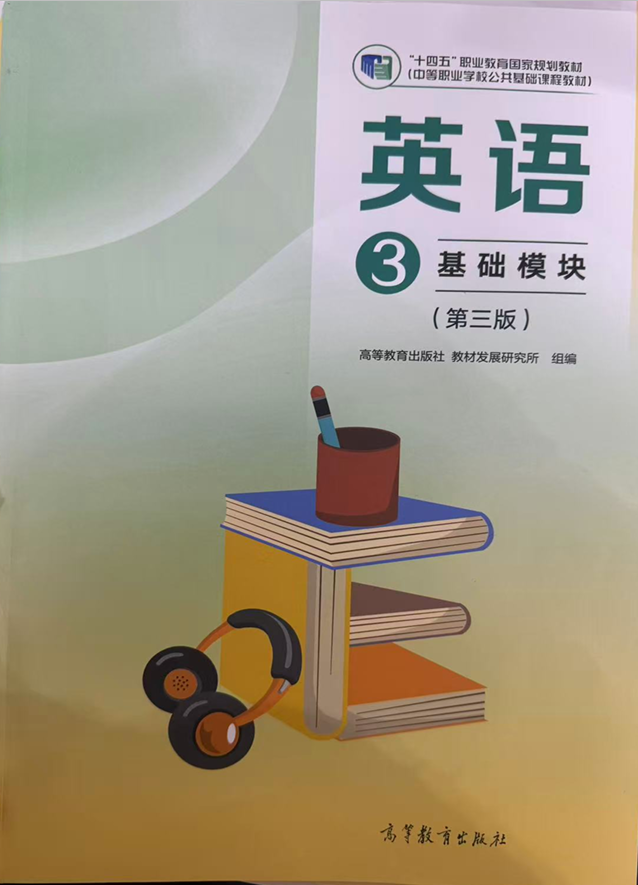
3.1 Artificial Intelligence(Warming up; Listening and Speaking)-《英语 基础模块3》(高教版第三版)《一课一练》(原卷版+解析版)
2026-06-17
|
2份
|
8页
|
74人阅读
|
0人下载
摘要:
**基本信息**
中职英语《基础模块3》Unit 3同步练,通过课前预习与课堂检测分层设计,覆盖词汇、句型到语篇,适配中职学情,助力语言能力与学习能力提升。
**分层设计**
|层次|知识覆盖|设计特色|
|----|----------|----------|
|课前预习|核心词汇(8题)、基础交际句型(4句)|以填空形式检测词汇记忆,直接呈现核心句型,夯实语言基础|
|课堂检测|词汇应用(5题)、情景交际(5题)、语篇补全(7选5)|从单选(如词汇辨析)到补全对话,梯度提升;结合AI情境(如机器人服务员),强化语言综合运用能力|
内容正文:
编写说明:基于中职学生英语基础薄弱、学习内驱力不足的学情特点,为提升学习效率,落实课前、课中、课后教学闭环,本专辑依据最新《中等职业学校英语课程标准》,打造江苏专用《英语 基础模块3》(高教版第三版)《一课一练》,专辑共 40 练,完全对接江苏对口升学考法。
本卷为《英语 基础模块3》(高教版第三版)Unit 3 Artificial Intelligence(Warming up; Listening and Speaking)的课前预习与课堂检测。
《英语 基础模块3》(高教版第三版)
Unit 3 Artificial Intelligence
一课一练(1) Warming up; Listening and Speaking
【课前预习】
一、核心词汇检测
1. v. 服务____
2. adj. 愉快的____
3. v. 交流;交际____
4. v. 提升;提高____
5. n. 效率____
6. n. 应用____
7. 移动支付____
8. 生产线____
【答案】1. serve 2. enjoyable 3. communicate 4. improve 5. efficiency 6. application 7. mobile payment 8. assembly line
二、核心交际句型
1.— What do you think of robot waiters?
— To be honest, I prefer traditional restaurants.
2.— Robots are used in many fields now.
— I agree with you. They help improve efficiency.
3.— Humans may not be needed in future workplaces.
— I don't think so. It is humans that design and control robots.
4.— In terms of costs and efficiency, we are on the same page.
— Yes, but we should also think about communication.
【课堂检测】
一、词汇单选(5 题)
1. In the smart restaurant, robot waiters can ______ dishes to customers without getting tired.
A. save
B. serve
C. solve
D. search
【答案】B
【解析】考点:动词词义辨析。serve 意为“服务;端上”,符合机器人给顾客上菜的语境。save“节省;挽救”,solve“解决”,search“搜索”,均不符合句意。易错点:学生容易只看首字母相近而忽略动词搭配。
2. The new system can record orders quickly and greatly improve work ______.
A. invitation
B. expression
C. decision
D. efficiency
【答案】D
【解析】考点:名词语境辨析。efficiency 意为“效率”,与 improve work 构成语义搭配。invitation“邀请”,expression“表达”,decision“决定”均不能表示工作效率。
3. Many factories now use an ______ to put car parts together step by step.
A. assembly line
B. activity list
C. interview room
D. information desk
【答案】A
【解析】考点:短语意义辨析。assembly line 意为“生产线”,与 put car parts together 对应。其他选项分别为活动清单、面试室、问讯处,属于无中生有干扰。
4. Face recognition is a common ______ of AI in daily life.
A. attention
B. direction
C. application
D. conversation
【答案】C
【解析】考点:名词词义辨析。application 在此意为“应用”,表示人脸识别是 AI 在生活中的应用。attention“注意”,direction“方向”,conversation“谈话”均不合语境。
5. Students need to ______ with people, not only with machines, in future workplaces.
A. compete
B. communicate
C. calculate
D. continue
【答案】B
【解析】考点:动词词义与搭配。communicate with sb. 表示“与某人交流”,符合未来职场中人与人沟通的语境。compete with 表示竞争,calculate 计算,continue 继续。
二、情景交际单项填空
6.— I saw a robot receptionist at the school gate today. It was really amazing!
— ______ It can answer simple questions clearly.
A. Never mind.
B. I'm sorry to hear that.
C. I agree with you.
D. That's too bad.
【答案】C
【解析】考点:赞同观点。根据“It can answer simple questions clearly.”可知答话者认可对方观点,I agree with you 符合语境。易错点:Never mind 用于回应道歉,不用于表达赞同。
7.— Robots may take the place of all workers one day.
— ______ Humans still design and control them.
A. I don't think so.
B. Have a good time.
C. You're welcome.
D. That's all right.
【答案】A
【解析】考点:表达不同意。答语后句说明人类仍设计和控制机器人,因此应先表示不同意。I don't think so 符合语境。
8.— To be honest, I prefer traditional restaurants.
— ______ I like talking with waiters face to face.
A. That's impossible.
B. Don't mention it.
C. See you later.
D. We are on the same page.
【答案】D
【解析】考点:表达意见一致。根据“I like talking with waiters face to face.”可知答话者与对方看法一致。We are on the same page 意为“我们意见一致”。
9.— What do you think robot chefs can do for a restaurant?
— ______
A. They like eating noodles.
B. They can lower costs and improve efficiency.
C. They should take a bus.
D. They are afraid of customers.
【答案】B
【解析】考点:功能说明。问句询问机器人厨师能为餐厅做什么,B 项说明其降低成本、提高效率的作用,符合单元交际主题。
10.— Mobile payment makes shopping much easier.
— ______ But we should keep our phones safe.
A. Not at all.
B. No way.
C. I agree.
D. It doesn't matter.
【答案】C
【解析】考点:部分赞同并补充提醒。答语后半句提出安全提醒,前半句应先表示同意。I agree 符合语境。
三、补全对话(7 选 5)
A: Hi, Lin Yang. Did you visit the smart restaurant near our school?
B: Yes, I went there yesterday. (11) ______
A: Really? What did the robots do?
B: They welcomed customers and served dishes. (12) ______
A: That sounds efficient. Do you like it better than a traditional restaurant?
B: Not completely. (13) ______
A: I see. People still need real communication.
B: Exactly. But robots can help lower costs. (14) ______
A: We are on the same page. How should we use AI then?
B: (15) ______
A: Good idea. Technology should help people, not control people.
选项:
A. They also answered simple questions.
B. I don't like delicious food.
C. We should use it wisely and properly.
D. It was really amazing.
E. There is no restaurant nearby.
F. To be honest, I still like talking with human waiters.
G. In terms of efficiency, it is useful.
【答案】11. D 12. A 13. F 14. G 15. C
【解析】
11. 考点:语境承接。上文询问是否去过智能餐厅,下文追问机器人做了什么,D 项“It was really amazing.”承接参观感受。
12. 考点:细节补充。前句说明机器人迎宾和上菜,A 项继续补充“回答简单问题”,语义连贯。
13. 考点:转折表达。前文“Not completely”提示并非完全更喜欢智能餐厅,F 项说明仍喜欢与真人服务员交流。
14. 考点:观点归纳。前句提到机器人降低成本,G 项从效率角度补充,符合语境。
15. 考点:总结建议。问句询问如何使用 AI,C 项“明智、恰当地使用”符合单元主题。
原创精品资源学科网独家享有版权,侵权必究!
学科网(北京)股份有限公司
$
编写说明:基于中职学生英语基础薄弱、学习内驱力不足的学情特点,为提升学习效率,落实课前、课中、课后教学闭环,本专辑依据最新《中等职业学校英语课程标准》,打造江苏专用《英语 基础模块3》(高教版第三版)《一课一练》,专辑共 40 练,完全对接江苏对口升学考法。
本卷为《英语 基础模块3》(高教版第三版)Unit 3 Artificial Intelligence(Warming up; Listening and Speaking)的课前预习与课堂检测。
《英语 基础模块3》(高教版第三版)
Unit 3 Artificial Intelligence
一课一练(1) Warming up; Listening and Speaking
【课前预习】
一、核心词汇检测
1. v. 服务____
2. adj. 愉快的____
3. v. 交流;交际____
4. v. 提升;提高____
5. n. 效率____
6. n. 应用____
7. 移动支付____
8. 生产线____
二、核心交际句型
1.— What do you think of robot waiters?
— To be honest, I prefer traditional restaurants.
2.— Robots are used in many fields now.
— I agree with you. They help improve efficiency.
3.— Humans may not be needed in future workplaces.
— I don't think so. It is humans that design and control robots.
4.— In terms of costs and efficiency, we are on the same page.
— Yes, but we should also think about communication.
【课堂检测】
一、词汇单选(5 题)
1. In the smart restaurant, robot waiters can ______ dishes to customers without getting tired.
A. save
B. serve
C. solve
D. search
2. The new system can record orders quickly and greatly improve work ______.
A. invitation
B. expression
C. decision
D. efficiency
3. Many factories now use an ______ to put car parts together step by step.
A. assembly line
B. activity list
C. interview room
D. information desk
4. Face recognition is a common ______ of AI in daily life.
A. attention
B. direction
C. application
D. conversation
5. Students need to ______ with people, not only with machines, in future workplaces.
A. compete
B. communicate
C. calculate
D. continue
二、情景交际单项填空
6.— I saw a robot receptionist at the school gate today. It was really amazing!
— ______ It can answer simple questions clearly.
A. Never mind.
B. I'm sorry to hear that.
C. I agree with you.
D. That's too bad.
7.— Robots may take the place of all workers one day.
— ______ Humans still design and control them.
A. I don't think so.
B. Have a good time.
C. You're welcome.
D. That's all right.
8.— To be honest, I prefer traditional restaurants.
— ______ I like talking with waiters face to face.
A. That's impossible.
B. Don't mention it.
C. See you later.
D. We are on the same page.
9.— What do you think robot chefs can do for a restaurant?
— ______
A. They like eating noodles.
B. They can lower costs and improve efficiency.
C. They should take a bus.
D. They are afraid of customers.
10.— Mobile payment makes shopping much easier.
— ______ But we should keep our phones safe.
A. Not at all.
B. No way.
C. I agree.
D. It doesn't matter.
三、补全对话(7 选 5)
A: Hi, Lin Yang. Did you visit the smart restaurant near our school?
B: Yes, I went there yesterday. (11) ______
A: Really? What did the robots do?
B: They welcomed customers and served dishes. (12) ______
A: That sounds efficient. Do you like it better than a traditional restaurant?
B: Not completely. (13) ______
A: I see. People still need real communication.
B: Exactly. But robots can help lower costs. (14) ______
A: We are on the same page. How should we use AI then?
B: (15) ______
A: Good idea. Technology should help people, not control people.
选项:
A. They also answered simple questions.
B. I don't like delicious food.
C. We should use it wisely and properly.
D. It was really amazing.
E. There is no restaurant nearby.
F. To be honest, I still like talking with human waiters.
G. In terms of efficiency, it is useful.
原创精品资源学科网独家享有版权,侵权必究!
学科网(北京)股份有限公司
$
资源预览图

1
由于学科网是一个信息分享及获取的平台,不确保部分用户上传资料的 来源及知识产权归属。如您发现相关资料侵犯您的合法权益,请联系学科网,我们核实后将及时进行处理。