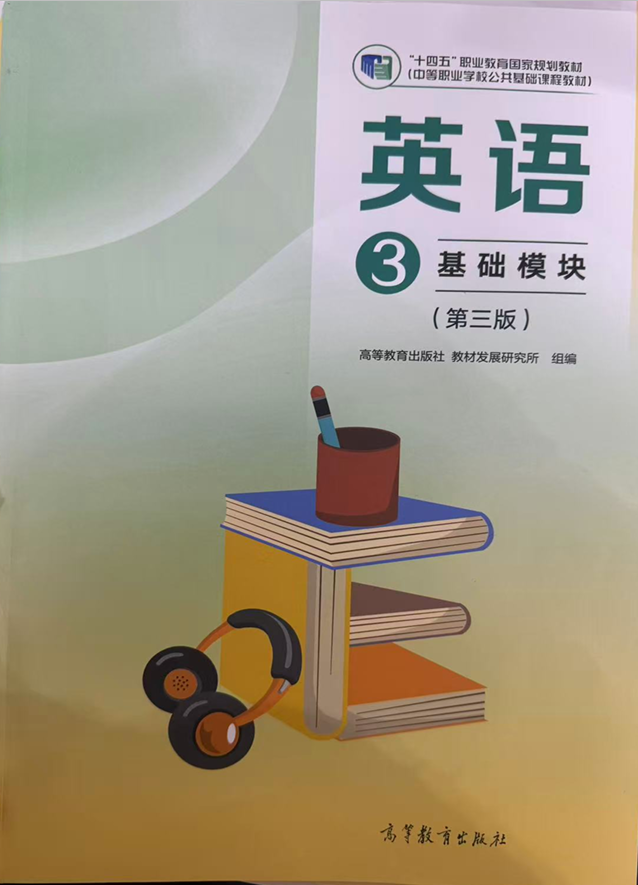
1.3 Festivals Around the World(Reading and Writing 2)-《英语 基础模块3》(高教版第三版)《一课一练》(原卷版+解析版)
2026-06-17
|
2份
|
7页
|
55人阅读
|
0人下载
摘要:
**基本信息**
中职英语《基础模块3》Unit 1同步练,通过“课前预习-课堂检测”分层设计,以词汇变形夯实基础,阅读理解与书面表达提升综合语言运用能力,适配江苏对口升学考法,落实教学闭环。
**分层设计**
|层次|知识覆盖|设计特色|
|----|----------|----------|
|课前预习|词汇变形(动词-名词、名词-形容词等转换)|聚焦基础词汇巩固,8题单一知识点训练,助力课前语言知识储备|
|课堂检测|阅读理解(语篇细节与推理)、书面表达(邮件写作)|结合Lantern Festival等节日情境,5题阅读提升语言理解能力,1题邮件写作强化跨文化表达,体现从理解到应用的思维进阶|
内容正文:
编写说明:基于中职学生英语基础薄弱、学习内驱力不足的学情特点,为提升学习效率,落实课前、课中、课后教学闭环,本专辑依据最新《中等职业学校英语课程标准》,打造江苏专用《英语 基础模块3》(高教版第三版)《一课一练》,专辑共 40 练,完全对接江苏对口升学考法。
本卷为《英语 基础模块3》(高教版第三版)Unit 1 Festivals Around the World(Reading and Writing 2)的课前预习与课堂检测。
《英语 基础模块3》(高教版第三版)
Unit 1 Festivals Around the World
一课一练(3) Reading and Writing 2
【课前预习】
一、词汇变形
1. ______ v. 装饰;点缀 → ______ n. 装饰物;装饰
2. ______ v. 表达 → ______ n. 表达;表情
3. ______ v. 期待;期盼 → ______ n. 期待;期望
4. ______ n. 表演 → ______ v. 表演
5. ______ v. 邀请 → ______ n. 邀请
6. ______ v. 意味着 → ______ n. 意义;意思
7. ______ n. 传统 → ______ adj. 传统的
8. ______ v. 团结;联合 → ______ n. 团结;统一
【答案】1. decorate → decoration 2. express → expression 3. expect → expectation 4. performance → perform 5. invite → invitation 6. mean → meaning 7. tradition → traditional 8. unite → unity
【课堂检测】
一、阅读理解(5 题)
Last Saturday, our class helped at a Lantern Festival fair in the community center. At first, I thought the job would be easy, because we only needed to guide visitors and hand out leaflets. However, when I arrived, I found that the fair was much busier than I had expected. Families came early, children ran excitedly, and several foreign guests were looking for information in English. Our monitor asked us to stay calm, use polite words and check every answer before speaking.
Our teacher divided us into three groups. My group worked near the lantern riddle area. We explained the rules, helped children read the riddles, and reminded them not to pull the lanterns too hard. Another group taught visitors to make simple paper lanterns. The third group introduced the meaning of tangyuan and family unity to foreign guests.
A little boy stood in front of a riddle for a long time but could not understand it. I did not tell him the answer directly. Instead, I asked him to notice the key words and think about the shape of the object. After a few minutes, he smiled and shouted the answer. His mother thanked me, and I suddenly understood that volunteering was not just about finishing a task.
At the end of the fair, the community worker said our English introductions were clear and polite. I felt tired but proud. The experience taught me that a traditional festival can become a living classroom. When we introduce our culture with patience and respect, more people can feel its beauty.
1.What did the writer think of the volunteer job at first?
A. It would be dangerous.
B. It would be easy.
C. It would be boring.
D. It would be impossible.
【答案】B
【解析】定位第1段第2句,作者起初认为工作会很容易。
2.What did the third group mainly do?
A. They protected the lanterns.
B. They made paper lanterns.
C. They guessed lantern riddles.
D. They introduced tangyuan and family unity.
【答案】D
【解析】定位第2段最后一句,第三组向外国客人介绍汤圆和家庭团圆的意义。
3.How did the writer help the little boy?
A. By guiding him to think about key words.
B. By giving him the answer at once.
C. By asking his mother to help him.
D. By moving him to another area.
【答案】A
【解析】定位第3段第3句,作者让男孩注意关键词并思考物体形状。
4.What can we learn from the passage?
A. Foreign guests were not interested in the fair.
B. The students worked without a teacher.
C. Festival activities can help students learn and communicate.
D. Lantern riddles are only for young children.
【答案】C
【解析】根据最后一段 traditional festival can become a living classroom 可知,节日活动能促进学习与交流。
5.Which is the best title for the passage?
A. A Busy Shopping Day
B. How to Cook Tangyuan
C. The History of Lanterns
D. A Living Classroom at a Festival Fair
【答案】D
【解析】文章围绕学生在元宵节集市志愿服务中学习文化表达展开,D 项最能概括主旨。
二、书面表达
假定你是李华,你校将举办“Chinese Festival Sharing Day”活动,请你给外教 Mr. Brown 写一封邀请邮件。
写作要点:1. 活动时间和地点;2. 主要活动内容;3. 邀请对方参加并表达期待。
要求:1. 词数 80 词以上;2. 行文连贯,请勿逐句翻译;3. 文中不得出现真实姓名、校名和地名;4. 请使用电子邮件标准格式,书写工整,规范使用标点与大小写。
Dear Mr. Brown,
________________________________________________________________________________________________________________________________________________________________________________________________________________________________________________________________
Yours,
Li Hua
【范文】
Dear Mr. Brown,
I am glad to invite you to our Chinese Festival Sharing Day. It will be held in the school hall at 3:00 p.m. this Friday. During the activity, students will introduce several traditional festivals, such as the Spring Festival and the Lantern Festival. We will also show paper-cuts, make lanterns and share festival stories in English. I believe it will be a good chance for you to know more about Chinese culture and communicate with our students.
We sincerely hope you can come. I am looking forward to your reply.
Yours,
Li Hua
【导语】本题要求写邀请邮件,需覆盖时间地点、活动内容和邀请期待三个要点,注意邮件格式完整。
【详解】1. 词汇积累:hold 举办;traditional 传统的;communicate with 与……交流;look forward to 期待。2. 句式拓展:It will be held... 使用被动语态说明活动安排;I believe it will be... 使用宾语从句表达活动意义。
【点睛】高分句型:I believe it will be a good chance for you to know more about Chinese culture and communicate with our students. 该句使用宾语从句和 it 作形式主语结构,表达自然得体。
原创精品资源学科网独家享有版权,侵权必究!
学科网(北京)股份有限公司
$
编写说明:基于中职学生英语基础薄弱、学习内驱力不足的学情特点,为提升学习效率,落实课前、课中、课后教学闭环,本专辑依据最新《中等职业学校英语课程标准》,打造江苏专用《英语 基础模块3》(高教版第三版)《一课一练》,专辑共 40 练,完全对接江苏对口升学考法。
本卷为《英语 基础模块3》(高教版第三版)Unit 1 Festivals Around the World(Reading and Writing 2)的课前预习与课堂检测。
《英语 基础模块3》(高教版第三版)
Unit 1 Festivals Around the World
一课一练(3) Reading and Writing 2
【课前预习】
一、词汇变形
1. ______ v. 装饰;点缀 → ______ n. 装饰物;装饰
2. ______ v. 表达 → ______ n. 表达;表情
3. ______ v. 期待;期盼 → ______ n. 期待;期望
4. ______ n. 表演 → ______ v. 表演
5. ______ v. 邀请 → ______ n. 邀请
6. ______ v. 意味着 → ______ n. 意义;意思
7. ______ n. 传统 → ______ adj. 传统的
8. ______ v. 团结;联合 → ______ n. 团结;统一
【课堂检测】
一、阅读理解(5 题)
Last Saturday, our class helped at a Lantern Festival fair in the community center. At first, I thought the job would be easy, because we only needed to guide visitors and hand out leaflets. However, when I arrived, I found that the fair was much busier than I had expected. Families came early, children ran excitedly, and several foreign guests were looking for information in English. Our monitor asked us to stay calm, use polite words and check every answer before speaking.
Our teacher divided us into three groups. My group worked near the lantern riddle area. We explained the rules, helped children read the riddles, and reminded them not to pull the lanterns too hard. Another group taught visitors to make simple paper lanterns. The third group introduced the meaning of tangyuan and family unity to foreign guests.
A little boy stood in front of a riddle for a long time but could not understand it. I did not tell him the answer directly. Instead, I asked him to notice the key words and think about the shape of the object. After a few minutes, he smiled and shouted the answer. His mother thanked me, and I suddenly understood that volunteering was not just about finishing a task.
At the end of the fair, the community worker said our English introductions were clear and polite. I felt tired but proud. The experience taught me that a traditional festival can become a living classroom. When we introduce our culture with patience and respect, more people can feel its beauty.
1.What did the writer think of the volunteer job at first?
A. It would be dangerous.
B. It would be easy.
C. It would be boring.
D. It would be impossible.
2.What did the third group mainly do?
A. They protected the lanterns.
B. They made paper lanterns.
C. They guessed lantern riddles.
D. They introduced tangyuan and family unity.
3.How did the writer help the little boy?
A. By guiding him to think about key words.
B. By giving him the answer at once.
C. By asking his mother to help him.
D. By moving him to another area.
4.What can we learn from the passage?
A. Foreign guests were not interested in the fair.
B. The students worked without a teacher.
C. Festival activities can help students learn and communicate.
D. Lantern riddles are only for young children.
5.Which is the best title for the passage?
A. A Busy Shopping Day
B. How to Cook Tangyuan
C. The History of Lanterns
D. A Living Classroom at a Festival Fair
二、书面表达
假定你是李华,你校将举办“Chinese Festival Sharing Day”活动,请你给外教 Mr. Brown 写一封邀请邮件。
写作要点:1. 活动时间和地点;2. 主要活动内容;3. 邀请对方参加并表达期待。
要求:1. 词数 80 词以上;2. 行文连贯,请勿逐句翻译;3. 文中不得出现真实姓名、校名和地名;4. 请使用电子邮件标准格式,书写工整,规范使用标点与大小写。
Dear Mr. Brown,
________________________________________________________________________________________________________________________________________________________________________________________________________________________________________________________________
Yours,
Li Hua
原创精品资源学科网独家享有版权,侵权必究!
学科网(北京)股份有限公司
$
资源预览图

1
由于学科网是一个信息分享及获取的平台,不确保部分用户上传资料的 来源及知识产权归属。如您发现相关资料侵犯您的合法权益,请联系学科网,我们核实后将及时进行处理。