期末考前易错题过关100题(Units 1-8)-2025-2026学年七年级英语下册单元模块满分必刷题(新教材人教版)
2026-06-17
|
2份
|
33页
|
607人阅读
|
9人下载

资源信息
| 学段 | 初中 |
|---|---|
| 学科 | 英语 |
| 教材版本 | 初中英语人教版七年级下册 |
| 年级 | 七年级 |
| 章节 | - |
| 类型 | 题集-综合训练 |
| 知识点 | - |
| 使用场景 | 同步教学-期末 |
| 学年 | 2026-2027 |
| 地区(省份) | 全国 |
| 地区(市) | - |
| 地区(区县) | - |
| 文件格式 | ZIP |
| 文件大小 | 118 KB |
| 发布时间 | 2026-06-17 |
| 更新时间 | 2026-06-17 |
| 作者 | Easy English初高中英语精品 |
| 品牌系列 | - |
| 审核时间 | 2026-06-17 |
| 下载链接 | https://m.zxxk.com/soft/58374318.html |
| 价格 | 3.00储值(1储值=1元) |
| 来源 | 学科网 |
摘要:
**基本信息**
聚焦七年级下册Units 1-8核心语言知识,通过100道期末易错题及真题模拟,系统整合语法、词汇及情景交际考点,强化语言能力与应试技巧。
**综合设计**
|模块|题量/典例|题型特征|知识逻辑|
|----|-----------|----------|----------|
|语法应用|约40题(如第1题连词so、第8题there be句型)|单项选择,考查语境中语法规则运用|涵盖连词、情态动词、时态等,形成从规则理解到语境应用的逻辑链条|
|词汇辨析|约30题(如第3题kind of、第16题made of)|单项选择,侧重固定搭配与词义辨析|整合短语搭配、词性转换等,构建词汇从记忆到灵活运用的逻辑|
|情景交际|约30题(如第2题Why提问、第21题Can请求)|单项选择,模拟真实交流场景|对应日常问候、请求等功能意念,形成从语言知识到跨文化沟通的逻辑|
内容正文:
2025-2026学年七年级英语下册单元模块满分必刷题(新教材人教版)
期末考前易错题过关100题(Units 1-8)
期末真题+名校模拟
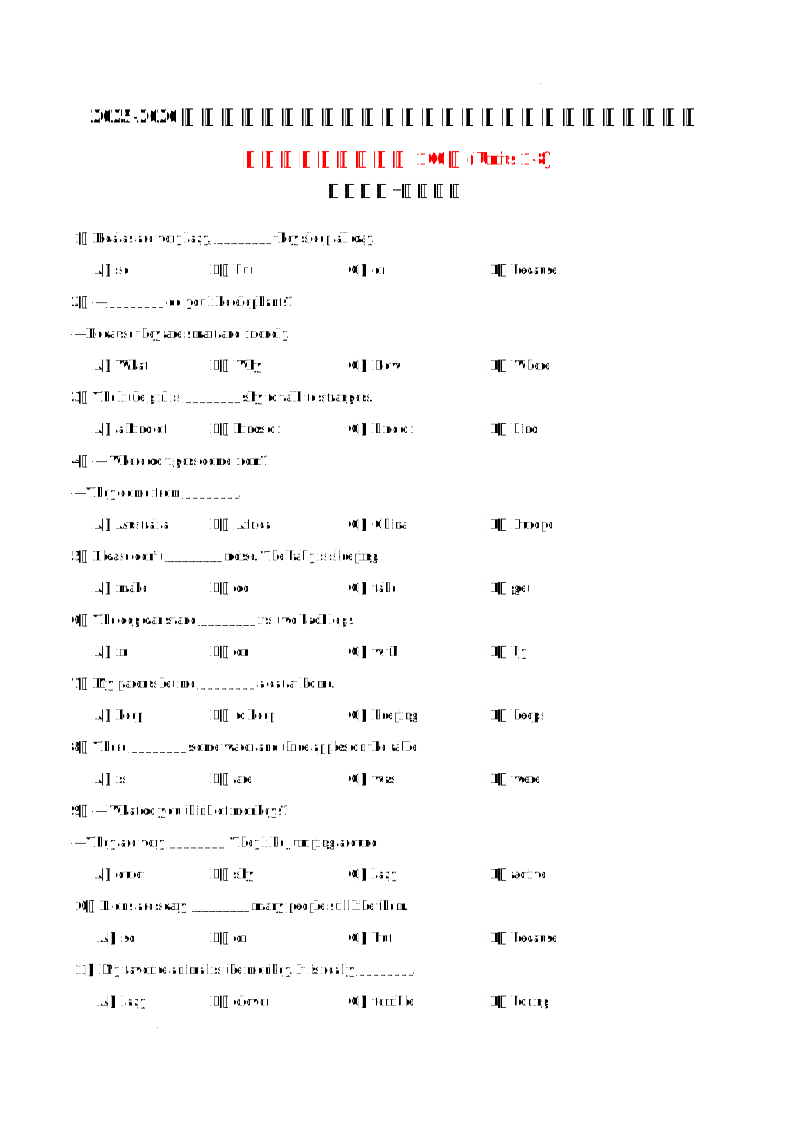
1.Koalas are very lazy, ________ they sleep all day.
A.so B.but C.or D.because
【答案】A
【详解】句意:考拉非常懒,所以它们整天睡觉。
so所以;but但是;or或者;because因为。根据“Koalas are very lazy”可知考拉懒是原因,“they sleep all day”是结果,前后构成因果关系,且前因后果,应用so连接。所以选A。
2.—________ do you like elephants?
—Because they are smart and friendly.
A.What B.Why C.How D.Where
【答案】B
【详解】句意:——你为什么喜欢大象?——因为它们聪明且友好。
What什么;Why为什么;How怎样;Where哪里。根据答语“Because they are smart and friendly.”可知,回答的是原因,推测问句是询问喜欢大象的原因,应用Why提问。
3.The little girl is ________ shy to talk to strangers.
A.a kind of B.kinds of C.kind of D.kind
【答案】C
【详解】句意:这个小女孩跟陌生人说话有点害羞。
a kind of一种;kinds of许多种;kind of有点;kind善良的/种类。根据“The little girl is ... shy”可知,shy是形容词,此处表示“有点害羞”,应用kind of修饰形容词。
4.—Where do tigers come from?
—They come from ________.
A.Australia B.Africa C.China D.Europe
【答案】C
【详解】句意:——老虎来自哪里?——它们来自中国。
Australia澳大利亚;Africa非洲;China中国;Europe欧洲。根据常识可知,老虎主要分布在亚洲,中国是老虎的产地之一,而澳大利亚、非洲和欧洲不是老虎的主要栖息地,应填China。
5.Please don’t ________ noise. The baby is sleeping.
A.make B.do C.take D.get
【答案】A
【详解】句意:请不要制造噪音。婴儿正在睡觉。
make制造;do做;take拿;get得到。固定搭配“make noise”表示“制造噪音”,且结合后句“The baby is sleeping.”可知,此处指不要制造噪音,make符合语境。
6.The dog can stand ________ its two back legs.
A.in B.on C.with D.by
【答案】B
【详解】句意:这只狗能用它的两条后腿站立。
in在……里面;on在……上面;with用;by通过。根据“stand ... its two back legs”可知,此处表示靠后腿支撑站立,固定搭配 stand on意为“站在……上;用……支撑”。
7.My parents let me ________ a cat at home.
A.keep B.to keep C.keeping D.keeps
【答案】A
【详解】句意:我的父母让我在家里养一只猫。
let sb. do sth.“让某人做某事”,是固定搭配,因此应填keep。
8.There ________ some water and three apples on the table.
A.is B.are C.was D.were
【答案】A
【详解】句意:桌子上有一些水和三个苹果。
is是(主语为单数或不可数名词,一般现在时);are是(主语为复数,一般现在时);was是(主语为单数或不可数名词,一般过去时);were是(主语为复数,一般过去时)。句中“There be”句型遵循就近一致原则,be动词与离它最近的主语“some water”保持一致,“water”为不可数名词,be动词用“is”,且描述的是客观事实,应用一般现在时,应填is。
9.—What do you think of monkeys?
—They are very ________. They like jumping around.
A.quiet B.shy C.lazy D.active
【答案】D
【详解】句意:——你觉得猴子怎么样?——它们非常活跃。它们喜欢跳来跳去。
quiet安静的;shy害羞的;lazy懒惰的;active活跃的。根据“They like jumping around.”可知,猴子到处跳,推测出它们是活跃的,active符合语境。
10.Lions are scary, ________ many people still like them.
A.so B.or C.but D.because
【答案】C
【详解】句意:狮子很吓人,但是很多人仍然喜欢它们。
so因此,表示因果关系;or否则,表示选择或转折;but但是,表示转折关系;because因为,表示原因。前句说狮子吓人,后句说人们喜欢它们,前后为转折关系,应填but。
11.My favorite animal is the monkey. It is really ________.
A.lazy B.clever C.terrible D.boring
【答案】B
【详解】句意:我最喜欢的动物是猴子。它真的很聪明。
lazy懒惰的;clever聪明的;terrible糟糕的;boring无聊的。根据“My favorite animal is the monkey.”可知,最喜欢的动物通常具备令人喜爱的特质,clever是褒义词,符合语境。
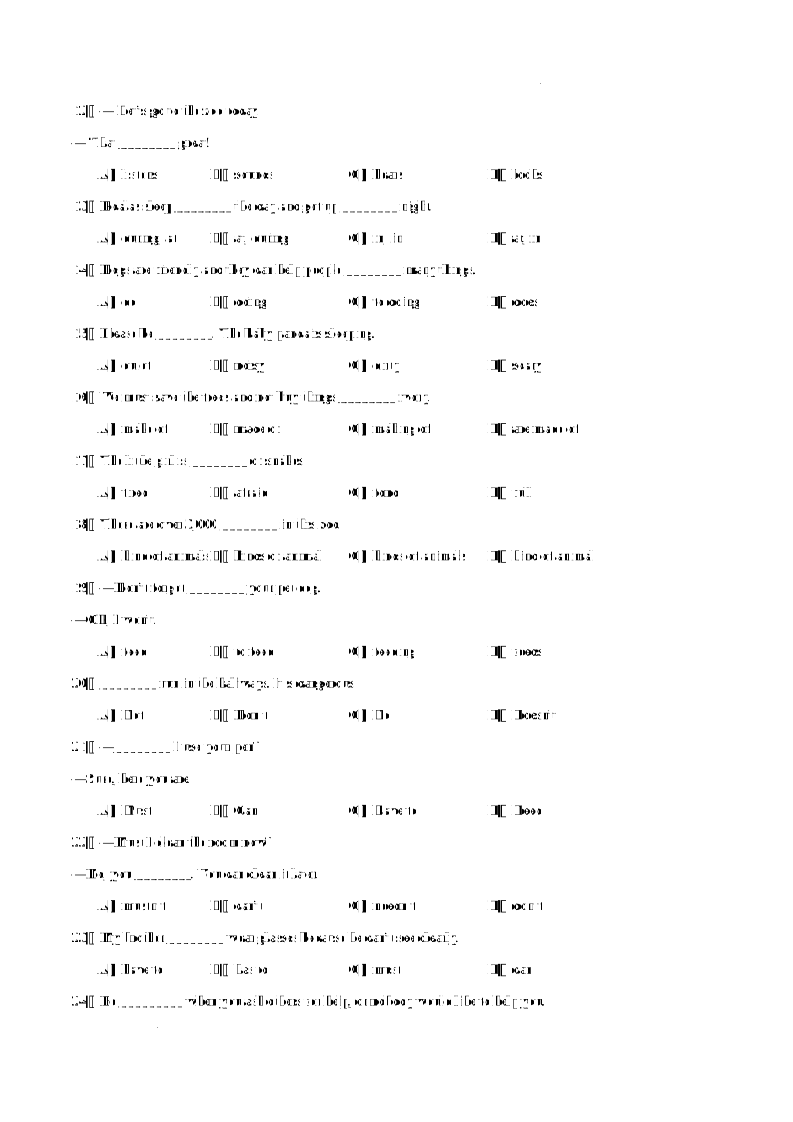
12.— Let’s go to the zoo today.
— That ________ great!
A.listens B.sounds C.hears D.looks
【答案】B
【详解】句意:——我们今天去动物园吧。——那听起来很棒!
listens听;sounds听起来;hears听见;looks看起来。根据“Let’s go to the zoo today.”可知对方提出建议,答语是对建议的评价,表示建议“听起来”不错,且空后为形容词great,应用系动词sounds。That sounds great为固定搭配,意为“这听起来不错”。
13.Koalas sleep ________ the day and get up ________ night.
A.during; at B.at; during C.in; in D.at; in
【答案】A
【详解】句意:考拉白天睡觉,晚上起床。
during在……期间;at在;in 在……里面。固定搭配during the day意为“在白天”,at night意为“在晚上”。
14.Dogs are friendly and they can help people ________ many things.
A.do B.doing C.to doing D.does
【答案】A
【详解】句意:狗很友好,它们能帮助人们做很多事情。
固定搭配help sb. (to) do sth.,意为“帮助某人做某事”,to可以省略,后接动词原形do。
15.Please be ________. The baby panda is sleeping.
A.quiet B.noisy C.dirty D.scary
【答案】A
【详解】句意:请保持安静。熊猫宝宝正在睡觉。
quiet安静的;noisy吵闹的;dirty脏的;scary可怕的。根据“The baby panda is sleeping.”可知,熊猫宝宝正在睡觉,推测出需要保持安静,quiet符合语境。
16.We must save the trees and not buy things ________ ivory.
A.make of B.made of C.making of D.are made of
【答案】B
【详解】句意:我们必须拯救树木,不要买由象牙制成的东西。
句中已有谓语动词buy,空格处需用非谓语动词修饰things。things与make之间是被动关系,应用过去分词短语made of表示“由……制成”。
17.The little girl is ________ of snakes.
A.tired B.afraid C.fond D.full
【答案】B
【详解】句意:那个小女孩害怕蛇。
tired疲倦的,厌烦的;afraid害怕的;fond喜爱的;full满的。结合常识,蛇是一类普遍令人恐惧的动物,小女孩通常是“害怕”蛇,而非“喜爱”、“厌烦”或“充满”蛇,因此应选用afraid构成“be afraid of”表示“害怕……”。
18.There are over 3,000 ________ in this zoo.
A.kind of animals B.kinds of animal C.kinds of animals D.kind of animal
【答案】C
【详解】句意:这个动物园里有超过3000种动物。
根据“3,000”可知数量大于一,kind应用复数形式kinds;of后接可数名词复数表示多种类别,animal应用复数形式animals。固定结构为“数词 + kinds of + 复数名词”。
19.—Don’t forget ________ your pet dog.
—OK, I won’t.
A.feed B.to feed C.feeding D.feeds
【答案】B
【详解】句意:——别忘了喂你的宠物狗。——好的,我不会忘的。
forget to do sth.意为“忘记去做某事”,强调事情还未做;forget doing sth.意为“忘记做过某事”,强调事情已经做过。根据“Don’t forget”及答语“OK, I won’t”可知,此处是提醒对方去做某事,动作尚未发生,应用不定式to feed。
20.________ run in the hallways. It’s dangerous.
A.Not B.Don’t C.No D.Doesn’t
【答案】B
【详解】句意:不要在走廊里奔跑。这很危险。
Not不;Don’t不要;No不;Doesn’t不。根据“________ run in the hallways.”可知,本句为否定祈使句,结构是“Don’t + 动词原形”,用来表示禁止或命令。
21.—________ I use your pen?
—Sure, here you are.
A.Must B.Can C.Have to D.Need
【答案】B
【详解】句意:——我能用一下你的钢笔吗?——当然,给你。
Must必须;Can能够,可以(表示请求或许可);Have to不得不;Need需要。根据答语“当然,给你”可知,问句是在请求许可,应用Can表示“可以”。
22.—Must I clean the room now?
—No, you ________. You can clean it later.
A.mustn’t B.can’t C.needn’t D.don’t
【答案】C
【详解】句意:——我现在必须打扫房间吗?——不,你不必。你可以稍后再打扫。
mustn’t禁止;can’t不能;needn’t不必;don’t不。根据问句“Must I...?”可知,以Must开头的一般疑问句,否定回答表示“不必”,应用needn’t或don’t have to。
23.My brother ________ wear glasses because he can’t see clearly.
A.have to B.has to C.must D.can
【答案】B
【详解】句意:我哥哥不得不戴眼镜,因为他看不清楚。
have to不得不;has to不得不(第三人称单数);must必须;can能。根据主语“My brother”是第三人称单数,排除A;根据“because he can’t see clearly”可知是客观情况,常用have to结构,且需用三单形式。
24.Be _________ when you ask others for help, or nobody would like to help you.
A.happy B.active C.polite D.tidy
【答案】C
【详解】句意:当你请求别人帮助时,要礼貌,否则没有人会愿意帮助你。
考查形容词辨析。happy高兴的;active积极的;polite礼貌的;tidy整洁的。根据“when you ask others for help”可知,向别人求助时要礼貌。故选C。
25.— ________ late for class again, Tom.
—Sorry, I won’t.
A.No be B.Not be C.Isn’t D.Don’t be
【答案】D
【详解】句意:——Tom,上课不要再迟到了。—— 对不起,我不会了。
考查祈使句。be late for “做某事迟到”,祈使句动词原形开头,否定句在句首加Don’t,故选D。
26.—Jane’s spoken English is pretty good.
—Yes, she works hard and practices _________ it both in and out of class.
A.speak B.spoke C.speaking D.to speak
【答案】C
【详解】句意:——简的英语口语很好。——是的,她学习很努力,课内外都练习说英语。
考查非谓语动词。practice doing“练习做某事”,故选C。
27.Please _______ if you don’t want to be late for school.
A.in a hurry B.hurry up C.in hurry D.no hurry
【答案】B
【详解】句意:如果你不想迟到,请快点。
根据do sth. in a hurry匆匆忙忙做某事,hurry up快点,no hurry不忙,根据if you don’t want to be late for school.可知是快点;故选B。
28.Please be sure to arrive at the school gate .
A.on time B.in time
C.at times D.at all times
【答案】A
【详解】请确定准时到学校大门。考查介词词组。A. on time 准时 B. in time及时C. at times 有时 D. at all times在任何情况下。根据句意,故选A
29.— Let’s ________ to the movies!
— I’m sorry. I must finish ________ my homework first.
A.go; do B.going; doing C.go; doing D.going; do
【答案】C
【详解】句意:——让我们去看电影!——对不起。我必须先完成作业。
考查非谓语动词。let sb. do sth.“让某人做某事”,第一空用动词原形;finish doing sth.“完成做某事”,第二空用动名词作宾语。故选C。
30.—Mark, your sister is doing her homework. _________ the TV and read a book.
—OK. Mum.
A.Turn up B.Turn on C.Turn down D.Turn off
【答案】D
【详解】句意:——马克,你妹妹正在做作业。关掉电视,读一本书。——好的,妈妈。
考查动词短语。Turn up出现,调高;Turn on打开;Turn down拒绝,调低;Turn off关掉。根据“read a book”并结合选项可知,读一本书,所以此处应是指关掉电视,D项符合。故选D。
31._________ your homework carefully when you get home after school.
A.Do B.Does C.Doing D.Did
【答案】A
【详解】句意:放学回家后要认真做作业。
考查祈使句。根据题干和选项可知,此句为祈使句的肯定句,祈使句的肯定句是以动词原形开头,do在句中为实义动词。故选A。
32.We ________ wear our seat belts when we are in a car.
A.must B.mustn’t C.may D.may not
【答案】A
【详解】句意:当我们在汽车里的时候,我们必须系好安全带。
考查情态动词。must必须;mustn’t不准;may可能;may not可能不。根据“We ... wear our seat belts when we are in a car.”可知,在车里必须系好安全带。故选A。
33.—________ you have any problem, my door is always open to you.
—It’s very kind of you.
A.If B.Because C.So D.But
【答案】A
【详解】句意:——如果你有任何问题,我的门永远为你敞开。——你真是太好了。
考查连词辨析。If如果;Because因为;So所以;But但是。根据语境可知,前半句“你有任何问题”是后半句“我的门永远为你敞开”的假设条件,应用if引导条件状语从句,故选A。
34.To live a green life, don’t forget to ________ the lights when we leave a room.
A.cut down B.turn off C.put up D.break down
【答案】B
【详解】句意:为了过上绿色的生活,当我们离开房间时,不要忘记关灯。
cut down削减;turn off关闭;put up张贴;break down分解。根据“when we leave a room”可知,离开房间时应关灯以节约能源,应填turn off。
35.Boys and girls, ________ the school uniforms on school days.
A.wear B.to wear C.wore D.wearing
【答案】A
【详解】句意:同学们,上学日要穿校服。
根据“Boys and girls,...the school uniforms on school days.”可知,此处是老师对学生发出的指令,祈使句应以动词原形开头。
36.It’s important for us to keep ________, so we should eat ________ food.
A.fit; health B.health; health C.health; fit D.fit; healthy
【答案】D
【详解】句意:对我们来说,保持健康是很重要的。我们应该吃健康的食物。
考查形容词的用法。fit健康的,形容词;health健康,名词;healthy健康的,形容词。第一空keep fit/healthy意为“保持健康”,keep后加形容词作表语;第二空用形容词healthy修饰后面的名词food,意为“健康的食物”。故选D。
37.—Do you know this boy? He works really ________.
—Yes, I can ________ see him play. He always studies.
A.hardly; hardly B.hard; hardly C.hard; hard D.hardly; hard
【答案】B
【详解】句意:——你认识这个男孩吗?他工作真的很努力。—是的,我几乎没看过他打球。他总是学习。
考查副词辨析。hardly几乎不;hard努力地。第一空修饰动词works,要用副词hard,work hard“努力工作”;根据“He always studies.”可知,他总是在学习,所以几乎没看过他打球,用频度副词hardly修饰动词see,故选B。
38.—What’s in the icebox?
—Only ________ apples, but ________ milk.
A.a few, a few B.a few, little C.a little, few D.a few, a little
【答案】B
【详解】句意:——冰箱里有什么?——只有几个苹果,但几乎没有牛奶。
考查不定代词。a few一点,接复数名词,表肯定意义;little几乎没有,接不可数名词,表否定意义;a little一点,接不可数名词,表肯定意义;few几乎没有,接复数名词,表否定意义。结合“Only...apples”可知,第一空是指有一点苹果,所以该空要填“a few”;结合“but...milk.”可知,这里是指几乎没有牛奶,所以第二空要填“little”。故选B。
39.These shoes are ________ and that pair belongs to ________.
A.mine; hers B.me; her C.mine; her D.my; mine
【答案】C
【详解】句意:这双鞋是我的,那双是她的。
考查代词辨析。mine我的,名词性物主代词;hers她的,名词性物主代词;me我,人称代词宾格;her她,她的,人称代词宾格或形容词性物主代词;my我的,形容词性物主代词。根据“These shoes are...”可知,第一空后没有名词,填形容词性物主代词,排除B、D;根据“that pair belongs to”可知,第二空填人称代词宾格,故选C。
40.Judy wants to be a singer and I often hear her ________ in her room.
A.sings B.singing C.sing D.to sing
【答案】C
【详解】句意:朱迪想成为一名歌手,我经常听到她在房间里唱歌。
考查非谓语动词。hear sb. do sth.听见某人做某事(强调全过程,经常性);hear sb. doing sth.听见某人做某事(强调动作正在进行)。根据“often”可知,此处强调经常性听见,应填sing。故选C。
41.Our teacher encouraged us _______ more confidence in performing the play.
A.have B.having C.had D.to have
【答案】D
【详解】句意:我们的老师鼓励我们在表演这出戏时更有自信。
考查非谓语动词。根据“Our teacher encouraged us”可知,考查短语encourage sb to do sth“鼓励某人做某事”,此空应填动词不定式to have作宾补。故选D。
42.---Work hard, and you will___________one day.
---You are right, working hard leads to _________.
A.succeed; success B.successful; succeed
C.succeed; successful D.successful; successful.
【答案】A
【详解】句意:——努力工作,你总有一天会成功。——你说得对,努力工作才能成功。考查动词辨析。succeed成功,动词;success成功,名词;successful成功的,形容词。根据句意结构和语境,前句will后接原形动词;后句介词to需接名词做宾语,可知选A。
43.Class Five ________ us and ________ the football match yesterday.
A.beat;win B.win;beat C.beat;won D.won;beat
【答案】C
【详解】句意:昨天,五班打败了我们,赢了足球比赛。
考查动词辨析。beat打败,动词原形、过去式;win赢(得),动词原形;won赢(得),过去式。根据“yesterday”可知句子应用一般过去时,谓语动词应用过去式。根据第一个空格后的“us”可知此处应用动词beat来表示“打败我们”;根据第二个空格后的“the football match”可知应用动词win来表示“赢得了足球比赛”,其过去式为won。故选C。
44.This bike is ________ expensive for me ________ afford. I’ll take the cheapest one.
A.too;to B.such;that C.so;that D.enough;to
【答案】A
【详解】句意:这辆自行车对我来说太贵了,我买不起。我要买最便宜的那一辆。
too…to…是固定结构,表示“太……而不能……”,符合“…expensive for me…”的语境。
45.I’m sorry I can’t go to the movies with you because I have ________ work to do.
A.too much B.much too C.too many D.many too
【答案】A
【详解】句意:对不起,我不能和你一起去看电影,因为我有太多的工作要做。
too much太多,修饰不可数名词;much too太,修饰形容词或副词;too many太多,修饰可数名词复数;many too搭配错误。根据句意及work是不可数名词,可知此处应用too much。
46.—Chinese restaurants always ________ the customers some tea before meals.
—Wow, that’s good for health.
A.treat B.lay C.direct D.serve
【答案】D
【详解】句意:——中餐馆总是在餐前为顾客提供一些茶。——哇,那是个对健康有益的好习惯。
treat款待;lay放置;direct指导;serve提供(服务/食物)。根据“Chinese restaurants always...the customers some tea”可知,此处指餐馆为顾客“提供”茶水这一服务行为,serve sb sth意为“为某人提供某物”,符合语境。故选D。
47.He ate a lot and did little exercise, so he ________ 10 pounds
A.put on B.put away C.put out D.put off
【答案】A
【详解】句意:他吃得很多,很少运动,所以他体重增加了 10 磅。
put on增加(体重);put away放好;put out扑灭;put off推迟。根据“He ate a lot and did little exercise”可知,吃得多运动少会导致体重增加,符合语境。
48.Cindy knows ice-cream is not good ________ her, but it ________.
A.with; taste nice B.for; tastes nice C.to; tastes well D.for; taste well
【答案】B
【详解】句意:辛迪知道冰淇淋对她不好,但味道很好。
考查介词辨析、主谓一致和形容词的用法。with和;for为了;to到;nice好的,形容词;well好,副词。根据“ice-cream is not good...her”可知冰淇淋对她不好,用结构be good for“对……有好处”;第二个句子的主语是it,谓语动词用单三,作感官动词taste的表语用形容词nice。故选B。
49.I went to the small village and didn’t find ________ there last Saturday.
A.anything interesting B.interesting anything
C.something interesting D.interesting something
【答案】A
【详解】句意:上星期六我去了那个小村庄,没有发现那里有什么有趣的事情。
根据“didn’t”可知句子为否定句,应用anything;形容词修饰不定代词时要后置,即anything interesting。
50.One of the best ways to ________ our English is to read more books.
A.improve B.repeat C.suggest D.advise
【答案】A
【详解】句意:提高我们的英语最好的方法之一就是多读书。
improve提高;repeat重复;suggest建议;advise建议。根据后半句“to read more books”可知,多读书是为了提高英语水平,improve符合语境。
51.—Would you like a glass of milk ________ a glass of water?
—A glass of milk, please.
A.or B.and C.but D.if
【答案】A
【详解】句意:——你想要一杯牛奶还是一杯水?——请给我一杯牛奶。
or或者、还是;and和;but但是;if如果。根据答语“A glass of milk, please.”可知,问句是在牛奶和水之间进行选择,此处表示选择关系,应填or。
52.The success of China’s space programme is the ________ of many scientists’ hard work.
A.choice B.result C.cause D.attention
【答案】B
【详解】句意:中国太空计划的成功是许多科学家辛勤工作的结果。
choice选择;result结果;cause原因;attention注意。根据逻辑关系,成功是努力工作带来的成果,the result of意为“……的结果”,故填result。
53.Look! The children ________ kites in the park happily.
A.fly B.are flying C.flew D.flies
【答案】B
【详解】句意:看!孩子们正在公园里开心地放风筝。
根据句首关键词“Look!”可知,动作此时此刻正在发生,句子应用现在进行时,其结构为“be动词+动词现在分词”,所以选are flying。
54.—________ your mother making soup in the kitchen?
—Yes, she is. It smells great.
A.Does B.Is C.Are D.Do
【答案】B
【详解】句意:—你妈妈正在厨房做汤吗?—是的,她是。闻起来很棒。
Does助动词;Is是;Are是;Do助动词。根据答语“Yes, she is.”可知问句是由be动词引导的一般疑问句,排除A、D选项;主语“your mother”是第三人称单数,且句中有“making”,be动词应用Is。
55.My brother ________ TV now. He’s busy preparing for his test.
A.watches B.is watching C.doesn’t watch D.isn’t watching
【答案】D
【详解】句意:我哥哥现在没在看电视。他正忙着准备考试。
根据时间状语“now”可知句子应用现在进行时,结构为be doing,再根据后句“He’s busy preparing for his test.”可知他正忙,推测此刻不在看电视,需用否定形式,即isn’t watching。
56.—What ________ you ________ now?
—I’m reading a book.
A.do; do B.are; do C.are; doing D.do; doing
【答案】C
【详解】句意:——你现在正在做什么?——我正在读书。
do做;are是。根据答语“I’m reading a book.”及问句中的时间状语“now”可知,句子时态为现在进行时。现在进行时的特殊疑问句结构为:特殊疑问词 + be 动词 + 主语 + 动词现在分词。主语是you,be动词用are,实义动词用doing形式。故选C。
57.—Hello? This is Lisa. ________ I speak to Tom?
—Sorry, he isn’t at home.
A.Do B.May C.Am D.Are
【答案】B
【详解】句意:——你好?我是丽莎。我可以和汤姆说话吗?——抱歉,他不在家。
Do做/助动词;May可以;Am是;Are是。根据“This is Lisa.”可知这是电话用语,电话中请求与某人通话常用句型“May I speak to...?”。结合答语“Sorry, he isn’t at home.”可知此处是询问能否与Tom通话。故选B。
58.—________ is it now?
—It’s half past nine.
A.What color B.What time C.What about D.What day
【答案】B
【详解】【解析】:句意:——现在几点了?——九点半了。
What color什么颜色;What time几点;What about……怎么样;What day星期几。根据答语“It’s half past nine.”可知,上文是在询问具体的时间。应填What time。
59.They ________ a boat race on the lake at the moment.
A.have B.has C.are having D.is having
【答案】C
【详解】句意:此刻他们正在湖上进行划船比赛。
根据时间状语“at the moment”可知句子时态为现在进行时,结构为“be + 动词现在分词”。主语“They”是复数,be动词用“are”。
60.My mother ________ dinner now. She usually ________ dinner at 6:00 p. m.
A.cooks; cooks B.is cooking; cooks C.cooks; is cooking D.is cooking; is cooking
【答案】B
【详解】句意: 我妈妈现在正在做晚饭。她通常在下午6点做晚饭。
cooks做饭,是一般现在时第三人称单数形式;is cooking正在做饭,是现在进行时形式。第一空的时间标志词为now,表示动作正在进行,需用现在进行时is cooking;第二空的时间标志词为usually,表示习惯性、经常性的动作,需采用一般现在时,主语she为第三人称单数,动词使用第三人称单数形式cooks。应填is cooking;cooks。
61.—________ your father reading a newspaper?
—No, he ________. He’s watching TV.
A.Is; isn’t B.Are; aren’t C.Does; doesn’t D.Do; don’t
【答案】A
【详解】句意:——你爸爸正在看报纸吗?——不,他没有。他正在看电视。
is/are为be动词,does/do为助动词(既可作助动词也可作实义动词);isn’t/aren’t/doesn’t/don’t为否定形式。根据问句中reading(现在分词)可判断句子为现在进行时,主语your father是第三人称单数,be动词用Is;答句中主语he为第三人称单数,否定回答用isn’t,因此选A。
62.I’m looking forward ________ the Mogao Caves.
A.to visiting B.visit C.to visit D.visits
【答案】A
【详解】句意:我期待参观莫高窟。
to visiting(介词to + 动名词);visit(动词原形);to visit(动词不定式);visits(动词第三人称单数形式)。固定搭配look forward to doing sth.意为“期待做某事”,其中to是介词,后接动名词形式,因此to visiting符合语法和语境。
63.The boy runs ________ because he isn’t good at sports, and he ________ plays sports.
A.slowly; hardly B.slow; hardly C.slowly; hard D.slow; hard
【答案】A
【详解】句意:这个男孩跑得慢,因为他不擅长运动,而且他几乎不做运动。
slowly慢地;hardly几乎不;slow慢的;hardly几乎不;slowly慢地;hard努力地;硬的;slow慢的;hard努力地;硬的。第一空,修饰动词runs,需用副词slowly,slow为形容词,排除选项B和D;第二空,根据前文“不擅长运动”可知,他几乎不做运动,hardly意为“几乎不”;hard意为“努力地;硬的”,不符合语境,排除选项C。
64.— Hello! May I speak to Linda, please?
— Sorry, she is out at the moment. She is ________ her math homework in the library.
A.caring about B.working on C.dropping off D.waiting for
【答案】B
【详解】句意:——你好!我可以和琳达通话吗?——抱歉,她现在出去了。她正在图书馆做她的数学作业。
caring about关心;working on从事,做;dropping off掉落;waiting for等待。根据语境可知琳达此刻不在,因为她正在图书馆做数学作业,根据at the moment“此刻”可知,应用动词的现在分词,和空前的is构成现在进行时。work on意为“从事;做”,与homework搭配表示“做作业”,符合句意逻辑。其他选项与语境不符。
65.It’s difficult to hear your ________ because of the ________ of the traffic.
A.noise; voice B.noise; voice C.noise; sound D.voice; noise
【答案】D
【详解】句意:很难听到你的声音,因为交通噪音太大了。
voice指人说话或唱歌的声音;sound泛指一切声音;noise指噪音、喧闹声。根据“hear your...”可知此处指人的嗓音,应用voice;根据“traffic”可知此处指交通噪音,应填noise。
66.About 200 students ________ the survey and 30 of them would like to ________ the chorus.
A.take part in; attend B.join; take part in C.attend; join D.take part in; join
【答案】D
【详解】句意:大约200名学生参加了这项调查,他们中的30人想要加入合唱团。
take part in常用于活动;join常用于组织或团体;attend常用于会议或课程。根据“the survey”可知是活动,第一空用take part in;根据“the chorus”可知是团体,第二空用 join。
67.It’s warm today. And the sun is shining ________ in the sky.
A.slowly B.brightly C.differently D.heavily
【答案】B
【详解】句意:今天很暖和。太阳在天空中明亮地照耀着。
slowly缓慢地;brightly明亮地;differently不同地;heavily沉重地,大量地。根据“It’s warm today.”以及“the sun is shining”可知,此处描述的是太阳照耀的状态,因为是晴天,所以太阳是“明亮地”照耀,应填brightly。
68.Great celebrations, such as Lion Dance, will take place in Chinatown this Sunday, ________.
A.take place B.more than C.rain or shine D.regardless of
【答案】C
【详解】句意:无论晴雨,这个星期天唐人街都将举行盛大的庆祝活动,比如舞狮。
考查短语辨析。take place发生,动词短语;more than超过;rain or shine无论发生什么事情,副词短语;regardless of不管,不顾,介词短语。结合语境及“will take place in Chinatown this Sunday”可知,此处指无论发生什么事情本周日都要在唐人街举行盛大的庆祝活动,应用“rain or shine”来表达一种坚定的态度或承诺,即在任何情况下都会坚持完成某件事情。故选C。
69.It’s _________. You should be careful, or you may slip(滑倒).
A.cloudy B.sunny C.windy D.snowy
【答案】D
【详解】句意:下雪了。你应该小心,否则你会滑倒。考查形容词辨析。A. cloudy多云的,阴天的;B. sunny晴天的;C. windy多风的,刮风的;D. snowy下雪的。根据下文“你应该小心,否则你会滑倒。”可知“下雪了。”选D。
70.The COVID-19 has a terrible effect ________ our study and life.
A.of B.to C.on D.in
【答案】C
【详解】句意:新冠肺炎对我们的学习和生活产生了可怕的影响。
考查介词辨析。of……的;to到;on在……上;in在……里面。have an effect on sth表示“对某事有影响”,是固定搭配。故选C。
71.—I’m really ________ to see Linda leave the city.
—Mom, there is no reason to get so ________. Linda is just going for an education.
A.glad; sad B.sad; upset C.upset; glad D.glad; serious
【答案】B
【详解】句意:——看到琳达离开这座城市,我真的很难过。——妈妈,没必要这么难过。琳达只是去上学。
考查形容词辨析。glady高兴的;sad难过的;upset沮丧的,难过的;serious严肃的。根据“to see Linda leave the city”可知,看到琳达离开城市应是难过的,用sad表示“难过的”,根据“there is no reason”可知,没必要难过,结合选项,用upset表示“沮丧的,难过的”。故选B。
72.—________, Jack?
—Not bad. I’m not very busy and I feel good.
A.What’s that B.How is it going
C.What are you doing D.How is the weather
【答案】B
【详解】句意:——杰克,最近怎么样?——还不错,我不太忙,感觉很好。
考查情景交际。What’s that那是什么;How is it going最近怎么样;What are you doing你在做什么;How is the weather天气怎么样。根据答句“Not bad. I’m not very busy and I feel good.”可知,此处询问近况,用How is it going符合语境。故选B。
73.—Good news! I got the last ticket to the concert.
—How you are!
A.active B.strange C.lucky D.funny
【答案】C
【分析】
【详解】句意:——好消息,我买到了音乐会最后的票。——你多幸运啊!
A. active活跃的; B. strange 奇怪的; C. lucky幸运的; D. funny有趣的;根据I got the last ticket to the concert.我买到了音乐会最后的票,可知是幸运的;故选C。
74.I hope I can have a robot to help me do my homework___________.
A.yesterday B.some day C.some days D.Sundays
【答案】B
【详解】句意:我希望有一天我能有一个机器人帮助我做家庭作业。
yesterday昨天;some day某一天;some days一些天;Sundays星期天。根据句意可知,这里表示将来的一个愿望,故应用some day,表示将来的某一天。故选B。
75.In autumn, the weather ________ cooler and the leaves ________ yellow.
A.goes; get B.turns; become C.gets; turn D.becomes; go
【答案】C
【详解】句意:在秋天,天气变得更凉,树叶变黄。
考查动词辨析。go变得;turn转变;get变得;become变得。根据“the weather ... cooler”可知,此处指天气的自然变化,用gets或becomes,排除A、B;根据“the leaves ... yellow”可知,此处指颜色的变化,用turn。故选C。
76.Suzhou Olympic center is large enough for about 40,000 people ________ at the same time for a concert.
A.to stay in B.to stay C.staying D.stay on
【答案】A
【详解】句意:苏州奥林匹克中心足够大,可以容纳约40,000人同时参加音乐会。
考查非谓语动词和动词短语。be adj enough for sb to do sth“足以让某人做某事”,可排除CD选项。stay in表示“待在某地”,此处表示“待在这个奥林匹克中心”。故选A。
77.It is great fun for children to go skating on the________river in________weather.
A.frozen; frozen B.freezing; freezing
C.frozen; freezing D.freezing; frozen
【答案】C
【详解】句意:在寒冷的天气里,孩子们在结冰的河面上滑冰是非常有趣的。
考查形容词辨析。frozen意为“结冰的”,常用来描述已经冻住的状态;freezing意为“极冷的”,常用来描述天气或温度非常低。根据语境可知,第一个空描述的是“结冰的河面”,所以应该用frozen;第二个空描述的是“寒冷的天气”,所以应该用freezing。故选C。
78.During the next few days, I decide to have a good __________ by taking a walk or seeing a movie. I really need to relax.
A.meal B.sleep C.rest D.habit
【答案】C
【详解】句意:在接下来的几天里,我决定通过散步或看电影来好好休息。我真的需要放松。
考查名词辨析。meal餐;sleep睡觉;rest休息;habit习惯。根据“by taking a walk or seeing a movie”可知,指的是需要休息放松。故选C。
79.________ he fails many times, he never gives up his dream and keeps going for it.
A.Although B.Because C.Until D.Unless
【答案】A
【详解】句意:尽管他失败了很多次,但他从未放弃梦想并继续为之努力。
考查连词辨析。Although尽管;Because因为;Until直到;Unless除非。根据“he never gives up his dream”可知前后是让步关系,应选表示“尽管”的连词。故选A。
80.Ox is a ________ of hard work in Chinese culture, the ________ of ox is mentioned in a poem by Lu Xun: “Head bowed, like a willing ox who serves people.”
A.victory, symbol B.symbol, spirit C.record, victory D.spirit, record
【答案】B
【详解】句意:在中国文化中,牛是勤劳的象征,鲁迅的一首诗中提到了牛的精神:“俯首甘为孺子牛”。
考查名词词义辨析。victory胜利;symbol象征;spirit精神;record记录。根据“Ox is a…of hard work in Chinese culture”和常识可知,此处应该表达在中国文化中,牛是勤劳的象征,所以第一空应该填入名词symbol;根据“‘Head bowed, like a willing ox who serves people.’”,结合选项可知,此处应该表达鲁迅的一首诗中提到了牛的精神:“俯首甘为孺子牛”。所以第二空应该填入名词spirit。故选B。
81.I ________ think he ________ ever visited the island.
A./; hasn’t B.don’t; was C.don’t; has D.don’t; will
【答案】C
【详解】句意:我想他从未去过那个岛。
考查宾语从句否定转移及时态。根据“ever”可知,从句要用现在完成时,主句是I think,从句表示否定要用否定转移,即否定要转移到主句上,故选C。
82.The teacher’s ________ in different schools help her get more teaching ________.
A.experience; experience B.experiences; experiences
C.experiences; experience D.experience; experiences
【答案】C
【详解】句意:这位老师在不同学校的经历帮助她获得了更多的教学经验。
考查名词。experience作“经历”讲时,是可数名词,作“经验”讲时,是不可数名词。根据“in different schools”和“get more teaching”可知,第一空指“在不同学校的各种经历”,应用复数形式experiences,第二空指“教学经验”,应用原形experience。故选C。
83.He can’t take part in the football game not ________ the time but ________ he is ill (生病).
A.because of; because B.because; because C.because; because of D.because of; because of
【答案】A
【详解】句意:他不能参加足球比赛不是因为时间 (的原因),而是因为他生病了。
考查because of和because的区别。because of因为,介词短语,后接名词、代词或动名词等;because因为,连词,后接句子。第一空后“the time”是名词,应用because of,排除B和C;第二空后“he is ill”是句子,应用because引导,排除D。故选A。
84.— This football player hurt his legs just now. I want to join in the game _______.
—Thanks for joining in the game _______ him.
A.instead; instead B.instead of; instead
C.instead; instead of D.instead of; instead of
【答案】C
【详解】句意:——这位足球运动员刚才腿受伤了。我想代替他参加比赛。——谢谢你代替他参加比赛。
考查instead与instead of的用法区别。instead是副词,意为“代替”,通常单独使用,放在句首或句末;instead of是介词短语,意为“代替……”,后接名词、代词或动名词。第一空后无宾语,用副词instead;第二空后有宾语him,用介词短语instead of。故选C。
85.He has lived here ________ five years ago and finally found his dream job ________ last month.
A.for; in the end B.since; in the end C.for; at the end of D.since; at the end of
【答案】D
【详解】句意:他自五年前就住在这里,并最终在上个月末找到了梦想的工作。
考查介词辨析和介词短语。since自……以来;for持续多长时间,后接时间段;in the end最后;at the end of...在……结束时,后接具体的时间。根据“has lived here...five years ago”可知,此处表示“从过去某个时间点开始持续到现在”,需用“since”;结合“...last month”可知,这里是具体的时间,所以要填at the end of。故选D。
86.I usually ________ to school on foot, but I ________ by bike yesterday.
A.go; go B.went; went C.go; went D.went; go
【答案】C
【详解】句意:我通常步行去上学,但我昨天骑自行车去的。
根据第一句中时间状语“usually”可知,句子描述经常性、习惯性的动作,应用一般现在时,主语是I,谓语动词用原形go;根据第二句中时间状语“yesterday”可知,句子描述过去发生的动作,应用一般过去时,谓语动词用过去式went。
87.There ________ a book on the desk now. There ________ two pens here yesterday.
A.is; were B.was; are C.are; was D.were; is
【答案】A
【详解】句意:现在桌子上有一本书。昨天这里有两支钢笔。
第一句时间状语是now,表示一般现在时,主语a book是单数,be动词用is;第二句时间状语是yesterday,表示一般过去时,主语two pens是复数,be动词用were。
88.—Did they play games yesterday?
—________. They played basketball.
A.Yes, they did B.No, they didn’t C.Yes, they do D.No, they don’t
【答案】B
【详解】句意:——他们昨天玩游戏了吗?——没有。他们打篮球了。
助动词Did提问应用did回答,排除C和D;结合“They played basketball.”,说明并没有玩游戏,而是打篮球了,排除A。应填No, they didn’t。
89.I think playing ________ basketball is ________ good way to learn the spirit of teamwork.
A.a; the B./; a C.the; a D./; the
【答案】B
【详解】句意:我认为打篮球是学习团队合作精神的好方法。
a泛指“一个”,用于辅音音素开头的单词前;the特指;/零冠词。此处第一空不需要冠词,球类运动play后直接加运动名词零冠词;第二空需要不定冠词a,在句中表示 “一种”,修饰可数名词单数way,因为固定搭配play + 球类(无冠词),a good way表示一种好方法,故填/; a。
90.—Mr Liu, I haven’t seen you for a long time.
—Yes. I ________ as a volunteer nurse in Yili for a month. I came back two days ago.
A.worked B.am working C.have worked D.work
【答案】A
【详解】句意:——刘先生,好久不见。——是啊,我在伊犁做了一个月的志愿护士,两天前才回来。
由“两天前回来”可知,在伊犁当志愿者是过去的动作,现在动作结束,用一般过去时,“work”的过去式为“worked”。
91.Peter is only five years old, but he knows ________.
A.how play football B.how to play football
C.what to play football D.when to play football
【答案】B
【详解】句意:彼得只有五岁,但他知道怎么踢足球。
how play football错误表达;how to play football怎样踢足球;what to play football语义不通;when to play football什么时候踢足球。此处用“疑问词+不定式”结构作动词“knows”的宾语,原句转折强调彼得年龄小却具备踢球的能力,应是知道怎样踢足球,应填how to play football。
92.—Is there ________in the restaurant?
—Yes, there is. The beef noodles here are really nice.
A.something delicious B.anything delicious C.everything expensive D.nothing expensive
【答案】B
【详解】句意:——这家餐馆里有好吃的食物吗?——是的,这里的牛肉面非常美味。
something多用于肯定句,anything多用于疑问句和否定句,everything表示一切事物,nothing表示没有东西,本句是一般疑问句,且答句说明有美味食物,形容词修饰不定代词要后置,anything delicious符合语境。
93.Lily is tired now because she ________ late to finish her homework last night. Don’t ________, please.
A.put up; wake up her B.stays up; wake her up
C.stayed up; wake her up D.stayed up; woke her up
【答案】C
【详解】句意:莉莉现在很累,因为她昨晚熬夜写作业。请别叫醒她。
put up张贴;stay up熬夜。根据“tired”可知,她感到累是因为昨晚熬夜了,结合时间状语“last night”可知此句用一般过去时,谓语动词用过去式stayed up;助动词“Don’t”后接动词原形,wake up是“动词+副词”结构的短语,代词宾格要放在短语中间,wake her up用法正确。
94.Johnny works _______ a policeman. ________ interesting job he has!
A.with, What B.with, What an C.as, How D.as, What an
【答案】D
【详解】句意:约翰尼是一名警察。他的工作多么有趣啊!
考查介词辨析以及感叹句。with带有;as作为。work as“担任”,固定搭配,故第一空填as。第二句是感叹句,中心词job是可数名词单数形式,用what引导的感叹句结构:what+a/an+形容词+名词单数形式+主谓,故选D。
95.—Excuse me, sir. I’m afraid you can’t park here. This is a non-parking area.
—Oh, sorry. I ________ the sign.
A.don’t see B.didn’t see C.didn’t saw D.saw
【答案】B
【详解】句意:——对不起,先生。恐怕你不能在这里停车。这是非停车区。——哦,对不起。我刚才没看见这个标识。
根据“I’m afraid you can’t park here.”及“Oh, sorry.”可知,应该是没看见禁停标识,是发生在对方提醒之前的过去动作,因此用一般过去时;一般过去时的否定句结构为“didn’t+动词原形”,应填didn’t see。
96.________, the little girl found her way back home with the help of a friendly wolf.
A.Finally B.Suddenly C.Recently D.Quickly
【答案】A
【详解】句意:最后,小女孩在一只友好的狼的帮助下找到了回家的路。
Finally最后;Suddenly突然;Recently最近;Quickly快速地。根据“…the little girl found her way back home…”可知,此处表示经历过程后的最终结果,强调“最后”找到了路。Finally符合语境。
97.The old man told us a funny story and we all ________.
A.laughed B.laugh C.are laughing D.will laugh
【答案】A
【详解】句意:那位老人给我们讲了一个有趣的故事,我们都笑了。
根据前半句“The old man told us a funny story”中的“told”可知,句子描述的是过去发生的事情,时态为一般过去时。and连接并列句,前后时态应保持一致,所以空处使用动词过去式。
98.Once upon a time, there ________ a little girl in the village.
A.is B.are C.was D.were
【答案】C
【详解】句意:从前,村子里有一个小女孩。
is是(一般现在时,单数);are是(一般现在时,复数);was是(一般过去时,单数);were是(一般过去时,复数)。时间状语“Once upon a time”表示过去,主语“a little girl”为单数,故应用“There was”结构。
99.The wolf wanted ________ the little rabbit for dinner.
A.eat B.to eat C.eating D.ate
【答案】B
【详解】句意:这头狼想吃这只小兔子作晚餐。
固定搭配want to do sth.意为“想要做某事”,填不定式形式to eat作宾语。
100.Don’t ________ loudly in the quiet forest.
A.shout B.shouts C.shouting D.to shout
【答案】A
【详解】句意:不要在这个安静的森林里大声喊叫。
Don’t + 动词原形,构成否定祈使句。
学科网(北京)股份有限公司
$
2025-2026学年七年级英语下册单元模块满分必刷题(新教材人教版)
期末考前易错题过关100题(Units 1-8)
期末真题+名校模拟
1.Koalas are very lazy, ________ they sleep all day.
A.so B.but C.or D.because
2.—________ do you like elephants?
—Because they are smart and friendly.
A.What B.Why C.How D.Where
3.The little girl is ________ shy to talk to strangers.
A.a kind of B.kinds of C.kind of D.kind
4.—Where do tigers come from?
—They come from ________.
A.Australia B.Africa C.China D.Europe
5.Please don’t ________ noise. The baby is sleeping.
A.make B.do C.take D.get
6.The dog can stand ________ its two back legs.
A.in B.on C.with D.by
7.My parents let me ________ a cat at home.
A.keep B.to keep C.keeping D.keeps
8.There ________ some water and three apples on the table.
A.is B.are C.was D.were
9.—What do you think of monkeys?
—They are very ________. They like jumping around.
A.quiet B.shy C.lazy D.active
10.Lions are scary, ________ many people still like them.
A.so B.or C.but D.because
11.My favorite animal is the monkey. It is really ________.
A.lazy B.clever C.terrible D.boring
12.— Let’s go to the zoo today.
— That ________ great!
A.listens B.sounds C.hears D.looks
13.Koalas sleep ________ the day and get up ________ night.
A.during; at B.at; during C.in; in D.at; in
14.Dogs are friendly and they can help people ________ many things.
A.do B.doing C.to doing D.does
15.Please be ________. The baby panda is sleeping.
A.quiet B.noisy C.dirty D.scary
16.We must save the trees and not buy things ________ ivory.
A.make of B.made of C.making of D.are made of
17.The little girl is ________ of snakes.
A.tired B.afraid C.fond D.full
18.There are over 3,000 ________ in this zoo.
A.kind of animals B.kinds of animal C.kinds of animals D.kind of animal
19.—Don’t forget ________ your pet dog.
—OK, I won’t.
A.feed B.to feed C.feeding D.feeds
20.________ run in the hallways. It’s dangerous.
A.Not B.Don’t C.No D.Doesn’t
21.—________ I use your pen?
—Sure, here you are.
A.Must B.Can C.Have to D.Need
22.—Must I clean the room now?
—No, you ________. You can clean it later.
A.mustn’t B.can’t C.needn’t D.don’t
23.My brother ________ wear glasses because he can’t see clearly.
A.have to B.has to C.must D.can
24.Be _________ when you ask others for help, or nobody would like to help you.
A.happy B.active C.polite D.tidy
25.— ________ late for class again, Tom.
—Sorry, I won’t.
A.No be B.Not be C.Isn’t D.Don’t be
26.—Jane’s spoken English is pretty good.
—Yes, she works hard and practices _________ it both in and out of class.
A.speak B.spoke C.speaking D.to speak
27.Please _______ if you don’t want to be late for school.
A.in a hurry B.hurry up C.in hurry D.no hurry
28.Please be sure to arrive at the school gate .
A.on time B.in time
C.at times D.at all times
29.— Let’s ________ to the movies!
— I’m sorry. I must finish ________ my homework first.
A.go; do B.going; doing C.go; doing D.going; do
30.—Mark, your sister is doing her homework. _________ the TV and read a book.
—OK. Mum.
A.Turn up B.Turn on C.Turn down D.Turn off
31._________ your homework carefully when you get home after school.
A.Do B.Does C.Doing D.Did
32.We ________ wear our seat belts when we are in a car.
A.must B.mustn’t C.may D.may not
33.—________ you have any problem, my door is always open to you.
—It’s very kind of you.
A.If B.Because C.So D.But
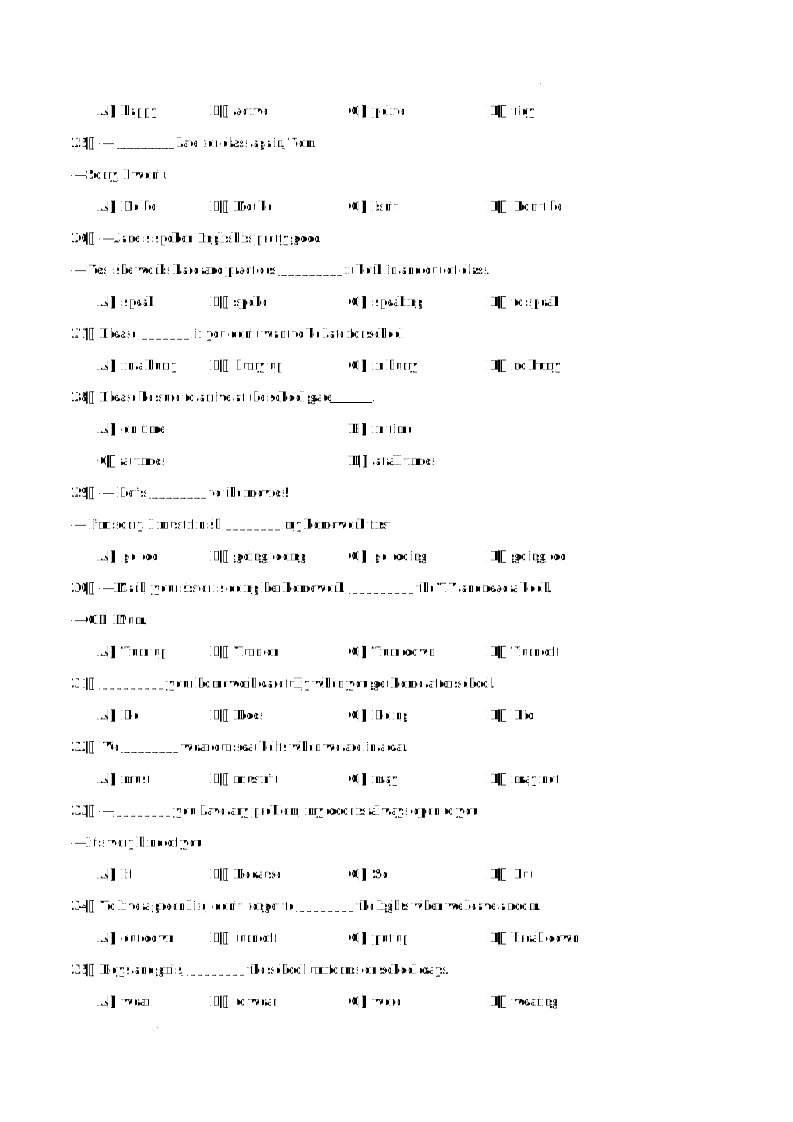
34.To live a green life, don’t forget to ________ the lights when we leave a room.
A.cut down B.turn off C.put up D.break down
35.Boys and girls, ________ the school uniforms on school days.
A.wear B.to wear C.wore D.wearing
36.It’s important for us to keep ________, so we should eat ________ food.
A.fit; health B.health; health C.health; fit D.fit; healthy
37.—Do you know this boy? He works really ________.
—Yes, I can ________ see him play. He always studies.
A.hardly; hardly B.hard; hardly C.hard; hard D.hardly; hard
38.—What’s in the icebox?
—Only ________ apples, but ________ milk.
A.a few, a few B.a few, little C.a little, few D.a few, a little
39.These shoes are ________ and that pair belongs to ________.
A.mine; hers B.me; her C.mine; her D.my; mine
40.Judy wants to be a singer and I often hear her ________ in her room.
A.sings B.singing C.sing D.to sing
41.Our teacher encouraged us _______ more confidence in performing the play.
A.have B.having C.had D.to have
42.---Work hard, and you will___________one day.
---You are right, working hard leads to _________.
A.succeed; success B.successful; succeed
C.succeed; successful D.successful; successful.
43.Class Five ________ us and ________ the football match yesterday.
A.beat;win B.win;beat C.beat;won D.won;beat
44.This bike is ________ expensive for me ________ afford. I’ll take the cheapest one.
A.too;to B.such;that C.so;that D.enough;to
45.I’m sorry I can’t go to the movies with you because I have ________ work to do.
A.too much B.much too C.too many D.many too
46.—Chinese restaurants always ________ the customers some tea before meals.
—Wow, that’s good for health.
A.treat B.lay C.direct D.serve
47.He ate a lot and did little exercise, so he ________ 10 pounds
A.put on B.put away C.put out D.put off
48.Cindy knows ice-cream is not good ________ her, but it ________.
A.with; taste nice B.for; tastes nice C.to; tastes well D.for; taste well
49.I went to the small village and didn’t find ________ there last Saturday.
A.anything interesting B.interesting anything
C.something interesting D.interesting something
50.One of the best ways to ________ our English is to read more books.
A.improve B.repeat C.suggest D.advise
51.—Would you like a glass of milk ________ a glass of water?
—A glass of milk, please.
A.or B.and C.but D.if
52.The success of China’s space programme is the ________ of many scientists’ hard work.
A.choice B.result C.cause D.attention
53.Look! The children ________ kites in the park happily.
A.fly B.are flying C.flew D.flies
54.—________ your mother making soup in the kitchen?
—Yes, she is. It smells great.
A.Does B.Is C.Are D.Do
55.My brother ________ TV now. He’s busy preparing for his test.
A.watches B.is watching C.doesn’t watch D.isn’t watching
56.—What ________ you ________ now?
—I’m reading a book.
A.do; do B.are; do C.are; doing D.do; doing
57.—Hello? This is Lisa. ________ I speak to Tom?
—Sorry, he isn’t at home.
A.Do B.May C.Am D.Are
58.—________ is it now?
—It’s half past nine.
A.What color B.What time C.What about D.What day
59.They ________ a boat race on the lake at the moment.
A.have B.has C.are having D.is having
60.My mother ________ dinner now. She usually ________ dinner at 6:00 p. m.
A.cooks; cooks B.is cooking; cooks C.cooks; is cooking D.is cooking; is cooking
61.—________ your father reading a newspaper?
—No, he ________. He’s watching TV.
A.Is; isn’t B.Are; aren’t C.Does; doesn’t D.Do; don’t
62.I’m looking forward ________ the Mogao Caves.
A.to visiting B.visit C.to visit D.visits
63.The boy runs ________ because he isn’t good at sports, and he ________ plays sports.
A.slowly; hardly B.slow; hardly C.slowly; hard D.slow; hard
64.— Hello! May I speak to Linda, please?
— Sorry, she is out at the moment. She is ________ her math homework in the library.
A.caring about B.working on C.dropping off D.waiting for
65.It’s difficult to hear your ________ because of the ________ of the traffic.
A.noise; voice B.noise; voice C.noise; sound D.voice; noise
66.About 200 students ________ the survey and 30 of them would like to ________ the chorus.
A.take part in; attend B.join; take part in C.attend; join D.take part in; join
67.It’s warm today. And the sun is shining ________ in the sky.
A.slowly B.brightly C.differently D.heavily
68.Great celebrations, such as Lion Dance, will take place in Chinatown this Sunday, ________.
A.take place B.more than C.rain or shine D.regardless of
69.It’s _________. You should be careful, or you may slip(滑倒).
A.cloudy B.sunny C.windy D.snowy
70.The COVID-19 has a terrible effect ________ our study and life.
A.of B.to C.on D.in
71.—I’m really ________ to see Linda leave the city.
—Mom, there is no reason to get so ________. Linda is just going for an education.
A.glad; sad B.sad; upset C.upset; glad D.glad; serious
72.—________, Jack?
—Not bad. I’m not very busy and I feel good.
A.What’s that B.How is it going
C.What are you doing D.How is the weather
73.—Good news! I got the last ticket to the concert.
—How you are!
A.active B.strange C.lucky D.funny
74.I hope I can have a robot to help me do my homework___________.
A.yesterday B.some day C.some days D.Sundays
75.In autumn, the weather ________ cooler and the leaves ________ yellow.
A.goes; get B.turns; become C.gets; turn D.becomes; go
76.Suzhou Olympic center is large enough for about 40,000 people ________ at the same time for a concert.
A.to stay in B.to stay C.staying D.stay on
77.It is great fun for children to go skating on the________river in________weather.
A.frozen; frozen B.freezing; freezing
C.frozen; freezing D.freezing; frozen
78.During the next few days, I decide to have a good __________ by taking a walk or seeing a movie. I really need to relax.
A.meal B.sleep C.rest D.habit
79.________ he fails many times, he never gives up his dream and keeps going for it.
A.Although B.Because C.Until D.Unless
80.Ox is a ________ of hard work in Chinese culture, the ________ of ox is mentioned in a poem by Lu Xun: “Head bowed, like a willing ox who serves people.”
A.victory, symbol B.symbol, spirit C.record, victory D.spirit, record
81.I ________ think he ________ ever visited the island.
A./; hasn’t B.don’t; was C.don’t; has D.don’t; will
82.The teacher’s ________ in different schools help her get more teaching ________.
A.experience; experience B.experiences; experiences
C.experiences; experience D.experience; experiences
83.He can’t take part in the football game not ________ the time but ________ he is ill (生病).
A.because of; because B.because; because C.because; because of D.because of; because of
84.— This football player hurt his legs just now. I want to join in the game _______.
—Thanks for joining in the game _______ him.
A.instead; instead B.instead of; instead
C.instead; instead of D.instead of; instead of
85.He has lived here ________ five years ago and finally found his dream job ________ last month.
A.for; in the end B.since; in the end C.for; at the end of D.since; at the end of
86.I usually ________ to school on foot, but I ________ by bike yesterday.
A.go; go B.went; went C.go; went D.went; go
87.There ________ a book on the desk now. There ________ two pens here yesterday.
A.is; were B.was; are C.are; was D.were; is
88.—Did they play games yesterday?
—________. They played basketball.
A.Yes, they did B.No, they didn’t C.Yes, they do D.No, they don’t
89.I think playing ________ basketball is ________ good way to learn the spirit of teamwork.
A.a; the B./; a C.the; a D./; the
90.—Mr Liu, I haven’t seen you for a long time.
—Yes. I ________ as a volunteer nurse in Yili for a month. I came back two days ago.
A.worked B.am working C.have worked D.work
91.Peter is only five years old, but he knows ________.
A.how play football B.how to play football
C.what to play football D.when to play football
92.—Is there ________in the restaurant?
—Yes, there is. The beef noodles here are really nice.
A.something delicious B.anything delicious C.everything expensive D.nothing expensive
93.Lily is tired now because she ________ late to finish her homework last night. Don’t ________, please.
A.put up; wake up her B.stays up; wake her up
C.stayed up; wake her up D.stayed up; woke her up
94.Johnny works _______ a policeman. ________ interesting job he has!
A.with, What B.with, What an C.as, How D.as, What an
95.—Excuse me, sir. I’m afraid you can’t park here. This is a non-parking area.
—Oh, sorry. I ________ the sign.
A.don’t see B.didn’t see C.didn’t saw D.saw
96.________, the little girl found her way back home with the help of a friendly wolf.
A.Finally B.Suddenly C.Recently D.Quickly
97.The old man told us a funny story and we all ________.
A.laughed B.laugh C.are laughing D.will laugh
98.Once upon a time, there ________ a little girl in the village.
A.is B.are C.was D.were
99.The wolf wanted ________ the little rabbit for dinner.
A.eat B.to eat C.eating D.ate
100.Don’t ________ loudly in the quiet forest.
A.shout B.shouts C.shouting D.to shout
学科网(北京)股份有限公司
$
资源预览图
1
2
3

相关资源
由于学科网是一个信息分享及获取的平台,不确保部分用户上传资料的 来源及知识产权归属。如您发现相关资料侵犯您的合法权益,请联系学科网,我们核实后将及时进行处理。