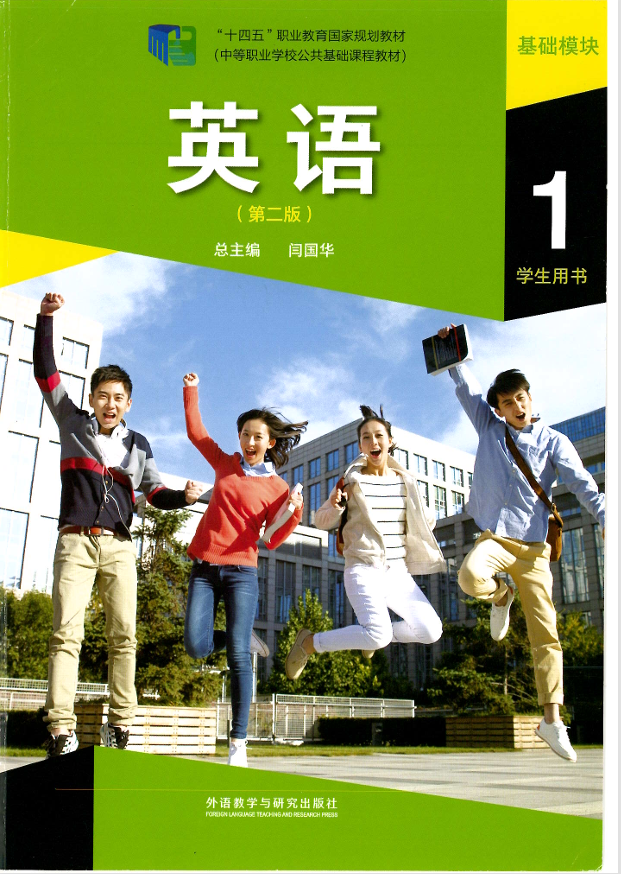
7.4 When Disaster Strikes-Grammar(练习)- 《英语 基础模块1》(外研版 第二版)【上好课】(原卷版+解析版)
2026-06-11
|
2份
|
19页
|
42人阅读
|
0人下载
摘要:
**基本信息**
《英语 基础模块1》外研版第二版Unit7语法同步练习,通过“基础巩固”与“素养提升”分层设计,实现从单一语法点到综合语言应用的进阶,适配中职教学目标,培育语言能力与思维品质。
**分层设计**
|层次|知识覆盖|设计特色|
|----|----------|----------|
|基础巩固|复合形容词、情态动词等语法点,事实信息提取|10道单选聚焦基础语法,2篇阅读(酒店安全、零废弃社区)强化语篇理解,夯实语言基础|
|素养提升|情境对话、词汇拼写及句型翻译|补全对话模拟酒店入住/采访情境,词汇拼写融合环保/安全主题,提升语用能力与文化意识|
内容正文:
《英语 基础模块1》(外研版 第二版)
Unit 7 When Disaster Strikes
Grammar 同步练习
基础巩固
1.I have to ask you for a ________ holiday.
A.two-days B.two-day C.two day D.two days
2.I ________ follow you. Would you please slow down a little bit?
A.can’t B.ought to C.might D.mustn’t
3.You ________ smoke in the hospital. It’s against the rules.
A.needn’t B.shouldn’t C.mustn’t D.can’t
4.The weather forecast says there will be a heavy snowstorm tomorrow, so the flight ________ be canceled.
A.will B.should C.might D.need
5.You ________ play with your phone in class.
A.may B.can C.mustn’t
6.— Have you heard about Zhangjiajie Glass Bridge?
— Of course, it’s built over a ________ canyon in Zhangjiajie National Forest Park.
A.300 metre deep B.300-metres-deep
C.300-metre-deep D.300-metres deep
7.— Look at the boy running on the ground. Is it Davis?
— It ________ be him. I saw him go to the teacher’s office just now.
A.must B.can’t C.could D.might
8.— Can you swim?
— Yes, I ________.
A.can B.must C.need D.should
9.You ________ play football in the street. It’s dangerous.
A.needn’t B.mustn’t C.may not D.couldn’t
10.As vocational college students, we ________ master both professional knowledge and practical skills.
A.can B.may C.must D.need
二、阅读理解
This guide explains what we must do for health and safety in the hotel. As an intern here, understanding these rules is very important.
Daily Hygiene Management
Keep the environment clean. Every surface in public areas like the hall, dining room, and restrooms needs careful cleaning with special products to kill germs (细菌). All cleaning equipment must be properly disinfected (消毒) after use, and checklists should be completed to ensure no area is missed out. Following this routine exactly is the basic rule and can help stop disease from spreading.
Responding to Sudden Illness
If a guest has a sudden problem like being unable to breathe or having a serious chest pain, stay calm. Your immediate action must be to call for medical help and clearly state the location of the emergency. What you should do next is to inform the manager at once. While waiting for the doctor, try to keep the person comfortable by talking to him/her quietly and make sure he/she can sit or lie down safely.
Emergency Evacuation Plans
In some emergencies, like a fire or earthquake, knowing the emergency evacuation plans can save lives. Maps near every elevator show the escape routes. You must be familiar with these during your first week and participate actively in safety training. When the alarm sounds, your duty is to guide guests toward the nearest safety exit, avoiding elevators. Everyone must gather on the square across from the main entrance of the hotel. Staying calm and following instructions strictly is the key to safety.
11.What is the first thing the intern should do if a guest has serious chest pain?
A.Tell the manager what is happening.
B.Try to make the guest comfortable.
C.Call for a doctor immediately.
D.Show the guest the escape route.
12.What can we infer from the guide about the hotel’s safety work?
A.It is only important during an emergency.
B.Guests are responsible for their own safety.
C.The manager does most of the safety work.
D.It is a shared duty for all team members.
13.What does the underlined phrase “escape routes” most probably mean?
A.Places to have a rest. B.Ways to leave the building safely.
C.Pictures of the hotel rooms. D.Rules for daily cleaning.
14.What is the main purpose of this guide?
A.To explain health and safety rules for hotel interns.
B.To describe the history of a large hotel.
C.To tell a story about a sick guest.
D.To list all the products used for cleaning.
15.Where is this passage most likely from?
A.A student’s personal diary. B.A hotel training handbook.
C.A restaurant menu. D.A travel magazine.
Our neighbourhood has started a new green project called “Zero Waste Community”. The project aims to reduce the amount of waste sent to landfills by 80% within one year.
How does it work? First, every household receives three different bins: one for recyclables (plastic, glass, paper), one for kitchen waste, and one for other waste. Second, volunteers collect recyclables from each building every Tuesday and Friday. Third, the community has set up a repair café where people can bring broken items like lamps, toys, and clothes to be fixed for free.
The results have been amazing. In the first three months, the neighbourhood recycled 5 tons of plastic and 3 tons of paper. The repair café has saved over 200 items from being thrown away. Many residents have changed their habits. Mrs. Chen, a retired teacher, said, “I used to throw away everything. Now I sort my waste carefully and take my broken kettle to the repair café.”
The project also encourages creative reuse. Last month, they held a competition where people made art from waste. A student named Li Ming won first prize with a robot made entirely from plastic bottles and old comic books.
The government is now considering spreading this project to other neighbourhoods. The success of “Zero Waste Community” proves that small actions can make a big difference.
16.What is the goal of the “Zero Waste Community” project?
A.To collect 5 tons of plastic.
B.To reduce waste by 80% in one year.
C.To build a repair café.
D.To hold an art competition.
17.How often do volunteers collect recyclables from each building?
A.Every day. B.Once a week.
C.Twice a week. D.Three times a week.
18.What can people do at the repair café?
A.Buy new items. B.Sell broken items.
C.Get broken items fixed for free. D.Learn to make art from waste.
19.What did Li Ming use to make his prize-winning robot?
A.Metal and wood. B.Glass and paper.
C.Plastic bottles and comic books. D.Kitchen waste and cloth.
20.What does the passage mainly tell us?
A.Waste sorting is difficult.
B.Small actions can protect the environment.
C.Only the government can reduce waste.
D.Repair cafés are expensive to run.
素养提升
三、补全对话
(A guest is at the reception desk of a hotel.)
Receptionist: Good morning. Can I help you?
Guest: Good morning. I’d like to check in.
Receptionist: OK. May I have your name and reservation number?
Guest: Zhang Wei. The reservation number is 138********.
Receptionist: Thank you, Mr. Zhang. What type of room would you prefer?
Guest: ____21____
Receptionist: No problem. ____22____
Guest: Could I have a room on a higher floor? I prefer a good view.
Receptionist: Certainly. Room 1008 on the 10th floor is available. ____23____
Guest: That sounds perfect.
Receptionist: Is there anything else I can help you with?
Guest: ____24____
Receptionist: Breakfast is served from 7:00 to 9:30 in the dining hall.
Guest: Thank you for your help.
Receptionist: ____25____
A.Do you have any special requests?
B.Would you like help with your luggage?
C.Yes, I’d like to know the breakfast hours.
D.It has a beautiful city view.
E.I’d like a non-smoking room with a king-size bed.
F.Would you like to make a reservation?
G.You’re welcome.
A: Good morning, Mr. Jones. I’m A from International Newspaper. Can I ask you some questions about PP Underground River?
B: ____26____
A: Many travelers say PP Underground River is one of the most unique natural wonders in the world. ____27____
B: Yes, it is. The river is famous for its limestone caves and clear water.
A: ____28____
B: Yes, you can. Visitors can take a boat tour to explore the caves and see the amazing rock formations.
A: That sounds fascinating! ____29____
B: The best time to visit is during the dry season, from December to May, when the weather is pleasant and the water is calm.
A: Thank you for the information! ____30____
B: You’re welcome. I hope you enjoy your visit to PP Underground River!
A.Can visitors explore the caves by boat?
B.Is it true that the river is home to many rare animals?
C.What is the best time to visit PP Underground River?
D.Sure, it’s my pleasure.
E.I’ll definitely plan a trip there soon!
F.How long does it take to explore the entire river?
G.Is PP Underground River really as unique as people say?
四、词汇拼写
31.We should ________ (节约) water in our daily life.
32.________ (我们必须照顾老人) because one day we will become old as well.
33.This little boy ________ (一定是你).
34.You should ________(相信) in yourself. No one can help you if you don’t believe in yourself.
35.We should learn how to ________ (保护) ourselves from danger.
36.After the disaster, many volunteers came to ________ (帮助) the people in need.
37.A ________ (海啸) is a large wave caused by an earthquake under the sea.
38.Don’t ________ (恐慌) when you face a disaster. Stay calm.
39.You can ________ (乘坐) the subway to the city center. It’s fast and cheap.
40.You should ________ (检查) your travel documents before you leave home.
原创精品资源学科网独家享有版权,侵权必究!
学科网(北京)股份有限公司
学科网(北京)股份有限公司
$
《英语 基础模块1》(外研版 第二版)
Unit 7 When Disaster Strikes
Grammar 同步练习
基础巩固
1.I have to ask you for a ________ holiday.
A.two-days B.two-day C.two day D.two days
【答案】B
【详解】句意:我不得不向你请假两天。
空处修饰名词holiday,应用复合形容词two-day作定语,连字符连接的名词用单数。
2.I ________ follow you. Would you please slow down a little bit?
A.can’t B.ought to C.might D.mustn’t
【答案】A
【详解】句意:我跟不上你。请你稍微慢一点好吗?
can’t不能;ought to应该;might可能;mustn’t禁止。题干中包含句型“Would you please do sth.?”,意为“请你做某事好吗?”。根据后半句“Would you please slow down a little bit? ”可知这是在请求对方慢一点可知,前半句表达的是“我不能/无法跟上你”,表示能力上的不足,要用“can’t”。
3.You ________ smoke in the hospital. It’s against the rules.
A.needn’t B.shouldn’t C.mustn’t D.can’t
【答案】C
【详解】句意:你不准在医院里吸烟。这是违反规定的。
needn’t不必;shouldn’t不应该;mustn’t禁止;can’t不能。根据“It’s against the rules.”可知,在医院吸烟是被明确禁止的行为,因此用mustn’t符合语境。
4.The weather forecast says there will be a heavy snowstorm tomorrow, so the flight ________ be canceled.
A.will B.should C.might D.need
【答案】C
【详解】句意:天气预报说明天有暴风雪,所以航班可能会取消。
will将;should应该;might可能;need需要。根据句意可知,有暴风雪的情况下,航班只是有取消的可能性,此处表不确定的推测,应用might。
5.You ________ play with your phone in class.
A.may B.can C.mustn’t
【答案】C
【详解】句意:你不可以在课堂上玩手机。
may可以;可能 can能;能;mustn’t禁止;不许。根据“play with your phone in class”可知,课堂规则属于强制性禁令,应选表示“禁止”的,故用情态动词mustn’t。
6.— Have you heard about Zhangjiajie Glass Bridge?
— Of course, it’s built over a ________ canyon in Zhangjiajie National Forest Park.
A.300 metre deep B.300-metres-deep
C.300-metre-deep D.300-metres deep
【答案】C
【详解】句意:——你听说过张家界玻璃桥吗?——当然,它建在张家界国家森林公园一个300米深的峡谷上。
分析句子结构可知,此处需要一个形容词作定语修饰名词canyon。由“数词-名词-形容词”构成的复合形容词中,名词必须用单数形式,且各部分之间需要用连字符连接。300-metre-deep表达正确。
7.— Look at the boy running on the ground. Is it Davis?
— It ________ be him. I saw him go to the teacher’s office just now.
A.must B.can’t C.could D.might
【答案】B
【详解】句意:——看那个在地上跑步的男孩,是Davis吗?——不可能是他。我刚才看见他去老师办公室了。
must一定,表肯定推测;can’t不可能,表否定推测;could可能,表语气较弱的推测;might可能,表语气更弱的推测。根据下文“I saw him go to the teacher’s office just now”可知,说话人有明确证据表明Davis刚才去了老师办公室,因此在跑步的男孩不可能是Davis,此处需用否定推测,B选项符合语境。
8.— Can you swim?
— Yes, I ________.
A.can B.must C.need D.should
【答案】A
【详解】句意:——你会游泳吗?——是的,我会。
can会,能;must必须;need需要;should应该。根据上文“Can you swim?”可知,是一般疑问句,且问的是能力,用can提问时,肯定回答应用“Yes, I can”,故用can。
9.You ________ play football in the street. It’s dangerous.
A.needn’t B.mustn’t C.may not D.couldn’t
【答案】B
【详解】句意:你不准在街上踢足球。这很危险。
needn’t不必;mustn’t禁止;may not可能不;couldn’t不能。根据后半句“It’s dangerous.”可知,在街上踢球是一件危险的事情,因此是被强烈禁止的行为。
10.As vocational college students, we ________ master both professional knowledge and practical skills.
A.can B.may C.must D.need
【答案】C
【详解】句意:作为职业院校的学生,我们必须掌握专业知识和实践技能。
can能够;may可以;must必须;need需要。根据前文“As vocational college students”可知,掌握专业知识和实践技能是职校学生的基本义务,语气上表示“必须”,must符合句意。
二、阅读理解
This guide explains what we must do for health and safety in the hotel. As an intern here, understanding these rules is very important.
Daily Hygiene Management
Keep the environment clean. Every surface in public areas like the hall, dining room, and restrooms needs careful cleaning with special products to kill germs (细菌). All cleaning equipment must be properly disinfected (消毒) after use, and checklists should be completed to ensure no area is missed out. Following this routine exactly is the basic rule and can help stop disease from spreading.
Responding to Sudden Illness
If a guest has a sudden problem like being unable to breathe or having a serious chest pain, stay calm. Your immediate action must be to call for medical help and clearly state the location of the emergency. What you should do next is to inform the manager at once. While waiting for the doctor, try to keep the person comfortable by talking to him/her quietly and make sure he/she can sit or lie down safely.
Emergency Evacuation Plans
In some emergencies, like a fire or earthquake, knowing the emergency evacuation plans can save lives. Maps near every elevator show the escape routes. You must be familiar with these during your first week and participate actively in safety training. When the alarm sounds, your duty is to guide guests toward the nearest safety exit, avoiding elevators. Everyone must gather on the square across from the main entrance of the hotel. Staying calm and following instructions strictly is the key to safety.
11.What is the first thing the intern should do if a guest has serious chest pain?
A.Tell the manager what is happening.
B.Try to make the guest comfortable.
C.Call for a doctor immediately.
D.Show the guest the escape route.
12.What can we infer from the guide about the hotel’s safety work?
A.It is only important during an emergency.
B.Guests are responsible for their own safety.
C.The manager does most of the safety work.
D.It is a shared duty for all team members.
13.What does the underlined phrase “escape routes” most probably mean?
A.Places to have a rest. B.Ways to leave the building safely.
C.Pictures of the hotel rooms. D.Rules for daily cleaning.
14.What is the main purpose of this guide?
A.To explain health and safety rules for hotel interns.
B.To describe the history of a large hotel.
C.To tell a story about a sick guest.
D.To list all the products used for cleaning.
15.Where is this passage most likely from?
A.A student’s personal diary. B.A hotel training handbook.
C.A restaurant menu. D.A travel magazine.
【答案】11.C 12.D 13.B 14.A 15.B
【导语】主要介绍了酒店实习生需要了解的健康与安全指南,包括日常卫生管理、突发疾病应对及紧急疏散计划。
【详解】11.细节理解题。根据“Responding to Sudden Illness”部分“If a guest has a sudden problem like being unable to breathe or having a serious chest pain ... Your immediate action must be to call for medical help (如果客人突然出现呼吸困难或严重胸痛等问题……你的首要行动必须是寻求医疗帮助)”可知,如果客人胸痛严重,实习生首先应该做的是立即叫医生。
12.推理判断题。根据“Emergency Evacuation Plans”部分“When the alarm sounds, your duty is to guide guests toward the nearest safety exit (当警报响起时,你的职责是引导客人前往最近的安全出口)”以及全文对实习生职责的描述,可推知酒店的安全工作是所有团队成员的共同责任。
13.词句猜测题。根据“Emergency Evacuation Plans”部分“You must be familiar with these during your first week (你必须在第一周熟悉这些)”及后文提到的引导客人前往安全出口,可知escape routes意为“安全撤离的路线”,即安全离开大楼的方法。
14.推理判断题。根据第一段“This guide explains what we must do for health and safety in the hotel. As an intern here, understanding these rules is very important. (本指南解释了我们在酒店必须做的健康与安全工作。作为这里的实习生,了解这些规则非常重要。)”可知,这篇指南的主要目的是向酒店实习生解释健康与安全规则。
15.推理判断题。通读全文,文章主要介绍了酒店实习生需要遵守的健康与安全规则,包括日常卫生、突发疾病应对和紧急疏散等内容,这属于酒店入职培训的内容,因此最有可能出自酒店培训手册。
Our neighbourhood has started a new green project called “Zero Waste Community”. The project aims to reduce the amount of waste sent to landfills by 80% within one year.
How does it work? First, every household receives three different bins: one for recyclables (plastic, glass, paper), one for kitchen waste, and one for other waste. Second, volunteers collect recyclables from each building every Tuesday and Friday. Third, the community has set up a repair café where people can bring broken items like lamps, toys, and clothes to be fixed for free.
The results have been amazing. In the first three months, the neighbourhood recycled 5 tons of plastic and 3 tons of paper. The repair café has saved over 200 items from being thrown away. Many residents have changed their habits. Mrs. Chen, a retired teacher, said, “I used to throw away everything. Now I sort my waste carefully and take my broken kettle to the repair café.”
The project also encourages creative reuse. Last month, they held a competition where people made art from waste. A student named Li Ming won first prize with a robot made entirely from plastic bottles and old comic books.
The government is now considering spreading this project to other neighbourhoods. The success of “Zero Waste Community” proves that small actions can make a big difference.
16.What is the goal of the “Zero Waste Community” project?
A.To collect 5 tons of plastic.
B.To reduce waste by 80% in one year.
C.To build a repair café.
D.To hold an art competition.
17.How often do volunteers collect recyclables from each building?
A.Every day. B.Once a week.
C.Twice a week. D.Three times a week.
18.What can people do at the repair café?
A.Buy new items. B.Sell broken items.
C.Get broken items fixed for free. D.Learn to make art from waste.
19.What did Li Ming use to make his prize-winning robot?
A.Metal and wood. B.Glass and paper.
C.Plastic bottles and comic books. D.Kitchen waste and cloth.
20.What does the passage mainly tell us?
A.Waste sorting is difficult.
B.Small actions can protect the environment.
C.Only the government can reduce waste.
D.Repair cafés are expensive to run.
【答案】16.B 17.C 18.C 19.C 20.B
【导语】本文介绍社区“零废弃”项目的目标、具体措施及显著成效,表明小行动能带来大改变,鼓励居民参与环保行为。
【详解】16.细节理解题。根据第一段中“The project aims to reduce the amount of waste sent to landfills by 80% within one year. (该项目旨在一年内将送往垃圾填埋场的废物量减少80%。)”可知,“零废弃社区”项目的目标是在一年内减少80%的废物。
17.细节理解题。根据第二段中“Second, volunteers collect recyclables from each building every Tuesday and Friday. (其次,志愿者每周二和周五从每栋楼收集可回收物。)”可知,志愿者每周收集两次可回收物。
18.细节理解题。根据第二段中“Third, the community has set up a repair café where people can bring broken items like lamps, toys, and clothes to be fixed for free. (第三,社区设立了一个维修咖啡馆,人们可以把灯、玩具和衣服等坏掉的物品带到那里免费修理。)”可知,人们在维修咖啡馆可以免费修理坏掉的物品。
19.细节理解题。根据第四段中“A student named Li Ming won first prize with a robot made entirely from plastic bottles and old comic books. (一位名叫李明的学生用塑料瓶和旧漫画书制作的机器人获得了一等奖。)”可知,李明用塑料瓶和漫画书制作了获奖机器人。
20.主旨大意题。通读全文,文章主要讲述了社区通过实施“零废弃社区”项目,在减少垃圾、鼓励维修和再利用方面取得的成效,最后一段提到“The success of “Zero Waste Community” proves that small actions can make a big difference. (“零废弃社区”的成功证明了小行动可以带来大改变。)”,由此可知,文章主要告诉我们小行动可以保护环境。
素养提升
三、补全对话
(A guest is at the reception desk of a hotel.)
Receptionist: Good morning. Can I help you?
Guest: Good morning. I’d like to check in.
Receptionist: OK. May I have your name and reservation number?
Guest: Zhang Wei. The reservation number is 138********.
Receptionist: Thank you, Mr. Zhang. What type of room would you prefer?
Guest: ____21____
Receptionist: No problem. ____22____
Guest: Could I have a room on a higher floor? I prefer a good view.
Receptionist: Certainly. Room 1008 on the 10th floor is available. ____23____
Guest: That sounds perfect.
Receptionist: Is there anything else I can help you with?
Guest: ____24____
Receptionist: Breakfast is served from 7:00 to 9:30 in the dining hall.
Guest: Thank you for your help.
Receptionist: ____25____
A.Do you have any special requests?
B.Would you like help with your luggage?
C.Yes, I’d like to know the breakfast hours.
D.It has a beautiful city view.
E.I’d like a non-smoking room with a king-size bed.
F.Would you like to make a reservation?
G.You’re welcome.
【答案】21.E 22.A 23.D 24.C 25.G
【导语】这是酒店接待员与顾客之间的对话。
【详解】21.根据上文“What type of room would you prefer?”可知,此处应回答具体的房间要求,选项E“我想要一间带特大号床的无烟客房。”符合语境。
22.根据答语“Could I have a room on a higher floor? I prefer a good view.”可知,此处应是询问顾客的特别要求,选项A“你有什么特别的要求吗?”符合语境。
23.客人之前提到偏好好视野(prefer a good view),接待员推荐房间后,此处应补充说明它符合要求,选项D“它有一个美丽的城市景观。”符合语境。
24.根据答语“Breakfast is served from 7:00 to 9:30 in the dining hall.”可知,此处应是询问早餐供应的具体时间,选项C“是的,我想知道早餐时间。”符合语境。
25.根据上文“Thank you for your help.”可知,回答感谢应是不客气,选项G“不客气。”符合语境。
A: Good morning, Mr. Jones. I’m A from International Newspaper. Can I ask you some questions about PP Underground River?
B: ____26____
A: Many travelers say PP Underground River is one of the most unique natural wonders in the world. ____27____
B: Yes, it is. The river is famous for its limestone caves and clear water.
A: ____28____
B: Yes, you can. Visitors can take a boat tour to explore the caves and see the amazing rock formations.
A: That sounds fascinating! ____29____
B: The best time to visit is during the dry season, from December to May, when the weather is pleasant and the water is calm.
A: Thank you for the information! ____30____
B: You’re welcome. I hope you enjoy your visit to PP Underground River!
A.Can visitors explore the caves by boat?
B.Is it true that the river is home to many rare animals?
C.What is the best time to visit PP Underground River?
D.Sure, it’s my pleasure.
E.I’ll definitely plan a trip there soon!
F.How long does it take to explore the entire river?
G.Is PP Underground River really as unique as people say?
【答案】26.D 27.G 28.A 29.C 30.E
【导语】这是一段记者采访Mr. Jones关于PP地下河的对话。
【详解】26.根据上文记者请求提问“I’m A from International Newspaper. Can I ask you some questions about PP Underground River?”可知,此处应是对方表示同意。选项D“当然,很乐意。”符合语境。
27.根据上文“Many travelers say PP Underground River is one of the most unique natural wonders in the world.”以及答语“Yes, it is.”可知,此处应是询问地下河是否真的像人们说的那样独特。选项G“PP地下河真的像人们说的那么独特吗?”符合语境。
28.根据答语“Yes, you can. Visitors can take a boat tour to explore the caves ...”可知,此处应是以Can开头的一般疑问句,询问是否可以乘船探索洞穴。选项A“游客可以乘船游览洞穴吗?”符合语境。
29.根据答语“The best time to visit is during the dry season, from December to May ...”可知,此处应是询问最佳参观时间。选项C“什么时候参观PP地下河最好?”符合语境。
30.根据上文“Thank you for the information!”及下文“You're welcome. I hope you enjoy your visit ...”可知,此处应是记者表达感谢后表示要去参观。选项E“我一定会很快计划去那里旅行的!”符合语境。
四、词汇拼写
31.We should ________ (节约) water in our daily life.
【答案】save
【详解】句意:在我们的日常生活中,我们应该节约用水。节约save,动词,在句中作谓语,should后面用动词原形。
32.________ (我们必须照顾老人) because one day we will become old as well.
【答案】We must take care of the elderly
【详解】考查情态动词及固定短语。句意:我们必须照顾老人,因为总有一天我们也会变老。主语“我们”是“We”,位于句首首字母大写;“必须”用情态动词“must”,后接动词原形;“照顾”是固定短语“take care of”;“老人”常用“the elderly”(“the + 形容词”表一类人)。故填We must take care of the elderly。
33.This little boy ________ (一定是你).
【答案】must be you
【详解】考查情态动词。句意:这个小男孩一定是你。根据汉语提示可知,此处表肯定推测“一定”,应用must,情态动词后接动词原形,“是你”对应be you。故填must be you。
34.You should ________(相信) in yourself. No one can help you if you don’t believe in yourself.
【答案】believe
【详解】考查动词的用法。句意:你应该相信自己,如果你不相信自己,没人能帮你。根据汉语“相信”提示,对应的动词为believe,believe in oneself是固定搭配;should后接动词原形,故填believe。
35.We should learn how to ________ (保护) ourselves from danger.
【答案】protect
【详解】考查动词的用法。句意:我们应该学会如何保护自己免受危险。根据汉语“保护”提示,对应的动词是protect,“how to do sth.”为固定结构(如何做某事),to后接动词原形,“protect...from...”为固定搭配,意为“保护……免受……”。故填protect。
36.After the disaster, many volunteers came to ________ (帮助) the people in need.
【答案】help
【详解】考查动词。句意:灾害过后,许多志愿者来帮助有需要的人。根据汉语提示,对应的动词是help,come to do sth.为固定结构,意为“来做某事”,to后接动词原形,故填help。
37.A ________ (海啸) is a large wave caused by an earthquake under the sea.
【答案】tsunami
【详解】考查名词的用法。句意:海啸是由海底地震引起的巨浪。根据汉语“海啸”提示,对应的名词是tsunami,横线前有不定冠词a,用单数形式,故填tsunami。
38.Don’t ________ (恐慌) when you face a disaster. Stay calm.
【答案】panic
【详解】考查动词。句意:面对灾害时不要恐慌,保持冷静。根据汉语提示,don’t后接动词原形,空处应使用panic。故填panic。
39.You can ________ (乘坐) the subway to the city center. It’s fast and cheap.
【答案】take
【详解】考查动词。句意:你可以坐地铁去市中心,又快又便宜。根据汉语提示,空处应用动词take,take the subway为固定短语,情态动词can后面接动词原形。故填take。
40.You should ________ (检查) your travel documents before you leave home.
【答案】check
【详解】考查动词。句意:离家前你应该检查一下你的旅行证件。根据汉语提示,对应的动词为check;should后接动词原形,故填check。
原创精品资源学科网独家享有版权,侵权必究!
学科网(北京)股份有限公司
学科网(北京)股份有限公司
$
资源预览图

1

2

3
由于学科网是一个信息分享及获取的平台,不确保部分用户上传资料的 来源及知识产权归属。如您发现相关资料侵犯您的合法权益,请联系学科网,我们核实后将及时进行处理。