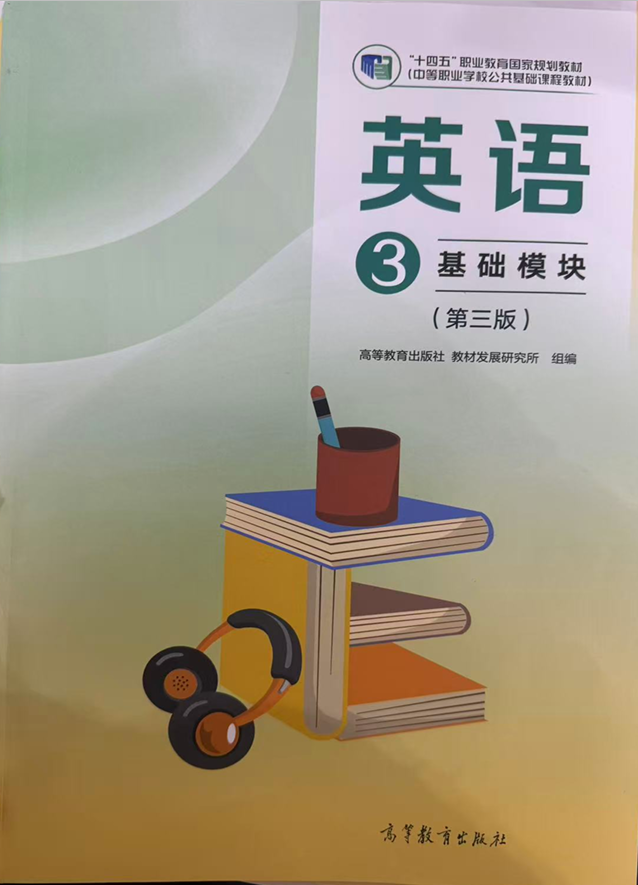
5.3 Natural Wonders in the World-Language Practice(练习)-《英语 基础模块3》(高教版 第三版)【上好课】(原卷版+解析版)
2026-06-10
|
2份
|
9页
|
54人阅读
|
0人下载
摘要:
**基本信息**
《英语 基础模块3》(高教版 第三版)Unit5同步过关练习,通过词汇、句型、语篇三层递进设计,实现从语言知识到综合应用的巩固,适配中职英语同步教学,兼顾语言能力与文化意识培养。
**分层设计**
|层次|知识覆盖|设计特色|
|----|----------|----------|
|基础层|核心词汇应用(名词转换)|通过语境拼写巩固单元词汇(如destine→destination)|
|进阶层|间接引语语法规则|聚焦直接引语转间接引语的时态、人称、时间状语转换(如第6-10题)|
|综合层|语篇信息获取与文化理解|以敦煌历史文化语篇为载体,考查细节理解与词义推断(如weathered词义)|
内容正文:
《英语 基础模块3》(高教版 第三版)
Unit5 Natural Wonders in the World
(Language Practice)同步过关练习
一、词汇拼写(5题)
1.The hotel is near the ________ (destine) of our trip.
2.The ________ (distant) between the two cities is about 100 kilometers.
3.This is a ________ (uniqueness) opportunity that we can’t miss.
4.The ________ (interviewee) asked the candidate many questions.
5.The ________ (forecaster) predicts it will rain tomorrow.
二、单项选择(5题)
6.She says, “I am happy.”变为间接引语(主句为现在时,时态不变情况 ),正确的是________。
A.She says that she am happy.
B.She says that she is happy.
C.She said that she was happy.
D.She says that she was happy.
7.They said, “We will go to the park tomorrow.” 变为间接引语,正确的是________。
A.They said that they will go to the park tomorrow.
B.They said that they would go to the park the next day.
C.They say that they would go to the park tomorrow.
D.They said that they will go to the park the next day.
8.直接引语为 “I will go shopping,” Lisa said. 变为间接引语正确的是________。
A.Lisa said that I will go shopping.
B.Lisa said that she will go shopping.
C.Lisa said that she would go shopping.
D.Lisa said that I would go shopping.
9.She said to Tom, “You can borrow my book.” 变为间接引语,正确的是________。
A.She told Tom that you can borrow her book.
B.She told Tom that he can borrow my book.
C.She told Tom that he could borrow her book.
D.She told Tom that you could borrow my book.
10.He said, “I finished the work last week.” 变为间接引语,正确的是______。
A.He said that he finished the work last week.
B.He said that he had finished the work the week before.
C.He said that he has finished the work last week.
D.He said that he finished the work the week before.
三、阅读理解(5题)
When most travelers think of Dunhuang in northwestern China’s Gansu Province, the image that comes to mind is often the Mogao Caves, known for their ancient art. But there is much more to see. Last summer, I traveled west into the Gobi Desert to discover other historical and natural wonders.
My journey began with a drive from Dunhuang into the wide, open desert. After two hours, I reached Yumen Pass. Long ago, it was an important gate on the Silk Road. Many traders and travelers passed through here.
Today, only weathered walls remain, but standing on top gives you amazing views of the golden desert. I could imagine camel caravans (商队) passing through here thousands of years ago. A famous Tang Dynasty poet once wrote about this place, saying the spring wind never reaches Yumen Pass.
Not far away lie the ruins (废墟) of Hecang City. It was once a supply depot (补给站) for soldiers during the Western Han Dynasty. The walls are still high, but the city is quiet now. As the sun set, the yellow sand and old walls looked like a painting.
Before returning, I visited the Dunhuang Yardang National Geopark. It is also known as “Devil City” because the rocks there have strange shapes and the wind makes scary sounds. At night, under countless stars, the desert felt magical.
Dunhuang is not only about caves. It is a place where history, nature, and culture meet, waiting for curious travelers to explore.
11.Why did the author travel west into the Gobi Desert last summer?
A.To see the Mogao Caves.
B.To see other historical and natural wonders besides the caves.
C.To study the ancient art of Dunhuang.
D.To follow the route of ancient traders on the Silk Road.
12.What was Yumen Pass used for long ago?
A.It was a famous temple for Buddhist art.
B.It was a supply depot for soldiers.
C.It was an important gate on the Silk Road.
D.It was a park with strange rocks formed by wind.
13.What does the underlined word “weathered” probably mean in Paragraph 3?
A.多彩的 B.天气多变的
C.新建的 D.受风雨侵蚀的
14.Why is the Dunhuang Yardang National Geopark known as “Devil City”?
A.The strange rocks and the sound of the wind there.
B.It is a dangerous place.
C.The weather there is very hot.
D.It is scary at night.
15.What is the main purpose of this passage?
A.To describe the unique natural scenery of the Gobi Desert.
B.To describe the difficult journey of driving through the Gobi Desert.
C.To introduce some attractions in Dunhuang besides the Mogao Caves.
D.To tell the history of the Silk Road and its importance in ancient China.
原创精品资源学科网独家享有版权,侵权必究!学科网(北京)股份有限公司
学科网(北京)股份有限公司
$
《英语 基础模块3》(高教版 第三版)
Unit5 Natural Wonders in the World
(Language Practice)同步过关练习
一、词汇拼写(5题)
1.The hotel is near the ________ (destine) of our trip.
【答案】destination
【解析】考查名词作宾语。句意:这家酒店靠近我们旅行的目的地。定冠词the后应接名词,destine的名词形式是destination“目的地”,在句中作宾语。故填destination。
2.The ________ (distant) between the two cities is about 100 kilometers.
【答案】distance
【解析】考查名词。句意:这两座城市之间的距离大约是100公里。分析句子可知,定冠词The后需要接名词作句子的主语,所给词distant是形容词,意为“遥远的”,其名词形式为distance“距离”,不可数名词。 故填distance。
3.This is a ________ (uniqueness) opportunity that we can’t miss.
【答案】unique
【解析】考查形容词和句子成分。句意:这是一个我们不能错过的独特的机会。分析句子可知,不定冠词a和名词opportunity之间需要一个形容词作定语。uniqueness是名词,意为“独特性”,其形容词形式为unique,符合题意。故填unique。
4.The ________ (interviewee) asked the candidate many questions.
【答案】interviewer
【解析】考查名词。句意:面试官问了候选人很多问题。根据“asked the candidate many questions”可知,此处是指面试官;分析句子可知,句中缺少主语,interviewee意为“被面试者”;将词缀-ee替换为-er,变成名词interviewer意为“面试官”,符合题意。故填interviewer。
5.The ________ (forecaster) predicts it will rain tomorrow.
【答案】forecast
【解析】考查名词作主语。句意:天气预报预测明天会下雨。定冠词the后应接名词,结合语境可知,应是“天气预报预测天气”,forecast是名词表示“天气预报”,谓语predicts是三单形式,此处用单数形式作主语。故填forecast。
二、单项选择(5题)
6.She says, “I am happy.”变为间接引语(主句为现在时,时态不变情况 ),正确的是________。
A.She says that she am happy.
B.She says that she is happy.
C.She said that she was happy.
D.She says that she was happy.
【答案】B
【解析】考查宾语从句。原句“She says, ‘I am happy.’ (她说:‘我很高兴。’)”改为间接引语时,需要将直接引语改为宾语从句,She says作主句,保持一般现在时态不变,直接引语中I改为she,从句时态保持一般现在时不变,am改为is。故选B。
7.They said, “We will go to the park tomorrow.” 变为间接引语,正确的是________。
A.They said that they will go to the park tomorrow.
B.They said that they would go to the park the next day.
C.They say that they would go to the park tomorrow.
D.They said that they will go to the park the next day.
【答案】B
【解析】考查直接引语变间接引语的规则。句意:他们说,“我们明天会去公园。”将直接引语“We will go to the park tomorrow.”变为间接引语。直接引语变间接引语时,主句“said”是一般过去时,从句时态需后退:一般将来时“will”变为过去将来时“would”;人称“We”对应主句主语“They” ;时间状语“tomorrow”替换为“the next day”。故修改后的句子为They said that they would go to the park the next day。故选B。
8.直接引语为 “I will go shopping,” Lisa said. 变为间接引语正确的是________。
A.Lisa said that I will go shopping.
B.Lisa said that she will go shopping.
C.Lisa said that she would go shopping.
D.Lisa said that I would go shopping.
【答案】C
【解析】考查宾语从句。句意:直接引语“我要去购物。”莉萨说,变为间接引语正确的是哪一项。根据直接引语中主语I指代Lisa,变间接引语需换为she;主句said是一般过去时,直接引语的will需变为过去将来“would”可知,选项C“Lisa said that she would go shopping.”符合。故选C。
9.She said to Tom, “You can borrow my book.” 变为间接引语,正确的是________。
A.She told Tom that you can borrow her book.
B.She told Tom that he can borrow my book.
C.She told Tom that he could borrow her book.
D.She told Tom that you could borrow my book.
【答案】C
【解析】考查直接引语变间接引语的规则。句意:她对汤姆说,“你可以借我的书”将直接引语“You can borrow my book.”变为间接引语。直接引语变间接引语时,主句“said to Tom”可改为“told Tom”;主句是一般过去时,从句时态需后退:情态动词“can”变为“could”;人称“You”对应宾语“Tom”改为“he”,“my”对应主句主语改为“her”。故修改后的句子为She told Tom that he could borrow her book,故选C。
10.He said, “I finished the work last week.” 变为间接引语,正确的是______。
A.He said that he finished the work last week.
B.He said that he had finished the work the week before.
C.He said that he has finished the work last week.
D.He said that he finished the work the week before.
【答案】B
【解析】考查直接引语变间接引语的规则。句意:他说:“我上周完成了工作。”直接引语是“I finished the work last week.”,主句时态是“He said”(一般过去时)。根据间接引语规则,主句为过去时态时,从句时态需后退:一般过去时(finished)变为过去完成时(had finished),时间状语last week可改为the week before,人称I改为he。根据规则,更改句子为He said that he had finished the work the week before。故选B。
三、阅读理解(5题)
When most travelers think of Dunhuang in northwestern China’s Gansu Province, the image that comes to mind is often the Mogao Caves, known for their ancient art. But there is much more to see. Last summer, I traveled west into the Gobi Desert to discover other historical and natural wonders.
My journey began with a drive from Dunhuang into the wide, open desert. After two hours, I reached Yumen Pass. Long ago, it was an important gate on the Silk Road. Many traders and travelers passed through here.
Today, only weathered walls remain, but standing on top gives you amazing views of the golden desert. I could imagine camel caravans (商队) passing through here thousands of years ago. A famous Tang Dynasty poet once wrote about this place, saying the spring wind never reaches Yumen Pass.
Not far away lie the ruins (废墟) of Hecang City. It was once a supply depot (补给站) for soldiers during the Western Han Dynasty. The walls are still high, but the city is quiet now. As the sun set, the yellow sand and old walls looked like a painting.
Before returning, I visited the Dunhuang Yardang National Geopark. It is also known as “Devil City” because the rocks there have strange shapes and the wind makes scary sounds. At night, under countless stars, the desert felt magical.
Dunhuang is not only about caves. It is a place where history, nature, and culture meet, waiting for curious travelers to explore.
11.Why did the author travel west into the Gobi Desert last summer?
A.To see the Mogao Caves.
B.To see other historical and natural wonders besides the caves.
C.To study the ancient art of Dunhuang.
D.To follow the route of ancient traders on the Silk Road.
12.What was Yumen Pass used for long ago?
A.It was a famous temple for Buddhist art.
B.It was a supply depot for soldiers.
C.It was an important gate on the Silk Road.
D.It was a park with strange rocks formed by wind.
13.What does the underlined word “weathered” probably mean in Paragraph 3?
A.多彩的 B.天气多变的
C.新建的 D.受风雨侵蚀的
14.Why is the Dunhuang Yardang National Geopark known as “Devil City”?
A.The strange rocks and the sound of the wind there.
B.It is a dangerous place.
C.The weather there is very hot.
D.It is scary at night.
15.What is the main purpose of this passage?
A.To describe the unique natural scenery of the Gobi Desert.
B.To describe the difficult journey of driving through the Gobi Desert.
C.To introduce some attractions in Dunhuang besides the Mogao Caves.
D.To tell the history of the Silk Road and its importance in ancient China.
【答案】11.B 12.C 13.D 14.A 15.C
【导语】文章讲述了作者暑期游敦煌戈壁,探访玉门关、河仓城、雅丹地貌,领略丝路古迹与大漠风光。
【解析】11.细节理解题。由文章第一段最后一句“Last summer, I traveled west into the Gobi Desert to discover other historical and natural wonders. (去年夏天,我向西行进,深入戈壁滩,探寻其他历史与自然的奇观。)”可知,作者前往戈壁沙漠的目的是探索莫高窟以外的其他奇观。
12.细节理解题。根据文章第二段中“Long ago, it was an important gate on the Silk Road. (很久以前,它是丝绸之路上的一个重要关口。)”可知,玉门关在历史上是丝绸之路上的重要关口。
13.词句猜测题。weathered在句中修饰城墙(walls),因此可排除B选项。句中连词but表转折,其连接的后半句“but standing on top gives you amazing views of the golden desert. (但站在城墙顶端,你就能欣赏到金色沙漠的壮丽景色。)”表示积极、正面的含义,因此前半句所描述的应是与之形成对比的情况,由此推断weathered意为“受风雨侵蚀的”。
14.细节理解题。由文章第五段第二句“It is also known as ‘Devil City’ because the rocks there have strange shapes and the wind makes scary sounds. (它也被称为“魔鬼城”,因为那里的岩石形状奇特,风会发出可怕的声音。)”可知,“魔鬼城”得名的原因是形状怪异的巨石和可怕的风声。
15.推理判断题。文章开头指出敦煌不止莫高窟,随后依次介绍玉门关、河仓城、雅丹地质公园等景点,最后总结敦煌是历史、自然和文化的交汇点。因此,文章旨在介绍敦煌除莫高窟以外的其他景点。
原创精品资源学科网独家享有版权,侵权必究!学科网(北京)股份有限公司
学科网(北京)股份有限公司
$
资源预览图

1
由于学科网是一个信息分享及获取的平台,不确保部分用户上传资料的 来源及知识产权归属。如您发现相关资料侵犯您的合法权益,请联系学科网,我们核实后将及时进行处理。