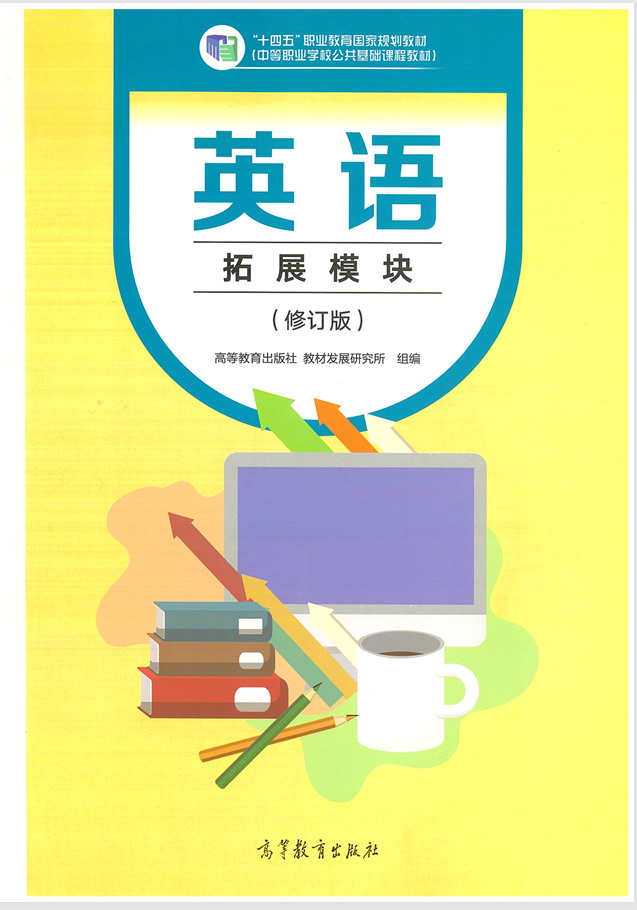
Unit 8 Making a Career Plan-状语从句(讲+练)-《英语 拓展模块》(高教版2023修订版)
2026-06-08
|
57页
|
170人阅读
|
2人下载
精品
摘要:
这是中职英语《英语 拓展模块》(高教版2023修订版)Unit 8状语从句同步教学课件,涵盖10类状语从句的定义、引导词、用法及区别,通过例句解析、对比辨析构建学习支架,含视频导入及巩固练习。
资料特色鲜明,以“哪吒 太乙真人”视频导入激发学习兴趣,用熊大、哪吒等动画角色例句降低语法理解难度,对比when/while/as等用法培养思维品质,练习设计强化语言运用能力,助力学生提升语法应用能力,为教师提供结构化教学资源。中职学生基础相对薄弱,该资料通过情境化、趣味化设计,帮助学生轻松掌握语法知识,适合中职各年级同步教学使用。
内容正文:
状语从句
《英语 拓展模块》(高教版2023修订版)
Unit 8 Making a Career Plan 语法
10 比较状语从句
目录
06 条件状语从句
07 让步状语从句
08 结果状语从句
09 方式状语从句
01 状语从句的定义
02 时间状语从句
03 地点状语从句
04 原因状语从句
05 目的状语从句
11 巩固练习
(动画)邀请你掌握:
(动画)学会判断祈使句的方法
(动画)用祈使句发出指令或表达禁止
(动画)区别“祈使句+and+陈述句”和“祈使句+or+陈述句”
2
Watch a video
什么是状语从句
状语从句是用句子充当状语成分,表示行为发生的时间、地点、目的、原因、方式等。
eg. When he got to the office, it had been cleaned.
时间状语从句
eg. Where there is a will, there is a way.
地点状语从句
eg. He must be ill, for he is not here today.
原因状语从句
eg. Jane's superior asked her to bring the medicine quickly so that he could help the patient.
目的状语从句
时间状语从句
说明主句动作发生时间的从句,常用引导词连接主句和从句。
常见引导词:
when/while/as, as soon as, since,till/until, before, after...
when, while和as的用法
when, while和as都可以引导时间状语从句,意为“当……时候”。若表示主句中的动词和从句中的动作同时发生,而从句的谓语动词是延续性动词时,这三个词是等同的,可以互换。
When/ While/ As we were dancing, a stranger came in.
当我们跳舞的时候,一个陌生人进来了。
When/ While/ As I was taking a bath, the telephone rang.
我在洗澡的时候,电话响了。
When/While/As she was listening to music, she fell asleep.
当她在听音乐的时候,她睡着了。
延续性动词
延续性动词
延续性动词
when, while和as的用法区别
1. when引导的时间状语从句的谓语动词既可以是延续性的,也可以是非延续性的,而while引导的时间状语从句的谓语动词只能是延续性的。
When you came in, I was talking with a few boys.
你进来时,我正在和几个男孩子谈话。
While we were waiting for the bus, it was raining heavily.
我们等公交车时,天正下着大雨。
非延续性
延续性
when, while和as的用法区别
2. while和as常表示从句的动作与主句的动作同时发生,而when表示从句的动作发生在主句的动作之前、之后,也可同时发生。
They rushed in while/ as we were discussing problems.
When he had finished his homework, he took a short rest.
先发生
后发生
两个动作同时发生
When he got to the office, it had been cleaned.
先发生
后发生
when, while和as的用法区别
3. while表示两个延续性动作同时发生而又有对比意义,主从句的时态通常是相同的。
While my mom was cooking dinner, my dad was setting the table.
妈妈做晚饭时,爸爸正在摆餐具。
While my grandma was telling stories, the kids were sitting quietly and listening.
奶奶讲故事时,孩子们正安静地坐着听。
对比意义
对比意义
when, while和as的用法区别
4. as意为“随着……;一边……,一边……”,常用于表示两个动作同时或者几乎同时发生
As you grow older, you will know better and better about yourself.
同时发生随着年龄的增长,你会越来越了解自己。
As he was reading, he was shaking his head.
他边读书边摇头。
同时发生
同时发生
as soon as 的用法
1. 含义:表示 “一…… 就……”,引导时间状语从句,强调主句动作在从句动作发生后立即发生,两者时间间隔极短。
eg. As soon as we got home, it began to rain.
(began 紧跟在got 之后发生)
as soon as 的用法
2. 时态
As soon as Xiong Da sees Logger Vick, he will call Xiong Er.
01. 主句用一般将来时,从句用一般现在时(“主将从现”)
Xiong Da closed the cave door as soon as the wind got strong.
02. 主从句描述过去的动作时,均用一般过去时。
一般将来时
一般现在时
一般过去时
一般过去时
Since的用法
1. since引导时间状语从句时,主要表示“自从…… 以来”,强调从过去某个时间点开始的动作或状态,一直持续到现在,常与现在完成时搭配。
eg. Since I came to this city, I have made many good friends.
一般过去时
现在完成时
2. “It is/ has been+时间段+ since从句”句式表示“自从……以来有(多久)”。since从句不可以用否定句。
eg. It is/ has been 5 years since we last met.
自从我们上次见面以来已经有5年了。
until/till的用法
until/ till意为“直到……为止”。当主句为否定句时,常构成“not…
until...”结构,意为“直到……才……”。
1. 主句如果是否定句,谓语动词需用非延续性动词,表示主句的动作到从句表示的时间点才开始。
肯定句,谓语为延续性动词
2. 主句如果是肯定句,谓语动词需用延续性动词,表示主句的动作直到从句表示的时间点就结束。
eg. I will wait for you until/ till you come back.
eg. You can’t leave until you have finished your homework.
before, after的用法
before意为“在……之前”时,表示主句动作发生在从句动作之前。
after意为“在……之后”,表示主句动作发生在从句动作之后。
Please turn off the lights before you leave the classroom.
先发生
He arrived after the game started.
后发生
后发生
先发生
地点状语从句
在句子中充当地点状语的从句称为地点状语从句。
常见引导词:where(在……地方), wherever(无论何处)等
eg. I can't find my phone where I left it.
eg. Xiong Da rests where the grass is soft.
eg. We go wherever people need us.
原因状语从句
在句子中说明主句原因的从句称为原因状语从句。
引导词:
because (因为)
since (既然)
as (由于)
now that (既然)
seeing that(由于)
in that(因为)
because引导的原因状语从句:
Because he fails the exam, he is upset.
Nezha fails the exam, so he is upset.
—Why can’t Tom go out to play?
—Because he made a mistake yesterday.
注意
1. because不能与so连用。
2. Why提问的句子,必须用because回答。
3. because+ 从句;because of + 名词/动名词。
Tom is upset because of the bad weather.
短语
since引导的原因状语从句
Since you are experienced, you can help us with the project.
注意
语气不如because强,多放句首,既然” 表示已经知道原因,语气比because弱。
Since Nezha has magic, he can help people.
as引导的原因状语从句
注意
由于;因为” 表示已经知道原因,语气比since弱。 位置很灵活
eg. As it was so cold, we decided to stay at home.
eg. I’ll have to ask someone else, as you can’t deal with my problem.
now that引导原因状语从句:
注意
通常和since替换,that可省略。
eg. Now that we know each other better, we can talk more.
eg. Now that your teacher knows the truth, he isn’t angry.
seeing that引导原因状语从句:
eg. Seeing that it’s raining, the kid shares his umbrella with a boy.
eg. Seeing that the cat is stuck, he helps it down.
由于
in that引导原因状语从句:
eg. Wukong is a hero in that he protects the village.
eg. Tom is kind in that he helps weak people.
注意
可以和because换用,不放句首。
目的状语从句
在句子中补充说明主句谓语动词发生的目的的状语从句。
so that (为了)
in order that(为了)
常见引导词
lest/for fear that(以防、以免)
in case(以防、以免)
不常见引导词
so that引导目的状语从句
例句:I'll take the subway so (that) I can save some time.
例句:In this step, you need to be clear about your strengths and weaknesses so that you can find the job that fits you best.
注意
so that通常放在句中。
in order that引导目的状语从句
例句:In order that the forest is safe, Xiong Da patrols every day.
例句:They practice every day in order that they may win the competition.
注意
通常放在句中或句首。
lest/for fear that引导目的状语从句
例句:He wrote the name down for fear that (lest) he should forget it.
例句:He didn’t leave the kids alone for fear that they should get lost in the mountains.
注意
通常用虚拟结构,形式为 should + 动词原形
in case引导目的状语从句
例句:Tom takes extra food with him in case he gets hungry during the journey.
注意
可用虚拟语气,也可用陈述语气
例句:He wrote down the password in case he should forget it.
陈述语气
虚拟语气
目的状语从句与不定式互换
She studies hard so that she can pass the exam.
She studies hard in order to pass the exam. / She studies hard so as to pass the exam.
当从句主语和主句主语一致时,可用 so as to,in order to 替换目的状语从句。
He got up early in order that he could catch the first bus.
He got up early in order to catch the first bus. / He got up early so as to catch the first bus.
条件状语从句
条件状语从句是在复合句中作条件状语的句子。
条件状语从句的连接词
如果,假如
unless
除非,如果不
unless = if … not
if
as long as
只要
if/unless引导的条件状语从句
if表示正面的条件,意为“如果”;unless(=if ... not)表示反面的条件,意为“除非,如果不”。
eg. If you are clear about your strengths and weaknesses, we'll talk about your career plan.
eg. You’ll fail the exam unless you study hard.
eg. You’ll fail the exam if you don’t study hard.
as long as引导的条件状语从句
as long as(=so long as)引导语气强烈的条件状语从句,表“只要”。
eg. As long as you don’t lose heart, you will succeed.
eg. So long as one keeps calm, one doesn’t feel the heat too much.
条件状语从句的时态
1.主将从现:条件状语从句要用一般现在时态表示将来的动作。
eg. If it doesn’t rain tomorrow, we’ll go to the park.
从现
主将
2.主情从现:条件状语从句中的主句可能是情态动词(can, may, might, must, should) + 动词原形的形式。
eg. If you want to pass the exam, you must study hard.
从现
主情
条件状语从句的时态
3.主祈从现:条件状语从句中的主句可能是祈使句。
eg. If you see him, please give him this note.
从现
主祈
if用法对比
意为“如果” 意为“是否”,= whether
引导条件状语从句。 引导宾语从句。
遵循“主将从现”“主情从现”
“主祈从现”原则。 无此用法。
If you wants to see him, you can tell him to wait.
如果你想见他的话,叫他等好了。 I wonder if I should wear a hat.
我不知道是否应该戴帽子。
让步状语从句
在句子中作让步状语的从句叫让步状语从句。
让步状语从句的连接词
虽然
even if
even though
即使
though/although
as
虽然
no matter +疑问词
though/although引导的让步状语从句
不可与 but 连用,但可与 yet/still 连用表转折语气
eg. Although he tried hard, he could not find a job.
eg. Although/Though it was raining hard, yet they went on playing football.
eg. He tried hard, but he could not find a job.
even if/even though引导的让步状语从句
even if/even though引导让步状语从句时,表示语气更强的让步,意为“即使,即便”。
eg. Even if / though he doesn't have much money, he feels happy.
eg. Even though/if it rains tomorrow, we’ll go there.
no matter+疑问词引导的让步状语从句
wherever,(what,who,whom,when,which,how)+ever表示“无论……”,引导让步状语从句时,相当于no matter where(what,who,whom,when,which,how)。
eg. However / No matter how hard she tried, she could not change their mind.
eg. Whenever we achieve a goal, there will be another goal waiting to be reached, so that we will never get lost.
as引导的让步状语从句
as引导的从句必须用倒装语序: 表语/状语/动词原形+as/though+主语+其他
若表语是可数名词单数,前置时要省略冠词。
eg. Child as/though he is, he can tell the names of all the cars.
eg. Much as/though I like it, I won't buy it, for it's too expensive.
结果状语从句
结果状语从句是在句子中作结果状语的从句。结果状语从句一般置于句尾。
结果状语从句的连接词
如此…以至于…
such ... that ...
如此…以至于…
so ... that ...
因此
so that
so ... that ...引导的结果状语从句
eg. The test was so hard that many students failed.
eg. He was so angry that he couldn’t say a word.
句型一:主语+谓语+so+adj/adv+that 从句
形容词
形容词
so ... that ...引导的结果状语从句
eg. It was so fine a day that we all went out to have a picnic.
eg. He is so naughty a boy that he always gets his parents into trouble.
句型二:主语+谓语+so+adj+a/an+单数名词+that 从句
so+adj+a/an+单数名词
so+adj+a/an+单数名词
so ... that ...引导的结果状语从句
eg. There was so little water that it was not enough for all us to use.
eg. There is so much work to do that everyone feels bored.
当名词前有many, little, few, much等表示大小多少的词来修饰时,只能用so, 不能用such
注意: 当little 表示“ 小”修饰名词时,还要用such。
eg. They are such little puppies that all the children love them very much.
小的,形容词修饰名词
such ... that ...引导的结果状语从句
eg. She is such a popular star that everybody knows her.
句型一:主语+谓语+such+a/an+adj+单数名词+that 从句
=主语+谓语+so+adj+a/an+单数名词+that 从句
eg. She is so popular a star that everybody knows her.
such ... that ...引导的结果状语从句
eg. They are such hard-working students that everyone likes them.
句型二:主语+谓语+such+adj+名词复数+that 从句
eg. It was such good news that we all felt excited after hearing it.
句型三:主语+谓语+ such + adj.+不可数名词+that 从句
such/so ... that ...用法总结
so that引导的结果状语从句
eg. She practices English every day so that she speaks it fluently.
eg. We planted many trees so that the air in the neighborhood became fresher.
so that 引导结果状语从句时,核心作用是说明主句动作或情况所引发的 “自然结果”,从句与主句之间存在 “因果逻辑”。
方式状语从句
在句子中作方式状语的从句称为方式状语从句。方式状语从句一般位于句尾,有时位于句中。
方式状语从句的连接词
像,如同
as if/ as though
好像
as
as引导的方式状语从句
eg. Can you do it as I told you?
as引导方式状语从句,意为“按······的方式,如同”。
eg. She sang the song as she had been taught.
as if/ as though引导的方式状语从句
eg. He glanced about as if/ though he was in search of something.
他四处看了看,好像在找什么东西。(真实句)
两者引导的方式状语从句所表示的情况是事实或者具有很大的可能性时,通常用陈述语气;
如果从句表示的情况不是事实,而是主观的想象,则用虚拟语气。
eg. It looks as if/ though it were going to rain.
天看起来要下雨。(虚拟句)
比较状语从句
在句中作状语,用来表示人 / 事物之间在性质、程度、数量等方面进行比较的从句,从句常省略与主句重复的成分。
eg. his car is not as / so expensive as that one.
句型一:as /as…as(同级比较)
比较状语从句
eg. He knows more than I do.
句型二:than(不同级比较)
eg. The more you learn, the humbler you will be.
句型三:the + 比较级…, the + 比较级…(递进比较)
巩固练习
关系副词
关系副词
一、填空
1.The teacher asked me to read aloud ________ the other students could hear me clearly.
2.We didn’t start our discussion ________ everyone arrived.
3.Xiong Da will build a new home ________ the air is fresh and the environment is safe in the forest.
4.We have lived here ________ my father began to work in this city.
5. ______ you don't hurry up, you will miss the bus.(if/unless)
6. He failed the exam ______ he studied hard.(though/so that)
so that
untill
where
since
If
though
巩固练习
关系副词
关系副词
二、单选题
1.I didn’t go to bed ________ I saw my father come back.
A.after B.until C.and D.or
2.We will go mountain climbing ________ the holiday begins.
A.at B.of C.as soon as D.in
3.My favourite subject is English ________ it’s interesting.
A.so B.because C.but D.and
4. Dr Bethune developed training courses for local doctors and nurses ________ they could learn about how he treated the sick.
A.so that B.as soon as C.because D.when
B
C
B
A
巩固练习
关系副词
关系副词
5. ______ it is raining heavily, we still go to the park.
A. Because B. Though C. If D. So
6. He is ______ a careful student ______ he never makes mistakes.
A. so; that B. such; that C. too; to D. enough; to
7. You can borrow my book ______ you return it on time.
A. as long as B. even if C. so that D. as if
8. —Lucy, what about going camping if it ______ tomorrow?
—Sounds great!
A. didn’t rain B. doesn’t rain C. rains D. won’t rain
B
B
A
B
10 比较状语从句
06 条件状语从句
07 让步状语从句
08 结果状语从句
09 方式状语从句
01 状语从句的定义
02 时间状语从句
03 地点状语从句
04 原因状语从句
05 目的状语从句
一起总结一下今日所学
(动画)判断句子是否为祈使句,需确认其是否:
(动画)发出指令
(动画)主语省略
(动画)动词原形开头
(动画)祈使句的肯定形式有三种:
(动画)do型
(动画)be型
(动画)let型
(动画)祈使句的否定形式:
(动画)don’t + do型/be型/let型
(动画)no+动词ing型
(动画)以及祈使句+and/or+陈述句的用法区别:
(动画)照这样做,and结果很美好
(动画)得这样做,or结果不如人意。
今天的内容就到这里。我们下次见。
$
资源预览图

1

2

3

4

5

6
由于学科网是一个信息分享及获取的平台,不确保部分用户上传资料的 来源及知识产权归属。如您发现相关资料侵犯您的合法权益,请联系学科网,我们核实后将及时进行处理。