期末语法复习(现在完成时和过去进行时)-2025-2026学年八年级英语下册期末复习(人教版)
2026-06-05
|
2份
|
20页
|
1535人阅读
|
32人下载

摘要:
**基本信息**
聚焦现在完成时与过去进行时,通过语法梳理-题型应用双模块构建系统性训练,融合标志词辨析与时态对比,提升语言运用与逻辑思维能力。
**专项设计**
|模块|题量/典例|方法提炼|知识逻辑|
|----|-----------|----------|----------|
|语法梳理|2大时态|when/while用法对比(时间点/段、动词延续性);现在完成时标志词分类(already/yet/for/since等)|从构成/含义到用法区别,再到标志词应用,形成"概念-辨析-实践"逻辑链|
|单项选择|40题|时态标志词定位法(如第22题since);时间状语从句时态匹配(如第13题when/while)|覆盖高频考点:延续性动词转换(borrow/keep)、时态对比(过去进行时vs一般过去时)|
|单词拼写|20题|时态构成规则(was/were+doing;have/has+过去分词)|强化语法点在具体语境中的准确表达,巩固语言能力|
内容正文:
班级 姓名 学号 分数
期末语法复习
现在完成时和过去进行时
(时间:60分钟,满分:100分)
过去进行时
构成
was/were+ doing
含义
表示过去某一时刻或某一时间段正在进行的动作
标志词
at that time, at this time yesterday, at 8:00 yesterday morning, all night 及when/while
用 法 区 别
When
①既指时间点,也可指时间段;后可接终止性动词,也可接延续性动词
②从句的动作和主句的动作可以是同时,也可以是先后发生
③when 后一般接过去式:When the teacher came in, we were talking.
④表“突然”:I was having my dinner when there was a sudden knock at the door.
While
①后接延续性动词
②从句的动作和主句的动作是同时发生
③while 后一般接进行时:While we were talking, the teacher came in.
④表“然而”:Mother was cooking ,while father was watching TV .
现在完成时
定 义
现在全部完成
表示过去发生或者已经完成的动作对现在造成的影响或结果
I have seen this movie twice.
现在部分完成
表示从过去某一时间开始并一直持续到现在的动作或状态。
I have lived in Changsha for 3 years.
构 成
have/has+过去分词
标 志 词
already(“ 已经 ”,用于肯定句)
He has already got her help.
yet(“已经 ”,用于疑问句;“还 ”, 用于否定句)
Has he come back yet?
He hasn’t come back yet.
ever(曾经)
This is the best film I have ever seen.
never(从没)
He has never been to Beijing.
for(+时间段)
He has been away for two years.
since ( +时间点/…ago/从句)
He has been an English teacher since 1992.
Mr Green has lived in China since five months ago.
Mr Green has lived in China since he came to China.
以动作发生的次数为标志,比如 twice, three times。
He says he has been to the USA three times.
以 so far, in the last/past few years, recently 为标志
He has got to Beijing so far.
She has studied over 2000 words in the last few years.
一、单项选择(本大题共40小题,每小题1.5分,共60分)
1.When I saw XiaoWang yesterday, he ________ an old man cross the road.
A.helped B.will help C.was helping
【答案】C
【详解】句意:昨天我看到小王时,他正在帮一位老人过马路。
根据“When I saw XiaoWang yesterday”可知,此处强调“看到的那一刻”正在发生的动作,应用过去进行时(was/were + doing),表示过去某个时间点正在进行的动作。应填was helping。A选项为一般过去时,表示动作已完成;B选项为一般将来时,与“yesterday”时间矛盾。
2.I was folding my clothes while my mother ________ in the kitchen.
A.cooked B.cooks C.cooking D.was cooking
【答案】D
【详解】句意:当我正在叠衣服的时候,我的妈妈正在厨房做饭。
根据“I was folding my clothes”可知,主句时态为过去进行时,while引导的时间状语从句表示两个动作同时进行,从句也应该用过去进行时。应填was cooking。
3.At this time last year, I ________ in Qingdao.
A.study B.studied C.have studied D.was studying
【答案】D
【详解】句意:去年的这个时候,我正在青岛学习。
根据“At this time last year”可知,表述的是去年这个时候,时态为过去进行时,结构为was/were+doing。主语为I,was studying符合语境。
4.The phone ________ while I ________ a shower last night.
A.rang; was taking B.rings; am taking C.was ringing; took D.rang; took
【答案】A
【详解】句意:昨晚我正在洗澡时电话响了。
根据时间状语“last night”和语境,动作“洗澡”(take a shower)是过去某个时刻正在进行的持续性动作,而“电话响”(ring)是发生在该过程中的短暂动作。因此,主句用一般过去时(rang)描述短暂发生的动作,从句用过去进行时(was taking)描述背景动作。
5.They ________ football when it started to rain.
A.play B.played C.are playing D.were playing
【答案】D
【详解】句意:他们正在踢足球时,开始下雨了。
根据“when it started to rain”可知,主句描述的是过去某一时刻正在进行的动作,应用过去进行时,主语they为复数,故用were playing。
6.While I ________ my homework, my brother ________ games yesterday evening.
A.did; played B.was doing; played C.was doing; was playing D.am doing; plays
【答案】C
【详解】句意:昨晚我在写作业的时候,弟弟正在打游戏。
did,do的过去式;played,play的过去式;was doing正在做,过去进行时态;was playing正在玩,过去进行时态;am doing正在做,现在进行时态; plays玩,一般现在时态。while 引导时间状语从句,强调过去两个动作同时正在发生,主从句都要用过去进行时。
7.He ________ in the library when I saw him.
A.reads B.read C.is reading D.was reading
【答案】D
【详解】句意:我看到他时,他正在图书馆里看书。
根据“when I saw him”可知,主句描述的是过去某一时刻正在进行的动作,应用过去进行时,主语He为第三人称单数,故用was reading。
8.At this time last Monday, we ________ an English class.
A.have B.had C.are having D.were having
【答案】D
【详解】句意:上周一这个时候,我们正在上英语课。
根据时间状语“At this time last Monday”可知,表示过去某一特定时刻正在进行的动作,应使用过去进行时,其结构为was/were doing。主语we是复数,be动词用were,故选D。
9.It ________ heavily when we left school yesterday.
A.rains B.rained C.is raining D.was raining
【答案】D
【详解】句意:昨天当我们离开学校的时候,天正在下大雨。
时间状语“when we left school yesterday”说明主句动作发生在过去某一时刻正在进行的动作,应填过去进行时was raining。
10.When I came home, my mother ________ dinner in the kitchen.
A.cooks B.was cooking C.is cooking D.cooked
【答案】B
【详解】句意:当我到家时,我妈妈正在厨房做晚饭。
根据“When I came home”可知从句是一般过去时,表示过去某个时刻,主句表示当时正在进行的动作,应用过去进行时was cooking。
11.They ________ a football match from 7 to 9 yesterday evening.
A.were watching B.watched C.watch D.are watching
【答案】A
【详解】句意:昨晚七点到九点他们正在观看一场足球比赛。
were watching过去进行时;watched一般过去时;watch一般现在时;are watching现在进行时。根据时间状语“from 7 to 9 yesterday evening”可知,表示过去某段时间正在做某事,要用过去进行时。应填were watching。
12.Students ________ a basketball game on the playground, when suddenly it began to rain cats and dogs.
A.had B.will have C.are having D.were having
【答案】D
【详解】句意:学生们正在操场上进行篮球比赛,突然下起了倾盆大雨。
had举行(一般过去时);will have将举行(一般将来时);are having正在举行(现在进行时);were having正在举行(过去进行时)。根据“when suddenly it began to rain”可知,began是过去式,表示过去某时刻正在进行的动作被突然打断,应用过去进行时。主语Students是复数,be动词用were。故选D。
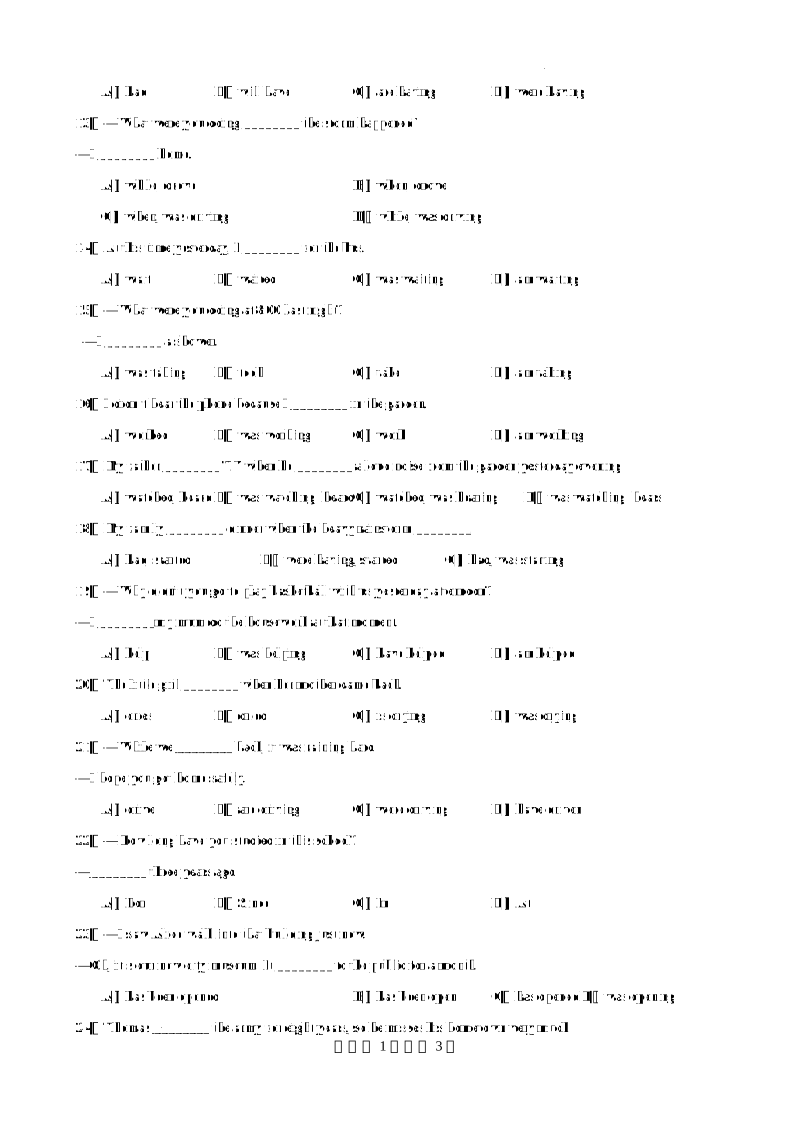
13.—What were you doing ________ the storm happened?
—I ________ home.
A.while; drove B.when; drove
C.when; was driving D.while; was driving
【答案】C
【详解】句意:——暴风雨来临的时候你正在做什么?——我正开车回家。
when后面既可以接短暂性动词(瞬间发生),也可接延续性动词,happened(发生) 是瞬间短暂动作,第一个空只能用when。while后面只能接延续性动作(动词多用进行时),不能搭配瞬间动词happened。问句用were you doing(过去进行时),回答要对应“过去正在开车”,用过去进行时was driving。
14.At this time yesterday, I ________ for the bus.
A.wait B.waited C.was waiting D.am waiting
【答案】C
【详解】句意:昨天的这个时候,我正在等公交车。
wait等待;waited等待(过去式);was waiting正在等待(过去进行时);am waiting正在等待(现在进行时)。根据时间状语“At this time yesterday”可知,句子表示过去某一特定时刻正在进行的动作,应用过去进行时,结构为 was/were + doing。主语是I,be 动词用was。
15.—What were you doing at 8:00 last night?
—I ________ a shower.
A.was taking B.took C.take D.am taking
【答案】A
【详解】句意:——昨晚八点你正在做什么?——我正在洗澡。
根据问句“What were you doing at 8:00 last night?”可知,问句询问的是过去特定时刻正在发生的动作,回答需使用过去进行时。主语为I,助动词用was,动词take变为taking。应填was taking。
16.I didn’t hear the phone because I ________ in the garden.
A.worked B.was working C.work D.am working
【答案】B
【详解】句意:我没听到电话,因为我当时正在花园里干活。
worked一般过去时;was working过去进行时;work一般现在时;am working现在进行时。根据“I didn’t hear the phone”可知,背景是过去,“没听到电话”是因为当时正在花园里忙碌,强调过去某一时刻正在进行的动作,应用过去进行时。
17.My father ________ TV when he ________ a loud noise from the garden yesterday evening
A.watched; heard B.was watching; heard C.watched; was hearing D.was watching; hears
【答案】B
【详解】句意:昨晚我爸爸正在看电视时,听到花园里传来一声巨响。
watched看(一般过去时);was watching正在看(过去进行时);heard听到(一般过去时);hears听到(一般现在时)。根据时间状语“yesterday evening”和“when”引导的语境,主句表示过去正在进行的动作用过去进行时,从句表示突然发生的短暂动作用一般过去时,故主句用was watching,从句用heard。
18.My family ________ dinner when the heavy rainstorm ________.
A.had, started B.were having, started C.had, was starting
【答案】B
【详解】句意:当暴雨开始时,我们一家人正在吃晚饭。
when引导的时间状语从句中,常用一般过去时表示突然发生的短暂性动作,主句常用过去进行时表示当时正在进行的背景动作,结构为“was/were doing sth. when... did sth.”。第一空表示正在进行的动作,用were having;第二空表示突然发生的动作,用started。应填were having;started。
19.—Why didn’t you go to play basketball with us yesterday afternoon?
—I ________my mum do the housework at that moment.
A.help B.was helping C.have helped D.am helped
【答案】B
【详解】句意:——昨天下午你为什么没和我们一起去打篮球?——那时我正在帮我妈妈做家务。
根据时间状语“yesterday afternoon”和“at that moment”可知,动作发生在过去的某一特定时刻正在进行的动作,应用过去进行时,其结构是“was/were + doing”,主语I,此处用was helping。
20.The little girl ________ when her mother came back.
A.cries B.cried C.is crying D.was crying
【答案】D
【详解】句意:当她的妈妈回来时,这个小女孩正在哭。
根据when her mother came back中的came可知句子发生在过去。when引导的时间状语从句中,从句用一般过去时,主句用过去进行时,表示当一个动作发生时,另一个动作正在进行。主语The little girl是单数,用was。所以填was crying。
21.—While we ________ back, it was raining hard.
—I hope you got home safely.
A.drive B.are driving C.were driving D.have driven
【答案】C
【详解】句意:——当我们正开车回去的时候,雨下得很大。——我希望你们安全到家了。
drive为动词原形,are driving为现在进行时,were driving为过去进行时,have driven为现在完成时。根据答语“I hope you got home safely.”中的“got”可知对话描述的是过去发生的事情。while引导的时间状语从句常与进行时态连用,且主句“it was raining hard”为过去进行时,表示过去某一时刻正在进行的动作,故从句也应用过去进行时,表示“当时正在开车”。
22.—How long have you studied in this school?
—________ three years ago.
A.For B.Since C.In D.At
【答案】B
【详解】句意:——你在这所学校学习多久了?——自从三年前。考查介词辨析。
For达……之久(后接时间段);Since自从(后接时间点);In在……之后(用于将来时);At在(后常接具体时刻)。答语中提到“three years ago”,这是一个过去的时间点,现在完成时中表示动作从过去某一点开始持续到现在,应用since引导时间点,而for后需直接接时间段,不能与ago连用。应填Since。
23.—I saw Alice walk into that building just now.
—Oh, it’s our new city museum. It ________ to the public for a month.
A.has been opened B.has been open C.has opened D.was opening
【答案】B
【详解】句意:——我刚才看见爱丽丝走进那栋楼了。——哦,那是我们新的城市博物馆。它已经向公众开放一个月了。
根据“for a month”可知,时间段需与延续性状态连用,且表示“开放的状态”,应填has been open。
24.Thomas ________ the army for eight years, so he misses his hometown very much.
A.has joined B.has taken part in C.has been in D.joined
【答案】C
【详解】句意:托马斯参军八年了,所以他非常想念家乡。
has joined加入了 (瞬间动词,不能与时间段连用);has taken part in参加了 (瞬间动词短语,不能与时间段连用);has been in在……中 (延续性状态,可与时间段连用);joined加入了 (一般过去时,不能与时间段连用)。根据“for eight years”可知,时间段需与延续性动词连用,应选“has been in”。
25.—Have you ________ visited the art museum?
—No, I’ve ________ been there.
A.ever; never B.ever; ever C.never; never D.never; ever
【答案】A
【详解】句意:——你曾经参观过那个艺术博物馆吗?——没有,我从未去过那里。
ever曾经,多用于现在完成时疑问句;never从未,表示否定含义。第一空,疑问句中询问经历,应用ever;第二空,根据“No,”可知,答话人从未去过那里,否定回答“从未”,应用never。
26.—Have you ever ________ Zibo, Alan?
—Yes, I ________ there with my parents last month. The barbecue there was delicious.
A.been in; went B.been to; will go C.been to; went D.gone to; went
【答案】C
【详解】句意:——你去过淄博吗,艾伦?——是的,上个月我和父母去了那里。那里的烧烤非常美味。
have been in曾经待在某地;have gone to去了某地还没回来;have been to去过某地(已经返回)。根据“Yes”可知,艾伦有去过淄博的经历,应是去过淄博已经返回,故第一空填been to;根据“last month”可知,去淄博是过去发生的动作,时态为一般过去时,动词要用过去式went。
27.—I haven’t seen Li Ming for days. Why?
—He ________ Beijing. He will come back next month.
A.has been to B.has gone to C.will go to
【答案】B
【详解】句意:—我好几天没见到李明了。为什么? —他到北京去了。他下个月回来。
has been to去过某地;has gone to到某地去了;will go to将去某地。根据后句“他下个月回来”,可知是到北京去了,且还没回来。 故选B。
28.—Where is Mr. Wu? I haven’t seen him for several days.
—He has ________ America and he ________ from his home since last week.
A.been in; has left B.gone to; has left C.gone to; has been away D.been in; has been away
【答案】C
【详解】句意:——吴先生在哪里?我好几天没见他了。——他已经去美国了,自从上周以来他就离开家了。
been in在某地;has left离开,短暂性动词;gone to去了某地;has been away离开,延续性短语;been in在某地。第一空,根据问句“吴先生在哪里”可知他不在现场,表示“去了某地未回”应用has gone to;第二空,时间状语“since last week”表示一段时间,谓语动词需用延续性动词,leave是瞬间动词,不能与段时间连用,应转换为has been away表示状态。
29.Mr. Smith ________ Chinese for two years. He’s much better at it now.
A.learns B.was learning C.has learned D.will learn
【答案】C
【详解】句意:史密斯先生已经学了两年中文,现在他的中文水平好多了。
learns 一般现在时;was learning 过去进行时;has learned 现在完成时;will learn 一般将来时。“for two years”是现在完成时标志性时间状语,强调动作从过去持续到现在,has learned符合该语境逻辑。
30.I saw Julia in April and I ________ her since then.
A.don’t see B.didn’t see C.won’t see D.haven’t seen
【答案】D
【详解】句意:我四月份见过朱莉娅,从那以后我就没见过她。
根据时间状语“since then”可知,句子应用现在完成时,表示动作从过去某一时刻延续到现在,结构为have/has+过去分词。主语是I,助动词用have,结合句意表示否定,应用haven’t seen。A、B、C选项时态均不符合“since then”的用法。
31.—Is your father still at home?
—No. He ________ to Hong Kong. He ________ there twice.
A.has gone; has gone B.has gone; has been C.has been; has gone
【答案】B
【详解】句意:——你父亲还在家吗?——不。他去香港了。他去过那里两次。
has gone to 去了某地 (未回);has been to去过某地 (已回)。根据答语“No”可知父亲此刻不在家,说明去了某地尚未回来,第一空填has gone;根据“twice”可知表示去过某地的经历,第二空填has been。应填has gone; has been。
32.—How long have you ________ this book?
—________ four weeks.
A.borrowed; For B.had; Since C.kept; For D.had; Have
【答案】C
【详解】句意:——这本书你借多久了?——四周了。
borrow借,是短暂性动词;kept持有,是延续性动词;had有;For长达;Since自从;Have有。第一空,how long询问时间段,需用延续性动词,排除A;第二空,答语“four weeks”为时间段,应用for,排除B和D。
33.We ________ just ________ about the school book fair. Let’s go together!
A.has; heard B.have; heard C.are; hearing D.will; hear
【答案】B
【详解】句意:我们刚刚听说了学校书展的通知。我们一起去参加吧!
根据“... about the school book fair. Let’s go together!”可知,听说书展后决定去参加,应用现在完成时,强调过去发生的动作对现在造成的影响,主语是We,助动词用have,hear的过去分词是heard。
34.The movie ticket is useful. I have ________ it for two days.
A.kept B.bought C.have D.buy
【答案】A
【详解】句意:这张电影票很有用。我已经保留它两天了。
kept保留;bought买;have有;buy买。根据“for two days”可知动作持续了一段时间,需用延续性动词。buy是瞬间动词,不能与时间段连用,keep是延续性动词,且需用过去分词构成现在完成时,故填kept。
35.—Why are you in such a hurry?
—Because the class ________ for 5 minutes.
A.is on B.Begins C.has begun D.has been on
【答案】D
【详解】句意:——你为什么这么匆忙?——因为课已经进行5分钟了。
begin开始,是瞬间性动词,不能与时间段连用;be on正在进行,表示进行的状态,是延续性动词。根据“for 5 minutes”可知,句子需用现在完成时,且动词需具有延续性,has been on“持续进行”,符合语境。
36.I ________ Lily’s dictionary for one week. I need to return it to her next Friday.
A.borrowed B.have borrowed C. have kept
【答案】C
【详解】句意:我已经借了莉莉的词典一周了。我需要在下周五还给她。
根据时间状语“for one week”可知,句子需用现在完成时,且谓语动词需用延续性动词。borrow“借”,是瞬间动词,不能与时间段连用;keep是延续性动词,可以与时间段连用,符合语境。
37.—Has he returned the book to the library?
—No, he has ________ it for one week.
A.borrowed B.learnt C.kept D.bought
【答案】C
【详解】句意:——他把那本书还给图书馆了吗?——不,已经在他那一个星期了。
borrowed借;learnt学习;kept保持;bought买。根据时间段“for one week”可知,此处用延续性动词,结合句意,kept表示“保持”这本书,符合句意。
38.—I came here to watch the film, but the cinema is already empty.
—That’s because the film ________ since 7:30.
A.has ended B.has been on C.has started D.has been over
【答案】D
【详解】句意:——我来这里看电影,但电影院已经空了。——那是因为电影7:30就结束了。
end结束;on上映;start开始;over结束。根据since可知,句子时态为现在完成时,结构为have/has+过去分词,且动词为延续性动词,end和start为非延续性动词,排除。根据句意可知,此处表示电影已经结束了,应填has been over。
39.—How long have you ________ this computer?
—It’s two weeks since I bought it.
A.borrowed B.kept C.bought D.bad
【答案】B
【详解】句意:——你持有这台电脑多长时间了?——自从我买它以来已经两周了。
borrowed借入;kept保持;bought买;bad坏的。根据“How long”可知提问时间段,谓语动词需用延续性动词。buy和borrow是瞬间动词,不能与时间段连用;bad是形容词,语法不符。kept是延续性动词,符合语境。
40.Could you tell me how long ________ the book? I want to borrow one too.
A.you have kept B.have you kept
C.you have borrowed D.have you borrowed
【答案】A
【详解】句意:你能告诉我这本书你借了多久吗?我也想借一本。
这是宾语从句,需用陈述语序,可排除B、D;how long表示“多久”,提问的是持续的时间,因此从句中要使用延续性动词,borrow是短暂性动词,不能与how long连用,而keep是对应的延续性动词符合语境。
二、单词拼写(本大题共20小题,每小题2分,共40分)
41.My mother ________ (wash) clothes at this time last Sunday.
【答案】was washing
【详解】句意:上周日这个时候我妈妈正在洗衣服。at this time last Sunday是过去进行时标志,结构“was/were+doing”;主语my mother为单数,be动词用was,wash的现在分词是washing。
42.At 7 p.m. yesterday, my family ________ (have) dinner.
【答案】were having
【详解】句意:昨晚7点,我的家人正在吃晚饭。根据时间状语“At 7 p.m. yesterday”提示,表示过去某一具体时间点正在进行的动作,应用过去进行时。主语my family为集合名词,视为单数或复数均可,此处强调家庭成员,通常用复数,be动词用were,have的现在分词形式是having。
43.While we ________ (discuss) the problem, the teacher came in.
【答案】were discussing
【详解】句意:在我们讨论这个问题的时候,老师进来了。根据“While”及“the teacher came in”提示,表示过去某个动作发生时,另一个动作正在进行,应用过去进行时。主语we为复数,be动词用were,discuss的现在分词形式是discussing。
44.They ________ (watch) TV at this time yesterday.
【答案】were watching
【详解】句意:他们昨天这个时候正在看电视。时间状语“at this time yesterday”表示过去某个特定时间点正在发生的动作,要用过去进行时;主语They是复数,对应be动词用were,watch的现在分词是watching,故填were watching。
45.When it began to rain, we ________ (play) outside.
【答案】were playing
【详解】句意:开始下雨时,我们正在外面玩耍。when引导的时间状语从句用一般过去时“began”,描述过去某个特定时间点发生的动作,主句要表达“开始下雨那一刻我们正在外面玩耍”,描述过去某一时间点正在进行的动作,需要用过去进行时。主语we是复数,be动词用were,play的现在分词是playing,应填were playing。
46.At 9:00 last night, I ________ (read) books.
【答案】was reading
【详解】句意:昨晚9点,我正在读书。根据时间状语“At 9:00 last night”(昨晚9点)可知,此处表示过去某一具体时刻正在进行的动作,应用过去进行时,主语为I,故填was reading。
47.She asked me what I ________ (do) at 8 o’clock last night.
【答案】was doing
【详解】句意:她问我昨晚八点我在做什么。do“做”,是动词。时间状语“at 8 o’clock last night”表示过去某一具体时刻,该时刻正在进行的动作要用过去进行时,结构为“was/were + 现在分词”;主语是I,因此用was doing。故填was doing。
48.While my father ________ (read) the newspaper, my mother was cleaning the room.
【答案】was reading
【详解】句意:爸爸看报纸的时候,妈妈正在打扫房间。句中while引导时间状语从句,主从句动作同时发生,主句为过去进行时,从句也要用过去进行时,结构为was/were+doing,主语my father是单数。
49.She ________ (download) a movie when her mother called her.
【答案】was downloading
【详解】句意:妈妈打电话过来的时候,她正在下载一部电影。when引导时间状语从句,从句called为一般过去时,主句强调过去某个瞬间正在发生的动作,要用过去进行时,结构为was/were+doing;主语She是第三人称单数。故填was downloading。
50.The astronauts ________ (follow) the ground instructions at that time.
【答案】were following
【详解】句意:宇航员们那时正在听从地面指令。根据“at that time”可知用过去进行时,结构为“was/were+现在分词”,The astronauts为复数,be动词用were,follow的现在分词为following,故填were following。
51.Eric ________ (learn) many things since he became interested in science.
【答案】has learned/has learnt
【详解】句意:自从埃里克对科学产生兴趣以来,他已经学到了很多东西。时间状语“since he became interested in science”表示从过去某个时间点持续到现在的动作,句子应用现在完成时。主语“Eric”为第三人称单数,助动词用“has”,后接过去分词“learned”或“learnt”。故填has learned/has learnt。
52.China ________ (make) great achievements in science and technology since 1978.
【答案】has made
【详解】句意:自1978年以来,中国在科学技术方面取得了巨大成就。根据时间状语“since 1978”可知,此句时态应用现在完成时,其构成为“have/has done”,主语是China为单数第三人称,应用has。故填has made。
53.So far, red tourism (旅游业) ________ (develop) quickly and it’s becoming more and more popular.
【答案】has developed
【详解】句意:到目前为止,红色旅游业发展迅速,并且正变得越来越受欢迎。时间状语“So far”意为“到目前为止”,是现在完成时的标志词。主语“red tourism”为第三人称单数,助动词用“has”,后接过去分词“developed”。
54.Mike has ________ (stay) in this country for about two years.
【答案】
stayed
【详解】句意:Mike在这个国家待了大约两年了。stay意为“停留,待”,是动词,根据时间状语“for about two years”可知,句子是现在完成时,其结构是“have/has+动词的过去分词”,主语是第三人称单数,助动词用has;stay的过去分词是stayed。
55.Since two years ago, he ________ (collect) many old books and newspapers.
【答案】has collected
【详解】句意:自从两年前,他收集了很多旧书籍和报纸。根据“since”可知,本句应用现在完成时“have/has done”结构表达,主语为he,助动词用has,collect的过去分词为collected。
56.—Have you ________ (try) the food in that new restaurant?
—Yes. The food there is excellent.
【答案】
tried
【详解】句意:——你尝过那家新餐馆的饭菜了吗?——尝过了,那里的食物很棒。句中“Have you…”是现在完成时疑问句式,现在完成时结构为have/has+动词过去分词,try的过去分词为tried。
57.Lei Feng ________ (die) for many years, but his spirit is still encouraging us.
【答案】has been dead
【详解】句意:雷锋已经去世多年,但他的精神仍在激励着我们。“for+时间段”是现在完成时的标志性词,由于die是非延续性动词,需变成“have/has + been + 形容词”的结构,主语Lei Feng是第三人称单数形式应用has,die的过去分词为dead。
58.He isn’t here. He ________ (go) to the library.
【答案】
has gone
【详解】句意:他不在这里。他去图书馆了。根据“He isn’t here”可知,他现在不在这里,说明已经去了图书馆且尚未回来,表示过去发生的动作对现在造成的影响,应用现在完成时,主语He为第三人称单数,故填has gone。
59.He has already ________ (build) a house with some trees.
【答案】
built
【详解】句意:他已经用一些树建了一座房子。build意为“建造”,是动词,already“已经”是现在完成时的标志词,“has+动词的过去分词”构成现在完成时,build的过去分词是built。
60.We ________ (know) each other since we were in the same junior high school class.
【答案】have known
【详解】句意:自从我们在同一个初中班级以来,我们就认识了。句中“since”引导的时间状语从句提示主句应用现在完成时,主语“We”为复数,括号内所给词为“know”,其过去分词形式为“known”,故填have known。
试卷第1页,共3页
试卷第1页,共3页
学科网(北京)股份有限公司
$
班级 姓名 学号 分数
期末语法复习
现在完成时和过去进行时
(时间:60分钟,满分:100分)
过去进行时
构成
was/were+ doing
含义
表示过去某一时刻或某一时间段正在进行的动作
标志词
at that time, at this time yesterday, at 8:00 yesterday morning, all night 及when/while
用 法 区 别
When
①既指时间点,也可指时间段;后可接终止性动词,也可接延续性动词
②从句的动作和主句的动作可以是同时,也可以是先后发生
③when 后一般接过去式:When the teacher came in, we were talking.
④表“突然”:I was having my dinner when there was a sudden knock at the door.
While
①后接延续性动词
②从句的动作和主句的动作是同时发生
③while 后一般接进行时:While we were talking, the teacher came in.
④表“然而”:Mother was cooking ,while father was watching TV .
现在完成时
定 义
现在全部完成
表示过去发生或者已经完成的动作对现在造成的影响或结果
I have seen this movie twice.
现在部分完成
表示从过去某一时间开始并一直持续到现在的动作或状态。
I have lived in Changsha for 3 years.
构 成
have/has+过去分词
标 志 词
already(“ 已经 ”,用于肯定句)
He has already got her help.
yet(“已经 ”,用于疑问句;“还 ”, 用于否定句)
Has he come back yet?
He hasn’t come back yet.
ever(曾经)
This is the best film I have ever seen.
never(从没)
He has never been to Beijing.
for(+时间段)
He has been away for two years.
since ( +时间点/…ago/从句)
He has been an English teacher since 1992.
Mr Green has lived in China since five months ago.
Mr Green has lived in China since he came to China.
以动作发生的次数为标志,比如 twice, three times。
He says he has been to the USA three times.
以 so far, in the last/past few years, recently 为标志
He has got to Beijing so far.
She has studied over 2000 words in the last few years.
一、单项选择(本大题共40小题,每小题1.5分,共60分)
1.When I saw XiaoWang yesterday, he ________ an old man cross the road.
A.helped B.will help C.was helping
2.I was folding my clothes while my mother ________ in the kitchen.
A.cooked B.cooks C.cooking D.was cooking
3.At this time last year, I ________ in Qingdao.
A.study B.studied C.have studied D.was studying
4.The phone ________ while I ________ a shower last night.
A.rang; was taking B.rings; am taking C.was ringing; took D.rang; took
5.They ________ football when it started to rain.
A.play B.played C.are playing D.were playing
6.While I ________ my homework, my brother ________ games yesterday evening.
A.did; played B.was doing; played C.was doing; was playing D.am doing; plays
7.He ________ in the library when I saw him.
A.reads B.read C.is reading D.was reading
8.At this time last Monday, we ________ an English class.
A.have B.had C.are having D.were having
9.It ________ heavily when we left school yesterday.
A.rains B.rained C.is raining D.was raining
10.When I came home, my mother ________ dinner in the kitchen.
A.cooks B.was cooking C.is cooking D.cooked
11.They ________ a football match from 7 to 9 yesterday evening.
A.were watching B.watched C.watch D.are watching
12.Students ________ a basketball game on the playground, when suddenly it began to rain cats and dogs.
A.had B.will have C.are having D.were having
13.—What were you doing ________ the storm happened?
—I ________ home.
A.while; drove B.when; drove
C.when; was driving D.while; was driving
14.At this time yesterday, I ________ for the bus.
A.wait B.waited C.was waiting D.am waiting
15.—What were you doing at 8:00 last night?
—I ________ a shower.
A.was taking B.took C.take D.am taking
16.I didn’t hear the phone because I ________ in the garden.
A.worked B.was working C.work D.am working
17.My father ________ TV when he ________ a loud noise from the garden yesterday evening
A.watched; heard B.was watching; heard C.watched; was hearing D.was watching; hears
18.My family ________ dinner when the heavy rainstorm ________.
A.had, started B.were having, started C.had, was starting
19.—Why didn’t you go to play basketball with us yesterday afternoon?
—I ________my mum do the housework at that moment.
A.help B.was helping C.have helped D.am helped
20.The little girl ________ when her mother came back.
A.cries B.cried C.is crying D.was crying
21.—While we ________ back, it was raining hard.
—I hope you got home safely.
A.drive B.are driving C.were driving D.have driven
22.—How long have you studied in this school?
—________ three years ago.
A.For B.Since C.In D.At
23.—I saw Alice walk into that building just now.
—Oh, it’s our new city museum. It ________ to the public for a month.
A.has been opened B.has been open C.has opened D.was opening
24.Thomas ________ the army for eight years, so he misses his hometown very much.
A.has joined B.has taken part in C.has been in D.joined
25.—Have you ________ visited the art museum?
—No, I’ve ________ been there.
A.ever; never B.ever; ever C.never; never D.never; ever
26.—Have you ever ________ Zibo, Alan?
—Yes, I ________ there with my parents last month. The barbecue there was delicious.
A.been in; went B.been to; will go C.been to; went D.gone to; went
27.—I haven’t seen Li Ming for days. Why?
—He ________ Beijing. He will come back next month.
A.has been to B.has gone to C.will go to
28.—Where is Mr. Wu? I haven’t seen him for several days.
—He has ________ America and he ________ from his home since last week.
A.been in; has left B.gone to; has left C.gone to; has been away D.been in; has been away
29.Mr. Smith ________ Chinese for two years. He’s much better at it now.
A.learns B.was learning C.has learned D.will learn
30.I saw Julia in April and I ________ her since then.
A.don’t see B.didn’t see C.won’t see D.haven’t seen
31.—Is your father still at home?
—No. He ________ to Hong Kong. He ________ there twice.
A.has gone; has gone B.has gone; has been C.has been; has gone
32.—How long have you ________ this book?
—________ four weeks.
A.borrowed; For B.had; Since C.kept; For D.had; Have
33.We ________ just ________ about the school book fair. Let’s go together!
A.has; heard B.have; heard C.are; hearing D.will; hear
34.The movie ticket is useful. I have ________ it for two days.
A.kept B.bought C.have D.buy
35.—Why are you in such a hurry?
—Because the class ________ for 5 minutes.
A.is on B.Begins C.has begun D.has been on
36.I ________ Lily’s dictionary for one week. I need to return it to her next Friday.
A.borrowed B.have borrowed C. have kept
37.—Has he returned the book to the library?
—No, he has ________ it for one week.
A.borrowed B.learnt C.kept D.bought
38.—I came here to watch the film, but the cinema is already empty.
—That’s because the film ________ since 7:30.
A.has ended B.has been on C.has started D.has been over
39.—How long have you ________ this computer?
—It’s two weeks since I bought it.
A.borrowed B.kept C.bought D.bad
40.Could you tell me how long ________ the book? I want to borrow one too.
A.you have kept B.have you kept
C.you have borrowed D.have you borrowed
二、单词拼写(本大题共20小题,每小题2分,共40分)
41.My mother ________ (wash) clothes at this time last Sunday.
42.At 7 p.m. yesterday, my family ________ (have) dinner.
43.While we ________ (discuss) the problem, the teacher came in.
44.They ________ (watch) TV at this time yesterday.
45.When it began to rain, we ________ (play) outside.
46.At 9:00 last night, I ________ (read) books.
47.She asked me what I ________ (do) at 8 o’clock last night.
48.While my father ________ (read) the newspaper, my mother was cleaning the room.
49.She ________ (download) a movie when her mother called her.
50.The astronauts ________ (follow) the ground instructions at that time.
51.Eric ________ (learn) many things since he became interested in science.
52.China ________ (make) great achievements in science and technology since 1978.
53.So far, red tourism (旅游业) ________ (develop) quickly and it’s becoming more and more popular.
54.Mike has ________ (stay) in this country for about two years.
55.Since two years ago, he ________ (collect) many old books and newspapers.
56.—Have you ________ (try) the food in that new restaurant?
—Yes. The food there is excellent.
57.Lei Feng ________ (die) for many years, but his spirit is still encouraging us.
58.He isn’t here. He ________ (go) to the library.
59.He has already ________ (build) a house with some trees.
60.We ________ (know) each other since we were in the same junior high school class.
试卷第1页,共3页
试卷第1页,共3页
学科网(北京)股份有限公司
$
资源预览图

1

2
3

相关资源
示范课
由于学科网是一个信息分享及获取的平台,不确保部分用户上传资料的 来源及知识产权归属。如您发现相关资料侵犯您的合法权益,请联系学科网,我们核实后将及时进行处理。