Unit 7 A Day to Remember 单元话题练(语法填空+阅读+完形+选词填空+写作)-2025-2026学年七年级英语下册单元练习(人教版)
2026-06-04
|
2份
|
38页
|
793人阅读
|
23人下载

资源信息
| 学段 | 初中 |
|---|---|
| 学科 | 英语 |
| 教材版本 | 初中英语人教版七年级下册 |
| 年级 | 七年级 |
| 章节 | Unit 7 A Day to Remember |
| 类型 | 题集-专项训练 |
| 知识点 | - |
| 使用场景 | 同步教学-单元练习 |
| 学年 | 2026-2027 |
| 地区(省份) | 全国 |
| 地区(市) | - |
| 地区(区县) | - |
| 文件格式 | ZIP |
| 文件大小 | 232 KB |
| 发布时间 | 2026-06-04 |
| 更新时间 | 2026-06-04 |
| 作者 | 初高中英语资料大全 |
| 品牌系列 | - |
| 审核时间 | 2026-06-04 |
| 下载链接 | https://m.zxxk.com/soft/58209726.html |
| 价格 | 2.00储值(1储值=1元) |
| 来源 | 学科网 |
摘要:
**基本信息**
本单元卷围绕“难忘的一天”主题,通过旅行、自然探索、文化体验等真实情境,整合语法填空、完形填空、阅读理解、选词填空及书面表达模块,适配初中英语单元复习,强化语言运用与跨文化感知能力。
**题型特征**
|题型|题量|知识覆盖|命题特色|
|----|----|----|----|
|语法填空|3篇短文|动词时态、代词、介词等|情境贴近生活(如骑行迷路、停电送蜡烛),考查语法在语篇中的应用|
|完形填空|3篇|词汇辨析、上下文逻辑|主题融合假期旅行、中国文化(如故宫、长城),培养文化意识|
|阅读理解|5篇|细节理解、推理判断|选材含徐霞客游历、五岳文化、黄果树瀑布等,渗透文化传承与思维品质|
|选词填空|3篇|词汇运用、固定搭配|围绕杭州西湖、农场实践、旅行安全,强化学习能力与语言积累|
|书面表达|2题|语篇组织、情感表达|要求描述农场/花园旅行经历,提升语言输出与思维表达能力|
内容正文:
Unit 7 A Day to Remember
单元话题题型组合练
一、语法填空
阅读下面短文,按照句子结构的语法性和上下文连贯的要求,在空白处填入一个适当的词,或填入括号中所给单词的正确形式。
Monday, 28th May Sunny
Yesterday I went on a cycling trip with my friends. It was 1 unforgettable trip!
After breakfast, we set off (出发) for a little village. We 2 (follow) the map on my phone, but it did not give enough details (细节). We got 3 (lose)! I was a little worried. But 4 (lucky), a driver stopped and told us which way to go.
One hour later, we arrived 5 the village. We were all excited. The village is so beautiful and quiet. After lunch, we walked around and saw all 6 (kind) of interesting flowers and plants. I wanted 7 (find) out more about them, so I asked an app for help. We took some beautiful photos. It was really enjoyable!
On our way back, Sandy’s bike had a problem. Daniel took out 8 (he) tools. We all helped repair Sandy’s bike. We were a little tired, 9 we were proud of our teamwork.
What a 10 (wonder) day! We had a lot of fun and learnt about nature. I can’t wait to do it again.
【答案】
1.an 2.followed 3.lost 4.luckily 5.at 6.kinds 7.to find 8.his 9.but 10.wonderful
【导语】本文记录了作者和朋友昨天去骑自行车旅行的经历,他们去了小村庄,村庄很美很安静,他们欣赏到了许多有趣的花和植物,并且拍了很多漂亮的照片。
1.句意:这是一次难忘的旅行!根据“It was... unforgettable trip!”可知,此处表示一次难忘的旅行,是泛指,用不定冠词,unforgettable是元音音素开头的单词,因此用an。
2.句意:我们按照我手机上的地图,但是它没有给出足够的细节。根据“but it did not”可知,用一般过去时,follow的过去式是followed。
3.句意:我们迷路了。根据“told us which way to go”可知,作者迷路了,get lost“迷路”。
4.句意:但是幸运的是,一个司机停下来告诉我们走哪条路。分析句子结构,此处应用副词修饰整个句子,lucky的副词是luckily“幸运地”。
5.句意:一个小时后,我们到达村庄。根据“arrived... the village”可知,本题考查动词短语arrive at“到达”,后接小地点。
6.句意:午饭后,我们四处走动,看到了各种有趣的花和植物。根据“all... of interesting flowers”可知,此处表示各种有趣的花,all kinds of“各种各样的”。
7.句意:我想找出更多关于它们的信息,因此我向一个软件求助。根据“wanted”可知,此处是want to do sth.“想要做某事”,find的动词不定式to find作宾语。
8.句意:Daniel拿出他的工具。根据“tools”可知,此处用形容词性物主代词修饰名词,he的形容词性物主代词是his。
9.句意:我们有点累,但是我们为我们的团队合作感到自豪。根据“We were a little tired,... we were proud of our teamwork.”可知,前后为转折关系,用but表示转折。
10.句意:多么精彩的一天啊!根据“a... day”可知,用形容词修饰名词day,wonder的形容词是wonderful“精彩的”。
阅读下面短文,在空格处填上一个适当的词或使用括号中词语的正确形式填空 (不超过3个词)。
For a long time, Anne lives on her own. She doesn’t like to be 1 (friend), and she doesn’t talk to others either. One day, she moves to a new house. A poor family lives next door—a mother with her two sons. Anne thinks, “ 2 I talk to them, they may come to my house and even ask me for help. It is better not to speak with them.”
One night, the power goes out (停电了) and the room is dark. When Anne looks for 3 candle, there is a knock (敲门声) at her door.
“Hello, Miss? Are you there?” a boy asks.
Anne knows it is one of the 4 (child) from the family next door.
“ 5 is the boy here? He must want to ask for candles. This is awful!” Anne thinks.
However, the boy 6 (keep) knocking. Anne opens the door just a little and the child asks, “Excuse me, do you have a candle?”
Anne is 7 (happy). She doesn’t want to lend 8 (her) to the family. “No!” She replies.
Before she 9 (close) the door, the child gives her a candle and says, “This is 10 you, Miss. My mum sends me to bring it for you because Mum says you may need it.”
Anne stands there, surprised. At that moment, she feels her face turn red but her heart is lit up (被点亮).
【答案】
1.friendly 2.If 3.a 4.children 5.Why 6.keeps 7.unhappy 8.hers 9.closes 10.for
【导语】本文讲述了安妮长期独居,性格孤僻,不愿与人交往。当她搬到新家后,对隔壁的贫困家庭充满戒备,认为他们会来求助。然而在一个停电的夜晚,邻居家的男孩却主动给她送来蜡烛,这个出乎意料的善举让安妮既惊讶又感动。
1.句意:她不喜欢友好,她也不跟别人说话。根据“and she doesn’t talk to others either”可知,她不喜欢友好,be后接形容词作表语,friendly“友好的”,是形容词。故填friendly。
2.句意:如果我和他们说话,他们可能会来我家,甚至向我寻求帮助。根据“I talk to them”可知,“我和他们说话”是假设条件,应用if引导条件状语从句,句首首字母要大写。故填If。
3.句意:当安妮找蜡烛的时候,有人在敲她的门。根据“When Anne looks for... candle,”可知,此处泛指一根蜡烛,且candle是以辅音音素开头的单词,所以用不定冠词a。故填a。
4.句意:安妮知道是隔壁家的一个孩子。one of后接复数名词,child的复数形式是children。故填children。
5.句意:这个男孩为什么在这里?根据“He must want to ask for candles.”可知,安妮疑惑为什么男孩来敲门,应填疑问副词why,句首首字母要大写。故填Why。
6.句意:然而,男孩一直在敲门。主语是the boy,时态为一般现在时,所以谓语用动词三单形式keeps。故填keeps。
7.句意:安妮不高兴。根据“He must want to ask for candles. This is awful!”可知,安妮认为男孩想要蜡烛,这是很坏的,所以此处指安妮感到不高兴,unhappy“不高兴的”,形容词作表语。故填unhappy。
8.句意:她不想把她的蜡烛借给那家人。lend sth to sb“把某物借给某人”,横线后无名词,所以此处填名词性物主代词hers,表示“安妮的蜡烛”。故填hers。
9.句意:在她关门之前,孩子给了她一支蜡烛,说:“这是给你的,小姐。我妈妈让我给你拿来,因为妈妈说你可能需要它。”根据“gives”可知,时态为一般现在时,主语是she,所以谓语用动词三单形式closes。故填closes。
10.句意:在她关门之前,孩子给了她一支蜡烛,说:“这是给你的,小姐。我妈妈让我给你拿来,因为妈妈说你可能需要它。”This is for you“这是给你的”,固定表达。故填for。
阅读下面短文,在空白处填入适当的单词或括号内单词的正确形式。
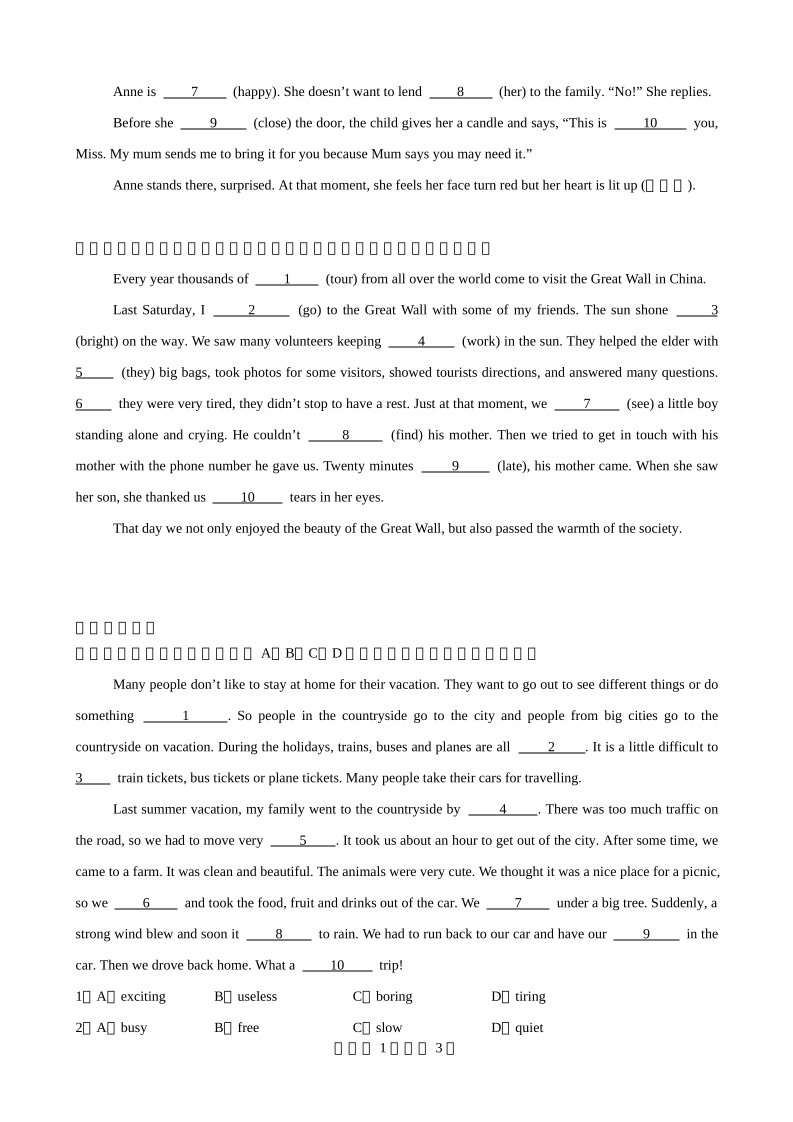
Every year thousands of 1 (tour) from all over the world come to visit the Great Wall in China.
Last Saturday, I 2 (go) to the Great Wall with some of my friends. The sun shone 3 (bright) on the way. We saw many volunteers keeping 4 (work) in the sun. They helped the elder with 5 (they) big bags, took photos for some visitors, showed tourists directions, and answered many questions. 6 they were very tired, they didn’t stop to have a rest. Just at that moment, we 7 (see) a little boy standing alone and crying. He couldn’t 8 (find) his mother. Then we tried to get in touch with his mother with the phone number he gave us. Twenty minutes 9 (late), his mother came. When she saw her son, she thanked us 10 tears in her eyes.
That day we not only enjoyed the beauty of the Great Wall, but also passed the warmth of the society.
【答案】
1.tourists 2.went 3.brightly 4.working 5.their 6.Although/Though 7.saw 8.find 9.later 10.with
【导语】本文主要讲述了作者上周六和朋友去长城游玩时的经历,包括看到志愿者的付出以及帮助迷路小男孩找到妈妈的事情。
1.句意:每年成千上万来自世界各地的游客来中国参观长城。根据“Every year thousands of …from all over the world come to visit the Great Wall in China.”可知,此处指的是游客,thousands of修饰可数名词复数,tour的名词形式是tourist,复数为tourists。故填tourists。
2.句意:上周六,我和我的一些朋友去了长城。根据“Last Saturday, I…to the Great Wall with some of my friends.”可知,Last Saturday表明时态为一般过去时,go的过去式是went。故填went。
3.句意:路上阳光灿烂。根据“The sun shone….”可知,此处应用 bright 的副词形式brightly,修饰动词shone。故填brightly。
4.句意:在路上,我们看到许多志愿者在阳光下不停地工作。根据“we saw many volunteers keeping…in the sun.”可知,此处考查短语keep doing sth.,表示持续做某事,所以用work的动名词形式working。故填working。
5.句意:他们帮老人拿大袋子,给一些游客拍照,给游客指路,回答很多问题。根据“They helped the elder with…big bags.”可知,此处应用they的形容词性物主代词their,修饰名词bags。故填their。
6.句意:虽然他们很累,但他们没有停下来休息。根据“…they were very tired, they didn't stop to have a rest.”可知,前后句是转折关系,应用连词Although/Though,意为“虽然”。故填Although/Though。
7.句意:就在那时,我们看到一个小男孩独自站着哭。根据“Just at that moment, we…a little boy standing alone and crying.”可知,此处描述的是过去发生的事情,时态为一般过去时,see的过去式是saw。故填saw。
8.句意:他找不到他的妈妈了。根据“He couldn’t…his mother.”可知,couldn't是情态动词,后接动词原形,所以用find。故填find。
9.句意:二十分钟后,他的妈妈来了。根据“Twenty minutes…, his mother came.”可知,此处表示二十分钟后,应用later,意为“之后”。故填later。
10.句意:当她看到她的儿子时,她眼里含着泪感谢我们。根据“When she saw her son, she thanked us…tears in her eyes.”可知,此处表示带着眼泪,应用介词with。故填with。
二、完形填空
根据短文内容,从各题所给的A、B、C、D四个选项中选择一个最佳答案。
Many people don’t like to stay at home for their vacation. They want to go out to see different things or do something 1 . So people in the countryside go to the city and people from big cities go to the countryside on vacation. During the holidays, trains, buses and planes are all 2 . It is a little difficult to 3 train tickets, bus tickets or plane tickets. Many people take their cars for travelling.
Last summer vacation, my family went to the countryside by 4 . There was too much traffic on the road, so we had to move very 5 . It took us about an hour to get out of the city. After some time, we came to a farm. It was clean and beautiful. The animals were very cute. We thought it was a nice place for a picnic, so we 6 and took the food, fruit and drinks out of the car. We 7 under a big tree. Suddenly, a strong wind blew and soon it 8 to rain. We had to run back to our car and have our 9 in the car. Then we drove back home. What a 10 trip!
1.A.exciting B.useless C.boring D.tiring
2.A.busy B.free C.slow D.quiet
3.A.sell B.buy C.make D.take
4.A.ship B.plane C.subway D.car
5.A.quickly B.slowly C.happily D.easily
6.A.stopped B.left C.arrived D.waited
7.A.got up B.went out C.came from D.sat down
8.A.started B.wanted C.learned D.remembered
9.A.class B.work C.picnic D.talk
10.A.funny B.terrible C.tiring D.wonderful
【答案】
1.A 2.A 3.B 4.D 5.B 6.A 7.D 8.A 9.C 10.B
【导语】文章讲述人们假期爱外出旅游,作者一家去年暑假开车去乡村野餐,却因交通拥堵和突降大雨导致体验糟糕的故事。
1.句意:他们想出去看看不同的东西或者做一些令人兴奋的事情。
假期出门是为了做有趣、令人兴奋的事,exciting“令人兴奋的”符合语境;useless“无用的”、boring“无聊的”、tiring“累人的”均不符合。
2.句意:假期里,火车、公共汽车和飞机都很繁忙。
假期出行高峰,交通都会很繁忙,busy“繁忙的”符合语境;free“空闲的”、slow“慢的”、quiet“安静的”均不符合。
3.句意:买火车票、汽车票或飞机票有点困难。
交通繁忙时,买票会很困难,buy“买”符合语境;sell“卖”、make“制作”、take“拿”均不符合。
4.句意:去年暑假,我和家人开车去了乡下。
后文提到“Many people take their cars for travelling”,以及路上交通拥堵,说明是开车出行,car“汽车”符合语境;ship“船”、plane“飞机”、subway“地铁”均不符合。
5.句意:路上交通太拥挤了,所以我们不得不开得很慢。
交通拥堵时,车速会很慢,slowly“缓慢地”符合语境;quickly“快速地”、happily“开心地”、easily“轻松地”均不符合。
6.句意:我们认为这是个野餐的好地方,所以我们停了下来,把食物、水果和饮料从车里拿了出来。
准备野餐需要先停车,stopped“停下”符合语境;left“离开”、arrived“到达,后接at/in”、waited“等待”均不符合。
7.句意:我们在一棵大树下坐了下来。
野餐需要坐下吃东西,sat down“坐下”符合语境;got up“起床”、went out“出去”、came from“来自”均不符合。
8.句意:突然刮起了大风,很快就开始下雨了。
刮大风后,开始下雨,started“开始”符合语境;wanted“想要”、learned“学习”、remembered“记得”均不符合。
9.句意:我们不得不跑回车里,在车里野餐。
原本在树下野餐,下雨后只能回车里继续,picnic“野餐”符合语境;class“课”、work“工作”、talk“谈话”均不符合。
10.句意:多么糟糕的一次旅行啊!
回顾这次旅行:路上堵车、刚想野餐就下雨、只能在车里狼狈地吃东西,这显然是一次糟糕的经历,terrible“糟糕的”符合语境;funny“有趣的”、wonderful“很棒的”、tiring“累人的”均不符合。
Every year millions of tourists from all over the world visit China. They are 1 in Chinese culture, history and natural beauty, as well as the great changes in China these years.
China is a great country with a 2 history. It has many places of interest, such as the Palace Museum and the Great Wall. China is also a large country. It has many natural and beautiful 3 , such as the West Lake, Huangshan, and Guilin’s landscape.
We all 4 that the Palace Museum is the largest museum in China. It has a 5 of about 600 years. The kings and their 6 lived there in the old days. Now it 7 the museum of the palace. From the shows in it, tourists may see a lot of 8 art treasures (宝物) of ancient times.
In these years China has 9 changes. China is becoming more and more beautiful. More and more foreign friends are coming to 10 about China by travelling and visiting.
1.A.bored B.nervous C.interested D.friendly
2.A.long B.short C.wide D.large
3.A.rivers B.views C.lakes D.parks
4.A.study B.make C.know D.teach
5.A.history B.report C.fair D.time
6.A.friends B.teachers C.families D.people
7.A.looks B.gets C.likes D.becomes
8.A.Chinese B.French C.American D.British
9.A.daily B.small C.great D.only
10.A.start B.learn C.attend D.want
【答案】
1.C 2.A 3.B 4.C 5.A 6.C 7.D 8.A 9.C 10.B
【导语】本文介绍了每年数百万世界各地的游客来中国旅游,中国历史悠久,拥有众多名胜古迹与自然美景,还举例介绍了故宫以及这些年中国的巨大变化。
1.句意:他们对中国文化、历史和自然美景以及近年来中国的巨大变化感兴趣。
根据上一句可知,每年有数百万游客来中国,说明他们对中国感兴趣,interested“感兴趣的”符合语境,be interested in意为“对……感兴趣”。bored“无聊的”、nervous“紧张的”和friendly“友好的”不符合语境。
2.句意:中国是一个有着悠久历史的伟大国家。
根据常识可知中国历史悠久,a long history是固定表达,表示“悠久的历史”。short与事实不符,wide描述宽度,large描述体积、规模等。
3.句意:它有许多自然且美丽的景色,比如西湖、黄山和桂林山水。
后文举例西湖、黄山和桂林山水,views表示“景色,风景”,可以泛指所有自然美景,涵盖所有例子。rivers“河流”、lakes“湖泊”和parks“公园”都太片面。
4.句意:我们都知道故宫是中国最大的博物馆。
“故宫是中国最大的博物馆”是一个普遍知晓的事实,know符合句意,且常用于know that...的句型中,表示“知道某事”。study“学习”、make“制作”和teach“教”语义不通。
5.句意:它有大约600年的历史。
根据“of about 600 years”可知,是在介绍故宫的历史,应用history。report“报告”、fair“集市”和time“时间”语义不通。
6.句意:过去帝王和他们的家人住在那里。
古代故宫是帝王及其家人居住的场所,families符合语义。friends“朋友”和teachers“老师”并非宫殿里的主要居住人群,people泛指“人们”过于宽泛。
7.句意:现在它变成了故宫博物院。
故宫过去是帝王居所,现在变为公共博物院,becomes“变成、成为”,符合语义。looks“看起来”、gets“得到”和likes“喜欢”语义不通。
8.句意:从里面的展览中,游客可以看到许多中国古代的艺术珍品。
故宫收藏的是中国古代的艺术珍品,应用Chinese。French“法国的”、American“美国的”和British“英国的”不符合语境。
9.句意:近年来中国发生了巨大的变化。
与前文“the great changes in China these years”呼应,此处指“中国发生巨大变化”,应用great。daily“日常的”、small“小的”和only“仅有的”不符合语境。
10.句意:越来越多的外国朋友通过旅行和参观来了解中国。
外国朋友来中国旅行和参观应是想了解中国,learn about“了解”,符合语境。start“开始”、attend“参加”和want“想要”不符合语境。
During my summer vacation, I visited many of China's beautiful places. The most inspiring one was Tsinghua University. There, I could feel the 1 of the students. It was great to see them studying to 2 a better future. China is energetic not only in education but also in 3 , technology, sports and even tourism. My foreign friend Refano thinks China is 4 . He came to China in 2012, 2018 and 2019. Every time he visited China, he 5 big changes. New buildings are always 6 and things are getting better. The thing he likes most is how 7 it is to pay for things here. With the help of Alipay or WeChat, we can 8 food and other services online. Public transportation (公共交通) is also great. He thinks 9 in China is getting easier and easier. Also, China is a nice place with 10 people. Everywhere he went, he 11 kind and good people. To him, China is a special 12 with a large population (人口). But 13 is well-organized (井然有序的) and runs well. And Chinese people respect others from around the world. We accept foreigners and we 14 work and study together well with them. As a Chinese student, I am so proud of that. And I am always ready to do my 15 to make our country even better.
1.A.moment B.record C.message D.energy
2.A.build B.stay C.bite D.teach
3.A.truth B.area C.culture D.market
4.A.lucky B.amazing C.sweet D.fresh
5.A.saw B.left C.promised D.took
6.A.working on B.going up C.coming in D.putting on
7.A.hard B.colorful C.easy D.bright
8.A.pour B.decide C.smile D.order
9.A.piece B.experience C.life D.plant
10.A.thirsty B.friendly C.sleepy D.lively
11.A.met B.caught C.thought D.believed
12.A.machine B.goal C.process D.country
13.A.nothing B.everything C.anything D.something
14.A.can B.should C.shall D.must
15.A.race B.voice C.sight D.part
【答案】
1.D 2.A 3.C 4.B 5.A 6.B 7.C 8.D 9.C 10.B 11.A 12.D 13.B 14.A 15.D
【导语】本文讲述了作者在暑假参观了中国许多美丽的地方,提到中国在教育、文化、科技等多方面都充满活力,外国朋友里法诺也认为中国很令人惊叹,作者作为中国学生为此感到自豪,并愿为国家变得更好贡献自己的力量。
1.句意:在那里,我能感受到学生们的活力。
moment时刻;record记录;message信息;energy活力。根据“It was great to see them studying to... a better future”可知,学生们为美好未来而学习,充满“活力”,故选D。
2.句意:看到他们为创造更美好的未来而学习,真是太棒了。
build创造;stay停留;bite咬;teach教。根据原文“studying to... a better future”可知,“build a better future”表示“创造更美好的未来”,故选A。
3.句意:中国不仅在教育方面充满活力,在文化、科技、体育甚至旅游业方面也充满活力。
truth真相;area地区;culture文化;market市场。根据原文“China is energetic not only in education but also in..., technology, sports and even tourism”可知,此处列举中国充满活力的领域,与“education”、“technology”等并列,“culture”符合语境,故选C。
4.句意:我的外国朋友里法诺认为中国令人惊叹。
lucky幸运的;amazing令人惊叹的;sweet甜的;fresh新鲜的。根据原文“Every time he visited China, he...big changes. New buildings are always...and things are getting better”可知,中国变化大,令人惊叹,故选B。
5.句意:每次他访问中国,都看到了巨大的变化。
saw看到;left离开;promised承诺;took带走。根据原文“Every time he visited China, he... big changes”可知,访问中国时能看到巨大变化,故选A。
6.句意:新建筑不断涌现,情况也越来越好。
working on从事;going up出现,建起;coming in进来;putting on穿上。根据原文“New buildings are always... and things are getting better”可知,新建筑不断建起,故选B。
7.句意:他最喜欢的是在这里付款非常容易。
hard困难的;colorful多彩的;easy容易的;bright明亮的。根据原文“With the help of Alipay or WeChat, we can... food and other services online”可知,用支付宝或微信付款很容易,故选C。
8.句意:在支付宝或微信的帮助下,我们可以在网上订购食物和其他服务。
pour倒;decide决定;smile微笑;order订购。根据原文“With the help of Alipay or WeChat, we can... food and other services online”可知,网上“订购”食物,故选D。
9.句意:他认为在中国生活变得越来越容易了。
piece片;experience经历;life生活;plant植物。根据原文“Public transportation is also great. He thinks... in China is getting easier and easier”可知,结合前文提到的付款、公共交通等,指“生活”越来越容易,故选C。
10.句意:此外,中国是一个好地方,人们很友好。
thirsty渴的;friendly友好的;sleepy困的;lively活泼的。根据“Everywhere he went, he... kind and good people”可知,人们很“友好”,故选B。
11.句意:无论他走到哪里,都能遇到善良的好人。
met遇到;caught抓住;thought认为;believed相信。根据原文“Everywhere he went, he... kind and good people”可知,在各地能遇到善良的人,故选A。
12.句意:对他来说,中国是一个人口众多的特殊国家。
machine机器;goal目标;process过程;country国家。根据原文“China is a special... with a large population”可知,中国是一个“国家”,故选D。
13.句意:但是一切都井然有序,运转良好。
nothing没有什么;everything一切;anything任何东西;something某事。根据原文“But... is well-organized and runs well”可知,中国的一切都井然有序,故选B。
14.句意:我们接纳外国人,并且我们可以和他们很好地一起工作和学习。
can能;should应该;shall将要;must必须。根据原文“We accept foreigners and we... work and study together well with them”可知,我们能和外国人很好地一起工作学习,故选A。
15.句意:我随时准备尽我的一份力,让我们的国家变得更好。
race比赛;voice声音;sight视力;part部分。根据原文“And I am always ready to do my... to make our country even better”可知,“do one’s part”表示“尽自己的一份力”,故选D。
三、阅读理解
I’m going to have a great weekend because I plan to go across Canada with my parents. We are going to drive seven or eight hours a day.
On Friday evening, we are going to stay in a big hotel in Toronto. The food there is very delicious. There’s a big swimming pool and a lot of game rooms. I think I will have a good time during my stay in the hotel. But nothing is perfect. The hotel has its disadvantages. There’ll be lots of people in the hotel, so I think we’ll sleep in one room. And the price of the hotel is very high.
On Saturday evening, we are going to stay in a cottage in the mountains. I really love it. The cottage is clean and quiet. We’ll have two rooms, so I can have a room myself. We will have to get up early because we want to go swimming. There is a beautiful small lake near the cottage. We can also go fishing and cook food outside.
根据语篇内容,选择最佳选项。
1.How will the writer travel around Canada?
A.By ship. B.By bus. C.By car.
2.What does the underlined word “disadvantages” mean in Chinese?
A.特色 B.缺点 C.困难
3.How many activities can the writer do in the mountains?
A.Two. B.Three. C.Four.
4.Which is TRUE according to (根据) Paragraph 3?
A.There is a big lake near the cottage.
B.The cottage is expensive and beautiful.
C.They will stay in a cottage in the mountains on Saturday evening.
5.What do you think is the best title of the passage?
A.A Pleasant Weekend Plan B.A Beautiful Cottage C.Delicious Food in a Hotel
【答案】1.C 2.B 3.B 4.C 5.A
【导语】本文讲述了作者周末与父母跨越加拿大的旅行安排,包括周五住酒店和周六住小屋的计划。
1.根据第一段第二句“We are going to drive seven or eight hours a day.”可知,作者是开车旅行。
2.根据第二段中“But nothing is perfect.”以及后文列举的“人多、睡一个房间、价格高”等负面情况可知,disadvantages意为“缺点”。
3.根据第三段内容可知,作者在山区可以进行的活动有“go swimming、go fishing、cook food outside”共三项活动。
4.根据第三段第一句“On Saturday evening, we are going to stay in a cottage in the mountains.”可知C项正确;A 项原文说是“small lake”;B项原文未提及小屋价格昂贵。
5.文章描述了计划周末与父母跨越加拿大的旅行安排,包括周五住酒店和周六住小屋的计划,A项“一个愉快的周末计划”最能概括全文主旨。
In the Ming Dynasty (王朝), there was a traveler. He spent 32 years traveling across China. His name is Xu Xiake.
When he was a child, Xu enjoyed reading books about Chinese mountains (高山) and rivers. He made a wish then. He wanted to see them when he grew up.
At that time, many children studied hard to become officials. Xu was not interested in that and Xu’s father never asked him to take exams. After his father passed away, Xu followed his mother’s advice (建议) and began to travel when he was about 22 years old. Before he left, his mother made him a hat for traveling.
Xu traveled to 21 provinces (省) and over 100 cities in China. He climbed thousands of mountains and discovered (发现) over 300 caves. Xu was the first person to find the highest peak of the Huangshan Mountain. And he discovered the Changjiang River’s real headwaters.
Xu traveled mostly on foot. He ate and slept in the wild. Sometimes he fell into rivers or ran into dangerous animals. But Xu was brave (勇敢的) and he always enjoyed traveling. He kept a diary while traveling and the book The Travel Diaries of Xu Xiake is still popular today!
根据材料内容选择最佳答案。
1.What did Xu Xiake like to do when he was a child?
A.Take exams. B.Grow flowers. C.Go swimming. D.Read books.
2.The underlined phrase “passed away” in Paragraph 3 means “________”.
A.died B.went out C.came back D.got lost
3.Why could Xu Xiake start his travel early?
A.Because he became an official. B.Because he didn’t like reading.
C.Because his mother stood by his idea. D.Because his father asked him to take exams.
4.What can we learn about Xu Xiake from the last paragraph?
A.He only visited a few Chinese provinces.
B.He met lots of difficulties during his travels.
C.He usually slept in the caves when traveling.
D.He was the first person to find the Huangshan Mountain.
5.What would be the best title for the passage?
A.A Great Traveler of China B.A Diary About Xu Xiake
C.A Famous Writer of China D.A Story of Xu Xiake’s Family
【答案】1.D 2.A 3.C 4.B 5.A
【导语】本文主要讲述了明代旅行家徐霞客从小立志游历山川,历时32年徒步考察中国多地并留下著名游记的故事。
1.第二段“When he was a child, Xu enjoyed reading books about ...”表明,徐霞客小时候喜欢看书。
2.根据常识可知,徐霞客是在父亲去世之后才开始游历的,所以“passed away”意为“去世”,与选项A同义。
3.第三段“Xu followed his mother’s advice (建议) and began to travel when he was about 22 years old”表明,徐霞客可以早早地开始旅行是因为他的母亲支持他的想法。
4.最后一段“ate and slept in the wild”和“fell into rivers or ran into dangerous animals”表明,徐霞客在旅行过程中遇到了很多困难。
5.本文主要介绍了徐霞客的故事,选项A符合文意。
I’m Kathy from Canada. Right now, my family and I are visiting friends in China, and we’re having a wonderful time here.
We’re all on a tour of Huangguoshu Waterfall (瀑布). Let me tell you, it’s so amazing! The water is pouring fast over the mountain, making a big noise. You can hear it from far away. It’s very strong, and the little drops of water fly high into the air as they rush down to the ground. We’re wearing raincoats, but we are still getting very wet! Even so, we’re having great fun! Look, my father is taking many photos to remember this exciting moment.
After watching the wonderful waterfall, we are walking along (沿着) the path (小路) near it. Our Chinese friends are telling us many interesting stories about Huangguoshu Waterfall, such as how the name comes from a love story.
In the evening, our Chinese friends are treating us to a delicious dinner. At the table, we are sharing our life stories from different countries, and we are all feeling that this trip (旅行) is really meaningful. I can’t wait to explore (探索) more places in China next time, like the lovely West Lake in Hangzhou or the famous Great Wall in Beijing!
根据材料内容选择最佳答案,并将其标号填入题前括号内。
1.Why do Kathy and her family come to China?
A.To visit friends. B.To study the history.
C.To try Chinese food. D.To visit Huangguoshu Waterfall.
2.What can we infer (推断) from the underlined sentence (画线句子)?
A.They don’t like being wet. B.The waterfall is very strong.
C.They put on raincoats too slowly. D.The raincoats are not good enough.
3.What can we know from the third paragraph (段落)?
A.Kathy knows nothing about the waterfall.
B.The waterfall’s name is from a love story.
C.They are tired after walking along the path.
D.Chinese friends tell them stories about West Lake.
4.What does Kathy think about her trip to Huangguoshu Waterfall?
A.She thinks it is boring because she gets wet.
B.She only likes taking photos, not the waterfall.
C.She enjoys it and wants to visit more places in China.
D.She feels sorry that she has no better raincoats.
5.In which part of a student newspaper can we find the text?
A.News. B.Culture. C.Sports. D.Travel.
【答案】1.A 2.B 3.B 4.C 5.D
【导语】本文是一篇记叙文,讲述了来自加拿大的凯西和家人在中国探访朋友期间,游览黄果树瀑布的经历与感受,包括瀑布的壮观景象、与朋友的互动、美食分享,以及她对此次旅行的喜爱和对中国更多景点的向往。
1.原文第一段提到“Right now, my family and I are visiting friends in China”,直接点明了来中国的目的是探访朋友。
2.画线句子“We’re wearing raincoats, but we are still getting very wet!” 描述了虽然穿着雨衣,但仍然被打湿的情况,结合前文提到的瀑布水流湍急、声势浩大,可推断出瀑布的水流冲击力很强,水汽极大,导致雨衣也无法完全遮挡。
3.第三段最后一句提到“such as how the name comes from a love story”,说明瀑布的名字来源于一个爱情故事。
4.原文最后一段提到“this trip is really meaningful”和“I can’t wait to explore more places in China next time”,表明她很享受这次旅行,并且想游览更多中国景点。
5.全文围绕凯西在中国的旅行经历展开,包括景点游览、美食体验和旅行感受,属于旅行主题的内容。
China has five famous mountains called the “Five Great Mountains” (五岳). They have been important in Chinese culture for thousands of years. Each mountain is special and represents (代表) a different direction.
Mount Tai (East)
Located in Shandong Province, Mount Tai is the most famous. Many emperors visited it in history. People love watching the sunrise here.
Mount Hua (West)
In Shaanxi Province, Mount Hua is very steep. It has dangerous cliff (悬崖) paths (小路), so it’s exciting for adventure lovers.
Mount Heng (South)
This mountain is in Hunan Province. It has beautiful forests and many temples. People call it “the mountain of long life.”
Mount Heng (North)
In Shanxi Province, this mountain has hanging temples built on cliffs. The temples look like they’re floating in the air!
Mount Song (Center)
Found in Henan Province, Mount Song is home to the famous Shaolin Temple (寺庙). Many kung fu masters train here.
These mountains are not just beautiful—they represent China’s history and culture. Many people visit them for hiking, sightseeing, and taking amazing photos. Each mountain has its own story and special views. Would you like to climb one of these mountains someday?
1.How many famous mountains are called the “Five Great Mountains” in China?
A.3. B.5. C.7. D.10.
2.Where is Mount Tai located?
A.In Shaanxi Province. B.In Hunan Province.
C.In Henan Province. D.In Shandong Province.
3.What makes Mount Hua special for adventure lovers?
A.Its dangerous cliff paths. B.Its many temples.
C.Its kung fu masters. D.Its beautiful forests.
4.Which mountain has the Shaolin Temple?
A.Mount Heng (South). B.Mount Heng (North). C.Mount Song. D.Mount Tai.
5.Where would you most likely find this passage?
A.A travel guide. B.A science report.
C.A cooking magazine. D.A sports newspaper.
【答案】1.B 2.D 3.A 4.C 5.A
【导语】本文是一篇说明文,主要介绍了中国五岳——泰山、华山、衡山(南)、恒山(北)、嵩山的地理位置、特色景点及文化意义,适合旅游类阅读。
1.第一段明确指出:“China has five famous mountains called the ‘Five Great Mountains’”,直接说明五岳共五座山。
2.Mount Tai部分开头写道:“Located in Shandong Province, Mount Tai is the most famous.”,泰山位于山东省。
3.Mount Hua部分说明:“It has dangerous cliff paths, so it’s exciting for adventure lovers.”,正是险峻的悬崖小路使其对探险爱好者有吸引力。
4.Mount Song部分指出:“Mount Song is home to the famous Shaolin Temple.”,少林寺位于嵩山。
5.全文围绕五岳的位置、特色景点、旅游活动(hiking, sightseeing, taking photos)展开,最可能出现在旅游指南中。
I’m Lin Mei. Last October, I went to Zhangjiajie, Hunan, with my parents and my sister. We went there by plane.
On the first day, the weather was cloudy. We climbed Mount Tianzi. It was beautiful. The next day, it was sunny. We went to Zhangjiajie National Forest Park. There were many monkeys in the park. They were cute. We took a lot of pictures of them. On the third day, we walked across Yuntandu Glass Bridge. It was so exciting to walk for 530 meters while we could see over 280 meters deep under our feet clearly. On the last day, we went boating on a lake. Everything was so bright and beautiful in the sun.
We had a great time in Zhangjiajie. We all hope we can go there again.
根据材料内容选择最佳答案。
1.Who did Lin Mei go to Zhangjiajie with last October?
A.Her classmates. B.Her friends. C.Her family. D.Her teachers.
2.How high is Yuntandu Glass Bridge?
A.Over 280 meters. B.Over 380 meters. C.Over 430 meters. D.Over 530 meters.
3.What was the weather like on the last day?
A.Cloudy. B.Sunny. C.Windy. D.Rainy.
4.Which is the right order of their activities?
a. Going boating. b. Climbing a mountain.
c. Watching some monkeys. d. Walking across a glass bridge.
A.a-d-b-c B.d-b-a-c C.c-a-d-b D.b-c-d-a
5.What is the best title for the text?
A.The Weather in Zhangjiajie B.A Trip to Zhangjiajie
C.Cute Monkeys in Zhangjiajie D.Wonderful Places in Zhangjiajie
【答案】1.C 2.A 3.B 4.D 5.B
【导语】本文主要讲述了林梅去年十月和家人一起去湖南张家界的旅行经历,按时间顺序介绍了四天的行程与活动。
1.文章第一段“I went to Zhangjiajie, Hunan, with my parents and my sister.”表明同行者是父母和姐妹,属于家庭成员。
2.文章第二段“It was so exciting to walk for 530 meters while we could see over 280 meters deep under our feet clearly.”表明玻璃桥的高度(深度)超过280米。
3.文章第二段“On the last day, we went boating on a lake. Everything was so bright and beautiful in the sun.”表明最后一天天气晴朗。
4.文章描述的时间顺序:第一天“climbed Mount Tianzi” (b);第二天“There were many monkeys” (c);第三天“walked across Yuntandu Glass Bridge” (d);最后一天“went boating” (a)。因此正确顺序为b-c-d-a。
5.文章主要讲述了Lin Mei一家去年十月去张家界旅行的经历,包括行程、活动和感受。选项B最能概括全文主题。
四、选词填空
根据语篇内容,从方框中选择恰当的单词,并用其正确形式填空。将单词填写在答题卡对应的横线上。每个单词只能用一次。
they ancient usually feel be wonderful from learn museum because
Hangzhou is a city full of landscapes, culture and history. It welcomes visitors 1 all over the world.
Hangzhou 2 famous for its landscapes. The West Lake is one of 3 . People can visit it anytime 4 the West Lake is beautiful all year round.
Visitors can walk or boat around the West Lake. They can always 5 excited!
Hangzhou is a great place to 6 about Chinese culture and history. It is one of the 7 capitals of China. Here you can visit many great 8 . You can also take a boat trip along the Grand Canal (大运河).
It is 9 to visit Meijiawu Tea Village in Hangzhou on weekends. There people 10 pick Longjing tea leaves by hand in the morning. It is believed that Longjing from Hangzhou is the most delicious green tea in China.
【答案】
1.
from 92.
is 93.
them 94.
because 95.
feel 96.
learn 97.
ancient 98.
museums 99.
wonderful 100.
usually
【导语】本文是一篇介绍杭州旅游资源的说明文,主要讲述了杭州以自然风光、文化和历史闻名,西湖四季皆美,游客可在此体验中国传统文化,并推荐梅家坞茶村的手工龙井茶采摘活动。
1.句意:杭州欢迎来自世界各地的游客。根据“all over the world”可知需表示来源,介词from符合语境,构成“from all over the world”。
2.句意:杭州以自然风光而闻名。描述客观事实,时态为一般现在时,主语Hangzhou为单数,应用be动词的单数形式is,构成“be famous for”固定搭配。
3.句意:西湖是其中之一。根据“one of...”可知需用复数代词指代landscapes,且of后面用代词宾格,此处应用they的宾格them作宾语。
4.句意:人们可以随时游览西湖,因为西湖全年都很美。前后句为因果关系,后句解释原因,用because引导原因状语从句。
5.句意:他们总是能感到兴奋!情态动词can后接动词原形,feel excited意为“感到兴奋”,符合语境,故填feel。
6.句意:杭州是学习中国文化与历史的好地方。不定式to后接动词原形,learn about意为“学习、了解”。故填learn。
7.句意:它是中国的古都之一。one of后接可数名词复数,结合语境和备选词,ancient意为“古代的”,修饰capitals。故填ancient,符合历史文化主题。
8.句意:在这里你可以参观许多很棒的博物馆。many后接可数名词复数,museums符合“参观地点”的语境。
9.句意:周末参观杭州梅家坞茶村是很棒的。It is+adj.+to do结构,形容词wonderful意为“极好的”,符合推荐语气。
10.句意:那里的人们通常在早上用手采摘龙井茶。频度副词usually修饰动词pick,表示“通常”的行为习惯。
根据本单元对话和课文内容,从方框里选择单词并用其适当形式填空,使短文完整、通顺。每空一词。
remember say work one a find remove how step turn
What was your special day like in your life? Tom told us his 1 school trip to the wastewater plant. The plant 2 dirty water into clean water by using screens to remove large pieces of waste from the dirty water. Then larger machines 3 germs and other small things. It took a few more 4 before the water became clean again. What 5 great creation!
Alice also told her first trip to the farm. She 6 many large tents with carrots, tomatoes and other vegetables. She learned 7 to pick strawberries and cut branches and leaves from tomato plants. Also, she watered the plants. She enjoyed 8 with her own hands. A tiring day made her think of the 9 “Every grain comes from hard work.”
There are always some great days for us to 10 .
【答案】
1.first 2.turned 3.removed 4.steps 5.a 6.found 7.how 8.working 9.saying 10.remember
【导语】这篇短文通过汤姆参观污水处理厂和爱丽丝在农场劳作的两次难忘经历,让我们认识到科技创造的伟大与劳动的价值,同时也告诉我们,这些充满意义的日子值得我们永远铭记。
1.句意:汤姆给我们讲述了他去污水处理厂的第一次学校旅行。根据“Tom told us his ... school trip to the wastewater plant.”及备选词可知,此处指第一次学校旅行。one意为“一”,此处指第一次,需用序数词,one的序数词形式为 first,符合语境。故填first。
2.句意:这个工厂通过滤网去除脏水中的大块垃圾,把脏水变成了干净的水。根据“The plant ... dirty water into clean water”及备选词可知,此处指把脏水变成了干净的水。turn ... into ...是固定搭配,意为“把……变成……”,符合语境;句子时态为一般过去时,谓语动词turn用其过去式turned。故填turned。
3.句意:然后更大的机器去除了细菌和其他微小的东西。根据“Then larger machines ... germs and other small things.”及备选词可知,此处指更大的机器去除了细菌和其他微小的东西。remove意为“去除、移除”,符合语境;句子时态为一般过去时,谓语动词remove用其过去式removed。故填removed。
4.句意:在水再次变干净之前,还需要多几个步骤。根据“It took a few more ... before the water became clean again.”及备选词可知,此处指需要多几个步骤。a few more后接可数名词复数,step意为“步骤”,其复数形式为steps,符合语境。故填steps。
5.句意:多么伟大的一个创造啊!根据“What ... great creation!”及备选词可知,此处指这个创造很伟大。本句为感叹句,其结构为What a/an + 形容词 + 名词!,great以辅音音素开头,应用a。故填a。
6.句意:她发现了许多装有胡萝卜、西红柿和其他蔬菜的大帐篷。根据“She ... many large tents with carrots, tomatoes and other vegetables.”及备选词可知,此处指她发现了大帐篷。find意为“发现、看到”,符合语境;句子时态为一般过去时,谓语动词find用其过去式found。故填found。
7.句意:她学习了如何采摘草莓,以及从番茄植株上修剪枝叶。根据“She learned ... to pick strawberries”及备选词可知,此处指学习如何采摘草莓。learn how to do sth.是固定用法,意为“学习如何做某事”。故填how。
8.句意:她喜欢用自己的双手劳作。根据“She enjoyed ... with her own hands.”及备选词可知,此处指喜欢自己动手。enjoy doing sth.是固定搭配,意为“喜欢做某事”;work意为“劳作、工作”,其动名词形式为working,符合语境。故填working。
9.句意:疲惫的一天让她想到了那句谚语:“谁知盘中餐,粒粒皆辛苦。”。根据“A tiring day made her think of the ...”及备选词可知,此处指她想到了那句谚语。say意为“说”,表示“谚语、说法”,应用其名词形式saying,符合语境。故填saying。
10.句意:总有一些美好的日子值得我们去铭记。根据“There are always some great days for us to ....”及备选词可知,此处指铭记美好的日子。remember意为“记住、铭记”,不定式to后接动词原形,符合语境。故填remember。
根据短文内容,用方框中所给词语的适当形式填空,使文章通顺、完整,注意大小写。(每词限用一次)
advice, care, certain, easy, else, for, organize, plan, teenage, you
Safety (安全) comes first. As a 1 , it’s always important to look after yourself well. If you are 2 to travel without your family, it’s very important to keep these pieces of 3 in mind. Maybe they can help you.
First, choose a safe place. You can ask others 4 information. If someone says that the place is dangerous, you 5 can’t go there.
Second, travel with someone. The trip will be 6 and more interesting if you have a friend along. For example, if you are 7 and your friend is careful, he or she can keep you out of trouble.
Third, plan your trip carefully. Make sure about the time, place and activities. It’s like 8 a meeting. Good preparation ensures (确保) an enjoyable trip.
Lastly, make a list of the things you need to take: 9 ID card, wallet, phone, clothes, umbrella and keys. If you need anything 10 , you should think about the size of your bag. It’s not a good idea to take too many things with you.
【答案】
1.teenager 2.planning 3.advice 4.for 5.certainly 6.easier 7.careless 8.organizing 9.your 10.else
【导语】本文介绍了一些你在没有家人陪同下旅行时,应记住的一些建议。
1.句意:作为一个青少年,照顾好自己总是很重要的。根据“it’s always important to look after yourself well”可知,此处表示青少年要照顾好自己,teenage“青少年的”,是形容词,teenager“青少年”,是名词,有不定冠词a修饰,用单数名词。故填teenager。
2.句意:如果你计划没有家人旅行,记住这些建议是非常重要的。根据“it’s very important to keep these pieces of...in mind.”可知,此处表示要记住一些建议,因此表示要计划旅行,plan to do sth“计划做某事”,根据“are”可知,此处表示正在计划,用现在进行时。故填planning。
3.句意:如果你计划独自旅行,记住这些建议是非常重要的。根据“Maybe they can help you.”可知,对你有帮助的事,因此是一些建议,advice“建议”,是不可数名词,故填advice。
4.句意:你可以向别人请教。ask sb for sth“向某人要某物”,故填for。
5.句意:如果有人说那个地方很危险,你当然不能去。根据“First, choose a safe place.”可知,要选择一个安全的地方,因此一定不要去危险的地方,certain“确定的”,是形容词,修饰动词can’t go,用副词。故填certainly。
6.句意:如果你有一个朋友在身边,这次旅行会更容易也更有趣。根据“For example, if you are ... and your friend is careful, he or she can keep you out of trouble.”可知,如果有一个朋友在身边,你会远离麻烦,因此旅行更容易,easy“容易的”,是形容词,根据“more interesting”可知,此处用形容词的比较级。故填easier。
7.句意:例如,如果你粗心,而你的朋友细心,他或她可以让你远离麻烦。此处“he or she can keep you out of trouble”可知,你的朋友让你远离麻烦,因此表示你的朋友细心,你是粗心的,care“小心”,是名词,careless“粗心的”,是形容词,作为系动词are的表语,用形容词,故填careless。
8.句意:这就像组织会议一样。根据“Make sure about the time, place and activities.”可知,要确保时间、地点和活动,这就像组织会议,organize“组织”,like“像”,是介词,后面接动名词作宾语。故填organizing。
9.句意:最后,列出你需要带的东西:你的身份证、钱包、电话、衣服、雨伞和钥匙。修饰名词ID card,用形容词性物主代词,you“你”,是主格或宾格,your“你的”,是形容词性物主代词;故填your。
10.句意:如果你还需要其他什么东西,你应该考虑一下你的包的大小。根据“you should think about the size of your bag”可知,你应考虑你的包的尺寸,这是除了你的身份证、钱包、电话、衣服、雨伞和钥匙之外的其他东西。修饰不定代词anything,作后置定语,用形容词else“其他的”,故填else。
五、书面表达
1.旅行可以使学生增长见识, 提升能力和放松心情, 是学生成长的开放课堂。请你以
“An Exciting Trip”为题, 写一篇短文介绍你过去的一次旅行经历以及感受。
Place: Jingyang Garden
Activities: in the morning;
grow vegetables; pick fruit; learn... from the farmers…
in the afternoon: take photos; play games; ...
Feelings: tired; happy
要求 :
1. 根据表格内容完成短文, 可适当发挥;
2. 语句通顺, 意思连贯, 书写工整;
3. 文中不得出现你的任何真实信息(姓名、校名和地名等);
词数不少于60(开头已给出, 但不计入总词数)。
An Exciting Trip
Last month, I had an exciting trip with my family
____________________________________________________________________________________________________________________________________________________________________________________________________________________________________________________________________________________________________________________________________________________________________________________________________________________________________________________________________________________
【答案】例文
An Exciting Trip
Last month, I had an exciting trip with my family.
We visited the Jingyang Garden by car. We sang and laughed all the way. We grew vegetables, picked fruit, learned some useful planting skills from the farmers in the morning. We also took photos, played games and had a picnic there in the afternoon. Finally, we bought a lot of presents there. Although I was tired on this trip, I was very happy.
In the future, if I have a chance, I would like to travel there again.
写作步骤
[第一步:审题立意]
确定文体:记叙类作文,用一般过去时为主(描述过去旅行)
明确要点:旅行地点(Jingyang Garden)、上/下午活动、个人感受、未来期许
确定人称:第一人称(I/We/my)
注意事项:不透露真实个人信息、校名地名,词数不少于60
[第二步:构思布局]
三段式结构:
开头段:总起句,交代旅行时间、同行人员、整体主题
主体段:依次介绍出行方式、上午活动、下午活动、旅行感受
结尾段:抒发情感,表达再次前往的愿望
[第三步:要点展开]
要点一:旅行基本信息
时间:Last month/last summer holiday/two weeks ago/during the vacation等
同行人员:with my family/with my best friends/with my teammates/with my classmates等
出行方式:by car/by plane/on foot/take the subway/ride a bike等
地点:Jingyang Garden/a mountain/a beach/a zoo/a park/a small village/a lake/a museum/a countryside farm等
要点二:当日活动
上午活动:grew vegetables/picked fruit/learned planting skills from farmers/watch the sunrise/go hiking/pick beautiful flowers/visit local museums/feed small animals/take a walk by the lake等
下午活动:took photos/played games/had a picnic/go boating/swim in the pool/climb hills/visit old houses/make handcrafts等
其他活动:bought many presents/have a barbecue/camp under the stars/take a boat trip/taste local snacks/collect stones等
要点三:情感感受
直接感受:tired but happy/relaxed/wonderful/meaningful/peaceful/joyful/surprised/satisfied等
未来期许:would like to travel there again if having a chance/hope to visit it again/plan to travel more places/wish to have another nice trip/look forward to more journeys等
1.假如你是李芳,请你根据下面的内容提示写一篇英语短文,描述你去农场旅行的经历。
内容提示:1. 上周六,你和老师、同学们去阳光农场(Sunshine Farm) 旅行;
2. 上午你们参观了蔬菜大棚(large tent with vegetables), 还摘了许多新鲜的蔬菜;下午你们在农场散步、钓鱼,和农场主聊天;
3. 你们玩得很开心。
要求:1. 恰当运用一般过去时; 2. 字数不少于 80 词。
___________________________________________________________________________________________________________________________________________________________________________________________________________________________________________________________________________________________________________________________________________________________________________________________________________________________________________________________________________________________________________________________________________________________________________________________________________________________________________________________________________________________________________________________________________________________________________________
【答案】例文
A Trip to Sunshine Farm
Last Saturday, I went on a trip to Sunshine Farm with my teachers and classmates. In the morning, we visited a large tent with vegetables. We picked lots of fresh vegetables, which was really interesting. In the afternoon, we took a walk around the farm, went fishing, and chatted with the farmer. We learned a lot about farming. Everyone had a great time, and we felt very happy. This trip was unforgettable and taught me much about nature and farming.
写作步骤
[第一步:审题立意]
确定文体:记叙文,用一般过去时为主
明确要点:农场旅行的时间、同行人员、上午活动、下午活动、旅行感受
确定人称:第一人称(I/my/we/our)
注意事项:恰当运用一般过去时,字数不少于 80 词
[第二步:构思布局]
三段式结构:
开头段:总起句,点明农场旅行的时间和同行人员
主体段:分别介绍上午和下午的活动
结尾段:总结感受,升华主题
[第三步:要点展开]
要点一:农场旅行的时间和同行人员
时间:Last Saturday
同行人员:with my teachers and classmates/with my parents/with my friends等
要点二:上午活动
参观地点:visited a large tent with vegetables/visited a fruit garden/visited a flower field等
活动内容:picked lots of fresh vegetables/picked fruits/watched animals等
作用效果:which was really interesting/which made us excited/which was very meaningful等
要点三:下午活动
活动内容:took a walk around the farm, went fishing, and chatted with the farmer/played games on the farm/rode horses on the farm等
作用效果:learned a lot about farming/learned a lot about animals/enjoyed the beautiful scenery等
要点四:旅行感受
感受描述:had a great time, and we felt very happy/had a wonderful day, and we were very excited/had a meaningful trip, and we were very satisfied等
总结升华:This trip was unforgettable and taught me much about nature and farming/This trip was amazing and let me know the importance of protecting nature/This trip was fantastic and made me love country life more等
试卷第1页,共3页
试卷第1页,共3页
学科网(北京)股份有限公司
$
Unit 7 A Day to Remember
单元话题题型组合练
一、语法填空
阅读下面短文,按照句子结构的语法性和上下文连贯的要求,在空白处填入一个适当的词,或填入括号中所给单词的正确形式。
Monday, 28th May Sunny
Yesterday I went on a cycling trip with my friends. It was 1 unforgettable trip!
After breakfast, we set off (出发) for a little village. We 2 (follow) the map on my phone, but it did not give enough details (细节). We got 3 (lose)! I was a little worried. But 4 (lucky), a driver stopped and told us which way to go.
One hour later, we arrived 5 the village. We were all excited. The village is so beautiful and quiet. After lunch, we walked around and saw all 6 (kind) of interesting flowers and plants. I wanted 7 (find) out more about them, so I asked an app for help. We took some beautiful photos. It was really enjoyable!
On our way back, Sandy’s bike had a problem. Daniel took out 8 (he) tools. We all helped repair Sandy’s bike. We were a little tired, 9 we were proud of our teamwork.
What a 10 (wonder) day! We had a lot of fun and learnt about nature. I can’t wait to do it again.
阅读下面短文,在空格处填上一个适当的词或使用括号中词语的正确形式填空 (不超过3个词)。
For a long time, Anne lives on her own. She doesn’t like to be 1 (friend), and she doesn’t talk to others either. One day, she moves to a new house. A poor family lives next door—a mother with her two sons. Anne thinks, “ 2 I talk to them, they may come to my house and even ask me for help. It is better not to speak with them.”
One night, the power goes out (停电了) and the room is dark. When Anne looks for 3 candle, there is a knock (敲门声) at her door.
“Hello, Miss? Are you there?” a boy asks.
Anne knows it is one of the 4 (child) from the family next door.
“ 5 is the boy here? He must want to ask for candles. This is awful!” Anne thinks.
However, the boy 6 (keep) knocking. Anne opens the door just a little and the child asks, “Excuse me, do you have a candle?”
Anne is 7 (happy). She doesn’t want to lend 8 (her) to the family. “No!” She replies.
Before she 9 (close) the door, the child gives her a candle and says, “This is 10 you, Miss. My mum sends me to bring it for you because Mum says you may need it.”
Anne stands there, surprised. At that moment, she feels her face turn red but her heart is lit up (被点亮).
阅读下面短文,在空白处填入适当的单词或括号内单词的正确形式。
Every year thousands of 1 (tour) from all over the world come to visit the Great Wall in China.
Last Saturday, I 2 (go) to the Great Wall with some of my friends. The sun shone 3 (bright) on the way. We saw many volunteers keeping 4 (work) in the sun. They helped the elder with 5 (they) big bags, took photos for some visitors, showed tourists directions, and answered many questions. 6 they were very tired, they didn’t stop to have a rest. Just at that moment, we 7 (see) a little boy standing alone and crying. He couldn’t 8 (find) his mother. Then we tried to get in touch with his mother with the phone number he gave us. Twenty minutes 9 (late), his mother came. When she saw her son, she thanked us 10 tears in her eyes.
That day we not only enjoyed the beauty of the Great Wall, but also passed the warmth of the society.
二、完形填空
根据短文内容,从各题所给的A、B、C、D四个选项中选择一个最佳答案。
Many people don’t like to stay at home for their vacation. They want to go out to see different things or do something 1 . So people in the countryside go to the city and people from big cities go to the countryside on vacation. During the holidays, trains, buses and planes are all 2 . It is a little difficult to 3 train tickets, bus tickets or plane tickets. Many people take their cars for travelling.
Last summer vacation, my family went to the countryside by 4 . There was too much traffic on the road, so we had to move very 5 . It took us about an hour to get out of the city. After some time, we came to a farm. It was clean and beautiful. The animals were very cute. We thought it was a nice place for a picnic, so we 6 and took the food, fruit and drinks out of the car. We 7 under a big tree. Suddenly, a strong wind blew and soon it 8 to rain. We had to run back to our car and have our 9 in the car. Then we drove back home. What a 10 trip!
1.A.exciting B.useless C.boring D.tiring
2.A.busy B.free C.slow D.quiet
3.A.sell B.buy C.make D.take
4.A.ship B.plane C.subway D.car
5.A.quickly B.slowly C.happily D.easily
6.A.stopped B.left C.arrived D.waited
7.A.got up B.went out C.came from D.sat down
8.A.started B.wanted C.learned D.remembered
9.A.class B.work C.picnic D.talk
10.A.funny B.terrible C.tiring D.wonderful
Every year millions of tourists from all over the world visit China. They are 1 in Chinese culture, history and natural beauty, as well as the great changes in China these years.
China is a great country with a 2 history. It has many places of interest, such as the Palace Museum and the Great Wall. China is also a large country. It has many natural and beautiful 3 , such as the West Lake, Huangshan, and Guilin’s landscape.
We all 4 that the Palace Museum is the largest museum in China. It has a 5 of about 600 years. The kings and their 6 lived there in the old days. Now it 7 the museum of the palace. From the shows in it, tourists may see a lot of 8 art treasures (宝物) of ancient times.
In these years China has 9 changes. China is becoming more and more beautiful. More and more foreign friends are coming to 10 about China by travelling and visiting.
1.A.bored B.nervous C.interested D.friendly
2.A.long B.short C.wide D.large
3.A.rivers B.views C.lakes D.parks
4.A.study B.make C.know D.teach
5.A.history B.report C.fair D.time
6.A.friends B.teachers C.families D.people
7.A.looks B.gets C.likes D.becomes
8.A.Chinese B.French C.American D.British
9.A.daily B.small C.great D.only
10.A.start B.learn C.attend D.want
During my summer vacation, I visited many of China's beautiful places. The most inspiring one was Tsinghua University. There, I could feel the 1 of the students. It was great to see them studying to 2 a better future. China is energetic not only in education but also in 3 , technology, sports and even tourism. My foreign friend Refano thinks China is 4 . He came to China in 2012, 2018 and 2019. Every time he visited China, he 5 big changes. New buildings are always 6 and things are getting better. The thing he likes most is how 7 it is to pay for things here. With the help of Alipay or WeChat, we can 8 food and other services online. Public transportation (公共交通) is also great. He thinks 9 in China is getting easier and easier. Also, China is a nice place with 10 people. Everywhere he went, he 11 kind and good people. To him, China is a special 12 with a large population (人口). But 13 is well-organized (井然有序的) and runs well. And Chinese people respect others from around the world. We accept foreigners and we 14 work and study together well with them. As a Chinese student, I am so proud of that. And I am always ready to do my 15 to make our country even better.
1.A.moment B.record C.message D.energy
2.A.build B.stay C.bite D.teach
3.A.truth B.area C.culture D.market
4.A.lucky B.amazing C.sweet D.fresh
5.A.saw B.left C.promised D.took
6.A.working on B.going up C.coming in D.putting on
7.A.hard B.colorful C.easy D.bright
8.A.pour B.decide C.smile D.order
9.A.piece B.experience C.life D.plant
10.A.thirsty B.friendly C.sleepy D.lively
11.A.met B.caught C.thought D.believed
12.A.machine B.goal C.process D.country
13.A.nothing B.everything C.anything D.something
14.A.can B.should C.shall D.must
15.A.race B.voice C.sight D.part
三、阅读理解
I’m going to have a great weekend because I plan to go across Canada with my parents. We are going to drive seven or eight hours a day.
On Friday evening, we are going to stay in a big hotel in Toronto. The food there is very delicious. There’s a big swimming pool and a lot of game rooms. I think I will have a good time during my stay in the hotel. But nothing is perfect. The hotel has its disadvantages. There’ll be lots of people in the hotel, so I think we’ll sleep in one room. And the price of the hotel is very high.
On Saturday evening, we are going to stay in a cottage in the mountains. I really love it. The cottage is clean and quiet. We’ll have two rooms, so I can have a room myself. We will have to get up early because we want to go swimming. There is a beautiful small lake near the cottage. We can also go fishing and cook food outside.
根据语篇内容,选择最佳选项。
1.How will the writer travel around Canada?
A.By ship. B.By bus. C.By car.
2.What does the underlined word “disadvantages” mean in Chinese?
A.特色 B.缺点 C.困难
3.How many activities can the writer do in the mountains?
A.Two. B.Three. C.Four.
4.Which is TRUE according to (根据) Paragraph 3?
A.There is a big lake near the cottage.
B.The cottage is expensive and beautiful.
C.They will stay in a cottage in the mountains on Saturday evening.
5.What do you think is the best title of the passage?
A.A Pleasant Weekend Plan B.A Beautiful Cottage C.Delicious Food in a Hotel
In the Ming Dynasty (王朝), there was a traveler. He spent 32 years traveling across China. His name is Xu Xiake.
When he was a child, Xu enjoyed reading books about Chinese mountains (高山) and rivers. He made a wish then. He wanted to see them when he grew up.
At that time, many children studied hard to become officials. Xu was not interested in that and Xu’s father never asked him to take exams. After his father passed away, Xu followed his mother’s advice (建议) and began to travel when he was about 22 years old. Before he left, his mother made him a hat for traveling.
Xu traveled to 21 provinces (省) and over 100 cities in China. He climbed thousands of mountains and discovered (发现) over 300 caves. Xu was the first person to find the highest peak of the Huangshan Mountain. And he discovered the Changjiang River’s real headwaters.
Xu traveled mostly on foot. He ate and slept in the wild. Sometimes he fell into rivers or ran into dangerous animals. But Xu was brave (勇敢的) and he always enjoyed traveling. He kept a diary while traveling and the book The Travel Diaries of Xu Xiake is still popular today!
根据材料内容选择最佳答案。
1.What did Xu Xiake like to do when he was a child?
A.Take exams. B.Grow flowers. C.Go swimming. D.Read books.
2.The underlined phrase “passed away” in Paragraph 3 means “________”.
A.died B.went out C.came back D.got lost
3.Why could Xu Xiake start his travel early?
A.Because he became an official. B.Because he didn’t like reading.
C.Because his mother stood by his idea. D.Because his father asked him to take exams.
4.What can we learn about Xu Xiake from the last paragraph?
A.He only visited a few Chinese provinces.
B.He met lots of difficulties during his travels.
C.He usually slept in the caves when traveling.
D.He was the first person to find the Huangshan Mountain.
5.What would be the best title for the passage?
A.A Great Traveler of China B.A Diary About Xu Xiake
C.A Famous Writer of China D.A Story of Xu Xiake’s Family
I’m Kathy from Canada. Right now, my family and I are visiting friends in China, and we’re having a wonderful time here.
We’re all on a tour of Huangguoshu Waterfall (瀑布). Let me tell you, it’s so amazing! The water is pouring fast over the mountain, making a big noise. You can hear it from far away. It’s very strong, and the little drops of water fly high into the air as they rush down to the ground. We’re wearing raincoats, but we are still getting very wet! Even so, we’re having great fun! Look, my father is taking many photos to remember this exciting moment.
After watching the wonderful waterfall, we are walking along (沿着) the path (小路) near it. Our Chinese friends are telling us many interesting stories about Huangguoshu Waterfall, such as how the name comes from a love story.
In the evening, our Chinese friends are treating us to a delicious dinner. At the table, we are sharing our life stories from different countries, and we are all feeling that this trip (旅行) is really meaningful. I can’t wait to explore (探索) more places in China next time, like the lovely West Lake in Hangzhou or the famous Great Wall in Beijing!
根据材料内容选择最佳答案,并将其标号填入题前括号内。
1.Why do Kathy and her family come to China?
A.To visit friends. B.To study the history.
C.To try Chinese food. D.To visit Huangguoshu Waterfall.
2.What can we infer (推断) from the underlined sentence (画线句子)?
A.They don’t like being wet. B.The waterfall is very strong.
C.They put on raincoats too slowly. D.The raincoats are not good enough.
3.What can we know from the third paragraph (段落)?
A.Kathy knows nothing about the waterfall.
B.The waterfall’s name is from a love story.
C.They are tired after walking along the path.
D.Chinese friends tell them stories about West Lake.
4.What does Kathy think about her trip to Huangguoshu Waterfall?
A.She thinks it is boring because she gets wet.
B.She only likes taking photos, not the waterfall.
C.She enjoys it and wants to visit more places in China.
D.She feels sorry that she has no better raincoats.
5.In which part of a student newspaper can we find the text?
A.News. B.Culture. C.Sports. D.Travel.
China has five famous mountains called the “Five Great Mountains” (五岳). They have been important in Chinese culture for thousands of years. Each mountain is special and represents (代表) a different direction.
Mount Tai (East)
Located in Shandong Province, Mount Tai is the most famous. Many emperors visited it in history. People love watching the sunrise here.
Mount Hua (West)
In Shaanxi Province, Mount Hua is very steep. It has dangerous cliff (悬崖) paths (小路), so it’s exciting for adventure lovers.
Mount Heng (South)
This mountain is in Hunan Province. It has beautiful forests and many temples. People call it “the mountain of long life.”
Mount Heng (North)
In Shanxi Province, this mountain has hanging temples built on cliffs. The temples look like they’re floating in the air!
Mount Song (Center)
Found in Henan Province, Mount Song is home to the famous Shaolin Temple (寺庙). Many kung fu masters train here.
These mountains are not just beautiful—they represent China’s history and culture. Many people visit them for hiking, sightseeing, and taking amazing photos. Each mountain has its own story and special views. Would you like to climb one of these mountains someday?
1.How many famous mountains are called the “Five Great Mountains” in China?
A.3. B.5. C.7. D.10.
2.Where is Mount Tai located?
A.In Shaanxi Province. B.In Hunan Province.
C.In Henan Province. D.In Shandong Province.
3.What makes Mount Hua special for adventure lovers?
A.Its dangerous cliff paths. B.Its many temples.
C.Its kung fu masters. D.Its beautiful forests.
4.Which mountain has the Shaolin Temple?
A.Mount Heng (South). B.Mount Heng (North). C.Mount Song. D.Mount Tai.
5.Where would you most likely find this passage?
A.A travel guide. B.A science report.
C.A cooking magazine. D.A sports newspaper.
I’m Lin Mei. Last October, I went to Zhangjiajie, Hunan, with my parents and my sister. We went there by plane.
On the first day, the weather was cloudy. We climbed Mount Tianzi. It was beautiful. The next day, it was sunny. We went to Zhangjiajie National Forest Park. There were many monkeys in the park. They were cute. We took a lot of pictures of them. On the third day, we walked across Yuntandu Glass Bridge. It was so exciting to walk for 530 meters while we could see over 280 meters deep under our feet clearly. On the last day, we went boating on a lake. Everything was so bright and beautiful in the sun.
We had a great time in Zhangjiajie. We all hope we can go there again.
根据材料内容选择最佳答案。
1.Who did Lin Mei go to Zhangjiajie with last October?
A.Her classmates. B.Her friends. C.Her family. D.Her teachers.
2.How high is Yuntandu Glass Bridge?
A.Over 280 meters. B.Over 380 meters. C.Over 430 meters. D.Over 530 meters.
3.What was the weather like on the last day?
A.Cloudy. B.Sunny. C.Windy. D.Rainy.
4.Which is the right order of their activities?
a. Going boating. b. Climbing a mountain.
c. Watching some monkeys. d. Walking across a glass bridge.
A.a-d-b-c B.d-b-a-c C.c-a-d-b D.b-c-d-a
5.What is the best title for the text?
A.The Weather in Zhangjiajie B.A Trip to Zhangjiajie
C.Cute Monkeys in Zhangjiajie D.Wonderful Places in Zhangjiajie
四、选词填空
根据语篇内容,从方框中选择恰当的单词,并用其正确形式填空。将单词填写在答题卡对应的横线上。每个单词只能用一次。
they ancient usually feel be wonderful from learn museum because
Hangzhou is a city full of landscapes, culture and history. It welcomes visitors 1 all over the world.
Hangzhou 2 famous for its landscapes. The West Lake is one of 3 . People can visit it anytime 4 the West Lake is beautiful all year round.
Visitors can walk or boat around the West Lake. They can always 5 excited!
Hangzhou is a great place to 6 about Chinese culture and history. It is one of the 7 capitals of China. Here you can visit many great 8 . You can also take a boat trip along the Grand Canal (大运河).
It is 9 to visit Meijiawu Tea Village in Hangzhou on weekends. There people 10 pick Longjing tea leaves by hand in the morning. It is believed that Longjing from Hangzhou is the most delicious green tea in China.
根据本单元对话和课文内容,从方框里选择单词并用其适当形式填空,使短文完整、通顺。每空一词。
remember say work one a find remove how step turn
What was your special day like in your life? Tom told us his 1 school trip to the wastewater plant. The plant 2 dirty water into clean water by using screens to remove large pieces of waste from the dirty water. Then larger machines 3 germs and other small things. It took a few more 4 before the water became clean again. What 5 great creation!
Alice also told her first trip to the farm. She 6 many large tents with carrots, tomatoes and other vegetables. She learned 7 to pick strawberries and cut branches and leaves from tomato plants. Also, she watered the plants. She enjoyed 8 with her own hands. A tiring day made her think of the 9 “Every grain comes from hard work.”
There are always some great days for us to 10 .
根据短文内容,用方框中所给词语的适当形式填空,使文章通顺、完整,注意大小写。(每词限用一次)
advice, care, certain, easy, else, for, organize, plan, teenage, you
Safety (安全) comes first. As a 1 , it’s always important to look after yourself well. If you are 2 to travel without your family, it’s very important to keep these pieces of 3 in mind. Maybe they can help you.
First, choose a safe place. You can ask others 4 information. If someone says that the place is dangerous, you 5 can’t go there.
Second, travel with someone. The trip will be 6 and more interesting if you have a friend along. For example, if you are 7 and your friend is careful, he or she can keep you out of trouble.
Third, plan your trip carefully. Make sure about the time, place and activities. It’s like 8 a meeting. Good preparation ensures (确保) an enjoyable trip.
Lastly, make a list of the things you need to take: 9 ID card, wallet, phone, clothes, umbrella and keys. If you need anything 10 , you should think about the size of your bag. It’s not a good idea to take too many things with you.
五、书面表达
1.旅行可以使学生增长见识, 提升能力和放松心情, 是学生成长的开放课堂。请你以
“An Exciting Trip”为题, 写一篇短文介绍你过去的一次旅行经历以及感受。
Place: Jingyang Garden
Activities: in the morning;
grow vegetables; pick fruit; learn... from the farmers…
in the afternoon: take photos; play games; ...
Feelings: tired; happy
要求 :
1. 根据表格内容完成短文, 可适当发挥;
2. 语句通顺, 意思连贯, 书写工整;
3. 文中不得出现你的任何真实信息(姓名、校名和地名等);
词数不少于60(开头已给出, 但不计入总词数)。
An Exciting Trip
Last month, I had an exciting trip with my family
____________________________________________________________________________________________________________________________________________________________________________________________________________________________________________________________________________________________________________________________________________________________________________________________________________________________________________________________________________________
1.假如你是李芳,请你根据下面的内容提示写一篇英语短文,描述你去农场旅行的经历。
内容提示:1. 上周六,你和老师、同学们去阳光农场(Sunshine Farm) 旅行;
2. 上午你们参观了蔬菜大棚(large tent with vegetables), 还摘了许多新鲜的蔬菜;下午你们在农场散步、钓鱼,和农场主聊天;
3. 你们玩得很开心。
要求:1. 恰当运用一般过去时; 2. 字数不少于 80 词。
___________________________________________________________________________________________________________________________________________________________________________________________________________________________________________________________________________________________________________________________________________________________________________________________________________________________________________________________________________________________________________________________________________________________________________________________________________________________________________________________________________________________________________________________________________________________________________________
试卷第1页,共3页
试卷第1页,共3页
学科网(北京)股份有限公司
$
资源预览图

1
2

3
相关资源
由于学科网是一个信息分享及获取的平台,不确保部分用户上传资料的 来源及知识产权归属。如您发现相关资料侵犯您的合法权益,请联系学科网,我们核实后将及时进行处理。