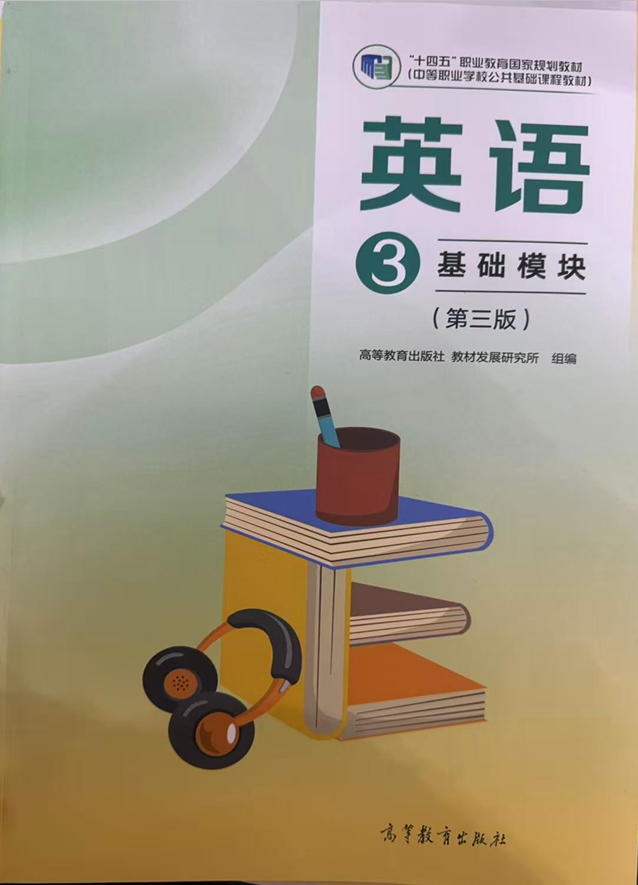
Unit 8 Role Models of the Times (A卷·基础巩固)《英语 基础模块3》(高教版第三版)单元过关卷(原卷版+解析版)
2026-06-03
|
3份
|
20页
|
48人阅读
|
0人下载
摘要:
**基本信息**
紧扣《英语基础模块3》Unit 8“时代榜样”主题,A卷基础巩固设计,通过听力、完形填空等题型覆盖核心语言知识,融入王海滨、郑钦文等时代人物素材,适配中职单元复习,提升语言能力与文化意识。
**题型特征**
|题型|题量/分值|知识覆盖|命题特色|
|----|-----------|----------|----------|
|听力|5题15分|细节理解|考查时间、人物关系等基础信息,贴近真实交际情境|
|完形填空|10题10分|词汇运用与上下文理解|以爱迪生故事为载体,考查动词短语(heard about)、副词(carelessly)等,培养思维品质|
|阅读理解|15题60分|信息获取与推理|选用工匠、运动员、科学家等时代榜样素材,如王海滨创新修复机器案例,强化文化意识与价值引领|
|补全对话|5题15分|日常交际表达|围绕“榜样影响”话题,考查选择疑问句应答(E)、举例表达(C)等,提升语言表达能力|
内容正文:
编写说明:本套试卷紧扣《英语 基础模块3》(高教版第三版)教材,以教材单元为基准精准覆盖核心考点。
每个单元设置AB卷,A卷为基础巩固卷,侧重基础考点训练,帮助学生扎实掌握知识要点;B卷为能力提升卷,注重知识整合与全面检测,引导学生构建知识网络。全书设计4份综合测试卷,模拟实战情境,聚焦解题能力突破,全面提升应试能力与知识应用水平。
《英语 基础模块3》(高教版第三版)《单元过关卷》
Unit 8 Role Models of the Times
A卷·基础巩固
考试时间:40分钟 满分:100分
班级 姓名 学号 成绩
1、 听力:本题共5小题,每小题3分,共15分。在每小题给出的三个选项中,只有一项符合题目要求。
1.What are they talking about?
A.A woman. B.A book. C.A man.
【答案】A
【解析】M: Who is the woman in the picture?
W: She’s my aunt, and she is a professor in a university.
2.When did the plane leave?
A.At 8:50. B.At 9:10. C.At 8:20
【答案】A
【解析】W: The flight for London left ten minutes ago.
M: Now it’s nine.
3.When did the man start to write his composition?
A.At 10:40. B.At 10:05. C.At 9:30.
【答案】C
【解析】A: By the way, have you finished your composition?
B: Yes. I spent more than forty minutes on it last night.
A: I didn’t start it until nine thirty last night because I had to do my physics exercises first. I finished my composition at ten oh five.
4.Who did the man meet?
A.Janet. B.Janet’s sister. C.A stranger.
【答案】C
【解析】M: Hi, Janet. The other day I saw someone who looked a lot like you. Do you have a sister who is about 20 years old?
W: No. In fact, I don’t have any brothers or sisters. I’m an only child.
5.What is the probable relationship between the two speakers?
A.Classmates. B.Teacher and student. C.Doctor and patient.
【答案】A
【解析】M: Hi, Cindy. I didn’t see you in Professor Johnson’s class yesterday. What happened?
W: Well, I had a flu, so I emailed him and asked for sick leave.
2、 完形填空:本题共10小题,每小题1分,共10分。在每小题给出的四个选项中,只有一项符合题目要求。
Everybody knows that Edison is a famous scientist who invented the electric light bulb. But maybe fewer people have ____6_____ his being kind and forgiving (原谅)towards others. The following is a true story about him.
At one point in his experiments, Edison had ____7____ a working bulb-the final result of hundreds of trials. It was the ____8_____ electric light bulb that had ever been made, and Edison was full of pride and delight. “Take it upstairs, Jimmy,” he said, handing it to his assistant (助手). ____9_____ there was a crash, and the bulb had broken into pieces on the floor. Jimmy had let the bulb slip (滑落) through his fingers ____10_____.
Edison said nothing, but went back to his work table and set to work once more to make another ____11_____. A few days later, a new bulb was finally ready. There it ____12_____ on the table in front of its maker, fully completed. With a smile, he handed the new bulb to Jimmy. “Be careful this time,” he said. He was giving the young man another ____13_____. Jimmy did not break it, so we have millions of bulbs in the world today.
The power to ____14_____ is necessary for us. Life is too short and no one is ____15______. If we can forgive those who have hurt us, we will have a better life.
6.A.heard about B.worried about C.brought about D.looked about
7.A.sold B.invented C.accepted D.bought
8.A.best B.worst C.first D.last
9.A.Luckily B.Surprisingly C.Finally D.Suddenly
10.A.sadly B.angrily C.carelessly D.carefully
11.A.fan B.bulb C.phone D.book
12.A.learned B.held C.put D.lay
13.A.chance B.hand C.reason D.talk
14.A.receive B.forget C.keep D.improve
15.A.strong B.nice C.bad D.perfect
【答案】
6.A 7.B 8.C 9.D 10.C 11.B 12.D 13.A 14.B 15.D
【导语】本文以一个真实的故事讲述发明家爱迪生对他人的友善和宽容。
【详解】6.句意:但也许很少有人听说过他对其他人的友善和宽容。
heard about听说;worried about担心;brought about带来;looked about环顾四周。根据下文“The following is a true story about him.”以下是关于他的真实故事;可知,此处指“听说过他对其他人的友善和宽容”。故选A。
7.句意:在他的实验中,爱迪生终于发明出了一个能亮的灯泡——这是数百次试验的最终结果。
sold出售;invented发明;accepted接受;bought买。根据“the final result of hundreds of trials” 这是数百次试验的最终结果;可知,此处指“爱迪生发明出了一个能亮的灯泡”。故选B。
8.句意:这是有史以来第一个电灯泡,爱迪生充满了自豪和喜悦。
best最好的;worst最差的;first首个的;last最后的。根据“electric light bulb that had ever been made”可知,此处指“有史以来第一个电灯泡”。故选C。
9.句意:突然一声碎裂声,灯泡在地板上摔成了碎片。
Luckily幸运的是;Surprisedly出乎意料地;Finally最后;Suddenly突然。根据“there was a crash”可知此处指“突如其来的声音”。故选D。
10.句意:吉米不小心让灯泡从手指间滑落。
sadly悲哀地;angrily愤怒地;carelessly粗心地;carefully小心地。根据“Jimmy had let the bulb slip through his fingers”灯泡从手指间滑落;可知,此处指“不小心导致灯泡滑落”。故选C。
11.句意:爱迪生什么也没说,而是回到他的工作台上,开始再次制作另一个灯泡。
fan风扇;bulb电灯泡;phone电话;book书。根据上文“助手吉米不小心摔坏电灯”;可知此处指“爱迪生开始制造另一只灯泡”。故选B。
12.句意:在那里,它躺在制作人面前的桌子上,完全完成了。
leaned学;held持有;put放,把某物放置在某处;lay平放,将某物放在平坦的表面上。根据“on the table in front of its maker”可知此处指“平放在桌上,因为灯泡是圆形”。故选D。
13.句意:他又给了这个年轻人一次机会。
chance机会;hand手;reason原因;talk说话。上文“吉米把灯泡摔碎了”;根据上文“With a smile, he handed the new bulb to Jimmy....”爱迪生再次把灯泡给吉米;可知,此处指“又给了这个年轻人一次机会”。故选A。
14.句意:遗忘的能力对我们来说是必要的。
receive接收;forget 忘记;keep保持;improve改进。根据下文“If we can forgive those who have hurt us, we will have a better life”如果我们能原谅那些伤害过我们的人,我们会过上更好的生活;可知此处指“要学会遗忘,才能过上更好的生活”。故选B。
15.句意:生命太短,没有人是完美的。
strong坚强的;nice美好的;bad不好的;perfect完美的。根据下文“If we can forgive those who have hurt us, we will have a better life”要原谅那些伤害过我们的人;可知此处指“没有人是完美的”。故选D。
3、 阅读理解:本题共15小题,每小题4分,共60分。在每小题给出的四个选项中,只有一项符合题目要求。
A
Wang Hai is a master craftsperson in a machinery factory and was named one of the “Role Models of the Times” last year. With over 30 years of experience in equipment maintenance, he has repaired more than 1,000 sets of precision machines.
What makes Wang special is his dedication to innovation. Once, the factory’s imported machine broke down, and foreign technicians said it would take a month to fix. Wang worked day and night, studying the machine’s structure and testing solutions. Finally, he repaired it in just five days, saving the factory hundreds of thousands of yuan.
Wang also cares about passing on his skills. He has trained 56 apprentices, many of whom have become technical backbones in the factory. “A true craftsperson should not only do well themselves but also help others grow,” he often says. For vocational students, Wang Hai sets a great example of loving one’s job and pursuing excellence.
16.What is Wang Hai’s job?
A.A foreign technician. B.A master craftsperson.
C.A factory manager. D.A vocational teacher.
17..How long did Wang Hai take to repair the imported machine?
A.Five days. B.Ten days.
C.Half a month. D.One month.
18.What does Wang Hai often say about craftspeople?
A.Innovation is not important for work.
B.craftspeople should only focus on their own work.
C.Good craftspeople should help others grow.
D.It’s easy to become a technical backbone.
19.How many apprentices has Wang Hai trained?
A.30. B.56.
C.1,000. D.5.
20.What can vocational students learn from Wang Hai?
A.How to import foreign machines. B.How to manage a factory.
C.Loving one’s job and pursuing excellence. D.How to teach technical skills.
【答案】16.B 17.A 18.C 19.B 20.C
【导语】这是一篇记叙文。文章主要介绍了一位叫作王海的工匠大师的事迹,他为职业学生树立了热爱本职、追求卓越的榜样。
【详解】16.细节理解题。根据第一段中“Wang Hai is a master craftsperson in a machinery factory (王海是一家机械厂的工匠大师)”可知,王海的工作是一名工匠大师。故选B。
17.细节理解题。根据第二段中“Finally, he repaired it in just five days (最后,他只用了五天就把它修好了)”可知,王海修理进口机器花了五天时间。故选A。
18.细节理解题。根据第三段中“‘A true craftsperson should not only do well themselves but also help others grow,’ he often says. (他经常说:‘一个真正的工匠不仅要做好自己,还要帮助别人成长。’)”可知,王海经常说优秀的工匠应该帮助他人成长。故选C。
19.细节理解题。根据第三段中“He has trained 56 apprentices (他培训了56个学徒)”可知,王海培训了56名学徒。故选B。
20.细节理解题。根据第三段中“For vocational students, Wang Hai sets a great example of loving one’s job and pursuing excellence. (王海为高职学生树立了热爱工作、追求卓越的榜样。)”可知,职业学生可以从王海身上学到热爱工作和追求卓越的精神。故选C。
B
Chinese tennis player Zheng Qinwen is a big surprise for China in the tennis sports world nowadays.
The 22-year-old girl, from Hubei, started playing sports from an early age. “I was fat as a kid and I got sick often, so my parents told me to choose one sport to play. I started with table tennis but quickly looked for other sports. I tried badminton, basketball and then I tried tennis.” Zheng said.
At the age of six, Zheng went to watch 2008 Beijing Olympic Games with her family. She was excited all the time. But when it came to tennis, Zheng just sat there and seemed to be thinking about something. That was the time when Zheng became sure about her interest in tennis.
After that, Zheng began spending more time learning tennis and she had a talent for it. She took Li Na, a great tennis player in China, as her model. Zheng thought Li Na showed that Chinese people can do great things for tennis. After seeing her success, Zheng also dreamed of becoming a great tennis player.
Now, her dream has been realized. In August this year, Zheng won the women’s singles final at the Women’s Tennis Final of the Olympic Games.
21.Why did Zheng start playing sports from an early age?
A.Because she was talented in sports.
B.Because she wanted a healthy body.
C.Because she was interested in sports.
D.Because her parents likes doing sports.
22.Which of the following statements about Zheng is TRUE according to the passage?
A.She only takes part in singles events.
B.She was sure about her interest in tennis when she was six years old.
C.She is from Hunan Province.
D.She has no model when playing tennis.
23.When did Zheng dream of becoming a great tennis player?
A.When she was six years old.
B.After watching 2008 Beijing Olympic Games.
C.After seeing Li Na’s success.
D.In August this year.
24.What’s the main idea of Paragraph 5?
A.How Zheng won a world match.
B.How hard Zheng practiced.
C.When Zheng became interested in tennis.
D.What Zheng has won in tennis.
25.The passage can probably be found in a ________.
A.sports magazine B.textbook
C.storybook D.dictionary
【答案】21.B 22.B 23.C 24.D 25.A
【导语】这是记叙文。主要讲述了中国网球运动员郑钦文从小因身体原因开始运动,6岁时对网球产生兴趣,以李娜为榜样,最终通过努力实现梦想,夺得奥运会网球女单冠军的故事。
【详解】21.细节理解题。根据第二段“I was fat as a kid and I got sick often, so my parents told me to choose one sport to play. (我小时候很胖,经常生病,所以我父母告诉我选择一项运动来玩。)”可知,郑钦文从小就开始运动是因为她儿时肥胖多病,想要一个健康的身体。故选B。
22.细节理解题。根据第三段“At the age of six, Zheng went to watch 2008 Beijing Olympic Games with her family. She was excited all the time. But when it came to tennis, Zheng just sat there and seemed to be thinking about something. That was the time when Zheng became sure about her interest in tennis. (6岁的时候,她和家人一起去看了2008年北京奥运会。她一直很兴奋。当看到网球比赛时,郑就静静地坐着,似乎在思考着什么。就在那时,郑终于确定了自己对网球的兴趣。)”可知,她六岁时她确定了对网球的兴趣。故选B。
23.细节理解题。根据第四段“Zheng thought Li Na showed that Chinese people can do great things for tennis. After seeing her success, Zheng also dreamed of becoming a great tennis player. (郑认为李娜表明了中国人可以为网球做出伟大的事情。看到她的成功后,郑也梦想着成为一名伟大的网球运动员。)”可知,郑是在看到李娜的成功之后有了成为伟大的网球运动员的梦想。故选C。
24.主旨大意题。根据第五段“Now, her dream has been realized. In August this year, Zheng won the women’s singles final at the Women’s Tennis Final of the Olympic Games. (现在,她的梦想实现了。今年8月,郑在奥运会女子网球决赛中获得女单冠军。)”可知,此段主要介绍了郑在网球方面取得的成绩。故选D。
25.推理判断题。根据第一段“Chinese tennis player Zheng Qinwen is a big surprise for China in the tennis sports world nowadays. (中国网球运动员郑钦文是当今中国网球体育界的一大惊喜。)”及通读全文可知,文章介绍了网球运动员郑钦文的相关事迹,属于体育类内容,最可能出现在运动杂志上(sports magazine)。故选A。
C
Yang Chen-Ning, a world-famous physicist and Nobel Prize winner, passed away in 2025. He was a member of the Chinese Academy of Sciences and a professor at Tsinghua University. Tsinghua University wrote about his death and described him as “immortal” (不朽的) for his influence on science and education will last forever.
Born in 1922 in Hefei, Anhui Province, Yang moved to Beijing with his family in 1929. His university studies began at the National Southwester Associated University in 1938, followed by a master’s degree from Tsinghua University in 1944. The next year, he went to the United States for further study, receiving a PhD from the University of Chicago in 1948.
The year 1957 Yang and his partner Tsung-dao Lee win the Nobel Prize in Physics. Their discovery about how very small particles (粒子) behave changed scientists’ understanding of particle physics. Together with Robert Mills, Yang developed the “Yang-Mills theory (理论)”, which became a key part of the Standard Model explaining the basic forces of the universe (宇宙).
From 1949 to 1966, Yang worked at Princeton’s Institute for Advanced Study, then taught at the State University of New York until 1999. He returned to China often, serving as a visiting professor at the Chinese University of Hong Kong since 1986 and helping build Tsinghua’s advanced studies program.
He cared deeply for his country, developing science education and exchange between China and the United States. His first visit to China in 1971 encouraged many overseas Chinese researchers to return. He also raised money to support Chinese students studying abroad.
Yang’s life was a legend that continues to inspire. His century-long journey of exploration and love for his nation left a bright mark on human history, showing how one person can shape the future through knowledge and hard work.
26.How old was Yang when he died?
A.100 B.103 C.105 D.2025
27.Why did Tsinghua call Yang “immortal”?
A.He lived for over a century. B.His science influence lasts long.
C.He was a Nobel winner. D.He worked at Tsinghua.
28.What can we know about Yang’s 1971 visit?
A.It was his second time back to China.
B.It made him stop working in the US.
C.It started his support for Chinese students.
D.It played a role in China’s science development.
29.What’s the text mainly about?
A.Yang’s Nobel Prize story B.Yang’s life and great achievements
C.Yang’s education in U.S. D.Why Yang returned to China
30.Which order is correct?
①Working at a Princeton Institute
②Teaching at a New York university
③Serving as a visiting professor in Hong Kong
④Studying for a PhD in Chicago
A.④→①→②→③ B.①→④→②→③
C.④→②→①→③ D.①→②→④→③
【答案】26.B 27.B 28.D 29.B 30.A
【导语】本文是一篇记叙文。主要介绍了世界著名物理学家、诺贝尔奖得主杨振宁的生平经历、学术成就以及他对中国科学和教育事业的深远影响。
【详解】26.细节理解题。根据第一段和第二段“Yang Chen-Ning, a world-famous physicist and Nobel Prize winner, passed away in 2025. (世界著名物理学家、诺贝尔奖得主杨振宁于2025年逝世。)”及“Born in 1922 in Hefei, Anhui Province, Yang moved to Beijing with his family in 1929. (杨于1922年出生于安徽合肥,1929年随家人迁居北京。)”可知,他出生在1922年,在2025年去世,所以去世时是103岁。故选B。
27.细节理解题。根据第一段“Tsinghua University wrote about his death and described him as “immortal” for his influence on science and education will last forever. (清华大学在悼念他逝世时称他为“不朽的人”,因为他对科学和教育的影响将永世长存。)”清华大学称他为“不朽的人”,是因为他对科学和教育产生了持久的影响。故选B。
28.推理判断题。根据第五段“His first visit to China in 1971 encouraged many overseas Chinese researchers to return. He also raised money to support Chinese students studying abroad. (1971年他首次访华,鼓励了许多海外中国研究人员回国。他还筹集资金资助中国留学生。)”可知,1971年的访问促进了海外华人科学家回国,并推动了对留学生的支持,对中国的科学发展起到了积极作用。故选D。
29.主旨大意题。根据最后一段“Yang’s life was a legend. His century-long life of exploration and love for his nation left a bright mark on human history, showing how one person can shape the future through knowledge and hard work. (杨振宁的一生堪称传奇。他长达一个世纪的探索历程与对祖国的热爱,在人类历史上留下了璀璨印记,彰显了一个人如何凭借知识与勤奋铸就未来。)”可知,文章主要介绍了杨振宁的生平、教育背景、科学成就以及他对中国科学和教育的贡献,所以选项A“杨的生平与伟大成就”最能概括文章的主旨。故选B。
30.细节理解题。根据第二段“His university studies began at the National Southwester Associated University in 1938, followed by a master’s degree from Tsinghua University in 1944. The next year, he went to the United States for further study, receiving a PhD from the University of Chicago in 1948. (他1938年进入国立西南联合大学学习,1944年获得清华大学硕士学位。次年赴美深造,1948年获芝加哥大学博士学位。)”可知,1945年赴美深造;根据第四段“From 1949 to 1966, Yang worked at Princeton’s Institute for Advanced Study, then taught at the State University of New York until 1999. (1949年至1966年,杨在普林斯顿高等研究院工作,之后在纽约州立大学任教直至1999年。)”可知1949年至1966年,杨在普林斯顿高等研究院工作,之后在纽约州立大学任教直至1999年;“He returned to China often, serving as a visiting professor at the Chinese University of Hong Kong since 1986 (他经常回到中国,自1986年起担任香港中文大学的客座教授)”可知,他自1986年起担任香港中文大学的客座教授。正确顺序为④→①→②→③。故选A。
4、 补全对话:本题共5小题,每小题3分,共15分。在七个选项中选择五个,有二个多余选项。
A: Which person has influenced you the most?
B: ____31____
A: By the way, are you crazy about Yao Ming?
B: Of course,he is my role model. Many of our classmates are fans of different players, ____32____
A: Well, other classmates look up to scientists, ____33____ They have contributed a lot to our country.
B: I can’t agree more. That’s why I admire your brother so much.
A: My brother, why?
B: ____34____ I just want to be a soldier like your brother, protecting our motherland.
A: Hmm ... I’d like to be a professional basketball player, winning glory for our country.
B: Great! ____35____
A.like Li Na,Su Bingtian and Wu Dajing.
B.We both have found our dreams and role models.
C.such as Yuan Longping, Tu Youyou and Yang Zhenning.
D.What can I do for you?
E.Yao Ming, my favorite basketball player.
F.He is a good and respectable soldier.
G.Yes, I do.
【答案】31.E 32.A 33.C 34.F 35.B
【导语】本文是一段关于影响自己的人和梦想的对话,讨论了不同人崇拜的对象及各自的理想。
【详解】31.根据上文“Which person has influenced you the most? (哪个人对你影响最大?)”可知,此处应回答具体的人,选项E“姚明,我最喜欢的篮球运动员。”符合语境。故选E。
32.根据上文“Many of our classmates are fans of different players (很多同学是不同运动员的粉丝)”可知,此处应列举其他运动员,选项A“比如李娜、苏炳添和武大靖。”符合语境。故选A。
33.根据上文“other classmates look up to scientists (其他同学崇拜科学家)”可知,此处应列举科学家,选项C“比如袁隆平、屠呦呦和杨振宁。” 符合语境。故选C。
34.根据上文“My brother, why? (为什么羡慕我哥哥?)”以及下文说 “I just want to be a soldier like your brother (想成为像你哥哥一样的士兵)”可知,此处应说明哥哥的身份,选项F“他是一个优秀且可敬的士兵。”符合语境。故选F。
35.根据上文“I’d like to be a professional basketball player, winning glory for our country. (我想成为职业篮球运动员为国争光。)”和回应“Great! (太棒了!)”可知,此处应总结两人的共同点,选项B“我们都找到了自己的梦想和榜样。”符合语境。故选B。
学科网(北京)股份有限公司 (
1
)原创精品资源学科网独家享有版权,侵权必究!
学科网(北京)股份有限公司
$听力考试正式开始。Who is the woman in the picture? She's my aunt and he is . a professor in a university. Who is the woman in the picture? She's my aunt and he is a professor in a university. Listen to the next question. The flight for london met ten minutes ago. Now it's nine. The flight for the london left to ten minutes ago. Now it's nine. Listen to the next question. By the way, have you finished your composition? Yes, I spent more than forty minutes on . IT last night. I didn't started until nine thirty last night because I had to do my physics exercises first. I finish my composition at ten, five. Listen to the next question. Hi jannet. The other day I saw someone who looked a lot like you. Do you have a sister who is about . twenty years old? No, in fact, I don't have any brothers or sisters. I an only child. Listen to the next question. Hi Cindy. I didn't see you in professor Johnson s class yesterday. What happened? Well, I had a flu, so I emailed him and asked for sick leave. 听力部分到此结束。
编写说明:本套试卷紧扣《英语 基础模块3》(高教版第三版)教材,以教材单元为基准精准覆盖核心考点。
每个单元设置AB卷,A卷为基础巩固卷,侧重基础考点训练,帮助学生扎实掌握知识要点;B卷为能力提升卷,注重知识整合与全面检测,引导学生构建知识网络。全书设计4份综合测试卷,模拟实战情境,聚焦解题能力突破,全面提升应试能力与知识应用水平。
《英语 基础模块3》(高教版第三版)《单元过关卷》
Unit 8 Role Models of the Times
A卷·基础巩固
考试时间:40分钟 满分:100分
班级 姓名 学号 成绩
1、 听力:本题共5小题,每小题3分,共15分。在每小题给出的三个选项中,只有一项符合题目要求。
1.What are they talking about?
A.A woman. B.A book. C.A man.
2.When did the plane leave?
A.At 8:50. B.At 9:10. C.At 8:20
3.When did the man start to write his composition?
A.At 10:40. B.At 10:05. C.At 9:30.
4.Who did the man meet?
A.Janet. B.Janet’s sister. C.A stranger.
5.What is the probable relationship between the two speakers?
A.Classmates. B.Teacher and student. C.Doctor and patient.
2、 完形填空:本题共10小题,每小题1分,共10分。在每小题给出的四个选项中,只有一项符合题目要求。
Everybody knows that Edison is a famous scientist who invented the electric light bulb. But maybe fewer people have ____6_____ his being kind and forgiving (原谅)towards others. The following is a true story about him.
At one point in his experiments, Edison had ____7____ a working bulb-the final result of hundreds of trials. It was the ____8_____ electric light bulb that had ever been made, and Edison was full of pride and delight. “Take it upstairs, Jimmy,” he said, handing it to his assistant (助手). ____9_____ there was a crash, and the bulb had broken into pieces on the floor. Jimmy had let the bulb slip (滑落) through his fingers ____10_____.
Edison said nothing, but went back to his work table and set to work once more to make another ____11_____. A few days later, a new bulb was finally ready. There it ____12_____ on the table in front of its maker, fully completed. With a smile, he handed the new bulb to Jimmy. “Be careful this time,” he said. He was giving the young man another ____13_____. Jimmy did not break it, so we have millions of bulbs in the world today.
The power to ____14_____ is necessary for us. Life is too short and no one is ____15______. If we can forgive those who have hurt us, we will have a better life.
6.A.heard about B.worried about C.brought about D.looked about
7.A.sold B.invented C.accepted D.bought
8.A.best B.worst C.first D.last
9.A.Luckily B.Surprisingly C.Finally D.Suddenly
10.A.sadly B.angrily C.carelessly D.carefully
11.A.fan B.bulb C.phone D.book
12.A.learned B.held C.put D.lay
13.A.chance B.hand C.reason D.talk
14.A.receive B.forget C.keep D.improve
15.A.strong B.nice C.bad D.perfect
3、 阅读理解:本题共15小题,每小题4分,共60分。在每小题给出的四个选项中,只有一项符合题目要求。
A
Wang Hai is a master craftsperson in a machinery factory and was named one of the “Role Models of the Times” last year. With over 30 years of experience in equipment maintenance, he has repaired more than 1,000 sets of precision machines.
What makes Wang special is his dedication to innovation. Once, the factory’s imported machine broke down, and foreign technicians said it would take a month to fix. Wang worked day and night, studying the machine’s structure and testing solutions. Finally, he repaired it in just five days, saving the factory hundreds of thousands of yuan.
Wang also cares about passing on his skills. He has trained 56 apprentices, many of whom have become technical backbones in the factory. “A true craftsperson should not only do well themselves but also help others grow,” he often says. For vocational students, Wang Hai sets a great example of loving one’s job and pursuing excellence.
16.What is Wang Hai’s job?
A.A foreign technician. B.A master craftsperson.
C.A factory manager. D.A vocational teacher.
17..How long did Wang Hai take to repair the imported machine?
A.Five days. B.Ten days.
C.Half a month. D.One month.
18.What does Wang Hai often say about craftspeople?
A.Innovation is not important for work.
B.craftspeople should only focus on their own work.
C.Good craftspeople should help others grow.
D.It’s easy to become a technical backbone.
19.How many apprentices has Wang Hai trained?
A.30. B.56.
C.1,000. D.5.
20.What can vocational students learn from Wang Hai?
A.How to import foreign machines. B.How to manage a factory.
C.Loving one’s job and pursuing excellence. D.How to teach technical skills.
B
Chinese tennis player Zheng Qinwen is a big surprise for China in the tennis sports world nowadays.
The 22-year-old girl, from Hubei, started playing sports from an early age. “I was fat as a kid and I got sick often, so my parents told me to choose one sport to play. I started with table tennis but quickly looked for other sports. I tried badminton, basketball and then I tried tennis.” Zheng said.
At the age of six, Zheng went to watch 2008 Beijing Olympic Games with her family. She was excited all the time. But when it came to tennis, Zheng just sat there and seemed to be thinking about something. That was the time when Zheng became sure about her interest in tennis.
After that, Zheng began spending more time learning tennis and she had a talent for it. She took Li Na, a great tennis player in China, as her model. Zheng thought Li Na showed that Chinese people can do great things for tennis. After seeing her success, Zheng also dreamed of becoming a great tennis player.
Now, her dream has been realized. In August this year, Zheng won the women’s singles final at the Women’s Tennis Final of the Olympic Games.
21.Why did Zheng start playing sports from an early age?
A.Because she was talented in sports.
B.Because she wanted a healthy body.
C.Because she was interested in sports.
D.Because her parents likes doing sports.
22.Which of the following statements about Zheng is TRUE according to the passage?
A.She only takes part in singles events.
B.She was sure about her interest in tennis when she was six years old.
C.She is from Hunan Province.
D.She has no model when playing tennis.
23.When did Zheng dream of becoming a great tennis player?
A.When she was six years old.
B.After watching 2008 Beijing Olympic Games.
C.After seeing Li Na’s success.
D.In August this year.
24.What’s the main idea of Paragraph 5?
A.How Zheng won a world match.
B.How hard Zheng practiced.
C.When Zheng became interested in tennis.
D.What Zheng has won in tennis.
25.The passage can probably be found in a ________.
A.sports magazine B.textbook
C.storybook D.dictionary
C
Yang Chen-Ning, a world-famous physicist and Nobel Prize winner, passed away in 2025. He was a member of the Chinese Academy of Sciences and a professor at Tsinghua University. Tsinghua University wrote about his death and described him as “immortal” (不朽的) for his influence on science and education will last forever.
Born in 1922 in Hefei, Anhui Province, Yang moved to Beijing with his family in 1929. His university studies began at the National Southwester Associated University in 1938, followed by a master’s degree from Tsinghua University in 1944. The next year, he went to the United States for further study, receiving a PhD from the University of Chicago in 1948.
The year 1957 Yang and his partner Tsung-dao Lee win the Nobel Prize in Physics. Their discovery about how very small particles (粒子) behave changed scientists’ understanding of particle physics. Together with Robert Mills, Yang developed the “Yang-Mills theory (理论)”, which became a key part of the Standard Model explaining the basic forces of the universe (宇宙).
From 1949 to 1966, Yang worked at Princeton’s Institute for Advanced Study, then taught at the State University of New York until 1999. He returned to China often, serving as a visiting professor at the Chinese University of Hong Kong since 1986 and helping build Tsinghua’s advanced studies program.
He cared deeply for his country, developing science education and exchange between China and the United States. His first visit to China in 1971 encouraged many overseas Chinese researchers to return. He also raised money to support Chinese students studying abroad.
Yang’s life was a legend that continues to inspire. His century-long journey of exploration and love for his nation left a bright mark on human history, showing how one person can shape the future through knowledge and hard work.
26.How old was Yang when he died?
A.100 B.103 C.105 D.2025
27.Why did Tsinghua call Yang “immortal”?
A.He lived for over a century. B.His science influence lasts long.
C.He was a Nobel winner. D.He worked at Tsinghua.
28.What can we know about Yang’s 1971 visit?
A.It was his second time back to China.
B.It made him stop working in the US.
C.It started his support for Chinese students.
D.It played a role in China’s science development.
29.What’s the text mainly about?
A.Yang’s Nobel Prize story B.Yang’s life and great achievements
C.Yang’s education in U.S. D.Why Yang returned to China
30.Which order is correct?
①Working at a Princeton Institute
②Teaching at a New York university
③Serving as a visiting professor in Hong Kong
④Studying for a PhD in Chicago
A.④→①→②→③ B.①→④→②→③
C.④→②→①→③ D.①→②→④→③
4、 补全对话:本题共5小题,每小题3分,共15分。在七个选项中选择五个,有二个多余选项。
A: Which person has influenced you the most?
B: ____31____
A: By the way, are you crazy about Yao Ming?
B: Of course,he is my role model. Many of our classmates are fans of different players, ____32____
A: Well, other classmates look up to scientists, ____33____ They have contributed a lot to our country.
B: I can’t agree more. That’s why I admire your brother so much.
A: My brother, why?
B: ____34____ I just want to be a soldier like your brother, protecting our motherland.
A: Hmm ... I’d like to be a professional basketball player, winning glory for our country.
B: Great! ____35____
A.like Li Na,Su Bingtian and Wu Dajing.
B.We both have found our dreams and role models.
C.such as Yuan Longping, Tu Youyou and Yang Zhenning.
D.What can I do for you?
E.Yao Ming, my favorite basketball player.
F.He is a good and respectable soldier.
G.Yes, I do.
学科网(北京)股份有限公司 (
1
)原创精品资源学科网独家享有版权,侵权必究!
学科网(北京)股份有限公司
$
资源预览图

1

2

3
由于学科网是一个信息分享及获取的平台,不确保部分用户上传资料的 来源及知识产权归属。如您发现相关资料侵犯您的合法权益,请联系学科网,我们核实后将及时进行处理。