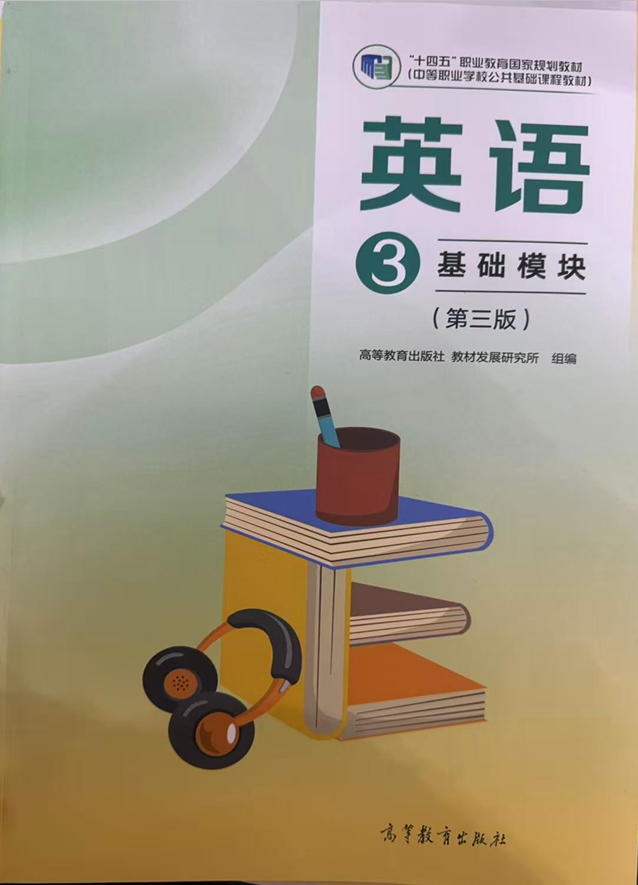
Unit 6 Living History of Culture(B卷·能力提升)《英语 基础模块3》(高教版第三版)单元过关卷(原卷版+解析版)
2026-06-03
|
3份
|
30页
|
35人阅读
|
1人下载
摘要:
**基本信息**
紧扣《英语 基础模块3》Unit 6,B卷能力提升卷精准覆盖核心考点,融合文化传承(如端午节、饺子历史)与真实情境(2025世博会),适配单元复习,提升语言应用与文化意识。
**题型特征**
|题型|题量/分值|知识覆盖|命题特色|
|----|-----------|----------|----------|
|听力|5题15分|节日时间(端午节)、文化活动(地震纪念)|情境真实,检测信息抓取能力|
|完形填空|10题10分|传统文化(吉祥物设计、生肖)|语篇融合历史与现代,考查词汇运用|
|阅读理解|15题60分|节日类型、饮食文化(饺子、定胜糕)、世博会信息|素材兼具人文性与时代性,提升思维品质|
|补全对话|5题15分|春节习俗(团聚、红包)|模拟交际场景,强化语言表达能力|
内容正文:
编写说明:本套试卷紧扣《英语 基础模块3》(高教版第三版)教材,以教材单元为基准精准覆盖核心考点。
每个单元设置AB卷,A卷为基础巩固卷,侧重基础考点训练,帮助学生扎实掌握知识要点;B卷为能力提升卷,注重知识整合与全面检测,引导学生构建知识网络。全书设计4份综合测试卷,模拟实战情境,聚焦解题能力突破,全面提升应试能力与知识应用水平。
《英语 基础模块3》(高教版第三版)《单元过关卷》
Unit 6 Living History of Culture
B卷·能力提升
考试时间:40分钟 满分:100分
班级 姓名 学号 成绩
1、 听力:本题共5小题,每小题3分,共15分。在每小题给出的三个选项中,只有一项符合题目要求。
1.What time will the film start?
A.At 8:15. B.At 8:25. C.At 8:45.
2.When is the Dragon Boat Festival ?
A.On the first day of the Chinese New Year.
B.On the second weekend of the fifth lunar month.
C.On the fifth day of the fifth lunar month.
3.What do the speakers do in memory of the Wenchuan earthquake?
A.Go to the skill-training workshop.
B.Have a minute’s silence for the people who lost their lives.
C.Build shelters for people in Wenchuan.
4.What does the woman do now according to the conversation?
A.Run the water while brushing her teeth.
B.Leave the lights on when leaving the room.
C.Turn off the water while brushing her teeth.
5.What project does the man join?
A.The Water Conservation Project.
B.The Earth Protection Project.
C.The Wildlife Protection Project.
2、 完形填空:本题共10小题,每小题1分,共10分。在每小题给出的四个选项中,只有一项符合题目要求。
The mascot (吉祥物) for the 2026 Lunar New Year, Jixiangma or “Auspicious Horse”, has been ____6____. Its design is special because it comes from a/an ____7____ Chinese artifact (手工制品), the Bronze Running Horse, which was made two thousand years ago.
The horse is a dark red color and has beautiful traditional patterns (图案). In Chinese culture, the horse is a strong ____8____. It stands for speed, success, and loyalty (忠诚). There is even a common ____9____ that goes “Ma Dao Cheng Gong”, meaning instant success.
A team from a top art school ____10____ the mascot. It will be used on many ____11____, like toys and decorations (装饰品). These products will be sold in many countries. Jixiangma helps to ____12____ traditional Chinese culture with our modern life.
This mascot is part of a series that ____13____ in 2023. Each year, a different zodiac (生肖) ___14____ is chosen. As the Year of the Horse gets closer, Jixiangma will help the “Happy Chinese New Year” program share good ____15____ for the new year with people all over the world.
6.A.discovered B.left C.asked D.introduced
7.A.alive B.new C.ancient D.boring
8.A.simple B.symbol C.example D.sample
9.A.saying B.person C.book D.idea
10.A.drew B.bought C.designed D.found
11.A.foods B.products C.movies D.clothes
12.A.give B.connect C.take D.leave
13.A.ended B.stopped C.changed D.started
14.A.animal B.horse C.person D.decoration
15.A.gifts B.letters C.wishes D.ideas
3、 阅读理解:本题共15小题,每小题4分,共60分。在每小题给出的四个选项中,只有一项符合题目要求。
A
Different festivals and celebrations have been held everywhere since long time ago. Most ancient festivals would celebrate the end of cold weather, spring’s coming and autumn’s harvest.
Some festivals are held to honor the dead or to satisfy the ancestors, for example, the Japanese festival Obon. In Mexico, people celebrate the Day of the Dead in early November. The Western holiday Halloween is also a festival of this kind.
Festivals can also be held to honor famous people. The Dragon Boat Festival in China honors the famous poet (诗人) Qu Yuan. In the USA, Columbus Day is in memory of the arrival of Christopher Columbus in the New World. India has a national festival on October 2 to honor Mohandas Gandhi.
Harvest and Thanksgiving festivals can be very happy events. In China and Japan, people celebrate the Mid-Autumn Festival, when they admire the moon and in China, enjoy mooncakes.
16.Which one is a festival of Japan?
A.The Day of the Dead. B.Halloween.
C.The Dragon Boat Festival. D.Obon.
17.Columbus Day is in memory of the arrival of ________.
A.Qu Yuan B.Mohandas Gandhi
C.Christopher Columbus D.Christopher Charles
18.When do people celebrate the Day of the Dead in Mexico?
A.In early December. B.In early November.
C.In early spring. D.In early February.
19.How do people in China celebrate the Mid-Autumn Festival?
A.Admire the moon. B.Admire the sun.
C.Enjoy mooncakes. D.Both A and C.
20.The main idea of this passage is ________.
A.when people celebrate festivals B.how people celebrate festivals
C.why people celebrate festivals D.where people celebrate festivals
B
Many of China’s dishes come with stories. They are part of China’s long and fascinating history. Let’s learn about the interesting origins (起源) of some famous dishes.
Dumplings’ history goes back over 1,800 years. They were first used as medicine. In the late Eastern Han Dynasty, one winter, many poor people were frostbitten (冻伤), especially their ears.
Zhang Zhongjing made some ear-shaped food with some Chinese medicine in it. He called these creations jiao’er, which means “tender ear” in English. After eating the jiao’er, people felt warm all over. Then, over time, the frostbite disappeared.
Zhang Zhongjing continued to give out jiao’er to poor, hungry people until the Eve of the Spring Festival. To celebrate the Spring Festival and their recovery (痊愈), people made their own jiao’er. This kind of ear-shaped food is the later “dumpling”. Today, in northern China, people eat dumplings in most traditional Chinese festivals and celebrations.
The Dingsheng Cake is a popular snack in Jiangsu and Zhejiang provinces. It is made with rice flour and sweet fillings, such as red bean paste or nuts.
It is said that people in Southern Song Dynasty made the cakes to inspire Yue Fei’s army to win the fights. They engraved (雕刻) on the surfaces of cakes with two Chinese characters “Ding Sheng”, which means “must-win” or “victory” in English. Today, the Dingsheng Cake has become a popular gift. It often appears in traditional Chinese celebrations and important events, such as big exams and elderly people’s birthdays.
21.Why did Zhang Zhongjing make jiao’er?
A.To offer food to hungry people. B.To celebrate the Spring Festival.
C.To provide people with medicine. D.To help people keep warm in cold winter.
22.What was the Dingsheng Cake first made for?
A.Welcoming the army. B.Encouraging the army.
C.Serving food for the army. D.Honoring the victory of the army.
23.Why do you think the Dingsheng Cake has become a popular gift?
A.Because it brings a taste of home.
B.Because it is a symbol of success and good luck.
C.Because it is a kind of delicious and sweet snack.
D.Because it carries the spirit of national pride.
24.What do the two kinds of food have in common?
A.They are popular in the south of China.
B.They first appeared in the same dynasty.
C.They were both used as medicine originally.
D.They both have a connection to historical characters.
25.What do you think is the best title of the passage?
A.Stories behind Chinese tastes. B.Stories behind Chinese customs.
C.Stories behind Chinese festivals. D.Stories behind Chinese History.
C
Expo 2025 is a World Expo that will display future society and lifestyles in Osaka, Japan. It has about 150 pavilions. Find out the latest news, events, tickets, attractions and how to visit the expo.
26.Expo 2025 is held ________.
A.in China in May B.in France from April to October
C.in Japan in March D.in Japan from April to October
27.The underlined word pavilion is ________.
A.a country B.a city C.a kind of building D.a kind of exhibition
28.The Switzerland “Pavilion” ________.
A.is next to the Austria Pavilion
B.is the largest foreign-built pavilion
C.looks like an open scroll with traditional things
D.is between the Austria Pavilion and the Brazil Pavilion
29.Jingjing, a twelve-year-old girl, together with her ten-year-old sister and their parents, will visit the Expo this Saturday. They will totally pay ________ yuan.
A.950 B.850 C.750 D.550
30.We can learn from the web page that ________.
A.the adult tickets are cheaper than the youth tickets
B.there aren’t any shops or restaurants in the Expo
C.the Expo has more than 100 pavilions showing future lifestyles
D.it’s a better choice to visit the Expo on weekends because it’s less crowded
4、 补全对话:本题共5小题,每小题3分,共15分。在七个选项中选择五个,有二个多余选项。
A: Hi, Li Hua! Are you doing anything special for the Spring Festival?
B: Yes, ____31____
A: That’s wonderful! What traditions do you usually follow?
B: ____32____ We also give red envelopes to children.
A: Sounds interesting! ____33____
B: It symbolizes good luck and prosperity.
A: I see. ____34____
B: Sure! You’re welcome to join our family dinner on New Year’s Eve.
A: Thank you so much! ____35____
B: At 6:00 PM. See you then!
A.Can I experience it with you?
B.What time will it start?
C.We clean the house and put up couplets.
D.Why do you give red envelopes?
E.My whole family will get together.
F.I don’t celebrate Spring Festival.
G.That’s too early.
学科网(北京)股份有限公司 (
1
)原创精品资源学科网独家享有版权,侵权必究!
学科网(北京)股份有限公司
$
2026年5月28日中职英语作业
学校:___________姓名:___________班级:___________考号:___________
一、听力
1.What time will the film start?
A.At 8:15. B.At 8:25. C.At 8:45.
【答案】C
【原文】M: Honey, we must be in a hurry. It’s 8:15 now.
W: The film will be on in half an hour. It’s only 10 minutes’drive and the traffic isn’t heavy these days.
2.When is the Dragon Boat Festival ?
A.On the first day of the Chinese New Year.
B.On the second weekend of the fifth lunar month.
C.On the fifth day of the fifth lunar month.
【答案】C
【详解】Woman:Look!The dragon-boat race is so exciting!
Man:It is the most popular activity during the Dragon Boat Festival,which falls on the fifth day of the fifth lunar month.
3.What do the speakers do in memory of the Wenchuan earthquake?
A.Go to the skill-training workshop.
B.Have a minute’s silence for the people who lost their lives.
C.Build shelters for people in Wenchuan.
【答案】B
【原文】Man: Hi, Lin Lin! The Student Union has asked us to make a proposal for the National Disaster Prevention and Mitigation Day on 12 May. What should we do?
Woman: Well, the day is in memory of the Wenchuan earthquake, so let’s have a minute’s silence for the people who lose their lives.
4.What does the woman do now according to the conversation?
A.Run the water while brushing her teeth.
B.Leave the lights on when leaving the room.
C.Turn off the water while brushing her teeth.
【答案】C
【原文】Man: I used to leave my computer and television on standby when I slept.
Woman: Oh, that’s really a waste of energy.
Man: Now I turn them off as soon as I finish using them.
Woman: Good for you. I used to run the water while brushing my teeth, but now I turn it off.
5.What project does the man join?
A.The Water Conservation Project.
B.The Earth Protection Project.
C.The Wildlife Protection Project.
【答案】B
【详解】Man: I’ve joined the Earth Protection Project at school.
Woman: What’s it about?
Man: It calls on people to change their daily habits to protect the earth.
二、完形填空
The mascot (吉祥物) for the 2026 Lunar New Year, Jixiangma or “Auspicious Horse”, has been ________. Its design is special because it comes from a/an ________ Chinese artifact (手工制品), the Bronze Running Horse, which was made two thousand years ago.
The horse is a dark red color and has beautiful traditional patterns (图案). In Chinese culture, the horse is a strong ________. It stands for speed, success, and loyalty (忠诚). There is even a common ________ that goes “Ma Dao Cheng Gong”, meaning instant success.
A team from a top art school ________ the mascot. It will be used on many ________, like toys and decorations (装饰品). These products will be sold in many countries. Jixiangma helps to ________ traditional Chinese culture with our modern life.
This mascot is part of a series that ________ in 2023. Each year, a different zodiac (生肖) _______ is chosen. As the Year of the Horse gets closer, Jixiangma will help the “Happy Chinese New Year” program share good ________ for the new year with people all over the world.
6.A.discovered B.left C.asked D.introduced
7.A.alive B.new C.ancient D.boring
8.A.simple B.symbol C.example D.sample
9.A.saying B.person C.book D.idea
10.A.drew B.bought C.designed D.found
11.A.foods B.products C.movies D.clothes
12.A.give B.connect C.take D.leave
13.A.ended B.stopped C.changed D.started
14.A.animal B.horse C.person D.decoration
15.A.gifts B.letters C.wishes D.ideas
【答案】
6.D 7.C 8.B 9.A 10.C 11.B 12.B 13.D 14.A 15.C
【导语】本文是一篇说明文。文章主要讲述了2026年农历新年吉祥物“吉祥马”的设计来源、象征意义及其应用和传播作用。
【详解】6.考查动词词义辨析。句意:2026年农历新年的吉祥物“吉祥马”已经被介绍出来了。A. discovered发现;B. left离开;C. asked问;D. introduced介绍。根据后文“Its design is special ...”可知,此处指吉祥物已经被介绍出来,其设计很特别。故选D。
7.考查形容词词义辨析。句意:它的设计很特别,因为它来自一件古老的中国手工艺品 —— 两千年前的青铜奔马。A. alive活着的;B. new新的;C. ancient古老的;D. boring无聊的。根据后文“which was made two thousand years ago”可知,这件手工艺品是两千年前的,因此是古老的。故选C。
8.考查名词词义辨析。句意:在中国文化中,马是一种强大的象征。A. simple简单的;B. symbol象征;C. example例子;D. sample样本。根据后文“It stands for speed, success, and loyalty.”可知,马代表着速度、成功和忠诚,因此是强大的象征。故选B。
9.考查名词词义辨析。句意:甚至有一句常见的谚语“马到成功”,意思是立即成功。A. saying谚语;B. person人;C. book书;D. idea想法。根据后文“Ma Dao Cheng Gong”可知,这是一句谚语。故选A。
10.考查动词词义辨析。句意:一个顶级艺术学校的团队设计了这个吉祥物。A. drew画;B. bought买;C. designed设计;D. found发现。根据后文“It will be used on many ...”可知,吉祥物将被用于很多地方,因此此处指设计了这个吉祥物。故选C。
11.考查名词词义辨析。句意:它将被用于很多产品上,比如玩具和装饰品。A. foods食物;B. products产品;C. movies电影;D. clothes衣服。根据后文“like toys and decorations”可知,玩具和装饰品都属于产品。故选B。
12.考查动词词义辨析。句意:“吉祥马”有助于将中国传统文化与我们的现代生活联系起来。A. give给;B. connect连接;C. take拿;D. leave离开。根据后文“traditional Chinese culture with our modern life”可知,此处指将中国传统文化与现代生活联系起来,connect ... with ...表示“把……和……连接起来”。故选B。
13.考查动词词义辨析。句意:这个吉祥物是2023年开始的一系列吉祥物的一部分。A. ended结束;B. stopped停止;C. changed改变;D. started开始。根据后文“Each year, a different zodiac animal is chosen.”可知,每年都会选择一个不同的生肖动物作为吉祥物,因此这个系列是从2023年开始的。故选D。
14.考查名词词义辨析。句意:每年都会选择一个不同的生肖动物。A. animal动物;B. horse马;C. person人;D. decoration装饰。根据前文“Each year, a different zodiac”可知,每年都会选择一个不同的生肖动物,此处指泛指,用animal。故选A。
15.考查名词词义辨析。句意:随着马年的临近,“吉祥马”将帮助“快乐中国新年”节目向全世界的人们分享新年的美好祝愿。A. gifts礼物;B. letters信;C. wishes祝愿;D. ideas想法。根据后文“for the new year with people all over the world”可知,此处指新年的美好祝愿。故选C。
三、阅读理解
Different festivals and celebrations have been held everywhere since long time ago. Most ancient festivals would celebrate the end of cold weather, spring’s coming and autumn’s harvest.
Some festivals are held to honor the dead or to satisfy the ancestors, for example, the Japanese festival Obon. In Mexico, people celebrate the Day of the Dead in early November. The Western holiday Halloween is also a festival of this kind.
Festivals can also be held to honor famous people. The Dragon Boat Festival in China honors the famous poet (诗人) Qu Yuan. In the USA, Columbus Day is in memory of the arrival of Christopher Columbus in the New World. India has a national festival on October 2 to honor Mohandas Gandhi.
Harvest and Thanksgiving festivals can be very happy events. In China and Japan, people celebrate the Mid-Autumn Festival, when they admire the moon and in China, enjoy mooncakes.
16.Which one is a festival of Japan?
A.The Day of the Dead. B.Halloween.
C.The Dragon Boat Festival. D.Obon.
17.Columbus Day is in memory of the arrival of ________.
A.Qu Yuan B.Mohandas Gandhi
C.Christopher Columbus D.Christopher Charles
18.When do people celebrate the Day of the Dead in Mexico?
A.In early December. B.In early November.
C.In early spring. D.In early February.
19.How do people in China celebrate the Mid-Autumn Festival?
A.Admire the moon. B.Admire the sun.
C.Enjoy mooncakes. D.Both A and C.
20.The main idea of this passage is ________.
A.when people celebrate festivals B.how people celebrate festivals
C.why people celebrate festivals D.where people celebrate festivals
【答案】16.D 17.C 18.B 19.D 20.C
【导语】本文主要介绍了世界各地不同节日的起源、纪念对象及庆祝方式,如祭祖、纪念名人及丰收节日等。
【详解】16.细节理解题。根据第二段中“for example, the Japanese festival Obon (例如,日本的盂兰盆节)”可知,Obon是日本的节日。
17.细节理解题。根据第三段中“Columbus Day is in memory of the arrival of Christopher Columbus in the New World (哥伦布日是为了纪念克里斯托弗·哥伦布到达新大陆)”可知,哥伦布日是为了纪念克里斯托弗·哥伦布。
18.细节理解题。根据第二段中“In Mexico, people celebrate the Day of the Dead in early November. (在墨西哥,人们在11月初庆祝亡灵节。)”可知,墨西哥的亡灵节在十一月初庆祝。
19.细节理解题。根据最后一段中“In China and Japan, people celebrate the Mid-Autumn Festival, when they admire the moon and in China, enjoy mooncakes. (在中国和日本,人们庆祝中秋节,当他们赏月时,在中国,吃月饼。)”可知,在中国过中秋节的时候,人们既赏月也吃月饼。
20.主旨大意题。通读全文可知,文章分段介绍了节日是为了纪念死者、名人或庆祝丰收等不同原因,主要讲述了人们庆祝节日的原因。
Many of China’s dishes come with stories. They are part of China’s long and fascinating history. Let’s learn about the interesting origins (起源) of some famous dishes.
Dumplings’ history goes back over 1,800 years. They were first used as medicine. In the late Eastern Han Dynasty, one winter, many poor people were frostbitten (冻伤), especially their ears.
Zhang Zhongjing made some ear-shaped food with some Chinese medicine in it. He called these creations jiao’er, which means “tender ear” in English. After eating the jiao’er, people felt warm all over. Then, over time, the frostbite disappeared.
Zhang Zhongjing continued to give out jiao’er to poor, hungry people until the Eve of the Spring Festival. To celebrate the Spring Festival and their recovery (痊愈), people made their own jiao’er. This kind of ear-shaped food is the later “dumpling”. Today, in northern China, people eat dumplings in most traditional Chinese festivals and celebrations.
The Dingsheng Cake is a popular snack in Jiangsu and Zhejiang provinces. It is made with rice flour and sweet fillings, such as red bean paste or nuts.
It is said that people in Southern Song Dynasty made the cakes to inspire Yue Fei’s army to win the fights. They engraved (雕刻) on the surfaces of cakes with two Chinese characters “Ding Sheng”, which means “must-win” or “victory” in English. Today, the Dingsheng Cake has become a popular gift. It often appears in traditional Chinese celebrations and important events, such as big exams and elderly people’s birthdays.
21.Why did Zhang Zhongjing make jiao’er?
A.To offer food to hungry people. B.To celebrate the Spring Festival.
C.To provide people with medicine. D.To help people keep warm in cold winter.
22.What was the Dingsheng Cake first made for?
A.Welcoming the army. B.Encouraging the army.
C.Serving food for the army. D.Honoring the victory of the army.
23.Why do you think the Dingsheng Cake has become a popular gift?
A.Because it brings a taste of home.
B.Because it is a symbol of success and good luck.
C.Because it is a kind of delicious and sweet snack.
D.Because it carries the spirit of national pride.
24.What do the two kinds of food have in common?
A.They are popular in the south of China.
B.They first appeared in the same dynasty.
C.They were both used as medicine originally.
D.They both have a connection to historical characters.
25.What do you think is the best title of the passage?
A.Stories behind Chinese tastes. B.Stories behind Chinese customs.
C.Stories behind Chinese festivals. D.Stories behind Chinese History.
【答案】21.C 22.B 23.B 24.D 25.A
【导语】本文主要介绍了饺子和定胜糕这两种中国传统食物的起源、发展以及在当下的情况等,其中饺子最初被用作药,后演变成传统节日食品,定胜糕是江浙流行小吃,最初用于激励军队,现在是受欢迎的礼物。
【详解】21.细节理解题。根据第二段和第三段内容可知,饺子最初被用作药物,张仲景制作饺饵(饺子原型)是为了给人们提供药,治疗冻伤。
22.细节理解题。根据最后一段中“It is said that people in Southern Song Dynasty made the cakes to inspire Yue Fei’s army to win the fights. (相传南宋时期的人们制作这种糕点,是为了激励岳飞的军队奋勇杀敌、屡战屡胜。)”可知,定胜糕最初制作是为了鼓励岳飞的军队。
23.推理判断题。根据文章最后一段对定胜糕的描述内容可知,定胜糕的名字含义是“必胜、胜利”,现在多用于大考、寿宴这类喜庆重要场合,它是成功和好运的象征,因此适合作为礼物。
24.推理判断题。饺子起源和东汉名医张仲景有关,定胜糕起源和南宋名将岳飞有关,二者的共同点是都和历史人物有关。
25.主旨大意题。文章开篇点明主题,介绍中国知名菜肴的起源故事,核心是讲中国美食背后的故事,因此最合适的标题是“Stories behind Chinese tastes”。
Read the following web page and choose the right answer to each question. 阅读以下网页,选择正确的答案。
Expo 2025 is a World Expo that will display future society and lifestyles in Osaka, Japan. It has about 150 pavilions. Find out the latest news, events, tickets, attractions and how to visit the expo.
26.Expo 2025 is held ________.
A.in China in May B.in France from April to October
C.in Japan in March D.in Japan from April to October
27.The underlined word pavilion is ________.
A.a country B.a city C.a kind of building D.a kind of exhibition
28.The Switzerland “Pavilion” ________.
A.is next to the Austria Pavilion
B.is the largest foreign-built pavilion
C.looks like an open scroll with traditional things
D.is between the Austria Pavilion and the Brazil Pavilion
29.Jingjing, a twelve-year-old girl, together with her ten-year-old sister and their parents, will visit the Expo this Saturday. They will totally pay ________ yuan.
A.950 B.850 C.750 D.550
30.We can learn from the web page that ________.
A.the adult tickets are cheaper than the youth tickets
B.there aren’t any shops or restaurants in the Expo
C.the Expo has more than 100 pavilions showing future lifestyles
D.it’s a better choice to visit the Expo on weekends because it’s less crowded
【答案】26.D 27.C 28.A 29.B 30.C
【导语】文章主要介绍了2025年日本大阪世博会的相关信息,包括举办时间、场馆情况、门票选择等。
【详解】26.细节理解题。根据文中“13th Apr — 13th Oct Expo 2025 is a World Expo that will display future society and lifestyles in Osaka, Japan. (4月13日至10月13日,2025年世博会是在日本大阪举办的一场展示未来社会和生活方式的世博会)”可知,2025年世博会将于4月至10月在日本大阪举行。
27.词句猜测题。根据后文“The China Pavilion covers an area of 3,509 square meters ... Its outside looks like an open ancient scroll (中国馆占地3509平方米,外观像展开的古卷轴)”可推断出,pavilion是一种场馆建筑。
28.细节理解题。从图中“5 SWITZERLAND 6 THE USA 7 FRANCE (5瑞士,6美国,7法国)”以及相关布局可知,瑞士馆旁边是奥地利馆(4 AUSTRIA)。
29.细节理解题。根据票价信息,父母是两位成人(Adult),每人300元;12岁的晶晶是青少年(Youth),票价175元;10岁的妹妹是儿童(Children),票价75元。总花费为:2×300+175+75=850元。
30.细节理解题。根据文章“It has about 150 pavilions. (它有大约150个分馆。)”和“... will display future society and lifestyles (……将展示未来的社会和生活方式)”可知,世博会有大约150个展馆来展示未来生活方式,150超过了100。
四、补全对话
根据下面一段对话,从A、B、C、D、E、F、G七个选项中选出五个选项补全到空缺处。
A: Hi, Li Hua! Are you doing anything special for the Spring Festival?
B: Yes, ____31____
A: That’s wonderful! What traditions do you usually follow?
B: ____32____ We also give red envelopes to children.
A: Sounds interesting! ____33____
B: It symbolizes good luck and prosperity.
A: I see. ____34____
B: Sure! You’re welcome to join our family dinner on New Year’s Eve.
A: Thank you so much! ____35____
B: At 6:00 PM. See you then!
A.Can I experience it with you?
B.What time will it start?
C.We clean the house and put up couplets.
D.Why do you give red envelopes?
E.My whole family will get together.
F.I don’t celebrate Spring Festival.
G.That’s too early.
【答案】31.E 32.C 33.D 34.A 35.B
【导语】本文是一段关于春节安排和传统习俗的对话。
【详解】31.根据问句“Are you doing anything special for the Spring Festival? (你春节有什么特别安排吗?)”可知,此处应回答春节特别安排,结合答语“Yes (是的)”,选项E“我的全家会团聚”符合语境。故选E。
32.根据问句“What traditions do you usually follow? (你们通常遵循什么传统?)”可知,此处应回答春节的传统,选项C“我们会打扫房子、贴对联”是春节传统习俗,符合语境。故选C。
33.根据答语“It symbolizes good luck and prosperity. (它象征着好运和繁荣)”,可知此处是询问红包的意义,选项D“你们为什么发红包?”符合语境。故选D。
34.根据答语“You’re welcome to join our family dinner on New Year’s Eve. (欢迎你除夕夜来参加我们的家宴)”可知,此处是发出参与的请求,结合前文对习俗的讨论,选项A“我能和你们一起体验吗?”符合语境。故选A。
35.根据答语“At 6:00 PM (晚上6点)”,可知此处是询问家宴的时间,选项B“它什么时候开始?” 符合语境。故选B。
试卷第1页,共3页
试卷第1页,共3页
学科网(北京)股份有限公司
$
编写说明:本套试卷紧扣《英语 基础模块3》(高教版第三版)教材,以教材单元为基准精准覆盖核心考点。
每个单元设置AB卷,A卷为基础巩固卷,侧重基础考点训练,帮助学生扎实掌握知识要点;B卷为能力提升卷,注重知识整合与全面检测,引导学生构建知识网络。全书设计4份综合测试卷,模拟实战情境,聚焦解题能力突破,全面提升应试能力与知识应用水平。
《英语 基础模块3》(高教版第三版)《单元过关卷》
Unit 6 Living History of Culture
B卷·能力提升
考试时间:40分钟 满分:100分
班级 姓名 学号 成绩
1、 听力:本题共5小题,每小题3分,共15分。在每小题给出的三个选项中,只有一项符合题目要求。
1.What time will the film start?
A.At 8:15. B.At 8:25. C.At 8:45.
【答案】C
【解析】M: Honey, we must be in a hurry. It’s 8:15 now.
W: The film will be on in half an hour. It’s only 10 minutes’drive and the traffic isn’t heavy these days.
2.When is the Dragon Boat Festival ?
A.On the first day of the Chinese New Year.
B.On the second weekend of the fifth lunar month.
C.On the fifth day of the fifth lunar month.
【答案】C
【解析】Woman:Look!The dragon-boat race is so exciting!
Man:It is the most popular activity during the Dragon Boat Festival,which falls on the fifth day of the fifth lunar month.
3.What do the speakers do in memory of the Wenchuan earthquake?
A.Go to the skill-training workshop.
B.Have a minute’s silence for the people who lost their lives.
C.Build shelters for people in Wenchuan.
【答案】B
【解析】Man: Hi, Lin Lin! The Student Union has asked us to make a proposal for the National Disaster Prevention and Mitigation Day on 12 May. What should we do?
Woman: Well, the day is in memory of the Wenchuan earthquake, so let’s have a minute’s silence for the people who lose their lives.
4.What does the woman do now according to the conversation?
A.Run the water while brushing her teeth.
B.Leave the lights on when leaving the room.
C.Turn off the water while brushing her teeth.
【答案】C
【解析】Man: I used to leave my computer and television on standby when I slept.
Woman: Oh, that’s really a waste of energy.
Man: Now I turn them off as soon as I finish using them.
Woman: Good for you. I used to run the water while brushing my teeth, but now I turn it off.
5.What project does the man join?
A.The Water Conservation Project.
B.The Earth Protection Project.
C.The Wildlife Protection Project.
【答案】B
【详解】Man: I’ve joined the Earth Protection Project at school.
Woman: What’s it about?
Man: It calls on people to change their daily habits to protect the earth.
2、 完形填空:本题共10小题,每小题1分,共10分。在每小题给出的四个选项中,只有一项符合题目要求。
The mascot (吉祥物) for the 2026 Lunar New Year, Jixiangma or “Auspicious Horse”, has been ____6____. Its design is special because it comes from a/an ____7____ Chinese artifact (手工制品), the Bronze Running Horse, which was made two thousand years ago.
The horse is a dark red color and has beautiful traditional patterns (图案). In Chinese culture, the horse is a strong ____8____. It stands for speed, success, and loyalty (忠诚). There is even a common ____9____ that goes “Ma Dao Cheng Gong”, meaning instant success.
A team from a top art school ____10____ the mascot. It will be used on many ____11____, like toys and decorations (装饰品). These products will be sold in many countries. Jixiangma helps to ____12____ traditional Chinese culture with our modern life.
This mascot is part of a series that ____13____ in 2023. Each year, a different zodiac (生肖) ___14____ is chosen. As the Year of the Horse gets closer, Jixiangma will help the “Happy Chinese New Year” program share good ____15____ for the new year with people all over the world.
6.A.discovered B.left C.asked D.introduced
7.A.alive B.new C.ancient D.boring
8.A.simple B.symbol C.example D.sample
9.A.saying B.person C.book D.idea
10.A.drew B.bought C.designed D.found
11.A.foods B.products C.movies D.clothes
12.A.give B.connect C.take D.leave
13.A.ended B.stopped C.changed D.started
14.A.animal B.horse C.person D.decoration
15.A.gifts B.letters C.wishes D.ideas
【答案】
6.D 7.C 8.B 9.A 10.C 11.B 12.B 13.D 14.A 15.C
【导语】本文是一篇说明文。文章主要讲述了2026年农历新年吉祥物“吉祥马”的设计来源、象征意义及其应用和传播作用。
【详解】6.考查动词词义辨析。句意:2026年农历新年的吉祥物“吉祥马”已经被介绍出来了。A. discovered发现;B. left离开;C. asked问;D. introduced介绍。根据后文“Its design is special ...”可知,此处指吉祥物已经被介绍出来,其设计很特别。故选D。
7.考查形容词词义辨析。句意:它的设计很特别,因为它来自一件古老的中国手工艺品 —— 两千年前的青铜奔马。A. alive活着的;B. new新的;C. ancient古老的;D. boring无聊的。根据后文“which was made two thousand years ago”可知,这件手工艺品是两千年前的,因此是古老的。故选C。
8.考查名词词义辨析。句意:在中国文化中,马是一种强大的象征。A. simple简单的;B. symbol象征;C. example例子;D. sample样本。根据后文“It stands for speed, success, and loyalty.”可知,马代表着速度、成功和忠诚,因此是强大的象征。故选B。
9.考查名词词义辨析。句意:甚至有一句常见的谚语“马到成功”,意思是立即成功。A. saying谚语;B. person人;C. book书;D. idea想法。根据后文“Ma Dao Cheng Gong”可知,这是一句谚语。故选A。
10.考查动词词义辨析。句意:一个顶级艺术学校的团队设计了这个吉祥物。A. drew画;B. bought买;C. designed设计;D. found发现。根据后文“It will be used on many ...”可知,吉祥物将被用于很多地方,因此此处指设计了这个吉祥物。故选C。
11.考查名词词义辨析。句意:它将被用于很多产品上,比如玩具和装饰品。A. foods食物;B. products产品;C. movies电影;D. clothes衣服。根据后文“like toys and decorations”可知,玩具和装饰品都属于产品。故选B。
12.考查动词词义辨析。句意:“吉祥马”有助于将中国传统文化与我们的现代生活联系起来。A. give给;B. connect连接;C. take拿;D. leave离开。根据后文“traditional Chinese culture with our modern life”可知,此处指将中国传统文化与现代生活联系起来,connect ... with ...表示“把……和……连接起来”。故选B。
13.考查动词词义辨析。句意:这个吉祥物是2023年开始的一系列吉祥物的一部分。A. ended结束;B. stopped停止;C. changed改变;D. started开始。根据后文“Each year, a different zodiac animal is chosen.”可知,每年都会选择一个不同的生肖动物作为吉祥物,因此这个系列是从2023年开始的。故选D。
14.考查名词词义辨析。句意:每年都会选择一个不同的生肖动物。A. animal动物;B. horse马;C. person人;D. decoration装饰。根据前文“Each year, a different zodiac”可知,每年都会选择一个不同的生肖动物,此处指泛指,用animal。故选A。
15.考查名词词义辨析。句意:随着马年的临近,“吉祥马”将帮助“快乐中国新年”节目向全世界的人们分享新年的美好祝愿。A. gifts礼物;B. letters信;C. wishes祝愿;D. ideas想法。根据后文“for the new year with people all over the world”可知,此处指新年的美好祝愿。故选C。
3、 阅读理解:本题共15小题,每小题4分,共60分。在每小题给出的四个选项中,只有一项符合题目要求。
A
Different festivals and celebrations have been held everywhere since long time ago. Most ancient festivals would celebrate the end of cold weather, spring’s coming and autumn’s harvest.
Some festivals are held to honor the dead or to satisfy the ancestors, for example, the Japanese festival Obon. In Mexico, people celebrate the Day of the Dead in early November. The Western holiday Halloween is also a festival of this kind.
Festivals can also be held to honor famous people. The Dragon Boat Festival in China honors the famous poet (诗人) Qu Yuan. In the USA, Columbus Day is in memory of the arrival of Christopher Columbus in the New World. India has a national festival on October 2 to honor Mohandas Gandhi.
Harvest and Thanksgiving festivals can be very happy events. In China and Japan, people celebrate the Mid-Autumn Festival, when they admire the moon and in China, enjoy mooncakes.
16.Which one is a festival of Japan?
A.The Day of the Dead. B.Halloween.
C.The Dragon Boat Festival. D.Obon.
17.Columbus Day is in memory of the arrival of ________.
A.Qu Yuan B.Mohandas Gandhi
C.Christopher Columbus D.Christopher Charles
18.When do people celebrate the Day of the Dead in Mexico?
A.In early December. B.In early November.
C.In early spring. D.In early February.
19.How do people in China celebrate the Mid-Autumn Festival?
A.Admire the moon. B.Admire the sun.
C.Enjoy mooncakes. D.Both A and C.
20.The main idea of this passage is ________.
A.when people celebrate festivals B.how people celebrate festivals
C.why people celebrate festivals D.where people celebrate festivals
【答案】16.D 17.C 18.B 19.D 20.C
【导语】本文主要介绍了世界各地不同节日的起源、纪念对象及庆祝方式,如祭祖、纪念名人及丰收节日等。
【详解】16.细节理解题。根据第二段中“for example, the Japanese festival Obon (例如,日本的盂兰盆节)”可知,Obon是日本的节日。
17.细节理解题。根据第三段中“Columbus Day is in memory of the arrival of Christopher Columbus in the New World (哥伦布日是为了纪念克里斯托弗·哥伦布到达新大陆)”可知,哥伦布日是为了纪念克里斯托弗·哥伦布。
18.细节理解题。根据第二段中“In Mexico, people celebrate the Day of the Dead in early November. (在墨西哥,人们在11月初庆祝亡灵节。)”可知,墨西哥的亡灵节在十一月初庆祝。
19.细节理解题。根据最后一段中“In China and Japan, people celebrate the Mid-Autumn Festival, when they admire the moon and in China, enjoy mooncakes. (在中国和日本,人们庆祝中秋节,当他们赏月时,在中国,吃月饼。)”可知,在中国过中秋节的时候,人们既赏月也吃月饼。
20.主旨大意题。通读全文可知,文章分段介绍了节日是为了纪念死者、名人或庆祝丰收等不同原因,主要讲述了人们庆祝节日的原因。
B
Many of China’s dishes come with stories. They are part of China’s long and fascinating history. Let’s learn about the interesting origins (起源) of some famous dishes.
Dumplings’ history goes back over 1,800 years. They were first used as medicine. In the late Eastern Han Dynasty, one winter, many poor people were frostbitten (冻伤), especially their ears.
Zhang Zhongjing made some ear-shaped food with some Chinese medicine in it. He called these creations jiao’er, which means “tender ear” in English. After eating the jiao’er, people felt warm all over. Then, over time, the frostbite disappeared.
Zhang Zhongjing continued to give out jiao’er to poor, hungry people until the Eve of the Spring Festival. To celebrate the Spring Festival and their recovery (痊愈), people made their own jiao’er. This kind of ear-shaped food is the later “dumpling”. Today, in northern China, people eat dumplings in most traditional Chinese festivals and celebrations.
The Dingsheng Cake is a popular snack in Jiangsu and Zhejiang provinces. It is made with rice flour and sweet fillings, such as red bean paste or nuts.
It is said that people in Southern Song Dynasty made the cakes to inspire Yue Fei’s army to win the fights. They engraved (雕刻) on the surfaces of cakes with two Chinese characters “Ding Sheng”, which means “must-win” or “victory” in English. Today, the Dingsheng Cake has become a popular gift. It often appears in traditional Chinese celebrations and important events, such as big exams and elderly people’s birthdays.
21.Why did Zhang Zhongjing make jiao’er?
A.To offer food to hungry people. B.To celebrate the Spring Festival.
C.To provide people with medicine. D.To help people keep warm in cold winter.
22.What was the Dingsheng Cake first made for?
A.Welcoming the army. B.Encouraging the army.
C.Serving food for the army. D.Honoring the victory of the army.
23.Why do you think the Dingsheng Cake has become a popular gift?
A.Because it brings a taste of home.
B.Because it is a symbol of success and good luck.
C.Because it is a kind of delicious and sweet snack.
D.Because it carries the spirit of national pride.
24.What do the two kinds of food have in common?
A.They are popular in the south of China.
B.They first appeared in the same dynasty.
C.They were both used as medicine originally.
D.They both have a connection to historical characters.
25.What do you think is the best title of the passage?
A.Stories behind Chinese tastes. B.Stories behind Chinese customs.
C.Stories behind Chinese festivals. D.Stories behind Chinese History.
【答案】21.C 22.B 23.B 24.D 25.A
【导语】本文主要介绍了饺子和定胜糕这两种中国传统食物的起源、发展以及在当下的情况等,其中饺子最初被用作药,后演变成传统节日食品,定胜糕是江浙流行小吃,最初用于激励军队,现在是受欢迎的礼物。
【详解】21.细节理解题。根据第二段和第三段内容可知,饺子最初被用作药物,张仲景制作饺饵(饺子原型)是为了给人们提供药,治疗冻伤。
22.细节理解题。根据最后一段中“It is said that people in Southern Song Dynasty made the cakes to inspire Yue Fei’s army to win the fights. (相传南宋时期的人们制作这种糕点,是为了激励岳飞的军队奋勇杀敌、屡战屡胜。)”可知,定胜糕最初制作是为了鼓励岳飞的军队。
23.推理判断题。根据文章最后一段对定胜糕的描述内容可知,定胜糕的名字含义是“必胜、胜利”,现在多用于大考、寿宴这类喜庆重要场合,它是成功和好运的象征,因此适合作为礼物。
24.推理判断题。饺子起源和东汉名医张仲景有关,定胜糕起源和南宋名将岳飞有关,二者的共同点是都和历史人物有关。
25.主旨大意题。文章开篇点明主题,介绍中国知名菜肴的起源故事,核心是讲中国美食背后的故事,因此最合适的标题是“Stories behind Chinese tastes”。
C
Expo 2025 is a World Expo that will display future society and lifestyles in Osaka, Japan. It has about 150 pavilions. Find out the latest news, events, tickets, attractions and how to visit the expo.
26.Expo 2025 is held ________.
A.in China in May B.in France from April to October
C.in Japan in March D.in Japan from April to October
27.The underlined word pavilion is ________.
A.a country B.a city C.a kind of building D.a kind of exhibition
28.The Switzerland “Pavilion” ________.
A.is next to the Austria Pavilion
B.is the largest foreign-built pavilion
C.looks like an open scroll with traditional things
D.is between the Austria Pavilion and the Brazil Pavilion
29.Jingjing, a twelve-year-old girl, together with her ten-year-old sister and their parents, will visit the Expo this Saturday. They will totally pay ________ yuan.
A.950 B.850 C.750 D.550
30.We can learn from the web page that ________.
A.the adult tickets are cheaper than the youth tickets
B.there aren’t any shops or restaurants in the Expo
C.the Expo has more than 100 pavilions showing future lifestyles
D.it’s a better choice to visit the Expo on weekends because it’s less crowded
【答案】26.D 27.C 28.A 29.B 30.C
【导语】文章主要介绍了2025年日本大阪世博会的相关信息,包括举办时间、场馆情况、门票选择等。
【详解】26.细节理解题。根据文中“13th Apr — 13th Oct Expo 2025 is a World Expo that will display future society and lifestyles in Osaka, Japan. (4月13日至10月13日,2025年世博会是在日本大阪举办的一场展示未来社会和生活方式的世博会)”可知,2025年世博会将于4月至10月在日本大阪举行。
27.词句猜测题。根据后文“The China Pavilion covers an area of 3,509 square meters ... Its outside looks like an open ancient scroll (中国馆占地3509平方米,外观像展开的古卷轴)”可推断出,pavilion是一种场馆建筑。
28.细节理解题。从图中“5 SWITZERLAND 6 THE USA 7 FRANCE (5瑞士,6美国,7法国)”以及相关布局可知,瑞士馆旁边是奥地利馆(4 AUSTRIA)。
29.细节理解题。根据票价信息,父母是两位成人(Adult),每人300元;12岁的晶晶是青少年(Youth),票价175元;10岁的妹妹是儿童(Children),票价75元。总花费为:2×300+175+75=850元。
30.细节理解题。根据文章“It has about 150 pavilions. (它有大约150个分馆。)”和“... will display future society and lifestyles (……将展示未来的社会和生活方式)”可知,世博会有大约150个展馆来展示未来生活方式,150超过了100。
4、 补全对话:本题共5小题,每小题3分,共15分。在七个选项中选择五个,有二个多余选项。
A: Hi, Li Hua! Are you doing anything special for the Spring Festival?
B: Yes, ____31____
A: That’s wonderful! What traditions do you usually follow?
B: ____32____ We also give red envelopes to children.
A: Sounds interesting! ____33____
B: It symbolizes good luck and prosperity.
A: I see. ____34____
B: Sure! You’re welcome to join our family dinner on New Year’s Eve.
A: Thank you so much! ____35____
B: At 6:00 PM. See you then!
A.Can I experience it with you?
B.What time will it start?
C.We clean the house and put up couplets.
D.Why do you give red envelopes?
E.My whole family will get together.
F.I don’t celebrate Spring Festival.
G.That’s too early.
【答案】31.E 32.C 33.D 34.A 35.B
【导语】本文是一段关于春节安排和传统习俗的对话。
【详解】31.根据问句“Are you doing anything special for the Spring Festival? (你春节有什么特别安排吗?)”可知,此处应回答春节特别安排,结合答语“Yes (是的)”,选项E“我的全家会团聚”符合语境。故选E。
32.根据问句“What traditions do you usually follow? (你们通常遵循什么传统?)”可知,此处应回答春节的传统,选项C“我们会打扫房子、贴对联”是春节传统习俗,符合语境。故选C。
33.根据答语“It symbolizes good luck and prosperity. (它象征着好运和繁荣)”,可知此处是询问红包的意义,选项D“你们为什么发红包?”符合语境。故选D。
34.根据答语“You’re welcome to join our family dinner on New Year’s Eve. (欢迎你除夕夜来参加我们的家宴)”可知,此处是发出参与的请求,结合前文对习俗的讨论,选项A“我能和你们一起体验吗?”符合语境。故选A。
35.根据答语“At 6:00 PM (晚上6点)”,可知此处是询问家宴的时间,选项B“它什么时候开始?” 符合语境。故选B。
学科网(北京)股份有限公司 (
1
)原创精品资源学科网独家享有版权,侵权必究!
学科网(北京)股份有限公司
$
资源预览图

1

2

3
由于学科网是一个信息分享及获取的平台,不确保部分用户上传资料的 来源及知识产权归属。如您发现相关资料侵犯您的合法权益,请联系学科网,我们核实后将及时进行处理。