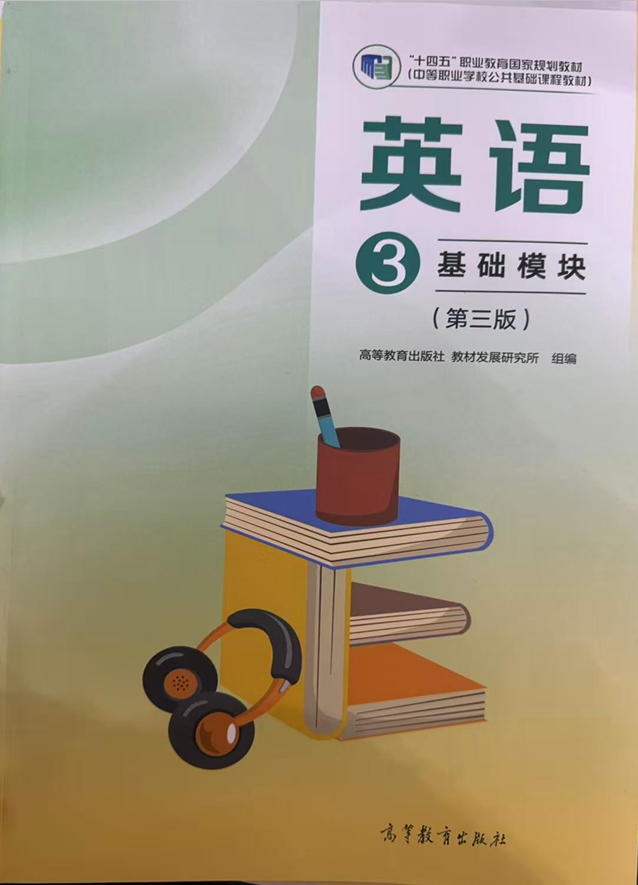
Unit 4 Customer Service(A卷·基础巩固)《英语 基础模块3》(高教版第三版)单元过关卷(原卷版+解析版)
2026-06-03
|
3份
|
19页
|
49人阅读
|
1人下载
摘要:
**基本信息**
本试卷为《英语 基础模块3》(高教版第三版)Unit 4 Customer Service A卷·基础巩固卷,紧扣教材核心考点,通过听力、完形填空、阅读理解(科技/心理/未来科技主题)及补全对话题型,适配中职英语单元复习,强化语言能力与思维品质。
**题型特征**
|题型|题量/分值|知识覆盖|命题特色|
|----|-----------|----------|----------|
|听力|5题15分|日常对话理解|聚焦酒店、职业等场景,考查信息抓取能力|
|完形填空|10题10分|语法(时态/介词)、词汇(动词/名词)|以互联网使用为情境,渗透学习能力培养|
|阅读理解|15题60分|细节理解、词义推断、主旨归纳|选用Unitree机器人、手机与抑郁、2026科技突破等时代素材,提升思维品质|
|补全对话|5题15分|日常交际用语|围绕家庭机器人话题,强化语言表达与情境应用|
内容正文:
编写说明:本套试卷紧扣《英语 基础模块3》(高教版第三版)教材,以教材单元为基准精准覆盖核心考点。
每个单元设置AB卷,A卷为基础巩固卷,侧重基础考点训练,帮助学生扎实掌握知识要点;B卷为能力提升卷,注重知识整合与全面检测,引导学生构建知识网络。全书设计4份综合测试卷,模拟实战情境,聚焦解题能力突破,全面提升应试能力与知识应用水平。
《英语 基础模块3》(高教版第三版)《单元过关卷》
Unit 4 Customer Service
A卷·基础巩固
考试时间:40分钟 满分:100分
班级 姓名 学号 成绩
1、 听力:本题共5小题,每小题3分,共15分。在每小题给出的三个选项中,只有一项符合题目要求。
1.
A. B. C.
【答案】A
【解析】I have received a postcard from my friend on my birthday.
2.
A.Sure, go ahead. B.Oh, it’s a secret. C.Oh, it’s hard to say.
【答案】A
【解析】May I ask you some questions?
3.What does the man think of the movie?
A.Boring. B.Confusing. C.Fascinating.
【答案】C
【解析】W: I must say that’s definitely the most interesting film I’ve ever seen.
M: I can’t agree with you more. But Lucy finds it confusing.
4.What does the woman probably do?
A.A policewoman. B.A doctor. C.A bank clerk.
【答案】C
【解析】M: I’d like to withdraw some money.
W: OK. Please fill out this form and give me your card.
M: Well, here you are.
5.Where are the speakers?
A.In a factory. B.At home. C.In a hotel.
【答案】C
【解析】M: The remote control isn’t working at all.
W: I’m very sorry. I’ll have someone bring you a new one so you can change the channels.
M: And the pillows are dirty.
W: Okay, I’ll ask housekeeping to bring you some clean pillows right away.
2、 完形填空:本题共10小题,每小题1分,共10分。在每小题给出的四个选项中,只有一项符合题目要求。
The Internet has become part of students’ life. Most of the students get useful information and use the Internet to help in their studies, but some students ___6____ not using it in a right way. Many of them are playing online ___7____ too much. A teacher from a middle school says that bad things may happen ___8____ students spend too much time on the Internet. She had a student who used to be good at school, but later he started ___9____ something bad from the Internet. Now he can’t get good grades and behave(行为)badly.
In order to help students use the Internet ___10____, a textbook on good Internet behavior has started to be used in some middle schools this term. The book uses real examples to teach students how to use the Internet ___11____ good ways. The book also ___12____ useful advice such as reading news or finding helpful information to study. Teachers and parents all think the book is ____13___ than other books.
The book will be a guide for students to use ___14____ Internet. We believe ___15____ will help students to use the Internet correctly.
6.A.are B.am C.is D.be
7.A.wheel B.wheels C.game D.games
8.A.but B.if C.so D.or
9.A.missing B.miss C.learning D.learn
10.A.correct B.correctly C.slow D.slowly
11.A.in B.for C.about D.at
12.A.gives B.gave C.will give D.has given
13.A.worse B.bad C.better D.good
14.A.a B.an C.the D./
15.A.its B.it C.theirs D.they
【答案】
6.A 7.D 8.B 9.C 10.B 11.A 12.A 13.C 14.C 15.B
【导语】本文讲了互联网已经成为学生生活的一部分,有很多学生没有正确使用互联网,为了解决这个问题,有部分学校已经使用一些良好互联网行为的教科书。
【详解】6.句意:大多数学生获得有用的信息,并利用互联网来帮助他们的学习,但有些学生没有以正确的方式使用它。
are是,主语一般是复数;am是,主语一般是I;is是,主语一般是单数;be是原形形式。主语是“some students”为复数,结合选项可知谓语动词应该要用are。故选A。
7.句意:他们中的许多人玩网络游戏玩得太多了。
wheel轮椅;wheels轮椅的复数;game游戏;games游戏的复数。play online games意为“玩网络游戏”。故选D。
8.句意:一位中学老师说,如果学生花太多的时间在互联网上,可能会发生不好的事情。
but但是;if如果;so所以,因此;or或者,否则。根据前后文的联系,if符合语境,表示如果花太多时间上网,可能会发生不好的事情。故选B。
9.句意:她有一个学生曾经在学校表现很好,但是后来他开始从网上学到一些不好的东西。
missing错过,是miss的动名词形式;miss错过,想念;learning学习,是learn的动名词形式;learn学习。learn… from …表示“从……中学到……”;故排除A和B。又因start doing sth意为“开始做某事”,故选C。
10.句意:为了帮助学生正确使用互联网,本学期一些中学开始使用一本关于良好互联网行为的教科书。
correct正确的,形容词;correctly正确地,是correct的副词形式;slow缓慢的;slowly缓慢地,是slow的副词形式;由后文可知一些中学已经开始使用一些良好互联网行为的教科书,这样做的目的是为了帮助学生正确使用互联网。故排除C和D。且该处要用副词来修饰动词use,表示“正确地使用”。故选B。
11.句意:这本书使用真实的例子来教学生如何以好的方式使用互联网。
in用,在……上面;for为了,给;about关于;at在。in good ways固定搭配,表示“以好的方式”,故选A。
12.句意:这本书还提供了有用的建议,如阅读新闻或找到有用的信息研究。
gives给,是give的三单形式;gave是give的过去式;will give是将来时形式;has given是现在完成时形式。根据前后文的提示可知该空应选择一般现在时,且主语是“The book”为第三人称单数,故选A。
13.句意:老师和家长都认为这本书比其他书好。
worse更糟糕的,是bad的比较级;bad坏的,不好的;better更好,是good的比较级;good好的。由“The book also gives useful advice such as reading news or finding helpful.”可知这本书给了一些有用的建议,是好的方面,故排除A和B。又因“than”要用比较级,故选C。
14.句意:这本书将成为学生使用互联网的指南。
a一个,是不定冠词,用于以辅音音素开头;an一个,是不定冠词,用于元音音素开头;the是定冠词,表特指;/不填。Internet前用定冠词the,use the Internet意为“使用互联网”。故选C。
15.句意:我们相信它将帮助学生正确使用互联网。
its它的,是it的物主代词;it它,是主格形式;theirs他们的,是they的名词性物主代词;they他们,是主格形式。根据语法结构可知该空是作主语,且该主语是指前面提到的“The book”,为单数名词,故选B。
3、 阅读理解:本题共15小题,每小题4分,共60分。在每小题给出的四个选项中,只有一项符合题目要求。
A
Imagine a robot that can clean your house, walk your dog, and even help with homework — all while learning your habits. This isn’t science fiction; it’s the reality of Unitree robots. These advanced machines, equipped with AI and flexible limbs, are becoming common in households. But are they truly improving our lives?
The need for Unitree robots has surged in the past five years. Basic models with voice control and obstacle sensors now only cost under $1,000, making them affordable to many families. They can clean floors, monitor home security, and even teach children math through interactive games. Some schools use them to assist students with disabilities, providing personalized learning support.
However, concerns (担心) exist. Unitree robots record voice commands and map home layouts (布局), raising privacy (隐私) questions. Could this data be accessed by hackers? Additionally, overreliance on robots might reduce basic life skills. For example, children who depend on robots for homework may struggle to think independently.
Companies are also adopting Unitree robots for factory work. They assemble products faster than humans and never get tired. Yet, this efficiency comes at a cost: fewer jobs for workers. In one car factory, 30% of employees were replaced (代替) by robots last year. Critics worry this trend could widen economic inequality.
Unitree robots are still progressing. Will they become trusted helpers or sources of new problems? The answer depends on how we balance innovation with responsibility.
16.What is the function of the first paragraph?
A.To introduce the topic of home robots. B.To advertise Unitree robots.
C.To explain how robots help with homework. D.To blame the cost of AI technology.
17.What does the underlined word “surged” in Paragraph 2 most likely mean?
A.dropped B.decreased
C.increased rapidly D.lost value
18.According to the passage, which statement is TRUE about Unitree robots?
A.They might risk users’ privacy. B.They are too expensive for most families.
C.They cannot assist children with learning. D.They are only used in factories.
19.Why does the writer mention the car factory example in Paragraph 4?
A.To show robots improve product quality. B.To explain how robots replace human jobs.
C.To praise the efficiency of Unitree robots. D.To compare robots and human workers.
20.What is the main idea of the passage?
A.Unitree robots have benefits but also raise concerns. B.Unitree robots are perfect for household tasks.
C.Robots should be banned from schools and factories. D.Unitree robots will completely replace human workers.
【答案】16.A 17.C 18.A 19.B 20.A
【导语】本文主要介绍了Unitree机器人在家庭和工厂中有应用,它有诸多好处如功能多样、价格亲民、可辅助学习等,但也引发了隐私安全、过度依赖、减少工作岗位等担忧,其未来取决于对创新与责任的平衡。
【详解】16.推理判断题。第一段先描述多功能机器人的场景,引出Unitree机器人,并且提出核心讨论问题,作用是引出家用机器人的讨论主题。
17.词句猜测题。结合后文内容,机器人价格降低、很多家庭都能买得起,用途越来越广泛,可推知过去五年对Unitree机器人的需求快速增长,“surged”的含义是“快速增长”。
18.细节理解题。根据第三段中“Unitree robots record voice commands and map home layouts (布局), raising privacy (隐私) questions. (Unitree机器人可以记录语音指令并绘制家庭布局图,这引发了隐私问题。)”可知,Unitree机器人可以记录语音命令和绘制家庭布局图,会引发了隐私问题,存在让用户隐私暴露的风险。
19.推理判断题。第四段提出机器人进入工厂会挤占工人工作岗位,举汽车厂的例子就是为了具体说明机器人如何取代人类工作。
20.主旨大意题。通读全文可知,文章既介绍了Unitree机器人在家庭、学校、工厂中的用处,也讲了它带来的隐私、技能退化、失业等问题,因此核心主旨是“Unitree机器人有好处,但也引发了很多问题”。
B
You may know the feeling. It’s the late afternoon, and you still haven’t left the house. You’ve spent the last several hours on your phone, scrolling through your Facebook news feed, refreshing Twitter and watching YouTube videos. A smartphone might feel like it’s keeping you connected, but it can also be a way of secluding yourself.
Data from a recent study conducted by researchers at Northwestern University’s Feinberg School of Medicine found that the scenario described above — high volume of phone use and a static (静止的) geographic location — could be linked to depression. The study, published in the Journal of Medical Internet Research, also found that depressed people, on average, spend more time on the phone than non-depressed people.
“People are likely, when on their phones, to avoid thinking about things that are troubling, painful feelings or difficult relationships,” said David Mohr, one of the study’s senior authors and a professor of behavioral psychology at Northwestern, in a statement. “It’s an avoidance behavior we see in depression.” Mohr also pointed out that depressed people tend to withdraw emotionally and avoid going out-behaviors that are arguably facilitated by the constant entertainment stream available on smartphones.
The study’s participants consisted of a mix of people with and without prior depression. They completed a questionnaire describing their symptoms before agreeing to have their phone use monitored for two weeks. Using GPS, the researchers tracked their location and the amount of time they spent on the phone. They were then able to identify which participants were depressed using the aggregated phone data, with 87 percent accuracy.
Sohrob Saeb, a research fellow at Northwestern, said in the release that phones could be more reliable for diagnosing depression than traditional methods. In standard industry practice, patients are often asked to describe their symptoms by indicating how sad they are on a scale of 1 to 10. According to Saeb, as reported in the release, these responses can be rote and unreliable. In contrast, the study found that a smartphone can unobtrusively (不引人注目地) and accurately measure a patient’s daily activity, providing data that could trigger a health care provider to recognize the need for an intervention.
21.What is the author’s opinion about using a smartphone?
A.It is only a tool to contact people.
B.It makes people feel lonely.
C.It does great harm to health.
D.It keeps people apart from others.
22.What can be learned from the study conducted by researchers at Northwestern University?
A.Too much time spent on phones leads to depression.
B.Depressed people tend to spend more time on phones than others.
C.Spending more time on phones can help cure depression.
D.Non-depressed people spend little time on their phones.
23.According to Mohr, why do depressed people focus on phones?
A.They tend to temporarily forget about unhappiness.
B.They feel entertained and amused by phones.
C.They do not have many friends to hang out with.
D.They find confidence and happiness from the phones.
24.What do we know about traditional methods for diagnosing depression?
A.Patients’ location is monitored by GPS.
B.Patients describe their symptoms in words.
C.Patients complete a questionnaire to describe symptoms.
D.Patients indicate their sadness on a scale of 1 to 10.
25.Patients’ daily activities can be measured by smartphones so that ________.
A.they can adjust their living habits if necessary
B.their family and friends can know them better
C.they can get timely health care if needed
D.they will do their best under the monitoring
【答案】21.D 22.B 23.A 24.D 25.C
【导语】文章主要介绍了一项研究:手机使用与抑郁症之间的关联。
【详解】21.推理判断题。根据第一段中“A smartphone might feel like it’s keeping you connected, but it can also be a way of secluding yourself. (智能手机可能会让你觉得它能让你保持联系,但它也可能是一种与世隔绝的方式。)”可知,作者认为智能手机虽然让人感觉有联系,但实际上也是让人与他人隔绝的一种方式。
22.细节理解题。根据第二段中“The study ... also found that depressed people, on average, spend more time on the phone than non-depressed people. (研究……还发现,平均而言,抑郁的人比没有抑郁的人花更多的时间在手机上。)”可知,研究发现抑郁的人平均比非抑郁的人花更多时间在手机上。
23.细节理解题。根据第三段中David Mohr所说“People are likely, when on their phones, to avoid thinking about things that are troubling, painful feelings or difficult relationships (人们在手机上时,很可能会避免去想那些令人烦恼、痛苦的感觉或困难的关系)”可知,抑郁的人使用手机是为了避免思考那些令人烦恼、痛苦的事情,即暂时忘记不开心。
24.细节理解题。根据最后一段中“In standard industry practice, patients are often asked to describe their symptoms by indicating how sad they are on a scale of 1 to 10. (在标准的行业实践中,患者经常被要求用1到10的等级来描述他们的症状,表明他们的悲伤程度。)”可知,传统方法是让患者用1到10的等级来表示自己有多悲伤。
25.细节理解题。根据最后一段中“a smartphone can unobtrusively (不引人注目地) and accurately measure a patient’s daily activity, providing data that could trigger a health care provider to recognize the need for an intervention. (智能手机可以在不显眼的情况下准确地测量患者的日常活动,提供的数据可能会促使医疗保健提供者认识到需要进行干预。)”可知,智能手机测量日常活动是为了让医疗提供者及时发现患者需要干预,即患者可以获得及时的医疗护理。
C
In 2026, science and technology are changing the world faster than ever. Many big breakthroughs are moving from labs to real life.
AI agents are now used in factories, hospitals, and schools. They can talk, think, and help with work. Some robots can even walk, clean, and help old people.
Brain-computer interface (BCI) is another big step. Paralyzed people can use their minds to move a wheelchair or pick up a cup. Chinese companies have made some of the world’s best BCI tools.
Quantum computing is also growing strong. New quantum computers have over 1,000 qubits. They can solve problems in minutes that normal computers would take years to finish.
6G is being tested in many countries. It will be 100 times faster than 5G, with very low delay. This will make holographic calls, smart cities, and remote surgery real.
Scientists say these technologies will make life easier, healthier, and more interesting. But they also remind us to use them carefully.
26.What are AI agents used for?
A.Only in factories. B.To help in many areas.
C.To replace all people. D.To play games only.
27.What can BCI help paralyzed people do?
A.Run fast. B.Control things with mind.
C.Speak loudly. D.See clearly.
28.How good are new quantum computers?
A.Over 1,000 qubits. B.Slower than old ones.
C.Only for simple math. D.Not useful yet.
29.How fast will 6G be?
A.The same as 5G. B.10 times faster.
C.100 times faster. D.1,000 times faster.
30.What is the writer’s opinion?
A.Tech is all good. B.Tech is dangerous.
C.Tech helps but needs care. D.No more tech is needed.
【答案】26.B 27.B 28.A 29.C 30.C
【导语】文章主要讲述了2026年AI、BCI、量子计算和6G等科技的发展与应用。
【详解】26.细节理解题。根据第二段中“AI agents are now used in factories, hospitals, and schools. They can talk, think, and help with work. (人工智能代理现在被用于工厂、医院和学校。他们会说话,会思考,还能帮忙工作。)”可知,AI智能体被用于工厂、医院和学校等多个领域。
27.细节理解题。根据第三段中“Paralyzed people can use their minds to move a wheelchair or pick up a cup. (瘫痪的人可以用意念移动轮椅或拿起杯子)”可知,BCI能帮助瘫痪的人用意念控制轮椅或拿起杯子。
28.细节理解题。根据第四段中“New quantum computers have over 1,000 qubits. (新的量子计算机有超过1000个量子比特。)”可知,新量子计算机拥有超过1000个量子比特。
29.细节理解题。根据第五段中“It will be 100 times faster than 5G, with very low delay. (它将比5G快100倍,延迟非常低。)”可知,6G将比5G快100倍。
30.细节理解题。根据最后一段中“these technologies will make life easier, healthier, and more interesting. But they also remind us to use them carefully. (这些技术将使生活更轻松、更健康、更有趣。但他们也提醒我们要小心使用它们。)”可知,作者认为科技让生活更美好,但也需要谨慎使用。
4、 补全对话:本题共5小题,每小题3分,共15分。在七个选项中选择五个,有二个多余选项。
(Emily and her friend are talking about a home robot. )
A: What is that in the picture, Emily?
B: ____31____ Isn’t it cute?
A: Yes, this ball - shaped robot looks nice. ____32____
B: Sure, its name is Bob. It is about the size of a football.
A: That’s small. So, what can Bob do?
B: ____33____ For example, it can turn on lights, answer phones and feed pets. It can also use AI to learn users’ habits, so it will be very useful.
A: That sounds amazing. ____34____
B: No. The company didn’t say how much it would cost.
A: ____35____ And everyone will have one of these robots at home.
B: I agree with you. Invention is changing our lives all the time.
A.What’s your name?
B.It’s a home robot.
C.Does it have a name?
D.I hope it is not expensive.
E.Do you know the price of the robot?
F.I can help my mother do some cleaning.
G.It can do a lot of work around the house.
【答案】31.B 32.C 33.G 34.E 35.D
【导语】本文是Emily和她的朋友关于家用机器人的对话。
【详解】31.根据问句“What is that in the picture (图片上的那个是什么)”可知,回答应该是介绍图片里的东西,B选项“它是一个家用机器人”符合语境。故选B。
32.根据答语“Sure, its name is Bob. (当然,它的名字叫鲍勃。)”可知,此处是问机器人有没有名字,C选项“它有名字吗?”符合语境。故选C。
33.根据后文“For example, it can turn on lights … so it will be very useful. (例如,它可以开灯……所以它将非常有用。)”可知,此处列举了机器人的具体功能,G选项“它可以在家里做很多事情。”进行了概括性说明,符合语境。故选G。
34.根据答语“No. The company didn’t say how much it would cost. (不。该公司没有透露成本是多少。)”可知,此处是询问机器人的价格,E选项“你知道这个机器人的价格吗?”符合语境。故选E。
35.根据后文“And everyone will have one of these robots at home. (每个人家里都会有一个这样的机器人。)”可知,此处应是希望价格不贵,D选项“我希望它不贵。”符合语境。故选D。
学科网(北京)股份有限公司 (
1
)原创精品资源学科网独家享有版权,侵权必究!
学科网(北京)股份有限公司
$
编写说明:本套试卷紧扣《英语 基础模块3》(高教版第三版)教材,以教材单元为基准精准覆盖核心考点。
每个单元设置AB卷,A卷为基础巩固卷,侧重基础考点训练,帮助学生扎实掌握知识要点;B卷为能力提升卷,注重知识整合与全面检测,引导学生构建知识网络。全书设计4份综合测试卷,模拟实战情境,聚焦解题能力突破,全面提升应试能力与知识应用水平。
《英语 基础模块3》(高教版第三版)《单元过关卷》
Unit 4 Customer Service
A卷·基础巩固
考试时间:40分钟 满分:100分
班级 姓名 学号 成绩
1、 听力:本题共5小题,每小题3分,共15分。在每小题给出的三个选项中,只有一项符合题目要求。
1.
A. B. C.
2.
A.Sure, go ahead. B.Oh, it’s a secret. C.Oh, it’s hard to say.
3.What does the man think of the movie?
A.Boring. B.Confusing. C.Fascinating.
4.What does the woman probably do?
A.A policewoman. B.A doctor. C.A bank clerk.
5.Where are the speakers?
A.In a factory. B.At home. C.In a hotel.
2、 完形填空:本题共10小题,每小题1分,共10分。在每小题给出的四个选项中,只有一项符合题目要求。
The Internet has become part of students’ life. Most of the students get useful information and use the Internet to help in their studies, but some students ___6____ not using it in a right way. Many of them are playing online ___7____ too much. A teacher from a middle school says that bad things may happen ___8____ students spend too much time on the Internet. She had a student who used to be good at school, but later he started ___9____ something bad from the Internet. Now he can’t get good grades and behave(行为)badly.
In order to help students use the Internet ___10____, a textbook on good Internet behavior has started to be used in some middle schools this term. The book uses real examples to teach students how to use the Internet ___11____ good ways. The book also ___12____ useful advice such as reading news or finding helpful information to study. Teachers and parents all think the book is ____13___ than other books.
The book will be a guide for students to use ___14____ Internet. We believe ___15____ will help students to use the Internet correctly.
6.A.are B.am C.is D.be
7.A.wheel B.wheels C.game D.games
8.A.but B.if C.so D.or
9.A.missing B.miss C.learning D.learn
10.A.correct B.correctly C.slow D.slowly
11.A.in B.for C.about D.at
12.A.gives B.gave C.will give D.has given
13.A.worse B.bad C.better D.good
14.A.a B.an C.the D./
15.A.its B.it C.theirs D.they
3、 阅读理解:本题共15小题,每小题4分,共60分。在每小题给出的四个选项中,只有一项符合题目要求。
A
Imagine a robot that can clean your house, walk your dog, and even help with homework — all while learning your habits. This isn’t science fiction; it’s the reality of Unitree robots. These advanced machines, equipped with AI and flexible limbs, are becoming common in households. But are they truly improving our lives?
The need for Unitree robots has surged in the past five years. Basic models with voice control and obstacle sensors now only cost under $1,000, making them affordable to many families. They can clean floors, monitor home security, and even teach children math through interactive games. Some schools use them to assist students with disabilities, providing personalized learning support.
However, concerns (担心) exist. Unitree robots record voice commands and map home layouts (布局), raising privacy (隐私) questions. Could this data be accessed by hackers? Additionally, overreliance on robots might reduce basic life skills. For example, children who depend on robots for homework may struggle to think independently.
Companies are also adopting Unitree robots for factory work. They assemble products faster than humans and never get tired. Yet, this efficiency comes at a cost: fewer jobs for workers. In one car factory, 30% of employees were replaced (代替) by robots last year. Critics worry this trend could widen economic inequality.
Unitree robots are still progressing. Will they become trusted helpers or sources of new problems? The answer depends on how we balance innovation with responsibility.
16.What is the function of the first paragraph?
A.To introduce the topic of home robots. B.To advertise Unitree robots.
C.To explain how robots help with homework. D.To blame the cost of AI technology.
17.What does the underlined word “surged” in Paragraph 2 most likely mean?
A.dropped B.decreased
C.increased rapidly D.lost value
18.According to the passage, which statement is TRUE about Unitree robots?
A.They might risk users’ privacy. B.They are too expensive for most families.
C.They cannot assist children with learning. D.They are only used in factories.
19.Why does the writer mention the car factory example in Paragraph 4?
A.To show robots improve product quality. B.To explain how robots replace human jobs.
C.To praise the efficiency of Unitree robots. D.To compare robots and human workers.
20.What is the main idea of the passage?
A.Unitree robots have benefits but also raise concerns.
B.Unitree robots are perfect for household tasks.
C.Robots should be banned from schools and factories.
D.Unitree robots will completely replace human workers.
B
You may know the feeling. It’s the late afternoon, and you still haven’t left the house. You’ve spent the last several hours on your phone, scrolling through your Facebook news feed, refreshing Twitter and watching YouTube videos. A smartphone might feel like it’s keeping you connected, but it can also be a way of secluding yourself.
Data from a recent study conducted by researchers at Northwestern University’s Feinberg School of Medicine found that the scenario described above — high volume of phone use and a static (静止的) geographic location — could be linked to depression. The study, published in the Journal of Medical Internet Research, also found that depressed people, on average, spend more time on the phone than non-depressed people.
“People are likely, when on their phones, to avoid thinking about things that are troubling, painful feelings or difficult relationships,” said David Mohr, one of the study’s senior authors and a professor of behavioral psychology at Northwestern, in a statement. “It’s an avoidance behavior we see in depression.” Mohr also pointed out that depressed people tend to withdraw emotionally and avoid going out-behaviors that are arguably facilitated by the constant entertainment stream available on smartphones.
The study’s participants consisted of a mix of people with and without prior depression. They completed a questionnaire describing their symptoms before agreeing to have their phone use monitored for two weeks. Using GPS, the researchers tracked their location and the amount of time they spent on the phone. They were then able to identify which participants were depressed using the aggregated phone data, with 87 percent accuracy.
Sohrob Saeb, a research fellow at Northwestern, said in the release that phones could be more reliable for diagnosing depression than traditional methods. In standard industry practice, patients are often asked to describe their symptoms by indicating how sad they are on a scale of 1 to 10. According to Saeb, as reported in the release, these responses can be rote and unreliable. In contrast, the study found that a smartphone can unobtrusively (不引人注目地) and accurately measure a patient’s daily activity, providing data that could trigger a health care provider to recognize the need for an intervention.
21.What is the author’s opinion about using a smartphone?
A.It is only a tool to contact people.
B.It makes people feel lonely.
C.It does great harm to health.
D.It keeps people apart from others.
22.What can be learned from the study conducted by researchers at Northwestern University?
A.Too much time spent on phones leads to depression.
B.Depressed people tend to spend more time on phones than others.
C.Spending more time on phones can help cure depression.
D.Non-depressed people spend little time on their phones.
23.According to Mohr, why do depressed people focus on phones?
A.They tend to temporarily forget about unhappiness.
B.They feel entertained and amused by phones.
C.They do not have many friends to hang out with.
D.They find confidence and happiness from the phones.
24.What do we know about traditional methods for diagnosing depression?
A.Patients’ location is monitored by GPS.
B.Patients describe their symptoms in words.
C.Patients complete a questionnaire to describe symptoms.
D.Patients indicate their sadness on a scale of 1 to 10.
25.Patients’ daily activities can be measured by smartphones so that ________.
A.they can adjust their living habits if necessary
B.their family and friends can know them better
C.they can get timely health care if needed
D.they will do their best under the monitoring
C
In 2026, science and technology are changing the world faster than ever. Many big breakthroughs are moving from labs to real life.
AI agents are now used in factories, hospitals, and schools. They can talk, think, and help with work. Some robots can even walk, clean, and help old people.
Brain-computer interface (BCI) is another big step. Paralyzed people can use their minds to move a wheelchair or pick up a cup. Chinese companies have made some of the world’s best BCI tools.
Quantum computing is also growing strong. New quantum computers have over 1,000 qubits. They can solve problems in minutes that normal computers would take years to finish.
6G is being tested in many countries. It will be 100 times faster than 5G, with very low delay. This will make holographic calls, smart cities, and remote surgery real.
Scientists say these technologies will make life easier, healthier, and more interesting. But they also remind us to use them carefully.
26.What are AI agents used for?
A.Only in factories. B.To help in many areas.
C.To replace all people. D.To play games only.
27.What can BCI help paralyzed people do?
A.Run fast. B.Control things with mind.
C.Speak loudly. D.See clearly.
28.How good are new quantum computers?
A.Over 1,000 qubits. B.Slower than old ones.
C.Only for simple math. D.Not useful yet.
29.How fast will 6G be?
A.The same as 5G. B.10 times faster.
C.100 times faster. D.1,000 times faster.
30.What is the writer’s opinion?
A.Tech is all good. B.Tech is dangerous.
C.Tech helps but needs care. D.No more tech is needed.
4、 补全对话:本题共5小题,每小题3分,共15分。在七个选项中选择五个,有二个多余选项。
(Emily and her friend are talking about a home robot. )
A: What is that in the picture, Emily?
B: ____31____ Isn’t it cute?
A: Yes, this ball - shaped robot looks nice. ____32____
B: Sure, its name is Bob. It is about the size of a football.
A: That’s small. So, what can Bob do?
B: ____33____ For example, it can turn on lights, answer phones and feed pets. It can also use AI to learn users’ habits, so it will be very useful.
A: That sounds amazing. ____34____
B: No. The company didn’t say how much it would cost.
A: ____35____ And everyone will have one of these robots at home.
B: I agree with you. Invention is changing our lives all the time.
A.What’s your name?
B.It’s a home robot.
C.Does it have a name?
D.I hope it is not expensive.
E.Do you know the price of the robot?
F.I can help my mother do some cleaning.
G.It can do a lot of work around the house.
学科网(北京)股份有限公司 (
1
)原创精品资源学科网独家享有版权,侵权必究!
学科网(北京)股份有限公司
$听力。考试正式开始。I have received a postcard from my friend on my birthday. Listen to the next question. May I ask you some questions? Listen to the next question. I must say . that's definitely the most interesting film i've ever seen. I can't agree with you more, but Lucy finds IT confusing. Listen to the next question. I'd like to withdraw some money. Okay, please fill out this four and give you. Listen to the next question. The remote control . isn't . working at all. I'm very sorry. I'll have someone bring a new one so you can change . the channels and the pillows are dirty. Okay, i'll ask housekeeping to bring you some clean pillows right away. 听力部分到此结束。
资源预览图

1

2

3
由于学科网是一个信息分享及获取的平台,不确保部分用户上传资料的 来源及知识产权归属。如您发现相关资料侵犯您的合法权益,请联系学科网,我们核实后将及时进行处理。