Unit 6_语言点清单 2025-2026学年沪教版(五四学制)六年级英语下册
2026-06-01
|
4页
|
105人阅读
|
0人下载
普通
资源信息
| 学段 | 初中 |
|---|---|
| 学科 | 英语 |
| 教材版本 | 初中英语沪教版(五四学制)六年级下册 |
| 年级 | 六年级 |
| 章节 | Unit 6 Famous people in history |
| 类型 | 学案-知识清单 |
| 知识点 | - |
| 使用场景 | 同步教学-单元练习 |
| 学年 | 2026-2027 |
| 地区(省份) | 上海市 |
| 地区(市) | 上海市 |
| 地区(区县) | 嘉定区 |
| 文件格式 | DOCX |
| 文件大小 | 104 KB |
| 发布时间 | 2026-06-01 |
| 更新时间 | 2026-06-01 |
| 作者 | 匿名 |
| 品牌系列 | - |
| 审核时间 | 2026-06-01 |
| 下载链接 | https://m.zxxk.com/soft/58155083.html |
| 价格 | 0.50储值(1储值=1元) |
| 来源 | 学科网 |
摘要:
该初中英语单元知识清单系统梳理了G6 Unit 6语言要点,涵盖词汇(含派生词)、短语、句型及语法(There be句型),分听说读写模块搭建从基础词汇拓展到语用表达的递进式学习支架。
清单通过分类呈现词汇派生词(如“change”标注v.&n.及changer、changeable等衍生词)、对比易混短语(如“spend doing”与“spend on”用法)、结合历史名人案例(如爱迪生发明灯泡),培养学生语言能力、思维品质和文化意识。语法部分详解There be句型就近原则,为不同学生提供清晰学习框架,教师可据此高效设计教学活动。
内容正文:
(
Key words
change
v.&
n.
改变;变化
changer
n.
改变者
changeable
adj.
易变的;常变的
unchangeable
adj.
不可改变的
scientist
n.
科学家
science n.
科学
scientific
adj.
科学的
publish
v.
出版;发行
published
adj.
已发布的,已出版的
publisher n.
出版商
theory
n
.
学说;理论(
theories
pl.
)
invent
v.
发明;创造
invention
n.
发明;创造
inventor n.
发明者;发明家
inexpensive
adj
.
廉价的;不昂贵的
cheap
adj
.
便宜的;廉价的
expensive
昂贵的;价格高的
discover
v
.
发现(强调偶然或通过研究
)
discovery n
.
发现(的事物
)
find
找到;发现
(强调结果)
find
out
查明;弄清楚
(
通过调查、询问或研究
)
look
for
寻找
(强调过程
)
general
adj.
全体的;普遍的;总的
generally adv.
总的来说
smart
adj.
聪明的;机敏的
real
adj.
真正的
really
adv.
真正地;确实;的确
reality
n.
真实
power
n.
电;电力供应;力量;能量
powerful
adj.
有影响力的,有力量的
die
v.
死亡(
die-died-died
)
dead
adj
.
死的;失去生命的
death
n.
死;死亡
successful
adj
.
获得成功的
unsuccessful
adj
.
不成功的
success
n
.
成功
succeed
v.
实现目标;成功
hold
v.
举办;握住;容纳;保持某种状态(
hold-held-held
)
over
prep.
多于(某时间、数量、花费等
)
= more
than
Key phrases
in
history
在
历
史上
in
general
一般来说
= generally
power
station n.
发电站;发电厂
make
money
赚钱;挣钱
make sb. do
sth
使某人做某事;使某人怎么样
be
successful
in
doing
sth
. =
succeed in
doing
sth
. =
manage
to
do
sth
.
成功地做了某事
Key sentences
New Star Middle School is
holding
the week of Famous People
in
History.
新星中学正在举办历史名人周活动。
Thomas Edison: invented a safe and inexpensive light bulb in
1879.
托马斯
·
爱迪生:于
1879
年发明了安全且价格低廉的电灯泡。
Yuan Longping: grew the world’s first
hybrid rice plants
in
1973.
袁隆平:于
1973
年培育出了世界上首例杂交水稻植珠。
Isaac
Newtown
:
published
the
theory of
gravity
in
1687
.
牛顿于
1687
年发表了万有引力理论
。
)G6 Unit 6 Language points Part A Viewing and listening
(
六下
Unit6
)
(
1
)
学科网(北京)股份有限公司
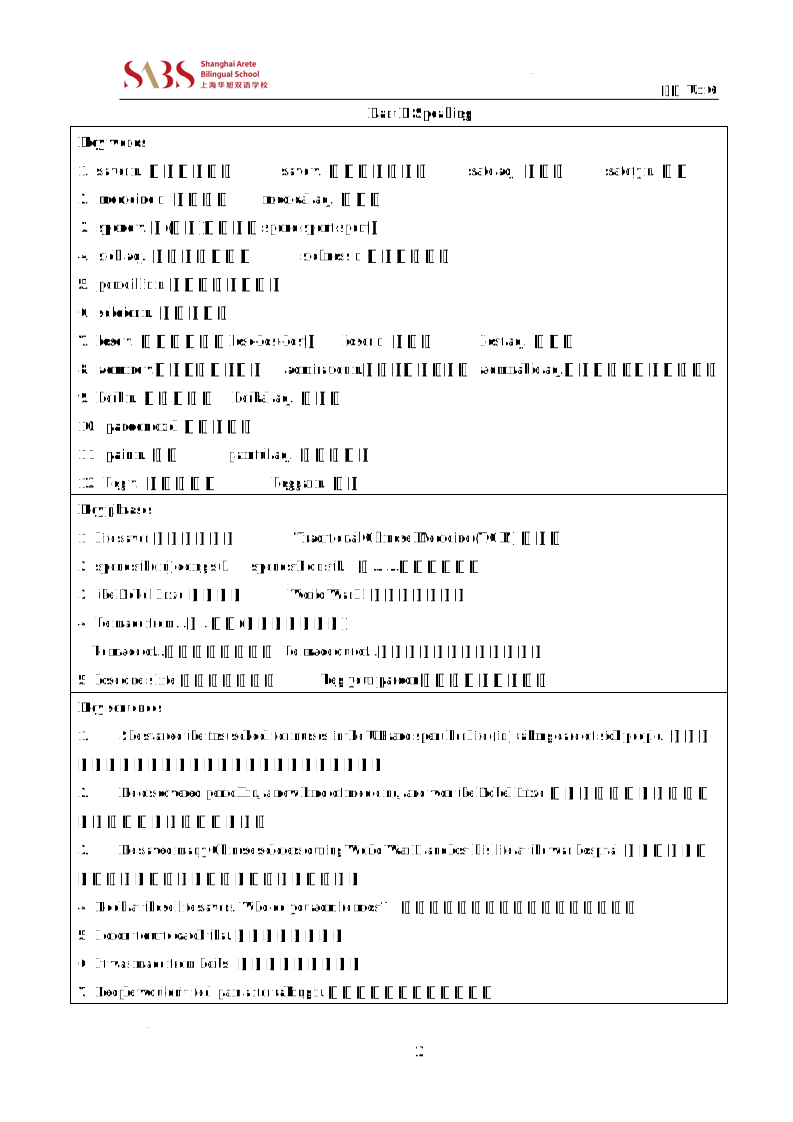
Part B Speaking
Key words
1. saver n. 救助者;救星 save v. 救;救助;挽救 safe adj. 安全的 safety n. 安全
2. medicine n. 医学;药 medical adj. 医疗的
3. spend v. 花(时间);度过(spend-spent-spent)
4. sick adj. 生病的;有病的 sickness n. 疾病;不健康
5. penicillin n. 青霉素;盘尼西林
6. soldier n. 军人;士兵
7. lose v. 遗失;丢失(lose-lost-lost) loser n. 失败者 lost adj. 丢失的
8. admire v.钦佩;赞赏;仰慕 admiration n.钦佩;赞赏;羡慕 admirable adj.可钦佩的;值得赞赏的;
9. herb n. 药草;香草 herbal adj. 草药的
10. pardon excl. 请再说一遍
11. pain n. 疼痛 painful adj. 令人疼痛的
12. beg v. 乞讨;乞求 beggar n. 乞丐
Key phrases
1. life saver 拯救生命的人 Traditional Chinese Medicine (TCM) 中医药
2. spend sth (in) doing sth. spend sth on sth. 在……上花(时间)
3. the Nobel Prize 诺贝尔奖 World War II 第二次世界大战
4. be made from ...由...制成(无法辨认原材料)
be made of...(看得出原材料) be made out of...(从原料中产生的制成品)
5. lose one’s life 失去生命;丧生 beg your pardon 请原谅;请再说一遍
Key sentences
1. She started the first school for nurses in the UK and spent her life (in) taking care of sick people. 她在英国创办了第一所护士学校,并倾尽一生照顾病人。
2. He discovered penicillin, a new kind of medicine, and won the Nobel Prize. 他发现了青霉素,一种新型药物,并获得了诺贝尔奖。
3. He saved many Chinese soldiers during World War II and lost his life at the war hospital. 他在二战期间救治了许多中国士兵,并在战地医院牺牲了。
4. Look at those life savers. Who do you admire most? 看看那些拯救生命的人。你最钦佩谁?
5. I didn’t quite catch that. 我没怎么听清楚。
6. It was made from herbs. 它是由药草制成的。
7. People wouldn’t feel pain after taking it. 人们服用后不会感到疼痛。
Part C Reading
Key words
1. poem n. 诗 poet n. 诗人
2. act v.表演;n. 行为 action n. 行为;行动 active adj. 好动的;活跃的 activity n.活动
3. poor adj. 贫穷的 rich adj. 富有的;富裕的 wealthy adj. 富有的;富裕的
4. create v. 创造;创作 creative adj. 有创造力的 creation n.创作;产物
5. character n. 角色 characteristic n. 特点;品质 adj. 特有的,典型的
6. play n.戏剧 v. 游戏;玩耍 player n. 玩家
Key phrases
1. try one’s luck 碰运气;希望能够成功
2. from 1589 to 1600 从 1589 到 1600
3. try doing sth 尝试做某事 try to do sth. 尽力做某事
4. keep doing sth. 继续做某事
5. show interest in... 对 感兴趣
6. begin with... 从...开始 end with... 以 结束,收尾
7. be written in time order 按照时间顺序书写
8. bring... to life 使……栩栩如生;使……恢复生机
9. on the stage 在舞台上
10. in all 总计;总共 millions of 数以百万计的;很多
Key sentences
1. Wang Yiming is sharing a short biography about William Shakespeare, one of his favorite writers. 王一鸣正在分享一篇关于他最喜欢的作家之一 - 威廉·莎士比亚的短篇传记。
2. Young Shakespeare loved reading plays, poems, and stories, and often watched plays in his hometown.年轻的莎士比亚酷爱阅读戏剧、诗歌和故事,并且经常在他的家乡观看戏剧。
3. There were many theatres. (过去)有很多剧院。
4. He took care of horses and acted in plays. 他负责照料马匹并在剧中出演角色。
5. Then he tried writing plays. 然后他尝试写戏剧。
6. People loved his plays because he created many unique characters and brought them to life on the stage.
人们喜爱他的戏剧,因为他创造了许多独特的角色,并将它们带上舞台赋予了生命。
7. Today there are still millions of Shakespeare fans in the world.
今天,世界上仍有数百万莎士比亚的粉丝。
8. His works make us laugh, cry, and think. 他的作品让我们欢笑、哭泣并思考。
Grammar:(详见书 P117-118)
“There+be”句型,也称为“存现句”,表示某物在某一地点或时间存在,主语在 be 动词后面。
1. there is/was +不可数名词(如water, milk)或单数可数名词(如a table, an apple)前;
there are/were +复数可数名词(如 buildings, oranges)前; there will be +不可数名词 / 单数可数名词 / 复数可数名词。
2. 就近原则:当“There be”后所接的事物不止一项时,be 的形式除了由时态决定外,还由其后最近
的一项事物的单复数情况或是否可数决定。
(
ask sb. to do
sth
请某人做某事;让某人做某事
take...off
把……
带
走
;
撤
掉
;
脱掉
take one's
coat
off
把
某
人的
外
套脱掉
break
into
a house
闯入房屋;破门而入
great
minds
伟人;伟大人物
Key sentences
You want to
take part in
the writing competition “A story of a famous person in
history”.
你想参加名为
“
一位历史名人的故事
”
的写作比赛。
It’s
a story
about
a clever
boy
name
d
Cao
Chong
.
这个故事讲的是一个聪明的男孩
-
曹冲
。
How
heavy is
it
?
它多重
?
But
the
eight-year-old
Cao Chong
had
an
idea
.
但是八岁的曹冲有了一个主意
。
He
asked someone to take
the elephant on a boat, mark the level of the water on its side and then
take it
off
.
他让人把大象带到船上,在船身一侧标记水的位置,然后把大象迁走
。
He asked some people to put rocks on the boat
until
the water
reached
the
mark.
他让人往船上搬石头,直到水达到那个标记的位置。
Finally, he
weighed
the rocks and got the elephant’s
weight
.
最后,他们称了石头的重量,得到了大象的体重。
have an idea
有想法
1
.
take part in
参加;参与
5.
talent
n.
天
赋
;才能
talented
adj.
有
天
资的
,
有才
能
的
Key phrases
hand
v.
传递;交给
4.
stamp
n.
邮 票
weight
n.
重量;分量
3.
weigh
v.
称重量;权衡
Key words
mark
v.
做
记
号;
n
.
标记
level
n.
水
平
;标准
until
conj
.
直到
……
为止
= till
)Part D Writing & Discovery
$
资源预览图

1
2
相关资源
由于学科网是一个信息分享及获取的平台,不确保部分用户上传资料的 来源及知识产权归属。如您发现相关资料侵犯您的合法权益,请联系学科网,我们核实后将及时进行处理。