精品解析:2025年辽宁省铁岭市昌图县中考考前训练英语试卷
 切换试卷
切换试卷
2026-05-31
|
2份
|
26页
|
8人阅读
|
0人下载
资源信息
| 学段 | 初中 |
|---|---|
| 学科 | 英语 |
| 教材版本 | - |
| 年级 | 九年级 |
| 章节 | - |
| 类型 | 试卷 |
| 知识点 | - |
| 使用场景 | 中考复习-模拟预测 |
| 学年 | 2025-2026 |
| 地区(省份) | 辽宁省 |
| 地区(市) | 铁岭市 |
| 地区(区县) | 昌图县 |
| 文件格式 | ZIP |
| 文件大小 | 1.24 MB |
| 发布时间 | 2026-05-31 |
| 更新时间 | 2026-05-31 |
| 作者 | 匿名 |
| 品牌系列 | - |
| 审核时间 | 2026-05-31 |
| 下载链接 | https://m.zxxk.com/soft/58142273.html |
| 价格 | 5.00储值(1储值=1元) |
| 来源 | 学科网 |
内容正文:
2025年铁岭市昌图县中考考前训练
注意事项:
1.请在答题卡上作答,在试卷上作答无效。
2.本试卷共45道题,满分90分。考试时间90分钟。
第一部分 选择题(共50分)
一、阅读理解(共20小题,每小题2分;满分40分)
第一节 阅读下面语言材料,从每题所给的A、B、C、D四个选项中选出最佳选项。
A
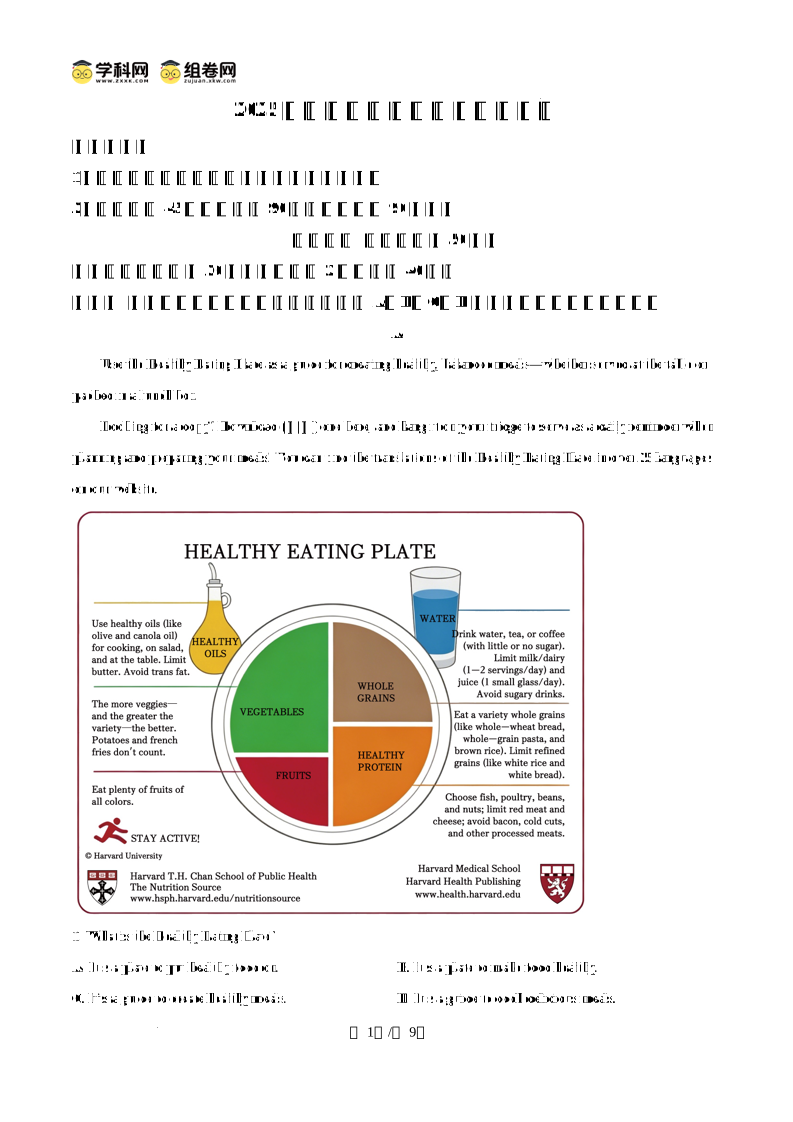
Use the Healthy Eating Plate as a guide for creating healthy, balanced meals—whether served at the table or packed in a lunch box.
Looking for a copy? Download (下载) one here, and hang it on your fridge to serve as a daily reminder when planning and preparing your meals! You can find the translations of the Healthy Eating Plate in over 25 languages on our website.
1. What is the Healthy Eating Plate?
A. It’s a plate to put healthy food on. B. It’s a plate to make food healthy.
C. It’s a guide to create healthy meals. D. It’s a guide to cook delicious meals.
2. How can we get the Healthy Eating Plate?
A. Buy one in the food shop. B. Find one on the fridge.
C. Copy one from a book. D. Download one on the website.
3. Which of the following is healthy according to the text?
A. Have sugar drinks. B. Have different kinds of vegetables.
C. Have white bread every day. D. Have much red meat and cheese.
4. In which part of a website can we read the text?
A. Health. B. Sports. C. Technology. D. Culture.
【答案】1. C 2. D 3. B 4. A
【解析】
【导语】本文是一篇应用文,主要介绍了健康饮食餐盘的用途、获取方式以及餐盘上的健康饮食建议,帮助人们合理搭配饮食。
【1题详解】
第一段明确指出“Use the Healthy Eating Plate as a guide for creating healthy, balanced meals...”,健康饮食餐盘是制作健康餐食的指南。
【2题详解】
第二段明确指出“Looking for a copy? Download one here…You can find the translations of the Healthy Eating Plate in over 25 languages on our website”,可以在网站上下载健康饮食餐盘。
【3题详解】
餐盘旁的文字说明“The more vegetables, and the more kinds, the better”,说明多吃不同种类的蔬菜是健康的做法。
【4题详解】
全文围绕健康饮食展开,介绍如何通过“健康饮食餐盘”搭配餐食,因此最可能出现在网站的“健康”板块。
B
Mr Stevens walked around the class handing out maths books. Then he returned to the front of the class and looked at us. We stared (盯着看) back. “What are you waiting for? Get started!” he said.
We looked at him, confused (困惑的). A student asked, “Mr Stevens, aren’t you going to teach us first?” Mr Stevens replied, “You’re smart kids. Open the book and get to it. If you have any questions, raise your hand, and I’ll come to help you.”
My friend Paul and I opened our books to the first page. A competition began. Paul and I spent all our free time at home working through the lessons. Mr Stevens, true to his word, helped anyone who had a problem. It was not a normal way of teaching but it worked well. Paul and I worked like dogs and finished two and a half maths books that first year.
It was a turning point in my life. Mr Stevens made me realise that I was good at maths and that I was able to reach the top of any class I attended. I kept learning that way all through my high school and university.
I’ve carried Mr Stevens’ lesson with me all my life. Whenever I am faced with a new challenge, I think of the first maths class of my junior high school. Instead of sitting around, I just get started. Then before I know it, the challenge has been dealt with.
5. What was Mr Stevens’ teaching method?
A. Playing games with the students.
B. Asking questions to help the students think.
C. Starting some competitions at the beginning.
D. Encouraging the students to learn by themselves first.
6. How was Mr Stevens’ teaching method according to Paragraph 3?
A. Helpful. B. Difficult. C. Common. D. Popular.
7. What does the writer learn from Mr Stevens’ teaching method?
A. Try his best to realise his dream. B. Ask others for advice.
C. Solve problems on his own. D. Think over to make a decision.
8. What’s the best title for the text?
A. The First Day of Maths Class: A Boring Lesson
B. Just Get Started: The Lesson to deal with Challenges
C. Mr Stevens’ Teaching Method: Start Competitions
D. Start Early: How I Improve Maths with Help
【答案】5. D 6. A 7. C 8. B
【解析】
【导语】本文主要讲述了作者在初中第一堂数学课上,老师Mr. Stevens采用了一种非传统的教学方法——让学生先自学,遇到困难再提问。这种方法不仅让作者和好友保罗在数学上取得了巨大进步,更让作者领悟到面对新挑战时应“立即开始行动”的人生哲理。
【5题详解】
根据第二段Mr. Stevens的话:“You’re smart kids. Open the book and get to it... If you have any questions... I’ll come to help you.”,以及第三段描述的他和朋友自学课本的情景,可以看出他的教学方法是鼓励学生先自主学习。
【6题详解】
第三段明确指出:“It was not a normal way of teaching but it worked well.”,说明这种教学方法虽然不寻常,但效果很好,对作者是有帮助的。
【7题详解】
最后一段提到:“Whenever I am faced with a new challenge... Instead of sitting around, I just get started. Then before I know it, the challenge has been dealt with.”,说明作者从中学到的是面对问题要立即着手解决,即独立解决问题。
【8题详解】
文章通过回忆第一堂数学课的经历,引出了核心观点:面对挑战不要等待,而是要“Just Get Started”(立即开始)。最后一段也再次强调了这一教训伴随作者一生。因此,“Just Get Started: The Lesson to deal with Challenges”是最贴切的标题。
C
You may think it is impossible for people in flats to have a beautiful garden. That’s not true! The rooftop (屋顶) gardens are becoming more and more popular in big cities now. It is a nice way to turn an empty space into a pretty and relaxing area.
Rooftop gardens seem very modern. But in fact, they have a long history. More than 2,000 years ago, ancient people started to build rooftop gardens. Those gardens had the same purpose. If an enemy army attacked the city, they might destroy (摧毁) the city’s food which could keep people alive. So the advice of moving the farming places to the top of the houses was given.
Today’s rooftop gardens are different from the old ones. They also have other uses. For example, the plants in the garden take in more heat. The temperature in the house below is usually lower in summer. So the air conditioner (空调) is less often used. More energy can be saved.
However, a rooftop garden needs more care. First of all, build a fence (栅栏) around it. The wind may blow your plants down from the roof. You don’t want anyone to get hurt, do you? Also, remember that rooftop gardens get more sunshine. If you have plants that shouldn’t stay in the sun for too long, you may have to put them in the shade (阴) sometimes.
It’s not easy to look after a rooftop garden, but if you put your heart into it, you will make your little part of the city much nicer.
9. According to Paragraph 1, rooftop gardens ________.
A. make a mess in cities B. take up too much space
C. are not suitable for people living in flats D. have become popular in big cities recently
10. Why did ancient people build rooftop gardens?
A. To relax themselves. B. To protect the city’s food.
C. To grow more kinds of plants. D. To make the city look more beautiful.
11. What can we learn from Paragraph 3?
A. Today’s rooftop gardens are the same as the old ones.
B. Today’s rooftop gardens can help save energy.
C. With rooftop gardens the air conditioner is hardly used.
D. Rooftop gardens make the houses below hotter in summer.
12. What is the writer’s purpose in writing this text?
A. To tell people the advantages of building rooftop gardens.
B. To introduce some famous rooftop gardens around the world.
C. To encourage people to build and take care of rooftop gardens.
D. To show the differences between modern and ancient rooftop gardens.
【答案】9. D 10. B 11. B 12. C
【解析】
【导语】本文主要介绍了屋顶花园在现代城市中的流行趋势,追溯了其古代起源及目的,阐述了现代屋顶花园在节能降温方面的优势,并提出了建造和维护屋顶花园的注意事项。
【9题详解】
第一段明确指出:“The rooftop (屋顶) gardens are becoming more and more popular in big cities now.”,说明屋顶花园最近在大城市中变得非常流行。
【10题详解】
第二段明确指出:“If an enemy army attacked the city, they might destroy (摧毁) the city’s food... So the advice of moving the farming places to the top of the houses was given.”,说明古人建造屋顶花园是为了保护城市的食物供应。
【11题详解】
第三段明确指出:“More energy can be saved.”,说明今天的屋顶花园可以帮助节约能源。
【12题详解】
文章最后一段总结道:“It’s not easy to look after a rooftop garden, but if you put your heart into it, you will make your little part of the city much nicer.”,结合全文对屋顶花园好处和建造方法的介绍,作者的目的是鼓励人们建造并照料屋顶花园。
D
Do you know what a visa-free policy (免签政策) is? It is a policy that allows people from certain countries to enter another country without asking for a visa (签证) before they go. In 2024, China took this policy, and it brought many good things.
First of all, it greatly helps the tourism industry. Take Mr. and Mrs. Smith from the UK as an example. While flying to Australia, they heard about China’s 144-hour visa-free policy in Shanghai. They took this chance and went to Shanghai. While they were there, they were surprised by the beauty of the city, which mixes old buildings with modern tall buildings. This unexpected visit not only made their travel plan more special but also allowed them to experience Chinese culture directly. The couple said the visa-free policy made them visit Shanghai so easily. The money they spent at local restaurants, shops, and a hotel in the city centre also helped the local economy (经济).
Second, the visa-free policy is really good for business. Business people can save both time and money when asking for a visa. They can quickly travel to another country for business meetings or market research.
Finally, it promotes cultural exchange. When people are able to travel freely, they can directly learn about different cultures. They can take part in local festivals, try traditional foods, and make friends with local people. This allows people from different countries to better understand and value each other.
In short, the visa-free policy plays an important role in supporting global communication and development.
13. A visa-free policy means that people from certain countries ________.
A. must get a visa before entering another country
B. are not allowed to enter another country
C. can enter another country without getting a visa
D. need to bring more than one visa before travelling
14. In Paragraph 2, the writer shows the advantages of the visa-free policy by ________.
A. giving an example B. asking some questions
C. describing a fact D. listing some numbers
15. What does the underlined word “promote” in Paragraph 4 mean?
A. Include. B. Hide. C. Break. D. Improve.
16. What’s the text mainly about?
A. The requirements of the visa-free policy.
B. The history of China’s visa-free policy.
C. The benefits of China’s visa-free policy.
D. The differences among different visa policies.
【答案】13. C 14. A 15. D 16. C
【解析】
【导语】本文是一篇说明文,主要介绍了中国的免签政策及其带来的多方面好处,包括促进旅游业发展、便利商务活动以及推动文化交流。
【13题详解】
根据文章第1段“It is a policy that allows people from certain countries to enter another country without asking for a visa before they go.”可知,免签政策允许特定国家的人在进入另一个国家前无需申请签证。
【14题详解】
根据文章第2段“Take Mr. and Mrs. Smith from the UK as an example.”可知,作者通过举史密斯夫妇的例子展示了免签政策的优势。
【15题详解】
根据文章第4段“Finally, it promotes cultural exchange. When people are able to travel freely, they can directly learn about different cultures…This allows people from different countries to better understand and value each other.”可知,该政策让人们能更好地理解和重视彼此,因此“promotes”在此处意为“促进、提升”,与“Improve”意思相近。
【16题详解】
通读全文可知,文章第1段引出免签政策,第2、3、4 段分别从旅游、商务和文化交流三个方面阐述了该政策带来的好处,最后一段总结其重要性。因此文章主要关于中国免签政策的好处。
第二节
阅读短文,从所给的选项中选出可以填入空白处的最佳选项,其中有一个多余的选项。
It’s likely that you have received some junk messages and calls from strangers. Your personal information is leaked (泄露). Nowadays, there is a lot of personal information.____17____
How is your personal information leaked?
It begins with information collection. People scan a QR code (扫描二维码) to order food in a restaurant, but it asks for phone numbers. In some companies, fingerprints are often needed to do some business work.____18____ They can get phone books, photos, and positions. However, the collected personal information may be leaked for marketing or other uses.
Why is personal information important?
If personal information falls into the wrong hands, it will probably lead to some serious results. For example, if your social media account is stolen, a cheat may mimic (模仿) you to talk with your parents or friends.____19____
How can we protect personal information?
____20____ Think twice before sharing personal information online. Create strong passwords and often change them. Above all, do not click uncertain messages or emails. Also, don’t use public Wi-Fi when making online payments. If possible, use a virtual (虚拟的) phone number when registering (登记) for something instead of your real one. By taking these steps, we can better protect our personal information and stay safe in this digital world.
A. The cheat can ask them for money.
B. Many apps also collect people’s personal information.
C. It is important to learn to protect personal information.
D. However, avoiding leaking personal information is impossible.
E. It includes phone numbers, fingerprints and family addresses.
【答案】17. E 18. B 19. A 20. C
【解析】
【导语】本文围绕个人信息安全主题,依次介绍了信息泄露的常见途径、泄露的严重危害,并给出了保护个人信息的实用方法,倡导人们重视并保护个人信息安全。
【17题详解】
前文提到“Nowadays, there is a lot of personal information”,后文开始介绍信息泄露的相关内容,选项E解释了个人信息包含的具体内容,承接上文,衔接自然。
【18题详解】
前文列举了餐厅扫码点餐、公司业务办理中收集个人信息的场景,后文提到“They can get phone books, photos, and positions”,选项B补充了其他收集个人信息的渠道,引出下文信息收集的结果,符合逻辑。
【19题详解】
前文提到骗子会模仿你和你的亲友聊天,选项A承接上文骗子的行为,说明了信息泄露的严重后果,衔接前后逻辑,符合语境。
【20题详解】
本段主题为如何保护个人信息,后文列举了保护个人信息的具体措施,选项C点明保护个人信息的重要性,引出下文的保护方法,衔接自然。
二、完形填空(共10小题,每小题1分;满分10分)
Ritch was a shy kid. In middle school, he was too shy to ____21____ for himself. When he went to high school, he decided to make a ____22____ and began to develop a sharp sense of humor to avoid being laughed at by other kids.
“I believe ____23____ is the best medicine because it has huge power,” Ritch said. “So I was covering up my shyness by joking and making fun of others.”
His new method worked. Being humorous, he made more friends and became ____24____. “When I got a hundred on the test while someone didn’t,” Ritch said, “I would make fun of him kindly about it.”
Then one day, his good friend Molly pulled him aside and said, “You know, Ritch, sometimes you really ____25____ people’s feelings.” How disappointing! He had always thought of himself as someone who made his friends laugh, but he never ____26____ to hurt anyone. Thinking back about what he had done before, he began to realise Molly was right. “I started to keep an eye on my ____27____ trying to be funny, but not teasing (戏谑),” he said.
It didn’t happen overnight. But over the years, Ritch ____28____ got better at feeling for others and became a psychologist (心理学家), helping people get more understanding about themselves and others. Looking back, he says Molly is very ____29____. “She changed my attitude (态度). She was caring enough to say something to me, something that probably wasn’t easy to say. But it was something that changed the ____30____ of my life in a very important way.”
21. A. walk over B. show around C. take up D. speak up
22. A. wish B. change C. surprise D. promise
23. A. shouting B. exercising C. laughing D. understanding
24. A. confident B. strange C. worried D. bored
25. A. treat B. hurt C. stop D. keep
26. A. hoped B. managed C. started D. required
27. A. plans B. actions C. friends D. words
28. A. nearly B. fairly C. slowly D. suddenly
29. A. friendly B. helpful C. strict D. patient
30. A. direction B. role C. discussion D. record
【答案】21. D 22. B 23. C 24. A 25. B 26. A 27. D 28. C 29. B 30. A
【解析】
【导语】本文讲述Ritch从害羞到幽默,因言语伤人受朋友指点,最终学会体谅他人并成为心理学家的成长故事。
【21题详解】
句意:在中学,他太害羞了,不敢为自己发声。
根据前文“Ritch was a shy kid.”可知,他太害羞而不敢为自己“大声说话”。speak up意为“大声说;畅所欲言”,符合语境。walk over意为“轻易击败;虐待”;show around意为“带领……参观”;take up意为“开始从事;占据”,均不符合语境。
【22题详解】
句意:当他进入高中时,他决定做出改变,开始培养强烈的幽默感,避免被其他孩子嘲笑。
由前文在中学时他很害羞,以及后文他开始培养敏锐的幽默感可知,他到高中决定做出“改变”,change有“改变”的意思,符合语境。wish意为“愿望”;surprise意为“惊喜”;promise意为“承诺”,均不符合语境。
【23题详解】
句意:“我相信笑是最好的药,因为它有巨大的力量,”Ritch说。
根据后文“by joking and making fun of others”以及“is the best medicine”可知,“笑”是最好的药,laughing符合语境。shouting意为“喊叫”;exercising意为“锻炼”;understanding意为“理解”,均不符合语境。
【24题详解】
句意:因为幽默,他交到了更多朋友,变得自信了。
根据前文“His new method worked”可知,他的幽默方法奏效了,交了更多朋友,所以变得“自信”了,confident意为“自信的”,符合语境。strange意为“奇怪的”;worried意为“担心的”;bored意为“无聊的”,均不符合语境。
【25题详解】
句意:你知道吗,Ritch,有时你真的伤害了别人的感情。
后文提到“hurt anyone”,所以他的朋友Molly说他有时真的“伤害”了别人的感情,hurt意为“伤害”,符合语境。treat意为“对待;治疗”;stop意为“停止”;keep意为“保持”,均不符合语境。
【26题详解】
句意:他一直以为自己是个能让朋友笑的人,但他从来没有想过要伤害任何人。
他的初衷是逗大家笑,从没想过会伤害别人,hoped意为“希望”,符合语境。managed意为“设法做成;管理”;started意为“开始”;required意为“要求”,均不符合语境。
【27题详解】
句意:他说:“我开始留意自己的言语,努力做到风趣但不戏谑。”
他之前的玩笑话伤害了别人,所以开始注意自己说的话,words意为“话语”,符合语境。plans意为“计划”;actions意为“行动”;friends意为“朋友”,均不符合语境。
【28题详解】
句意:但多年来,Ritch慢慢地变得更能体谅他人,后来成为了一名心理学家,帮助人们更好地了解自己和他人。
根据前文“It didn’t happen overnight. But over the years”可知,不是一夜之间发生的,而是多年来“慢慢地”变得更能体谅他人了,slowly意为“慢慢地”,符合语境。nearly意为“几乎”;fairly意为“相当”;suddenly意为“突然地”,均不符合语境。
【29题详解】
句意:回首往事,他说Molly非常有帮助。
根据后文“She changed my attitude. She was caring enough to say something to me”可知,他认为Molly非常“有帮助的”,helpful意为“有帮助的”,符合语境。friendly意为“友好的”;strict意为“严格的”;patient意为“耐心的”,均不符合语境。
【30题详解】
句意:但这句话以一种非常重要的方式改变了我人生的方向。
Molly 的话让他改变了待人方式,甚至成为了心理学家,改变了人生方向,direction意为“方向”,符合语境。role意为“角色”;discussion意为“讨论”;record意为“记录”,均不符合语境。
第二部分 非选择题(共40分)
三、语篇填空(共10小题,每小题1分;满分10分)
阅读短文,在空白处填入一个适当的单词或用括号内所给词的正确形式填空,使短文通顺、连贯。
Mr Li is an elderly craftsman (手艺人).In a small village in Jingdezhen, he ____31____(careful) shapes a piece of clay. For over 40 years, he has been creating lots of porcelain vases (瓷花瓶),a tradition passed down through generations. Each vase ____32____(tell) a story of patience, skill, and cultural heritage (遗产).
Painted with blue patterns of dragons and clouds, one of his vases ____33____(send) to a museum in Paris. Visitors were surprised at its beauty, ____34____ they didn’t know the hours of hard work and centuries of tradition behind it. Mr Li’s work is one of the most amazing things made in China.
Silk, another of China’s most famous creation, has ____35____ history of thousands of years. It is said that Empress Leizu discovered silk when a cocoon (茧) fell into her tea, then a shiny thread (丝线) ____36____(appear). This meant the beginning of the art of silk production.
Silk became a symbol ____37____ wealth, not only in China but also along the Silk Road, a trade route connecting China to the West. Traders carried silk to some far-away ____38____(land), where it was highly prized. Today, China remains the world’s ____39____(large) producer of silk, and silk products like clothes continue to get people’s attention all over the world.
The story of silk is not just about a material; it’s also about Chinese cultural exchange that shaped history. Every piece of silk carries the heritage of ____40____(tradition) Chinese culture, making it a true treasure.
【答案】31. carefully
32. tells 33. was sent
34. but 35. a
36. appeared
37. of 38. lands
39. largest
40. traditional
【解析】
【导语】本文介绍了中国传统工艺——景德镇瓷器与丝绸的文化背景、历史传承与国际影响,展现了中华传统文化遗产的魅力。
【31题详解】
句意:在景德镇的一个小村庄里,他小心翼翼地捏着一块陶土。此处修饰动词shapes,需要用副词形式,形容词careful的副词形式为carefully。
【32题详解】
句意:每个花瓶都讲述着一个关于耐心、技艺和文化遗产的故事。主语Each vase是单数,句子为一般现在时,谓语动词用第三人称单数形式tells。
【33题详解】
句意:他的一个绘有蓝云龙纹的花瓶被送往了巴黎的一家博物馆。主语one of his vases与动词send之间是被动关系,且动作发生在过去,因此用一般过去时的被动语态was sent。
【34题详解】
句意:游客们惊叹于它的美,却不知道它背后数小时的辛勤劳作和数百年的传统。前后分句为转折关系,用并列连词but连接。
【35题详解】
句意:丝绸,中国另一项最著名的创造,已有数千年的历史。固定搭配have a history of…表示“有……的历史”,因此填不定冠词a。
【36题详解】
句意:据说嫘祖在喝茶时,一个蚕茧掉进了她的茶里,然后一根闪亮的丝线出现了。动作发生在过去,与前面的fell时态保持一致,用过去式appeared。
【37题详解】
句意:丝绸成了财富的象征,不仅在中国,也在连接中西的丝绸之路上。固定搭配a symbol of…表示 “……的象征”,因此填介词of。
【38题详解】
句意:商人们把丝绸带到一些遥远的地方,在那里它备受珍视。形容词far-away后接名词,some后接可数名词复数,因此land变为复数形式lands。
【39题详解】
句意:今天,中国仍然是世界上最大的丝绸生产国。表示“世界上最……的”,用形容词最高级形式,large的最高级为largest。
【40题详解】
句意:每一件丝绸都承载着中国传统文化的遗产,使其成为真正的瑰宝。修饰名词Chinese culture需要用形容词形式,名词tradition的形容词形式为traditional。
四、阅读与表达(共4小题,41-43小题,每小题2分,44小题4分;满分10分)
阅读短文,然后根据内容回答问题。
Feeling joy is good for you and you can save it up and use it again.
A joy journal (快乐日志) is a special place for you to record anything and everything that brings you joy—what you like, what and who you appreciate (欣赏), what makes you laugh and feel happy. It’s your journal, so you can include whatever you like in it. Taking time to record what’s giving you joy helps you focus on that experience and draw even more happiness from it.
Psychologist Dr Reading says your joy journal can help you remember happier times when you’re feeling a bit sad, lonely or worried. “Turning the pages can make those same feelings of joy flood back, helping you feel better. It can remind you that this moment will pass and joy will come again soon.” Reading also explains, “By recording your joyful moments you can return to them whenever you need a little encouragement and relive them in the future.”
“I like drawing so I would draw pictures of me and my friends in my journal because they make me happy. I’d stick in my favourite chocolate wrappers (包装纸). My dad tells funny jokes so I could write the best ones in my journal too. I always record what makes us all happy and share them with my families too,” said Tanesha, aged 9.
Like Tanesha, you can keep a joy journal in your way. Now take your pen and record your joyful experiences to lift your mood (情绪)!
41. What is a joy journal?
_____________________________________________________________
42. How can a joy journal help us?
_____________________________________________________________
43. What does Tanesha record in her joy journal? (Give at least two examples.)
_____________________________________________________________
44. Would you like to keep a joy journal? Why or why not? Write 30 words or more.
_____________________________________________________________
【答案】41. It is a special place for you to record anything and everything that brings you joy.
42. It can help us remember happier times when we’re feeling a bit sad, lonely or worried.
43. Tanesha draws pictures of her and her friends, sticks in her favourite chocolate wrappers and writes down the funny jokes her dad tells.
44. Yes, I’d love to. Because it is easy to keep a joy journal and it can bring me a lot of benefits. First, I can record my happy moments in it. Second, I can get power and encouragement from it when I’m feeling down.
【解析】
【导语】本文是一篇说明文,主要介绍了“快乐日志”的概念、作用以及人们记录快乐日志的方式,鼓励大家通过记录快乐经历来提升情绪。
【41题详解】
根据第二段中“A joy journal (快乐日志) is a special place for you to record anything and everything that brings you joy—what you like, what and who you appreciate (欣赏), what makes you laugh and feel happy.”可知,快乐日志是一个记录所有能带给你快乐的事物的特殊地方。因此答案是原文中的直接信息。
【42题详解】
根据第三段中“your joy journal can help you remember happier times when you’re feeling a bit sad, lonely or worried”“Turning the pages can make those same feelings of joy flood back, helping you feel better. It can remind you that this moment will pass and joy will come again soon.”“By recording your joyful moments you can return to them whenever you need a little encouragement and relive them in the future.”可知,快乐日志能从回忆快乐时光、重现快乐感受、提醒悲伤会过去、提供鼓励和重温快乐等方面帮助我们。因此答案是原文中的直接信息。
【43题详解】
根据第四段中“I like drawing so I would draw pictures of me and my friends in my journal because they make me happy. I’d stick in my favourite chocolate wrappers (包装纸). My dad tells funny jokes so I could write the best ones in my journal too.”可知,Tanesha会在快乐日志里记录和朋友的画、喜欢的巧克力包装纸、爸爸讲的有趣笑话等。直接提取原文信息。
【44题详解】
本题为开放性问题,需结合文章内容和自身想法作答。若回答“愿意”,可围绕“帮助回忆快乐、提升情绪”等角度阐述;若回答“不愿意”,需给出合理理由,但建议从积极角度作答更贴合文章主旨,答案合理即可。
五、书面表达(满分20分)
45. 假如你是李辉。你校学生会策划了一个“运动日”的项目。请你写一篇短文,在校英语报上向大家介绍“运动日”。
内容包括:
(1)介绍活动内容;
(2)阐明活动益处;
(3)发表你的看法。
注意:
(1)词数80~100词;
(2)可适当增加细节,以使行文连贯;
(3)短文中不能出现真实姓名及学校名称。
__________________________________________________________________________________________________________________________________________________________________________________________________________________________________________________________________________________________________________________________________________________________________________________________________________________________________________________________________________________________________________________________________________________________________________________________________________________________
【答案】
Hello everyone. I am Li Hui. Our Student Union plans a “Sports Day” project. It will be held next month.
There are many activities, such as running, playing basketball and swimming. Everyone can choose what they like. Doing sports is good for us. It not only helps us keep healthy but also makes us relaxed. We can make more friends too.
I think this project is very meaningful. It enriches our school life. I hope everyone can take an active part in it. Let’s move together and enjoy sports! Come and join us!
【解析】
【详解】写作步骤
【第一步:审题立意】
文体:介绍活动类应用文,用一般现在时和一般将来时为主。
明确要点:介绍“运动日”的基本信息,阐明参加运动日的好处,发表个人看法并号召大家参与
人称:以第一人称为主
注意事项:不可出现真实姓名、学校名称
【第二步:构思布局】
三段式结构
开头段:引入活动
主体段:介绍内容,阐述益处
结尾段:发表看法,发出号召
【第三步:要点展开】
要点一:引入活动
plans a “Sports Day” project/a school Sports Day project will be held/will organize a Sports Day activity/will be held next month/next Friday/in the coming month等
要点二:介绍活动内容,阐明活动益处
介绍活动内容:many activities, such as running, playing basketball and swimming/have fun games like tug-of-war/three-legged race/everyone can find something they enjoy等
阐明活动益处:is good for us/helps us keep healthy/makes us relaxed after busy study/make more new friends/share the same hobbies/brings us lots of joy等
要点三:发表看法 ,号召参与
发表看法:meaningful/enriches our school life/teamwork/the spirit of never giving up等
号召参与:take an active part in/move together/enjoy sports/join us/don’t miss this great chance/challenge yourself /have fun等
第1页/共1页
学科网(北京)股份有限公司
$
2025年铁岭市昌图县中考考前训练
注意事项:
1.请在答题卡上作答,在试卷上作答无效。
2.本试卷共45道题,满分90分。考试时间90分钟。
第一部分 选择题(共50分)
一、阅读理解(共20小题,每小题2分;满分40分)
第一节 阅读下面语言材料,从每题所给的A、B、C、D四个选项中选出最佳选项。
A
Use the Healthy Eating Plate as a guide for creating healthy, balanced meals—whether served at the table or packed in a lunch box.
Looking for a copy? Download (下载) one here, and hang it on your fridge to serve as a daily reminder when planning and preparing your meals! You can find the translations of the Healthy Eating Plate in over 25 languages on our website.
1. What is the Healthy Eating Plate?
A. It’s a plate to put healthy food on. B. It’s a plate to make food healthy.
C. It’s a guide to create healthy meals. D. It’s a guide to cook delicious meals.
2. How can we get the Healthy Eating Plate?
A. Buy one in the food shop. B. Find one on the fridge.
C. Copy one from a book. D. Download one on the website.
3. Which of the following is healthy according to the text?
A. Have sugar drinks. B. Have different kinds of vegetables.
C. Have white bread every day. D. Have much red meat and cheese.
4. In which part of a website can we read the text?
A. Health. B. Sports. C. Technology. D. Culture.
B
Mr Stevens walked around the class handing out maths books. Then he returned to the front of the class and looked at us. We stared (盯着看) back. “What are you waiting for? Get started!” he said.
We looked at him, confused (困惑的). A student asked, “Mr Stevens, aren’t you going to teach us first?” Mr Stevens replied, “You’re smart kids. Open the book and get to it. If you have any questions, raise your hand, and I’ll come to help you.”
My friend Paul and I opened our books to the first page. A competition began. Paul and I spent all our free time at home working through the lessons. Mr Stevens, true to his word, helped anyone who had a problem. It was not a normal way of teaching but it worked well. Paul and I worked like dogs and finished two and a half maths books that first year.
It was a turning point in my life. Mr Stevens made me realise that I was good at maths and that I was able to reach the top of any class I attended. I kept learning that way all through my high school and university.
I’ve carried Mr Stevens’ lesson with me all my life. Whenever I am faced with a new challenge, I think of the first maths class of my junior high school. Instead of sitting around, I just get started. Then before I know it, the challenge has been dealt with.
5. What was Mr Stevens’ teaching method?
A. Playing games with the students.
B. Asking questions to help the students think.
C. Starting some competitions at the beginning.
D. Encouraging the students to learn by themselves first.
6. How was Mr Stevens’ teaching method according to Paragraph 3?
A. Helpful. B. Difficult. C. Common. D. Popular.
7. What does the writer learn from Mr Stevens’ teaching method?
A. Try his best to realise his dream. B. Ask others for advice.
C. Solve problems on his own. D. Think over to make a decision.
8. What’s the best title for the text?
A. The First Day of Maths Class: A Boring Lesson
B. Just Get Started: The Lesson to deal with Challenges
C. Mr Stevens’ Teaching Method: Start Competitions
D. Start Early: How I Improve Maths with Help
C
You may think it is impossible for people in flats to have a beautiful garden. That’s not true! The rooftop (屋顶) gardens are becoming more and more popular in big cities now. It is a nice way to turn an empty space into a pretty and relaxing area.
Rooftop gardens seem very modern. But in fact, they have a long history. More than 2,000 years ago, ancient people started to build rooftop gardens. Those gardens had the same purpose. If an enemy army attacked the city, they might destroy (摧毁) the city’s food which could keep people alive. So the advice of moving the farming places to the top of the houses was given.
Today’s rooftop gardens are different from the old ones. They also have other uses. For example, the plants in the garden take in more heat. The temperature in the house below is usually lower in summer. So the air conditioner (空调) is less often used. More energy can be saved.
However, a rooftop garden needs more care. First of all, build a fence (栅栏) around it. The wind may blow your plants down from the roof. You don’t want anyone to get hurt, do you? Also, remember that rooftop gardens get more sunshine. If you have plants that shouldn’t stay in the sun for too long, you may have to put them in the shade (阴) sometimes.
It’s not easy to look after a rooftop garden, but if you put your heart into it, you will make your little part of the city much nicer.
9. According to Paragraph 1, rooftop gardens ________.
A. make a mess in cities B. take up too much space
C. are not suitable for people living in flats D. have become popular in big cities recently
10. Why did ancient people build rooftop gardens?
A. To relax themselves. B. To protect the city’s food.
C. To grow more kinds of plants. D. To make the city look more beautiful.
11. What can we learn from Paragraph 3?
A. Today’s rooftop gardens are the same as the old ones.
B. Today’s rooftop gardens can help save energy.
C. With rooftop gardens the air conditioner is hardly used.
D. Rooftop gardens make the houses below hotter in summer.
12. What is the writer’s purpose in writing this text?
A. To tell people the advantages of building rooftop gardens.
B. To introduce some famous rooftop gardens around the world.
C. To encourage people to build and take care of rooftop gardens.
D. To show the differences between modern and ancient rooftop gardens.
D
Do you know what a visa-free policy (免签政策) is? It is a policy that allows people from certain countries to enter another country without asking for a visa (签证) before they go. In 2024, China took this policy, and it brought many good things.
First of all, it greatly helps the tourism industry. Take Mr. and Mrs. Smith from the UK as an example. While flying to Australia, they heard about China’s 144-hour visa-free policy in Shanghai. They took this chance and went to Shanghai. While they were there, they were surprised by the beauty of the city, which mixes old buildings with modern tall buildings. This unexpected visit not only made their travel plan more special but also allowed them to experience Chinese culture directly. The couple said the visa-free policy made them visit Shanghai so easily. The money they spent at local restaurants, shops, and a hotel in the city centre also helped the local economy (经济).
Second, the visa-free policy is really good for business. Business people can save both time and money when asking for a visa. They can quickly travel to another country for business meetings or market research.
Finally, it promotes cultural exchange. When people are able to travel freely, they can directly learn about different cultures. They can take part in local festivals, try traditional foods, and make friends with local people. This allows people from different countries to better understand and value each other.
In short, the visa-free policy plays an important role in supporting global communication and development.
13. A visa-free policy means that people from certain countries ________.
A. must get a visa before entering another country
B. are not allowed to enter another country
C. can enter another country without getting a visa
D. need to bring more than one visa before travelling
14. In Paragraph 2, the writer shows the advantages of the visa-free policy by ________.
A. giving an example B. asking some questions
C. describing a fact D. listing some numbers
15. What does the underlined word “promote” in Paragraph 4 mean?
A. Include. B. Hide. C. Break. D. Improve.
16. What’s the text mainly about?
A. The requirements of the visa-free policy.
B. The history of China’s visa-free policy.
C. The benefits of China’s visa-free policy.
D. The differences among different visa policies.
第二节
阅读短文,从所给的选项中选出可以填入空白处的最佳选项,其中有一个多余的选项。
It’s likely that you have received some junk messages and calls from strangers. Your personal information is leaked (泄露). Nowadays, there is a lot of personal information.____17____
How is your personal information leaked?
It begins with information collection. People scan a QR code (扫描二维码) to order food in a restaurant, but it asks for phone numbers. In some companies, fingerprints are often needed to do some business work.____18____ They can get phone books, photos, and positions. However, the collected personal information may be leaked for marketing or other uses.
Why is personal information important?
If personal information falls into the wrong hands, it will probably lead to some serious results. For example, if your social media account is stolen, a cheat may mimic (模仿) you to talk with your parents or friends.____19____
How can we protect personal information?
____20____ Think twice before sharing personal information online. Create strong passwords and often change them. Above all, do not click uncertain messages or emails. Also, don’t use public Wi-Fi when making online payments. If possible, use a virtual (虚拟的) phone number when registering (登记) for something instead of your real one. By taking these steps, we can better protect our personal information and stay safe in this digital world.
A. The cheat can ask them for money.
B. Many apps also collect people’s personal information.
C. It is important to learn to protect personal information.
D. However, avoiding leaking personal information is impossible.
E. It includes phone numbers, fingerprints and family addresses.
二、完形填空(共10小题,每小题1分;满分10分)
Ritch was a shy kid. In middle school, he was too shy to ____21____ for himself. When he went to high school, he decided to make a ____22____ and began to develop a sharp sense of humor to avoid being laughed at by other kids.
“I believe ____23____ is the best medicine because it has huge power,” Ritch said. “So I was covering up my shyness by joking and making fun of others.”
His new method worked. Being humorous, he made more friends and became ____24____. “When I got a hundred on the test while someone didn’t,” Ritch said, “I would make fun of him kindly about it.”
Then one day, his good friend Molly pulled him aside and said, “You know, Ritch, sometimes you really ____25____ people’s feelings.” How disappointing! He had always thought of himself as someone who made his friends laugh, but he never ____26____ to hurt anyone. Thinking back about what he had done before, he began to realise Molly was right. “I started to keep an eye on my ____27____ trying to be funny, but not teasing (戏谑),” he said.
It didn’t happen overnight. But over the years, Ritch ____28____ got better at feeling for others and became a psychologist (心理学家), helping people get more understanding about themselves and others. Looking back, he says Molly is very ____29____. “She changed my attitude (态度). She was caring enough to say something to me, something that probably wasn’t easy to say. But it was something that changed the ____30____ of my life in a very important way.”
21. A. walk over B. show around C. take up D. speak up
22. A. wish B. change C. surprise D. promise
23. A. shouting B. exercising C. laughing D. understanding
24. A. confident B. strange C. worried D. bored
25. A. treat B. hurt C. stop D. keep
26. A. hoped B. managed C. started D. required
27. A. plans B. actions C. friends D. words
28. A. nearly B. fairly C. slowly D. suddenly
29. A. friendly B. helpful C. strict D. patient
30. A. direction B. role C. discussion D. record
第二部分 非选择题(共40分)
三、语篇填空(共10小题,每小题1分;满分10分)
阅读短文,在空白处填入一个适当的单词或用括号内所给词的正确形式填空,使短文通顺、连贯。
Mr Li is an elderly craftsman (手艺人).In a small village in Jingdezhen, he ____31____(careful) shapes a piece of clay. For over 40 years, he has been creating lots of porcelain vases (瓷花瓶),a tradition passed down through generations. Each vase ____32____(tell) a story of patience, skill, and cultural heritage (遗产).
Painted with blue patterns of dragons and clouds, one of his vases ____33____(send) to a museum in Paris. Visitors were surprised at its beauty, ____34____ they didn’t know the hours of hard work and centuries of tradition behind it. Mr Li’s work is one of the most amazing things made in China.
Silk, another of China’s most famous creation, has ____35____ history of thousands of years. It is said that Empress Leizu discovered silk when a cocoon (茧) fell into her tea, then a shiny thread (丝线) ____36____(appear). This meant the beginning of the art of silk production.
Silk became a symbol ____37____ wealth, not only in China but also along the Silk Road, a trade route connecting China to the West. Traders carried silk to some far-away ____38____(land), where it was highly prized. Today, China remains the world’s ____39____(large) producer of silk, and silk products like clothes continue to get people’s attention all over the world.
The story of silk is not just about a material; it’s also about Chinese cultural exchange that shaped history. Every piece of silk carries the heritage of ____40____(tradition) Chinese culture, making it a true treasure.
四、阅读与表达(共4小题,41-43小题,每小题2分,44小题4分;满分10分)
阅读短文,然后根据内容回答问题。
Feeling joy is good for you and you can save it up and use it again.
A joy journal (快乐日志) is a special place for you to record anything and everything that brings you joy—what you like, what and who you appreciate (欣赏), what makes you laugh and feel happy. It’s your journal, so you can include whatever you like in it. Taking time to record what’s giving you joy helps you focus on that experience and draw even more happiness from it.
Psychologist Dr Reading says your joy journal can help you remember happier times when you’re feeling a bit sad, lonely or worried. “Turning the pages can make those same feelings of joy flood back, helping you feel better. It can remind you that this moment will pass and joy will come again soon.” Reading also explains, “By recording your joyful moments you can return to them whenever you need a little encouragement and relive them in the future.”
“I like drawing so I would draw pictures of me and my friends in my journal because they make me happy. I’d stick in my favourite chocolate wrappers (包装纸). My dad tells funny jokes so I could write the best ones in my journal too. I always record what makes us all happy and share them with my families too,” said Tanesha, aged 9.
Like Tanesha, you can keep a joy journal in your way. Now take your pen and record your joyful experiences to lift your mood (情绪)!
41. What is a joy journal?
_____________________________________________________________
42. How can a joy journal help us?
_____________________________________________________________
43. What does Tanesha record in her joy journal? (Give at least two examples.)
_____________________________________________________________
44. Would you like to keep a joy journal? Why or why not? Write 30 words or more.
_____________________________________________________________
五、书面表达(满分20分)
45. 假如你是李辉。你校学生会策划了一个“运动日”的项目。请你写一篇短文,在校英语报上向大家介绍“运动日”。
内容包括:
(1)介绍活动内容;
(2)阐明活动益处;
(3)发表你的看法。
注意:
(1)词数80~100词;
(2)可适当增加细节,以使行文连贯;
(3)短文中不能出现真实姓名及学校名称。
__________________________________________________________________________________________________________________________________________________________________________________________________________________________________________________________________________________________________________________________________________________________________________________________________________________________________________________________________________________________________________________________________________________________________________________________________________________________
第1页/共1页
学科网(北京)股份有限公司
$
资源预览图
1
2
3
相关资源
由于学科网是一个信息分享及获取的平台,不确保部分用户上传资料的 来源及知识产权归属。如您发现相关资料侵犯您的合法权益,请联系学科网,我们核实后将及时进行处理。