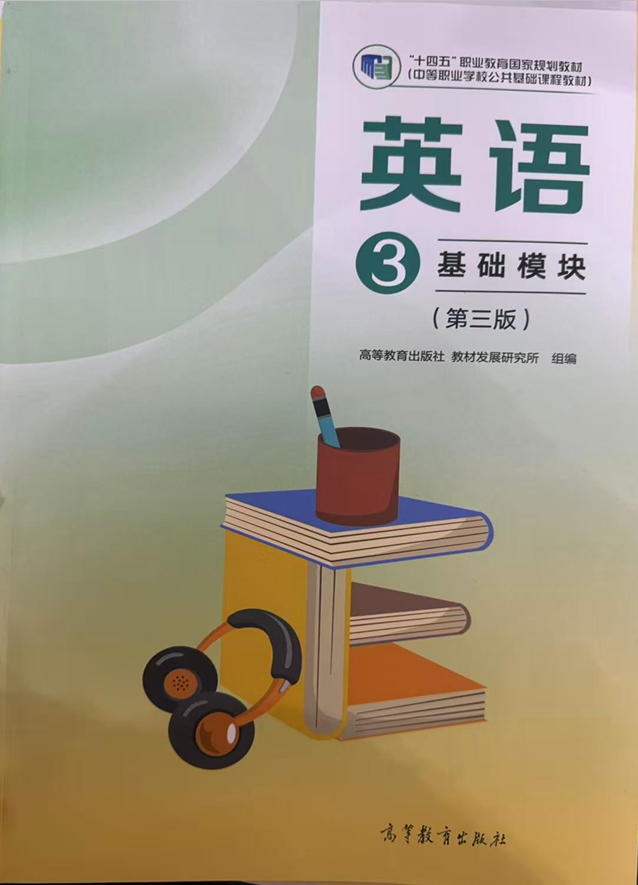
Unit 3 Artificial Intelligence(A卷·基础巩固)《英语 基础模块3》(高教版第三版)单元过关卷(原卷版+解析版)
2026-05-28
|
3份
|
19页
|
76人阅读
|
0人下载
摘要:
**基本信息**
《英语基础模块3》Unit 3人工智能A卷,紧扣教材核心考点,通过听力、完形填空等题型巩固基础,适配单元复习,提升语言能力与思维品质。
**题型特征**
|题型|题量/分值|知识覆盖|命题特色|
|----|-----------|----------|----------|
|听力|5题/15分|日常交际与信息获取,如时间询问|情境贴近生活,考查基础理解能力|
|完形填空|10题/10分|智能城市生活场景,覆盖动词、形容词等词汇|以Tom的一天为线索,融合语法与语境理解|
|阅读理解|15题/60分|AI与教育、在线教育、旅行APP等科技主题|选材具时代性,设问从细节到推理,培养思维品质|
|补全对话|5题/15分|未来交通方式讨论,涉及口语表达|话题聚焦科技发展,考查语言应用与交际能力|
内容正文:
听力考试正式开始。I enjoy women in the morning. I enjoy women in the morning. Listen to the next question. I have received a postcard from my friend on my birthday. Listen to the next question. What time does the game . start at six P, M? But there is a show which starts at five forty five pm before the game. Let's hurry. It's already five PM, and I don't want to miss anything. Listen to the next question. You've given us a wonderful chinese dinner, mrs. one. You've given us a wonderful chinese dinner, mrs. one. Listen to the next question. how much does the t shirt cost? How much does the t shirt cost? 听力部分到此结束。
编写说明:本套试卷紧扣《英语 基础模块3》(高教版第三版)教材,以教材单元为基准精准覆盖核心考点。
每个单元设置AB卷,A卷为基础巩固卷,侧重基础考点训练,帮助学生扎实掌握知识要点;B卷为能力提升卷,注重知识整合与全面检测,引导学生构建知识网络。全书设计4份综合测试卷,模拟实战情境,聚焦解题能力突破,全面提升应试能力与知识应用水平。
《英语 基础模块3》(高教版第三版)《单元过关卷》
Unit 3 Artificial Intelligence
A卷·基础巩固
考试时间:40分钟 满分:100分
班级 姓名 学号 成绩
1、 听力:本题共5小题,每小题3分,共15分。在每小题给出的三个选项中,只有一项符合题目要求。
1.
A. B. C.
2.
A. B. C.
3.When will the game begin?
A.At 5:00 p. m. B.At 5:45 p. m. C.At 6:00 p. m.
4.
A.Oh, I’m afraid I didn’t cook very well
B.I’m glad you enjoyed it.
C.It’s not necessary for you to say so.
5.
A.A good job. B.20 dollars. C.I know.
2、 完形填空:本题共10小题,每小题1分,共10分。在每小题给出的四个选项中,只有一项符合题目要求。
The Internet has changed our daily lives in many ways, especially with the help of smart devices. Let’s look at Tom’s typical day in a smart city.
In the morning, Tom’s smart watch ____6____ him up at 7:00. He unlocks his phone and ___7_____ the online weather app to check the day’s weather. Today it will rain, so he decides to take the subway instead of riding a shared bike.
After breakfast, Tom logs onto his computer to have an online class. His teacher is talking about smart city technologies, and Tom ____8____ carefully, taking notes in a digital notebook. During the break, he uses a take-out app to order a cup of coffee. The app says the coffee will arrive at 10:30 — his ___9_____ time.
In the afternoon, Tom goes to the library. He doesn’t need to carry a library card; he just uses his phone to ____10____ the library’s system and borrows an e-book about IoT. On his way home, he uses a map app to avoid traffic jams. The app shows him the fastest route in real time.
Evening comes. Tom wants to relax, so he ___11_____ on a music app and plays his favorite songs. Before going to bed, he ____12____ his online class notes to make sure he doesn’t miss anything important. He also sets his smart watch to monitor his sleep quality.
Tom thinks life in a smart city is really ___13_____. The Internet and smart devices make everything more convenient and efficient. He can do most things without ____14____ too much, and he always feels connected to the world around him.
With the development of technology, Tom believes future life will be even ___15_____. Maybe one day, robots will help with housework and self-driving cars will take people everywhere!
6.A.wakes B.takes C.makes D.lets
7.A.opens B.closes C.deletes D.forgets
8.A.listens B.is listening C.listened D.will listen
9.A.strange B.boring C.desired D.difficult
10.A.log onto B.look for C.talk about D.think of
11.A.clicks B.touches C.hits D.knocks
12.A.goes over B.looks up C.puts away D.takes off
13.A.difficult B.convenient C.boring D.expensive
14.A.moving around B.waiting for C.thinking about D.worrying about
15.A.worse B.harder C.better D.slower
3、 阅读理解:本题共15小题,每小题4分,共60分。在每小题给出的四个选项中,只有一项符合题目要求。
A
The rapid development of artificial intelligence has brought great challenges to traditional education. Many educators worry that AI tools such as essay‑writing robots and online homework solvers will weaken students’ independent thinking and reduce their learning motivation.
In some high schools, teachers report that an increasing number of students use AI to finish homework, write compositions and even prepare for exams. As a result, some students lose the ability to analyze problems independently and form the habit of depending on technology rather than their own brains.
However, AI is not necessarily a threat to education. When used properly, it can serve as a powerful assistant. For example, AI can provide personalized learning plans according to students’ weak points, offer instant feedback on exercises, and explain complex knowledge in vivid ways that traditional teaching cannot achieve. It can also free teachers from repetitive work so they can focus more on guiding students’ creativity and character development.
The key lies in how education systems adapt. Instead of banning AI completely, schools should teach students to use AI wisely, improve assessment methods to focus more on thinking and creation rather than simple memory, and strengthen moral education to help students build self‑discipline. Only in this way can education keep pace with technological progress.
16.What do educators worry about AI?
A.It will replace teachers completely.
B.It will harm students’ independent thinking.
C.It will make exams much easier.
D.It will slow down school development.
17.What problem does over‑use of AI cause?
A.Students finish homework more quickly.
B.Students lose independent problem‑solving skills.
C.Teachers have less work to do.
D.Exams become less challenging.
18.What is the advantage of AI in education?
A.It can replace all traditional teaching methods.
B.It helps students learn in personalized ways.
C.It prevents students from being lazy.
D.It improves students’ memory ability greatly.
19.What does the author advise schools to do?
A.Forbid students from using AI at all.
B.Focus more on knowledge memorization.
C.Guide students to use AI properly.
D.Reduce the use of modern technology.
20.What is the author’s attitude towards AI in education?
A.Negative. B.Cautiously positive. C.Uninterested. D.Strongly opposed.
B
Online education refers to learning via the Internet. In online education, you can take courses in other schools or universities. At the same time, you can take guidance from teachers through e-mails, video chats and voice chats.
Most of the online courses require self-study. What you need to do is to turn on your computer and search for the courses you are interested in. One of the advantages of online education is flexibility. For instance, if you are at workplace, during lunch break or in spare time, you could switch on your computer and start learning. You can manage your own study at your convenience. Cost factor is another advantage. In online education, you do not pay too much. What you need to cover is mostly the application fee.
With all these benefits, online education is certainly a great choice especially for working people. You can manage your study according to your schedule. However, in on-line education, only you know your actual performance, as there is no one to keep an eye on you. Therefore, make sure you are making your best efforts.
21.What is necessary for online education?
A.A computer. B.Efforts. C.The Internet. D.All of the above.
22.How do the teachers help the students in online education?
A.The teachers help the students through e-mail, video chats and voice chats.
B.The teachers help the students in school and university.
C.The teachers help the students through telephone.
D.The teachers don't help the students.
23.When could people switch on the computer and start studying?
A.In spare time. B.At working time.
C.While playing computer games. D.While watching TV.
24.For online education, there are obvious advantages EXCEPT ________.
A.flexibility B.cost factor C.interest D.convenience
25.Online education is a good choice especially for ________.
A.working people B.students C.teachers D.children
C
When life takes you away from home, take technology (科技) to help guide you. Apps can make your trip easier and more fun. Travel apps are very helpful to guide you on your trip.
Some apps help you plan your trip and others help you travel. TripIt is a helpful app to organize travel plans. Sign up for a free account at the TripIt website and download the app to have all of your travel plans handy in one place.
When traveling outside your home country, you may need some language help. Google Translate is an app that can help you understand a language other than your mother language. The Google Translate app translates (翻译) between 103 different languages. The app works even without an Internet connection. Google Translate is available for free.
Open Table is a restaurant reservation (预定) app to help users find and make reservations at restaurants. Open Table includes 31,000 restaurants around the world. You can also get dining rewards by making your reservations through Open Table and get a free meal.
Google Maps can be used even when the Internet connection (连接) is not available. Maps can be downloaded for times when you are away from the Internet. Make your own Google Maps so that you can use it when no Internet connection is available. If you find favorite restaurants, hotels or museums, you can save them to your maps to read them later.
Load your phone or tablet with Ebooks before you leave home. Download Ebooks over WiFi so you can read them anywhere, even when you are not connected to the Internet.
26.What is the passage mainly about?
A.Life is easier today. B.Ebooks are available free.
C.Use travel apps more often. D.Travel can be easier with apps.
27.Which of the following shows the structure (结构) of the passage? (Each number is for a paragraph.)
A.①一②③④⑤一⑥ B.①一②一③④⑤⑥
C.①②一③④⑤⑥ D.①一②③④⑤⑥
28.Before going on a trip if you want to have a plan for your trip, which one can help you?
A.TripIt. B.Ebooks. C.Google Maps. D.Open Table.
29.What can be used without an Internet connection?
A.TripIt and Ebooks. B.Google Translate and Google Maps.
C.Open Table and Ebooks. D.TripIt and Open Table.
30.How can users get a free meal?
A.By searching for a restaurant through Open Table.
B.By planning a week earlier.
C.By making a reservation through Open Table.
D.By downloading your favorite restaurant.
4、 补全对话:本题共5小题,每小题3分,共15分。在七个选项中选择五个,有二个多余选项。
A: Have you thought about how people will travel in the future?
B: Yes, I think there will be many new ways. Maybe flying cars or super fast trains.
A: Flying cars? ____31____ But are they really possible?
B: ____32____ Scientists are working on them. And some cars can already drive themselves.
A: Wow! ____33____ I hate long traffic jams.
B: Me too. And I hope future cars won’t make the air dirty.
A: Yeah, ____34____
B: That’s a good idea. We also might have trains that can go really fast, like 1000 km per hour!
A: That would be fun. ____35____
B: Me too. Traveling in the future could be comfortable and exciting!
A.I think so.
B.I can’t agree more.
C.That sounds exciting!
D.That would make traveling much easier.
E.maybe they will use electricity or solar power.
F.I hope all these things will be safe and cheap too.
G.One day we could even fly to other countries without planes.
学科网(北京)股份有限公司 (
1
)原创精品资源学科网独家享有版权,侵权必究!
学科网(北京)股份有限公司
$
编写说明:本套试卷紧扣《英语 基础模块3》(高教版第三版)教材,以教材单元为基准精准覆盖核心考点。
每个单元设置AB卷,A卷为基础巩固卷,侧重基础考点训练,帮助学生扎实掌握知识要点;B卷为能力提升卷,注重知识整合与全面检测,引导学生构建知识网络。全书设计4份综合测试卷,模拟实战情境,聚焦解题能力突破,全面提升应试能力与知识应用水平。
《英语 基础模块3》(高教版第三版)《单元过关卷》
Unit 3 Artificial Intelligence
A卷·基础巩固
考试时间:40分钟 满分:100分
班级 姓名 学号 成绩
1、 听力:本题共5小题,每小题3分,共15分。在每小题给出的三个选项中,只有一项符合题目要求。
1.
A. B. C.
【答案】A
【解析】I enjoy swimming in the morning.
2.
A. B. C.
【答案】A
【解析】I have received a postcard from my friend on my birthday.
3.When will the game begin?
A.At 5:00 p. m. B.At 5:45 p. m. C.At 6:00 p. m.
【答案】C
【解析】W: What time does the game start?
M: At six p.m., but there is a show which starts at five forty-five p.m. before the game.
W: Let’s hurry. It’s already five p.m. and I don’t want to miss anything.
4.
A.Oh, I’m afraid I didn’t cook very well
B.I’m glad you enjoyed it.
C.It’s not necessary for you to say so.
【答案】B
【解析】You’ve given us a wonderful Chinese dinner, Mrs. Wang.
5.
A.A good job. B.20 dollars. C.I know.
【答案】B
【解析】How much does the T-shirt cost?
2、 完形填空:本题共10小题,每小题1分,共10分。在每小题给出的四个选项中,只有一项符合题目要求。
The Internet has changed our daily lives in many ways, especially with the help of smart devices. Let’s look at Tom’s typical day in a smart city.
In the morning, Tom’s smart watch ____6____ him up at 7:00. He unlocks his phone and ___7_____ the online weather app to check the day’s weather. Today it will rain, so he decides to take the subway instead of riding a shared bike.
After breakfast, Tom logs onto his computer to have an online class. His teacher is talking about smart city technologies, and Tom ____8____ carefully, taking notes in a digital notebook. During the break, he uses a take-out app to order a cup of coffee. The app says the coffee will arrive at 10:30 — his ___9_____ time.
In the afternoon, Tom goes to the library. He doesn’t need to carry a library card; he just uses his phone to ____10____ the library’s system and borrows an e-book about IoT. On his way home, he uses a map app to avoid traffic jams. The app shows him the fastest route in real time.
Evening comes. Tom wants to relax, so he ___11_____ on a music app and plays his favorite songs. Before going to bed, he ____12____ his online class notes to make sure he doesn’t miss anything important. He also sets his smart watch to monitor his sleep quality.
Tom thinks life in a smart city is really ___13_____. The Internet and smart devices make everything more convenient and efficient. He can do most things without ____14____ too much, and he always feels connected to the world around him.
With the development of technology, Tom believes future life will be even ___15_____. Maybe one day, robots will help with housework and self-driving cars will take people everywhere!
6.A.wakes B.takes C.makes D.lets
7.A.opens B.closes C.deletes D.forgets
8.A.listens B.is listening C.listened D.will listen
9.A.strange B.boring C.desired D.difficult
10.A.log onto B.look for C.talk about D.think of
11.A.clicks B.touches C.hits D.knocks
12.A.goes over B.looks up C.puts away D.takes off
13.A.difficult B.convenient C.boring D.expensive
14.A.moving around B.waiting for C.thinking about D.worrying about
15.A.worse B.harder C.better D.slower
【答案】
6.A 7.A 8.B 9.C 10.A 11.A 12.A 13.B 14.D 15.C
【导语】这是一篇说明文。文章通过汤姆的日常生活介绍了智能设备和互联网让智能城市的生活更便捷高效,并展望了更美好的未来生活。
【详解】6.考查动词词义辨析。句意:早上,汤姆的智能手表在 7 点时会叫醒他。A. wakes唤醒;B. takes带走;C. makes使得;D. lets让。根据前文“... him up at 7:00”可知,此处是智能手表“叫醒”汤姆,wake sb. up 意为“叫醒某人”,是固定短语。故选A。
7.考查动词词义辨析。句意:他打开手机,然后打开在线天气应用程序,查看当天的天气情况。A. opens打开;B. closes关上;C. deletes删除;D. forgets忘记。根据前句“unlocks his phone and ...”可知,是打开手机“查看”天气情况。故选A。
8.考查动词时态。句意:他的老师正在讲解智慧城市技术的相关内容,而汤姆则聚精会神地聆听,并在电子笔记本上做着笔记。A. listens一般现在时;B. is listening现在进行时;C. listened一般过去时;D. will listen一般将来时。根据前文“His teacher is talking about smart city technologies, and Tom...”可知,空处与“is talking about”时态保持一致,描述汤姆当时正在进行的动作。故选B。
9.考查形容词词义辨析。句意:该应用程序显示咖啡将在10点30分送达——这正是他所期望的时间。A. strange奇怪的;B. boring无聊的;C. desired期望的;D. difficult困难的。根据前文“order a cup of coffee”可知,这是在点外卖,作为客户,10点30分送达应是他“期望”的时间。故选C。
10.考查动词短语词义辨析。句意:他无需携带借书证,只需用手机登录图书馆的系统,就能借阅一本关于物联网的电子书。A. log onto登录;B. look for寻找;C. talk about谈论;D. think of想,认为。根据前文“the library’s system”可知,是“登录”图书馆的系统。故选A。
11.考查动词词义辨析。句意:汤姆想要放松一下,于是他点击打开了一个音乐应用程序,然后播放起了他最喜欢的歌曲。A. clicks点击(强调在屏幕上触发按钮功能);B. touches触摸(强调接触某物);C. hits撞击(强调用一定的力量);D. knocks敲击(多指用手或硬物敲击实体物品)。根据前文“on a music app”可知,是“点击”打开了一个音乐应用程序,是在屏幕上触发按钮功能应用click。故选A。
12.考查动词短语词义辨析。句意:睡觉前,他会仔细复习一下自己的在线课程笔记,以确保自己没有遗漏任何重要的内容。A. goes over复习;B. looks up查询;C. puts away把……收起来;D. takes off脱下。根据前文“to make sure he doesn’t miss anything important”可知,为了不遗漏重要内容,汤姆需要“复习”在线课程笔记。故选A。
13.考查形容词词义辨析。句意:汤姆认为在智能城市里生活真的很方便。A. difficult困难的;B. convenient方便的;C. boring无聊的;D. expensive贵的。根据后文“The Internet and smart devices make everything more convenient and efficient.”可知,互联网和智能设备让生活更便捷高效,可推知前文汤姆认为智能城市很“方便”。故选B。
14.考查动词短语词义辨析。句意:他几乎可以不用太操心就能完成大部分事情。A. moving around四处走动;B. waiting for等待;C. thinking about考虑;D. worrying about担心,操心。根据前文“The Internet and smart devices make everything more convenient and efficient.”结合此处“He can do most things without ... too much”可知,他认为网络和智能设备能让他省心,即不用太“操心”。故选D。
15.考查形容词词义辨析。句意:随着科技的发展,汤姆相信未来的生活将会更加美好。A. worse更糟;B. harder更难;C. better更好;D. slower更慢。根据后文“Maybe one day, robots will help with housework and self-driving cars will take people everywhere!”可知,在未来机器人能帮人类做更多的事(比如做家务、自动驾驶汽车等),故此处是认为生活会变得“更好”。故选C。
3、 阅读理解:本题共15小题,每小题4分,共60分。在每小题给出的四个选项中,只有一项符合题目要求。
A
The rapid development of artificial intelligence has brought great challenges to traditional education. Many educators worry that AI tools such as essay‑writing robots and online homework solvers will weaken students’ independent thinking and reduce their learning motivation.
In some high schools, teachers report that an increasing number of students use AI to finish homework, write compositions and even prepare for exams. As a result, some students lose the ability to analyze problems independently and form the habit of depending on technology rather than their own brains.
However, AI is not necessarily a threat to education. When used properly, it can serve as a powerful assistant. For example, AI can provide personalized learning plans according to students’ weak points, offer instant feedback on exercises, and explain complex knowledge in vivid ways that traditional teaching cannot achieve. It can also free teachers from repetitive work so they can focus more on guiding students’ creativity and character development.
The key lies in how education systems adapt. Instead of banning AI completely, schools should teach students to use AI wisely, improve assessment methods to focus more on thinking and creation rather than simple memory, and strengthen moral education to help students build self‑discipline. Only in this way can education keep pace with technological progress.
16.What do educators worry about AI?
A.It will replace teachers completely.
B.It will harm students’ independent thinking.
C.It will make exams much easier.
D.It will slow down school development.
17.What problem does over‑use of AI cause?
A.Students finish homework more quickly.
B.Students lose independent problem‑solving skills.
C.Teachers have less work to do.
D.Exams become less challenging.
18.What is the advantage of AI in education?
A.It can replace all traditional teaching methods.
B.It helps students learn in personalized ways.
C.It prevents students from being lazy.
D.It improves students’ memory ability greatly.
19.What does the author advise schools to do?
A.Forbid students from using AI at all.
B.Focus more on knowledge memorization.
C.Guide students to use AI properly.
D.Reduce the use of modern technology.
20.What is the author’s attitude towards AI in education?
A.Negative. B.Cautiously positive. C.Uninterested. D.Strongly opposed.
【答案】16.B 17.B 18.B 19.C 20.B
【导语】文章主要讲述了AI对教育的挑战与机遇,并建议学校引导学生正确使用AI。
【详解】16.细节理解题。根据第一段中“Many educators worry that AI tools... will weaken students' independent thinking and reduce their learning motivation. (许多教育工作者担心AI工具会削弱学生的独立思考能力并降低学习动力。)”可知,教育工作者担心AI会损害学生的独立思考能力。
17.细节理解题。根据第二段中“As a result, some students lose the ability to analyze problems independently and form the habit of depending on technology rather than their own brains. (结果,一些学生失去了独立分析问题的能力,养成了依赖技术而非自己大脑的习惯。)”可知,过度使用AI会导致学生失去独立解决问题的能力。
18.细节理解题。根据第三段中“AI can provide personalized learning plans according to students' weak points (AI可以根据学生的薄弱点提供个性化的学习计划。)”可知,AI在教育中的优势是帮助学生以个性化的方式学习。
19.细节理解题。根据最后一段中“Instead of banning AI completely, schools should teach students to use AI wisely (学校不应完全禁止AI,而应教导学生明智地使用AI。)”可知,作者建议学校引导学生正确使用AI。
20.推理判断题。根据第三段中“However, AI is not necessarily a threat to education. When used properly, it can serve as a powerful assistant. (然而,AI不一定是教育的威胁。如果使用得当,它可以成为强有力的助手。)”以及最后一段“Only in this way can education keep pace with technological progress. (只有这样,教育才能跟上技术进步的步伐。)”可知,作者对AI在教育中的应用持谨慎乐观的态度。
B
Online education refers to learning via the Internet. In online education, you can take courses in other schools or universities. At the same time, you can take guidance from teachers through e-mails, video chats and voice chats.
Most of the online courses require self-study. What you need to do is to turn on your computer and search for the courses you are interested in. One of the advantages of online education is flexibility. For instance, if you are at workplace, during lunch break or in spare time, you could switch on your computer and start learning. You can manage your own study at your convenience. Cost factor is another advantage. In online education, you do not pay too much. What you need to cover is mostly the application fee.
With all these benefits, online education is certainly a great choice especially for working people. You can manage your study according to your schedule. However, in on-line education, only you know your actual performance, as there is no one to keep an eye on you. Therefore, make sure you are making your best efforts.
21.What is necessary for online education?
A.A computer. B.Efforts. C.The Internet. D.All of the above.
22.How do the teachers help the students in online education?
A.The teachers help the students through e-mail, video chats and voice chats.
B.The teachers help the students in school and university.
C.The teachers help the students through telephone.
D.The teachers don't help the students.
23.When could people switch on the computer and start studying?
A.In spare time. B.At working time.
C.While playing computer games. D.While watching TV.
24.For online education, there are obvious advantages EXCEPT ________.
A.flexibility B.cost factor C.interest D.convenience
25.Online education is a good choice especially for ________.
A.working people B.students C.teachers D.children
【答案】21.D 22.A 23.A 24.C 25.A
【导语】本文是一篇说明文。介绍在线教育的定义、实施方式、核心优势(灵活性、低成本),同时指出其需自主自律的特点,并强调它对职场人士是优质选择。
【详解】21.细节理解题。根据第一段“Online education refers to learning via the Internet. (在线教育是指通过互联网进行学习。)”、第二段“Most of the online courses require self-study. What you need to do is to turn on your computer and search for the courses you are interested in. (大多数在线课程都需要自学。你需要做的就是打开电脑,搜索你感兴趣的课程。)”和最后一段“However, in on-line education, only you know your actual performance, as there is no one to keep an eye on you. Therefore, make sure you are making your best efforts. (然而,在在线教育中,只有你自己知道自己的实际表现,因为没有人监督你。因此,要确保自己尽了最大努力。)”可知,网络、电脑和努力都是在线教育的必要条件。故选D。
22.细节理解题。根据第一段“... you can take guidance from teachers through e-mails, video chats and voice chats. (……你可以通过电子邮件、视频聊天和语音聊天向老师寻求指导。)”可知,在线教育中,教师是通过电子邮件、视频聊天和语音聊天帮助学生的。故选A。
23.细节理解题。根据第二段“... during lunch break or in spare time, you could switch on your computer and start learning. (……在午休时间或业余时间,你可以打开电脑开始学习。)”可知,人们可以在午休时间或业余时间打开电脑开始学习。
24.细节理解题。根据第二段“One of the advantages of online education is flexibility. (在线教育的优点之一是灵活性。)和You can manage your own study at your convenience. Cost factor is another advantage. (你可以在方便的时候自主安排学习。成本因素是另一个优势。)”可知,在线教育的明显优势是灵活性、便利性和低成本。故选C。
25.细节理解题。根据第三段“With all these benefits, online education is certainly a great choice especially for working people. (有了这些好处,在线教育无疑是一个很好的选择,尤其是对上班族来说。)”可知,在线教育尤其是对上班族是一个不错的选择。故选A。
C
When life takes you away from home, take technology (科技) to help guide you. Apps can make your trip easier and more fun. Travel apps are very helpful to guide you on your trip.
Some apps help you plan your trip and others help you travel. TripIt is a helpful app to organize travel plans. Sign up for a free account at the TripIt website and download the app to have all of your travel plans handy in one place.
When traveling outside your home country, you may need some language help. Google Translate is an app that can help you understand a language other than your mother language. The Google Translate app translates (翻译) between 103 different languages. The app works even without an Internet connection. Google Translate is available for free.
Open Table is a restaurant reservation (预定) app to help users find and make reservations at restaurants. Open Table includes 31,000 restaurants around the world. You can also get dining rewards by making your reservations through Open Table and get a free meal.
Google Maps can be used even when the Internet connection (连接) is not available. Maps can be downloaded for times when you are away from the Internet. Make your own Google Maps so that you can use it when no Internet connection is available. If you find favorite restaurants, hotels or museums, you can save them to your maps to read them later.
Load your phone or tablet with Ebooks before you leave home. Download Ebooks over WiFi so you can read them anywhere, even when you are not connected to the Internet.
26.What is the passage mainly about?
A.Life is easier today. B.Ebooks are available free.
C.Use travel apps more often. D.Travel can be easier with apps.
27.Which of the following shows the structure (结构) of the passage? (Each number is for a paragraph.)
A.①一②③④⑤一⑥ B.①一②一③④⑤⑥
C.①②一③④⑤⑥ D.①一②③④⑤⑥
28.Before going on a trip if you want to have a plan for your trip, which one can help you?
A.TripIt. B.Ebooks. C.Google Maps. D.Open Table.
29.What can be used without an Internet connection?
A.TripIt and Ebooks. B.Google Translate and Google Maps.
C.Open Table and Ebooks. D.TripIt and Open Table.
30.How can users get a free meal?
A.By searching for a restaurant through Open Table.
B.By planning a week earlier.
C.By making a reservation through Open Table.
D.By downloading your favorite restaurant.
【答案】26.D 27.D 28.A 29.B 30.C
【导语】本文是一篇说明文。文章主要介绍了一些可以让旅行更轻松、更有趣的应用程序。
【详解】26.主旨大意题。根据第一段“Apps can make your trip easier and more fun. Travel apps are very helpful to guide you on your trip.”可知,本文主要介绍了一些应用程序,它们对旅行有很大的帮助,可以让旅行更容易、更有趣。故选D。
27.篇章结构题。综合全文可知,第一段提出一些应用程度对旅行有帮助这一话题;第二段至第六段分别介绍了5种不同的应用程序,因此本文属于总——分结构。故选D。
28.细节理解题。根据第二段“TripIt is a helpful app to organize travel plans.”可知,在去旅行之前,可以使用TripIt规划旅行。故选A。
29.细节理解题。根据第三段“The Google Translate app translates between 103 different languages. The app works even without an Internet connection.”和第五段“Make your own Google Maps so that you can use it when no Internet connection is available.”可知,谷歌翻译应用程序和谷歌地图即使在没有互联网连接的情况下也能运行。故选B。
30.细节理解题。根据第四段“You can also get dining rewards by making your reservations through Open Table and get a free meal.”可知,可以通过Open Table预订并获得免费用餐。故选C。
4、 补全对话:本题共5小题,每小题3分,共15分。在七个选项中选择五个,有二个多余选项。
A: Have you thought about how people will travel in the future?
B: Yes, I think there will be many new ways. Maybe flying cars or super fast trains.
A: Flying cars? ____31____ But are they really possible?
B: ____32____ Scientists are working on them. And some cars can already drive themselves.
A: Wow! ____33____ I hate long traffic jams.
B: Me too. And I hope future cars won’t make the air dirty.
A: Yeah, ____34____
B: That’s a good idea. We also might have trains that can go really fast, like 1000 km per hour!
A: That would be fun. ____35____
B: Me too. Traveling in the future could be comfortable and exciting!
A.I think so.
B.I can’t agree more.
C.That sounds exciting!
D.That would make traveling much easier.
E.maybe they will use electricity or solar power.
F.I hope all these things will be safe and cheap too.
G.One day we could even fly to other countries without planes.
【答案】31.C 32.A 33.D 34.E 35.F
【导语】这是一段关于未来交通方式的对话。
【详解】31.根据上文“Flying cars?”和下文“But are they really possible?”可知,A听到“飞行汽车”应表示兴奋后询问可行性。选项C“听起来很令人兴奋!”符合语境。
32.根据后文“Scientists are working on them. And some cars can already drive themselves.”可知,此处是对“飞行汽车是否可能”的肯定回应。选项A“我认为是可能的。”符合语境。
33.根据后文“I hate long traffic jams.”可知,此处应表达飞行汽车对解决交通拥堵的好处。选项D“那会让出行变得容易得多。”符合语境。
34.根据前文“And I hope future cars won’t make the air dirty.”和答语“That’s a good idea.”可知,此处应是关于未来汽车环保能源的提议。选项E“也许它们会用电或太阳能。”符合语境。
35.根据前文“That would be fun.”和后文“Me too. Traveling in the future could be comfortable and exciting!”可知,此处应是对未来交通的进一步美好期许。选项F“我也希望所有这些东西既安全又便宜。”符合语境。
学科网(北京)股份有限公司 (
1
)原创精品资源学科网独家享有版权,侵权必究!
学科网(北京)股份有限公司
$
资源预览图

1

2

3
由于学科网是一个信息分享及获取的平台,不确保部分用户上传资料的 来源及知识产权归属。如您发现相关资料侵犯您的合法权益,请联系学科网,我们核实后将及时进行处理。