精品解析:安徽省阜阳市太和县税镇中学等校2025-2026学年下学期九年级英语模拟试卷(B卷)
 切换试卷
切换试卷
2026-05-27
|
2份
|
34页
|
20人阅读
|
0人下载
资源信息
| 学段 | 初中 |
|---|---|
| 学科 | 英语 |
| 教材版本 | - |
| 年级 | 九年级 |
| 章节 | - |
| 类型 | 试卷 |
| 知识点 | - |
| 使用场景 | 中考复习-二模 |
| 学年 | 2026-2027 |
| 地区(省份) | 安徽省 |
| 地区(市) | 阜阳市 |
| 地区(区县) | 太和县 |
| 文件格式 | ZIP |
| 文件大小 | 880 KB |
| 发布时间 | 2026-05-27 |
| 更新时间 | 2026-05-27 |
| 作者 | 学科网试题平台 |
| 品牌系列 | - |
| 审核时间 | 2026-05-27 |
| 下载链接 | https://m.zxxk.com/soft/58079794.html |
| 价格 | 4.00储值(1储值=1元) |
| 来源 | 学科网 |
内容正文:
英语( B 卷 )
(试题卷)
注意事项:
1.本试卷共四部分,十大题,满分120分,考试时间为120分钟。
2.全卷包括“试题卷”(8页)和“答题卡”(2页)两部分。
3.请务必在“答题卡”上答题,在 “试题卷”上答题无效。
4.考试结束后,请将“试题卷”和“答题卡”一并交回。
第一部分 听力(共四大题,满分20分)
I. 短对话理解(共5小题;每小题1分,满分5分)
你将听到五段对话。每段对话后有一个小题,请在每小题所给的A、B、C三个选项中选出一个 最佳选项。每段对话读两遍。
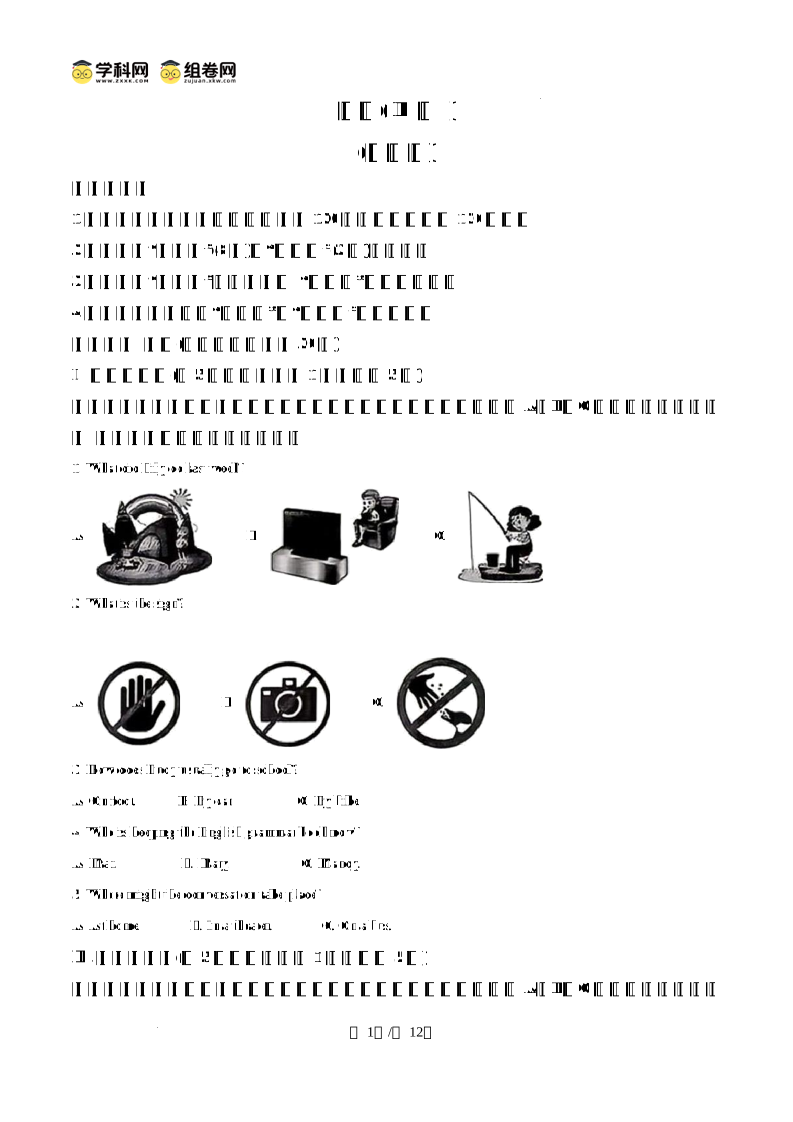
1. What did Lily do last week?
A. B. C.
2. What is the sign?
A. B. C.
3. How does Lucy usually go to school?
A. On foot. B. By car. C. By bike.
4. Who is keeping the English grammar book now?
A. Max. B. Mary. C. Mandy.
5. Where might the conversation take place?
A. At home. B. In a theater. C. On a bus.
Ⅱ .长对话理解(共5小题;每小题1分,满分5分)
你将听到两段对话。每段对话后有几个小题,请在每小题所给的A、B、C三个选项中选出一个 最佳选项。每段对话读两遍。
听下面一段对话,回答第6、7题。
6. What will Peter do for Earth Day?
A. Plant trees. B. Give a speech. C. Draw posters.
7. What’s Grace like?
A. Outgoing. B. Talented. C. Shy.
听下面一段对话,回答第8至10题。
8. What subject is David weak in?
A. Math. B. English. C. History.
9. Why did David fail the test?
A. He didn’t prepare for it. B. He was forgetful. C. He was nervous.
10. What’s the relationship between the two speakers?
A. Relatives. B. Classmates. C. Neighbors.
Ⅲ. 短文理解(共5小题;每小题1分,满分5分)
你将听到一篇短文。短文后有五个小题,请根据短文内容,在每小题所给的A、B、C三个选项中 选出一个最佳选项。短文读两遍。
11. What’s Mia’s favorite season?
A. Winter. B. Autumn. C. Spring.
12. How was the weather in March?
A. Warm. B. Cold. C. Cool.
13. How did Mia learn to make the kite?
A. From her mother. B. From online videos. C. From guide books.
14. How long did it take Mia and her mother to make the kite?
A. About two hours. B. About an hour. C. About half an hour.
15. When will Mia fly her new kite?
A. Next Sunday. B. Next Saturday. C. Next Friday.
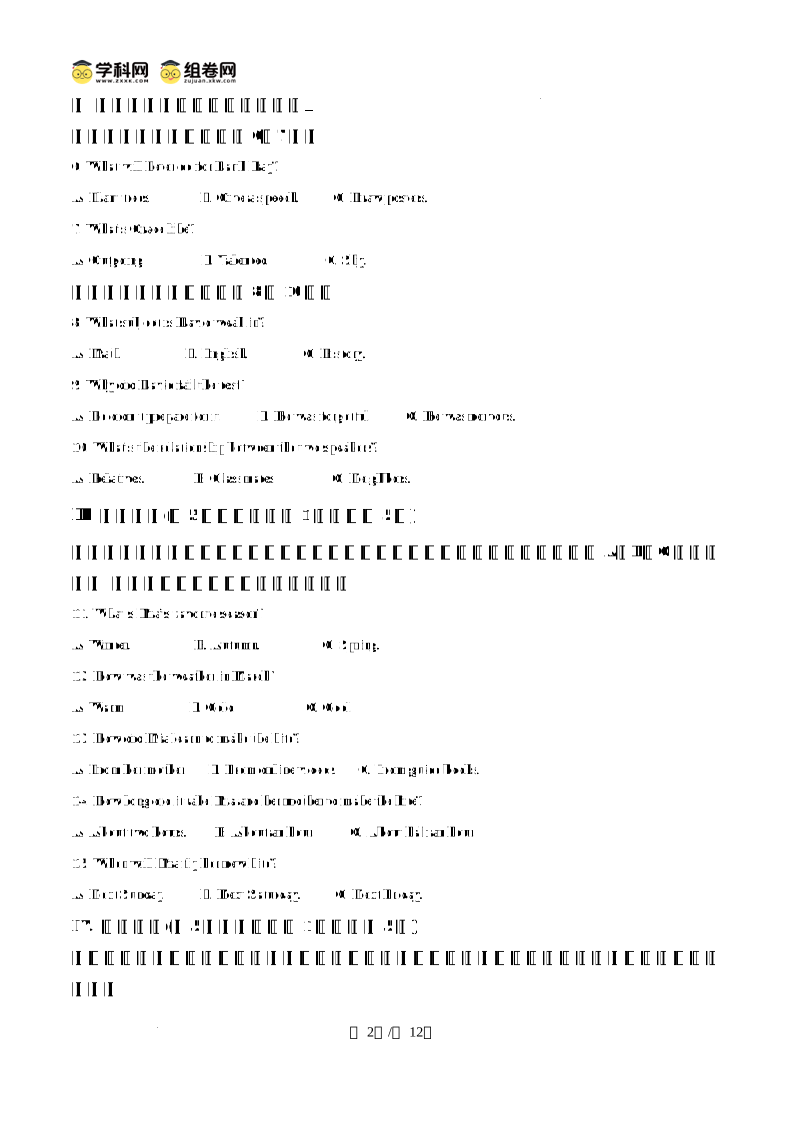
IV. 信息转换(共5小题;每小题1分,满分5分)
你将听到一篇短文。请根据短文内容,写出下面表格中所缺的单词,每空仅填一词。短文读两遍。
Let’s Act on Our Own
Meaning
Doing things without being told, like starting our homework 16.________.
Reasons
When we act on our own, we 17.________ confidence.
We learn to make 18.________ and solve problems better.
Steps
Help with 19.________ chores at home.
Study for tests on our own at school.
Keep our 20.________ clean by picking up litter.
第二部分 语言知识运用(共三大题,满分35分)
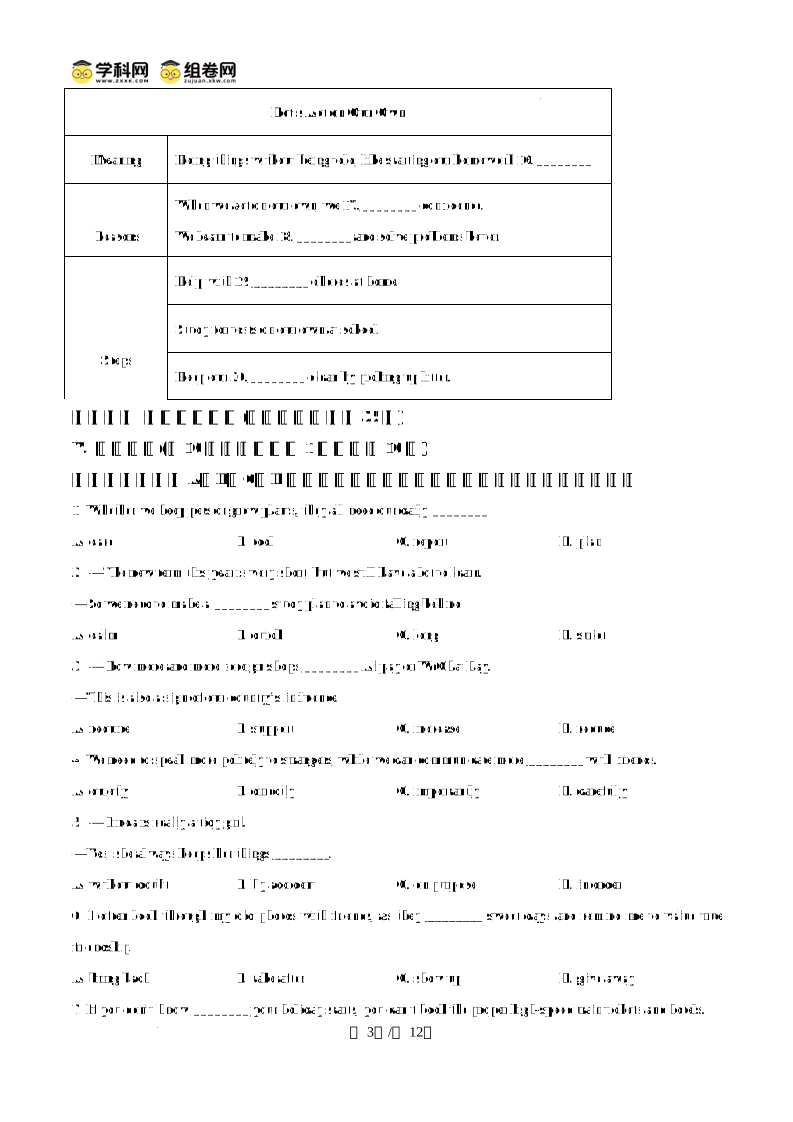
V. 单项填空(共10小题;每小题1分,满分10分)
从每小题所给的A、B、C、D四个选项中选出一个可以填入空白处的最佳选项。
1. Whether we keep pets or grow plants, they all need our daily ________.
A. care B. tool C. report D. plan
【答案】A
【解析】
【详解】句意:不管是养宠物还是种植物,它们都需要我们的日常照顾。
care照顾,关照;tool工具;report报告;plan计划,句子核心场景是“养宠物/种植物”,这两种行为的共性是都需要持续的照料,care符合语境。
2. —The new term this year is very short, but we still have a lot to learn.
—So we need to make a ________ study plan to avoid falling behind.
A. calm B. quick C. long D. strict
【答案】D
【解析】
【详解】句意:——这个学期非常短,但是我们仍然有很多需要学习的。——所以我们需要制定一个严格的学习计划,以防掉队。
calm冷静的;quick迅速的;long长的;strict严格的。根据“to avoid falling behind”可知,为了避免掉队,应制定一个严格的学习计划,用形容词strict修饰study plan。
3. —Now more and more foreign shops ________ Alipay or WeChat Pay.
—This is also a sign of our country’s influence.
A. require B. support C. increase D. reduce
【答案】B
【解析】
【详解】句意:——现在越来越多的外国店铺支持支付宝或者微信支付。——这也是我们国家影响力的象征。
require需要,要求;support支持,接受;increase增加,增长;reduce减少,降低。support支持符合语境,指外国商店支持使用支付宝或微信支付。
4. We need to speak more politely to strangers, while we can communicate more ________ with friends.
A. quietly B. directly C. importantly D. carefully
【答案】B
【解析】
【详解】句意:我们需要和陌生人礼貌交流,但是我们可以和朋友们交流得更直接一些。
quietly安静地;directly直接地; importantly重要地;carefully仔细地,小心地。本句将对陌生人礼貌委婉的沟通方式和朋友间的沟通方式对比,朋友之间关系亲密,沟通可以更直接,directly符合语境。
5. —Linda is really a tidy girl.
—Yes, she always keeps her things ________.
A. without doubt B. by accident C. on purpose D. in order
【答案】D
【解析】
【详解】句意:——Linda真是个整洁的女孩。——是的,她总是把东西收拾得井井有条。
without doubt毫无疑问;by accident意外地;on purpose故意地;in order整齐、有序。根据前一句的“tidy”可知,此处表达东西摆放整齐,因此用in order。
6. I often look through my old photos with friends, as they ________ sweet days and remind me to value true friendship.
A. bring back B. take after C. show up D. give away
【答案】A
【解析】
【详解】句意:我常常和朋友们一起翻看那些老照片,因为它们能勾起美好的回忆,也让我意识到要珍惜真正的友谊。
bring back使想起,唤起;take after与(父母等)长相或性格相似;show up出现;露面;give away赠送;泄露。bring back sweet days表示 “勾起甜蜜的往日时光”,贴合“翻看旧照片回忆往事”的语境,为正确答案。
7. If you don’t know ________ your holiday starts, you can’t book the proper high-speed train tickets and hotels.
A. why B. where C. when D. what
【答案】C
【解析】
【详解】句意:如果你不知道你的假期什么时候开始,你就不能订合适的高铁票和酒店。
why为什么;where哪里;when什么时候;what什么。根据“you can’t book the proper high-speed train tickets and hotels”结合“starts”可知,订合适的高铁票和酒店需要知道假期开始的时间,应用when引导宾语从句。
8. Tony saves some pocket money every month ________ he can buy his favorite toy.
A. even though B. as if C. ever since D. so that
【答案】D
【解析】
【详解】句意:托尼每个月存一些零花钱,以便能买他最喜欢的玩具。
even though即使;as if好像;ever since自从;so that以便/为了。根据题干“saves some pocket money”与“he can buy his favorite toy”可知,存钱的目的是为了买玩具,应用so that引导目的状语从句,应填so that。
9. —Our school will take part in the Chaohu Lake cleaning activity this weekend.
—Great! The lake ________ by more and more volunteers every year.
A. protects B. is protected C. protected D. was protected
【答案】B
【解析】
【详解】句意:——本周末我们学校将参加巢湖清洁活动。——太棒了!这片湖每年都被越来越多的志愿者保护。
由时间状语“every year”可知,句子应为一般现在时,排除C、D项;主语The lake与动词protect之间是被动关系,需用被动语态,一般现在时被动语态结构为am/is/are+动词过去分词,主语为单数,用is protected。
10. —The movie Silent Awakening of Insects was so boring that I fell asleep.
—________ Many people think it’s really interesting.
A. Why not? B. How come? C. Is that true? D. So what?
【答案】B
【解析】
【详解】句意:——电影《昆虫的静默觉醒》太无聊了,我都睡着了。——很多人觉得它真的很有趣。
Why not?为什么不呢?;How come?怎么会?(表示惊讶、质疑);Is that true?是真的吗?;So what?那又怎样?根据上下文,说话者觉得电影无聊,而对方表示很多人觉得有趣,此处应表达对前者看法的惊讶与质疑,因此用How come?,符合语境。
VI. 完形填空(共20小题;每小题1分,满分20分)
阅读下列短文,从每小题所给的A、B、C、D四个选项中选出可以填入空白处的最佳选项。
A
Last summer, my family and I went to Yunnan. Before the trip, I felt ____11____ and curious.
However, the weather was ____12____ when we arrived.
I walked slowly along Erhai Lake, but I couldn’t ____13____ its famous blue water or the mountains around it. Everything was foggy and grey. A cold wind with light rain made me ____14____.
Just as I went back to my ____15____, a soft voice said, “Hello, would you like these ____16____ ? We’re leaving and can’t take them.”
I turned around and saw two kind girls. I accepted the flowers in surprise. One girl ____17____ me that the roses had thorns (刺). Holding the big bouquets (花束), my heart was ____18____warmth. Later I put them in a vase (花瓶) in my hotel room. Their beauty and nice smell made the room lively. The next day, the sky ____19____, and Erhai Lake looked beautiful.
Actually, the ____20____ isn’t what has stayed in my mind now. It’s the strangers’ unexpected kindness. Life doesn’t always go as planned; we may have bad days, but there’s always a warm surprise waiting.
11. A. nervous B. excited C. stressed D. tired
12. A. typical B. normal C. fantastic D. terrible
13. A. admire B. awake C. accept D. allow
14. A. shake B. cry C. shout D. relax
15. A. school B. restaurant C. hotel D. hospital
16. A. fruits B. clothes C. snacks D. flowers
17. A. promised B. warned C. asked D. reminded
18. A. ready for B. full of C. covered with D. interested in
19. A. set up B. stood up C. cleared up D. took up
20. A. view B. saying C. story D. traditional
【答案】11. B 12. D 13. A 14. A 15. C 16. D 17. D 18. B 19. C 20. A
【解析】
【导语】本文是一篇记叙文,讲述作者在云南旅行遭遇坏天气,却因陌生人送花而感受到温暖的故事,点明“生活虽有不顺,但总有善意惊喜”。
【11题详解】
句意:旅行前,我感到兴奋又好奇。
去云南之前的心情,结合“curious”以及后文虽遇坏天气但整体是积极经历,可知是正面情绪。nervous(紧张)和stressed(有压力的)负面,tired(累)与旅行前不符。
【12题详解】
句意:然而,我们到达时天气很糟糕。
后文描写“foggy and grey”、“cold wind with light rain”,明显是坏天气。terrible(糟糕的)最直接。
【13题详解】
句意:我沿着洱海慢慢走,却无法欣赏它著名的蓝水和周围的山。
大雾天看不到景色,动词应是“欣赏”。admire意为欣赏;awake(唤醒)、accept(接受)、allow(允许)都不合逻辑。
【14题详解】
句意:带着小雨的冷风让我发抖。
冷风细雨让人生理上发冷,shake(发抖)最贴切;cry(哭)程度过重且无情感铺垫,shout(喊叫)、relax(放松)不符合句意。
【15题详解】
句意:就在我回到旅馆时,一个温柔的声音说:“你好,你喜欢这些花吗?我们要走了,带不走它们。”
下文提到“hotel room”,且旅行住宿通常在酒店。
【16题详解】
句意:“你们想要这些花吗?我们要走了,带不走它们。”
根据第五段第二句“I accepted the flowers in surprise”可知,女孩送的是花。且后文“roses had thorns”、“put them in a vase”,全是花的特征。
【17题详解】
句意:一个女孩提醒我玫瑰有刺。
女孩好心告知有刺,是善意的提醒,避免扎手。remind sb. that…意为“提醒某人……”,符合语境。warn(警告)语气太重,promised(承诺)和asked(问)均不对。
【18题详解】
句意:捧着大花束,我心里充满了温暖。
收到意外礼物后的感动,内心满是温暖。full of(充满)最自然;ready for(准备好)、covered with(覆盖着)、interested in(对……感兴趣)都不符合语境。
【19题详解】
句意:第二天,天空放晴了。
前文大雾下雨,后文看到洱海美丽,天气转好。clear up(放晴)符合语境。
【20题详解】
句意:实际上,留在脑海里的不是景色。
上文描写洱海景色后来变美,但作者真正记住的是陌生人的善意。view与前文提到的“蓝水、山”呼应,且后文对比“kindness”。saying(谚语)、story(故事)、traditional(传统,名词形式应为tradition)都不符合。
B
Chinese medicine names reflect (反映) history, cultural values and human experience. The book Stories Behind the Names of Chinese Medicines shows that there is much to learn from ____21____ these medicines were named. In the book, you can ____22____ the heart of traditional Chinese culture: a good ____23____ between people and nature.
For example, heshouwu gets its name from a story: an old man’s grey hair turned ____24____ after he ate it. Xixin is named for its thin roots (根) and ____25____ smell. Huanglian gets its name from its yellow color and bitter(苦的) taste. These names not only help people remember the medicines, but also ____26____ the thoughts about nature and life.
More ____27____, we can realize that medicines are part of an ancient culture close to daily life, not just words in old books. In Chinese, the character dang means “should”, and gui means “____28____ home”. Because of this, the name danggui carries cultural meanings of ____29____family and caring for loved ones.
____30____ you want to study Chinese medicine later or just learn about it for fun, exploring its cultural roots can help you understand the world in a new way.
21. A. how B. where C. when D. what
22. A. disagree B. discuss C. discover D. dislike
23. A. choice B. competition C. relationship D. difference
24. A. brown B. red C. white D. black
25. A. sweet B. strong C. fresh D. bad
26. A. turn down B. pass down C. cut down D. take down
27. A. carefully B. luckily C. importantly D. slowly
28. A. returning B. repeating C. visiting D. recording
29. A. promising B. starting C. raising D. missing
30. A. Because B. Whether C. Although D. Since
【答案】21. A 22. C 23. C 24. D 25. B 26. B 27. C 28. A 29. D 30. B
【解析】
【导语】本文主要介绍中药名称反映的历史文化内涵,通过具体例子阐述人与自然的关系及家庭观念,展现中医文化价值。
【21题详解】
句意:《中药名称背后的故事》这本书展示了从这些药物是如何被命名的中可以学到很多东西。
前文说中药名称反映历史、文化价值观和人类经验。第二段举例说明何首乌、细辛、黄连等药材的名字来源于故事、外形、颜色、味道等。因此空处需要表达这些药物“如何”被命名。应选用how。
【22题详解】
句意:在这本书中,你可以发现中国传统文化的核心:人与自然的良好关系。
“人与自然的良好关系”是我们在这本书中所“发现或了解”的内容。应选用discover。
【23题详解】
句意:在这本书中,你可以发现中国传统文化的核心:人与自然的良好关系。
下文提到何首乌因白发变黑得名,细辛因细根和浓烈气味得名,黄连因黄色和苦味得名,这些名字都体现了人与自然的联系,因此“中国传统文化的核心”应是这种“关系”。应选用relationship。
【24题详解】
句意:例如,何首乌的名字来自一个故事:一位老人的白发吃了它之后变成了黑色。
何首乌以“乌发”闻名,白发变“黑”是常识。应选用black。
【25题详解】
句意:细辛因其细根和浓烈的气味而得名。
细辛是一种有"浓烈"气味的中药,是常识,应选用strong。
【26题详解】
句意:这些名字不仅帮助人们记住药物,还传递了对自然和生命的思考。
这些名字“传递”了对自然和生命的思考。应选用pass down。
【27题详解】
句意:更重要的是,我们可以意识到药物是古老文化的一部分,与日常生活密切相关,而不仅仅是古书中的文字。
前文说中药名称传递了对自然和生命的思考,后文进一步强调药物是古老文化的一部分。more importantly是固定搭配,意为“更重要的是”,符合逻辑递进关系。
【28题详解】
句意:在中文里,“当”字的意思是“应该”,“归”字的意思是“回家”。
前文解释“当”和“归”的字义,“归”意为“返回”,应选用returning。
【29题详解】
句意:正因为如此,“当归”这个名字承载着想家和关爱亲人的文化含义。
前文说“归”意为“回家”,因此“当归”承载着“想家”的含义。应选用missing。
【30题详解】
句意:无论你将来想学习中医还是只是为了兴趣了解它,探索其文化根源都能帮助你以新的方式理解世界。
前文说探索中药文化根源的价值。后文给出两种可能的情况(学习中医或只是了解),Whether...or..是固定搭配,意为“无论……还是……”,符合语境。
VⅡ. 补全对话(共5小题;每小题1分,满分5分)
根据对话内容,从方框内的选项中选出能填入空白处的最佳选项,其中有两个为多余选项。
A: Hi, Jessica. ____31____ Did you travel abroad with your parents as you did last year?
B: It was wonderful. ____32____ Instead, I visited my grandparents in the countryside.
A: That sounds great. ____33____
B: A lot, but the most interesting thing was watching the Spring Festival Gala with my grandparents.
A:____34____ And the most amazing part was the robot performances.
B: To be honest, I even decided to learn programming because of those shows.____35____
A: My dream is to become an AI trainer. I hope to train AI to serve people better in different fields.
B: Let’s keep working hard for our dreams.
A. Me too.
B. Not much.
C. What about you?
D. But I didn’t travel abroad this time.
E. Did you watch the Spring Festival Gala?
F. What interesting things did you do there?
G. How was your Spring Festival holiday this year?
【答案】31. G 32. D 33. F 34. A 35. C
【解析】
【导语】本文主要是两人谈论春节假期的经历,Jessica没有出国旅游而是去乡下陪祖父母,两人聊到春晚机器人节目并交流各自梦想。
【31题详解】
下文Jessica回答“It was wonderful.”,是对感受的回应。G项“How was your Spring Festival holiday this year?”询问春节假期怎么样,与下文回答衔接自然。
【32题详解】
上文A问是否像去年一样出国旅行,下文Jessica说“Instead, I visited my grandparents...”。D项“But I didn’t travel abroad this time.”说明这次没有出国,与下文形成转折对应。
【33题详解】
下文Jessica回答“A lot, but the most interesting thing was...”,讲述做过的趣事。F项“What interesting things did you do there?”询问在那里做了什么有趣的事,符合问答逻辑。
【34题详解】
上文Jessica说最有趣的是和祖父母看春晚,下文A接着聊春晚节目。A项“Me too.”表示自己也看了春晚,衔接顺畅。
【35题详解】
上文Jessica说因为节目决定学编程,下文A说出自己的梦想。C项“What about you?”反问对方的梦想,开启新话题,逻辑通顺。
第三部分 阅读(共两节,满分40分)
VⅢ. 阅读理解 (共20小题;每小题2分,满分40分)
第一节 阅读下列短文,从每小题所给的A、B、C、D四个选项中选出最佳选项。
A
Find out the real stories of amazing women for International Women’s Day!
The Story of Art Without Men By Katy Hessel
This book tells the unknown stories of the amazing lives of women artists. We can go from the 14th to 16th centuries to today. We can travel around the world to find many wonderful works of art and great artists.
Junko’s Climb By Elyssa Gavin
It is 1975 and a group of brave women from Japan’s Ladies Climbing Club start to climb Mount Qomolangma, the highest mountain in the world. Junko Tabei, the founder of the club, leads the team. Can she become the first woman to reach the top of Mount Qomolangma?
We By Yu Yi
Learn about some women whose knowledge and skills have changed the world.
This book includes the stories of women who have had success in many kinds of fields, including football, math, zoology (the study of animals) and music.
Galaxy Mapper By Melina Gerosa
This book tells the story of Hélène Courtois, a French astrophysicist (who studies the universe). It shows how her curiosity and childhood hobbies helped her achieve her dream. With beautiful pictures of the night sky, this picture book also introduces other great women astronomers.
36. If Jenny wants to know about famous women football players, which book should she read?
A. The Story of Art Without Men. B. Junko’s Climb. C. We. D. Galaxy Mapper.
37. What does Hélène Courtois do?
A. B. C. D.
38. What do the four books have in common?
A. They tell stories about women. B. They show wonderful artworks.
C. They introduce history. D. They teach something about science.
【答案】36. C 37. D 38. A
【解析】
【导语】本文是一篇应用文,主要介绍了四本以杰出女性为主题的书籍,旨在为国际妇女节推荐讲述女性故事的读物。
【36题详解】
根据文中《We》这本书的介绍“This book includes the stories of women who have had success in many kinds of fields, including football, math, zoology (the study of animals) and music.”可知,这本书包含足球领域的女性故事,因此如果Jenny想了解著名女子足球运动员,她应该读此书。
【37题详解】
根据文中《Galaxy Mapper》这本书的介绍“This book tells the story of Hélène Courtois, a French astrophysicist (who studies the universe).”可知,Hélène Courtois是一名天体物理学家,研究宇宙,对应选项D所示的图片。
【38题详解】
根据文章内容可知,这四本书的主题分别是:女性艺术家、女性登山家、各领域杰出女性、女性天体物理学家,核心都是讲述杰出女性的故事。
B
Li Tong, a 35-year-old porcelain and pottery restorer (陶瓷修复师), loves nothing more than using her brush to bring an ancient artwork back to life. She now works at the Henan Provincial Institute of Cultural Heritage and Archaeology (文化考古研究所). Over the past six years, she has brought hundreds of cultural artworks back to life.
Restoring ancient porcelain is not easy, and color restoration is the hardest part, because it is difficult to mix colors that match the old ones exactly. Li has had a strong interest in colors since she was a child. Li began learning painting from her grandmother at the age of 5. She later got a master’s degree in Fine Arts from Zhengzhou University in 2015.
In 2020, she joined the institute and learned to restore different ancient artworks. She always tries her best in her work. Once, she restored a large Qing Dynasty vase with a missing part. “The vase was very difficult to restore because of its size and weight,” she said. “I had to deal with it gently to avoid causing harm, so every step was very challenging. But when I finished, I was satisfied.” Li thinks her job is meaningful because she can help pass on the historical stories behind the ancient artworks.
39. How long has Li Tong worked as a porcelain and pottery restorer?
A. For about 35 years. B. For about 10 years.
C. For about 6 years. D. For about 5 years.
40. Why was the Qing Dynasty vase difficult to restore?
A. Because it was too expensive. B. Because it was too large.
C. Because it was seriously broken. D. Because it was too old.
41. Which of the following can best describe Li Tong?
A. Patient and careful. B. Kind and creative.
C. Honest and helpful. D. Talented and friendly.
【答案】39. C 40. B 41. A
【解析】
【导语】本文是一篇记叙文,主要讲述了陶瓷修复师李彤的职业经历,介绍了她修复文物的工作难点与典型事例,展现了她的专业能力与工作意义。
【39题详解】
第一段中“Over the past six years, she has brought hundreds of cultural artworks back to life.”表明,李彤作为陶瓷修复师已经工作了六年。
【40题详解】
第三段中“The vase was very difficult to restore because of its size and weight,”表明,这个清代花瓶难以修复的原因是它体积大、分量重,即太大了。
【41题详解】
第三段中李彤的话“I had to deal with it gently to avoid causing harm, so every step was very challenging.”表明,李彤工作时需要耐心和细致,避免造成损坏。因此最能描述她的是“Patient and careful”。
C
热点话题 反向旅游
For Yu, a young professional in Shanghai, this Spring Festival was special. Instead of trying hard to get a train ticket to his hometown in Jiangsu, he took his mother to Shanghai for a “reverse (反向的)” celebration. They took a boat tour on the Huangpu River, enjoyed colorful lanterns and visited the science museum during the festival.
Yu is not alone. A growing trend known as “reverse travel” has changed how many Chinese families celebrate the festival. Rather than children rushing back home, elderly parents travel to big cities to spend the holiday with their kids.
One key reason is money. During the busy chunyun season, tickets from big cities are expensive. For example, a flight from Shanghai to Taiyuan can cost 1,800 yuan, but the reverse trip may be only 400 yuan. “The money we saved on tickets went into better hotels and meals,” one traveler explained. “It is a smart way to enjoy the holiday.”
As traditions change, “going home” now means being with family. The true meaning of Spring Festival stays the same: being together with loved ones.
42. What’s the function (功能) of paragraph 1?
A. Explaining the meaning of “reverse travel”. B. Showing the convenience of “reverse travel”.
C. Warning some risks of “reverse travel”. D. Giving an example of “reverse travel”.
43. What does the underlined word “trend” mean in paragraph 2?
A. Attention. B. Fashion. C. Method. D. Match.
44. What can we know about reverse travel?
A. It is only welcomed by young people. B. It requires young people to rush home.
C. It can reduce people’s travel costs. D. It can make chunyun season less busy.
45. What does the writer want to tell us?
A. Big cities are great places for holidays. B. We should remember old festival traditions.
C. Family togetherness matters most in festivals. D. We should visit more museums during festivals.
【答案】42. D 43. B 44. C 45. C
【解析】
【导语】本文介绍了“反向旅行”这一春节新趋势,即父母到大城市与子女团聚,并分析了其原因和意义
【42题详解】
第一段通过Yu的具体经历“he took his mother to Shanghai for a ‘reverse’ celebration...took a boat tour...visited the science museum”来引出“反向旅行”这一话题,因此功能是“举例说明”。
【43题详解】
第二段指出:“A growing trend known as ‘reverse travel’ has changed how many Chinese families celebrate the festival.”,结合上下文,“trend”指的是“反向旅行”这一正在兴起的现象,意为“趋势”,与“fashion”意思最接近。
【44题详解】
第三段通过票价对比指出:“a flight from Shanghai to Taiyuan can cost 1,800 yuan, but the reverse trip may be only 400 yuan”,说明反向旅行可以节省交通费用,因此可以推断出它能降低旅行成本。
【45题详解】
最后一段指出:“The true meaning of Spring Festival stays the same: being together with loved ones.”,说明节日中家人团聚最重要。
D
Do you remember the last thing that made you smile? These small happy moments are called “sparks of joy”. They can brighten your days and help you face challenges.
These “sparks of joy” are little things that make you feel good inside. They can include listening to your favorite song, sharing a silly joke with a friend, or staying with your pet. However, when something amazing happens, like winning a prize, the excitement doesn’t last long. But these small joys can lift your mood (心情) and keep you feeling positive.
Being happy is good for your body and brain. When you feel happy, you have more energy.
That makes you want to move around, and then your mood lifts even more. Scientists say happiness can lower stress and improve your immune system (免疫系统). Even small sparks of joy can make a big difference because they train your brain to notice happy moments.
No one is happy all the time but if you know where to find sparks of joy, you can cheer yourself up when you need it.
46. What are “sparks of joy”?
①Listening to your favorite song. ②Sharing silly jokes with others.
③Winning a big prize. ④Staying with your pet.
A. ①②③ B. ①②④ C. ①③④ D. ②③④
47. What does the underlined word “That” refer to (指的是)?
A. Being stressed. B. Having more energy.
C. The immune system. D. The excitement.
48. What might the text talk about next?
A. How we can find sparks of joy. B. Why we need to find sparks of joy.
C. When we should find sparks of joy. D. Who can help us find sparks of joy.
【答案】46. B 47. B 48. A
【解析】
【导语】本文是一篇说明文,围绕生活中的“快乐小火花”展开,介绍了它的定义、具体表现以及对身心健康的积极影响,帮助读者理解这些微小的幸福瞬间如何改善情绪、增强体质,引导人们主动发现并珍惜日常中的小美好。
【46题详解】
根据第二段中“They can include listening to your favorite song, sharing a silly joke with a friend, or staying with your pet.”可知,快乐火花可以包含听你最喜欢的音乐、和他人分享笑话,和宠物待在一起,并未提及“Winning a big prize.”。
【47题详解】
根据划线词前后文“When you feel happy, you have more energy.”以及“makes you want to move around, and then your mood lifts even more.”可知,当感到快乐时,你能拥有更多能量,这些能量能让你想要四处走动,而这也让你的心情变得更加愉悦,故此处的That指代“拥有更多能量”。
【48题详解】
根据最后一段内容可知,没有人是一直快乐的,但是如果你知道在你需要的时候在哪找到你的快乐火花,你可以鼓舞自己,故接下来可能讲述我们怎么找到快乐火花。
E
For centuries, some Western people have wrong ideas about Chinese food. They think Chinese people “eat everything”, even like cats or snakes. But this is a misunderstanding. In fact, Chinese food culture is about “making the best use of everything”.
This idea comes from China’s past. Long ago, there was often not enough food because of floods, wars, and a large population. People had to use all kinds of things to eat to survive. They learned to use wild plants and all parts of animals. For example, during hard times, people would make Qiuhuang tofu from the leaves in a plant named as “Guanyin Tree.” They also used chicken feet, hearts, and other parts that are often thrown away in other countries. These parts can be cooked into delicious dishes.
Today, China is much richer, but this way of eating still stays. It is also good for the environment, because less food is wasted. The Chinese way of using food well can teach us to eat in an environmentally friendly way. Next time you see Chinese dishes like lemon chicken feet, try to understand the story behind them.
49. What does paragraph 2 mainly talk about?
A. When people started to eat wild plants.
B. Where special Qiuhuang tofu came from.
C. Why people made full use of food in the past.
D. How we cooked different parts of animals well.
50. What is Qiuhuang tofu made from?
A. Rice and water. B. Leaves of a plant.
C. Chicken feet and hearts. D. Wild animals and meat.
51. What can we learn from the text?
A. Western food usually has high fat. B. Chinese food is wise and green.
C. Western people like chicken feet now. D. Chinese people enjoy eating vegetables.
52. What is the best title (标题) for the text?
A. Taste Wild Plants, Enjoy Safe Food B. Value Food, Stay Healthy
C. Try Special Dishes, Taste Rich Culture D. Eat Everything, Waste Nothing
【答案】49. C 50. B 51. B 52. D
【解析】
【导语】本文主要介绍了中国的饮食文化。
【49题详解】
根据第二段内容可知,本段讲述了过去人们怎么做到物尽其用。C项符合段意。
【50题详解】
根据第二段“people would make Qiuhuang tofu from the leaves in a plant”可知,秋黄豆腐是用一种植物的叶子制作的。
【51题详解】
根据第三段“It is also good for the environment,because less food is wasted.”结合第二段内容可知,中餐是充满智慧又绿色环保的。
【52题详解】
本文通过澄清部分西方人对“中国人什么都吃”的错误认知、追溯历史,介绍中国饮食文化“物尽其用”的内涵与价值,最后呼吁人们读懂中餐背后的文化。D项符合文章主旨。
第二节
F
阅读下面短文,并用英语回答问题(请注意每小题的词数要求)。
Recently, a new policy (政策) from the Ministry of Education says that junior high school students should spend no more than 90 minutes on written homework each day. When Wang Lin heard about it, she felt worried and anxious (焦虑的).
On the one hand, she is afraid that her grades will drop. She has been working hard at her lessons and she thinks enough practice is necessary to get good marks. She worries that less homework will mean less review and practice. If she does not do enough exercises, she may fall behind her classmates and struggle (难以应付) in exams. This makes her feel stressed and nervous.
On the other hand, Wang Lin really wants more free time. She loves reading and drawing in her spare time. She hopes to relax and enjoy her hobbies instead of being busy with homework all day. More free time can make her life more enjoyable and colorful.
Now Wang Lin is caught between these two thoughts. She cares about her studies but also wants to develop her hobbies. She feels upset and does not know what to do.
53. What makes Wang Lin worried? (不超过10个词)
________________________________________________
54. What does Wang Lin hope to do with more free time? (不超过10个词)
________________________________________________
55. How could Wang Lin solve the problem by herself? Please give her a piece of advice.(不超过15个词)
________________________________________________
【答案】53. The new policy from the Ministry of Education.
54. Relax and enjoy her hobbies
55. Keep a balance between study and hobbies.
【解析】
【导语】本文是一篇记叙文,主要讲述了初中生王林面对教育部关于作业时长新政策时产生的焦虑,以及她在学业成绩与个人兴趣爱好之间难以抉择的心理矛盾。
【53题详解】
根据第1段和第2段“When Wang Lin heard about it, she felt worried and anxious.”及“she is afraid that her grades will drop.”可推知新政策和担心成绩下降让她焦虑。
【54题详解】
根据文章第3段“She hopes to relax and enjoy her hobbies instead of being busy with homework all day.”可推知她希望放松和享受爱好。
【55题详解】
根据文章第4段“She cares about her studies but also wants to develop her hobbies.”可知她需要平衡两者,建议合理规划时间。
第四部分 写(共两大题,满分25分)
IX. 单词拼写(共5小题;每小题1分,满分5分)
根据首字母及汉语提示,完成下列单词的拼写,使句意明确,语言通顺。
56. Sometimes it makes more s________ (意义) to keep quiet than to talk too much.
【答案】sense##ense
【解析】
【详解】句意:有时候,保持沉默比说太多话更有意义。句中“意义”对应的英文单词是sense,且“make sense”是固定搭配,意为“有意义”,前面有more修饰,仍用sense即可,符合语境。
57. Everyone should r________ (尊重) the work of cleaners and keep public places clean.
【答案】respect##espect
【解析】
【详解】句意:每个人都应该尊重清洁工的工作,保持公共场所整洁。根据中文及首字母提示可知,此处用respect表示“尊重”,情态动词should后接动词原形。
58. Mona is very happy today because she was p________ (表扬) by her teacher.
【答案】praised##raised
【解析】
【详解】句意:莫娜今天非常高兴,因为她被老师表扬了。根据“by her teacher”可知,她被老师表扬了,谓语用被动语态:be+过去分词,此处为praised“被表扬”。
59. A true friend is like a m________ (镜子) that helps you see your own mistakes.
【答案】mirror##irror
【解析】
【详解】句意:真正的朋友就像一面镜子,帮你看到自身的错误。根据汉语提示“镜子”可知,mirror符合语境,前面有a,用单数形式。
60. (新考向 • 熟词生义) Don’t be c________ (生气的) about small things no matter where you are or what happens.
【答案】cross##ross
【解析】
【详解】句意:无论你身在何处、发生了什么事,都不要为小事生气。此处需要一个形容词,在句中作表语,构成固定搭配“be cross about sth.”,表示“因某事生气”,故填cross。
X. 书面表达(共1小题;满分20分)
61. AI机器人正悄然改变着我们的生活。从街头忙碌的配送机器人,到春晚舞台上灵动的高科技表演者,智能机器人已经成为生活里一道亮眼的风景。请根据以下要点结合你的生活体验用英语写 一篇短文谈谈你对AI机器人的看法。
要点:
1. 优势:配送机器人保障快递安全准时送达;
2. 担忧:过度依赖AI 机器人,部分工作会被取代;
3. 你的生活体验及观点。
注意:
1. 短文须包含上述要点,可适当增加细节,以使行文连贯;
2. 文中不能出现真实姓名和学校名称;
3. 词数80~100 (作文开头已为你写好,不计入总词数)。
参考词汇:delivery 快递;replace 取代
AI robots are quietly changing our lives. ________________________________________________________________________________________________________________________________________________________________________________________________________________________________________________________________________________________________________________________________________________________________________________________________________________________________________________________________________________________________________________________________________________________________________________________________________________________________
【答案】例文:
AI robots are quietly changing our lives. On the one hand, they are very useful. Delivery robots help send New Year gifts safely and quickly. On the other hand, people have worries. We may depend on AI too much, and some jobs will be replaced by robots.
I had a special experience this year. I used the Doubao app to write couplets with my grandpa. It was really interesting. And I also got a gift from a delivery robot during the festival. It was convenient.
In all, we should make full use of their advantages and avoid their disadvantages. Only in this way can AI serve our life better.
【解析】
【详解】写作步骤:
[第一步:审题立意]
确定文体:观点类议论文,主体介绍用一般现在时,个人经历部分用一般过去时
明确要点:AI机器人的优势、人们的担忧、叙述自身经历及观点
确定人称:第一人称(I/We)
注意事项:不出现真实姓名和学校名称,词数控制在80~100词
[第二步:构思布局]
三段式结构:
开头段:总起句引出AI机器人正在改变生活,分别阐述AI的优势和人们的担忧
主体段:讲述自己的特殊经历,列举两个和AI机器人相关的生活场景
结尾段:总结全文,提出要扬长避短,让AI更好服务生活的观点,升华主题
[第三步:要点展开]
要点一:AI机器人的利弊
开篇总起:AI robots are quietly changing our lives等
优势表达:they are very useful/Delivery robots help send New Year gifts safely and quickly等
担忧表达:people have worries/We may depend on AI too much/some jobs will be replaced by robots等
要点二:个人生活体验
场景引入:I had a special experience this year/ I can still remember a meaningful experience with AI technology等
事例说明:used the Doubao app to write couplets with my grandpa/got a gift from a delivery robot during the festival/Sometimes I use AI tools to look up information and finish my study tasks more easily等
要点三:个人观点总结
总结句:In all, we should make full use of their advantages and avoid their disadvantages/As far as I am concerned, we should treat AI robots in a reasonable way等
升华句:Only in this way can AI serve our life better/Only by balancing its pros and cons can AI robots truly benefit people in the long run等
第1页/共1页
学科网(北京)股份有限公司
$
英语( B 卷 )
(试题卷)
注意事项:
1.本试卷共四部分,十大题,满分120分,考试时间为120分钟。
2.全卷包括“试题卷”(8页)和“答题卡”(2页)两部分。
3.请务必在“答题卡”上答题,在 “试题卷”上答题无效。
4.考试结束后,请将“试题卷”和“答题卡”一并交回。
第一部分 听力(共四大题,满分20分)
I. 短对话理解(共5小题;每小题1分,满分5分)
你将听到五段对话。每段对话后有一个小题,请在每小题所给的A、B、C三个选项中选出一个 最佳选项。每段对话读两遍。
1. What did Lily do last week?
A. B. C.
2. What is the sign?
A. B. C.
3. How does Lucy usually go to school?
A. On foot. B. By car. C. By bike.
4. Who is keeping the English grammar book now?
A. Max. B. Mary. C. Mandy.
5. Where might the conversation take place?
A. At home. B. In a theater. C. On a bus.
Ⅱ .长对话理解(共5小题;每小题1分,满分5分)
你将听到两段对话。每段对话后有几个小题,请在每小题所给的A、B、C三个选项中选出一个 最佳选项。每段对话读两遍。
听下面一段对话,回答第6、7题。
6. What will Peter do for Earth Day?
A. Plant trees. B. Give a speech. C. Draw posters.
7. What’s Grace like?
A. Outgoing. B. Talented. C. Shy.
听下面一段对话,回答第8至10题。
8. What subject is David weak in?
A. Math. B. English. C. History.
9. Why did David fail the test?
A. He didn’t prepare for it. B. He was forgetful. C. He was nervous.
10. What’s the relationship between the two speakers?
A. Relatives. B. Classmates. C. Neighbors.
Ⅲ. 短文理解(共5小题;每小题1分,满分5分)
你将听到一篇短文。短文后有五个小题,请根据短文内容,在每小题所给的A、B、C三个选项中 选出一个最佳选项。短文读两遍。
11. What’s Mia’s favorite season?
A. Winter. B. Autumn. C. Spring.
12. How was the weather in March?
A. Warm. B. Cold. C. Cool.
13. How did Mia learn to make the kite?
A. From her mother. B. From online videos. C. From guide books.
14. How long did it take Mia and her mother to make the kite?
A. About two hours. B. About an hour. C. About half an hour.
15. When will Mia fly her new kite?
A. Next Sunday. B. Next Saturday. C. Next Friday.
IV. 信息转换(共5小题;每小题1分,满分5分)
你将听到一篇短文。请根据短文内容,写出下面表格中所缺的单词,每空仅填一词。短文读两遍。
Let’s Act on Our Own
Meaning
Doing things without being told, like starting our homework 16.________.
Reasons
When we act on our own, we 17.________ confidence.
We learn to make 18.________ and solve problems better.
Steps
Help with 19.________ chores at home.
Study for tests on our own at school.
Keep our 20.________ clean by picking up litter.
第二部分 语言知识运用(共三大题,满分35分)
V. 单项填空(共10小题;每小题1分,满分10分)
从每小题所给的A、B、C、D四个选项中选出一个可以填入空白处的最佳选项。
1. Whether we keep pets or grow plants, they all need our daily ________.
A. care B. tool C. report D. plan
2. —The new term this year is very short, but we still have a lot to learn.
—So we need to make a ________ study plan to avoid falling behind.
A. calm B. quick C. long D. strict
3. —Now more and more foreign shops ________ Alipay or WeChat Pay.
—This is also a sign of our country’s influence.
A. require B. support C. increase D. reduce
4. We need to speak more politely to strangers, while we can communicate more ________ with friends.
A. quietly B. directly C. importantly D. carefully
5. —Linda is really a tidy girl.
—Yes, she always keeps her things ________.
A. without doubt B. by accident C. on purpose D. in order
6. I often look through my old photos with friends, as they ________ sweet days and remind me to value true friendship.
A. bring back B. take after C. show up D. give away
7. If you don’t know ________ your holiday starts, you can’t book the proper high-speed train tickets and hotels.
A. why B. where C. when D. what
8. Tony saves some pocket money every month ________ he can buy his favorite toy.
A. even though B. as if C. ever since D. so that
9. —Our school will take part in the Chaohu Lake cleaning activity this weekend.
—Great! The lake ________ by more and more volunteers every year.
A. protects B. is protected C. protected D. was protected
10. —The movie Silent Awakening of Insects was so boring that I fell asleep.
—________ Many people think it’s really interesting.
A. Why not? B. How come? C. Is that true? D. So what?
VI. 完形填空(共20小题;每小题1分,满分20分)
阅读下列短文,从每小题所给的A、B、C、D四个选项中选出可以填入空白处的最佳选项。
A
Last summer, my family and I went to Yunnan. Before the trip, I felt ____11____ and curious.
However, the weather was ____12____ when we arrived.
I walked slowly along Erhai Lake, but I couldn’t ____13____ its famous blue water or the mountains around it. Everything was foggy and grey. A cold wind with light rain made me ____14____.
Just as I went back to my ____15____, a soft voice said, “Hello, would you like these ____16____ ? We’re leaving and can’t take them.”
I turned around and saw two kind girls. I accepted the flowers in surprise. One girl ____17____ me that the roses had thorns (刺). Holding the big bouquets (花束), my heart was ____18____warmth. Later I put them in a vase (花瓶) in my hotel room. Their beauty and nice smell made the room lively. The next day, the sky ____19____, and Erhai Lake looked beautiful.
Actually, the ____20____ isn’t what has stayed in my mind now. It’s the strangers’ unexpected kindness. Life doesn’t always go as planned; we may have bad days, but there’s always a warm surprise waiting.
11. A. nervous B. excited C. stressed D. tired
12. A. typical B. normal C. fantastic D. terrible
13. A. admire B. awake C. accept D. allow
14. A. shake B. cry C. shout D. relax
15. A. school B. restaurant C. hotel D. hospital
16. A. fruits B. clothes C. snacks D. flowers
17. A. promised B. warned C. asked D. reminded
18. A. ready for B. full of C. covered with D. interested in
19. A. set up B. stood up C. cleared up D. took up
20. A. view B. saying C. story D. traditional
B
Chinese medicine names reflect (反映) history, cultural values and human experience. The book Stories Behind the Names of Chinese Medicines shows that there is much to learn from ____21____ these medicines were named. In the book, you can ____22____ the heart of traditional Chinese culture: a good ____23____ between people and nature.
For example, heshouwu gets its name from a story: an old man’s grey hair turned ____24____ after he ate it. Xixin is named for its thin roots (根) and ____25____ smell. Huanglian gets its name from its yellow color and bitter(苦的) taste. These names not only help people remember the medicines, but also ____26____ the thoughts about nature and life.
More ____27____, we can realize that medicines are part of an ancient culture close to daily life, not just words in old books. In Chinese, the character dang means “should”, and gui means “____28____ home”. Because of this, the name danggui carries cultural meanings of ____29____family and caring for loved ones.
____30____ you want to study Chinese medicine later or just learn about it for fun, exploring its cultural roots can help you understand the world in a new way.
21. A. how B. where C. when D. what
22. A. disagree B. discuss C. discover D. dislike
23. A. choice B. competition C. relationship D. difference
24. A. brown B. red C. white D. black
25. A. sweet B. strong C. fresh D. bad
26. A. turn down B. pass down C. cut down D. take down
27. A. carefully B. luckily C. importantly D. slowly
28. A. returning B. repeating C. visiting D. recording
29. A. promising B. starting C. raising D. missing
30. A. Because B. Whether C. Although D. Since
VⅡ. 补全对话(共5小题;每小题1分,满分5分)
根据对话内容,从方框内的选项中选出能填入空白处的最佳选项,其中有两个为多余选项。
A: Hi, Jessica. ____31____ Did you travel abroad with your parents as you did last year?
B: It was wonderful. ____32____ Instead, I visited my grandparents in the countryside.
A: That sounds great. ____33____
B: A lot, but the most interesting thing was watching the Spring Festival Gala with my grandparents.
A:____34____ And the most amazing part was the robot performances.
B: To be honest, I even decided to learn programming because of those shows.____35____
A: My dream is to become an AI trainer. I hope to train AI to serve people better in different fields.
B: Let’s keep working hard for our dreams.
A. Me too.
B. Not much.
C. What about you?
D. But I didn’t travel abroad this time.
E. Did you watch the Spring Festival Gala?
F. What interesting things did you do there?
G. How was your Spring Festival holiday this year?
第三部分 阅读(共两节,满分40分)
VⅢ. 阅读理解 (共20小题;每小题2分,满分40分)
第一节 阅读下列短文,从每小题所给的A、B、C、D四个选项中选出最佳选项。
A
Find out the real stories of amazing women for International Women’s Day!
The Story of Art Without Men By Katy Hessel
This book tells the unknown stories of the amazing lives of women artists. We can go from the 14th to 16th centuries to today. We can travel around the world to find many wonderful works of art and great artists.
Junko’s Climb By Elyssa Gavin
It is 1975 and a group of brave women from Japan’s Ladies Climbing Club start to climb Mount Qomolangma, the highest mountain in the world. Junko Tabei, the founder of the club, leads the team. Can she become the first woman to reach the top of Mount Qomolangma?
We By Yu Yi
Learn about some women whose knowledge and skills have changed the world.
This book includes the stories of women who have had success in many kinds of fields, including football, math, zoology (the study of animals) and music.
Galaxy Mapper By Melina Gerosa
This book tells the story of Hélène Courtois, a French astrophysicist (who studies the universe). It shows how her curiosity and childhood hobbies helped her achieve her dream. With beautiful pictures of the night sky, this picture book also introduces other great women astronomers.
36. If Jenny wants to know about famous women football players, which book should she read?
A. The Story of Art Without Men. B. Junko’s Climb. C. We. D. Galaxy Mapper.
37. What does Hélène Courtois do?
A. B. C. D.
38. What do the four books have in common?
A. They tell stories about women. B. They show wonderful artworks.
C. They introduce history. D. They teach something about science.
B
Li Tong, a 35-year-old porcelain and pottery restorer (陶瓷修复师), loves nothing more than using her brush to bring an ancient artwork back to life. She now works at the Henan Provincial Institute of Cultural Heritage and Archaeology (文化考古研究所). Over the past six years, she has brought hundreds of cultural artworks back to life.
Restoring ancient porcelain is not easy, and color restoration is the hardest part, because it is difficult to mix colors that match the old ones exactly. Li has had a strong interest in colors since she was a child. Li began learning painting from her grandmother at the age of 5. She later got a master’s degree in Fine Arts from Zhengzhou University in 2015.
In 2020, she joined the institute and learned to restore different ancient artworks. She always tries her best in her work. Once, she restored a large Qing Dynasty vase with a missing part. “The vase was very difficult to restore because of its size and weight,” she said. “I had to deal with it gently to avoid causing harm, so every step was very challenging. But when I finished, I was satisfied.” Li thinks her job is meaningful because she can help pass on the historical stories behind the ancient artworks.
39. How long has Li Tong worked as a porcelain and pottery restorer?
A. For about 35 years. B. For about 10 years.
C. For about 6 years. D. For about 5 years.
40. Why was the Qing Dynasty vase difficult to restore?
A. Because it was too expensive. B. Because it was too large.
C. Because it was seriously broken. D. Because it was too old.
41. Which of the following can best describe Li Tong?
A. Patient and careful. B. Kind and creative.
C. Honest and helpful. D. Talented and friendly.
C
热点话题 反向旅游
For Yu, a young professional in Shanghai, this Spring Festival was special. Instead of trying hard to get a train ticket to his hometown in Jiangsu, he took his mother to Shanghai for a “reverse (反向的)” celebration. They took a boat tour on the Huangpu River, enjoyed colorful lanterns and visited the science museum during the festival.
Yu is not alone. A growing trend known as “reverse travel” has changed how many Chinese families celebrate the festival. Rather than children rushing back home, elderly parents travel to big cities to spend the holiday with their kids.
One key reason is money. During the busy chunyun season, tickets from big cities are expensive. For example, a flight from Shanghai to Taiyuan can cost 1,800 yuan, but the reverse trip may be only 400 yuan. “The money we saved on tickets went into better hotels and meals,” one traveler explained. “It is a smart way to enjoy the holiday.”
As traditions change, “going home” now means being with family. The true meaning of Spring Festival stays the same: being together with loved ones.
42. What’s the function (功能) of paragraph 1?
A. Explaining the meaning of “reverse travel”. B. Showing the convenience of “reverse travel”.
C. Warning some risks of “reverse travel”. D. Giving an example of “reverse travel”.
43. What does the underlined word “trend” mean in paragraph 2?
A. Attention. B. Fashion. C. Method. D. Match.
44. What can we know about reverse travel?
A. It is only welcomed by young people. B. It requires young people to rush home.
C. It can reduce people’s travel costs. D. It can make chunyun season less busy.
45. What does the writer want to tell us?
A. Big cities are great places for holidays. B. We should remember old festival traditions.
C. Family togetherness matters most in festivals. D. We should visit more museums during festivals.
D
Do you remember the last thing that made you smile? These small happy moments are called “sparks of joy”. They can brighten your days and help you face challenges.
These “sparks of joy” are little things that make you feel good inside. They can include listening to your favorite song, sharing a silly joke with a friend, or staying with your pet. However, when something amazing happens, like winning a prize, the excitement doesn’t last long. But these small joys can lift your mood (心情) and keep you feeling positive.
Being happy is good for your body and brain. When you feel happy, you have more energy.
That makes you want to move around, and then your mood lifts even more. Scientists say happiness can lower stress and improve your immune system (免疫系统). Even small sparks of joy can make a big difference because they train your brain to notice happy moments.
No one is happy all the time but if you know where to find sparks of joy, you can cheer yourself up when you need it.
46. What are “sparks of joy”?
①Listening to your favorite song. ②Sharing silly jokes with others.
③Winning a big prize. ④Staying with your pet.
A. ①②③ B. ①②④ C. ①③④ D. ②③④
47. What does the underlined word “That” refer to (指的是)?
A. Being stressed. B. Having more energy.
C. The immune system. D. The excitement.
48. What might the text talk about next?
A. How we can find sparks of joy. B. Why we need to find sparks of joy.
C. When we should find sparks of joy. D. Who can help us find sparks of joy.
E
For centuries, some Western people have wrong ideas about Chinese food. They think Chinese people “eat everything”, even like cats or snakes. But this is a misunderstanding. In fact, Chinese food culture is about “making the best use of everything”.
This idea comes from China’s past. Long ago, there was often not enough food because of floods, wars, and a large population. People had to use all kinds of things to eat to survive. They learned to use wild plants and all parts of animals. For example, during hard times, people would make Qiuhuang tofu from the leaves in a plant named as “Guanyin Tree.” They also used chicken feet, hearts, and other parts that are often thrown away in other countries. These parts can be cooked into delicious dishes.
Today, China is much richer, but this way of eating still stays. It is also good for the environment, because less food is wasted. The Chinese way of using food well can teach us to eat in an environmentally friendly way. Next time you see Chinese dishes like lemon chicken feet, try to understand the story behind them.
49. What does paragraph 2 mainly talk about?
A. When people started to eat wild plants.
B. Where special Qiuhuang tofu came from.
C. Why people made full use of food in the past.
D. How we cooked different parts of animals well.
50. What is Qiuhuang tofu made from?
A. Rice and water. B. Leaves of a plant.
C. Chicken feet and hearts. D. Wild animals and meat.
51. What can we learn from the text?
A. Western food usually has high fat. B. Chinese food is wise and green.
C. Western people like chicken feet now. D. Chinese people enjoy eating vegetables.
52. What is the best title (标题) for the text?
A. Taste Wild Plants, Enjoy Safe Food B. Value Food, Stay Healthy
C. Try Special Dishes, Taste Rich Culture D. Eat Everything, Waste Nothing
第二节
F
阅读下面短文,并用英语回答问题(请注意每小题的词数要求)。
Recently, a new policy (政策) from the Ministry of Education says that junior high school students should spend no more than 90 minutes on written homework each day. When Wang Lin heard about it, she felt worried and anxious (焦虑的).
On the one hand, she is afraid that her grades will drop. She has been working hard at her lessons and she thinks enough practice is necessary to get good marks. She worries that less homework will mean less review and practice. If she does not do enough exercises, she may fall behind her classmates and struggle (难以应付) in exams. This makes her feel stressed and nervous.
On the other hand, Wang Lin really wants more free time. She loves reading and drawing in her spare time. She hopes to relax and enjoy her hobbies instead of being busy with homework all day. More free time can make her life more enjoyable and colorful.
Now Wang Lin is caught between these two thoughts. She cares about her studies but also wants to develop her hobbies. She feels upset and does not know what to do.
53. What makes Wang Lin worried? (不超过10个词)
________________________________________________
54. What does Wang Lin hope to do with more free time? (不超过10个词)
________________________________________________
55. How could Wang Lin solve the problem by herself? Please give her a piece of advice.(不超过15个词)
________________________________________________
第四部分 写(共两大题,满分25分)
IX. 单词拼写(共5小题;每小题1分,满分5分)
根据首字母及汉语提示,完成下列单词的拼写,使句意明确,语言通顺。
56. Sometimes it makes more s________ (意义) to keep quiet than to talk too much.
57. Everyone should r________ (尊重) the work of cleaners and keep public places clean.
58. Mona is very happy today because she was p________ (表扬) by her teacher.
59. A true friend is like a m________ (镜子) that helps you see your own mistakes.
60. (新考向 • 熟词生义) Don’t be c________ (生气的) about small things no matter where you are or what happens.
X. 书面表达(共1小题;满分20分)
61. AI机器人正悄然改变着我们的生活。从街头忙碌的配送机器人,到春晚舞台上灵动的高科技表演者,智能机器人已经成为生活里一道亮眼的风景。请根据以下要点结合你的生活体验用英语写 一篇短文谈谈你对AI机器人的看法。
要点:
1. 优势:配送机器人保障快递安全准时送达;
2. 担忧:过度依赖AI 机器人,部分工作会被取代;
3. 你的生活体验及观点。
注意:
1. 短文须包含上述要点,可适当增加细节,以使行文连贯;
2. 文中不能出现真实姓名和学校名称;
3. 词数80~100 (作文开头已为你写好,不计入总词数)。
参考词汇:delivery 快递;replace 取代
AI robots are quietly changing our lives. ________________________________________________________________________________________________________________________________________________________________________________________________________________________________________________________________________________________________________________________________________________________________________________________________________________________________________________________________________________________________________________________________________________________________________________________________________________________________
第1页/共1页
学科网(北京)股份有限公司
$
资源预览图
1
2
3
相关资源
由于学科网是一个信息分享及获取的平台,不确保部分用户上传资料的 来源及知识产权归属。如您发现相关资料侵犯您的合法权益,请联系学科网,我们核实后将及时进行处理。