精品解析:2026年山东省临沂市郯城县初三英语二模试卷
 切换试卷
切换试卷
2026-05-27
|
2份
|
32页
|
110人阅读
|
0人下载
资源信息
| 学段 | 初中 |
|---|---|
| 学科 | 英语 |
| 教材版本 | 初中英语人教版(2012)九年级全册 |
| 年级 | 九年级 |
| 章节 | - |
| 类型 | 试卷 |
| 知识点 | - |
| 使用场景 | 中考复习-二模 |
| 学年 | 2026-2027 |
| 地区(省份) | 山东省 |
| 地区(市) | 临沂市 |
| 地区(区县) | 郯城县 |
| 文件格式 | ZIP |
| 文件大小 | 886 KB |
| 发布时间 | 2026-05-27 |
| 更新时间 | 2026-05-27 |
| 作者 | 匿名 |
| 品牌系列 | - |
| 审核时间 | 2026-05-27 |
| 下载链接 | https://m.zxxk.com/soft/58069135.html |
| 价格 | 5.00储值(1储值=1元) |
| 来源 | 学科网 |
内容正文:
2026年初中学业水平考试模拟试题
英语试题卷
2026.5
注意事项:
1.本试卷分试题卷和答题卡两部分。总分100分,时长120分钟。
2.答卷前考生务必用0.5毫米黑色墨水签字笔将自己的姓名、准考证号、座号填写在试题卷和答题卡规定的位置。考生须在答题卡规定的区域内答题,在试题卷上答题不得分。选择题须用2B铅笔填涂,非选择题须用0.5毫米黑色墨水签字笔书写。
3.考试结束后,将本试题卷和答题卡一并交回。
第一部分 听力测试(共四节,满分20分)
第一节(共5小题;每小题1分,满分5分)
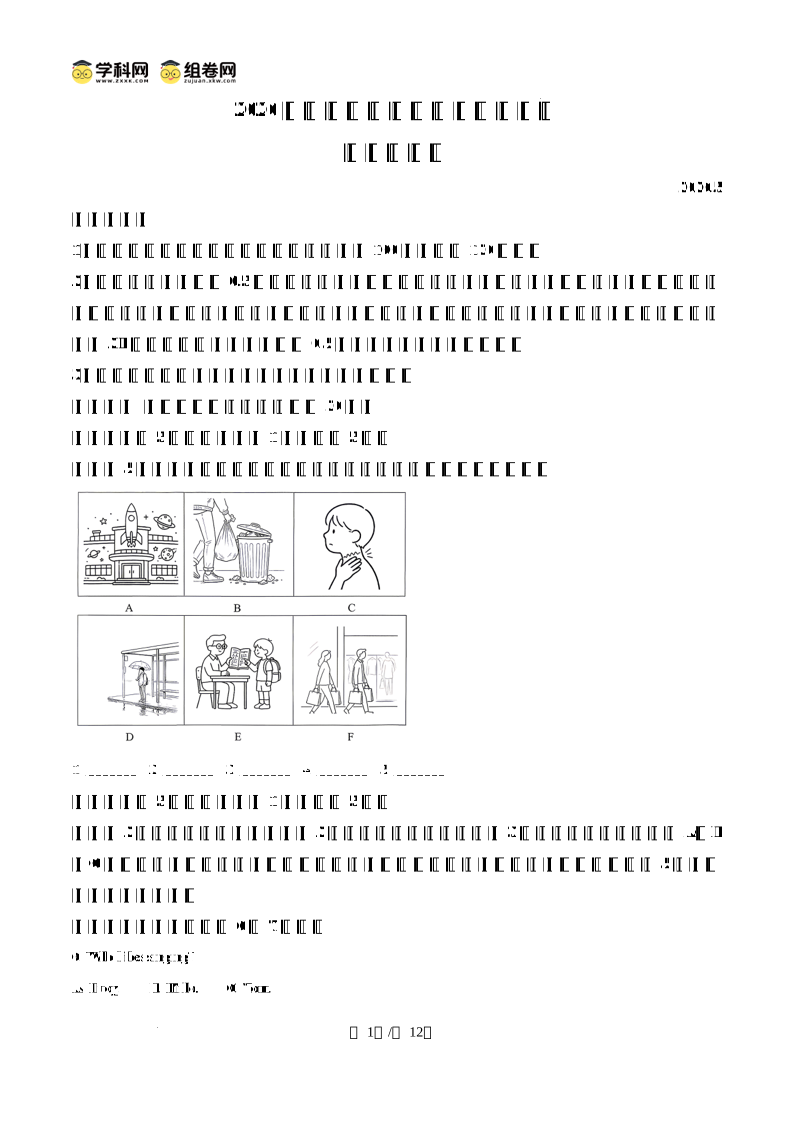
听下面5段对话。选择与对话内容相对应的图片。每段对话读两遍。
1. _______ 2. _______ 3. _______ 4. _______ 5. _______
第二节(共5小题;每小题1分,满分5分)
听下面2段对话。第一段对话后有2个小题,第二段对话后有3个小题,从题中所给的A、B、C三个选项中选出最佳选项。听每段对话前,你将有时间阅读各个小题,每小题5秒钟。每段对话读两遍。
听第一段对话,回答第6和7小题。
6. Who likes singing?
A. Lucy. B. Mike. C. Tom.
7. Which club will the speakers join together?
A. The science club. B. The tennis club. C. The drawing club.
听第二段对话,回答第8至10小题。
8. What day is it today?
A. Friday. B. Saturday. C. Sunday.
9. What will they do?
A. Meet Helen’s grandma. B. Go for a swim. C. Watch a film.
10. Where will they meet?
A. At the cinema. B. At the subway station. C. At the restaurant.
第三节(共5小题;每小题1分,满分5分)
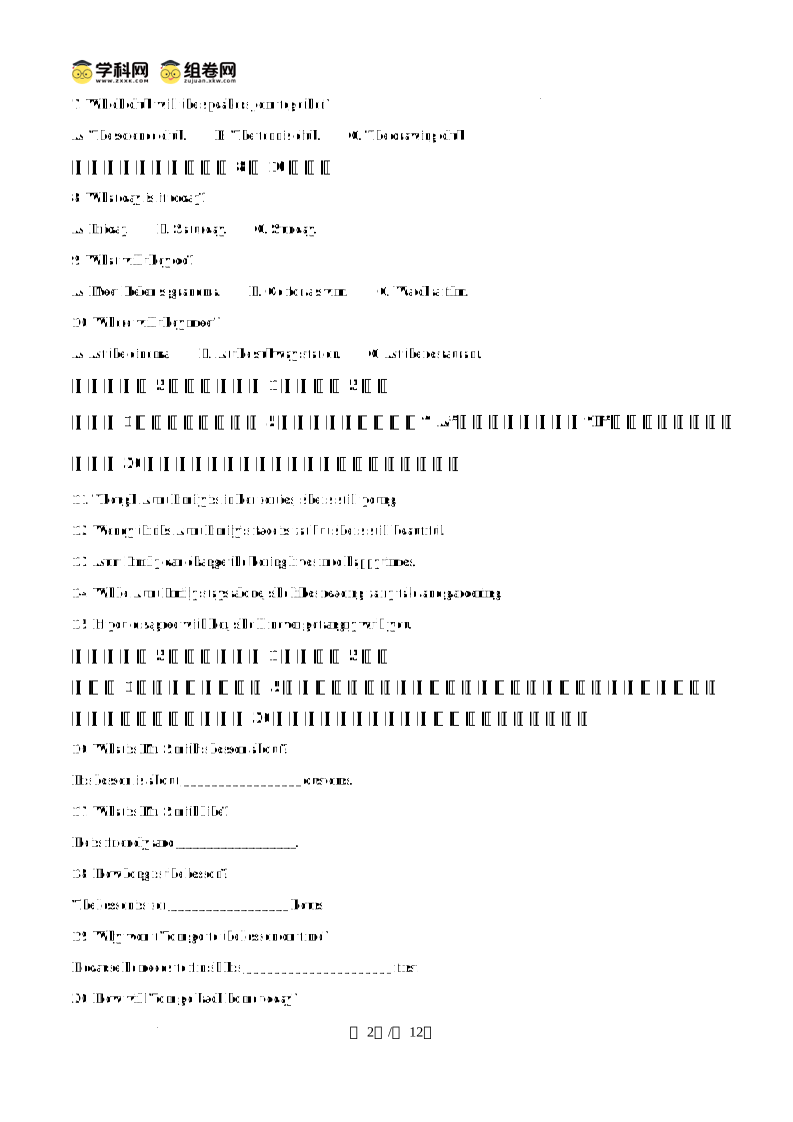
听下面1段独白。独白后有5个判断题,正确的用“A”表示,不正确的用“B”表示。听独白前,你将有30秒钟的时间阅读各个小题。该段独白读两遍。
11. Though Aunt Emily is in her forties, she is still young.
12. Wendy thinks Aunt Emily’s face is fat but she is still beautiful.
13. Aunt Emily can change the boring lives into happy times.
14. While Aunt Emily stays alone, she likes reading fairy tale and gardening.
15. If you disagree with her, she’ll never get angry with you.
第四节(共5小题;每小题1分,满分5分)
听下面1段对话。对话后有5个填空题,根据所听内容在空白处填入适当的单词,每空词数不限。听对话前,你将有30秒钟的时间阅读各个小题。该段对话读三遍。
16. What is Mr. Smith’s lesson about?
His lesson is about _________________ customs.
17. What is Mr. Smith like?
He is friendly and _________________.
18. How long is the lesson?
The lesson is for _________________ hours.
19. Why won’t Tom go to the lesson on time?
Because he needs to finish his _____________________ first.
20. How will Tom go back home today?
Tom will go back home _________________ today.
第二部分 阅读理解(共两节,满分30分)
第一节(共15小题;每小题1.5分,满分22.5分)
阅读下列短文,从每题所给的A、B、C三个选项中选出最佳选项。
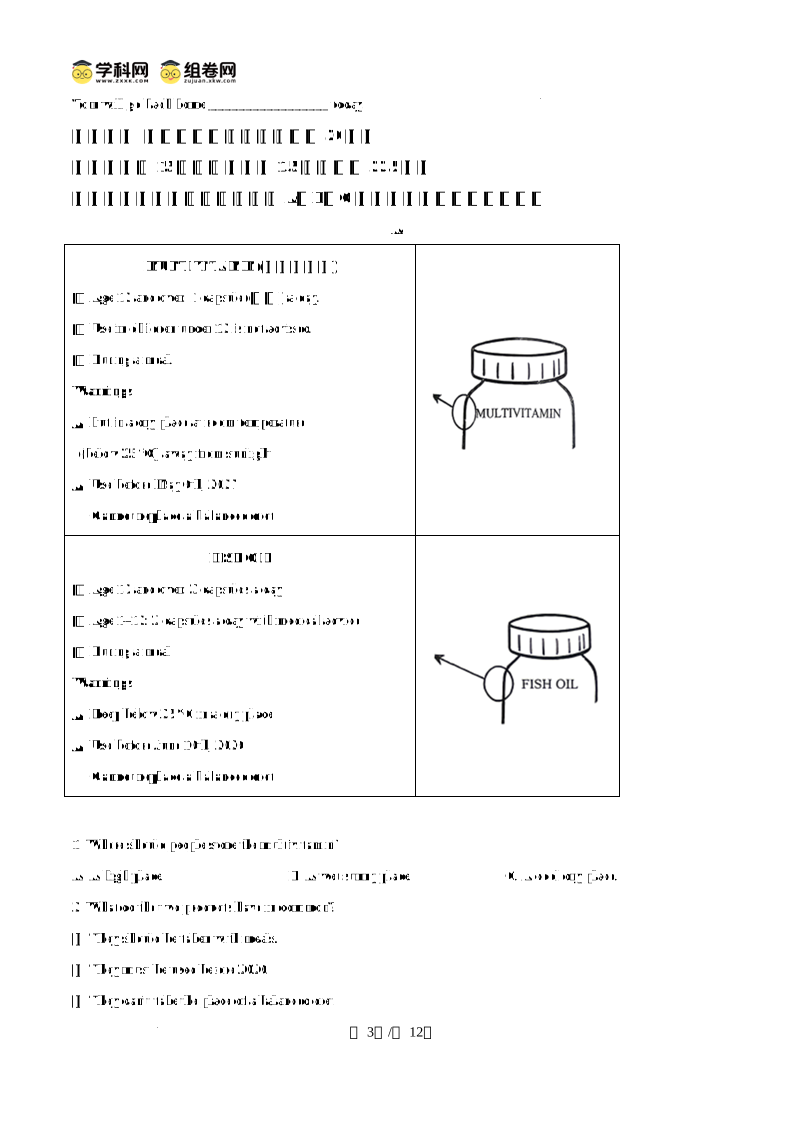
A
MULTIVITAMIN (复合维生素)
□ Age 12 and over: 1 capsule (胶囊) a day.
□ Use in children under 12 is not advised.
□ During a meal.
Warnings:
▲ Put in a dry place at room temperature
(below 25 °C) away from sunlight
▲ Use before May 6th, 2027
※ Cannot replace a balanced diet
FISH OIL
□ Age 13 and over: 3 capsules a day
□ Age 1–12: 2 capsules a day with medical advice
□ During a meal
Warnings:
▲ Keep below 25 °C in a dry place
▲ Use before June 10th, 2026
※ Cannot replace a balanced diet
1. Where should people store the multivitamin?
A. A high place. B. A wet sunny place. C. A cool dry place.
2. What do the two products have in common?
① They should be taken with meals.
② They must be used before 2026.
③ They can’t take the place of a balanced diet.
A. ①② B. ①③ C. ②③
3. Where does the passage probably come from?
A. Diaries. B. Storybooks. C. Instructions.
【答案】1. C 2. B 3. C
【解析】
【导语】本文是两份保健品的使用说明,分别介绍了复合维生素和鱼油的适用年龄、用量、服用时间、储存条件、保质期及注意事项。
【1题详解】
由MULTIVITAMIN部分“Put in a dry place at room temperature (below 25 °C) away from sunlight”可知,复合维生素应储存在阴凉干燥处。
【2题详解】
两者的共同点:①服用时间:两者都写有“During a meal”,正确;②保质期:复合维生素2027年5月6日前服用,鱼油2026年6月10日前服用,因此保质期不同,错误;③两者都写有“Cannot replace a balanced diet”,正确。
【3题详解】
本文介绍保健品的使用方法、用量、储存等,属于产品说明书,最可能来自“Instructions”(说明书)。
B
What’s the hottest social activity this spring? For many young people in China, it’s going foraging with friends.
Going foraging is like a treasure hunt. It is a simple activity with a lot of fun! It does not need expensive tools. With just a pair of scissors, a basket and some bags, you can have fun in nature. You look around in places like forests and lakes to find different kinds of plants that you can eat.
Going foraging is a new way for young people to connect with nature. They can spend many relaxing hours walking around in the wild. “Being in nature takes my stress away and I feel full of energy again,” said Lin Shan, a student from Beijing. To avoid eating “dangerous” plants, they have to do some research on different kinds of plants before foraging. This way, they know more about plants.
Young people also get connected with others by foraging. On the online lifestyle sharing platform, the topic “digging wild vegetables” has over 200 million views. Over 890,000 users share their own “wild vegetable maps” with others. Young people from Beijing, Shanghai and Hangzhou even team up for group adventures.
What’s more, working hard to get plants makes them feel happy and sweet. They can also have fresh and healthy food for dinner at home!
“Going foraging for wild vegetables may be dangerous,” said Shi Jun, a plant biology expert in China. “But for many, the real value of this activity is the joy it brings and the deep connection with nature.”
4. What does the underlined part “going foraging” in Paragraph 1 mean?
A. Enjoying yourself in nature and having a rest.
B. Searching for wild vegetables and digging them.
C. Looking for lakes and forests and protecting them.
5. What does the writer think of going foraging?
A. The writer likes it.
B. The writer thinks it dangerous.
C. The writer doesn’t care about it.
6. What can we infer about foraging from the passage?
A. It helps young people relax and learn about nature at the same time.
B. Young people find it stressful because of the risk of dangerous plants.
C. It is only popular among young people in big cities like Beijing and Shanghai.
7. What’s the best title for this passage?
A. Different Ways of Going Foraging.
B. The Advantages of Going Foraging.
C. Rules to Follow While Going Foraging.
【答案】4. B 5. A 6. A 7. B
【解析】
【导语】本文主要介绍了“野外采食”这一在中国年轻人中流行的社交活动,阐述了其具体形式、流行原因以及专家对此的看法。
【4题详解】
根据第二段“You look around in places like forests and lakes to find different kinds of plants that you can eat.”你在森林和湖泊等地寻找不同种类的可食用植物,以及第四段提到“digging wild vegetables”挖野菜可知,“going foraging”指的是寻找并挖掘野生蔬菜。
【5题详解】
通读全文,作者使用了fun“有趣”、relaxing“放松”、happy and sweet“快乐甜美”等积极词汇来描述这项活动。虽然最后一段引用专家的话提到可能有危险,但强调其真正的价值在于快乐和与自然的连接。由此可见作者对该活动持喜爱和肯定的态度。
【6题详解】
根据第三段“Being in nature takes my stress away”身处自然能带走压力,可知能放松;根据“This way, they know more about plants.”这样他们能了解更多植物,可知能学习自然知识。
【7题详解】
文章第一段引出话题,第二至五段详细介绍了采野菜活动带来的好处如亲近自然、缓解压力、社交连接、获得健康食物等,最后一段总结其价值。整篇文章主要侧重于介绍该活动的优势。
C
Surfing is a kind of water sport. Surfers use a surfboard to catch and ride the breaking waves.
Surfing originated (起源) in the Polynesian islands of the Pacific Ocean as well as West Africa and Peru. When Polynesians first went and lived in Hawaii about 1200 AD, they brought their love of surfing with them. Surfing was more than a sport to the early Hawaiians. It was an important part of their culture.
Hawaiians carved (雕刻) surfboards from the wood of special trees. The first boards were about 3 to 7 meters long and weighed more than 50 kilos. After World War II, plastic foam (泡沫) boards appeared and the shape improved. Today’s surfboard is about 1.5 to 2.7 meters long and 11 to 26 kilos. It is light and flat, and a tail fin is fixed to the downside. Surfboards come in many different styles, including shortboards, longboards, and funboards.
Surfing was brought to the Western world in the early 20th century. In recent years, surfing has become popular among Chinese young sport lovers. China set up its national surfing team in 2018. In March 2024, a 15-year-old girl called Yang Siqi, from Sichuan Province, became China’s first Olympic surfer.
Surfing is not only about riding waves but about connecting with the ocean and having fun. It’s a sport that combines physical strength, balance and a love for the water. So, if you ever get the chance, give it a try!
8. Where did surfing start?
A. Only in Hawaii.
B. In Western countries.
C. In some places including Peru.
9. Which is TRUE about modern surfboards?
A. They are shorter than early ones.
B. They are all made of wood.
C. They are heavier than early ones.
10. What is the main idea of Paragraph 4?
A. The history of surfboards.
B. Surfing’s development in China.
C. How to become an Olympic surfer.
11. What’s the purpose of the last paragraph?
A. To tell us surfing is difficult to learn.
B. To teach us how to keep balance in life.
C. To show the meaning of surfing and call on us to try it.
【答案】8. C 9. A 10. B 11. C
【解析】
【导语】本文是一篇说明文,主要介绍了冲浪运动的起源、冲浪板的发展演变、冲浪在西方及中国的传播情况,以及冲浪运动的意义。
【8题详解】
根据原文第二段“Surfing originated in the Polynesian islands of the Pacific Ocean as well as West Africa and Peru.”可知,冲浪起源于包括秘鲁在内的一些地方。
【9题详解】
根据原文第三段“The first boards were about 3 to 7 meters long... Today’s surfboard is about 1.5 to 2.7 meters long...”可知,现代冲浪板比早期的冲浪板更短。
【10题详解】
根据原文第四段“In recent years, surfing has become popular among Chinese young sport lovers. China set up its national surfing team in 2018. In March 2024, a 15-year-old girl called Yang Siqi... became China’s first Olympic surfer.”可知,第四段主要介绍了冲浪运动在中国的发展情况。
【11题详解】
根据原文最后一段“Surfing is not only about riding waves but about connecting with the ocean and having fun. It’s a sport that combines physical strength, balance and a love for the water. So, if you ever get the chance, give it a try!”可知,最后一段的目的是说明冲浪运动的意义,并呼吁大家有机会尝试一下。
D
Recently, researchers in China have shown a new type of soft, lightweight humanoid robot (人形机器人) designed to be a safe helper that can suit different situations in future homes.
Inspired by “growable” human bones, the robot, named GrowHR, is 1.36 metres tall but weighs only 4.5 kg, which is lighter than a large house cat. A six-year-old child can easily lift it. This light weight makes it much safer to use around kids and the elderly at home.
Being very light, together with a body made of flexible (灵活的), air-filled structures, makes it safer than today’s heavy robots. This design allows us to hug or lift it without hurting. Also, the robot is small and easy to carry, and can be packed into a small box if we don’t need it.
Using air pressure, GrowHR can become smaller when it needs to pass through narrow (狭窄的) spaces. This is very important for moving around in a home with lots of furniture. This robot can also change its shape to walk through a low hole that is only 36% of its own height and can fit through a narrow space that is just 61% of its own width.
The robot’s special design lets it do some other cool things. For example, it can stay on water and swim. This means it could be used to get back things from a pool. Its light weight also means it can be carried by a drone (无人机) to a location 5.5 km away so that it could be used for food delivery or remote-assistance (远程协助) in the future.
The research team says that in the future, they will make the robot even better and become a good helper for every family. They will give it more freedom to move in different ways and help it work more independently.
12. What do we know about GrowHR?
A. It is over 1.5 metres tall.
B. A six-year-old kid can lift it easily.
C. It is heavier than a big house cat.
13. What makes GrowHR safer?
A. Its light and flexible body.
B. Its flexible mind.
C. Its short height.
14. What does the underlined word “This” in Paragraph 4 refer to?
A. The robot moving around outside the house freely.
B. The robot changing its height to grow like human bones.
C. GrowHR becoming smaller to go through narrow spaces.
15. What does the writer want to tell us?
A. How people use drones in daily life.
B. The new advantages of GrowHR robot.
C. The importance of protecting home furniture.
【答案】12. B 13. A 14. C 15. B
【解析】
【导语】本文是一篇说明文,介绍了一种新型轻量人形机器人GrowHR的特点:身高1.36米、重仅4.5公斤,比大猫还轻,六岁儿童可轻松举起。其轻质、柔性结构使其更安全,可通过气压缩小穿过狭窄空间,能游泳、被无人机携带,未来将更独立,成为家庭好帮手。
【12题详解】
根据文章第二段第二句“Inspired by ‘growable’ human bones, the robot, named GrowHR, is 1.36 metres tall but weighs only 4.5 kg... A six-year-old child can easily lift it.”可知,机器人身高1.36米,排除 A,比大猫轻,排除 C,六岁孩子可以轻松举起它。
【13题详解】
根据文章第三段第一句“Being very light, together with a body made of flexible, air-filled structures, makes it safer than today’s heavy robots.”可知,使其更安全的原因是重量轻以及身体由灵活充气结构制成。
【14题详解】
根据文章第四段第一句“Using air pressure, GrowHR can become smaller when it needs to pass through narrow spaces.”以及紧接着的第二句“This is very important...”可知,代词“This”指代的是前一句提到的内容,即机器人为了通过狭窄空间而变小这一能力。
【15题详解】
通读全文可知,文章主要介绍了GrowHR机器人的研发背景、轻便安全的特点、变形能力、特殊功能(游泳、无人机携带)以及未来展望。整篇文章旨在展示该机器人的新优势和特点。
第二节(共5小题;每小题1.5分,满分7.5分)
阅读下面短文,从短文后的选项中选出可以填入空白处的最佳选项。选项中有一项为多余选项。
There are many cultural and historic sites (人文古迹) and natural scenic spots (景点) in textbooks. Children are always interested in them, and they want to go there in person. ____16____ This kind of tour allows parents and children to deepen their understanding of the scenes mentioned in the textbooks.
Many families have taken part in the textbook tour. ____17____ They can understand the cultural background and experience the historical period in the textbooks. For example, in Fuzhou, parents and children can watch lively shows and visit the museum to learn more about the famous writer Tang Xianzu in the Ming Dynasty. In addition, they can also learn about the local customs. ____18____ The textbook tour is a connection between “reading thousands of books” and “traveling thousands of miles.” ____19____ Besides, the textbook tour further increases children’s pride in the motherland. It also helps them learn about the excellent traditional culture of China.
The rise of the textbook tour is a great chance for the connection between culture and tourism. For example, the Wenchuan government holds some activities on the birthday of Yu the Great. ____20____ This spreads local culture and provides an unforgettable experience for tourists. As the textbook tour becomes a new fashion, the government should offer warm services to achieve a win-win situation for both scenic spots and tourists.
A. Learning something new will make their journey colorful.
B. That’s why the textbook tour has become popular these days.
C. They follow the stories in the textbooks and choose places to travel.
D. Cultural workers teach “Yu the Great culture” to tourists in these activities.
E. Through the practice, children can have a deeper understanding of the textbooks.
F. Nowadays, textbook tours are becoming more and more popular.
【答案】16. B 17. C 18. A 19. E 20. D
【解析】
【导语】本文是一篇说明文,主要介绍了教科书旅行的兴起原因、具体形式、给孩子们带来的好处以及文化与旅游结合的意义。
【16题详解】
前文提到课本里的人文古迹和自然景点吸引孩子们亲身前往,后文介绍这类旅行能加深亲子对课本场景的理解。B选项“That’s why the textbook tour has become popular these days.”与前后文形成因果关系,点明了“课本游”兴起的原因。
【17题详解】
前文指出很多家庭参与课本游,后文说明人们能了解课本中的文化背景与历史时代。C选项“They follow the stories in the textbooks and choose places to travel.”具体说明家庭参与课本游的方式,衔接自然。
【18题详解】
前文举例人们在旅行中了解名人、当地风俗,后文表示课本游连接了“读万卷书”与“行万里路”。A选项“Learning something new will make their journey colorful.”总结旅途的收获,承上启下。
【19题详解】
前文阐述课本游连接读书与行路,后文补充它能增强孩子民族自豪感、了解中华优秀传统文化。E选项“Through the practice, children can have a deeper understanding of the textbooks.”继续介绍课本游的好处,契合上下文。
【20题详解】
前文举例汶川政府在大禹诞辰举办相关活动,后文说明此举传播了地域文化、给游客留下难忘体验。D选项“Cultural workers teach ‘Dayu culture’ to tourists in these activities.”具体介绍活动内容,与前后文对应。
第三部分 语言运用(共三节,满分20分)
第一节(共6小题;每小题1分,满分6分)
阅读下面短文,从每题所给的A、B、C三个选项中,选出可以填入空白处的最佳选项。
Probably you grew up with a stop-snacking mom. That is a mom who tells her kids that snacks are bad. They will make you fat. They will hurt your ____21____.
Mom is right about many things, but not all snacks. There is a healthy way to snack. In fact, ____22____ properly can keep you healthier. Good snacks also stop you from eating too much at dinner.
The ____23____ rule of healthy snacking is to make snacks by yourself. Stay away from store-bought wrapped (包装) snacks, for they are high in sugar and salt.
The second rule about snacking is to eat things that take longer for your body to process. Things like bread and crackers are processed ____24____ by your body. Have some cheese or yogurt to go along with some bread, and you’ve got a winning snack.
The third rule is to drink enough water. When you are busy, you may easily mistake being tired for being hungry. Sometimes you are not really ____25____—your body just needs water. Drink some water ____26____ eating another snack.
Having one or two snack breaks a day helps you eat less at meals. Eating less is a good way to start losing weight. Sorry about that, Mom.
21. A. head B. eyes C. teeth
22. A. drinking B. snacking C. cooking
23. A. first B. once C. one
24. A. slowly B. quietly C. quickly
25. A. thirsty B. hungry C. sleepy
26. A. before B. after C. while
【答案】21. C 22. B 23. A 24. C 25. B 26. A
【解析】
【导语】本文打破了“零食有害”的刻板印象,介绍了健康吃零食的三条实用规则,帮助读者在享受零食的同时保持健康。
【21题详解】
句意:它们(零食)会伤害你的牙齿。
结合生活常识,高糖零食容易损害牙齿健康,teeth符合语境,head“头”、eyes“眼睛”均不符。
【22题详解】
句意:事实上,正确地吃零食可以让你更健康。
根据前文“There is a healthy way to snack.”,此处指吃零食这件事本身,snacking符合语境,drinking“喝”、cooking“做饭”均不符。
【23题详解】
句意:健康吃零食的第一条规则是自己制作零食。
根据后文“The second rule”,此处是第一条规则,first符合语境,once“一次”、one“一个”均不符。
【24题详解】
句意:像面包和饼干这类食物,身体会很快消化它们。
根据前文“eat things that take longer for your body to process”,作者建议吃消化慢的食物,因此面包、饼干这类食物是被身体快速处理的,quickly符合语境,slowly“缓慢地”、quietly“安静地”均不符。
【25题详解】
句意:有时候你并不是真的饿——你的身体只是需要水。
根据前文“mistake being tired for being hungry”,人们容易把疲劳误以为饥饿,因此此处指不是真的饿,hungry符合语境,thirsty“口渴的”、sleepy“困倦的”均不符。
【26题详解】
句意:在吃另一份零食之前,先喝些水。
结合语境,为了避免把口渴当成饥饿,应该先喝水再吃零食,before符合语境,after“在……之后”、while“当……时”均不符。
第二节(共6小题;每小题1分,满分6分)
阅读下面短文,从方框中的选项中选出可以填入空白处的最佳选项。选项中有一项为多余选项。
A. praised B. about C. him D. known for E. while F. stopped G. instead of
Long ago in ancient China, there was a young man named Xue Tan who loved singing. He became a student of Qin Qing, a great musician ____27____ his magical voice. After practicing for a few months, Xue Tan became proud. “I’ve learned everything!” he told his teacher. “I’m ready to leave and sing alone!”
Qin Qing smiled and held a goodbye party for him on a quiet hillside ____28____ getting angry. As the sun set, Qin Qing began to sing. His voice started softly, like a gentle breeze (微风). Then it grew louder and stronger, shaking the trees around them. The clouds in the pink evening sky seemed to freeze in place. Birds ____29____ flying to listen, and even the wind went silent.
Xue Tan’s face turned red with shame. He realized his teacher’s singing was like a roaring ocean, ____30____ his own voice was just a tiny stream (溪流). He fell to his knees and cried, “I was wrong to think I knew everything! Please let me keep learning from you.”
Qin Qing kindly helped ____31____ up. “True skill isn’t about showing off,” he said. “It’s about listening to the world, to your heart, and to those who came before you.”
From that day on, Xue Tan decided to practice hard. He imitated (模仿) the rhythm of rainstorms and learned melodies from bird songs. Years later, when people ____32____ his talent, he always said, “I’m still just Qin Qing’s student.”
【答案】27. D 28. G
29. F 30. E
31. C 32. A
【解析】
【导语】本文讲述了薛谭向秦青学唱歌,因骄傲自满想离开,秦青用歌声点醒他,最终薛谭虚心求教的故事。
【27题详解】
句意:他成为了伟大音乐家秦青的学生,秦青以他神奇的嗓音而闻名。此处修饰秦青,需用短语表示“因……而闻名”;备选词known for符合语境,契合后文“magical voice”的描述。
【28题详解】
句意:秦青微笑着,在一个安静的山坡上为他举办了告别派对,而不是生气。此处表示“而不是”,前后为对比关系;备选词instead of符合语境,契合秦青没有生气反而举办派对的行为。
【29题详解】
句意:鸟儿停止了飞翔来聆听,甚至风也安静了下来。句子为一般过去时,需填动词过去式;备选词stopped表示“停止”,契合后文“listening”的语境,构成stop doing sth.结构。
【30题详解】
句意:他意识到老师的歌声就像咆哮的海洋,而他自己的声音只是一条小小的溪流。此处表示对比,需用连词;备选词while表示“然而”,用于对比两者差异,符合语境。
【31题详解】
句意:秦青亲切地扶起了他。固定搭配help sb. up表示“扶起某人”,此处需填代词宾格;备选词him指代薛谭,符合语法和语境。
【32题详解】
句意:多年后,当人们称赞他的才华时,他总是说:“我仍然只是秦青的学生。”句子为一般过去时,需填动词过去式;备选词praised表示“称赞”,契合后文“his talent”的语境。
第三节(共8小题;每小题1分,满分8分)
阅读下面短文,在空白处填入一个适当的单词或括号内单词的正确形式。
Some students from Hunan University and Beijing tried to make old Chinese dishes. They used a 2,000-year-old book found in an ancient tomb (坟墓). It ____33____ (tell) how people cooked and what ingredients (食材) they used long ago. Some students ____34____ study history and food are in the group. They wanted to bring old recipes (食谱) back to life.
The work was hard, because the old pages were broken so it was hard ____35____ (read). Some old Chinese words mean different things now. Cooking ways and tools from the past were very different ____36____ today’s. For example, people used stoves with wood and special clay pots. These are not easy to find now. To fix this, the team used old tools like wooden steamers (蒸笼). You can still see these in some Chinese villages.
One big project was cooking rice the way people used in the Han Dynasty. A cook ____37____ (name) He Jundan helped them to pick rice like the kind grown 2,000 years ago. They followed the steps in the book. The rice turned out to be much ____38____ (soft). It has less sugar. It is good for healthy eating today.
Professor Stil Jun led the project. He said they could not copy the old ways ____39____ (perfect). But so far this project ____40____ (teach) them about ancient cooking and showed how old knowledge can help modern needs. The students hope their work will give ideas for new dishes in restaurants in the future.
【答案】33. tells
34. who##that
35. to read
36. from 37. named
38. softer 39. perfectly
40. has taught
【解析】
【导语】本文讲述了湖南大学及北京的学生团队,依据古墓中出土的两千年前古籍复原中国古代菜肴的故事,展现了古代烹饪知识与现代需求的结合。
【33题详解】
句意:它讲述了很久以前人们如何烹饪、使用哪些食材。句子主语It指代前文“2,000-year-old book”,为第三人称单数;全文以一般现在时介绍书籍内容,故谓语动词用一般现在时的第三人称单数形式。
【34题详解】
句意:团队里有一些学习历史和食物的学生。先行词为students(人),定语从句中缺少主语,需用关系代词who/that引导,在从句中作主语。
【35题详解】
句意:这项工作很困难,因为旧书页破损,所以很难阅读。“It is/was+形容词+to do sth.”表示“做某事是……的”,此处不定式作真正主语。
【36题详解】
句意:过去的烹饪方法和工具与现在的非常不同。“be different from”,表示“与……不同”。
【37题详解】
句意:一位名叫何俊丹的厨师帮助他们挑选和2000年前种植的品种相似的大米。过去分词作后置定语,修饰a cook,表示“被叫做……的”。
【38题详解】
句意:煮出来的米饭要软得多。much可修饰形容词比较级,表示“……得多”,此处填soft的比较级。
【39题详解】
句意:他说他们无法完美地复刻古法。此处修饰动词copy,需用perfect的副词形式。
【40题详解】
句意:但到目前为止,这个项目已经教会了他们关于古代烹饪的知识,并展示了古老知识如何满足现代需求。时间状语so far是现在完成时的标志,主语为第三人称单数。
第四部分 阅读表达(共5小题;每小题2分,满分10分)
阅读下面短文,按照题目要求用英语回答问题。
Every day, we hear sounds all around us—some soft, some loud. But do you know that loud sounds can harm your hearing?
Sounds are measured (测量) in decibels (分贝). Look at the chart—some sounds are safe for our ears, but when a sound goes over 85 decibels, it can be harmful to our hearing. To reduce the risk of hearing loss, we shall pay attention to the loudness of the noise, the distance we are to it and how long we listen to it.
Noise levels can be measured by sound-level meters (噪声计), but you probably don’t always carry one with you. So how can you tell whether noises are too loud or not? Ask yourself: Do you have to raise your voice to be heard? Do you find it hard to hear someone about a meter away from you? Do the noises make your ears hurt or ring for some time? If your answer is YES to any of these, that probably means the noises are too loud.
Headphones are especially tricky. Many people enjoy using them, but they often listen to loud music for too long, or keep the volume (音量) so high that even other people can hear the noise from their headphones. These can lead to hearing loss.
Your hearing is a gift. You need it for learning, communicating, and enjoying the world. Once your hearing is harmed, it may never come back.
41. How are sounds measured?
____________________________________________________________
42. According to the chart, what sounds can harm your hearing?
____________________________________________________________
43. How can you know if the noises are too loud? (Give 2 examples.)
____________________________________________________________
44. Why is hearing important?
____________________________________________________________
45. What do you plan to do to protect your hearing?
____________________________________________________________
【答案】41. In decibels.
42. TV and headphones, rock concerts, and fireworks.
43. You have to raise your voice to be heard./You find it hard to hear someone one meter away.
44. For learning, communicating, and enjoying the world.
45. Use headphones at a low volume.
【解析】
【导语】本文主要介绍了声音的测量单位(分贝)、超过85分贝的声音会损害听力、如何判断噪音是否过大、耳机使用的隐患,以及听力的重要性和保护听力的必要性。
【41题详解】
第二段明确指出“Sounds are measured in decibels”,声音是用分贝来测量的,这是原文直接信息。
【42题详解】
第二段指出“when a sound goes over 85 decibels, it can be harmful to our hearing”,超过85分贝的声音会损害听力,结合图表可知,电视和耳机(100分贝)、摇滚音乐会(105分贝)和烟花爆竹(140分贝)的声音都超过了85分贝,可推知结论这些声音都可能有损我们的听力。直接提取图表信息即可。
【43题详解】
第三段给出了判断噪音是否过大的三个方法,题目要求给出两个例子,因此任选其中两个即可,如“You have to raise your voice to be heard”和“You find it hard to hear someone one meter away”,均为原文具体表述。
【44题详解】
最后一段明确指出“You need it for learning, communicating, and enjoying the world”,听力对学习、交流和享受世界很重要,直接提取原文信息。
【45题详解】
开放题,答案不唯一。需结合文中提到的保护听力的建议(如注意音量、距离、时长,尤其是耳机使用时不要开太大音量等)来作答,示例答案“Use headphones at a low volume”即来源于第四段对耳机使用隐患的描述,是合理的回答。
第五部分 补全对话(共4小题;第69小题2分,其余每小题1分,满分5分)
阅读下面对话,在每个空白处填入一个适当的句子,使对话完整,合乎情境。
(Andy is an exchange student from the UK. He and Binbin are in the Nature Club.)
Andy: Hi, Binbin. I’m going to do a project about the Qinling Mountains. _________46_________?
Binbin: Sure. What do you want to know?
Andy: Let me see. Where do they lie?
Binbin: They’re in Shaanxi Province, the center of China. The mountains are more than 2,000 kilometers long, running from east to west and dividing northern and southern China. On average, they rise about 2,000 metres above sea level. The highest mountain is Mount Taibai.
Andy: _________47_________?
Binbin: It’s more than 3,700 meters high.
Andy: I guess there must be many animals in the Qinling Mountains. Are there any valuable animals?
Binbin: _________48_________. Many valuable animals live there, like pandas, golden monkeys and so on. They are home to many kinds of wildlife. What do you think of them?
Andy: __________49__________.
Binbin: I quite agree with you. That’s why many people say the Qinling Mountains are the lungs (肺) of Shaanxi Province. So we have worked a lot to protect the green mountains.
【答案】46.
Can you help me
47.
How high is it
48.
Yes, there are
49.
I think they are very important
【解析】
【导语】本文是自然俱乐部里Andy和彬彬的对话。Andy正在做关于秦岭的课题研究,他向彬彬咨询秦岭的地理位置、海拔、珍稀动物等相关信息,二人还一同谈论了秦岭的生态价值与保护意义。
【46题详解】
根据下文Binbin的回答“Sure. What do you want to know?”可知,Andy此处是在请求帮助或询问能否提供相关信息。因此填入表示请求帮助或询问信息的句子,一般疑问句“Can you help me”符合语境。
【47题详解】
根据下文Binbin的回答“It’s more than 3,700 meters high.”可知,Andy此处是在询问太白山的高度。询问高度常用句型为“How high is it”。
【48题详解】
根据上文Andy的一般疑问句“Are there any valuable animals?”以及下文Binbin列举了熊猫、金丝猴等珍贵动物可知,此处应作肯定回答。肯定回答“Yes, there are”符合语境。
【49题详解】
根据上文Binbin询问“What do you think of them?”以及下文Binbin回答“I quite agree with you.”并提到保护青山可知,Andy此处表达了关于动物或环境重要性的正面观点。“I think they are very important”表达观点,符合语境。
第六部分 书面表达(满分15分)
50. 好习惯是通往成功的阶梯,能让我们在点滴积累中提升自我,遇见更好的自己。近期,你校英语社团将举办以“Small Habits, Big Progress”为主题的分享会,请你写一篇英语发言稿,与同学们分享你的想法。
提示:
1. What good habits have you developed?
2. How do these good habits change you and help you grow?
3. What will you do to keep these habits and make yourself better in the future?
要求:
1.词数不少于80,开头已给出,不计入总词数;
2.文中须包含以上提示信息,可适当发挥;
3.文中请不要出现任何真实人名、校名及其它相关信息,否则不予评分。
Small Habits, Big Progress
Dear classmates,
__________________________________________________________________________________________________________________________________________________________________________________________________________________________________________________________________________________________________________________________________________________________________________________________________________________________________________________________________________________________________________________________________________________________________________________________________________________________________________________________________
【答案】
例文 Small Habits, Big Progress
Dear classmates, I have developed two good habits: getting up early and reading every day. These habits help me manage time better and learn new things. Reading makes me more knowledgeable, while early rising keeps me energetic.
These small habits bring big changes. I become more organized and confident. They teach me persistence and improve my study efficiency.
To keep these habits, I will set weekly goals and find a habit partner. I believe small steps lead to great progress. Let’s grow together through good habits!
【解析】
【详解】[第一步:审题立意]
确定文体:发言稿,以一般现在时为主
明确要点:介绍自身两个好习惯;说明好习惯带来的积极改变;讲述坚持习惯的方法并发出倡议
确定人称:第一人称I
注意事项:语句通顺,逻辑清晰,表意完整,词数不少于80
[第二步:构思布局]
三段式结构:
开头段:点明自己养成早起、每日阅读两个好习惯,并简述初步益处
主体段:阐述习惯带来的个人改变与提升
结尾段:说明坚持习惯的办法,点明道理并号召大家共同进步
[第三步:要点展开] 要点一:介绍好习惯及作用
get up early and read every day/go to bed early/do sports every day
manage time better/learn new things/keep healthy
makes me more knowledgeable/keeps me energetic/keep in a good mood
要点二:习惯带来的改变
become organized and confident/get good grades
teach me persistence/improve my study efficiency/develop good habits
要点三:坚持方法与倡议
set weekly goals/find a habit partner/believe in yourself
grow together/succeed
第1页/共1页
学科网(北京)股份有限公司
$
2026年初中学业水平考试模拟试题
英语试题卷
2026.5
注意事项:
1.本试卷分试题卷和答题卡两部分。总分100分,时长120分钟。
2.答卷前考生务必用0.5毫米黑色墨水签字笔将自己的姓名、准考证号、座号填写在试题卷和答题卡规定的位置。考生须在答题卡规定的区域内答题,在试题卷上答题不得分。选择题须用2B铅笔填涂,非选择题须用0.5毫米黑色墨水签字笔书写。
3.考试结束后,将本试题卷和答题卡一并交回。
第一部分 听力测试(共四节,满分20分)
第一节(共5小题;每小题1分,满分5分)
听下面5段对话。选择与对话内容相对应的图片。每段对话读两遍。
1. _______ 2. _______ 3. _______ 4. _______ 5. _______
第二节(共5小题;每小题1分,满分5分)
听下面2段对话。第一段对话后有2个小题,第二段对话后有3个小题,从题中所给的A、B、C三个选项中选出最佳选项。听每段对话前,你将有时间阅读各个小题,每小题5秒钟。每段对话读两遍。
听第一段对话,回答第6和7小题。
6. Who likes singing?
A. Lucy. B. Mike. C. Tom.
7. Which club will the speakers join together?
A. The science club. B. The tennis club. C. The drawing club.
听第二段对话,回答第8至10小题。
8. What day is it today?
A. Friday. B. Saturday. C. Sunday.
9. What will they do?
A. Meet Helen’s grandma. B. Go for a swim. C. Watch a film.
10. Where will they meet?
A. At the cinema. B. At the subway station. C. At the restaurant.
第三节(共5小题;每小题1分,满分5分)
听下面1段独白。独白后有5个判断题,正确的用“A”表示,不正确的用“B”表示。听独白前,你将有30秒钟的时间阅读各个小题。该段独白读两遍。
11. Though Aunt Emily is in her forties, she is still young.
12. Wendy thinks Aunt Emily’s face is fat but she is still beautiful.
13. Aunt Emily can change the boring lives into happy times.
14. While Aunt Emily stays alone, she likes reading fairy tale and gardening.
15. If you disagree with her, she’ll never get angry with you.
第四节(共5小题;每小题1分,满分5分)
听下面1段对话。对话后有5个填空题,根据所听内容在空白处填入适当的单词,每空词数不限。听对话前,你将有30秒钟的时间阅读各个小题。该段对话读三遍。
16. What is Mr. Smith’s lesson about?
His lesson is about _________________ customs.
17. What is Mr. Smith like?
He is friendly and _________________.
18. How long is the lesson?
The lesson is for _________________ hours.
19. Why won’t Tom go to the lesson on time?
Because he needs to finish his _____________________ first.
20. How will Tom go back home today?
Tom will go back home _________________ today.
第二部分 阅读理解(共两节,满分30分)
第一节(共15小题;每小题1.5分,满分22.5分)
阅读下列短文,从每题所给的A、B、C三个选项中选出最佳选项。
A
MULTIVITAMIN (复合维生素)
□ Age 12 and over: 1 capsule (胶囊) a day.
□ Use in children under 12 is not advised.
□ During a meal.
Warnings:
▲ Put in a dry place at room temperature
(below 25 °C) away from sunlight
▲ Use before May 6th, 2027
※ Cannot replace a balanced diet
FISH OIL
□ Age 13 and over: 3 capsules a day
□ Age 1–12: 2 capsules a day with medical advice
□ During a meal
Warnings:
▲ Keep below 25 °C in a dry place
▲ Use before June 10th, 2026
※ Cannot replace a balanced diet
1. Where should people store the multivitamin?
A. A high place. B. A wet sunny place. C. A cool dry place.
2. What do the two products have in common?
① They should be taken with meals.
② They must be used before 2026.
③ They can’t take the place of a balanced diet.
A. ①② B. ①③ C. ②③
3. Where does the passage probably come from?
A. Diaries. B. Storybooks. C. Instructions.
B
What’s the hottest social activity this spring? For many young people in China, it’s going foraging with friends.
Going foraging is like a treasure hunt. It is a simple activity with a lot of fun! It does not need expensive tools. With just a pair of scissors, a basket and some bags, you can have fun in nature. You look around in places like forests and lakes to find different kinds of plants that you can eat.
Going foraging is a new way for young people to connect with nature. They can spend many relaxing hours walking around in the wild. “Being in nature takes my stress away and I feel full of energy again,” said Lin Shan, a student from Beijing. To avoid eating “dangerous” plants, they have to do some research on different kinds of plants before foraging. This way, they know more about plants.
Young people also get connected with others by foraging. On the online lifestyle sharing platform, the topic “digging wild vegetables” has over 200 million views. Over 890,000 users share their own “wild vegetable maps” with others. Young people from Beijing, Shanghai and Hangzhou even team up for group adventures.
What’s more, working hard to get plants makes them feel happy and sweet. They can also have fresh and healthy food for dinner at home!
“Going foraging for wild vegetables may be dangerous,” said Shi Jun, a plant biology expert in China. “But for many, the real value of this activity is the joy it brings and the deep connection with nature.”
4. What does the underlined part “going foraging” in Paragraph 1 mean?
A. Enjoying yourself in nature and having a rest.
B. Searching for wild vegetables and digging them.
C. Looking for lakes and forests and protecting them.
5. What does the writer think of going foraging?
A. The writer likes it.
B. The writer thinks it dangerous.
C. The writer doesn’t care about it.
6. What can we infer about foraging from the passage?
A. It helps young people relax and learn about nature at the same time.
B. Young people find it stressful because of the risk of dangerous plants.
C. It is only popular among young people in big cities like Beijing and Shanghai.
7. What’s the best title for this passage?
A. Different Ways of Going Foraging.
B. The Advantages of Going Foraging.
C. Rules to Follow While Going Foraging.
C
Surfing is a kind of water sport. Surfers use a surfboard to catch and ride the breaking waves.
Surfing originated (起源) in the Polynesian islands of the Pacific Ocean as well as West Africa and Peru. When Polynesians first went and lived in Hawaii about 1200 AD, they brought their love of surfing with them. Surfing was more than a sport to the early Hawaiians. It was an important part of their culture.
Hawaiians carved (雕刻) surfboards from the wood of special trees. The first boards were about 3 to 7 meters long and weighed more than 50 kilos. After World War II, plastic foam (泡沫) boards appeared and the shape improved. Today’s surfboard is about 1.5 to 2.7 meters long and 11 to 26 kilos. It is light and flat, and a tail fin is fixed to the downside. Surfboards come in many different styles, including shortboards, longboards, and funboards.
Surfing was brought to the Western world in the early 20th century. In recent years, surfing has become popular among Chinese young sport lovers. China set up its national surfing team in 2018. In March 2024, a 15-year-old girl called Yang Siqi, from Sichuan Province, became China’s first Olympic surfer.
Surfing is not only about riding waves but about connecting with the ocean and having fun. It’s a sport that combines physical strength, balance and a love for the water. So, if you ever get the chance, give it a try!
8. Where did surfing start?
A. Only in Hawaii.
B. In Western countries.
C. In some places including Peru.
9. Which is TRUE about modern surfboards?
A. They are shorter than early ones.
B. They are all made of wood.
C. They are heavier than early ones.
10. What is the main idea of Paragraph 4?
A. The history of surfboards.
B. Surfing’s development in China.
C. How to become an Olympic surfer.
11. What’s the purpose of the last paragraph?
A. To tell us surfing is difficult to learn.
B. To teach us how to keep balance in life.
C. To show the meaning of surfing and call on us to try it.
D
Recently, researchers in China have shown a new type of soft, lightweight humanoid robot (人形机器人) designed to be a safe helper that can suit different situations in future homes.
Inspired by “growable” human bones, the robot, named GrowHR, is 1.36 metres tall but weighs only 4.5 kg, which is lighter than a large house cat. A six-year-old child can easily lift it. This light weight makes it much safer to use around kids and the elderly at home.
Being very light, together with a body made of flexible (灵活的), air-filled structures, makes it safer than today’s heavy robots. This design allows us to hug or lift it without hurting. Also, the robot is small and easy to carry, and can be packed into a small box if we don’t need it.
Using air pressure, GrowHR can become smaller when it needs to pass through narrow (狭窄的) spaces. This is very important for moving around in a home with lots of furniture. This robot can also change its shape to walk through a low hole that is only 36% of its own height and can fit through a narrow space that is just 61% of its own width.
The robot’s special design lets it do some other cool things. For example, it can stay on water and swim. This means it could be used to get back things from a pool. Its light weight also means it can be carried by a drone (无人机) to a location 5.5 km away so that it could be used for food delivery or remote-assistance (远程协助) in the future.
The research team says that in the future, they will make the robot even better and become a good helper for every family. They will give it more freedom to move in different ways and help it work more independently.
12. What do we know about GrowHR?
A. It is over 1.5 metres tall.
B. A six-year-old kid can lift it easily.
C. It is heavier than a big house cat.
13. What makes GrowHR safer?
A. Its light and flexible body.
B. Its flexible mind.
C. Its short height.
14. What does the underlined word “This” in Paragraph 4 refer to?
A. The robot moving around outside the house freely.
B. The robot changing its height to grow like human bones.
C. GrowHR becoming smaller to go through narrow spaces.
15. What does the writer want to tell us?
A. How people use drones in daily life.
B. The new advantages of GrowHR robot.
C. The importance of protecting home furniture.
第二节(共5小题;每小题1.5分,满分7.5分)
阅读下面短文,从短文后的选项中选出可以填入空白处的最佳选项。选项中有一项为多余选项。
There are many cultural and historic sites (人文古迹) and natural scenic spots (景点) in textbooks. Children are always interested in them, and they want to go there in person. ____16____ This kind of tour allows parents and children to deepen their understanding of the scenes mentioned in the textbooks.
Many families have taken part in the textbook tour. ____17____ They can understand the cultural background and experience the historical period in the textbooks. For example, in Fuzhou, parents and children can watch lively shows and visit the museum to learn more about the famous writer Tang Xianzu in the Ming Dynasty. In addition, they can also learn about the local customs. ____18____ The textbook tour is a connection between “reading thousands of books” and “traveling thousands of miles.” ____19____ Besides, the textbook tour further increases children’s pride in the motherland. It also helps them learn about the excellent traditional culture of China.
The rise of the textbook tour is a great chance for the connection between culture and tourism. For example, the Wenchuan government holds some activities on the birthday of Yu the Great. ____20____ This spreads local culture and provides an unforgettable experience for tourists. As the textbook tour becomes a new fashion, the government should offer warm services to achieve a win-win situation for both scenic spots and tourists.
A. Learning something new will make their journey colorful.
B. That’s why the textbook tour has become popular these days.
C. They follow the stories in the textbooks and choose places to travel.
D. Cultural workers teach “Yu the Great culture” to tourists in these activities.
E. Through the practice, children can have a deeper understanding of the textbooks.
F. Nowadays, textbook tours are becoming more and more popular.
第三部分 语言运用(共三节,满分20分)
第一节(共6小题;每小题1分,满分6分)
阅读下面短文,从每题所给的A、B、C三个选项中,选出可以填入空白处的最佳选项。
Probably you grew up with a stop-snacking mom. That is a mom who tells her kids that snacks are bad. They will make you fat. They will hurt your ____21____.
Mom is right about many things, but not all snacks. There is a healthy way to snack. In fact, ____22____ properly can keep you healthier. Good snacks also stop you from eating too much at dinner.
The ____23____ rule of healthy snacking is to make snacks by yourself. Stay away from store-bought wrapped (包装) snacks, for they are high in sugar and salt.
The second rule about snacking is to eat things that take longer for your body to process. Things like bread and crackers are processed ____24____ by your body. Have some cheese or yogurt to go along with some bread, and you’ve got a winning snack.
The third rule is to drink enough water. When you are busy, you may easily mistake being tired for being hungry. Sometimes you are not really ____25____—your body just needs water. Drink some water ____26____ eating another snack.
Having one or two snack breaks a day helps you eat less at meals. Eating less is a good way to start losing weight. Sorry about that, Mom.
21. A. head B. eyes C. teeth
22. A. drinking B. snacking C. cooking
23. A. first B. once C. one
24. A. slowly B. quietly C. quickly
25. A. thirsty B. hungry C. sleepy
26. A. before B. after C. while
第二节(共6小题;每小题1分,满分6分)
阅读下面短文,从方框中的选项中选出可以填入空白处的最佳选项。选项中有一项为多余选项。
A. praised B. about C. him D. known for E. while F. stopped G. instead of
Long ago in ancient China, there was a young man named Xue Tan who loved singing. He became a student of Qin Qing, a great musician ____27____ his magical voice. After practicing for a few months, Xue Tan became proud. “I’ve learned everything!” he told his teacher. “I’m ready to leave and sing alone!”
Qin Qing smiled and held a goodbye party for him on a quiet hillside ____28____ getting angry. As the sun set, Qin Qing began to sing. His voice started softly, like a gentle breeze (微风). Then it grew louder and stronger, shaking the trees around them. The clouds in the pink evening sky seemed to freeze in place. Birds ____29____ flying to listen, and even the wind went silent.
Xue Tan’s face turned red with shame. He realized his teacher’s singing was like a roaring ocean, ____30____ his own voice was just a tiny stream (溪流). He fell to his knees and cried, “I was wrong to think I knew everything! Please let me keep learning from you.”
Qin Qing kindly helped ____31____ up. “True skill isn’t about showing off,” he said. “It’s about listening to the world, to your heart, and to those who came before you.”
From that day on, Xue Tan decided to practice hard. He imitated (模仿) the rhythm of rainstorms and learned melodies from bird songs. Years later, when people ____32____ his talent, he always said, “I’m still just Qin Qing’s student.”
第三节(共8小题;每小题1分,满分8分)
阅读下面短文,在空白处填入一个适当的单词或括号内单词的正确形式。
Some students from Hunan University and Beijing tried to make old Chinese dishes. They used a 2,000-year-old book found in an ancient tomb (坟墓). It ____33____ (tell) how people cooked and what ingredients (食材) they used long ago. Some students ____34____ study history and food are in the group. They wanted to bring old recipes (食谱) back to life.
The work was hard, because the old pages were broken so it was hard ____35____ (read). Some old Chinese words mean different things now. Cooking ways and tools from the past were very different ____36____ today’s. For example, people used stoves with wood and special clay pots. These are not easy to find now. To fix this, the team used old tools like wooden steamers (蒸笼). You can still see these in some Chinese villages.
One big project was cooking rice the way people used in the Han Dynasty. A cook ____37____ (name) He Jundan helped them to pick rice like the kind grown 2,000 years ago. They followed the steps in the book. The rice turned out to be much ____38____ (soft). It has less sugar. It is good for healthy eating today.
Professor Stil Jun led the project. He said they could not copy the old ways ____39____ (perfect). But so far this project ____40____ (teach) them about ancient cooking and showed how old knowledge can help modern needs. The students hope their work will give ideas for new dishes in restaurants in the future.
第四部分 阅读表达(共5小题;每小题2分,满分10分)
阅读下面短文,按照题目要求用英语回答问题。
Every day, we hear sounds all around us—some soft, some loud. But do you know that loud sounds can harm your hearing?
Sounds are measured (测量) in decibels (分贝). Look at the chart—some sounds are safe for our ears, but when a sound goes over 85 decibels, it can be harmful to our hearing. To reduce the risk of hearing loss, we shall pay attention to the loudness of the noise, the distance we are to it and how long we listen to it.
Noise levels can be measured by sound-level meters (噪声计), but you probably don’t always carry one with you. So how can you tell whether noises are too loud or not? Ask yourself: Do you have to raise your voice to be heard? Do you find it hard to hear someone about a meter away from you? Do the noises make your ears hurt or ring for some time? If your answer is YES to any of these, that probably means the noises are too loud.
Headphones are especially tricky. Many people enjoy using them, but they often listen to loud music for too long, or keep the volume (音量) so high that even other people can hear the noise from their headphones. These can lead to hearing loss.
Your hearing is a gift. You need it for learning, communicating, and enjoying the world. Once your hearing is harmed, it may never come back.
41. How are sounds measured?
____________________________________________________________
42. According to the chart, what sounds can harm your hearing?
____________________________________________________________
43. How can you know if the noises are too loud? (Give 2 examples.)
____________________________________________________________
44. Why is hearing important?
____________________________________________________________
45. What do you plan to do to protect your hearing?
____________________________________________________________
第五部分 补全对话(共4小题;第69小题2分,其余每小题1分,满分5分)
阅读下面对话,在每个空白处填入一个适当的句子,使对话完整,合乎情境。
(Andy is an exchange student from the UK. He and Binbin are in the Nature Club.)
Andy: Hi, Binbin. I’m going to do a project about the Qinling Mountains. _________46_________?
Binbin: Sure. What do you want to know?
Andy: Let me see. Where do they lie?
Binbin: They’re in Shaanxi Province, the center of China. The mountains are more than 2,000 kilometers long, running from east to west and dividing northern and southern China. On average, they rise about 2,000 metres above sea level. The highest mountain is Mount Taibai.
Andy: _________47_________?
Binbin: It’s more than 3,700 meters high.
Andy: I guess there must be many animals in the Qinling Mountains. Are there any valuable animals?
Binbin: _________48_________. Many valuable animals live there, like pandas, golden monkeys and so on. They are home to many kinds of wildlife. What do you think of them?
Andy: __________49__________.
Binbin: I quite agree with you. That’s why many people say the Qinling Mountains are the lungs (肺) of Shaanxi Province. So we have worked a lot to protect the green mountains.
第六部分 书面表达(满分15分)
50. 好习惯是通往成功的阶梯,能让我们在点滴积累中提升自我,遇见更好的自己。近期,你校英语社团将举办以“Small Habits, Big Progress”为主题的分享会,请你写一篇英语发言稿,与同学们分享你的想法。
提示:
1. What good habits have you developed?
2. How do these good habits change you and help you grow?
3. What will you do to keep these habits and make yourself better in the future?
要求:
1.词数不少于80,开头已给出,不计入总词数;
2.文中须包含以上提示信息,可适当发挥;
3.文中请不要出现任何真实人名、校名及其它相关信息,否则不予评分。
Small Habits, Big Progress
Dear classmates,
__________________________________________________________________________________________________________________________________________________________________________________________________________________________________________________________________________________________________________________________________________________________________________________________________________________________________________________________________________________________________________________________________________________________________________________________________________________________________________________________________
第1页/共1页
学科网(北京)股份有限公司
$
资源预览图
1
2
3
相关资源
由于学科网是一个信息分享及获取的平台,不确保部分用户上传资料的 来源及知识产权归属。如您发现相关资料侵犯您的合法权益,请联系学科网,我们核实后将及时进行处理。