福建省三明第一中学2025-2026 学年高三下学期校考前模拟考英语科试题
2026-05-27
|
17页
|
21人阅读
|
0人下载
资源信息
| 学段 | 高中 |
|---|---|
| 学科 | 英语 |
| 教材版本 | - |
| 年级 | 高三 |
| 章节 | - |
| 类型 | 试卷 |
| 知识点 | - |
| 使用场景 | 高考复习-模拟预测 |
| 学年 | 2026-2027 |
| 地区(省份) | 福建省 |
| 地区(市) | 三明市 |
| 地区(区县) | - |
| 文件格式 | DOCX |
| 文件大小 | 461 KB |
| 发布时间 | 2026-05-27 |
| 更新时间 | 2026-05-27 |
| 作者 | 匿名 |
| 品牌系列 | - |
| 审核时间 | 2026-05-27 |
| 下载链接 | https://m.zxxk.com/soft/58063400.html |
| 价格 | 3.00储值(1储值=1元) |
| 来源 | 学科网 |
摘要:
**基本信息**
立足真实情境,融合科技前沿(如air taxis调查)、文化传承(新中式时尚)与社会热点(团队合作、网络失语症),全面考查语言能力与思维品质,适配高三模拟预测需求。
**题型特征**
|题型|题量/分值|知识覆盖|命题特色|
|----|-----------|----------|----------|
|听力|20题/30分|日常交际、学术讲座、新闻报道|情境真实,如求职对话考查信息提取,学习方法独白渗透学习能力|
|阅读|20题/50分|科技(垂直起降飞机)、环保(城市园艺)、社会(团队管理)|选材兼具时代性与思想性,如MIT水凝胶制水设备文培养科学思维|
|语言运用|25题/30分|词汇辨析、语法填空(时态、介词等)|完形填空以“自带餐盒减浪费”体现环保意识,语法填空聚焦新中式时尚增强文化认同|
|写作|2题/40分|应用文(网络失语症建议)、读后续写(室友沟通)|贴近学生生活,应用文考查问题解决能力,续写通过人际冲突培养逻辑表达与共情能力|
内容正文:
三明一中 2025-2026 学年高三下学期校模拟考
英语科试题
本试卷共12页,满分150分,考试用时120分钟。
注意事项:
1、答题前,考生务必用黑色字迹钢笔或签字笔将自己的姓名、准考证号和座位号填写在答题卡上,将条形码横贴在答题卡右上角“条形码粘贴处”。
2、作答选择题时,每小题选出答案后,用2B铅笔把答题卡上对应题目选项的答案信息点涂黑;写在试题卷、草稿纸和答题卡上的非答题区域均无效。
3、非选择题必须用黑色字迹钢笔或签字笔作答,答案必须写在答题卡各题目指定区域内相应位置上;如需改动,先划掉原来的答案,然后再写上新的答案;不准使用铅笔和涂改液,不按以上要求作答的答案无效。
4、考生必须保持答题卡的整洁;考试结束后,将答题卡交回。
第一部分听力(共两节,满分30分)
做题时,先将答案标在试卷上。录音内容结束后,你将有两分钟的时间将试卷上的答案转涂到答题纸上。
第一节(共5小题;每小题1.5分,满分7.5分)
听下面5段对话。每段对话后有一个小题,从题中所给的A、B、C三个选项中选出最佳选项。听完每段对话后,你都有10秒钟的时间来回答有关小题和阅读下一小题。每段对话仅读一遍。
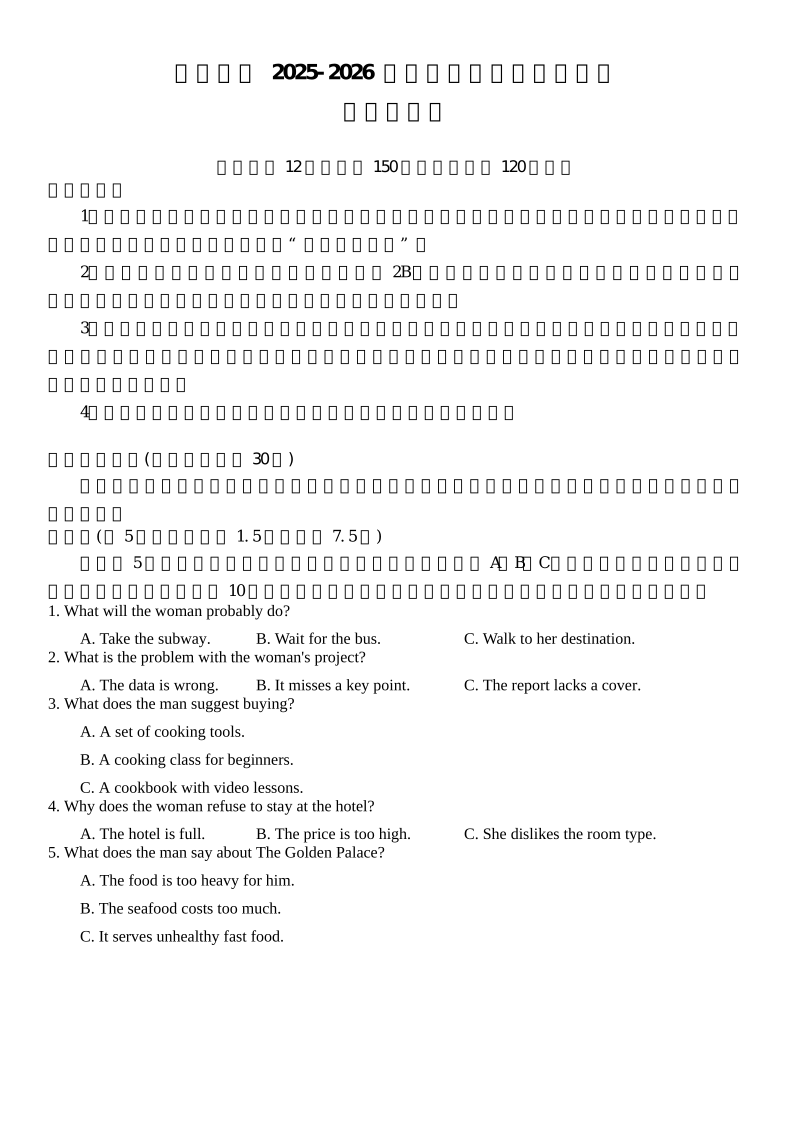
1. What will the woman probably do?
A. Take the subway. B. Wait for the bus. C. Walk to her destination.
2. What is the problem with the woman's project?
A. The data is wrong. B. It misses a key point. C. The report lacks a cover.
3. What does the man suggest buying?
A. A set of cooking tools.
B. A cooking class for beginners.
C. A cookbook with video lessons.
4. Why does the woman refuse to stay at the hotel?
A. The hotel is full. B. The price is too high. C. She dislikes the room type.
5. What does the man say about The Golden Palace?
A. The food is too heavy for him.
B. The seafood costs too much.
C. It serves unhealthy fast food.
第二节(共 15小题;每小题1.5分,满分22.5分)
听下面5段对话或独白。每段对话或独白后有几个小题,从题中所给的A、B、C三个选项中选出最佳选项。听每段对话或独白前,你将有时间阅读各个小题,每小题5秒钟;听完后,各小题将给出5秒钟的作答时间。每段对话或独白读两遍。
听第6段材料,回答第6、7题。
6. Where will the lecture take place?
A. In the Music Hall. B. In the Main Library. C. In the Student Center.
7. When will the lecture start?
A. At 2:30 p. m. B. At 3:30 p. m. C. At 4:30 p. m.
听第7段材料,回答第8至 10题。
8. What position is the man applying for?
A. A sales manager. B. A travel agent. C. A computer engineer.
9. What do we know about the man's previous job?
A. It required regular travel.
B. It focused on marketing.
C. It included programming tasks.
10. What will the speakers probably discuss next?
A. Career plans. B. Staff training. C. Work schedules.
听第8段材料,回答第11至 13题。
11. What is the news about?
A. The ban on mobile phones.
B. The use of digital textbooks.
C. The plan for interactive lessons.
12. What concerns the woman most?
A. Harm to students' eyes.
B. Added weight to schoolbags.
C. Influence on concentration.
13. What is the man's attitude towards the change?
A. Critical. B. Worried. C. Supportive.
学科网(北京)股份有限公司
听第9段材料,回答第14至17题
14. What does Sarah probably do?
A. A library staff. B. A project organizer. C. A government official.
15. What are the participants expected to do?
A. Collect rubbish. B. Feed local wildlife. C. Sell recycled plastic.
16. Which item is required for participants?
A. Rubbish bags. B. Litter pickers. C. Waterproof boots.
17. How can the man sign up?
A. By signing in on arrival.
B. By calling the office.
C. By registering online.
听第10段材料,回答第18至20题。
18. What does the speaker think of rereading notes?
A. It is productive. B. It can be misleading. C. It leads to real mastery.
19. What does the speaker suggest students do after class?
A. List review questions.
B. Develop memory skills.
C. Check notes carefully.
20. How should review sessions be arranged?
A. One long session before the test.
B. Many sessions within a single night.
C. Several short sessions over a few days.
第二部分阅读(共两节,满分50分)
第一节(共15小题;每小题2.5分,满分37.5分)
阅读下列短文,从每题所给的A、B、C、D四个选项中选出最佳选项。
学科网(北京)股份有限公司
A
Electric vertical take-off and landing aircraft (垂直起降飞机), referred to in public communications as“air taxis,” are piloted aircraft designed for short-range urban air mobility.According to publicly available information from Honeywell, these vehicles are currently approved for passenger service in select overseas markets, with US entry regulatory approval.
Honeywell has released new survey results suggesting that among 1,000 adult respondents,98% US airline fliers would consider taking Air Taxis as part of their travel journey. Among them,millennials (千禧一代) rank the highest in the enthusiasm about flying in an air taxi (72%),followed by those who took more than 10 round trips in the past year (67%) and those who took 10or fewer round trips (53%). Business travelers also show more interest than leisure travelers (60%vs 45%), while frequent fliers demonstrate higher enthusiasm compared to occasional travelers(67% vs 42%)
The original source (Honeywell) states that additional findings on reasons for interest are presented in the chart above. This report does not reproduce the chart but notes that such reasons were collected from respondents who expressed interest.
The Honeywell survey was conducted by Wakefield Research among adult respondents (age18+) in the United States. All respondents met the definition of“fliers” used by the survey:individuals who had taken at least five round-trip flights within the 12 months before the survey. It was carried out between December 5th and December 12th, 2025, using an email invitation and online questionnaire,
21. Which group shows the highest percentage of interest in air taxi?
A. Business travelers. B. Frequent fliers.
C. Occasional consumers. D. Millennial respondents.
22. How many respondents would travel more often if air taxis were available?
A. Over 410. B. About 670. C. Almost 900. D. Nearly 980.
23. Where can the text be found?
A. In a business news report. B. In an airline travel brochure.
C. In a government transport plan. D. In an airport service application.
学科网(北京)股份有限公司
B
A few orange flags mark Kwesi Joseph's plants in a Brooklyn community garden. Joseph, an urban garden specialist, is conducting a low-tech experiment.“I feel like a kid having fun with scientific discovery,” Joseph said.
As a boy, Joseph was naturally drawn to the physical world beneath his feet. The feel of dirt and clay stayed with him over the years, and he later earned a bachelor's degree in geology (地质学). In 2011, during a stressful time in his life, he revisited that early connection with encouragement from his wife. Joseph transformed an underused backyard into a garden, a decision that would lay the groundwork for his future career.
Gardening inspired Joseph to experiment further. With his background in geology, he wondered if crushed rocks could provide plants with essential nutrients. Joseph started conducting trials with the“rock dust” of basalt, a type of rock that contains micronutrients. In the process, he discovered something unexpected: basalt can react with CO₂ in the air and turn it into a solid that gets stuck in the ground. Studies show that this process, known as enhanced rock weathering, can also reduce soil acidity and absorb nitrogen(氮) pollution caused by fertilizers(肥料).
However, Joseph began to see that creating long-term, sustainable change in urban agriculture required more than hands-on knowledge——— it demanded strategic thinking, system-level insight and the ability to connect grassroots efforts with broader policy systems. That realization led him to pursue a business degree at Cornell.
Since completing his degree in 2025, Joseph has felt more equipped to build not just gardens,but also the support systems and partnerships needed to sustain them. By working with the community and sharing his love for gardening, he has helped people become stronger and more independent through community gardens.“It's all about taking care of our soil and our plants,”Joseph said,“because, in return, they will take care of us.”
24. What motivated Joseph to study geology?
A. His early interest in earth. B. The stress of daily life.
C. His experience in gardening. D. The advice from his wife.
25. What did Joseph find about basalt in his experiment?
A. It contains micronutrients. B. It arrests and stores CO₂.
C. It enhances rock weathering. D. It consumes and removes soil minerals.
26. What do we know about Joseph from paragraph 4?
A. He followed local policies. B. He changed his career path.
C. He preferred hands-on learning. D. He took a broader viewpoint.
27. What is the best title for the text?
A. Testing Basalt in Gardens B. Storing Carbon in Rocks
C. Bridging Soil and Society D. Connecting Community and Policy
学科网(北京)股份有限公司
C
Today, 2.2 billion people lack access to safe drinking water. The increasing need for drinking water is stretching traditional resources such as rivers and lakes. To solve this, MIT engineers are taking advantage of an unconventional source. The MIT team has developed a new device that ofects water vapor(水蒸气) from the air and produces safe drinking water, even in dry desert conditions.
The new device is a black panel made from a water-absorbent hydrogel(水凝胶) material and enclosed in a glass box.“Through our work with soft materials, we know hydrogel is very good at absorbing water from air,” explains MIT professor Xuanhe Zhao. The hydrogel absorbs water vapor,wh - then turns into drops of water on the glass and flows out through a tube as clean drinking water.
The team tested the device for seven days in Death Valley, California—— the driest region inNorth America. It produced up to 160 milliliters of drinking water per day, outperforming other passive and some actively powered designs.
Researchers are exploring different ways to collect drinking water from the air, but unlike other designs that require batteries or electricity, the system runs entirely on its own, without external power. Some groups have designed hydrogel-based harvesters, but the water they produce can be salty because salt may leak into the collected water. However, this team's new design significantly limits this problem by adding glycerol(甘油) to keep the salt within the hydrogel. As a result, the salt levels in the water they collected met the standard for safe drinking water.
The device is still only a proof-of-concept design, and there is much room for improvement.The team is now working on the next generation of the material and considering a multipanel system. Zhao also plans to test the technology in resource-limited regions.“We imagine that one day many of these panels could work together,” Zhao says.“Then they could collect water all the time for household use.”
28. What problem are the MIT engineers trying to solve?
A. The lack of surface water. B. The waste of safe water.
C. The pollution of river water. D. The shortage of drinking water.
29. What is the second paragraph mainly about?
A. Why the device is built. B. How the device works.
C. What hydrogel is made of. D. When the key change happens.
30. How does glycerol help produce safe drinking water?
A. By collecting water from air. B. By providing external power.
C. By stopping salt from leaking. D. By improving vapor absorption.
31. What can be inferred about the device from the last paragraph?
A. It is in progress. B. It is in daily use.
C. It is a multi-panel system. D. It is a profitable technology.
学科网(北京)股份有限公司
D
The talent debate has always appealed to me. Previously, I challenged the myth (荒诞的说法)that talent must come from natural gifts. But I' ve realized something: instead of searching for talent,one can start building it as a functional system. The core of that system is a positive feedback loop(循环).
Take the journey of the naturalist Charles Darwin as an example. He used to find work boring,but later he found himself laboring for hours. He had developed an incredible eye for the wildlife inSouth America. He kept observing and then developing a theory—— theories and observations feeding off one another. His growing interest deepened observation; deeper observation inspired insight;and that progress turned work into joy. He entered a loop.
So how does this loop work? When you genuinely enjoy something, practice no longer feels like a load. Practice builds naturally over time. As skill develops, improvement becomes noticeable,and that sense of progress makes people feel more confident, which in turn can make the activity more enjoyable. Sometimes the loop begins with enjoyment, but at other times it begins with intentional effort that leads to small wins.
This is not blind insistence. Instead of giving up too soon, first ask yourself honestly: have you built the conditions for a loop to emerge? That means space for small wins, useful feedback, or a different entry point. If you' ve tried different approaches and still see no progress, then it may be time to make an adjustment.
It's just a simple truth: You don't need to start with passion. You don't need to wake up and feel a pull toward your skill. What matters is doing what actually works. Sometimes you start with pragmatism, or just the willingness to try differently. But if you can gain some early wins and build competence in the right conditions, the loop can still form. And once it does, you' re no longer waiting for talent to appear —— you' ve actively built it.
32. Why does the author mention Charles Darwin's tour?
A. To highlight his close observation. B. To illustrate the feedback loop.
C. To explain a natural phenomenon. D. To provide background information.
33. Which of the following best shows the loop described in paragraph 3?
34. What does the author suggest people do to avoid blind continuance?
A. Establish conditions actively. B. Ignore progress frequently.
C. Change direction immediately. D. Expect feedback passively.
35. What does the underlined word“pragmatism” in the last paragraph most likely mean?
A. A strong passion. B. A natural gift.
C. A practical approach. D. A strict principle.
学科网(北京)股份有限公司
第二节(共5 小题;每小题2.5分,满分 12.5分)
阅读下面短文,从短文后的选项中选出可以填入空白处的最佳选项。选项中有两项为多余选项。
In the spring of 2022, after a depressing 58-loss season, the Oklahoma City Thunder sat near the bottom of the NBA standings. 36 In just three seasons it rocketed from the bottom to the top of the league. How does a team improve so quickly? That question isn't just about basketball. It's about how any group can learn, adapt, and succeed in an age of accelerated (加速的)change.
During the past few years, my teammates and I have been investigating a question: What do the best teams do differently? 37 And we collected detailed data on how their teams set priorities, make decisions, and cooperate. To identify members of high-performing teams, we had workers rate their team's effectiveness and industry performance. Those rated highest were called“superteams”.
38 Superteams share three key strengths. Firstly, they get more done by managing time, energy, and attention more efficiently. Secondly, their members actively make one another better. Thirdly, they' re constantly building new skills and improving over time.
It is that last strength that the Thunder has clearly mastered. 39 It's part of a pattern that has defined the organization since it moved to Oklahoma City in 2008. After its arrival,the team entered a full rebuild, putting long-term progress before instant results. Yet in just four seasons it reached the NBA Finals, in 2012.
The Thunder's story is a reminder that success grows from the pursuit of improvement, the decisive leaders who spot and solve problems, and the motivated teams that cooperate well. Those are the habits that turn good teams into superteams.40
A. But something remarkable happened.
B. They work together towards the same goal.
C. Its rapid rise over the past few years is not an accident.
D. We found that superteam leaders are more likely to support employees.
E. Any team can develop them, whether in basketball, business, or beyond.
F. To find out, we surveyed over 6,000 knowledge workers across various industries.
G. Among those superteams, the secret to high performance looked remarkably similar.
学科网(北京)股份有限公司
第三部分语言运用(共两节,满分30分)
第一节(共 15小题;每小题1分,满分15分)
阅读下面短文,从每题所给的A、B、C、D四个选项中选出最佳选项。
Six years ago, I started taking my own takeaway box when dining outside. I wanted to get my41 worth. I'd also read how over 1 billion tons of food ended up in the landfill(垃圾填埋场) and this was my chance to do something 42 .
Growing up in a family of modest means, 43 food on the plate was unthinkable.Anything left over would be repurposed into a new 44 . However, if I was out with friends,it was a 45 story. Maybe I didn't want to draw attention to myself by breaking conventions in social settings.
Now, my little box goes everywhere with me. I' ve 46 the embarrassment of sayingI'd like to take the food home in my own box. It's a conversation 47 ; sometimes diners at neighbouring tables become 48 and we start chatting.
My friend Lorna always laughs when I49 my bag at the end of a meal. Other friends,inspired by me, are starting to bring their own box to 50 . We' re even 51 pictures and tips about what to do with the food in our group chat.
For me, this 52 isn't just about valuing what's on our plate but also 53 it'sOK to be different in social environments. It makes me 54 that my friends and I are creating our own mini movement,55 food waste one box at a time.
学科网(北京)股份有限公司
41. A. money's
42. A. new
43. A. reserving
44. A. dish
45. A. real
46. A. imagined
47. A. recorder
48. A. entertained
49. A. point at
50. A. restaurants
51. A. collecting
52. A. lesson
53. A. understanding
54. A. clear
55. A. exposing
B. time's
B. easy
B. finishing
B. container
B. different
B. forgotten
B. monitor
B. satisfied
B. reach into
B. markets
B. designing
B. change
B. predicting
B. aware
B. removing
C. effort's
C. helpful
C. tasting
C. role
C. long
C. experienced
C. starter
C. pleased
C. go through
C. squares
C. sharing
C. choice
C. explaining
C. proud
C. assessing
D. work's
D. fun
D. leaving
D. gift
D. classic
D. overcome
D. detector
D. interested
D. search for
D. galleries
D. perfecting
D. event
D. concluding
D. confident
D. reducing
学科网(北京)股份有限公司
第二节(共 10小题;每小题1.5分,满分15分)
阅读下面短文,在空白处填入1个适当的单词或括号内单词的正确形式。
When a Spanish netizen posted a photo of herself wearing a pink, silk jacket, it went viral. The56 (fashion) sportswear, which features a straight-button front, drew many praises. This reflects a rising trend in Western fashion, 57 Chinese features such as the Mandarin collar, frog buttons and symmetrical(对称的) fronts are appearing.
“New Chinese Style” is not new in China. It emerged at the start of the 21st century, gained strength around 2015, and 58 (be) on an upward trend since 2021. The term has no precise 59 (define), but can be seen as combining traditional Chinese elements60 modern design language. Compared with traditional clothing,“New Chinese Style”emphasizes simplicity and practicality. The style goes for more accessible materials, making the clothing easier 61 (wear) daily.
“New Chinese Style” reflects a shift in mindset among Chinese people —— they are moving from 62 (view) merely as subjects of aesthetic (美学的) appreciation to becoming creators of their own aesthetic language. Yang Jie, 63 associate professor at the BeijingInstitute of Fashion Technology, said that Western luxury brands(品牌) have long explored Chinese elements.“It’ s not 64 (simple) a fashion trend,” Yang said.“It speaks to changes in the global landscape. As China's influence continues to grow, Chinese culture is becoming more visible65 recognized around the world.”
第四部分写作(共两节,满分40分)
第一节(满分15分)
假定你是李华,你校英语报调查发现,不少高中生因过度使用网络热词,导致在现实生活中表达时感到词穷、难以组织语言,即“网络失语症 (Digital Aphasia)”。现面向全校征文。请你写一篇短文投稿。内容包括:
(1)分析现象;
(2)提出建议。
注意:
(1)写作词数应为 80 左右;
(2)请按如下格式在答题卡的相应位置作答。
学科网(北京)股份有限公司
第二节(满分25 分)
阅读下面材料,根据其内容和所给段落开头语续写两段,使之构成一篇完整的短文。
The dormitory room was small, but the two beds seemed farther apart than ever.
On one side lived Caleb, a quiet freshman with a gentle voice and a habit of withdrawing intohmself when crowds gathered. He had always found it hard to ask for space. On the other side livedFex—— loud, warm, and incapable of sitting still. He believed a room felt more alive when its door stayed open. On the back of the door hung a small whiteboard—— the Roommate CommunicationBoard—— where they were supposed to leave reminders, or short notes for each other. Most days, it stayed empty.
Every evening, Felix invited friends over. They played cards, laughed, and argued about basketball. Caleb sat at his desk beneath a small lamp, feeling his chest tighten. Once or twice, Felix asked,“You good?” Caleb nodded without looking up. Felix took the nod as permission.
So Caleb said nothing. As usual, the whiteboard on the door remained blank, as if silence had spread even there.
The breaking point came on a Tuesday night. Caleb had a chemistry exam the next morning and had barely reviewed half the material. Felix's card game was louder than usual. At 10:47 p. m.,Caleb closed his book, switched off his lamp, and walked out without a word. Behind him, the music stopped. He heard Felix call his name, but he kept going.
When he returned close to midnight, the room was quiet. On the whiteboard, in Felix's uneven handwriting, were the words:
“Caleb —— I'm not unaware of your unhappiness. I saw your face when you left. You kept saying you were fine, and I let that make things easy for me. We need to talk. Tomorrow after class? No games, no friends. Just us.”
Caleb read it twice. Then he picked up the marker and wrote beneath it:“4 p. m. Door closed.Bring your ideas. I' ll bring mine.”
注意:
(1)续写词数应为150个左右;
(2)请按如下格式在答题纸的相应位置作答。
学科网(北京)股份有限公司
The next afternoon, they met in the dormitory.
A week later, the dormitory room looked the same — but somehow, different.
学科网(北京)股份有限公司
三明一中2025-2026学年高三下学期校模拟考
英语科参考答案
第I卷(选择题,共95分)
第一部分 听力(共两节,满分30分)
1-5ABCBA 6-10CBAAB 11-15 BCCBA 16-20CABAC
第二部分 阅读(共两节,满分50分)
第一节(共15小题,每小题2.5分,满分37.5分)
21-23DCA 24-27ABDC 28-31 DBCA 32-35 BDAC
第二节(共5小题,每小题2.5分,满分12.5分)
36-40AFGCE
第三部分 语言运用(共两节,满分30分)
第一节(共15小题,每小题1分,满分15分)
41-45ACDAB 46-50 DCDBA 51-55CBACD
第Ⅱ卷(非选择题,共55分)
第二节(共10小题,每小题1.5分,满分15分)
56. fashionable 57. where 58. has been 59. definition 60. with
61. to wear 62. being viewed 63. an 64. simply 65. and
第四部分 写作(共两节,满分40分)
第一节 (满分15分)
66. One possible version
In recent years, digital aphasia has become a common problem among students. We tend to overuse Internet buzzwords in daily communication and are ccustomed to those simple and online expressions, which gradually weakens our ability to express ourselves clearly and logically in real life.
To tackle this issue, we can take several practical measures. Firstly, we are supposed to read more extensive reading materials to expand our vocabulary. Secondly, we should engage in more face-to-face conversations with friends and family, rather than relying solely on online chatting.Finally, we can practice writing regularly, like keeping a diary, to train our logical thinking and language organization skills.
In conclusion, it is high time that we stepped away from the screen and embraced real-life communication to recover our language abilities.
第1页共4页
学科网(北京)股份有限公司
第二节 (满分25分)
67. One possible version:
The next afternoon, they met in the dormitory. Felix closed the door gently, his usual smile gone.He sat on his bed, with hands hanging awkwardly by his sides. Caleb, sitting across from him,rubbing his hands restlessly, voice soft but clear:“I need quiet when I study, but I was too scared to say it.” Felix nodded with sincerity in his eyes, explaining that he should have noticed Caleb tensing up, not just taken his nod for permission. They talked frankly, Caleb admitting his shyness,Felix apologizing for his carelessness, the air lifting as silence turned to understanding.(91 words)
A week later, the dormitory room looked the same—— but somehow, different. The whiteboard was no longer blank: small notes like“Library till 7, save me a seat” or“Chemistry notes on your desk”appeared on it. Felix still laughed loudly, but he no longer brought friends back on weekday nights.He would lower his voice when Caleb was ready to study his lessons. Caleb, in turn, sometimes joined Felix's small gatherings at weekends, with slight smile sweeping across his face. The beds still stood on opposite sides, but the distance between them seemed to have been bridged by genuine communication and understanding.(91 words)
附:听力录音文本
Text 1
M: The bus is stuck again because of the roadwork. If you' re in a hurry, you could take the subway instead. It might be faster.
W: That's a good idea. I' ll just walk to the station from here.
Text 2
W: Sir, does my conclusion make sense to you?
M: Well, your data is accurate, but you failed to address the core problem.
W: You mean the pressure level?
M: Exactly. Your report doesn't cover the necessary part. You need to rewrite it.
Text 3
W: I'm looking for a gift for my cousin. She's learning to cook.
M: How about this beginner's cookbook? It's popular, and it comes with simple video lessons.
W: That sounds perfect.
Text 4
W: Good morning. I'd like to book a double room for two nights.
M: Let me check. We are fully booked for double rooms, but we have a suite available. It's $100more per night.
W: That's a bit over my budget. I' ll try another hotel. Thanks.
Text 5
W: Shall we eat out? The Golden Palace has great seafood.
M: Their food is too rich for me. I'm on a diet. How about Burger King?
W: I'm not in the mood for fast food. Let's go to Noodles & More. It's plain but healthy.
M: Fine. Let's go there.
学科网(北京)股份有限公司
Text 6
W: Hi, Jason. I'm heading to the Student Center for a lecture on how classical music affects our brain's efficiency. Want to join me?
M: You mean the Mozart Effect? I thought that was a myth. Wasn't it in the Main Library?
W: It was at 2:00. But lots of people signed up, so they moved it to the Student Center. It starts at3:30.
M: I see. I have a club meeting at 4:30, but I can catch the beginning.
W: Perfect! Let's go.
Text 7
W: Mr Brown, thank you for coming. I' ve read your application. You studied Computer Science in college, right?
M: Yes, but during my training at a tech company, I found I enjoyed working with people more than programming. That's why I'm applying for the Sales Manager position.
W: I see. This job involves frequent travel. We have branches in Seattle and Chicago. You'd spend about ten days a month away from home.
M: That's fine. In my previous job, I traveled to our Boston office twice a month, and I'm comfortable being on the road.
W: Great. Do you have any questions for us?
M: Yes. Since I'm changing my career path, will there be any courses to help me get started?
Text 8
M: Did you hear the news that our school is going to replace paper textbooks with tablets next semester?
W: Really? I have mixed feelings about that.
M: Why? It means lighter bags and more interactive lessons. The digital books have a search function, which makes finding information much faster. It's the trend.
W: True, but what worries me most is losing focus. It's just too easy to play games or check social media during class. And the screen isn't good for our eyes, either.
M: I see your point. But the school said they will use software to block games to keep us focused.
Also, they would choose screens that are eye-friendly.
W: Well, that helps. But nothing beats the feeling of turning a page in a real book.
M: You are so old-fashioned!
学科网(北京)股份有限公司
Text 9
W: Hello, Green City Project line. This is Sarah speaking.
M: Hi, Sarah. I heard about your river clean-up project and I'm interested. Could you tell me the details?
W: Of course. This Saturday, we' re cleaning up the river in City Park. It's a beautiful spot, but litter is harming the local wildlife.
M: Sounds great! When and where do we meet?
W: We start at 9:00 a. m. at the park's east gate. Please arrive at 8:45 for a brief safety talk.
M: Okay. What exactly will we need to do?
W: Teams will work along the riverbank, picking up plastic bottles and any other litter we find.We' ll also separate recyclables from general waste.
M: Do we need to bring anything?
W: We' ll provide gloves, rubbish bags, and litter pickers. For safety, you must wear waterproof boots. The bank can be quite muddy.
M: Got it. Do I need to sign up in advance?
W: No need. Just register at our desk when you arrive on Saturday morning. It only takes a minute to write your name down.
M: Perfect. I' ll do that when I get there. See you Saturday!
Text 10
Hi everyone, welcome back, and thanks for listening to Learning That Lasts. If you' re studying for an exam right now, today's episode is for you. Today, I want to introduce a simple idea that can make studying more effective: active recall.
Many students spend hours rereading notes or highlighting textbooks. It feels productive because the material starts to look familiar. But familiarity is not the same as mastery. Just because you recognize the words on a page doesn't mean you can pull that information out of your brain during a high-pressure test.
Active recall takes a different approach. Instead of passively looking at your notes, you force yourself to answer questions from memory. This process is difficult, and sometimes frustrating, but that mental struggle is exactly how your brain builds stronger connections.
Here's a practical method: after class, write five questions based on what you learned. The next day, answer them from memory. If you get stuck, check your notes briefly, then try again.
Remember, don't wait until the night before the exam. Short review sessions spread over several days are far more powerful than one long session.
学科网(北京)股份有限公司
$
资源预览图
1
2
3

相关资源
由于学科网是一个信息分享及获取的平台,不确保部分用户上传资料的 来源及知识产权归属。如您发现相关资料侵犯您的合法权益,请联系学科网,我们核实后将及时进行处理。