专题二 冠词 讲义-2027届高考英语一轮复习·正确提分攻略
2026-05-24
|
8页
|
104人阅读
|
0人下载
普通
资源信息
| 学段 | 高中 |
|---|---|
| 学科 | 英语 |
| 教材版本 | - |
| 年级 | 高三 |
| 章节 | - |
| 类型 | 教案-讲义 |
| 知识点 | 冠词 |
| 使用场景 | 高考复习-一轮复习 |
| 学年 | 2027-2028 |
| 地区(省份) | 全国 |
| 地区(市) | - |
| 地区(区县) | - |
| 文件格式 | DOCX |
| 文件大小 | 613 KB |
| 发布时间 | 2026-05-24 |
| 更新时间 | 2026-05-24 |
| 作者 | zyc82 |
| 品牌系列 | - |
| 审核时间 | 2026-05-24 |
| 下载链接 | https://m.zxxk.com/soft/58021140.html |
| 价格 | 1.00储值(1储值=1元) |
| 来源 | 学科网 |
摘要:
该高中英语讲义聚焦冠词专题,覆盖不定冠词、定冠词、零冠词的分类及基本用法,整合固定搭配、活用规则与易混点,构建“分类-用法-辨析”的知识体系。通过核心考点梳理、易混易错突破、解题技巧指导等环节,帮助学生系统掌握冠词在泛指、特指等语境中的应用,突破a/an区分、特指判定等难点。
资料创新采用分类梳理与场景联想记忆法,如将抽象冠词规则结合“have a cold”等固定短语情景记忆,培养学生学习能力。通过“固定搭配优先判定”“规则排除法”等策略,如区分a/an时依据首发音音素而非首字母,提升思维品质,确保短时间内高效突破考点,为教师把控复习节奏、学生提升应考能力提供有力支持。
内容正文:
英语
专题二 冠词
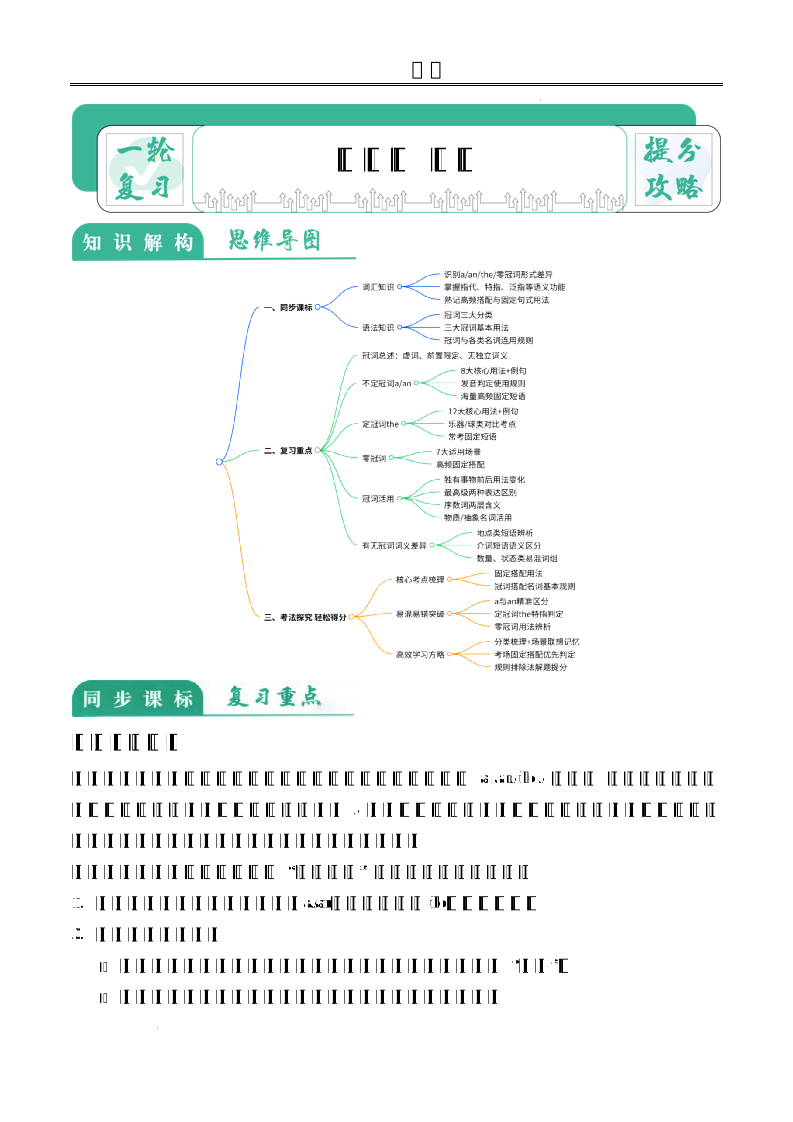
一、同步课标
词汇知识层面:冠词作为限定词系统的核心,学生需识别 a /an/the / 零冠词 的形式差异,理解其在指代、特指、泛指、类指、物质 / 抽象概念、专有名词、固定搭配等语境中的语义功能,掌握高频习惯搭配与固定句式中的冠词用法。
语法知识层面:要求学生掌握 “词法知识” 中的冠词,具体包括:
1. 冠词的分类:区分不定冠词(a/an)、定冠词(the)、零冠词。
2. 冠词的基本用法:
· 不定冠词:用于泛指单数可数名词,表类别或不确定的 “一个”。
· 定冠词:用于特指上文提及或特定语境中的人或事物。
· 零冠词:用于复数名词、不可数名词泛指,以及专有名词、固定搭配等特定场景。
3. 冠词与名词的连用规则:掌握冠词与可数名词、不可数名词、专有名词的搭配规范。
二、复习重点
冠词属于虚词,置于名词之前,用以限定名词含义,无独立词义、不可单独使用。英语冠词分为三类:不定冠词 (a/an)、定冠词 (the)、零冠词(无需使用冠词的情形)。
(一) 不定冠词a/an
1. 首次提到的可数名词单数(表泛指“一个”):
当名词为可数单数,且是第一次出现、不特指某一个时,必须加 a/an。
I bought a pen yesterday. 我昨天买了一支钢笔。
2. 抽象名词具体化(表“某一个/一件”具体事物):
抽象名词(如 success, failure, surprise 等)通常用零冠词,但当它表示“一个具体的人/一件具体的事”时,必须加 a/an。
He is a great success in business. 他在商界是一位成功人士。
3. 泛指某一类人或事物,或指同类中的“一个”。
This painting looks like a Van Gogh. 这幅画看起来像是一幅梵高风格画作。
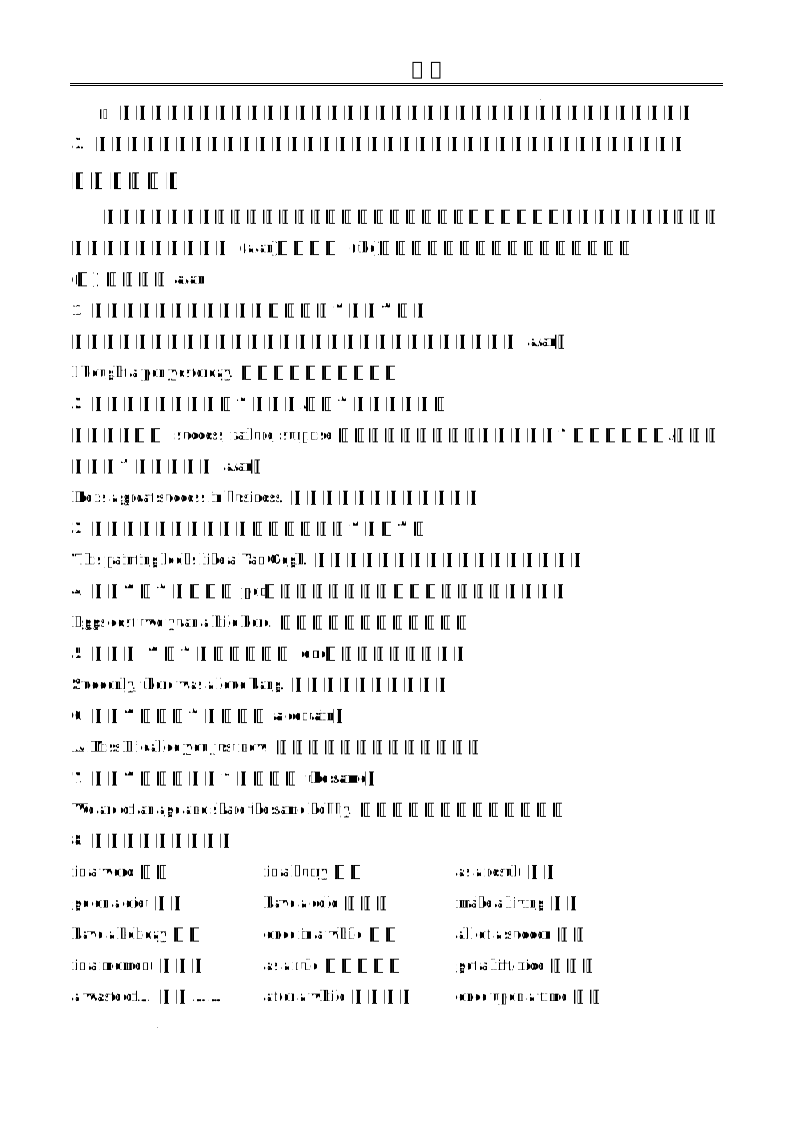
4. 表示“每”,相当于per,用在表示价格、速度、频率等的短语中。
Eggs cost two yuan a kilo here. 这里鸡蛋每千克售价两元。
5. 表数量 “一”,强调数量用 one;也可指任意一个。
Suddenly, there was a loud bang. 突然间砰的一声巨响。
6. 表示“某一个”,相当于a certain。
A Miss Li called you just now. 刚才有位李女士给你打电话。
7. 表示“同一,相同”,相当于the same。
We are of an age and share the same hobby. 我们年纪相仿,爱好也一样。
8. 用在一些固定短语中
in a word 总之 in a hurry 匆忙 as a result 因此
go on a diet 节食 have a cold 患感冒 make a living 谋生
have a holiday 度假 once in a while 偶尔 all of a sudden 突然
in a moment 一会儿 as a rule 通常,照例 get a lift/ ride 搭便车
a waste of… 浪费…… after a while 一会儿后 once upon a time 从前
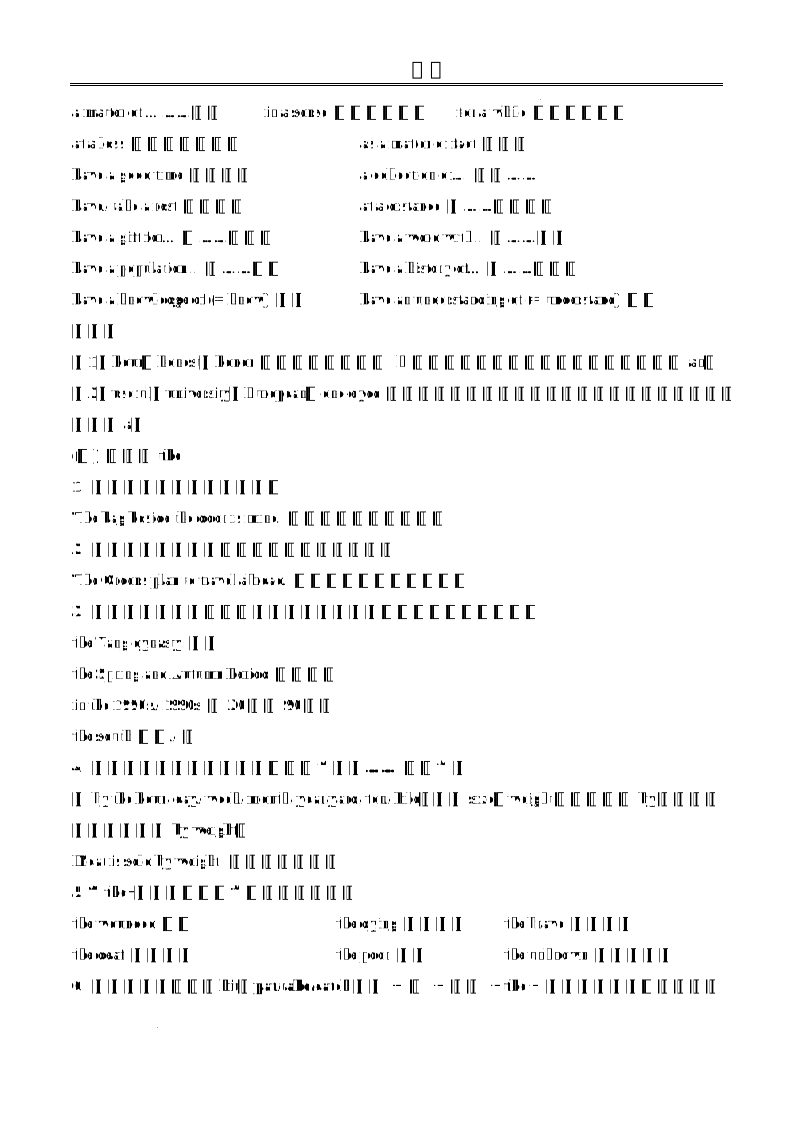
a matter of ... ……问题 in a sense 在某种意义上 for a while 暂时,一会儿
at a loss 困惑,不知所措 as a matter of fact 事实上
have a good time 玩得高兴 a collection of… 一批……
have/ take a rest 休息一下 at a distance 离……一段距离
have a gift for... 有……的天赋 have a word with... 与……谈话
have a population... 有……人口 have a history of... 有……的历史
have a knowledge of (= know) 知道 have an understanding of (= understand) 了解
注意:
(1)hour、honest、honor 等词虽以辅音字母 h 开头,但发音以元音音素起始,前面用an。
(2)useful、university、European、one-eyed 等词虽以元音字母开头,但发音以辅音音素起始,前面用a。
(二) 定冠词the
1. 特指双方都知晓的人或事物
The bag beside the door is mine. 门边的那个包是我的。
2. 用在姓氏复数前,表示一家人或夫妇二人。
The Greens plan to travel abroad. 格林一家计划出国旅行。
3. 用在表示世纪、年代、朝代的名词前或用在表示方位的名词前。
the Tang dynasty 唐朝
the Spring and Autumn Period 春秋时期
in the 1990's/ 1990s 在20世纪90年代
the south 南方/ 部
4. 用在表度量单位的名词前,表示“按照…… 计量”。
如by the hour/ day/ week/ month/ year/yard/ ton/ kilo,但是size,weight这类名词和by连用时不加定冠词,如by weight。
Meat is sold by weight. 肉按重量出售。
5. “the+形容词或分词”,泛指一类人。
the wounded 伤员 the dying 垂死之人 the brave 勇敢的人
the deaf 耳聋的人 the poor 穷人 the unknown 未知的事物
6. 固定句式:动词(hit、pat/take/catch等) + 人 + 介词 + the + 肢体部位名词(不可换物主代词)。
A ball flew over and hit me on the shoulder. 一个球飞过来砸到了我的肩膀。
7. 独一无二的事物:
the sun(太阳) the moon(月亮) the earth(地球)
the Great Wall(长城) the United States(美国,由普通名词构成的国家名)
8. 用在含有普通名词的国家、组织机构、建筑物、报纸杂志、会议条约等名称前。
I dream of visiting the Summer Palace one day. 我盼望有一天能游览颐和园。
9. 用在序数词或形容词、副词的最高级前。
注意:两者进行比较时,在比较级前加定冠词起到特指作用,表示“两者中较……的一方”。
She is the quieter of the two sisters. 姐妹二人里她更为文静。
10. 乐器类:
play the piano 弹钢琴 play the violin 拉小提琴 play the guitar 弹吉他
(注:球类运动前不加the,如 play basketball,此处为高频对比考点)
11. 用在same, very, only前构成“the same/ very/ only +名词”结构。
We have the same hobby. 我们有着同样的爱好。
He is the very person (=just the person) I am looking for.
他正是我正在寻找的人。
She is the only student who passed the test. 她是唯一通过这次测试的学生。
12. 用在一些固定短语中
in the way 挡路 all the time 一直 at the moment 此刻
the other day 前几天 in the habit of 习惯于 in the meantime 同时
in the distance 在远处 in the end 最后,终于 for the time being 暂时
on the whole 总的说来 by the way 顺便提一下 in the daytime 在白天
in the countryside 在乡下 at the end of ……的尽头 make the most of 充分利用
go to the cinema 去看电影 in the playground 在操场上 go to the doctor's 去看医生
on the right/ left 在右/ 左边 for the most part 通常,多半
on the spot 在现场,当场,当下 not in the least (=not at all) 一点也不
to tell (you) the truth 说实话,老实说 on the radio 通过无线电广播
on the one hand..., on the other hand... 一方面……,另一方面……
(三) 零冠词
1. 不可数名词,复数名词表示泛指时。
He likes to read novels. 他喜欢读小说。
2. 名词前已有this, that, my, your, some, each, no, any等限定词时。
Each student must hand in his exercise book. 每个学生必须上交作业本。
3. 用在日期、星期、月份、季节前;称呼、头衔、职务前;三餐、球类、棋类、学科名词前。
但以上用法是相对而言的,在不同的句子中,可能会用到不定冠词或定冠词。因此,用哪种冠词要视情况而定。
A year can be divided into four seasons—spring, summer, autumn and winter.
一年可以分为四个季节——春、夏、秋、冬。
4. 修饰常见的不可数名词。
baggage, luggage, furniture, health, weather, fun, space, advice, progress, information, news, luck, wealth等。
Beyond the stars, the astronaut saw nothing but space. 除了星星,那个宇航员只看见了太空。
5. 系动词turn(变成)后的单数名词作表语时。
Has he turned scientist? 他成为科学家了吗?
6. “零冠词+单数名词+as+主语+谓语+主句”,意为“虽然……,但是……”。
Hero as he is, he has some shortcomings. 他虽然是英雄,但是也有一些缺点。
7. 用在一些固定短语中
in addition 另外 in advance 预先 lose weight 减肥
at college 在上大学 pay attention to 注意 in good condition 情况良好
at peace 处于和平状态 in good order 有条不紊 on business 因公出差
out of breath 上气不接下气 out of control 失去控制 in trouble 处于困境
arm in arm 臂挽臂 word by word 逐字地 step by step 逐步地
side by side 并肩 day by day 日复一日 hand in hand 手拉手
(四) 冠词的活用
1. 表示世界上独一无二的事物的名词,常与定冠词连用,如sun, moon, earth, universe, world 等;但该名词前有形容词修饰时,可以与不定冠词连用。
We are building a new world. 我们正在建立一个新世界。
We have friends all over the world. 我们的朋友遍布天下。
2. “the+形容词最高级”表示比较,意为最……的;
a/an + 形容词最高级”:无比较含义,意为“非常、极其……的”(此时 most 相当于 very)。
It is the most useful dictionary. 它是最有用的词典。
It is a most useful dictionary. (most = very) 它是一本非常有用的词典。
3. “the+序数词”表示次序;“a/ an+序数词”不表示与其他人或物排序,表示“又一,再一”。
It is the second time that he has visited the city.
这是他第二次参观这座城市。(表示次序)
Can you give me a second chance? (a second = another)
你能再给我一次机会吗?(表示“又一,再一”)
4. 物质名词 / 抽象名词活用
泛指概念用零冠词;具体化表具体人 / 具体事物,加 a/an;特指某一类加 the。
Paper is made from wood. 纸由木材制成。(泛指)
It is a good paper. 这是一份优质报纸 / 一篇好论文。(具体化)
(五) 有无冠词意义迥异的情况
at table 在吃饭 at the table 在桌子旁
at school 上学 at the school 在学校
by day 白天 by the day 按日计算
in hospital 住院 in the hospital 在医院
in office 执政 in the office 在办公室内
leave school 辍学;毕业离校 leave the school 离开学校
in charge of 掌管 in the charge of 由……掌管
in place of 取代 in the place of 在……的位置上
in possession of 占有 in the possession of 被……占有
two of us 我们中的两个 the two of us 我们两个
out of question 毫无疑问 out of the question 不可能
in front of... (外部)的前面 in the front of.... (内部)的前部
go to bed 上床睡觉(侧重活动) go to the bed 朝床边走去(侧重地点)
go to church 做礼拜(侧重活动) go to the church 去教堂(侧重地点)
(一) 核心考点梳理
(1) 固定搭配用法
英语里含冠词的固定短语数量多,是考试与写作高频考点,务必熟记,做题写作直接套用,是学好冠词的核心重点。
(2) 冠词搭配名词基本规则
冠词依附名词使用,用法随名词类别变化:
· 单数可数名词:泛指用a/an,特指用the
· 复数名词、不可数名词:泛指不用冠词,特指加the
(二) 易混易错突破
(1) a与an精准区分
判断依据为单词首发音音素,而非首字母:辅音音素开头用 a,元音音素开头用 an,易混淆词极易出错。
(2) 定冠词 the 的特指判定
特指范围宽泛,不单指上文提及、双方熟知事物,复杂语境下区分泛指与特指,是学习一大难点。
(3) 零冠词易混用法
物质名词、抽象名词前,零冠词与定冠词、不定冠词的选用界限模糊,极易混用出错。
(三) 高效学习方略
1. 背诵记忆技巧
(1). 分类梳理记忆
按不定冠词、定冠词、零冠词三大类归纳所有用法,条理清晰系统化记忆,高效巩固知识点。
(2). 场景联想记忆
将抽象冠词规则结合日常情景、生活例句联想记忆,简化语法难度,加深记忆印象。
2. 考场解题技巧
(1). 固定搭配优先判定
熟记高频冠词固定短语,遇到短语类考题直接秒选;拿捏不准时借助典型例句快速核对。
(2). 规则排除法
遇到模棱两可题型,依托基础冠词规则排除错误答案:泛指不可数名词直接排除 a/an;独一无二事物优先锁定 the,层层缩小范围,提升做题正确率。
学科网(北京)股份有限公司
$
资源预览图
1
2
3
相关资源
由于学科网是一个信息分享及获取的平台,不确保部分用户上传资料的 来源及知识产权归属。如您发现相关资料侵犯您的合法权益,请联系学科网,我们核实后将及时进行处理。