精品解析:2025-2026学年湖北省武汉市二中广雅中学九年级(下)5月课堂作业英语试卷(四)
 切换试卷
切换试卷
2026-05-24
|
2份
|
33页
|
7人阅读
|
0人下载
资源信息
| 学段 | 初中 |
|---|---|
| 学科 | 英语 |
| 教材版本 | - |
| 年级 | 九年级 |
| 章节 | - |
| 类型 | 试卷 |
| 知识点 | - |
| 使用场景 | 中考复习-模拟预测 |
| 学年 | 2026-2027 |
| 地区(省份) | 湖北省 |
| 地区(市) | 武汉市 |
| 地区(区县) | - |
| 文件格式 | ZIP |
| 文件大小 | 1.01 MB |
| 发布时间 | 2026-05-24 |
| 更新时间 | 2026-05-24 |
| 作者 | 学科网试题平台 |
| 品牌系列 | - |
| 审核时间 | 2026-05-24 |
| 下载链接 | https://m.zxxk.com/soft/58013011.html |
| 价格 | 3.00储值(1储值=1元) |
| 来源 | 学科网 |
内容正文:
2025-2026学年武汉市二中广雅中学
九年级(下)5月课堂作业(四) 英语试卷
2026年05月19日
二中广雅英语教研组秘密
第Ⅰ卷(选择题 共80分)
第一部分 听力部分
一、听力测试 (共三节,满分25分)
第一节 (共4小题,每小题1分,满分4分)
听下面5个问题。每个问题后有三个答语,从题中所给的 A、B、C 三个选项中选出最佳选项。听完每个问题后,你都有5秒钟的时间来作答和阅读下一小题。每个问题仅读一遍。
1. A. Forty. B. He’s OK. C. A cook.
2. A. Watch TV. B. At 10 o’ clock. C. To a cinema.
3. A. I like reading. B. It’s so beautiful! C. Classical music.
4. A. Three times a week. B. At 9:30 p. m. C. It’s relaxing.
第二节 (共8小题,每小题1分,满分8分)
听下面7段对话。每段对话后有一个小题,从题中所给的A、B、C三个选项中选出最佳选项。听完每段对话后,你都有10秒钟的时间来回答有关小题和阅读下一小题。每段对话仅读一遍。
5. What does the woman want to drink?
A. Cold cola. B. Iced coffee. C. Regular coffee.
6. What’s the time by the girl’s watch?
A.6:50. B.7:00. C.7:10.
7. What does the man advise the woman to take next time?
A. The bus. B. The car. C. The subway.
8. What does the woman mean?
A. Jane’s new friends are too shy. B. Jane has no friends there. C. Jane doesn’t like her new school.
9. How much will the woman pay?
A. $45. B. $55. C. $35.
10. What would the boy probably say next?
A. Is this bottle of paint yours, Mary? B. Don’t worry! You can use mine. C. OK! Thanks anyway.
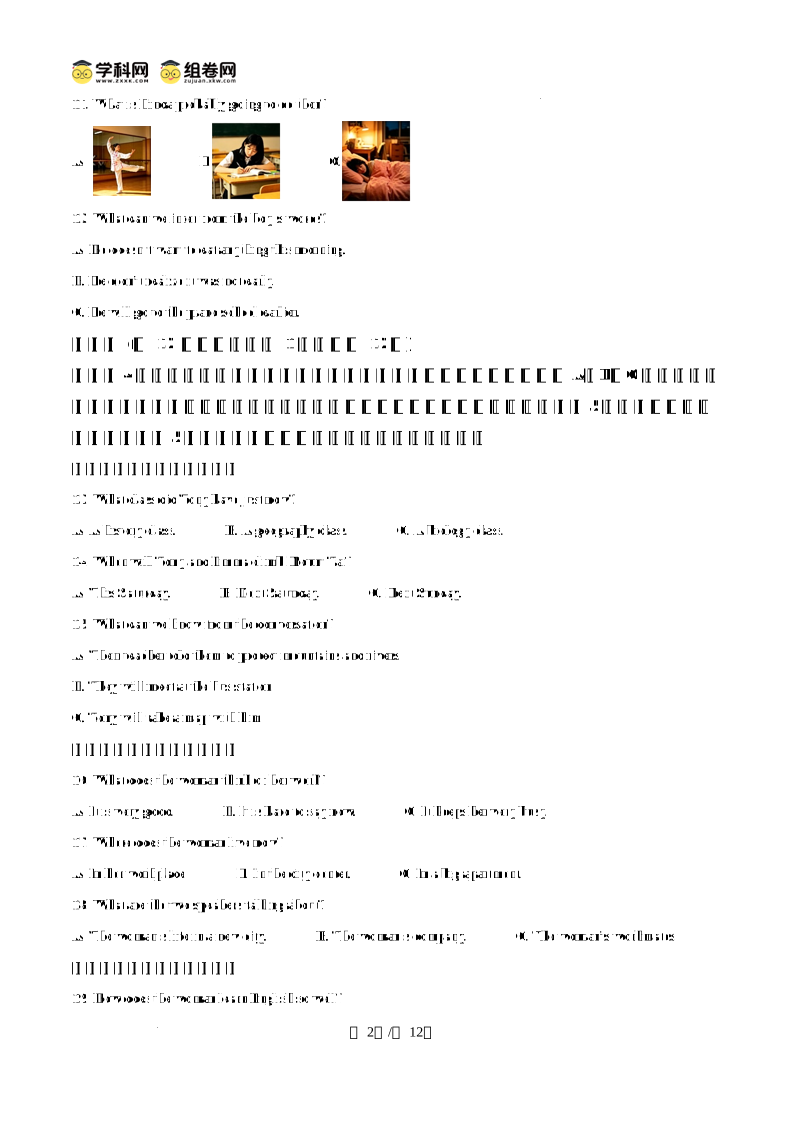
11. What is Linda probably going to do then?
A. B. C.
12. What can we infer from the boy’s words?
A. He doesn’t want to eat anything this morning.
B. He didn’t realize it was not early.
C. He will go to the piano school earlier.
第三节 (共 13 小题,每小题 1分,满分 13分)
听下面4段对话或独白。每段对话或独白后有几个小题,从题中所给的A、B、C三个选项中选出最佳选项。听每段对话或独白前,你将有时间阅读各个小题,每小题5秒钟;听完后,各小题将给出5秒钟的作答时间,每段对话或独白读两遍。
听对话,回答以下各小题。
13. What class did Tony have just now?
A. A history class. B. A geography class. C. A biology class.
14. When will Tony and Emma climb Mount Tai?
A. This Saturday. B. Next Saturday. C. Next Sunday.
15. What can we know from the conversation?
A. Their teacher told them to protect mountains and rivers.
B. They will meet at the bus station.
C. Tony will take a map with him.
听对话,回答以下各小题。
16. What does the woman think of her work?
A. It is very good. B. It is hard to say now. C. It keeps her very busy.
17. Where does the woman live now?
A. In her workplace. B. In the city center. C. In a big apartment.
18. What are the two speakers talking about?
A. The woman’s life in a new city. B. The woman’s company. C. The woman’s workmates.
听对话,回答以下各小题。
19. How does the woman learn English so well?
A. She stays up late at night to learn it.
B. She often listens to the radio.
C. She takes part in many English programs.
20. Why does the woman think talk channels are better?
A. Because they are easier to understand.
B. Because they are more popular.
C. Because they give her better listening practice.
21. What will the man probably do tonight?
A. Practice his spoken English.
B. Search for some programs he likes online.
C. Learn English together with the woman.
22. What can we know about the woman?
A. She has found a good way to learn English.
B. She might come from Britain.
C. She likes British programs better than American ones.
听独白,回答以下各小题。
23. Why didn’t Tom get the job as an office boy?
A. Because he didn’t clean the floor as the manager expected.
B. Because his computer skills were not good.
C. Because he didn’t even have an email.
24. What happened to Tom after he left the company?
A. He believed he could also succeed without an email.
B. He began to sell tomatoes from door to door.
C. He started to live a poor life.
25. What can we know about Tom?
A. He was hardworking and humorous.
B. He always wanted to be the biggest food retailer in America.
C. He got an email after he had his own business.
第二部分 笔试部分
二、选择填空 (共10小题,每小题1分,满分10分)
从题中所给的A、 B、 C、D四个选项中,选出一个最佳答案。
1. It’s amazing that China built the world’s longest expressway tunnel (隧道) under such terrible ________, including thin air and low temperature.
A. positions B. conditions C. directions D. instructions
【答案】B
【解析】
【详解】句意:令人惊讶的是,中国在如此恶劣的条件下建造了世界上最长的高速公路隧道,包括稀薄空气和低温。
positions位置;conditions条件;directions方向;instructions指示。根据后文“including thin air and low temperature”可知,稀薄空气和低温属于环境“条件”,符合语境。
2. —How did you tell her the good news? By phone or by (text) message?
—________. I went to her home and told her in person.
A. Both B. Either C. Neither D. None
【答案】C
【解析】
【详解】句意:——你是怎么告诉她这个好消息的?通过电话还是短信?——两者都不是。我去她家亲自告诉她的。
Both 两者都;Either 两者之一;Neither 两者都不;None表示“没有一个”,通常用于两者或更多事物均不符合的情形。根据问句“By phone or by (text) message?”可知是在两者之间进行选择,结合答语后句“I went to her home and told her in person.”可知实际方式是亲自去,否定了前两者,表示“两者都不”,应填Neither。
3. — Jenny and I used to share a bedroom, but now we sleep in ________ rooms.
— Oh, maybe you’re old enough and need more space and quiet rest.
A. separate B. private C. similar D. particular
【答案】A
【解析】
【详解】句意:——珍妮和我过去共用一间卧室,但现在我们睡在分开的房间里。——哦,也许你们长大了,需要更多的空间和安静的休息。
separate分开的;private私人的;similar相似的;particular特定的。根据“used to share a bedroom, but now”可知,过去共用,现在转折表示不再共用,即睡在分开的房间里。
4. —The company is in trouble now. Who do you think can ________ it well?
—Mr Miller. He has rich experience.
A. depend B. achieve C. protect D. manage
【答案】D
【解析】
【详解】句意:——这家公司现在陷入困境了。你认为谁能把它管理好?——米勒先生。他有丰富的经验。
考查动词辨析。depend依赖;achieve实现;protect保护;manage管理。根据“The company is in trouble now”可知公司陷入困境,需要有人“管理”好它,且后文提到“他有丰富的经验”,进一步说明适合管理公司。“manage”表达“管理”,作动词,故选D。
5. —The 2026 Optics Valley Expo will be held from May 18th to 20th in Wuhan.
—Great! I hear it ________ new “Light + AI” technologies for smart cities.
A. invents B. develops C. discovers D. creates
【答案】B
【解析】
【详解】句意:——2026光谷博览会将于5月18日至20日在武汉举行。——太棒了!我听说它为智慧城市开发新的“光 + AI”技术。
invents发明;develops开发/发展;discovers发现;creates创造。根据“new ‘Light + AI’ technologies”可知,此处指技术的开发与发展,develop technologies是常见搭配。结合语境,博览会涉及新技术的开发与展示,develop最符合。
6. —I told Tom that his singing was amazing, even though it really wasn’t.
—That’s fine. Sometimes ________ is better than hurting someone’s feelings.
A. a cruel truth B. a white lie C. a loud noise D. a big mistake
【答案】B
【解析】
【详解】句意:——我告诉汤姆他的歌声很棒,尽管实际上并不是。——没关系。有时候善意的谎言比伤害某人的感情更好。
a cruel truth残酷的真相;a white lie善意的谎言;a loud noise噪音;a big mistake大错误。根据上文可知说话人为了不伤害对方感情说了假话,结合“That’s fine”及“better than hurting someone’s feelings”可知,此处指这种出于好心的谎言,故选B。
7. —Why did you place your umbrella on the shelf in the classroom?
—I did it ________ so that classmates can take it if needed during rainy days.
A. at once B. by chance C. in return D. on purpose
【答案】D
【解析】
【详解】句意:——你为什么把伞放在教室的架子上?——我特意这么做,以便同学们下雨天需要时可以用。
at once立刻;by chance偶然;in return作为回报;on purpose故意地。根据答句“so that classmates can take it if needed during rainy days.”可知,说话人是特意把伞放在架子上,应填on purpose。
8. — How did ancient people find their way without modern tools like GPS?
— They ________ to master the use of the compass.
A. made an effort B. took a risk C. kept a promise D. played a trick
【答案】A
【解析】
【详解】句意:——在没有像GPS这样的现代工具的情况下,古人是如何找到路的?——他们努力掌握指南针的使用方法。
made an effort努力;took a risk冒险;kept a promise遵守诺言;played a trick开玩笑。根据“to master the use of the compass”可知,掌握指南针的使用需要付出努力,符合语境。
9. —Mom, I ________ the table before dinner. Is it okay?
—Yes, thank you. You’re so helpful.
A. set up B. laid out C. put away D. took off
【答案】B
【解析】
【详解】句意:——妈妈,我在晚饭前摆好了桌子。可以吗?——是的,谢谢。你真是帮了大忙。
set up建立;laid out摆好;put away收起来;took off起飞。根据答语“You’re so helpful.”可知孩子做了有帮助的事。结合语境“before dinner”,饭前应该是摆放餐具准备吃饭。应选laid out。
10. —Nowadays, many schools teach students to plant fruit and vegetables.
—That’s great. In this way, students can understand ________.
A. when the food is cooked B. how is the food cooked
C. where the food comes from D. what should we eat
【答案】C
【解析】
【详解】句意:——如今,许多学校教学生种植水果和蔬菜。——太好了。通过这种方式,学生们能够理解食物来自哪里。
宾语从句需用陈述语序,B项和D项是疑问语序,排除;根据前文“plant fruits and vegetables”可知,这能让学生了解食物的来源,A项涉及烹饪时间,与语境不符。故选C。
三、完形填空 (共15小题,每小题1分,满分15分)
阅读下面短文,从短文后各题所给的四个选项中,选出可以填入空白处的最佳答案。
When I was nine years old, I lived in a quiet, warm neighborhood where neighbors all got along well. Our neighbour Mr. Oberley was a gentle old man who lived alone with about 35 lovely cats. Every morning, we would hear cheerful yet playful shouts from his house, “Go away, Kitty! The hotel is ____11____ !”
He sounded angry when he called to the cats, but he never ____12____ a needy cat. Their happy miaows (猫叫) often floated out of his opened windows. My parents found it so lovely that they ____13____ it “The Cat Chorus (合唱团)”. Mr. Oberley used to be a vet. But now he ____14____ from work and spent most of his days resting in his garden. He often joked that he was too old to do anything meaningful but ____15____ “The Cat Chorus” with his lovely cats.
One cool summer night, Mr. Oberley and I sat together in his garden, watching the starry ____16____ with dozens of lovely cats lying around us. Pointing to the brightest star, he made a funny ____17____ to climb it one day, turn it into a swing and ____18____ it freely across the sky. “But what if you fall?” I asked worriedly. “I won’t,” he laughed softly. “I’ll watch you grow up and hear the cats ____19____ every morning.”
Later that summer, Mr. Oberley fell ill and had to stay in bed. He was so weak that he could _____20_____ lift his spoon. _____21_____ stayed close to him and sang to him tirelessly. Luckily, his daughter Sarah arrived in time to _____22_____ to him. Kind neighbours also _____23_____ to look after his garden and feed the cats. With everyone’s care he made an amazing _____24_____ and got much better soon. At night, when stars _____25_____ the sky, Mr. Oberley and I would sit quietly in his garden, with cats singing around us happily.
11. A. closed B. covered C. cleaned D. crowded
12. A. brought out B. drew on C. called for D. turned away
13. A. announced B. recorded C. promised D. called
14. A. improved B. retired C. graduated D. reflected
15. A. joining B. sharing C. directing D. following
16. A. costume B. sky C. moon D. firework
17. A. design B. policy C. list D. promise
18. A. explore B. remove C. press D. ride
19. A. cry B. scream C. sing D. laugh
20. A. quickly B. actually C. hardly D. completely
21. A. patients B. cats C. children D. doctors
22. A. attend B. lead C. care D. turn
23. A. pretended B. offered C. refused D. flooded
24. A. difference B. recovery C. promise D. decision
25. A. cut B. lit C. hit D. met
【答案】11. A 12. D 13. D 14. B 15. C 16. B 17. D 18. D 19. C 20. C 21. B 22. A 23. B 24. B 25. B
【解析】
【导语】本文讲述了作者邻居Oberley先生与猫的故事。他退休后指挥“猫合唱团”,生病后在猫和邻里的照顾下康复,体现了人与动物的温情。
【11题详解】
句意:每天早上,我们都会听到从他房子里传来快乐而顽皮的喊声:“走开,小猫!旅馆打烊了!”
老人是在对猫说话,像是在赶它们走,表示“打烊、谢绝”,应用closed。covered“覆盖的”;cleaned“干净的”;crowded“拥挤的”,均不符合。
【12题详解】
句意:他对猫喊叫时听起来很生气,但他从未拒绝过一只需要帮助的猫。
根据下文他收留很多猫可知,他从未“拒绝”过需要帮助的猫。turned away意为“拒绝”。brought out“拿出”;drew on“利用”;called for“要求”,均不符合。
【13题详解】
句意:我的父母觉得这非常可爱,于是把它叫作“猫咪合唱团”。
根据“it ‘The Cat Chorus’”可知,父母给这个场景“取名”了,应用called。announced“宣布”;recorded“记录”;promised“许诺”,均不符合。
【14题详解】
句意:但现在他退休了,大部分时间都在花园里休息。
根据“used to be a vet”以及“spent most of his days resting”可知,他现在是“退休”状态。retired from work意为“从工作中退休”。
【15题详解】
句意:他常开玩笑说自己太老了,做不了什么有意义的事,只能指挥他的可爱猫咪们进行“猫咪合唱团”。
根据“The Cat Chorus”以及后文猫唱歌的描写可知,老人是在“指挥”合唱。joining“加入”;sharing“分享”;directing“指挥”;following“跟随”。
【16题详解】
句意:一个凉爽的夏夜,Oberley先生和我一起坐在他的花园里,望着繁星点点的天空,几十只可爱的猫躺在我们周围。
根据后文“Pointing to the brightest star”可知,他们在看“天空”。
【17题详解】
句意:他指着最亮的那颗星,开玩笑地承诺有一天要爬上去,把它变成秋千,在天空中自由地骑乘。
他是对作者做出一个有趣的“承诺”,promise符合。design“设计”;policy“政策”;list“清单”,均不符合。
【18题详解】
句意:他指着最亮的那颗星,开玩笑地承诺有一天要爬上去,把它变成秋千,在天空中自由地骑乘。
根据“turn it into a swing”可知,变成秋千后要“骑乘”,ride符合。explore“探索”;remove“移除”;press“按压”,均不符合。
【19题详解】
句意:我看着你长大,每天早上听着猫唱歌。
根据前文“hear the cats”以及猫的叫声特点,应用sing“唱歌”,与“The Cat Chorus”呼应。cry“哭”;scream“尖叫”;laugh“笑”,均不符合。
【20题详解】
句意:他虚弱得几乎连勺子都抬不起来。
根据“He was so weak”可知,他“几乎不能”抬起勺子,hardly“几乎不”符合。quickly“快速地”;actually“实际上”;completely“完全地”,均不符合。
【21题详解】
句意:猫们始终陪伴在他身边,不知疲倦地为他唱歌。
根据前文老人与猫的关系以及后文“sang to him”可知,“cats”是他的忠实伙伴。
【22题详解】
句意:幸运的是,他的女儿Sarah及时赶到照顾他。
“attend to sb.”意为“照顾某人”,固定搭配。lead“带领”;care“关心”(后需加for);turn“转向”,均不符合。
【23题详解】
句意:好心的邻居也主动提出帮忙照看他的花园和喂猫。
“offered to do sth.”意为“主动提出做某事”。pretended“假装”;refused“拒绝”;flooded“淹没”,均不符合。
【24题详解】
句意:在大家的照顾下,他奇迹般地康复了,情况很快好转。
根据后文“got much better soon”可知,固定搭配make a recovery “康复”符合语境。difference“差别”;promise“承诺”;decision“决定”,均不符合。
【25题详解】
句意:夜晚,当星星点亮天空时,Oberley先生和我会静静地坐在花园里,猫在我们周围快乐地歌唱。
根据“stars”和“the sky”可知,星星“点亮”天空,lit是light的过去式。cut“切割”;hit“撞击”;met“遇见”,均不符合。
四、阅读理解 (共15小题,每小题2分,满分30分)
阅读下面三篇材料,从每题所给的A、B、C、D四个选项中,选出最佳选项。
A
Let’s share stories about the influence of ancient Chinese poems on modern teens.
A Young idler, an old beggar.
In a small village in Sichuan, Li Ming is an aimless boy lying flat. He was too lazy to try or care. So he hated getting up early for school. Every morning, his mother was anxious enough to pull him from bed. One day, his grandfather wrote on a piece of paper: “A young idler, an old beggar.” Li Ming did not understand at first. His grandfather explained, “If you waste your youth, you will have nothing when you grow old.” The next morning, Li Ming woke up by himself. He began to study before sunrise. “I don’t want to be a beggar,” he smiled.
Heaven has made us talents, we are not made in vain.
Zhang Wei was a city girl who moved to the countryside with her parents. She missed the bright lights and busy streets. One rainy evening, she read a line from Li Bai: “Heaven has made us talents, we are not made in vain.” She thought about it for a long time. The next day, she started painting the beautiful mountains outside her window. “Maybe my talent is not lost,” she said. “It just needs a new view.”
________
Wang Lin used to be afraid of going high. When her class went on a trip to a small mountain, she wanted to stay at the bottom. Her teacher whispered a line from Wang Zhihuan, a poet in the Tang Dynasty. Wang Lin felt ashamed for it. She took a deep breath and started climbing. When she reached the top, she saw the whole valley. “It was worth every step,” she laughed. Now she is never afraid of heights.
26. In which section of a website would you most likely find these three stories?
A. ANCIENT POEMS AND MODERN TEENS B. POETRY AND APPRECIATION
C. INSPIRATIONAL STORIES D. SCIENCE AND NATURE WEEKLY
27. Which writing skill is mainly used to develop Story 1?
A. Listing numbers. B. Raising questions.
C. Giving examples. D. Descriptive techniques.
28. What happened to Zhang Wei after she read Li Bai’s line?
A. She decided to move back to the city. B. She started painting beautiful pictures of the city.
C. She found a new way to use her talent. D. She became interested in art.
29. Which poem did the teacher whisper to Wang Lin?
A. I will stand on the highest peak, and see all mountains small and weak.
B. You can enjoy a grander sight, by climbing to a greater height.
C. Why can’t I tell the true shape of LuShan? Because I myself am in the mountain.
D. Just somewhere in the mountain here. But deep clouds set me wondering where.
30. What does the poem in the third story mainly encourage people to do?
A. Stay at the top of a mountain. B. Face any difficulties.
C. Climb higher to see a better view. D. Listen to teachers only.
【答案】26. A 27. D 28. C 29. B 30. C
【解析】
【导语】本文是一篇记叙文,主要通过三个故事讲述了中国古代诗歌对现代青少年的影响,分别展示了诗歌如何激励青少年改变生活态度、发现自身天赋以及克服恐惧。
【26题详解】
文章开头明确指出“Let’s share stories about the influence of ancient Chinese poems on modern teens”。选项A“ANCIENT POEMS AND MODERN TEENS”直接对应文章的主题,最能概括三个故事的核心内容,因此在这部分最可能找到这三个故事。
【27题详解】
第一个故事讲述了李明因爷爷写的一句诗“A young idler, an old beggar”而改变懒惰习惯的故事。故事里对李明的状态“an aimless boy lying flat”“too lazy to try or care”、他妈妈的行为“anxious enough to pull him from bed”、爷爷的行为“wrote on a piece of paper”以及李明的心理变化“did not understand at first”“smiled”都有细致的描写,通过这些描写来展现故事的情节和人物的转变,属于描写手法的运用。
【28题详解】
第二个故事中,张薇读到李白的诗句“Heaven has made us talents, we are not made in vain”后,用绘画记录乡村美景。这表明她找到了一种新的方式来运用她的天赋。
【29题详解】
第三个故事中,根据后文王林“took a deep breath and started climbing”以及到达山顶后看到“the whole valley”,可以推断老师说的诗是鼓励她登高望远的。选项B“You can enjoy a grander sight, by climbing to a greater height”符合这一语境,是王之涣《登鹳雀楼》中的诗句。
【30题详解】
第三个故事中的诗句“You can enjoy a grander sight, by climbing to a greater height”主要鼓励人们“Climb higher to see a better view”,即通过努力克服困难,达到更高的境界以获得更好的视野。
B
A man who looked like a tourist sat in the outdoor dining area. He had a camera around his neck and a bottle of sunscreen sticking out of his bag. He was drinking lemonade and looking at a shiny cruise brochure. But he hadn’t turned a page for the last ten minutes! His sunglasses masked his eyes. I knew he wasn’t really reading.
When I brought him what he had ordered, he coughed up a “thank you” and looked at me quickly. I tried not to stare at the tiny scar above his left eyebrow.
I walked back inside, shaking my head. He looked familiar, but I couldn’t remember where I had seen him.
Then it hit me. The car accident! A stranger had pulled me out of my damaged car just before it exploded! That stranger was him. I rushed back to his table, he was gone.
I moved his plate and found his tip, along with a card. The card read:
I am deeply grateful to you. On the night of your car accident, I was on my way to rob a jewelry store. Saving your life helped me see things clearly—Money means nothing compared to life. I now live an honest life. Thanks to you. God bless you! Mr. D.
I felt shocked. That night of the accident, I had been going to amuse myself at a dirty dance club. Seeing his kindness changed my life, too, and brought back my belief.
I opened the tip he left. Among the one-dollar bills was a $100 bill. On it, someone had underlined the words “In God We Trust” with a pen.
I said a quiet prayer for him and went back to work, smiling.
31. What was the tourist doing when the writer first saw him?
A. Taking photos of the view. B. Reading a brochure carefully.
C. Pretending to look at a brochure. D. Eating his meal on the terrace.
32. The underlined phrase “it hit me” in paragraph 4 probably means ________.
A. someone hit me on the head B. I suddenly remembered something
C. the car accident hurt me D. I found the tip under the plate
33. Why did the stranger leave a card for the writer?
A. To ask the writer for help. B. To tell the writer that his life is really good.
C. To explain that he had robbed a store. D. To show that saving the writer changed his life.
34. What can we infer about the writer’s own life before the accident?
A. He was a rich man. B. He was going to do something wrong.
C. He worked as a police officer. D. He often prayed for others.
35. What is the best title for the story?
A. A Strange Tourist B. The Car Accident
C. A Tip That Changed Two Lives D. In God We Trust
【答案】31. C 32. B 33. D 34. B 35. C
【解析】
【导语】本文是一篇记叙文,讲述了身为服务员的“我”,在餐厅遇到一位神秘顾客,认出他正是多年前车祸中救了自己的陌生人。当年,他本是去抢劫珠宝店的路上,却因救人而改变了人生轨迹,而他的善举也同时挽救了“我”,让迷途的“我”重拾信念,两人的人生都因那次救援而发生了改变。
【31题详解】
根据文章第一段中looking at a shiny cruise brochure. But he hadn't turned a page for the last ten minutes! ... I knew he wasn’t really reading.”可知,那个人只是在假装看手册,实际上并没有阅读。
【32题详解】
根据文章第三段中“He looked familiar, but I couldn’t remember...”以及第四段中“Then it hit me. The car accident! ... That stranger was him.”可知,“it hit me”在此处表示作者突然想起了某事或猛然意识到真相。
【33题详解】
根据文章第五段卡片内容“Saving your life helped me see things clearly... I now live an honest life. Thanks to you.”可知,陌生人留卡片是为了表达感激,并说明这次事件(涉及作者的车祸)改变了他的人生轨迹。选项D指出“救人这一行为(即救作者)改变了他的人生”,符合文章主旨。
【34题详解】
根据文章第六段中“That night of the accident, I had been going to an amusement at a dirty dance club. Seeing his kindness changed my life, too, and brought back my belief.”可知,作者事故发生前的生活状态消极、迷失,与陌生人当时要去抢劫类似,都走在错误的道路上。
【35题详解】
文章讲述了作者与陌生人在车祸后各自的人生发生改变,最后通过小费和卡片揭示了真相。故事的核心在于这次相遇和小费揭示的信息改变了两个人的生活轨迹。选项C“改变了两条生命的小费”最能概括文章主题。
C
According to Ken Croswell, the Sun and the Moon are greatly different in nature and working rules in space. In our daily life, we often have a common idea that the Sun rules the whole daytime sky and the Moon takes charge of the quiet night sky. This simple idea is easy to understand for all people but it is only partially correct and cannot explain the real science behind them.
The Sun is a bright and fiery star that shines all the time without stopping. It gives out strong light and heat nonstop in outer space. It brightly lights up the sky during the day when we can clearly see it above our heads, and it still keeps shining brightly even at night when we turn away from it and cannot catch sight of it at all.
As the Earth keeps spinning (自转) slowly and steadily all year round, different areas will face the Sun one after another. When our place turns to face the Sun directly, warm and bright daytime comes to us. When the Earth’s spin turns our area away from the Sun, we will fall into the Earth’s shadow, and then peaceful night arrives. At the same time, people living on the opposite side of the Earth are facing the bright Sun, so they enjoy sunny daytime while we stay in dark night.
The Moon is a totally different celestial body (天体) compared with the Sun. Unlike the powerful Sun, the Moon has no ability to produce light by itself. The soft moonlight we see every night is not made by the Moon itself. It is actually the bright sunlight that hits the surface of the Moon and reflects back to the Earth for us to see.
The Sun can only light up the single side of the Moon that is close to and faces the Sun directly. At Full Moon, the Moon stays on the opposite side of the Earth from the Sun. The whole side of the Moon facing the Earth is fully lit up. It rises at sunset, shines all night long and sets at sunrise. Its light is bright enough to be seen in the daytime. Near Full Moon, we can spot it in the east afternoon or west morning. The New Moon is the hardest to see, as it lies between the Earth and the Sun, leaving its Earth-facing side totally dark to our eyes.
36. What can we know about the Sun?
A. The Sun rules the Moon all the time. B. The Sun shines during both day and night.
C. The Sun lights up all sides of the Moon. D. The Sun shines everywhere at the same time.
37. Which of the following in the dictionary best explains the word “shadow” in Paragraph 3?
A. The shape of the Earth. B. The force from the Sun.
C. The dark area on the Earth. D. The opposite side of the Sun.
38. Which of the following pictures shows us New Moon?
A. B.
C. D.
39. Which of the following can make its own light?
A. Earth. B. Mars. C. Moon. D. Sun.
40. What is the main purpose of the passage?
A. To compare the sizes of the Sun and the Moon.
B. To explain the Sun and Moon’s nature and rules.
C. To correct misunderstandings about day and night.
D. To describe the Moon’s effects on daily life.
【答案】36. B 37. C 38. A 39. D 40. B
【解析】
【导语】本文介绍了太阳和月球的本质、运行规律,旨在纠正人们对日月的常见误解。
【36题详解】
第二段“The Sun is a bright and fiery star that shines all the time without stopping…still keeps shining brightly even at night when we turn away from it…”直接说明太阳始终发光,只是地球背对它时我们看不到。
【37题详解】
第三段“When the Earth’s spin turns our area away from the Sun, we will fall into the Earth’s shadow, and then peaceful night arrives.”中的shadow指地球背对太阳形成的黑暗区域。
【38题详解】
第五段“The New Moon is the hardest to see, as it lies between the Earth and the Sun, leaving its Earth-facing side totally dark to our eyes.”直接指出新月时月球位于地球与太阳之间。
【39题详解】
第四段“Unlike the powerful Sun, the Moon has no ability to produce light by itself.”直接表明只有太阳能自身发光。
【40题详解】
根据全文内容可知,文章分别介绍了太阳、月球的本质与运行规律,纠正了 “太阳只管白天、月亮只管夜晚” 的片面认知。全文核心是解释日月的本质与运行规则,对应选项B“To explain the Sun and Moon’s nature and rules.”。
第 Ⅱ 卷 (非选择题 共40分)
五、词与短语填空 (共5 小题,每小题2 分,满分10分)
阅读下面短文,用方框中所给的单词或短语填空,使短文在结构、语意和逻辑上正确。 (提示:方框中有两个单词或短语是多余的。)
Listen to/dry/predicted/number/find/magical/times
Do you know nature’s hidden power? You can’t imagine how ___41___ our nature is! Sometimes rain or shine doesn’t need to be ___42___ in a weather app——you just need nature!
Do you want to know the outside temperature? ___43___ the chirping of crickets (蟋蟀的啾啾声)! Count how many ___44___ a cricket chirps in 15 seconds and add 40. That’s the temperature in Fahrenheit (华氏度). Do it several times and ___45___ the average (平均数). Test it right away.
【答案】41. magical
42. predicted
43. Listen to
44. times 45. find
【解析】
【导语】本文介绍了大自然蕴含的潜在能力,讲述可通过蟋蟀的鸣叫声测量外界温度,展现了大自然的奇妙有趣。
【41题详解】
句意:你想象不到我们的大自然有多神奇!此处是“how+形容词+主语+谓语”的感叹句结构,需填形容词,magical意为“神奇的”,形容大自然的神奇,符合语境。
【42题详解】
句意:有时阴晴不需要在天气软件里被预测——你只需要大自然!本句为被动语态,be动词后接动词过去分词。由“you just need nature”可知,天气变化不需要被预测,predicted意为“被预测”,符合语法及语义。
【43题详解】
句意:听蟋蟀的啾啾声!根据“the chirping of crickets”可知,作者建议“听”蟋蟀的叫声。本句为祈使句,句首需用动词原形,Listen to意为“听”,符合语境。
【44题详解】
句意:数蟋蟀15秒内鸣叫的次数,再加40。根据“a cricket chirps in 15 seconds”可知,数的是鸣叫的“次数”。how many后接可数名词复数,times意为“次数”,符合语法。
【45题详解】
句意:多测几次并算出平均数。and连接并列祈使句,前后均用动词原形,根据“the average”可知,“find the average”意为“求出平均数”。find意为“找出、算出”,符合语境。
六、综合填空 (共 10 小题,每小题 1 分,满分 10 分)
阅读下面短文,根据上下文或括号内单词等提示,在空白处填入适当的单词或括号内单词的适当形式。
“It is just too funny, ha-ha”, and just like this: Three hours have passed until you realize you ___46___ (do) nothing so far! Some experts say if we don’t put our phones down, we are definitely going to be stupid.
So why is it so hard to say no to short videos? Algorithmic recommendation (算法推荐) must be the answer, because it is so smart that it can find out what we are interested in and meet our needs accordingly. ___47___ more we like something, the more it will feed us similar content, continually like forever.
Now, you see why it’s so hard to refuse short videos. It’s time to figure out why they make you stupid.
One reason is that they narrow your field of perception (认知范围)! When ___48___ (look) through many similar videos you might think you’re becoming more knowledgeable. Sadly, the truth is that you are actually in an information cocoon (信息茧房), because you always stick to a few certain ___49___ (subject) that interest you. Believe it or not, if you unlock your mother’s phone, you may find that you two are in ___50___ (total) different worlds!
Another reason is that you may lose the patience to read, think, etc. Since you’ ve already got used to this low-cost and high-return form of ___51___ (entertain), you will never be patient with anything that ___52___ (require) time and effort.
So here is the third reason. Short videos can easily make us emotional. We often judge others quickly after watching a video and leave comments right away. Later, we may find the truth is different, and we feel sorry ___53___ what we have said.
So now you see, you become stupid bit by bit without ___54___ (realize) it. Maybe it’s time to wake up—— you need a better way to entertain ______55______ (you).
【答案】46. have done
47. The 48. looking
49. subjects
50. totally
51. entertainment
52. requires
53. for 54. realizing
55. yourself
【解析】
【导语】本文分析了短视频让人变笨的原因:算法推荐让人陷入信息茧房、降低耐心、易情绪化,提醒人们需用更健康的方式娱乐。
【46题详解】
句意:三个小时过去了,你才意识到自己到目前为止什么都没做!“so far”提示用现在完成时,主语是“you”,填“have done”。
【47题详解】
句意:我们越喜欢某样东西,它就越会持续给我们推送类似内容。“the + 比较级,the + 比较级”是固定结构(越……,越……),填“The”。
【48题详解】
句意:当浏览很多类似的视频时,你可能觉得自己变得更有见识了。此处省略了主语“you”,与“look”是主动关系,填“looking”。
【49题详解】
句意:因为你总是局限于几个自己感兴趣的特定主题。“a few”后接可数名词复数,“subject”的复数是“subjects”。
【50题详解】
句意:你可能会发现你们俩完全处于不同的世界!此处修饰形容词“different”,用“total”的副词形式“totally”。
【51题详解】
句意:因为你已经习惯了这种低成本、高回报的娱乐形式。此处作介词“of”的宾语,用“entertain”的名词形式“entertainment”。
【52题详解】
句意:你将再也不会对任何需要时间和精力的事情有耐心。定语从句中先行词“anything”是不定代词,谓语动词用第三人称单数“requires”。
【53题详解】
句意:后来,我们可能发现真相并非如此,会为自己说过的话感到抱歉。“feel sorry for...”是固定搭配(为……感到抱歉),填“for”。
【54题详解】
句意:所以现在你明白了,你在不知不觉中一点点变笨。介词“without”后接动名词,填“realizing”。
【55题详解】
句意:也许是时候清醒了——你需要一种更好的方式来娱乐自己。此处作宾语,与主语“you”是同一对象,用反身代词“yourself”。
七、书面表达 (共1答题,满分20分)
56. 我校英语校刊正在举办以Happiness in Small Moments为主题的征文活动,生活中的快乐可以来自于很多方面,如an act of kindness(一次善意之举)、a small success(一次小小的成功)、quiet time alone(一段独处时光)、a warm talk with family(一次温馨的家人交谈)。请你根据以下提示写一篇短文,参加学校的征文活动。
内容提示:
What small moment made you feel truly happy?
Why did you choose to share this kind of moment?
How do you like this moment?
Please write more about it.
注意:文中不得透露个人真实信息;词数100左右;文章开头已给出,不计入总词数。
Like flowers in a garden, happiness comes in all forms. For me it hides in small, daily moments. ____________________________________________________________________________________________________________________________________________________________________________________________________________________________________________________________________________________________________________
【答案】例文
Like flowers in a garden, happiness comes in all forms. For me it hides in small, daily moments.
The happiest small moment for me is having warm talks with my parents after dinner. Whenever I feel stressed about study or feel upset over little troubles, I will sit down and share my feelings with them patiently. They always listen to me carefully and give me useful advice gently.
In my opinion, such simple moments are the most precious gifts in life. They are plain but powerful. These ordinary warm moments light up my whole life and teach me to cherish every simple happiness around me.
【解析】
【详解】写作步骤
[第一步:审题立意]
确定文体:记叙文,以一般现在时为主
明确要点:幸福藏于日常小事、具体事例(晚饭后和父母谈心)、这件事带来的感受与意义、对平凡幸福的感悟
确定人称:第一人称(I/my)
注意事项:文中不得透露个人真实信息
[第二步:构思布局]
三段式结构:
开头段:总起句,点明幸福藏在日常微小瞬间
主体段:具体描写幸福瞬间——晚饭后和父母谈心的场景
结尾段:总结感悟,升华平凡瞬间的珍贵,学会珍惜简单幸福
[第三步:要点展开]
要点一:具体幸福瞬间
场景选择:have warm talks with my parents after dinner
触发情境:feel stressed about study/feel upset over little troubles
行为细节:sit down and share my feelings/parents listen carefully/give useful advice gently
核心观点:happiness hides in small, daily moments
作用效果:get rid of bad moods/make family relationship closer
要点二:个人感悟与主题升华
观点表达:simple moments are the most precious gifts in life
场景选择:having warm talks with my parents after dinner
触发情境:feel stressed about study/feel upset over little troubles
行为细节: sit down and share my feelings with them patiently/listen to me carefully/give me useful advice gently
情感体现:feel peaceful and full of energy
主题升华:ordinary warm moments light up life/cherish simple happiness
第1页/共1页
学科网(北京)股份有限公司
$
2025-2026学年武汉市二中广雅中学
九年级(下)5月课堂作业(四) 英语试卷
2026年05月19日
二中广雅英语教研组秘密
第Ⅰ卷(选择题 共80分)
第一部分 听力部分
一、听力测试 (共三节,满分25分)
第一节 (共4小题,每小题1分,满分4分)
听下面5个问题。每个问题后有三个答语,从题中所给的 A、B、C 三个选项中选出最佳选项。听完每个问题后,你都有5秒钟的时间来作答和阅读下一小题。每个问题仅读一遍。
1. A. Forty. B. He’s OK. C. A cook.
2. A. Watch TV. B. At 10 o’ clock. C. To a cinema.
3. A. I like reading. B. It’s so beautiful! C. Classical music.
4. A. Three times a week. B. At 9:30 p. m. C. It’s relaxing.
第二节 (共8小题,每小题1分,满分8分)
听下面7段对话。每段对话后有一个小题,从题中所给的A、B、C三个选项中选出最佳选项。听完每段对话后,你都有10秒钟的时间来回答有关小题和阅读下一小题。每段对话仅读一遍。
5. What does the woman want to drink?
A. Cold cola. B. Iced coffee. C. Regular coffee.
6. What’s the time by the girl’s watch?
A.6:50. B.7:00. C.7:10.
7. What does the man advise the woman to take next time?
A. The bus. B. The car. C. The subway.
8. What does the woman mean?
A. Jane’s new friends are too shy. B. Jane has no friends there. C. Jane doesn’t like her new school.
9. How much will the woman pay?
A. $45. B. $55. C. $35.
10. What would the boy probably say next?
A. Is this bottle of paint yours, Mary? B. Don’t worry! You can use mine. C. OK! Thanks anyway.
11. What is Linda probably going to do then?
A. B. C.
12. What can we infer from the boy’s words?
A. He doesn’t want to eat anything this morning.
B. He didn’t realize it was not early.
C. He will go to the piano school earlier.
第三节 (共 13 小题,每小题 1分,满分 13分)
听下面4段对话或独白。每段对话或独白后有几个小题,从题中所给的A、B、C三个选项中选出最佳选项。听每段对话或独白前,你将有时间阅读各个小题,每小题5秒钟;听完后,各小题将给出5秒钟的作答时间,每段对话或独白读两遍。
听对话,回答以下各小题。
13. What class did Tony have just now?
A. A history class. B. A geography class. C. A biology class.
14. When will Tony and Emma climb Mount Tai?
A. This Saturday. B. Next Saturday. C. Next Sunday.
15. What can we know from the conversation?
A. Their teacher told them to protect mountains and rivers.
B. They will meet at the bus station.
C. Tony will take a map with him.
听对话,回答以下各小题。
16. What does the woman think of her work?
A. It is very good. B. It is hard to say now. C. It keeps her very busy.
17. Where does the woman live now?
A. In her workplace. B. In the city center. C. In a big apartment.
18. What are the two speakers talking about?
A. The woman’s life in a new city. B. The woman’s company. C. The woman’s workmates.
听对话,回答以下各小题。
19. How does the woman learn English so well?
A. She stays up late at night to learn it.
B. She often listens to the radio.
C. She takes part in many English programs.
20. Why does the woman think talk channels are better?
A. Because they are easier to understand.
B. Because they are more popular.
C. Because they give her better listening practice.
21. What will the man probably do tonight?
A. Practice his spoken English.
B. Search for some programs he likes online.
C. Learn English together with the woman.
22. What can we know about the woman?
A. She has found a good way to learn English.
B. She might come from Britain.
C. She likes British programs better than American ones.
听独白,回答以下各小题。
23. Why didn’t Tom get the job as an office boy?
A. Because he didn’t clean the floor as the manager expected.
B. Because his computer skills were not good.
C. Because he didn’t even have an email.
24. What happened to Tom after he left the company?
A. He believed he could also succeed without an email.
B. He began to sell tomatoes from door to door.
C. He started to live a poor life.
25. What can we know about Tom?
A. He was hardworking and humorous.
B. He always wanted to be the biggest food retailer in America.
C. He got an email after he had his own business.
第二部分 笔试部分
二、选择填空 (共10小题,每小题1分,满分10分)
从题中所给的A、 B、 C、D四个选项中,选出一个最佳答案。
1. It’s amazing that China built the world’s longest expressway tunnel (隧道) under such terrible ________, including thin air and low temperature.
A. positions B. conditions C. directions D. instructions
2. —How did you tell her the good news? By phone or by (text) message?
—________. I went to her home and told her in person.
A. Both B. Either C. Neither D. None
3. — Jenny and I used to share a bedroom, but now we sleep in ________ rooms.
— Oh, maybe you’re old enough and need more space and quiet rest.
A. separate B. private C. similar D. particular
4. —The company is in trouble now. Who do you think can ________ it well?
—Mr Miller. He has rich experience.
A. depend B. achieve C. protect D. manage
5. —The 2026 Optics Valley Expo will be held from May 18th to 20th in Wuhan.
—Great! I hear it ________ new “Light + AI” technologies for smart cities.
A. invents B. develops C. discovers D. creates
6. —I told Tom that his singing was amazing, even though it really wasn’t.
—That’s fine. Sometimes ________ is better than hurting someone’s feelings.
A. a cruel truth B. a white lie C. a loud noise D. a big mistake
7. —Why did you place your umbrella on the shelf in the classroom?
—I did it ________ so that classmates can take it if needed during rainy days.
A. at once B. by chance C. in return D. on purpose
8. — How did ancient people find their way without modern tools like GPS?
— They ________ to master the use of the compass.
A. made an effort B. took a risk C. kept a promise D. played a trick
9. —Mom, I ________ the table before dinner. Is it okay?
—Yes, thank you. You’re so helpful.
A. set up B. laid out C. put away D. took off
10. —Nowadays, many schools teach students to plant fruit and vegetables.
—That’s great. In this way, students can understand ________.
A. when the food is cooked B. how is the food cooked
C. where the food comes from D. what should we eat
三、完形填空 (共15小题,每小题1分,满分15分)
阅读下面短文,从短文后各题所给的四个选项中,选出可以填入空白处的最佳答案。
When I was nine years old, I lived in a quiet, warm neighborhood where neighbors all got along well. Our neighbour Mr. Oberley was a gentle old man who lived alone with about 35 lovely cats. Every morning, we would hear cheerful yet playful shouts from his house, “Go away, Kitty! The hotel is ____11____ !”
He sounded angry when he called to the cats, but he never ____12____ a needy cat. Their happy miaows (猫叫) often floated out of his opened windows. My parents found it so lovely that they ____13____ it “The Cat Chorus (合唱团)”. Mr. Oberley used to be a vet. But now he ____14____ from work and spent most of his days resting in his garden. He often joked that he was too old to do anything meaningful but ____15____ “The Cat Chorus” with his lovely cats.
One cool summer night, Mr. Oberley and I sat together in his garden, watching the starry ____16____ with dozens of lovely cats lying around us. Pointing to the brightest star, he made a funny ____17____ to climb it one day, turn it into a swing and ____18____ it freely across the sky. “But what if you fall?” I asked worriedly. “I won’t,” he laughed softly. “I’ll watch you grow up and hear the cats ____19____ every morning.”
Later that summer, Mr. Oberley fell ill and had to stay in bed. He was so weak that he could _____20_____ lift his spoon. _____21_____ stayed close to him and sang to him tirelessly. Luckily, his daughter Sarah arrived in time to _____22_____ to him. Kind neighbours also _____23_____ to look after his garden and feed the cats. With everyone’s care he made an amazing _____24_____ and got much better soon. At night, when stars _____25_____ the sky, Mr. Oberley and I would sit quietly in his garden, with cats singing around us happily.
11. A. closed B. covered C. cleaned D. crowded
12. A. brought out B. drew on C. called for D. turned away
13. A. announced B. recorded C. promised D. called
14. A. improved B. retired C. graduated D. reflected
15. A. joining B. sharing C. directing D. following
16. A. costume B. sky C. moon D. firework
17. A. design B. policy C. list D. promise
18. A. explore B. remove C. press D. ride
19. A. cry B. scream C. sing D. laugh
20. A. quickly B. actually C. hardly D. completely
21. A. patients B. cats C. children D. doctors
22. A. attend B. lead C. care D. turn
23. A. pretended B. offered C. refused D. flooded
24. A. difference B. recovery C. promise D. decision
25. A. cut B. lit C. hit D. met
四、阅读理解 (共15小题,每小题2分,满分30分)
阅读下面三篇材料,从每题所给的A、B、C、D四个选项中,选出最佳选项。
A
Let’s share stories about the influence of ancient Chinese poems on modern teens.
A Young idler, an old beggar.
In a small village in Sichuan, Li Ming is an aimless boy lying flat. He was too lazy to try or care. So he hated getting up early for school. Every morning, his mother was anxious enough to pull him from bed. One day, his grandfather wrote on a piece of paper: “A young idler, an old beggar.” Li Ming did not understand at first. His grandfather explained, “If you waste your youth, you will have nothing when you grow old.” The next morning, Li Ming woke up by himself. He began to study before sunrise. “I don’t want to be a beggar,” he smiled.
Heaven has made us talents, we are not made in vain.
Zhang Wei was a city girl who moved to the countryside with her parents. She missed the bright lights and busy streets. One rainy evening, she read a line from Li Bai: “Heaven has made us talents, we are not made in vain.” She thought about it for a long time. The next day, she started painting the beautiful mountains outside her window. “Maybe my talent is not lost,” she said. “It just needs a new view.”
________
Wang Lin used to be afraid of going high. When her class went on a trip to a small mountain, she wanted to stay at the bottom. Her teacher whispered a line from Wang Zhihuan, a poet in the Tang Dynasty. Wang Lin felt ashamed for it. She took a deep breath and started climbing. When she reached the top, she saw the whole valley. “It was worth every step,” she laughed. Now she is never afraid of heights.
26. In which section of a website would you most likely find these three stories?
A. ANCIENT POEMS AND MODERN TEENS B. POETRY AND APPRECIATION
C. INSPIRATIONAL STORIES D. SCIENCE AND NATURE WEEKLY
27. Which writing skill is mainly used to develop Story 1?
A. Listing numbers. B. Raising questions.
C. Giving examples. D. Descriptive techniques.
28. What happened to Zhang Wei after she read Li Bai’s line?
A. She decided to move back to the city. B. She started painting beautiful pictures of the city.
C. She found a new way to use her talent. D. She became interested in art.
29. Which poem did the teacher whisper to Wang Lin?
A. I will stand on the highest peak, and see all mountains small and weak.
B. You can enjoy a grander sight, by climbing to a greater height.
C. Why can’t I tell the true shape of LuShan? Because I myself am in the mountain.
D. Just somewhere in the mountain here. But deep clouds set me wondering where.
30. What does the poem in the third story mainly encourage people to do?
A. Stay at the top of a mountain. B. Face any difficulties.
C. Climb higher to see a better view. D. Listen to teachers only.
B
A man who looked like a tourist sat in the outdoor dining area. He had a camera around his neck and a bottle of sunscreen sticking out of his bag. He was drinking lemonade and looking at a shiny cruise brochure. But he hadn’t turned a page for the last ten minutes! His sunglasses masked his eyes. I knew he wasn’t really reading.
When I brought him what he had ordered, he coughed up a “thank you” and looked at me quickly. I tried not to stare at the tiny scar above his left eyebrow.
I walked back inside, shaking my head. He looked familiar, but I couldn’t remember where I had seen him.
Then it hit me. The car accident! A stranger had pulled me out of my damaged car just before it exploded! That stranger was him. I rushed back to his table, he was gone.
I moved his plate and found his tip, along with a card. The card read:
I am deeply grateful to you. On the night of your car accident, I was on my way to rob a jewelry store. Saving your life helped me see things clearly—Money means nothing compared to life. I now live an honest life. Thanks to you. God bless you! Mr. D.
I felt shocked. That night of the accident, I had been going to amuse myself at a dirty dance club. Seeing his kindness changed my life, too, and brought back my belief.
I opened the tip he left. Among the one-dollar bills was a $100 bill. On it, someone had underlined the words “In God We Trust” with a pen.
I said a quiet prayer for him and went back to work, smiling.
31. What was the tourist doing when the writer first saw him?
A. Taking photos of the view. B. Reading a brochure carefully.
C. Pretending to look at a brochure. D. Eating his meal on the terrace.
32. The underlined phrase “it hit me” in paragraph 4 probably means ________.
A. someone hit me on the head B. I suddenly remembered something
C. the car accident hurt me D. I found the tip under the plate
33. Why did the stranger leave a card for the writer?
A. To ask the writer for help. B. To tell the writer that his life is really good.
C. To explain that he had robbed a store. D. To show that saving the writer changed his life.
34. What can we infer about the writer’s own life before the accident?
A. He was a rich man. B. He was going to do something wrong.
C. He worked as a police officer. D. He often prayed for others.
35. What is the best title for the story?
A. A Strange Tourist B. The Car Accident
C. A Tip That Changed Two Lives D. In God We Trust
C
According to Ken Croswell, the Sun and the Moon are greatly different in nature and working rules in space. In our daily life, we often have a common idea that the Sun rules the whole daytime sky and the Moon takes charge of the quiet night sky. This simple idea is easy to understand for all people but it is only partially correct and cannot explain the real science behind them.
The Sun is a bright and fiery star that shines all the time without stopping. It gives out strong light and heat nonstop in outer space. It brightly lights up the sky during the day when we can clearly see it above our heads, and it still keeps shining brightly even at night when we turn away from it and cannot catch sight of it at all.
As the Earth keeps spinning (自转) slowly and steadily all year round, different areas will face the Sun one after another. When our place turns to face the Sun directly, warm and bright daytime comes to us. When the Earth’s spin turns our area away from the Sun, we will fall into the Earth’s shadow, and then peaceful night arrives. At the same time, people living on the opposite side of the Earth are facing the bright Sun, so they enjoy sunny daytime while we stay in dark night.
The Moon is a totally different celestial body (天体) compared with the Sun. Unlike the powerful Sun, the Moon has no ability to produce light by itself. The soft moonlight we see every night is not made by the Moon itself. It is actually the bright sunlight that hits the surface of the Moon and reflects back to the Earth for us to see.
The Sun can only light up the single side of the Moon that is close to and faces the Sun directly. At Full Moon, the Moon stays on the opposite side of the Earth from the Sun. The whole side of the Moon facing the Earth is fully lit up. It rises at sunset, shines all night long and sets at sunrise. Its light is bright enough to be seen in the daytime. Near Full Moon, we can spot it in the east afternoon or west morning. The New Moon is the hardest to see, as it lies between the Earth and the Sun, leaving its Earth-facing side totally dark to our eyes.
36. What can we know about the Sun?
A. The Sun rules the Moon all the time. B. The Sun shines during both day and night.
C. The Sun lights up all sides of the Moon. D. The Sun shines everywhere at the same time.
37. Which of the following in the dictionary best explains the word “shadow” in Paragraph 3?
A. The shape of the Earth. B. The force from the Sun.
C. The dark area on the Earth. D. The opposite side of the Sun.
38. Which of the following pictures shows us New Moon?
A. B.
C. D.
39. Which of the following can make its own light?
A. Earth. B. Mars. C. Moon. D. Sun.
40. What is the main purpose of the passage?
A. To compare the sizes of the Sun and the Moon.
B. To explain the Sun and Moon’s nature and rules.
C. To correct misunderstandings about day and night.
D. To describe the Moon’s effects on daily life.
第 Ⅱ 卷 (非选择题 共40分)
五、词与短语填空 (共5 小题,每小题2 分,满分10分)
阅读下面短文,用方框中所给的单词或短语填空,使短文在结构、语意和逻辑上正确。 (提示:方框中有两个单词或短语是多余的。)
Listen to/dry/predicted/number/find/magical/times
Do you know nature’s hidden power? You can’t imagine how ___41___ our nature is! Sometimes rain or shine doesn’t need to be ___42___ in a weather app——you just need nature!
Do you want to know the outside temperature? ___43___ the chirping of crickets (蟋蟀的啾啾声)! Count how many ___44___ a cricket chirps in 15 seconds and add 40. That’s the temperature in Fahrenheit (华氏度). Do it several times and ___45___ the average (平均数). Test it right away.
六、综合填空 (共 10 小题,每小题 1 分,满分 10 分)
阅读下面短文,根据上下文或括号内单词等提示,在空白处填入适当的单词或括号内单词的适当形式。
“It is just too funny, ha-ha”, and just like this: Three hours have passed until you realize you ___46___ (do) nothing so far! Some experts say if we don’t put our phones down, we are definitely going to be stupid.
So why is it so hard to say no to short videos? Algorithmic recommendation (算法推荐) must be the answer, because it is so smart that it can find out what we are interested in and meet our needs accordingly. ___47___ more we like something, the more it will feed us similar content, continually like forever.
Now, you see why it’s so hard to refuse short videos. It’s time to figure out why they make you stupid.
One reason is that they narrow your field of perception (认知范围)! When ___48___ (look) through many similar videos you might think you’re becoming more knowledgeable. Sadly, the truth is that you are actually in an information cocoon (信息茧房), because you always stick to a few certain ___49___ (subject) that interest you. Believe it or not, if you unlock your mother’s phone, you may find that you two are in ___50___ (total) different worlds!
Another reason is that you may lose the patience to read, think, etc. Since you’ ve already got used to this low-cost and high-return form of ___51___ (entertain), you will never be patient with anything that ___52___ (require) time and effort.
So here is the third reason. Short videos can easily make us emotional. We often judge others quickly after watching a video and leave comments right away. Later, we may find the truth is different, and we feel sorry ___53___ what we have said.
So now you see, you become stupid bit by bit without ___54___ (realize) it. Maybe it’s time to wake up—— you need a better way to entertain ______55______ (you).
七、书面表达 (共1答题,满分20分)
56. 我校英语校刊正在举办以Happiness in Small Moments为主题的征文活动,生活中的快乐可以来自于很多方面,如an act of kindness(一次善意之举)、a small success(一次小小的成功)、quiet time alone(一段独处时光)、a warm talk with family(一次温馨的家人交谈)。请你根据以下提示写一篇短文,参加学校的征文活动。
内容提示:
What small moment made you feel truly happy?
Why did you choose to share this kind of moment?
How do you like this moment?
Please write more about it.
注意:文中不得透露个人真实信息;词数100左右;文章开头已给出,不计入总词数。
Like flowers in a garden, happiness comes in all forms. For me it hides in small, daily moments. ____________________________________________________________________________________________________________________________________________________________________________________________________________________________________________________________________________________________________________
第1页/共1页
学科网(北京)股份有限公司
$
资源预览图
1
2
3
相关资源
由于学科网是一个信息分享及获取的平台,不确保部分用户上传资料的 来源及知识产权归属。如您发现相关资料侵犯您的合法权益,请联系学科网,我们核实后将及时进行处理。