辽宁省沈阳市铁西区七年级下册英语期中试卷沪教版Unit1-unit 4
2026-05-24
|
3份
|
18页
|
47人阅读
|
0人下载
资源信息
| 学段 | 初中 |
|---|---|
| 学科 | 英语 |
| 教材版本 | 初中英语沪教版七年级下册 |
| 年级 | 七年级 |
| 章节 | - |
| 类型 | 试卷 |
| 知识点 | - |
| 使用场景 | 同步教学-期中 |
| 学年 | 2026-2027 |
| 地区(省份) | 辽宁省 |
| 地区(市) | 沈阳市 |
| 地区(区县) | 铁西区 |
| 文件格式 | ZIP |
| 文件大小 | 862 KB |
| 发布时间 | 2026-05-24 |
| 更新时间 | 2026-05-24 |
| 作者 | 雨晴烟雪 |
| 品牌系列 | - |
| 审核时间 | 2026-05-23 |
| 下载链接 | https://m.zxxk.com/soft/58000524.html |
| 价格 | 2.00储值(1储值=1元) |
| 来源 | 学科网 |
摘要:
**基本信息**
立足地域特色与文化传承,融合生活情境与社会热点,梯度考查语言能力与思维品质,适配七年级下学期期中教学需求。
**题型特征**
|题型|题量/分值|知识覆盖|命题特色|
|----|-----------|----------|----------|
|阅读理解|20题/40分|细节理解、推理判断、主旨大意|含国家公园文化对比、自然与心理健康研究等素材,七选五考查语篇衔接|
|完形填空|10题/10分|上下文语境、词汇辨析|以“千镜屋”寓言故事考查情感态度与逻辑推理|
|语篇填空|10题/10分|词性转换、代词、连词|改编英歌舞文化素材,考查语法应用与文化理解|
|阅读与表达|4题/10分|细节定位、开放表达|融入沈阳春假政策,跨学科融合社会热点|
|书面表达|1题/20分|信息整合、文化输出|原创家乡沈阳介绍,引导文化自信与跨文化交际|
内容正文:
英语命题多维双向细目表
沈阳市第一二七中学 高焕新
2026.5月
适用地区:沈阳市
适用学校:初中七年级下学期期中考试
适用教材:沪教版(辽教版)初中英语七年级
命题依据:《义务教育英语课程标准(2022年版)》
难度配比:易∶中∶难 = 7∶2∶1|
预估难度系数:0.7
试卷板块
题型
分值
核心知识考点(沪教版)
能力层级
核心素养维度
难度层级
文化育人立意
预估得分率
1. 阅读理解(40分)
A
A应用文
(网站上卖东西信息)
8
快速找读获取细节、信息匹配、对比细节
浅层理解、信息筛选
语言能力
易
社会实践、网上信息
85%
B
B 记叙文(人与动物故事)
8
细节理解、时间排序、段落主旨
分析、判断、归纳
思维品质+语言能力
中
人与动物的友谊、情感
74%
C
C 说明文(科普/文化)
8
说明对象、细节辨析、指代考查、段落大意、推理判断
概括、
找指代深度推理
思维品质+文化意识
中—难
亲近自然,自然育人,自然治疗青少年心理问题
58%
D
D 介绍类说明文(人与自然)
8
篇章结构、作者态度、深层推理、写作主要目的
归纳、批判性思维、逻辑建构
高阶思维品质+文化意识
中- 难
生态保护、家国情怀与文化自信、全球视野与人类共同责任、热爱自然
70%
五选四
议论文/建议类说明文
8
语篇逻辑衔接、段落主旨匹配、概括与细节
逻辑建构、概括与细节分析
语言能力、文化意识、思维品质、学习能力
中
责任教育、品格教育
70%
二.完形填空
记叙文
(哲理性记叙文)
10
上下文语境、词汇辨析、逻辑关系、情感主线
语境、常识、
语言能力、思维品质
中
如何面对生活
75%
三.语篇填空(短文填空10分)
说明文(科普类)
10
词形转换、固定搭配、时态、主谓一致、语篇逻辑、沪教版核心词汇
综合应用、变形迁移、语篇整合
语言能力+学习能力
中
中国非遗、传统技艺、非物质文化宣传
70%
四.回答问题(10分)
记叙文
10
细节定位、信息提取、数字计算、开放性表达
归纳、表达、语言转换、逻辑建构
语言能力+思维品质+跨文化意识
中—难
家国情怀、文化传播
66%
五.书面表达
(20分)
应用文写作(书信)
20
格式规范、要点齐全、句型准确、高级词汇运用
规范表达、语境应用
综合创造、素养整合
语言能力+文化意识
四大核心素养综合
中-难
家国情怀与乡土认同,大方自信的国际交往意识、跨文化沟通
69%
命题设计说明
一、命题指导思想与设计理念
指导思想:为落实《义务教育英语课程标准(2022年版)》育人目标,贴合沈阳市沪教版(辽教版)初中英语教学实际,对标沈阳中考命题规律,特命制本套试卷。本试卷坚持素养立意、情境命题、文化浸润、梯度分层,严格把控难度、信度、效度、区分度,符合沈阳中考90分试卷结构。
设计理念:
1. 以英语核心素养(语言能力、文化意识、思维品质、学习能力)为导向,落实立德树人根本任务;
2. 立足沪教版七上,七下期中的年级教材核心词汇、语法、语篇话题,不超纲、不偏题、不怪题;
3. 贴合沈阳中考命题风格,融入沈阳地域文化、中国传统文化、家乡文旅、家乡发展,增强地域适配性;
4. 严格执行辽宁省中考易∶中∶难=7∶2∶1配比,预估难度系数0.7,兼顾基础达标与选拔区分。
二、试卷结构与考查维度分析
本试卷结构完整,完全对标沈阳中考现行题型设置,五大板块总分90分,分值分配科学合理;知识覆盖全面,覆盖沪教版核心语法与1-4单元核心词汇话题,符合期中卷,能力层级由浅入深,从识记、理解、应用到分析、归纳、创新,符合初中生认知规律;文化立意突出,全程融入中华优秀传统文化、沈阳本土文化、家国情怀、跨文化交际,实现以考育人。
三、命题特色与亮点
1. 地域特色鲜明:语篇与话题融入沈阳城市风貌、沈阳刚施行的春假、家乡宣传,贴合沈阳教学实际;
2. 育人价值突出:聚焦青春成长、自我价值、责任担当、文化自信、家国情怀,落实立德树人;每篇文章都精心挑选或者认真出原创题,让学生在做题中学会了东西,懂得了道理,实现英语育人目标。
3. 素养导向明确:弱化碎片化语法考查,强化语篇语境、逻辑思维、综合表达,契合新课标改革方向;
4. 题型梯度科学:阅读层层递进,完形、阅读C、D,回答阅读设置梯度。
总之,在命题过程中,我尽量使本套试题结构规范、考点均衡、难度科学、立意深刻,符合优秀试题标准。
学科网(北京)股份有限公司
$
沈阳市铁西区2025-2026学年度(七下)期中试卷
出题人:沈阳市第一二七中学 高焕新
适用地区:沈阳
适用学校及年段:初中七年级下学期期中卷
自编模拟练习
第一部分 选择题(共50分)
1. 阅读理解(共20小题,每小题2分,满分40分)
第一节 阅读下面语言资料,从材料所给的A、B、C、D四个选项中选出最佳选项。
A
深度改编原因:原题个数与我们这不符,原题考的知识点与细目表规划不匹配,需要调整。
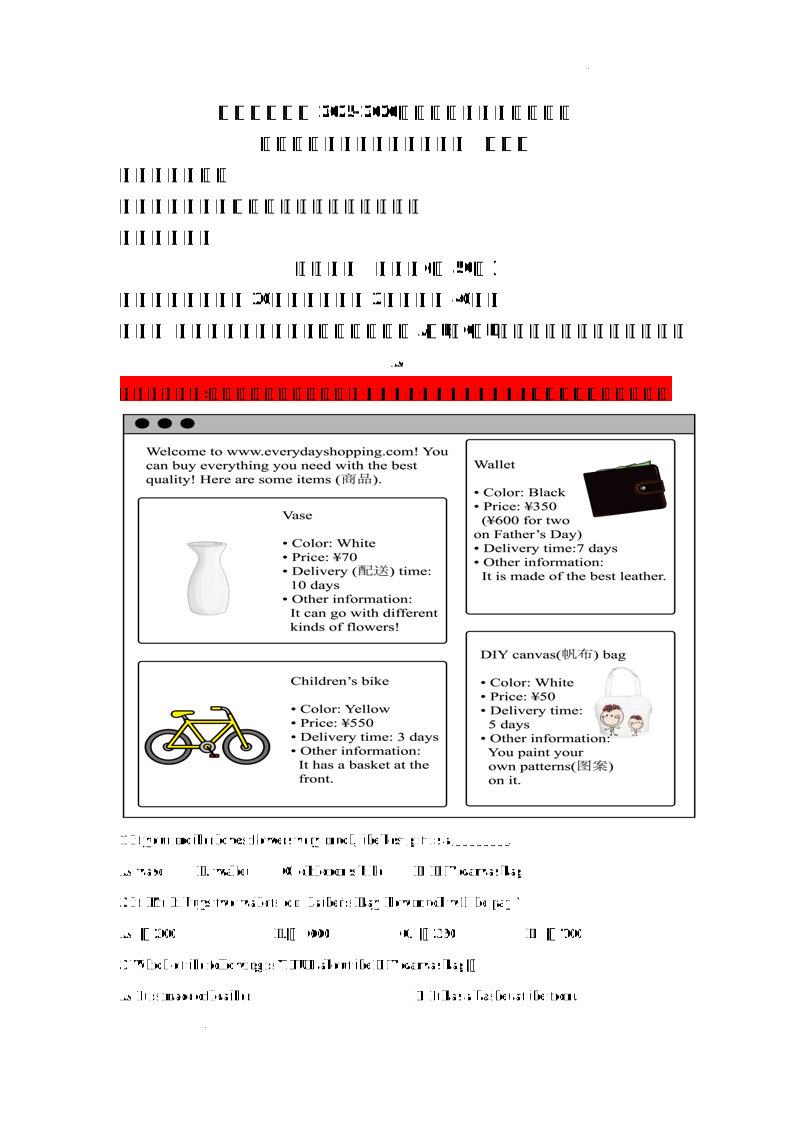
1.If your mother loves flowers very much, the best gift is a ________.
A. vase B. wallet C. children’s bike D. DIY canvas bag
2.If Mr.Li buys two wallets on Father’s Day, how much will he pay ?
A. ¥300 B.¥ 600 C. ¥350 D. ¥700
3.Which of the following is TRUE about the DIY canvas bag ?
A. It is made of leather. B. It has a basket at the front.
C. You can draw your own pictures on it. D. It costs 70yuan.
4.Where can we find the reading material?
A. In a report. B. In a newspaper.
C. On a website. D. In a storybook.
B
In a quiet neighborhood, an old man named Mr. Johnson lived alone. His kids grew up and moved to far off cities for work. Every day, he woke up in an empty house, ate simple meals by himself, and spent a lot of time in the garden, talking to plants.
One sunny morning, Mr. Johnson heard a soft and sad sound while walking. He followed the sound to a small path. There, he saw a dirty, small puppy with sad eyes. The puppy looked hungry. Mr. Johnson felt sorry and took it home. Mr. Johnson didn't have a pet before. But he knew the puppy needed help. He bought dog food and a small bed. He named the puppy Lucky.
As days passed, Lucky grew stronger. Lucky became Mr. Johnson's good friend. In the mornings, Lucky woke Mr. Johnson up gently, wagging(摇晃) its tail. At breakfast, Lucky sat beside him. When Mr. Johnson went to the garden, Lucky ran around and made him laugh.
One evening, Mr. Johnson felt sick and fell in the living room. Lucky knew something was wrong. It barked loudly at Mr. Johnson and then ran to the front door, barking even louder. A neighbor heard and called an ambulance(救护车). Thanks to Lucky, Mr. Johnson got to the hospital in time.
After that, Mr. Johnson's life changed. Lucky brought him joy and saved his life. Mr. Johnson learned that unexpected(意料之外的) friends could change our lives.
5.What did Mr.Johnson do before he met the puppy every day?
A. He went fishing in the river. B. He played cards with neighbors.
C. He talked to plants in the garden. D. He watched TV all day at home.
6.What was the correct order of Lucky's activities in the morning?
Sat together at breakfast.
Ran in the garden.
Woke up Mr.Johnson.
A. B.
C. D.
7.How did Lucky help Mr.Johnson?
A. It called an ambulance itself. B. It ran to the hospital to ask for help.
C. It brought medicine to Mr.Johnson. D. It barked loudly to get attention.
8.How can we know from Mr.Johnson and Lucky?
A. Pets are always trouble for the old. B. We should always stay at home alone.
C. It's hard for the old to take care of a pet. D. Unexpected friends can change our lives.
C
A team of scientists found that spending two hours a
week of class time in nature could help 10 to 12-year-olds
with serious mental (心理的) health problems
to feel better. About 1,000 children took part in the
three-month-long study.They came from 33 different
middle schools.All schools were near a park or green
space.
In the study,half of the children stayed at school,while the other half took part in some nature-based activities for two hours every week.During the two hours they spent in the park,scientists asked teachers to give their daily classes in subjects such as math,languages or science.Also,they asked teachers to hold some short 10-15-minute activities to improve students' mental health.There were activities like drawing a tree,writing stories,talking about life in nature,and so on.
To see if there were changes in behavior (行为) over the study time,scientists asked students and teachers in the study to answer some questions.These questions could help scientists learn about the changes in children's mental problems and behavioral difficulties.
The scientists found that after three months,the biggest changes in behavior appeared (出现) in children with the most serious mental problems,such as feeling nervous or having trouble getting along with classmates.Talks with the teachers also showed that children were more peaceful,relaxed and focused in class after the time spent in nature.
This study shows that nature-based programs can help children with more serious mental health problems.The programs may act as a helpful tool to ease school-aged children's mental problems.According to the scientists,the results are meaningful for teachers to find better ways to help students in need.These low-cost and safe ways will play a bigger role in schools with green space.
9.Teachers can help students with mental problems by asking them to ______ .
A. have more PE classes in the gym B. share ideas with parents at home
C. have fun activities in a park D. write stories in the classroom
10.What is Paragraph 2 mainly about? ______
A. Who took part in the study. B. How scientists did the study.
C. Why teachers held different activities. D. What children learned from the activities.
11.What is the underlined word "they" refer to? ______
A. all the students B. all the teachers
C. the students staying at school D. the students joining in some nature-based activities
12.Where can we most probably read the text? ______
A. In a science magazine. B. In a storybook.
C. In a science textbook. D. In a travel guide.
D
文本溯源:新教材2单元focusing on culture 深度改编,完全原创。
National Parks
A national park is a protected area of nature. Governments have set up national parks to save our natural heritage, such as unique landscapes and endangered wildlife.
Giant Panda National Park, China
The Giant Panda National Park is a national park in China. It stretches across parts of Sichuan, Gansu and Shaanxi. It is huge—27,134 km² in size. Over 70% of the park is covered by forest and its highest mountain is 5,588 m high. This park is home to over 1,600 wild giant pandas. Every year, visitors from all over the world come to see the cutest bears on Earth.
What to see and do:
- See the playful pandas in the wild all year round.
- Discover the pandas’ amazing neighbors,
such as golden monkeys and leopards.
- Explore the forest in summer or ski down the mountains in winter!
- Go hiking and boating, or visit the Giant Panda Museum.
Yellowstone National Park, the USA
Yellowstone is the oldest national park in the world. It covers an area of 8,991 km². A lot of the park sits in the middle of an active volcano, which is 72 km wide! It has four mountain ranges, and the highest mountain, Eagle Peak, is 3,462 m high. The park gets several million visitors each year。
What to see and do:
- Visit the volcanic hot springs.
- Ride a horse in summer or snowmobile in winter!
- Watch amazing wildlife like bears and wolves.
- Go climbing, fishing, cycling or hiking.
13. Why do governments set up national parks?
A. To build more homes for people. B. To protect natural heritage.
C. To make money from tourism. D. To build new cities.
14. Which of the following is TRUE about the Giant Panda National Park?
A. It only lies in Sichuan Province. B. It is smaller than Yellowstone National Park.
C. Over 70% of it is covered by forest. D. There are less than 1,600 pandas in it.
15. What activity can visitors do in both parks?
A. Go boating. B. Visit museums.
C. Ride horses. D. Go hiking.
16. What is the main purpose of the passage?
A. To introduce two famous national parks. B. To teach people how to protect pandas.
C. To compare different national parks in China. D. To tell the history of national parks.
第二节 阅读短文,从方框内所给的选项中选出可以填入空白处的最佳选项,其中有一个多余的选项。
阅读五选四:本大题共4小题,共8分。
We all know fights at school sometimes happen. But how can you keep away from a fight?17.______
Keep calm.
Sometimes, you feel so angry that you really want to teach somebody a lesson. But being
angry can't solve problems.18.______ It may cause you more problems.Schools will punish (惩罚) the students who get into a fight. What's more, there are no winners in a fight.
Shout loudly.
If you know someone is coming up behind you to attack , turn to the person and loudly say "stop" before walking away.19.______ If the person doesn't stop, shout for help by calling out the name of a teacher around you.
Learn to say no.
Your friend may ask you to join in a fight, but helping him fight is not really helpful to him.
20. ______ Also, you can tell him if he gets into a fight, he may get hurt and the teacher may punish him. Then, try to learn why he wants a fight and help him find a right way to solve the
problem.
Remember not to fight at school. This is a school rule.We must follow it.
A.We must cry.
B.A fight can't solve problems,either.
C.Here are some tips for you
D.You must try to ask him not to do that.
E.A loud voice can usually make the attacker calm down
二.完形填空(共10小题,每小题1分,满分10分)
Long long ago, there was a place known as the House of 1,000 Mirrors (镜子) in a small and faraway (遥远的) village.
A small, (37) little dog heard of this place and decided to visit it. When he arrived, he climbed happily up the stairs to the doorway (门口) of the house.
He looked through the doorway (38) his ears lifted high and his tail wagging (摇摆) as fast as it could.
To his great (39) , he found himself seeing 1,000 other happy little dogs with their tails wagging just as fast as his.
He (40) a great smile, and was answered with 1,000 great smiles just as warm and friendly.
As he left the House, he thought to (41) , “This is a wonderful place. I will come back and (42) it often.”
In this same village, another little dog, who was not quite as happy as the (43) dog, decided to visit the house.
He slowly climbed the stairs with his (44) low as he looked into the door.
When he saw the 1,000 unfriendly looking dogs staring back at him, he barked (犬吠) at them and was scared to see 1,000 little dogs (45) back at him.
As he left, he thought to himself, “That is a awful (糟糕的) place, and I will (46) go back there again.”
All the faces in the world are mirrors. When you do and say friendly to the world, the world will answer to you friendly, too.
21.A. ugly B. beautiful C. happy D. sad
22.A. by B. from C. to D. with
23.A. joy B. surprise C. sadness D. care
24.A. smiled B. cried C. breathed D. smelled
25.A. myself B. yourself C. herself D. himself
26.A. leave B. visit C. go D. arrive
27.A. one B. two C. first D. second
28.A. head B. eyes C. body D. paw
29.A. smiling B. barking C. crying D. lying
30.A. sometimes B. usually C. always D. never
第二部分 非选择题(共40分)
三.语篇填空(共10小题,每小题1分,满分10分)
文本溯源:24年营口期末试题
改编说明:优化设计,原题在知识点以及科学性上需要优化提升。
Li Kui, Lin Chong, Song Jiang... These are popular men from the classic novel Outlaws of the Marsh (《水浒传》). Every Spring Festival, they “come out” of the novel and dance in the street. This is Yingge dance.
Yingge dance is a 31. (tradition) Chinese folk dance in Guangdong. It is a mix of dance, opera and Kung fu. It gets ideas from Outlaws of the Marsh and tells 32.________(story) of good beating evil (邪恶).
Dancers wear opera-style makeup and hold short sticks in 33._______ (they )hands. While walking and dancing, they hit the sticks together. With the fast beating drums and the dancing cool moves, the dance rocks the streets and 34________ (make )people feel powerful.
35. _______Guangdong, the young and old all like the dance. Female (女性) Yingge dance started later than the male dance. It 36._______( usual) gets ideas from the stories of Mu Guiying and Hua Mulan.
Zheng Zixin, .37.________8th grader, is a member of a female Yingge dance team in Shantou. She 38._______(become) popular online when dancing during the last Spring Festival.
“Yingge dance is very cool,” she said. “Practising the dance is hard work, 39._______ we will bring out our best.” For people, Yingge dance is not just a kind of dance, but also a way of 40._______(show) hope.
四、阅读与表达(共4小题,41--43小题,每小题2分,44小题4分,满分10分)
文本溯源:鞍山四月限时训练
改编说明:原文是选项阅读,但当时沈阳还没有放春假,所以改编后加入了沈阳春假内容并改编成了回答问题,考查细节定位理解,跨学科融合以及开放性试题表达。
Good news for primary and middle school students: You may get more holidays!
This year, for the first time, the Government Work Report mentions "spring and autumn holidays for primary and secondary school students". It encourages schools to offer these breaks based on their needs.
"Spring and autumn holidays will give students more time to rest during the semester and more time to enjoy our beautiful country," Gao Jinfeng, a member of the National Committee of the Chinese People's Political Consultative Conference and headmaster of a school in Jiangsu province, told China Education Daily.
To help make the breaks successful, other measures may also be introduced. For example, parents may enjoy more paid leave so they can spend time with their children during these holidays. Places such as museums and science centers may also open to students for free, letting them take part in more social and educational activities.
Some regions have already started piloting(试点施行) the policy. In 2025, students in Zhejiang province began enjoying spring and autumn breaks. Later, several cities also introduced the policy. Liaoning is one of them. This spring , primary and junior high school student have 3-day spring break ,from April 28 to April 30. It connects with the May Day holiday ,so students can enjoy an 8-day vacation in total.
With government support, more students have more time to relax and enjoy nature at its best.
41. What does the Government Work Report mention for primary and secondary school students this year?
42. When did the students in Zhejiang province begin enjoying spring and autumn breaks?
43. How many days off did the primary and junior high school students in Shenyang have in total in the May holiday ?
44. What do you think of spring and autumn holidays for students? Why?(开放性问题)
5、 书面表达(满分20)
文本溯源:原创。通过介绍家乡沈阳的天气、人文、游玩特色,引导学生热爱家乡、了解家乡,跨文化交际,树立家乡自豪感、文化自信,懂得主动传播家乡文化。
假如你是李辉,你的英国朋友(Ben)计划来你的家乡沈阳玩,并给你发了封电子邮件,想详细了解你的家乡,请认真阅读他写给你的邮件,并根据邮件内容用英语回信。
Dear LiHui,
How are you? Glad to hear from you. I am planning my trip to China these days.
I’m thinking about travelling to your hometown — Shenyang. I have some questions here.
1. What is the weather like in your hometown now ?
2. What are people in your hometown like? Why do you think so?
3. What can I do when I travel in Shenyang?
I’m looking forward to hearing from you soon.
All the best,
Ben
注意:
(1) 词数80词左右,开头结尾已经写好,不计入词总数。
(2) 回复需要包括所有要点,可适当发挥,使全文连贯。
(3) 文中不得提及真实的人名、校名等。
Dear Tom,
Thank you for writing to me .I’m glad to hear you are coming to my hometown--Shenyang .It’s a good place to visit ________________________________________________________________
__________________________________________________________________________________________________________________________________________________________________________________________________________________________________________________________________________________________________________________________________________________________________________________________________________________________________________________________________________________________
Best Wishes
Tom
学科网(北京)股份有限公司
$
试题答案与评分细则
[答案速查]
1. 阅读理解
第1节 1—4 ABCC 5 -8 CADD
9 -12 CBDA 13 -16 BCDA
第2节 17 -20 CBED
2. 完形填空。
21-25 CDBAD 26 -30 BCABD
三.语篇填空
31.traditional 32.stories 33.their 34.makes 35.In
36.usually 37.an 38.became 39.but 40.showing
四.阅读与表达。
41.Spring and autumn holiday for primary school and secondary school students.
42.In 2025.
43.8/Eight days.
44.I think they are good. Because students can have more time to rest and relax from busy schoolwork. They can also enjoy nature and learn new things outside the classroom.(open-ended)
答案解析与评分细则
A.1-4 ABCC
A1.A 细节理解题。根据“Vase”的“It can go with different kinds of flowers!”可知,如果你的妈妈喜欢花的话,可以送她花瓶。
2.B 细节理解题。根据“Wallet”的“Price: ¥350 (¥600 for two on Father’s Day)”可知,父亲节当天买两个wallet 是¥600.
3.C 对比细节题。对于DIY canvas bag ,依次去文中核对信息,可知只有C正确。
4.C 推理判断题。根据“Welcome to www.everydayshopping.com!”可知,这是一个网址,本文应该是一个网站。
B.5—8 CADD
5.C细节理解题。根据“Every day, he woke up in an empty house, ate simple meals by himself, and spent a lot of time in the garden, talking to plants.”可知,在遇到小狗之前,Mr. Johnson 每天在花园里和植物交谈。
6.A细节理解题。根据“In the mornings, Lucky woke Mr. Johnson up gently, wagging its tail. At breakfast, Lucky sat beside him. When Mr. Johnson went to the garden, Lucky ran around and made him laugh.”可知,早上Lucky先叫醒Mr. Johnson,然后一起吃早餐,最后在花园里跑,顺序为A。
7.D细节理解题。根据“It barked loudly at Mr. Johnson and then ran to the front door, barking even louder. A neighbor heard and called an ambulance (救护车).”可知,Lucky大声吠叫以引起注意来帮助Mr.Johnson。
8.D整体理解题。根据“Mr. Johnson learned that unexpected(意料之外的)friends could change our lives.”可知,从Mr.Johnson和Lucky的故事中我们知道意想不到的朋友可以改变我们的生活。
C.9—12 CBDA
9. C细节理解题。根据文章第一段这句A team of scientists found that spending two hours a week of class in nature could help 10 to 12-year-olds with serious mental health problems to feel better.以及第二段During the two hours they spent in the park,scientists asked teachers to give their daily classes...Also,they asked teachers to hold short 10-15-minute activities to improve students' mental health.可推知,老师可以通过让学生在公园进行有趣的活动来帮助有心理健康问题的学生。
10.B.段落大意题。根据第二段主要讲述了大约1000名孩子参与了为期三个月的研究,来自33所不同中学,研究中一半孩子留在学校,另一半参与自然活动,还介绍了在公园的活动安排以及通过问答了解学生变化等内容,整体是在阐述科学家如何进行这项研究。故选B。
11.D代词指代题。根据文章第二段while the other half took part in some nature-based activities for two hours every week.During the two hours they spent in the park...(而另一半则每周花两个小时参加一些与自然有关的活动。他们在公园里度过的两个小时里……)"可知,"they"指的是参与自然活动的学生。
12.A.推理判断题。本文主要介绍了一项关于自然活动对有心理健康问题儿童影响的科学研究,最有可能在科学杂志上读到。
D.13 --16 BCDA
13.B 细节理解题 根据原文第一段“Governments have set up national parks to save our natural heritage”可知,政府建立国家公园的目的是保护自然遗产,对应选项B。
14.C 细节判断题 根据原文“Over 70% of the park is covered by forest”可知C选项正确。A错误(公园跨四川、甘肃、陕西三省);B错误(大熊猫国家公园面积27134 km²,黄石仅8991 km²,前者更大);D错误(公园内有超过1600只野生大熊猫)。
15.D 细节对比题 对比两个公园的活动列表,大熊猫国家公园提到“Go hiking and boating”,黄石国家公园提到“Go climbing, fishing, cycling or hiking”,两者共同的活动是hiking(徒步旅行),对应选项D。
16.A 主旨大意题 文章先介绍国家公园的定义,再分别介绍中国大熊猫国家公园和美国黄石国家公园的基本信息与游览活动,核心目的是介绍这两个著名国家公园,对应选项A。
17 - 20 CBED
17. C 细节推理题。根据上文"But how can you keep away from a fight?"(但是你怎么能远离打架呢?)以及下文三个小标题给出的具体建议可知,此处需要一个承上启下的过渡句引出下文的建议;选项C"这里有一些给你的建议"符合语境。故选C。
18.B. 细节推理题。根据上文"But being angry can't solve problems."(但是生气不能解决问题。)以及下文"It may cause you more problems."(它可能会给你带来更多问题。)可知,此处进一步说明打架同样无法解决问题,且后句的"it"指代"打架";选项B"打架也不能解决问题"符合语境。故选B。
19.E. 细节推理题。根据上文"turn to the person and loudly say 'stop' before walking away"(转向那个人,大声说"停下",然后走开)以及下文"If the person doesn't stop,shout for help"(如果对方不停下来,就大声呼救)可知,此处说明大声呼喊的作用——通常能让攻击者冷静下来;选项E"响亮的声音通常能让攻击者冷静下来"符合语境。故选E。
20.D 细节推理题。根据上文"Your friend may ask you to join in a fight,but helping him fight is not really helpful to him."(你的朋友可能会让你加入打架,但帮助他打架对他并没有真正的帮助。)以及下文"Also,you can tell him if he gets into a fight,he may get hurt"(此外,你可以告诉他,如果他参与打架,他可能会受伤)可知,此处指首先要劝阻朋友不要参与打架;选项D"你必须尽力让他不要那样做"符合语境。故选D。
完形填空
21-25 CDBAD 26 -30 BCABD
21. C考查形容词。根据下文he found himself seeing 1,000 other happy little dogs可知,第一只狗是一只快乐的小狗。 ugly意为“丑陋的”;beautiful意为“漂亮的”;happy意为“快乐的”;sad意为“悲伤的”。故选C。
22. D考查介词。本句句意为“他从门口看进去,耳朵高竖,尾巴快速摇摆”。with+名词+动词过去分词作后置定语,说明小狗当时的状态。故选D。
23. B考查名词。联系下文可知,这只快乐的小狗看见了1000只快乐的小狗,令他很惊讶;to one's joy意为“使某人高兴的是”;to one's surprise意为“使某人惊讶的是”。故选B。
24. A 考查动词。根据横线之后的a great smile可知,这只小狗微笑了。smiled意为“微笑”;cried意为“哭泣”; breathed意为“呼吸”;smelled意为“嗅到”。故选A。
25. D考查代词。句意为“小狗自己对自己说,这是个好地方。”think to oneself意为“自思自忖,自己对自己说”。故选D。
26. B 考查动词。根据上文可知,快乐的小狗认为千镜之屋是个好地方他将会再回来参观这个地方。leave意为“离开”;visit意为“参观”;go to someplace意为“去某地”; arrive at/in意为“到达”。故选B。
27. C考查数词。句意为“另外一只小狗不像第一只狗那么快乐”。one和two为数词;first为序数词,意为“第一个”;second为序数词,意为“第二个”。故选C。
28. A 考查名词。根据上文可知,第二只狗不是很开心,那么他看向千镜之屋的时候,头应该是低着的。head意为“头”;eyes意为“眼睛”;body意为“身体”;paw意为“爪子”。故选A。
29. B考查动词。根据上文he barked at them可知,第二只狗向镜子吠,那么看到的1000只狗也对 他吠。故选B。
30. D 考查副词。根据上文That is a awful place可知,第二只小狗将绝不会再去千镜之屋。sometimes意为“有时”;usually意为“通常”;always意为“总是”;never 意为“绝不”。故选D。
三.语篇填空
语篇导读:这篇文章介绍的Yingge dance 是广东潮汕地区的传统民俗舞蹈,也是国家非物质文化遗产。中国传统文化相关话题,非遗物质文化宣传。
31. traditional 这里需要形容词修饰名词 Chinese folk dance , tradition 的形容词形式是traditional(传统的)。
32. stories story 是可数名词,这里表示“多个故事”,要用复数形式stories。
33. their 这里需要形容词性物主代词修饰名词 hands , they 的形容词性物主代词是their(他们的)。
34. makes句子主语是 the dance (单数),并列谓语 rocks 和 make 要保持时态一致(一般现在时),所以 make 用第三人称单数makes。
35. In表示“在某个省份/地区”用介词In, In Guangdong 意为“在广东”,句首首字母大写。
36. usually 这里需要副词修饰动词 gets , usual 的副词形式是usually(通常)。
37. an 8th grader 是可数名词单数, 8th 以元音音素/eɪt/开头,所以用不定冠词an,表示“一名八年级学生”。
38.became 考查动词时态,根据后面last Spring Festival 可知是一般过去时。
39.but 这句话的意思是“练习这个舞蹈是艰难的工作,但是我们会尽最大的努力。”可知是转折关系。
40.showing 考查介词后动词用ing形式。
四.回答问题
语篇导读:
41. It mentions "spring and autumn holidays for primary and secondary school students".
- 评分要点:完整答出引号内内容即可得满分,若遗漏引号不扣分,核心信息完整即可。
42. In 2025.
- 评分要点:没有介词in扣一分。
43. 8/Eight days
- 评分要点:答出所给两种答案满分2分,抄写文中句子给1分。
44. 开放性示例(两种答题角度参考)
- 示例1:I think they are good. Because students can have more time to rest and relax from busy schoolwork. They can also enjoy nature and learn new things outside the classroom.
- 示例2:I think they are helpful. They give students more time to stay with their families. Also, students can visit museums and science centers for free to learn more.
- 评分要点:观点明确(支持/合理中立)+ 理由贴合文章主题(休息、陪伴、课外学习等),语法正确即可得满分。
1. 题型特点:沈阳中考“回答问题”以“细节题+开放性题”为主,前3题均为原文可直接定位的细节信息题,最后一题侧重学生的观点表达,鼓励结合文章内容+自身想法作答。
2. 答题规范:
- 细节题建议用完整句子作答,避免只写短语,养成规范答题习惯。
- 开放性题要求学生“观点+理由”双要素,理由需贴合文章主题,避免脱离文本泛泛而谈。
五.书面表达
参考范文
Dear Ben,
I'm glad you're coming to visit Shenyang. Let me tell you something about my hometown.
It’s warm and sunny here now. Sometimes it’s a little windy. People here are really friendly and helpful. They always smile and are ready to give others a hand. You’ll feel warm here.
There are lots of fun things to do. You can visit interesting places and enjoy delicious local food. I’m sure you’ll have a great time.
I’m looking forward to your arrival.
Yours,
Li Hui
【思路点拨】
①题材:本文是一封电子邮件;
②时态:主要使用一般现在时和一般将来时;
③提示:写作要点已给出,考生应注意不要遗漏“信息提示”中的每一项提示,适当添加细节,并突出写作重点。
【结构布局】
第一步:回应来信,表达欢迎;
第二步:分别回答三个问题(环境评价/邻里特点/旅游推荐);
第三步:表达期待见面。
学科网(北京)股份有限公司
$
资源预览图
1
2
3
相关资源
由于学科网是一个信息分享及获取的平台,不确保部分用户上传资料的 来源及知识产权归属。如您发现相关资料侵犯您的合法权益,请联系学科网,我们核实后将及时进行处理。