Unit 8 单元词汇讲解-【精品课】2025-2026学年七年级英语下册同步精品课件(新教材人教版)
2026-05-22
|
39页
|
324人阅读
|
2人下载
精品
资源信息
| 学段 | 初中 |
|---|---|
| 学科 | 英语 |
| 教材版本 | 初中英语人教版七年级下册 |
| 年级 | 七年级 |
| 章节 | Unit 8 Once upon a Time |
| 类型 | 课件 |
| 知识点 | - |
| 使用场景 | 同步教学-单元练习 |
| 学年 | 2026-2027 |
| 地区(省份) | 全国 |
| 地区(市) | - |
| 地区(区县) | - |
| 文件格式 | PPTX |
| 文件大小 | 2.78 MB |
| 发布时间 | 2026-05-22 |
| 更新时间 | 2026-05-22 |
| 作者 | Fleeting blank |
| 品牌系列 | - |
| 审核时间 | 2026-05-22 |
| 下载链接 | https://m.zxxk.com/soft/57978785.html |
| 价格 | 3.00储值(1储值=1元) |
| 来源 | 学科网 |
摘要:
该初中英语单元复习课件围绕“Once upon a Time”主题,系统梳理了核心词汇、短语及语法点,通过对比表格(如real与true)、相关词归纳(如hopefully的构词)和情境例句,构建起词汇-短语-语法的逻辑知识网络。
其亮点在于采用“对比辨析-情境应用-拓展延伸”的复习策略,如复合不定代词anyone与any one的用法对比,培养学生的语言理解与表达能力,通过一词多义(如lay的“下蛋”与“放置”)训练思维的灵活性。分层例句设计满足不同学生需求,助力教师精准复习,有效巩固单元知识。
内容正文:
Unit 8 Once upon a Time
(单元词汇讲解)
(形容词)
真的;真正的
real 与 true
really(副词)非常;确实;真正地
辨 析
拓 展
◆ This is a story from real life.
这是一个源自真实生活的故事。
◆ He is an artist. It that true?
他是一名艺术家。那是真的吗?
real 真的;真正的 指事物或人是客观存在的,并非想象或虚构的
true 符合事实的;真正的 强调符合事实,与“假的;错的”相对
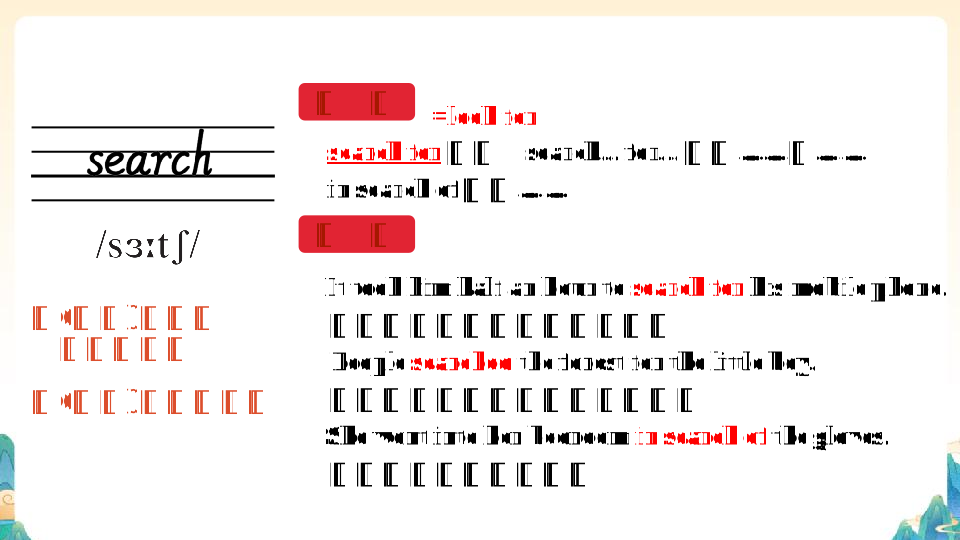
❶(动词)寻找;
搜寻;搜身
❶ search for 寻找 search... for... 搜查……找……
❷ in search of 寻找……
❶ It took him half an hour to search for his mobile phone.
他花了半个小时找他的手机。
People searched the forest for the little boy.
人们在森林里搜寻那个小男孩。
❷ She went into her bedroom in search of the gloves.
她走进卧室去找手套。
❷(名词)寻找;搜寻
搭 配
例 句
=look for
(副词)有希望地;抱有希望地
可放在句首、句中或句末。
Hopefully, we’ll arrive before dark.
我们有望在天黑前到达。
“Are you free tomorrow?” she asked hopefully.
“你明天有空吗?”她抱有希望地问。
用 法
例 句
hopefully 的相关词:
拓 展
hope
v. & n. 希望
hopeful adj. 抱有希望;
给人以希望的
hopeless adj. 无望的
hopefully adv. 有希望地
由“hopeful (adj. 抱有希望)+-ly”构成
动词(laid )
❶ This hen lays a few eggs every week.
这只母鸡每周下几个蛋。
❷ Helen’s mother laid some eggs in the box.
海伦的妈妈把一些鸡蛋放在了盒子里。
❶ 下(蛋)
❷ 放置;搁
例 句
lay 的一词多义:
图 解
下蛋
放置;搁
lay还是动词lie (躺)
的过去式
出乎某人的意料
“to sb’s+表示感情色彩的名词”结构,一般位于句首作插入语,其后用逗号与句子的其他部分隔开。
To my surprise, they lost the game.
出乎我的意料,他们输掉了比赛。
用 法
例 句
◆ They got a surprise when they saw a snake
sleeping near the fire.
当看到一条蛇睡在火堆旁边时,他们很吃惊。
◆ He looked at me in surprise. 他惊讶地看着我。
拓 展
to sb’s happiness/joy /dʒɔɪ/ 令/使某人高兴的是
get a surprise 吃惊 in surprise 惊讶地;惊奇地
(名词)大小;尺寸
in size 在大小/尺寸上
What size do you take? 你穿多大码?
It’s similar in size to a tomato.
它的大小和西红柿差不多。
搭 配
例 句
只有
引导条件状语从句。
You can make progress only if you work hard.
你只有努力学习才能取得进步。
用 法
例 句
当 only if 位于句首时,主句常用部分倒装语序,即把助动词、情态动词或be 动词放在主语及主要动词前。
拓 展
Only if she gets a job can she have enough money to buy some food. 她只有找到工作,才有足够的钱去买些食物。
(名词)钓鱼;捕鱼
go fishing 去钓鱼 a fishing boat 小渔船
a fishing net 渔网
They often go fishing. 他们常去钓鱼。
搭 配
例 句
类似的单词如下:
swimming 游泳
hiking 远足;徒步旅行
skating 滑冰
拓 展
也是fish (v. 钓鱼)的动词⁃ing形式
❶ 出现
❶ The rain stopped and the sun came out.
雨停后太阳出来了。
❷ In spring, grass turns green and flowers come out.
春天,草儿变绿,花儿盛开。
❸ Her new book came out last week.
她的新书上周出版了。
❹ The truth came out in the end.
真相终于大白了。
例 句
❷ 盛开
❸ 出版;发行
❹(消息、真相等)
被获知;为人所知
(不及物动词)
死亡;消失
die 是非延续性动词,不能与时间段连用。
The old man died two months ago.
两个月前那位老人去世了。
Many old buildings are dying. 许多老建筑正在消失。
用 法
例 句
die 的相关词:
拓 展
过去式为died,
现在分词为dying
die v. 死亡;
消失
dying adj. 临死的;垂死的
dead /ded/ adj. 死的;失去生命的
death /deθ/ n. 死;死亡
❶ set... free 释放
❷ set a/the table 摆放餐具
❸ set an example 树立榜样
❶ He set the birds free. 他把鸟放走了。
❷ Could you set the table for me?
你能帮我摆放餐具吗?
❸ She set a good example to her classmates.
她为她的同学树立了好榜样。
❹ Set the clock for 7 o’clock. 把时钟设在7点钟。
(动词)
❶ 使处于某种状况;
使开始
搭 配
例 句
过去式为set,
现在分词为setting
❷ 摆放餐具
❸ 树立;创立
❹ 设置;调整好
形容词
❶ 富有的
❷ 富含……的
❸ 丰富多彩的
rich in... 富含……
❶ Although Peter is rich,he doesn’t feel happy.
尽管彼得很富有,但他感到不快乐。
❷ The area is rich in wildlife.
这个地区的野生生物很多。
❸ This country has a rich history.
这个国家有着丰富多彩的历史。
搭 配
例 句
反义词为poor
(形容词)强大的;
有影响力的
He used to be a rich and powerful man.
他曾经是一个有钱有势的人。
例 句
power(名词)权力;力量
拓 展
由“power (n. 权力;力量)+⁃ful”构成
(复合不定代词)
任何人;某个人
相当于 anybody,常用于否定句或疑问句中,代替 someone 或 somebody,也可用于肯定句中。
Did anyone go to the beach with Amy?
有人和埃米一起去海滩了吗?
Anyone knows the answer to the question.
任何人都知道那个问题的答案。
用 法
例 句
anyone作主语时,谓语动词要用第三人称单数形式
(复合不定代词)
任何人;某个人
anyone与any one
Don’t let anyone get any one of the books.
不要让任何人拿任何一本书。
辨 析
串 记
(1) someone 某人;有人 通常用于肯定句中。
◆ Someone is putting up a tent. 有人正在搭帐篷。
(2) everyone 每人;所有人
◆ Everyone had a good time at the party.
所有人都在聚会上玩得很开心。
拓 展
含有 one 的其他复合不定代词如下:
anyone 只指人,不指物,且后面不接 of 短语
any one 既可指人,又可指物,表示“任何一个”,后可接 of 短语
而不是;代替
instead of 与 instead
两者均可意为“代替;反而”。区别如下:
◆ He decided to walk home instead of taking a taxi.
他决定走回家,而不是坐出租车。
◆ She didn’t laugh at me. She helped me instead.
她没嘲笑我,反而帮助了我。
辨 析
instead of 介词短语 位于句首或句中,其后可接名词、代词或动词⁃ing 形式
instead 副词 常位于句首或句末,修饰整个句子
(反身代词)
他自己;他本人
在句中常作宾语,与逻辑主语在人称和数上保持一致。
He can look after himself very well.
他能把自己照顾得很好。
用 法
例 句
(1) 反身代词归纳如下:
拓 展
单数
第一人称
myself 我自己
复数
ourselves 我们自己
第二人称
yourself 你自己
yourselves 你们自己
第三人称
himself 他自己
herself 她自己
itself 它自己
themselves
他(她、它)们自己
(反身代词)
他自己;他本人
(2) 含有反身代词的常见短语如下:
teach oneself/learn by oneself 自学
enjoy oneself 过得愉快
help oneself (to)... 随便(吃/用)……
dress oneself 自己穿衣服
look after oneself 照顾自己
talk to oneself 自言自语
拓 展
最后;终究
相当于 at last 或 finally,通常位于句首或句末作状语。其反义短语是 at first(起初;最初)。
They made a lot of money in the end.
他们最后赚了很多钱。
用 法
例 句
at the end of 在……的末尾/尽头
其后接时间或地点名词。
◆ at the end of January 在一月底
◆ at the end of the road 在路的尽头
拓 展
(形容词)
真的;真正的
real 与 true
really(副词)非常;确实;真正地
辨 析
拓 展
◆ This is a story from real life.
这是一个源自真实生活的故事。
◆ He is an artist. It that true?
他是一名艺术家。那是真的吗?
real 真的;真正的 指事物或人是客观存在的,并非想象或虚构的
true 符合事实的;真正的 强调符合事实,与“假的;错的”相对
❶(动词)寻找;
搜寻;搜身
❶ search for 寻找 search... for... 搜查……找……
❷ in search of 寻找……
❶ It took him half an hour to search for his mobile phone.
他花了半个小时找他的手机。
People searched the forest for the little boy.
人们在森林里搜寻那个小男孩。
❷ She went into her bedroom in search of the gloves.
她走进卧室去找手套。
❷(名词)寻找;搜寻
搭 配
例 句
=look for
(副词)有希望地;抱有希望地
可放在句首、句中或句末。
Hopefully, we’ll arrive before dark.
我们有望在天黑前到达。
“Are you free tomorrow?” she asked hopefully.
“你明天有空吗?”她抱有希望地问。
用 法
例 句
hopefully 的相关词:
拓 展
hope
v. & n. 希望
hopeful adj. 抱有希望;
给人以希望的
hopeless adj. 无望的
hopefully adv. 有希望地
由“hopeful (adj. 抱有希望)+-ly”构成
动词(laid )
❶ This hen lays a few eggs every week.
这只母鸡每周下几个蛋。
❷ Helen’s mother laid some eggs in the box.
海伦的妈妈把一些鸡蛋放在了盒子里。
❶ 下(蛋)
❷ 放置;搁
例 句
lay 的一词多义:
图 解
下蛋
放置;搁
lay还是动词lie (躺)
的过去式
出乎某人的意料
“to sb’s+表示感情色彩的名词”结构,一般位于句首作插入语,其后用逗号与句子的其他部分隔开。
To my surprise, they lost the game.
出乎我的意料,他们输掉了比赛。
用 法
例 句
◆ They got a surprise when they saw a snake
sleeping near the fire.
当看到一条蛇睡在火堆旁边时,他们很吃惊。
◆ He looked at me in surprise. 他惊讶地看着我。
拓 展
to sb’s happiness/joy /dʒɔɪ/ 令/使某人高兴的是
get a surprise 吃惊 in surprise 惊讶地;惊奇地
(名词)大小;尺寸
in size 在大小/尺寸上
What size do you take? 你穿多大码?
It’s similar in size to a tomato.
它的大小和西红柿差不多。
搭 配
例 句
只有
引导条件状语从句。
You can make progress only if you work hard.
你只有努力学习才能取得进步。
用 法
例 句
当 only if 位于句首时,主句常用部分倒装语序,即把助动词、情态动词或be 动词放在主语及主要动词前。
拓 展
Only if she gets a job can she have enough money to buy some food. 她只有找到工作,才有足够的钱去买些食物。
(名词)钓鱼;捕鱼
go fishing 去钓鱼 a fishing boat 小渔船
a fishing net 渔网
They often go fishing. 他们常去钓鱼。
搭 配
例 句
类似的单词如下:
swimming 游泳
hiking 远足;徒步旅行
skating 滑冰
拓 展
也是fish (v. 钓鱼)的动词⁃ing形式
❶ 出现
❶ The rain stopped and the sun came out.
雨停后太阳出来了。
❷ In spring, grass turns green and flowers come out.
春天,草儿变绿,花儿盛开。
❸ Her new book came out last week.
她的新书上周出版了。
❹ The truth came out in the end.
真相终于大白了。
例 句
❷ 盛开
❸ 出版;发行
❹(消息、真相等)
被获知;为人所知
(不及物动词)
死亡;消失
die 是非延续性动词,不能与时间段连用。
The old man died two months ago.
两个月前那位老人去世了。
Many old buildings are dying. 许多老建筑正在消失。
用 法
例 句
die 的相关词:
拓 展
过去式为died,
现在分词为dying
die v. 死亡;
消失
dying adj. 临死的;垂死的
dead /ded/ adj. 死的;失去生命的
death /deθ/ n. 死;死亡
❶ set... free 释放
❷ set a/the table 摆放餐具
❸ set an example 树立榜样
❶ He set the birds free. 他把鸟放走了。
❷ Could you set the table for me?
你能帮我摆放餐具吗?
❸ She set a good example to her classmates.
她为她的同学树立了好榜样。
❹ Set the clock for 7 o’clock. 把时钟设在7点钟。
(动词)
❶ 使处于某种状况;
使开始
搭 配
例 句
过去式为set,
现在分词为setting
❷ 摆放餐具
❸ 树立;创立
❹ 设置;调整好
形容词
❶ 富有的
❷ 富含……的
❸ 丰富多彩的
rich in... 富含……
❶ Although Peter is rich,he doesn’t feel happy.
尽管彼得很富有,但他感到不快乐。
❷ The area is rich in wildlife.
这个地区的野生生物很多。
❸ This country has a rich history.
这个国家有着丰富多彩的历史。
搭 配
例 句
反义词为poor
(形容词)强大的;
有影响力的
He used to be a rich and powerful man.
他曾经是一个有钱有势的人。
例 句
power(名词)权力;力量
拓 展
由“power (n. 权力;力量)+⁃ful”构成
(复合不定代词)
任何人;某个人
相当于 anybody,常用于否定句或疑问句中,代替 someone 或 somebody,也可用于肯定句中。
Did anyone go to the beach with Amy?
有人和埃米一起去海滩了吗?
Anyone knows the answer to the question.
任何人都知道那个问题的答案。
用 法
例 句
anyone作主语时,谓语动词要用第三人称单数形式
(复合不定代词)
任何人;某个人
anyone与any one
Don’t let anyone get any one of the books.
不要让任何人拿任何一本书。
辨 析
串 记
(1) someone 某人;有人 通常用于肯定句中。
◆ Someone is putting up a tent. 有人正在搭帐篷。
(2) everyone 每人;所有人
◆ Everyone had a good time at the party.
所有人都在聚会上玩得很开心。
拓 展
含有 one 的其他复合不定代词如下:
anyone 只指人,不指物,且后面不接 of 短语
any one 既可指人,又可指物,表示“任何一个”,后可接 of 短语
而不是;代替
instead of 与 instead
两者均可意为“代替;反而”。区别如下:
◆ He decided to walk home instead of taking a taxi.
他决定走回家,而不是坐出租车。
◆ She didn’t laugh at me. She helped me instead.
她没嘲笑我,反而帮助了我。
辨 析
instead of 介词短语 位于句首或句中,其后可接名词、代词或动词⁃ing 形式
instead 副词 常位于句首或句末,修饰整个句子
(反身代词)
他自己;他本人
在句中常作宾语,与逻辑主语在人称和数上保持一致。
He can look after himself very well.
他能把自己照顾得很好。
用 法
例 句
(1) 反身代词归纳如下:
拓 展
单数
第一人称
myself 我自己
复数
ourselves 我们自己
第二人称
yourself 你自己
yourselves 你们自己
第三人称
himself 他自己
herself 她自己
itself 它自己
themselves
他(她、它)们自己
(反身代词)
他自己;他本人
(2) 含有反身代词的常见短语如下:
teach oneself/learn by oneself 自学
enjoy oneself 过得愉快
help oneself (to)... 随便(吃/用)……
dress oneself 自己穿衣服
look after oneself 照顾自己
talk to oneself 自言自语
拓 展
最后;终究
相当于 at last 或 finally,通常位于句首或句末作状语。其反义短语是 at first(起初;最初)。
They made a lot of money in the end.
他们最后赚了很多钱。
用 法
例 句
at the end of 在……的末尾/尽头
其后接时间或地点名词。
◆ at the end of January 在一月底
◆ at the end of the road 在路的尽头
拓 展
$
资源预览图

1

2
3

4

5

6

相关资源
由于学科网是一个信息分享及获取的平台,不确保部分用户上传资料的 来源及知识产权归属。如您发现相关资料侵犯您的合法权益,请联系学科网,我们核实后将及时进行处理。