精品解析:山东潍坊市诸城市2025-2026学年外研版(三起)(2012)第二学期五年级英语学科学情监测
 切换试卷
切换试卷
2026-05-20
|
3份
|
23页
|
5人阅读
|
0人下载
资源信息
| 学段 | 小学 |
|---|---|
| 学科 | 英语 |
| 教材版本 | - |
| 年级 | 五年级 |
| 章节 | - |
| 类型 | 试卷 |
| 知识点 | - |
| 使用场景 | 同步教学-期中 |
| 学年 | 2026-2027 |
| 地区(省份) | 山东省 |
| 地区(市) | 潍坊市 |
| 地区(区县) | 诸城市 |
| 文件格式 | ZIP |
| 文件大小 | 8.62 MB |
| 发布时间 | 2026-05-20 |
| 更新时间 | 2026-05-20 |
| 作者 | 匿名 |
| 品牌系列 | - |
| 审核时间 | 2026-05-20 |
| 下载链接 | https://m.zxxk.com/soft/57953233.html |
| 价格 | 5.00储值(1储值=1元) |
| 来源 | 学科网 |
内容正文:
请听下面一段音乐并调试音量。听力测试现在开始,一听单词,从每小题所给的ABC3个选项中选出你所听到的单词,并将答案标号写在题前括号内,每个单词读两遍。Warm life. life. two dish. dish. three coat, count . for . light. light five ago. A. O2. 听单词或短语。从题中选出你所听到的单词或短语对应的图片,并将答案标号写在题号下面的方框内,每个单词或短语读两遍。Warm, but . dancer, but . dancer . too. Watch TV. Watch T, V three sandwich, sandwich. four, telephone. telephone . five. umbrella, umbrella. 3、听句子,选出你所听到的句子,并将答案标号写在题前括号内,每个句子。读两遍。我。there are two beautiful cats. There are two beautiful cats. Two, he's learning . english now. He's learning english now. Three, what did you have for dinner? What did you have for . dinner for? SHE worked . in the fields. SHE worked in the . fields. Five, the . blue . pencils are new. The blue pencils on new. 4、判断下面的图片与听到的句子或对话内容是否相符,符合的在括号中打对号,不符合的打错号,每个句子。读两遍。One. he is a doctor, he is a doctor. Two, the big is very light, the big is very light. Three. three, we . played football yesterday. Three, we played football yesterday. For. here's an . apple, let's see. IT, here's an apple let's seat IT. Five, he . had noodles . for lunch. He had noodles for lunch. 五听。问句选择恰当的答语,从每小题所给的AB两个选项中选出你所听到的句子的恰当答语,并将答案标号写在题前括号内。One, who . are they? Who are they? Two, did he learn to dance? Did he learn to dance? Three. what did . you have for lunch? What did SHE have for lunch? for? What did you . do yesterday? What did you do yesterday? Five, have you got a small one? Have you got a small one? 6、听对话录音中有五个小对话,根据每个对话的内容选出所对应的图片,每个对话。读两遍。我did SHE write a book yesterday?No, he made a cake. Did SHE write a book yesterday? No, he made a cake. Two, where are the books about english there on shelf sea? Where are the books about english there on shelf sea? Three, look at the back. It's big and light. Yes, I like IT. I will take IT. Look at the bag is bigger light. Yes, I like IT. I will take IT. For where did you live? Many years ago, I lived in a small house. Where did you live? Many years ago, I lived in a small house. Five, what . did he do? Ten years ago, SHE was a . teacher. What did he do? Ten years ago, SHE was a teacher. 听力测试到此结束。
2025-2026学年第二学期五年级英语学科学情监测
听力部分 (45分)
一、(共5分)
1. 听单词。从每小题所给的A、B、C三个选项中选出你所听到的单词。【此处可播放相关音频,请去附件查看】
( ) 1. A. lady B. wall C. life
( ) 2. A. cook B. dish C. dear
( ) 3. A. wrong B. card C. shelf
( ) 4. A. light B. look C. heavy
( ) 5. A. ask B. ago C. wrote
【答案】 ①. C ②. B ③. B ④. A ⑤. B
【解析】
【详解】听力材料:
1. life 2. dish 3. card 4. light 5. ago
二、听单词或短语。 (共5分)
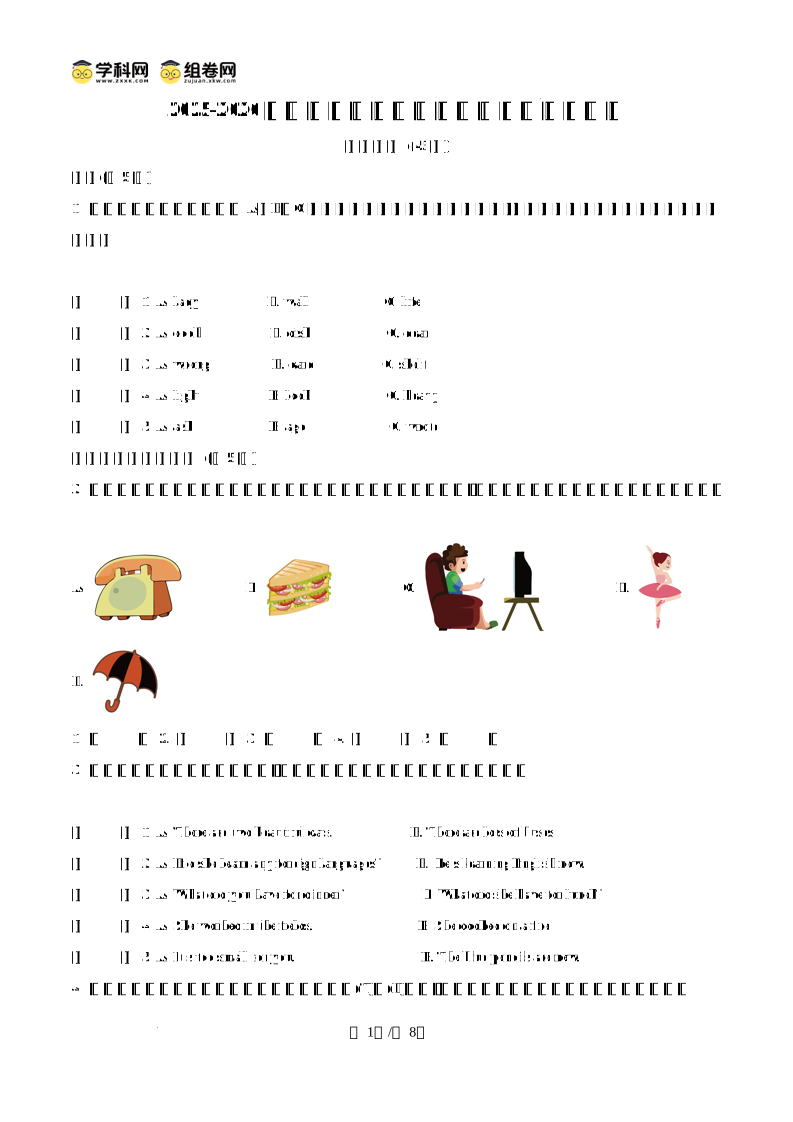
2. 听单词或短语。从题中选出你所听到的单词或短语对应的图片。【此处可播放相关音频,请去附件查看】
A. B. C. D.
E.
1. ( ) 2. ( ) 3. ( ) 4. ( ) 5. ( )
【答案】 ①. D ②. C ③. B ④. A ⑤. E
【解析】
【详解】听力材料:
1. a dancer 2. watch TV 3. sandwich 4. telephone 5. umbrella
3. 听句子,选出你所听到的句子。【此处可播放相关音频,请去附件查看】
( ) 1. A. There are two beautiful cats. B. There are lots of buses.
( ) 2. A. Did she learn any foreign languages? B. He’s learning English now.
( ) 3. A. What did you have for dinner? B. What did she have for lunch?
( ) 4. A. She worked in the fields. B. She cooked on a fire.
( ) 5. A. It’s too small for you. B. The blue pencils are new.
【答案】 ①. A ②. B ③. A ④. A ⑤. B
【解析】
【详解】听力材料:
1. There are two beautiful cats.
2. He’s learning English now.
3. What did you have for dinner?
4. She worked in the fields.
5. The blue pencils are new.
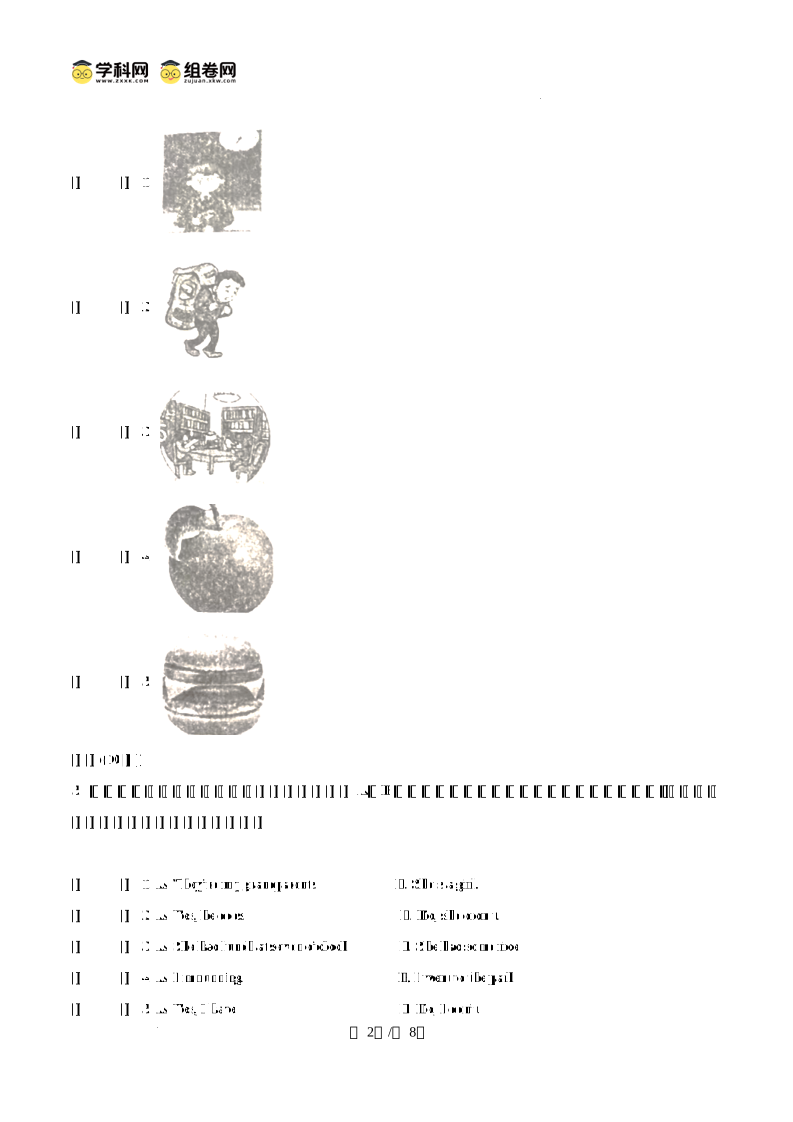
4. 判断下面的图片与听到的句子或对话内容是(T)否(F)相符。【此处可播放相关音频,请去附件查看】
( ) 1.
( ) 2.
( ) 3.
( ) 4.
( ) 5.
【答案】 ①. F ②. F ③. F ④. T ⑤. F
【解析】
【详解】听力材料:
1. He’s a doctor.
2. The bag is very light.
3. We played football yesterday.
4. —Here’s an apple.
—Let’s eat it.
5. He had noodles for lunch.
五、(10分)
5. 听问句,选择恰当的答语。从每小题所给的A、B两个选项中选出你所听到的句子的恰当答语。【此处可播放相关音频,请去附件查看】
( ) 1. A. They’re my grandparents. B. She’s a girl.
( ) 2. A. Yes, he does. B. No, she didn’t.
( ) 3. A. She had lunch at seven o’clock. B. She had some rice.
( ) 4. A. I’m running. B. I went to the park.
( ) 5. A. Yes, I have. B. No, I don’t.
【答案】 ①. A ②. B ③. B ④. B ⑤. A
【解析】
【详解】听力材料:
1. Who are they?
2. Did she learn to dance?
3. What did she have for lunch?
4. What did you do yesterday?
5. Have you got a small one?
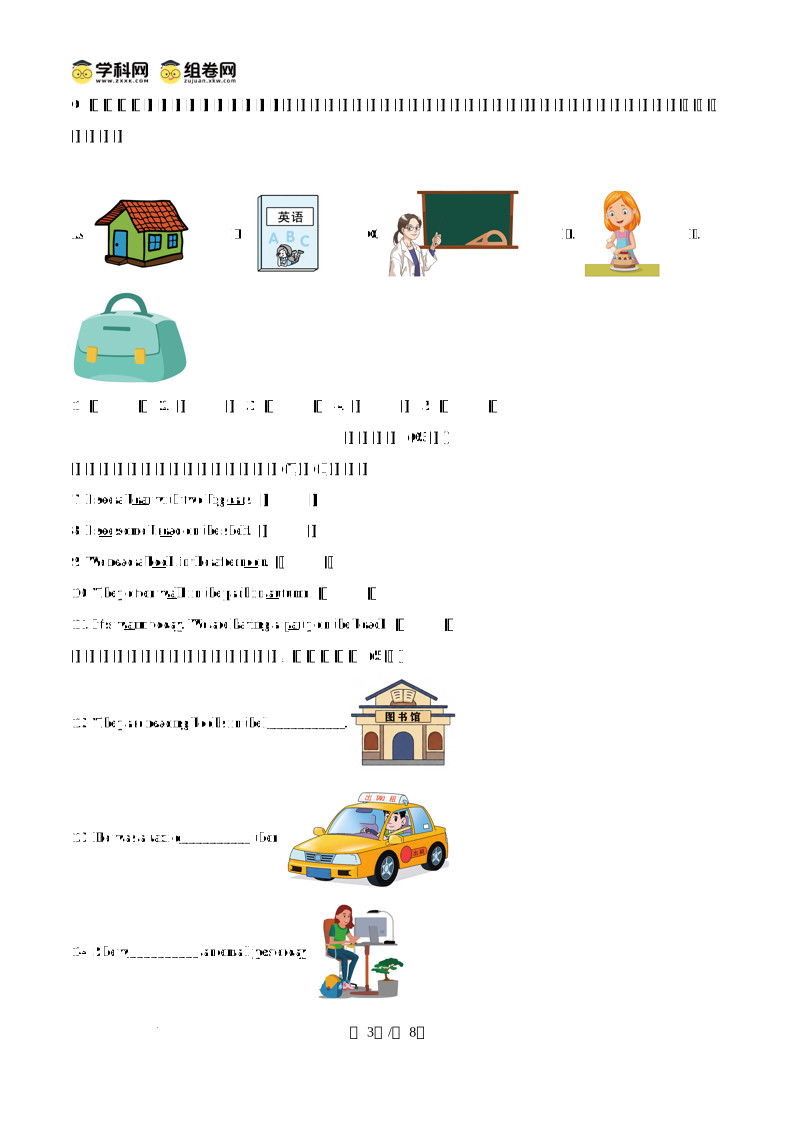
6. 听对话。录音中有五个小对话。根据每个对话的内容选出所对应的图片。【此处可播放相关音频,请去附件查看】
A. B. C. D. E.
1. ( ) 2. ( ) 3. ( ) 4. ( ) 5. ( )
【答案】 ①. D ②. B ③. E ④. A ⑤. C
【解析】
【详解】听力材料:
1.—Did she write a book yesterday?
—No, She made a cake.
2. —Where are the books about English?
—They’re on Shelf C.
3. —Look at the bag. It’s big and light.
—Yes, I like it. I will take it.
4. —Where did you live many years ago?
—I lived in a small house.
5. —What did she do ten years ago?
—She was a teacher.
笔试部分 (65分)
判断句子中单词画线部分的发音是(T)否(F)相同。
7. I see a bear with two big ears. ( )
8. I see some bread on the shelf. ( )
9. We read a book in the afternoon. ( )
10. They often walk in the park in autumn. ( )
11. It’s warm today. We are having a party on the beach. ( )
【答案】7. F 8. F
9. F 10. T
11. F
【解析】
【7题详解】
句意:我看到一只熊有两只大耳朵。bear画线部分发音为/eə/,ears画线部分发音为/ɪə/,发音不同。
【8题详解】
句意:我在架子上看见一些面包。see画线部分发音为/iː/,bread画线部分发音为/e/,发音不同。
【9题详解】
句意:我们在下午读书。book画线部分发音为/ʊ/,afternoon画线部分发音为/uː/,发音不同。
【10题详解】
句意:他们经常在秋天在公园里走。walk和autumn画线部分发音均为/ɔː/,发音相同。
【11题详解】
句意:今天是温暖的。我们在沙滩上正在举行一个聚会。warm画线部分发音为/ɔː/,party画线部分发音为/ɑː/,发音不同。
八、根据图片及首字母提示写单词, 补全句子。 (5分)
12. They are reading books in the l___________.
【答案】library##ibrary
【解析】
【详解】句意:他们正在______里读书。右图呈现的是图书馆library,in the library在图书馆。
13. He was a taxi d__________ then.
【答案】driver##river
【解析】
【详解】句意:他那时是出租车____。根据图片和首字母可知本题考查单词driver,名词,司机,taxi driver名词词组,出租车司机,根据a可知driver用单数。
14. She w__________ an email yesterday.
【答案】wrote##rote
【解析】
【详解】句意:她昨天______了一封电子邮件。右图呈现的是一个人在电脑前写邮件的场景,write an email写一封电子邮件,为固定搭配,yesterday是一般过去时的标志词,故设空处为动词的过去式wrote。
15. Take your u__________. It’s raining.
【答案】umbrella##mbrella
【解析】
【详解】句意:带上你的_______。正在下雨。图片是雨伞umbrella,名词用单数。
16. The elephant is very big and h__________.
【答案】heavy##eavy
【解析】
【详解】句意:大象非常大的而且____。根据图片信息可知这头大象体重为5068千克,首字母是h,单词是heavy,形容词,重的,作表语。
九、单项选择。 (共10分, 每小题1分)
17. There ________ any buses then. ( )
A. wasn’t B. were C. weren’t
【答案】C
【解析】
【详解】句意:那时没有公共汽车。本题考查be动词,根据any可知句子是否定句,be动词用否定形式,排除B选项;buses是名词复数形式,be动词用weren’t,故选C。
18. He sent these toys ________ his friend. ( )
A. in B. to C. at
【答案】B
【解析】
【详解】句意:他把这些玩具寄给他的朋友。本题考查动词短语,A在……里,B朝,向,C在。send sth. to sb.意思是把某物寄给某人,故选B。
19. You can’t _______ it ______ China. ( )
A. take; of B. took; to C. take; to
【答案】C
【解析】
【详解】句意:你不能_______它________中国。take sth. to sp.意思是把某物带到某地,所以排除A选项;情态动词can't后面跟动词原形,所以C选项符合题意,故选C。
20. My bag is _______. I want a new one. ( )
A. light B. broken C. big
【答案】B
【解析】
【详解】句意:我的包是_____。我想要买一个新的。A.light轻的, B.broken 坏的,C.big大的,由句子后面可知判断包坏了,故选B。
21. Dong Fang likes _______ horses, and she _______ a horse two weeks ago. ( )
A. riding; rode B. ride; rode C. rode; rides
【答案】A
【解析】
【详解】句意:董芳喜欢骑马,并且她2周前骑马了。根据句意第一空是短语ride horses“骑马”,用在短语like doing sth结构中,ride 用riding。第二空是短语ride a horse,根据时间“2周前”, 句子时态用一般过去时,ride用过去式rode。根据所给选项,A选项正确。故选A。
【点睛】这是考查动词适当形式的题目。要掌握动词的各种变化。
22. Thank you for us clean the classroom. ( )
A. helping B. helps C. to help
【答案】A
【解析】
【详解】略
23. It’s ________ big for you ________ carry. ( )
A. too; too B. to; too C. too; to
【答案】C
【解析】
【详解】句意:它太大了,你拿不动。本题考查固定用法,too...to...太……而不能……,故选C。
24. I gave a kite ________ my little sister. ( )
A. in B. for C. to
【答案】C
【解析】
【详解】句意:我给我妹妹一只风筝。本题考查动词短语,give sth to sb给某人某物,gave是give的过去式,故选C。
25. Shandong is _________ the ________ of China. ( )
A. at; east B. in; east C. at; west
【答案】B
【解析】
【详解】句意:山东___中国的___。at一般用来搭配较小的地点,in表示在某个整体区域内部的某个方位,in the+方位词+of...表示在……(内部)的……方向,east东方,west西方,根据常识可知山东在中国东部,B符合题意。
26. Daming stayed in Qingdao with his brother _________ a month _________ July. ( )
A. in; in B. for; for C. for; in
【答案】C
【解析】
【详解】句意:大明在七月和他的哥哥在青岛待了一个月。for用于表示动作持续的一段时间长度,for a month持续一个月,in+月份,为固定用法。
补全对话。
A: _____27_____
B: I fell off my bike last Saturday and hurt my foot.
A: That’s too bad! Are you all right?
B: I’m OK now. Come and look at my photos.
A: _____28_____
B: Tianshan, Xinjiang. _____29_____ Look! The horse is so strong.
A: ____30____
B: In July. And I went there with my parents.
A: Did you go to Turpan?
B: ____31____ We saw lots of fruit. But we didn’t eat them. They will be ready in August.
A. When did you go there?
B. I rode a horse.
C. What happened to you?
D. Yes, we did.
E. Where did you go in this photo?
【答案】27. C 28. E 29. B 30. A 31. D
【解析】
【导语】本文主要讲述了两人围绕旅行地点、活动、时间和吐鲁番见闻展开交流。
【27题详解】
根据下句上周六我从自行车上摔了下来,伤到了脚。可知应询问发生了什么,选项C“你发生了什么?”符合语境。
【28题详解】
根据下句新疆天山。可知应询问照片的地点,选项E“在这张照片里你去了哪里?”符合语境。
【29题详解】
根据下句看!这匹马好强壮。可知这里应介绍与马相关的语句,选项B“我骑了马。”符合语境。
【30题详解】
根据在七月。可知应询问去的时间,选项A“你是什么时候去那里的?”符合语境。
【31题详解】
根据上句你们去吐鲁番了吗?可知这是助动词引导的一般疑问句,应该用Yes或者No回答,选项D“是的,我们去了。”符合语境。
十一、阅读短文, 选出正确的答案。 (30分)
Jack and his mother are sitting at the dining table (在饭桌旁). They are having lunch.
“I don’t like this soup (汤). I don’t want to drink it,” says Jack. He puts down the spoon (汤匙). “All right,” says his mother. “Don’t drink it.”
After lunch, Jack and his mother work in the fields. They work so hard.
In the evening, Jack’s mother gives him a bowl (碗) of soup. “Oh, the soup is very delicious,” says Jack. His mother says, “It is the same soup.”
32. Where are Jack and his mother sitting? ( )
A. In the room. B. At the dining table. C. On the desk.
33. What are they doing at first (起初)? ( )
A. Having lunch. B. Watching TV. C. Reading English books.
34. Does Jack like this soup at first? ( )
A. Yes, he does. B. No, he doesn’t. C. He likes the soup.
35. When do Jack and his mother work in the fields? ( )
A. In the morning. B. Before lunch. C. After lunch.
36. What does Jack’s mother give him in the evening? ( )
A. Another bowl of soup. B. The same cake. C. The same soup.
【答案】32. B 33. A 34. B 35. C 36. C
【解析】
【分析】
短文大意:介绍杰克和他妈妈吃饭及工作的情况。
【32题详解】
问句句意:杰克和他的妈妈坐在哪里了?根据Jack and his mother are sitting at the dining table (在饭桌旁). 可知他们坐在饭桌旁。故选B。
【33题详解】
问句句意:起初他们做什么了?根据They are having lunch.可知他们在吃午饭。故选A。
【34题详解】
问句句意:起初杰克喜欢这个汤吗?根据“I don’t like this soup (汤). I don’t want to drink it,” says Jack. 可知他不喜欢。故做否定回答,故选B。
【35题详解】
问句句意:杰克和他的妈妈什么时候工作?根据After lunch, Jack and his mother work in the fields.可知是午饭后工作。故选C。
【36题详解】
问句句意:杰克的妈妈在晚上给了他什么?根据最后一段可知给了他一碗相同的汤。故选C。
【点睛】
阅读理解。
Chopsticks are the most important tableware in China. The Chinese use them to enjoy their meals. They are two sticks made of simple materials. Chinese people have used chopsticks for at least three thousand years. They have been spread to other Asian countries, such as Japan and South Korea. The length, shape and materials of chopsticks are different in different countries.
While using chopsticks, it’s important to remember your manners. Chopsticks are not a toy. Never wave them in the air while eating. When you finish your meal or you need a break, lay your chopsticks down against the edge of your bowl. You should never make your chopsticks stick in the food. This is considered rude. And never stab your food with the end of the chopsticks. The chopsticks are made for picking up food, not stabbing.
37. The best title for this passage can be “_______”. ( )
A. Chopsticks
B. The History of Chopsticks
C. The Manners of Using Chopsticks
38. _______ usually use chopsticks. ( )
A. Only the Chinese
B. People from Western countries
C. People from Asian countries
39. What’s the Chinese meaning of the underlined word “manners”? ( )
A. 礼仪 B. 食量 C. 营养
40. You can _______ food with chopsticks. ( )
A. play with B. stab C. pick up
41. Which one is NOT true according to this passage? ( )
A. You shouldn’t wave the chopsticks while eating.
B. It is rude to make your chopsticks stick in the food.
C. The shape and materials of chopsticks are the same in different countries.
【答案】37. A 38. C 39. A 40. C 41. C
【解析】
【导语】本文主要介绍筷子的使用礼仪。
【37题详解】
句意:这篇短文最好的题目可以是“_______”。Chopsticks筷子,The History of Chopsticks筷子的历史,The Manners of Using Chopsticks使用筷子的礼仪。根据“Chinese people have used chopsticks for at least three thousand years.”可知第一段介绍筷子的历史,根据“While using chopsticks, it’s important to remember your manners.”可知第二段介绍筷子的使用礼仪。都片面,总之是介绍筷子,选项A符合。
【38题详解】
句意:____通常使用筷子。根据“They have been spread to other Asian countries, such as Japan and South Korea.”可知是亚洲国家。
【39题详解】
句意:画线单词“manners”的汉语意思是什么?根据“Never wave them in the air while eating.”可知是礼仪。
【40题详解】
句意:你可以用筷子____食物。根据“The chopsticks are made for picking up food, not stabbing.”可知是用来夹食物的。
【41题详解】
句意:根据这段文字哪一项是不正确的?You shouldn’t wave the chopsticks while eating.吃饭时不应该挥动筷子。It is rude to make your chopsticks stick in the food.把筷子插在食物里是不礼貌的行为。The shape and materials of chopsticks are the same in different countries.不同国家的筷子形状和材质都是一样的。根据“The length, shape and materials of chopsticks are different in different countries.”可知是不同的。
阅读理解。
What Represents China?
China has a long history of over 5,000 years. What could represent (象征) China in your eyes?
The Great Wall represents China in my eyes. It is very long, and it’s over 2,000 years old. I really hope I can go there and enjoy the fantastic view (景色) one day.
Daming
In my opinion, the colour “red” can represent China. We can often see red in our lives, such as New Year, firecrackers and paper-cutting.
Lingling
In China, dumplings represent happiness and reunion (团聚). Families in China always get together and make dumplings during festivals. When they make dumplings, they talk and laugh. The food brings them happiness.
Fangfang
I think the “dragon” can represent China. Chinese people love dragons. And we Chinese always see ourselves as “the descendants (传人) of the dragon”. In China, dragon means power. Parents hope we can become as strong as dragons.
Xiaolin
42. Daming thinks ________ represents China. ( )
A. New Year B. the Great Wall C. paper-cutting
43. What represents China in Lingling’s eyes? ( )
A. Red. B. Chinese dragon. C. Flowers.
44. Fangfang thinks dumplings represent ________ in China. ( )
A. Families B. talking and laughing C. happiness and reunion
45. Which of the following is NOT true? ( )
A. Dragon means power in China.
B. Parents in China hope to know dragons.
C. We Chinese see ourselves as “the descendants of the dragon”. ( )
46. In what column (栏) can we find this passage?
A. Science. B. Culture. C. Sports.
【答案】42. B 43. A 44. C 45. B 46. B
【解析】
【导语】本文主要介绍什么可以代表中国。
【42题详解】
句意:大明认为____代表中国。根据“The Great Wall represents China in my eyes.”可知是长城。
【43题详解】
句意:在玲玲的眼里什么代表中国?根据“In my opinion, the colour “red” can represent China.”可知是红色。
【44题详解】
句意:芳芳认为饺子在中国代表____。根据“In China, dumplings represent happiness and reunion (团聚).”可知是饺子代表幸福和团聚。
【45题详解】
句意:下面哪一项是不正确的?Dragon means power in China.龙在中国意味着力量。Parents in China hope to know dragons.中国的父母希望了解龙。We Chinese see ourselves as “the descendants of the dragon”.我们中国人自视为“龙的传人”。根据“Parents hope we can become as strong as dragons.”可知是希望像龙一样强壮。
【46题详解】
句意:在哪一栏可以找到这段文字?Science.科学。Culture.文化。Sports.体育。根据文章内容可知应是文化。
47. 写作。
请以“Last Sunday”为题, 写一篇英文短文,用一般过去时描述上个星期日你去过哪里,做过什么,一日三餐都吃了什么。
提示词:get up, eat, go, play, come back, cook
思维步骤:
1. 描述一日三餐的时间:at seven o’clock, at twelve o’clock, in the evening
2. 描述三餐的内容:I had…
3. 描述一天内做的事情:I went to… / We played… and flew…
Last Sunday
______________________________________________________________________________________________
______________________________________________________________________________________________
______________________________________________________________________________________________
______________________________________________________________________________________________
【答案】例文:
Last Sunday
Last Sunday, I had a happy day. I got up at seven o’clock in the morning. I had bread and milk for breakfast. Then I went to the park with my friend. We played games and flew a kite there. At twelve o’clock, I ate rice and fish for lunch. My mum cooked the food, and it was very delicious. In the evening, I ate noodles for dinner. After dinner, I did my homework. I felt tired but happy.
【解析】
【详解】题干解读:该题目用一般过去时,第一人称。
参考词汇和句型:
参考词汇:get up起床,eat吃,play玩,come back回来,cook做饭,fly a kite放风筝
参考句型:I had...;I went to...;We played… and flew…
第1页/共1页
学科网(北京)股份有限公司
$
2025-2026学年第二学期五年级英语学科学情监测
听力部分 (45分)
一、(共5分)
1. 听单词。从每小题所给的A、B、C三个选项中选出你所听到的单词。【此处可播放相关音频,请去附件查看】
( ) 1. A. lady B. wall C. life
( ) 2. A. cook B. dish C. dear
( ) 3. A. wrong B. card C. shelf
( ) 4. A. light B. look C. heavy
( ) 5. A. ask B. ago C. wrote
二、听单词或短语。 (共5分)
2. 听单词或短语。从题中选出你所听到的单词或短语对应的图片。【此处可播放相关音频,请去附件查看】
A. B. C. D.
E.
1. ( ) 2. ( ) 3. ( ) 4. ( ) 5. ( )
3. 听句子,选出你所听到的句子。【此处可播放相关音频,请去附件查看】
( ) 1. A. There are two beautiful cats. B. There are lots of buses.
( ) 2. A. Did she learn any foreign languages? B. He’s learning English now.
( ) 3. A. What did you have for dinner? B. What did she have for lunch?
( ) 4. A. She worked in the fields. B. She cooked on a fire.
( ) 5. A. It’s too small for you. B. The blue pencils are new.
4. 判断下面的图片与听到的句子或对话内容是(T)否(F)相符。【此处可播放相关音频,请去附件查看】
( ) 1.
( ) 2.
( ) 3.
( ) 4.
( ) 5.
五、(10分)
5. 听问句,选择恰当的答语。从每小题所给的A、B两个选项中选出你所听到的句子的恰当答语。【此处可播放相关音频,请去附件查看】
( ) 1. A. They’re my grandparents. B. She’s a girl.
( ) 2. A. Yes, he does. B. No, she didn’t.
( ) 3. A. She had lunch at seven o’clock. B. She had some rice.
( ) 4. A. I’m running. B. I went to the park.
( ) 5. A. Yes, I have. B. No, I don’t.
6. 听对话。录音中有五个小对话。根据每个对话的内容选出所对应的图片。【此处可播放相关音频,请去附件查看】
A. B. C. D. E.
1. ( ) 2. ( ) 3. ( ) 4. ( ) 5. ( )
笔试部分 (65分)
判断句子中单词画线部分的发音是(T)否(F)相同。
7. I see a bear with two big ears. ( )
8. I see some bread on the shelf. ( )
9. We read a book in the afternoon. ( )
10. They often walk in the park in autumn. ( )
11. It’s warm today. We are having a party on the beach. ( )
八、根据图片及首字母提示写单词, 补全句子。 (5分)
12. They are reading books in the l___________.
13. He was a taxi d__________ then.
14. She w__________ an email yesterday.
15. Take your u__________. It’s raining.
16. The elephant is very big and h__________.
九、单项选择。 (共10分, 每小题1分)
17. There ________ any buses then. ( )
A. wasn’t B. were C. weren’t
18. He sent these toys ________ his friend. ( )
A. in B. to C. at
19. You can’t _______ it ______ China. ( )
A. take; of B. took; to C. take; to
20. My bag is _______. I want a new one. ( )
A. light B. broken C. big
21. Dong Fang likes _______ horses, and she _______ a horse two weeks ago. ( )
A. riding; rode B. ride; rode C. rode; rides
22. Thank you for us clean the classroom. ( )
A. helping B. helps C. to help
23. It’s ________ big for you ________ carry. ( )
A. too; too B. to; too C. too; to
24. I gave a kite ________ my little sister. ( )
A. in B. for C. to
25. Shandong is _________ the ________ of China. ( )
A. at; east B. in; east C. at; west
26. Daming stayed in Qingdao with his brother _________ a month _________ July. ( )
A. in; in B. for; for C. for; in
补全对话。
A: _____27_____
B: I fell off my bike last Saturday and hurt my foot.
A: That’s too bad! Are you all right?
B: I’m OK now. Come and look at my photos.
A: _____28_____
B: Tianshan, Xinjiang. _____29_____ Look! The horse is so strong.
A: ____30____
B: In July. And I went there with my parents.
A: Did you go to Turpan?
B: ____31____ We saw lots of fruit. But we didn’t eat them. They will be ready in August.
A. When did you go there?
B. I rode a horse.
C. What happened to you?
D. Yes, we did.
E. Where did you go in this photo?
十一、阅读短文, 选出正确的答案。 (30分)
Jack and his mother are sitting at the dining table (在饭桌旁). They are having lunch.
“I don’t like this soup (汤). I don’t want to drink it,” says Jack. He puts down the spoon (汤匙). “All right,” says his mother. “Don’t drink it.”
After lunch, Jack and his mother work in the fields. They work so hard.
In the evening, Jack’s mother gives him a bowl (碗) of soup. “Oh, the soup is very delicious,” says Jack. His mother says, “It is the same soup.”
32. Where are Jack and his mother sitting? ( )
A. In the room. B. At the dining table. C. On the desk.
33. What are they doing at first (起初)? ( )
A. Having lunch. B. Watching TV. C. Reading English books.
34. Does Jack like this soup at first? ( )
A. Yes, he does. B. No, he doesn’t. C. He likes the soup.
35. When do Jack and his mother work in the fields? ( )
A. In the morning. B. Before lunch. C. After lunch.
36. What does Jack’s mother give him in the evening? ( )
A. Another bowl of soup. B. The same cake. C. The same soup.
阅读理解。
Chopsticks are the most important tableware in China. The Chinese use them to enjoy their meals. They are two sticks made of simple materials. Chinese people have used chopsticks for at least three thousand years. They have been spread to other Asian countries, such as Japan and South Korea. The length, shape and materials of chopsticks are different in different countries.
While using chopsticks, it’s important to remember your manners. Chopsticks are not a toy. Never wave them in the air while eating. When you finish your meal or you need a break, lay your chopsticks down against the edge of your bowl. You should never make your chopsticks stick in the food. This is considered rude. And never stab your food with the end of the chopsticks. The chopsticks are made for picking up food, not stabbing.
37. The best title for this passage can be “_______”. ( )
A. Chopsticks
B. The History of Chopsticks
C. The Manners of Using Chopsticks
38. _______ usually use chopsticks. ( )
A. Only the Chinese
B. People from Western countries
C. People from Asian countries
39. What’s the Chinese meaning of the underlined word “manners”? ( )
A. 礼仪 B. 食量 C. 营养
40. You can _______ food with chopsticks. ( )
A. play with B. stab C. pick up
41. Which one is NOT true according to this passage? ( )
A. You shouldn’t wave the chopsticks while eating.
B. It is rude to make your chopsticks stick in the food.
C. The shape and materials of chopsticks are the same in different countries.
阅读理解。
What Represents China?
China has a long history of over 5,000 years. What could represent (象征) China in your eyes?
The Great Wall represents China in my eyes. It is very long, and it’s over 2,000 years old. I really hope I can go there and enjoy the fantastic view (景色) one day.
Daming
In my opinion, the colour “red” can represent China. We can often see red in our lives, such as New Year, firecrackers and paper-cutting.
Lingling
In China, dumplings represent happiness and reunion (团聚). Families in China always get together and make dumplings during festivals. When they make dumplings, they talk and laugh. The food brings them happiness.
Fangfang
I think the “dragon” can represent China. Chinese people love dragons. And we Chinese always see ourselves as “the descendants (传人) of the dragon”. In China, dragon means power. Parents hope we can become as strong as dragons.
Xiaolin
42. Daming thinks ________ represents China. ( )
A. New Year B. the Great Wall C. paper-cutting
43. What represents China in Lingling’s eyes? ( )
A. Red. B. Chinese dragon. C. Flowers.
44. Fangfang thinks dumplings represent ________ in China. ( )
A. Families B. talking and laughing C. happiness and reunion
45. Which of the following is NOT true? ( )
A. Dragon means power in China.
B. Parents in China hope to know dragons.
C. We Chinese see ourselves as “the descendants of the dragon”. ( )
46. In what column (栏) can we find this passage?
A. Science. B. Culture. C. Sports.
47. 写作。
请以“Last Sunday”为题, 写一篇英文短文,用一般过去时描述上个星期日你去过哪里,做过什么,一日三餐都吃了什么。
提示词:get up, eat, go, play, come back, cook
思维步骤:
1. 描述一日三餐的时间:at seven o’clock, at twelve o’clock, in the evening
2. 描述三餐的内容:I had…
3. 描述一天内做的事情:I went to… / We played… and flew…
Last Sunday
______________________________________________________________________________________________
______________________________________________________________________________________________
______________________________________________________________________________________________
______________________________________________________________________________________________
第1页/共1页
学科网(北京)股份有限公司
$
资源预览图
1
2
3
相关资源
由于学科网是一个信息分享及获取的平台,不确保部分用户上传资料的 来源及知识产权归属。如您发现相关资料侵犯您的合法权益,请联系学科网,我们核实后将及时进行处理。