精品解析:福建漳州第一中学2025-2026学年七年级下学期阶段学情检测英语
 切换试卷
切换试卷
2026-05-20
|
2份
|
34页
|
11人阅读
|
0人下载
资源信息
| 学段 | 初中 |
|---|---|
| 学科 | 英语 |
| 教材版本 | - |
| 年级 | 七年级 |
| 章节 | - |
| 类型 | 试卷 |
| 知识点 | - |
| 使用场景 | 同步教学-期中 |
| 学年 | 2026-2027 |
| 地区(省份) | 福建省 |
| 地区(市) | 漳州市 |
| 地区(区县) | - |
| 文件格式 | ZIP |
| 文件大小 | 1.32 MB |
| 发布时间 | 2026-05-20 |
| 更新时间 | 2026-05-20 |
| 作者 | 匿名 |
| 品牌系列 | - |
| 审核时间 | 2026-05-20 |
| 下载链接 | https://m.zxxk.com/soft/57952079.html |
| 价格 | 5.00储值(1储值=1元) |
| 来源 | 学科网 |
内容正文:
2025—2026学年第二学期期中考试
七年级英语试卷
(总分:150分;考试时间:120分钟)
友情提示:请把答案填涂到答题纸上!请不要错位、越界答题!
Ⅰ. 听力(共三节,20小题;每小题1.5分,满分30分)
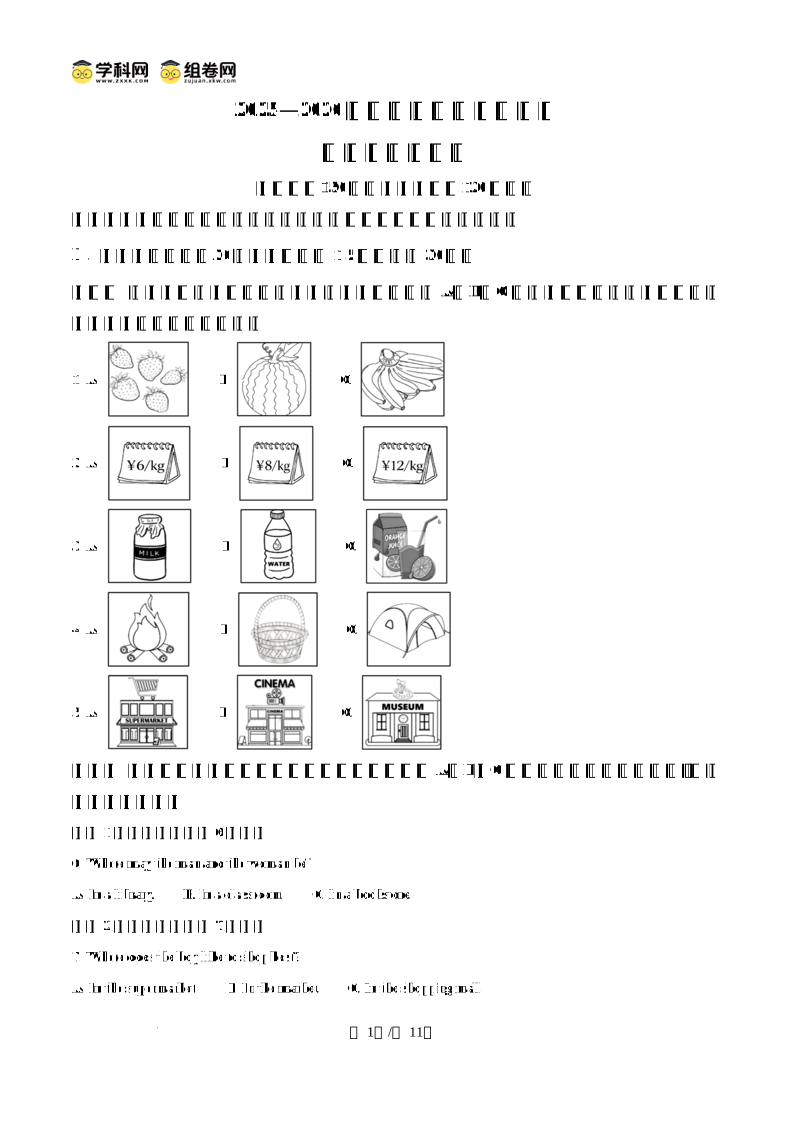
第一节 听句子。听下面五个句子,从每小题所给的A、B、C三幅图中选出与句子内容相符的选项(每个句子读两遍)
1. A. B. C.
2. A. B. C.
3. A. B. C.
4. A. B. C.
5. A. B. C.
第二节 听对话。听下面七段对话,从每小题所给的A、B、C三个选项中选出正确答案。(每段对话读两遍)
听第1段对话,回答第6小题。
6. Where may the man and the woman be?
A. In a library. B. In a classroom. C. In a bookstore.
听第2段对话,回答第7小题。
7. Where does the boy like to shop best?
A. In the supermarket. B. In the market. C. In the shopping mall.
听第3段对话,回答第8小题。
8. What does the man ask the woman to do?
A. Plant flowers. B. Reuse the water. C. Wash vegetables.
听第4段对话,回答第9小题。
9. Who can draw pictures for the poster?
A. Lily. B. Anna. C. Tina.
听第5段对话,回答第10、11小题。
10. Why does Linda come to the library?
A. To prepare for a test. B. To borrow a book. C. To do her homework.
11. What is Linda’s suggestion for Henry?
A. Joining a study group. B. Asking others for help. C. Using a computer.
听第6段对话,回答第12、13小题。
12. Who does Mike usually camp with?
A. His father. B. His brother. C. His uncle.
13. What did Mike do during the last camping trip?
A. He drew pictures. B. He climbed mountains. C. He took photos.
听第7段对话,回答第14、15小题。
14. How does John and his family get to the lake?
A. By bike. B. By bus. C. By car.
15. What does John’s sister plan to do?
A. Take photos. B. Draw pictures. C. Have a picnic.
第三节 听短文。
根据你所听到的短文内容,完成下面表格,每空填一词。(短文读三遍)
Miss Lin’s shopping habits
The local market
○ It’s near her house.
○ She buys fresh 16 there.
The large supermarket
○ She goes there every 17 after work.
○ There’s always a big sale.
The food store
○ It’s near the 18 .
○ She buys fruits and vegetables there.
○ It takes her about 19 minutes to walk there.
Shopping online
She 20 buys food online.
Ⅱ. 选择填空(共15小题;每小题1分,满分15分)
从每小题所给的A、B、C三个选项中,选出可以填入空白处的正确答案。
1. We have ________ three-day holiday on the Qingming Festival.
A. an B. a C. the
【答案】B
【解析】
【详解】句意:我们在清明节有一个三天的假期。
an一个,用于元音音素前;a一个,用于辅音音素前;the这/那,特指。根据句意可知此处表示泛指“一个”假期,且“three-day”以辅音音素开头,使用不定冠词a。
2. Eating too much food ________ meals is not good for health.
A. between B. behind C. beside
【答案】A
【解析】
【详解】句意:在正餐之间吃太多食物对健康不好。
between在……之间;behind在……后面;beside在……旁边。根据“Eating too much food … meals is not good for health.”可知,此处指在两餐之间吃太多东西,固定搭配“between meals”表示“在正餐之间”。
3. Both of these skirts look good on you. It’s hard to make a ________.
A. plan B. list C. choice
【答案】C
【解析】
【详解】句意:这两条裙子你穿都好看。很难做出选择。
plan计划;list清单;choice选择。根据前句“Both of these skirts look good on you.”可知,两条裙子都好看,所以很难做出“选择”,make a choice为固定搭配,意为“做出选择”,应填choice。
4. — Listen! There is a knock on the door. ________ the door, please.
— OK, Mom.
A. To open B. Open C. Opening
【答案】B
【解析】
【详解】句意:——听!有人在敲门。请打开门。——好的,妈妈。
根据“…the door, please.”可知,此处表示请求对方做某事,是祈使句,应以动词原形开头。
5. —My shoes are too small. I can’t walk easily with them.
—You need to ________ your shoes right now.
A. throw B. carry C. change
【答案】C
【解析】
【详解】句意:——我的鞋子太小了。我穿着它们走路不方便。——你现在需要马上更换你的鞋子。
throw扔掉;carry携带;change更换。根据“My shoes are too small. I can't walk easily with them.”可知,因为鞋子太小走路不方便,更换鞋子才是合理的解决办法。应填change。
6. Yesterday, Li Xiang couldn’t find the way to the station so he ________ an old man for help.
A. asks B. asked C. is asking
【答案】B
【解析】
【详解】句意:昨天,Li Xiang找不到去车站的路,所以他向一位老人求助。
根据时间状语“Yesterday”可知,句子描述的是过去发生的动作,谓语动词应用过去式。应填asked。
7. —What does MVP mean?
—It ________ “Most Valuable Player”.
A. stands for B. waits for C. looks for
【答案】A
【解析】
【详解】句意:——MVP是什么意思?——它代表“最有价值球员”。
stands for代表;waits for等待;looks for寻找。根据问句“What does MVP mean?”可知是在询问缩写的含义,缩写与全称之间是代表关系,stands for符合语境。
8. —Look at the sky. It’s getting ________.
—Yeah, heavy rain is coming. We shouldn’t go outside.
A. clear B. dark C. fine
【答案】B
【解析】
【详解】句意:——看天空。天变暗了。——是的,一场暴雨要来了。我们不应该出去。
clear晴朗的;dark阴暗的;fine晴朗的。根据答句“heavy rain is coming”可知,暴雨来临前天空通常会变暗。应填dark。
9. Zhangzhou ________ the Ancient City (古城) and its delicious food.
A. is ready for B. is good for C. is famous for
【答案】C
【解析】
【详解】句意:漳州因古城和美食而闻名。
is ready for为……做好准备;is good for对……有益;is famous for因……而闻名。根据题干中“the Ancient City (古城) and its delicious food.”可知,此处表示漳州以这些特色著称,符合“因……而闻名”的语境,因此填is famous for。
10. Don’t get off the bus ________ you get to the Jiangbin Park Station.
A. while B. until C. if
【答案】B
【解析】
【详解】句意:直到你到达江滨公园站才下车。
while当……时候;until直到……为止;if如果。根据“Don’t get off the bus”可知为否定句,考查固定搭配not…until…,意为“直到……才……”。
11. —Excuse me, where is the bank?
—Go ________ the bridge and you can see it on your right.
A. through B. across C. past
【答案】B
【解析】
【详解】句意:——打扰一下,银行在哪里?——走过这座桥,你就能在右边看到它。
through从内部穿过;across从表面横穿;past经过。根据“Go…the bridge”可知是指从桥面上走过,使用搭配go across the bridge。
12. The number 3,050,000 is read as ________.
A. three million, fifty thousand
B. three million, and fifty thousand
C. three millions, fifty thousand
【答案】A
【解析】
【详解】句意:数字3,050,000读作三百零五万。
英语中million, thousand等单位词前有具体数字修饰时,不用复数形式,排除C选项;and通常用在百位和十位或个位之间,百万位与千位之间一般不用and,排除B选项。
13. —________ honey do you want?
—2 boxes.
A. How many B. How much C. How heavy
【答案】B
【解析】
【详解】句意:——你想要多少蜂蜜?——2 盒。
How many多少,用于修饰可数名词复数;How much多少,用于修饰不可数名词;How heavy多重,用于询问重量。根据“2 boxes”及空后不可数名词“honey”可知,此处是询问蜂蜜的数量,应填How much。
14. 与单词“excuse”划线部分读音不同的一项是:________。
A. June B. computer C. community
【答案】A
【解析】
【详解】句意:与单词“excuse”划线部分读音不同的一项是:June。
June六月,音标为[dʒuːn];computer电脑,音标为[kəmˈpjuːtə(r)];community社区,音标为[kəˈmjuːnəti]。题干中excuse的音标为[ɪkˈskjuːs],excuse中划线字母的发音为/juː/,单词June中划线部分读音与excuse不同。
15. Read the poem (诗) and choose the best word.
Cow, cow,
Friendly and brown,
Let down your milk,
For the mighty ________.
A. window B. snow C. town
【答案】C
【解析】
【详解】句意:读这首诗,选择最好的词。
考查押韵。cow,brown和down的音标都有/aʊ/。分析选项可知,只有town有这个音素,AB选项没有。故选C。
Ⅲ. 完形填空(共10小题;每小题1.5分,满分15分)
阅读下面短文,从每小题所给的A、B、C三个选项中,选出可以填入空白处的最佳答案。
I am a plastic bag. Today, I want to tell you something about my ____16____.
One day, some boys bought me ____17____ a supermarket. They put a lot of ____18____ in me. They rode their bikes and brought me to a beach. They enjoyed the food and had a lot of fun there.
But they were not so careful, ____19____ they forgot all about me when they left. I had to ____20____ on the beach. One day, it was ____21____—the wind was very strong and it blew me into the sea.
I was in the ____22____ for many days. Then, a big fish came and ____23____ me. I saw another plastic bag in the big fish. Over the next few days, the fish ate more other things: ropes (绳子) and all kinds of plastics.
____24____, the fish died (死) and I came back to the beach again. Some nice school children picked me up and put me into a bin. I hope in my next life, people can use me _____25_____!
16. A. job B. home C. life
17. A. with B. from C. to
18. A. books B. money C. food
19. A. and B. or C. if
20. A. run B. stay C. walk
21. A. sunny B. windy C. cloudy
22. A. water B. tree C. soil
23. A. saw B. ate C. told
24. A. At the start B. In the end C. From now on
25. A. carefully B. really C. suddenly
【答案】16. C 17. B 18. C 19. A 20. B 21. B 22. A 23. B 24. B 25. A
【解析】
【导语】本文以塑料袋的自述形式,讲述了它从超市到海滩,再到海洋被鱼误食,最后回到海滩的经历,呼吁人们环保。
【16题详解】
句意:今天,我想告诉你关于我的一生的一些事情。
根据下文讲述的经历及结尾“next life”可知,是在讲述它的“一生(life)”。job和 home不符合语境。
【17题详解】
句意:一天,一些男孩从超市买了我。
buy sth from sp表示“从某地买某物”,固定搭配。with和to不符合搭配。
【18题详解】
句意:他们把很多食物放进我里面。
根据后文“They enjoyed the food”可知,袋子里装的是食物。books和money与后文不符。
【19题详解】
句意:但他们不太小心,并且当他们离开时忘记了我。
前后句是顺承关系,表示结果,用and连接。or表选择,if 表条件,均不符。
【20题详解】
句意:我不得不待在沙滩上。
被遗忘在沙滩上,只能“待在”那里,塑料袋无法自主跑或走。run和walk不符合物体特性。
【21题详解】
句意:一天,天气多风——风很大。
根据破折号后“the wind was very strong”可知,天气是多风的。sunny和cloudy无风大之意。
【22题详解】
句意:我在水里待了很多天。
根据前文“blew me into the sea”可知,塑料袋进入了海里,即在水里。tree和soil与海无关。
【23题详解】
句意:然后,一条大鱼过来吃了我。
根据后文“the fish ate more other things”可知,鱼把塑料袋“吃”了。saw和 told不符合后文逻辑。
【24题详解】
句意:最后,鱼死了,我又回到了海滩。
故事发展到结局,鱼死了,用“In the end”表示最终结果。At the start表开始,From now on 表将来。
【25题详解】
句意:我希望在我的下一生,人们能更仔细地使用我!
基于环保主题,希望人们合理使用,避免污染,故用carefully。
Ⅳ. 阅读理解(共2节,20小题,满分35分)
第一节 阅读A、B、C三篇短文,根据短文内容,从题中所给的A、B、C、D四个选项中选出最佳答案。(共15小题;每小题2分,满分30分)
A
26. What’s the best for “ ▲ ”?
A. Museum Safety Tips. B. Museum Visitor Map.
C. Museum Opening Hours. D. Museum Information Card.
27. Where is the ticket booth?
A. On the left of the museum. B. On the corner of the museum.
C. At the back of the museum. D. In the front of the museum.
28. What can visitors learn about first in the museum?
A. The moon. B. Dinosaurs. C. Volcanoes. D. Magnets.
29. What can visitors do after they play with magnets?
A. See the dinosaur skeletons. B. Play with water.
C. Learn about the moon. D. Watch a volcano erupt.
30. Which picture can be put in “ ? ”?
A. B. C. D.
【答案】26. B 27. D 28. A 29. D 30. A
【解析】
【导语】这是一张博物馆参观路线图,展示了入口、售票处及各个展区的分布和参观顺序。
【26题详解】
根据图片内容,这是一张标注了展区和路线的博物馆参观地图,因此最适合的标题是Museum Visitor Map。
【27题详解】
根据地图,售票处(Ticket Booth)位于入口(Entrance)的正前方,处于博物馆的前部。
【28题详解】
根据箭头指示的参观路线,入口之后第一个到达的展区是“Learn about the moon.”,也就是游客在博物馆里首先了解月球。
【29题详解】
根据路线箭头,“Play with magnets”的下一个展区是“See a volcano erupt!”,也就是说在“玩磁铁”之后可以“看火山喷发”,对应选项D。
【30题详解】
“Learn about rain”的展区需要一个与“雨” 相关的图片。选项A是下雨的图标,符合题意。
B
It’s great to have fun with water on a hot summer day.
It’s hot today. My friends and I were playing by the river. We took off our shoes and let our feet be in the water. We talked to each other and had a good time. But after we played for a while, we felt bored (无聊的).
An old man walked by. I said to my friends, “Let’s make fun of the old man.” Then we said to him, “Please help us. We have a big problem.”
The old man walked to us. He looked worried and wanted to help. “Our feet are tangled (缠住) by the water grass. We can’t tell whose feet they are,” we said.
Then the old man got that we didn’t really have a problem. But he didn’t get unhappy. ▲ He said, “Well, that sounds like a really big problem, but I think I can help you.”
The old man found a long stick (木棍). Then he came back to us and tickled our feet with it. We couldn’t help laughing (笑) when he tickled our feet and we took our feet out of water one after another. “OK, there is no problem now!”
We said sorry to the old man for making fun of him.
31. Where did the story happen?
A. In a park. B. By a river. C. Near a zoo. D. Outside a school.
32. Which sentence (句子) can be put in the ▲ ?
A. He walked away slowly. B. He got very angry.
C. He wanted to play with us. D. He decided to help us.
33. What does the underlined word “tickled” mean?
A. 挠痒 B. 拍打 C. 撬起 D. 分开
34. What do you think of the old man?
A. Bad. B. Kind. C. Quiet. D. Careful.
35. How did the children’s feelings change in the story?
A. bored→happy→sorry B. sorry→bored→happy
C. happy→sorry→bored D. happy→bored→sorry
【答案】31. B 32. D 33. A 34. B 35. D
【解析】
【导语】本文讲述了作者和朋友在河边玩耍时恶作剧捉弄一位老人,但老人没有生气,反而幽默地回应,最终孩子们意识到错误并道歉。
【31题详解】
根据第二段“My friends and I were playing by the river.”可知,故事发生在河边。
【32题详解】
根据倒数第二段“But he didn’t get unhappy.”以及“Well, that sounds like a really big problem, but I think I can help you.”可知,此处需要衔接上下文,上文提到老人发现孩子们并没有真的遇到麻烦,也没有不开心,下文老人说自己可以帮忙,还实际出手解决问题,因此“He decided to help us.”符合语境。
【33题详解】
根据末段“We couldn’t help laughing (笑) when he tickled our feet”可知,老人做了某个动作让“我们”忍不住笑,结合常识,“挠痒”符合语境。
【34题详解】
通读全文可知,面对孩子们的恶作剧,老人没有生气,而是幽默地配合并让孩子们意识到错误,最后孩子们道歉,老人也没有责怪。这体现了老人的善良和宽容,kind符合题意。
【35题详解】
根据文章情节发展:首先“had a good time”(玩得开心,happy);接着“felt bored”(感到无聊,bored);最后“We said sorry to the old man for making fun of him.”(道歉,感到抱歉,sorry)。情感变化顺序为 happy→bored→sorry。对应选项D。
C
①How do you travel around? Maybe by bus, by bike, by underground or by car. Do you know there are many other ways to travel around?
②Venice (威尼斯) is a special city. There are a lot of rivers running through it. People call it the City of Water. And people in the city always take boats to move around.
③ ▲ In deserts, people usually ride camels (骆驼) to other places or use camels to carry things, because camels can travel for 20 days without drinking water. They can carry a lot of things. They can even carry 200 kilos of things on their backs and travel 75 kilometers a day for four days. While in some icy or snowy places, you can see people use dogs to pull a sled (雪橇), and they travel around on the sled. In some places, you can also see people travel around or carry things on elephants.
④Do you know any other ways of traveling around? Can you share them with me?
36. How does the writer start the topic?
A. By listing numbers. B. By giving an example.
C. By telling a story. D. By asking questions.
37. How do people in Venice travel around?
A. By car. B. By bus. C. By boat. D. On foot.
38. Which sentence can you put in ▲ ?
A. Dogs are very important in transportation.
B. Do you love going boating on the lake?
C. Do you know people can get around on animals?
D. We can use elephants to move around.
39. What does the underlined word “icy” in Paragraph 3 mean in Chinese?
A. 冰冻的 B. 炎热的 C. 潮湿的 D. 阴暗的
40. What’s the structure of the text?
A. B. C. D.
【答案】36. D 37. C 38. C 39. A 40. C
【解析】
【导语】本文是一篇说明文,主要介绍了世界各地不同的特色出行方式,从常见的公交、自行车,到威尼斯的船只、沙漠的骆驼、雪地的狗拉雪橇等,展现了不同环境下独特的交通方式。
【36题详解】
第一段通过“How do you travel around? … Do you know there are many other ways to travel around?”两个问句引出话题,说明作者是通过提问的方式开启文章的。
【37题详解】
第二段明确提到“And people in the city always take boats to move around.”,直接说明威尼斯的人们出行方式是乘船。
【38题详解】
第三段介绍了沙漠里的骆驼、冰原雪地的狗拉雪橇、部分地区的大象等动物出行方式,因此填入“Do you know people can get around on animals?”可以自然引出下文对动物出行方式的介绍。
【39题详解】
第三段中“icy or snowy places”用并列结构描述寒冷多雪的环境,“icy”与“snowy”语义相近,结合选项可知其意为“冰冻的”。
【40题详解】
文章结构为:①总起提问引出话题;②介绍威尼斯的船只出行;③介绍其他地区的特色出行;④结尾提问互动,属于 “总—分—总”结构。
第二节 阅读下面短文,从短文后所给的五个选项中选出能填入短文空白处的最佳选项,使短文通顺、连贯,意思完整。(共5小题;每小题1分,满分5分)
D
Many people try to grow their money in stock markets. ____41____
Imagine (想象) you run a cake shop. Your cakes are popular (受欢迎的) and you want to make more, but you don’t have enough money to do it. ____42____ Each of them buys a small part of your business. Now you have enough money to make more cakes. ____43____ These “small parts of a business” are stocks.
____44____ You can sell your stocks to others. If the company does well, the price of the stocks may go up. But if it does badly, the price will go down. ____45____ Buying and selling stocks doesn’t always make you money.
A. When you buy a stock, you own a small part of the company (公司).
B. But what are stocks?
C. So, be careful!
D. Your friends come to help.
E. When you make money, you share it with them.
【答案】41. B 42. D 43. E 44. A 45. C
【解析】
【导语】本文主要通过蛋糕店的例子通俗易懂地介绍了股票的基本概念、运作方式以及投资风险。
【41题详解】
根据第一段“Many people try to grow their money in stock markets.”可知,上文引入股市话题,下文接着通过例子解释股票是什么,选项B“But what are stocks?”提出疑问引出下文。
【42题详解】
根据第二段“Your cakes are popular (受欢迎的) and you want to make more, but you don’t have enough money to do it.”可知,上句提到了“你没有足够的钱去做这件事”,下文提到“Each of them buys.”,此处需要引入复数人物作为“them”的指代对象,选项D“Your friends come to help.”符合此处语境。
【43题详解】
根据第二段“Now you have enough money to make more cakes.”可推知结论,朋友投资后,盈利自然需要与投资者分享,且下文总结这些部分是股票,此处补充投资回报逻辑,选项E“When you make money, you share it with them.”能够使语境完整。
【44题详解】
根据第三段“You can sell your stocks to others.”可知,本段开始正式定义股票属性,拥有公司小部分股份符合股票定义,用选项A“When you buy a stock, you own a small part of the company (公司).”引出后续买卖及价格波动话题。
【45题详解】
根据第三段“But if it does badly, the price will go down.”可知,股票价格有下跌风险且不一定赚钱,结尾应给出提醒建议,选项C“So, be careful!”与上句合理衔接。
Ⅴ. 词汇运用(满分10分)
A. 根据句意及汉语提示,在横线上填入适当的单词,每空填一词。(每空0.5分,满分5分)
46. Look! Everything is ________ ________ (特价销售) now.
【答案】 ①. on ②. sale
【解析】
【详解】句意:看!现在所有东西都在特价销售。题目要求用两个单词表达“特价销售”的含义,英语中on sale是固定搭配,意为“特价销售、打折出售”,符合此处语境。
47. There are ________ ________ (超过) 1,000 students in the dining hall.
【答案】 ①. more ②. than
【解析】
【详解】句意:食堂里有超过1000名学生。 题目要求用两个单词表达“超过”的含义,英语中more than是固定搭配,意为“超过、多于”,可用于修饰数量词,符合此处语境。
48. My mother always ________ ________ (担心) my study.
【答案】 ①. worries ②. about
【解析】
【详解】句意:我妈妈总是担心我的学习。汉语提示“担心”对应短语worry about; always为一般现在时标志,主语my mother是第三人称单数,谓语动词用三单形式worries,故填worries;about。
49. We were ________ excited ________ sleep (太……而不能……) that night.
【答案】 ①. too ②. to
【解析】
【详解】句意:那天晚上我们太兴奋了而睡不着觉。原句中“太……而不能……”是关键词,表示此含义的固定结构是“too...to...”。too后接形容词excited;to后接动词原形sleep,作结果状语。
50. The little boy ________ ________ (迷路) in the park one hour ago.
【答案】 ①. was##got ②. lost
【解析】
【详解】句意:这个小男孩一小时前在公园里迷路了。该处第一空需动词,在句中作谓语;第二空需形容词,作表语。语义提示为“迷路”,固定搭配:be lost/get lost。时间状语“one hour ago”为一般过去时,be动词用was,get用过去式got,lost形式不变。故填was/got;lost。
B. 句型转换。根据要求变换句型,每空填一词(每空0.5分,满分5分)
51. Did you watch the film together last night? (补全否定回答)
No, ________ ________. We had too much homework to do.
【答案】 ①. we ②. didn’t
【解析】
【详解】句意: 昨晚你们一起看那部电影了吗?问句是由助动词Did引导的一般过去时的一般疑问句,其否定回答为“No, 主语+didn’t.”,问句主语是you,回答者是以“We我们”的角度回答,前后人称必须一致,主语应转换为we。
52. The museum is 15 kilometers from here.(就划线部分提问)
________ ________ is the museum from here?
【答案】 ①. How ②. far
【解析】
【详解】句意:博物馆距离这里15千米远。划线部分为“15 kilometers”,表示距离,对距离进行提问需要使用特殊疑问词组How far“多远”,置于句首,首字母大写。
53. There are some bananas in the basket.(改为一般疑问句)
________ there ________ bananas in the basket?
【答案】 ①. Are ②. any
【解析】
【详解】句意:篮子里有一些香蕉。改为一般疑问句,There be句型变为一般疑问句时,需将be动词are提到There之前,且句首单词,首字母要大写,故第一空填Are;在疑问句中通常要将some改为any,故第二空填any。
54. Mrs. Green always prepares for dinner alone. (用just now改写句子)
Mrs. Green ________ ________ dinner alone just now.
【答案】 ①. prepared ②. for
【解析】
【详解】句意:格林夫人总是独自准备晚餐。时间状语“just now”意为“刚才”,是一般过去时的标志词,谓语动词“prepares”是第三人称单数形式,此时需要使用过去式prepared;原句中的固定短语是“prepare for dinner”,介词“for”不能省略。
55. My father paid 180 yuan for his books. (同义句替换)
My father ________ 180 yuan ________ his books.
【答案】 ①. spent ②. on##buying
【解析】
【详解】句意:我父亲花了180元买他的书。原句中使用了固定搭配“pay...for...”,意为“为……支付……”,其同义表达为“spend...on...”或“spend...(in) doing...”,意为“在……上花费……”。由于原句中“paid”为过去式,表明时态为一般过去时,因此改写时“spend”需变为过去式“spent”。第一空填spent,第二空可填on(后接名词his books)或buying(spend...(in) doing sth. 结构,in可省略)。
Ⅵ. 情景交际(共5小题;每小题2分,满分10分)
根据情景提示,用得体的英语完成下列对话。
56. A: __________________________ the shoes?
B: They are 280 yuan.
【答案】How much are
【解析】
【详解】答句回答的是物品的价格,因此问句是在询问物品的价格,故“How much are”符合语境。
57. A: Excuse me, __________________________ to Zhongshan Park?
B: Go along the street and you can see it on your left.
【答案】which is the way/how can I get/Could you tell me the way
【解析】
【详解】答句是前往中山公园的路线指引,因此问句为问路的常用表达,故“which is the way”、“how can I get”或“Could you tell me the way”三种问法均符合语境。
58. A: Why not climb mountains with me this afternoon?
B: __________________________. I need some outdoor activities.
【答案】Great/Good idea/Sounds good/Sounds great
【解析】
【详解】A用“Why not...”的句型向B提出下午一起去爬山的建议,B后半句说“I need some outdoor activities(我需要一些户外活动)”,说明B是同意这个建议的。因此B应先表达对建议的赞同,再补充说明自己需要户外活动。可以用“Sounds good/great”“Good idea”“Great”等表示赞同的简短回答。
59. A: Welcome! __________________________?
B: Yes, please. I want to buy some sandwiches.
【答案】Can I help you/May I help you
【解析】
【详解】答句表明需要帮助,并且表明自己需要的具体的物品,因此问句是询问对方是否需要帮助,故一般疑问句“Can I help you/May I help you”符合语境及答语逻辑。
60. A: __________________________ last weekend?
B: I climbed the mountain with my parents.
【答案】What did you do
【解析】
【详解】答句回答自己去爬山了,因此问句是询问对方“做了什么”,且句子时态为一般过去时,助动词需用did。故“What did you do”符合语境。
Ⅶ. 看图写话(共5小题;每小题2分,满分10分)
根据每小题所提供的图画情景和提示词,写出一个与图画情景相符的句子。
61. not__________________________________________
62. high__________________________________________
63. camp, last Sunday__________________________________________
64. now__________________________________________
65. across from__________________________________________
【答案】61. Don’t litter./Do not throw litter/rubbish/waste here/around.
62. The waterfall is 99 meters high./ It is a 99-meter-high waterfall.
63. They went camping last Sunday.
64. He/The boy is brushing (his) teeth now.
65. The hotel is across from the/a bank./ The bank is across from the/a hotel./ There is a hotel/bank across from the bank/hotel.
【解析】
【61题详解】
根据图片和提示词not,可知本句表达“禁止乱扔垃圾”。 这是祈使句的否定形式,结构为Don’t + 动词原形。 litter作动词表示“乱扔垃圾”,Don’t litter 是最简洁的表达; 也可用throw litter/rubbish/the waste表示“扔垃圾 / 废弃物”,加上地点状语here/around说明范围,构成Do not throw litter here这类完整表达。
【62题详解】
根据图片和提示词high,可知本句表达“瀑布高99 米”。 两种表达结构均正确: 1.主系表结构:主语The waterfall,系动词is,表语99 meters high; 2.主系表结构(名词作表语):主语It,系动词is,表语a 99-meter-high waterfall,其中99-meter-high是复合形容词,用连字符连接,中间的名词meter需用单数形式,作定语修饰waterfall。
【63题详解】
根据图片和提示词camp, last Sunday,可知本句表达“他们上周日去露营了”。 本句时态为一般过去时(时间状语last Sunday表示过去): 主语They,谓语动词用过去式went; go camping是固定搭配,表示“去露营”; last Sunday是时间状语,放在句末,说明动作发生的时间。
【64题详解】
根据图片和提示词now,可知本句表达“他/这个男孩现在正在刷牙”。 本句时态为现在进行时(时间状语now表示正在进行),结构为主语 + be动词 + 动词-ing形式: 主语He/The boy,be 动词用is; brush teeth是固定搭配,表示“刷牙”,动词brush的- ing形式为brushing; his是形容词性物主代词,修饰teeth,表示“他的牙齿”,可省略; now是时间状语,放在句末,说明动作正在进行。
【65题详解】
根据图片和提示词across from,可知本句表达“酒店在银行对面 / 银行在酒店对面”。 across from是固定搭配,表示“在…… 对面”,三种表达均符合情景: 主谓结构(酒店作主语):主语The hotel,系动词is,表语across from the/a bank,表示“酒店在银行对面”; 主谓结构(银行作主语):主语The bank,系动词is,表语across from the/a hotel,表示“银行在酒店对面”; There be句型:There is a hotel/bank across from the bank/hotel,表示“银行/酒店对面有一家酒店/银行”,结构为There be + 名词 + 地点状语,更侧重“存在”的含义。
Ⅷ. 短文填空(共10小题;每小题1分,满分10分)
阅读下面短文,根据语境或所给单词的提示,在每个空格内填入一个恰当的词,要求所填的词意义准确、形式正确,使短文意思完整、行文连贯。
Sam’s school had a fair (集市) last Saturday. Sam enjoyed ____66____ (sell) things, so he began to look for things to sell at the fair.
____67____ (one), he looked at his model (模型) planes and thought, “No, they’re ____68____ (I) favorite.” Then, he saw his shoes ____69____ they were too old. Finally, he decided to get something new from his family. Mom cooked nice food and gave it to him. Dad made a new model plane for him. Aunt Sally gave him ____70____ blue scarf, and Grandpa bought some ____71____ (color) pencils for him.
On that day, Sam took all the ____72____ (thing) to the school fair early. Kate, Sam’s classmate and cousin, came to the fair, too. She ____73____ (plan) to buy a birthday gift for her mother. She got ____74____ bargain at the fair and bought the blue scarf at Sam’s stall (摊位). After the fair, Kate went home ____75____ (quick) and gave the scarf to her mother excitedly. To their surprise (惊讶), her mom found that the scarf was just the one she gave to Sam yesterday.
【答案】66. selling
67. First 68. my
69. but 70. a
71. colored/colorful
72. things 73. planned
74. a 75. quickly
【解析】
【导语】本文主要讲述了上周六,山姆的学校举办集市,喜欢售卖东西的山姆,就此开启了一段有趣的经历。
【66题详解】
句意:山姆喜欢卖东西,所以他开始找可以在集市上卖的东西。固定搭配enjoy doing sth.(喜欢做某事),enjoy后面需要跟动名词作宾语,所以sell要变为selling。
【67题详解】
句意:首先,他看了看自己的模型飞机,心想:“不行,它们是我最喜欢的。”one是基数词,这里要表示“首先”,需要用序数词First,且句首首字母要大写。
【68题详解】
句意:首先,他看了看自己的模型飞机,心想:“不行,它们是我的最爱。”I是主格,这里要修饰名词favorite(指代最喜欢的物品),需要用形容词性物主代词my(我的)。
【69题详解】
句意:然后,他看到了自己的鞋子,但它们太旧了。前半句“他看到自己的鞋子”,后半句“它们太旧了”,前后是转折关系,所以用but(但是)。
【70题详解】
句意:萨莉阿姨给了他一条蓝色的围巾……。scarf是可数名词单数,且blue以辅音音素开头,所以用不定冠词a表示“一条”。
【71题详解】
句意:爷爷给他买了一些彩色的铅笔。color是名词,这里要修饰名词pencils,需要用形容词形式colored(彩色的)或colorful(彩色的)。
【72题详解】
句意:那天,山姆早早地把所有东西带到了学校集市。all(所有的)后面如果跟可数名词,需要用复数形式,所以thing要变为things。
【73题详解】
句意:她计划给她的妈妈买一份生日礼物。全文讲述的是last Saturday(上周六)的事情,是过去的时间,所以plan要用过去式planned。
【74题详解】
句意:她在集市上淘到了便宜货,在山姆的摊位买了那条蓝色的围巾。固定搭配get a bargain(买到便宜货),bargain是可数名词单数,且以辅音音素开头,所以用不定冠词a。
【75题详解】
句意:集市结束后,凯特快速地回到家,兴奋地把围巾送给了妈妈。quick是形容词,这里要修饰动词短语went home(回家),需要用副词形式quickly(快速地)。
Ⅸ. 书面表达(满分 15 分)
76. 为了保护和宣传九龙江,并呼吁大家树立节约用水的意识,学校组织了以“节约用水,保护水资源”为主题的春游活动。请你根据以下信息,用英文介绍此次春游活动,不少于80词。
Time
last Friday
People
students in Grade 7
Place
Jiulong River
Transportation
by bus
Weather
sunny
Activities
1. share ideas about how to save water
2. clean up the waste
3. …
Feelings
…
注意事项:
1.必须包含提示内容,可适当发挥;
2.已给英文句子,不计入总词数;
3.意思清楚,表达通顺,行文连贯,书写规范;
4.请勿在文中使用真实的姓名、校名及地名。
To call on people to save water and protect the Jiulong River, our school had a spring outing. ____________________________________________________________________________________________________________________________________________________________________________________________________________________________________________________________________________________________________________________________________________________________________________________________________________________________________________________________________________________________________________________________________________________________________________________________________________________________________________________________________
【答案】One possible version:
To call on people to save water and protect the Jiulong River, our school had a spring outing. I’d like to share the unforgettable trip with you.
Last Friday, the weather was sunny. All the students in Grade 7 took the bus to the Jiulong River.
When we arrived, we first shared ideas about how to save water. I learned more ways of saving water. Then, we cleaned up the waste along the river together. For example, we picked up plastic bags and bottles into the rubbish bags. Finally, we put up some posters to ask people to protect the river. We felt so excited.
What a meaningful trip! All of us felt tired but happy to make the Jiulong River clean and beautiful. We learned a lot from this experience.
【解析】
【详解】[第一步:审题立意]
文体:记叙文(介绍春游活动)
时态:一般过去时为主
人称:第一人称复数(we)
写作要点:介绍“节约用水,保护水资源”主题春游活动,需包含时间、人物、地点、交通、天气、活动内容和感受
要求:词数不少于80词;已给句子不计入总词数;不得使用真实姓名、校名、地名
[第二步:构思布局]
第一段:沿用题干给定开头,引出春游活动主题
第二段:介绍活动的背景信息(时间、参与人员、地点、交通方式和天气)
第三段:详细描述春游中的各项活动(分享节水想法、清理垃圾、拓展活动)
第四段:表达活动后的感受与收获,升华主题
[第三步:要点展开]
要点一:背景信息拓展
交代天气及时间:Last Friday, the weather was sunny and warm./ It was sunny and warm last Friday.等
交代人物和事件:All the students in Grade 7 went on the trip.We went there by school bus, singing and talking on the way./All the students in Grade 7 went to the Jiulong River by bus.等
要点二:活动内容拓展 •
分享节水想法:We talked about simple ways to save water in daily life, like turning off taps in time./Some students shared creative ideas to reuse water.
清理垃圾:We picked up litter along the river bank, such as plastic bags and bottles./We worked in teams to make the river cleaner.等
拓展活动:We put up posters to tell people to protect the river./We took photos of the beautiful river to record our work.等
要点三:感受与收获拓展
情感感受:We felt tired but proud of what we did./It was a meaningful and unforgettable trip.等
收获升华:We learned that small actions can make a big difference to our environment./We all realized the importance of saving water.等
第1页/共1页
学科网(北京)股份有限公司
$
2025—2026学年第二学期期中考试
七年级英语试卷
(总分:150分;考试时间:120分钟)
友情提示:请把答案填涂到答题纸上!请不要错位、越界答题!
Ⅰ. 听力(共三节,20小题;每小题1.5分,满分30分)
第一节 听句子。听下面五个句子,从每小题所给的A、B、C三幅图中选出与句子内容相符的选项(每个句子读两遍)
1. A. B. C.
2. A. B. C.
3. A. B. C.
4. A. B. C.
5. A. B. C.
第二节 听对话。听下面七段对话,从每小题所给的A、B、C三个选项中选出正确答案。(每段对话读两遍)
听第1段对话,回答第6小题。
6. Where may the man and the woman be?
A. In a library. B. In a classroom. C. In a bookstore.
听第2段对话,回答第7小题。
7. Where does the boy like to shop best?
A. In the supermarket. B. In the market. C. In the shopping mall.
听第3段对话,回答第8小题。
8. What does the man ask the woman to do?
A. Plant flowers. B. Reuse the water. C. Wash vegetables.
听第4段对话,回答第9小题。
9. Who can draw pictures for the poster?
A. Lily. B. Anna. C. Tina.
听第5段对话,回答第10、11小题。
10. Why does Linda come to the library?
A. To prepare for a test. B. To borrow a book. C. To do her homework.
11. What is Linda’s suggestion for Henry?
A. Joining a study group. B. Asking others for help. C. Using a computer.
听第6段对话,回答第12、13小题。
12. Who does Mike usually camp with?
A. His father. B. His brother. C. His uncle.
13. What did Mike do during the last camping trip?
A. He drew pictures. B. He climbed mountains. C. He took photos.
听第7段对话,回答第14、15小题。
14. How does John and his family get to the lake?
A. By bike. B. By bus. C. By car.
15. What does John’s sister plan to do?
A. Take photos. B. Draw pictures. C. Have a picnic.
第三节 听短文。
根据你所听到的短文内容,完成下面表格,每空填一词。(短文读三遍)
Miss Lin’s shopping habits
The local market
○ It’s near her house.
○ She buys fresh 16 there.
The large supermarket
○ She goes there every 17 after work.
○ There’s always a big sale.
The food store
○ It’s near the 18 .
○ She buys fruits and vegetables there.
○ It takes her about 19 minutes to walk there.
Shopping online
She 20 buys food online.
Ⅱ. 选择填空(共15小题;每小题1分,满分15分)
从每小题所给的A、B、C三个选项中,选出可以填入空白处的正确答案。
1. We have ________ three-day holiday on the Qingming Festival.
A. an B. a C. the
2. Eating too much food ________ meals is not good for health.
A. between B. behind C. beside
3. Both of these skirts look good on you. It’s hard to make a ________.
A. plan B. list C. choice
4. — Listen! There is a knock on the door. ________ the door, please.
— OK, Mom.
A. To open B. Open C. Opening
5. —My shoes are too small. I can’t walk easily with them.
—You need to ________ your shoes right now.
A. throw B. carry C. change
6. Yesterday, Li Xiang couldn’t find the way to the station so he ________ an old man for help.
A. asks B. asked C. is asking
7. —What does MVP mean?
—It ________ “Most Valuable Player”.
A. stands for B. waits for C. looks for
8. —Look at the sky. It’s getting ________.
—Yeah, heavy rain is coming. We shouldn’t go outside.
A. clear B. dark C. fine
9. Zhangzhou ________ the Ancient City (古城) and its delicious food.
A. is ready for B. is good for C. is famous for
10. Don’t get off the bus ________ you get to the Jiangbin Park Station.
A. while B. until C. if
11. —Excuse me, where is the bank?
—Go ________ the bridge and you can see it on your right.
A. through B. across C. past
12. The number 3,050,000 is read as ________.
A. three million, fifty thousand
B. three million, and fifty thousand
C. three millions, fifty thousand
13. —________ honey do you want?
—2 boxes.
A. How many B. How much C. How heavy
14. 与单词“excuse”划线部分读音不同的一项是:________。
A. June B. computer C. community
15. Read the poem (诗) and choose the best word.
Cow, cow,
Friendly and brown,
Let down your milk,
For the mighty ________.
A. window B. snow C. town
Ⅲ. 完形填空(共10小题;每小题1.5分,满分15分)
阅读下面短文,从每小题所给的A、B、C三个选项中,选出可以填入空白处的最佳答案。
I am a plastic bag. Today, I want to tell you something about my ____16____.
One day, some boys bought me ____17____ a supermarket. They put a lot of ____18____ in me. They rode their bikes and brought me to a beach. They enjoyed the food and had a lot of fun there.
But they were not so careful, ____19____ they forgot all about me when they left. I had to ____20____ on the beach. One day, it was ____21____—the wind was very strong and it blew me into the sea.
I was in the ____22____ for many days. Then, a big fish came and ____23____ me. I saw another plastic bag in the big fish. Over the next few days, the fish ate more other things: ropes (绳子) and all kinds of plastics.
____24____, the fish died (死) and I came back to the beach again. Some nice school children picked me up and put me into a bin. I hope in my next life, people can use me _____25_____!
16. A. job B. home C. life
17. A. with B. from C. to
18. A. books B. money C. food
19. A. and B. or C. if
20. A. run B. stay C. walk
21. A. sunny B. windy C. cloudy
22. A. water B. tree C. soil
23. A. saw B. ate C. told
24. A. At the start B. In the end C. From now on
25. A. carefully B. really C. suddenly
Ⅳ. 阅读理解(共2节,20小题,满分35分)
第一节 阅读A、B、C三篇短文,根据短文内容,从题中所给的A、B、C、D四个选项中选出最佳答案。(共15小题;每小题2分,满分30分)
A
26. What’s the best for “ ▲ ”?
A. Museum Safety Tips. B. Museum Visitor Map.
C. Museum Opening Hours. D. Museum Information Card.
27. Where is the ticket booth?
A. On the left of the museum. B. On the corner of the museum.
C. At the back of the museum. D. In the front of the museum.
28. What can visitors learn about first in the museum?
A. The moon. B. Dinosaurs. C. Volcanoes. D. Magnets.
29. What can visitors do after they play with magnets?
A. See the dinosaur skeletons. B. Play with water.
C. Learn about the moon. D. Watch a volcano erupt.
30. Which picture can be put in “ ? ”?
A. B. C. D.
B
It’s great to have fun with water on a hot summer day.
It’s hot today. My friends and I were playing by the river. We took off our shoes and let our feet be in the water. We talked to each other and had a good time. But after we played for a while, we felt bored (无聊的).
An old man walked by. I said to my friends, “Let’s make fun of the old man.” Then we said to him, “Please help us. We have a big problem.”
The old man walked to us. He looked worried and wanted to help. “Our feet are tangled (缠住) by the water grass. We can’t tell whose feet they are,” we said.
Then the old man got that we didn’t really have a problem. But he didn’t get unhappy. ▲ He said, “Well, that sounds like a really big problem, but I think I can help you.”
The old man found a long stick (木棍). Then he came back to us and tickled our feet with it. We couldn’t help laughing (笑) when he tickled our feet and we took our feet out of water one after another. “OK, there is no problem now!”
We said sorry to the old man for making fun of him.
31. Where did the story happen?
A. In a park. B. By a river. C. Near a zoo. D. Outside a school.
32. Which sentence (句子) can be put in the ▲ ?
A. He walked away slowly. B. He got very angry.
C. He wanted to play with us. D. He decided to help us.
33. What does the underlined word “tickled” mean?
A. 挠痒 B. 拍打 C. 撬起 D. 分开
34. What do you think of the old man?
A. Bad. B. Kind. C. Quiet. D. Careful.
35. How did the children’s feelings change in the story?
A. bored→happy→sorry B. sorry→bored→happy
C. happy→sorry→bored D. happy→bored→sorry
C
①How do you travel around? Maybe by bus, by bike, by underground or by car. Do you know there are many other ways to travel around?
②Venice (威尼斯) is a special city. There are a lot of rivers running through it. People call it the City of Water. And people in the city always take boats to move around.
③ ▲ In deserts, people usually ride camels (骆驼) to other places or use camels to carry things, because camels can travel for 20 days without drinking water. They can carry a lot of things. They can even carry 200 kilos of things on their backs and travel 75 kilometers a day for four days. While in some icy or snowy places, you can see people use dogs to pull a sled (雪橇), and they travel around on the sled. In some places, you can also see people travel around or carry things on elephants.
④Do you know any other ways of traveling around? Can you share them with me?
36. How does the writer start the topic?
A. By listing numbers. B. By giving an example.
C. By telling a story. D. By asking questions.
37. How do people in Venice travel around?
A. By car. B. By bus. C. By boat. D. On foot.
38. Which sentence can you put in ▲ ?
A. Dogs are very important in transportation.
B. Do you love going boating on the lake?
C. Do you know people can get around on animals?
D. We can use elephants to move around.
39. What does the underlined word “icy” in Paragraph 3 mean in Chinese?
A. 冰冻的 B. 炎热的 C. 潮湿的 D. 阴暗的
40. What’s the structure of the text?
A. B. C. D.
第二节 阅读下面短文,从短文后所给的五个选项中选出能填入短文空白处的最佳选项,使短文通顺、连贯,意思完整。(共5小题;每小题1分,满分5分)
D
Many people try to grow their money in stock markets. ____41____
Imagine (想象) you run a cake shop. Your cakes are popular (受欢迎的) and you want to make more, but you don’t have enough money to do it. ____42____ Each of them buys a small part of your business. Now you have enough money to make more cakes. ____43____ These “small parts of a business” are stocks.
____44____ You can sell your stocks to others. If the company does well, the price of the stocks may go up. But if it does badly, the price will go down. ____45____ Buying and selling stocks doesn’t always make you money.
A. When you buy a stock, you own a small part of the company (公司).
B. But what are stocks?
C. So, be careful!
D. Your friends come to help.
E. When you make money, you share it with them.
Ⅴ. 词汇运用(满分10分)
A. 根据句意及汉语提示,在横线上填入适当的单词,每空填一词。(每空0.5分,满分5分)
46. Look! Everything is ________ ________ (特价销售) now.
47. There are ________ ________ (超过) 1,000 students in the dining hall.
48. My mother always ________ ________ (担心) my study.
49. We were ________ excited ________ sleep (太……而不能……) that night.
50. The little boy ________ ________ (迷路) in the park one hour ago.
B. 句型转换。根据要求变换句型,每空填一词(每空0.5分,满分5分)
51. Did you watch the film together last night? (补全否定回答)
No, ________ ________. We had too much homework to do.
52. The museum is 15 kilometers from here.(就划线部分提问)
________ ________ is the museum from here?
53. There are some bananas in the basket.(改为一般疑问句)
________ there ________ bananas in the basket?
54. Mrs. Green always prepares for dinner alone. (用just now改写句子)
Mrs. Green ________ ________ dinner alone just now.
55. My father paid 180 yuan for his books. (同义句替换)
My father ________ 180 yuan ________ his books.
Ⅵ. 情景交际(共5小题;每小题2分,满分10分)
根据情景提示,用得体的英语完成下列对话。
56. A: __________________________ the shoes?
B: They are 280 yuan.
57. A: Excuse me, __________________________ to Zhongshan Park?
B: Go along the street and you can see it on your left.
58. A: Why not climb mountains with me this afternoon?
B: __________________________. I need some outdoor activities.
59. A: Welcome! __________________________?
B: Yes, please. I want to buy some sandwiches.
60. A: __________________________ last weekend?
B: I climbed the mountain with my parents.
Ⅶ. 看图写话(共5小题;每小题2分,满分10分)
根据每小题所提供的图画情景和提示词,写出一个与图画情景相符的句子。
61. not__________________________________________
62. high__________________________________________
63. camp, last Sunday__________________________________________
64. now__________________________________________
65. across from__________________________________________
Ⅷ. 短文填空(共10小题;每小题1分,满分10分)
阅读下面短文,根据语境或所给单词的提示,在每个空格内填入一个恰当的词,要求所填的词意义准确、形式正确,使短文意思完整、行文连贯。
Sam’s school had a fair (集市) last Saturday. Sam enjoyed ____66____ (sell) things, so he began to look for things to sell at the fair.
____67____ (one), he looked at his model (模型) planes and thought, “No, they’re ____68____ (I) favorite.” Then, he saw his shoes ____69____ they were too old. Finally, he decided to get something new from his family. Mom cooked nice food and gave it to him. Dad made a new model plane for him. Aunt Sally gave him ____70____ blue scarf, and Grandpa bought some ____71____ (color) pencils for him.
On that day, Sam took all the ____72____ (thing) to the school fair early. Kate, Sam’s classmate and cousin, came to the fair, too. She ____73____ (plan) to buy a birthday gift for her mother. She got ____74____ bargain at the fair and bought the blue scarf at Sam’s stall (摊位). After the fair, Kate went home ____75____ (quick) and gave the scarf to her mother excitedly. To their surprise (惊讶), her mom found that the scarf was just the one she gave to Sam yesterday.
Ⅸ. 书面表达(满分 15 分)
76. 为了保护和宣传九龙江,并呼吁大家树立节约用水的意识,学校组织了以“节约用水,保护水资源”为主题的春游活动。请你根据以下信息,用英文介绍此次春游活动,不少于80词。
Time
last Friday
People
students in Grade 7
Place
Jiulong River
Transportation
by bus
Weather
sunny
Activities
1. share ideas about how to save water
2. clean up the waste
3. …
Feelings
…
注意事项:
1.必须包含提示内容,可适当发挥;
2.已给英文句子,不计入总词数;
3.意思清楚,表达通顺,行文连贯,书写规范;
4.请勿在文中使用真实的姓名、校名及地名。
To call on people to save water and protect the Jiulong River, our school had a spring outing. ____________________________________________________________________________________________________________________________________________________________________________________________________________________________________________________________________________________________________________________________________________________________________________________________________________________________________________________________________________________________________________________________________________________________________________________________________________________________________________________________________
第1页/共1页
学科网(北京)股份有限公司
$
资源预览图
1
2
3
相关资源
由于学科网是一个信息分享及获取的平台,不确保部分用户上传资料的 来源及知识产权归属。如您发现相关资料侵犯您的合法权益,请联系学科网,我们核实后将及时进行处理。